Archive for the ‘Scary Stuff’ Category

Saturday night usually means popcorn and a movie for me. This evening I decided to check out the new Netflix movie Malevolent. I figured it would be a good way to round out a day busy with cleaning, grocery shopping, home decor projects, and sacrificing teenagers* to an ancient deity so I could set in motion a series of terrifying events unlike the world has ever seen before this October.

Malevolent is set in 1986 Scotland and follows Angela, a university student who, along with her brother, fakes being a medium in order to make money for her brother’s debts. When they get called to an old manor that was the sight of several grisly murders however, they start finding that the afterlife they’d conned people over is very much alive, and can be very…well, malevolent.

This film’s got a decent, if rather overcrowded, first half. It sets up Angela’s worries about her life and her mental health, due to her mother committing suicide. It shows her brother Jackson as an opportunistic asshole who’s willing to take advantage of anyone just to pay off his loan sharks. And it sets up a decent Gothic location for the main action of the film. There’s also some good jump scares and a creepy atmosphere at times during this half. The best part is probably during the initial walkthrough of the house, when Angela is starting to realize this house may really be haunted. It’s visually powerful and puts you on edge.

However, the second half has a lot of problems. For one thing, it feels pretty rushed. Usually there’s a slow build up to the climax, but in this film it just goes from zero to sixty, and not in a good way. If they maybe added twenty minutes to half an hour more, I wouldn’t feel so whiplashed. Also, the tone during the second half is a little inconsistent. Like it can’t decide if it wants to be a Gothic ghost story or a thriller story about serial killers. Along with a twist introduced in the last twenty minutes that seems more shoved in than clever, it just takes me really out of the film.

Also, why was this film set in the 1980s? I know that’s like the popular trend these days, to put your story in the 1980s, but there’s no reason at all to do it in this film like in Stranger Things or another 80s-set show or movie. You could do this in the present, and you’d get the same effect. In fact, I think it might be better if it were set in the present. It would feel less gimmicky if they used GoPros instead of big, bulky video cameras.

Overall, Malevolent can’t capitalize on the interesting setup it promises. On a scale of 1 to 5, I’m going to give this film a 2.5. Frankly Followers of Fear, there are better Netflix horror films to peruse. I suggest you go and find some if you want some pleasant nightmares.

*Don’t worry, the teenagers were unharmed. The sacrifices were symbolic. The deity, however, was very much real. I’ve got a bandage on my left thumb as proof.

One of the YouTube channels I follow is Tale Foundry, a channel that breaks down how different genres and mechanics of storytelling work and then uses the lessons gleaned to write original short stories. They present themselves as robots in a foundry that works with fiction rather than metal (hence the name Tale Foundry). Their latest series of videos has been around worldbuilding in fiction, and their latest video, which I’ve embedded below, really got me thinking.

Now, if you didn’t watch the video for whatever reason, let me just quickly talk about one of the methods of worldbuilding they discussed: found design, which to put very simply is when you modify an aspect of the world in order to accommodate or address an issue (or “emergent concern,” as they call it in the video) that’s come up in the course of telling the story. An example would be if while writing your novel about a war between werewolves and humans who hunt them, your beta reader says that the conflict has been done before and that something needs to be added to make the story more interesting (other than a forbidden romance). The something required to spice up the story is the issue or emergent concern, and the integration of whatever you decide to add to the story (a threat to both armies, an original twist to lycanthropy, etc) is the act of found design worldbuilding.

Yeah, it’s a lot to absorb, but whoever said fiction writing was simple?

Anyway, this last method got me thinking, because that’s the method a lot of horror writers use while writing their own stories. As we all know, horror stories are more often than not set in our world, but with modifications to allow for the fantastical things that show up in it. Modifications to allow for something new to be added to the story and its world…sound familiar?

I call this the “build upon” worldbuilding method (if there’s an official name in academic circles, someone please let me know). You take an already-established world, one that many people would already be very familiar with, and add your own twists or details to it so you can tell the story you wish to tell. This is a method used by fanfic writers, anyone dealing with Arthurian lore, and of course, horror writers.

A good example of how this method works is with my own short story, “Car Chasers” (being released in late 2018/early 2019 in The Binge-Watching Cure II anthology from Claren Books). This story is set in a world similar to ours, except ghosts are capable of participating in illegal street races in this story. When I wanted to write that story, I had to not just modify the world so that it was capable of having ghosts (though if you ask me, our world has always had ghosts in it), but I had to add rules to these ghosts, how they interacted with the races/racers and under what conditions they participated in these races. Will all this be evident when the story is finally released? You’ll have to read it to find out, but whether or not it is evident, all that work in designing this world was necessary for it to be written, let alone accepted anywhere for publication.

So as you can see, it’s a handy method to build a world for your story. And if you’re into creating a shared universe across your stories, like Stephen King, HP Lovecraft, or I do, it’s pretty helpful in making that possible. All you need to do is make a slight tweak and you can find ways to connect your various stories together into a fantastic and varied world.

Of course, this isn’t the only method for building a world in horror. But this is the one that I use the most in my stories, and which I’m sure plenty of other horror authors use when they make their stories and their worlds. And it’s not hard to see why: it’s a wonderfully flexible tool for any storyteller, and helps in the act of storytelling every day.

Thanks to Tale Foundry for giving me the idea to write this post, and as always, I’m looking forward to your next video. And I encourage you folks to check out their stuff. From Lovecraft and Junji Ito to Celtic mythology and satire, you’ll find plenty of videos exploring the various aspects of storytelling and how they can be applied.

That’s all for now. I’m off to work a little bit on that novella again. In the meantime, what are your thoughts on worldbuilding in your genre? Any methods that you find helpful? Let’s discuss.

Until next time, pleasant nightmares!

Funny story: yesterday at work I told a coworker what the film was about, as she hadn’t heard of it before. When she heard the plot, she said, “That sounds creepy!” I told her that it was based on a true story. She looked at me in all seriousness and said, “Really?” I told her no, and we both laughed that for a hot second, she believed it. She was the only person I did that bit on yesterday who fell for it, but it was worth it.

Hell Fest follows Natalie, a college student who goes with her friends and a potential boyfriend to HellF est, a traveling horror-themed amusement park complete with scary mazes, rides, actors in scary costumes, and grotesque toys. Basically a traveling Disneyland for horror fans, and I so wish that was a real thing so I could go to it! Unfortunately, there’s a masked serial killer in the park, and he sets his sights on Natalie, stalking her around the park. But when everything is meant to scare you, where is the line between what’s for fun and what’s all too real.

So, the story is pretty straightforward for a slasher film of this type. You got a bunch of one-trait characters who are out for a night of fun, there’s a killer out there stalking them. Surprisingly, the level of blood and gore is pretty tame for this sort of movie, and the characters don’t do as much dumb stuff as they might have done if this movie had been made in the 80s or 90s. My favorite character had to have been Taylor, played by the incomparable Bex Taylor-Klaus of the Scream TV series (if there’s a horror movie with her in it, there’s a good chance I will see it). Taylor was pretty much an exaggerated, female version of me: horror-obsessed, very funny, plenty of social awkwardness to go around. I honestly would love to hang out with this character.

The best thing with this movie is definitely the costumes. Not just the killer’s mask, which is effective in a minimalist way, but the costumes of Hell Fest’s “actors:” the people hired to wear creepy costumes and go around scaring people. You could see how much work they put into each individual outfit to make them scary, or barf out slime, or whatever floats your fancy. They must have had costumers who worked in actual haunted attractions work for this movie, they’re that good.

Sadly, Hell Fest does have a few problems. For one thing, while the sets are creative and do look like they belong to an actual horror Disneyland called Hell Fest, they don’t seem to take it far enough. When you hear Hell Fest, you think something like the Nine Circles of Hell out of Dante’s Inferno, mixed with every Gothic story ever and every season of American Horror Story ramped up to eleven. The sets should make fear leap off the screen, and there’s none of this. Most of the mazes do look rather creepy, but others just have too much neon and not enough scary stuff. The Hell-themed maze in particular was disappointing, as it’s supposed to be “the scariest maze in the park.” And in-between the mazes, you might as well just be in a state fairground or at a national park trail done up for October.

I don’t know, maybe it’s the fact that it’s on a screen and I’m not there in person that’s the problem, but it’s not what I’d expect of a movie called Hell Fest.

Another issue is that for the first third of the film, it’s just not that scary. Even once you get to Hell Fest, it’s more colorful than terrifying. After the first maze or so, a horror movie atmosphere does crop up, complete with tense sequences and a few decent jump scares, but it’s not as strong as it could be. And in a film about a horror theme park, that’s just not good enough.

On a scale of 1 to 5, I’m giving Hell Fest a 3 out of 5. It’s a movie that works on paper, and it has colorful costumes and a few good sets, but leaves much to be desired.

Still, I’d take Hell Fest over the Friday the 13th remake any day. At least it remembered to be a horror film, rather than a raunchy comedy that Jason happened to stumble into. That’s right, I found a way to trash that shit film out of Michael Bay’s ass again! And I won’t stop until I either get a better or a worse Friday the 13th film.

A couple of years ago, I binge-watched the first (and at the time, the only) season of a Canadian horror TV show called Slasher. The show billed itself as an anthology horror series geared more towards slasher fans, so basically American Horror Story with a lot more blood and gore. I reviewed it after I finished it (which you can read here). If you don’t have the time to read it though, let me summarize my thoughts: I thought the first season was intriguing with a great mystery and practical effects, but was horribly hampered by a seriously derivative story and a wooden lead. Also, the killer’s outfit was the definition of impractical.

Based on that, I figured that if the show was to get a second season, the people behind it would have to do a loooot of work to make sure the show didn’t get slashed off the schedule. And with no news of a second season a year later, I guessed the show was done for.

That is, until I saw an ad for it on my Netflix. Yeah, apparently Netflix picked up the show as one of their Originals, and decided to give it a second season (love it when they do that for shows that deserve another season. #LuciferOnNetflix). I decided to give it a watch, and see if they fixed the problems from season one.

Holy shit, did they improve!

Subtitled Guilty Party, season 2 follows five former camp counselors–Peter, Andi, Dawn, Noah and Susan–who accidentally murder a fellow counselor after confronting her for being a total psychopath and then bury the body. Five years later in the midst of winter, they return to the camp grounds, which have since become a small New Age commune, to destroy the counselor’s body when they hear a new resort will be built nearby, possibly leading to the body being discovered. Unfortunately once they get there, they inevitably get stranded there, and a killer starts picking them one by one. But who is this killer? With everyone there having secrets, they’ll have to be careful who to trust, or everyone may end up dead.

So as I said, this show did improve with the second season. For one thing, while the story does take influence and even has callbacks to previous famous horror and slasher stories, especially the Friday the 13th franchise, it’s nowhere near as derivative as the first season was. It works with an extremely tense story that keeps you on the edge of your seat for the whole eight episodes. You never know where the next twist or death will come from, and when they do hand one to you, it just makes you ask the same questions over and over again. And even when you think you know, there’s still a twist ahead to get you. It is a thrill ride, to say the least.

I also have to give props to the actors, they did a very good job. I sympathized with a lot of them, even as I learned just how deep some of their sins (there’s this one character who I felt was a lot like me. I was really disturbed by how deep his darkness went). And even those I didn’t sympathize with, I could not distinguish between the characters and the actors. That’s how good they were.

And ooh boy, was this thing scary! I mentioned how tense it was, but some of what happens to the characters who get caught by the killer* or who finds themselves in a similar jam. They do not skimp on the physical or psychological torment, and it will affect anyone watching it (I still flinch when I think of one particular scene).

All that said, the season did have one problem: there were a couple of characters who showed up for just a single episode, and very out of the blue, too. I feel like if you’d written those characters out of those episodes, there would still be ways to tell this story without sacrificing tension, pacing or anything else.

But all in all, Slasher season two is a monumental improvement over the first season. Intense, twisty and full of memorable characters. On a scale of 1 to 5, I’m giving the second season a 4.8. I cannot wait for the upcoming third season (yes, that’s happening. I wonder what they’ll do for it). Pack some winter clothes, give it a try, and see for yourself.

Who knows? You may even survive the encounter.

*Who I’m pleased to say is appropriately dressed for the work and the weather. No impractical costumes this time! Though if they did wear a hockey mask, this would be a much better Friday the 13th film than Michael Bay’s shit remake. That’s right, I found another way to diss that trash movie! Your film sucks, Bay! It sucks!

You know me, I HAVE to review the season premiere and the season as a whole, every season, for American Horror Story. And with Apocalype being the series’ most ambitious season yet, I was interested to see if they could pull it off. I mean, not only is this an apocalypse-themed season (can’t get bigger than that), but it’s a crossover between the original season, Murder House, and Coven, the season that divides many fans (personally, I like what they were trying to do, but found it all too campy and maybe a little too expansive). So can show runners Ryan Murphy and Brad Falchuk really pull it off?

If the first episode is any indication, yes they can.

The first episode of Apocalypse, appropriately titled “The End,” depicts what you would expect: the end of life on Earth as we know it. Nuclear missiles are launched at every corner of the Earth, sending the planet into a nuclear winter. Everything seems to be gone…or is it? A group called the Cooperative has brought people together–some for their money, others for their genetic makeup–to an underground bunker to become the survivors of humanity. Watched over by Madam Venable (Sarah Paulson), life in bunker is strict and the punishments for disobedience are harsh. As the months go on, the survivors start to go stir crazy and worry how much longer they can tolerate conditions. That is, until a mysterious figure enters from outside the compound. Does he bring hope…or hell?

The first episode is definitely off to a good start, depicting the chaos and fear that would all but surely arise if Armageddon began in the first ten-fifteen minutes: riots, people committing suicide, everyone going insane trying to find shelter. But then a very different tone arises after we’re introduced to the Cooperative and its agents: things become very claustrophobic. Lots of sharp angles that are meant to make you feel closed in, plenty of shadows. It makes you feel as uncomfortable as the characters, and makes the punishments for disobedience all the more awful.

Plus, those hazmat costumes are freaky! If I didn’t already know what I was going as for Halloween, I might try to get one of them and wear it!

As far as acting, Sarah Paulson’s Madame Venable is clearly the best. She’s an icy woman, almost psychopathic in the way she interacts with these characters. It’s quite a change, as Paulson’s never played this sort of character on the show before. I’m looking forward to seeing where she could go from here.

I can’t point to anything that didn’t gel with me. It was a really good episode and a great start to what will hopefully be a memorable season. On a scale of 1 to 5, I’ll give the season premiere of American Horror Story: Apocalypse a 5. I have high hopes for the rest of the season. If you haven’t yet and are curious, check out the first episode. And prepare for the end.

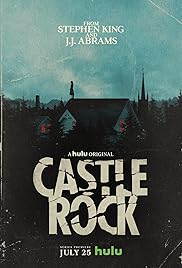
If it’s not obvious by now, I’m a big Stephen King fan (cue everyone who knows me saying in a torrent of sarcasm, “Gee, really? We had no effing idea!”). So when I heard some time last year that Hulu, JJ Abrams and His Royal Scariness Himself were collaborating to create a TV series set in his famous fictional town Castle Rock, you know I was interested. Fast forward to July 25th, and the first three episodes of Castle Rock premiered on Hulu. I didn’t write a review for them (I think that I was busy with a hundred other things that week), but I thought that the series had a strong start, and I was looking forward to seeing where the story went.

At the time I’m writing this, I’ve just finished Season One. How did it hold up?

First, the story. Taking place in the Stephen King multiverse, particularly in one of his frequent settings, Castle Rock, Maine, Castle Rock‘s first season follows Henry Deaver (Andre Holland), a lawyer who returns to his childhood town after receiving a call from nearby Shawshank Penitentiary after a prisoner (Bill Skarsgaard of IT fame) was found in its deepest depths, in a cage, with no name or other identity, only asking for him. Deaver, who left town after disappearing and then being found, only to be accused of murdering his adoptive father, tries to help this mysterious young man. But as he delves into this man’s case, as well as his own disappearance, he finds some strange connections between the two. And as violence starts building in the town, the race to figure out both mysteries takes on a whole new importance.

Okay first off, the cast is the best thing about this show! Every character utterly inhabits their character and make them feel like real people, some of whom you can imagine hanging out with (others, stay the hell away from). I especially liked Melanie Lynskey’s Molly Strand, a realtor with psychic powers and a history with Henry Deaver, and Sissy Spacek (yes, the original Carrie came back for another Stephen King story) as Ruth Deaver, Henry Deaver’s dementia-addled but still feisty and witty adoptive mother. And Scott Glenn as Alan Pangborn (maybe the only character who actually comes from a King story in this show) is a very sympathetic character, though he does come off at first as almost unlikable. Still, Holland as Deaver is the one who carries the story. We see things mainly through his eyes, and see how he struggles with all the baggage he carries as he tries to sift through all the confusion between events past and present.

I also liked the plot and how the story was told. It’s clearly geared towards people who are familiar with King’s works but still makes it accessible to those who haven’t seen the series. The writers also took the approach of a slow burn, taking their time to set up these characters and draw us in with the mystery while every now and then pumping things up to keep it interesting. And the writers weren’t afraid to take risks: two episodes are told entirely from the POV of a single character, and one of these episodes, through the eyes of Sissy Spacek’s character, is probably the best episode of the season.

Love Sissy Spacek in this show.

And finally, this does feel like a Stephen King story made for a television format. It’s not based on any particular story he’s written, but incorporates all of his stories, especially the ones set in Castle Rock, to give us a drama and a place that’s both familiar and new. Plus, you’ve got all the tropes you love (or in some cases, hate) from King: psychics, small towns full of secrets, religious fanatics gone crazy, sheriffs (or in this case, retired sheriffs), and of course, a whole bunch of weirdness that makes you go, “Say what? That works, but still, what the hell?”

Was there anything I didn’t like about Castle Rock? Well, a few things: one is that there’s a little too much weird. King’s been known to include a lot of odd concepts and sci-fi ideas into his work to varying degrees, and Castle Rock has a lot of that. The problem with that is, too much weird can lead to a lot of exposition and slow sequences where not much happens. Consequently, it also bites into moments where we could be totally terrified. And in my opinion, there weren’t enough of those moments, which is sad. Stephen King or Stephen-King inspired, his work is truly at its best when it features a shape-shifting clown hungry for children, or a Nazi war criminal burning cats alive in his oven,* things that make it hard for us to sleep. And that was lacking here.

On top of that, I didn’t like the season finale as much as I thought I would. It had its moments and explained a lot, but the climax could’ve been more epic, and I have mixed feelings on the final scene, both in what it featured and how it was told.

Still, all in all, it’s a great start to a series, and I’m looking forward to whatever they cook up for the upcoming season two (maybe something involving my man Leland Gaunt?). On a scale of 1 to 5, I’ll give Castle Rock a 4.3. Take a visit to the Rock, and hope that while you’re there, you come out with all your fingers attached.

That’s all for tonight, my Followers of Fear. Expect a review tomorrow for the season premiere of American Horror Story: Apocalypse (I’d review it tonight, but it ends after I should be in bed!). Until then, pleasant nightmares.

*I’m reading Apt Pupil right now, and that part had me frozen in my seat!

I was very excited waiting for this film to come out. How could I not be? I saw the original trailer three times before I sat down in the theater, and it made me jump at the end every time! And apparently another trailer was so scary, it was taken off YouTube (I wish I’d seen it before it got taken down, but that’s life). So you could see why I was interested in going to see it, and why I hoped it wouldn’t be terrible.

I’m glad to say, for the most part, The Nun lives up to the hype.

The Nun follows Father Burke, a priest who investigates paranormal and strange events on behalf of the church, and Sister Irene, a young novitiate with a history of fantastic visions. They are sent by the Vatican to investigate the suicide of a nun at a convent in Romania, and while there face an ancient evil that is seeking to escape the abbey and to wreak havoc on the wider world.

First off, the best part of this film is its characters and the actors playing them. Although they’re not the most developed, they feel like real people you might know and even want to hang out with. Sister Irene, played by Taissa Farmiga (the main series’ star Vera Farmiga’s younger sister, if you can believe it), is a loving, down-to-Earth woman who is trying to figure out whether to become a full nun. Frenchie, a young man who helps Father Burke and Sister Irene out, is wonderful comic relief as he flirts with Sister Irene and asks the occasional stupid question. And the Nun…yeah, that monster is still freaky as it was in the Conjuring 2. No wonder a film centering on it got made.

I also love the set of this film, a castle which is like a cross between Hogwarts’s darker sides and some castles in Europe I myself have been to. It’s so creepy and decrepit,, and is made to look almost like a maze you could get lost in. Add in all the touches–like the hundred thousand crosses placed throughout the castle–and it adds the perfect touch.

And, as always, there’s a strong atmosphere in this movie, just as we’ve come to expect from the Conjuring franchise. It keeps you tense and, coupled with some good jump scares (including that one from the trailer, which still got me) and a decent plot, keeps you interested and even a little scared throughout the movie.

Still, The Nun isn’t perfect. While the plot is decent, you can kind of guess where things are going to go about sixty-percent of the time, with the other forty-percent just being minor touches like a twist with the hauntings or something the demon does that you don’t expect. That, and the film may over-rely on jumpscares. This is a criticism that many people have had about the Conjuring films, but this is really the first time it bothered me. It might’ve been better if maybe the film relied more on creeping terror and a few more twists rather than making me jump in my seat.

Still, The Nun is a great addition to the Conjuring series and a good sign that there’s still plenty to mine from the lives of Ed and Lorraine Warren. On a scale of 1 to 5, I’m giving the film a 3.8. It’s not perfect, but it’s got a lot going for it and I’m glad I went to go see it. Take a look, and pray for safety…and that the next Annabelle film is good.

Yes, there’s another Annabelle film on the way. It’s going to be released next summer, and it looks like it might be the last Annabelle film, dealing with the titular doll and the Warrens’ daughter. Obviously, I’m looking forward to it.

If you’ve been with me for a while now, you know I’m interested in and an admirer of creepypasta, urban legends and scary stories born and spread on the Internet that seem to have some sort of plausibility of truth to them, even if you can’t prove it. Recently I heard about a TV series called Channel Zero that, like American Horror Story and Slasher before it, told a different horror story every season, though in this case the stories were based on creepypasta. I decided to take a look, and found out my local library had all three seasons on DVD. I reserved the first season, subtitled Candle Cove, and picked it up yesterday.

Guess who spent most of his Saturday binge-watching it on his TV and laptop? This guy. And as this is me we’re talking about, of course I’m reviewing it.

Based on the Candle Cove creepypasta by Kris Straub (unknown if he’s related to horror author and friend of Stephen King Peter Straub), Channel Zero: Candle Cove follows Mike Painter, a child psychiatrist who returns to his childhood home of Iron Hill, Ohio (go Ohio!) after leaving twenty-eight years previously, when five children were horribly murdered and the killer was never caught. One of the children was Mike’s twin brother Eddie. Now back to put old demons to rest, Mike reconnects with old friends and finds out that several children in town have been watching Candle Cove, a mysterious TV series that originally aired during the two months the murders occurred. Its return to TV doesn’t just coincide with Mike’s return, but with a series of events that threatens to rock Iron Hill, Mike, and his family to their very cores.

I was very impressed with Channel Zero‘s first season. First off, there’s the story. Candle Cove tells a slow-burn story centered around its unfolding mystery. It’s very hard to look away as you watch the characters try to figure out the mystery of the Candle Cove TV show and how it may have affected events past and present. It’s also extremely twisty, making you question everything and wonder how it’s all connected. Trust me, you won’t see the finale until it happens, and it’ll leave you speechless.

I also sympathized with a lot of the characters. They each had their own demons to deal with, and as events start getting crazier and crazier, you can almost find yourself understanding why they do what they do. Doesn’t mean you’ll always approve or root for them, but you’ll understand.

Special mention goes to Fiona Shaw (the actress who played Aunt Petunia in the Harry Potter movies) who played Marla Painter, Mike’s mother. That character goes through so much, but is probably the strongest character on the show, and Ms. Shaw carries it with every scene. Loved seeing her on screen every time she showed up.

Hello, I’m the Tooth Child. I’ll be in your nightmares tonight.

And oh my God, the visuals on this show! From the clips of Candle Cove, to the figures of the Tooth Child and the Skin-Taker, to even some of the dream sequences, there is so much terrifying imagery! Season One definitely took care to make sure every creepy scene was as disturbing as possible. If any of my works ever get adapted, I hope just as much care is put into the visuals and scares.

If there are any flaws with season one, at times the story tends to focus more on the slow-burn story than on actually making viewers crap their pants. That’s not a bad thing, but for some horror fans who prefer outright scares, the slow-burn quality may be a bit off-putting. But at the moment, that’s the only issue I can point out with this show. And it’s not even my issue!

On a scale of 1 to 5, I’m giving Channel Zero: Candle Cove full marks with a 5 out of 5! Great storytelling with a well thought-out mystery and excellent visuals, it feels like something Stephen King might produce from his own twisted imagination. Tune in, and let yourself be hypnotized.

That’s all for now, my Followers of Fear. With September here, there’s a lot of great horror stories on the horizon to read/watch and review. And believe me, I’ll be sharing my thoughts on most of them. Whether you want me to or not.

Until next time, pleasant nightmares!


There are people looking at the title of this post and thinking, “What the heck did that crazy author come up with now?”

To answer that question, I just finished writing a short story taking place during the London Blitz. I first had the idea for this story over four years ago, when I went on a study-abroad trip to Europe to follow the Allies’ path through Europe. While our teacher and tour guide (or was it one of the other students giving a report based on the research they did the last semester?) was discussing the London Blitz at Bletchley Park (the site where Alan Turing cracked the Nazi Enigma code), I had this idea for a story taking place during the Blitz, involving some kids encountering something awful while trying to run from the bombs. Over time, the antagonist came to be Adolf Hitler.

Or is it him? You know me, I never write anything simple. In any case, the story reflects something about me that shouldn’t surprise anyone: I’m scared of Hitler and the Nazis. As a Jew, I know how close my people came to annihilation nearly three-quarters of a century ago. If the war had gone differently, I probably wouldn’t be here, let alone talking about my stories and my love of horror with you. This is part of why I studied the Holocaust in college, and why I still study it today (though obviously not as frequently as I did in college). But even though I studied the Holocaust and have a pretty good understanding of what occurred, knowing doesn’t make me any less afraid of the Nazis or their monster of a leader. And with such a resurgence of people saying Hitler was right or worthy of admiration, I made sure to get that fear across in the story. Hopefully I succeeded.

You know, I actually wasn’t intending to write this story. I was planning on getting back to a novelette that I’d started working on in-between drafts of Rose. However, this story started calling to me to write it, and I couldn’t resist the call to listen to it. And yes, stories can demand to be written. At least while they’re in our heads. And I only just figured out why this story wanted me to write it so badly that it grabbed my attention. You see, I went to Washington DC recently for work. It was the first time since I was thirteen or so that I’d been to DC, so obviously I was going to do the tourist thing and check out some places (see my Instagram for photos). One of the places I decided to visit was the US Holocaust Memorial Museum, so I could see it after being so much more informed about it than I was as a teen.

The train car at the US Holocaust Memorial Museum. There’s such a palpable energy of despair coming from it, you can’t help but be affected by it.

I guess my subconscious had me write this story because I was going to that museum. Maybe it was some form of mental preparation, or maybe I felt somewhere in my mind that it was the right thing to write. In either case, I went to the museum on Saturday, and let me tell you, their main exhibit has a palpable atmosphere. You can’t go in there without coming away affected. Seeing all these artifacts from the past–concentration camp and Nazi uniforms, newsreel footage, photographs, testimonials from survivors, even a train car that might have been used to transport Jews and other “inferior races” to concentration camps–along with the museum’s presentation of them, make you fully aware of the horror that occurred so long ago and how it still affects us today.

After I left the main exhibit, I was so glad I was writing this story. It was as if through the story, I was reminding people there’s still a reason to fear Hitler and his ideology. Especially since it’s showing a resurgence these days, long after its abominable creator committed suicide.

So what’s next for this particular story? Well obviously I’m going to have it looked over and then edited. Afterwards though…we’ll see. It’s a little over sixty-eight hundred words, so it’s not too long. I’ll see about getting it published somewhere. There’s a magazine I’ve been trying on and off to get published in, so maybe they’ll take it. Then again, the Ohio Chapter of the Horror Writers Association, of which I’m a member of, has been talking about putting together an anthology. Perhaps I’ll submit it there.

In any case, I’ll let it lie for a while before working on it again. In the meantime, let’s see if I can finish that novelette before I get the latest draft of Rose back from Castrum.

That’s all for now, my Followers of Fear. I’m going to get ready for bed. Until next time, pleasant nightmares!

The other day, I was talking with someone about what sort of tattoo I’d get if I were the type to get one.* This is a topic I’ve thought of a lot in my twenty-five years, and I think I’ve figured out what I would get. As I explained to my friend, it would be a representation of the horror genre, how the various causes of horror in fiction–like demonic entities, the prospect of death, and of course human beings, among others–have a detrimental effect on us. “It’s corruption of the innocent,” I explained. “The very essence of horror.”

And then I realized something: corruption of the innocence is an essential part, if not the essence, of horror. And it can be found in every horror story, if you think about it. I knew it was part of Gothic horror, as I mentioned it in my post about what makes Gothic horror. But beyond that subgenre? Hadn’t even considered it.

I could have hit myself for not realizing that sooner. It was staring me right in the face, goddammit!

As I said above, I mentioned how corruption of the innocent is an element of Gothic fiction, and we see this in Gothic stories like The Shining. Danny sees the world go from a mostly-nice place where bad luck sometimes causes disaster for good people to a dark place where entities like The Overlook exist and kill people or drive them mad. Said entity also tries to corrupt Danny’s shine, to make that beautiful psychic power part of its own dark self.

Innocence corrupted.

However, this concept is found in other horror stories. HP Lovecraft incorporated it into his work quite often. In The Call of Cthulhu, his most famous work, the narrator starts out as being very sure that the world is a concrete place of science and rationality. However, after going through his late uncle’s effects, he realizes that there’s something awful in this world, a worldwide cult devoted to the bloody worship of an awful god that will one day rise to retake the Earth. And not only did this cult kill the narrator’s uncle, its agents will likely kill the narrator, driven close to madness with fear, before long.

Innocence corrupted.

This story is a great example of corruption of the innocent at work without being part of the Gothic genre.

And sometimes the innocence being ruined here isn’t your traditional childlike innocence. Sometimes it’s as simple as just having your worldview changed. Two early Stephen King stories, “The Mangler” and “Battleground,” revolve around hardened men discovering the world can involve the supernatural or just plain weird (in this case, a possessed dry-cleaning machine and toy soldiers that come to life to kill you). As I said, nothing dramatic. Just a shift in viewpoint.

Innocence corrupted.

Even when it’s so ubiquitous though, I don’t think corruption of the innocent is the essence of horror, as I characterized above. Or at least, the only essence of horror. After all, we can’t forget about fear, which is what horror plays on and seeks to create. Without that fear, you just don’t have a good horror story. Perhaps then, like fear or a powerful antagonist, corruption of the innocent is something necessary to writing horror. Without it, the genre would be missing something that cannot be done without.

So while not exactly the full essence of horror, corruption of the innocent is important to the genre. You could even say it’s wrapped up in the essence of horror. And I’m glad I finally realized after such a long time that it was.

Hopefully it makes writing decent horror stories easier.

What do you think of corruption of the innocent as part of horror? Do you think I’m onto something?

Do you think I should get a tattoo? Would you like to see this design of mine realized? Do you know how any artists who could help me create it?

*For the record, I’m tempted, but my religious beliefs aren’t fond of me getting one. And I’m not sure I want something so permanent on my body, anyway. Especially if I have to pay a ton of money for what I’m looking for. Still fun to think about, though.

Also, I want it on my back. Best place to get it, in my personal opinion.