Posts Tagged ‘editing’

It’s Friday again, so you know what that means. It’s #FirstLineFriday!

If you’re new here and don’t know what #FirstLineFriday is, let me start by telling you that it’s a fun weekly ritual to take up (and it’s a lot less costly than animal or human sacrifice. Also requires less clean up). So here’s how it works. On Fridays, you:

  1. Create a blog post with the title #FirstLineFriday, hashtag and all.
  2. Explain the rules like I’m doing.
  3. Post the first one or two lines of a potential work, work-in-progress, or completed or published story.
  4. Finally, ask your readers for feedback and encourage them to try it on their own blogs.

This week’s entry comes from an idea I had a few weeks back for a novel that might be classified as science-horror. I’m not sure, it’s got some elements that could be classified as horror, but at the same time part of the conflict of the story involves a science-fiction plot device, so it kind of straddles the two. I’m not making any sense, am I? Well, whatever. Here are the lines that would start this story. Enjoy:

Catherine had been working at the Warner-Marigold Motel for three years, and she was on track for a promotion in the next year or so. Of course, that might only be because she was the only one on the cleaning staff who was willing to clean Room A16, known among the staff as the Suicide Room.

Thoughts? Errors? Let me know in the comments below.

And while you’re at it, why not do #FirstLineFriday on your blog? It’s great fun, and for writers it’s not only good practice, but it’s a great way to test different openings for various stories. I’ve certainly enjoyed doing it, and I started doing this on my blog nearly a year ago.

That’s all for now. If I have somethig to blog about, I’ll let you know. In the meantime, I’ll see you guys around. Have a great weekend, my Followers of Fear. I know I will.

About three years ago, I wrote a post on in media res, a plot device often utilized across various media of fiction. I’d like to revisit the subject, because I’ve had some thoughts on this particular writing tool since then and I wanted to write about them. And since I’m running this blog, talk about it I shall!

So if you’re not familiar with in media res (Latin for “into the middle things”), it’s a plot device in literature where the story opens in the middle of the action, rather than beginning with exposition. Background information is usually filled in through dialogue, flashbacks, or having a nonlinear narrative. An example of a story that starts in media res is Raiders of the Lost Ark: you don’t get a Star Wars screen crawl, or an opening narration, but you just hop into Indy heading into a temple to get a famous statue. Another great example of the usage of the plot device is A Game of Thrones by George RR Martin. No history on the Seven Kingdoms, just getting plopped into a patrol with three brothers of the Night’s Watch, and some Others attacking them.

I’v used this device in a lot of my works. Reborn City starts out with Zahara and her family going out to dinner, with backstory and world-building reserved for Chapter 2. Snake begins in a church, with information being dropped through exposition and flashbacks throughout the book. My short story Travelers of the Loneliest Roads literally starts on the road, and a lot of works that I’m working to get out to you, dear Followers, start out this way.

Overall, I feel it’s a good way to start a story. In fact, it might be my favorite way to start a story. Rather than doing a bunch of backstory, like “Forty years from now, the war on terror spirals into a chaotic Third World War that leads to a bunch of new countries and city-states. In one city-state, Reborn City, which is ruled by the Parthenon Company, there’s a powerful gang called the Hydras. Now onto the story of Zahara Bakur,” we start with Zahara and the events that lead her to becoming a Hydra.

However, in media res has to be done delicately. I realized this as I was editing a short story of mine last night.The story started out with the protagonist running for her life, then flashed back rather quickly to how she ended up running for her life, and then went back to her running her life. I was like, “Why did I think this was a good idea in the first draft?” I actually had to go back and rearrange the story so that everything goes into chronological order. The story moves much better now (though I may nix that beginning part and have it start in the meat of the story. We’ll see after the second draft’s done).

So with that in mind, I thought I’d list some tips to starting a story in media res and doing it well, with the hope other writers might avoid some of my mistakes with this plot device:

  • Make it easy to slide in for the reader. When I first read A Game of Thrones, I had to go over the first chapter twice just to make sure I understood what was happening. After a bit of examination, I understood what was happening a bit better, though I still was a bit confused. Not a good way to introduce me to Westeros, but the rest of the novel made up for that.
    Point is, when starting a story in media res, make sure that all readers, whether they’re expecting one thing or another thing or nothing at all, that they can dive into the story without wondering what the heck they’re reading or if they missed something. You don’t need to be overly-simplistic with your language or story, you just have to make it easy to follow so that readers have a good idea what is happening while they’re reading.
  • Don’t move too quickly into the information. Remember that short story I just mentioned? I had a quick beginning, and then I dived right into a flashback. Made no sense on a second look. Wait for a moment where it won’t throw people off, and then try and make the segue into the flashback make sense.
  • Whatever’s happening has to hook the reader. By definition, in media res starts a story in the middle of the action, so you want to make sure that the first line is catchy. It doesn’t have to start with running for your life, gunfights, or anything like that, but it has to be somewhat catchy. This could be something as ordinary as a girl walking into a classroom with soda in her hair (my own short story, Tigress Lizzy), as long as it’s interesting to read. How you do that depends on language and skill as much as what is happening in the story, though with practice you can get very good at it.

However you want to begin a story, the point is to hook your readers so that they’ll read the rest of the book. In media res is just one way to do that, but it’s a fun way to do it. And with time and experience, you can get better at it. You might even learn a thing or two in mid-edits.

How do you feel about in media res? What tips do you have for doing it well?

It’s Friday again, so you know what that means. It’s #FirstLineFriday!

Now if you don’t know what #FirstLineFriday is, let me break it down for you. On Fridays you:

  1. Write a post on your blog called #FirstLineFirday, hashtag and all
  2. Explain the rules like I’m doing now
  3. Post the first one or two lines of a potential story, a story-in-progress, or a completed or published story
  4. Ask your readers for feedback and encourage them to do their own #FirstLineFriday on their own blog.

This week’s entry comes from a short story idea I’ve been hanging on for a while now, but haven’t written yet. It’s got a very interesting premise, if you ask me, and part of that premise is explained in the first couple of lines. Enjoy:

Some famous guy once said, “I think, therefore I am.” To that, I would like to add, “I imagine, therefore I can become.”

Thoughts? Errors? Let’s discuss in the comments below.

And if you enjoyed reading #FirstLineFriday, why not try writing #FirstLineFriday? Trust me everyone, it’s a lot of fun coming up with the beginning lines of a story each week. Sometimes it can actually get ideas flowing in your head and help you come up with new stories. So why not try it?

That’s all for now. If I have anything else to talk about this weekend, I’ll be posting it here. See you later, Followers of Fear!

As you know, I’ve got a billion different projects going on all at one time. I mean, I’ve got four books at various stages of the editing/compilation process, and I know that some of you are very interested in getting your hands on at least one of these books. So here are some updates on a few of the projects I’m working on getting out to you, the Followers of Fear.

Video Rage

I already mentioned this on my Facebook page and Twitter feed (which, if you are not on, I suggest you check out), but as of last night the third draft of Video Rage, the follow-up to my debut novel Reborn City. As many of you know, I had an editor, Britney Mills, help me look for any problems that I’d missed while working on the second draft. I’m pleased to say that after all the work on this draft, VR looks even better than before and may soon be ready for publication.

But first, I’m sending the manuscript back to Britney for another look over. Together we’ll catch any other problems we might’ve missed, and after all that’s been taken care of I can start working on getting this book out to you guys.

In the meantime, why not check out the first book, Reborn City? It’s the story of a Muslim teenager forced to join a street gang in a dystopian city-state, and the strange connection between the gang’s leaders and a shadowy organization that rules over the city. It’s also currently my most popular book. which I guess means I did a good job writing it. Anyway, if you’d like to check out Reborn City, it’s available in paperback and e-book from Amazon, Createspace and Smashwords. Happy reading, and let me know what you think when you’ve finished reading it.

Teenage Wasteland

No, that’s not a song by the Who. The title might be similar, but it’s not the same thing. It’s also not about teenagers high on acid at Woodstock, but my upcoming collection of short stories revolving around teenagers. And I’m happy to say that I’m making good progress on the collection.

As I’ve stated in previous posts, I’d like for TW to have at least thirteen short stories. So far, there are seven confirmed to be in the collection. Some, like Buried Alive or Travelers of the Loneliest Roads, have already been published and are just getting touch-ups. Others are originals that haven’t been published anywhere else (yet), such as Cult of the Raven God and A Project in Western Ideals. Some of those are getting touch-ups as well, but others, such as Project, will require more extensive editing.

Anyway, I plan to get through the last two short stories of those seven, and then I’ll take a break to get through another big project that needs some work. And after that, I plan to work on the other stories in TW until it’s time to prep for National Novel Writing Month (more on that when we get closer to November).

Rose

That big project I just mentioned? This is it. And if you don’t know what Rose is, it’s a novel I wrote as my thesis project during my senior year of college. The story follows a woman with amnesia whose body is undergoing some strange changes and her relationship with a strange young man who says he loves her. The story is pretty dark and strange, and I’m quite proud of what’s been done with it so far. However, there’s a bit more work to be done, so I’ve got at least one or two more drafts to go on this, and I plan to get started on the next draft after I finish with the stories from TW. Hopefully I’ll be done with it by the summer.


That’s all for now. If I have any more updates, I’ll make sure to let you know. Have a good rest of your day, my Followers of Fear. I know I will.


How many of you are fans of my first novel, Reborn City? I’m hoping a lot of you are thinking to yourselves “I am!” or “It’s something I’ve been meaning to check out”, because I’ve got some good news for you! As you know, I’ve been editing RC‘s sequel Video Rage on and off since I finished the first draft, and that I wanted to have another editor take a look at it before I get it published and into your hands.

Well, here’s where the good news comes in: I met an editor through one of my writing groups on Facebook who was willing to work within my budget. Her name is Britney Mills, and can I just say, she does great work and a fast turnaround? She read through RC within a few weeks, and then read through VR within a similar amount of time. I was like, “WOW!” And she does amazing work. I looked over three of VR‘s chapters last night with her corrections, and it’s all solid suggestions and points. Definitely what I was looking for in an editor.

So now that I have a third party’s feedback on VR, I’m going to dive right into editing tonight, making corrections and thinking about Britney’s suggestions. After I’ve done all that (and hopefully that won’t take more than a few weeks), I’ll send it back to Britney for her to take another look at. Once she gets back to me and any other problems she finds are corrected, I’m going to say “Done!” with VR, send it off to the copyright office, have a cover designed, and once all that’s taken care of, set a release date.

In short, Video Rage will be published sometime later this year.

Yeah, exciting news, right? Especially for my three biggest fans of the first book (aka my mother, my sister, and my stepmom). I can’t be more exact on a release date, but I’m hoping for a summer release. And I promise you, it’s going to be good. Britney told me in her email from last night that one of the things she liked about VR is that it “did a great job of keeping things interesting but not letting me guess ahead of time what is going to happen”. I think that’s a very good sign.

Reborn City

Reborn City

So if you’re looking forward to Video Rage and are tired of the wait, you can start getting ready for more adventures of the Hydras. And if at all you’re now interested in reading the first book Reborn City, it’s available from Amazon, Createspace, and Smashwords. From what people tell me, it’s my most popular book right now, and it’s not hard to see why. The story follows Zahara Bakur, a Muslim teenager in the dystopian city-state of Reborn City as she’s forced to join an interracial street gang known as the Hydras for protection. It’s a great book that includes themes of gang violence, racism and Islamaphobia, drug addiction, and many others (and if you’re tired of dystopian fiction that you can’t imagine actually happening in the world, like Hunger Games or Divergent, you might find RC more appealing).

And if you’re an author looking for an outside party to take a look at your book and make sure it’s up to scratch, I highly recommend Britney’s services. She gives great feedback, does a quick turn around, and I didn’t have to pay an arm and a leg for her help. You can check out her website, Writing Unblocked, if you like for more information.

That’s all for now, my Followers of Fear. I’ve got a few things to take care of today before I start editing, so I’m going to get on that. As more news comes in, I’ll make sure to update you. Have a good one, everybody!

Oh, and if any of you do decide to read Reborn City, make sure to let me know what you think, either in a comment or a review online. Positive or negative, I love feedback, and it helps me become a better writer in the end. Thanks!

The other day I met some folks at the local Starbucks. We’re all part of a group  of college students and young adults run by Jewish Family Services of Columbus which promotes physical, financial, mental, and social health for its members. As often happens when I’m talking with new people, the writing career came up. And you should’ve seen how these folks reacted. They were very impressed, going on about how three published books and four more at various stages of the editing/compilation process* was quite the talent, how they struggled to get five-hundred words together and make that sound good, let alone an entire novel. Basically it all boiled down to “We struggle with this, but you make it look easy.”

And the whole time I’m just sitting there thinking, This is all very flattering, I hope you buy the books, but honestly writing is damn hard!

This came up during a discussion I had with an acquaintance over Facebook last week. He was trying to write a story but was having trouble getting the words down on paper, so he thought he’d pick my brains on the subject. One of the things we discussed was how difficult it is for even the most veteran writers to get words out on paper. You look at that blank page, and you know that you need to get several thousand words–sometimes much, much more–on that paper. Then you realize that you’ll have to go back several times, editing and rewriting, changing passages, changing entire plot lines sometimes.** It’s intimidating, almost like every word is like a soldier in a war that you have to defeat personally. Not very easy.

Okay, this is possibly me being overdramatic, but you get the idea.

Yeah, to some people I make writing look pretty easy. That I’m making those sixty-thousand-plus words just appear on the page with barely any energy spent. But in reality, it’s hard work coming up with the stories, making them compelling and fun and interesting. Creating the characters, making them fully rounded and sympathetic, giving them backstories and a reason for the readers to root for them or at least stay invested in them. Then doing the research, working the final details out, and finally  putting the words down on paper, picking them and putting them in an order that sounds right when read aloud. And even after all that there are probably more words to add, just as many to lose, and maybe twice that amount is going to be reordered or replaced by something else.

Like the title of this post says, it’s a struggle to write. We writers may make it seem easy, or people look at us and assume that to us it’s easy (even when you tell them that it’s bloody difficult work), but it’s as much of a challenge for us as finding a way to sustain life on Mars is for scientists, or making it to the Olympics is for athletes.

And yet still we do it. We come up with the ideas, do the outlines, create the characters. We research, put down the final plot details, and get everything we need done before we actually write. And then, through fears and anxiety and everything else, we face down the blank page, like two boxers in a ring, and we start working. And after all the writing’s done, we do the countless hours and hours of editing, until the story is as good as it’s going to be.

Why do we do this? Maybe we like sharing the stories we create with our readers. Maybe we need to get these stories out of our heads before they drive us crazy. The point is, we engage in that struggle every time we open our notebooks or turn on our computers. And we do what we’ve trained and worked hard for. And it’s never easy. But for many of us, I think we wouldn’t have it any other way.

*More on that in another post.

**I may have to do that with Rose when I do the third draft. Oy!

It’s Friday again, so you know what that means. It’s #FirstLineFriday! New here and don’t know what #FirstLineFriday is? Don’t worry, the rules are coming right up!

So, here are the rules of #FirstLineFriday. On Fridays, you:

  1. Write a post on your blog titled #FirstLineFriday, hashtag and all.
  2. Explain the rules like I’m doing now.
  3. Post the first one or two lines of a potential story, a story-in-progress, or a completed or published story.
  4. Ask your readers for feedback and encourage them to try doing #FirstLineFriday on their own blogs.

So, my entry this week isn’t attached to any story, at least not any I’ve come up with yet. They actually came to me while I was helping my sister move into her new apartment earlier this week (when the time comes, I plan to make sure she returns the favor. Mwa ha ha!). If I can find a story where this sort of opening applies though, I’ll definitely use it. Anyway, enjoy:

Whoever had the bright idea to imply that moving was hard but glorious work should have been shot. Because as far as I’m concerned, moving is only one thing, and that’s a pain in the ass.

Thoughts? Errors? Let’s discuss in the comments below.

And if you enjoyed reading this, why not try it on your own blog? It’s a fun habit to get into, and you get such great feedback from your readers. I certainly enjoy it.

That’s all for now, my Followers of Fear. I’ll probably take a short break from blogging over the next couple of days as I work on the many things that take up my life. If anything big happens though, I’ll make sure to let you know. Have a great weekend!

I would like to blame thank my good friend Kat Impossible from Life and Other Disasters for tagging me in what clearly looks to be a ton of fun. It’s the Burn, Rewrite, or Reread Book Tag, which doesn’t actually involve burning but is like a book version of Kiss, Marry, Kill.

Alright, here are the instructions:

  • Randomly choose three books.
  • Choose which of these three you would burn, rewrite, or reread.
  • Do three rounds of this, and then tag someone to do the book tag as well.

Alright, here I go. Let’s see what I come up with:

ROUND ONE

Burn: Day Four by Sarah Lotz. Oh my God, what a book that promised to be good but ended up being a great waste of time. Sure, it started out okay: cruise ship stalls in the middle of the ocean, everything’s in chaos. Quick pace and lots of interesting stuff going on. But then when it slows down after the initial chaos (because things can’t always be quick-paced after a ship breaks down), it just gets boring, with little to no clear direction of where the autor wants the story to go and an ending that is just bizarre (and not a good way). It’s enough that I probably won’t ever read a book by Sarah Lotz again (and considering the reviews online, I’m better off not).

Rewrite: A Head Full of Ghosts by Paul Tremblay. If you read my review of that book, you know that I liked it but I wish it could’ve been a bit scarier. Especially since Stephen King recommended this book to me (why, Your Royal Scariness? Why did you say it was so scary? It wasn’t!). Anyway, if I could I’d rewrite this one and maybe make it a bit more on the scary side. How? I don’t know, some changes in atmosphere, a few more parts where the older sister acts like a creepy possessed girl. It’s a thought.

Reread: Battle Royale by Koushun Takami. You know what I just realized? All the books in this round I’ve listened to as audio books. Also, I’ve actually reread Battle Royale already, but that’s because it’s one of my favorite novels. The language is flowing, nearly every character in the fifty-or-so large cast gets really fleshed out, and it really makes you think on a while bunch of different levels. Plus it does in one book what the Hunger Games wishes it could do in three. So I’ll probably end up rereading (or re-listening to) Battle Royale again someday.

ROUND TWO

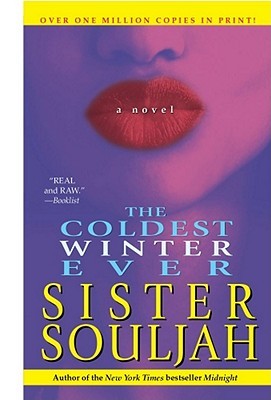
Burn: The Coldest Winter Ever by Sister Souljah. No offense to Sister Souljah, I admire her work, but I did not enjoy her debut novel, about the daughter of a big-time drug king who suddenly finds herself without money or connections and tries to come out on top as her world falls around her. Not only was the main character totally unsympathetic (imagine a novel narrated by an even more annoying Veruca Salt from Charlie and the Chocolate Factory, and you have Winter Santiaga), but it’s basically one big morality tale about why you should walk the straight and narrow and stay away from drugs and hustling and all that or it’ll come back to haunt you. Yeah, I think there are a few memoirs out there that told that story better.

Still, I will say that the book’s language influenced me when I was writing Reborn City and I wanted to really show the dialect of West Reborn. That’s one thing I’ll always be grateful to Sister Souljah for.

Rewrite: Destroyer of Worlds by Mark Chadbourn. This was the last book in a trilogy, the trilogy itself being the third trilogy in a trilogy of trilogies that took our modern world and placed it into a mystical universe mixing Celtic mythology with Eastern philosophy. It’s a wonderful series, but the last trilogy had its problems. Especially the last book, which felt rushed to the point that characters who should’ve gotten some character development got none at all, barely a mention in one case. I really think this book could’ve used a hundred or so more pages to really tell the story the way it should’ve been told, and if I could I might help out with that.

Reread: The Amulet of Samarkand by Jonathan Stroud. If you liked Harry Potter, you should love the Bartimaeus trilogy, which is kind of like Harry Potter but is told in three books (plus a prequel) and is slightly more grown up than HP. The story of a magician’s apprentice who summons a demon to help him get revenge on another magician and the mayhem that ensues when he and the demon get embroiled in a plot against the British government is pure fun, with a wisecracking demonic narrator and a world that is beautifully constructed and mirrors our own in interesting ways. I’ve reread the trilogy before, and I’m always entertained when I do. Check out the first book. You might just find the same gem I found as a kid.

And finally…

ROUND THREE

Burn: Wuthering Heights by Emily Bronte. Honestly, I’ve had to read this novel twice for classes, and each time I wasn’t at all surprised that Emily needed a review by her famous sister Charlotte to get this book noticed by people, because it sucks! Not only is the narration and style annoying, but the story drags, and a lot of what happens makes you scratch your head. Seriously, did the Lintons never consider calling the local sheriff when Heathcliff kidnapped his niece and tried to marry her off to his sickly son? Like I said, I’ve read it twice, and I don’t plan to read it again. It may be a classic, but it’s a classic that never should’ve been one.

Rewrite: Your Heart Belongs to Me by Dean Koontz. Koontz has written some great novels–I love the Odd Thomas series, though I’m behind on the books, and The Face would make an amazing movie, it’s that good–but this one really got me angry. It started out with promise: guy who made money off the Internet needs a heart transplant, but he’s very low on the donor list. His new doctor gets him put high up on another list, and he gets a new heart. Thing is, the person who gave up their heart for him might be coming back for it. Yeah, sounds like a ghost story, but it turned out to be some weird spy thriller tied up in a Christian morality tale. I kid you not, if Koontz had stayed with the ghost story element instead of switching things up about two-thirds in with the spy twist, I might’ve really liked this novel. And now you know how I’d rewrite it.

Reread: The Alchemist by Paulo Coelho. This is a wonderful novel about following your dreams and fulfilling your personal destiny in this grand world, as told through the eyes of young shepherd Santiago as he goes on a journey to Egypt after having a dream about finding treasure at the pyramids. I read it as a teen and it blew me away. If given the chance, I’d love to reread it again, because it’s such a beautiful story that gets you on so many different levels. If you haven’t read it, this is definitely one you should check out, especially since it’s been translated into so many different languages. Trust me, you won’t regret it.

And now, the people I tag:

Have fun! And make sure to link back to me when you post these.

That’s all for now, I’ve got a busy day ahead of me and I’m going to get to it. Wish me luck, my Followers of Fear!

I’ve been watching a lot of Supernatural on Netflix lately, and something in the most recent episode I watched got me thinking. It was stated at the beginning of the season that the main villain of the season, the demon Lilith, is breaking magical seals to raise the demon Lucifer out of Hell, and she needs to destroy sixty-six seals to do so. Based on that, I thought there were sixty-six seals in total, which seemed reasonable. According to the episode I watched yesterday though, there are over six-hundred possible seals, and Lilith needs to only destroy sixty-six to get Lucifer out of Hell.

Now I’ll admit that I’m still working my way through the season, so there may be more to these seals than what I know right now, but based on just the description I have above, that’s a pretty poor security system. You’re keeping the ultimate evil bound by six-hundred seals, but only sixty-six need to be destroyed to let him out? That’s like only needing an eleven percent passing score on a lie detector test to get access to Top Secret national security files. You’re just acting for trouble.

With that in mind, as well as my thoughts on the movie The Boy that I reviewed earlier this week,* I got to thinking. Sometimes creators do things in fiction that make absolutely no sense when the fans get to them. Obviously, there are things in fiction that are most likely impossible–the magic of Harry Potter, actual giant lizards like Godzilla, TARDISes and Time Lords (sadly)–but we forget that so we can enjoy the story. This is called suspension of belief, and it’s how we can enjoy these stories. However sometimes a creator–whether it’s a book, a movie, a comic, or a TV show–is just too hard for us to believe. When that happens, the story, and our enjoyment of the story, suffers horribly.

With that in mind, here are some things every storyteller can do to make it easier to tell a story without dong something that will make a reader/viewer say, “What the hell? That’s so stupid!”

  • Avoid the unnecessary or stupid twists. Back to The Boy again, which, if you haven’t read my review, singled out the twist that the boy Brahms was alive and a full adult as the movie’s biggest fault. I get that they were trying to distinguish the movie from others like it with a unique twist, but besides feeling kind of lame, the twist made the whole concept of the movie nonsensical (see my review for full details on that). If you plan to include a twist in your work, ask yourself a few questions before you use one, such as: is this twist necessary to make a good story? Is it predictable? Does it make the story seem silly or even make the events of the story make no sense? I’m convinced if the filmmakers of The Boy had asked these questions, they might have had a better movie on their hands.
  • What brought people to your work in the first place? I love bashing 2009’s Friday the 13th remake, because it is such a terrible film. In fact, the filmmakers even seemed to think that the movie was crap, or that they were unable to really make a great Friday the 13th film, so they packed in as much swearing, sex and nudity, drugs, alcohol, and raunchy or childish humor as possible. The result was a film that felt like it was trying to be one of those dirty teen camping trip comedies that had to remind itself every few minutes it was about a serial killer living on a lake.
    If you’re going to tell a certain type of story, keep in mind at every step what sort of story it is and don’t focus unnecessarily on elements that are only a small part of the story or even unnecessary. In the case of Friday the 13th, people watch those movies to see Jason go on a rampage. The sex and drugs and all that other stuff are just added bonuses as well as what causes Jason to target his victims, not why we pay nine dollars at the box office. And the fact that the filmmakers felt those elements were more important is why I’ll always enjoy bashing this piece of crap out of Michael Bay’s bum.
  • Could this happen in the real world? I have a lot of problems with the Hunger Games books.** One of my biggest problems is how the series ends: Katniss finds out President Coin ordered the bombing that killed her sister, so she kills Coin in revenge as Coin takes control of the nation. The new government of Panem hushes up Coin’s treachery to preserve the new order, so for all intents and purposes Katniss just assassinated the new President unprovoked. And Katniss…is portrayed as a girl gone mad with grief over the loss of her sister, she gets exiled to District 12 with weekly phone conferences with a shrink, and lives happily ever after?
    I don’t care if you’re the face of a movement, if a similar revolution occurred in America, and the face of that revolution killed the new leader, you bet that person would at least get locked up in a prison or psych ward so they couldn’t tell anyone what they’d done. Exile and getting to raise a family? Nothing bad happens to her? I don’t care if she has nightmares a lot and never tells us her kids’ names because she’s afraid of losing them, that still would never happen in real life!
    So when you’re telling your own story, ask yourself if a situation is so unbelievable, even in the wackiest of fiction, that people can’t suspend their disbelief anymore. If it is, you might want to consider tweaking it so that guys like me don’t go on a rant about it on the Internet.
  • If it needs a lengthy explanation for why it happens, you might want to rethink the why. This one comes from personal experience. When I was writing Reborn City, I had this really complicated reason as to why my protagonist Zahara Bakur had to join the Hydras. That, and another situation later in the book had really complicated reasons why those things had to happen. It wasn’t until later drafts that I realized how overly complicated those situations were and found simpler explanations for why Zahara had to join the Hydras or the other thing had to happen, explanations that were so simple but worked so perfectly I wondered why I tried to use the run-around logic that a smart reader could easily poke a hole in.
    So if you want a specific event in your story to happen for the sake of the story but the way you get it to happen is really overly-complicated, requires a lot of explanation, and from certain angles makes no sense, perhaps you should reconsider either the event or why it happens. It beats having two unnecessary pages of dialogue explaining why something needs to happen when a much simpler explanation is at hand, at any rate.
  • And finally, don’t forget what is obvious or necessary. This kind of fits into my third point, but I’m making it separate because I feel that’s the best way to present it. Anyway, in one of my fiction workshops in college, a classmate turned in a story that took place in a post-apocalyptic setting. It was a good first draft, but a major problem I had was that the protagonist apparently forgot his bow and arrow at home. I said to her, “This is a world where people dumb enough to leave their weapons at home while on a trip are likely to get killed a hundred different ways. No seasoned hunter like this guy forgets his source of food and protection.” In the same way, make sure that you avoid moves like that, where a character does something that makes no sense for someone in their position or the setting has some part of it that also makes little sense when you think about it. Trust me, it will improve the story if you avoid those problems.

In the end, the thing you want to tell is a good story. Avoiding anything that strains the credulity of your audience can be very difficult, but with trial and effort, you can get very good at it. This is also why I recommend having your stories looked at by editors or beta readers who won’t spare good advice because they’re afraid of hurting your feelings or risking your friendship. They can help you avoid these traps and improve the overall product of the story.

What tricks do you have for avoiding situations that strain the credulity of your audience?

What are some stories where they did something that really took you out of the story?

*By the way, it’s been nearly a week since I published that post, but an average of 36 people a day have been checking that post out since. I guess I’m not the only one who found that twist completely stupid.

**Especially the trilogy’s very backstory. A nation in the far-flung future had a massive civil war, and the Capitol decided that to stop future rebellions, the entire country should revolve politically, economically, and socially around an annual death game involving youth from the Districts? If Panem can genetically engineer scary monsters, they can synthesize a drug that takes out aggression and dump it into the Districts’ water supply. Problem solved, and all those seventeen-hundred and twenty people who died for the Capitol’s perverse pleasure instead grow up to be contributors to society. Yes, that is diabolical and I know I’d make a great dictator. My mother informed me of this fact when I pointed out this problem with the books.

It’s Friday again, so you know what that means! It’s #FirstLineFriday, my weekly ritual that’s becoming a blogging trend.

Now if you’re unfamiliar with #FirstLineFriday, here are the rules should you wish to do this on your blog (and I highly encourage you try it, it’s a whole lot of fun):

  1. Title a post on your own blog #FirstLineFriday, hashtag and all
  2. Explain the rules like I’m doing
  3. Post the first one or two lines of a potential story, a story-in-progress, or a completed or published story.
  4. Ask your readers for feedback.

So I really don’t have a source for this opening. It just sort of came to me in the bathroom the other day (as ideas are sometimes known to do) and I thought I’d roll with it as my #FirstLineFriday entry. So without further ado, enjoy:

Gerry’s cousin, who had seen a number of therapists in his lifetime, had told him that you could often tell a lot about a shrink by how they decorated their offices. Gerry looked at the mishmash of science-fiction posters, the African tribal masks, and philosophy tomes around Dr. Greer’s office and wondered what that said about her.

What do you guys think? interesting opening? Any problems that could use fixing? Let’s discuss in the comments below.

And if you’d like to try #FirstLineFriday on your blogs, please do. Just let me know when you post it so I can check it out.

That’s all for now. I’ll try to get a post or two out this weekend if I can, if I’m not too busy with life, so keep an eye out for them. Have a good one, my Followers of Fear!