Posts Tagged ‘films’

It’s been a while since I updated everyone on my novel-that-also-doubles-as-my senior-thesis Rose, but I have the opportunity to do so now. Especially since I can’t do my job search without updating my resume, and I’m waiting to hear back from a couple of people on whether I can use them as references.

Well, if you’ll remember my post on my first thesis meeting, you know I ended up switching to first person and rewriting some of the early chapters to make them darker. Well, this past Wednesday there was another meeting with my advisor and the other student I’m working with (I keep meaning to ask if I can use their real names, but I keep forgetting. Oh well, I think I’ll stick to M, my advisor, and P, the other student I’m working with). They had a lot of suggestions for me:

  • Probably a hold over from writing Reborn City and Video Rage, but I have a tendency to explain the stranger elements of the story. Works great for science fiction, but terrible for horror. So I’m trying not to explain the stranger aspects and let the story tell it through what happens.
  • There are a few comedy elements that I’m trying to cut out. We’ll see how that goes.
  • There are some things I will need to change for the first couple chapters, but that’ll wait for the second draft.
  • Most importantly, I’ve switched to narrating in present tense.

That last one is a big one for me. In a previous post, I mentioned that I probably shouldn’t narrate in present tense because I’m not very good or familiar with it and because I have the tendency to switch back into past tense. I explained that to M, but he insisted that I at least try it. His reasoning was that since I’ve been narrating the story in past tense with a first person narrator this whole time, it’s pretty much assumed that things will turn out for the best (probably true). Putting the story in first person would probably serve to add a little mystery and uncertainty to the story.

So I thought, might as well give it a shot. I’d switched from third to first person already, and that had brought about a definite improvement, though I have to work harder to make sure that Rose’s constant state of terror doesn’t start to sound boring. On the other hand, I was already comfortable with writing in the first person. One of my early attempts at writing a novel was in the first person, and for a story written in my early-to-mid teens I did a pretty good job. Writing in the present tense was something I’d hardly ever done before.

So I rewrote parts of Chapter Three to start with, the parts that needed some holes to be plugged so that the story could continue to flow.Then I wrote Chapter Four, and over the past twenty-four hours or so I wrote Chapter Five. Both of those chapters and the parts of Chapter Three I rewrote were written in present tense. And it is weird for me. I don’t know many other authors who write that way, so I don’t have an example to refer back to. I’m basically feeling it out as I go.

But I somehow managed to do it. And it’s been a rather dramatic shift, like the DNA of the story has been altered. I keep thinking back to that scene from the first Sam Raimi Spider-Man film, when Peter Parker’s DNA gets rewritten by spider-DNA, causing his whole self to change. It’s that dramatic a shift, like the whole thing has changed in a very important way while still remaining the same basic story. I don’t think I’ve ever seen anything like it before.

Well, I’ll keep writing it in first-person present tense, hopefully gaining a knack for writing stories like this along the way (it could be useful for a future story). I just hope that when we meet again on Halloween, I don’t have to do another major change to the story. Writing this thing’s been hard enough as it is with just a busy schedule. Writing in unfamiliar styles and with so many new rules or ideas to incorporate certainly makes the job a bit tougher.

Well, it’s late, so I’m going to bed. Hopefully I’ll start Chapter Six tomorrow after classes and homework. Wish me luck, my Followers of Fear.

Before I start, I just want to make sure everyone is aware that I’m not actually showing you how to curse someone. I do know how to do that, but I don’t want to share the method lest someone use it on me. That would suck. No, I’m talking about creating a curse for a story, one that would terrify all who read your work.

The thing about curses is that they are relentless and awful. A curse doesn’t discriminate based on how nice you are, how much money you make, what religion you belong to, or any other factor. No, once a curse locks onto you, it’s like you have a target on your back that you can’t get off, and you won’t get that target off until the curse has run its course (usually this means death). That’s what makes them so scary.

So how do you create a curse? First you need to decide on this:

Person, place, and/or thing. A curse is usually associated with a specific object, location, or person, though sometimes a curse can be associated with more than one of these (such as with an entire family, multiple houses, or a person who lived in a house). In the movie The Conjuring and its spinoff/prequel Annabelle (which I just saw recently), a curse was placed on the doll, allowing a demon to possess it and make havoc for anyone who came into contact with the doll. That’s an example of a cursed object. The house in The Grudge is an example of a cursed location, as well as an example of a cursed person (Kayako, the woman who lived in the house, is the one who carries out the curse). Another example of a cursed person is simply someone who has a curse placed upon them, making interaction with others difficult, if not impossible. Boy, would that suck!

This brings me to my next point, though:

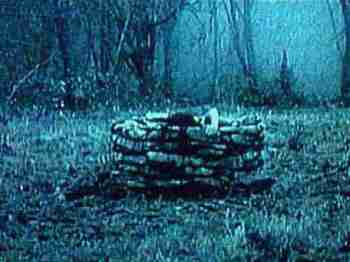
The well is essential to Samara’s curse and origin story.

The origin story. Every curse has its story of how it came to be, and often that the basis of how the curse can be warded off (more on that later). Generally this involves some horrific event happening, causing the curse to manifest or be cast. For example, in the Buffy universe Angel’s curse was caused when he killed the beloved child of a tribe of gypsies, who restored his soul to him through magic. Another example is when Samara/Sadako from the Ring movies was trapped in the well and died, her soul was filled with rage and she infected a blank video cassette. And in The Nightmare on Elm Street franchise, Freddy’s curse came into being when he was killed in a fire by the parents of the children he’d killed/molested (depending on if you’re going with the original movie series or the remake).


The trigger. For a curse to take hold of a target, something specific has to happen. For instance, in the popular Bloody Mary legend (which I’ve tested numerous times, by the way), you have to say Bloody Mary three times in the mirror in order to summon her. In the Stephen King story Bag of Bones, the curse was triggered when a child descended from one of any of the families involved in a gruesome murder, whose name usually began with a K, got to a certain age (in the TV miniseries, this was simplified to just the daughters). And in the popular story The Monkey’s Paw, one had to make a wish on the titular paw in order to start the curse. Which leads to the fun part:

How the curse manifests. A curse manifests after the trigger has been…well, triggered. In Harry Potter and the Half-Blood Prince (yes, I’m pulling Harry Potter out), Katie Bell was put in unimaginable pain when she touched the cursed necklace. Touching the necklace was the trigger, and the pain was the manifestation. Another form of manifestation would be the Tecumseh curse, which was that any President elected in a year divisible by twenty would die in office (though Ronald Reagan and President Bush managed to get away). The election year is the trigger, while the death of the President is the manifestation.

How to ward it off. This is optional for literary curses, but it’s something you want to consider in creating a curse. In Jewish folklore, the demon Lilith tries to take the souls of newborns or eat them. However, if one has a mezuzah, a marker on one’s doorpost  that has the name of three angels on it, Lilith cannot enter the home and attempt to take the child. The angels whose names are on the mezuzah were the same angels who tried to get Lilith to return to Adam when she was still his wife. When she refused, they cursed her to become a demon and made it that she could not enter a home with their names on it (that’s how the origin story relates to warding off the curse).

The hamsa, a symbol prevalent in Judaism and Islam, is also good at warding off evil. It’s no good at warding off taxes though.

In another example, there’s a curse among some actors about saying the name Macbeth in a theater which leads to bad luck. Depending on who you ask, there are different methods to dispelling the curse, a popular one being to leave the theater, walk around the building three times, spit over one’s left shoulder, say an obscenity, and then wait to be invited back into the theater.

Containing/canceling the curse. This is also optional in writing fiction, but it should be considered. Two things one should consider when figuring out how to cancel or seal a curse is that it should be difficult, and that it doesn’t necessarily have to do with the origin story. In the movie The Unborn, the dybbuk couldn’t be stopped until it was exorcised. A similar thing happened in the third movie in the American Grudge movies, in which case an exorcism that sealed Kayako into a little girl was needed before she could be stopped. In Japanese onryo legends, the spirit needs to have whatever is disturbing it resolved or it will continue to seek revenge.And in Bag of Bones, Sarah Tidwell did not end her curse until her bones were dissolved with lye, thereby releasing her from Earth.

That’s how you create a curse. As for creating a terrifying story involving that curse…well, that’s up to you. I’m not going to give you directions on that. Not in this post, anyway.

Oh, and one more thing: I saw Dracula Untold and Annabelle at the movies today with a friend. Both were excellent, getting 4.5 out of 5 from me. But something in the latter film really stuck with me: near the end, the priest character says that evil can only be contained, it’s not created or destroyed (or something like that). I think that when you’re writing a scary story, especially one involving curses, that’s some pretty good stuff to keep in mind. True evil is not something you can easily be rid of. At least, not in my experience.

What advice do you have for creating curses?

Have you written anything with curses recently?

Are there any stories of curses that are your favorite or that I didn’t include? Tell me a bit about them.

I’ve come to this decision after only a little deliberation but with a heavy heart. Ever since I entered college, and maybe for a few months before, I liked watching new TV live, rather than watching it the next day or as reruns. I didn’t watch a lot of new TV live growing up, mostly because it was on late and I had to get my sleep for school or whatever else was going on the next day for me. When I got to college, I found it simple even with a full schedule of classes and work to fit in TV in the evenings and watch shows I liked. And if perchance I missed them, most were on Hulu or other websites the next day.

That’s changing this semester. Because in addition to five classes–all of which hand out homework, and a lot of it, usually–I’m writing a novel for a thesis, which takes up a considerable amount of time. Add in shifts at work four days a week, and my time is filled up with work, work, and…did I mention work?

So as much as I love all my shows (and I love a lot of them, believe me), I’m drastically reducing how much TV I watch so I can get through my workload with more ease and less pressure. I don’t want to, but I have to make my studies a priority in all circumstances, so it’s something I have to do if I want to keep my grades up and not get piled under a mountain of homework.

And on the bright side I have DVR, so I’ll be able to hopefully catch up on most of my shows over winter break or whenever I’m actually free from assignments, whichever comes first. Hopefully nobody spoils my shows in the meantime, which would give me cause to put a curse on them. And I’m quite capable of doing that too.

He’s screaming about my TV reduction plan AND my curse threat.

In the meantime, the only shows I’ll keep up with are The Daily Show with Jon Stewart (I can watch it during breakfast), Sailor Moon Crystal (airs every other Saturday or so, and yes they rebooted Sailor Moon. Believe me, that franchise is never going away), Doctor Who (you know why I’ll be watching that), and Saturday Night Live (you can guess why on that as well).

I’m also going to have to cut back on the movies I watch. Which makes me sad, there are so many good horror movies coming out this October! I don’t want to wait until they’re on DVD!

Whatever happened to the days when life was simple? Oh yeah, that’s right. They never existed.

Well, that’s enough of me griping. Just know that I’m staying focused on my main priorities, I’ll leave the entertainment for another day, and I’ll try and continue to blog at least once or twice a week.

In the meantime, I’m heading to bed. It’s late, and I’ve got a full day tomorrow. Goodnight, my Followers of Fear. Pleasant nightmares.

I was having a comment conversation the other day with another blogger Caitlin Kelly, a freelance journalist from New York who at the moment is teaching at the Pratt Institute. Her post, which you can read here (and I highly recommend you do), was about how the effect of all the horrors going on in the world and being reported to us by the media. I mentioned in my comments that after digesting all the real horrors, it’s not uncommon for me to immerse myself in fictional horrors. Caitlin replied that one of her students, who “has seen his fair share of horrors”, also prefers the genre of horror. I said that for some people, horror acts as a kind of therapy.

Now, some of you who are reading this will probably be thinking “Horror? As a kind of therapy? We’re still talking about the genre where serial killers can be heroes, what trait your character embodies can determine whether you’re killed or traumatized, and fans debate on how good a movie is based on use of suspense, special effects, and gore, right?” Yes, we are still talking about that genre, but just bear with me.

Look at a news feed, particularly one devoted to global events or major issues facing Americans today. This is probably what you’ll see:

  • ISIS murdering Shiites, Yazidis, journalists, and anyone else that they don’t like.
  • Ukraine fighting both its own people and Russian insurgents.
  • Hamas attacking Israel and Israel firing back (and it’s only a matter of time before that starts up again, mark my words).
  • Several cases where police have shot and killed unarmed black men, with the most recent and famous case in Ferguson, Missouri.
  • Congress’s constant squabbling and bickering
  • An immigration crisis that continues unabated
  • Ebola spreading throughout West Africa and father beyond
  • Kristen Gillibrand, a well-respected senator and possible 2016 presidential candidate, being sexually harassed by older, male senators
  • The suicide of Robin Williams and the hurtful responses from people and groups such as Westboro Baptist Church, Pat Robertson, Rush Limbaugh, and Gene Simmons (my article on that is here)
  • CeeLo Green making horrific remarks on the subject of rape on his Twitter account
  • Justin Beiber is in trouble with the law again.

Depressing to read, isn’t it? What’s worse is that this is only the tip of the iceberg. All over the world, people are facing discrimination, violence, poverty, illness, corruption, greed, incompetence, and just about every other horror under the sun. And these problems are huge, multifaceted, and difficult to resolve. In fact, there are many people who may have multiple opinions on how to resolve just one of these issues. And assuming that the people in positions of power are able to come to an agreement and implement some sort of solution, there’s no guarantee that the issue in question will be fully resolved or not or will leave lingering micro-issues that will eventually grow and become major issues in their own rights.

“It’s true, I got defeated by some snot-nosed brats. I don’t like talking about it, though.”

There’s that. And then there’s the stories told within a horror novel or the latest scary movie. Let’s take Stephen King’s IT, for instance. The antagonist is a shape-shifting demon that can take on the form of your greatest fear and prefers the form of a clown. Well, that looks tricky to defeat, but it isn’t as hard to pin down or as multifaceted as an insurgency group or a virus or children brought to this country illegally fleeing violence and poverty. And guess who defeats It? Seven kids. They face their fears, band together, and defeat the monster in its own lair as kids, and then most of them come back as adults to finish the job. And after they’ve fought It for the second time, It’s dead. It isn’t coming back in any form ever again. Sure, at the end of the book the characters start to lose their memories of their war with It, but the story ends on a happy note.

In this way, horror stories–fictional horror stories–can act as therapeutic. We see very real versions of hell unfolding at home and abroad, and then we dive into a story where the characters are fighting their own hell. And we know deep down it’s fiction, but we don’t care. We sympathize and empathize with the characters. Occasionally we even recognize ourselves and our own brutal, tortured pasts in one or two particular character. And we see them defeating demons, exorcising ghosts, kicking serial killer butt, solving murders, and sometimes even bringing back the dead! Sure, plenty of people die in these stories and a good number of them end up traumatized by their experiences. But they usually defeat the enemy, they come out of the conflict stronger, and they sometimes even find romance.

What a horror novel can do for us.

And that fills us with hope. We think to ourselves, “Sure it’s fictional, but I see myself in these characters and the problems they face. So if they can take on ultimate evil and defeat it, what can I do?” In essence, horror takes the feelings of depression and jaded cynicism out of us and fill us with possibility and optimism. Weird, I know. These are stories that aim to scare us and fill our dreams with terror. But horror can do that and lift up your spirits too.

Horror is certainly one of the things that can lift up my spirits when I’m feeling down.

Has horror ever made you feel better after you’ve been feeling down? What happened? Why do you think you felt better afterwards?

Be very afraid.

AAAAAH! That was the reaction of several people in the audience at various points during the movie. Ever since I heard of As Above, So Below, I’ve been dying to see it, and that desire only increased after visiting the Paris catacombs themselves. So when my friend Ramsey, who went on the study abroad trip with me back in May, suggested we go see a movie this weekend, I had just the movie in mind.

Written and directed by Drew and John Erick Dowdle and starring Perdita Weeks and Ben Feldman, As Above, So Below follows urban archaeologist who finds a clue to an old mystery during a covert trip to Iran. Heading then to Paris with a documentary student and teaming up with an old flame of hers, she ends up realizing that what she is looking for may be more than just a legend, and goes into the Paris catacombs themselves to find t. But in the process, she finds so, so much more and in her search for the truth, she may just find her death.

Apparently taking a lot of work to film and bring together, the Dowdle brothers can be assured their hard work was worth it. The film’s slow build up of suspense, couple with the claustrophobic feelings of being in dark, underground tunnels (and watching it in a dark movie theater), lends to a creepy atmosphere that only gets heightened in the last act of the film, where monstrous visions and creatures appear one after another, eliciting those screams from the audience that I mentioned. The brother also know how to insert a twist into their script, by taking the last couple minutes of the movie in a direction that other directors might not have gone down, and completely subverting the rules of found footage films (for more on those rules, check out my article on them). And Weeks and Feldman as the film’s leads manage to portray a romance that doesn’t seem contrived or sappy at all.

My one criticism of the film is that at times, things move a little too slowly so that the terror and suspense dies down a little. Luckily at the drop of a hat it can be ramped up again, but I think terror throughout would’ve done more for the film. Still, it was a good horror film, and later over drinks Ramsey, two friends of his that he’d brought along, and I enjoyed a good hour or so of dissecting the film and looking at all the aspects of it, whether symbolical, plot-wise, or what terrified us in our seats.

Grading this film was hard, and I’m still not sure I was able to give it a good grade. Nevertheless, a grade must be given, so I’m going to go with a 4.4 out of 5. Great film, plenty of scares, and no bad sequel. If you like scares, you shouldn’t be disappointed with As Above, So Below. I know I wasn’t.

My brain at work.

It’s been not even one full week into the new semester and there have been some interesting developments in the classes I’m taking. As I’ve mentioned in previous posts, I’m taking a creative writing course this semester. The course requires us to turn in two short stories and a revision of one of them at different points throughout the semester, though not necessarily in that order (I wanted to turn in a revision and two original short stories, but I don’t have anything to revise at the moment, so forget that). And as I’ve also mentioned in previous posts, Ohio State’s English and Creative Writing departments tend to focus on classic and literary fiction. Genre fiction doesn’t often get as much discussion in Denney Hall.

I came into class with the idea that we were going to be writing several literary short stories during the semester, and even had a list of ideas for stories I could write. Imagine my surprise when my teacher announced that we could turn in genre fiction, so long as it was interesting. Yes, she said that. As long as it’s interesting and doesn’t hold to time-honored (0r time-worn) conventions, I could turn in something from genre fiction. The following conversation then ensued:

Me: So I could write a terrifying horror story, and as long as it is interesting and doesn’t hold to conventions, I can turn it in?

My Professor: Of course.

Me: Party time.

You can probably tell I’m excited. I love writing horror stories, and with the focus on finishing the first draft of Laura Horn and editing Video Rage taking up most of my time this summer, there hasn’t been all that much time to seriously focus on writing a decent scary story or two. However, there’s been plenty of time to accumulate ideas for short stories, so at the next available opportunity, I plugged in my flash drive and started looking over the Word document that contains all my ideas for short stories.

So much to work with, so little time.

What a list that was, with 294 entries at last count. Yeah, I know. And no time to seriously work on them. One of these days I’m going to have to set aside a period of time where I won’t work on any novels and I’ll just work on reducing the amount of ideas on that list, maybe put out a couple more collections of short stories.

But the other night when I went over the list, remembering ideas I hadn’t thought of in a while (good thing I keep a list!) and trying to remember what I was thinking of when I wrote down the idea I had for certain stories, I was looking for particular stories. They had to be the right length (under 10,000 words), they had to be one of the more interesting ideas I’ve had (I like to think they’re all interesting, but I tried seeing it from the POV of someone who’s not me) and I had to look for a story that wouldn’t be tied down to the conventions of horror.

And as many of the horror fans know, that last one can be tough. As the Scream movies, Cabin in the Woods, and Behind the Mask so wonderfully point out, horror stories often work within a certain narrative framework. This gives the writers who create these stories more freedom than you’d think as we struggle to please our fans who are looking for a certain product in their story, but there has been criticism (some of it well-founded) that horror stories can get a little too predictable, to the point where you get useful advice videos like this:


He does bring up some good points. Actually, a slightly paranoid fear of a horror movie death is why I’ve never smoke weed, drink sparingly, and I’m not violent outside of the books I write (I’m not commenting on the sex and abstinence part). I don’t want to die like that. That would suck! Especially if somehow my soul gets trapped in the place where I was murdered or is digested by whatever killed me or something. That would suck even more!

So in the end, I managed to pick out about eight or ten short stories that I thought fit the bill for what I was looking for, and I selected two out of them. Neither of these stories have any particular reason as to why I chose them. I just thought they were very unique and that they would be choices my teacher and classmates wouldn’t find boring or stereotypical. In fact, I’m hoping to keep them on the edge of their seats with suspense.

And as for what those short stories are, I’ll give you some hints. This is the hint for the short story I’ll probably start work on sometime next week:

And here’s the hint for the one I’ll probably start in late September, early October:

Anyone want to hazard a guess at subject matter and plot line? There are wrong answers, but no consequences if you guess wrong.

Well, that’s all for now. I have some homework to do if I want to get any form of creative writing done, so I’m off to do that. Wish me luck, and have a good weekend, my Followers of Fear. I’ll let you know the progress of each of these short stories as there is news to report and maybe even let you know what my classmates think. Hopefully they will be terribly scared.

Well, its a week before classes start, and I turned in the first round of tuition fees when I go off to work today. So it’s time for me to do what I do before the start of every semester: let everyone know, whether they care or not, what my semester is shaping up to be like and what I’ll be doing this term. And this is a special update, because it’s my last year at Ohio State. Meaning this is my last autumn semester. And one of the last times I’ll be able to look forward to a new term and new classes and new experiences…

Please excuse me while I go pretend to cry.

…….

Okay, I’m back. Still here? Excellent! Well, as usual I’m going into the semester with hopes that I can get A’s in all my classes (though my past track records suggest that I’ll probably get at least one or two B’s). I’m taking a total of seventeen credit hours this semester, far more than I’ve ever. Fifteen of those are divided among five three-hour classes, while the other two are for my thesis work (more on that down below). This semester, I’m taking two classes for my English major, two for my History major, and one course to fill out all my general requirements. For English, I’m taking an advanced creating writing workshop and a special course on Shakespeare. Regarding the workshop, I wanted to take one more before I graduated, having taken two during my sophomore year. I’m not too keen on the fact that we’ll be focusing mostly on literary fiction, but hey, I’m adaptable, I’m sure I can write something that’ll pass as literary and get me good grades. As for the Shakespeare class, it looks like we’ll be focusing more on the comedies, such as Taming of the Shrew and The Merchant of Venice. I’ve got a complete collected works of William Shakespeare’s, so I hope that’ll be allowed for class. If not, I won’t mind having to buy copies of the plays, though I do wish we could explore some of the tragedies, like Titus Andronicus. When I saw that in London, I absolutely loved it (though that shouldn’t surprise anyone who knows me and knows the play’s subject matter).

For History, I’m taking a class that goes over the history of war, from early Mesopotamia to today’s wars and a class that looks at the early history of East Asia. Both should provide an interesting look into both subjects, and the former class should be interesting for me as a guy who’s done plenty of study on WWII.

Movie time.

And as for the one general requirements course, it’s an interesting one. It’s a Biology class, the last class I have to take for my science requirements and my general requirements. However, this one seeks to explore the subject of biology and anatomy through film. Yeah, I have no idea what that means either. But I’m just going to go with it. Besides, it sounds very, very interesting and it means watching films two nights a week, so who’s to complain?

And as for my thesis, it’s going to be a tough but fun project. As I’ve said before, I’m working on a novel called Rose, about a woman who dies on the night of her engagement party and is resurrected by her stalker. However the magic that brings her back changes her biology and makes her totally dependent on her stalker for survival, even as she tries to escape from him, and from whatever evil the magic let into the house. I’m hoping it’ll shape up to be an awesome horror novel with plenty of room for introspection and character development.

Well, that’s all for now. I’m tired and heading to bed. You all have a good night, my Followers of Fear. Pleasant nightmares, one and all!

I’m about a third of the way through editing Video Rage. And while I was editing Chapter 12 yesterday, I had a bit of a problem that I had to really rack my brains to solve.

Does anyone remember the Kony 2012 video from two years ago? If you don’t, here’s a quick reminder: Joseph Kony is an African warlord leading a terrorist organization that recruits children to be soldiers and sex slaves. The video Kony 2012 exposed many people to Joseph Kony’s crimes to many people in the West for the first time, amassing nearly 100 million views and becoming one of YouTube’s most viral videos ever. However, despite a powerful Stop Kony campaign, a Cover the Night event, and a sequel to clarify points made in the first video, interest in Joseph Kony and Invisible Children, the organization behind the video, waned after questions of the legitimacy of the campaign came up and the video’s narrator/producer suffered a very public mental breakdown.

Maybe it was because I was really impacted by the video at the time, going out of my way to make a Kony 2012 T-shirt and participating in Cover the Night, but when I decided to make an original viral video in Video Rage, I wanted to use Kony 2012 as an example to compare to the viral video in the story. So I wrote it in, ignoring the reservations I had about using such a famous (and infamous video).

Well, perhaps there’s some truth to the phrase “Another year older, another year wiser.” I was 20 when I wrote that chapter, but I’m 21 as I edit the novel. And I decided to cut Kony 2012 from the story. It’s just that a well-known video like that being featured in my novel might do more harm than good, especially considering everything that went on in the aftermath. So I ended up replacing it with a fictional documentary that I made up pretty much while editing. It took me a while to come up with the subject matter behind the documentary and what it did to achieve the level of fame that it would inspire a viral video in the novel’s universe nearly forty years later, but I finally managed to come up with something that I was satisfied with. And hopefully any future reader will be satisfied with it as well.

So what’s the point of this post? I’m not sure there is a point. Maybe I just wanted to tell you all a story while letting you know how the editing for Video Rage is going. Or maybe I was trying to illustrate how something that seems like a good idea when you’re younger or at an earlier stage of a project (or both) can really seem like a bad idea later on and you just have to nix it. (Strange that Stephen King didn’t think of that when he wrote in that scene in IT with the kids all having sex with each other).

In any case, I’ve fixed what I considered to be a great problem with that one chapter of Video Rage, and I think that the rest of the draft will go smoothly…if I can stay on track with finishing the second draft of the book.

Well, that’s all for now. It’s late, so I’m going to bed. Have a good night, my Followers of Fear. I’ll update you on Video Rage and anything else that needs updating as time goes on. In the meantime, pleasant nightmares.

snake

How far would you go for love and revenge?

Last night while I was out seeing Guardians of the Galaxy (which was a great film, by the way), a new review of Snake was posted on Amazon. I’m very excited and happy for this review, because reviews let me know what the readers think of the book and gives me feedback on where I can improve with the next book.

Today’s review comes from Gefilte63, which means it’s from my dad. Now before you roll your eyes and think to yourself, “Obviously he gave his son a glowing review”, I think you’ll find my dad can be quite the book critic (and critic of a bunch of other things, but I’ll save that for my stand-up comedy act). His four-star review, which he entitled A great story, a real page turner, goes like this.

This novel is a much easier read than the author’s last effort. It is a great story that keeps you wanting to see what happens next; it reads like an action/thriller movie.
Areas for improvement would include better editing. At times there is too much conversation where it isn’t necessary. Also a few plausibility issues but overall a great read!

Okay, remember when I said reviews give me feedback on where I can improve? Well, apparently I need to do a better editing job next time around. And apparently there are plausibility issues (I’m thinking he’s talking about parts in the latter half of the book), so I’ll try and make sure that’s less of a problem in the future (though if I could point out, sometimes a lot of things in life are implausible but are reality nonetheless. I mean, have you seen our gun situation?).

Anyway, I would like to thank my dad, Rabbi Michael Ungar, for taking the time out of your busy schedule to not only read Snake but to write a review for it. I hope in the future you continue to read, enjoy, and review my books.

If you would like to learn more about Snake, you can check out the page for Snake or you can check it out on Amazon and Createspace. And by the way, this week until August 9th, all e-books of my work, Snake included, are only $0.99 when you download them. So now’s a great time to check them out!

And I’ll be seeing about getting my books onto other formats like NOOK and iTunes soon, so stay posted for information about that.

Well, that’s all for now. I’ve got some work to take care of, so I’m going to get on that. Have a good day, my Followers of Fear!

Every now and then I look to do a post musing on the mechanics or subtleties of writing fiction, and today is one of those days. And as you can tell from the title of this post, I want to talk about unreliable narrators, those strange voices in the books we read (and occasionally in the films and TV shows we watch) whom we can’t always trust.

According to that awesome source of usually-factual info that is Wikipedia, an unreliable narrator is a narrator, usually in some medium of fiction or another, whose veracity has been called into question. Usually this happens very early in the story, where the narrator may make a plainly false or delusional claim, or it may happen elsewhere in the story, perhaps near the end where a twist in the story turns everything we thought we knew upside down or slowly through hints that are given to us in the narration. Stories with unreliable narrators can feature a single narrator, or multiple narrators giving their own versions of events, or even a supporting or side character who tells a story in such a way that we question whether or not they’]re being entirely truthful about what happened.

A great example of an unreliable narrator is Patrick Bateman from the novel American Psycho. As a man suffering from psychoses and the occasional hallucinations, Bateman makes a great unreliable narrator. Other examples include Nell from Wuthering Heights, most of the characters from the Japanese movie Rashomon, and Ted Mosby from How I Met Your Mother (according to show creator Craig Thomas, anyway). Oh, and any story that has children narrating it could possibly have unreliable narrators, because kids sometimes remember things incorrectly.

(If you want to think about it though, every one is an unreliable narrator, because no matter how they see events, they are biased, they may mis-remember details, and they may cover things up in order to make themselves look good or to hide their own guilt. But let’s not get too philosophical about this. Otherwise we’ll be here all evening)

One of the characters in my thesis project, the antagonist, is an unreliable narrator. Because of his mental problems and his infatuation with protagonist Rose, he sees things through a very certain light, so when he tells a story it is often through that lens, which probably won’t reflect reality too well. As I’ve never written a story from the point of view of an unreliable narrator, so exploring the device through this character should be interesting. (Or have I used unreliable narrators before? Technically, any time I tell a story from the protagonist’s first-person point of view, it could be construed as unreliable, but i’m not sure if it counts. Oh darn it! Now I’m an unreliable narrator of my own writing career!)

But why are unreliable narrators used so much? And why do they appeal to readers and writers alike? It’s a very difficult question, and I’m not sure I have an answer. Perhaps for writers, it’s the chance to tell a warped version of events. When we tell a story, especially through the lens of an omniscient or almost-omniscient third-person narrator, it’s almost expected that the story being told is what actually happens, one-hundred-and-ten percent factual. Even when the story is limited to the viewpoint of a single character, that third-person narrator’s portrayal of events is assumed to be accurate. Heck, even when we read a novel told in the first-person, we tend to see the depiction of what happens as true. Especially if we like the character.

An unreliable narrator allows the writer to break from that, to tell a story that might not be accurate, and that the reader and maybe even the writer will have to guess how true the story is or how much we can trust the narrator to tell the truth. In fact, maybe that’s what the reader gets from these sort of storytellers: they have to figure out how trustworthy the storyteller is, or where the line between truth and the storyteller’s own delusions or beliefs is laid down. It’s like solving a mystery or a puzzle, in a way, and the only way to really solve it is to read on until you finish the story. And even then, you might not be able to tell how reliable the narrator is (which is why there are e-forums to discuss these issues).

In any case, I’m going to enjoy exploring the antagonist’s own unreliable stories and seeing how much we can or should believe him. It’ll make for an interesting discussion point when talking about my thesis with my adviser during the next semester.

What do you think of unreliable narrators?

Have you ever used them in your own writing? How did it go?