Posts Tagged ‘reflections’

I found out about this novel on Facebook, which was billed as a Lovecraft/Cthulhu Mythos-meets-YA sort of story, and wondered how that would work. When the opportunity came, I downloaded it onto my Kindle and started reading. And my, I have to say, I was pleasantly surprised by how much I enjoyed it.

Awoken follows Andromeda “Andi” Slate, an average teenager who isn’t to thrilled about living in Portsmouth, New Hampshire but deals with it with the help of her good friends. One night, she has a dream about seeing a giant tentacled monster and being rescued by a handsome youth. The next day, she and her friends get their hands on an infamous book of eldritch magic known as the Necronomicon, and do some reading from it. Within a day, a new teacher arrives at Andi’s school, as well as a strange new student who looks like the handsome youth she dreamed about. What happens next will not only change her life, but will decide the fate of the universe.

So if the handsome youth bit didn’t clue you in at all, yeah, there’s a pretty big romance aspect to this story, bigger than what I’m used to reading (especially in a Lovecraft-themed story). However, it’s a romance story between a human girl and a Great Old One (basically an ancient demon-god, if you don’t speak Lovecraft), one trying to balance the desire for the end of the world with his newborn desire for a human girl! I’ve never seen that before!* Romance isn’t something you normally associate with the Great Old Ones, who are notorious for seeing humans only as snacks (when they see them at all). It’s so weird, it kept me interested even though I don’t usually go for romance! Definitely one of the good points of the story.

So what were the other good points? Well, I liked Andi for the most part. Besides one or two problems, she was a very likable character, even when in the middle of an annoying teenage mood. The story was also very well-written, with very few typos and a distinct voice for Andi that kept me wanting to keep reading. I also liked how Elinsen made the works of Lovecraft accessible for her audience, who probably wouldn’t be big fans of Lovecraft and his Victorian-era speech patterns, though she manages to slip some of those words in, like cliquant and voltaic. Despite a few changes here and there, the Cthulhu Mythos is pretty much intact and treated with reverence, and the usual tropes that Lovecraft fans enjoy are there: cults, ancient beings, the idea that certain truths cause madness, Azathoth threatening to wake up, etc. The author also manages to slip in references to HP Lovecraft and his works (Portsmouth is secretly Innsmouth, Andi fears water, a reference to a racist writer from Rhode Island, Cthulhu’s relationships with the opposite godly sex, a cat, etc.), as well as references to Stephen King and even one reference to Supernatural that made me laugh out loud.

However, I did have some problems with the story. A major one was the male lead Riley (name based on a famous underwater city), and his relationship with Andi. Look, I know that in romance the asshole with a secret heart of gold is a popular trope (I’ve seen it in a few manga), but Riley is super-unlikable. And yeah, he’s secretly a terrible god who sees most humans as ants, but I can’t help but hate him as a protagonist. And his relationship with Andi is so abusive for a good chunk of the book. It’s supposed to come off that he’s protective of her, but doing things like commanding Andi to do things and intimidating her with his mood shifts just scream abusive creeper. What’s even worse is that Andi, once she falls for the guy, can’t extricate herself from him. It’s like an unhealthy obsession, to the point where she’d rather die or go completely mad rather than live without him (and that’s not teenage histrionics, she really feels that way at one point). It’s almost like she’s the ultimate worshipper for a Great Old One, and I just want to tell her that even taking out the god part, her relationship isn’t normal or healthy! How crazy is that?

I also wanted more from the main antagonist. We only see what she does in the name of her apocalypse, but I could’ve used more from her. Who was she really? Why did she do what she did? How did she become a worshipper of the Great Old Ones? I would have loved to see that explored a bit more in the story, and sadly we didn’t get that.

Ultimately though, Awoken is a different take on the Cthulhu Mythos, and I enjoyed myself despite the issues I had with the story. On a scale of 1 to 5, I give the novel a 3.2. If there was a sequel, I’d consider reading it (though four years after publication and no updates from the author on her social media since October 2013, I’d say that’s not going to happen). If this sounds like your sort of thing, take a dip into the madness and see for yourself.

Now if you need me, I’ll be playing Hide n Seek Across the Dimensions with Nyarlathotep. Hail Cthulhu, and I’ll see you around.

*Please be aware, I haven’t read all of Lovecraft’s bibliography, so if this does happen somewhere in his stories, I haven’t gotten to it yet. So don’t spoil it for me, okay?
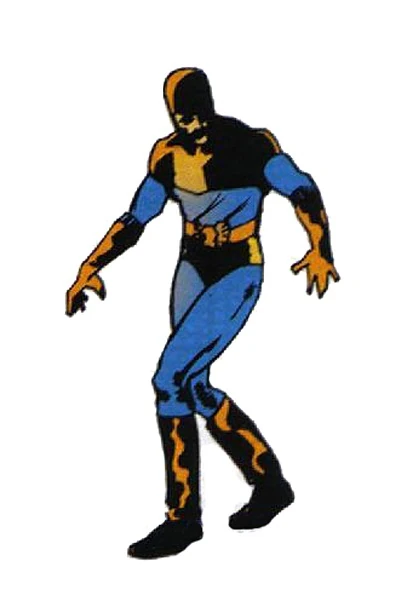
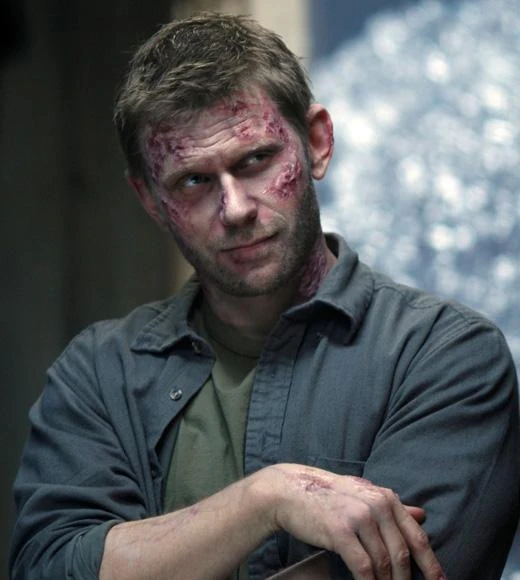
Well, we’re back to count down my top five villains of the past year. And what really surprised me about the top five was that while #10-6 came from ll sorts of different franchises and series, the top five came from only two franchises/series. That’s right, this year only two properties hold sway over the top five. And you can contribute that to a number of things, but I think with these franchises, they’ve been running a very long time and the writers and directors and other behind-the-scenes folks who run these franchises want to keep them running a very long time So what do they do? They come up with compelling storylines with great villains to set up against great heroes.

So what are they? Let’s find out. Remember, no villain of my creation is on this list, and no actual person is on this list either. It’s all fictional. And as always, SPOILERS!

#5: Kaecillius (Doctor Strange)

You know, this is the third time a Mads Mikkelsen character has appeared on this list (his portrayal of Hannibal Lecter were in the top five back in 2013 and 2014). Not surprising, considering that he’s not only a great actor, but he’s given great characters. Kaecillius is a former student of the Ancient One who finds out things about his master he doesn’t like and who falls under the sway of the demon-god Dormammu. His goal is to allow Dormammu’s Dark Dimension into this world, thus absorbing our universe into his. Why does he want to do this?

Well, the answer is much more sympathetic than you might expect: Kaecillius sees the world as an endless cycle of suffering and death, and wants to free the world of it, which he feels integrating our world into the Dark Dimension can do. And this is actually an admirable goal, to free the world of suffering and death. It’s the very notion that Buddhism, one of the world’s major religions, is founded upon! It’s just that Kaecillius believes wholeheartedly that by making us one with the Dark Dimension is the way to do that (believe me, it’s not), and that’s what makes him a villain. Add in his gravitas, stoic manner, and occasional one-liners, and you’ve got yourself an A-class villain with some aspects you can actually sympathize with.

#4: Lucifer (Supernatural)

Over the past two years, I’ve really become a huge fan of Supernatural, and over the past year, I’ve taken in the ten most recent seasons. And even when he’s not the main villain of a season, guess who’s a powerful influence over the series as a whole? Yep, Lucifer, the Devil himself. He’s powerful enough that even when he’s locked in a cage in Hell, he’s still capable of manipulating and directing events on Earth, which is how brothers Sam and Dean Winchester became wrapped up in monster hunting. And when he’s out of the cage, God help you. He could be following the script of the Apocalypse, or he could be making it up as he goes along, he doesn’t care. As long as he’s able to make a few quips, make someone’s life literal torture, and even kill a few people, he’s happy. The destruction he caused in Season 12 alone, and the events he set in motion with some of his actions, earn him a spot in the top five (though because most of his horrors are caused by his daddy issues, he’s a bit lower than he could be).

#3: Amara/The Darkness (Supernatural)

What’s scarier than one of God’s angelic sons? Why, God’s older sister, and the embodiment of destruction! Introduced in late Season 10 and the main villain of Season 11, The Darkness is a primordial force that God and the Archangels locked away so that the universe could exist. Freed at the end of Season 10, she possesses a baby named Amara and soon becomes a full-grown woman with a simple goal: to find her brother and settle some long overdue family business with him. That, and maybe entice Dean Winchester, with whom she shares a special connection, to join her at her side.

What puts her higher than Lucifer on this list? Well, she’s much more powerful, for one thing. And in a way, she actually caused Lucifer’s fall from grace. In her way, she’s the true cause of many of the horrors in Supernatural. Not to mention that she somehow makes fish out of water moments scary: having never lived in the human world, she’s uneducated about a lot of what goes on there, and it shows. And even when we’re laughing at how inept she is as a human, we know that she’s going to do something horrible soon. And then she does it.

If that’s not deserving of the Number 3 spot, then I’m Harry Potter (and I’m not).

#2: A.I.D.A. (Marvel’s Agents of SHIELD)

This time from the MCU’s TV universe, we have A.I.D.A, a cyborg originally designed by her creator Holden Radcliffe as a literal shield for SHIELD agents, and later a major part of Radcliffe’s plan to create a world free of suffering and death for humans…which she later subverts in order to gain freedom from her rigid programming and become a full human with emotions. And superpowers.

Honestly, watching A.I.D.A.’s arc from naive robot woman to calculating assistant, to calculating supervillainness, to a powerful human woman with strong powers and emotions like storms, was one of the most fascinating things in this season. It kept you on the edge of your seat, wondering what she was going to do next as she pursued her goals of humanity, freedom, and even the love of one of the main cast! That, and her ruthlessness in accomplishing those goals, whether she was doing so under programming driven by twisted logic or spurred on by her newfound feelings, made the story all the more gripping. She’s definitely one of the show’s best villains, and deserving of the second-highest spot on this list.

#1: The Leviathans (Supernatural)

The Leviathans were a thing introduced in Season 7 five years ago, but I just met them this past fall. And my God, were they the best villains on the show! Primordial beings that are older than most of the angels, they were God’s first creations in His new universe. Ultimately, they proved too hungry to be controlled and God put them away in Purgatory lest they eat the universe to bits. Released back into our world at the beginning of Season 7, they quickly possess humans in order to inhabit physical form again, with one goal in mind: feed. At first they’re just looking for a quick fix in the short term to get their sustenance, but as time goes on and their king possesses the body and memories of billionaire businessman Dick Roman, they start organizing. What’s their grand plan? Simply to feed.

There’s something kind of scary of an old and powerful race of beings whose sole goal is to satisfy their hunger, and the best way to do that is to feed on humanity. And they do it with businesslike precision, coming up with this whole five-year plan for turning America into their personal McDonald’s (I’m assuming the rest of the world would follow in time). It’s this precision, along with their difficulty in being killed, that made them stand out to me as villains not only on Supernatural, but through the whole year. Lucifer and Amara may be looking for revenge on their mutual family member, but when it comes to beasts that just want to feed, they just can’t be beat.


So that’s this year’s list, my Followers of Fear. But tell me, who were your favorite villains this past year? Do you have any critiques of my choices? Let’s discuss in the comments below.

And expect another blog post from me either later today or at some point tomorrow, my Followers of Fear. I’ve got a new review, and I hope you’ll want to read it.

Oh come on, did you think I wasn’t going to do this? It’s a tradition, and whether you like it or not, I’m doing it! So strap in, and let the villainous torture begin!

So if you don’t know, every June or so I like to rank the top ten villains in fiction that have really impressed/scared me. Villains are always a central part of horror stories, so it’s important to see what makes a villain memorable, or strong, or terrifying. What makes a good villain, in essence. Some years are easier than others to rank, but with each entry, there’s always something to notice with a villain.

Before we begin, let me remind all who read this that no villain from my own work, or any real life person, will make it on this list (otherwise this would just be political views and shout outs to my own characters). Also, SPOILERS!

Ready? Okay, here we go! #10-6!

#10: Tom Martin/Alex Whitman (Scream TV series)

Scream is a twisty slice of TV-horror awesomeness, and while not everyone loved its Halloween special, I certainly found it a fun break from the show’s normal format. One thing I really liked about the Halloween special was Alex Whitman, a rich young man whose parents died tragically when he was young and who strikes up a sweet romance with protagonist Emma Duvall. Or at least, that’s what we think at first. After a huge twist in which the suspect we thought is the new Brandon James Killer ends up dead, it’s revealed Alex Whitman is actually Tom Martin, a disturbed young man who witnessed his parents’ gruesome death as a child and was warped by all the attention relating to his survival. He sees Emma as a kindred soul, and tries to get close to her by any means, including murder.

What makes Tom a great villain is that he’s so sympathetic! Even after he’s revealed to be dangerous and out of his mind, we feel sorry for him, because his backstory is truly heartbreaking, and there was real chemistry between him and Emma. It’s very hard to make a despicable killer into a sympathetic character (believe me, I’ve experienced that struggle firsthand), and Scream did it really well. It’s a good character for the series to go out on.*

#9: Garrett Douglas (Teen Wolf season 6)

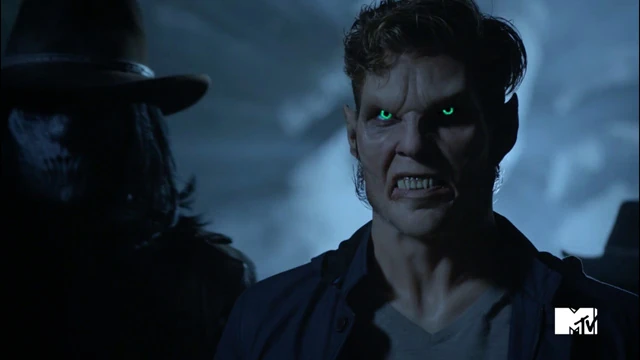
Teen Wolf has had many villains show up on this list, so it shouldn’t surprise anyone that they got one on this year’s list too. Garrett Douglas is a former captain in the SS–yes, the SS, as in the Nazis–who tried to control the ghostly Wild Hunt, supernatural beings who kidnap people and erase them from existence to replenish their numbers. His attempts to do that led to him being held captive for nearly seventy years by the Dread Doctors from season 5, but he escaped after the latter fell, and set out once again to put the Wild Hunt under his thumb. This time he very nearly succeeded, nearly turning the town of Beacon Hills into a ghost town in the process.

While the Wild Hunt were the main villains of the story arc, they were just an elemental force trying to replenish its numbers for survival. They looked scary and had terrifying powers, but they weren’t menacing or evil. Douglas, on the other hand, was a sadistic power-hungry madman, and he was willing to sacrifice whoever he needed to in order to accomplish his goals. That’s a villain right there. However, compared to other villains on this list and on the show, he’s not as intimidating, and he doesn’t rely on his own power, so he ranks rather low. Better luck next time, Teen Wolf. I have confidence in you.

#8: Amunet (The Mummy 2017 film)

I gave this movie a harsh rating in my review (read that HERE), but honestly Amunet was one of its saving graces. Played with convincing power by Sofia Boutella, Amunet is a powerful undead sorceress who made a deal with the god Set for power. Resurrected in the 21st century, she’s willing to sacrifice anyone in order to bring about an apocalypse and become Queen of the Damned (see what I did there?).

What makes her a great villain is that she’s so convincing! You really feel her rage, her lust, her desire for power. And then you see her power at work: she’s influencing Tom Cruise, using animals as weapons, turning people into obedient slaves with kisses or even just with an animal bite. She’s a force to be reckoned with, and proves that even if you have a bad movie, you can have a great villain.

#7: Kevin Wendell Crumb (Split)

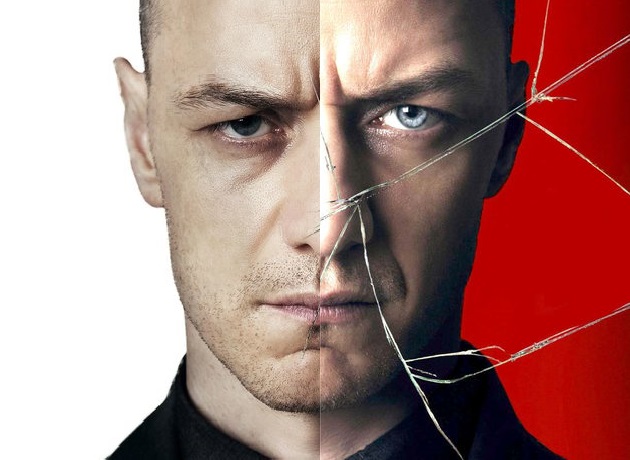
I’m not sure if this is one villain or 23 villains or what, but either way, they’re all here. A man with disassociative identity disorder, some of Kevin’s personalities go rogue and take over his psyche in order to bring out a new personality known as the Beast, who causes pain and suffering in the belief that such horrors purify. Kevin and each personality is played with amazing skill by James McAvoy, making each feels real and fully formed. But it’s his darker personalities, the ones that set out to cause destruction by kidnapping three teenage girls from a mall parking lot, that really scare you. You can feel their belief in their godlike Beast, and then when you inevitably see the Beast, he’s a powerful force that makes your heart beat from start to finish. Kevin and his personalities’ place on this list is well-deserved. Cannot wait to see him again in two years in Glass.

#6: The Shadow Kin (Class TV series)

Give it to the Whoniverse to come up with memorable villains. In Doctor Who‘s new spin-off Class, the Shadow Kin are beings made of fire and brimstone, who believe their existence in the universe is a cosmic mistake, as they cannot stand bright light and must travel as gas and shadows. In revenge, their goal is to eliminate all life from the universe by infecting the shadows of their enemies and then killing them. These villains appear throughout the show’s first season, at first only to kill off the refugees of one of their battles, but when their king becomes biologically linked to one of the show’s protagonist, it sets off a literal shadow war as the Shadow Kin battle for control of their king’s power and the planet Earth. Definitely a dangerous villain who kept us on the edge of our seats, wondering what would happen and where the Shadow Kin would appear next.


And that’s all for now, Followers of Fear. I’ll have #5-1 out soon. Until then, what did you think of the Top 10 so far? Do you have any favorite villains from this past year. Let’s discuss in the comments below.

*I’m not counting the upcoming third season, because they’re basically rebooting the story with new characters and setting. Um, WTF? You didn’t even wrap up the original story! You had loose threads leading up to the third season! And we know the third season is going to be the last season, so why change things up like that? Why not just wrap things up and let it be like that? TV execs! They’re sometimes the worst people to direct the courses of their own properties.

Life is rarely straightforward. That is a fact. People change, or their thoughts and feelings change, new paths open up in front of you, and your understanding of the world never fits in the box you want it to (that last one isn’t really relevant to what I’m going to talk about here, but I felt like stating it anyway). And my life and feelings have changed. I need a break from what I’m doing right now. I need to do something different if I’m to pursue my goals in life.

With that said, I need to shut down Rami Ungar the Writer. At least for a little while.

I’m kidding. But for a split second, you bought that. You did, and it worried you for a little bit.

No, what I really mean is that I need to take a break from Full Circle. A very long break.

You see, I’ve been working on that novel since November, eight months in total. And I’ve only taken some occasional breaks, each working on a couple of short stories, and then getting back into it. And you know what? I’m a little burnt out. Normally by this time, I’m already finished with the first draft, but I’m only a little over the halfway point. And when I think of getting into the next chapter, I’m filled with dread, because it’s likely going to be a long chapter, and I’ve been dealing with this story for eight months straight, and it has not been easy at times.

All writers get like this. Yeah, we do. There are times when we’ve devoted so much energy to a story, that we need a break if we’re to give it more and give it the energy it needs. And honestly, I’m at that point. It’s nothing I did wrong or anyone else did wrong. There’s nothing big in my life that’s making me super happy or super miserable, thus causing me to think, “I can’t work on finishing the Reborn City trilogy right now.” Nope, it’s just me needing some distance and the chance to work on something else. And I need a long something else. Because if I take on a project, and it only lasts a month at most, I won’t be ready to work on Full Circle again. I’d be ready to bang my head against a wall in frustration, but I wouldn’t be ready for FC again.

Which is why I have the perfect project:

Some of you may recall that during my last year of college, I wrote a novel called Rose as my thesis. The story was about a young woman with amnesia who starts transforming into a plant creature. And that may sound comical, but it’s actually pretty dark, exploring themes of dependence and abuse in romantic relationships, as well as how memory, truth, and falsehoods can shape not just our perceptions of others, but of ourselves. It was a challenging novel, to say the least, but I managed to get two drafts of it written between August 2014 and April 2015, and they turned out okay. I let it lie for a while when I was in Germany and during my job search, and tried working on it again after I moved into my new apartment and started my job. For a number of reasons, it didn’t go well. Mostly because I didn’t have a plan for editing it beyond, “Let’s sit down in front of the computer and see what happens.”

My new project: the third draft of Rose.

But since then, I figured out a plan to help me get along with editing in general (see my post on that on Self-Published Authors Helping Other Authors. It has a similar opening to this blog post). I’ve also had plenty of time to think about changes I’d like to make to the story, and to the characters, and I’ve really been itching to take a crack at it again. And I’m pretty sure that, once I get another draft of Rose done, I’d be ready to send this story to an editor, and then maybe to an agent or publishing house.

So starting very soon, I’ll be taking another dive into Rose. It probably won’t happen until after I get back from Boston, but after that and I’ve done all the travelogues and checked my new digital recorder for ghost voices, you can bet that I’ll be working on my new project with gusto. Until then, Followers of Fear, wish me luck as I work on a couple new blog posts, and as I prepare myself mentally and emotionally for what will hopefully be a very successful third draft and a very refreshing break.

Pleasant nightmares!

There’s been a battle raging among horror fans and horror writers for years. A fierce battle with all the monsters, deaths, and mysterious disappearances that one can expect from such a group. This battle is played out in bookstores and on bestseller lists, in interviews with magazines and television hosts, and even on message boards (because this is the age of the Internet, so why not?). The debate is: which is better, horror stories where the supernatural is the cause, or where humans are the cause?

Surprise to say, this is an actual debate among fans of horror. What makes for a scarier story, one where the horror is caused by something supernatural, or when it is caused by a human like you or me?* Or perhaps some combination of the two? Each side has their own pros and cons, and depending on which you prefer, can have a huge influence on what you tend to read and, if you’re a creator, what you put out in the world. Authors themselves tend to deal in both kinds, but if you observe an author long enough, you start to notice their preferences. HP Lovecraft and Anne Rice seem to go more for horror, while Jack Ketchum likes human horror. His Royal Scariness Stephen King has a lot of supernatural forces in his work, but there’s definitely a partiality towards human-based horror. One needs only read Misery to see that. Even in his more supernatural stories, there are usually human characters who are only to happy to cause pain and death, whether of their own volition (Carrie’s mother and Chris Hargensen in Carrie) or under the influence of a much more powerful force (Henry Bowers and Tom Rogan in It).

A great example of supernatural horror.

So is there a better source for horror? Let’s take a look, starting with supernatural-based horror. Honestly, this one’s easy to explain the appeal: whether it’s been called Satan, Lilith, dark faeries, demons, yokai, or a hundred other names, humanity has been scared of some possible other out in the universe. Something greater than human beings, possibly very malevolent, and ultimately difficult to understand. The only way to survive is to run, placate the monster, or find some way to fight back, and the last one often comes at a high death toll. There’s also greater room for imagination with supernatural stories. You can take forces right out of mythology, use them as they’re typically portrayed, or change up their mythologies. Sometimes you even come up with original creatures, like Stephen King’s Langoliers or the entity formerly known as It. There’s a lot of freedom and potential in supernatural based horror.

On the other hand, there’s a chance that you can fall into a trap of relying too much on a mythical creature’s established mythology. And if you try to create something original, you find it’s extremely difficult to do so. Not only that, but with something non-human, there’s the risk that, unlike a human villain, the reader will have difficulty connecting with them. Some readers really enjoy connecting with villains, which in this instance makes Cthulhu a bad villain choice.

My own human-based horror.

Human-based horror, on the other hand, is a lot more personal, and very true to life. Despite our lofty ideals of goodness and perfection, one needs only look at the news to know that humanity is capable of dark thoughts and acts.  Human-based horror taps into that, delving deep into what humanity is capable of without a supernatural cause or encouragement, as well as how characters and we the audience react to it. It’s a powerful, visceral way to tell a story, and is often quite effective at scaring us with not only the acts of the characters, but at what we ourselves are capable of.

And that unfortunately is also the con of human-based horror. No one likes to be exposed to their darkness or flaws, and this form of horror gets deep into those. Which for some readers can be more disturbing than they would like. Hell, for some writers it’s more disturbing than they would like, sending them to parts of their imaginations they would rather leave alone. And exposure to this sort of horror can not only leave readers scared, but depressed. I’ve written before about how the escape into imaginary horrors can be therapeutic, and sometimes people prefer an escape that doesn’t remind them of the reality they’re escaping. Or as someone from one of my writer’s groups put it, “If I wanted human horror, I’d put on CNN.”

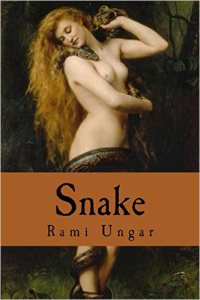
So which is better? Well, I say neither. Like I’ve just shown, both have their pros and cons, as well as their supporters and detractors. Personally, I (and most of the members of one of my writers’ groups) prefer supernatural horror, but we all agree that the occasional jaunt into human-based horror and vice versa are great. Hell, one of my novels, Snake, is human-based horror, and it’s one of my favorite stories.  So in the end, whichever you prefer to read or write, make sure to every now and then dip into the other so as to better appreciate both once you dip out again. And if you write, whatever you write, remember to keep practicing both types, so that someday you can write it well.

What’s your take on this debate? Which is your favorite?

*Still debatable if I count as human, though.

From the get-go, when Universal announced it wanted to create a cinematic universe based around their classic monsters, many people thought it was intriguing…but there was a lot of room to go wrong. These monsters have been done to death, and bringing them back is difficult to say the least. So this first outing for the new Dark Universe had to be very good if it was going to convince moviegoers that this was worth their money.

Unfortunately, I don’t think The Mummy is a good opening feat. For one thing, it takes way too many cues from the Brendan Fraser film that came out when I was a kid, especially during the early third of the film. In fact, 2017’s Mummy feels like a poor copy of that film at times. It’s especially bad with the characters: none of them are very well-developed, while Fraser’s Mummy‘s characters were so developed they felt like people you actually know. The worst is Jennifer Halsey (for some reason leading archaeological digs but isn’t written as a doctor), played by Annabelle Willis, who’s only purpose is to drop exposition and be screaming arm-candy for Tom Cruise’s Nick Morton. Speaking of which, Morton is no Rick O’Connell: while the latter is rough but well-meaning, Morton’s character is inconsistent, going from kind of nice guy to scumbag. Personally, I didn’t like him.

There’s also issues with the story. Like I said, the film feels like a copy of Fraser’s film at times, right down to the slightly more skewed slant towards action-adventure rather than horror. I really wish some of these monster films based on classic characters would stay more focused on horror, rather than trying to take cues from Indiana Jones. And like action-adventure films, there are a number of things that don’t make sense, including a major plot hole when the villain Princess Ahmanet’s backstory is revealed (anyone who knows anything about infant mortality rates during that time period will figure it out quickly). In addition, the humor is also used inconsistently, spliced oddly in during tense points. It’s funny at the time, but it feels odd later on.

But there were some good things about this film. Sofia Boutella as the Princess Ahmanet is both alluring and terrifying. She’s very good at coming across as a confident villainess, and the make-up on her makes her look powerful, sexy, and terrifying all at the same time. The film also tends to pick up in terms of terror and storytelling as it gets along, leading to a very good, if slightly predictable, final battle. Except for maybe the mummies/zombies that Ahmanet summons to help her (because of course she does, this is a contemporary mummy film), the effects are actually very good. And while the references to the Dark Universe have been criticized by some as shoehorned in, I thought they were inserted in very well. Heck, there’s even a surprise character who I could see getting their own film someday.

All in all, The Mummy isn’t a good first outing for the Dark Universe franchise. On a scale of 1 to 5, I’m giving it a 2.5 out of 5. If you’re going to see it, watch it not expecting much. Honestly, I think if they tried for a traditional or even a psychological horror film rather than what they made, the result would’ve been much better. However, if this film does well enough to warrant further films in the franchise, I think Universal will learn from the mistakes of this film to make any further ones better. One would hope, anyway.

That’s all for now, my Followers of Fear. I’m off to finish my birthday with some slightly better films and TV. Until next time, pleasant nightmares!

I believe every writer  I’ve ever read is a teacher of sorts to me. It’s rare though that any of my flesh-and-blood teachers are already writers. Not only is today’s interview both one of my teachers and a writer, but I’ve read his most recent book Late One Night, and I enjoyed it greatly. And in honor of Late One Night coming out in paperback this coming August, I figured now would be a good time to bring him on the show. Ladies and gentlemen, please welcome one of the greatest professors in Ohio State’s English Department (mostly because he survived teaching a class with me in it) and the author of several books, Lee Martin!

RU: Welcome to the show, Lee. Great to have you here. Please tell us a bit about yourself and how you got into writing.

LM: It seems like I always wrote. As an only child of older parents who lived in a rural setting, I didn’t have many playmates around. I fell in love with make-believe instead. I loved living inside stories, so I suppose it was only natural that I start to tell a few of my own. Then at a certain age I decided to get serious about it, so I went to the University of Arkansas for my MFA, where I found out how much I didn’t know about the craft, but where my real apprenticeship as a writer began—an apprenticeship that continues to this day. There’s always something new to learn and to practice.

RU: I really enjoyed reading Late One Night. Can you tell us what inspired it and your writing process for it?

LM: Late One Night is based on a tragic news event from my home area in Illinois. A tragic house trailer fire on a cold winter night. I started playing the “what-if?” game. What if the husband/father of that family was living outside the home at the time of the fire? What if the fire was suspicious? What if the small town gossip started to swirl around what this man might have done? What if this all happened while he was fighting for custody of his children and trying to prove his innocence. As with most of my books, I started with that premise and then wrote a little each day, pushing the story along. I try to make myself curious, and then I try to satisfy that curiosity while not quite fully satisfying it until the very end of the book. That’s where readers of this novel find out what really happened, late one night.

RU: Your main character Ronnie Black is at times sad and sympathetic, and at other times you just hate him. Did you intend for him to be that way when you wrote him, or did he just turn out that way?

LM: I like to take characters who are put upon by life’s circumstances and their own ill-considered choices. Characters are interesting to me only if they have a balance of rough edges and redeeming qualities. An all good character isn’t interesting. Neither is an all evil one. I write realistic fiction that’s character-based, and the truth is we’re all made up of contradictory qualities. Those contradictions are what make us interesting.

RU: Who is your favorite character in Late  One Night, and why?

LM: I really didn’t have a favorite character. They all appealed to me because they were all human. They all felt great joys and sorrows, and they made mistakes, and they tried to do the right thing, but sometimes their own selfish interests got in the way. Missy Wade badly wanted children. Ronnie Black loved his own even though he was often a man of temper and poor judgment. Captain missed his own mother and yet had a big heart that led him to love indiscriminately and to even idolize Ronnie. Captain’s father, Shooter, wanted to protect his son. Brandi Tate wanted love and a family. All these characters, and others, were precious to me because of their imperfections.

RU: Are you working on anything right now?

LM: I have a couple of novel manuscripts that I’m working on, plus smaller things like short stories and essays. I have a craft book, Telling Stories, coming out in October.

RU: I may have to read that craft book. Speaking of which, can you tell us about your other books?

LM: I suppose my best known book is The Bright Forever, which was fortunate enough to be a finalist for the Pulitzer Prize in Fiction in 2006. It’s the story of the abduction of a young girl in a small Midwestern town in 1972. I suppose some would call it a literary suspense novel. My novel, Break the Skin, would fall into that same category. I like to take true-crime stories from my native southeastern Illinois and let my imagination turn them into novels.  I’ve also published three memoirs, From Our House, Turning Bones, and Such a Life. They deal with family and particularly with the farming accident that cost my father both of his hands and the way that accident came to settle in our family. My other novels are Quakertown and River of Heaven. I also have a story collection, The Least You Need to Know, and another one, The Mutual UFO Network, will be published in 2018.

RU: Note to self, put The Bright Forever on my reading list. Sounds like my sort of story. Now you have a number of students who have continued writing and publishing after college and have kept in contact with you (including yours truly), and have kept in contact. What’s it like seeing that happen?

LM: It’s always gratifying to see students do well. It makes me feel that I may have had a small part in that success.

RU: Do you think the role of literature in society is changing, especially as we become more reliant on technology and our attention spans seem to shorten?

LM: I think there will always be not only room for, but a necessity for, narrative.  The forms of that narrative may change, but the importance of it in our culture won’t. We understand ourselves, others, and the world around us via stories. Such has always been the case, and I don’t see that changing.

RU: If you could give advice to any writer, no matter background, genre or level of experience, what would you say?

LM: Don’t be in a hurry. Study and practice your craft without thought of publishing. Fall in love with the process and the journey will take you where you’re meant to go. Read the way a writer must—with an eye toward how something is made.

RU: And finally, if you were stuck on a desert island for a while and could only take three books with you, which would you take?

LM: Richard Ford’s Rock Springs, Kent Haruf’s Our Souls at Night, F. Scott Fitzgerald’s The Great Gatsby, and (I’d cheat and sneak in a fourth) Harper Lee’s To Kill a Mockingbird.

RU: You’re a university professor! You know the consequences for cheating! Anyway, thanks for joining us today, Lee. We wish you luck with the paperback edition of Late One Night.

If you would like to learn more about Lee Martin and his works, you can check out his website, Facebook, and Twitter. Or you can enroll yourself as an English major in Ohio State’s undergraduate or graduate program and work with him directly by taking classes with him (though that option has both pros and cons).

And if you’re an author who would like to be interviewed, check out my Interviews page and leave a comment. Who knows? Perhaps we can work some magic.

That’s all for now. Have a great day, my Followers of Fear.

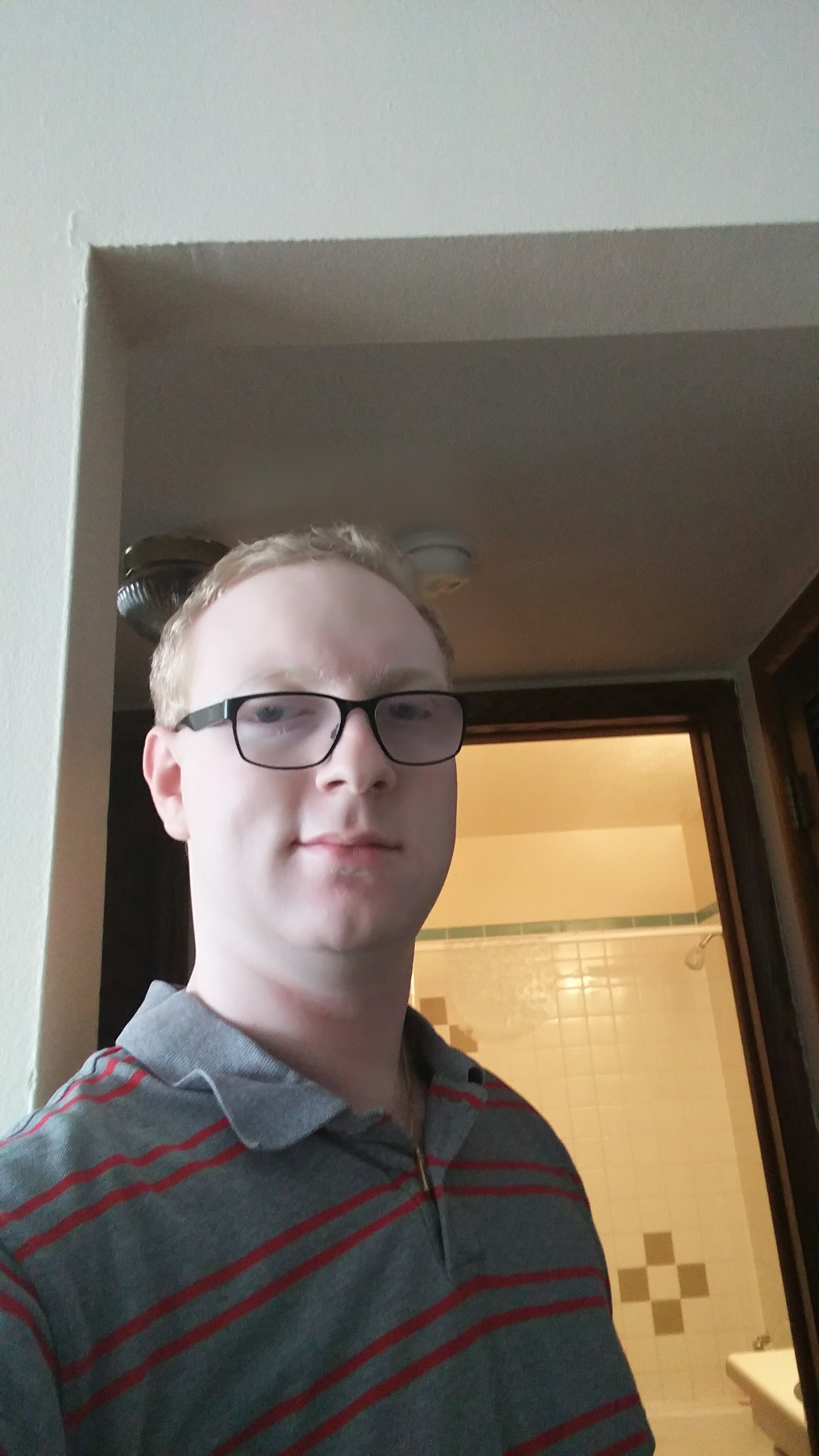
Me these days.

On May 31st, 2016, I moved out of my father’s house and into my own apartment, a little over a week before my twenty-third birthday. Age 22 was a year of struggle and dark feelings for me. True, I spent four awesome months in Germany, but the rest of that year was spent trying to find a job, clashing with my sisters in my dad’s house, and generally feeling like everyone was looking at me like I was doing something wrong or wasn’t trying hard enough every day I didn’t come home with a job. Plus my back problems were getting worse (truthfully, I could’ve done more to take care of that), and that just made everything else worse. When I finally got a job and was able to move out on my own, I felt like things were finally turning around for me.

It’s now May 31st, 2017, an entire year since I moved out, as well as nearly a year since I turned twenty-three. And honestly, Age 23 has been awesome! I’m in a very good place right now, possibly the best place I’ve been in my life.

For one thing, I have a job. A good job, nay, a great job. And even when I’m tired of being in the office for forty hours a week, I love it. Now for those of you who don’t know, I work in a sort-of HR position with a large supply organization with a regional HQ here in Columbus. I say sort-of because we go by another name and we answer to the regional head rather than the head of HR (it makes more sense when you’re in the organization). Anyway, our organization hires and employs a large number of people with disabilities, so my job mainly involves making sure they are able to continue working with us. My main duty is assigning sign-language interpreters to interpret for deaf/hard-of-hearing employees at meetings or events. I also help out with getting employees with other disabilities accommodations, including assistive technology, specially-made chairs or desks, and even work-from home agreements. It’s a pretty rewarding job, and the fact that I’ve got good pay and benefits for it is great. Not only that, I’m surrounded by a great team of people who are not only nice and fun to work with, but they know I’m not always good with social situations, and can help me translate when I’m confused or if I make a mistake. Do you know how great having that is?! My job’s almost a golden goose!

Another thing that’s really nice is I have my own apartment! I haven’t had a space of my own since sophomore year of college, and even then I had to share the TV and living room with God knows how many other students. Now, not only do I have to share entertainment devices with people, but I have managed to create a happy space for myself. Every day I can chill and be my normal eccentric self, and believe me when I say I do chill and be my normal eccentric self (this sometimes manifests as bouts of singing, thinking aloud without worrying who might hear, and the occasional magic portal manifesting at my will. Or do I imagine that?).

Not only that, but I have nearly complete control over my space! I decide where thing are stored or stacked, what furniture I have, and what decorations I keep around the apartment. This is really big for me, as even when I was in college, I was restricted by the dorm or had to work with my roommate on stuff like furnishings and decorations. And at my parents’ homes, my interior designing was restricted to my room and to what I could get permission for. What you put in your space can say a lot about you, so when I’ve had the opportunity and the means, I’ve put in what I like. A couch, an anime figurine (or several), a plastic raven bust, a painting of a witch, that sort of thing. It really helps me feel at home here, and shows people my unique style (which sometimes scares people, but what do I care? I am who I am).

There are other things that have contributed to how good my life is now. The two up above are the big ones, but these definitely help: I’m eating healthier now, and I’ve lost a ton of unnecessary weight because of it; my back problems have improved, in part due to my lost weight; I’m slowly but surely building up a savings account; and my readership is growing slowly but surely as well, both on the blog and with my books.

So yeah, life is good for me right now. And with a bit of luck, life will continue to get better. And if you’re going through hard times right now, just remember that things don’t last this way forever. They can and will improve. Mine certainly did.

That’s all for now. Expect another post tomorrow morning. And until next time, my Followers of Fear, pleasant nightmares.

If all goes as planned, this post is coming out on Memorial Day in the United States. It makes perfect sense to do so: Memorial Day commemorates the fallen soldiers in American history, dead from wars and conflicts and attacks and so much more. And the funny thing is, a significant number of those dead would probably have died of old age an not on the battlefield if it weren’t for the fact that at some point, someone couldn’t live in harmony with someone else, and the result was conflict.

Don’t get me wrong, I support my nation’s military, and every person brave enough to put themselves in harm’s way for the sake of their loved ones. But it seems to me that harmony among humanity is a concept that died a long time ago. Or maybe it never even existed, because if you go back through human history, harmony’s exact antonym, conflict, is seen everywhere. Heck, one of the major theories on the extinction of one of man’s early ancestors, Neanderthal, was that Cro-Magnon, killed or competed with them to death. And while not all conflicts today result in death, a lot of the time humanity as a species seems to be locked in a struggle with someone or something. Countries, political or religious beliefs, people, friends, family, even science and truth. It never ends, and increasingly, conflict erupts into violence. In fact, some people like that violence, and celebrate it.

It’s enough to make you wonder if maybe, despite nearly every person on Earth saying that at some point in their lives that they want world peace, conflict is the natural state of humanity, some holdover from our evolutionary past in trying to survive predators with sharp claws and teeth that we didn’t have and kept because after we managed to fend off predators with weapons, we found ourselves fighting other families, clans, and tribes for resources! Our species is so used to conflict, we’ve become too biologically wired to live without it.

And if that’s true, then honestly it’s sad. Because when humanity and its members aren’t engaged in some form of conflict, we actually make some pretty awesome stuff. Ever listened to a tune on the raio or on YouTube and felt your heart lift? Or did you ever see a piece of art in a museum and it filled you with a sense of wonder? Or a movie made you want to go out and do something amazing? Like build something that will change how we use energy, or a new medical treatment, or even your own work of fiction?

Why do we waste so much time living in conflict with each other, and not devoting ourselves to peace, harmony, and creation?

I honestly don’t know. I think sometimes, in the world of fictions, both in the ones I read and write, I seek out those answers. Horror is full of conflicts of a unique sort: creatures, both human and otherwise, that are entirely adverse to harmony and thrive on the conflict they cause. In that sense, the protagonists are often the force of harmony come to right things. Will I ever find the answers? I don’t know that either. But I honestly hope that I can.

Because despite the fact that this species sometimes makes me wish I really was a demon in human form, I think it can still go out there and do great things when its members put their minds to it. And perhaps we can stop acting like children or like a bunch of rabid animals set into a cage and actually work together. Perhaps, without giving up cultural identities or any of the other things we use to define ourselves in our daily lives, we can still find that elusive harmony that we should all live by.

And I’d like to close this post with a slightly-modified quote from HP Lovecraft, which oddly enough, seems to fit this discussion very well. Or at least, it does to me:

That is not dead which can eternal lie,
And with strange eons, even discord may die.

I asked in this post if harmony, the concept and the practice, were dead. But according to this quote, modified though it is, perhaps we can end the clashes that define our species, and find some way to resurrect harmony and make it a permanent part of ourselves. And maybe I’m just blathering on and on about something silly. But maybe, just maybe, I’m giving the people who read this, and myself, an impetus to change things for the better.

Thanks for reading this, my Followers of Fear. Provided nothing comes up to distract me, I’ve got another two posts coming out on Wednesday and Thursday this week. Keep an eye out for those. And until next time, as always, pleasant nightmares.

Think of every childhood monster you thought might be in your closet or under your bed or anywhere else a monster might hide during the day. What did your child-self know about the monster? Probably only that it was big, that it only came out at night and wanted to eat/kill you, and that maybe only the nightlight kept it away. Perhaps there were certain details, like fur or scales or whatever, but that was the extent of it. You didn’t know if the monster had any weaknesses, or where it came from, or why it chose your closet/bed/whatever. The monster just was, it wanted you, and you were only able to keep it away during the day. And it terrified you.

Now perhaps as a young child, you simply weren’t capable of thinking that any of that other stuff might exist for your monster. But if you confronted a creature like that as an adult, a monster where all you knew about it was its location, its active period, and its diet of humans, but nothing else, you’d be freaked. Because a monster is scary, but a monster that you don’t know how to fight is even scarier.

And that can be applied to nearly any antagonist in horror. The less is revealed about it, the scarier it is.

Case in point: vampires. When I first learned about vampires, my knowledge of what they were was limited to that they came out at night and didn’t like the sun, that they drank human blood (which could sometimes create other vampires), and that they could turn into bats. For a few years, that was all I knew about vampires, and they terrified me. If I ever came upon one, the only recourse I had was to try and survive till daylight, or I was dead! But when I found out that vampires were susceptible to stakes, garlic, crosses, and required invitations into private residences, they became a little less scary. Why? Because they were easier to deal with, and things that are easy to deal with are less terrifying than those that aren’t easy to deal with.

Contrast that with many of the works of the manga artist Junji Ito. I’ve had the opportunity to look at a bunch more of his work since reading his masterpiece Uzumaki (read my review of the manga here, as well as my review of the film adaptation here), and his works rarely tell us the hidden history or how to deal with the monsters featured within. He only gives us enough of a look to get the modus operandi of the monster, and then weaves the story around that. One of his works, Tomie, revolves around an immortal girl whose beauty often drives people to murder her/for her, and who keeps coming back to life no matter how much you kill her. We never get a full explanation of how she is able to do that. Is she some sort of genetic aberration? An undead creature brought back by a grudge? Ito doesn’t tell us, and forces the reader to wonder at the possibilities, as well as how much is being kept from us about these mysterious monsters.

Tomie, one of Junji Ito’s signature characters.

And that is terrifying. And Ito is well aware of that. He knows that the less you know about an antagonist, the more possibilities there are, and that makes the horror more effective. And not just Ito: HP Lovecraft, Stephen King, Adan Ranie, and other horror authors, including me, are well aware that adding a bit more mystery to our horror stories, and not letting the readers see beneath the proverbial hood of the monster, heightens the fear the reader will feel.

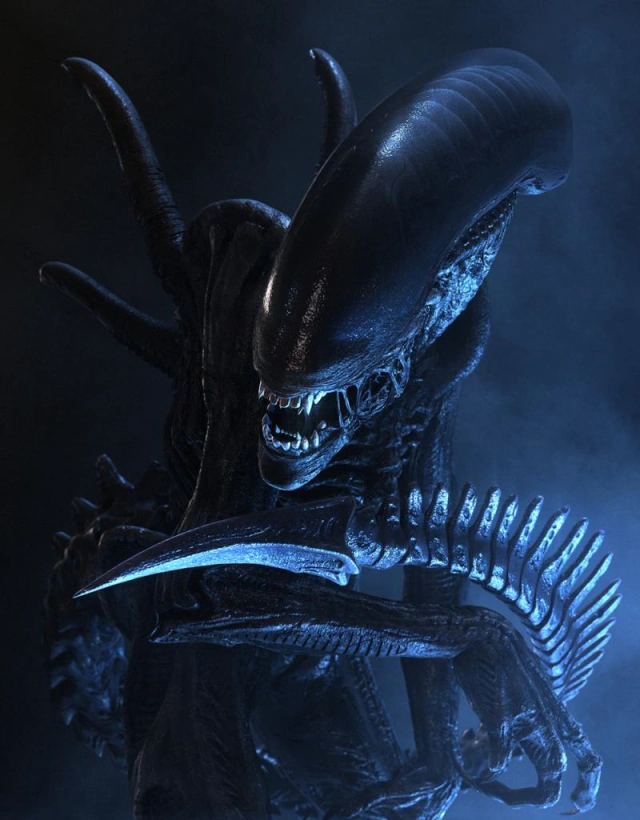
And this is the main reason why I was disappointed with Alien: Covenant this past weekend, as well as the catalyst for this post. Granted, that movie had a number of problems, but one thing that Covenant and its predecessor Prometheus both do is try to give an origin story to the films’ real stars, the Xenomorphs. When it comes to antagonists in horror getting origin stories, it’s on a case-by-case basis, and in the case of the Xenomorphs, I’ve actually come to dislike the idea of giving them an origin story. Part of their power is that, even for man-eating monsters, they’re so divorced from what humans perceive as normal. In fact, the name Xenomorph means “strange form,” and it’s that strangeness that makes them so terrifying and iconic.

So when Prometheus and Covenant try to explain them to us in origin stories, they put them in contexts that we can understand, robbing Xenomorphs of what makes them so amazing. Granted, it’s a question everyone who’s seen the original films has asked at some point: “Where do the Xenomorphs come from?” But it’s not a question that has to be answered. The fact that they had such a shady origin to them was part of their mystique, causing our minds to wander and wonder if maybe, somewhere in that until origin story, there’s a dark truth out there waiting to make us wet our pants. And now, that sense of wonder is gone, because these movies have given us an origin that, rather than being dark and terrifying, is at times confusing and at other times lame.

What I’m trying to get at is that sometimes–not all the time, but a significant portion of the time–you don’t need to reveal everything about your monster. Sometimes, keeping some mystery around adds more to the story, and keeps the source of our terror effective. And in a horror story, keeping things terrifying is one of the most important aspects of horror storytelling.