Posts Tagged ‘review’

The other day, one of the YouTube channels I follow, Tale Foundry,* asked a question on their social media about the difference between an author’s writing style and voice. Since I saw it first on their Twitter, I answered their question there. It went something like this over the course of two tweets:

Writing style is the technical part of writing: the author’s word choice, how thoughts are written out, etc. Voice is that and more: what sort of stories the author likes to tell, their favorite characters, the elements they like to include to make the story exciting.

That was my answer at the time, but I wanted to make sure it was right and I wasn’t just pulling stuff out of my ass like most politicians. So I went to Google and took a look. To my surprise, I was pretty on the dot. According to that lovely resource none of my teachers or professors liked us using even when they used it themselves, Wikipedia, writing style “is the manner of expressing thought in language characteristic of an individual, period, school, or nation. Thus, style is a term that may refer, at one and the same time, to both conventions that go beyond the individual writer and to singular aspects of individual writing.” And according to TheBalanceCareers.com,** voice is “the author’s style, the quality that makes his or her writing unique, and which conveys the author’s attitude, personality, and character.”

For example, let’s look at HP Lovecraft’s writing style and voice, as they’re both so distinctive.*** His writing style is easy to pin down: an overly-wordy and stuffy Victorian patois filled with fancy words. Yeah, he liked to pretend he was a contemporary of Edgar Allen Poe. I think in his later works he tried to modernize his style, but he never got over using too many words and too many fancy ones.

As for his voice, that’s also easy to pin down: stories centering around terrors that give no care for mankind. Secrets and sights terrible enough to cause insanity. Entities so powerful they see humanity as nothing more than ants in the grand scheme of things. All with an unhealthy helping of xenophobia, racism, fear of women, fear of sex, fear of technology and progress, inability to grasp many sciences and maths, and an obsession with sophisticated upbringing and breeding.

Yeah, dude had his issues, and this was before getting help for your problems was effective and smiled upon by society. On the plus side, it had a lasting influence on the horror genre that’s still felt today. And the combination of the two makes it easy to point out an HP Lovecraft story when you come across one, even if his name is obscured.

As for my own style and voice, they’re still evolving. But I’ve noticed a few things for each. I prefer to write my characters blunt with their feelings, possibly because I have enough trouble understanding real humans and their confusing mix of emotions. And I love writing stories with unlikely heroines or nice-guy heroes, usually but not always in the their teens, supernatural enemies and horrors, plenty of either realistic or twisted love and romance, and more than a dash of weird to make it fun.

I think there are people out there who like that sort of thing. Not all of them are close relatives. I hope.

Writing style and voice are both very important aspects of writing, both for the writer using them and for the audience reading their work. It’s how we come to know the storytellers, how we identify them just from looking at a page, and it’s what allows them to stay relevant and immersive long after they’ve stopped typing on keyboards or holding pens.

That’s all for now, my Followers of Fear. I’ll have a review out this weekend, so if nothing else comes up in the meantime, I’ll see you then. Until then, pleasant nightmares!

Have you noticed anything about your writing style or voice? What about your favorite authors?

*Which you should check out if you’re interested in stories and looking past the surface to the mechanics and deeper meaning of storytelling, by the way. Here’s the link to their YouTube channel.

**They also mention voice can refer to a character or narrator’s voice. But since I think Tale Foundry was referring to the author’s voice, I’ll stick with that one.

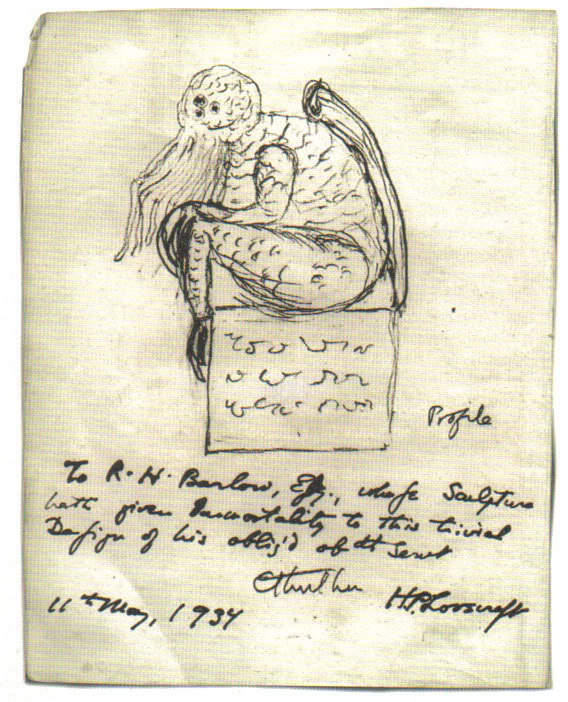
***Speaking of which, yesterday was the 91st anniversary of the publication of The Call of Cthulhu, the first appearance of the titular character and the namesake of the Mythos. Happy Birthday, Cthulhu. May you someday rise out of the sea to irrevocably change the world (preferably before the 2020 election becomes super depressing/annoying).

Today I went to the movies for a double feature. The first film was the new Alita: Battle Angel (for my thoughts on that, check my Twitter feed). The other was the sequel to 2017’s hit horror film Happy Death Day (see my review of that here). Plenty of people who liked the first film, including myself, wondered if the sequel could live up to the fun and batshit insanity of the original. And I think they did a decent job.

Happy Death Day 2U picks up almost immediately after the end of the first film, with protagonist Tree and boyfriend Carter finding out Carter’s roommate Ryan is now in a murder-filled time loop of his own. They discover the source of the time loop, but in the process of trying to fix it, Tree is sent into an alternate timeline where things are quite different, and where she’s stuck in the loop again. And if she doesn’t solve this loop and find a way back to her timeline, things will get really messy.

As one would expect, this film does take a lot of cues from the first film, which takes a lot of cues from Groundhog Day and other time-loop stories. So people who were expecting something different will be disappointed (though how they could expect something different is beyond me). The stakes are raised this time though, because Tree has to protect not just her own life, but has to save other lives along with other tasks in order to get back to her life as she knows it. There’s also the added dilemma of whether Tree wants to go back to her original timeline, as the new one has some perks along with some downsides (you’ll see what I mean if you decide to see the film). The sequel is also more comedic than the original, which I was able to deal with even though I prefer more horror in my films. And if you wanted an explanation of why the time loops are occurring, this film does provide it.

That being said, the decreased amount of horror may turn off some viewers. And the sci-fi explanations for why the time loops are occurring may confuse some people, especially those who barely passed high school physics. Hell, even I was confused by the explanations, and I’m usually good with this stuff. I understood Inception and Donnie Darko on the first go-rounds, so you know they must’ve really made it confusing here!

But if you look at the whole package, Happy Death Day 2U is, while not as good as the original, a good successor. On a scale of 1 to 5, I’ll give it a 4.2. It’s a funny, crazy, bloody movie and if they made a third film (which, based on a mid-credits sequence, I think they will), I’d check it out.

That’s all for now, my Followers of Fear. If you need me, I’ll be editing. Until next time, pleasant nightmares!

This new film got some buzz after its trailer was released, with lots of people saying it could be scary as all get-out. That, and there aren’t many movies revolving around haunted artwork and/or the art world, so we thought it could be breaking some new ground. So I tuned in this evening. And I’m glad I had wine in the fridge, after what I just saw.

Velvet Buzzsaw follows tough art critic Mort Vandewalt, art agent Josephina, and her boss Rhodora Haze, who are considered the creme de la creme of the art elite circles or working on making that happen. One day, Josephina discovers her elderly neighbor has died, and then discovers he’s an artist of amazing talent, who also wanted all his artwork destroyed after his death. Jospehina decides to take the artwork and sell it alongside Rhodora, making them all very rich. However, several suspicious accidents and deaths occur, all occurring around the dead man’s art. Soon Mort, who has become obsessed with the dead man and his work, discovers some dark secrets around it. Secrets that are deadly in their power.

I’ve heard it said that contemporary art is about the idea behind the piece and its execution, rather than what the work portrays. If so, I think the idea here was a searing indictment of the elite art world in the form of a horror movie, but ooh, was the execution horribly botched.

Velvet Buzzsaw is only really a horror movie a third of the time. The other two-thirds, it seems to be either a slow-burn thriller about the dark side of the art world, or the film equivalent of those literary stories where characters go on personal journeys through their hundrum lives to find themselves/meaning in their lives/happiness. When it’s the third type, it’s actually pretty decent. If it were that kind of film, then we might get something Oscar-worthy. But then the film switches to slow-burn thriller, which is just kind of sub-par, all talk about cut-rate deals and how to screw everybody over (in more senses than one). And when it switches to horror, the rest of the movie has been so diluted that there’s no atmosphere or scares that the audience can be picked up.

I also found John Malkovich’s role in this film to be a total waste. He’s this tortured artist who kind of exits the film halfway through, and then we only see him in the credits, and it’s like…what? What was the point of this character? Along with Natalia Dyer’s Coco, which would’ve been a great perspective to see these events play out from if the character had been given more screen time, I’m just peeved.

If there was something about this film I liked, it was the cast. Jake Gyllenhaal, Zawe Ashton and Rene Russo do excellent jobs as the three main characters, Daveed Diggs of Hamilton fame has a role as an up-and-coming artist, which was cool. And there are some cool art pieces in the film, as well as some great bits of cinematography.

But taken all together, Velvet Buzzsaw is a 2 out of 5 at best. It’s inconsistent in tone, wastes some of its talent, and ultimately creates a film that’s stylistically memorable but otherwise forgettable. If the film had maybe found a tone to focus on and, if that chosen tone had been horror or horror-thriller, given the character of Coco more screen time instead of just using her as a sort of tragic comic relief, and had devoted time to building an atmosphere, then we might’ve had something here. But since the filmmakers didn’t go that route, it’s just a damn shame.

This past week at work, I’ve been taking a class on giving an effective presentation, with and without PowerPoint. As part of that class, we were to give a seven to ten minute presentation on any subject of our choosing. You can guess what I did mine about. That’s right, I did mine on horror. Specifically, on what makes for a good horror story.

Don’t you just love it when life hands you opportunities tailor-made for you?

And while working on my presentation, I realized that I could record it and maybe post it on YouTube. After all, I don’t get many opportunities off the blog to expound on what makes for good horror, and wouldn’t I want to make sure as many people as possible were able to see it? So I gave one of my classmates my phone right before I began, and he started recording. The result is below. The video does cut out before the presentation is finished, but you get the gist of it.

If you’re wondering what my example of a bad horror story was, it was 2016’s The Boy, which I hate. I would’ve used the Friday the 13th remake, but I thought doing an original film would drive the point across better. Afterwards, while the lights were out, I went to the next slide, which was all black, and gave a quote from Kill Creek, the Gothic novel I mentioned in the video (and which I really do recommend):

If I were to lead you into a dark room, and someone were to leap out and shout, “Boo,” you’d be startled for maybe a moment. If, however, I were to lead you to that dark room and tell you that someone died in that room, that their spirit haunts it, and that they sometimes reach out and touch people, and then I left you locked in that room, for hours on end, in the dark…that is horror.

That’s about as exact a quote I can give when I only have my memory of the audio book and no hard copy to look up the quote prior to the presentation.

I finished by thanking everyone for coming to my TED talk (apparently that’s something people say when trying to be academic nowadays, so I thought I’d use it), and wished the all pleasant nightmares before asking if anyone had any questions (someone asked me what my favorite horror movie is. I couldn’t think of one). And after the presentation, I got some really great feedback from my classmates. One or two even told me they’d never thought of horror like that before, and it was really eye-opening.

To which I bowed and said, “My job here is done.”

When I got home, I immediately went to upload the video onto YouTube. Took about an hour, as it was nearly two gigs worth of data, but it’s up there, and it’s not half-bad. So if you do get a chance, I’d really appreciate you checking it out and letting me know what you think. Was my argument convincing? Were there counter-points you’d like to make? And will I get sued by any companies for using their images, specifically Warner Bros. for using footage from the trailer for The Nun? Let’s discuss!

That’s all for now, my Followers of Fear. I’ll be going to see Glass this weekend, so you should hear from me again then. Until next time, thanks for reading/watching and pleasant nightmares!

Well first off, I did order a hard copy of The Complete Works of HP Lovecraft. That should arrive by Thursday. In the meantime, now that I’ve finished reading his entire body of work,* I thought I’d take a moment to list my favorite stories of his work. Why? Because A) I want to, and B) despite the overuse of 18th century language and enough racism to make me want to punch the guy, there are some good stories here worth reading. And if anyone ever wanted to try HP Lovecraft but didn’t know where to start, and if they trust my reviews at all, I think this would be helpful.

So starting from Number 8 and working our way up, let’s go over my Top 8 HP Lovecraft Stories.

#8: The Lurking Fear

You ever go hiking or driving through a mountain range at night and expect something like Jason Voorhees to pop out? I have, and it’s enough to make you really question your decision to ever set foot in those areas. Such is the force behind The Lurking Fear, about a reporter who goes into the Catskill mountains to investigate reports of monster attacks on local villages, and comes across something much more sinister. It’s a story that takes advantage of its setting and using a monster unseen to create the sense of horror. And while the twist might be slightly predictable, it still does add to the sense of horror you feel reading it. Fans of the movie The Descent should especially like this one.


#7: Pickman’s Model

Art can both exhilarate and terrify, move people to tears and to action. And in some cases, it can even haunt us forever. Pickman’s Model follows an artist who becomes friends with the titular Richard Upton Pickman, an artist whose work tends to lean more towards the horrific, and how that art seems to have an effect on both the men and their environment. This is a scary story with a fun twist at the end that shows just how the world and art can play with each other and change each other in unexpected ways.

Also, I think if anyone wanted to update the setting to a high school art club and Pickman as an angsty teen, it would make a great student film. Someone please make that happen!


#6: Cool Air

Written during Lovecraft’s brief stay in New York City and considered by some to be one of his best stories from that period, Cool Air tells the literally chilling tale of a young man who becomes friends with a doctor living in the apartment above him who always keeps his apartment cold. The twist at the end of this story is also kind of predictable, but it’s got a great atmosphere and is engaging from beginning to end. Plus it’s one of the few times Lovecraft depicts non-white people in a positive light, which makes it worthy of a read in and of itself. Remember to read with a warm blanket handy.

The Colour out of Space

#5: The Colour out of Space

One of Lovecraft’s most memorable and beloved stories, this story about a crashed meteor and the strange colorful substance inside it that affects a farming family that can’t leave their old homestead has terrified generations of readers. It’s especially memorable for the unsettling atmosphere it creates and for being a great early example of the sub-genre of science-horror. I’d consider it perfect reading for Halloween and you’re in the mood for something creeping, agoraphobia-inducing, and just slightly weird.


#4: The Temple

This early Lovecraft story isn’t as well-known as some of his other works, but it’s a favorite of mine. When a WWI German submarine sinks a British sub, they start experiencing strange phenomena that slowly drives the crew members to the brink of sanity, as well as a place only seen in nightmares. Claustrophobic and full of just enough strange elements to make you feel very creeped out by the inexplicable nature of it all, it tends to stick in your mind once you read it. I hope someday there’s a big budget adaptation of the story, or even a small budget that maximizes atmosphere without excessive CGI. That would be the shit!

Or maybe it would just be shit, but I can dream, can’t I?


#3: The Call of Cthulhu

I bet many of you were wondering where this one would be on the list. The most famous of his stories and the one where the entity Lovecraft’s mythos is named after, it follows a professor who becomes aware of a dangerous, worldwide cult while going through his late uncle’s effects. Weaving its story slowly to make you really consider that this cult and its horrible god may not only be dangerous but very real, it’s endured for a reason. I would recommend this one to anyone looking to get the essence of Lovecraft in one story, as well as to check out the silent film adaptation from 2005, modeled to look out it came out around the same time as the story was published (though much better than your average silent film).

And remember, Ph’nglui mglaw’nafh Cthulhu R’lyeh wgah-nagl fhtagn.

Spelled that correctly the first time around! Yeah baby!

Shunned House

#2: Shunned House

This Gothic horror story follows two professors who investigate a house where every previous occupant has come to an unfortunate end and discover a terrible entity within. While not as well known as his more cosmic-horror works, this story absolutely entranced and terrified me while on a car ride home from Detroit in the summer of 2016. Blending a setting whose rot you can practically smell with a welcome twist on an old monster (let’s just say, no sparkling here), Shunned House used to be my favorite story prior to the #1 choice, and I would recommend it to any horror fan out there.

Also, I have an idea for a ballet based on this story. Yes, you’ve read that right, a ballet. And I would help in any way I can to bring that to life. BalletMet (or any other ballet company) email me. Let’s talk and make it happen.


#1: The Shadow over Innsmouth

I only read this story last week, but it immediately became my favorite of his work. A young man makes a side trip to a small fishing village in New England, and discovers that the strange townsfolk all share a terrible secret. Gothic, unnerving and with more action than your average Lovecraft story, it’s a great story about how the desire for prosperity can lead to damning consequences for both you and your descendants. If you want Lovecraft at his best, this is the story I’d recommend above all others. Definitely check it out.


That’s my top 8 Lovecraft stories. And while, as I’ve said before, his works don’t really age that well, there’s plenty to pick up from these stories for even causal horror fans. And if you do, I hope you–holy crap, a portal from another world just opened up in my apartment. Excuse me while I go greet an entity from another universe and keep it from either eating all of humanity or impregnating everyone in my apartment building, I’m not sure which (I’m a little rusty on this universe’s language).

Until next time my Followers of Fear, pleasant nightmares!

Have you read any of these stories? What did you think? What others would you put on this list?

*Well, the official canon, anyway. Lovecraft also did a lot of ghost-writing and collaborations that aren’t normally included in collections of his work. Considering Through the Gates of the Silver Key is one of them, I can see why.

It took me nearly three and a half years of on-and-off reading, but I’ve finally done it. Through wordy paragraphs full of outdated language, enough racism to make me want to punch a dude, and an increasing amount of multi-sided shapes and magical angles, I have finished reading the copy of The Complete Works of HP Lovecraft on my Kindle. And of course, after such a momentous occasion, there’s only three things I want to do: drink a beer; peruse hard copies of the same book; and blog about my thoughts on Lovecraft’s later work and its influence on the horror genre, as well as on my own writing. This is that last thing on my list.

So if you are unfamiliar with who Lovecraft is (and I find most people are), he was an early-20th century writer based in Providence, Rhode Island. While not very well-known during his lifetime, his creation of the sub-genre of cosmic horror has ensured that his work has lived on and influenced other horror creators and enthusiasts such as Stephen King, Alan Moore, Guillermo del Toro, and myself. What really appeals about this genre is the idea that the universe is a dark and uncaring place full of forces that have no care for humanity or other minor species in the cosmos and can destroy lives and civilizations (as well as usually having a vaguely fishy smell).

When you consider the dude was a sickly bundle of nerves who dealt with anxiety and depression his whole life, had a classist-type of racism where skin-color and social background were very important, was frustrated over his inability to finish his education, and felt more comfortable letter writing and staying in Providence than actually interacting with people and going to crowded places, it makes sense. And while his stories have each aged differently, there’s plenty you can get out of them, especially when it comes to the mechanics of cosmic horror.

This time around diving into his work, I finished out reading his work with some of the most famous of his latest work, which included At the Mountains of Madness (which was also the nickname for the summer camp I went to), The Shadow over Innsmouth, and The Shadow out of Time. By this point, Lovecraft was consciously trying to add scientific concepts to his work wherever he could, especially in Mountains of Madness and Shadow out of Time. Sometimes that works very well, such as in Mountains, but other times, like Through the Gates of the Silver Key, I just found myself scratching my head in confusion (not sure angles work like that, dude). You can also see that by this point, he’d really gotten a grasp over this fictional world of his, throwing casual references to numerous recurring elements in the course of a single story. For once in his life, he was comfortable with something.

Also, while the racism is still evident, it’s kind of mellowed out at this point. Not much, but enough that I don’t feel so uncomfortable reading during certain passages of his work. Progress, I guess.

So were any of these stories any good? Well, old HP’s work has always been hit and miss with me, but there were some good things here. At the Mountains of Madness, while not my favorite, did have a great premise and kept me engrossed for most of the story (he probably could’ve cut parts about the Elder Things’ history and city, though. That went on forever). And Shadow over Innsmouth is probably my new favorite Lovecraft story: it’s this freaky Gothic tale of a town whose citizens have basically sold their souls and their humanity for prosperity and long lives, and the one person who ends up upsetting that arrangement. I’d totally check it out if you’re interested in a different sort of Gothic horror story.

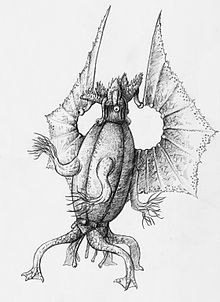
Elder Things from “The Mountains of Madness!” They’re not pleasant!

That being said, I was not a fan of Shadow out of Time. I know that one’s pretty beloved by his fans, but I just thought it was too wordy, to the point where I would look over entire sections and forget most of what I’d just read. The Thing on the Doorstep had an interesting premise, but I felt it wasn’t as scary as some of his other works. Dreams in the Witch House also had a great idea, but I think a couple of changes could’ve been made to improve it. And I’m never going to get back the hour I spent reading Through The Gates of the Silver Key. Seriously, only real enthusiasts should try that one, and only if they’re really sure about it.

Still, it was all worth the dive, in my opinion. I’ve learned a lot by reading the work of HP Lovecraft over these few years, and getting a grasp of why people still read him and write cosmic horror today. And I think over time, it could lead to me writing better stories. Hopefully. I’ll let you be the judges of that, though.

In the meantime though, I’m going to continue working on my own stories and start reading some work by an author who’s older than Lovecraft but somehow easier to understand. Who is that, you ask? The Bard of Stratford-upon-Avon, William Shakespeare.

That’s for all now, my Followers of Fear. I’ll hopefully have a new review for you guys soon. Until then, Hail Cthulhu and pleasant nightmares.


For my other examinations of HP Lovecraft’s work, check out Parts 1, 2, 3, and 4. Also, I highly recommend this video from the YouTube Channel Overly Sarcastic Productions. They look over Lovecraft and five of his most famous works with fun illustrations and hilarious commentary. Trust me, it’s worth a look.

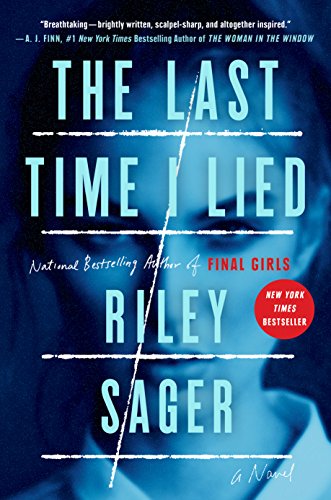
After reading and really enjoying Sager’s first novel Final Girls, I was eager to check out his latest book, The Last Time I Lied, when I found out about it. It helped that the protagonist was a young woman with a dark past (my favorite kind of character to work with) and the story combined an old horror trope with some of the new thriller-type storytelling that we’ve seen in novels like Gone Girl and The Woman in the Window, as well as in Sager’s last book. What more could I ask for? Excited, I downloaded the audio book before the New Year, and started listening.

The Last Time I Lied follows Emma Davis, a New York City artist who is invited back to Camp Nightingale as an art instructor for its first summer in fifteen years. One problem: Fifteen years ago when Emma was a camper at Camp Nightingale, her three bunkmates went missing and were never found. This incident has haunted Emma all through her teens and adulthood, and she decides to go back to see if she can’t finally put the past to bed and maybe even find out what happened to her friends. Weaving between the past and the present, Emma arrives at camp and finds very little is as it seems, and gets caught up in a web of mystery, one with her old bunkmates at the center of it, and which threatens to entrap her and the current crop of campers inside.

One thing I loved about this story is that the camp setting and the camp reminded me of my own camper days. Yeah, my camp was co-ed and Jewish in nature and the one in the book is a secular all-girls camp, but the amount of swearing, the hormones and the differing personalities that sometimes get along and sometimes clash kind of brought me home. But beyond that, this novel is just as twisty as Final Girls was. Every moment you think you know what’s happening or what’s happened, the story throws you for a loop and introduces new information that makes you rethink everything. I was only able to guess a couple of those twists out of all of them, and given that I’m not normally very good at doing that for most mysteries, that’s impressive.

I also felt a lot of connection with Emma herself. She’s a very well-developed character, and I understood how the events of the past affected her in the present (I’ve been there too, though nowhere as severe). But you also see how caring she is, and how that caring makes her want to seek out the truth and to protect those around her. She’s a great example of a protagonist for this sort of story, and I hope I can learn from reading her story to write those sorts of characters in my own stories.

A few things did stick out for me with this story. Remember those twists I was able to guess? Well, at times said twists did feel a bit obvious, so the emotional response at their reveal wasn’t as strong as it could’ve been. At least for me. For others, it could be different. Also, there’s this subplot involving a relationship between Emma and another major character she has history with, not all of it good. And while that subplot did add some drama to the story, I didn’t like how it concluded. Without spoiling anything, after everything that occurs in the novel, I find the hints as to the direction the relationship may go in the future hard to believe.

But all in all, I really enjoyed The Last Time I Lied. It’s a twisty story with plenty of surprises and great characters that play off each other in all the best ways. On a scale of 1 to 5, I’m giving it a 4.3. Sign up and dive right in for a great thrill ride.

I’m looking forward to Sager’s next novel, Lock Every Door, when it comes out this summer. And if you read Final Girls or The Last Time I Lied, you will be too.

With the emergence of escape room experiences in 2007 and their rising popularity among the worldwide populace (hell, I have a sister who does them all the time with her boyfriend), it was probably inevitable that a film would be made based on them. Especially seeing as the concept isn’t exactly owned by any particular company or anything. Of course, a film like this would also be compared to the Saw films and Cube (the former I never liked, the latter I only heard of today). Are the comparisons valid? And is the film any good on its own?

Escape Room follows three individuals–quiet physics student Zoey, stock boy Ben, high-powered stockbroker Jason–as they are joined by three others–Army veteran Amanda, trucker Mike, and escape-room nut Danny–after being invited to attend a special escape room experience with a cash prize of ten-thousand dollars. Problem is, the escape rooms are designed to be able to actually kill people, and it will push the participants to the brink physically and mentally. And not all of them will make it out alive.

For starters, this film is very well-done visually. Every set is made to look as real as possible. Also, boxes are present throughout the film, reinforcing the film’s theme. The escape rooms themselves are very clever in their layout and their traps. The latter two, by the way, are where the film’s tension comes from, and the tension is strong. You’re always wondering, where the next trap will be triggered, what will it lead to. And when it does show, whoo-boy is it hard to look away while the characters try to save themselves and move onto the next room. Add a decent focus on showing who these characters are and how the rooms challenge them, and it’s easy to get drawn in.

Plus, no torture porn! I hated the first Saw film because I saw no point in all that excessive gore and torture, and haven’t seen the sequels because of it. Glad to see they didn’t go that route with Escape Room, though they easily could’ve.

The film does have a couple issues. While the characters are given enough time to develop on screen, the reveals of their traumatic pasts is told more than shown. And while telling might work in a novel, in a film it’s better to show. I also would’ve liked Nik Dodani’s character Danny to be given more screen time (though that might be because I saw myself and people I know in him). And the final scene of the movie does feel like it was tacked on with the hopes of generating a sequel (which I could see happening if the film does well, though the team behind it would have to really work to make the sequel as good or as tense as the original). You could’ve easily ended the film one scene before and with a slight tweak made it a perfect storybook ending.

But all in all, if you want a film involving puzzles and life-or-death situations but you prefer tension, character development and storytelling over gore and torture porn, this might be the film for you. On a scale of 1 to 5, I’m going to give Escape Room a solid 4. Leave the kids at home* and get ready for an armrest-clenching thriller.

*Seriously, leave the kids at home. One woman in the row behind me brought her four year old son and I heard him whispering (and possibly crying in fear) more than once during the film. Lady, what are you doing bringing a four year old to a PG-13 film that’s just a bit of blood and a few swear words short of an R rating? You want him to grow up traumatized? Either get a babysitter or wait six months for the film to hit DVD! You’ll survive if you don’t see the film because you have a kid who takes priority!

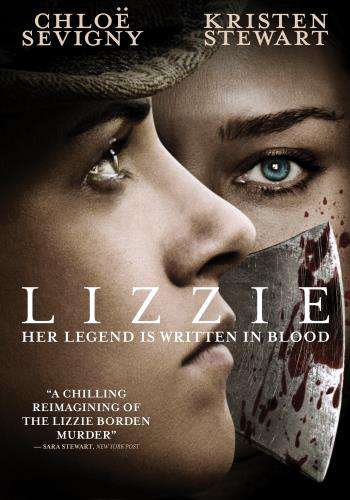
As you know, I’m a bit of an enthusiast when it comes to Lizzie Borden, the woman who allegedly murdered her stepmother and father, in that order, was acquitted at trial due to prosecutorial bungling as well as societal attitudes about women at the time, and who allegedly haunts the house where those same murders happened. I’ve stayed overnight at the Borden House, now a bed and breakfast; I’ve read a book or two about it, including See What I Have Done by Sarah Schmidt; and I’ve watched more than a few adaptations about the murders, including the famous 1975 TV movie The Legend of Lizzie Borden.

So when I heard a new movie was being made on Lizzie and the murders, I was intrigued. It had some big names attached, including Chloe Sevigny and Kristen Stewart. And the trailer made it seem like this was going to be a really tense thriller film. I was willing to see it in theaters, but the film was only given a limited theatrical run and it wasn’t playing anywhere near me (or in Ohio, as far as I can tell). So when my library’s copy came in for me today, I actually rushed over to pick it up with the goal to watch it tonight.

I can see why this was given a limited release.

Lizzie retells the story of Lizzie Borden and the 1892 murders of her parents, using the theory that Lizzie and the maid Bridget “Maggie” Sullivan were lovers and committed the murders after Mr. Borden discovered their affair. That’s the plot in a nutshell.

I’m not sure what exactly the filmmakers were going for, because this was nothing like the trailer. For the most part, the film goes at a slow crawl, making it feel like three hours rather than an hour and forty-five minutes. Everything takes it time, which in what is supposed to be a tense murder thriller can really take you out of the story. And you know how people accuse Kristen Stewart of having no emotional range in her films? Weirdly enough, it seems reversed here: Stewart has some emotional range, and everyone else seems like they only know how to mimic emotion, rather than show it!

On top of that, Lizzie didn’t include some things that one might expect from any story on Lizzie Borden. The turbulent relationship between Lizzie and her stepmother is glossed over; Lizzie is shown suffering from seizures, which is something I don’t remember ever hearing about her; elder sister Emma Borden is barely in the film; and a few other things beside.

Oh, and there’s this thing with the soundtrack. Namely, it doesn’t show up that much, and when it does it disappears really quickly. There’s one scene where you’d expect lots of soft music to highlight the emotion of the scene, only for it to cut in and out every three seconds. Um, why?

Was there anything about this film that I liked? Well, the attention to detail is decent when it comes to clothes and furnishings. The house’s first floor is laid out like the real house in Fall River, Massachusetts, which I approve of. And the development of the relationship between Lizzie and Bridget is given the time and development needed to really make you believe in it. And there are some real talents in this film, including Jeff Perry, Denis O’Hare, and Fiona Shaw.

But other than that, Lizzie was really not worth the wait. On a scale of 1 to 5, I’m giving this film a 2. If you want a Lizzie Borden film that keeps the tension up even though you already know how it ends, I recommend 1975’s The Legend of Lizzie Borden, starring the incomparable Elizabeth Montgomery in the titular role. Fun fact, Montgomery found out Lizzie was her sixth cousin once removed after completing the film. Imagine if she’d known that when she was playing the character!

Now if only I could see  productions of Fall River Legend, the ballet based on the murders, and the rock musical Lizzie. Yes, those exist, and I want to see them live. Someone pleeeeeease make those happen for me!

When trailers for Bird Box first hit the net, people were immediately intrigued. Not only because Sandra Bullock was in it, but the film, like A Quiet Place, drew its tension and challenge through avoiding a monster by denying an important sense or human function. I was also intrigued when it was pointed out to me that the film shares similarities with a story I wrote (not enough to get lawsuit thankfully). So this evening, I sat down and checked it out.

Based on the novel by Josh Malerman, Bird Box follows Mallory, a woman with two young children who is trying to get to a compound downriver while she and the children is blindfolded. The story then switches to five years previously, when a pregnant Mallory becomes trapped inside a large house after invisible monsters start causing anyone who gazes upon them to either commit suicide or try to make other people look at them. Switching between past and present, the movie follows Mallory’s journey of survival, both then and now, as she tries to keep those close to her alive.

This was a really good horror film. It takes a simple concept and executes it very well, creating this gripping tension. Even when characters are indoors, there’s this feeling of dread as you see them struggle with their various survival needs–food and water, two very pregnant women, anyone outside might be dangerous, etc.–and the possibility of having to expose themselves to the outside. In those moments, you see these characters really having to work to keep themselves alive, using everything in their environments to both get around and keep themselves from seeing something they shouldn’t. It really makes you believe in the scenario occurring, and that these would be the steps people would take if such a situation would occur.

I also liked how the movie handles the monsters. You never see them, you only see their effects on the environment and anyone who sees them, and that adds this powerful sense of mystery to them, compounding the terror they create.

And for those wondering, Sandra Bullock in the lead was awesome. I mean, all of the principal cast is really good, but especially Bullock. You really do see this woman who has grown up being very guarded and afraid of bonds with people new to her having to really change herself in order to adjust to the situation she’s in. Yeah, at times she does seem a little emotionless, but I think that is just her character trying to stay guarded. I know some people have said that annoyed them or made it harder to sympathize with the character, and I have a feeling that’s going to be a point of contention though with a lot of people. Hopefully the debates stay civil, especially online.

I also liked John Malkovich as Douglas, a character whose survival drive at times makes him gravitate between asshole and murderer. Yeah, I hated the character, but God was it hard to look away whenever he was on the screen. And he does a great impression of Donald Trump at a rally during one scene. That alone is worth checking out the film.

If there was anything I didn’t like, it was that a few characters didn’t get more screen time. You have Sarah freaking Paulson and BD Wong in this film, but their roles were relatively small, and that’s just a damn shame (though since they were both on American Horror Story: Apocalypse, that might have had something to do with it). And Lil Rei Howery as Charlie, a grocery store employee and aspiring author writing a novel about the end of the world (a man after my own heart) should’ve been given more screen time. He stole the show every time he was on screen. I wish that guy could have his own film.

All in all, Bird Box is a tense apocalyptic thriller with great characters and an engrossing story. On a scale of 1 to 5, I’m giving the film a 4.5. Go in, and go in with eyes wide open. You’ll see how beautiful it is.