Posts Tagged ‘review’

I’ve been watching a lot of Supernatural on Netflix lately, and something in the most recent episode I watched got me thinking. It was stated at the beginning of the season that the main villain of the season, the demon Lilith, is breaking magical seals to raise the demon Lucifer out of Hell, and she needs to destroy sixty-six seals to do so. Based on that, I thought there were sixty-six seals in total, which seemed reasonable. According to the episode I watched yesterday though, there are over six-hundred possible seals, and Lilith needs to only destroy sixty-six to get Lucifer out of Hell.

Now I’ll admit that I’m still working my way through the season, so there may be more to these seals than what I know right now, but based on just the description I have above, that’s a pretty poor security system. You’re keeping the ultimate evil bound by six-hundred seals, but only sixty-six need to be destroyed to let him out? That’s like only needing an eleven percent passing score on a lie detector test to get access to Top Secret national security files. You’re just acting for trouble.

With that in mind, as well as my thoughts on the movie The Boy that I reviewed earlier this week,* I got to thinking. Sometimes creators do things in fiction that make absolutely no sense when the fans get to them. Obviously, there are things in fiction that are most likely impossible–the magic of Harry Potter, actual giant lizards like Godzilla, TARDISes and Time Lords (sadly)–but we forget that so we can enjoy the story. This is called suspension of belief, and it’s how we can enjoy these stories. However sometimes a creator–whether it’s a book, a movie, a comic, or a TV show–is just too hard for us to believe. When that happens, the story, and our enjoyment of the story, suffers horribly.

With that in mind, here are some things every storyteller can do to make it easier to tell a story without dong something that will make a reader/viewer say, “What the hell? That’s so stupid!”

  • Avoid the unnecessary or stupid twists. Back to The Boy again, which, if you haven’t read my review, singled out the twist that the boy Brahms was alive and a full adult as the movie’s biggest fault. I get that they were trying to distinguish the movie from others like it with a unique twist, but besides feeling kind of lame, the twist made the whole concept of the movie nonsensical (see my review for full details on that). If you plan to include a twist in your work, ask yourself a few questions before you use one, such as: is this twist necessary to make a good story? Is it predictable? Does it make the story seem silly or even make the events of the story make no sense? I’m convinced if the filmmakers of The Boy had asked these questions, they might have had a better movie on their hands.
  • What brought people to your work in the first place? I love bashing 2009’s Friday the 13th remake, because it is such a terrible film. In fact, the filmmakers even seemed to think that the movie was crap, or that they were unable to really make a great Friday the 13th film, so they packed in as much swearing, sex and nudity, drugs, alcohol, and raunchy or childish humor as possible. The result was a film that felt like it was trying to be one of those dirty teen camping trip comedies that had to remind itself every few minutes it was about a serial killer living on a lake.
    If you’re going to tell a certain type of story, keep in mind at every step what sort of story it is and don’t focus unnecessarily on elements that are only a small part of the story or even unnecessary. In the case of Friday the 13th, people watch those movies to see Jason go on a rampage. The sex and drugs and all that other stuff are just added bonuses as well as what causes Jason to target his victims, not why we pay nine dollars at the box office. And the fact that the filmmakers felt those elements were more important is why I’ll always enjoy bashing this piece of crap out of Michael Bay’s bum.
  • Could this happen in the real world? I have a lot of problems with the Hunger Games books.** One of my biggest problems is how the series ends: Katniss finds out President Coin ordered the bombing that killed her sister, so she kills Coin in revenge as Coin takes control of the nation. The new government of Panem hushes up Coin’s treachery to preserve the new order, so for all intents and purposes Katniss just assassinated the new President unprovoked. And Katniss…is portrayed as a girl gone mad with grief over the loss of her sister, she gets exiled to District 12 with weekly phone conferences with a shrink, and lives happily ever after?
    I don’t care if you’re the face of a movement, if a similar revolution occurred in America, and the face of that revolution killed the new leader, you bet that person would at least get locked up in a prison or psych ward so they couldn’t tell anyone what they’d done. Exile and getting to raise a family? Nothing bad happens to her? I don’t care if she has nightmares a lot and never tells us her kids’ names because she’s afraid of losing them, that still would never happen in real life!
    So when you’re telling your own story, ask yourself if a situation is so unbelievable, even in the wackiest of fiction, that people can’t suspend their disbelief anymore. If it is, you might want to consider tweaking it so that guys like me don’t go on a rant about it on the Internet.
  • If it needs a lengthy explanation for why it happens, you might want to rethink the why. This one comes from personal experience. When I was writing Reborn City, I had this really complicated reason as to why my protagonist Zahara Bakur had to join the Hydras. That, and another situation later in the book had really complicated reasons why those things had to happen. It wasn’t until later drafts that I realized how overly complicated those situations were and found simpler explanations for why Zahara had to join the Hydras or the other thing had to happen, explanations that were so simple but worked so perfectly I wondered why I tried to use the run-around logic that a smart reader could easily poke a hole in.
    So if you want a specific event in your story to happen for the sake of the story but the way you get it to happen is really overly-complicated, requires a lot of explanation, and from certain angles makes no sense, perhaps you should reconsider either the event or why it happens. It beats having two unnecessary pages of dialogue explaining why something needs to happen when a much simpler explanation is at hand, at any rate.
  • And finally, don’t forget what is obvious or necessary. This kind of fits into my third point, but I’m making it separate because I feel that’s the best way to present it. Anyway, in one of my fiction workshops in college, a classmate turned in a story that took place in a post-apocalyptic setting. It was a good first draft, but a major problem I had was that the protagonist apparently forgot his bow and arrow at home. I said to her, “This is a world where people dumb enough to leave their weapons at home while on a trip are likely to get killed a hundred different ways. No seasoned hunter like this guy forgets his source of food and protection.” In the same way, make sure that you avoid moves like that, where a character does something that makes no sense for someone in their position or the setting has some part of it that also makes little sense when you think about it. Trust me, it will improve the story if you avoid those problems.

In the end, the thing you want to tell is a good story. Avoiding anything that strains the credulity of your audience can be very difficult, but with trial and effort, you can get very good at it. This is also why I recommend having your stories looked at by editors or beta readers who won’t spare good advice because they’re afraid of hurting your feelings or risking your friendship. They can help you avoid these traps and improve the overall product of the story.

What tricks do you have for avoiding situations that strain the credulity of your audience?

What are some stories where they did something that really took you out of the story?

*By the way, it’s been nearly a week since I published that post, but an average of 36 people a day have been checking that post out since. I guess I’m not the only one who found that twist completely stupid.

**Especially the trilogy’s very backstory. A nation in the far-flung future had a massive civil war, and the Capitol decided that to stop future rebellions, the entire country should revolve politically, economically, and socially around an annual death game involving youth from the Districts? If Panem can genetically engineer scary monsters, they can synthesize a drug that takes out aggression and dump it into the Districts’ water supply. Problem solved, and all those seventeen-hundred and twenty people who died for the Capitol’s perverse pleasure instead grow up to be contributors to society. Yes, that is diabolical and I know I’d make a great dictator. My mother informed me of this fact when I pointed out this problem with the books.

Ooh boy, 2016 is already sucking in terms of horror films. And what made this film so bad? Well, I’m about to go into full SPOILERS to tell you why. I know, I know, I usually try to avoid spoilers at all costs, but in order to tell you how this film screwed up royally, I will have to spoil the film’s very big twist. So be warned, if you still plan to see this film and want to form your own opinions, you might want to stop reading this review.

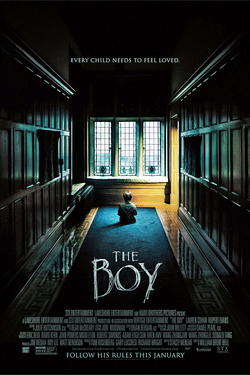
Still here? Alright, let’s go into the setup. The Boy is about Greta Evans, an American running from an abusive ex, comes to England to be the nanny to an elderly couple’s son Brahms. Thing is, Brahms is a doll, the real Brahms dying in a fire over twenty years before. After the parents leave for a holiday, Greta starts thinking that the doll might actually be alive, inhabited by the soul of the psychopathic child who used to live in the house.

Sounds pretty typical, right? Well they try to switch it up in the last twenty minutes. How? Well, here’s where I get spoiler-y: after Greta’s ex arrives and destroys the supposedly-alive doll, it’s actually revealed that the doll…was just a doll. Brahms, who supposedly died over twenty years ago, is actually alive, a full-grown adult who still kind-of thinks he’s a child but has adult desires, and has been living in the house’s walls and in a hidden attic for the past twenty-something years.

WHAT THE FUCK?!!!

Pardon my French, but come on! I get wanting to defy expectations, but the way it’s done here is not only a little lame, but it totally makes no sense. You’re telling me that Brahms survived the fire over twenty years ago, and that he hid in the walls, made his parents, who are apparently aware their son’s alive and in the walls and maybe holding them hostage but allows his dad to have too many drinks with the local grocery store owner, and then also made them play parents to a doll with a remarkable resemblance to him, for over twenty years? Okay, that stretches credulity. First off, the kid doesn’t mature beyond eight years old mentally, surely he’s not clever enough to come up with such an elaborate plan to hold his parents hostage! And if the parents were aware of Brahms being alive, then it argues against Brahms coming across his parents with the doll and taking advantage of the situation.

Honestly, there are two ways this film could’ve actually improved itself: the first, and most obvious, is that the filmmakers could’ve stuck to the supernatural line and focused a bit more on the weird, motherly relationship between Greta and the doll. The other would’ve taken the story and focused on the parents during those first couple years after the fire, when they became aware of their son being alive and what he’s doing to them. That would’ve been an interesting story! Parents who love their son, but at the same time are terrified of him. The conflict would’ve been amazing, the thrill would’ve been powerful. And heck, if they wanted to include the doll in this version, they could’ve found an angle that would’ve worked easily. Especially if they wanted to portray the kid as not stuck mentally, but instead a growing psychopath to rival Hannibal Lecter.

Other than the twist that ruins the movie, the only other problem that I have with the film is that they could’ve touched upon the weird mother-son relationship between Greta and Brahms the doll a whole lot more. That would’ve made the movie much more emotionally powerful, but unfortunately the film only explores it only a little. Other than those two criticisms though, The Boy was pretty decent. The characters are somewhat fun, the actors who play them are great, and the set is decent for a creepy movie. Heck, they even build a really creepy atmosphere punctuated with jump scares. I was afraid at times, and for a little while I really thought the film entertaining, if not downright terrifying.

It’s just that twist. Even if it didn’t make absolutely no sense, it’s so lame it ruins the entire film. Which is why I’m giving The Boy a 2.8 out of 5. Great atmosphere and characters, a promising premise, but I’d only recommend this film if you want to see how a horror film can totally ruin itself by trying to defy expectations, and doing it in the worst way possible.

Well, we’re officially two weeks into 2016. Would you say your year so far is a good one or does it just suck?

Anyway, today is the last day of the 2016 New Year’s Sale, which means you guys have until late tonight to pick up a copy of any of my books, e-book or paperback, for a lower price than you would the rest of the year. And if you’re looking for something new and exciting to read this January, this is a good opportunity to see if anything I’ve written interests you, so why not go check it out and see what’s there?

Also, if you do decide to get one of my stories and read them, please make sure to write a review letting me know what you think. Positive or negative, I love feedback from readers.

That’s all for now. I’ll probably be back soon with more, possibly before tomorrow (it’ll be Friday, so you know what that means). Until next time, my Followers of Fear!

Snake

How far will you go for love and revenge? When a young man’s girlfriend is kidnapped by the powerful Camerlengo Family, he becomes the Snake, a serial killer who takes his methods from the worst of the Russian mafia. Tracking down members of the Camerlengo Family one by one for clues, the Snake will go to any lengths to see the love of his life again…even if it means becoming a worse monster than any of the monsters he is hunting.

Available from AmazonCreatespace and Smashwords


Reborn City

Zahara Bakur is a Muslim teenager recently moved into the gambling town of Reborn City. After her parents are killed by gang violence, Zahara is forced to join the Hydras, an interracial gang whose leaders have supernatural abilities. As the violence in Reborn City escalates and Zahara becomes closer to the Hydras, including the quiet but stern Rip, she finds herself drawn into a dark conspiracy involving the origins of the leaders and the shadowy corporation that rules over Reborn City.

Available on Amazon, Createspace, and Smashwords


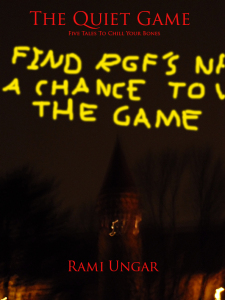
The Quiet Game: Five Tales To Chill Your Bones

In his publishing debut, Rami Ungar brings us five terrifying stories of darkness in magic. You can experience the strange visions of a man battling sex addiction in “Addict”. Or feel the wrath of an enraged dybbuk in “Samson Weiss’s Curse”. Face your fears in Gene Adkin’s Murder House in “I’m Going To Be The Next James Bond” and then journey with a young autistic “In The Lady Ogre’s Den”. But most of all, prepare to play the most insidious game of all: The Quiet Game.

Now Available on Amazon, Createspace, Barnes & Noble, and Smashwords

I reviewed the premiere episode, and I reviewed the previous two seasons after the season finales. I’m reviewing this season, and speculating on the sixth season. And here’s what I have to say: Hotel has replaced Asylum as my favorite season of American Horror Story. And given my high standards, that means something.

Honestly, it’s hard to pin down a favorite part or moment to Hotel, so I’ll try to get in as much as possible. First, there’s the story. With AHS, it’s really hard to pin down where the story will go or how things will play out, who will live or die at the end (though I kind of saw how the first season was going to end at a certain point), and Hotel continues that, keeping me guessing right up until the last episode. I couldn’t even tell who the Ten Commandments Killer was until the show decided to scream it at us right before John Lowe finds out, at which point I was like, “I should’ve seen that twist coming! They’re really that good.” Not only that, but the writers manage to keep things interesting even in slower moments. Okay, not all the slower moments, there were a few moments in some early episodes where I got a little bored with the pace, but other than that, the writers told the story well, kept our interest, and even scared us a bit.

The show also managed to get across its main theme to us the viewers very well. Whereas Freak Show hit us over the head with its theme of “the other”, this year’s theme, “addiction” is given to us with a bit more finesse. Yes, there are lots of shots of needles and all that, but you also see it in the interaction of the characters, how certain characters cling to each other like a lifeboat in the middle of the ocean, and how other characters act as merciless and heartless as drug dealers to the people who need them. Besides the actual shots of heroin, the closest they ever get with giving us the addiction theme overtly is in episode 6, where one character reams out another about how she uses men, but that’s it. You really get multiple layers of the theme throughout the season, all done with a skill and complexity that I hope I can someday do with my stories.

Absolutely loved this character.

And then there are the characters. Oh my God, these characters are just so great. My favorite is Evan Peters as James Patrick March, the Hotel Cortez’s founder. He’s such a fun character, like a twisted, murderous Walt Disney, and he steals every scene he’s in. Not only that, but Peters looks like he’s having so much fun every time he’s on screen. Not surprising, considering this is such a different role than anything he’s handled on the show (or maybe in anything he’s ever been in). I also adored Lady Gaga as the Countess. I’ve said it a million times by now, but you forget that you’re watching Lady Gaga when she’s on that screen. She becomes her character, and it’s a magical spell that doesn’t break after the credits roll. I really hope she comes back next season, because she is so talented and fun to watch.

The rest of the cast is also a ton of fun. Denis O’Hare as transgender Liz Taylor is just divine, and totally a woman I would invite out with me on a night of wild partying. Wes Bentley (call me!) does a great job embodying John Lowe, who is a little flat as a character until the big twist about him is revealed, and then he’s just amazing fun. And the hotel itself is a character all on its own (how can it not be, when the word”Hotel” is part of the title?), with the most beautiful sets and an atmosphere all its own. It’s like meeting someone at a party, someone with looks and personality that everyone is drawn to, but if you get too close you see an all-consuming darkness.

Okay, that’s a good description of a lot of serial killers, but you get the idea. I like the hotel. The one character I disliked was Dr. Alex Lowe. Now her actress, Chloe Sevigny, was in Asylum as Shelley the nymphomaniac, and she had such a personality in that season, but here she plays her character like she’s bored most of the time. I know she’s going for frustration and depression at life’s injustices, but it feels more like boredom here. So yeah, not a fan of Alex.

I do have some complaints about this season, as much as I did love it. One was that the entity of the Addiction Demon was so underutilized in the story that if you got rid of it the entire season would be unaffected. I mean really, that thing was scary, so why wasn’t it used more? Not enough actors to play it? Too much time in the make-up chair?

I also could have used a bit more Finn Wittrock in the show (please marry me). I mean he’s such a great actor, he played two separate characters in the same season, and I was willing to forgive him for a bad accent on one of them. But hey, that might just be my problem. I do like handsome actors. Hopefully he’s around a lot next season.

On a scale of 1 to 5, I’m giving American Horror Story: Hotel a 4.9 out of 5. It’s near perfect as a season as AHS has produced yet, and I cannot wait to see how they try to top it next season.

Seriously hope she’s coming back!

And speaking of next season, what could it be? We’ve had Murder House, Asylum, Coven, Freak Show, and Hotel. Where could they go next? If I were a betting man (and I only occasionally buy lottery tickets), I’d say we might see something set at a private school. Schools are great places to portray a horror story, a lot of the regular actors look like they could be high schoolers, and I could imagine Gaga, who may come back next season, as an English teacher who has an affair with a student. I somehow doubt it’ll be anything involving a prison or a camp: the former is too similar to Asylum, and the latter is being done by the guys behind Once Upon a Time. Perhaps we’ll get something with a political bent, or maybe they’ll try to do a period piece in the 19th or 18th century (plenty of untapped potential there). Or maybe something involving a trial, that would be interesting new territory. In any case, a story set at a school, particularly a private one, is my bet.

Well, we’ll find out soon enough. Possibly very soon, if they release a promo like they did after Freak Show. In any case, I cannot wait.

What did you think about AHS: Hotel? Enjoy it or hate it?

What are your guesses for Season 6?

From the moment I heard about this film, I wanted to see it. It’s horror, it takes place in Japan, specifically Aokigahara (one of the places on my first list of haunted locations I’d like to visit), and the trailers made this thing look awesome. I was excited.

Sadly, the trailers were better than the movie itself, and I will explain why:

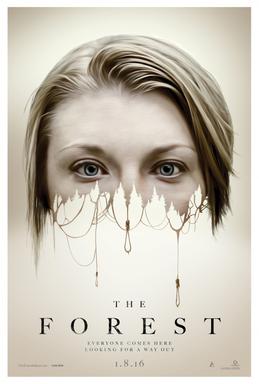
First, the story. Natalie Dormer plays Sarah Price, a woman with a cliched psychic connection to her troubled identical twin sister Jess, also played by Dormer. When there’s a disturbance in the Force, Sarah learns that her sister, who was teaching in Japan, has gone into Aokigahara, a forest near Mount Fuji that is a common place for suicides and has a reputation for being haunted by the extremely angry spirits trapped there. Sarah heads to Japan to save her sister, and ventures into the forest, which in turn brings all sorts of hell upon her and unearths inner darkness Sarah never wanted dredged up.

I had a lot of problems with this movie. First, there’s the protagonist. Sarah Price is not a very interesting character. It’s no fault of Dormer–I’ve seen her in other stuff, I know she’s a great actress–but beyond the psychic connection and a reckless love for her sister, the character is rather flat and dull. She does border on interesting when talking about her past, but that’s it. In fact, most of the characters are rather boring. Probably the only one that peaks your interest is Aiden, who helps Sarah look for her sister, but that’s mostly because you’re never sure what his motives are or if he can be trusted. And Sarah’s husband? You really could cut him from the film and it wouldn’t affect a thing.

Next, the storytelling and the mood. The movie moves rather slowly through most of the first hour, establishing exposition and introducing us to the relationship between Sarah and Jess. Important, but not particularly interesting. It isn’t until they’re already deep in the forest that the story actually tries to scare you, but even then most of the scares are jump scares, and even the best of jump scares are meaningless if they’re not tempered with other stuff, like a tense, suspenseful and horrifying mood, which the movie only really does just the once. By the end of the movie, when the film tries to surprise you with a few twists, one feels forced and awkward, while the other you saw coming a mile away. Just not very effective in terms of storytelling or making you feel scared.

Finally, there’s the effects. Now, I know on a budget of ten million dollars you can’t do much in the special effects department, but the effects they use in this film are for the most part pretty stupid. There’s a scene where a ghost is revealed in a cave, and I was expecting like out of The Ring or The Grudge (originally Japanese stories, if you didn’t know). Instead we get a goofy fanged monster-girl that looks more like a carnival attraction monster than a real ghost, and in the last few minutes of the film we get some CGI ghosts, which are about as scary as a frying pan. There’s one shot in the last few seconds of movie with such a ghost, and I felt more contempt than fear when I saw it, because it was so obviously fake. They might as well have had an actor put on a sheet with eye-holes, save a few dollars on computer-rendering, because that’s how lame it was.

So did The Forest have anything I liked? Actually yes: besides beautiful shots of Tokyo (always nice to see Tokyo when it’s not animated or hand-drawn), the film does a great job of making you question what’s real. Once Sarah is really trapped in Aokigahara, you find yourself questioning everything: river directions, people’s intentions, whether anything you’re seeing is real or all in Sarah’s head. You even question for most of the film what is the real source of the hauntings Sarah experiences: is it ghosts or a living forest? Or is it maybe psychological or even an infection from some bug? The movie makes a good case for all four throughout the course of the story, and even now I’m not really sure what the true answer is. Not that I’m spending a lot of time thinking about the answer, mind you.

Another thing that the movie has going for it is that when the jump scares occur, you really do jump pretty hard. One woman in the theater even cried out after one particular jump scare. That’s not enough to redeem the film, but it does work in its favor. And finally, the film’s got the wheels in my head turning, looking for stories that could come out of it. In my opinion, inspiring me and other writers and creative types is always a good thing, especially if it leads to good stories.

On the whole though, I find The Forest below average, earning a 2.6 out of 5. It’s premise is promising, and it tries hard, but on the whole can’t deliver. You’d be better off staying at home and renting The Ring or The Grudge if you want Japanese-inspired horror. At least this film didn’t ruin my desire to visit Aokigahara (only to see it and sate my horror author’s interest in creepy stuff, though. I would not visit it for the reason other people do).

And if you would like some good horror, consider some of my work. Right now, all my books are on sale until Thursday from Amazon, Createspace and Smashwords. Check them out now and pick up a great read for an even greater price. Trust me, this is an opportunity you do not want to miss.

It’s Friday again, so you know what that means. It’s #FirstLineFriday, my weekly ritual trying to create a blogging trend (and apparently I’m making some success).

Now, here are the rules for the people who’ve never seen or done #FirstLineFriday before:

  • Write a blog post on your own blog titled “#FirstLineFriday”, hashtag and all.
  • Explain the rules like I’m doing now.
  • Post the first one or two lines of a potential work, a work-in-progress, or a completed or published short story.
  • Ask your readers for feedback.

So, this week’s entry is from an idea I had for a sequel to Rose, the novel I wrote as my thesis project during my last year of college (and which I hope to do another draft of once I finish the second draft of Laura Horn). Now, I never planned to do a sequel to Rose, though I did try to leave open the possibility of a sequel while writing the story. The other morning, however, I woke up and the idea for a sequel just formed in my head. Immediately I had characters, situations, the conflict, the setting. All of it just–pardon the pun–sprouted in my head (read the summary for Rose if you don’t get the joke). I got out of bed, wrote down the basics in my little notebook, and then when I got on the computer later I wrote it down on my Ideas list. Now I’m turning it into a #FirstLineFriday entry. That’s progress!

Anyway, I don’t know when I’ll get around to writing a sequel to Rose–it would mostly depend on my mood, how busy I am, and any other projects calling to me to be written, among other things–but the idea is there if I want to pursue it. For now though, here’s what I imagine the first two lines would be:

The door of the house was wide open, despite the cold weather outside and the big “Foreclosed” sign in the yard. I should’ve been immediately suspicious, but I was too tired, cold, and hungry to care.

Thoughts? Errors? Let’s discuss in the comments below.

Well, that’s all for now, my Followers of Fear. Tomorrow night I’m planning on heading to the movies and seeing the new horror movie “The Forest”, so expect a review of that either late Saturday night or early Sunday morning. Until then, have a pleasant weekend, and make sure to check out the 2016 New Year’s Sale while there’s still time.

Oh wait, one last thing. This #FirstLineFriday, I’m doing something different. This time, I’m tagging someone and making them do #FirstLineFriday too. And this week, I’m tagging…YOU! Yes, you! You’re tagged, so either this week or next week, do a #FirstLineFriday blog post. Got it? Good! I can’t wait to see what you create.

Now before I start this review, I need to do a little background: Five Nights at Freddy’s is a video game series created by game designer Scott Cawthon that follows a security guard trying to survive a week at a haunted pizzeria filled with killer animatronics (yes, that’s what it’s about; read here for a fuller explanation on the game and its popularity). The game has proven extremely popular, spawning three sequels, an upcoming RPG game, a movie that I’m excited about, and was a large part of YouTube’s annual Rewind video this year.

The game’s popularity is due in part to simple gameplay paired with a surprisingly challenging game, terrifying visuals and sounds combining to create a tense atmosphere, and a lore that tons of people have been trying to make sense of and put in a timeline since probably the very first game (seriously, search “FNAF theories” on Google. I’ll wait). And these people were excited to hear that Cawthon had teamed up with a writer to produce a novel based on the games, hoping that it would lead to an explanation.

Unfortunately for them, that’s not the case. While the book is kind of canon according to the creator, it’s kind of like an alternate universe’s version of the story of the games, a retelling of the story in the form of the novel with most of the elements of the games.  It doesn’t actually explain the lore of the games.

That being said, I decided to check the book out anyway. I like the series, I wanted to know if this could be a clue to what the movie could be about, and I like a good scary story. With that in mind, I downloaded it onto my Kindle, and read it all in three days.

So with that background out of the way, what did I think of Five Nights at Freddy’s: The Silver Eyes? Well, I thought it was an average horror story at best. Not too say that it was totally bad, it had some things about it that I liked. I just felt that it didn’t have as much effort put into it as could’ve been put in.

So what’s the book about? FNAF: The Silver Eyes follows Charlie, a young woman who’s father was the owner of the original Freddy Fazbear’s Pizzeria, and who’s returning to her hometown with her childhood friends to confront their pasts with the restaurant. Along the way they find the restaurant, and go in, leading to all sorts of chaos as they awaken the evil sleeping within.

I did like how the author sets up scenes, and the characters other than Charlie have enough personality to them to work for a slasher-style novel. The flashbacks are handled pretty well, and there are ideas here in the story that I liked. The climax is exciting enough, and despite what some theorists and even Cawthon the creator says, I felt like the book answered a lot of questions that I had about the games’ lore and mythology. Those are positive things, in my book (pun totally not intended).

I expected more from a story based around these characters.

However, there was a lot that I didn’t like. For one thing, I don’t get why the teens kept going back to the restaurant. I mean, they went enough that everyone could see it and relive their childhood memories, but why did they go back after that? I didn’t really get it. Not to mention that a lot of elements from the games weren’t present in the book: the animatronics don’t really come to life until much later in the story, which I found weird considering that they’re active from Night 1 in each game, and that the Puppet character from the second game, which a lot of fans of the games love, was noticeably absent from the story. And even if I wasn’t familiar with the games and didn’t have theories about it, the way the story’s told makes certain things obvious (from the moment we meet one character, we just know he’s a bad guy), which took some excitement and scares out of the story. Plus the conclusion felt sort of half-done, like they’d left something out in the final draft. That definitely brought down my enjoyment of the story a little.

There was also some sloppy editing in the story that, as a novelist, I disliked. Indentations at the beginning of paragraphs or even for entire paragraphs vary from paragraph to paragraph, certain scenes or settings aren’t written very well, and at times I found myself aghast at certain things the story left out: for example, at one point a character says he can see the moon, but another character next to him can’t. Why? Is there something in the way? Is it a height issue? It’s never explained. And not too long afterwards, one character hears a music box and tells the others to be quiet. One character says he then hears it too, but we don’t get clued into if the other characters hear it too. Now those are small details, but they are important for good storytelling, and I could not believe those parts weren’t cleaned up during editing.

All in all, I’m giving Five Nights at Freddy’s: The Silver Eyes a 2.6 out of 5. I feel like if maybe Scott Cawthon and Kira Breed-Wrisley, the author he worked with, had maybe spent more time on the story, maybe called in an editor and some beta readers for feedback, the story could’ve been a great horror novel as well as an explanation of the events of the games. As it is, it’s good for demystifying the lore, but if you want more than that you probably won’t get it.

I just hope this isn’t the basis of the movie’s script, because then the movie’s going to suck.

Recently I read an article about eleven recent novels that Stephen King apparently found scary. Being the fan of His Royal Scariness that I am, I checked out the article and found this book at the top of the list. The premise sounded interesting, so the next time I had a credit for an Audible audio book, I got A Head Full of Ghosts by Paul Tremblay, which is about a young woman who tells us her memories of when her elder sister started showing symptoms of schizophrenia, but when treatment after treatment seems to fail, the family comes to the conclusion that the sister is possessed, and somehow a reality show documenting the family’s attempts to exorcise their daughter evolves.

Like I said, it sounded interesting, and it was, though I wouldn’t call it scary. I mean, there are a few moments that can be terrifying, but even imagining them as a horror movie in my head, I didn’t really feel that it was as scary as King hyped it up to be.

Still, A Head Full of Ghosts is definitely not a dull read. In fact, it’s quite entertaining. The main character and narrator, Meredith “Merry” Barrett, is one of the most enjoyable types of narrators, the unreliable kind (see my post on unreliable narrators). Eight years old at the time of the events of the novel, she tells them anew to a writer for a new book in the year 2030 (which apparently still values paperbacks and blogs. I find that reassuring). As she tells us early in the novel, she misremembers a lot of what happened, due to the passage of time and of course what everyone has told her has happened.

To a certain extent, most of the characters in this novel is unreliable to a degree. We can’t tell what’s up with the older sister: is she possessed, is she schizophrenic, is she something we don’t have a word for? The things she says and does, you get a lot of conflicting signals. I have my guesses, but you really don’t know at all, right up to the end. The father is struggling because of unemployment (I sympathize) and has recently rediscovered God and begins to see everything through a religious lens with disastrous results. The mother seems to be perpetually grumpy and wavering between trying to be in control and trying to be responsible as her life unravels. The priest from the Catholic Church seems priestly, but underneath that you get a sense that he’s milking this situation for his own reasons. It’s amazing how little you can actually trust these characters.

My favorite parts of the novel involve segues into a blog by a horror fan (a woman after my own heart) where she gives us an idea of what watching the reality show was like, as well some good ol’ scholarly examination of some of the show’s deeper meanings. And all with a snarky voice too. These segments are hilarious and fun, but they also help us as readers put the story and characters into context and prepare us for future events in the novel.

Another part I enjoyed about the novel is just seeing Merry and her family experience her sister’s illness/possession/whatever and then the craziness that is being the subject of a reality show, how fame has its downsides, how the show and the ordeal brings out the worst in her family, how her relationship with her sister becomes strained by all these events. It’s a very engrossing evolution.

One problem I do have with this novel (besides the fact that I never really found it scary) is that we never really see Merry outside of the context of her family or the show. Not even when we see her as an adult, because it’s fairly obvious that her family and the show has affected the adult she’s become. I would’ve liked to see Mary outside of the context of the family or the show, maybe in the company of friends or her soccer program. Those aspects of her life are mentioned, but they’re not really delved into, and I think she would’ve been a fuller character if we saw that her family and what’s going on around it isn’t entirely what defines her.

Oh, that and I didn’t particularly care for the audio book’s narrator. I mean she was good, especially when she was voicing the older sister, but when she does male voices, especially the father character’s voice, it sounds like every daughter’s impression of her embarrassing father or teacher. Just not convincing at all, more comical than anything.

All in all, I give A Head Full of Ghosts a 3.9 out of 5. It’s not as scary as I’d hoped it would be (or maybe I just listened to it wrong), but it’s psychological, it’s entertaining, and you want to see it through to the end. If you’re looking for a book that’s like The Exorcist with a modern twist, this might not be for you. But if you want to read something with dark subjects but you’d like to sleep at night, I think you’ll find this book fits the bill.

I’ve been wanting to see this movie for months, and this evening I got the chance. Let me tell you, it was everything I’d hoped it would be.

Now, if you’re unfamiliar with the Krampus story, let me do some background: Krampus is a being whose origin dates back to ancient pagan beliefs, and he’s particularly well-known in central and northern Europe. While St. Nicholas is supposed to reward good children, Krampus would punish the bad children. Normally portrayed as a big, hairy demon with horns, he would leave coal, hit the bad kids with birch twigs, and/or drag the kids to wherever Krampus hangs out the rest of the year, depending on who you ask. On December 6th each year, plenty of cities and towns have Krampus Night, where people dress up as Krampus and have a parade chasing people around the town (sounds like fun).

In this movie, Krampus is summoned when a family loses the Christmas spirit, and proceeds to abduct each one of them to take them to the underworld. And let me tell you, from the very beginning, when you see an entire superstore torn apart by shoppers desperate for Christmas gifts, to the twist ending, Krampus is just excellent. It’s so well-written, with the writers (one of whom is the director and also directed the Halloween cult classic Trick ‘r Treat) taking us through a comedy film that manages to do all the horror tropes but remain funny throughout without being too obvious or self-referential. There’s never a dull moment, keeping your attention glued to the screen no matter what’s happening. The actors are also great, with most of them seeming like they’re either being themselves or playing around rather than doing any real acting, and just adds to the fun of the movie.

My favorite part of the film is the visuals, Krampus goes all out to make this the most visually interesting film ever. Except for the CGI gingerbread monsters (yes, there’s that in this movie), the monsters are all done with make-up and animatronics and actors. To say the least, they are terrifying, but what’s really interesting is that so many of them look like they’re pretending to be people in costumes instead of actual monsters. I’m not sure if that’s part of the humor or if that’s some sort of commentary on the Christmas season, but I like it. And I still would probably hide from these monsters if they showed up at my door on Christmas (thank God I’m Jewish).

Another thing I loved about Krampus is how it finds so many ways to make fun of the Christmas season. From the opening sequence’s critique of the commercialization of the holiday to the family’s interaction’s with each other to showcase how little time we actually devote to being nice and generous around these holidays, this movie finds all sorts of way to point out what’s wrong with the Christmas season. And maybe it’s because as a Jew I find the Christmas hype a little annoying at times, but I just love every second of it. And if you’ve ever been annoyed with how people treat Christmas or act around this time of year, you will love it too.

The one critique I would give this film is that when we finally get a good look at Krampus, he’s actually not that intimidating. He looks like someone took a Father Christmas costume, stuck on horns, lots of fur and chains, and added really bad teeth to the mask, looking more like that old rat Nicodemus from The Secret of NIMH than an actual demon. And maybe that’s because the other monsters are just so scary that the filmmakers decided to make Krampus look a little comical, but I would’ve preferred it they actually made him a bit more terrifying.

Overall though, this is a very fun movie. Is it something that’ll become a staple at Christmastime? Maybe not, but I think that the film has enough going for it that we’ll find good reason to revisit it every December. Especially if we want to remind ourselves how not to act around Christmas, or if we want to imagine certain politicians we dislike getting a visit from Krampus (I can think of about three or four right now).

On a scale of 1 to 5, I’m giving Krampus a 4.6. It’s funny, memorable, and reminds you what this season is really all about. Go check it out and have a good laugh.

RC cover

It’s been a long time in the making, and a lot of work since I announced that I was planning on turning Reborn City, my science-fiction novel, into an audio book back in August. I listened to a lot of audio samples, contacted a bunch of potential narrators, and even received a couple of auditions. But as of today, I am very pleased to announce that Reborn City has a narrator!

If you’re unfamiliar with Reborn City, it’s a dystopian science fiction novel that follows Zahara Bakur, a Muslim teenager who’s forced to join a street gang called the Hydras, and her involvement in a strange plot involving the gang’s superpowered leaders and the shadowy corporation that rules the city they live in. The novel contains themes of Islamaphobia, racism, gang violence, drug addiction and several others.

It also is a world that has much more resemblance to our own than Hunger Games or Divergent does (just look at the refugee situation these days and how some governments have responded to refugees these days) and I like to think it makes a little more sense than those books.

The audio book will be narrated by Barron Bass, an actor and voice artist based out of New York (check out his website here). I heard some of his samples on ACX, the website I’m using to produce the audio book (see my article on that site here). I liked what I heard, and I started corresponding with him. Once I heard his audition, I had a pretty good feeling I’d found my man. After some more weeks of correspondence, I sent him an offer and he accepted.

Our esteemed narrator, Barron Bass.

Now, I’m hoping we’ll have the whole thing done by early March, but I’m flexible. If Mr. Bass needs more time, I’m willing to give it to him. You can’t rush perfection, after all.

So I’m looking forward to seeing what comes next, which following the production process on ACX is that the first fifteen minutes of the book are recorded for my approval. After that, I give some feedback, and we work chapter by chapter on the book. Once it’s all done and it’s uploaded onto Amazon, Audible, and iTunes, I’m hoping a lot of people decide to check it out and take a listen. Maybe leave a few reviews while they’re at it.

And if RC does well, then maybe I’ll do Snake as well, and any other book I decide to publish from here on out. We’ll see what happens.

In the meantime, I’m going to go do my happy dance. Have a good rest of your day, my Followers of Fear. I know I am.