I wasn’t planning on writing a blog post just a few hours after the last one came out. But like the title says, I had some unexpected good news (as well as permission to share the good news), so I might as well write a post.
As some of you may remember, last year I wrote an article about writing romantic subplots in my stories while being aromantic. If you’re unaware, that means I can’t feel romantic desire or attraction. It’s a real thing, is experienced by possibly one-percent of the world’s population (the research into this is still in its early days), and is coded into our DNA. Anyway, I thought it would be interesting to share my experiences writing romance when I have no experience nor desire to be romantic, so I wrote an article about it.
That article was published last year by Interstellar Flight Press in their online magazine, and continues to get reads to this day (trust me, I get stat updates regularly). And I just found out from the editor of Interstellar Flight Press, Holly Walrath, that my article will appear in Interstellar Flights Best of the Year anthology, Volume 6.
I cannot say how honored and excited I am about this. Not only does Interstellar Flight Press publish some really great fiction and non-fiction, they publish a lot of it. So, the fact that they were impressed by my essay enough to include it in their annual Best of anthology means a lot to me.
At the moment, there’s no word on a release date. However, given that the anthology covers material published in 2024, and we’ve got about four months and two weeks left of 2025, I would assume they would be releasing it in the near future. Whenever if comes out, I’ll be sure to let you all know.
In the meantime, if you would like to read the essay yourself, I’ll include a link below, as well as a link to Interstellar Flight magazine. I hope you’ll give them both a look, and let me know what you think about the article.
And until next time, Followers of Fear, good night and pleasant nightmares.
So, I’ve mentioned it here and there, but I am aromantic. I cannot feel romantic attraction or desire, and I frankly have no desire to (though I love writing romantic subplots into my stories) I even wrote about being aromantic in a post on Valentine’s Day last year. And not too long ago, I wrote an article about writing romantic subplots while being aromantic.
That article just came out today!
Interstellar Flight Press is a small science fiction and fantasy press that publishes both books and a magazine. The latter publishes both flash fiction and essays, with the essays ranging in topic from geekery and pop culture to the publishing industry and, as you can see, personal essays on writing. They expressed an interest in my essay when I mentioned it on Twitter, back when I was still on Twitter, so I sent it to them. And today, it’s been published.
The article is on the magazine’s website, which is published through Medium. You may need to create an account to access it, but I tell you, it’s worth the read. Yes, I’m biased, but I get to discuss aromantic representation, writing horror, and even Sailor Moon, all in one article. If that’s not worthy of reading, then I don’t know what is!
Anyway, I’ll leave a link below. I hope you’ll check out the article and let me know what you think. I’m excited to read your comments on it. It’s my first article and my first new published piece of work for 2024, so I have high hopes for it. Not to mention, I hope it’s the first of many pieces released this year (or accepted, I’ll take that, too).
That’s all for now, my Followers of Fear. I really can’t wait to discuss the article with you. Until next time, good night (or good morning, I guess? It is 10 AM my time when this is releasing) and pleasant nightmares!
I’ve heard certain stories and writers described as weird fiction and weird fiction writers. I’ve also heard of New Weird, which refers to writers whose work is representative of a new wave of weird fiction. And I can think of examples of fiction that is described as “weird fiction.” Yet, I still find myself wondering from time to time, “How do you define weird fiction?”
Most people I’ve talked to–and I’ve talked to many–say “I know it when I see it” when it comes to weird fiction.* However, being a non-human entity and having a very loose definition of “normal” in a world that seems to defy anyone’s definition of normal, that still isn’t enough for me. And I know HP Lovecraft and the Cthulhu Mythos is considered weird fiction, but is that because it involves tentacled monsters?
As usually happens when these sort of questions bug me to no end, I do research. And after talking to a lot of people, reading some articles, and watching a few YouTube videos on the subject, I think I’ve finally come to some conclusions.
For one thing, “weird fiction” isn’t a specific genre like literary, romance, sci-fi or horror fiction. Rather, it’s a designation given to stories and writers who take traditional concepts within their genre and then find some way to turn them on their head and make them weird. Lovecraft and his friends’ fiction was called “weird horror” because it featured ancient cosmic beings with lots of tentacles instead of ghosts, werewolves and vampires. And today, you can call Junji Ito “new weird” because his work features women with their tongues being replaced by snails and their heads becoming the shells, or towns cursed by the concept of a spiral.
And this can apply to all sorts of other genres and kinds of stories. Magical realism, cryptozoological erotica, bizarro fiction, they can all be considered weird. And you can add weird to any sort of story. For example, perhaps you can write a romance story where the couple is actually a single person and their reflection. Or weird Western, where cowboys ride into a wilderness resembling that melting clock painting by Salvador Dali.
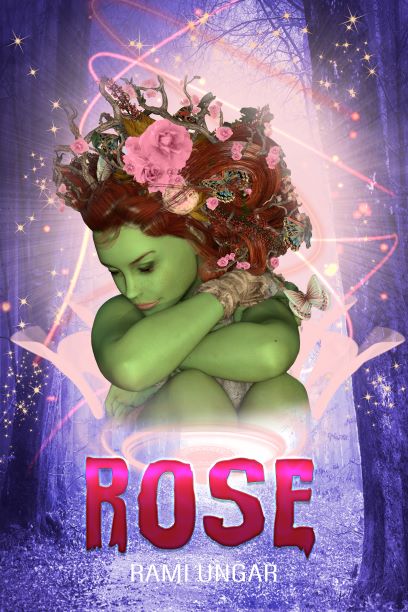
And now that I think about it, my own novel Rose could be considered weird fiction. I mean, I usually categorize it as “fantasy horror” or “paranormal fiction,” but it’s about a young woman turned into a plant/human hybrid (and that’s just the start of her problems). If that’s not weird, then I’m a sea lion (and I’m not).
Apparently, Rose could be considered “weird fiction.” I never realized.
So, how does one write weird fiction? Well, I don’t think anyone sets out to write exclusively weird stories. I think they’re just trying to create something original and that leads to going down a weird route. That being said, if you want to write something weird, here are a few things you can try to make it weird:
Disrupt the real. Weird fiction comes from being weird, so it helps if your story breaks either the characters’ or the readers’ sense of reality. In terms of the latter, you could modify the world in some way so that something weird by our standards is considered normal in the world of the story. One example I can think of is a story I once read where imaginary friends were real entities and an accepted part of the human life cycle, similar to losing your baby teeth or going through puberty. In terms of the former, write the story in a way where you and the characters share a similar reality, but then that definition of real goes out the window in a big way. Think Alice falling down the rabbit hole into Wonderland, or perhaps Little Red Riding Hood’s trip to her grandmother’s house becomes Lovecraftian and surreal.
Tentacles and cosmic elements. It’s a little stereotypical, but as I said, much of what made Lovecraft’s stories weird were the tentacles and the other elements that became the foundation of cosmic horror. So, if it works, why not use it?
Ask “what if I added this?” Plenty of times, we writers create our own stories by encountering another story and thinking of what we would add if we were the ones writing it. Just do the same thing, but think in terms of strange things you can add. And not just to other stories, but to just daily situations. What if you added surrealism to a religious matchmaking search, or if there was some visible way to instantly identify someone as having committed a crime? Thinking along those lines could allow you to write a weird fiction story.
Defy genre. While genres are categories we created, they do play a big role in writing and publishing. If you can write a story that doesn’t fit any particular genre but has elements of several, especially fantasy, sci-fi, and horror, it could be considered weird. There’s a bit more to it, but that can be a clear indicator of weird fiction.
Other than that, the only thing I can recommend is read plenty of weird stories and practice writing them. And while writing weird fiction isn’t exactly necessary for any writer, it can be a lot of fun and lead to some memorable stories. Hell, it may help you write more mainstream fiction. So, why not? Go ahead and get weird with it!
What tips do you have for writing weird fiction? Do you have any favorite stories that are considered weird?
*Fun fact: that phrase was coined by US Supreme Court Justice Potter Stewart in 1964 in his opinion on the case Jacobellis v. Ohio regarding a definition for obscenity, specifically hard-core pornography. The more you know.
Thanks for reading, everyone. It was a long article, but I wanted to get it out before I tried to intentionally write a weird fiction story (usually it happens by accident). I hope you enjoyed a post without a mention of Hannah (which, now that I think about it, has a weird story or two as well).
Anyway, I’ll be back soon enough. There’s some exciting stuff happening this week, after all. So, until next time, my Followers of Fear, good night and pleasant nightmares!
Recently on Twitter, another author I’m acquainted with tweeted that she didn’t think she would ever reach the levels of the authors she admired. She then went on to say that while she aspired to “champagne quality” writing, her stories usually ended up being “boxed wine” quality.
First off, what’s wrong with boxed wine? The first sips of wine I liked came from boxes. And price, prestige, method of preparation, or recommendation of experts is no guarantee of quality or tastefulness. Just check out this hilarious video on the subject.
And second, just because you think your work isn’t as good as your heroes or as prestigious as other stories doesn’t mean it’s bad. For starters, you think the writers you aspire to be don’t have their bad days? Robert Heinlein, Isaac Asimov and Frank Herbert probably bemoaned that they would never come up with stories as influential as those of Mary Shelley, HG Wells and Jules Verne. Every professional manga artist, including those who have made the most famous series like Eiichiro Oda, Rumiko Takahashi, and Naoko Takeuchi, have lamented they’ll never be as good as their favorite artists despite all proof to the contrary. And God knows HP Lovecraft, one of the most influential and controversial writers in horror, worried that he would never measure up to the likes of Edgar Allen Poe, Robert Chambers and Arthur Manchen.
(And if I’m being honest, between his prejudices and his hyper-Victorian style of writing, he never did.)
Another thing to keep in mind is that just because another work is considered “prestigious” doesn’t mean it’s good. In fact, the word prestige comes from the Latin word for “illusion.” And that’s what prestige is: an illusion. A bunch of critics or purveyors or publishers came together and agreed that because a work of art has certain qualities or is being sold in a certain place (like a fancy, pretentious art gallery), it’s considered “good” and worthy of being worshipped. But beyond making sure that it’s been edited well, that’s no guarantee of quality.
An example of a bestseller whose quality is questionable.
Neither is being a bestseller, honestly. The way a bestseller is defined is often based on how much a publisher thinks a story will do and how much marketing is done for the book. Most bestseller lists can be gamed for profit, such as happened with Lani Sarem’s YA novel a few years ago. And many bestsellers fade into obscurity after a few years, rather than having staying power. It has nothing to do with quality of the story itself (just look at my review of Nothing But Blackened Teeth, which has attained bestseller status, if you don’t believe me).
You know what is an indicator of quality (beyond editing and not having anything offensive in the content)? An audience’s reaction. Fiction is often an escape and helps audiences heal from our awful reality, or at the very least bring joy and give readers a feeling that their interests are shared by others. So if your work brings people joy, then that’s a great sign of its quality. Doesn’t matter if it involves college professors and literati types scheming and having sex with one another; fighting aliens in another solar system; or having a love affair with a powerful man in a universe where humanity is divided into castes based on supposed wolf pack heirarchy.* Just as long as your audience gets joy from reading it, then it’s quality.
You especially see this in the horror genre. You have your Gothic and ghost stories with flowery language; serial killer thrillers that gush blood and gore; Nazi zombies that bite your face off as they propagate a toxic and deadly ideology; and even stories around killer cows or living poop monsters or other ridiculous ideas. All those are stories in the horror genre, and very few within the genre will judge you for it.
Plenty outside the genre will, though. Horror as a whole is still looked down upon as a genre, even as it proves more profitable and popular every year. But that’s another thing: tastes and what is considered prestigious changes all the time. Shakespeare, opera and even lobster used to be considered low-class. Now they’re fancy and high-falutin. Perhaps in a hundred years, your “boxed wine” fiction will be taught in high school and college classes, working on horror and superhero movies is a highly sought-after privilege, and a restaurant is considered luxury if it serves real bacon. You never know.
All that being said, this might not make you feel any better about your stories. These feelings might come from stress, anxiety, depression, or dating a demon fairy who scares people with a twitch of the face rather than trying to write stories. But if learning all this helps you feel like your work is champagne quality, then mission accomplished. Because no matter what your story is about, how flowery the writing is, or who’s hyping it up or buying it, if your work is enjoyed by someone, that’s what matters most.
Better have an editor check it over first. They catch stuff you’ll never see in a million years before you get to the publishing phase.
You may think your story is a boxed wine, but that doesn’t mean it’s bad or low-class. The exact opposite, in fact.
That’s all for now, my Followers of Fear. I’ll be back Monday for something special (you probably know what already). Until next time, good night, Happy Thanksgiving, and pleasant nightmares!
*This is an actual subgenre of romance, and it is apparently very popular. I won’t judge anyone who likes it, but I will say that wolf packs aren’t actually based around alphas, betas and omegas. Research has shown that wolf packs are really alliances of small, nuclear families and lone wolves adopted into the pack. The more you know.
It’s been a double-dose of Anthony Mackie today. I watched the latest episode of Falcon & Winter Soldier on Disney+, and then I got to see this film on Netflix. I would have seen it when it came out, but the pandemic kind of screwed with those plans. Anyway, better late than never.
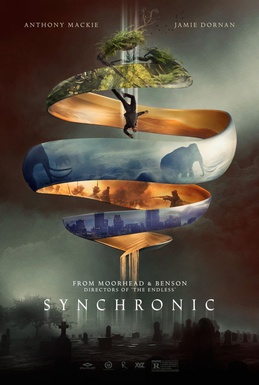
Taking place in New Orleans,* Synchronic stars Anthony Mackie as Steve Denube, a paramedic who starts encountering some strange cases while out on the job. People are being found, injured, dying or dead with mysterious injuries and causes, and Steve traces it to a new street drug called Synchronic. Turns out Synchronic is a drug that allows people to travel through time. And when someone important to Steve goes missing, he decides to use Synchronic to do some good.
So before I tell you what I thought of this film, let me just state that this film is by Justin Benson and Aaron Moorhead, the team behind the body-horror romance Spring and the Lovecraftian horror film The Endless. And I’ve started to notice a pattern with the films they make: while strange shit is part of their films, it’s not the focus like strange shit is the focus of mine. Really, the strange in their stories is a tool to tell very human stories. Stories of love, identity, loss, belonging, and purpose, among other things. Synchronic is no different.
All that being said, I really enjoyed this film.
First off, it’s a really well-told story. if at times really difficult to watch. At first things are really trippy, but then you start watching and things start making sense. From there, things go from just trippy to being a very human story about purpose in life. And as the story unfolds and you start to understand more what’s happening, it not only enhances the story, but enhances what our protagonist is going through.
Of course, the cast does a great job at giving this story its weight. Anthony Mackie is a great dramatic actor who can really pull off these weighty roles, and it’s his prowess as an actor that, at times, makes Synchronic such a hard film to watch at times. Like I said, human story with strange shit as a tool to drive the story.
Finally, the special effects and the sets were really well done. Because it’s a movie involving a literal time travel drug, it leads to some interesting locales, and each one is brought to life so well. You find yourself totally believing that the science-y bits could happen, helped by the fact that some of the theoretical physics stuff employed in the story sounds real, or real enough to give the strange stuff an air of credibility. And the attention to detail for the historical settings really makes you think you’re looking at real places in the past (sometimes uncomfortably so).
There were a couple of things I didn’t care for, however. One is that there’s occasional flashbacks to what should be a traumatic moment for Steve, but it’s so sparingly used and Steve seems so unaffected by it, I wonder if it was worth having in the final film. That, and there were a few moments focusing on Steve’s best friend Dennis and his wife that I felt could have been cut. It’s illustrative for their characters, but they don’t really add that much to the story or to Dennis or Steve’s journey.
All in all, though, Synchronic is a brilliantly told science horror film that brings an emotional punch to its timey-wimey concept. On a scale of 1 to 5, I give it a 4.8. If you have Netflix, get on there and give it a watch. You’ll likely find it time well spent.
*Which I will be visiting later this year if all goes well.
I think this fits the theme of the post very well, don’t you? Photo by Karolina Grabowska on Pexels.com
In my last post, I mentioned that I would soon be tackling editing River of Wrath and The Pure World Comes, two novels that each have gone through some edits and which I would like to try submitting this year. As promised, I have started editing River of Wrath, which is about one of the nine circles of Hell appearing in a small town in 1960s Mississippi (you can guess what sort of themes are included with that description).
And so far, the biggest obstacle I’m dealing with is my narrator’s voice.
For a bit of background, my narrator, Audrey Falley, is writing down her experiences as she remembers them. She’s a character I thoroughly enjoy. She’s an Army wife in the 1960s, but she’s not demure like you would expect from that sort of character in that time period. She’s brash, street smart, she admits she drinks, swears, and has sex with her husband. In other words, she’s unladylike, and proud of it, and I tried to make that show in how she tells her story.
Which is challenging. In addition to all that above, Audrey is also not your typical narrator. By which I mean, this is her first time really telling a story, as her life hasn’t had many opportunities for her to practice creative writing. She also breaks the fourth wall a lot in a way Deadpool might approve, pointing out things about her word choice and how at certain times she sounds like she’s writing a romance novel.
And yet she’s very much aware what sort of story she’s telling.
And here I am, on the computer, trying to tell this story through this character’s unique perspective, while also balancing that perspective with the needs and tone of the story. Not only that, but I have to make the language used sound both like they were written by Audrey and by me, a writer who has a few published books and stories under his belt. And I have to ensure it reads like a horror story.
All told, it’s a bit of a juggling act. And I’m feeling the struggle. There are plenty of points where I’ve wondered to myself, “Does this sound good? Or does it sound totally amateur-ish?” It can affect how I look at the project at times.
That being said, there are moments where I look at the changes I’ve made and I’m like, “Yeah, I got this.” I had one of those moments when I was editing the scene the novel goes from period piece with strong romantic overtones to full-on horror story. Here’s the passage in the previous draft:
Before either of us could answer, there was a scream from the edge of the park. It was followed by several other screams, not just women, but men and children. Dogs barked, and birds flew into the air and away from the park entrance. Around the park, and in Little Angola as well, people stopped what they were doing, stood up if they were sitting down, and looked in the direction of the screams.
And then there’s the section from the current draft (asterisks are to prevent spoilers):
From the edge of the park came a woman’s scream.
Everyone, including Gordon and me, froze before turning in the direction of the scream, which was the same direction we’d come from. We could hear more people screaming, not just women, but men and children too. And that wasn’t all: dogs were barking, birds were flying in every direction, and everyone in the park, from the folks in ********, to the families at their picnic benches, to the children on the playsets, and to the couples in the flower garden, stiffened.
Later on, it occurred to me that we were all feeling the same thing. We weren’t just afraid. We were dreading whatever was causing those people to scream and making the animals go crazy. We dreaded it in our very bones.
Busy editing. Hopefully by the time I’m done, this novel will look a whole lot better and I’ll have a better idea if it’s ready to be submitted anywhere.
How was that? It’s not perfect, but it is better written than the previous version. Feels more like something you might read in a professionally-published horror novel. And that difference really made me feel like I could balance all those things I mentioned above. I don’t know if by the end of the draft, the novel will be ready to submit to publishers as I’d hoped, but if the new passage is anything to go by, I’ll at least get a bit closer.
Anyway, that’s where I’m at right now. I think, as the draft continues, I’ll hopefully not only get a better idea of where the story is in its development, but maybe even be able to go back to the beginning and do a better job of polishing up the story. We’ll see what the rest of the draft holds.
That’s all for now, my Followers of Fear. I’ll check in again soon, though I’m not sure when or what I’ll be talking about. Until next time, pleasant nightmares!
My friend Kat Impossible over on Life and Other Disasters did her rendition of this tag, and it looked fun. So, let’s pretend it’s Halloween year-round and answer some spooky questions about a WIP (as well as general questions on writing)! And since last time I did Toyland, I think this time around I’ll talk about The Pure World Comes, my Victorian Gothic novel that I wrote earlier this year.
But I’m going to need a blurb first. Hmm…how about this:
Shirley Dobbins has very few wants in life: to be able to become the head housekeeper of a great house someday; to not think on her life before she started working; and to earn a reputation as a reliable maid. So when she is hired by the enigmatic baronet and scientist Sir Joseph Hunting to work at his estate after the sudden death of her employers, she can’t believe her luck. However, things at the “Hunting Lodge,” as Sir Joseph’s home is known, are far from the ideal position she hoped for. Not only is there barely any staff at the crumbling mansion, but terrifying visions oppress those within at random moments. Those Shirley sees bear resemblances to her past. As she becomes more wrapped in the secrets of Hunting Lodge and Sir Joseph’s scientific work, she unearths a terrible threat not only after her life, but the lives of all those around her.
How’s that? Intriguing enough? Anyway, onto the questions.
GHOST: Have you ever originally put a character/scene/theme in the book and then later taken it out?
Character – Yes
Scene – kind of
Theme – No
I originally had this character, the eldest son of an up-and-coming merchant family, whom Shirley would have feelings for despite her practical, no-nonsense self. However, when I finally started plotting this story, I couldn’t find a place for him in the story, so I axed him out. His disappearance from the story led to some scenes that I’d originally had in mind being axed as well, but I wasn’t that fond of them to begin with, so it worked out.
BAT: Most misunderstood character in your WIP?
I had a bit of a debate on this, considering that we see things through Shirley’s eyes and once she sees someone a certain way, it can take a while for her to see them in a different light. But then I remembered that Sir Joseph Hunting is, without a doubt, the most misunderstood character. He’s not a fan of normal Victorian pastimes or conventions, and he’s squandered his family fortune in pursuit of his scientific research. And Victorians, particularly those of the noble and almost-noble classes, placed a lot of emphasis on appearances, so Sir Joseph’s anathema to them. It doesn’t help that he’s a bit of a jerk. That being said, once you get to know him a bit, he’s actually a very sympathetic character. You also see why he devotes himself to his research, and maybe even believe in what he’s doing. If that’s not misunderstood, I don’t know what is.
JACK-O-LANTERN: What is your most common source of inspiration to write?
Is it a law that writers get asked that question at least several times in their careers? The obvious answer is everything. Stories I’ve read, places I’ve been, people I’ve met, conversations I’ve had, subjects I’ve researched. All these and more combine in my weird head to create stories for me. Some of them are even good and border on original. Those are the ones I try to write into something worth reading.
ZOMBIE: What is your preferred form of writerly fuel? Coffee, tea, etc.
Tea most of the time, though if it’s early in the day, I may have a diet soda. On weekends or certain occasions, I may have something alcoholic, but I’m not able to write as well as I would like when even a little buzzed, so I avoid it.
VAMPIRE: Cheesiest trope that made it into your novel?
Okay, you know that trope where two people who don’t like each other spend more and more time together and then they fall in love? It was really popular in movies and a few TV shows back in the 1990s? I may have included that one in this story, though I tried to put an original spin on it. I’ll leave it for the critics to tell me if I succeeded.
Yeah, the trope from 10 Things I Hate About You. I used a version of it. Hopefully I used it well.
SPIDER: What’s a character in your WIP that’s fine from afar, but you would NOT want to interact with if they ever got close?
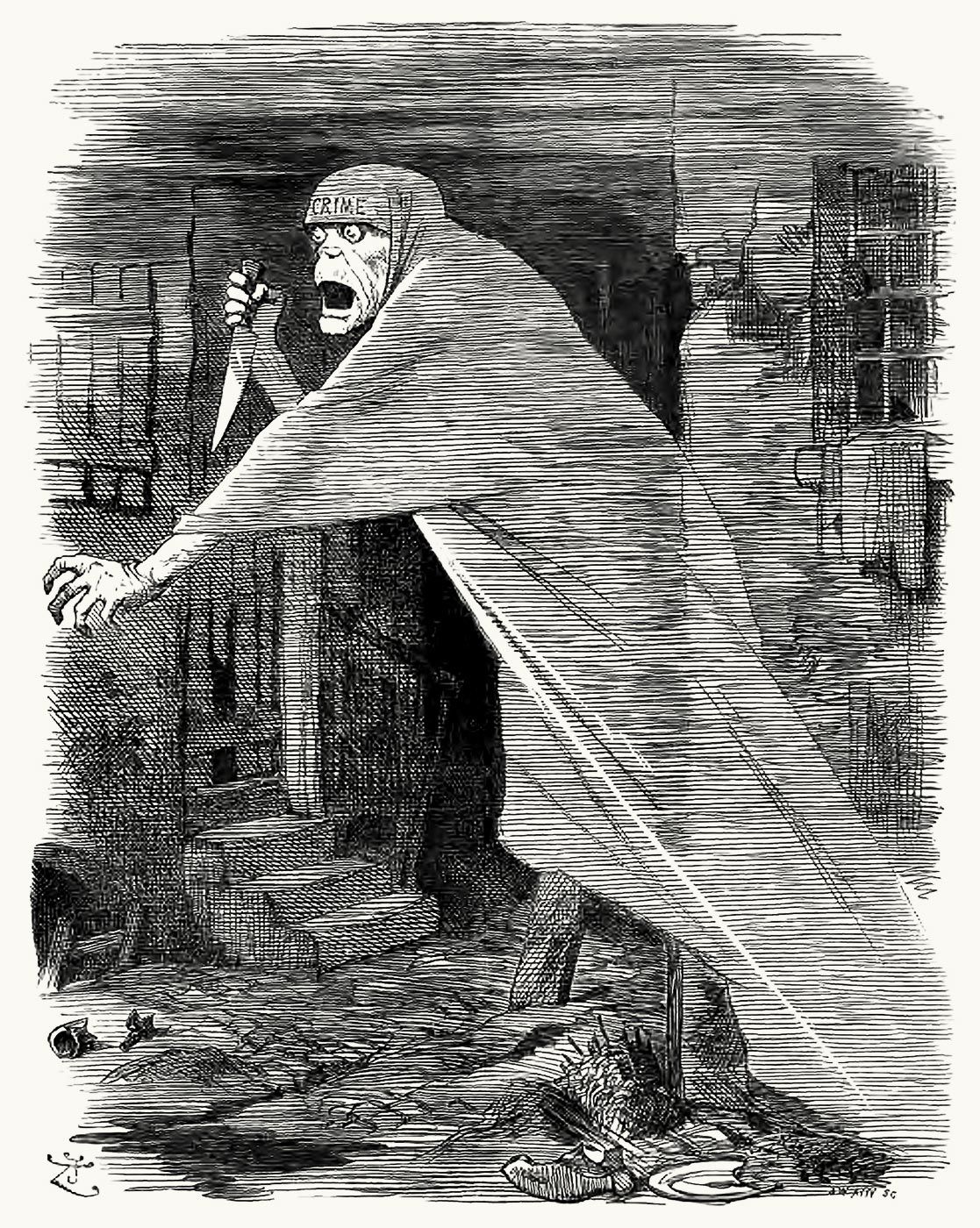
I’ve mentioned before that I worked my theory of who Jack the Ripper really is into this story. Well, that’d be my answer. And I’m not saying any more on that until this book comes out!
Famous illustration of Jack the Ripper from Punch Magazine. He figures into my story, but not in a way you might expect.
FRANKENSTEIN’S MONSTER: Ever split one character into two/combine two characters into one?
Maybe? I can’t recall! I’ve written so many characters over the years, I’ve kind of lost track.
SKELETON: Best advice for adding character baggage without info-dumping?
Ooh, that’s a tough one, especially because it’s a tough subject. I try to spread my characters’ baggage and backstories throughout the story. Think of it like walking on a path, and you find puzzle pieces every now and then. Some are big, some are small, but they fit together perfectly. As you gather the pieces, a picture starts to form. And somewhere along the way, all the pieces come together to form a full picture. That’s how I try to spread character baggage and backstory. That being said, sometimes I drop very big pieces sometimes if the story calls for it. Not ideal, but it’s necessary. And when that happens, if I’m able to, I at least try to just drop a big chunk here and there, rather than just a whole picture. That way, the information is palatable, rather than an info-dump.
CAT: What’s a polarizing writing/book-related opinion you have?
Why cats? Most of the writers I know are cat people! Often their cats are as sweet as their owners! I plan to get cats as soon as I have a bigger space. Preferably a three-bedroom house with a nice front and backyard and an attached garage. Never mind. I don’t really have any opinions like that. At least, I don’t think I do. I could tell you about some books I didn’t care for, but they’re the kind of books either people like or they don’t. Sorry I don’t have a scandalous answer. You’d get a better answer with my controversial movie opinion, so I’ll tell you that: I enjoyed The Last Jedi, problems and all. There, I said it. What are you going to do about it?
DEMON: Most frequent writing distraction?
Anime and TV shows. Once I get started on a binge, it’s hard to stop. Either that or my cell phone.
Well, what did you think of my answers? Do you want to read The Pure World Comes now? Let’s discuss.
Now for this tag, tagging isn’t necessary. So if you want to do it, all the power to you. I hope you have fun and make sure to link back to me so I can read it.
That’s all for now. If anyone needs me, I’ll be casting magic to save this country. Until next time, pleasant nightmares!
For the past week, I’ve been working hard on a new story, the majority of which takes place during our current crisis. You know the one I’m talking about. And you know what? It’s been cathartic to write about.
I’ve said before that writing can be very good for your mental health. Recently, I posted my thoughts about the COVID-19 pandemic and it made me feel a hundred times better about the whole situation. In fact, lately I’ve felt like a million bucks. Still, I do feel the occasional twinge of worry or other negative emotions when I consider all we’re going through.
So these past two nights, when I’ve written my protagonist’s reactions to the pandemic and how it’s affecting him mentally and emotionally, as well as recounting how he and others treat the crisis, it was kind of freeing. Like I was channeling not just my own feelings, but the feelings of other people in this situation.
I’ve heard a lot of people, both in and outside of the horror genre, as well as people who don’t write, saying that there’s going to be a lot of new fiction based on this crisis. If I’m any indication, we’ll be seeing that fiction coming out sooner rather than later. Maybe within the next few months. And I think we’re going to see that, for the majority of these authors, setting a story during the COVID-19 crisis is their way of processing their feelings and what they or others were going through.
What sort of stories we’ll get from this crisis, I’m not sure. I feel like a lot of them will just use the crisis as a backdrop, similar to how The Deep by Alma Katsu uses the Titanic and its sister ship the Britannic as backdrops for a ghost story (see my review here of that book here). In my case, I’m writing a Lovecraftian horror story, which makes sense because I see the virus as almost a Lovecraftian antagonist a la Nyarlathotep, and the pandemic acts as a sort of base for the terror and paranoia that my characters will feel later in the story.
I have a few other predictions. In terms of romance stories, we’ll see stories about people falling in love from afar due to social distancing, or falling in love due to being stuck in the same area together. We may also get a lot of new Gothic horror stories. Why do I say that? Because since people started sequestering themselves in their home, my article on Gothic horror has been seeing huge spikes in views. Makes sense, I suppose: as much as people love their homes, even being cooped up 24/7 in the best homes can be taxing. And since Gothic horror stories tend to focus mainly on houses as the source of the horror, people are either reminding themselves that their home isn’t so bad as being stuck in The Overlook, or they’re planning on channeling their frustration into stories about homes as a source of horror.
Perhaps writing about this virus can help relieve stress over it as well.
Whatever stories result, I highly encourage authors to write their stories about the coronavirus. Especially if the story helps you process what you’re going through right now. Even if you’re not an author, writing your feelings down can be therapeutic, so go ahead and write whatever you feel. Doesn’t have to be deep or poetic, just as long as it gets your feelings out in a healthy way.
Doing so may not alleviate the crisis or all the problems the crisis is causing to pop up, but at least you’ll feel better for the activity.
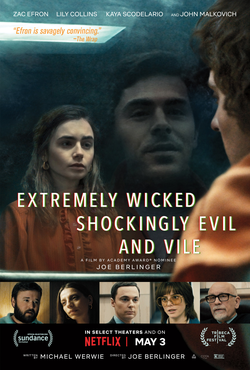
I listened to The Stranger Beside Me by true crime writer Ann Rule, who actually knew Ted Bundy, on audio book to prepare for this movie (and that’s the extent to my knowledge of Bundy). In the days leading up to this film’s release on Netflix, I was excited to see this adaptation. Nearly thirty years after the man’s death, would this film, along with the Netflix documentary (I know, I need to watch it, I just haven’t gotten around to it yet), introduce a new generation to the shocking murders of Ted Bundy?
Well, I went in expecting a different kind of movie, but I came out satisfied with what I got.
Based on the memoir The Phantom Prince: My Life with Ted Bundy by his real-life girlfriend Elizabeth Kloepfer (known as Liz Kendall in the film and Meg Anders in The Stranger Beside Me), Extremely Wicked follows the romance of Bundy and Kloepfer, how they got together, how Bundy’s arrest in Utah, his two escape attempts in Colorado, his final trial in Florida, during which he marries one of his groupies but (seemingly) still has feelings for Liz, and finally his execution in Florida.
I think what I like the most about this film is its star-studded cast. Everyone embodies their characters so well. Zac Efron as Bundy comes across as a sympathetic, lovestruck man who finds his life falling to pieces around him and the one good thing in it drifting away, while Lily Collins as Liz Kendall does a great job as a woman who put so much into her relationship with this seemingly-perfect man, only to grapple with his crimes. John Malkovich as Judge Edward Cowart did the man an honor, combining the judge’s Southern gentility with his own deadpan acting method (finally, a film from this year that doesn’t waste the guy’s talent). And Jim Parsons made me forget at certain moments that I was watching Sheldon Cooper. I actually had to watch the scene where he delivers his opening remarks as prosecutor Larry Simpson twice, it was so chilling. Parsons could lead a legal drama now that The Big Bang Theory is done.
I also like how the film balances a romantic storyline with what is mostly a courtroom drama. Unlike other films, Extremely Wicked doesn’t go to great lengths to show Bundy’s depravity or murders, but instead hints and flits around it until the final scene of the film. Its focus is showing how the ongoing legal saga affects Bundy and Kloepfer’s relationship and vice versa, as well as the psychological toll on Bundy. The director knew what they were going for with this film, and in that aspect it succeeded.
If I have one gripe with this film, it’s that romanticizes Bundy a little too much. Bundy’s always had a number of female fans who find him attractive despite what he’s done.* Even actors portraying him have awakened the wrong kind of fascination in teenage and young women (Ann Rule relates some of the phone calls she got after The Deliberate Stranger with Mark Harmon aired in 1986 in her book). Zac Efron is a very handsome actor, no doubt of that, and in the interest of focusing on his romance and courtroom battles, Extremely Wicked glosses over the evil in its title and makes Bundy out to be more of a sweet, hurt man than a calculating serial killer. And I’m not sure that was the best decision.
I also would’ve liked to see Ann Rule make an appearance in the film, but I think I can live without that.
On the whole, I give Extremely Wicked, Shockingly Evil and Vile a score of 4 out of 5. While its POV Is slightly skewed, its an entrancing thriller that draws you into the story and the bloodless battle occurring on screen. Take a look, and prepare yourself for a ride.
That’s all for now, my Followers of Fear. I hope to have one or two more posts out before the weekend is done.
In the meantime, I’m still looking for advanced readers for my upcoming fantasy-horror novel, Rose, about a young woman who starts turning into a plant creature (and that’s just the start of her problems). In exchange for an early electronic copy, all I ask is you read it and consider posting a review after the release. Anyone interested should send me an email at ramiungar@ramiungarthewriter.com.
Until next time, pleasant nightmares!
*The scientific name for attraction to dangerous partners, by the way, is called hybristophilia. Theories to how it arises range from evolutionary desires for strong and capable partners to romantic notions of wanting to change/help a damaged partner to wanting fame or even just knowing the partner is stuck in a jail cell and won’t go anywhere. The more you know.
As you know, I’m a bit of an enthusiast when it comes to Lizzie Borden, the woman who allegedly murdered her stepmother and father, in that order, was acquitted at trial due to prosecutorial bungling as well as societal attitudes about women at the time, and who allegedly haunts the house where those same murders happened. I’ve stayed overnight at the Borden House, now a bed and breakfast; I’ve read a book or two about it, including See What I Have Done by Sarah Schmidt; and I’ve watched more than a few adaptations about the murders, including the famous 1975 TV movie The Legend of Lizzie Borden.
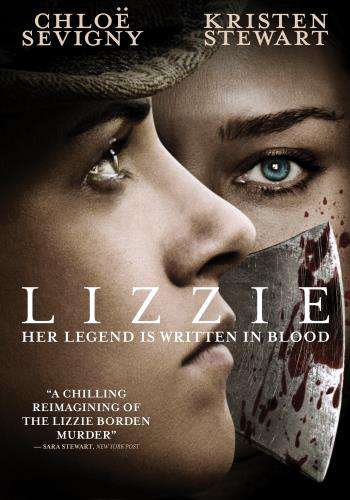
So when I heard a new movie was being made on Lizzie and the murders, I was intrigued. It had some big names attached, including Chloe Sevigny and Kristen Stewart. And the trailer made it seem like this was going to be a really tense thriller film. I was willing to see it in theaters, but the film was only given a limited theatrical run and it wasn’t playing anywhere near me (or in Ohio, as far as I can tell). So when my library’s copy came in for me today, I actually rushed over to pick it up with the goal to watch it tonight.
I can see why this was given a limited release.
Lizzie retells the story of Lizzie Borden and the 1892 murders of her parents, using the theory that Lizzie and the maid Bridget “Maggie” Sullivan were lovers and committed the murders after Mr. Borden discovered their affair. That’s the plot in a nutshell.
I’m not sure what exactly the filmmakers were going for, because this was nothing like the trailer. For the most part, the film goes at a slow crawl, making it feel like three hours rather than an hour and forty-five minutes. Everything takes it time, which in what is supposed to be a tense murder thriller can really take you out of the story. And you know how people accuse Kristen Stewart of having no emotional range in her films? Weirdly enough, it seems reversed here: Stewart has some emotional range, and everyone else seems like they only know how to mimic emotion, rather than show it!
On top of that, Lizzie didn’t include some things that one might expect from any story on Lizzie Borden. The turbulent relationship between Lizzie and her stepmother is glossed over; Lizzie is shown suffering from seizures, which is something I don’t remember ever hearing about her; elder sister Emma Borden is barely in the film; and a few other things beside.
Oh, and there’s this thing with the soundtrack. Namely, it doesn’t show up that much, and when it does it disappears really quickly. There’s one scene where you’d expect lots of soft music to highlight the emotion of the scene, only for it to cut in and out every three seconds. Um, why?
Was there anything about this film that I liked? Well, the attention to detail is decent when it comes to clothes and furnishings. The house’s first floor is laid out like the real house in Fall River, Massachusetts, which I approve of. And the development of the relationship between Lizzie and Bridget is given the time and development needed to really make you believe in it. And there are some real talents in this film, including Jeff Perry, Denis O’Hare, and Fiona Shaw.
But other than that, Lizzie was really not worth the wait. On a scale of 1 to 5, I’m giving this film a 2. If you want a Lizzie Borden film that keeps the tension up even though you already know how it ends, I recommend 1975’s The Legend of Lizzie Borden, starring the incomparable Elizabeth Montgomery in the titular role. Fun fact, Montgomery found out Lizzie was her sixth cousin once removed after completing the film. Imagine if she’d known that when she was playing the character!
Now if only I could see productions of Fall River Legend, the ballet based on the murders, and the rock musical Lizzie. Yes, those exist, and I want to see them live. Someone pleeeeeease make those happen for me!






 Rami Ungar The Writer