Posts Tagged ‘short story’

Someone is going to read this title and be very confused as to its meaning. Most likely, my parents. Or any juvenile who thinks pulling down a classmate’s pants is the height of comedy.

So, if you are wondering what the hell that title is about, it refers to two different styles of writing stories. Plotting is when writers plan out every part of the story. Everything, from beginning to middle to end, is planned and…well, plotted. Obviously, not everything is done according to a plan. A lot of stuff, like the wording in the story, is decided upon while writing. But the major elements–plot, characters, grisly character deaths involving giant monsters ripping deceitful high schoolers in half (no wait, that’s just me)–are decided upon before the story is even begun.

Pantsing is the exact opposite of that. Writers write by the seat of their pants and just make it up as they go along. There is some planning involved (for more on that, read this article by my friend/colleague Ruth Ann Nordin), mainly what sort of story arc you want to go through, what sort of characters there are, and perhaps some scenes you hope to include in the story, but for the moment it’s pretty much whatever comes out of your fingers at the moment you’re writing. The dialogue, action, and the descriptions are created spontaneously.

Plenty of writers have their own preferences. Stephen King is definitely more of a pantser: in his memoir On Writing, he compares writing stories to unearthing an artifact from some ancient civilization, revealing a little more with every dig of the shovel and brush, never knowing what you’ll uncover. JK Rowling, on the other hand, is probably a plotter. After all, she spent years putting together the seven books of the Harry Potter series, laying groundwork and hints of what is to come.  And you don’t just come up with stuff like Hallows and Horcruxes like that on the spot. No, she had those planned for ages and ages.

Personally, I’m a plotter. I usually have every scene planned out, especially with novels, where I tend to outline the story, and then do several drafts of the outline, before I get to the actual story. I’m not sure why. It might be I’m a bit of a control freak who takes being the “God of his fictional universe” a little too seriously. Or I just learned to write like that, and it’s done me well so far. Either way, it’s what I’ve done since I was a child, and it’s worked for me.

Writing by the seat of these, LOL

So why the hell am I talking about this? Because for the first time in I don’t know how long, I’m actually writing a story and pantsing it!

I mentioned in the post I wrote after I finished editing Rose that I was going to work on a couple of shorter works for a while. The first of these stories involves a bunch of people being trapped within a relatively small space, and this is going to be the meat of the story. In a confined space, tensions can get high, and the scenario of the story will probably raise those tensions a lot higher. So, I decided that it might be better to write this story by the seat of my pants, rather than plot the whole darn thing.

I figure that, rather than planning out that entire part of the story, I might instead plan only a few scenes and some plot points that I hope will come up in the story, and see what happens. I feel that will be more organic than just planning out who will lash out at whom when and what that leads to. The conflict will feel more real that way, not just to readers, but to the characters themselves, and to me too. If the conflict in a story feels fake, no one will buy it, and the story will suffer because the reader will disengage. Hopefully I can avoid it by changing things up.

I’m also kind of hoping I can experiment a little with humor in my stories. As I said in a previous post, I don’t include humor in most of my stories, and one of the reasons I think that might be is because I’m a plotter, so I keep in mind how dark my stories are from beginning to end and don’t insert humor because of how dark they are. I’m wondering if writing by the seat of my pants will give me more room to insert my style of humor, which is very situational, and make it not as forced as it might be under other circumstances.

It’s not a big reason why I’m trying pantsing with this story, but it’d be a perk if it happened.

So I’m trying to pants my way through this story, with only a few scenes planned, only eight characters fleshed out, and just a general idea of what I want to happen with this story. I have no idea what will happen, if this will be something I’ll do more often, or if the work I produce by pantsing will be any good. However, like every good writer, I have to be brave enough to keep pushing boundaries and to try new things. At least some of those new things have to work. Am I right?


That’s all for now, my Followers of Fear. I’ve got a few more blog posts I want to put out this week before I start on this story I’ve mentioned and fall into a proverbial rabbit hole, so I’m going to be putting those out one after the other this week (and maybe next). Hopefully by the time those are done, you won’t be sick of me.

Until next time, pleasant nightmares!


It’s always satisfying to finish a manuscript. No matter the length, it’s satisfying to know that you’ve put in so much time, sweat, blood and creativity into writing a story and that it’s finished, that you were able to get over your fears before starting, keep going, and see it to the end. And after attempting a third draft a little year ago, failing miserably, and taking a year to work up the courage to try again, it’s especially satisfying. Hell, I even bought fancy honey-wine to celebrate this momentous evening.

Now if you’re unfamiliar, Rose is a novel I originally wrote as my college thesis. It follows an amnesiac woman named Rose whose body starts to go through incredible, terrible, magical changes. The only source of information on her condition is a man who claims to be her boyfriend, but he’s got some terrible secrets and isn’t all he claims to be. It’s a dark and bizarre story, with themes of dependence and abuse, perception and memory, in a story influenced by Stephen King’s Misery and Japanese mythology.

It’s also been the most challenging story I’ve worked with. I had to scrap my first attempt to write it because I made the story too bizarre, sprawling and complex, then go back and make it a bit simpler and contained. Then I had to write an entire first draft, then a second draft within a few months. Then I had an internship in Germany and a job search, followed by an attempt at the third draft. That draft, as I said before, was a complete and utter disaster due to the lack of routine I had at the time. I took it up again back in late June, after I needed a break from sci-fi and Full Circle and, with a routine, I managed to get through the draft in about four months, incorporating the suggestions from my thesis advisors to great effect while I was at it.

And I’m very proud of this draft. Every time I’ve worked on this story, it’s changed significantly. Plot points, emotional connections, characterizations, they’ve all gone through some incredible rewrites. With this particular draft, I feel like I’ve been editing the work of a different author, giving his work a much-needed makeover. I even added an original chapter to the manuscript, which also took the top spot as the longest chapter in the novel (I spent two week with Dragon Speech-to-Text software writing that chapter so it wouldn’t take a month or longer). And while this story is far from “done” (my high school English teacher said that stories are never “perfect,” because that’s impossible. But they can be “done,” where you can’t do anything more to improve it. It’s just “done”), it’s definitely in a much better shape than it was at the end of the second draft. It’s a draft I’d actually be proud to show other people.

Now before I show you what’s up next for Rose, indulge me in my bad habit of looking at page and word counts. Which with this novel is actually necessary: my advisor told me to double the word count of the novel when I did the third draft (I’m pretty sure it’s double the word count now, not add ten or twenty-thousand words). So how did I do with that? Well, at the end of the second draft in spring of 2015, the page count was (with 8.5″ x 11″ pages, double-spaced, Times New Roman 12-point font) 164 pages. With the third draft, the page count is 266 pages, an increase of 102 pages. With the word count, the second draft was a whopping total of 48,914, a respectable novella-length story. In the third draft, I got the word count up to 84,677, a good-size novel,  just a bit shorter than Harry Potter and the Chamber of Secrets. And I like to think that every new word was necessary. I really had the chance to delve deeper into the characters, as well as the events that made them who they are. All in all, I think it’s a more fleshed-out novel.

Of course, critics, readers, and editors are free to disagree with me. We’re a democracy, we’re allowed to do that, even if others don’t like that.

And that brings me to what’s next for Rose and for me. And I have a few ideas on that:

  1. No return to Full Circle just yet. I’m still not ready to return to the world of Reborn City and finish the trilogy. Yes, the first draft needs ending, but I need a bit more time and a bit more horror before I do any more sci-fi. And since I don’t exactly a legion of fans breaking down my door to know when the story will be out, I think I can afford to take some time (George RR Martin wishes he was me in that respect).
  2. Beta readers and submissions. I have a couple of beta readers who have agreed to take on Rose, read it and give me some feedback (I’m sending the manuscript to them right after I’m done with this post, as well as backing up my flash drive so I don’t lose the novel). The plan is to take their feedback and incorporate it into the novel if I feel it works for the story. And after that, I’ll start submitting Rose to publishing houses and agents that specialize in horror. Hopefully it’ll find a home soon, and I can get it published. After that…well, I’ll see when I get there.
  3. Some shorter works. I have a list of short stories and novelettes that I keep so I don’t forget any of the fabulous ideas I have. It’s currently 57 pages long and closing in on 800 ideas. I figure I should at least get through some of those, as only a few of them are crossed off with at least having a first draft written out. I already have another list of stories I’d like to work on in particular, and I’ve picked my first from that list. I might even get started on it in the next week, after I do a bit of research for it. And maybe after a few of these stories are written, they’ll get published. Fingers crossed, right?

And that’s where things stand right now. I hope you continue to stay with me as I move onto the next stage of this novel’s evolution, and maybe write the next stage of my writing career. Until my next post, goodnight Followers of Fear, and pleasant nightmares.

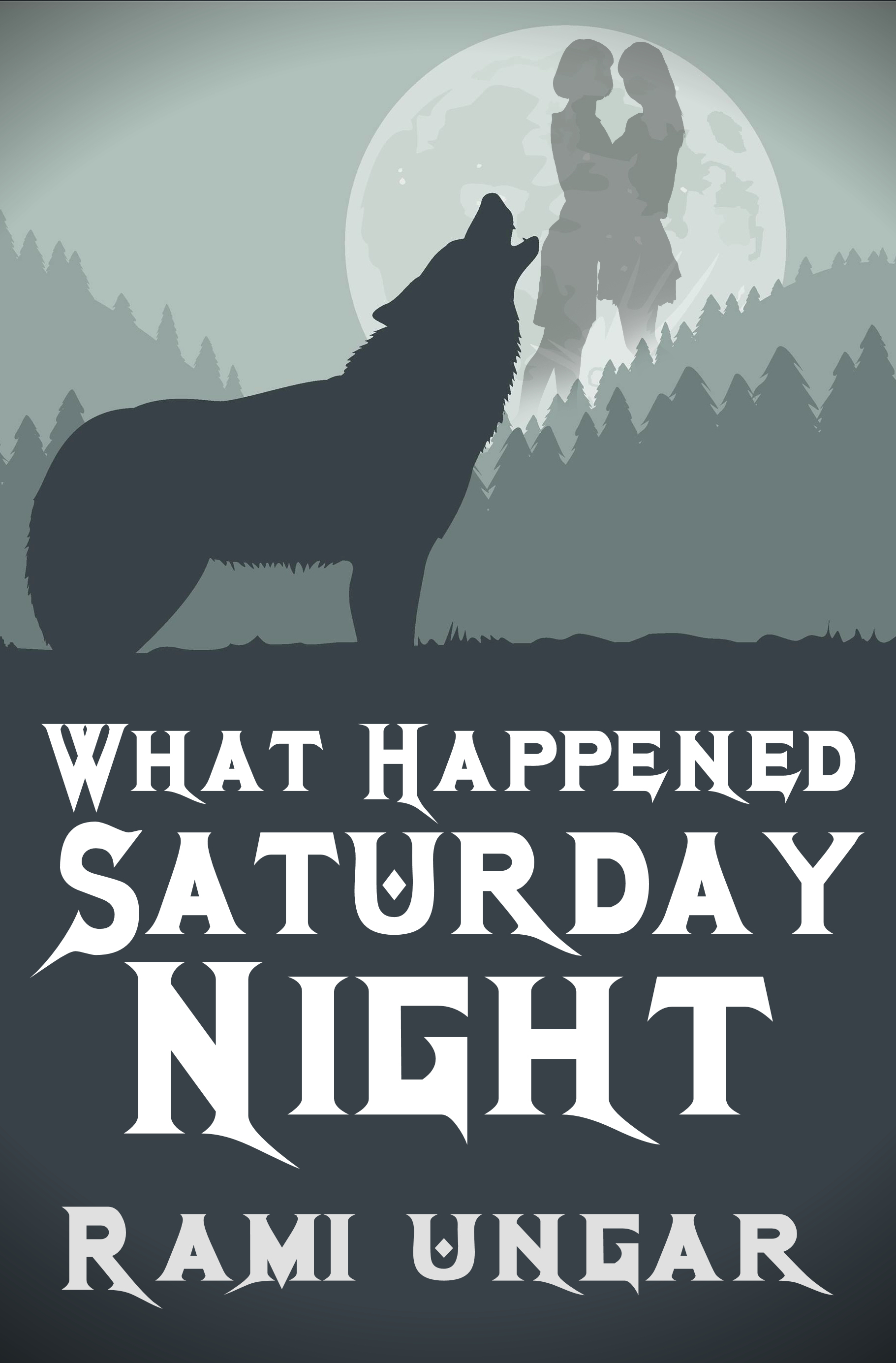
As promised last week, I’m pleased to announce that What Happened Saturday Night has been published on Wattpad. I’ve been working on this story, on and off, since my final year of college, so I’m really glad to finally have it out there for you guys to read. Plus, check out this amazing artwork by friend, author, and ardent Follower of Fear Joleene Naylor (if you haven’t checked her out, why haven’t you yet? What’s wrong with you? CLICK HERE ALREADY!!!)! It gets right to what this story represents. And what does this story represent? Read the description:

High school is hard enough. But Louise is different from other teens her age. For one thing, she has feelings for her best friend Nicola. Feelings she knows she shouldn’t be having.

Another thing: she’s going through changes, but these aren’t the sort of changes teen girls normally go through. Louise is a werewolf. And her biggest fear is what might happen if an episode like what happened on Saturday night happens in front of Nicola.

I’ve been told it’s a touching story about coming to terms with yourself, in more ways than one.

Based on the results of Gynoid (which, if you haven’t read yet, here’s Part 1, Part 2, and Part 3), I’m hoping that even more people will respond to What Happened Saturday Night (or WHSN, as I’m going to call it from now on). I’ve put the same amount of work into both stories, so hopefully all that will pay off like it did with the former story. And they contain similar themes and elements, so that will probably help.

I also think people will be drawn to it because it’s a coming out story. As an out of the closet bisexual man, I know how scary that is. I know what it’s like to feel weird in your own body because of the way you feel, because of whom you’re attracted to. I think there should be more stories that not only explore that issue, but help normalize it to some degree. What I mean is, coming out should not be scary. It might be my delusions of grandeur, but if WHSN can help do that for some readers, then I’ll be glad that I published it.

If you would like to check out WHSN, follow this link for a read. And if you like it (or don’t), let me know what you think. Positive or negative, I love reader feedback, and it helps me in the log run to make me a better writer.

Until next time, my Followers of Fear!

So last night I got a message from my friend and fellow writer Joleene Naylor (check out her blog HERE) messaged me on Facebook to let me know she’d left a review for my first book, the short story collection The Quiet Game: Five Tales to Chill Your Bones, on Amazon. Immediately I thanked her and told her I’d write a post about it as soon as possible. I managed to do the first thing pretty easily, but I wasn’t able to get to the second part because I had a busy evening in front of me.

I’m happy to say that I’m finally getting around to the latter, and I’m very grateful to Joleene for not only taking the time to read my book, but also to review it. Reviews are important to authors, as they provide valuable feedback to them on their work, and help attract new readers. The more reviews an author has on a particular work, the more people are likely to find and read that particular work. And if they review said work, the cycle continues. So in a way, a review is like telling an author you want them to be successful, and then contributing to that success in a small way.

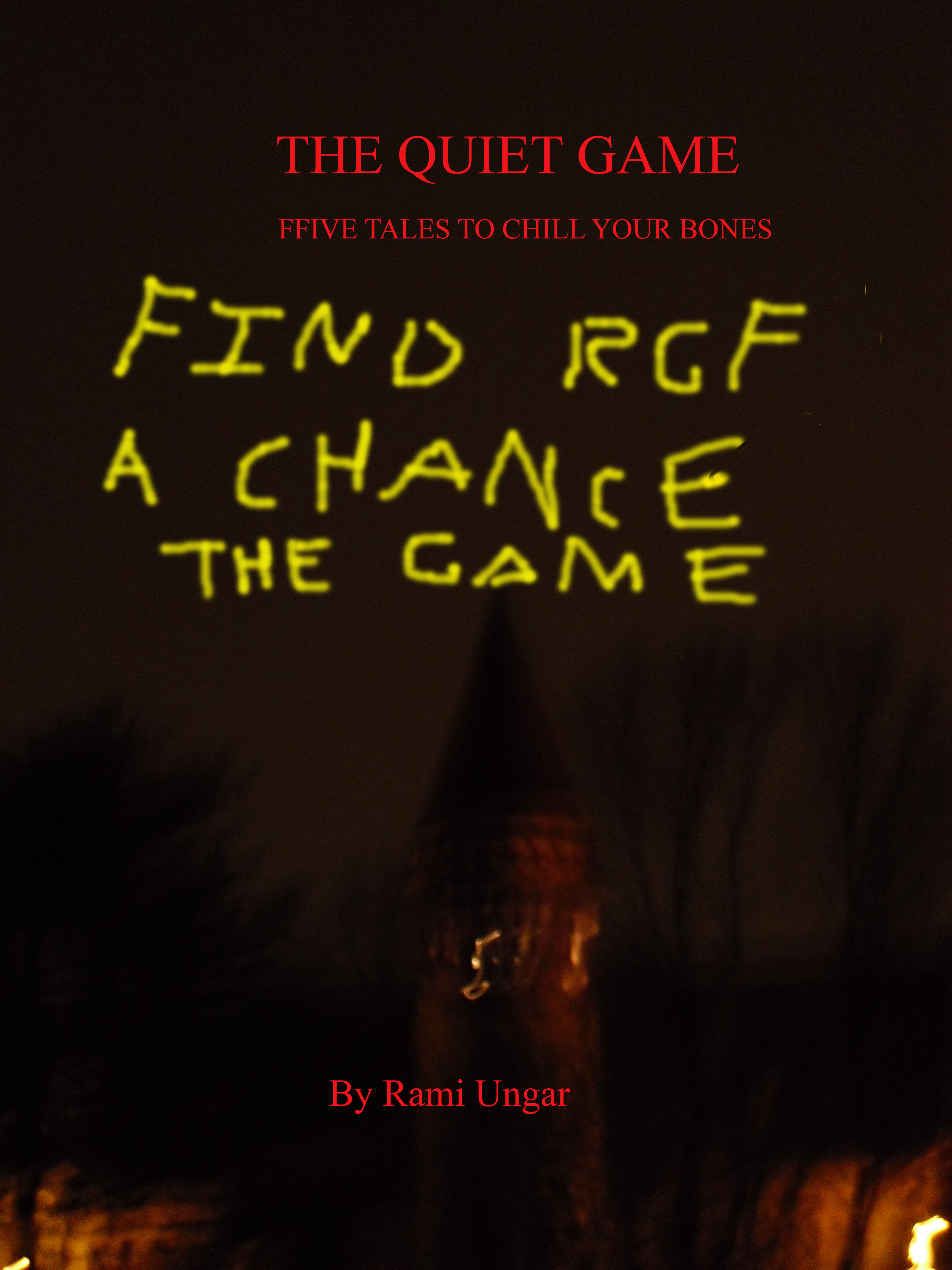
So if you’re unfamiliar with The Quiet Game, it’s a short collection of horror stories I wrote and published back in 2013, being my first published book. It contains five original short stories, with each being about a different subject. Since it was the first book published, it’s also been one of the most popular, and definitely the most widely-reviewed. Here’s what the blurb says on the back of the book:

In his publishing debut, Rami Ungar brings us five terrifying stories of darkness in magic. You can experience the strange visions of a man battling sex addiction in “Addict”. Or feel the wrath of an enraged dybbuk in “Samson Weiss’s Curse”. Face your fears in Gene Adkin’s Murder House in “I’m Going To Be The Next James Bond” and then journey with a young autistic “In The Lady Ogre’s Den”. But most of all, prepare to play the most insidious game of all: The Quiet Game.

Joleene gave The Quiet Game a five-star review, entitled Five fun horror stories (that’s a compliment right there). Here’s what she had to say on it:

A collection of five varied stories that get stronger as the collection builds, with the final being my favorite. Though I fancy myself able to “solve” the stories before the reveals, there were several surprises here, especially the reveal in the Quiet Game and I’m Going to be the Next James Bond. I also liked that Rami pulled no punches with his characters. In one instance, an anti-semite for instances uses words that would be hard for any author to write -though are necessary to his character. There are other examples sprinkled throughout the stories that show Rami’s commitment to telling the story in the way it needs to be told. A good collection for a stormy night!

Joleene’s review matches up with others The Quiet Game has received:

5 wonderfully crafted tales! I purchased this as an eBook originally and put off reading it for quite a while, I really wish I hadn’t waited. Sometimes when one purchases a collection of short stories you expect some of them to be less entertaining or of lower quality than the others, but none of these disappoint. Well worth the money, especially considering after you read each story the author gives you creative insight into what inspired him to write each tale, which is really wonderful.

–Jeff D.

I liked that each story was unusual. I think that the book was appropriately named. I prefer chilled bones rather than scared out of my whits since I am a bit of a chicken.

–ENJ

Imagine if you will a young Stephen King penning dark scenarios inspired by his youth, and what you get is this anthology. Through this collection of short stories, Rami Ungar brings us into the world of dark urges, childhood traumas, ghosts, phantoms, and dark psychological thrillers. An inspired creation, and definitely a good intro to this indie author’s world!

–Matthew Williams, author of The Cronian Incident

If you would like to check out all of The Quiet Game‘s reviews, or if you would like to pick up a copy yourself, I’ll include the links to check it out below. And if you do decide to read the book,, make sure to leave me a review.

And if you haven’t checked out my good friend Joleene Naylor, then what are you doing with yourself? Head over to her blog and check out her stuff, as well as her books!

That’s all till next time, my Followers of Fear. As you saw in my last post, I’ve got something big coming out next week, so make sure to tune back in then. Until that time, happy reading and pleasant nightmares!

The Quiet Game: Available on Amazon, Createspace, Barnes & Noble, iBooksSmashwords, and Kobo.

At the beginning of the year, I said I was going to try publishing more of my shorter works in as many places as possible. This included Wattpad, which for those of you who don’t know is kind of like the YouTube for writers: anyone can upload and share stories. I fulfilled this promise somewhat earlier this year by publishing Gynoid, a science-fiction novelette I’d been trying to publish on and off for quite some time. I published that story’s first part on February 14th, Valentine’s Day, and if you are good at math, you can tell that it’s been six months since the story was first published. With that in mind, I thought it would be a good idea to go over how Gynoid was doing and what plans I have for the site in the future.

Update on Gynoid

When Toby Crimson orders a gynoid, a robot designed to look and act like a human girl, he knows he shouldn’t be doing it in the first place. Gynoids are for perverts and losers, after all. But Toby has told a lie, and he needs the gynoid, named Ariel, to keep that lie up. What he never expects is to actually like Ariel being around. Or that Ariel is going to change his life. Whether he likes it or not.

I published the first part of Gynoid on February 14th, Valentine’s Day, for a very good reason. The story is a romance in a science-fiction setting, but it’s also a kind of anti-romance story. There are dark sides to stories about forbidden love that I don’t always see portrayed in fiction, so I used Gynoid to explore those dark sides a little, in particular to the idea of male fantasies.

And so far, people have responded. In those six months since publication, the number of people reading Gynoid have gradually increased to 132 reads. It’s still not a huge number, but it’s a good-sized number for someone who’s still building an audience and who publishes sporadically on Wattpad to begin with. And there has also been a few votes, which is the equivalent of likes on YouTube for this platform.

What really interests me though is the comments. I’ve received some comments on this work, and not only is just one of them from my mother (a whole new record!), but the other comments have been very telling. One commenter was very happy that the ending was, in their view at least, a good one. Another recent reader finished the third part of the story on or around August 3rd, username LadieFace, published that she hoped there would be more to the story (I assume based on the name it’s a she). A week later on August 10th, she comes back and comments that she hopes there’ll be a sequel.

Now, I do have ideas for a sequel, and I did tell her as much when I saw the comment, but that’s not the point. This story stayed on this person’s mind so much that she felt the need to come back a week after her first comment and ask if I had more. When a story makes someone do that, you know it really resonated with that reader.

This gives me hope that, in time, Gynoid will continue to be read and people will come to enjoy it. Maybe they’ll even come to like it to the point that it’ll push me to write a sequel story. Anything’s possible.

If you’re curious to read Gynoid, I’ll include the links below. And if you do check it out, please tell me, here on the blog or on Wattpad, what you think. As I always say, I love reader feedback.

Gynoid: Part 1, Part 2, Part 3

What Happened Saturday Night is getting published!

What Happened Saturday Night is another story I’ve been trying to get published for quite some time, and now I’m happy to say I’ll be publishing it on Wattpad next week. Like Gynoid, this story has a heavy romantic element, but this time it’s more of a paranormal romance rather than a science-romance. Here’s the blurb I’m using on Wattpad:

High school is hard enough. But Louise is different from other teens her age. For one thing, she has feelings for her best friend Nicola. Feelings she knows she shouldn’t be having.

Another thing: she’s going through changes, but these aren’t the sort of changes teen girls normally go through. Louise is a werewolf. And her biggest fear is what might happen if an episode like what happened on Saturday night happens in front of Nicola.

So as you can tell, the story has a big LGBT element along with the paranormal one. These two genres actually work pretty well together, actually: they both deal with things that are outside the norm, at least to some people, so putting them together is kind of a natural fit.

I’ll probably be publishing this story either on Monday or on Tuesday next week, so keep an eye out for the announcement post. In the meantime, I’d like to thank friend and fellow novelist Joleene Naylor, who also did the cover art for Gynoid, ffor this beautiful artwork for the tory. It is so powerful and expresses everything I want in a cover. I can’t wait for people to see it and want to read the story inside!

Will I publish anything else on Wattpad?

Good question. It depends on a number of factors. I’m still trying to get stories published in magazines and anthologies, as well as trying to put some in a collection of short stories I’m keeping on the back burner for the moment. Depending on the story, as well as whether I feel it ought to be in a collection, a publication, or on Wattpad, anything could happen. If I do publish anything, it’ll probably have less of a romance element than Gynoid or What Happened Saturday Night has.

So if you’ve been reading my stories on Wattpad simply for the elements of love and romance, I’m sorry to disappoint you on that front.


That’s all for now, my Followers of Fear. I might have another post out later this week, but it’ll depend on time and motivation, among other things. Until then, happy reading, and pleasant nightmares.


I was tagged again by my friend Kat Impossible from Life and Other Disasters. Well, technically she tagged anyone who’s a writer who read the post, but I’m pretty sure I at least crossed her mind as someone who would do this post. Anyway, let’s get started.

What genres, styles, and topics do you write about?

Well, there’s an easy one. Horror stories, of course (though I do like the occasional dive into science fiction). Usually my stories revolve around teenagers and young adults finding themselves in fantastical and terrible situations, usually ones involving the supernatural. However, they’re often human stories where the characters are growing and sorting through an internal conflict while dealing with an external conflict. At least, in the novels that’s how it is. With the short stories, it may just be me writing a story and trying to leave an impression on the reader.

How long have you been writing?

Probably since I could string two words into a sentence on a page. *laughs* But I don’t think I started writing seriously with the goal of being a great author until I was maybe ten or so. I think it was a conscious decision that I liked to write, so I should make that my life. But it could have easily just been a gradual thing where I found myself entranced by storytelling, doing it often, and then someday knowing that this is what I want to do.

Why do you write?

Besides the fact that I enjoy storytelling? Well, I have a pretty active imagination. I spend a good chunk of each day in stories, whether they be books, movies, TV shows, or daydreams. While they’re up in my head, they can be pretty fluid and volatile, changing and shifting and God only knows what. I’m neuroatypical, so while I love being an eccentric, I do like a little order in my head sometimes. Writing these stories down helps to exorcise them from my brain and make them static. It’s freeing, in its way.

Plus, I just LOVE sharing my stories with people and getting their feedback (it’s an author vanity thing. We all have them, to some degree).

What is the best time to write?

I’d like to say, “Whenever.” However, I find the evening is the best time to write. Since high school, evenings have often been the only time available to me to write. Yeah, sometimes in the afternoons or even the mornings opportunities to write come upon me, but often it’s limited to the evening, especially after so many years of doing this. Perhaps if I ever become able to write full-time, I can work on being more flexible, but for now it’s not until after dinner that I’m able to effectively summon those creative energies.

What parts of writing do you love and hate?

I love:

  • Being able to tell a story and exorcise them from my head.
  • Share my stories with people.
  • Be as creative and dark as I want to be.

I hate:

  • How easily ideas come to me but how hard it is to get even one of them on the paper
  • Not having a large audience

How do you overcome writer’s block?

Usually when that happens there’s a problem somewhere in the story and I need to go back to fix something before I can move forward. That’s usually how it works, anyway.

Are you working on something at the moment?

At the moment I’m editing my college thesis Rose, about a girl who starts turning into a plant. I’m in the middle of the third draft, and I’m nearly a third of the way through. I hope after this draft I can start having it looked at by beta readers, but we’ll see where we are when I’m done.

What are your writing goals this year?

Finish the third draft of Rose and get a few short stories written and published. And if I can manage it, I’d like to reach a thousand followers.

I TAG YOU, BLOGOVERSE!

Do you write? You do! Great, you’re tagged. Have fun, and make sure to link back to me when you do.

I actually almost missed this milestone. I was going to bed Saturday evening, and I was like, “Wait a minute, that’s Monday! Note to self: write a blog post in the morning after cleaning the bathroom.” And now that the bathroom is squeaky clean (as well as the kitchen, which also needed a touch up), I’m taking the time to talk about this milestone and ask myself, “Has it really been four years? Blimey, it feels longer.”

So if you don’t know what the hell I’m talking about, here goes: about five years ago, during my sophomore year of college, I started putting together a collection of short stories. I was still editing Reborn City at the time, and I wanted to have something to work on while the editing process of that took its time, as well as something to release and test the waters of self-publishing. A short story collection felt like a good idea. So I wrote five scary stories in about a couple of months, edited them and had other writers/horror fans look at them, and designed a cover. On July 17th, 2013, I published The Quiet Game: Five Tales to Chill Your Bones on Amazon and Smashwords, later putting them on Barnes & Noble, iBooks, and Kobo.

The five stories in the book are: Addict, about a man dealing with trying to kick his sex addiction; I’m Going to be the Next James Bond, about a bunch of kids who go to an abandoned hospital to hunt for ghosts; In the Lady Ogre’s Den, about an autistic child’s stay in a hospital; The Quiet Game, about a Catholic school that finds itself cut off from the world and deaf all of a sudden; and Samson Weiss’s Curse, about a senator being stalked by a spirit known as a dybbuk.

This has been by far my most commercially successful book, not only because it’s been out the longest, but because it’s a very quick read, and costs less than my other books do, e-book and paperback. People who might not necessarily want a long read see this little collection of short stories, and that it’s received positive reviews, and they’re like, “Okay, let’s check it out.” For the most part, people love it. So for someone still growing an audience, that’s a pretty good achievement.

Speaking of reviews, this is also my most reviewed work. I think that the reasons for that are the same ones for why this has been my most commercial work to date. And as I said previously, it’s had some pretty good reviews, with a score of 4.1 on Amazon based on 14 reviews. Here’s what people have been saying about the book:

5 wonderfully crafted tales! I purchased this as an eBook originally and put off reading it for quite a while, I really wish I hadn’t waited. Sometimes when one purchases a collection of short stories you expect some of them to be less entertaining or of lower quality than the others, but none of these disappoint. Well worth the money, especially considering after you read each story the author gives you creative insight into what inspired him to write each tale, which is really wonderful.

–Jeff D.

This is not my genre, but since I know the author [:-)], I read the stories. Each one was very unique and created its own atmosphere and mood. My favorite story was the Quiet Game but I found the ending a little confusing since I didn’t really know the literary reference at the end; what I loved was the world created in the story and the message it conveyed. I look forward to the author’s improving his craft, and I will certainly read more.

–Gefilte63

Imagine if you will a young Stephen King penning dark scenarios inspired by his youth, and what you get is this anthology. Through this collection of short stories, Rami Ungar brings us into the world of dark urges, childhood traumas, ghosts, phantoms, and dark psychological thrillers. An inspired creation, and definitely a good intro to this indie author’s world!

–Matt Williams, author of “The Cronian Incident”

I especially like that last one calling me a young Stephen King. Always love being compared to him.

If any of this makes you want to read The Quiet Game or check out more reviews, I’ll include the links for the book below. An if you do end up reading the book, please make sure to leave a review. Positive or negative, I love feedback, and it helps me out in the long run.

That’s all for now, my Followers of Fear. I may have a new review out tonight, so keep an eye out for that. Until then, have a good one.

The Quiet Game: Amazon, Createspace, Barnes & Noble, iBooksSmashwords, and Kobo

If you’ve been following this blog for a while, if you know me in real life, or you read the things I post on my personal Facebook page, you know that I can be a funny guy. I love a good pun, a funny story, or a well-done prank. Or all three, if it can be done. And I try to insert humor into many facets of my life, much to the enjoyment of some and the exasperation of most others. Where do I get this reverence for humor? I’ll tell you: when a mommy and a daddy really like each other, they–

I’m sorry, but my lawyers tell me I’m not supposed to go into that. Let’s just say it might be a family trait, and leave it at that.

But guess what aspect of my life doesn’t see that many laughs? Surprisingly, not my writing. I actually don’t tell a lot of jokes in my stories. Yeah, imagine that! I don’t put jokes in my horror stories. In fact, my funniest story so far may be Video Rage: it’s got protagonist Zahara making a jab at male lead Rip’s manhood, and at a later point, main cast member Kevlar makes some bondage jokes when speaking to a Native American healer. That’s it.

Okay, now some of you non-horror fans may be reading this and be like, “Isn’t that par for the course? It’s horror.” But that’s the thing: just like how not all horror authors are dark, pessimistic creeps, neither are all horror stories devoid of humor. Stephen King, one of my biggest influences, often finds way to insert humor into his work. Ever read his novel Needful Things? That book is chock-full of comedy! There’s even a plot thread where two housewives buy objects from the antagonist that they believe are connected to Elvis Presley, and they start having hallucinations that the objects let them have a sexual/romantic relationship with Elvis! It’s freaking hilarious! And that’s just one example out of many.

But not just King: a lot of other horror stories make use of humor. One of my favorite Dean Koontz novels makes use of witty observations and funny turns of dialogue to great effect, adding a bit of levity to a very dark thriller. Buffy the Vampire Slayer often has tons of jokes and funny lines. Many slasher films from the 80’s and 90’s have funny moments (hell, Nightmare on Elm Street is often as funny as it is dark). And there are so many more examples of horror stories which sprinkle comedy in to alleviate tension and fear for a few seconds before starting it up again.

So why doesn’t my work have more laughs? Well, there may be a couple of reasons for that. One, in almost Freudian fashion, may stem from a childhood incident. And by childhood, I mean high school, but at this point in my life, the only difference to me is height and hormones. Back before Twilight poisoned the vampire genre, I tried my hands at several vampire stories. One of them was an epic, multidimensional vampire story, which for a while I was getting help with from an English grad at OSU my dad put me in contact with. During one email session, he noted that the story had a lot of humor in it. Every other line was a joke, and he said as a wishful horror writer, it should be more serious. I took that to mean no jokes, and cut the humor from that story in a snap. You may be thinking, “That doesn’t sound like that big a deal!” But to me, it may have been a huge deal. In fact, that memory is what I keep coming to when I think of where humor stopped showing up so much in my writing. You could say it forever scarred me (cue dramatic music!).

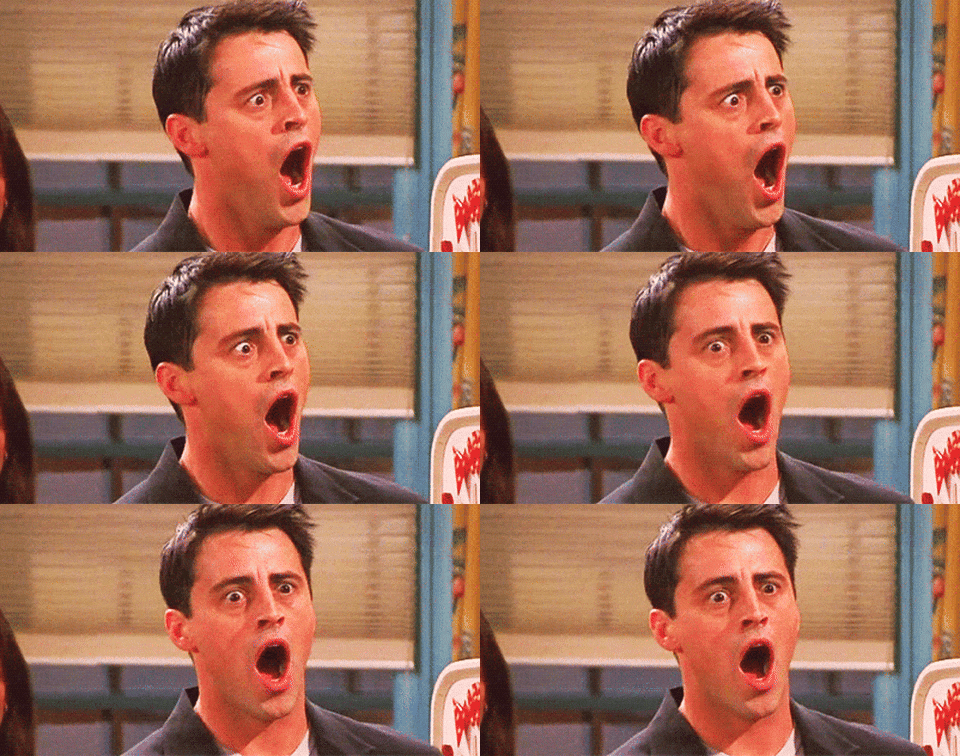
Another reason why I might not write that much humor into my stories is because of the type of humor I excel at. You see, my humor tends to be at its best when it’s situational. It’s like I’m living in a sitcom, and every word spoken has the opportunity for a funny line if I know where to look. That’s my mindset. My favorite jokes to pull on people usually reflect that. You’d be surprised how many times people have asked me how I’m doing, and I tell them, “I’m pregnant.” The reactions! They look something like this:

“YOU’RE PREGNANT?!!”

That being said, being a situational humor guy doesn’t always translate well to my fiction. I’m a plotter, which means I plan out the entire story from beginning to end. Keeping such dark stories in mind, from beginning to end, you don’t have much room to think of funny moments to add. You’re more likely thinking of the sad past of the protagonist and the arc they’re going through with this horrifying story.

Or it could just be the old adage, “Tragedy is easy, comedy is hard,” and all the stuff in the last couple paragraphs is a bunch of bullshit. That’s always possible.

Whatever the reason, it’s not that big a deal. Every author is comfortable with different amounts of humor in their work, and I’m comfortable with minimal amounts in mine (though if I ever write for Doctor Who, that might change). Besides, there’s a good chance if I tried to force more humor into my work, it would suck. In fact, I’m sure it would suck. Last night, I tried writing a horror-comedy short story about a tour of hell. The first paragraph was kind of funny, and then everything after that…not so much. Hence why I’m writing this post.

In any case, I think I’ll stick to what I’m good at. That’s what people like, and that’s what I like, so no problem. I’m sure I can fulfill all my writing dreams by not forcing jokes into my serial killer stories.

Or I could just stay at my job for the rest of my life and never make a thousand bucks off my work, but I don’t like to think like that.

If you write, how much humor do you put in your stories? What do you even think of humor in non-comedy fiction, anyway?

Back in January I got into another Lovecraft binge (see my thoughts on that here), and during that binge I read one of Lovecraft’s most famous stories, “The Call of Cthulhu.” Around the same time, I found out there was a movie version of that short story that was made in the style of a 1920’s silent film, matching the period of when the story was written, and knew I had to see it. Which turned out to be easier said than done: it’s not on any streaming service I can find, copies at my library had all been lost or damaged to the point they needed to be taken out of circulation, and I did not want to illegally stream it on my laptop. Finally, with some Amazon gift card money, I managed to buy my own copy, and after Amazon lost the package and had to send me a new copy (was that Cthulhu’s work, I wonder?), I finally got to watch the film with dinner this evening!

“Call of Cthulhu” tells the story of a man as he recollects becoming the executor of his late great-uncle’s estate, and how he discovered his uncle’s research on a cult devoted to the worship of a being known as Cthulhu. As the man goes deeper into the mystery of the cult and even conducts some research himself, he finds himself falling deeper into a rabbit hole of madness and despair that has no way out, and some things waiting within.

Firstly, this movie looks and feels like a 1920’s silent film. It was filmed using Mythoscope, a process that combines older and newer techniques to produce a film that looks like a silent picture but with much better special effects, and it looks great. You can tell that a lot of work went into making this film just right. And what’s truly amazing is that this film was made almost in a DIY sort of way: sets were made with cardboard, tape, and even a few blankets, with cast and crew sometimes working in miserable condition and using props bought off eBay to make this work. If you watch the film and then watch the behind-the-scenes video, like I did, you gain such a deeper appreciation for how well executed this film is.

Another thing I really enjoyed about this film are the actors. They are great at their work! As it’s a silent film, much of the storytelling is done through expression and movement, like in a ballet. You never once doubt for a moment that the actor are feeling the emotions they are trying to convey to us, and that just makes the film all the more amazing. It also helps that these actors are not Hollywood stars. In a major motion picture, the narrator of the story might be cast as Tom Hanks or someone else who’s good at playing an everyday guy put into extraordinary circumstances. The actors in this movie, however, often look like folks you see on a daily basis, and that instantly makes them more relatable to me.

If there’s one thing I didn’t care for, it might be Cthulhu himself. Or maybe I do care for him. I’m kind of split on my opinion of him when he finally appears. On the one hand, he doesn’t appear on film that much, even at the climax of the story, and when he does, it’s often very quick or he’s seen as a shadow. The stop-motion used to animate him is also very well done, and he looks like how he might be styled in a 1920’s film. That’s very good. But, he is the film’s big bad, and I like to feel even jut a little intimidated by the big bads I see in film. And whenever Cthulhu is on screen, I’m just not intimidated. I guess if I had lived in the 1920’s (an age where Lon Chaney’s version of the Phantom of the Opera was so terrifying to audiences, people actually fainted in their seats or ran out the theater screaming), I might have found the stop-motion terrifying, but I’m from the age of CGI, so it takes more to terrify me. So I’m honestly unsure of whether the stuff with Cthulhu himself adds or takes away from the film.

But all in all, this is a great film, an artistic masterpiece courtesy of the HP Lovecraft Historical Society (do they have a museum to the guy yet?). And when you consider that the original short story has been called “unfilmable,” and the conditions during production tried to prove that assertion, you learn to love it even more. On a scale of 1 to 5, I’m giving “The Call of Cthulhu” a 4.8 out of 5 (as well as the title of “one of my new favorite films”). Find yourself a copy, and enjoy the experience.

Now I just need a good adaptation of Shunned House. That story is SCARY! And it feels like the sort of story that would translate very well to film.

That’s all for now, my Followers of Fear. Join me next week when I watch another Lovecraftian-influenced film. No, not Guardians of the Galaxy Vol. 2 (though I probably will see that next weekend with my sister). It takes more than a tentacled monster to make it a Lovecraftian story. No, I mean the film adaptation of Junji Ito’s terrifying manga, Uzumaki.

You know, I think every horror writer has a story that has a title that sounds a lot like this one. “The Woman in the Coffin”; “The Pit and the Pendulum”; “The Lady in the Water.” Okay, that last one isn’t a horror story, but it is pretty horrifying. And you get my point, right?

Anywho, in my last post I said I was going to take a break from Full Circle and work on a few short stories. This is the first of those: “The Woman in the Coffin,” a short story about two cousins living in the English countryside who find a coffin with, you guessed it, a woman inside. In a way, it’s similar to my previous short story “Buried Alive,” which also revolved around someone buried in a coffin, but the whole coffin thing is really where it ends. Especially when you consider what the woman in the coffin in this short story does.

Do you think I have a thing for coffins? I have always wanted one that I could convert into a bed. That would be cool.

Anyway, I had a lot of fun writing this story. It only took me four days to get it down, which is a record for me (though considering this is my first short story written almost entirely with Dragon software, maybe this will be a new norm). I also had a lot of fun writing British characters. Normally my characters are in the States and talk like they’re from the States. I had to draw on all my years of reading British literature and watching British films and television to make it sound like they were actually British and not Americans in a British setting. I’ll probably have to work on that further when I get to the editing phase with this story.

It’s also shorter than most of my short stories, at about 6,550 words (for me, that is short. Most of my short stories average around 8,000 words). And I think there’s a lot of material I could cut out without sacrificing quality. If I can do that, I think it’ll be much more likely that a magazine or an anthology will want to publish it. And wouldn’t it be cool if that happened?

Anyway, it’s getting late, so I’m going to sign off. Next I’m going to edit my short story “The Playroom,” and then I’m going to write a quick short story that takes place in a location we’ve all heard about and hope never to visit. Hopefully I’ll be done with all that in the next two weeks.

Until next time, my Followers of Fear. Pleasant nightmares!