Posts Tagged ‘Stephen King’

Last Monday, I announced that my novel, Rose, is getting published by Castrum Press. And amidst all the excitement and a little extra alcohol (because of course I’ve been celebrating), there has been a lot of correspondence between me and the publisher (and how cool is it that I can say that now?). Some of what we’ve talked about is how the publishing process works, what each of us can do in terms of marketing, etc. But one of the big things we’ve talked about in the past week is the fifth draft. And trust me, there’s going to be a fifth draft. Because as nice as the fourth draft was, it’s still got a few problems here and there that can be cleaned up.

I’ll be honest with you guys: as excited as I am about all this, I’m a little terrified. Okay, maybe a lot terrified. Before last Monday, this dream of being an author with a publisher was just that: a dream. And as much as we want our dreams to be accomplished, when they’re still dreams, there’s only so much damage that can be done to them. But once they’re brought into reality, like when a publisher wants to release your book, then there’s all sorts of damage that can be inflicted: negative reviews and/or poor sales, the process to publication can be beset with difficulties, etc. (I don’t think that those things will happen, but my overactive mind tends to consider every horrible possibility out there).

On Friday, my publisher and I agreed to catch up again in mid-May to see how my edits are going. After that, we’ll see where we go for there. And I’m scared that when they see what I’ve done there, they’ll feel I haven’t lived up to their expectations and rescind the publication deal. Again, I’m pretty sure this is more my fear than an actual possibility, but like I said, I have to consider all possibilities. And that one has gotten kind of big in my head.

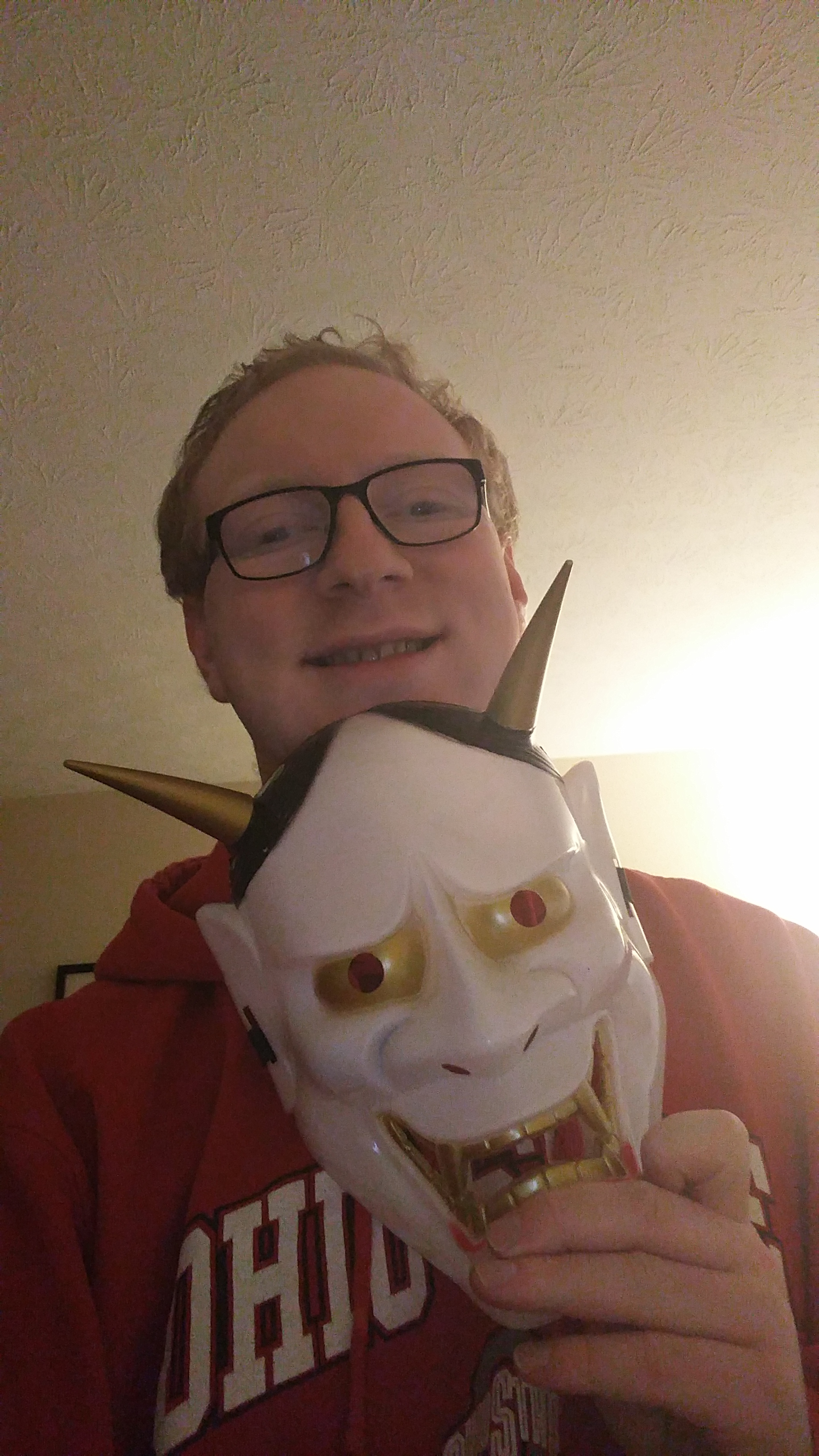
Of course, me being me, I take what’s scaring me and turn it into a fuel for my confidence, motivation to produce good work, and a means to scare others (I believe psychologists call this sublimation). I even gave myself a pep talk a few minutes ago in front of the mirror, using a scary voice to convince myself how powerful I am and that I can accomplish what I set my mind too. And it worked very well. Weird what I can do when I tell myself that I am the Devil, Azathoth, Nyarlathotep, and Death all rolled into one, and that I can be my generation’s Stephen King while sounding like I’m possessed. Yes, I do that. Don’t judge me.

So I’ll get started on a fifth draft of Rose very soon, finishing up a couple of tasks before I do so. I’ll also be leaving for the library in a little bit to print out some of the editors’ notes. Hopefully I can take enough from those notes to better the manuscript before the deadline in mid-May. Fingers crossed.

As always, I’ll keep you guys informed of any developments that occur. Until next time, my Followers of Fear, pleasant nightmares! (I know it’s not even two in the afternoon yet. But that’s never stopped some people from having nightmares during the day.)

The great thing about three-day weekends is that there’s plenty of opportunities for catching a few flicks. So far I’ve watched Black Panther (really good, 4.2 out of 5), Halloween III: Season of the Witch (surprisingly decent, 3.5 out of 5), and this morning I caught the ninth entry in my Rewatch Review series, Mama. I honestly thought this film would be painful to watch, but…you know what, let’s get into the review.

WHAT’S IT ABOUT: Mama is about Victoria and Lilly, two young sisters who disappear after their father goes on a murder spree after the 2008 market crash. They show up several years later after living in the woods all this time and are sent to live with their uncle Lucas and his girlfriend Annabel. Pretty soon they start experiencing weird things and find out that the girls weren’t exactly alone in those woods. Someone, or something, was there with them. And it’s come back to civilization too.

WHY I DIDN’T LIKE IT: You know, I honestly don’t remember. I just remember not liking it when I saw it back in college.

WHY I REWATCHED IT: The director, Andy Muschietti, produced 2017’s It, and that rocked. What the hell did I miss in Mama that made studio heads select him to be the director after Cary Fukunaga signed off?

THOUGHTS: Apparently I missed quite a bit. Mama‘s a great horror film.

For one thing, the actors put their all into their characters, and it works. You really see the arc of Annabel, played by Jessica Chastain, going from a carefree rocker girl who doesn’t want to be a mom at all bonding with the girls and growing into the role of a mother. And watching the girls adjust to civilization is fascinating for each one. And seeing these three very different and clashing people come together as a family is heartwarming, but in a way that doesn’t take away from the horror of the film (*cough* unlike Before I Wake *cough*).

Not only that, but the film does know how to set up a creepy atmosphere while also using jumpscares. I found myself hopping in my seat more than a few times. And as the film goes on, it manages to up the creepiness without showing too much of the titular Mama, who for a horror movie villain is actually kind of sympathetic once you get her backstory. It was genuinely scary.

Of course, the film isn’t without its problems. At times, while Mama’s design is creepy*, the CGI used to make her can be a bit distracting at times. And the music in the final scene kind of makes this really heartbreaking scene kind of melodramatic and sappy. I’m sure the idea was to heighten the sad emotions, but it backfires for me.

And hoo boy, that movie was loud. I turned down the volume and I was sure my neighbors would knock on my door and ask me to turn it down!

JUDGMENT: I honestly don’t know why I disliked the film anymore, and I can see why Muschietti was tapped to direct It.

Mama is a terrifying but heartwarming horror movie with a great premise and wonderful characters played by accomplished actors. On a scale of 1 to 5, I give this film a 4.5 out of 5. I’m so glad my opinion changed on this one.


Well, that’s nine films rewatched. My last one might take some time to find, as it’s not usually available in the States. Still, I’m looking forward to it, and I hope you are too. Until next time, pleasant nightmares, my Followers of Fear.

*And is probably the inspiration of the look for the abstract painting woman from It. Not kidding, look at those two side by side. They’re basically the same character with a different style…so there’s a King/Muschietti shared cinematic universe now? It’d make sense, this movie does feel like it would fit as a Stephen King adaptation.

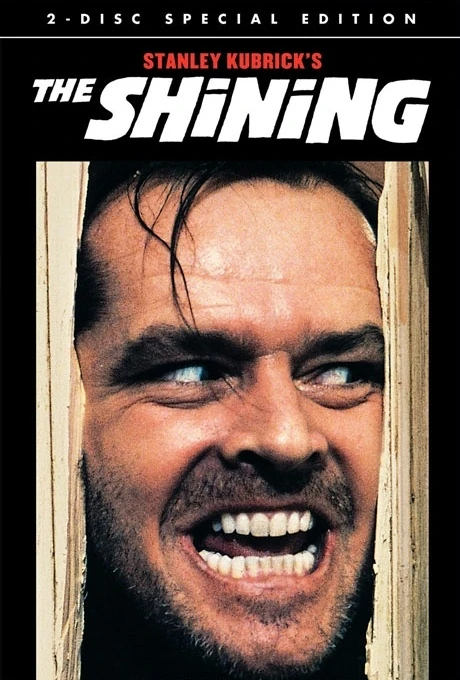
The Shining is considered one of the greatest horror films ever made, based on one Stephen King’s greatest novels. It’s still widely enjoyed today, has been very influential on a number of films and filmmakers, and has led to numerous theories about its deeper meanings, ranging anywhere from the Holocaust or Native American genocides to faking the moon landing. Yet when it was released, audiences and critics didn’t care for the film. Variety actually called it “a disappointment,” and Stephen King himself hates this film with a passion. Director Stanley Kubrick himself has garnered controversy for overworking and even abusing cast and crew during the production of this film.

I disliked this film immensely after I saw it in middle school, which was right after I read the novel. But I’ve since learned a lot about the film’s production and influence. And given the reasons I hated the film (see below), I’m wondering if my opinion needs a change. Let’s find out.

WHAT IT’S ABOUT: The Shining follows the Torrance family, who have come to the historic Overlook Hotel to be its winter caretakers. Isolated and cut off from the world, the Hotel’s supernatural side comes out to play, leading to a horrifying descent into madness and murder.

WHY I DIDN’T LIKE IT: It strayed too far from the source material. Not kidding, I hated the film simply because of how much changed from book to movie, to the point it drove out all my other reactions to the film (I can be a real purist sometimes). I actually preferred the 1997 television miniseries based on the movie because it was more faithful to the book,* and no other reason.

WHY I’M REWATCHING IT: Well, you hear so much about how great the film is, and you learn a bit about its production and legacy, and you realize how much a movie differs from its source material isn’t always a bad thing. Kind of warrants rewatching it.

THOUGHTS: That was a rather unsettling slow-burner, wasn’t it?

I’ll give the film this, it knows how to set up a creepy atmosphere with great visuals and sound. For one thing, the hotel is so distinct that it’s a character all onto itself. But it’s the way that Kubrick films the hotel and the characters in it that’s great. The whole film is shot with a wide-angle lens, which means we always see the characters alone in these vast spaces. On top of that, when close-ups are done, the wide-angle lens distorts the characters’ faces, giving the film a sense of surrealism and unreality. Add in the soundtrack, which sounds more like several clashing soundtracks playing at once. Heartbeats, eerie chanting, electronic music, symphonic pieces, all playing at once. It is creepy as hell.

I also like the reveals of scares. The camera always focus on the characters’ reactions to a scare before they show the scare. We see Wendy’s reaction to what Jack has been writing before we actually see it. We see Danny’s reaction to the little girls before the little girls are actually shown. That’s not something normally done in horror.

And finally, the film takes its time setting up the horror. It doesn’t rush in to showing us the gruesome haunting nature of the Overlook, but gives us time to see how isolated the characters are before introducing elements to show how their insanity is growing/the hotel is alive. It’s pretty effective.

However, I did have some issues with the movie. For one, the actors and the characters they portray. I didn’t care for either, really. Jack Nicholson is pretty good at playing a madman, but in my experience, that’s all his performances, and there’s not much transition between normal Jack Torrance to insane Jack Torrance. Shelley Duvall as Wendy…I don’t know what it was, but I just got annoyed with her every time she was on screen. And Danny Lloyd as Danny (ha!) was passable, but let’s face it, the character in the movie isn’t as fleshed out or as deep as he is in the movie. You could change the actor out, and it wouldn’t make that much difference, because Danny in the movie is very flat.

On top of that, I wasn’t ever that scared by the film. True, seeing Jack go after his wife and son with an ax is pretty threatening, but he doesn’t actually hurt them or get close to doing so. And while the film is good at keeping that creepy atmosphere going, it never truly escalates to the point where I feel myself shift from terror.

And like I said, the novel is phenomenal. Was it really that necessary to make so many changes from the source material? Also, what’s with that photo in the last shot? Was Jack reincarnated from a previous caretaker? Did he travel through time? I don’t get it! Explain movie! Explain!

FINAL JUDGMENT: I have a feeling this opinion is going to rile some people. On a scale of 1 to 5, I’m giving The Shining a 3.5. It’s creepy and visually creative, but the actors/characters aren’t that great, and the lack of terror, unexplained final shot, and important changes from the source material are issues that detract from my viewing.

Sad to say, it’s just not a film for me.


Well, at least I got that film out of the way. And with The Shining watched, I only have two films to go. Though I have a feeling this next one might be painful to watch…

Until next time, Followers of Fear, pleasant nightmares.

*And now I may have to get that miniseries again just to get a fresh opinion (Rewatch series 2?). And I’ll have to rewatch Room 237, the documentary on The Shining movie and people’s interpretations of it. And maybe reread the book? It’s been at least a decade, so I don’t remember it that well. And I should really get to reading Doctor Sleep, the sequel to The Shining. Especially since a movie version’s on the way.

I have a lot of work ahead of me.

I’ve mentioned it before, but short stories are often hard for me. And one aspect of writing those that I often have trouble with is the very first part of any short story. Openings. They give me grief.

With novels, I have a lot of room to maneuver around. After all, even a short novel is around sixty-thousand words (and mine are never that short). With all those words, I can take a lot of time and space just setting up the scenario of the story. Take my novel Rose, for example: if we count Chapter One as the opening, that’s sixteen pages and nearly five-thousand words just devoted to setting up the story. And I’m very used to writing this way. I like long, expansive stories. I grew up on a diet of Harry Potter, and in my teens delved into the novels of Anne Rice, Stephen King, and Dan Brown. No one could accuse those guys of being short.

But if I’m writing a short story, the highest word count to still count as a short story is ten-thousand. And if I want to get published in most magazines, the limit is usually around six-thousand. So while I’m used to opening a story with about five-thousand words, or half the length of the longest short story, I now have to try to contain my openings into a much shorter length.

The struggle is real.

Because of this need for brevity, one of the things I sometimes end up doing when I write a short story, at least in the beginning, is to use a lot of exposition. And in some stories, exposition is good. It helps fill in essential information. But in other cases, exposition is just…bad. Instead of actually presenting the story,  the author is just explaining things. Telling you stuff. It’d be like if instead of actually showing Harry Potter growing up, learning about his heritage, and going to Hogwarts, it’d be like JK Rowling wrote, “There was a boy named Harry Potter. One day he found out he was a wizard, his parents died saving him from an evil wizard, who disappeared and gave him a scar in a process, and then he went off to wizard school.”

I often worry that when I do exposition in short stories, it’s the latter kind. Which probably means it is the latter kind. That may be cynicism on my part, but when you’re still inexperienced at something, you’re prone to making mistakes. So perhaps I really am using exposition, and in all the wrong ways too.

Luckily, there are a few things I’m trying to remedy that. One is that I’m keeping in mind something important: I’m writing first drafts. And first drafts are always terrible. Even if they contain intriguing stories, they’re rife with issues that require lots of fixing. This is why we writers edit, multiple times if necessary, before we publish. Heck, Rose had to go through four drafts before I felt it was ready to be sent out to a publisher. And likely if a publisher does like it, they’ll probably have me do a fifth or even a sixth draft before they’re ready to publish.

So if I feel an opening needs work, I can edit it in the next draft, and remove any bad exposition or other problems with the opening I spot.

Hopefully I can improve this part of short stories.

And sometimes, I don’t even need to wait (and this is my second method, by the way). Sometimes a way to fix a short story’s opening comes to you just while you’re writing it. On Friday, I started a new short story that I think has potential. I think I got four hundred words in before I stopped, but then I was like, “Is this really the opening I want?” And as I thought about it, it wasn’t. But how to fix it? And yesterday at some point–I think it was right before I saw Winchester–a way to change the opening occurred to me.  I think this is the right way to open the story without going into exposition. So the next time I work on the story, I’m going go back and rewrite the opening, see if this produces better results. And if it doesn’t, there’s always something new to try. Or I can go back to my original opening. After all, it’s a first draft. I can make as many adjustments as needed.

And finally, I’m reading a lot more short stories than I’m used to. I learned how to write novels partly from reading novels, so reading short stories should help me get an idea on how to write them. I’ve already listened to two anthologies on audio book, and I just started reading the Stephen King collection Night Shift on Friday. So far, they’ve been very helpful, but I’ll need to read a lot more to get a better sense of short story writing.

And finally, I just need more practice. After all, you become a writer by writing in the first place, and continuing to write no matter what. With any luck, more practice with short stories will lead to better ones. Hopefully, anyway.

I’m still trying to be a better short story writer, and openings are still hard for me. But with practice and exposure to good ones, I can hopefully make some progress on that. And who knows? Maybe even produce some stories that a magazine will be proud to publish. Anything’s possible, right?


That’s all for now, my Followers of Fear. I’ve been looking at a screen for most of the day, so I’m going to take a break and read something. Until next time, pleasant nightmares!

So I’m seven films into this series (click here to see the whole series), where I rewatch horror films I previously disliked to see if there was something there I missed the first time. And this time around, I’m going with a classic. By which I mean, it’s probably older than any of my grandparents. Nosferatu, one of the earliest horror films and the first Dracula adaptation, as well as an example of German expressionist film. It’s become something of a cult classic since it’s release over ninety years ago, and its villain, Count Orlok, has become almost a meme, but longer lasting.

And can I just say, my own opinion aside, it’s a freaking miracle we even have this movie? Not kidding, we nearly lost this film to copyright infringement. Prana Films, the studio that made this film, was started and owned by two businessmen who never made a film before, and apparently had no idea you had to ask permission before doing an adaptation of a non-public domain work. Bram Stoker’s widow sued the company when she found out, and the company was forced to destroy all their copies…except or two copies, which have been copied and cobbled together to preserve the film to this day. Which is why if you watch the film today, sometimes the film is pure black-and-white, and at other times it’s sepia-toned.*

Okay, enough of that. Time to talk about the actual film.

WHAT’S IT ABOUT: It’s Dracula, just with everyone’s names changed: Dracula is now Orlok, Harker is Hutter, Mina is Ellen, etc. Do you need more information than that?

WHY I DIDN’T LIKE IT: I was fifteen or sixteen when I saw this film for the first time. And while I enjoyed older films well before then, I just didn’t get into it. I knew the plot, so I was never surprised or scared. It was just…boring. Really poisoned silent films for me.

WHY I REWATCHED IT: I just thought it would be good for this series. And in any case, while I still don’t read it that much, I appreciate classic literature much more than I did then. Maybe that extended to films too.

THOUGHTS: Um…it’s not good, but I find it hard to hate.

Look, you need to have a certain frame of mind to enjoy silent films, and I’ve only enjoyed one of the silent films I’ve seen (which was made in 2005, so…), so it’s safe to say I don’t have that frame of mind.

But I did enjoy it at times…as a comedy. Yeah, I know it’s a horror film, but I just couldn’t help but laugh at the film. There was so much to make fun of! For one thing, the make-up makes every guy look like a serial killer about to take a victim, especially when they laugh or smile, and every girl like a drag queen. I just couldn’t help but giggle. (Also, the character Knock is probably the inspiration for Count Olaf in A Series of Unfortunate Events. Thank the make-up department for that!).

And because it was a silent film, I could just sit in my living room and make goofy voices. I remember during one moment, when Hutter comes home to tell Ellen he’s going abroad, I responded to the dialogue card by saying, “Hi husband, good to see you too. I had a wonderful day, thank you for asking. Now what are you talking about?” And when Hutter runs into another room to start packing, I said, “So this is what Marge and Lois are talking about when their husbands announce they’re about to do something stupid.” It was hysterical.

Unfortunately, the best of on-the-spot comedy couldn’t help the film from dragging. For a 95-minute film, it felt so much longer, and like nothing was happening at all. Characters just took their time, said things, and reacted to things. There was nothing to get your blood pumping at all.

I could go on with the problems I had with this film, but that’d be a veeeery long blog post. I’ll just save time by saying, I had many more issues that kept me from enjoying it.

Still, Count Orlok is cool looking, and the sets are really pretty. I’ll give the film that.

JUDGMENT: I’m sorry, but it’s just not my kind of film. I know it has its fans, but I’m not one of them. 1.5 out of 5. I’m sad to say that, due to its place in film history, but that’s just how I feel.

Well, I think I might enjoy this next film a bit more. And if I don’t, there’s a good chance I’ll be reviled in the comments for it. in fact, people might shout “REDRUM” at me. That’s right, I’m rewatching Stanley Kubrick’s The Shining next.

Until next time, pleasant nightmares!

*Also, the version of the film I watched was restored in Wiesbaden, the city in Germany I lived in for four months back in 2015! That’s really cool, if you ask me. My former home helped to create a beautiful print of a classic movie. I wonder if my supervisors knew about that?

Well, it’s been a year since I last had a Lovecraft binge (see Parts 1, 2, and 3 for my previous binges). And while I didn’t read any actual Lovecraft stories in the year (holy cow, that long?) since my last binge, he was certainly never far from my mind. I read a lot of fiction influenced or modeled after his work, including the Lovecraft/YA novel Awoken* (read my review here), shopped around my own Lovecraft-themed story The Red Bursts (still working on that), and wrote an article about why there’s not more adaptations or even a cinematic universe based on his work. No, surprise, after all that I was ready for another dive into his work. And boy, did I enjoy the eldritch swim.

So if you’re not familiar with HP Lovecraft (and I’d bet good money that you’re not), he was an early 20th-century author whose ideas and stories proved very influential on storytellers like Stephen King, Guillermo del Toro, and Allan Moore, among others. He’s considered the father of cosmic horror, the idea that humans are basically ants in our universe, that there are beings and truths so great and terrible that even glimpsing them can cause madness and death. It’s pretty bleak stuff, if you think about too much about it (which I have).

So this time around, I read “The Case of Charles Dexter Ward,” Lovecraft’s only finished novel, “The Colour Out of Space,” “The Dunwich Horror,” “History of the Neconomicon” and “The Whisperer in Darkness,” as well as several fragments, one letter excerpt, and one parody story, but I won’t go over those. And I got to say, these were definitely some of the most enjoyable of Lovecraft’s stories. They were consistently creepy and kept me engrossed in the story, as well as with the most accessible language (dude liked to pretend he was a contemporary of Poe, rather than a contemporary of Ernest Hemingway). Or am I just used to his style now?

The interesting thing about these highlighted stories is, they also mark Lovecraft’s shift from pure horror to science-horror. Sure, he’s done that before–“Herbert West: Reanimator” is the story of two men trying to discover the key to bringing back the dead using science, a theme also explored in “Charles Dexter Ward,” but more thriller and magical than science-fiction–but here there was definitely a more sci-fi element in his work. “The Colour Out of Space” and “The Whisperer in Darkness” both involved aliens, with the former involving a sort of alien infection and the latter involving aliens that have been visiting Earth for centuries.

Why did Lovecraft make this shift? Well, around the time these stories were written–late 1920’s and early 1930’s–was also the birth of science fiction as a proper genre. Pulp magazines like Amazing Stories and Astounding Stories were huge sellers, and since pulp rags like these were where Lovecraft normally published his work, he would’ve been aware of the young genre and its exploration of humanity’s possibilities through space exploration, technology, and aliens. It’s no surprise that he’d take elements from those stories and give them a freaky twist. And lo and behold, it led to Lovecraft writing some of my favorite works by him (especially “Colour Out of Space.” God, that was freaky, considering that what happened in that story could maybe happen in real life).

Honestly, I’m glad I decided to check out HP Lovecraft two-and-a-half years ago. Sure, his early works can be hit-and-miss, but as time went on, he got better. And by this point in his bibliography, he was very good at writing stories that stayed in your mind. It’s a shame he didn’t achieve more of a following during this time, because maybe then we’d have more works by him (sadly, he died in 1937 at barely forty years of age), and he’d be more well-known today.

And while I’m done with my latest binge, I’m looking forward to my next one, whenever that is. Especially if the stories from this point on are as good as the ones I read this time around. And seeing as At the Mountain of Madness is the next story in my collection, I’d say that’s a definite possibility.

Have you read these stories or others by Lovecraft? What are your thoughts on them?

*Funny story about Awoken: so I follow this woman named Lindsay Ellis on YouTube (check out her channel here) who does a lot of videos on our media and culture. Yesterday she uploaded a video about whether or not the hate over the Twilight franchise was warranted. During said video, she mentions she and friend/frequent collaborator Antonella “Nella” Inserra wrote Awoken as a parody of Twilight, only with Lovecraft characters instead of vampires. My mouth hit the floor. I had no idea that the novel was a parody of Twilight, let alone written by those two women under a pen name. Though now that I think about it, it explains quite a bit.

I reached out to both women on YouTube and Twitter, letting them know that I read the novel, my ignorance of its authorship, how much I actually liked it, and that I reviewed it on this blog. They asked for a link, and I sent it to them. Since then, I’ve gotten hundreds of views from their readers/viewers on that one review, and the number of reads is still growing. Wow. Didn’t expect that. Pretty cool. Probably won’t last a week, but it’s still cool.

Also, I learned about Poe’s Rule: if you write a parody of something, unless you ad a healthy dose of comedy, people will think it’s serious fiction in a particular style. Which is apparently what happened to me, as these readers are telling me. Good to know.

I’m far from perfect. And there are lots of areas I can be better (especially my impulse control when it comes to sweets). However, this post will be focused on the writing aspects I can improve upon.

There are a couple of reasons why I want to talk about that here. One is that for personal things I want to improve upon (damn you, sweet tooth! Damn you to hell!), I only talk about those sort of things here when it’s really important. Like if I’m really struggling with my choices in life, or if I want to talk about being on the spectrum. And at the moment, there’s nothing in my life I feel like talking about here at the moment. Second, this is a blog for a writer, so it makes sense that if I’m going to talk about improving stuff, it’ll be about improving my writing. And finally, while a lot of people I know in real life and even a few people online treat me as THE writing expert, especially when it comes to fiction writing, I’m far from an expert. If I were an expert, I’m pretty sure I’d have several bestsellers out by now, a few of them would have been made into movies already, and I’d be writing full-time in a nice three-bedroom, one-and-a-half bath house (I have goals that I aim for).

Point is, as a writer there are areas I’d like to improve in, so I thought I’d list some of those and ask for your feedback. Many of you who follow this blog are writers, and have much more experience than I do. Perhaps you’ve dealt with some of the issues I’ve dealt with, and have some tips on how to deal with them. Anything’s possible, right?

1. I’m addicted to adverbs and gerunds. Now if you don’t remember most of the fancy terms from grammar class, adverbs are words that end in “ly” (wildly, musically, horribly) and gerunds are words ending in “ing” (ending, writing, killing). And I overuse them in my writing (see? Did it right there). One of the biggest criticisms I got from Rose, truth be told, is that I overuse them. In fact, I almost used “actually” instead of “truth be told” in that last sentence. And in the one before this, I started writing “nearly” before I switched to “almost.” And in that last one, “I switched” started as “switching.” And before that–oh, you get the idea!

A couple of years ago, I wrote a post about how I had a similar problem with semicolons. I overused them, especially when they weren’t needed. Once I recognized the problem, I was able to correct it. But I have a feeling correcting these issues won’t come so naturally (see?). For one thing, while the semicolon issue was about fixing incorrect uses of punctuation, what I’m doing here isn’t technically wrong. These are speech patterns used everyday, you just don’t see them in a lot of fiction to the extent I use them. At least, not really good fiction. So one thing I’d like to do is know when to use adverbs and gerunds, and when not to use them.

2. Passive vs. active voice. I have a lot of trouble telling those two apart. Which is bad, because editors and publishers tend to prefer active voices in fiction, and I somehow always end up writing in passive voice. What’s the difference? Is there a video I need to watch or something that explains this? Help!

3. Writing snappier action. This is something I’ve taken steps to improve, but it’s still a work in progress. I tend to write these long sentences that illustrate a character taking a certain action. Example: “She stood, walked to the kitchen, and placed the glass in the dishwasher.” It’s a good sentence, but for fiction, this is better: “She put the glass in the dishwasher.” Boom! And if I’ve already established that the character is on the couch, it works even better. It shows the same amount of action with less words.

I’m trying to implement this sort of snappy action into my stories. Editors and publishers seem to like it, and when there are limits to how many words a submitted story can have, it’s helpful in reducing the word count. Still, it’s going to take some work. This, like the adverbs and gerunds and possibly the passive voice thing, are deeply ingrained habits.
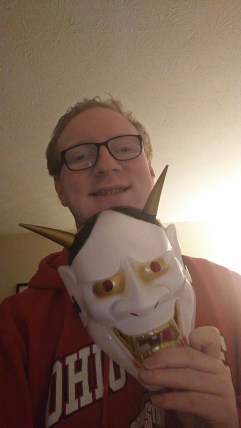
No reason to add this photo. I just want to show you my new author profile pic.

4. Short story writing. I’ve written novels or works meant to be novels for most of my life. That’s what I mostly read, so that’s what I mostly wrote. I’ve learned how to write short stories and read plenty of them since high school and college, but I’m still not as good at them as I am at novels. Which is sad, because I’ve had many, many ideas for short stories and novelettes over the years. And since I’ve spent most of my time on novels, I’ve written only a few short stories, and not many of those have been published.

What I want to do is write more short stories and novelettes, get better at writing them, and get a few of those published. Is it necessary, especially since I prefer novels? No, but a lot of authors I like do great short fiction, so I’d like to do great short fiction too. Good news is, I’ve been reading a lot of anthologies lately, and I should have a bit of time after I finish the fourth draft of Rose. That should give me time to practice.

5. Not listening to my anxieties. All writers deal with anxieties, especially with how their work will be received. Sometimes I let them have too much control of my mind, and I start freaking out Just yesterday, I got panicky over whether certain characters in Rose might be called tacky stereotypes. After a lot of discussion online with friends and colleagues, I don’t believe they are, but the worry ate at me for a while.

The important thing for me is just to be a bit more confident in myself, and the stories I write. And I should work on techniques to combat those anxieties when they try to tear at me. Because at the end of the day, I’ve still written some decent fiction. And I won’t let doubt or fear keep me from improving it and making it into possibly publishable fiction.


Well, those are the things I want to improve on with my writing. What are your suggestions on fixing those issues? Let me know in the comments below.

That’s all for now, my Followers of Fear. I’ve only six chapters of Rose left to edit, so I’ll hopefully get started on the next one tonight. Until next time, pleasant nightmares!
Go to any slasher movie. I guarantee someone will do something stupid. And I also guarantee there’s a reason behind why they did it.

So yesterday I was doing some edits on Rose* and one of the points in the beta reader notes stood out to me. In that particular point, my friend/colleague/beta reader Joleene Naylor pointed out that it was taking the titular character Rose a lot longer to figure something out about the scene that Joleene had figured out much earlier. My immediate first thought was, “Well, it’s horror. Everyone’s a bit slower in horror.” And that thought really stuck with me. Yeah, the characters in horror aren’t always the brightest bulbs in the closet, are they? People in slasher films take too long to realize there’s a killer hunting them around a lake notorious for murders and disappearances, the family stays in their haunted house and might even pretend things are normal even if it’s obvious there’s demonic possession at work, dumb teenagers run upstairs when they should run out the door. They either realize something well after the audience has realized something, or they make really dumb decisions. And it’s such a well-known trope, it gets parodied quite a bit in our media, like in this Geico commercial.

This got me thinking: is this intentional on the part of horror writers? If so, why?

Well, I thought about this throughout the day (couldn’t write this before because I had to go to bed and then to work), and I think that what’s happening is intentional. However, I don’t think the intention is to make the characters stupid idiots.

First, let’s consider something: we’re the audience, and the characters are characters. In our daily lives we’re not keyed up, checking to see if horror-movie circumstances everywhere we go (and if we are, we’re usually recommended to see a doctor about that). It’s only when we sit down for a horror story that we start looking for signs of horror, because that’s what our brains are trained to do. Similarly, unless they’re enjoying a horror story or think they’re in one, characters won’t typically see all the signs of something evil around them unless that evil chooses to make itself known.

There’s also the fact that authors have to tell a story, and often the stories they tell have to be of a certain length. For example, I classify a novel as sixty-thousand words or more, so I have to figure out how to keep a novel going for that long. One of the ways to do that is to make the characters figure things out much slower than the audience, either by only giving them clues slowly or later in the story, or by actually making it so they can’t connect the dots until it’s convenient for the story. And considering that part of the appeal of horror, the thrill of the mystery and the unknown as well as our reactions to it once exposed, this is a sound strategy.

Okay, so making characters slow on the uptake is part imitating people in the real world, part storytelling tool. But what about stupid decisions?

Well, that’s actually pretty easy to answer: they’re under stress. When a character is being chased by a killer or trying to get away from a ghost, they’re under unimaginable pressures. So unless they’ve been trained to think under pressure, like in the Army, they’re not going to make a rational decision. They’re going to make split-second decisions that they hope will ensure their survival, and because it’s a horror story, they’ll likely make the wrong decision. Unless the author says otherwise, of course.

And even if they’re not in a stressful, life-or-death situation, the need for survival can cause us to do very stupid things sometimes, as well as our characters. Polly Chalmers, one of the protagonists of Stephen King’s Needful Things, keeps a charm around her neck, despite suspecting that there’s something alive in it and it’s twisting her personality somehow, because the thing is easing the debilitating pain of her arthritis. In other words, fulfilling a need to help her live.

Sometimes a character acts a certain way either because they’re imitating real people, or the author needs them to be that way.

So it’s not that characters in horror stories are dumb or slow. They’re victims of imitating people in the real world as well as the author’s discretion in storytelling. And we the audience, free of those issues, are able to pick up on things they can’t or won’t for a little while longer.

Of course, we will continue to call characters stupid and wonder how they could not do the smart thing. That just comes with the territory. But perhaps the next time we sit down for a scary movie, we’ll also consider what the characters are going through, as well as what the storytellers behind them decided was best for the characters and their story.

That’s all for now, my Followers of Fear. Hope this gave you plenty to think about. I had fun just thinking of it. Until next time, pleasant nightmares.

*Speaking of which, the editing on Rose is going very well. Yesterday I got through four chapters, bringing me halfway through the fourth draft. At the rate I’m going, I could be done before the end of the month. And after that, hopefully it’s a short wait till I find a publisher. God-willing, anyway.

I’m not going to lie, 2017 was a tough year in a number of ways. In some ways, it even rivals 2016, which everyone agrees was kind of a shit year, pardon my language. We dealt with really horrible terrorist incidents, learned that some of our most beloved figures in entertainment and other industries were secretly monsters, and saw terrible devastation from hurricanes that left communities without good food, water or electricity. This and a whole lot more affected so many lives, and definitely not in a good way.

However, there were a lot of good things about 2017 too. Many of the things I described above caused people to come together and fight. Not too long after the bombing at Ariana Grande’s concert in Manchester, she and several high profile artists put on a charity concert to raise over ten million pounds for the families of the victims. After the shooting in Las Vegas this October, thousands rushed to donate blood at the Red Cross, with lines reportedly snaking around city blocks and lasting up to six hours, and millions were raised for the families of the victims! Plus in response to the shooting, Massachusetts banned bump fire stocks, which were used in the attack, and several bills were introduced into Congress to hopefully prevent attacks like this from happening again.

Throughout the year, men and women came together to protest sexism and the treatment of women in America and abroad, with marches throughout the year. The revelations of Harvey Weinstein led to dozens of women and men to open up about their experiences with sexual assault and harassment, catalyzing the #MeToo movement and leading to the ousting of several serial abusers from a variety of industries for their crimes which, up till now, they could get away with, and started a conversation that is continuing today about how to combat sexual assault by powerful people who use the system to get away with it. Heck, voters in Alabama came together to keep a man who has been accused of assaulting multiple teen girls from becoming a Senator despite widespread support for him. That’s huge!

A Red Cross station post-Las Vegas shooting.

And while Puerto Rico and other areas of the world are still recovering from natural and man-made disasters, a lot is being done online and offline to help. Thousands are still sending money, supplies, and even solar power equipment (looking at you, Elon Musk) to help Puerto Rico out of the rubble. Despite the United States pulling out of the Paris climate agreement, many corporations, cities, and even states have said they will continue to abide by the agreement’s guidelines in order to combat global warming, which likely contributed to the many hurricanes we saw this year. And plenty of people each day are pressing for relief to peoples in trouble, both at home and abroad, from their leaders. It’s amazing to see that happen.

I could go on (I really want to speak about the entertainment industry’s positive contributions this year), but I fear this post will go on too long if I do, and there’s quite a bit I’d like to talk about. I’ll just summarize by saying that there was a lot of positive things that happened this year. And while the bad stuff does sometimes seem to overshadow the good, it’s important to recognize the good and cheer ourselves for what we accomplished, as well as what we can accomplish in the coming year. Which seems to be plenty, if we put our minds to it.

On a more personal note…

2017 was a pretty good year for me. Yes, the things I listed above, good and bad, may have affected me at times (they affect everybody, don’t they?), but in terms of my own personal life, I had a very good year. A lot of positive things happened to me , and if you don’t mind, I’ll just highlight some of the big ones:

  • My health seriously improved this year. I lost about thirty pounds of unneeded weight, which means I’ve had to take fewer sick days and I’m less likely to develop certain diseases. My back pain has also lessened tremendously, thanks partly to weight loss and to seeing a chiropractor. I can now move as I used to pre-back pain, and while I’m still working on improving my back and my health, the fact that I’ve accomplished this much already is a great motivator for me.
  • This was a good year for writing for me. I got halfway through the first draft of Full Circle (still on break from that until I feel ready to tackle it again), finally pushed out a new draft of Rose, and even wrote and edited some short stories. I also published two short stories, the science romance novelette Gynoid, and the LGBT fantasy romance story What Happened Saturday Night. Not only that, but over sixty new people started following this blog, putting me within striking distance of the thousand-follower milestone! For me, that is huge, and I can’t thank you guys enough for making that happen.
  • As many of you know, I work for a supply organization in a role that involves getting disabled employees accommodations and organizing events to highlight the diversity in our workforce. As of December, I’ve been with the organization for eighteen months, and it’s been great. I’m doing work that helps people with a great team around me, and I get great pay and benefits too. What’s not to love?
  • I went on the best vacation ever to Massachusetts with my dad back in July, and it culminated with a night at the famously haunted Lizzie Borden Bed & Breakfast. I cannot even begin to tell you what a big deal that was for me.
  • All the movies I was super-excited to see this year were awesome, as I’d hoped. Especially the new version of It. That was the It we deserved.

And those are just a few of the highlights of 2017 for me. Yeah, it was a good year. And I hope 2018 goes just as well or even better. Especially if any of these happen:

  • More good news on the writing front, particularly with a fourth draft and maybe the publication of Rose, as well as several new stories and hitting the thousand-follower mile marker.
  • Continued improved health.
  • Continuing to do well at work.
  • Maybe a bit of travel, and definitely a bit of fun, whether that be going to shows or seeing friends.

And that much more.

So guys, I want to wish you a Happy New Year, and to remind you that, as hard as 2017 is, it’s 2018, and there are endless opportunities to have a better year. You just have to be brave enough to try and make a change.

And again, thank you all for being my Followers of Fear and reading my work. I’ve grown so much over the past couple of years, and you guys have been there for every accomplishment and lesson I’ve experienced. I hope you’ll continue to support me for this year too as I try to accomplish all my dreams and scare people silly.

Until next time, pleasant nightmares.

So good news, folks: as of around 6 PM today, I’ve received feedback from both of my beta readers for Rose, which means I can start the fourth draft of the novel! Why is the fourth draft so significant, you may be asking. Well, this is the last draft I plan to do until I get an agent and/or publisher! And I think that is significant enough to write a blog post (which would’ve been written earlier this evening, but I was at my dad’s for Hanukkah dinner).

Now if you have no idea what Rose is, it’s a novel I wrote as my thesis in college, which I started working on again earlier this year and finished editing back in October. The story follows a young woman with amnesia whose body starts going through incredible, magical changes. The only person she can rely on for help and information about these changes and about herself is a young man who says he’s her boyfriend, but he’s keeping things from her, and things are not at all what they seem.

Yeah, it is not a fun story. Not by a long shot. But I think it’s a good story, made even better after the most recent draft, which fixed a few issues with the story and doubled the word count (don’t less that scare you, it’s shorter than the second Harry Potter book).

Of course, before you start submitting it to publishers or agents, you want to make sure your novel is actually good. Not just good in your opinion, but in others’ opinions, and that’s where beta readers come in. They take a look at stories you write, and let you know what works, what doesn’t, and give you feedback on what can be made better.

One of my beta readers for Rose was my dear friend, Joleene Naylor.  She read the novel in about a month, and got back to me with a ton of notes, as well as plenty of feedback. Overall, she enjoyed the novel. She thought my characters and their development was deep and reminded her of anime characters, which are often complex and never completely good nor completely evil, but often a mix of both (you can now tell who inspired that post about why writers should check out anime). That made the characters within Rose not only multilayered, but often very surprising. For one particular character, Joleene hated him at first, but then she found out some things about him and actually became kind of sympathetic towards him. Then she learned some more things about that character, and her feelings changed again. It’s very hard to do that in fiction, to have your emotions about characters change that rapidly, and Joleene liked that.

However, she did have some thought about a few things, including grammar and word usage, and she thought some things could be fixed, changed, or worked around in order to make the novel that much better. Her feedback makes a lot of sense to me, so I’m going to be incorporating a lot of it into the story.

My other beta reader got back to me earlier today, and I was very glad to see his feedback. Who is this beta reader? Believe it or not, he’s my chiropractor. As many of you know, I have back problems, so I’ve been seeing Dr. Black since June to remedy them (and the progress has been amazing!). You see someone so much, you get to talking, and it turns out Dr. Black is a huge horror fan, so obviously we got to talking about Stephen King, HP Lovecraft, and my writing. When I was getting close to finishing Rose, he offered to read it as a horror fan, and I said I’d like that.

This is what a beta reader or two can lead to: a published novel.

Now, Dr. Black is not a writer, but a reader. However, it is important to have the feedback of readers, as they are who we write for. And Dr. Black did give his reader approval. He thought the novel kept his attention throughout, and that he especially enjoyed the flashbacks in the novel. I’m glad he told me that, because those were parts I actually worried about. Flashbacks are difficult to do, and different readers and writers react to them in different ways. I’m glad Dr. Black enjoyed them, and what they added to the story.

He also mentioned one issue he had in the story while reading one chapter, which I hadn’t realized was a problem, so I’ll make sure to fix that up so that the end result won’t have that same problem.

So I have both of my beta readers’ feedback, and I can start on the fourth draft. To be honest, I’m really glad I finally have all that feedback. I haven’t really been in a writing mood lately, waiting on getting that much-needed feedback. Sure, having my laptop in the shop for over a week didn’t help, but even when I had it, I just wanted to work on Rose (even if I was working on a great story in the meantime. A story I’ll have to put on hold for now, but whatever. I’ll get it done eventually). When you put this much work into a novel, and you think it has so much potential, you really want to see that potential fulfilled, I guess.

And now that I’ve gotten my feedback, I’ll put out a couple of blog posts I’ve been meaning to write for a while, and then I’ll get to work. I doubt it’ll take very long to get through this time, so hopefully that means I’ll have some good news soon.

Thanks to Joleene and Dr. Black for their valuable feedback. It means so much to me that you took the time to do this for me.

And thanks for keeping in touch with me, my Followers of Fear, and following my progress of this novel. I hope that if it comes out, that you decide to pick up a copy and that you enjoy it. Until next time, pleasant nightmares and Happy Hanukkah!