Posts Tagged ‘writing’


I was tagged again by my friend Kat Impossible from Life and Other Disasters. Well, technically she tagged anyone who’s a writer who read the post, but I’m pretty sure I at least crossed her mind as someone who would do this post. Anyway, let’s get started.

What genres, styles, and topics do you write about?

Well, there’s an easy one. Horror stories, of course (though I do like the occasional dive into science fiction). Usually my stories revolve around teenagers and young adults finding themselves in fantastical and terrible situations, usually ones involving the supernatural. However, they’re often human stories where the characters are growing and sorting through an internal conflict while dealing with an external conflict. At least, in the novels that’s how it is. With the short stories, it may just be me writing a story and trying to leave an impression on the reader.

How long have you been writing?

Probably since I could string two words into a sentence on a page. *laughs* But I don’t think I started writing seriously with the goal of being a great author until I was maybe ten or so. I think it was a conscious decision that I liked to write, so I should make that my life. But it could have easily just been a gradual thing where I found myself entranced by storytelling, doing it often, and then someday knowing that this is what I want to do.

Why do you write?

Besides the fact that I enjoy storytelling? Well, I have a pretty active imagination. I spend a good chunk of each day in stories, whether they be books, movies, TV shows, or daydreams. While they’re up in my head, they can be pretty fluid and volatile, changing and shifting and God only knows what. I’m neuroatypical, so while I love being an eccentric, I do like a little order in my head sometimes. Writing these stories down helps to exorcise them from my brain and make them static. It’s freeing, in its way.

Plus, I just LOVE sharing my stories with people and getting their feedback (it’s an author vanity thing. We all have them, to some degree).

What is the best time to write?

I’d like to say, “Whenever.” However, I find the evening is the best time to write. Since high school, evenings have often been the only time available to me to write. Yeah, sometimes in the afternoons or even the mornings opportunities to write come upon me, but often it’s limited to the evening, especially after so many years of doing this. Perhaps if I ever become able to write full-time, I can work on being more flexible, but for now it’s not until after dinner that I’m able to effectively summon those creative energies.

What parts of writing do you love and hate?

I love:

  • Being able to tell a story and exorcise them from my head.
  • Share my stories with people.
  • Be as creative and dark as I want to be.

I hate:

  • How easily ideas come to me but how hard it is to get even one of them on the paper
  • Not having a large audience

How do you overcome writer’s block?

Usually when that happens there’s a problem somewhere in the story and I need to go back to fix something before I can move forward. That’s usually how it works, anyway.

Are you working on something at the moment?

At the moment I’m editing my college thesis Rose, about a girl who starts turning into a plant. I’m in the middle of the third draft, and I’m nearly a third of the way through. I hope after this draft I can start having it looked at by beta readers, but we’ll see where we are when I’m done.

What are your writing goals this year?

Finish the third draft of Rose and get a few short stories written and published. And if I can manage it, I’d like to reach a thousand followers.

I TAG YOU, BLOGOVERSE!

Do you write? You do! Great, you’re tagged. Have fun, and make sure to link back to me when you do.

Today I wanted to talk about something that is becoming much more common in fiction these days, and that’s the twist villain. If you’re unfamiliar, a twist villain is when one character in a story seems to be the villain, but later on it’s revealed that another character, usually a character we thought was a good guy, is actually the villain. This twist villain is supposed to be a surprise, something you didn’t see coming while reading the story. Hence the name “twist villain.” The problem is, the twist villain is becoming such a common trope these days. In the past couple years, we’ve seen it in Disney films like Zootopia and Frozen; popular novels like Gone Girl and Harry Potter and the Prisoner of Azkaban; a couple of recent superhero films; and more than I can possibly name in this blog post. And when so many works of fiction are using the twist villain, we become used to not only seeing the trope but also the signs that a twist villain is going to be used (and trust me, there are signs), and then when we see the twist villain, we’re not very surprised. Heck, sometimes we even predict who the villain is well before it’s revealed.

Why is this trope becoming so popular? Simple: people want a good story. Good stories produce good memories and good profits. As standard stories of good vs. evil have been done to death, creators need to think of new stories and story elements to keep consumers interested in their work. One way to do that is a third-act twist, which when done right can really enhance a story. And a twist villain can be a very good third-act twist, if you’re careful with it.

Sadly, I find that a lot of creators aren’t careful with their twist villains, making the twist ineffective when it happens. Which is sad, because I love the idea of a twist villain. Heck, it’s one I might use in the future, if I haven’t used it already. A good twist villain can make your mind reel, make you look back trough a story to see if there were any clues and make you marvel at the genius of the creators for setting up that twist so well.

A bad twist villain, on the other hand, just leaves you feeling neutral at best (my reaction during Zootopia) and disappointed at worst (my reaction looking back on Scooby-Doo 2: Monsters Unleashed). Which is why I’ve come up with a few tips for writing an effective twist villain. With any luck, these tips will help other authors (and myself) avoid making a bad twist villain.

1. Does your story really need a twist villain? Any time you want to include something in a story, ask yourself if it’s really needed. I swear, so many stories just add in elements that aren’t needed (*cough* lots of stuff from BvS *cough*). Ask yourself if your story can stand on its own without any of the extra elements. If it doesn’t, DON’T FORCE IT IN! Especially with twist villains.

2. If you’re going to leave clues behind, don’t make them obvious. You can have a twist villain without leaving a trail (Hans from Frozen, for example), but with twist villains, creators often like to leave little hints of who the real villain is. I think this is narcissism on our part; we like to show how clever we are. But that leads to us leaving some rather obvious clues, which our readers/viewers will pick up on and deduce the twist long before the twist occurs. Take Scooby-Doo 2: it was so obvious that the reporter was the villain! Why else would they include a reporter with poor ethical practices unless she was at least in league with the villains?

3. Have a good herring villain. A herring villain is just that: a herring to keep us off the real villain. In Frozen, the herring villain was the Duke of Weselton. He had obvious malicious goals, is willing to kill Elsa, and he was over-the-top, which felt right for a villain in this movie. Imagine our surprise when we find out he’s not the true villain, but Hans, who had no trail leading to him and was such a nice guy up till that reveal! A good herring villain will often lead to a great twist villain reveal.

Compare that to Zootopia or Wonder Woman: the former doesn’t give us a herring villain, which causes us to consider each character and eventually land on Ms. Bellwether, who has said some interesting things and has actually benefited from these events. The latter gives us a herring villain, but it’s a comic book movie, and the General doesn’t do a thing to make us think he’s a famous DC villain we’re very sure will make an appearance.

In short, have a herring villain, and make sure they’re set up in a way where people will actually consider them as the main villain, so the twist will actually be effective. To do that, be aware of what sort of story you’re writing. Often the story will have certain requirements for villains (motive, opportunity, etc), so make it seem like the herring villain has those. You’ll find your herring villain much more effective.

4. Do the reveal earlier than the third act. A lot of twist villains reveal themselves in the third act. Nothing wrong with this, but it’d also work if the reveal was done earlier. For example, Hydra was revealed as the villain in Captain America: Winter Soldier in the second act, and that was a really interesting twist, as we hadn’t expected it. If they’d done it later in the story, we might have actually figured it out by then, or there wouldn’t be enough time for exposition mixed with a great climax. So consider doing the reveal elsewhere.

5. Try a variation on the trope. The twist villain, like most tropes, has a standard formula: something happens, one character seems like the villain, but another character is revealed at the third act to be the villain and why. Oh, and it’s usually not the protagonist.

Variations on common tropes have proven to be very effective in storytelling, so try something a little different with the twist villain, like these examples below:

  • It’s a villain, but which one? In Doctor Who series 8, we’re introduced to a character named Missy, who seems likely to be a villain, but we’re not sure what her deal is if she is. In the second-to-last episode, she explains that Missy is short for Mistress, making her a female regeneration of the Master, a well-known DW villain. A lot of minds were blown that day, believe me. The idea is you can introduce a seemingly new character into a long-running story, and then link them back to a previously-established character. Trust me, it works.
  • Everyone’s the villain! Agatha Christie’s Murder on the Orient Express ends with every suspect actually having some sort of hand in the murder. It made the novel a sensation back in the day, because it was a seemingly impossible idea, but it worked. So try something impossible and make it possible: everyone’s a villain, no ones’ the villain, or even two very good suspects with alibis both committed the murder. It could work.
  • The hero? American Horror Story: Hotel is my favorite season of the series, and this twist is one reason why. The protagonist, a police detective, is on the hunt for a serial killer, only to find out in the second half of the season that he’s the killer! Trust me, I did not see that coming until the reveal episode, and only by a few minutes! So making a hero or a character who nobody thinks of as a possible villain the villain can work very well.

And these are just some examples of variations that have worked in the past.

Twist villains are a trope that won’t go away anytime soon, but as long as we have them, we should write them as well as we write any other type of character or trope. Because if we’re not going to give people our best, then what are we actually giving them?

What are your thoughts on twist villains? What are some good tips for writing them well?

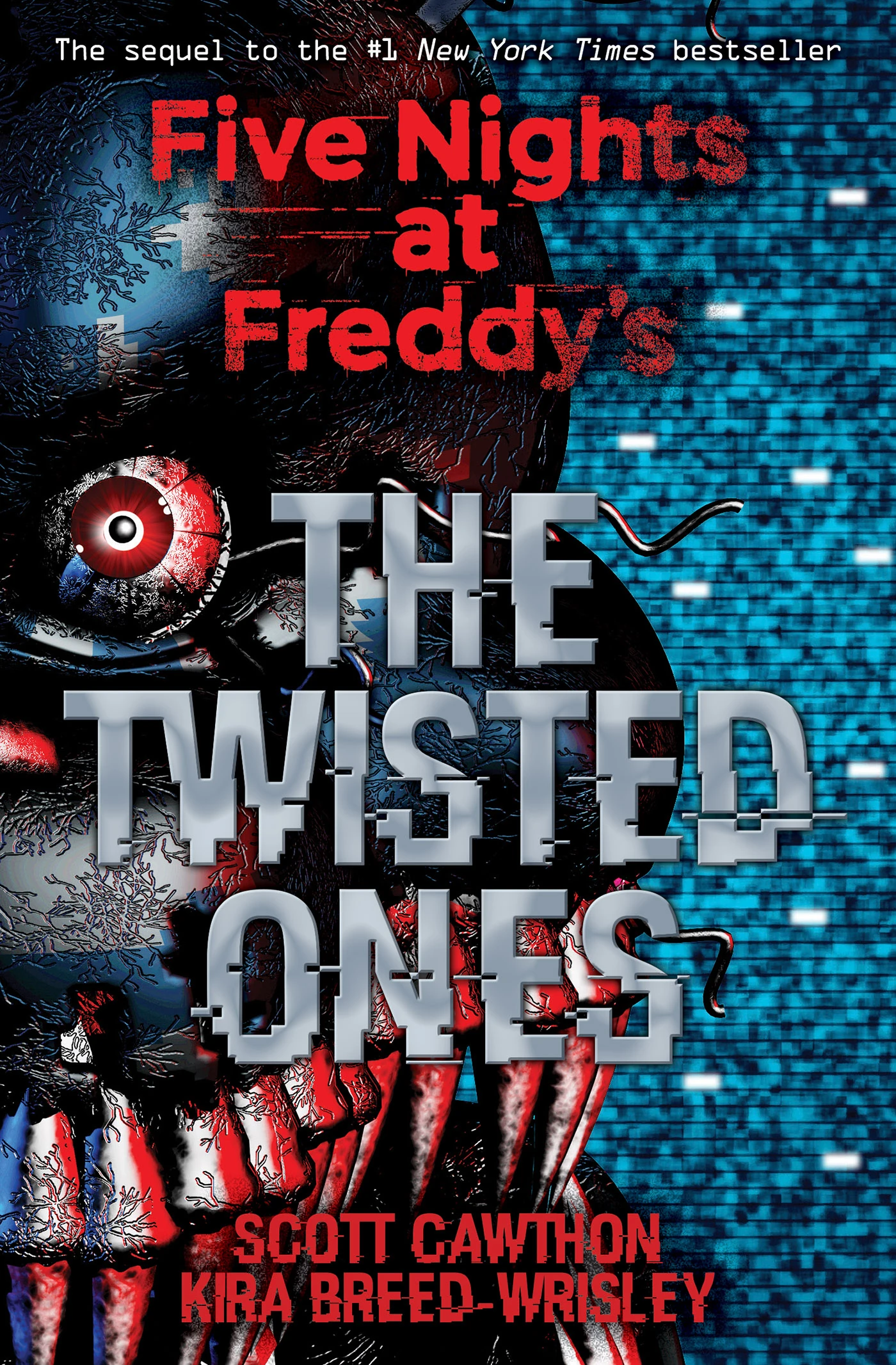
You may have heard me speak of the Five Nights at Freddy’s video game franchise about a haunted pizzeria filled with killer animatronics before on this blog (if you’re unfamiliar with what that is and want a quick lesson to know what I’m talking about, click HERE), including the novel released about two years ago, Five Nights at Freddy’s: The Silver Eyes, that’s part of the franchise’s lore (click HERE for my review of that novel). I find the franchise itself fascinating, though I did not care for the novel that was produced from it, finding it cliched and predictable, as well as poorly edited. So when I heard that a sequel to the novel, Five Nights at Freddy’s: The Twisted Ones, was coming out, I was skeptical. Could this be an improvement? Or would it just be terrible? I decided to get a copy and find out.

And if you’re a huge fan of the franchise or whatever, don’t expect me to delve deeply into the lore and try to figure out the exact mythology of the game. I’ll leave that to the people on the Game Theorists channel on YouTube. No, I’m going to evaluate the novel as a novel: how it was written, if it was scary, how good the plot and the characters are, and what could’ve been fixed or improved. Why? Because that’s what I do here.

So, FNAF: The Twisted Ones takes place not too long after the events of the first novel. Charlie, the protagonist of The Silver Eyes,  is at college learning about robotics and trying to sort out all the things that have happened in her past. However, a series of murders that can only have been caused by the sentient animatronic suits from Freddy Fazbear’s Pizzeria draws Charlie, as well as her friend Jessica, old flame John, and hometown sheriff Clay into a bizarre nightmare, with more mysteries to uncover and an old enemy out for blood.

Was it any better than the first book?

Well, it did have some improvements. For one thing, The Twisted Ones is edited much better than The Silver Eyes. You can tell that franchise creator Scott Cawthon and writer Kira Breed-Wrisley took their time making sure the grammar, spelling and punctuation was up to scratch, as well as ensuring that the indentation wasn’t all over the place. There was also way more animatronic action, something that was sorely missing from the first book. And I have to admit, the plot was somewhat unpredictable, with the final third–especially the climax–being actually a bit of a whirlwind in how it gripped and held onto you. And there were new elements introduced into the story that actually did shed a little light on the franchise (I won’t go into them here, but observant readers should be able to put the pieces together).

However, there were a number of things I didn’t like about the book. For one, these characters feel even flatter than they did in the first book. In the first, they were just given enough characterization to carry along a slasher movie, but those characters that have come back feel even less like actual people. The exception might be Charlie, but most of her character is fretting over the events of her past rather than getting to know her and see her grow as a character. Speaking of characters, I also found the character of Arty totally unnecessary. He’s introduced as this classmate/friend of Charlie’s and a possible rival to John, but he’s only in about two percent of the story, and he doesn’t contribute anything. If you took him out of the story, it seriously wouldn’t make a difference. I wonder why he was even in the story in the first place.

I also found Charlie’s obsession with her past and her brother coming across as melodramatic. You can have a character affected by a horrible experience that exposes a lot about their past, but here it felt almost corny in how over-the-top the emphasis was. Please, can we scale back on that? Surely there’s more to this character than “Oh, my past is so tragic! I’ll live my life around my dark and horrible past!”

The next book. Hopefully it’s good.

But the biggest thing that I didn’t like was that during one scene about two-thirds of the way through the book, the scene is set in Charlie’s dorm room. A few paragraphs later, however, they’re in the car, and it’s such a sudden transition. How sudden, you ask? Imagine in a Marvel movie, Nick Fury and Captain America are talking in a hangar bay in one frame, and in the next they’re in an open field, but none of the characters notice the change. It’s that sudden, and it’s very sloppy.

Still, The Twisted Ones is a better novel than The Silver Eyes. On a scale of 1 to 5, I’m giving this book a 3.0, an improvement of 0.4. The characters aren’t that interesting and there are problems with the book, but I honestly prefer it. Though you can’t get me to love this series, and I honestly would like Cawthon to stick to video games. Just being honest.

Speaking of which, Cawthon is releasing a new book late next month titled The Freddy Files, which is supposed to go over game mechanics and even answer the complex lore of the series. I might read that, but I honestly don’t know if I want to. Not only that, but I’m pretty sure Cawthon’s going to release a third book in the franchise at some point. Like I said, I wish he wouldn’t, but with any luck, he’ll take another year and a half to release his next book, enough time to improve his next literary venture by another 0.4 or more.

Anything’s possible, especially when killer animatronics are involved.

I actually almost missed this milestone. I was going to bed Saturday evening, and I was like, “Wait a minute, that’s Monday! Note to self: write a blog post in the morning after cleaning the bathroom.” And now that the bathroom is squeaky clean (as well as the kitchen, which also needed a touch up), I’m taking the time to talk about this milestone and ask myself, “Has it really been four years? Blimey, it feels longer.”

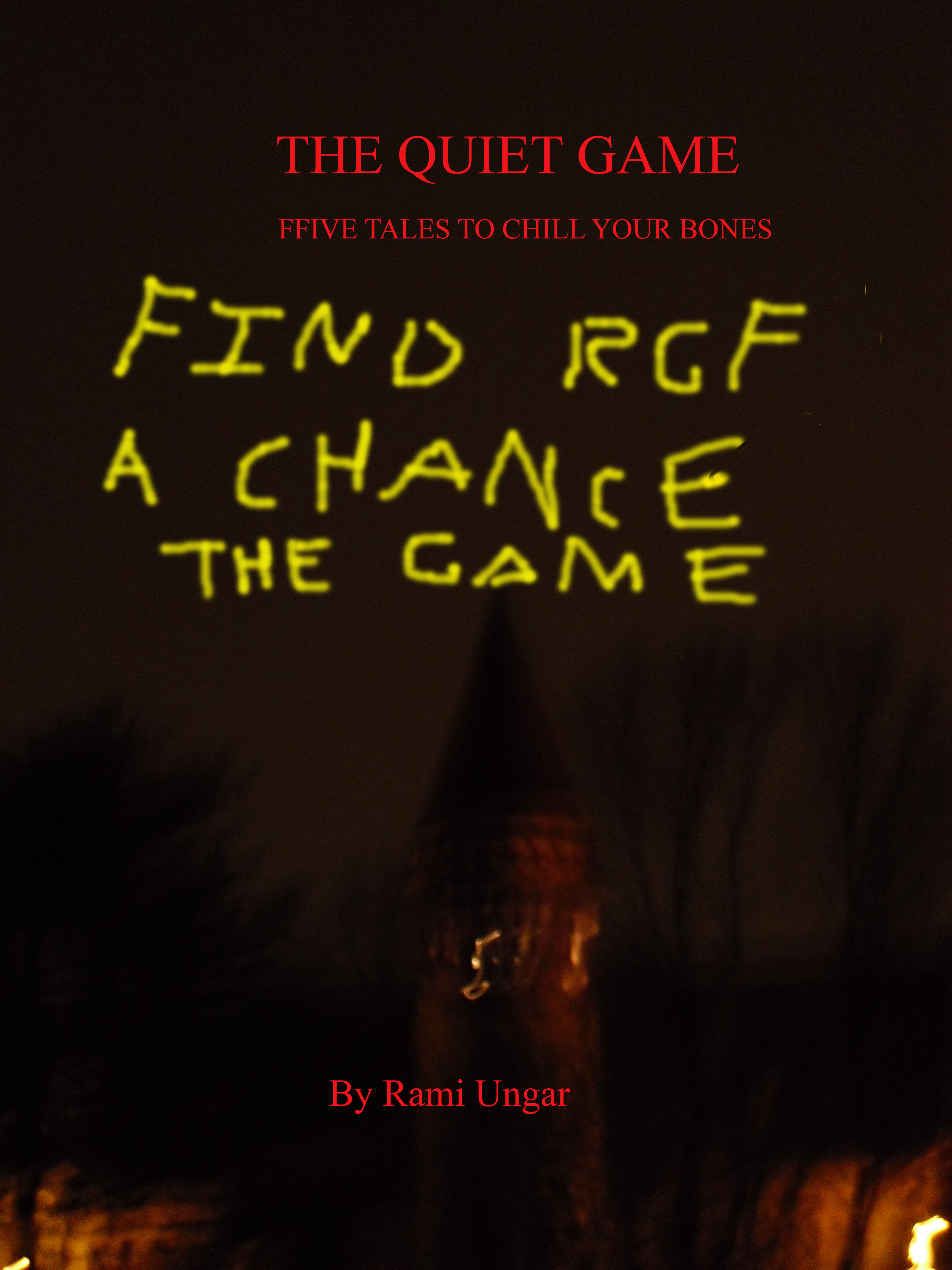
So if you don’t know what the hell I’m talking about, here goes: about five years ago, during my sophomore year of college, I started putting together a collection of short stories. I was still editing Reborn City at the time, and I wanted to have something to work on while the editing process of that took its time, as well as something to release and test the waters of self-publishing. A short story collection felt like a good idea. So I wrote five scary stories in about a couple of months, edited them and had other writers/horror fans look at them, and designed a cover. On July 17th, 2013, I published The Quiet Game: Five Tales to Chill Your Bones on Amazon and Smashwords, later putting them on Barnes & Noble, iBooks, and Kobo.

The five stories in the book are: Addict, about a man dealing with trying to kick his sex addiction; I’m Going to be the Next James Bond, about a bunch of kids who go to an abandoned hospital to hunt for ghosts; In the Lady Ogre’s Den, about an autistic child’s stay in a hospital; The Quiet Game, about a Catholic school that finds itself cut off from the world and deaf all of a sudden; and Samson Weiss’s Curse, about a senator being stalked by a spirit known as a dybbuk.

This has been by far my most commercially successful book, not only because it’s been out the longest, but because it’s a very quick read, and costs less than my other books do, e-book and paperback. People who might not necessarily want a long read see this little collection of short stories, and that it’s received positive reviews, and they’re like, “Okay, let’s check it out.” For the most part, people love it. So for someone still growing an audience, that’s a pretty good achievement.

Speaking of reviews, this is also my most reviewed work. I think that the reasons for that are the same ones for why this has been my most commercial work to date. And as I said previously, it’s had some pretty good reviews, with a score of 4.1 on Amazon based on 14 reviews. Here’s what people have been saying about the book:

5 wonderfully crafted tales! I purchased this as an eBook originally and put off reading it for quite a while, I really wish I hadn’t waited. Sometimes when one purchases a collection of short stories you expect some of them to be less entertaining or of lower quality than the others, but none of these disappoint. Well worth the money, especially considering after you read each story the author gives you creative insight into what inspired him to write each tale, which is really wonderful.

–Jeff D.

This is not my genre, but since I know the author [:-)], I read the stories. Each one was very unique and created its own atmosphere and mood. My favorite story was the Quiet Game but I found the ending a little confusing since I didn’t really know the literary reference at the end; what I loved was the world created in the story and the message it conveyed. I look forward to the author’s improving his craft, and I will certainly read more.

–Gefilte63

Imagine if you will a young Stephen King penning dark scenarios inspired by his youth, and what you get is this anthology. Through this collection of short stories, Rami Ungar brings us into the world of dark urges, childhood traumas, ghosts, phantoms, and dark psychological thrillers. An inspired creation, and definitely a good intro to this indie author’s world!

–Matt Williams, author of “The Cronian Incident”

I especially like that last one calling me a young Stephen King. Always love being compared to him.

If any of this makes you want to read The Quiet Game or check out more reviews, I’ll include the links for the book below. An if you do end up reading the book, please make sure to leave a review. Positive or negative, I love feedback, and it helps me out in the long run.

That’s all for now, my Followers of Fear. I may have a new review out tonight, so keep an eye out for that. Until then, have a good one.

The Quiet Game: Amazon, Createspace, Barnes & Noble, iBooksSmashwords, and Kobo

My good friend Kat Impossible from Life and Other Disasters (definitely check her out) tagged me for the 777 Challenge! Normally I don’t get tagged for these things, and when I do, I don’t always have the time for them. However, Kat only tags me for something if she thinks it’s up my alley, and it not only sounded fun to do, but it’s something I’m in a unique position to do because I’m currently working on something and I’m at a stage where I want to showcase something from it. That story, to be a bit more precise, is Rose, whose first chapter I just finished editing the other day (20 more to go!).

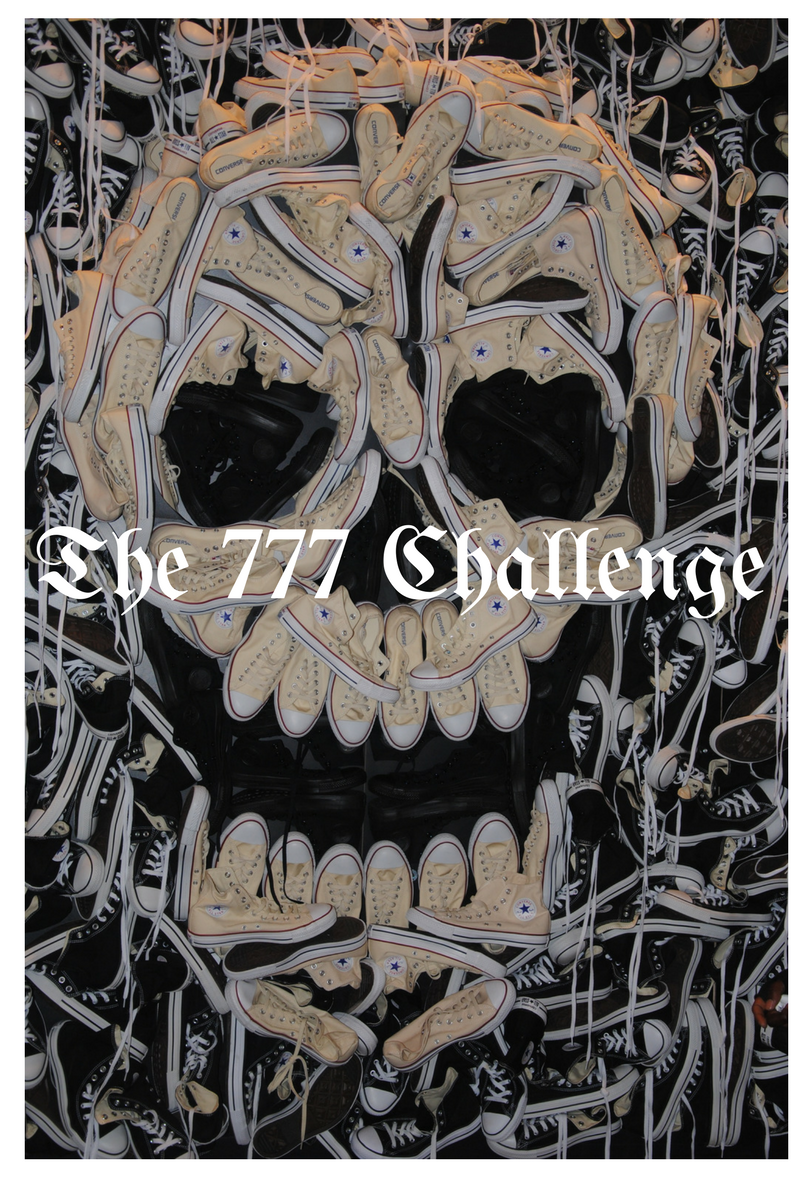
So what does one do when they are tagged for the 777 Challenge? Well, simple enough: share 7 lines from the 7th page of your WIP! They can be completely random if you want, it’s your story. Also, you can use a fun little graphic, like the one I created up above (it’ a skull made of shoes! How could I not use that?), but I’m pretty sure that’s optional.

So without further ado, here are some random lines from Rose, currently in its third draft:

  1. There’s another angry pulse, but that’s all that happens.
  2. My nails are turning a deep shade of pink as I stare at them, while the skin around them is turning light green, the skin tingling where it changes color.
  3. I blink, my eyes itching, and I know without having to look that they’ve turned green as well.
  4. “What the hell are these?” says the man, drawing my attention back to him.
  5. Maybe he’s just as scared as I am.
  6. Soon everything below the shoulders feels like it’s buzzing with electricity, until the green coloring climbs up my neck and spreads over my face.
  7. I wonder if whatever’s happening is over.

What did you think of that?

So now I have to tag some others and pass the challenge along. And I know just which three authors to challenge:

Check out their websites, because they’re awesome. Also make sure to link back to me if you decide to do the challenge, guys. I’d appreciate it.

That’s all for now. I hope you liked what you read and I hope my friends are willing to try this out. Until next time!

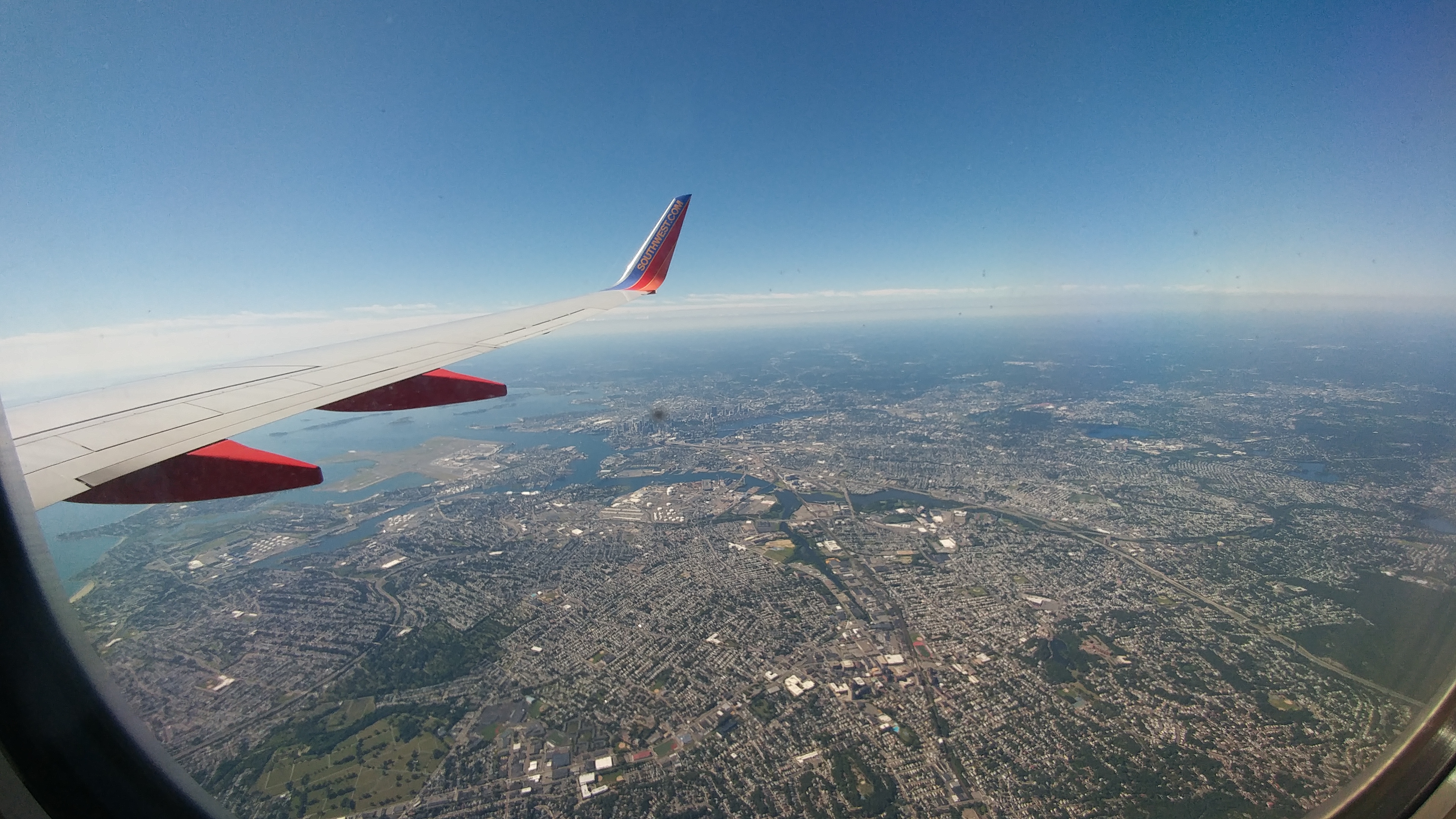
Boston from the air.

Did you miss me? You didn’t?! Well, that’s mean! I thought you guys liked me!

Anyway, if you haven’t heard, I recently took a trip to Boston, Massachusetts with my dad. We went from July 4th through yesterday, July 7th (I kept the dates of the trip vague because I am slightly paranoid of burglars and/or stalkers). I went with my dad, as we don’t get to see/hang out with each other that much these days, and the last couple family trips to cool locales, everyone but I was able to go. And how was it?

One word: Amazing! This is probably the best vacation I’ve ever taken in my 24 years of living (in this dimension, and in this incarnation). I got to see and do everything I was hoping I’d get to see and do, and then some, and everything was just so much fun. What made it even better was that I got to take quite a few photos and souvenirs home with me (possibly more than I should have bought, but whatever), and I even got to meet some really amazing people while on the trip (more on that later).

And I even got some evidence of paranormal activity from one of the places we stayed at, which I’d been desperately hoping would happen. I’ll be showcasing that in another post. Just as soon as I edit the video.

So, now I just have to decide how best to relate all that happened to me. I was originally planning on doing several posts, breaking down each day (or in some cases, parts of each day) so you get the full-scope of my vacation. However, I do have a friend who’s been breaking down her experiences in Canada with week-by-week snapshots, where each day is broken down into simple paragraphs. Some version of that may work for me, as I have a lot of travel to talk about, and there’s only so many hours in the day (especially when you’re working a full-time job and trying to get writing and editing done too). And should I do things in order? I’d like to get the paranormal stuff out sooner rather than later.

Well, while I’m deciding that, I’ll just let you know some of my thoughts of Massachusetts:

  • Boston is nothing like I expected it! I’m so used to Columbus, which is very flat and the buildings either look very old or somewhat new. In Boston, it’s extremely hilly, and even the newest buildings incorporate something in their architecture that looks like it belonged on houses two or three centuries ago, as if to remind us always of the history in that city. That really surprised me, and I found it so beautiful. On top of a beautiful city, to boot!
  • Dunkin Donuts are everywhere! My dad and I were surprised by how many Dunkin Donuts were around Boston, even just a hundred feet from one another! We were like, “They have Dunkin Donuts like we have Starbucks!” And I think I only saw three or four Starbucks outside of airports and malls while we were there. We’d later find out that Dunkin Donuts originated in Massachusetts, so of course it would be everywhere in its home state. Which, as it turns out, was very lucky, because we very nearly didn’t have a Boston cream pie before we left (and that would’ve been a sin if it had come to pass). Thanks for fixing that, Dunkin Donuts!
  • Everyone was so nice! I think we Midwesterners have this impression that everyone in East Coast cities are snooty and rude (especially in New York), so I expected as such in Boston Not so: everyone was so nice! From cabbies to salesmen to random passersby who gave us directions, everyone was kind and courteous. That’s sometimes hard to get, even in the Midwest, where everyone is supposed to be nice (trust me, they aren’t always). I wonder if I just missed all the rude people or if they went on vacation this past week.
  • Never drive in Boston! It’ll drive your stress levels up. Use public transportation if you can. Also, be prepared, because that city is super-expensive! Worse than I expected, actually.

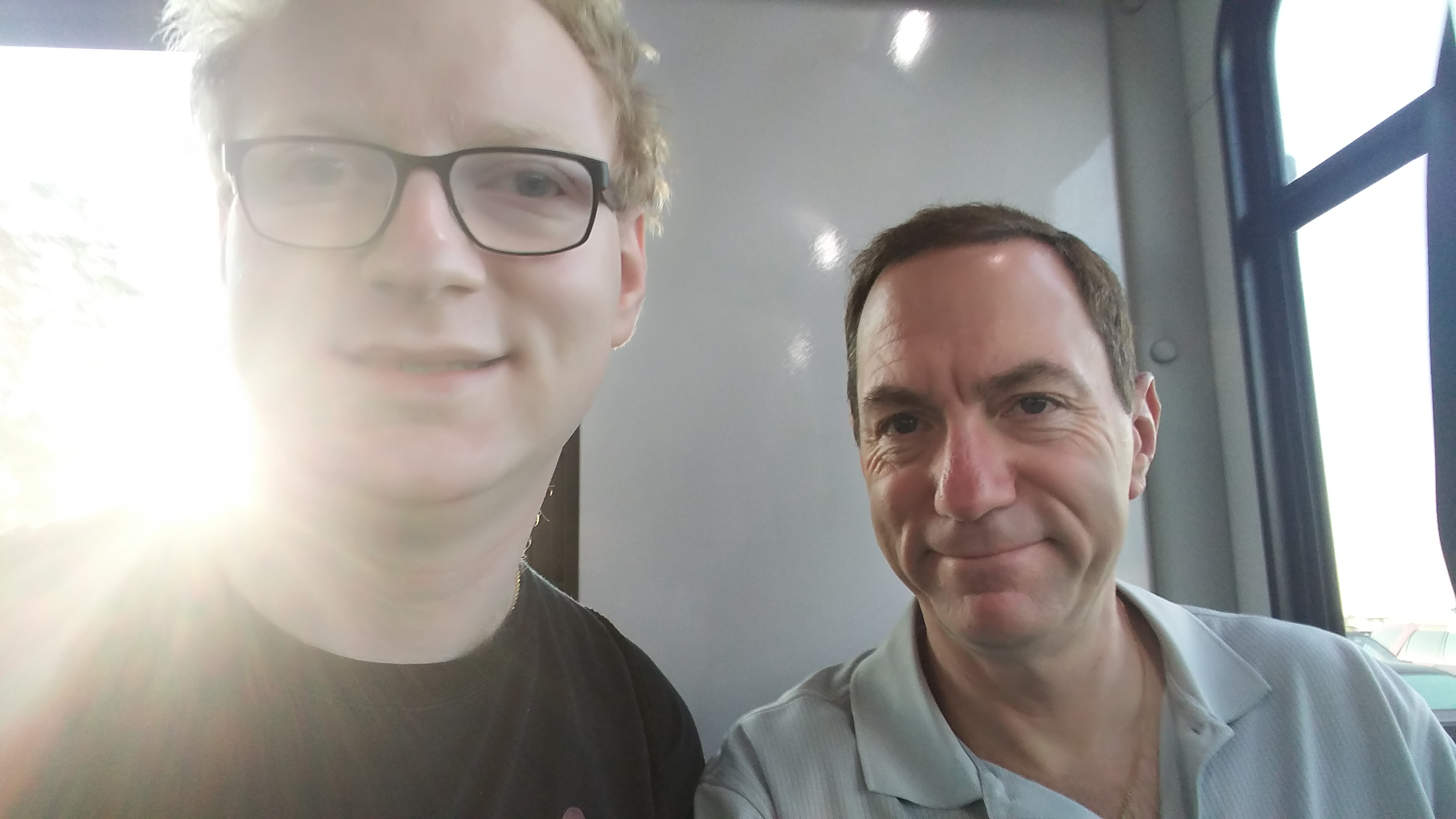
My dad and I off on an adventure.

That’s all I got so far. I’ll tell you guys about Salem and Fall River another time.

Anyway, that’s what I got so far. I’m going to see what I can do about that video footage. Hopefully I can upload a decent YouTube video and amaze you with my paranormal proof. And I appreciate you being patient with me while I try to figure out how to present this extraordinary vacation of mine (any suggestions you have would be most welcome).

Until next time, Followers of Fear!

I wanted to get at least one more blog post out before I go off to Boston (spoiler alert: the trip is imminent), and because I didn’t have time to watch and review a movie I’ve been wanting to see for a while, I thought I’d do another post about romance in fiction. Why? Because my last post on the subject did very well, well enough that a writing blog associated with Columbia College in Chicago listed that post in a Valentine’s Day-themed article last year (that’s staying power!), and because I’ve had some thoughts since then about the subject. And those thoughts revolve around this simple idea: for a romance story to be truly successful and compelling, there has to be a conflict of some sort. Let me explain:

A couple of months back, I tried watching this anime I discovered on Hulu. The idea for the series sounded interesting, it was a fantasy series with a big romance element, and it was loosely based on a popular fairy tale. I decided to try it (I’d found anime and manga I loved on less than that), and settled down to watch a few episodes. It had a good first episode…but then the problems set in. One of the major ones was that after the first episode, when it’s pretty obvious that the two leads are attracted to each other, there’s nothing really to make the romance aspect exciting. They just settle into this rhythm that says, “Oh yeah, eventually they’ll get together.” Nothing that came up really served as a threat to their relationship, and because the story’s main focus was the romance aspect, I kind of lost interest.

Thus this post. Every good fiction story has some sort of conflict, something for the protagonist(s) to overcome and aid them while they grow as people. These conflicts can be outer and/or inner conflicts. In Harry Potter, it’s Harry’s battle to stop Lord Voldemort and protect his friends. In Stephen King’s It, there’s a shapeshifting evil clown and the desire to hang onto childhood wonder while also accepting the inevitability of growing up. In When Marnie was There, it’s Anna accepting that she’s the one isolating herself, and that if she only comes out to people, they will accept her. In romance, it’s often the main couple realizing and struggling with their feelings for one another while something tries to keep them apart.

Every good story has a good central conflict.

I’ve read a few romance-heavy novels (not many, but some), as well as watched a few TV shows and taken in several anime and manga with strong romance storylines. What always makes them good or memorable to me is the journey for these characters to fall in love with each other and get together, and all that can potentially tear them apart. Without them, like in the anime mentioned above, the story quickly becomes boring. In The Mammoth Hunters by Jean Auel, the two main characters start out in a relationship, but they nearly lose it when a new suitor tries to sweep the female of the pair off her feet (the outer conflict), as well as the couple’s vastly different cultures/childhoods and their communication issues (the inner conflict). Part of what made that novel so exciting was watching those issues affect their relationship, feeling the mistrust, heartbreak, and anger this couple went through. It was thrilling, because you really felt for these characters and wanted to see them together in the end. And getting to that end and overcoming their issues in the process was what made the novel as a whole good.

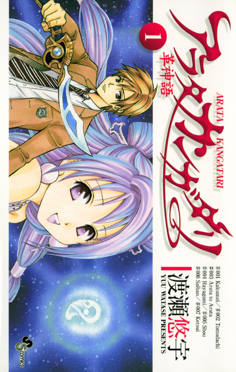
Arata the Legend: great example of how a story can have a compelling romance without that being the main subject of the story.

But this post so far focuses on stories that are mainly romantic. What about stories where romance is secondary? Same concept applies. You see this a lot in manga and anime. Take Arata the Legend by Yuu Watase (highly recommend, by the way), for example. The story revolves around a teenager named Arata who ends up in an alternate universe, where he becomes a messiah figure in the process. Arata ends up traveling around the universe with a band of magical warriors to gather magic items and save both worlds, while also dealing with his own fears and insecurities. These are the main outer and inner conflicts of the story. However, a sub-conflict in the story revolves around a love triangle between Arata and two girls who travel with him, a warrior girl and a healer. Both are attracted to Arata, Arata’s attracted to one of them, and because of various misunderstandings and past experiences, they’re unable to be honest with one another with their feelings, genuinely thinking that one might be better with the other or that one doesn’t like the other. This subplot is a major ongoing part of the story, and one of the reasons I always look forward to new volumes coming out (waiting on #25 since August last year).

As you can see, a story with a romance but no challenge to that romance is more often than not less exciting than a romance with challenges to it. The exceptions, in my experience at least, would be stories where the romance is a minor element in comparison to other issues in the story (the anime Code Geass definitely comes to mind in that aspect. Also highly recommend that one), but if that’s the case, then the romance probably isn’t a big part of why you’re into this story, right?

But when a story’s romance is a major aspect of why people would want to check the story out, having a conflict would definitely make it a more interesting aspect of the story. Otherwise, all you’ve got is an anime where you’re just watching and waiting for these two obviously-attracted-to-each-other people to take that first step and kiss each other and that’s about it.

I found out about this novel on Facebook, which was billed as a Lovecraft/Cthulhu Mythos-meets-YA sort of story, and wondered how that would work. When the opportunity came, I downloaded it onto my Kindle and started reading. And my, I have to say, I was pleasantly surprised by how much I enjoyed it.

Awoken follows Andromeda “Andi” Slate, an average teenager who isn’t to thrilled about living in Portsmouth, New Hampshire but deals with it with the help of her good friends. One night, she has a dream about seeing a giant tentacled monster and being rescued by a handsome youth. The next day, she and her friends get their hands on an infamous book of eldritch magic known as the Necronomicon, and do some reading from it. Within a day, a new teacher arrives at Andi’s school, as well as a strange new student who looks like the handsome youth she dreamed about. What happens next will not only change her life, but will decide the fate of the universe.

So if the handsome youth bit didn’t clue you in at all, yeah, there’s a pretty big romance aspect to this story, bigger than what I’m used to reading (especially in a Lovecraft-themed story). However, it’s a romance story between a human girl and a Great Old One (basically an ancient demon-god, if you don’t speak Lovecraft), one trying to balance the desire for the end of the world with his newborn desire for a human girl! I’ve never seen that before!* Romance isn’t something you normally associate with the Great Old Ones, who are notorious for seeing humans only as snacks (when they see them at all). It’s so weird, it kept me interested even though I don’t usually go for romance! Definitely one of the good points of the story.

So what were the other good points? Well, I liked Andi for the most part. Besides one or two problems, she was a very likable character, even when in the middle of an annoying teenage mood. The story was also very well-written, with very few typos and a distinct voice for Andi that kept me wanting to keep reading. I also liked how Elinsen made the works of Lovecraft accessible for her audience, who probably wouldn’t be big fans of Lovecraft and his Victorian-era speech patterns, though she manages to slip some of those words in, like cliquant and voltaic. Despite a few changes here and there, the Cthulhu Mythos is pretty much intact and treated with reverence, and the usual tropes that Lovecraft fans enjoy are there: cults, ancient beings, the idea that certain truths cause madness, Azathoth threatening to wake up, etc. The author also manages to slip in references to HP Lovecraft and his works (Portsmouth is secretly Innsmouth, Andi fears water, a reference to a racist writer from Rhode Island, Cthulhu’s relationships with the opposite godly sex, a cat, etc.), as well as references to Stephen King and even one reference to Supernatural that made me laugh out loud.

However, I did have some problems with the story. A major one was the male lead Riley (name based on a famous underwater city), and his relationship with Andi. Look, I know that in romance the asshole with a secret heart of gold is a popular trope (I’ve seen it in a few manga), but Riley is super-unlikable. And yeah, he’s secretly a terrible god who sees most humans as ants, but I can’t help but hate him as a protagonist. And his relationship with Andi is so abusive for a good chunk of the book. It’s supposed to come off that he’s protective of her, but doing things like commanding Andi to do things and intimidating her with his mood shifts just scream abusive creeper. What’s even worse is that Andi, once she falls for the guy, can’t extricate herself from him. It’s like an unhealthy obsession, to the point where she’d rather die or go completely mad rather than live without him (and that’s not teenage histrionics, she really feels that way at one point). It’s almost like she’s the ultimate worshipper for a Great Old One, and I just want to tell her that even taking out the god part, her relationship isn’t normal or healthy! How crazy is that?

I also wanted more from the main antagonist. We only see what she does in the name of her apocalypse, but I could’ve used more from her. Who was she really? Why did she do what she did? How did she become a worshipper of the Great Old Ones? I would have loved to see that explored a bit more in the story, and sadly we didn’t get that.

Ultimately though, Awoken is a different take on the Cthulhu Mythos, and I enjoyed myself despite the issues I had with the story. On a scale of 1 to 5, I give the novel a 3.2. If there was a sequel, I’d consider reading it (though four years after publication and no updates from the author on her social media since October 2013, I’d say that’s not going to happen). If this sounds like your sort of thing, take a dip into the madness and see for yourself.

Now if you need me, I’ll be playing Hide n Seek Across the Dimensions with Nyarlathotep. Hail Cthulhu, and I’ll see you around.

*Please be aware, I haven’t read all of Lovecraft’s bibliography, so if this does happen somewhere in his stories, I haven’t gotten to it yet. So don’t spoil it for me, okay?

Oh come on, did you think I wasn’t going to do this? It’s a tradition, and whether you like it or not, I’m doing it! So strap in, and let the villainous torture begin!

So if you don’t know, every June or so I like to rank the top ten villains in fiction that have really impressed/scared me. Villains are always a central part of horror stories, so it’s important to see what makes a villain memorable, or strong, or terrifying. What makes a good villain, in essence. Some years are easier than others to rank, but with each entry, there’s always something to notice with a villain.

Before we begin, let me remind all who read this that no villain from my own work, or any real life person, will make it on this list (otherwise this would just be political views and shout outs to my own characters). Also, SPOILERS!

Ready? Okay, here we go! #10-6!

#10: Tom Martin/Alex Whitman (Scream TV series)

Scream is a twisty slice of TV-horror awesomeness, and while not everyone loved its Halloween special, I certainly found it a fun break from the show’s normal format. One thing I really liked about the Halloween special was Alex Whitman, a rich young man whose parents died tragically when he was young and who strikes up a sweet romance with protagonist Emma Duvall. Or at least, that’s what we think at first. After a huge twist in which the suspect we thought is the new Brandon James Killer ends up dead, it’s revealed Alex Whitman is actually Tom Martin, a disturbed young man who witnessed his parents’ gruesome death as a child and was warped by all the attention relating to his survival. He sees Emma as a kindred soul, and tries to get close to her by any means, including murder.

What makes Tom a great villain is that he’s so sympathetic! Even after he’s revealed to be dangerous and out of his mind, we feel sorry for him, because his backstory is truly heartbreaking, and there was real chemistry between him and Emma. It’s very hard to make a despicable killer into a sympathetic character (believe me, I’ve experienced that struggle firsthand), and Scream did it really well. It’s a good character for the series to go out on.*

#9: Garrett Douglas (Teen Wolf season 6)

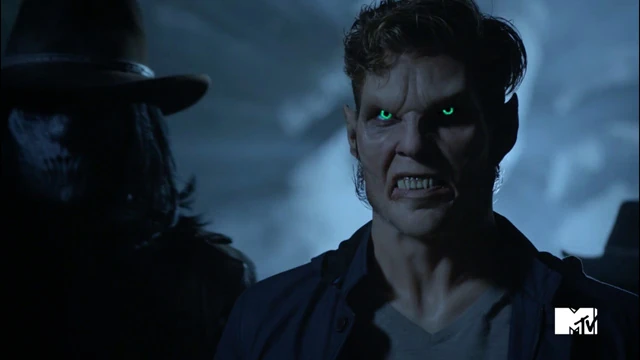
Teen Wolf has had many villains show up on this list, so it shouldn’t surprise anyone that they got one on this year’s list too. Garrett Douglas is a former captain in the SS–yes, the SS, as in the Nazis–who tried to control the ghostly Wild Hunt, supernatural beings who kidnap people and erase them from existence to replenish their numbers. His attempts to do that led to him being held captive for nearly seventy years by the Dread Doctors from season 5, but he escaped after the latter fell, and set out once again to put the Wild Hunt under his thumb. This time he very nearly succeeded, nearly turning the town of Beacon Hills into a ghost town in the process.

While the Wild Hunt were the main villains of the story arc, they were just an elemental force trying to replenish its numbers for survival. They looked scary and had terrifying powers, but they weren’t menacing or evil. Douglas, on the other hand, was a sadistic power-hungry madman, and he was willing to sacrifice whoever he needed to in order to accomplish his goals. That’s a villain right there. However, compared to other villains on this list and on the show, he’s not as intimidating, and he doesn’t rely on his own power, so he ranks rather low. Better luck next time, Teen Wolf. I have confidence in you.

#8: Amunet (The Mummy 2017 film)

I gave this movie a harsh rating in my review (read that HERE), but honestly Amunet was one of its saving graces. Played with convincing power by Sofia Boutella, Amunet is a powerful undead sorceress who made a deal with the god Set for power. Resurrected in the 21st century, she’s willing to sacrifice anyone in order to bring about an apocalypse and become Queen of the Damned (see what I did there?).

What makes her a great villain is that she’s so convincing! You really feel her rage, her lust, her desire for power. And then you see her power at work: she’s influencing Tom Cruise, using animals as weapons, turning people into obedient slaves with kisses or even just with an animal bite. She’s a force to be reckoned with, and proves that even if you have a bad movie, you can have a great villain.

#7: Kevin Wendell Crumb (Split)

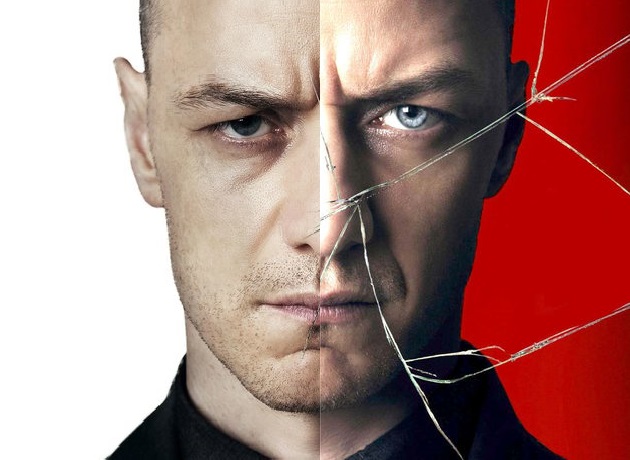
I’m not sure if this is one villain or 23 villains or what, but either way, they’re all here. A man with disassociative identity disorder, some of Kevin’s personalities go rogue and take over his psyche in order to bring out a new personality known as the Beast, who causes pain and suffering in the belief that such horrors purify. Kevin and each personality is played with amazing skill by James McAvoy, making each feels real and fully formed. But it’s his darker personalities, the ones that set out to cause destruction by kidnapping three teenage girls from a mall parking lot, that really scare you. You can feel their belief in their godlike Beast, and then when you inevitably see the Beast, he’s a powerful force that makes your heart beat from start to finish. Kevin and his personalities’ place on this list is well-deserved. Cannot wait to see him again in two years in Glass.

#6: The Shadow Kin (Class TV series)

Give it to the Whoniverse to come up with memorable villains. In Doctor Who‘s new spin-off Class, the Shadow Kin are beings made of fire and brimstone, who believe their existence in the universe is a cosmic mistake, as they cannot stand bright light and must travel as gas and shadows. In revenge, their goal is to eliminate all life from the universe by infecting the shadows of their enemies and then killing them. These villains appear throughout the show’s first season, at first only to kill off the refugees of one of their battles, but when their king becomes biologically linked to one of the show’s protagonist, it sets off a literal shadow war as the Shadow Kin battle for control of their king’s power and the planet Earth. Definitely a dangerous villain who kept us on the edge of our seats, wondering what would happen and where the Shadow Kin would appear next.


And that’s all for now, Followers of Fear. I’ll have #5-1 out soon. Until then, what did you think of the Top 10 so far? Do you have any favorite villains from this past year. Let’s discuss in the comments below.

*I’m not counting the upcoming third season, because they’re basically rebooting the story with new characters and setting. Um, WTF? You didn’t even wrap up the original story! You had loose threads leading up to the third season! And we know the third season is going to be the last season, so why change things up like that? Why not just wrap things up and let it be like that? TV execs! They’re sometimes the worst people to direct the courses of their own properties.

Life is rarely straightforward. That is a fact. People change, or their thoughts and feelings change, new paths open up in front of you, and your understanding of the world never fits in the box you want it to (that last one isn’t really relevant to what I’m going to talk about here, but I felt like stating it anyway). And my life and feelings have changed. I need a break from what I’m doing right now. I need to do something different if I’m to pursue my goals in life.

With that said, I need to shut down Rami Ungar the Writer. At least for a little while.

I’m kidding. But for a split second, you bought that. You did, and it worried you for a little bit.

No, what I really mean is that I need to take a break from Full Circle. A very long break.

You see, I’ve been working on that novel since November, eight months in total. And I’ve only taken some occasional breaks, each working on a couple of short stories, and then getting back into it. And you know what? I’m a little burnt out. Normally by this time, I’m already finished with the first draft, but I’m only a little over the halfway point. And when I think of getting into the next chapter, I’m filled with dread, because it’s likely going to be a long chapter, and I’ve been dealing with this story for eight months straight, and it has not been easy at times.

All writers get like this. Yeah, we do. There are times when we’ve devoted so much energy to a story, that we need a break if we’re to give it more and give it the energy it needs. And honestly, I’m at that point. It’s nothing I did wrong or anyone else did wrong. There’s nothing big in my life that’s making me super happy or super miserable, thus causing me to think, “I can’t work on finishing the Reborn City trilogy right now.” Nope, it’s just me needing some distance and the chance to work on something else. And I need a long something else. Because if I take on a project, and it only lasts a month at most, I won’t be ready to work on Full Circle again. I’d be ready to bang my head against a wall in frustration, but I wouldn’t be ready for FC again.

Which is why I have the perfect project:

Some of you may recall that during my last year of college, I wrote a novel called Rose as my thesis. The story was about a young woman with amnesia who starts transforming into a plant creature. And that may sound comical, but it’s actually pretty dark, exploring themes of dependence and abuse in romantic relationships, as well as how memory, truth, and falsehoods can shape not just our perceptions of others, but of ourselves. It was a challenging novel, to say the least, but I managed to get two drafts of it written between August 2014 and April 2015, and they turned out okay. I let it lie for a while when I was in Germany and during my job search, and tried working on it again after I moved into my new apartment and started my job. For a number of reasons, it didn’t go well. Mostly because I didn’t have a plan for editing it beyond, “Let’s sit down in front of the computer and see what happens.”

My new project: the third draft of Rose.

But since then, I figured out a plan to help me get along with editing in general (see my post on that on Self-Published Authors Helping Other Authors. It has a similar opening to this blog post). I’ve also had plenty of time to think about changes I’d like to make to the story, and to the characters, and I’ve really been itching to take a crack at it again. And I’m pretty sure that, once I get another draft of Rose done, I’d be ready to send this story to an editor, and then maybe to an agent or publishing house.

So starting very soon, I’ll be taking another dive into Rose. It probably won’t happen until after I get back from Boston, but after that and I’ve done all the travelogues and checked my new digital recorder for ghost voices, you can bet that I’ll be working on my new project with gusto. Until then, Followers of Fear, wish me luck as I work on a couple new blog posts, and as I prepare myself mentally and emotionally for what will hopefully be a very successful third draft and a very refreshing break.

Pleasant nightmares!