Archive for the ‘Review’ Category

Pet Semetary is considered one of His Royal Scariness Stephen King’s most terrifying novels, and one King has said he’d take back if he could due to the subject matter of child death in the book. Both it and its 1989 movie adaptation are classics, so people were both intrigued and a little wary when it was announced that the movie would be getting a remake. Then we got trailers that intrigued us and then made our heads scratch. I don’t need to state spoilers here that the little girl dies instead of the little boy this time, right? Well, too bad. But King was okay with the change, so we had to wait and wonder what the movie would be like when it came out.

Based on King’s novel, Pet Semetary revolves around the Creed family, who move into a house in the Maine countryside when father Louis Creed gets a job at a university clinic. He soon finds out that there’s a cemetery for animals on his property, and beyond it another burial ground that has to bring back anything buried in it, including his daughter’s cat. However, sometimes they come back very wrong. When the Creeds are affected by a terrible tragedy, Louis uses the burial ground to reverse the tragedy. But it only leads to an even bigger, more terrifying disaster.

Um…I wasn’t scared.

There’s plenty to like about this movie. It looks the part of a modern Stephen King movie, and they manage to bring the spirit of the novel, especially the feeling of a domino effect at work with the characters, into it. And for once, Jason Clarke, who plays Louis Creed, actually connects with me as an actor. Normally I don’t like him when I see him in something, but this time I really felt it. Every bit of grief, relief, or horror, resonated with my core. And most of the other principal cast members are great in their roles. Jete Laurence (who’s name, by the way, is a dance move in ballet, which I find fitting given her character’s love of ballet in the film) makes a sympathetic protagonist in particular, and later makes a welcome addition to the pantheon of evil kids out to get us.

However, there’s much about this film that left me feeling less than impressed. For one thing, many of the scares were jump scares. And as I’ve become fond of saying lately, jump scares are the cheapest form of terror in horror films. Once they’re done, the fear seeps out of you and you’re okay again. Even after one really effective jump scare, I was okay a minute later.

And then there’s the change from the original story: Ellie Creed, the elder Creed child, dies instead of toddler Gage, and ends up being the one resurrected. Hey, I’m cool with it. If there are no surprises, why bother remaking a film? But that’s the only real change that’s worthy of talking about. Afterwards, the film adheres rather closely to the novel, and even where it doesn’t, it’s pretty predictable. I would’ve preferred it if after this change, they decided to make more changes to the story and send it in different directions. I mean, if you’re going to have an older child, rather than a toddler, the source of terror, why not take advantage of that (especially since older children are much better at planning and being devious)? Go where we won’t expect it and give us the terror of not knowing what will happen next!

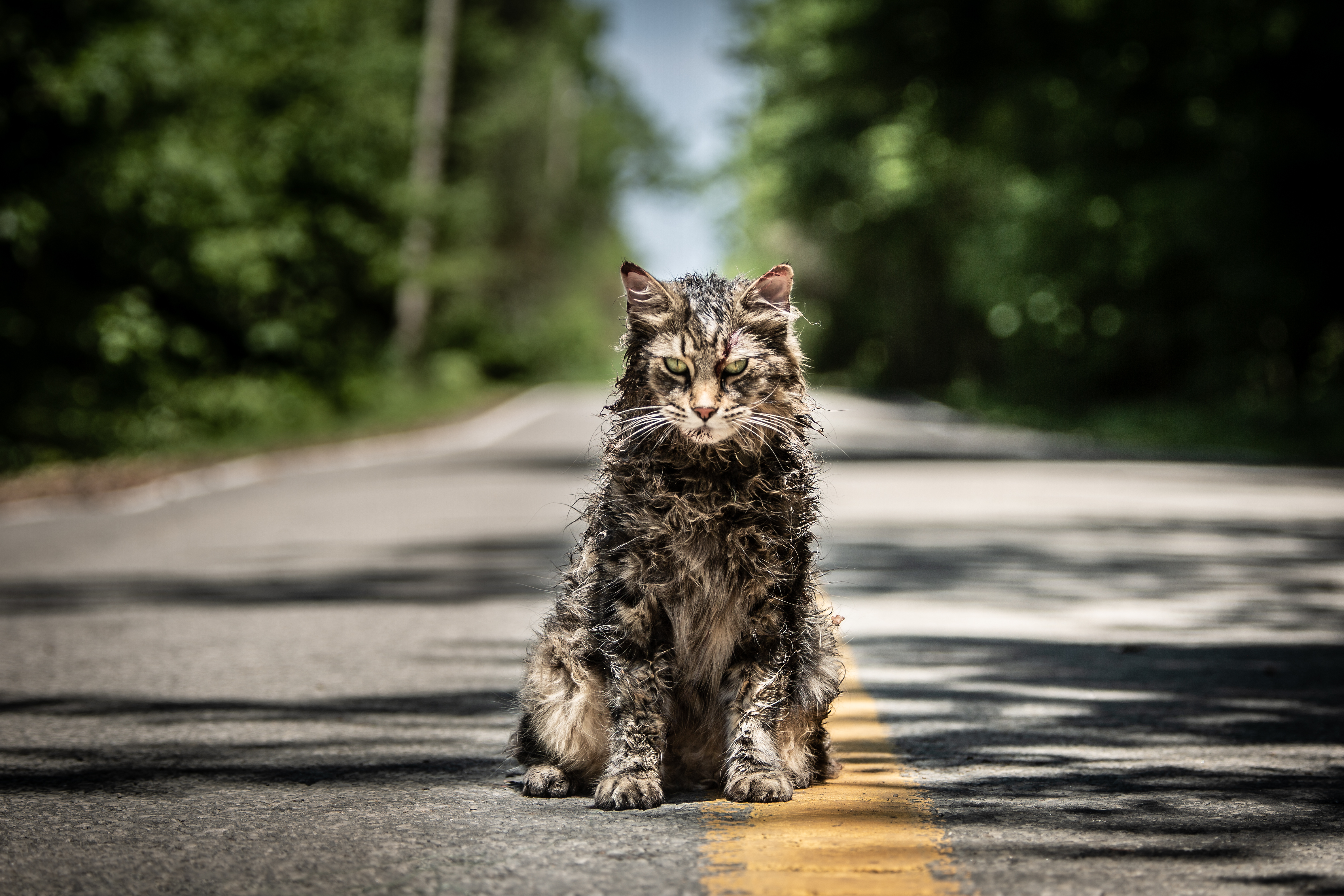
That look, like a raised eyebrow. It says my whole opinion of the film and the decisions made with it in one look.

I mean, I had to rewrite two-thirds of my novel to make it publishable, and I went in some different directions to make it work. The result was a much better and far more unpredictable thrill ride. So I know what I’m talking about.*

Finally, I felt Jon Lithgow as neighbor Jud Krendall was underused. The character in this film only existed for exposition. In the original novel and the 1989 film, his friendship with Louis feels real. Here, it’s forced in so the character can explain stuff (sans flashbacks too, by the way. I liked the use of those in the original film, why couldn’t they be in this film?). Between this film and Velvet Buzzsaw, I feel sorry for the guy. He’s been in bad roles in two films this year, and neither of them make great horror films.

Oh, one more thing: you can tell that cat is a puppet at certain points! It’s painfully obvious! Makes me miss Goose the Cat, who I couldn’t tell was a puppet at several points in Captain Marvel.

On a scale of 1 to 5, I’m giving 2019’s Pet Semetary a 2 out of 5. Perhaps it’s trying to keep the film under two hours and not alienate Stephen King purists, but in all honesty, I would’ve preferred another twenty minutes or more and some new directions for the story. As it is, the film is going to serve a reminder that not all the adaptations in the current Stephen King renaissance will be gems.

*Speaking of which, I’m still looking for advanced readers for my upcoming novel Rose. The story, a fantasy-horror novel, follows a young woman who starts turning into a plant creature (and that’s just the start of her problems). In exchange for an early electronic copy, all I ask is that you consider posting a review on or after the novel’s release date. If you or somebody you know is interested, just send me an email at ramiungar@ramiungarthewriter.com.

It’s no secret that, along with horror, I’m a huge anime fan. In fact, I’ve dedicated posts to my love of Sailor Moon and to my favorite manga of all time, Red River. And because I wanted a change of pace, I figured I’d put out a list of some off the anime I’ve been enjoying lately or continue to enjoy years after I watch them. Along with Sailor Moon and Red River, these might be good places to start delving into what has become a worldwide phenomenon over the past several years. Or if you’re already a fan and just want something new to dive into, these could be good choices.

And of course, I’d love to hear from people who have already seen these series and enjoy them as much as I do.

So with all that said, let’s dive in. Here’s 8 anime I recommend.

1. Code Geass: Lelouch of the Rebellion
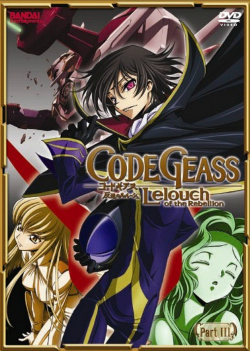
Another one of my favorite anime, this still influences me as much as Sailor Moon does. In a world where Britain is the Holy Britannian Empire and has conquered over a third of the world, an exiled Britannian prince in hiding in the recently-conquered Japan gains the power to control and influence people under certain circumstances. He dons a disguise and starts a rebellion against his father’s empire, while his best friend takes up arms against his rebel alter-ego on Britannia’s side.

An excellent show combining war, chess-level battle strategy, political intrigue, romance, high school drama, and giant robots. All in a cool two seasons that have spawned several mangas, games, a movie series, and even a new season coming out later this year (I will catch it as soon as I catch the movies, because apparently this season is a direct sequel to them). This is not a series to be missed, believe me.

2. Miss Kobayashi’s Dragon Maid
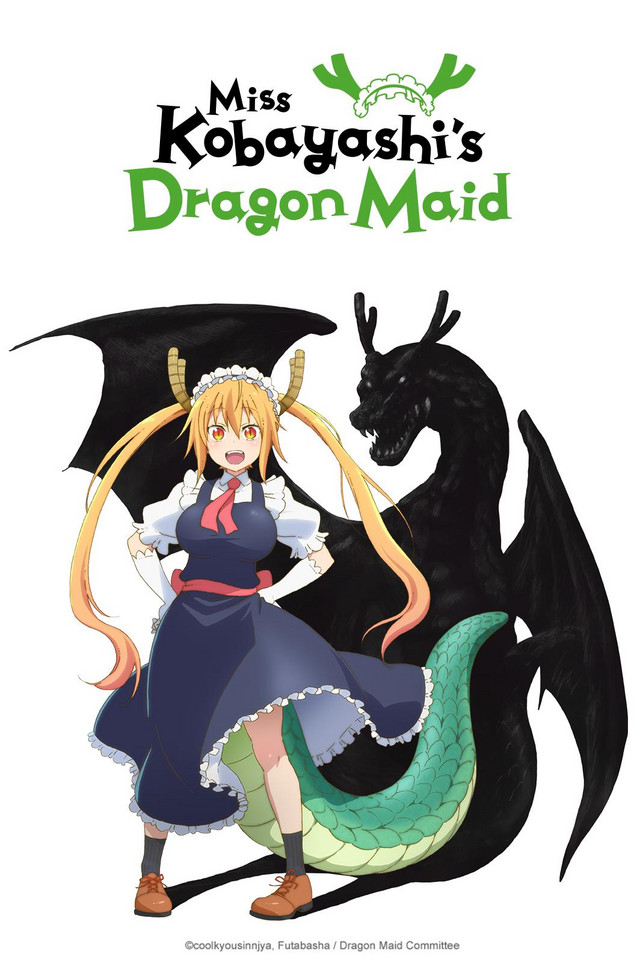
A programmer by the name of Kobayashi (first name never mentioned) gets drunk one night, goes into the mountains, and stumbles across a dragon. She pulls a sword out of the dragon’s back, saving its life. The next day the dragon appears at Kobayashi’s apartment as a human girl to become her maid. Hijinks ensue.

This is one of the most popular animes out there right now, and it’s only thirteen episodes long! It’s just a silly fish-out-of-water story with dragons, but goddammit it is fun. They’re hilarious and heartwarming characters, learning to get along with this world and have a good time. I sometimes just watch some of my favorite episodes because they make me relaxed and lift up my mood. I highly recommend to anyone looking for a fun and laidback series with lots of laughs.

And it’s worth a watch just for the “How to Tame Your Dragon” joke in episode 2 (only available in the English dub).

3. Zombie Land Saga

A teenage girl named Sakura Minamoto dies in a car crash after she leaves for school one day. Ten years later she’s resurrected as a zombie, her mind and personality intact but her memories lost. That is crazy enough, but then the guy who resurrected her, a weirdo named Kotaro Tatsumi, informs her that she and six other zombie girls must form a pop idol group and become popular enough to somehow “save” the Japanese equivalent of the state of Idaho (sorry Idahoans, but the only time I ever hear anything out of your state is when there’s a presidential election). All while keeping their identities as zombies a secret from the public.

Considered by many to be one of the best anime of 2018 (including yours truly), this anime is a satire making fun of the Japanese idol industry as a whole as well as the anime focusing on them (yeah, that’s a genre). It’s hilarious even if you’re not familiar with either industry or genre, and it’s heartwarming too, with a cast of characters you grow to love and root for by the third episode. And it has the best examples of a trans character and a disabled character I’ve ever seen in anime. That alone makes it truly special.

You should give it a watch just for the outta nowhere rap battle in episode 2.

4. Shimoneta: A Boring World in Which the Concept of a Dirty Joke Doesn’t Exist
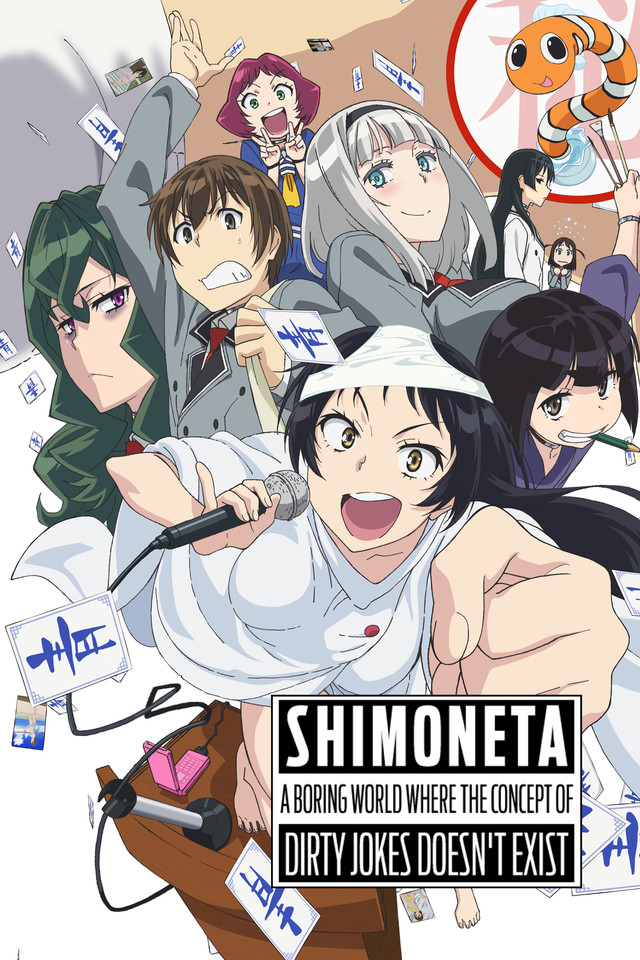
You know how there are people who believe if pornography and swearing were banned by law and sex education highly regulated, a more pure society would arise and people would naturally become better? Imagine if technology got to the point where that was enforceable and Japan somehow tried to make this happen. That’s the concept of Shimoneta, which follows a young man who wants nothing more than to be a moral, upright citizen and distance himself from his father, who was jailed for protesting the government’s efforts to over-regulate sex education and sexual content. Too bad he gets wrapped up with a classmate of his who is secretly a “dirty terrorist” and wants to decriminalize potty mouths and sexual content in our everyday media, and ends up founding an organization with her.

It’s a brilliant thought experiment on the part of the anime, and gives both sides of the argument, as well as what happens when either side becomes too extreme, a fair hearing. Of course, being anime it does it with as many dirty jokes as possible, to the point I’m surprised my floor isn’t covered in dirt whenever I watch it, but it’s still a brilliant anime. If you want a raunchy comedy with brains behind it, Shimoneta may be for you.

5. That Time I Got Reincarnated as a Slime

One of the latest entries in the isekai genre,* a 37-year-old businessman is stabbed to death after a mugging gone wrong, and ends up being reincarnated in a world out of a fantasy game. The thing is, he’s been reincarnated as a slime monster. Which normally would suck, but he soon finds himself becoming a protector for the many peoples living in the area he reincarnated in and taking on several foes with his unique powers. Within the span of a few episodes, this slime, renamed Rimuru Tempest, will become a great player to the events of his new world.

This anime has recently wrapped its first season, and a second season is already ordered for next year. Not hard to see why, with great animation/visuals, and relatable characters, especially Rimuru who is kind and funny and makes being a ball of slime look desirable. All set in a rich world filled with a variety of creatures with unique abilities and cultures. And my God, I think the society Rimuru creates should be the model for every community in the world who wants to make coexistence between different groups a thing. I’m kind of jealous.

6. The Rising of the Shield Hero

A darker isekai than the last entry, this is considered one of the most controversial anime in recent years (and its first season still isn’t over). A young man is transported to another world with three other teens to become the legendary four heroes who will save this world from Waves, invasions of terrible monsters bent on destroying the world. Problem is, he gets to be the Shield Hero, which compared to Sword, Spear and Arrow isn’t as cool. As if that weren’t bad enough, soon after arriving in this new world, he is betrayed and finds himself losing all his money, dignity and respect, even from the other three heroes. Alone, unable to trust anyone and still required to go save the world, he ends up buying a slave named Raphtalia to help him in his missions, and sets out to destroy the Waves. At the same time though, will he find a way to redeem himself and find hope again?

As I said, this is one of the most controversial anime of recent years, due in part to how the protagonist is betrayed (I won’t go into why here, you’ll have to watch the first episode and decide for yourself if you want to go further afterwards). However, I will say that besides that, it is a great story of someone going against impossible odds and trying to find hope again. I look forward to every Wednesday when a new episode comes out, and will be waiting eagerly for the next twelve or thirteen on the way.

7. My Hime

Also known as Mai-Hime, this is from the same studio that brought us Code Geass. A teen girl and her sickly younger brother go to an exclusive boarding school, only to find out that the girl is a Hime, one of thirteen girls selected to participate in a ritual that occurs in the area around the school every couple centuries. Armed with fire magic and a dragon named Kagutsuchi, she must fight off terrible monsters or risk losing all she cares for. But there’s a secret plot afoot at the school involving the Hime, and if she isn’t careful, the teen girl will be the latest victim to fall prey to the ritual’s dark purpose.

I own this series on DVD, and still break it out every couple of years. It takes what seems to be a lighthearted story and expertly adds darker elements over time, drawing us in to the plot as well as into the lives of these characters. I’d give it a try if I were you.

8. My Otome

A spin-off/sequel to My Hime (it’s heavily hinted the events of My Hime cause the events of My Otome), a teen girl goes to a famous school for Otome, women who use nanotechnology to become superpowered warriors and keep wars at bay by working directly for the rulers of different nations. The girl goes there hoping to become an Otome and find out who her mother, a former Otome, was. While there, she makes friends, falls in love, and becomes embroiled in a plot to take over not just the country the school is located in, but the whole world.

This anime features a lot of characters from the original anime (possibly reincarnated after several centuries), and a less cosmic/Apocalypse-themed plot, but at the same time allows these new characters to shine and has the same expert storytelling as the previous series. If you like My Hime, definitely check out My Otome.

Well, that’s eight anime I recommend. Thanks for sticking with me through this long article. But tell me, which anime peaked your interest? Have you seen any of the above-mentioned shows? What were your thoughts? And what would you recommend seeing? Let’s discuss.

And if you like anime and horror, maybe consider becoming an advanced reader for my upcoming novel Rose, about a young woman who starts turning into a plant creature (and that’s just the start of her problems). The concept itself is influenced by anime and my love of the medium, and I think it shows. If this at all interests you, send an email to ramiungar@ramiungarthewriter.com and I’ll put you on the list. Thanks, and I look forward to hearing from you.

*For those unaware, isekai stories are about people from our world who end up in alternate worlds or dimensions with strong fantasy or sci-fi elements. They often end up becoming chosen heroes, going on quests, or otherwise becoming central to the events of the world they’re in. Sometimes these worlds are real life versions of video games the protagonist is playing prior to changing dimensions, is itself a video game, or has some video game elements. It’s one of the most popular genres out there right now. The more you know.

I wasn’t able to catch Get Out when it was in theaters, and by the time I watched it on DVD, so much time had passed I didn’t feel like writing a post with my thought. To sum up said thoughts, I thought it was a creepy, atmospheric film that openly explored racial attitudes among Americans, though I felt the main character was less a fully realized character and more of a vehicle for the audience to experience the movie through. So when I heard about Us, I was very intrigued. And then I saw that first trailer. And I knew I had to see what Jordan Peele had cooked up this time. Today, my sister and I went for an early showing, eager to see what people were talking about.

To say the least, the film was surreal. Like Peele was channeling Stephen King when he was writing The Dark Half and created a visual twist on the concept. And it works for the most part.

Us follows Adelaide, played by Lupita Nyong’o, a mother and former ballerina who goes up with her husband Gabe, daughter Zora and son Jason to a vacation home that Adelaide stayed at as a kid in 1986, when she experienced a traumatic episode. That night though, they’re attacked by the Tethered, twisted, animalistic doppelgangers of themselves that seek to murder Adelaide and her family. Thus begins a trial for the family to not only survive, but to find out why this is happening to them.

From the get-go, this is a strange and eerie film. It combines storytelling with atmosphere, music (seriously, the part music plays in this film cannot be underestimated), and action in order to create an intense experience. At some points we were so on edge, a woman sneezing a couple rows behind us caused twenty people to jump out of their seats! And that includes me and my sister.

And the amount of symbolism in this film can’t be understated. A lot of details go into this film that are meant to make you examine the imagery and ideas being presented. From actual twins, symmetry and patterns in objects and pictures, the Bible phrase Jeremiah 11:11, rabbits,* and so much more. All to get you thinking on these themes of identity, duality, being an American, socioeconomics, creative expression, and so much more. I won’t go into what it all means–I’m sure there are bloggers and YouTubers who will do a better job of that than I could–but it will leave you thinking for hours after you leave the theater.

I will take a moment just to say that I think the son character is one big reference to the Friday the 13th franchise. This is mainly because his name is Jason and he wears a mask throughout a good portion of the film for some reason, but there’s plenty in the film I could point to that backs that assertion up. I won’t because I don’t want to spoil anything.

If there’s one thing I didn’t care for, it was the humor in film. Not that it was terrible, but after the main plot of the film kicks into gear, I found how much of it there was, most of it coming from family patriarch Gabe (played with plenty of love by Nyong’o’s Black Panther costar Winston Duke) distracting. Like, there’s this one scene where the family is discussing what to do in light of what they’ve experienced, and they make a series of Home Alone jokes! Takes you right out of the tense, creepy mood.

Then again, this is from Jordan Peele, who’s still primarily known as a comedian. Humor should be expected. But at a certain point, I just would like it if was toned down a bit. That may just be my quirk, but it’s how I feel.

All in all though, Us is a true success for Peele. On a scale of 1 to 5, I’m giving it a 4.6.  Unsettling, trippy, and memorable, Us will stay with you for hours after you see it. I have no doubt that with time, it’ll be seen as one of the best horror films of 2019, and maybe the first great one of 2019 as well. Take a breath, jump in, and see the madness yourself.


And while I still have your attention, I’m still looking for eARC readers for my novel Rose, about a young woman who starts turning into a plant creature (and that’s just the start of her problems). If you would like to get an advanced copy, all you have to do is send me an email at ramiungar@ramiungarthewriter.com. I only ask that you consider leaving a review on or after the release date. Thanks, and I look forward to hearing from you!

*Fun fact: rabbits are capable of a much wider range of beneficial mutations when they reproduce that cousins or even siblings can mate with each other and still produce a healthy and genetically diverse brood. Take that how you will, but I have thoughts on how that plays into the film.

Greta follows Chloe Grace Moretz as Frankie, a young woman living in New York who finds a handbag on the subway on the way home from work. She brings the bag to its owner, Greta Hadig (Isabelle Huppert), a French widow living alone. The two women strike up an unlikely friendship and find comfort in each other’s company. That is, until Frankie finds out Greta is hiding some terrible secrets, and her relationship with the older woman takes a very dark turn.

The best part of this film is its lead actresses. I’ve always loved Chloe Grace Moretz. She’s a great actress who truly embodies whatever role she inhabits, be it a vigilante or Carrie White in the better movie adaptation of Stephen King’s Carrie (don’t @ me, Sissy Spacek/Piper Laurie fans). Greta is no exception, with Moretz really coming across as this young woman who’s kind and a little vulnerable, but also at the same time has a bit of fight in her. And Isabelle Huppert’s Greta is plenty creepy. She’s no Annie Wilkes, but she can go from sweet and grandmotherly to cruel and sociopathic at the flip of a switch. it’s a great change.

And Maika Monroe from It Follows has a supporting role in the film! Good to see her again, I haven’t seen her in anything since that film (probably my fault more than hers). She’s great as the best friend who’s seems shallow on the surface but has a deeper, badass side to her.

However, the film isn’t exactly a thrilling psychological slow burn. We’ve seen this sort of story before, and that makes it predictable. By the last third or so, I could predict what was going to happen minutes before it occurred. And while there are some tense moments, they’re too few and far-between to create a gripping atmosphere. Couple that with an unnecessary and boring dream sequence, and the film’s quality really goes down.

On the whole, I’m giving Greta a 2.8 on a scale of 1 to 5. The talent is there, and God do they try to make it work, but an obvious plot and lack of actual terror make this a forgettable entry into the thriller genre. Which is a shame, as the director was the guy who gave us Interview with the Vampire in 1994 and as I said, Moretz is the superior Carrie in the superior adaptation. But hey, every now and then you strike out, am I right?

Today I went to the movies for a double feature. The first film was the new Alita: Battle Angel (for my thoughts on that, check my Twitter feed). The other was the sequel to 2017’s hit horror film Happy Death Day (see my review of that here). Plenty of people who liked the first film, including myself, wondered if the sequel could live up to the fun and batshit insanity of the original. And I think they did a decent job.

Happy Death Day 2U picks up almost immediately after the end of the first film, with protagonist Tree and boyfriend Carter finding out Carter’s roommate Ryan is now in a murder-filled time loop of his own. They discover the source of the time loop, but in the process of trying to fix it, Tree is sent into an alternate timeline where things are quite different, and where she’s stuck in the loop again. And if she doesn’t solve this loop and find a way back to her timeline, things will get really messy.

As one would expect, this film does take a lot of cues from the first film, which takes a lot of cues from Groundhog Day and other time-loop stories. So people who were expecting something different will be disappointed (though how they could expect something different is beyond me). The stakes are raised this time though, because Tree has to protect not just her own life, but has to save other lives along with other tasks in order to get back to her life as she knows it. There’s also the added dilemma of whether Tree wants to go back to her original timeline, as the new one has some perks along with some downsides (you’ll see what I mean if you decide to see the film). The sequel is also more comedic than the original, which I was able to deal with even though I prefer more horror in my films. And if you wanted an explanation of why the time loops are occurring, this film does provide it.

That being said, the decreased amount of horror may turn off some viewers. And the sci-fi explanations for why the time loops are occurring may confuse some people, especially those who barely passed high school physics. Hell, even I was confused by the explanations, and I’m usually good with this stuff. I understood Inception and Donnie Darko on the first go-rounds, so you know they must’ve really made it confusing here!

But if you look at the whole package, Happy Death Day 2U is, while not as good as the original, a good successor. On a scale of 1 to 5, I’ll give it a 4.2. It’s a funny, crazy, bloody movie and if they made a third film (which, based on a mid-credits sequence, I think they will), I’d check it out.

That’s all for now, my Followers of Fear. If you need me, I’ll be editing. Until next time, pleasant nightmares!

This new film got some buzz after its trailer was released, with lots of people saying it could be scary as all get-out. That, and there aren’t many movies revolving around haunted artwork and/or the art world, so we thought it could be breaking some new ground. So I tuned in this evening. And I’m glad I had wine in the fridge, after what I just saw.

Velvet Buzzsaw follows tough art critic Mort Vandewalt, art agent Josephina, and her boss Rhodora Haze, who are considered the creme de la creme of the art elite circles or working on making that happen. One day, Josephina discovers her elderly neighbor has died, and then discovers he’s an artist of amazing talent, who also wanted all his artwork destroyed after his death. Jospehina decides to take the artwork and sell it alongside Rhodora, making them all very rich. However, several suspicious accidents and deaths occur, all occurring around the dead man’s art. Soon Mort, who has become obsessed with the dead man and his work, discovers some dark secrets around it. Secrets that are deadly in their power.

I’ve heard it said that contemporary art is about the idea behind the piece and its execution, rather than what the work portrays. If so, I think the idea here was a searing indictment of the elite art world in the form of a horror movie, but ooh, was the execution horribly botched.

Velvet Buzzsaw is only really a horror movie a third of the time. The other two-thirds, it seems to be either a slow-burn thriller about the dark side of the art world, or the film equivalent of those literary stories where characters go on personal journeys through their hundrum lives to find themselves/meaning in their lives/happiness. When it’s the third type, it’s actually pretty decent. If it were that kind of film, then we might get something Oscar-worthy. But then the film switches to slow-burn thriller, which is just kind of sub-par, all talk about cut-rate deals and how to screw everybody over (in more senses than one). And when it switches to horror, the rest of the movie has been so diluted that there’s no atmosphere or scares that the audience can be picked up.

I also found John Malkovich’s role in this film to be a total waste. He’s this tortured artist who kind of exits the film halfway through, and then we only see him in the credits, and it’s like…what? What was the point of this character? Along with Natalia Dyer’s Coco, which would’ve been a great perspective to see these events play out from if the character had been given more screen time, I’m just peeved.

If there was something about this film I liked, it was the cast. Jake Gyllenhaal, Zawe Ashton and Rene Russo do excellent jobs as the three main characters, Daveed Diggs of Hamilton fame has a role as an up-and-coming artist, which was cool. And there are some cool art pieces in the film, as well as some great bits of cinematography.

But taken all together, Velvet Buzzsaw is a 2 out of 5 at best. It’s inconsistent in tone, wastes some of its talent, and ultimately creates a film that’s stylistically memorable but otherwise forgettable. If the film had maybe found a tone to focus on and, if that chosen tone had been horror or horror-thriller, given the character of Coco more screen time instead of just using her as a sort of tragic comic relief, and had devoted time to building an atmosphere, then we might’ve had something here. But since the filmmakers didn’t go that route, it’s just a damn shame.

Well first off, I did order a hard copy of The Complete Works of HP Lovecraft. That should arrive by Thursday. In the meantime, now that I’ve finished reading his entire body of work,* I thought I’d take a moment to list my favorite stories of his work. Why? Because A) I want to, and B) despite the overuse of 18th century language and enough racism to make me want to punch the guy, there are some good stories here worth reading. And if anyone ever wanted to try HP Lovecraft but didn’t know where to start, and if they trust my reviews at all, I think this would be helpful.

So starting from Number 8 and working our way up, let’s go over my Top 8 HP Lovecraft Stories.

#8: The Lurking Fear

You ever go hiking or driving through a mountain range at night and expect something like Jason Voorhees to pop out? I have, and it’s enough to make you really question your decision to ever set foot in those areas. Such is the force behind The Lurking Fear, about a reporter who goes into the Catskill mountains to investigate reports of monster attacks on local villages, and comes across something much more sinister. It’s a story that takes advantage of its setting and using a monster unseen to create the sense of horror. And while the twist might be slightly predictable, it still does add to the sense of horror you feel reading it. Fans of the movie The Descent should especially like this one.


#7: Pickman’s Model

Art can both exhilarate and terrify, move people to tears and to action. And in some cases, it can even haunt us forever. Pickman’s Model follows an artist who becomes friends with the titular Richard Upton Pickman, an artist whose work tends to lean more towards the horrific, and how that art seems to have an effect on both the men and their environment. This is a scary story with a fun twist at the end that shows just how the world and art can play with each other and change each other in unexpected ways.

Also, I think if anyone wanted to update the setting to a high school art club and Pickman as an angsty teen, it would make a great student film. Someone please make that happen!


#6: Cool Air

Written during Lovecraft’s brief stay in New York City and considered by some to be one of his best stories from that period, Cool Air tells the literally chilling tale of a young man who becomes friends with a doctor living in the apartment above him who always keeps his apartment cold. The twist at the end of this story is also kind of predictable, but it’s got a great atmosphere and is engaging from beginning to end. Plus it’s one of the few times Lovecraft depicts non-white people in a positive light, which makes it worthy of a read in and of itself. Remember to read with a warm blanket handy.

The Colour out of Space

#5: The Colour out of Space

One of Lovecraft’s most memorable and beloved stories, this story about a crashed meteor and the strange colorful substance inside it that affects a farming family that can’t leave their old homestead has terrified generations of readers. It’s especially memorable for the unsettling atmosphere it creates and for being a great early example of the sub-genre of science-horror. I’d consider it perfect reading for Halloween and you’re in the mood for something creeping, agoraphobia-inducing, and just slightly weird.


#4: The Temple

This early Lovecraft story isn’t as well-known as some of his other works, but it’s a favorite of mine. When a WWI German submarine sinks a British sub, they start experiencing strange phenomena that slowly drives the crew members to the brink of sanity, as well as a place only seen in nightmares. Claustrophobic and full of just enough strange elements to make you feel very creeped out by the inexplicable nature of it all, it tends to stick in your mind once you read it. I hope someday there’s a big budget adaptation of the story, or even a small budget that maximizes atmosphere without excessive CGI. That would be the shit!

Or maybe it would just be shit, but I can dream, can’t I?


#3: The Call of Cthulhu

I bet many of you were wondering where this one would be on the list. The most famous of his stories and the one where the entity Lovecraft’s mythos is named after, it follows a professor who becomes aware of a dangerous, worldwide cult while going through his late uncle’s effects. Weaving its story slowly to make you really consider that this cult and its horrible god may not only be dangerous but very real, it’s endured for a reason. I would recommend this one to anyone looking to get the essence of Lovecraft in one story, as well as to check out the silent film adaptation from 2005, modeled to look out it came out around the same time as the story was published (though much better than your average silent film).

And remember, Ph’nglui mglaw’nafh Cthulhu R’lyeh wgah-nagl fhtagn.

Spelled that correctly the first time around! Yeah baby!

Shunned House

#2: Shunned House

This Gothic horror story follows two professors who investigate a house where every previous occupant has come to an unfortunate end and discover a terrible entity within. While not as well known as his more cosmic-horror works, this story absolutely entranced and terrified me while on a car ride home from Detroit in the summer of 2016. Blending a setting whose rot you can practically smell with a welcome twist on an old monster (let’s just say, no sparkling here), Shunned House used to be my favorite story prior to the #1 choice, and I would recommend it to any horror fan out there.

Also, I have an idea for a ballet based on this story. Yes, you’ve read that right, a ballet. And I would help in any way I can to bring that to life. BalletMet (or any other ballet company) email me. Let’s talk and make it happen.


#1: The Shadow over Innsmouth

I only read this story last week, but it immediately became my favorite of his work. A young man makes a side trip to a small fishing village in New England, and discovers that the strange townsfolk all share a terrible secret. Gothic, unnerving and with more action than your average Lovecraft story, it’s a great story about how the desire for prosperity can lead to damning consequences for both you and your descendants. If you want Lovecraft at his best, this is the story I’d recommend above all others. Definitely check it out.


That’s my top 8 Lovecraft stories. And while, as I’ve said before, his works don’t really age that well, there’s plenty to pick up from these stories for even causal horror fans. And if you do, I hope you–holy crap, a portal from another world just opened up in my apartment. Excuse me while I go greet an entity from another universe and keep it from either eating all of humanity or impregnating everyone in my apartment building, I’m not sure which (I’m a little rusty on this universe’s language).

Until next time my Followers of Fear, pleasant nightmares!

Have you read any of these stories? What did you think? What others would you put on this list?

*Well, the official canon, anyway. Lovecraft also did a lot of ghost-writing and collaborations that aren’t normally included in collections of his work. Considering Through the Gates of the Silver Key is one of them, I can see why.

It took me nearly three and a half years of on-and-off reading, but I’ve finally done it. Through wordy paragraphs full of outdated language, enough racism to make me want to punch a dude, and an increasing amount of multi-sided shapes and magical angles, I have finished reading the copy of The Complete Works of HP Lovecraft on my Kindle. And of course, after such a momentous occasion, there’s only three things I want to do: drink a beer; peruse hard copies of the same book; and blog about my thoughts on Lovecraft’s later work and its influence on the horror genre, as well as on my own writing. This is that last thing on my list.

So if you are unfamiliar with who Lovecraft is (and I find most people are), he was an early-20th century writer based in Providence, Rhode Island. While not very well-known during his lifetime, his creation of the sub-genre of cosmic horror has ensured that his work has lived on and influenced other horror creators and enthusiasts such as Stephen King, Alan Moore, Guillermo del Toro, and myself. What really appeals about this genre is the idea that the universe is a dark and uncaring place full of forces that have no care for humanity or other minor species in the cosmos and can destroy lives and civilizations (as well as usually having a vaguely fishy smell).

When you consider the dude was a sickly bundle of nerves who dealt with anxiety and depression his whole life, had a classist-type of racism where skin-color and social background were very important, was frustrated over his inability to finish his education, and felt more comfortable letter writing and staying in Providence than actually interacting with people and going to crowded places, it makes sense. And while his stories have each aged differently, there’s plenty you can get out of them, especially when it comes to the mechanics of cosmic horror.

This time around diving into his work, I finished out reading his work with some of the most famous of his latest work, which included At the Mountains of Madness (which was also the nickname for the summer camp I went to), The Shadow over Innsmouth, and The Shadow out of Time. By this point, Lovecraft was consciously trying to add scientific concepts to his work wherever he could, especially in Mountains of Madness and Shadow out of Time. Sometimes that works very well, such as in Mountains, but other times, like Through the Gates of the Silver Key, I just found myself scratching my head in confusion (not sure angles work like that, dude). You can also see that by this point, he’d really gotten a grasp over this fictional world of his, throwing casual references to numerous recurring elements in the course of a single story. For once in his life, he was comfortable with something.

Also, while the racism is still evident, it’s kind of mellowed out at this point. Not much, but enough that I don’t feel so uncomfortable reading during certain passages of his work. Progress, I guess.

So were any of these stories any good? Well, old HP’s work has always been hit and miss with me, but there were some good things here. At the Mountains of Madness, while not my favorite, did have a great premise and kept me engrossed for most of the story (he probably could’ve cut parts about the Elder Things’ history and city, though. That went on forever). And Shadow over Innsmouth is probably my new favorite Lovecraft story: it’s this freaky Gothic tale of a town whose citizens have basically sold their souls and their humanity for prosperity and long lives, and the one person who ends up upsetting that arrangement. I’d totally check it out if you’re interested in a different sort of Gothic horror story.

Elder Things from “The Mountains of Madness!” They’re not pleasant!

That being said, I was not a fan of Shadow out of Time. I know that one’s pretty beloved by his fans, but I just thought it was too wordy, to the point where I would look over entire sections and forget most of what I’d just read. The Thing on the Doorstep had an interesting premise, but I felt it wasn’t as scary as some of his other works. Dreams in the Witch House also had a great idea, but I think a couple of changes could’ve been made to improve it. And I’m never going to get back the hour I spent reading Through The Gates of the Silver Key. Seriously, only real enthusiasts should try that one, and only if they’re really sure about it.

Still, it was all worth the dive, in my opinion. I’ve learned a lot by reading the work of HP Lovecraft over these few years, and getting a grasp of why people still read him and write cosmic horror today. And I think over time, it could lead to me writing better stories. Hopefully. I’ll let you be the judges of that, though.

In the meantime though, I’m going to continue working on my own stories and start reading some work by an author who’s older than Lovecraft but somehow easier to understand. Who is that, you ask? The Bard of Stratford-upon-Avon, William Shakespeare.

That’s for all now, my Followers of Fear. I’ll hopefully have a new review for you guys soon. Until then, Hail Cthulhu and pleasant nightmares.


For my other examinations of HP Lovecraft’s work, check out Parts 1, 2, 3, and 4. Also, I highly recommend this video from the YouTube Channel Overly Sarcastic Productions. They look over Lovecraft and five of his most famous works with fun illustrations and hilarious commentary. Trust me, it’s worth a look.

After reading and really enjoying Sager’s first novel Final Girls, I was eager to check out his latest book, The Last Time I Lied, when I found out about it. It helped that the protagonist was a young woman with a dark past (my favorite kind of character to work with) and the story combined an old horror trope with some of the new thriller-type storytelling that we’ve seen in novels like Gone Girl and The Woman in the Window, as well as in Sager’s last book. What more could I ask for? Excited, I downloaded the audio book before the New Year, and started listening.

The Last Time I Lied follows Emma Davis, a New York City artist who is invited back to Camp Nightingale as an art instructor for its first summer in fifteen years. One problem: Fifteen years ago when Emma was a camper at Camp Nightingale, her three bunkmates went missing and were never found. This incident has haunted Emma all through her teens and adulthood, and she decides to go back to see if she can’t finally put the past to bed and maybe even find out what happened to her friends. Weaving between the past and the present, Emma arrives at camp and finds very little is as it seems, and gets caught up in a web of mystery, one with her old bunkmates at the center of it, and which threatens to entrap her and the current crop of campers inside.

One thing I loved about this story is that the camp setting and the camp reminded me of my own camper days. Yeah, my camp was co-ed and Jewish in nature and the one in the book is a secular all-girls camp, but the amount of swearing, the hormones and the differing personalities that sometimes get along and sometimes clash kind of brought me home. But beyond that, this novel is just as twisty as Final Girls was. Every moment you think you know what’s happening or what’s happened, the story throws you for a loop and introduces new information that makes you rethink everything. I was only able to guess a couple of those twists out of all of them, and given that I’m not normally very good at doing that for most mysteries, that’s impressive.

I also felt a lot of connection with Emma herself. She’s a very well-developed character, and I understood how the events of the past affected her in the present (I’ve been there too, though nowhere as severe). But you also see how caring she is, and how that caring makes her want to seek out the truth and to protect those around her. She’s a great example of a protagonist for this sort of story, and I hope I can learn from reading her story to write those sorts of characters in my own stories.

A few things did stick out for me with this story. Remember those twists I was able to guess? Well, at times said twists did feel a bit obvious, so the emotional response at their reveal wasn’t as strong as it could’ve been. At least for me. For others, it could be different. Also, there’s this subplot involving a relationship between Emma and another major character she has history with, not all of it good. And while that subplot did add some drama to the story, I didn’t like how it concluded. Without spoiling anything, after everything that occurs in the novel, I find the hints as to the direction the relationship may go in the future hard to believe.

But all in all, I really enjoyed The Last Time I Lied. It’s a twisty story with plenty of surprises and great characters that play off each other in all the best ways. On a scale of 1 to 5, I’m giving it a 4.3. Sign up and dive right in for a great thrill ride.

I’m looking forward to Sager’s next novel, Lock Every Door, when it comes out this summer. And if you read Final Girls or The Last Time I Lied, you will be too.

With the emergence of escape room experiences in 2007 and their rising popularity among the worldwide populace (hell, I have a sister who does them all the time with her boyfriend), it was probably inevitable that a film would be made based on them. Especially seeing as the concept isn’t exactly owned by any particular company or anything. Of course, a film like this would also be compared to the Saw films and Cube (the former I never liked, the latter I only heard of today). Are the comparisons valid? And is the film any good on its own?

Escape Room follows three individuals–quiet physics student Zoey, stock boy Ben, high-powered stockbroker Jason–as they are joined by three others–Army veteran Amanda, trucker Mike, and escape-room nut Danny–after being invited to attend a special escape room experience with a cash prize of ten-thousand dollars. Problem is, the escape rooms are designed to be able to actually kill people, and it will push the participants to the brink physically and mentally. And not all of them will make it out alive.

For starters, this film is very well-done visually. Every set is made to look as real as possible. Also, boxes are present throughout the film, reinforcing the film’s theme. The escape rooms themselves are very clever in their layout and their traps. The latter two, by the way, are where the film’s tension comes from, and the tension is strong. You’re always wondering, where the next trap will be triggered, what will it lead to. And when it does show, whoo-boy is it hard to look away while the characters try to save themselves and move onto the next room. Add a decent focus on showing who these characters are and how the rooms challenge them, and it’s easy to get drawn in.

Plus, no torture porn! I hated the first Saw film because I saw no point in all that excessive gore and torture, and haven’t seen the sequels because of it. Glad to see they didn’t go that route with Escape Room, though they easily could’ve.

The film does have a couple issues. While the characters are given enough time to develop on screen, the reveals of their traumatic pasts is told more than shown. And while telling might work in a novel, in a film it’s better to show. I also would’ve liked Nik Dodani’s character Danny to be given more screen time (though that might be because I saw myself and people I know in him). And the final scene of the movie does feel like it was tacked on with the hopes of generating a sequel (which I could see happening if the film does well, though the team behind it would have to really work to make the sequel as good or as tense as the original). You could’ve easily ended the film one scene before and with a slight tweak made it a perfect storybook ending.

But all in all, if you want a film involving puzzles and life-or-death situations but you prefer tension, character development and storytelling over gore and torture porn, this might be the film for you. On a scale of 1 to 5, I’m going to give Escape Room a solid 4. Leave the kids at home* and get ready for an armrest-clenching thriller.

*Seriously, leave the kids at home. One woman in the row behind me brought her four year old son and I heard him whispering (and possibly crying in fear) more than once during the film. Lady, what are you doing bringing a four year old to a PG-13 film that’s just a bit of blood and a few swear words short of an R rating? You want him to grow up traumatized? Either get a babysitter or wait six months for the film to hit DVD! You’ll survive if you don’t see the film because you have a kid who takes priority!