Posts Tagged ‘authors’

If you don’t know some of the acronyms I use on this blog, you’re probably going, “What the heck is this post about?” Don’t worry, I won’t leave you hanging.

So, as many of you know, some of my fellow Ohio horror writers and I formed a small press to publish an anthology written by Ohio horror writers. This anthology is called That Which Cannot Be Undone, or, TWCBU, and is made up of some of the best horror writers in Ohio, including Megan Hart, Tim Waggoner, Gary Braunbeck, Kealan Patrick Burke, Lucy Snyder, and Gwendolyn Kiste.

Oh, and this dude named Rami Ungar is part of the anthology. Have you heard of him? I think he’s written a few things.

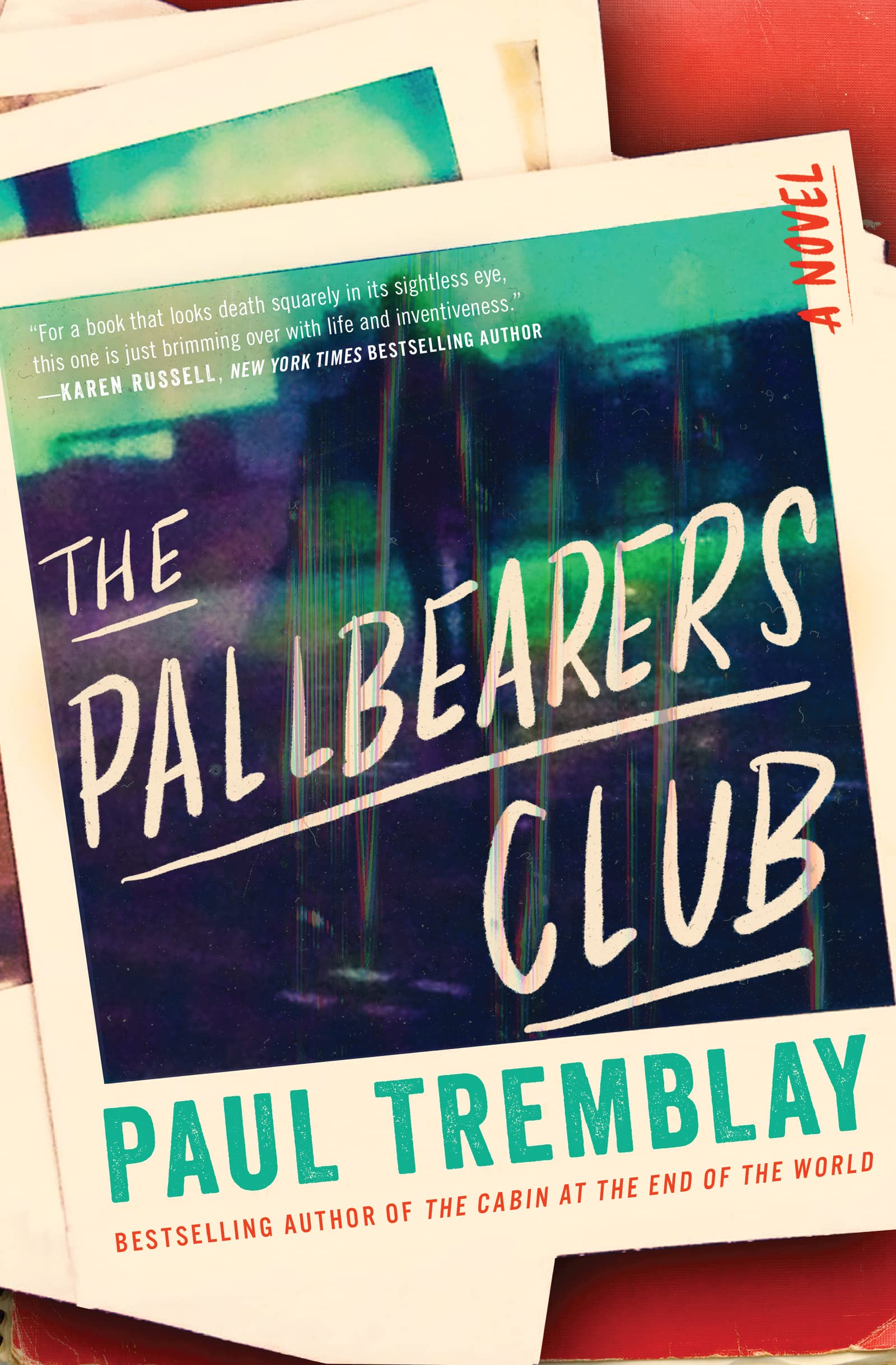
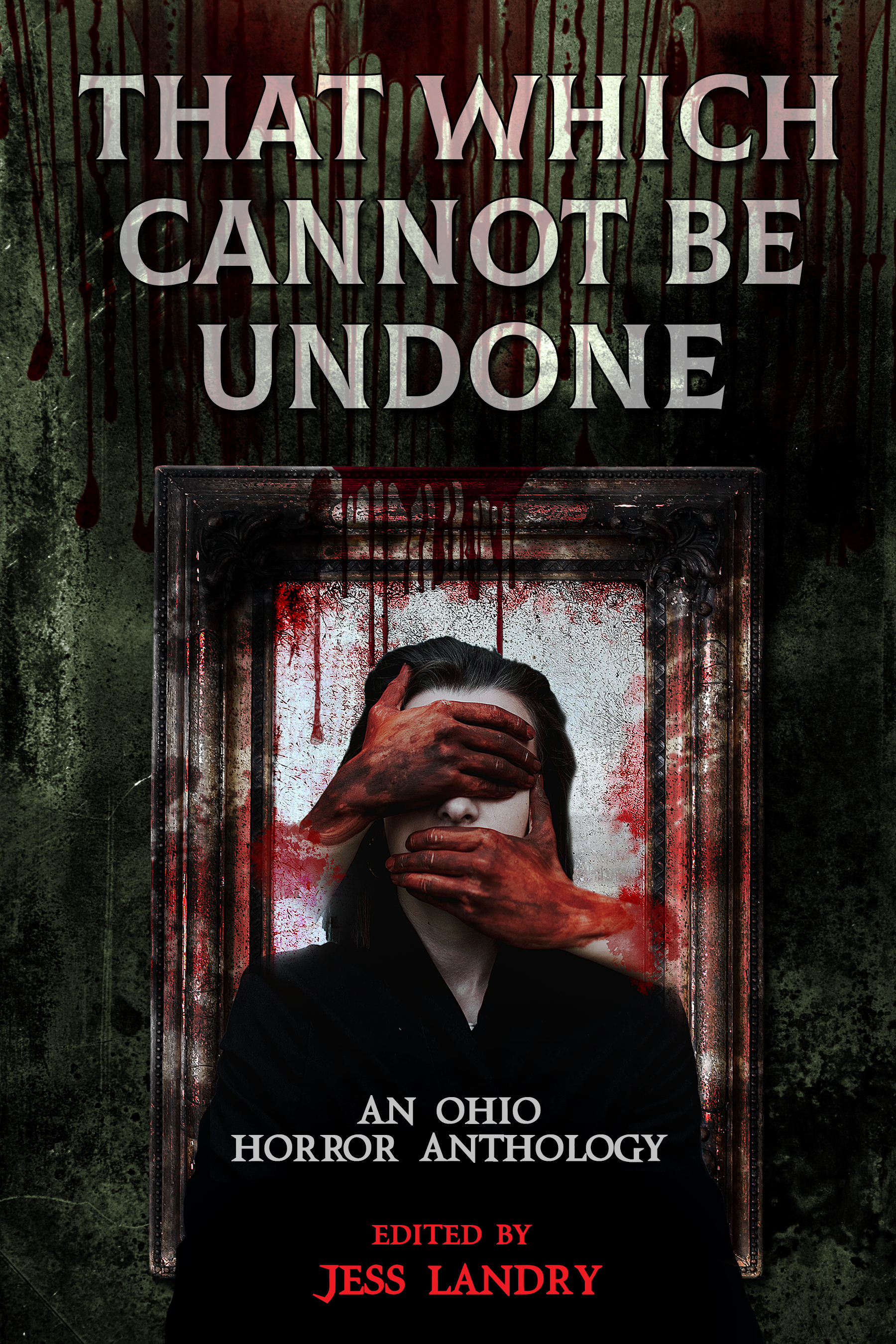
I’m pleased to announce that not only are all the stories finalized and approved for publication, but we have finalized the cover and are revealing it to the world. So, without further ado, let us not undo reverse course and reveal our new cover!

What do you think? The cover was designed by Greg Chapman, an Australian horror writer and artist (you can find his work on his website here), and we love what he’s done here. It kind of reminds me of the movie Oculus, and it just gives you the shivers! I think we’ll get plenty of readers just from the cover alone.

As for when it comes out, we’re currently on track for an October 2022 release. Once we’re ready to release, we’ll be sure to let everyone and their cousin know so you can get a copy if you so desire. And I hope you do. We put a lot of work into showing just how scary Ohio horror writers can be, and I bet once you read it, you’ll gain an interest in the writers from our state. An interest that cannot be undone.

Yes, I went there. Can you blame me?

On another note, the audio book for The Pure World Comes, or TPWC, was just released on Audible. If you’re not aware, this is my Gothic horror novel about a maid in Victorian England who goes to work for a mad scientist. Think Frankenstein and Crimson Peak had a baby together. The audio book came out last week, but because Audible is owned by Amazon and they dislike it when you self-publish using a service other than one they own, they held it for a week. But now it’s out, so I’m letting everyone know in case they were waiting.

I hope you take a listen to TPWC and if you do, I hope you’ll let me know what you think of it. Positive or negative, I love reader feedback and it helps me as a writer, as well as helping other readers/listeners.

That’s all for now, my Followers of Fear. I’ll check in again soon. Until next time, good night and pleasant nightmares!

The Pure World Comes: Amazon, Barnes & Noble, Apple Books, Kobo, Goodreads, Audible, Chirp, BingeBooks, LIbro.Fm, Storytel, Google Play

Hide in your homes and pray for mercy! I got an acceptance this weekend! “Trauma and Disillusionment Sometimes Go Hand in Hand,” AKA the dragon bat story, is going to be published! It’ll appear in this year’s upcoming Ink Stains anthology from Dark Alley Press!

So, a little background for those of you who weren’t reading this blog last year. About a year ago, I posted on my social media about “releasing the dragon bats!” No reason, I just like to post weird stuff on my social media feeds to remind people that I love the scary and the macabre. But apparently this caught the eye of my friend, fellow author and Follower of Fear Iseult Murphy (you can check out her blog here), who ended up creating some fan art of these dragon bats. Here’s the art she drew.

Pretty neat, right? These were my first pieces of fan art ever, and I absolutely loved it! And I really wanted to make a story about these dragon bats now that they had art based on them. Which I did: “Disillusionment and Trauma Sometimes Go Hand in Hand,” a novelette about a teen girl who gets wrapped up in a revenge plot involving calling on some dangerous supernatural forces.
I had a blast writing the story, but was worried that I’d be able to find it a home. There are more publications accepting novelettes now, but it’s still hard to find homes for them. But I kept plugging away and submitting, and lo and behold, it’s found a home!

And what a home it is! Ink Stains: A Dark Fiction Literary Anthology used to be a twice-yearly anthology of horror and dark fiction that produced some great horror fiction, but stopped producing due to the pandemic. Now it’s back for the first time since the pandemic began, and I’m so excited and honored to be part of the new edition.

As for when you can expect to read “Disillusionment and Trauma,” as well as the rest of the stories in the latest edition of Ink Stains, it appears to be on track for an October release. As soon as I have news, you can expect me to post about it. Or, you can follow Dark Alley Press on their website and Facebook, as well as their parent company, Vagabondage Press, on Twitter.

Anyway, I want to thank N. Apythia Morges and the team at Dark Alley Press for accepting my story, and I can’t wait to be part of this amazing anthology. I also want to thank Iseult Murphy, who inspired this story and who helped me polish it up for publication. And I want to thank you, my Followers of Fear, for always supporting me and my stories. I hope you enjoy this one as much as you’ve enjoyed my stories.

Until next time, my Followers of Fear, good night, pleasant nightmares, and run! I’ve just released some actual dragon bats! And they’re vicious carnivores.

In his latest collection, Junji Ito contains four short horror manga for us to enjoy. Surprisingly, none of them are named “The Liminal Zone,” which is unusual for his collections.

That’s it. That’s the summary of the book.

So, as you all know, Ito-sensei’s work can be really hit-or-miss with me. Some of it, like Remina or Uzumaki, are masterpieces and I feel should be read by horror lovers everywhere. Others, like Smashed or Fragment of Horror, didn’t make that big an impact on me (though I think one of the short stories in the latter inspired one of the stories that’ll be in Hannah). This collection, for the most part, was a miss.

The first story, Weeping Woman Way, is about a couple who come across a professional mourner, affecting the woman in the couple. It is kind of eerie, but it kind of fell flat with me. Too much exposition and not enough focus on the horror, which I feel is a trend with the lesser of Ito’s stories.

The second, Madonna, was my favorite. Taking Catholic veneration of Jesus’s mother Mary to new extremes, the story takes place at an all-girls school where the principal’s wife dresses up as the Virgin Mary. As new student Maria Amano notices weird things occurring at the school, and the attentions of the principal and his wife become more than creepy, she finds herself wrapped up in a terrifying plot centered around the belief that the Virgin Mary will reincarnate one day.

As a cult story, I rather liked it and how it took Mary worship in a rather disturbing direction. I also like how Ito-sensei explored feminist themes in the story, like how many of the female characters equate acting passive and devoted to their god–the principal–to acting like Mary. Even the main character acts very passively and only takes action when her own life is threatened.

The one flaw with the story was that I would have liked a slightly different ending, but overall it’s easily the best story in the collection. I would love to see how a live-action horror adaptation would handle the story. It would likely be an improvement over that other horror movie about twisted Marian veneration that came out last year.

The third story, The Spirit Flow of Aokigahara, is Ito’s take on the famous “Suicide Forest” of Aokigahara, and I did not think it was possible to find a story on that subject I would hate more than 2016’s The Forest (see my review here). A terminally ill man and his girlfriend head to the forest to commit suicide and find a mysterious phenomenon involving ghosts and a mysterious cave. I really have no idea what was up with this story. It just seemed like Ito was throwing darts at a board and trying to see what plot points he could hit.

Though I do appreciate that it made fun of that idiot YouTuber who actually posted footage of a dead body on his channel by having another YouTuber experience something sanity ending.

The final story, Slumber, wasn’t half-bad. A guy believes that he’s been going out and killing people after he goes to sleep. It’s a decent psychological thriller with a nice twist. Plus, the art is especially gruesome.

All in all, this is one of Ito-sensei’s lesser collections, though there is material to enjoy. On a scale of 1 to 5, I’m going to give The Liminal Zone a 2.5 out of 5. If there was more or better material inside, the grade would have been better, but it is what it is. Read for Madonna and Slumber, but skip over the other two.

That’s all for now, my Followers of Fear. I’ll have some more posts out next week, believe me. So until next time, good night and pleasant nightmares!

Why do all my publishing anniversaries seem to happen around the same time this year? I swear, they were slightly more spread out last year.

Anyway, nine years ago, I published my first book, The Quiet Game: Five Tales to Chill Your Bones. It was a short collection of stories I worked on when I wasn’t in classes. I was just barely twenty years old, still very new to the world of professional writing and publishing, and very impatient. I saw plenty of writers who were getting success self-publishing their works (some of whom I’m still friends with and who read this blog on occasion), and decided to try it myself.

Honestly, I don’t know how I was able to get a book out. I made mistakes along the way, certainly, and they still show, such as the double “F” in the subtitle on the cover. (Honestly, I became fond of that error after time). But despite all that, this book has gotten plenty of love and some decent reviews over the years. In fact, just a few days ago, my friend, colleague and well-known Follower of Fear Iseult Murphy published a review on her blog. You can read the full review here.

But that’s not the only review The Quiet Game has received. Take a look here:

A good collection of horror shorts with variety and little repeating themes. At the end of each story, the author has a little explanation for them…All in all, it’s a worthwhile read and a good debut for the author. 

Zraitor, Goodreads

A collection of five varied stories that get stronger as the collection builds, with the final being my favorite. Though I fancy myself able to “solve” the stories before the reveals, there were several surprises here, especially the reveal in the Quiet Game and I’m Going to be the Next James Bond. I also liked that Rami pulled no punches with his characters. In one instance, an anti-semite for instances uses words that would be hard for any author to write -though are necessary to his character. There are other examples sprinkled throughout the stories that show Rami’s commitment to telling the story in the way it needs to be told. A good collection for a stormy night!

Joleene Naylor, author of the Amaranthine series, Amazon

5 wonderfully crafted tales! I purchased this as an eBook originally and put off reading it for quite a while, I really wish I hadn’t waited. Sometimes when one purchases a collection of short stories you expect some of them to be less entertaining or of lower quality than the others, but none of these disappoint. Well worth the money, especially considering after you read each story the author gives you creative insight into what inspired him to write each tale, which is really wonderful.

Jeff D, Amazon

As my first book, it warms my little demonic heart to know that people enjoyed it so much and left such kind words. And I’m hoping that by the time we reach the ten year anniversary, the book will continue to gain fans and will let me know what they think.

And speaking of which, if you would like to check out The Quiet Game, I’ll post links below. Will you face the evils of your own vices in the story Addict? Or will you shiver due to the dybbuk in Samson Weiss’s Curse? These and others are available in the collection, so why not check it out? It might scare you, and it’s a good book to read while you wait for Hannah and Other Stories to be released.

(Though honestly, I’d say that about any of my books.)

And if you like what you read, or don’t like it, please leave a review. Positive or negative, I love reader feedback and it helps me out in the long run. Plus, it lets other readers know whether or not they should check the book out.

Anyway, that’s all I have for now. I have to send some dybbuks after a Supreme Court justice or two, so I’ll sign off. Until next time, good night, happy reading, and pleasant nightmares!

The Quiet Game: Amazon, Barnes & Noble, iBooksSmashwords, and Kobo.

You know me by now. In addition to horror, I love Japanese culture, especially anime and manga. So I was very excited to hear that Alma Katsu was putting out a new historical horror novel that would draw heavily on the myth of the jorogumo, or the spider-woman. Add in a WWII backdrop and I knew I wanted to read it.

Following several story threads, The Fervor mainly focuses on Meiko Briggs, the Japanese wife of a white pilot off at war, and her daughter Aiko. They are kept in the Minidoka internment camp by the US government for fear that they are Japanese spies just because of their ancestry. And as awful as that is, it gets worse. A strange disease is moving through the camp, striking down internees and guards alike, making them aggressive, violent and paranoid. As this disease, known as “the fervor,” spreads beyond the camp, Meiko realizes that this disease isn’t just killing her fellow Japanese, but it may have its origins in both Japanese culture and her own personal history.

So, Katsu admits in an afterword that this novel is different from her past historical horrors. The story of a disease attacking Japanese during a wave of anti-Japanese sentiment in the USA isn’t just an artistic choice. This book was written during a wave of anti-Asian sentiment after conspiracy theorists started spreading the rumor that China deliberately released COVID-19 upon the world. And it shows in the novel’s focus on not the disease, but on the other contagions that were common during WWII: fear and hatred. The same contagions that lead to the Holocaust in Europe and which led to the internment of Japanese Americans in camps throughout the United States, two of the most shameful chapters of human history.

This novel, as Katsu says, is a mirror.

But, how is this mirror as a story?

As you can expect, the story is extremely well-researched. Katsu, who is half-Japanese herself, draws from the stories of many of her relatives to bring to life the internment camps. You really feel you’re at the camp at times, as well as to the rest of WWII America. She also juggles the many characters, their at times contradictory minds and personalities, and the plot threads like a master. At no point did I feel that any of these characters were being emphasized too much or neglected, and they eventually come together satisfactorily. My favorite character was young Aiko, who is a bit of an outsider in more ways than one, and goes through quite a bit to survive what occurs in the novel.

And while Katsu admits she plays a bit with the WWII timeline a bit, she also includes some people and things that readers might not know about. While a fictional portrayal, Minidoka was a real place and the version we see here is based on actual testimony, minus the pandemic, of course. Also, Archie Mitchell was a real person and the balloons that play a part in the novel are based on the Fu-Go balloons that were actually used by the Japanese (and which I don’t remember being taught in my college WWII classes).

That being said, there were some things that could have been better. While most of the novel did the mirroring of our own age without being too over-the-top or preachy, the final chapter feels a bit like an overdramatic or melodramatic finish. Coming after a climax I felt was anticlimactic, I felt the ending was a bit of a letdown after what had been a good read so far. And this is a small gripe, but I spent several chapters thinking Aiko was younger than she was. True, there were hints based on the flashbacks of her true age, but the way she was written, I was surprised when I read she was twelve.

On a scale of 1 to 5, I’m giving The Fervor by Alma Katsu an even 4. While the story could have been wrapped better, it was still a great read that was well told and did a good job reflecting both the shameful parts of our past and our present. Pick it up, give it a read and see for yourself.

And if you would like some more background on the novel, read my interview with Alma Katsu on The Fervor from February. I had a great time picking her brain on the novel.

You know, I’m only just realizing I forgot to give you guys a reminder about the Ohio Author Book Fair? I posted about it on Facebook and Twitter, but completely blanked on doing it here. Or was there just never a good opportunity? Whatever, I’m overdue for an update on what events I’ll be attending as an author and vendor later this year.

First, I’ll be at the West Virginia Penitentiary in Moundsville, West Virginia on Saturday, August 13th for the West Virginia Penitentiary Paracon. This will be the second haunted prison I’ll have the pleasure visiting and selling at, so I’m looking forward to going on a tour and then doing Tarot readings and meeting new readers! I wonder if I’ll meet another Avenger lookalike (still half-convinced that was Chris Hemsworth I saw at ParaPsyCon). And if you’re in the area, please stop by. You can buy tickets from the prison’s website here.

The following month, I’ll be joining fellow members of HWA Ohio for a group table at Mystics and Marvels on September 10th and 11th, 2022. This is a cool convention of Tarot readers, fortune tellers, entertainers, musicians, and, of course, authors. We’ll be located at the Franklin County Fairgrounds in Hilliard, Ohio, and we’ll be dressed in vintage clothing, so come by just to see that! You can find out more on their website.

And that’s all for now. Three are a few others in the works, but until they’ve gone from “in the works” to “official,” I’ll hold off on announcing them. And in order to avoid annoying you all, I’ll only post reminders for each event right before it occurs, rather than constantly doing so leading up to each event. Anyway, hope you can come to one of them! I would love to sign a copy of one of my books for you.*

That’s all for now, my Followers of Fear. I hope to have some good news later this week, so keep an eye out for a new post one of these days. Now, if anyone needs me, I’ll be working out and editing (not at the same time, though). Until next time, good night and pleasant nightmares.

*And if you can’t but still want to support me, my work is available from Amazon, Barnes & Noble, and other retailers. Please make sure to check them out and let me, as well as your fellow readers, know what you think!

Eight years, huh? I know I should say it feels like no time at all has passed or that it feels like a lot longer, but it does feel like eight years. Maybe it’s just what’s happened in the meantime that makes it feel like that.

Anyway, eight years ago I self-published a novel that was influenced by slasher films from the 1980s, thriller novels I was devouring at a book every three weeks, and the movie Taken. That book was Snake, which I pitch to people as “about a serial killer hunting mafia in New York City.” Here’s the full blurb from the back of the book:

How far will you go for love and revenge? When a young man’s girlfriend is kidnapped by the powerful Camerlengo Family, he becomes the Snake, a serial killer who takes his methods from the worst of the Russian mafia. Tracking down members of the Camerlengo Family one by one for clues, the Snake will go to any lengths to see the love of his life again…even if it means becoming a worse monster than any of the monsters he is hunting.

As far as my books go, this one has had the fewest readers. Maybe it’s because it’s around 500 pages, or the paperback’s price is higher than other books, or maybe people just don’t care for serial killers. I don’t know, but I think it’s a damn shame. I had a lot of fun writing this book and you can see it in the story. And my parents, who are not the type of readers who would lie to protect my feelings, have said this book is still the scariest thing I’ve written that they’ve read (my mom still won’t finish it).

On the bright side, I have noticed a slight uptick in readers for Snake lately. It’s nothing big, but based on the number of people who have expressed interest in the book at ParaPsyCon and the Ohio Author Book Fair and the number of sales lately, it has me hopeful. Maybe more people will show an interest in Snake from here on out. It would make me happy if they did.

Perhaps I’ll get more reviews like this one:

Rami Ungar makes a promise to (the reader) in all his writings: he WILL scare you, and if he does “his job is done.” Snake will scare you. I am a huge Stephen King fan, so this should give you some idea of my tolerance level for gore, death and mayhem – I was scared. Rami takes you into places you would never have believed possible, and manages to pull his hero (and eventually his heroine) out of them against all odds. If you like to be scared. If you LOVE to be scared. You should read this book.

Angela Misri, author of The Detective and the Spy

Anyway, if you are interested in reading Snake, I’ll include links below. And if you enjoy what you read, please leave me a review somewhere. Positive or negative, I love reader feedback, and helps other readers figure out whether or not they want to check out the book.

That’s all for now, my Followers of Fear (though I do have another post soon on the way). I’m off to enjoy myself. Or to sleep. At my age, they’re sometimes the same thing. Until next time, good night and pleasant nightmares!

Snake: Amazon US, Amazon UK, Amazon Canada, Barnes & Noble, iBooksSmashwords, and Kobo

Sarah Hans, author of Entomophobia

It’s always fun to talk to authors about their books and about what they’re working on. And today, I’ve got another author on, a friend of mine whose novel, Entomophobia, is only going to be around for a short while. So, to help her spread the word, I figured I’d bring her on the blog and pick her brains on her book.

I also bought a copy because Entomophobia just sounds really fun, and I love the idea of having a book that will only be available for a little while. The fact that it’s written by a friend made it extra special.

So, without further ado, Followers of Fear, let’s give it up for author, fellow HWA Ohio member, and my friend, Sarah Hans!

Rami Ungar: Welcome to the show, Sarah. Tell us about yourself.

Sarah Hans: I’m a public school teacher in my day job and I write mostly horror, but I also write science fiction, fantasy, and whatever else I can get paid for.

RU: How did you get into writing? And what exactly attracts you to the horror genre?

SH: I’ve been telling stories since before I could write. I found writing really tedious until the computer was invented, because my brain moves so much faster than my hand could keep up with a pen. Typing is much better! For a long time I wanted to be a science fiction author, because I love sci-fi and enjoy it so much, but every time I wrote something it would turn into horror, so I just leaned into that. Sometimes the genre chooses you!

RU: Tell us about your novel, Entomophobia. What is it about and what will readers enjoy about it?

SH: Entomophobia is about a woman in the middle of a contentious divorce and child custody battle who is cursed to turn into a bunch of insects. I hope readers enjoy seeing a very smart, determined woman who is down on her luck find strength within herself to keep going even when things seem impossibly terrible.

RU: A lot happens to your main character, Meri. Can you tell us a bit about her, what she’s dealing with and why readers will like her or want to follow her?

SH: Meri is extremely resilient. Her abusive husband is now getting custody of her daughter, she’s living with her awful mother, and now she’s got bugs coming out of her skin, but she’s not going to give up.

RU: I understand Entomophobia is only available for a short time. Can you explain why that is? Also, are you doing anything to keep it around longer?

SH: My publisher has closed her doors and the book will only be available through her until the end of the year. After that, I may self-publish it, because few publishers will reprint a book. I’ve never self-published before so it could be a fun new challenge!

RU: As someone with plenty of experience in that department, I’d be happy to give you any advice I can if you want it. Anyway, can you tell us about some of the other stories you’ve written and published?

SH: I have a collection called Dead Girls Don’t Love full of my short stories. Most people call them “quiet horror” because I don’t (usually) do a ton of gore. The horror is often psychological. I love to write from the point of view of the monster, or about people who become monsters. I also like to write feminist stories about the horror of living in an oppressive patriarchy. One of my best stories, “Tiny Teeth,” is available on Pseudopod episode 660 in both text and podcast format. I’m really proud of that one. It’ll be appearing in my next collection.

The cover of Entomophobia.

RU: What are some projects that you’re working on now or that you have coming up?

SH: I’m currently revising and tweaking a novella I just finished writing that’s about meth addicts hiding out in an abandoned asylum. I’m also about halfway through a historical horror novel about an identity thief who finds herself getting in way too deep.

RU: What is some advice you would give another writer, regardless of background or experience?

SH: It can be hard to give advice because there’s so much advice out there, and sometimes it’s conflicting! Some things I would say: Ask for what you want. Keep writing, submitting, revising, submitting. When you go to cons or interact online, don’t look to “network” and make contacts, be a real person, be genuine and honest. Most folks I’ve encountered in the writing community have been really kind, generous, and lovely, so be that in return. The opportunities will come—but you may have to wait for the world to be ready for your writing and be prepared for the day you’re finally a hit!

RU: Finally, if you were stuck on a desert island for a little while and could only take three books with you, what books would you pick?

SH: I’d want three books I’d never read before! Probably one young adult, one horror, and one romance.

RU: Solid choices. Thank you for being on the blog, Sarah. And best of luck with Entomophobia. I hope it gets plenty of new readers.

If you would like to get a copy of Entomophobia, you can purchase it in paperback and ebook from Amazon. And if you would like to connect with Sarah Hans, you can find her on her blog, SarahHans.com, as well as on Twitter, Instagram, and TikTok.

That’s all for now, my Followers of Fear. I hope you enjoyed this interview and are interested in checking out the book. Until next time, good night and pleasant nightmares!

Praise to the King in Yellow! I’ve got my first acceptance of the year! Even better, it’s a story I was having trouble finding a home for!

So, you’re probably all excited to hear what the story is about and when and where it’ll come out. “The Dedication of the High Priestess” is a story I first wrote back in winter after I got back from my vacation. The story follows a young ballet student named Anastasia “Annie” Hummel. She dreams of being a famous ballerina, and being selected as a model for a famous artist’s latest series of paintings seems like a great boost to her fledgling career. However, what actually happens is that Annie is awakened to her true destiny. A destiny that will change the course of her life, and the world. forever.

If you read my post about elevated horror the other day, you might realize from the description and my opening shout of praise that this is the ballerina-meets-the-King-in-Yellow story I mentioned. And yes, I realize it got accepted right after I mentioned trying to find it a home. Not sure if that counts as irony, but it is funny.

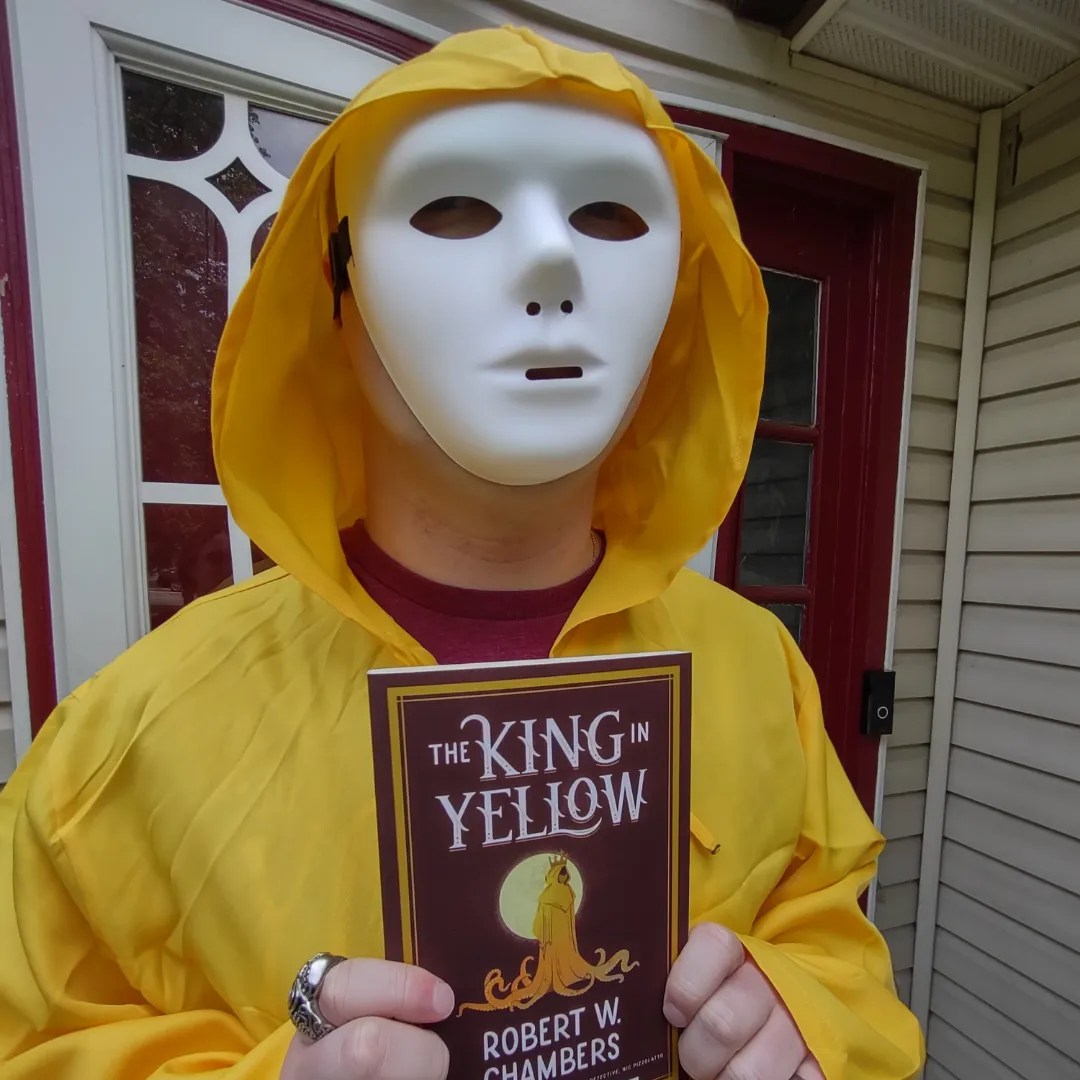
And if you’re wondering what this King in Yellow thing is, don’t worry, you’re not alone. Sadly, I think The King in Yellow is even less well-known than HP Lovecraft and the Cthulhu Mythos.* It’s a collection of short stories written in 1895 by Robert Chambers. Most (and the best) of the stories revolve not around the titular character, but around a play bearing the character’s name and which is said to be so twisted, reading the second act will drive you mad (or make you a servant of the King, depending on if you believe he’s a real entity).

The stories have proven influential, being beloved by Lovecraft and becoming partially integrated into the Cthulhu Mythos by later writers. If you would like to find out more, you can read my own blog post on the collection, which I wrote back when I first read the stories, or you can watch this awesome YouTube video on the collection. Or you can read the collection yourself, that’s a valid choice as well.

This is my copy of the collection. Seriously, you should check it out!

Anyway, my take on the stories and the character combines both elements from the collection, from what later writers have added, and adds ballet, because let’s face it, I’m a huge fan of ballet and I’m sad there aren’t more ballet-themed horror stories. As to how I use ballet in the story, you’ll have to wait till it’s out to discover that.

Speaking of which, “The Dedication of the High Priestess” will be published as an audio story by the horror podcast Tales to Terrify. This is a podcast where professional narrators read one or two short stories or short novelettes per episode, the goal of each story being to chill you silly. I listened to a couple of episodes a while back and thought it might be a good place for my story, so I sent it in. I’m so happy they agree.

As to when it comes out, all I can say at that point is that it’ll be some time in 2022. Yeah, that’s vague, but that’s just how it is sometimes. And anyway, the moment it is out, I’ll be sure to let you know so you can check it out yourself.

I want to thank Tales to Terrify for accepting my story and I can’t wait to hear what you guys do with it. I’m very proud of this one and I’m glad it was able to find an excellent home.

And that’s all for now, my Followers of Fear. I’ve got some other stuff cooking that I’ll be announcing soon, so keep an eye out for that. And I have dinner cooking, so I’ll keep an eye on that. Until next time, good night and pleasant nightmares.

*Which is a damn shame, because I think it’s better than Lovecraft in many ways, though I still like the stories the latter wrote.

Photo by Pedro Figueras on Pexels.com

I’ve heard this term thrown about a few times since January, first in the new Scream movie and most recently in an analysis of a horror film on YouTube. “Elevated horror.” And the speakers, whether in in the Scream movie or in the YouTube video, made it sound like it’s a recognized subgenre of horror with its own staple of tropes and trappings. Like slasher and its killers and gore, or Gothic with its ancient, diseased settings and corrupting influence.

The thing is, it isn’t. Elevated horror isn’t an actual subgenre of horror. I’ve consulted with dozens of writers on this (thank you, Twitter and the Horror Writers Association Facebook group) and it’s not a subgenre. It seems like a subgenre of horror at first glance when you look at works referred to elevated horror. In movies, films referred to as elevated horror include The Witch, Babadook, It Follows and Get Out, among others: they’re horror stories that focus more on probing psychological drama, characters and metaphor than blood and gore or supernatural horrors. Often, there’s a powerful social commentary being presented through the narrative, such as Get Out‘s commentary on race.

In terms of literature, “elevated horror” might have all of these as well as flowery language. It might be almost called “literary horror,” because there’s an emphasis on wording the story nicely and making it just too dark to be called “literary fiction.” Examples include The King in Yellow by Robert Chambers, Interview with the Vampire by Anne Rice, The Deep by Alma Katsu, and A Cosmology of Monsters by Shaun Hamill.

And, most importantly, “elevated horror” can sometimes cross over into other genres, such as thriller, literary, or even comedy.

Can you really say The Witch and Get Out belong in the same subgenre?

Sounds like a subgenre, doesn’t it? But it’s not. The works called elevated horror are all as different from each other as roses are to tulips are to primulas. All flowers, but all different kinds of flowers. Let me explain: The King in Yellow and The Deep are cosmic horror mixed with deep psychological themes, The Witch is some cross between folk, religious and historical horror, and Get Out‘s searing satire makes it borderline horror-comedy. In fact, it was nominated at the Golden Globes under categories for comedies or musicals!

Yet all of them are given the designation of elevated horror. So, if it isn’t a subgenre, what is it?

The conclusion I’ve come to after speaking to numerous other writers is that elevated horror is actually horror films taking place in elevators.

Just kidding, that’s elevator horror, and the only example of that I can think of is 2010’s Devil.

No, “elevated horror” is a marketing term. And like all marketing terms, it’s directed towards a specific audience. Who is this target audience? It’s people who normally wouldn’t check out horror because they fear it’s low class, dangerous, or degenerate. They may want to check out horror or be curious, but the stigma still attached to the genre keeps them from doing so. Either that, or they won’t check it out unless a work is given a specific designation.

Calling something “elevated horror” is basically saying, “This isn’t like other horror stories, where half-naked teens are voyeuristically killed with tons of blood and gore, or where supernatural entities menace children in sewers. No, it has nuance and social commentary! There’s psychology and drama and fleshed out characters! You can be respectable while enjoying this!”

In other words, it’s another way of something is high-brow. “There are no explosions and superheroes here. No aliens or elves. No star-crossed lovers up against the odds. Only real people having real life situations, or real people in situations that are absurd but it’s okay, because it says something important about society.”

I almost wish it was a subgenre. I might have found a home for my ballerina-meets-the-King-in-Yellow story already (still working on that, give it time).

Pinhead may not be from an elevated franchise, but that doesn’t make him or Hellraiser any less awesome.

And the problem with this marketing term is it’s misleading. By calling certain movies or books “elevated horror,” it’s labeling all other horror as “trash,” or at the very least “common.” Either way, the designation puts other horror stories down. And that’s a shame, because there’s such good horror out there. Dark Harvest, Kill Creek and Salem’s Lot aren’t high brow, but they’re great stories that thrill and can leave their readers up late into the night. Same with The Thing or the Hellraiser franchise: they may never win Oscars, but goddamn are they scary, and the latter has led to one of the most memorable characters in the slasher genre.

I’m not trying to put down the term. I’m just saying we should understand what it means, both for works designated as such and those that aren’t. And if it lets you enjoy horror, great. Just make sure to check out works that aren’t “elevated” and whose creators don’t really think or care if their work is called that.

Personally, I can see some of my work being called elevated, but I’ll just say that I was trying to write a fun story and wanted others to enjoy it as well.

That’s all for now, my Followers of Fear. After getting my thoughts on this topic out, I’m off to dream of beasties and ghosts. Until next time, good night and pleasant nightmares.