Posts Tagged ‘authors’

2020 has gotten off to a rocky start, to put it mildly. Threat of war with Iran, fires in Australia, and now the coronavirus, or COVID-19, has gone from an abstract threat we nervously made jokes about to a terrifying pandemic. It’s caused a lot of anxiety and terrified reactions, with people rushing to the store to grab supplies, turning to every supposed cure or preventive measure out there, and being afraid to go outside their homes.

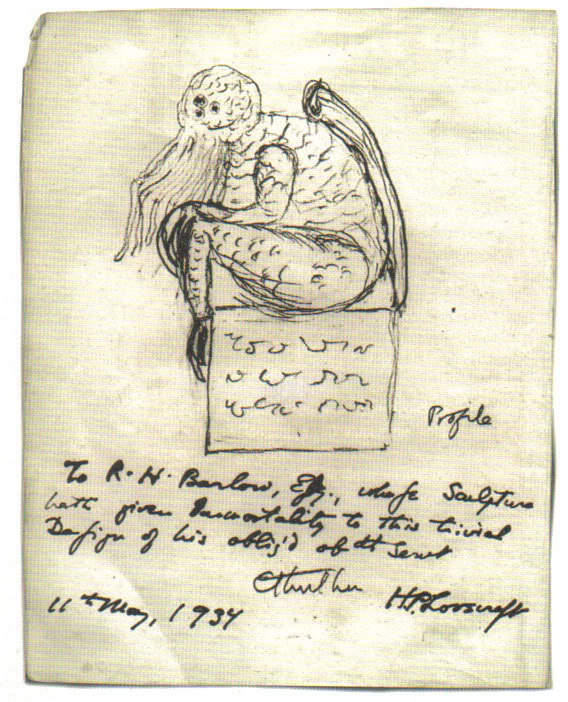
And I know, the last thing you want to see is me talking about the virus. But you have to understand: I’m doing this for me. As many of you know, I have an anxiety disorder. And as much as I keep an upbeat attitude, wonder what everyone needs that much toilet paper for, and what we’re going to get for April (I’m hoping Cthulhu rises up from the Pacific), I have been feeling anxious over this virus. So anxious, in fact, that last night, instead of editing a short story like I’d meant to, I ended up binge-watching an entire series of anime till two in the morning. Escapism!

So what’s a guy to do? Well, in my case, I have to exorcise myself. Not literally, that’s a Friday night thing. No, I need to get my feelings out on COVID-19. Because I conquer what scares me, and in this case, this is how I do it.

Strap in, kids. This might be a long one.

My thoughts

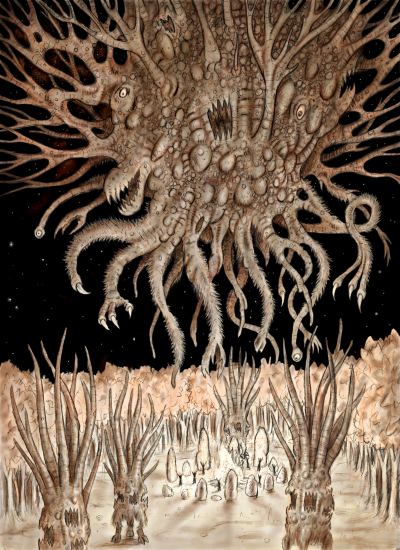
What are my thoughts on this pandemic? Well, it’s almost Lovecraftian in how it’s inserted itself into our lives. First it’s this abstract and undefinable threat that we can’t imagine touching our lives. We even laugh at it. But pretty quickly, it becomes this thing that could not only affect us, but kill us. And our own species–loved ones, coworkers, the passerby on the street–are how it extends its invisible tentacles into the world.

The only thing to do is isolate ourselves, but that’s scary in and of itself. Even our most curmudgeonly need human contact of some sort. Can we survive without that human contact? And then there’s the economic toll, as people who rely on their jobs find themselves out of work or unable to make ends meet, relying on their dwindling savings to get by. It’ll be worse in more expensive cities to live in.

This pandemic can be likened to a Lovecraftian entity. And it’s just as ugly.

And depending on where you live, your leaders may be doing a great job at fending off the horror, or an inept one.

This may be the closest we get to actually experiencing a Great Old One invading our reality. And God, is it terrifying.

Good thing I have my collection of HP Lovecraft stories, plus four or five cosmic horror films on DVD and Blu-Ray in my collection. They’ll make great therapy. I should also see the movie Contagion again. It practically predicted this entire pandemic, so it’s worth another watch.

Anyway, there is a silver lining (and no, not the silver solution that con artist preacher is selling! That’s more likely to lead to heavy metal poisoning, the prick). Unlike Cthulhu or Nyarlathotep, there is a way to fight against this monster. As hard as it is, social distancing can limit infection and prevent further cases. So does extensive handwashing (no duh!) and other hygiene practices. And to avoid fake cures, keep this in mind: make sure to check with reputable sources like the CDC or National Institute of Allergy and Infectious Diseases. And if you don’t trust bureaucrats, remember this rule: if it sounds miraculous or too good to be true, IT PROBABLY IS TOO GOOD TO BE TRUE!!!! Any fix to a medical problem always required hard work to achieve. Even aspirin took forty years to get from the labs to the pharmacy. Don’t go for the quick “cure” just because it seems Heaven-sent.

This virus is going to change things, and possibly have lasting effects on society. I hope that it teaches people to at least be more considerate of others. Because right now, that’s what we need to do in order to make it out of this pandemic with a minimal death toll.

Speaking of considerate…

Support your authors if possible

As I said, this pandemic is effecting a lot of people’s jobs and livelihoods. This includes authors. They rely on bookstores, conventions and in-person events to sell their books and support themselves. Those places are either closing down or cancelling, which is huge slash in revenue. I’m extremely lucky, even if I don’t write full-time: my job allows me to make a good living and put away savings. Other writers aren’t so lucky. This virus is going to bite into them pretty deeply.

Care about authors? Consider supporting their work during these difficult times, if you’re able.

Now, I’m aware not everyone can do this, and I completely understand and sympathize. However, if you are in a position to help your fellow writers, please do so. Buy copies of their books in your favorite format, tell people about their work in reviews or tweets or whatever. Especially if you enjoy their work. It might be small gestures, but for the writers you’ll be helping, it’ll mean the moon and stars.

And it will give us time to come up with some decent stories involving COVID-19. I’ve already had one or two.

Final thoughts

Thanks for reading this post. I needed to get this off my chest. And I think, once I’ve taken care of myself a bit, I’ll be able to get back to writing and scaring people like I normally do. As for the rest of you, remember that everyone else is in the same boat as you. They’re as scared as you, but they can also be as brave as you. And if you’re a Follower of Fear, you’re likely very brave.

This too shall pass. And we’ll make it pass faster by keeping each other safe.

That’s all for now, my Followers of Fear. I’m off to set up and test my at-home workstation. Until next time, good night, pleasant nightmares, and REMEMBER, SWALLOWING OR GARGLING BLEACH IS GOING TO KILL YOU! Why would you think it would help you? It’s corrosive!

On Sunday, I posted about finishing my first short story of 2020, a science-horror story called “Primordial Nuclear Soup” (what a title, right?). I mentioned in that post I wanted to find a beta reader to take a look at the story before I edited it and tried to send it anywhere. Thankfully, I found someone very quickly who turned out to be the right sort of reader for this story. They gave me some excellent feedback on ways the story could be improved, but there’s one point that I wanted to focus on.

With “Primordial Nuclear Soup,” I was going for an ambiguous ending to the story. You know, the kind where things are left kind of open, leading to readers wondering what happened after “The End”? Yeah, apparently I confused my beta reader with that. They actually asked me if I’d cut it off early.

Now, this may have been because I simply forgot to put the words “The End” at the end of the story. But it got me thinking: when is an ambiguous ending good for a story, and when does it actually get in the way of telling the story?

As usual, when faced with a writing quandary that I can’t reason out on my own, I go to Facebook groups for writers. I got a variety of opinions on the subject, some of which felt more on the mark than others, but one response in particular resonated with me. The writer in question said that ambiguous endings work best with ambiguous stories.

What do I mean by ambiguous stories? Well, these are stories where so much is up in the air, that an ending where things are up in the air makes sense. A story with an unreliable narrator fits this description, or a story like The Haunting of Hill House, where we’re not sure if the house is really haunted and we feel the psychological strain on the characters. By the end of the latter, we’re still not sure whether the house is haunted, so an ending that still leaves us questioning what the hell just happened fits nicely.

Of course, some more “definitive” stories may benefit from an ambiguous ending, especially if it ramps up the tension. “All That You Love Will Be Carried Away,” a Stephen King short story about a traveling salesman contemplating suicide, has an ambiguous ending dependent on whether the protagonist sees a light from a farmhouse through a snowstorm.* It’s a great way to top off a story revolving around a troubled man wondering whether or not he should kill himself or live to write a book about his encounters on his travels.

As for my own story…well, it’s science horror. And science/science fiction tends to deal with exactness. Even though the Xenomorph from the pinnacle of science horror, Alien, has an unclear origin,** everything else in that film is clear as crystal. So perhaps I need to give my own story a clearer ending.

Well, we’ll see. I’ll give the story an edit before I start that essay (yes, I’m going to write it) and see what I can do with it. Hopefully, I’ll make something a magazine won’t want to throw in the trash after the first page.

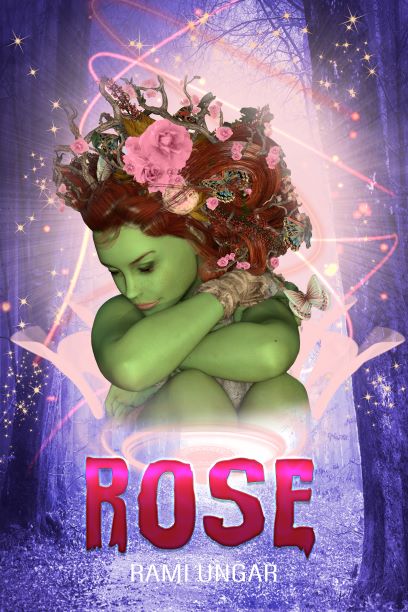
A dramatic shot of “Rose” I couldn’t help but take.

Oh, and while I have your attention still, did you know today is the two-year anniversary of when I announced Rose was accepted for publication? Yeah, it happened on this day in 2017, and a lot’s happened since then. A year of edits and rewrites, the release and all the marketing, the audio book, and so much more. More and more, people have been telling me they’ve enjoyed the story, and hearing that is the most gratifying feeling ever. Makes me want to keep writing.

If you haven’t read the Kafkaesque story of a young woman turning into a plant creature (and that’s just the start of her problems), and you’d like to check it out, I’ll include the links below. And if you do read it, please let me know what you think. I love feedback, and reviews help me out in the long run.

That’s all for now, Followers of Fear. Until next time, pleasant nightmares!

Rose: Amazon US, Amazon UK, Amazon Canada, Audible

*It’s been 19 years since it first came out, so I’m not sorry I didn’t include a spoiler warning.

**I like to pretend Prometheus and Alien: Covenant never happened. They take all the mystery out of the franchise.

So the other night on Twitter, I see Richard Chizmar (you know, that author/publisher I interviewed a while back?) tweet about this movie, The House of the Devil, saying he had to stop watching it thirty minutes in and could only finish it by the light of day. Obviously, I’m intrigued, so I went and reserved a copy from the library. And I finished it in one sitting after dark, so I think I can brag about that? Wait, I live in an apartment with noises, and part of the reason Mr. Chizmar couldn’t finish it was because he was watching the film in a dark, quiet house. Obviously, there’s a difference.

Anyway, on with the review!

Set in the 1980s and “based on true events,” The House of the Devil follows Samantha, a college student struggling to make ends meet. In desperation, she answers a babysitting ad she finds on campus and takes it. However, things get weird when she gets to the house. And once she’s alone with her charge, she learns that there’s more afoot than meets the eye.

Ladies and gentlemen, I may have a new favorite horror film!

So first off, this really does feel like a horror film from the late 70s/early 80s. In addition to the normal signs of a 1980s-set story (teased hair, Walkmans, and music from the best era for music ever, etc.), the movie was filmed with 16mm film, giving it that slightly filtered quality we know and feel so nostalgic about. Add in some yellow credits and some pauses during opening credits, and I could almost believe this film was made over thirty years ago rather than just eleven years ago.

I also love how this film builds tension. I know I use the term “slow burn” quite a bit, but it fits here. Director Ti West takes his time laying the groundwork and establishing our main character Samantha (wonderfully played by Jocelin Donahue, who embodies natural 80s beauty as much as Natalia Dyer in Stranger Things). Once we get to the house, things switch to showing Samantha’s increasing unease and paranoia. The camera work in these scenes is great, showing the heroine exploring the house multiple times, as if she’s not sure she’s really alone, while at the same time the camera films things in a voyeuristic way, like we’re the ones stalking Samantha, allowing us to share in her unease.

And that final third! Whoo-boy, things go zero-to-sixty real quick, and it is scary and thrilling to watch. I also like seeing how Samantha strikes a great balance between terrified final girl and willing to fight back. Usually in these films it’s either they’re screaming their heads off or they’re angry vengeance personified, so it’s a nice change to see a compromise.

As far as problems go, this film might be a bit too slow and quiet at times for some viewers. If you prefer your horror film have faster paces or not so many quiet points where characters just talk, this may not be the film for you. Also, there are some flashing imagery at the beginning of the final third that might trigger people with photosensitivity. It’s not as bad as IT: Chapter Two was, but it’s still something to keep in mind.

All in all, The House of the Devil is a wonderful homage to the slasher and suspense-horror films of the 70s and 80s. On a scale of 1 to 5, I’m giving it a 4.8. Settle into the couch, order a pizza and prepare for one of the best horror films you haven’t heard of. You won’t regret it.

Unless you have nightmares. In which case you may regret it.

You ever read a book that came out well before you were born, or a book that came out a few years ago but set well before you were born, and throughout the book a character or even the author expresses viewpoints that, if expressed today, would not go over well? The sort of views that would make you go, “Anyone who says that today would only be applauded by the lowest dregs of society. The rest would villify them.”

It’s an unfortunate part of the writing process, but sometimes writers will have to write stories where those sorts of views are expressed, even if not their own. I’ve had to do it several times over the course of my writing career, usually from the POV of a neo-Nazi or a white supremacist. It’s necessary, but it’s always a trial to do it. God help me if I ever have to read something like that out loud.

I bring this up because as I said in a previous post, I’m busy doing research for a story to go into the short story collection I’ve been putting together. That story is set in Victorian England, an age that, as many of you know, I’m a big fan of. You guessed it, I bought a bunch of new books to better understand that age. And this week, while I was reading one book and seeing information I’d previously learned in another volume repeated here, I realized that, to a certain extent, I will be putting these attitudes of the age into the story.

Including the ones I find reprehensible.

There are generally four ways writers include these sorts of ideas and beliefs into their stories. An author may include a character who’s already very forward-thinking or contrarian, taking on viewpoints which their peers will not get or abhor, but the audience will sympathize with and allow them to pity the characters who don’t think like that (think Wonder Woman’s attitudes regarding WWI-era norms and gender roles in her movie). Other times, characters may start with one attitude and then evolve to a different one over the course of the story as part of a character arc (Villetta Nu’s arc in the anime Code Geass: Lelouch of the Rebellion towards non-Britannians). There are characters whose whole point in existing are to present a contrasting view, usually as something for a protagonist to work off of or a driver of the plot (think Big Jim Rennie in Stephen King’s Under the Dome).

And then there are times when the author says, “Screw it, there’s no way around this,” and just portrays those attitudes as authentically as possible. I have a feeling with this story, I’m going to have to go with this route.

The books I’m using as research. I think they’ll be quite helpful in creating the level of detail I’m looking for.

I still haven’t worked out the details of this story, other than the time period and certain elements/characters. I don’t know how much of the Victorians’ beliefs and attitudes will make it into the story, or which ones for that matter.* Still, they’ll be there throughout the story for the sake of authenticity. It’ll be weird writing them into a story when they may go against everything I stand for. But for the characters, they’ll be the norm, and as true as the fact that the sun rises in the east and sets in the west.

The cognitive dissonance will be a mind-fuck.

But if the dedication to authenticity helps make the story good, then I won’t have any complaints. That’s what’s important in the end, isn’t it? Even if I have to write in a discussion on how chloroform subverts God’s commands on childbirth.**

What are your thoughts on including attitudes and beliefs that you don’t agree with in your story? Any fun reminiscences on the subject?

*Did you know that it was considered dangerous to give children fruit while they were young? It was believed the sweet taste would excite them and lead to delinquent behaviors. Also, while germ theory was starting to enter public consciousness, it was a slow process. In 1865, the Female Medical Society published statements asking doctors to take more steps to decrease death in women by childbirth. The medical journal The Lancet responded by calling their suggestions for cleanliness “erroneous,” and asserted that these deaths were caused by women leading immoral lives, which could mean anything from engaging in prostitution, feeling sexual desire, or enjoying pickles too much.

**Yeah, that was a debate in the 19th century. Did chloroform, when used in childbirth, prevent women from feeling the pain God ordained for women? What an age!

February is Women in Horror Month. Since women writers are a big influence on my writing–JK Rowling got me into storytelling in the first place, and Anne Rice helped pave the way for me to write darker fiction–I thought I’d recommend some stories for those who want to help support the month. You’ll see some familiar names here, but also some you may not be familiar with. Either way, I hope you’ll consider giving them a read.

Tiny Teeth by Sarah Hans. This is actually a short story by a friend and colleague of mine, but it is a scary one. Imagine a world where a virus turns children into dangerous, gnawing animals, and one woman’s experience in that world. You can find it on Pseudopod.org, a website where scary short stories are read by narrators and released as a podcast. Give it a listen. Guarantee you, it’ll be 45 minutes not wasted. Here’s the link.

Garden of Eldritch Delights by Lucy A. Snyder. This is also by a friend and colleague of mine, but it’s also a great collection of scary stories. The majority of them feature cosmic horror themes and entities, which I love, as well as intriguing characters and plots. A couple of the stories also incorporate sci-fi and fantasy themes, and feature a diverse cast, which is something I love to see. If you pick up Garden of Eldritch Delights, you will find it worth your time. Here’s the Amazon link.

The Amaranthine Books by Joleene Naylor. You’ve probably seen Joleene’s name around this blog before, but did you know she’s written an entire book series? She has, a vampire series called the Amaranthine books, and they all come highly rated. Even better, some of the books are free or under a dollar under the Kindle edition, so why not take the opportunity to read them? You can find all the Amaranthine books, and then some, on Joleene’s Amazon page.

In a Dark, Dark Wood and The Death of Mrs. Westaway by Ruth Ware. Technically, these are mysteries, but they have horror themes about them, so I’ll count them here. In a Dark, Dark Wood follows a mystery writer invited out to a bachelorette party by a friend she hasn’t seen in years, unaware of the forces conspiring against her. The Death of Mrs. Westaway stars a Tarot reader on hard times who finds out she’s received an inheritance from a grandmother she didn’t know she had, and what that inheritance entails for her. Both are terrifying and keep you on the edge of your seat with suspense. You can check out both further on the author’s Amazon page (and I need to check out more of her work).

Kept me on the edge of my seat the whole audio book.

Within These Walls and The Shuddering by Ania Ahlborn. No joke, Ania Ahlborn is one of the scariest writers I’ve ever had the pleasure to read, and I really need to read more of her work, as should you. Within These Walls follows a true crime writer as he and his daughter stay in the home of a Manson-like cult leader, and what happens while they’re there (I actually reviewed it a few years ago). The Shuddering follows a group of young adults as they go skiing at a mountain resort, only to discover the area has come under siege from a rather hungry enemy. Either one will leave you shaking in your boots! Here’s the Amazon page if you want it.

The Haunting of Hill House by Shirley Jackson. Come on, you know I had to include this. Even if I’m not a fan of this book, it’s undeniable that Jackson’s most well-known novel, and one of the most influential horror stories of the 20th century. Following a group of paranormal researchers as they explore the titular house and the effect the house has on them, this book is still a well-known classic in the genre, and some consider it required reading for fans and authors. It’s so well known, I won’t include any links for it (surprise!).

Interview with the Vampire by Anne Rice. Again, can you blame me? Whatever you think of the many sequels, it’s undeniable that Anne Rice’s debut novel has remained a classic for a reason. A journalist interviews a 200-year-old vampire named Louis, who recounts his creation in French New Orleans and his travels around the world looking for meaning and for more of his kind. It’s a haunting tale, the horror coming more from Louis’s psychological journey and despair rather than from the supernatural. As I said earlier, this novel also paved the way for my eventual turn to horror, so I can’t recommend it enough (and I’ll have to reread it someday). Again, no need for links. It’s that well-known.


What recommendations do you have for Women in Horror Month? Are you reading anything for it? Are you familiar with any of these books? What was your opinion of them?

That’s all for now, my Followers of Fear. I hope you find something good to read based on this list. I’ll be listening to The Accursed by Joyce Carol Oates this month on audio book, so maybe I’ll add it to a future list someday. I better get started soon!

Until next time, pleasant nightmares!

Over the past couple of months, people in the horror-themed Facebook groups I belong to have been raving about this particular book. I looked it up and it sounded up my alley, so when I had an Audible credit, I downloaded the audio book. But before I started it, I found out the book was written by the same guy who wrote the novel The Perks of Being a Wallflower, as well as wrote/directed its movie adaptation. Really? Isn’t that a sweet, YA rom-com? How do you jump from that to horror? (looks up what that book is really about.) Oh. That’s pretty dark. Yeah, I can see how the dude transitioned to horror.

Imaginary Friend follows Kate Reese and her son Christopher as they leave Kate’s abusive boyfriend and move to a small town in Pennsylvania. However, soon after they move there, Christopher disappears in the woods near his school. He reappears a week later, unable to remember what happened to him, except being led out of the woods and back to civilization by someone called “The Nice Man.” While Kate is happy to have her son back, and things start to improve after he returns, Christopher has changed. He’s smarter now, unable to sleep, and suffers from headaches a lot. And he’s in contact with the Nice Man, an invisible being who instructs him to build a treehouse in the woods he disappeared in, and to do it before Christmas. If he doesn’t, something bad will happen. To the town, to his mother, and to him.

This one was hard to put down. I normally only listen to audio books while at work, but the story was so intriguing and out there that I listened to it while checking email and cooking dinner. Imaginary Friend feels a lot like Stephen King novels like It or Needful Things, these huge stories based around weird concepts that are both scary and hard to put down. I mean, you got a kid who goes missing in the woods, and then when he comes back, has to build a treehouse to save the world from the Apocalypse. And that’s just what I feel I can tell you without spoiling too much.

I also have to give Chbosky credit: I had a hard time predicting what was going to happen as we got further into the story. Every little piece of the puzzle had the potential to surprise me, and quite a few did. During the “darkest hour” of the book, when things are at their most pessimistic, you felt the misery and the tension as the situation deteriorated. And that climax! Woo-boy, that was epic. Like, the final battle of an Avengers movie epic.

Not only that, but the characters are very well-developed. Also like some of King’s books, especially earlier ones, just about every character is well-developed. I felt like I’d known some of these characters my whole life, from Kate and Christopher Reese to the two or three old ladies suddenly regaining their faculties after years of dementia.

I do have one major gripe about the book: as the story goes further on, the novel takes on an…evangelistic air. It’s not like the Left Behind books, where it’s trying to get people to become born-again, but the story leans more in that direction than in the direction of The Stand or Supernatural. I don’t think the goal is to convert me: rather, I think Chbosky is using his Catholic upbringing to give the story a particular authenticity and philosophy other non-evangelistic Ultimate-Good-versus-Ultimate-Evil stories don’t have. There are some interesting ideas on the nature of guilt, our relationship to God, and how to find different kinds of salvation presented in the story.

Still, there were times when I was like, “Dude, scale it back a bit. I’m starting to get how people feel when I start ranking villains in horror, and they’re not horror fans.” That’s happened before, and it’s gotten awkward.

On the whole though, Imaginary Friend by Stephen Chbosky is an engrossing horror novel that’s weird in the best of ways and full of terror and twists. On a scale of 1 to 5, I’ll give it a 4.4. Pick it up and see for yourself. You’ll never look at treehouses and deer the same way again, but you’ll have a hell of a ride thanks to it.

Fiction writers tell two types of lies. There are the more obvious ones, our stories, those big stories of a thousand words or more that readers (hopefully) come just because we wrote them to entertain them. And then there are the smaller lies that usually go unnoticed. The ones where we gloss over or totally ignore reality so our stories can continue in peace. Not big things, like the existence of shapeshifting clowns or the ability to turn a human woman into a plant creature with a magic book. I’m talking about the small stuff. Things so small, people usually don’t question them or their viability.

A common example: you ever see an action film and someone with a machine gun lets off hundreds of bullets at their enemies without pause? Maybe they’ll switch guns at some point, but each of those guns still seem to have millions of bullets inside their cartridges and can go shooting for several minutes at a time.

The reality is a lot more boring: a machine gun may shoot off bullets for stretches of four seconds at a time, after which you probably will have to reload the gun. Not to mention that if your machine gun actually did go for shooting sprees for the entire length of a fight scene, the barrel would probably explode into flames.

Another famous example are silencers. Don’t want your gun to be heard by nosy civilians? A silencer will turn that gunshot into a mouse fart! Not really. In reality, a gunshot is not easy to quiet. Even the best silencer will only turn a gun into a loud crack, which you can still hear from quite a distance.

And you know those scenes in cop and comedy movies where a cop gets tasered in the chest and then their body and limbs shake like mad? Okay, stun guns only work about sixty percent of the time at best, and you never want to aim for someone’s chest, because while they’re considered “less lethal” than guns, they can still cause some heart trouble if aimed at the chest. Most cops aim for someone’s back, and then if they’re lucky, the electric shock will paralyze the target. By lucky, I mean the lines hit home and most of the electricity penetrates further than the skin.

Action movies are huge offenders at this stuff. Still love most of the Terminator and Die Hard films, though.

And these are just a small list. Cop movies involving shoot outs and explosions rarely feature the staggering amount of paperwork those shoot outs and explosions require officers to fill out. Medical dramas going for crazy or risky procedures? Not without talking to the insurance company or finding a safer method first. Bulletproof vests? They don’t stop bullets, just catch them, and it’s still going to hurt like hell. Not to mention getting shot by a machine gun, even if you wear a vest, is probably going to leave you dead (sorry, Back to the Future fans).

I actually used one of these last night in the latest chapter of my novel-in-progress Toyland (for obvious reasons, I won’t spoil which one).* I had to do some quick research to make sure one of the above was being written right. And then when I realized there was no way to do that authentically, I was like, “Screw it. Who’s going to know? Even if they do, they’ll either forget or suspend their disbelief.” And then I wrote it how people would imagine the scene.

Why do writers do this? Simply because they can get away with it. The details are small, and even those in the know will usually just let it slide for the sake of enjoyment of the story. Rarely does it actually bug someone to the point they put the book down/stop the movie. Usually when they’re glossing over giant details do people in the know stop enjoying the story (happened to me with Criminal Minds after I found out what FBI profilers actually do on a daily basis).

So forget the little lies, and ignore the minor deviations from reality. You’ll enjoy the story more. Or you’ll stop watching Criminal Minds and move onto other shows. Either way, other people will still enjoy the story you’re telling.

Authors, what little lies in your stories have you told lately? Any you laugh about now?

*Speaking of which, Toyland‘s coming along well. I split some upcoming chapters in two for pacing, which means more chapters to write, but I’m still making progress. I may have to push the deadline back again, this time to the end of February, but it’s still going well. Also, the novel is over eighty-thousand words right now (for context, Harry Potter and the Sorcerer’s Stone is around seventy-seven thousand words). I have the feeling by the time I finish this book, it’s going to be close to one hundred thousand words. Not a whopper, but quite the literary feat.

The Colour Out of Space (yes, with a “u” in Colour), is my fifth favorite HP Lovecraft story (click here for my Top 8 Lovecraft stories). There have been a couple of adaptations of the film over the years, but they’re either foreign films that are hard to come by, or are really bad for one reason or another. So when word popped up in late 2018 that Nicholas Cage was going to star in a new adaptation of the film, directed Richard Stanley in his first major outing since the 1990s, fans of Lovecraft, horror and/or film in general were piqued. We only got more excited as news from the film trickled back to us. When the trailer came out, I immediately knew I had to see this film.

I got back from seeing it a little while ago, and I’m happy to report, it was well worth the wait. This film is freaking terrifying!

Color Out of Space follows the Gardner family, who are living on the family farm and have converted it into an alpaca farm.* One night, a meteor lands on their property, giving off a strange, colorful light. Soon after, lightning strikes the meteor several times during a storm, the meteor disappears, and then things get weirder from there. The animal and plant-life start changing shape and color, technology goes haywire, and the family starts acting unhinged. All of it can be traced to a mysterious light. An entity. A color. From out of space.

If you’ve seen the film Hereditary, Color is a lot like that. It’s a slow, excruciating build with the characters going through a downward spiral, punctuated by moments of strong terror that left me petrified in my seat. The use of CGI is sparing, used only when practical effects in the style of The Thing aren’t possible. And by the way, those practical effects are amazing! They create some truly horrifying visuals, and Richard Stanley knows when–or even if–to truly reveal the mutated monster. There are also a lot of excruciating scenes involving bodily harm that left everyone in the theater freaked out, including me (not easy to do), and they added to the film in the best way.

As for the actors, they all do an excellent job. This might be the first time I’ve actually enjoyed Nicholas Cage in a movie, as they managed to balance his noncommittal acting style with his crazy acting style in a way that works. It’s funny to see him go from “normal” to acting like a bitchy teenager, but it’s also horrifying because you see how it’s connected to whatever’s affecting the family. The rest of the actors are great, embracing their roles and really convincing you they’re going through this tragic event.

Did I mention that Colin Stetson, who did the music for Hereditary and will be doing the music for the upcoming anime adaptation of Uzumaki by Junji Ito, did the score for the film? Will, he did and it works really well. Sound plays as much a big role in this film as visuals, and Stetson’s score adds the perfect touch to the atmosphere.

First time I’ve actually liked Nick Cage in a movie. How about that?

My only criticisms are that there’s a scene involving the Necronomicon (yeah, there are quite a few Lovecraft Easter eggs in this film) that I feel wasn’t given the best payoff. That, and the character of Ezra, played by Tommy Chong of Cheech & Chong fame, felt kind of extraneous. If you cut him out of the film and have one of the Gardners say some of his lines, it wouldn’t change much.

All in all though, this is not only an excellent adaptation of Lovecraft’s work, it’s a great horror film that’s both faithful to the spirit and text of the original story and terrifying to watch. On a scale of 1 to 5, I’m giving Color Out of Space a 4.8 out of 5. Any fan of Lovecraft, or of horror in general, should come away satisfied (or freaked), so buy a ticket and get ready to see the first great horror film of 2020.

(I already plan to buy the Blu-Ray when it comes out. And I really hope the disc is more colors than just blue, if you get my meaning.)

*Yes, it’s an alpaca farm. And it’s that kind of farm for more than just laughs. Also, the family “dog” is a wolf-dog. Trust me, I researched it. What kind of family owns alpacas for farming and a well-behaved wolf-dog used for herding, I don’t know. It would make for a great reality show, but I digress.

Today’s guest is an author who’s book, A Cosmology of Monsters, has been blowing up the horror scene since its release in September. I finished it last month, and found it to be an amazing read (see my review here). And I’m not the only one who liked it, because Cosmology ended up becoming a nominee for the Goodreads Choice Awards Best Horror (and yes, I am jealous). So, I’m very excited to have the author today. Hailing all the way from across the Internet, I bring you Shaun Hamill!

Rami Ungar: Welcome to the blog, Shaun. Tell everyone here a bit about yourself and about your novel, A Cosmology of Monsters.

Shaun Hamill: I grew up in the Dallas-Fort Worth Area, and got my bachelor’s in English from the University of Texas at Arlington. In my early 30s I attended the Iowa Writers’ Workshop and got my MFA. I wrote most of A Cosmology of Monsters there.

A Cosmology of Monsters is a literary horror novel about a family running a haunted house attraction in the suburbs of Fort Worth, Texas. Narrated by the youngest child, Noah, the novel tracks the family’s fortunes across 50 years, and explores the monsters—both metaphorical and literal—that haunt them. It’s a generational saga, an homage to Stephen King and H.P. Lovecraft, and most importantly, a story about the ways love can either save or damn us.

RU: How did the idea for Cosmology come into being?

SH: This novel was born out of the wreckage of a couple of projects. The first was a sprawling tragi-comic saga in the style of John Irving or Meg Wolitzer, about a family operating a youth hostel in Taos, New Mexico. The second was a short story about a married couple breaking up as they tour a haunted house attraction. Neither piece quite worked, but one day while I was walking my dog, the two ideas put themselves together and I realized that my epic family business novel should be about a haunted house, not a youth hostel. It would give me a chance to merge my taste for character-driven literary fiction with my love for the darker, more eerie tones of the horror genre. Noah’s voice came to me right away, as did Eunice’s suicide notes and the romance that opens the book. The rest of it came organically, as I followed the story where it led, exploring my characters and their ever-darkening world. I was perpetually surprised by what I found. I would never have been able to plan a book like this, and I hope some of that dark joy of discovery carries over for the reader.

RU: What was the research and writing process like for Cosmology? And what challenges did you face in writing the book?

SH: Research was a big part of the process of writing Cosmology. When I started the book I had only read a few Lovecraft stories, and I hadn’t ever worked behind the scenes of a haunted house. I read all of Lovecraft’s fiction, and also spent time reading scholarship about his life and writing. For the haunted house parts of the book I relied on my own knowledge as a patron of the attractions, and a tour of an out-of-season haunted house that I took in my late twenties. I also watched documentaries about haunted attractions, listened to podcasts, lurked on message boards, and so on.

The biggest challenge of writing this book was the revision process. My first draft weighed in at 220,000 words, and the published version is just over 100,000 (my agent insisted that the book would be tough to sell at its initial length). Figuring out which threads of story could be condensed or severed altogether took a long time, as did rewriting the entire ending to make it smaller and more meaningful to the characters. It forced me to carefully consider my characters and themes, and brought them into sharp focus by the end of the editorial process. I’m very pleased with the result, and humbled by how much better my agent and editors made my book.

RU: Haunted houses, both literal attractions and metaphorical haunted homes, are a big part of the book. Are you a fan of haunted houses yourself?

SH: I’m a big coward when it comes to haunted houses. I used to have a group of friends that I went with when I still lived in Texas, in my mid-to-late 20s, but I would never go to one by myself, and haven’t been to one since 2012 or 2013. I’ve always been fascinated by them from a distance, though. I’ve wondered about the people who work there, what it’s like to have the scenes of your life play out against such a fantastical backdrop.

RU: If you could design a haunted house attraction, what would it be like?

SH: The attraction in the book, The Wandering Dark, is exactly my idea of the sort of haunted house I would like to run. If money and practicality were no object, I would love to do a haunted hotel—something more immersive and stranger than the typical spook-a-blast attractions in the genre.

RU: Do you see yourself revisiting the world and characters of Cosmology someday in a future story?

SH: I go back and forth on this question. Some days I think it would be fun to continue the story of the Turner family, and I have done some brainstorming for a sequel. Other days I think that a sequel would lessen the impact of the book’s final pages and cheapen it. I guess I’ll wait and see if there’s a market for a sequel and then decide. Even if I never write a direct sequel, I will probably find ways to weave elements of that world into future stories.

RU: What is it about horror in general that attracts you to it?

SH: I have a melancholy outlook on life, so horror fits my disposition. I’m not attracted to the gore or violence, but rather the atmosphere of dread and dark wonder that I find in my favorite horror stories. I don’t like being terrorized. I like being creeped out. I love the idea that there is something beyond the known world, dark secrets to discover. It’s the sort of thing that Lovecraft does in his best work, as does Thomas Ligotti. I also love character-based horror, like Stephen King writes. I love stories about good people struggling against supernatural threats. It’s an effective way to illuminate the strength of the human spirit, what’s most noble and wonderful about people.

RU: Are you working on anything now? Do you have any future writing plans?

SH: I recently finished a rough (and I mean very rough) first draft of a new novel. I have an outline for another, different novel with my agent. We’re trying to decide which project to pursue first. My hope long-term is to keep doing what I’m doing now—writing books and publishing them and (hopefully) getting paid to do so. Fingers crossed COSMOLOGY won’t be the only thing I get to publish!

RU: What advice would you give to other writers, regardless of background or experience?

SH: Write a lot and read a lot. Read deeply in your own genre, but also outside of it. Join a writing group or take a writing class if you can afford it. If you’re able, get on the reading committee for a journal or prize—I learned more from reading the slush pile for Carve magazine and the Katherine Anne Porter Prize than I ever learned in a classroom or working alone at my own desk.

RU: And finally, if you were stuck on a desert island for a while and could only bring three books with you, what would you bring?

SH: Songs of a Dead Dreamer and Grimscribe by Thomas Ligotti, The Collected Stories by Lorrie Moore, and Three Novels by Stephen King (an omnibus of Carrie, ‘Salem’s Lot, and The Shining).

RU: Good choices. Thank you for joining us, Shaun. I hope we can do it again someday.

If you’d like to find out more about Shaun Hamill, you can find him on his website and on Twitter. You can also find A Cosmology of Monsters on Amazon if you’d like to read the book (which I highly recommend). And if you are an author with a book coming out soon and are possibly interested in having an interview, hit me up on ramiungar@ramiungarthewriter.com, and we’ll see what magic we can conjure.

That’s all for now, my Followers of Fear. Until next time, pleasant nightmares!

You know, when the trailers for this film hit, the response was pretty lackluster. “Oh, it’s got Kristen Stewart in it and it’s a disaster film about an underwater sea base that’s about to be destroyed. They have to find a way to survive. Whoop-dee-freaking-do!” But then word among the horror community started saying…positive things. And later rewatches of the trailer made it look cool. So I decided to see it, though I couldn’t do so till this weekend because I was sick last weekend.

Underwater follows six workers on an underwater sea base seven miles below the surface of the Pacific Ocean, drilling for resources to bring above. However, a mysterious quake causes major damage to the base, meaning they have to navigate the failing base and find a way back to the surface or die. But there’s something else down there with them. And it’s not going to stop till they’re all dead.

I’ve heard a lot of comparisons to John Carpenter’s The Thing and Alien with this film, and I have to say, not only are the comparisons apt, they’re justified.

One of Underwater’s strengths is how it creates its atmosphere. Soon after the movie starts, we’re thrust into the destruction as we watch a residential section of the base succumb to water pressure and shifting earth. From there, we’re right in the middle of the action as the characters have to navigate dark and narrow passages filled with water and debris. And while the situation itself is urgent, the movie takes its time, allowing us to get to know these characters as well as building a feeling of tension and encroaching doom. Realistic sets and dirty water further the feeling of claustrophobia and the horrific death just beyond the walls. Somehow, that tension is kept up even when the characters are walking across the open seafloor in suits. Probably because those suits are a thin barrier between life and death as well. Add in some well-placed jumpscares that are never excessive, and it’s damn tense.

As for the creature or creatures in this film, they are the fun innovation that change this film from just another disaster film to a Lovecraftian horror fest. Their reveal is very slow, and even when fully revealed, the darkness of the sea leaves them with a bit of mystery. Fans of certain HP Lovecraft stories will recognize the creatures. Whether you do or don’t, however, there’s no denying how scary and deadly these creatures are, and they make the film worthwhile.

As for the characters, they’re serviceable for this film. For once, Kristen Stewart’s deadpan expression works pretty well with her character Norah Price, who defines herself as a cynic trying to get by. TJ Miller as weird, funny guy Paul does okay jokes. He and the character Rodrigo, played by Mamoudou Athie, both enjoy anime. Other than that, you can’t say much about these characters, but for the purposes of Underwater, that’s just fine.

That being said, the film does have its issues. There are a few moments where the tension reaches a lull, and during those moments I felt restless and a little sleepy (though that might be because I had to wake up earlier than planned this morning). And I would have liked to see what life on the base is like on a normal day. You know, when it’s not in danger of flooding and crumpling into dust. We only get a minute and a half of seeing the pre-destruction base at the beginning of the film, and that’s mostly filled by Stewart monologuing and saving a daddy long-legs from a sink.

Altogether though, Underwater is a tense, Lovecraftian thrill ride, a modern-day The Thing, almost.* On a scale of 1 to 5, I’m giving it a 4. If you have a chance, go to the theater and prepare to dive into a world of terror. Most likely, you’ll find yourself pleasantly entertained, and more than a little scared.

*And not just in quality. The Thing actually did poorly with critics and at the box office after its release. It didn’t become a classic until it hit home video. I have a feeling Underwater will go through a similar process, though I would like as many people to see it in theaters as possible.