Posts Tagged ‘celebrities’

You know, I’ve seen a lot of YouTubers do series where they watch specific kinds of stories–sequels of great hits, weird-ass anime, the Mummy series, etc.–and I appreciate what they do, but I feel like I’m getting an idea of the horrors they have to endure just to entertain me. A lot of what they watch can be really bad or silly or painful, and they endure it just to bring me YouTube commentary and humor.

How do they do it as often as they do? They must have some serious endurance.

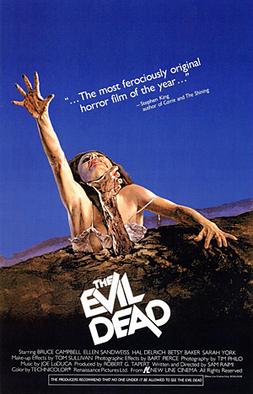
WHAT’S IT ABOUT: A bunch of friends/lovers go to a cabin in the woods for the weekend, and obviously, something horrible happens. It’s the embodiment of the cliche, if not the original that started the cliche.

WHY I DIDN’T LIKE IT: I saw it right before the remake came out, and I thought it was totally stupid. It was dated, the effects were terrible and cheap, and far from scary. I could not see how it became a phenomenon. And after I saw the remake and loved it, I was amazed that the original didn’t just get swept into the dustbin of history.

WHY I REWATCHED IT: You hear enough people talk about the influence of the original, and even do YouTube videos comparing both films (YouTube is a big part of my life, if that’s not obvious), you start to wonder if you missed something. It also started a phenomenon, as well as jump-started the careers of Sam Raimi and Bruce Campbell. Not to mention that the shooting was pretty dangerous: people were actually thrown into and had furniture fall on them. Not only that, but when the characters are fighting demonically-possessed friends with sharp knives, they’re actually fighting other actors with gunk in their eyes, completely blinded, while using actual sharp knives! Kind of makes you want to see if your opinion needs reevaluating.

THOUGHTS: Ummm…it’s better than I remember it. A little better, anyway.

There are some things about this film that are good. The camera work is always interesting, showing things from points of views I don’t normally see in horror films. At times, it feels like a drone is holding the camera: odd angles, fast movements, branches and whatnot hitting the camera. There are some really atmospheric moments, like when the characters arrive and there’s this eerie music and the porch swing is knocking against the wall.

And there are some shocking moments, like the…rape-tree scene. Yeah, if you didn’t know, that’s a thing this movie has. And it’s shocking and disgusting. Which is what the filmmakers were looking for, the most shocking horror film ever put to screen at that time, so I guess they got what they wanted.

But I have a lot of problems with this film. For one thing, the shock and awe only stays shocking as long as the audience isn’t desensitized. And I’ve been desensitized since I was nine and saw my first PG-13 movie. And when that stuff loses it power, what’s left has to hold up the rest of the film, and it doesn’t do that very well. Biggest issue I have is the effects: I know they’re going for memorable and it is, but they’re very silly at the same time, and in a horror film, even when I put aside my distaste for excessive gore, that’s just going to turn me off.

While I don’t expect the characters to be that fleshed out–not that kind of film–but they could’ve done a better job of establishing their relationships early in the film. I could not tell who was dating who, and they waited till nearly two-thirds into the film to reveal that Girl #3 was Bruce Campbell’s sister. Um…could’ve pointed that out earlier. I thought she was just a fifth wheel who went with the other four so she didn’t have to feel bad about not having a boyfriend. Which she was, but the sister part should be mentioned earlier.

And weirdly enough, for the bare-bones story, it actually gave me questions. For one thing, after the sister’s possessed and one of them is badly injured, the other characters are way too calm. Why are you so calm? Your friend’s possessed! Be a bit more freaked out and active! And why are the spirits said to be “sleeping” prior to being summoned by the incantations in the Book of the Dead, but they’re able to possess a hand or cause cars to swerve into the wrong lane? They seem pretty active to me! Are they like Cthulhu, sleeping but still able to affect the world, they’re just not at full power unless under certain circumstances? I’m so confused.

JUDGMENT: It may have caused a phenomenon and started a few careers, and you should see it for those reasons, but I wouldn’t expect to be really scared once you’re past age fourteen. On a scale of 1 to 5, I give the original Evil Dead film a 2 out of 5. That may be the unpopular opinion, but let’s face it: some classics don’t age well with time. We saw that with Texas Chainsaw Massacre, and I’m seeing that with Evil Dead. And I’m not sorry for pointing that out.

At the very least, I’ll check out the next film. I hear that and its sequel are at least a bit more enjoyable. And hopefully they will be.


That’s all for now, Followers of Fear. I’ve already reserved #7 in this series, and I think that, even if I don’t enjoy it as a film, I’ll find it interesting from an academic point of view. I’m talking Nosferatu.

Until next time, pleasant nightmares!

Go to any slasher movie. I guarantee someone will do something stupid. And I also guarantee there’s a reason behind why they did it.

So yesterday I was doing some edits on Rose* and one of the points in the beta reader notes stood out to me. In that particular point, my friend/colleague/beta reader Joleene Naylor pointed out that it was taking the titular character Rose a lot longer to figure something out about the scene that Joleene had figured out much earlier. My immediate first thought was, “Well, it’s horror. Everyone’s a bit slower in horror.” And that thought really stuck with me. Yeah, the characters in horror aren’t always the brightest bulbs in the closet, are they? People in slasher films take too long to realize there’s a killer hunting them around a lake notorious for murders and disappearances, the family stays in their haunted house and might even pretend things are normal even if it’s obvious there’s demonic possession at work, dumb teenagers run upstairs when they should run out the door. They either realize something well after the audience has realized something, or they make really dumb decisions. And it’s such a well-known trope, it gets parodied quite a bit in our media, like in this Geico commercial.

This got me thinking: is this intentional on the part of horror writers? If so, why?

Well, I thought about this throughout the day (couldn’t write this before because I had to go to bed and then to work), and I think that what’s happening is intentional. However, I don’t think the intention is to make the characters stupid idiots.

First, let’s consider something: we’re the audience, and the characters are characters. In our daily lives we’re not keyed up, checking to see if horror-movie circumstances everywhere we go (and if we are, we’re usually recommended to see a doctor about that). It’s only when we sit down for a horror story that we start looking for signs of horror, because that’s what our brains are trained to do. Similarly, unless they’re enjoying a horror story or think they’re in one, characters won’t typically see all the signs of something evil around them unless that evil chooses to make itself known.

There’s also the fact that authors have to tell a story, and often the stories they tell have to be of a certain length. For example, I classify a novel as sixty-thousand words or more, so I have to figure out how to keep a novel going for that long. One of the ways to do that is to make the characters figure things out much slower than the audience, either by only giving them clues slowly or later in the story, or by actually making it so they can’t connect the dots until it’s convenient for the story. And considering that part of the appeal of horror, the thrill of the mystery and the unknown as well as our reactions to it once exposed, this is a sound strategy.

Okay, so making characters slow on the uptake is part imitating people in the real world, part storytelling tool. But what about stupid decisions?

Well, that’s actually pretty easy to answer: they’re under stress. When a character is being chased by a killer or trying to get away from a ghost, they’re under unimaginable pressures. So unless they’ve been trained to think under pressure, like in the Army, they’re not going to make a rational decision. They’re going to make split-second decisions that they hope will ensure their survival, and because it’s a horror story, they’ll likely make the wrong decision. Unless the author says otherwise, of course.

And even if they’re not in a stressful, life-or-death situation, the need for survival can cause us to do very stupid things sometimes, as well as our characters. Polly Chalmers, one of the protagonists of Stephen King’s Needful Things, keeps a charm around her neck, despite suspecting that there’s something alive in it and it’s twisting her personality somehow, because the thing is easing the debilitating pain of her arthritis. In other words, fulfilling a need to help her live.

Sometimes a character acts a certain way either because they’re imitating real people, or the author needs them to be that way.

So it’s not that characters in horror stories are dumb or slow. They’re victims of imitating people in the real world as well as the author’s discretion in storytelling. And we the audience, free of those issues, are able to pick up on things they can’t or won’t for a little while longer.

Of course, we will continue to call characters stupid and wonder how they could not do the smart thing. That just comes with the territory. But perhaps the next time we sit down for a scary movie, we’ll also consider what the characters are going through, as well as what the storytellers behind them decided was best for the characters and their story.

That’s all for now, my Followers of Fear. Hope this gave you plenty to think about. I had fun just thinking of it. Until next time, pleasant nightmares.

*Speaking of which, the editing on Rose is going very well. Yesterday I got through four chapters, bringing me halfway through the fourth draft. At the rate I’m going, I could be done before the end of the month. And after that, hopefully it’s a short wait till I find a publisher. God-willing, anyway.

I’m not going to lie, 2017 was a tough year in a number of ways. In some ways, it even rivals 2016, which everyone agrees was kind of a shit year, pardon my language. We dealt with really horrible terrorist incidents, learned that some of our most beloved figures in entertainment and other industries were secretly monsters, and saw terrible devastation from hurricanes that left communities without good food, water or electricity. This and a whole lot more affected so many lives, and definitely not in a good way.

However, there were a lot of good things about 2017 too. Many of the things I described above caused people to come together and fight. Not too long after the bombing at Ariana Grande’s concert in Manchester, she and several high profile artists put on a charity concert to raise over ten million pounds for the families of the victims. After the shooting in Las Vegas this October, thousands rushed to donate blood at the Red Cross, with lines reportedly snaking around city blocks and lasting up to six hours, and millions were raised for the families of the victims! Plus in response to the shooting, Massachusetts banned bump fire stocks, which were used in the attack, and several bills were introduced into Congress to hopefully prevent attacks like this from happening again.

Throughout the year, men and women came together to protest sexism and the treatment of women in America and abroad, with marches throughout the year. The revelations of Harvey Weinstein led to dozens of women and men to open up about their experiences with sexual assault and harassment, catalyzing the #MeToo movement and leading to the ousting of several serial abusers from a variety of industries for their crimes which, up till now, they could get away with, and started a conversation that is continuing today about how to combat sexual assault by powerful people who use the system to get away with it. Heck, voters in Alabama came together to keep a man who has been accused of assaulting multiple teen girls from becoming a Senator despite widespread support for him. That’s huge!

A Red Cross station post-Las Vegas shooting.

And while Puerto Rico and other areas of the world are still recovering from natural and man-made disasters, a lot is being done online and offline to help. Thousands are still sending money, supplies, and even solar power equipment (looking at you, Elon Musk) to help Puerto Rico out of the rubble. Despite the United States pulling out of the Paris climate agreement, many corporations, cities, and even states have said they will continue to abide by the agreement’s guidelines in order to combat global warming, which likely contributed to the many hurricanes we saw this year. And plenty of people each day are pressing for relief to peoples in trouble, both at home and abroad, from their leaders. It’s amazing to see that happen.

I could go on (I really want to speak about the entertainment industry’s positive contributions this year), but I fear this post will go on too long if I do, and there’s quite a bit I’d like to talk about. I’ll just summarize by saying that there was a lot of positive things that happened this year. And while the bad stuff does sometimes seem to overshadow the good, it’s important to recognize the good and cheer ourselves for what we accomplished, as well as what we can accomplish in the coming year. Which seems to be plenty, if we put our minds to it.

On a more personal note…

2017 was a pretty good year for me. Yes, the things I listed above, good and bad, may have affected me at times (they affect everybody, don’t they?), but in terms of my own personal life, I had a very good year. A lot of positive things happened to me , and if you don’t mind, I’ll just highlight some of the big ones:

  • My health seriously improved this year. I lost about thirty pounds of unneeded weight, which means I’ve had to take fewer sick days and I’m less likely to develop certain diseases. My back pain has also lessened tremendously, thanks partly to weight loss and to seeing a chiropractor. I can now move as I used to pre-back pain, and while I’m still working on improving my back and my health, the fact that I’ve accomplished this much already is a great motivator for me.
  • This was a good year for writing for me. I got halfway through the first draft of Full Circle (still on break from that until I feel ready to tackle it again), finally pushed out a new draft of Rose, and even wrote and edited some short stories. I also published two short stories, the science romance novelette Gynoid, and the LGBT fantasy romance story What Happened Saturday Night. Not only that, but over sixty new people started following this blog, putting me within striking distance of the thousand-follower milestone! For me, that is huge, and I can’t thank you guys enough for making that happen.
  • As many of you know, I work for a supply organization in a role that involves getting disabled employees accommodations and organizing events to highlight the diversity in our workforce. As of December, I’ve been with the organization for eighteen months, and it’s been great. I’m doing work that helps people with a great team around me, and I get great pay and benefits too. What’s not to love?
  • I went on the best vacation ever to Massachusetts with my dad back in July, and it culminated with a night at the famously haunted Lizzie Borden Bed & Breakfast. I cannot even begin to tell you what a big deal that was for me.
  • All the movies I was super-excited to see this year were awesome, as I’d hoped. Especially the new version of It. That was the It we deserved.

And those are just a few of the highlights of 2017 for me. Yeah, it was a good year. And I hope 2018 goes just as well or even better. Especially if any of these happen:

  • More good news on the writing front, particularly with a fourth draft and maybe the publication of Rose, as well as several new stories and hitting the thousand-follower mile marker.
  • Continued improved health.
  • Continuing to do well at work.
  • Maybe a bit of travel, and definitely a bit of fun, whether that be going to shows or seeing friends.

And that much more.

So guys, I want to wish you a Happy New Year, and to remind you that, as hard as 2017 is, it’s 2018, and there are endless opportunities to have a better year. You just have to be brave enough to try and make a change.

And again, thank you all for being my Followers of Fear and reading my work. I’ve grown so much over the past couple of years, and you guys have been there for every accomplishment and lesson I’ve experienced. I hope you’ll continue to support me for this year too as I try to accomplish all my dreams and scare people silly.

Until next time, pleasant nightmares.

Guillermo del Toro’s films are very much like Tim Burton’s films: there’s a distinctive feel and style to them that sets them apart from other films. A tendency towards the strange and the dark, creatures not oft experienced by man nor treated that much in modern fiction, etc. And such is the case with his latest venture, The Shape of Water, which del Toro says was inspired by when he saw Creature from the Black Lagoon as a kid and was disappointed that it wasn’t a romance between the Creature and Julie Adams.

I have to say, all these decades later, the concept has aged well.

The Shape of Water follows Elisa, a mute custodian at a government facility in Baltimore in 1962. One day, the facility receives an amphibian-man creature from South America, which is kept in a room that Elisa cleans. The two start interacting and romancing, leading to a plot to save the creature from the facility and those who would do him harm.

There’s a lot going for this film. For one thing, it’s beautiful. Everything from the sets to the costumes looks right out of the late 50’s, early 60’s, the lighting is used in different ways to highlight moods and atmosphere, and there are even throwbacks to classic films from that period, including a short musical number that I feel like was inspired by the ones American Horror Story does every couple of seasons. The acting is also pretty stellar: Sally Hawkins as Elisa is wonderfully expressive through facial expressions, body language, and sign language. Octavia Spencer (can that woman do no wrong?) and Richard Jenkins as Zelda and Giles, Elisa’s friends, are full of pathos and charm. And Michael Shannon as the antagonist Strickland, while feeling like a hammy caricature at times, is entertaining to watch on screen.

And oh my God, the make-up on the Amphibian Man (which is his listed name in the movie, I checked). That is award-winning stuff. It looks so real, and as far as I know, mainly CGI-free. That’s really impressive.

All that being said, there were a couple of issues I had with the film. For one, once you kind of understand what sort of film you’re watching, you can kind of guess the plot. It’s been done before, though not with Amphibian Men. So if you can guess the story archetype, you probably will guess where the story is going to go.

There’s also this theme of tolerance and the difficulties of otherness that pervades the film, which you would expect. There’s the Amphibian Man, which isn’t even human. Elisa is mute, Zelda is black, and Giles is gay. Obviously, the filmmakers are going to bring this up. And I’m not opposed to that, I love stories that explore the difficulties of being on the outside for no other reason than being who you are. The problem is, the theme is handled differently from scene to scene. In some scenes, like a scene midway through the movie at a diner, it’s handled very well. But at other times, the handling feels kind of clumsy, which kind of brings down the impact of the theme.

Regardless, this is a wonderful film. If you’re going in for a science-fiction/horror story, you won’t get that. But if you go in for a visually appealing and well-done love story with some sci-fi elements, you’ll end up getting your money’s worth at the theater.

On a scale of 1 to 5, I give The Shape of Water a 3.8. Take a dip into a strange new world, and see for yourself if there’s something to love here.

Now if only del Toro could do an adaptation of At the Mountains of Madness, which he tried to do a few years ago (but only after I’ve read that particular HP Lovecraft story). That would be awesome.

I’m halfway through this series I’ve been doing of rewatching and reevaluting horror films I previously disliked to see if I missed something. And for those of you who are keeping score, I found I now love Perfect Blue, hate The Strangers more than I did the first time, don’t really have a different opinion on The Witch, and feel underwhelmed by The Texas Chainsaw Massacre. And I’ve just finished watching my fifth entry, Oculus. What did I think? Let’s find out.

WHAT’S IT ABOUT: Oculus follows Kaylie and Tim Russell, a pair of siblings who witnessed their parents murdered by the spirit in a mirror as children. They return to their childhood home ten years after those events with the mirror in tow, Kaylie determined to prove that the mirror is haunted, Tim believing he hallucinated everything he experienced as a child. Weaving between past and present, Kaylie and Tim unearth dark memories, old wounds, and eventually, must decide if they are facing they’re own insanity, or an old and intelligent evil.

WHY I DIDN’T LIKE IT: Simple: the ending. I really liked these siblings, and without going into spoilers (though I could be forgiven for them, this film has been out for four years), I didn’t like how the ending treated them. Plain and simple, it just poisoned the film for me.

WHY I REWATCHED IT: An online critic I follow on YouTube did a video a while back of the Top 11 New Halloween Classics, and Oculus got #7. That alone was enough to get me interested in a rewatch. And when I did this series, Oculus was definitely on the list.

Thoughts: How did I hate this movie? It was awesome!

Now, I won’t go into full review mode, but this movie is almost entirely flawless. The concept alone is pretty ingenious, but it’s done in a way that puts you right in there with the characters. You’re seeing their memories as they remember them, at the moment they’re remembering them. And you’re experiencing what they’re experiencing the moment they’re experiencing it. It leaves you not only wondering what is real and what isn’t, but also makes you feel the paranoia and terror of the characters, who by the way are played amazingly by their actors. Especially Karen Gilliam as Kaylie Russell (we love you, Amy Pond!).

I also like how the film isn’t afraid to use a bit of body horror. There were definitely moments where I had to look away because I was so freaked out by what I was seeing, and these moments are never excessive in terms of gore or number of uses.

Add in some great camera work, ambiguity, and CGI that really deposits itself within the uncanny valley, and you got yourself a creepy horror film.

And as for that ending, it’s been four years, and I’ve done some just like it in that time. It’s honestly a good way to close out a horror story, especially if you care about these characters. It makes the ending that much more gut-wrenching. To sum it up, I now approve of the ending.

Judgment: This is definitely a masterpiece in horror filmmaking. On a scale of 1 to 5, I’m giving Oculus a well-deserved 5. Check it out, and see the horror through the looking-glass.

That’s all for now, my Followers of Fear. The next one in this series should be entertaining, at least. And if it’s not, at least the sequels are supposed to be betterthan the original. I’m talking Evil Dead.

Until next time, Happy Holidays and pleasant nightmares one and all.

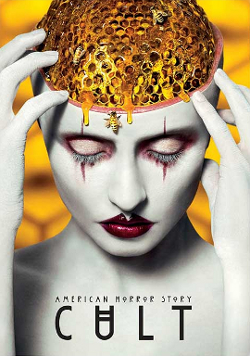
I finally watched the final episode of American Horror Story’s seventh season (one day I’ll be able to give a review right after the season premiere or finale on my own cable package), and I have to say, this has definitely been an interesting season. When people heard that the new season was going to be about the 2016 American Presidential Election, after months of speculation that it would be about either a cruise or something else ocean-related, we weren’t sure what to expect. Would it be preachy and lean towards one end of the political spectrum or the other? Would Trump, Clinton, or some other political figure be featured as a character? And would Sarah Paulson play Trump (if she did, she’d be great at it, no doubt)? And as further details came out, namely that it would be about a cult that arose in the wake of the election and focused on people who felt isolated and galvanized by the election, we got intrigued. Could this actually work as a season arc? Could this be good?

Well, before I get into that, let’s go a bit deeper into the plot. Returning to a normal mode of storytelling after the reality TV show format of Roanoke and being perhaps the most down-to-Earth season in the show’s history, Cult follows two very different people who become intertwined in ways neither would believe. The first is Allie Mayfair-Richards, a business owner and mother with liberal leanings and crippling anxiety who isn’t dealing well in the post-election climate. The other is Kai Anderson, a charismatic young man who begins to gather a group of devoted followers around him as he pursues power in local politics. As their lives start to intersect, they’ll not only make permanent impressions in each other’s lives, they’ll make impressions in the very surface of American politics.

I loved this season. Yes, the first two episodes were kind of slow and clunky, more devoted to commentary than to actually scaring the viewer, but after that the story and scares really picked up. The writers kept things very intimate, so that while this may have seemed like a big story about national politics and American political culture on the surface, it felt incredibly intimate, letting us into the lives and minds of these people. As per usual with American Horror Story, the story was twisty as heck, keeping you guessing where the story would go from one episode to the next and being unable to figure out most of the time where things would go. And after the second episode, they managed to keep the political commentary from getting too over the top. In fact, I think they managed to capture the spirit of American politics very well in this season: confused, divisive, changing from day to day and week to week. Things come up and down, change and merge and break, and become so muddled that you don’t know how it all started. All this was captured very well in this season.

And oh my God, that ending! That’s going to stay in my head for a while.

Beware this guy. He is a villain par excellence.

I also really enjoyed the characters. Obviously, the two main ones are exaggerated distillations of the stereotypes of the liberal and conservative voters, with Kai representing some of the darker views of what Donald Trump is to some Americans, but they also feel like real people whom you want to watch and see where they want to go from episode to episode. Each major character is given time to develop so that they feel real to the viewer, and you feel their struggles and/or death. I especially love Beverly Hope, played by Adina Porter (who played my favorite character last season), whose struggles within her workplace, followed by her struggles within a cult that changes drastically from the time she joins to the time she escapes. Kai is also just terrifying to watch. You know what his final goal is, but you never know what to expect from him from moment to moment. He’s like a pinball, causing something every time he touches something. He makes for a great villain. And watching Allie go from this weak, paranoid woman to this strong, somewhat devious fighter was just stunning.

Now, were there any parts I didn’t care for? Well, as I said, the first two episodes didn’t jibe with me, they were more devoted to commentary and set up than actual scares. Those could have been done better. Another issue I had was that I felt the final episode was kind of predictable. I mean, once I saw where it started, I kind of knew where it was going to go (except for maybe that last scene). I expect better from American Horror Story.

I also didn’t care for Lena Dunham playing Valerie Solanas in the seventh episode. Now, I have nothing against Lena Dunham. I think she’s a great crusader for a number of important issues, and I admire her for the success she’s had in the entertainment business. But sadly, I’ve only seen her in a couple of roles, not enough to get a gauge on whether or not I like her as an actress. And in the seventh episode, she just felt miscast. The episode was written brilliantly, the character she played was interesting, but she just didn’t fit well into the role, to the point that she was annoying (I don’t mean that in a sexist way, I just mean she didn’t fit the role and it had a negative impact. Don’t go after me in the comments).

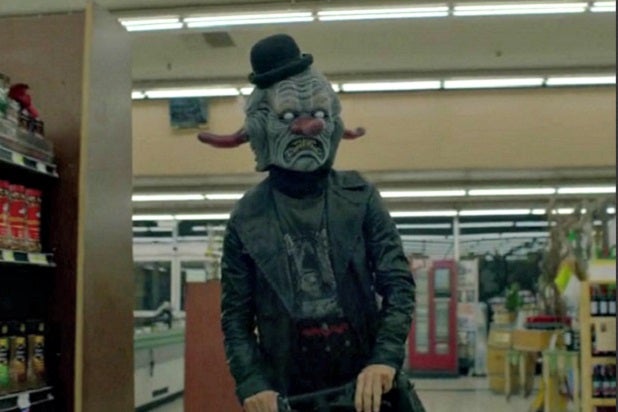
And finally, I felt like the clown costumes could’ve used an explanation. Yes, the character Meadow designed the costumes, but why clowns? Why not a minority abused by the right, or ninjas, or just people dressed in dark clothing? It’s hinted that it has something to do with Twisty the Clown, who makes a surprise guest appearance in the first episode, but we never find out why the cult decides to commit crimes in custom-made clownsuits. I would’ve loved an explanation on that, especially since clowns figured so much in the advertising for the season (speaking of which, where are the bees? They show up a lot in the ads and the opening theme, but barely in the show proper).

This needed more of an explanation.

But other than that, American Horror Story: Cult was a great entry into the series. On a scale of 1 to 5, I give this season a 4.2, as well as the designation of my second favorite season so far (Hotel‘s still the best). It’s engaging, thrilling, and different from any other season so far. Plus it does a better job of talking about oppression and women’s empowerment than Coven ever did, so good on the writers for fixing that mistake. Check it out, and see it for yourself.

Now as for Season 8, details are scarce beyond that it will come out sometime next year, and that Sarah Paulson will return for her eighth consecutive season (yay!). I’m still hoping that I’ll eventually get an Orphanage or Academy/School-themed season. I’m curious as to how, if the theory about each season being a circle of Hell is true, how those themes might apply to those circles that are left. And I’m wondering who will be coming and going for the next season (Lady Gaga! Kathy Bates! Please come back!).

Well, that’s American Horror Story for you. It leaves you wondering up until the moment something happen, and then it blows us all away.

My boy, HP Lovecraft

So today as I was heating up dinner, a thought passed through my head that sometimes passes through there (along with, “Oh, that would make a great story,” “I’m hungry,” and “These miserable mortals must be destroyed! Rise up and cleanse the Earth of them!”). The thought was, “I wish there were more HP Lovecraft adaptations. He’s got a lot of material to work from.” This thought was followed, rather unexpectedly, by “Why wasn’t there an HP Lovecraft cinematic universe? You’d think it’d be perfect for film studios. The stories literally take place a multiverse, possibly the very first multiverse!”

Now, if you’re wondering who HP Lovecraft is, you’re not alone. He’s criminally under-known (a word I just made, so copyright). What’s important to know is that he was a writer from the early half of the 20th century who wrote horror stories based around powerful cosmic entities and truths from beyond the stars whose exposure to humans can cause insanity, destruction and death. This is called cosmic horror, and Lovecraft practically invented it. And while you might’ve never heard of HP Lovecraft or cosmic horror (though I talk about him often enough on this blog), you’ve probably seen the wide results of his influence. Ever wonder where the ideas for the Demogorgon or the Shadow Monster and the Upside-Down from Stranger Things come from? Those all are at least partly inspired by Lovecraft’s creations. The weirder, more interdimensional aspects of the works of Stephen King, such as the last two-hundred pages of It or the Dark Tower series? Lovecraft helped inspire them, especially his Dream Cycle stories in relation to the Dark Tower books. And that thing with a mouth full of teeth coming out of my hotel room toilet? That’s actually a demon crocodile, where the hell did that come from?

Point is, Lovecraft has influenced a lot of horror fiction, and even some things not normally considered horror, such as Marvel comics villains. Now excuse me, I’ve got to take care of that demon crocodile.

Still here? Good. Well, you’d think that with such a bibliography and legacy, you’d think Lovecraft would have several adaptations, right? Maybe even a cinematic universe, considering he has one of the earliest multiverses in fiction? Wrong, actually. There are actually only a handful of direct HP Lovecraft adaptations, the most well-known being Re-Animator, and the story that’s based on is kind of in its own separate mini-universe (kind of like Deadpool in the X-Men movies). But wait. If his ideas and the works they influence are so ubiquitous that we’re getting major Netflix shows and box-office record-breaking movies based on them, why aren’t his works being made into more movies? And why isn’t there a cinematic universe, when there’s a gold mine right there for it?

Thank Lovecraft for this guy.

Well, there are a few reasons for that. One of the reasons is that movie adaptations, and especially cinematic universes, are made from properties that filmmakers feel will make them money (now there kind of’s an evil god to rival Cthulhu, am I right?). In the past, movies based off of HP Lovecraft stories have only done moderately well at the box office, mostly as cheesy B-movies, and that’s on a good day. Even Re-Animator only earned around two-million, and its budget was just about half that. So if a major film studio were to make a major adaptation of a Lovecraft story, they’d have to believe that a Lovecraft story could bring in a major profit. And if past adaptations are any indication, it’s not a risk studios are willing to make (let alone a cinematic universe*).

Another issue is that, to be frank, Lovecraft stories don’t always translate very well to cinema. They’re often centered around one person’s experience, and the events surrounding that person aren’t always told in a structure that lends well to movie storytelling. Hell, some of them don’t even work with literature storytelling (*cough* Dream-Quest of Unknown Kadath *cough*).  If you were to adapt some of these stories, you’d have to do a lot of work just to make some of them look good as a screenplay. And even when doing comic book adaptations sometimes involves tweaking entire story arcs just because of copyrights and other aspects, not everyone is willing to do that.

And finally, HP Lovecraft is under-known. Well-known properties, even if there’s no reason to think they’ll be money-makers, are more likely to be adapted than something that few people have heard of. William Shakespeare movies usually don’t make tons of money unless major stars are attached to it, but some of his plays are so well-known and loved that they have multiple adaptations and there’s a good chance more will come in the future (I’d like a Titus Andronicus adaptation, please). But if a work is lesser known, or its appeal is too esoteric, it’s likelihood to get adapted is pretty low.

And all these factors are in the way of more Lovecraft adaptations.

Great adaptation of Lovecraft’s best-known story, The Call of Cthulhu.

Still, that doesn’t mean there haven’t been Lovecraft adaptations in recent years. And not all of them have been cheesy B-films. The HP Lovecraft Historical Society (yes, that’s a thing) has previously made great adaptations of The Call of Cthulhu (which I own and reviewed HERE) and The Whisperer in Darkness that were made to look like they were filmed in Lovecraft’s time. Guillermo del Toro nearly made a big-budget adaptation of At the Mountain of Madness, one of Lovecraft’s better-known works, and there’s a chance he may try to make it again someday. And with Lovecraft’s appeal staying steady and possibly even growing, there’s a chance other studios, including independent ones, will make their own adaptations. One article I read even said that a lot of international indie studios are not only making Lovecraft films, but showing them at film studios.

And even if Lovecraft films aren’t being directly adapted, as I’ve said, his ideas are appearing all over the place. I’ve already mentioned the works of Stephen King and Stranger Things, and those are only the tip of a large iceberg. The Hellboy films all feature Lovecraftian monsters, as do a number of major video games like Amnesia: The Dark Descent and Bloodborne. And I recently saw a film heavily influenced by Lovecraft called The Void, and while I had some issues with it, it definitely had its points, including great atmosphere and practical effects. Stuff like this will only keep Lovecraft in the public consciousness and maybe someday lead to further adaptations of his work.

So maybe HP Lovecraft won’t have a cinematic universe anytime soon. But he’s clearly got staying power, and that means there’s always a chance we could see more films by him as time goes by. Some of them may even come from major studios and perhaps even be great successes. As nearly everyone says, you never know what the future holds. Maybe even an adaptation of Shunned House? Please?

What do you think of HP Lovecraft adaptations? What would you like to see adapted? Let’s discuss.

That’s all for now, my Followers of Fear. The demon crocodile (whom I’ve named Alathla) and I are off to cause terror in a major metropolis area. Until next time, pleasant nightmares!

*Though from what I hear, cinematic universes are on the way out the door, thanks to the massive mistakes studios like WB and Universal have made with the DCEU and Dark Universes. So…never mind?

So here it is, finally. The first in my Rewatch Review series, in which I look at horror or thriller movies I’ve seen and didn’t like/had problems with and see if maybe I missed something the first time. I’m kind of just winging it with this first one, with no fixed plan on length or how deep I’m going into these films and their respective qualities, but at the very least, I hope if you haven’t seen these films, you get an idea of whether or not it’s worth checking out. And if you have seen any of these films, you’ll get an idea of what my thoughts are on them these days.

With that out of the way, here are my thoughts on Perfect Blue!

WHAT’S IT ABOUT: Perfect Blue is an anime film that follows Mima “Mimarin” Kirigoe, a Japanese pop idol singer who, on the advice of her agency, is reluctantly leaving the pop idol industry to become an actress on a TV show.  Experiencing a crisis of identity and followed everywhere by a violent stalker, things only get worse for Mima as events conspire to blur her perceptions of reality and fiction, leading to a violent and horrifying head where not just her own life is at stake, but her very identity as well.

WHY I DIDN’T LIKE IT: I thought it was too trippy when I first saw it in college, and it kind of dragged at points. I had expected something much more dynamic, and this felt more slow-burn to me.

WHY I REWATCHED IT: I saw a video essay on the movie a while back, and it pointed out some interesting things about the film that made me want to go back and give it another chance.

THOUGHTS: I’m glad I rewatched this film, because it is really good. I’m actually a little disappointed that I didn’t care for it when I saw it in college. It’s a great psychological thriller, and there’s a lot to talk about on several different levels (I’ll stick to the film quality and not to diving deeper into the psychological aspects. I’ll leave that to the video essay I mentioned above).

First off, the animation is different from most anime, which is very stylistic. The artwork isn’t exaggerated or distinctly cartoony, full of jumpy animations and wild reactions. If you think of most anime, like Sailor Moon, Pokemon, and One Piece as analogues to cartoons like Family Guy or Looney Tunes (just examples for the non-fans out there, don’t kill me, fellow anime lovers), then Perfect Blue‘s style is more analogous to early Disney films, particularly those of Cinderella and Snow White (the latter is actually a lot darker than you probably remember it if you go back to watch it). It’s very grounded and scaled back, with very few characters actually looking pretty, cute or cool. The only ones who do are characters directly involved in the entertainment industry, and that makes the movie feel real to us. It’s a world very much like ours, with violence like ours, and people just like ours. So when you see something violent within the film, the realism makes it all the more powerful. This isn’t just animation, this feels like it could happen. Maybe it has happened, and it’s amazing to see animation portray that.

Speaking of the main character, Mima is presented to the audience with extraordinary skill. There’s no exposition or anything, but who she is and how she feels is made clear to us, which makes her real to us. We’re shown quiet moments for her, such as grocery shopping or getting to and from work, presented in contrast to her life as a celebrity, and that really conveys to us just what sort of character Mima is. And that’s good, because the central conflict is around who she is: Mima has trouble dealing with the fact that she’s been talked into changing careers, and isn’t sure who she is now that she’s changed. With the struggles of her new acting career starting to get to her, as well as visitations from her stalker, Mima’s own grasp on reality starts to go. She starts to lose track on what’s part of her new TV show, which bears some resemblances to her own mental struggle, as well as starts to see a phantom version of her pop-idol persona. And so do we, the audience, unable to tell what is real, what is part of her show, and what is part of her tortured pscyhe.

And when that happens, we feel Mima’s inner anguish. We’re right there with her, trying to unsuccessfully figure out what’s real and what isn’t. And when we can’t come up with those answers with Mima, it only makes the terror of the moment and of the unreality of the situation that much stronger.

JUDGMENT: If you think that anime can’t be deep or anything other than silly cartoons, you need to watch Perfect Blue. It’s a twisted story of a girl trying to find herself under the most terrifying circumstances reality can give her, full of gorgeous but realistic animation, intense scenes and visuals (I’m talking to you, screwdriver scene!), and great questions on the idea of our true selves versus the personas we create for ourselves (that’s a subject for another post). Definite 4.5 out of 5. Pop it in and see what the rabbit hole uncovers.


That’s all for now, my Followers of Fear. I hope you enjoyed the first entry in the Rewatch Review series, and I hope you join me when I get my hands on 2008’s The Strangers.

I read the novel Gerald’s Game earlier this year just in preparation for this movie. I heard what it was about (see my summary below), and I was like, “Shit, I gotta read this.” And I did, and I found it really intense. It was filled with some of the usual Stephen King cliches, those quirky sentences and weird things he likes to do, but my God, it was intense. Nothing I couldn’t handle, but still very intense. I could understand why my mother found it so difficult to read she had to skip to the end just so she could sleep at night.

This evening, after a long training trip for work and after hearing that this Netflix Original was really good according to early reviews, I sat down in my hotel room to watch the film. And I can say without hesitation, this was an amazing psychological thriller, scarier than It, even. And unlike It, I would not recommend my mother see this one.

Gerald’s Game follows Jessie Burlingame, a housewife played by a convincing Carla Gugino, who goes with her husband Gerald, played by Bruce Greenwood, to their lakeside cabin for a weekend away. However when a kinky sex game goes wrong, leaving Gerald dead and Jessie handcuffed to the bed, struggling to survive as the stress causes her mind to unwind and her worst nightmares to come to life.

So like I said, this film is great, with Conjuring-level frights at certain points. The filmmakers used camera angles, light, colors, and especially sound to highlight the horror of the situation. The sound is noteworthy, because it’s used so sparingly once the movie really gets started. After Gerald dies, Jesse starts screaming, and there’s background music, but the shot changes to outside, and all we hear is birdsong and some muffled screaming. This highlights all the more how this could actually happen in the real world. It’s beautiful.

I also like some of the changes made from book to movie. The writers and directors managed to translate what some might correctly term as an unfilmable story very well to the screen by changing some of the weirder elements of the story, namely all the voices in Jessie’s head brought out by the stress with their own distinctive personalities, into just three personalities: a more ballsy version of herself, Gerald, and her father. They also switched from having Jessie being in nothing but panties to wearing a slip, saving this film from being just titillating torture porn. And they actually manage to get in some slightly funny moments to make sure the story doesn’t get too dark (or maybe I’m laughing at weird stuff to relieve myself of tension).

But the best part is definitely the climax. My God, did that scene make me cringe! That could not have been easy to film (on so many levels), but it pays off so well. I actually cringed in my seat and let out exclamations of disgust and horror after seeing that scene.

There were only a few things I didn’t care for. In one scene, Jessie’s narrating a dream she had at one point as a child, and I feel like that would’ve been better shown than told (I sound like a high school English class typing that, but I don’t care, it’s true). There’s also a lot of dialogue in the film that, while it would fit in a King novel, never would fit in real life, let alone in a movie. And while the way the story is wrapped up kind of works in the novel, I feel like it might’ve been done better if it was done differently in the movie. It’s not bad, it’s actually decent, but it could’ve been done differently and possibly much better.

Also, that ending forgot about the dog. Just saying.

All in all though, this is a fantastic movie, a psychological thriller that scares, grosses out, and even manages to integrate themes of misogyny and the effects of sexual abuse into the story without feeling forced. Heck, it’s even got some dark humor at times…if you see it as humor. I could honestly see this film getting some academic examinations in the future just based on how well it’s done. It’s that good a film.

On a scale of 1 to 5, I’m giving Gerald’s Game a well-deserved 4.7 out of 5. Unless you’re my mother, go to Netflix, eat some popcorn, and go to bed with your arms close to your chest because you’re afraid you’ll wake up with your arms cuffed to the bedposts. I know I will, especially that last part.

Goodnight Followers of Fear, and pleasant nightmares!

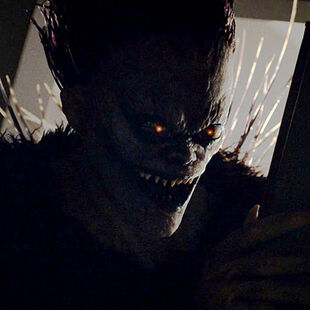
Last week I read an article where Adam Winguard, the director of the disaster that is Netflix’s adaptation of the Death Note franchise, had to quit Twitter because he was receiving so much hate mail and even death threats over his adaptation. And yesterday, the admins of a YouTube channel dedicated to reviewing and discussing anime and manga received death threats for posting a positive review of the movie.

Let that sink in for a moment. A whole bunch of people are sending people hate mail and threatening to kill them over the Internet for either making or liking what many consider a bad movie. And I’d bet one of my anime figurines the majority of these angry people are fans of the Death Note anime and manga who are incensed that the director cast white actors in the movie and the numerous changes from the source material, as well as just making a really bad film, or that anyone would like the film.

Now, all three complaints are legitimate: the casting of white actors as what were originally non-white characters is a serious problem that Hollywood and the public are continuing to grapple with even now. The many changes from the source material were not only unnecessary, but actually made the film more of a mess than a wonder. And it was a really bad film (check my review here for my own thoughts on the subject).

But there is absolutely no excuse or reason–ABSOLUTELY NO EXCUSE OR REASON–to send hate mail or threaten someone’s life. Especially not for their creative work, no matter what decisions they make or the quality of it. And those who think nothing of doing it have some serious issues that need addressing.

Unfortunately, this isn’t the first time fans of a franchise or a character or something along those lines have gone a little bonkers. I was ranting about this issue of fans going crazy back in 2013, when people were leaving intentionally bad reviews of Charlaine Harris’s last Sookie Stackhouse book because it was the last book, and threatening harm to themselves and others if their favorite couples didn’t end up together (and possibly followed through after a copy leaked in Germany). Later that year, people were sending tons of mail to Warner Bros. and trying to get the White House to intervene in the casting of the Fifty Shades of Grey movie (not sure what they expected to happen with that one).

Seriously, was this worth the hate campaign? I actually enjoyed the movie.

Since then we’ve seen negative reactions to the idea of the Ghostbusters reboot, and then the female-led cast, which was so hateful everyone involved in the movie felt the need to comment and even make a joke about it in the movie. We’ve also seen people react negatively to Captain America becoming an agent of Hydra in the comics, with some people threatening the writers behind this move. One man claiming to be a Marine even said that he would abandon his moral code and become a stone-cold killer because of the change (seriously, did any of these nincompoops think that maybe this was a mind-controlled Cap, or one from another dimension, which apparently is the case?). We’ve probably all seen articles about angry males attacking women online for attempting to be part of the video gaming community and industry. And there are more of these than I’m probably aware of, with this Death Note thing just being the latest.

What’s causing people to become so angry and violent over fictional characters and worlds? Well, it might actually be nothing new. As long as there have been creative works and their creators, there have been people who have gotten passionate about them, sometimes a little too passionate (*cough* John Hinckley Jr. and Ricardo Lopez *cough*). And sometimes people even feel that their love of a property gives them some sort of ownership over said property, and therefore they have a legitimate voice in any decisions over said work. And with the Internet as both means to reach like-minded individuals and platform to voice their vitriol without worry of censure, some of these overly-passionate fans can gather en masse and make their anger heard, warranted or not. Sometimes, a few of them even feel emboldened to make threats of violence.

And I get it. I hated the Death Note movie too. I can think of several ways the Star Wars prequels or some episodes of Doctor Who could’ve been better (I actually nearly threw a shoe at the TV once because I really disliked an episode). And God, was I upset when shows I really liked, such as Dracula or Sleepy Hollow, got canceled. I would have loved to find the people responsible for all these mistakes and given them a piece of my mind.

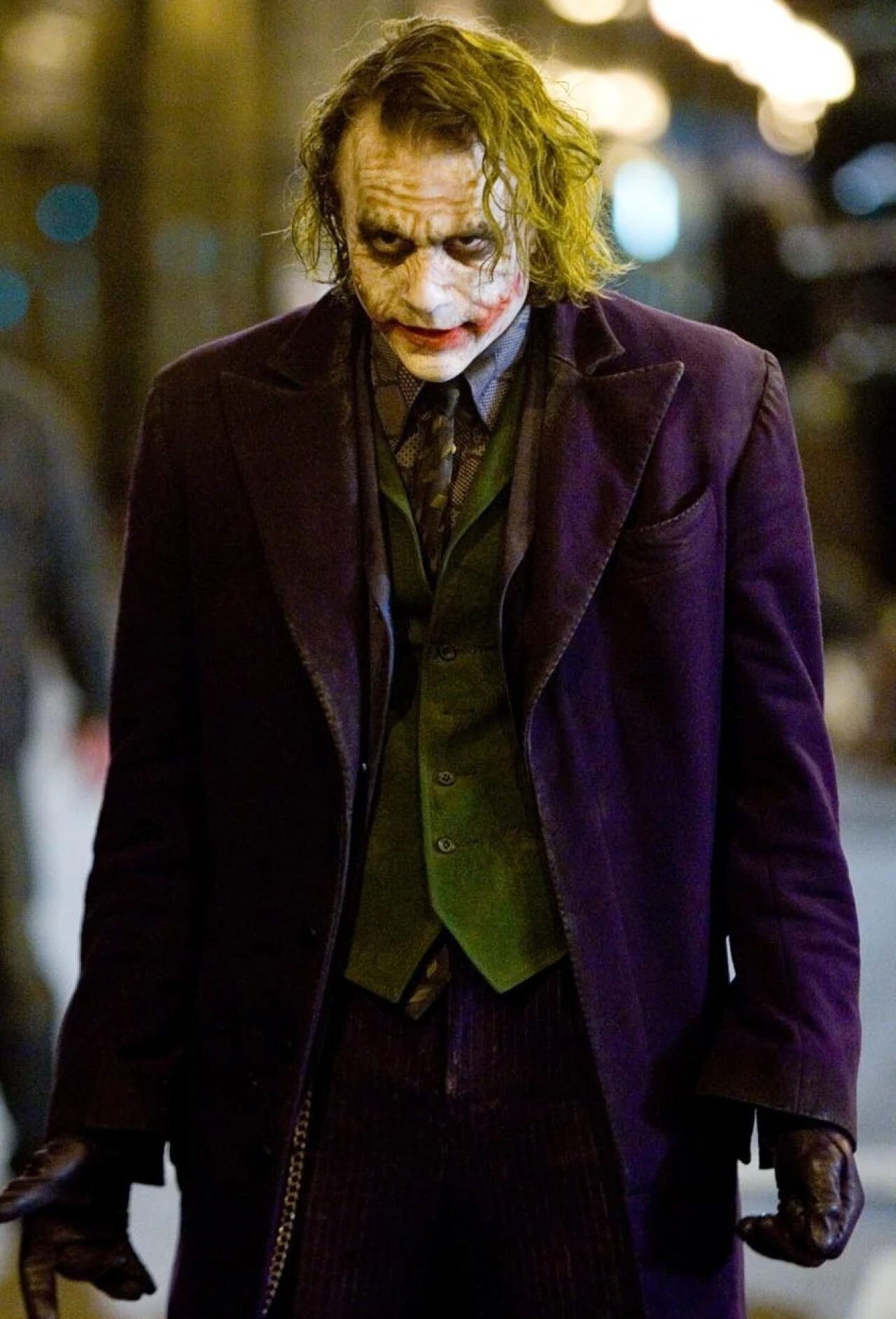
But therein lies the problem: none of these fans have any actual ownership or say in the decisions revolving around these stories, and at the end of the day, it’s the creators themselves who get to make those decisions. And we should let them. After all, they are spending valuable time and energy to bring us these stories we love so much. It’s essentially a gift from them to us, the readers and viewers. And while not all these creative variations are welcome (*cough* first three DCEU movies *cough*), some of these creative risks have led to some the greatest pieces of storytelling ever made. Remember there was a time when the Winter Soldier wasn’t a thing, let alone a former friend of Captain America gone evil. When Heath Ledger was cast as the Joker, people swore it was the worst casting decision that could be made, and yet Ledger’s Joker is arguably one of the best Jokers ever brought to life. And let’s be real, William Shakespeare ripped off and made changes to most of the stories he’s famous for! And look at him!

A decision that turned out to be right after all.

And this is not just for variations in already established characters and stories. Creators should be able to experiment with stories and characters. Otherwise, would we have Doctor Who? Harry Potter? Death Note the manga? Stephen King’s IT?

So what should you do if a story you like or an adaptation of a story goes in a direction you dislike? Well, there are two possible decisions that you could go that won’t make you look like a tool (trust me, as both fanboy and creator, they work). One is to do what I did with Death Note: calmly point out what was wrong with it or what you disliked. You don’t have to be angry to get your point across. I’ve found calmly discussing what you disliked about something does more than shouting. And besides, being rude or angry or telling someone to die never convinced anyone to your point of view or made them change their ways.

The other is to just not take part at all. After Jodie Whitaker was announced as the 13th Doctor, many fans reacted by simply deciding not to watch the show anymore. I even have a friend who decided to do that, and while I disagree with their view, I respect how adult their reactions were. (Thought to be fair, after all those years of Moffat tropes, it might’ve been easier to leave than to work up anger over a casting decision). So if you don’t like what the creators are doing, just leave. Don’t ruin the experience for everyone else who may want to try out the new direction.

And if you’re a parent with kids who may get overly passionate about fictional works, maybe have a conversation with them about how to respond to this sort of thing. It might save someone a lot of headaches later on.

While I doubt this problem will go away anytime soon–if anything, it might get worse over time–we can at least approach it in a healthy manner, rather than with further fear and anger, as well as to find healthy alternatives to anger and/or death threats. Either that, or we never get any sort of new stories ever. And I really don’t want to see that.


That’s all the ranting for now. The next week and a half will be crazy for me, so I have no idea how much, if at all, I’ll be able to post until October 1st. I’ll try and get something out next week, though if I don’t, please don’t hold it against me or send death threats.

Until next time, Followers of Fear. Pleasant nightmares!