Posts Tagged ‘films’

Well, I’m back at this again, with an odd film for my third outing. You see, I watched this film last July, and I even wrote a review. So why am I watching it again and making it part of the Rewatch Review series? Well, here’s why:

WHAT’S IT ABOUT: A Puritan family is forced to move out into the wilderness and start a farm on the edge of a forest. There, a witch sets into motion events that will change the fate of this family, especially the teenage daughter Thomasin, forever.

WHY I DIDN’T LIKE IT: Well, I actually did like it. I gave the film a 3.8 out of 5. That’s a good score. However, I went into the film with different expectations based on the title (the titular witch is actually very peripheral to the story), and I had a hard time without subtitles understanding what anyone was saying, which affected my enjoyment of the film.

WHY I REWATCHED IT: Over the past year and however many months, I’ve thought a bit about this film, and how my enjoyment of it was skewed by the fact that I had totally different expectations going in. I wondered if maybe, f I rewatched the film knowing what it’s really about–not the witch, but the family she affects–I’d enjoy it more. So when I decided to do this series, I put this film on my list.

THOUGHTS: I guess I did enjoy it a bit more, but I wouldn’t raise that 3.8 any higher.

The Witch is a good film, and I go into detail why in my review. It’s faithful to the time period in all the best ways, the psychological aspects are handled very well for a first-time writer/director, and the actors are all good in their roles. With great setting and music, it’s a pretty damn good horror flick. And if you watch it with the subtitles and don’t get miffed by the witch only being in the film for about two or three minutes, you’ll enjoy yourself thoroughly.

I did notice this time though that sometimes the lighting makes it hard to make out what’s going on, though. Like seriously, I know you’re in the middle of the woods, but maybe still use some lights so we can see the characters? Thank you!

JUDGMENT: My opinion doesn’t change, but I’m glad I watched it the way it was meant to be watched. It’s still a good movie, and if you get the chance, check it out. Just remember: subtitles! Those thick accents will puzzle you to death if you allow them to.


Well, that’s all for this entry in the series. Honestly, it was shorter than I expected it to be. The next one will probably be a bit longer, at any rate. After all, I’m watching one of the first slashers ever. That’s right: The Texas Chainsaw Massacre. Bring it on!

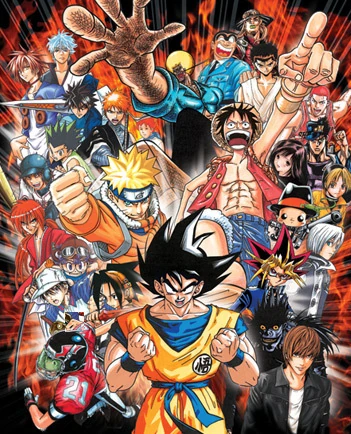
Recently, someone familiar with my writing compared some aspects of my story with anime. This, for me, was a huge compliment, because I am a hee-yuge fan of anime and manga. I’ve read and watched more series than I can count, and I consider some of the stories I’ve read over the years as having a very beneficial influence on my writing style, allowing for better storytelling and characterization. And I believe wholeheartedly that anime and manga can up the game of other fiction writers out there, even experienced ones with plenty of novels or short stories under their belts.

“But wait,” I hear my readers saying, “how can silly Japanese cartoons up my writing game?” Well, my dear Followers of Fear, just like Harry Potter is more than just children’s fantasy stories, and just like I’m more than a dude who enjoys scaring people silly (I actually have a growing doll/figurine collection and enjoy the ballet and the theater), don’t let first impressions about the media get in the way of looking a bit deeper. Anime and manga have so much more to them than meets the eye:

1. It’s an art form. We see literature as important creative works that are a reflection of and an influence on society. So is painting and illustration. But for some reason, the combination of the two mediums are never treated as highly, even when they lead to huge box office and critical success with movie adaptations. And in my opinion, that’s just wrong. Creating decent literature or decent art is extremely difficult, no matter the genre or what is being portrayed. Imagine what must go into doing both well at the same time! If one is good but the other is bad, the series, comic book or animation, will suffer, so these artists are basically combining the two art forms in order to create something appealing to audiences. That is worthy of respect (especially when you consider that manga and anime don’t always get to rely on characters that have lasted 80+ years and have established fanbases).

That being said…

2. There are a multitude of stories to choose from. Despite often going into very deep subject matter, comic books and animation have this reputation for being more family or child-oriented than adult-oriented. And although comic books have been recognized for their serious and mature themes and content, for the most part it’s hard to find animation that, even when aimed at adults, isn’t comedy or relies a lot on comedy. I can only think of one or two off the top of my head.

Anime and manga, on the other hand, span a wide multitude of genres and age ranges. Yes, some are comedic or have lots of comedy elements, but there are plenty of stories that are extremely serious or even plain portrayals of normal lives. Death Note (not the crappy American version) goes deeply into questions of whether the ends justify the means, especially in terms of curing societal ills, all while presented as a psychological cat-and-mouse thriller. Great Detective Conan (or Case Closed, as it’s known in the US), has nearly a thousand chapters/episodes focusing on a kid solving murders a la Sherlock Holmes observation and deduction. With the Light tells the story of a family raising a child with autism. Tell me if any of that sounds like silly cartoons for children.

And that’s just the tip of a very big iceberg. There are all sorts of stories out there, romantic to comedic to scary to inspirational to musical to educational to even some where you wonder who was mad or indecent enough to make them (I’m looking at Makura no Danshi for the former and Kodomo no Jikan for the latter. Google at your own risk). If you can think of it, there’s a chance there’s an anime or manga based around it.

So if you’re looking for inspiration for a new story, try the Japanese. Chances are, there’s a story that could inspire your next work.

3. Characterization. In Western stories, characters are often pretty much defined from the moment you meet them as good or bad guys. Within a few minutes, you not only have a pretty good idea of where they align, but how you feel about them: love, hate, support, fear, root for them to get the girl. This doesn’t usually change, except perhaps if they’re a twist villain revealed in the third act. Rarely do you see a character whom you aren’t sure whether to love or hate, whether they’re good or bad. A character who straddles the fence, in other words, and you’re never sure where they stand until near the end.

If a medium can make me wear this sweatshirt 25 years after a show’s premiere, shouldn’t you at least consider checking it out?

Anime and manga, however, do this very well. They’re very good at telling stories about characters whom you’re not sure how to feel about them, because they’re able to take the time with these characters and show various sides of them over the course of the episodes or chapters. Sasuke Uchiha from Naruto is a prime example: at various points he’s a hero, a villain, a tragic antihero, etc. And you’re never sure whether to hate him or cry for him or what (generally I don’t like him, but that’s just me). And even when a character isn’t given this treatment, they’re often given great character development. Often characters are all good with a few flaws, or all evil with a few good qualities, but anime tends to branch out. You’ve got protagonists who are defined by their anxieties, or heroes who do horrible things but are doing it for good reasons you even sympathize with.  It ranges quite a bit, and it’s done quite well.

4. And finally, it’s entertaining. We all write stories for a variety of reasons, but at the core of it, we want to engage and show people a character worth following, a story worth getting into. And anime and manga do that a majority of the time. Sure, some stories do fail in that regard (looking at you, Clannad), but the vast majority have been tales that have endured the test of time and continue to pull in new audiences. Pokemon is twenty years old and Sailor Moon is twenty-five, but they still continue to entertain and even produce new content. Clearly, there’s something about these mediums that pull people from around the world in far past childhood.

And any medium that can have that sort of influence is worth checking out, if you ask me. Even if it’s not normally up your alley.


And that’s just a few of the reasons writers should check out anime (there may be a Part 2 someday). But tell me, were there any reasons I missed? What series do you find entertaining or influential? Or do you need a recommendation on where to enter the medium? Let’s discuss in the comments below.

Until next time, my Followers of Fear, pleasant nightmares.

My boy, HP Lovecraft

So today as I was heating up dinner, a thought passed through my head that sometimes passes through there (along with, “Oh, that would make a great story,” “I’m hungry,” and “These miserable mortals must be destroyed! Rise up and cleanse the Earth of them!”). The thought was, “I wish there were more HP Lovecraft adaptations. He’s got a lot of material to work from.” This thought was followed, rather unexpectedly, by “Why wasn’t there an HP Lovecraft cinematic universe? You’d think it’d be perfect for film studios. The stories literally take place a multiverse, possibly the very first multiverse!”

Now, if you’re wondering who HP Lovecraft is, you’re not alone. He’s criminally under-known (a word I just made, so copyright). What’s important to know is that he was a writer from the early half of the 20th century who wrote horror stories based around powerful cosmic entities and truths from beyond the stars whose exposure to humans can cause insanity, destruction and death. This is called cosmic horror, and Lovecraft practically invented it. And while you might’ve never heard of HP Lovecraft or cosmic horror (though I talk about him often enough on this blog), you’ve probably seen the wide results of his influence. Ever wonder where the ideas for the Demogorgon or the Shadow Monster and the Upside-Down from Stranger Things come from? Those all are at least partly inspired by Lovecraft’s creations. The weirder, more interdimensional aspects of the works of Stephen King, such as the last two-hundred pages of It or the Dark Tower series? Lovecraft helped inspire them, especially his Dream Cycle stories in relation to the Dark Tower books. And that thing with a mouth full of teeth coming out of my hotel room toilet? That’s actually a demon crocodile, where the hell did that come from?

Point is, Lovecraft has influenced a lot of horror fiction, and even some things not normally considered horror, such as Marvel comics villains. Now excuse me, I’ve got to take care of that demon crocodile.

Still here? Good. Well, you’d think that with such a bibliography and legacy, you’d think Lovecraft would have several adaptations, right? Maybe even a cinematic universe, considering he has one of the earliest multiverses in fiction? Wrong, actually. There are actually only a handful of direct HP Lovecraft adaptations, the most well-known being Re-Animator, and the story that’s based on is kind of in its own separate mini-universe (kind of like Deadpool in the X-Men movies). But wait. If his ideas and the works they influence are so ubiquitous that we’re getting major Netflix shows and box-office record-breaking movies based on them, why aren’t his works being made into more movies? And why isn’t there a cinematic universe, when there’s a gold mine right there for it?

Thank Lovecraft for this guy.

Well, there are a few reasons for that. One of the reasons is that movie adaptations, and especially cinematic universes, are made from properties that filmmakers feel will make them money (now there kind of’s an evil god to rival Cthulhu, am I right?). In the past, movies based off of HP Lovecraft stories have only done moderately well at the box office, mostly as cheesy B-movies, and that’s on a good day. Even Re-Animator only earned around two-million, and its budget was just about half that. So if a major film studio were to make a major adaptation of a Lovecraft story, they’d have to believe that a Lovecraft story could bring in a major profit. And if past adaptations are any indication, it’s not a risk studios are willing to make (let alone a cinematic universe*).

Another issue is that, to be frank, Lovecraft stories don’t always translate very well to cinema. They’re often centered around one person’s experience, and the events surrounding that person aren’t always told in a structure that lends well to movie storytelling. Hell, some of them don’t even work with literature storytelling (*cough* Dream-Quest of Unknown Kadath *cough*).  If you were to adapt some of these stories, you’d have to do a lot of work just to make some of them look good as a screenplay. And even when doing comic book adaptations sometimes involves tweaking entire story arcs just because of copyrights and other aspects, not everyone is willing to do that.

And finally, HP Lovecraft is under-known. Well-known properties, even if there’s no reason to think they’ll be money-makers, are more likely to be adapted than something that few people have heard of. William Shakespeare movies usually don’t make tons of money unless major stars are attached to it, but some of his plays are so well-known and loved that they have multiple adaptations and there’s a good chance more will come in the future (I’d like a Titus Andronicus adaptation, please). But if a work is lesser known, or its appeal is too esoteric, it’s likelihood to get adapted is pretty low.

And all these factors are in the way of more Lovecraft adaptations.

Great adaptation of Lovecraft’s best-known story, The Call of Cthulhu.

Still, that doesn’t mean there haven’t been Lovecraft adaptations in recent years. And not all of them have been cheesy B-films. The HP Lovecraft Historical Society (yes, that’s a thing) has previously made great adaptations of The Call of Cthulhu (which I own and reviewed HERE) and The Whisperer in Darkness that were made to look like they were filmed in Lovecraft’s time. Guillermo del Toro nearly made a big-budget adaptation of At the Mountain of Madness, one of Lovecraft’s better-known works, and there’s a chance he may try to make it again someday. And with Lovecraft’s appeal staying steady and possibly even growing, there’s a chance other studios, including independent ones, will make their own adaptations. One article I read even said that a lot of international indie studios are not only making Lovecraft films, but showing them at film studios.

And even if Lovecraft films aren’t being directly adapted, as I’ve said, his ideas are appearing all over the place. I’ve already mentioned the works of Stephen King and Stranger Things, and those are only the tip of a large iceberg. The Hellboy films all feature Lovecraftian monsters, as do a number of major video games like Amnesia: The Dark Descent and Bloodborne. And I recently saw a film heavily influenced by Lovecraft called The Void, and while I had some issues with it, it definitely had its points, including great atmosphere and practical effects. Stuff like this will only keep Lovecraft in the public consciousness and maybe someday lead to further adaptations of his work.

So maybe HP Lovecraft won’t have a cinematic universe anytime soon. But he’s clearly got staying power, and that means there’s always a chance we could see more films by him as time goes by. Some of them may even come from major studios and perhaps even be great successes. As nearly everyone says, you never know what the future holds. Maybe even an adaptation of Shunned House? Please?

What do you think of HP Lovecraft adaptations? What would you like to see adapted? Let’s discuss.

That’s all for now, my Followers of Fear. The demon crocodile (whom I’ve named Alathla) and I are off to cause terror in a major metropolis area. Until next time, pleasant nightmares!

*Though from what I hear, cinematic universes are on the way out the door, thanks to the massive mistakes studios like WB and Universal have made with the DCEU and Dark Universes. So…never mind?
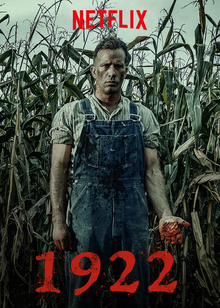
I did not expect to do a review today. I didn’t even expect to see a new movie this weekend! But then I found out that the fourth or fifth Stephen King film to come out this year (he really is in the middle of an adaptation renaissance) was out on Netflix, I was like, “I gotta watch this. I gotta watch this, and I gotta review it.” So I watched 1922. And what did I think?

Well, it was nothing like I expected. I’ll give it that much.

1922 follows a farmer who plots with his son to murder his wife after she threatens to force them to leave their farm and move to the city, and the consequences of their plans. It’s based on a novella that I’ve only read half of (I was just coming off a huge Stephen King binge, and at the end of those, I just get sick of his style), and I honestly didn’t know it was being adapted into a movie until I saw the trailer last month. I wasn’t too excited, because while the trailer was good, I felt a lot more hype for movies like It and Gerald’s Game. Who knows? Maybe it would blow me away.

Too bad I found it average.

I think the film’s biggest problem is its first half hour, in which the farmer and his son kill the wife (spoilers). They cram that whole thing into about twenty minutes or half hour, from the introduction to the main characters to the murder. Now, usually movies about murdering someone take more time to do that, introduce the characters and then get to the murder. This gives the filmmakers time to introduce us to the characters so that we, the audience, can connect and empathize with them. This time is also used to explain why the characters feel murder is necessary to accomplish their goals. Otherwise the audience won’t understand, and that takes them out of the story.

However, 1922‘s filmmakers are in such a rush to get to the actual murder, they skip over all that. Instead, they use narration and jumpy shots of the characters thinking or pacing or staring into space to try to get all that across, and it’s done poorly. There’s a phrase we writers use: “show, don’t tell,” and that applies to movies too. We only get so much interaction between the characters during this time, in favor of the jumpy shots and narration, and by the time we get to the commitment to murder, we’re just like, “Wait, I have a hundred questions and points I’d like to bring up! I seriously don’t get why this murder needs to happen!”

After that first half hour though, the film does even out, becoming a much better horror film. The pacing becomes much more even, and they dispose of the jumpy shots. It actually makes for a really well-plotted thriller, in which we really see how this murder, as well as some of the consequences–expected and otherwise–psychologically damage the farmer and his son. The actors do a good job of making their characters seem real, and the use of the supernatural in this film isn’t too over-the-top or distracting. It’s actually pretty creepy at times.

Still, there’s nothing during the time after the first half hour of the film that makes the film extraordinary. No terrifying corn chase scene, no stalking of the main characters that makes you feel a chill. It’s just average psychological thrills and family drama, and we’ve seen a lot of it before in a hundred films, books, and TV shows.

Still, it’s better than the first half hour.

On a scale of 1 to 5, I give the film 1922 a 2.5. It’s a horror film, but there’s better material out there, Stephen King or otherwise. Go watch that instead.


That’s all for now, my Followers of Fear. I’ll try to make the next blog post I put out either something about my life or about examining something in writing or horror that’s worthy of discussion. Until then, have some pleasant nightmares and a great weekend.

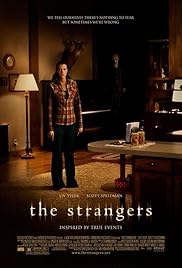
My first entry into the Rewatch Review series, Perfect Blue, turned out to be an enjoyable film, much better than I remember it. That said, could the next one do just as well? You’ll have to read on to find out. Here we go with 2008’s The Strangers.

WHAT’S IT ABOUT: A couple go home after a wedding to relax and work through their issues. They’re stalked and attacked by strangers who show up in the middle of the night (simple and to the point).

WHY I DIDN’T LIKE IT: I just thought it was basic horror fodder. Nothing original or likable, nothing to make it stand out. It was bad, the kind of film that people hold up when they say horror movies are just lifeless stories about boring people screaming while someone or something tries to kill them.

WHY I REWATCHED IT: I heard some people praise it as scary. I heard it was loosely based on the Manson murders (right around the same time I read Helter Skelter). And I heard a sequel was being filmed. That’s it. Motivation enough.

THOUGHTS: I didn’t think it was possible. It was worse than I remember.

Nothing about this film makes it especially good or scary. For one thing, our two main characters are the blandest I’ve ever seen. It’s like watching white bread with saltines trying to be interesting and have chemistry, but the characters feel mismatched, and their actors feel like they couldn’t give a crap about making us believe them, just as long as they get paid! So when they discuss their issues or try to seem “in love” with one another, it just rings hollow. And when that happens, it’s hard to get invested into the movie at all.

On top of that, the camera is seriously unsteady. Not kidding, in shots where the camera should stay still to focus on a character or a dramatic scene to make it more powerful, the camera is moving around shakily, which is seriously distracting and takes away from the scene. I felt like the cameraman was holding a handheld, and his arm just got tired from holding the camera, so it shook. Seriously sloppy.

And beyond all that, the story has been done to death! “Killers in the house! Ooo-oooh! Scary!” But here’s the problem, we’ve seen this sort of story done so much better, in classic slasher films like Halloween and When a Stranger Calls. This is trying to be those films, but it doesn’t even feel like pale imitation here. It’s like paint-by-the-numbers (or kill-by-the-numbers, I guess).

The only good points were that the film did pick up a bit as it went on, with decent attempts at atmosphere and a few jump scares, but the first half hour of the movie just made it so boring, it’s hard to move past that and get emotionally invested in the story. But other than that, there’s nothing redeeming to make up for the mistakes made with this film.

JUDGMENT: I had more fun checking my phone than watching this movie. The Strangers, on a scale of 1 to 5, gets a well-deserved 1. Stay away from it, because let’s face it, the crap in your toilet will be more entertaining than this film. Don’t expect me to go anywhere near the sequel.


That’s all for now, Followers of Fear. Let’s hope that the next film I watch, I actually enjoy. Especially since I thought it had great potential the first time around.

Fun. That is the best way to describe this movie. Lots and lots of fun.

Happy Death Day is a comedy/horror film starring Jessica Roethe and Israel Broussard. Written by Scott Lobdell and directed by Christopher B. Landon, the movie follows Theresa “Tree” Geibman (Rothe), a selfish sorority girl who is murdered on her birthday by a masked killer, only to wake up at the beginning of her birthday. When she’s killed again by the killer and wakes up at the beginning of the day all over again, she decides to solve her murder and catch the killer before he finally finds a way to permanently kill her. It’s Groundhog Day with a horror twist, and in the best way too.

And yes, they do reference that movie at one point in the movie. After the film’s proven just how good it is despite the familiar premise.*

Honestly, I have very little to pick at with this movie, it was that good. The writing is stellar, balancing humor, horror, mystery and the growth of protagonist Tree with a deftness that you don’t normally see from first-time screenwriters, and the directing and acting matches just as well. Rothe does a great job showing us the evolution of Tree from a very unsympathetic protagonist to a likable and kinder person, and Israel Broussard’s Carter Davis as a sort of advisor and love interest is instantly lovable. The rest of the cast is also a lot of fun. I especially liked the character of Danielle, who was great comic relief as the movie went on.

The movie also does a great job of keeping things light when they need to be light and serious when they need to be serious, and Landon does a great job working with Rothe to show her evolution as a character, in both attitude, clothing, and even make-up. Along with great music and other touches, you get a really well-told film. It’s not exactly super-scary (though there were points where members of the audience gasped and screamed), but it keeps you engaged and trying to guess the ending and resolution, which will probably surprise you, especially if you’re not very good at guessing these sorts of things (I am, and even I had a bit of trouble predicting things).

If there was anything I didn’t like, it’s the mask the killer uses. Not that it’s bad, it’s a psychotic, one-toothed baby, it’s creepy as hell. But it’s revealed early on that the mask is actually that of the school’s mascot, and that plenty of people wear that mask. What school makes a baby its mascot? That’s almost as dumb as the Fighting Artichokes (which is a real thing).

But anything other than that is nitpicking. This is a fun thrillfest that will keep you on the edge of your seat till the end of the movie, and I can see it gaining the same sort of cult following as Groundhog Day has (though obviously for very different reasons). On a scale of 1 to 5, I’m giving Happy Death Day a 4.5. Go check it out, and see for yourself how awesome it is.

That’s all for now, my Followers of Fear. I might have another post out in the next day or two, so keep an eye out for it. Until then, pleasant nightmares!

*Funnily enough, I’ve never seen Groundhog Day, though I know the basic gist of it. I’ll watch it at some point, though. I have an idea for a novel with its own Groundhog Day time loop scenario, so I’ll probably see the movie before I start working on that (whenever that is).

So here it is, finally. The first in my Rewatch Review series, in which I look at horror or thriller movies I’ve seen and didn’t like/had problems with and see if maybe I missed something the first time. I’m kind of just winging it with this first one, with no fixed plan on length or how deep I’m going into these films and their respective qualities, but at the very least, I hope if you haven’t seen these films, you get an idea of whether or not it’s worth checking out. And if you have seen any of these films, you’ll get an idea of what my thoughts are on them these days.

With that out of the way, here are my thoughts on Perfect Blue!

WHAT’S IT ABOUT: Perfect Blue is an anime film that follows Mima “Mimarin” Kirigoe, a Japanese pop idol singer who, on the advice of her agency, is reluctantly leaving the pop idol industry to become an actress on a TV show.  Experiencing a crisis of identity and followed everywhere by a violent stalker, things only get worse for Mima as events conspire to blur her perceptions of reality and fiction, leading to a violent and horrifying head where not just her own life is at stake, but her very identity as well.

WHY I DIDN’T LIKE IT: I thought it was too trippy when I first saw it in college, and it kind of dragged at points. I had expected something much more dynamic, and this felt more slow-burn to me.

WHY I REWATCHED IT: I saw a video essay on the movie a while back, and it pointed out some interesting things about the film that made me want to go back and give it another chance.

THOUGHTS: I’m glad I rewatched this film, because it is really good. I’m actually a little disappointed that I didn’t care for it when I saw it in college. It’s a great psychological thriller, and there’s a lot to talk about on several different levels (I’ll stick to the film quality and not to diving deeper into the psychological aspects. I’ll leave that to the video essay I mentioned above).

First off, the animation is different from most anime, which is very stylistic. The artwork isn’t exaggerated or distinctly cartoony, full of jumpy animations and wild reactions. If you think of most anime, like Sailor Moon, Pokemon, and One Piece as analogues to cartoons like Family Guy or Looney Tunes (just examples for the non-fans out there, don’t kill me, fellow anime lovers), then Perfect Blue‘s style is more analogous to early Disney films, particularly those of Cinderella and Snow White (the latter is actually a lot darker than you probably remember it if you go back to watch it). It’s very grounded and scaled back, with very few characters actually looking pretty, cute or cool. The only ones who do are characters directly involved in the entertainment industry, and that makes the movie feel real to us. It’s a world very much like ours, with violence like ours, and people just like ours. So when you see something violent within the film, the realism makes it all the more powerful. This isn’t just animation, this feels like it could happen. Maybe it has happened, and it’s amazing to see animation portray that.

Speaking of the main character, Mima is presented to the audience with extraordinary skill. There’s no exposition or anything, but who she is and how she feels is made clear to us, which makes her real to us. We’re shown quiet moments for her, such as grocery shopping or getting to and from work, presented in contrast to her life as a celebrity, and that really conveys to us just what sort of character Mima is. And that’s good, because the central conflict is around who she is: Mima has trouble dealing with the fact that she’s been talked into changing careers, and isn’t sure who she is now that she’s changed. With the struggles of her new acting career starting to get to her, as well as visitations from her stalker, Mima’s own grasp on reality starts to go. She starts to lose track on what’s part of her new TV show, which bears some resemblances to her own mental struggle, as well as starts to see a phantom version of her pop-idol persona. And so do we, the audience, unable to tell what is real, what is part of her show, and what is part of her tortured pscyhe.

And when that happens, we feel Mima’s inner anguish. We’re right there with her, trying to unsuccessfully figure out what’s real and what isn’t. And when we can’t come up with those answers with Mima, it only makes the terror of the moment and of the unreality of the situation that much stronger.

JUDGMENT: If you think that anime can’t be deep or anything other than silly cartoons, you need to watch Perfect Blue. It’s a twisted story of a girl trying to find herself under the most terrifying circumstances reality can give her, full of gorgeous but realistic animation, intense scenes and visuals (I’m talking to you, screwdriver scene!), and great questions on the idea of our true selves versus the personas we create for ourselves (that’s a subject for another post). Definite 4.5 out of 5. Pop it in and see what the rabbit hole uncovers.


That’s all for now, my Followers of Fear. I hope you enjoyed the first entry in the Rewatch Review series, and I hope you join me when I get my hands on 2008’s The Strangers.

I read the novel Gerald’s Game earlier this year just in preparation for this movie. I heard what it was about (see my summary below), and I was like, “Shit, I gotta read this.” And I did, and I found it really intense. It was filled with some of the usual Stephen King cliches, those quirky sentences and weird things he likes to do, but my God, it was intense. Nothing I couldn’t handle, but still very intense. I could understand why my mother found it so difficult to read she had to skip to the end just so she could sleep at night.

This evening, after a long training trip for work and after hearing that this Netflix Original was really good according to early reviews, I sat down in my hotel room to watch the film. And I can say without hesitation, this was an amazing psychological thriller, scarier than It, even. And unlike It, I would not recommend my mother see this one.

Gerald’s Game follows Jessie Burlingame, a housewife played by a convincing Carla Gugino, who goes with her husband Gerald, played by Bruce Greenwood, to their lakeside cabin for a weekend away. However when a kinky sex game goes wrong, leaving Gerald dead and Jessie handcuffed to the bed, struggling to survive as the stress causes her mind to unwind and her worst nightmares to come to life.

So like I said, this film is great, with Conjuring-level frights at certain points. The filmmakers used camera angles, light, colors, and especially sound to highlight the horror of the situation. The sound is noteworthy, because it’s used so sparingly once the movie really gets started. After Gerald dies, Jesse starts screaming, and there’s background music, but the shot changes to outside, and all we hear is birdsong and some muffled screaming. This highlights all the more how this could actually happen in the real world. It’s beautiful.

I also like some of the changes made from book to movie. The writers and directors managed to translate what some might correctly term as an unfilmable story very well to the screen by changing some of the weirder elements of the story, namely all the voices in Jessie’s head brought out by the stress with their own distinctive personalities, into just three personalities: a more ballsy version of herself, Gerald, and her father. They also switched from having Jessie being in nothing but panties to wearing a slip, saving this film from being just titillating torture porn. And they actually manage to get in some slightly funny moments to make sure the story doesn’t get too dark (or maybe I’m laughing at weird stuff to relieve myself of tension).

But the best part is definitely the climax. My God, did that scene make me cringe! That could not have been easy to film (on so many levels), but it pays off so well. I actually cringed in my seat and let out exclamations of disgust and horror after seeing that scene.

There were only a few things I didn’t care for. In one scene, Jessie’s narrating a dream she had at one point as a child, and I feel like that would’ve been better shown than told (I sound like a high school English class typing that, but I don’t care, it’s true). There’s also a lot of dialogue in the film that, while it would fit in a King novel, never would fit in real life, let alone in a movie. And while the way the story is wrapped up kind of works in the novel, I feel like it might’ve been done better if it was done differently in the movie. It’s not bad, it’s actually decent, but it could’ve been done differently and possibly much better.

Also, that ending forgot about the dog. Just saying.

All in all though, this is a fantastic movie, a psychological thriller that scares, grosses out, and even manages to integrate themes of misogyny and the effects of sexual abuse into the story without feeling forced. Heck, it’s even got some dark humor at times…if you see it as humor. I could honestly see this film getting some academic examinations in the future just based on how well it’s done. It’s that good a film.

On a scale of 1 to 5, I’m giving Gerald’s Game a well-deserved 4.7 out of 5. Unless you’re my mother, go to Netflix, eat some popcorn, and go to bed with your arms close to your chest because you’re afraid you’ll wake up with your arms cuffed to the bedposts. I know I will, especially that last part.

Goodnight Followers of Fear, and pleasant nightmares!

If you’ve known me for any amount of time, you know I’m a huge fan of horror. I read horror novels, I write horror stories, I sometimes write articles examining various aspects of horror, I watch YouTube videos about dark and creepy subjects, I decorate my apartment with horrifying artwork and dolls and stuff, I…well, you get the idea. And of course, I watch plenty of horror films and shows.

And as every true horror fan knows, it can be hard to find good horror sometimes, particularly in the movie department. We fans watch a lot of horror movies that are really bad hoping that they may be good and even give us a few nightmares (or in my case, some good inspiration). I sometimes think of it examining piles of shit looking for gold nuggets, only you can’t tell the difference without special examination (imagine if that was the actual case. Nobody but the really desperate would ever look for good horror movies!). And I’ve seen plenty of bad horror films over the years while looking for good ones. I’ve even written about them, on occasion.

But lately there’s been something I’ve been wanting to try. You see, some of those horror films that I’ve hated, I’ve heard lots of people praising. They tell me the shit is actually gold. I’ve even seen some very thorough examinations of these films, in essays and videos, and the writers/creators of those videos have made me wonder if maybe I should rewatch some of these films, and reexamine my opinions of these films.

So now that I’ve seen It and there aren’t that many horror films coming out in the next couple months that I’m absolutely dying to see and review, I think it’s time to do what I’m going to call the Rewatch Review series. I’m going to watch ten films that I’ve hated and/or given bad reviews in the past, and see if my opinion has been changed. Some I may have watched in the wrong light, others I just think I missed something the first time around. Either way, I’m going to take a look again and then let you know if I’ve got any new thoughts to share.

And with the first film waiting for me at the library even as you read this, I should be able to start watching in earnest soon. It may take some time, depending on how quickly I can get these movies, but either way, you’re going to get something from me.

As for what these films are, I’ll list them below. When I’ve written my (hopefully changed) thoughts on each movie, I’ll post a link to this article. That way, if you want to read all my thoughts at once, you’ll have that option (though I don’t know if anyone’s THAT bored!).

Perfect Blue (1997)
The Strangers (2008)
The Witch (2015)
The Texas Chainsaw Massacre (1974)
Oculus (2013)
Evil Dead (1981)
Nosferatu (1922)
The Shining (1980)
Mama (2013)
Whispering Corridors (1998)


Why did I dislike some of these films? You’re going to have to wait till I actually write about them. Haven’t I reviewed a few of them before? Yes. Why am I reexamining them if I already reviewed them? You’ll have to wait till I watch them. And that’s all I’m saying on the subject.

That’s all for now, my Followers of Fear. I’m heading off to bed. Until I write again, pleasant nightmares.*

*And if you have any, let me know. I might write a novel based off it.

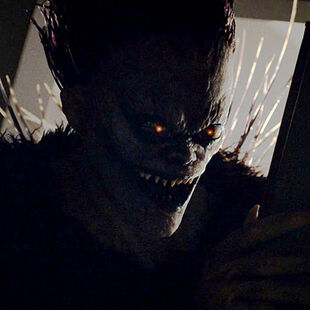
Last week I read an article where Adam Winguard, the director of the disaster that is Netflix’s adaptation of the Death Note franchise, had to quit Twitter because he was receiving so much hate mail and even death threats over his adaptation. And yesterday, the admins of a YouTube channel dedicated to reviewing and discussing anime and manga received death threats for posting a positive review of the movie.

Let that sink in for a moment. A whole bunch of people are sending people hate mail and threatening to kill them over the Internet for either making or liking what many consider a bad movie. And I’d bet one of my anime figurines the majority of these angry people are fans of the Death Note anime and manga who are incensed that the director cast white actors in the movie and the numerous changes from the source material, as well as just making a really bad film, or that anyone would like the film.

Now, all three complaints are legitimate: the casting of white actors as what were originally non-white characters is a serious problem that Hollywood and the public are continuing to grapple with even now. The many changes from the source material were not only unnecessary, but actually made the film more of a mess than a wonder. And it was a really bad film (check my review here for my own thoughts on the subject).

But there is absolutely no excuse or reason–ABSOLUTELY NO EXCUSE OR REASON–to send hate mail or threaten someone’s life. Especially not for their creative work, no matter what decisions they make or the quality of it. And those who think nothing of doing it have some serious issues that need addressing.

Unfortunately, this isn’t the first time fans of a franchise or a character or something along those lines have gone a little bonkers. I was ranting about this issue of fans going crazy back in 2013, when people were leaving intentionally bad reviews of Charlaine Harris’s last Sookie Stackhouse book because it was the last book, and threatening harm to themselves and others if their favorite couples didn’t end up together (and possibly followed through after a copy leaked in Germany). Later that year, people were sending tons of mail to Warner Bros. and trying to get the White House to intervene in the casting of the Fifty Shades of Grey movie (not sure what they expected to happen with that one).

Seriously, was this worth the hate campaign? I actually enjoyed the movie.

Since then we’ve seen negative reactions to the idea of the Ghostbusters reboot, and then the female-led cast, which was so hateful everyone involved in the movie felt the need to comment and even make a joke about it in the movie. We’ve also seen people react negatively to Captain America becoming an agent of Hydra in the comics, with some people threatening the writers behind this move. One man claiming to be a Marine even said that he would abandon his moral code and become a stone-cold killer because of the change (seriously, did any of these nincompoops think that maybe this was a mind-controlled Cap, or one from another dimension, which apparently is the case?). We’ve probably all seen articles about angry males attacking women online for attempting to be part of the video gaming community and industry. And there are more of these than I’m probably aware of, with this Death Note thing just being the latest.

What’s causing people to become so angry and violent over fictional characters and worlds? Well, it might actually be nothing new. As long as there have been creative works and their creators, there have been people who have gotten passionate about them, sometimes a little too passionate (*cough* John Hinckley Jr. and Ricardo Lopez *cough*). And sometimes people even feel that their love of a property gives them some sort of ownership over said property, and therefore they have a legitimate voice in any decisions over said work. And with the Internet as both means to reach like-minded individuals and platform to voice their vitriol without worry of censure, some of these overly-passionate fans can gather en masse and make their anger heard, warranted or not. Sometimes, a few of them even feel emboldened to make threats of violence.

And I get it. I hated the Death Note movie too. I can think of several ways the Star Wars prequels or some episodes of Doctor Who could’ve been better (I actually nearly threw a shoe at the TV once because I really disliked an episode). And God, was I upset when shows I really liked, such as Dracula or Sleepy Hollow, got canceled. I would have loved to find the people responsible for all these mistakes and given them a piece of my mind.

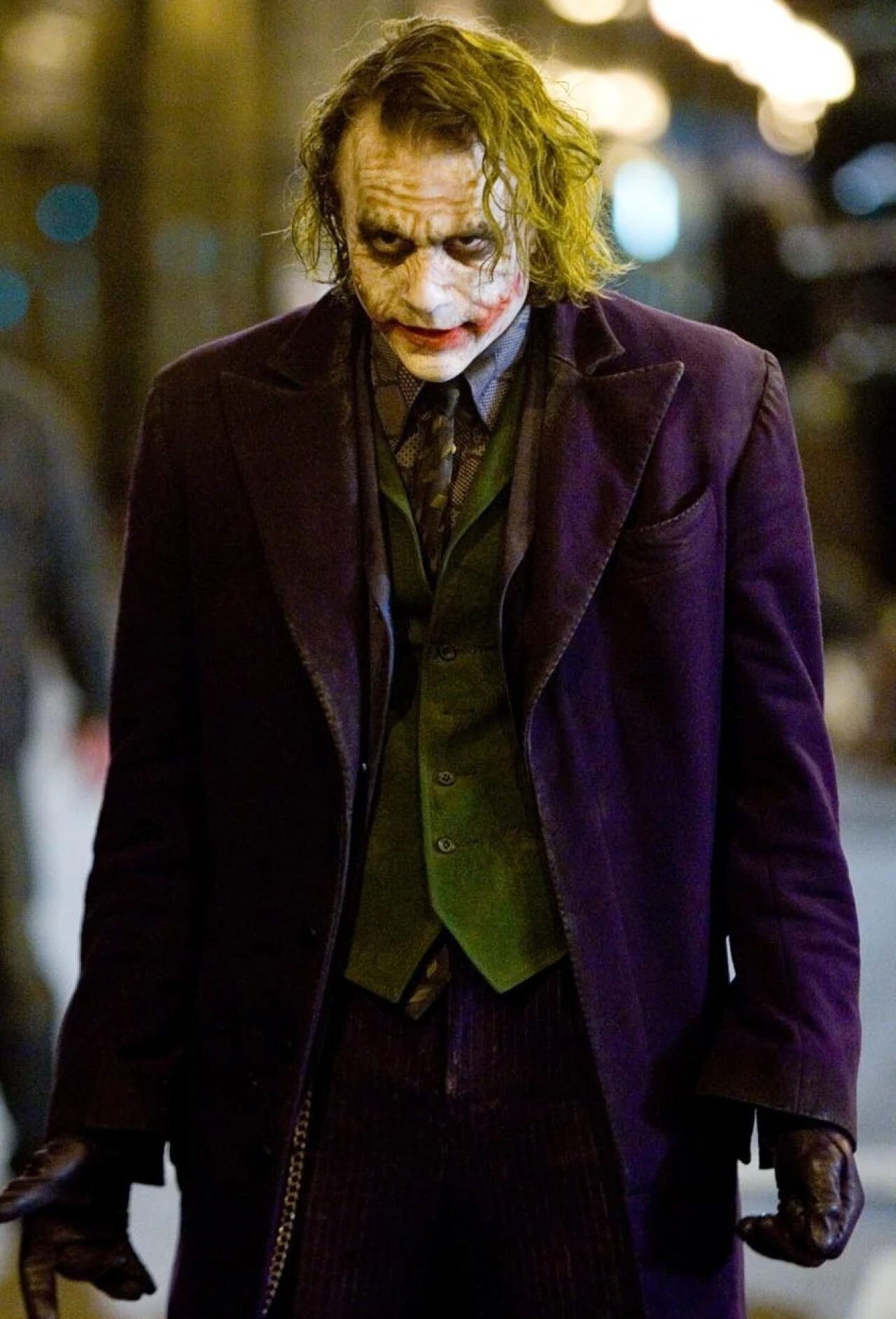
But therein lies the problem: none of these fans have any actual ownership or say in the decisions revolving around these stories, and at the end of the day, it’s the creators themselves who get to make those decisions. And we should let them. After all, they are spending valuable time and energy to bring us these stories we love so much. It’s essentially a gift from them to us, the readers and viewers. And while not all these creative variations are welcome (*cough* first three DCEU movies *cough*), some of these creative risks have led to some the greatest pieces of storytelling ever made. Remember there was a time when the Winter Soldier wasn’t a thing, let alone a former friend of Captain America gone evil. When Heath Ledger was cast as the Joker, people swore it was the worst casting decision that could be made, and yet Ledger’s Joker is arguably one of the best Jokers ever brought to life. And let’s be real, William Shakespeare ripped off and made changes to most of the stories he’s famous for! And look at him!

A decision that turned out to be right after all.

And this is not just for variations in already established characters and stories. Creators should be able to experiment with stories and characters. Otherwise, would we have Doctor Who? Harry Potter? Death Note the manga? Stephen King’s IT?

So what should you do if a story you like or an adaptation of a story goes in a direction you dislike? Well, there are two possible decisions that you could go that won’t make you look like a tool (trust me, as both fanboy and creator, they work). One is to do what I did with Death Note: calmly point out what was wrong with it or what you disliked. You don’t have to be angry to get your point across. I’ve found calmly discussing what you disliked about something does more than shouting. And besides, being rude or angry or telling someone to die never convinced anyone to your point of view or made them change their ways.

The other is to just not take part at all. After Jodie Whitaker was announced as the 13th Doctor, many fans reacted by simply deciding not to watch the show anymore. I even have a friend who decided to do that, and while I disagree with their view, I respect how adult their reactions were. (Thought to be fair, after all those years of Moffat tropes, it might’ve been easier to leave than to work up anger over a casting decision). So if you don’t like what the creators are doing, just leave. Don’t ruin the experience for everyone else who may want to try out the new direction.

And if you’re a parent with kids who may get overly passionate about fictional works, maybe have a conversation with them about how to respond to this sort of thing. It might save someone a lot of headaches later on.

While I doubt this problem will go away anytime soon–if anything, it might get worse over time–we can at least approach it in a healthy manner, rather than with further fear and anger, as well as to find healthy alternatives to anger and/or death threats. Either that, or we never get any sort of new stories ever. And I really don’t want to see that.


That’s all the ranting for now. The next week and a half will be crazy for me, so I have no idea how much, if at all, I’ll be able to post until October 1st. I’ll try and get something out next week, though if I don’t, please don’t hold it against me or send death threats.

Until next time, Followers of Fear. Pleasant nightmares!