Posts Tagged ‘HP Lovecraft’

In recent days and across my social media, as well as on my blog, the number of people following me has grown by leaps and bounds. Why is that? I have my theories, but this post isn’t about theories. Instead, it’s to better introduce myself to my new Followers of Fear, as I like to call the people following me and supporting my writing career.

And since I’m a horror writer, obviously I’m doing thirteen items to get to know me better.

So, without further ado, here’s what will hopefully be a fun introduction to yours truly. And who knows? Perhaps some of my long-time Followers of Fear might learn something that’ll surprise them. It’s happened before!

I’m a writer of horror and dark fantasy with five books under my belt. I’ve been writing since I was a kid, and in college, I started self-publishing books. My first book was a collection called The Quiet Game: Five Tales to Chill Your Bones, which came out in 2013. The next year, I published a slasher novel called Snake about a serial killer hunting mobsters in New York City (think John Wick, Taken and Friday the 13th got smashed into a novel). Both did okay, and continue to get readers today.

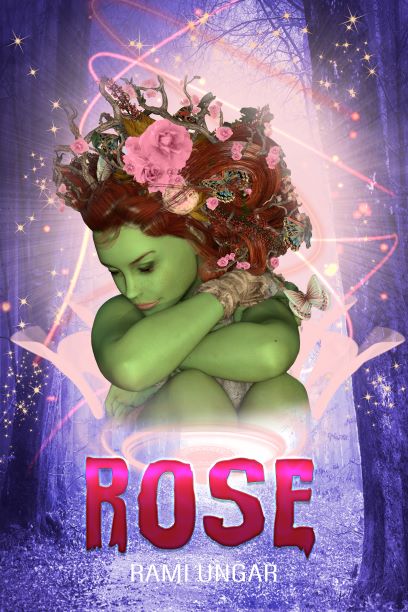
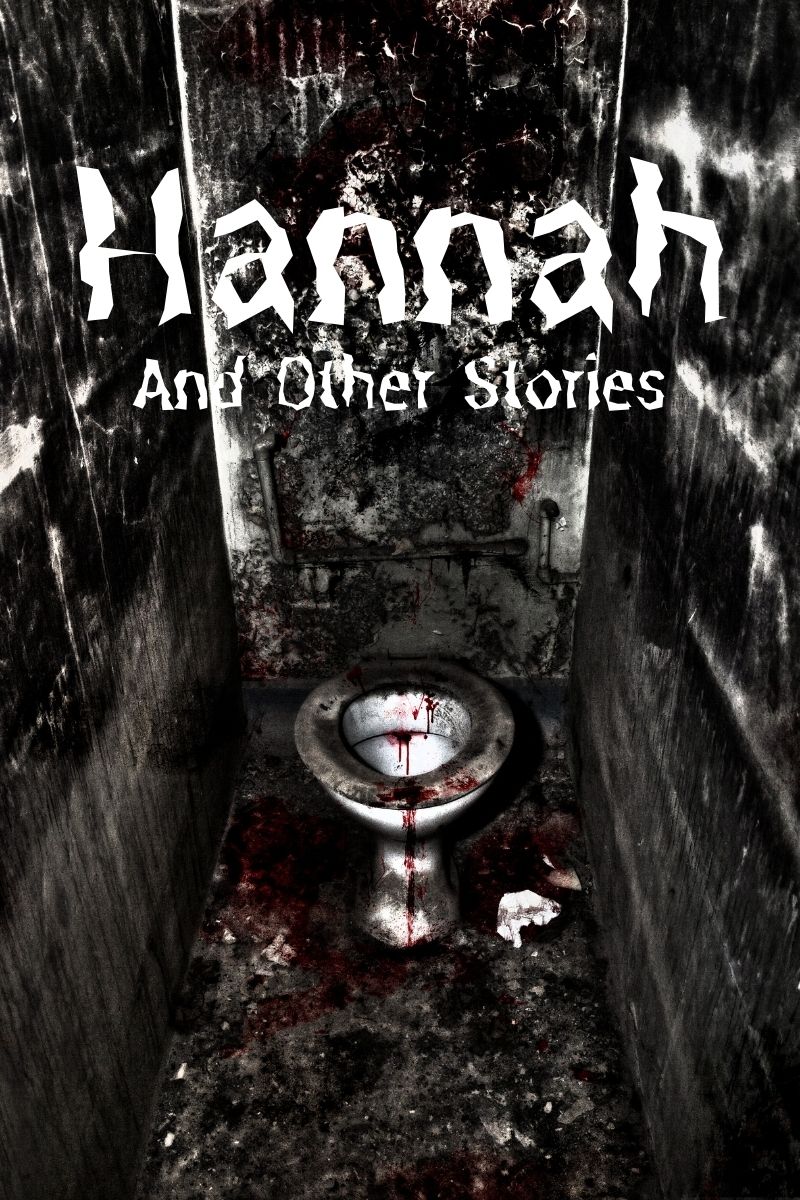
Five years later, I published my first novel with a publisher. Rose was released by Castrum Press in summer 2019, and followed a young woman turned into a plant/human hybrid (and that’s just the start of her problems). I followed Rose in 2021 with The Pure World Comes, a Victorian Gothic horror novel about a maid who goes to work for a mad scientist. And last year, in 2023, I published my second collection, Hannah and Other Stories, which was released by BSC Publishing Group.

That’s all five of my books out now. I’m proud of all of them and all I’ve managed to do with them over the years. And I plan to put out more in the years to come.
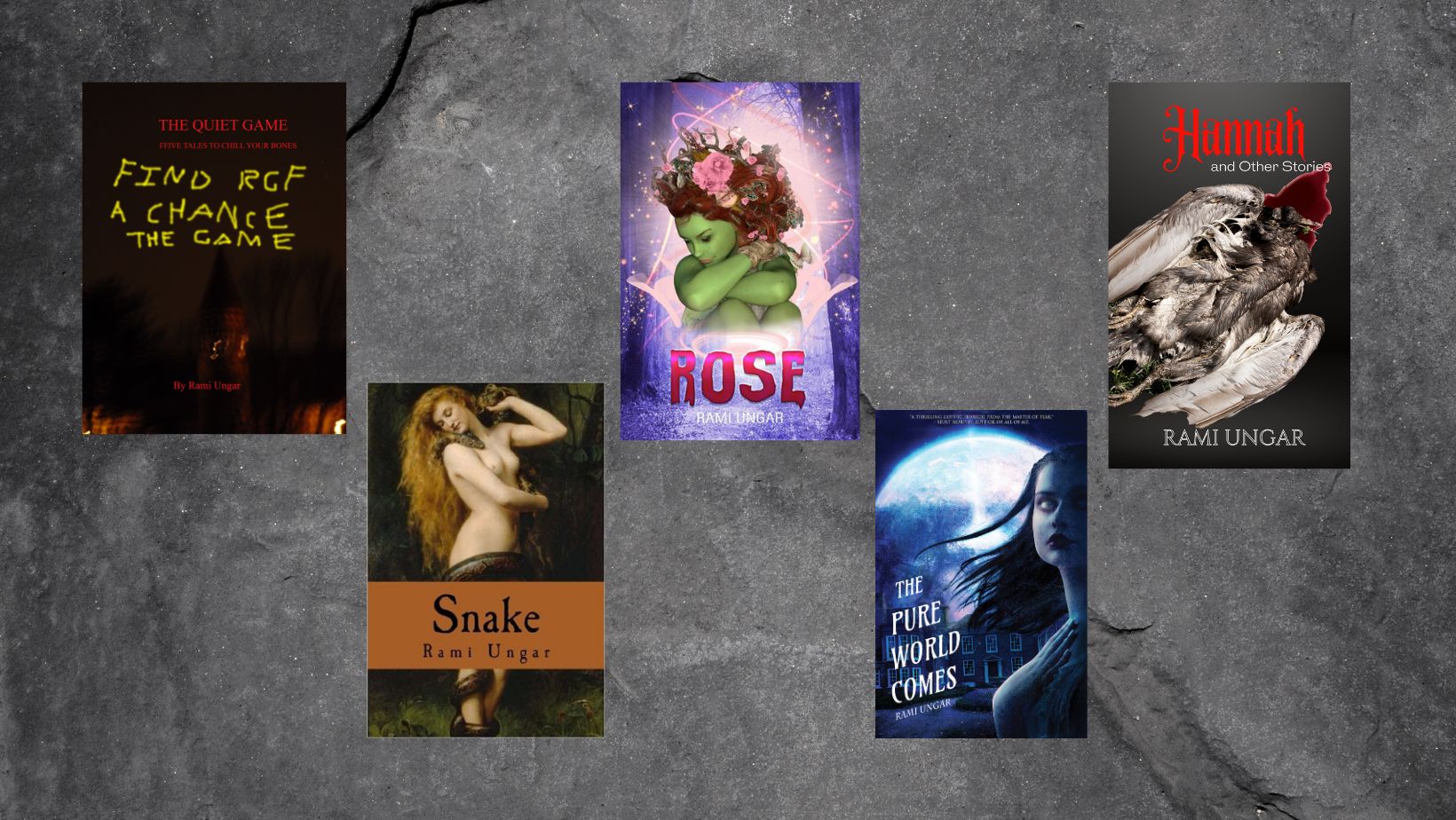
All five of my currently available books. I love them and am so proud of them (and their awesome covers).

I’m Jewish, queer, and have disabilities. Growing up, my life has been an interesting ride, to say the least. Not only did I grow up in a fairly religious Jewish household, but both my father and mother are rabbis. I went to a Jewish day school for most of my youth, learning Hebrew and Judaic subjects for half the day and then learning normal stuff the rest of the day. I also went to synagogue nearly every week, and attended Jewish teen and college groups until I graduated.

To this day, I still practice a lot of the religious practices I grew up with and feel a strong connection with my faith and heritage.

I’m also bisexual. I figured that out in college, and came out about half a year after I came to that realization. Probably took me that long to get comfortable with it because, even surrounded by accepting people and LGBT family members, I still worried about being persecuted. However, I did come out and it was all good, which was reassuring. And then some years later, I realized I was also aromantic (if you’re unfamiliar, it means I can’t feel romantic desire or attraction). Which, looking back, felt pretty obvious, considering I didn’t care about having a relationship all my life. But when I realized it, it was still a bit of a revelation.

And finally, I’m on the spectrum. Have been my whole life. I also have ADHD, a form of albinism, an anxiety disorder, and most recently, diabetes. Yeah, that last one was only diagnosed a couple of months ago, and it sucks! To say the least, it was a shock for me and I miss not being able to eat sweets or have a drink as much as I used to. But, on the bright side, I’ve improved my health by leaps and bounds since finding out, and I plan to keep it that way. Too much to do in my life, after all.

And as I’ve gotten older, I’ve made it a goal to increase representation of these three groups, as well as their intersections, in my fiction. So far, I’m meeting that goal, and hope to release some of those stories soon.

My writing influences. My major influence is, without a doubt, Stephen King. I read IT as a preteen and it was a formative moment in my life! That whole summer, I was transported to Derry, Maine and, when I finished that book at summer camp, I knew what kind of books I would write for the rest of my life.

I’m also majorly influenced by the ideas of HP Lovecraft and the subgenre of cosmic horror, as well as Anne Rice and a ton of anime and manga. All those creators and stories have led me to writing some really insane stories, such as Rose, which I mentioned above, or “Fuseli’s Horses,” one of the stories in Hannah, which is about carnivorous horses.

But I’m not complaining. People seem to like my work, after all.

I love going to the movies and to the theater. It’s rare that a month goes by without me going to see a movie. Usually it’s a horror film or a new superhero film, but I sometimes go see comedies, fantasy and sci-fi films, and anime films getting theatrical releases. I just love going to the movies! I didn’t get to go as much as I wanted when I was growing up, so starting in college, I went as often as possible. And I still do.
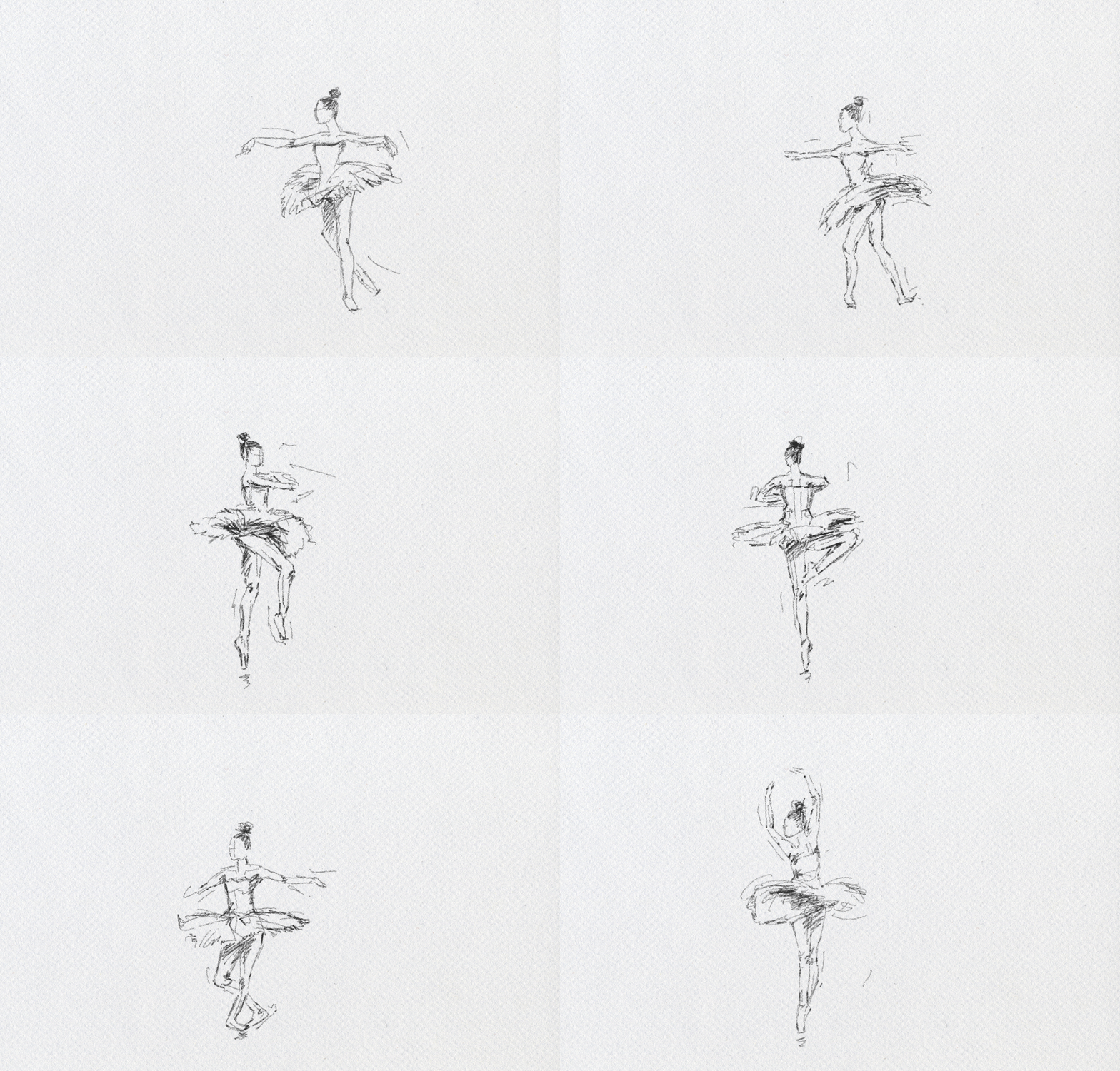
Most people are surprised to learn I like ballet. Then they see how much it appears in my stories.

And now that I have a decent day job, I also go to the ballet and to touring Broadway shows. My interest in ballet started probably in college, and as a working adult, I got really into it. It’s gotten to the point where I’m kind of obsessed and look for ways to insert ballet and dancers into the stories I write! And as for Broadway shows, I think Disney movies as a kid primed me to be a fan of those, though the breadth and depth of musicals out there is far wider than Disney can think up, as it turns out.

Now, I have subscriptions to both the local ballet company and to touring Broadway shows that stop in Columbus. And I have to say, I think I would be just as psyched for one of my stories to be adapted into a ballet or Broadway show as I would be for a movie. Maybe even more.

I have several tattoos. To be precise, I have a chest tattoo of a tiger with a blue Star of David, a full back tattoo of one of my favorite ideas from the horror genre, a wrist tattoo referencing some of my favorite anime, and a Tarot card on my right leg that’s about halfway done. However, while I have my tattoos, I don’t normally share photos of them. That’s partially because I just don’t feel the need to. My tattoos are for me to express myself and to have my body reflect who I am. So, their existence on my body is enough for me.

Still, they’re awesome. And I plan to get more as time and money allows.
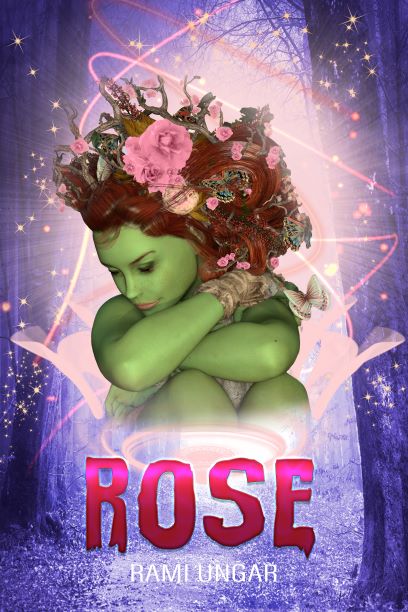
My most popular work is Rose. I’ve been publishing for over a decade now, but none of my work has done as well critically or commercially as Rose. And I think I know why: it’s the unusual story of a woman turned into a plant/human hybrid. Very weird, very Kafkaesque, and very fantasy horror. Add in that it’s a short but twisty read with Japanese folklore and mythology mixed in, and it’s not surprising that that book does so well.

Plus, you gotta love that cover.

Anyway, if you would like to check out Rose, you can check out its page HERE. I hope you like it if you read it.

I go ghost hunting at least once a year. I’ve been lucky to go to several different locations to ghost hunt. From famous places like the Ohio State Reformatory in Mansfield, OH and the Lizzie Borden Bed & Breakfast in Fall River, MA, to lesser known locations such as the Anchorage Mansion in Marietta, OH and the Bellaire House in Bellaire, OH, with the hope to visit and revisit many, many more.

Also, I try my best to get my investigations on YouTube and upload them to YouTube. So, if you would like to check out my ghost hunting videos, you can check out my channel HERE. They’re spooky good!

I make my own wine. Most people don’t realize that you can brew your own alcohol at home, but it is, and there are plenty of people of doing it, including me. I’ve made a batch of plum wine, and I just finished and bottled a batch of pumpkin wine (yes, pumpkin wine). And I’ve been making my wines based on colors of the rainbow: plum wine is red, and pumpkin is obviously orange. Yellow will be dandelion wine, green will be mint, blue will obviously blueberries, and indigo/violet will be elderberries. And I can’t wait to try them all!
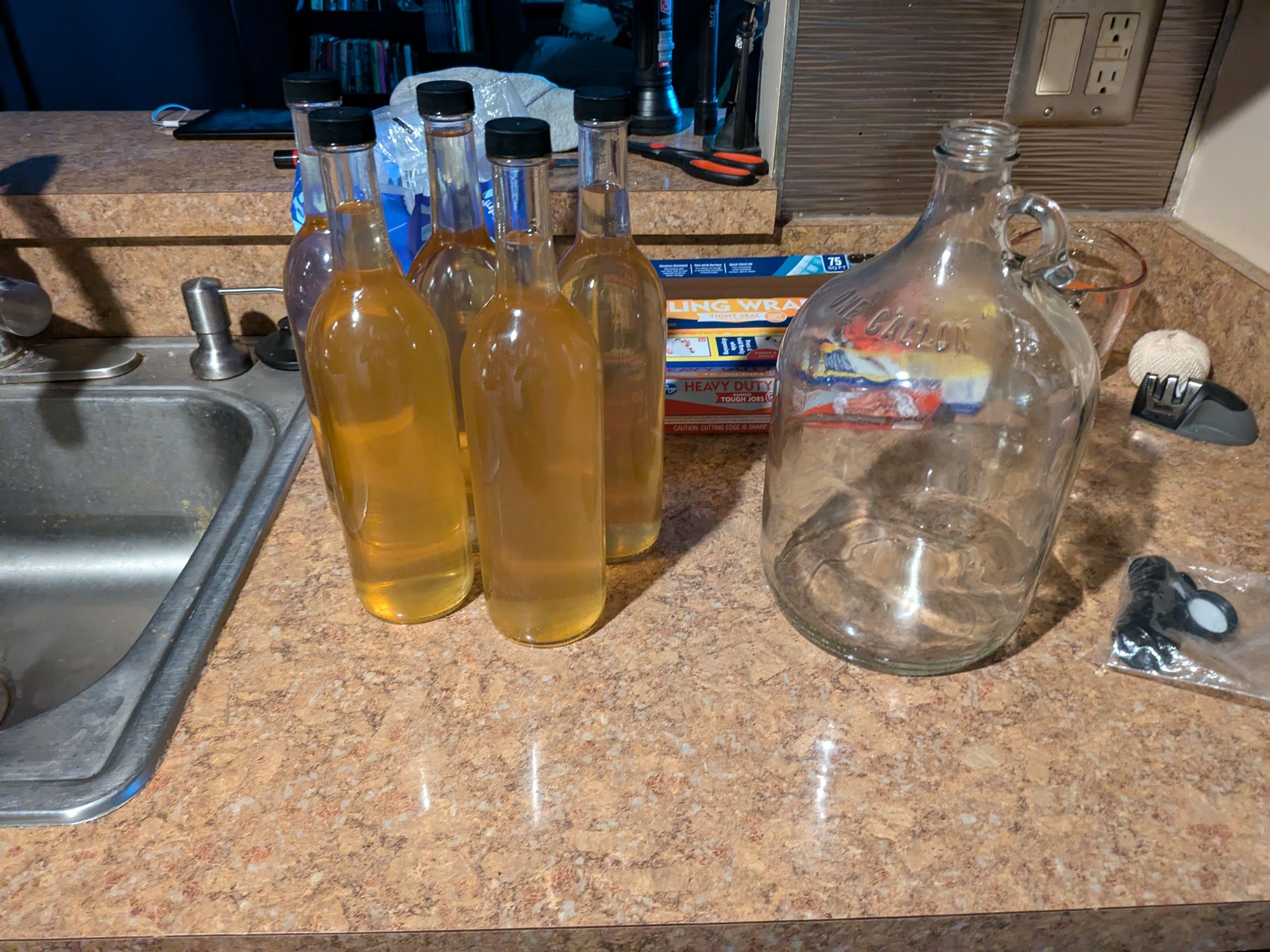
The pumpkin wine I made, all bottled up. Looks good, doesn’t it?

I bought my first home two years ago. For millennials like me, it’s hard to find an affordable home, let alone a non-fixer upper that you don’t have to share with a bunch of other millennials. However, I was lucky enough to find and buy a small condo for myself two years ago, and I’ve been living in the Haunted Condo, as I call it, ever since.

Sadly, it’s not very haunted by anything except me. I don’t know why, I’ve done voodoo rituals and everything else to make the place haunted, but so far, no otherworldly dice. At least I can make one hell of a Halloween display every October and decorate the inside as I like!
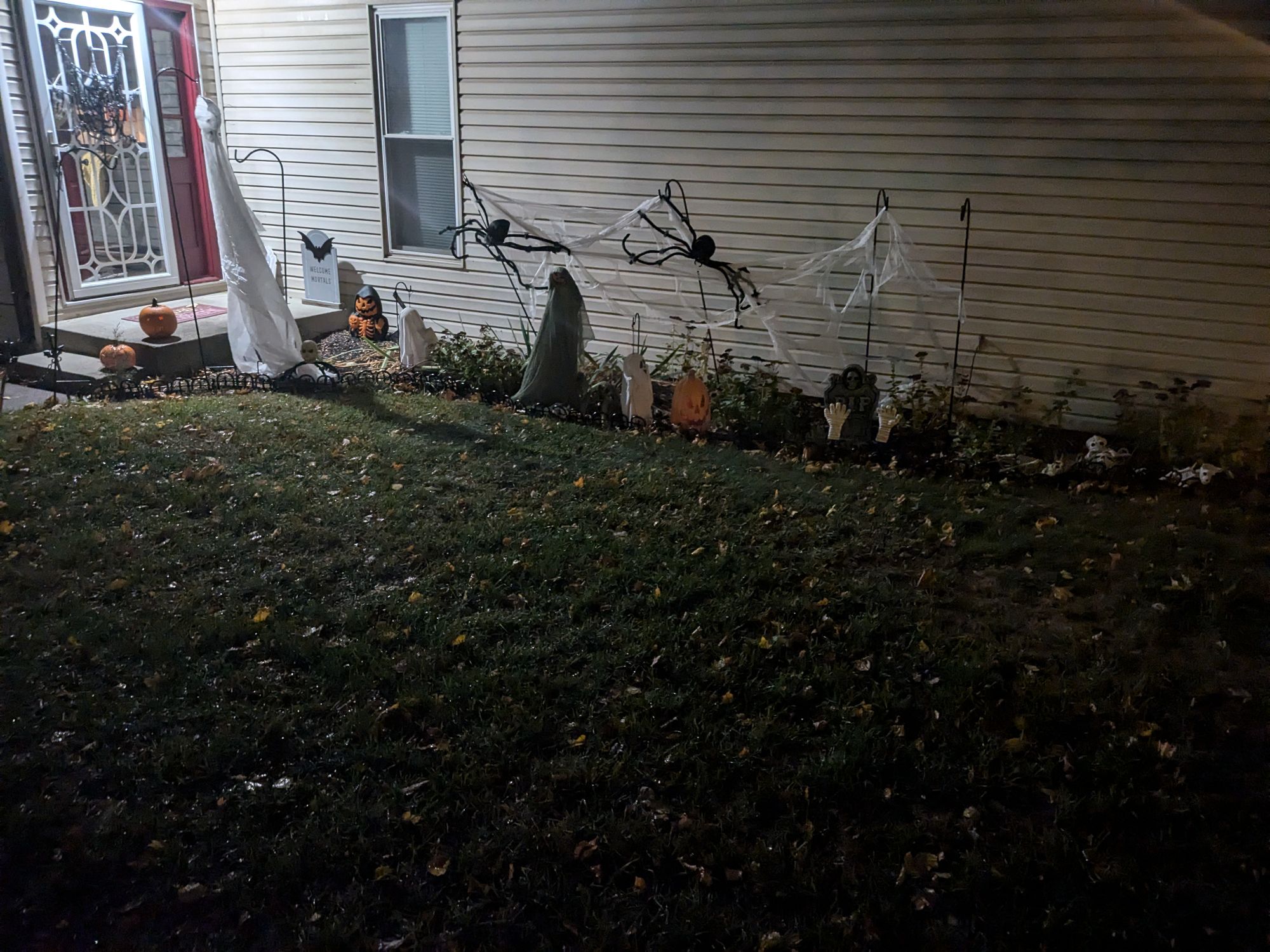
My yard is the spookiest in the neighborhood every October.

I’m the chapter coordinator for HWA Ohio. The Horror Writers Association is an international organization that supports horror writers and helps them network and grow. Ohio’s chapter is about six or seven years old, and I’m the guy who runs it! Which was never my intention: some other members organized the chapter, and I volunteered to find a venue. Somehow, I kept arranging locations for us to meet, and that morphed into becoming the chapter coordinator. And after the parent organization set a formal election process for chapter coordinators for all chapters…well, I ran without competition. I guess people think I’m doing a good job or something?

Anyway, HWA Ohio has its own website, which lists our members and puts out news about us. If you would like to check the website out and support us, click HERE.
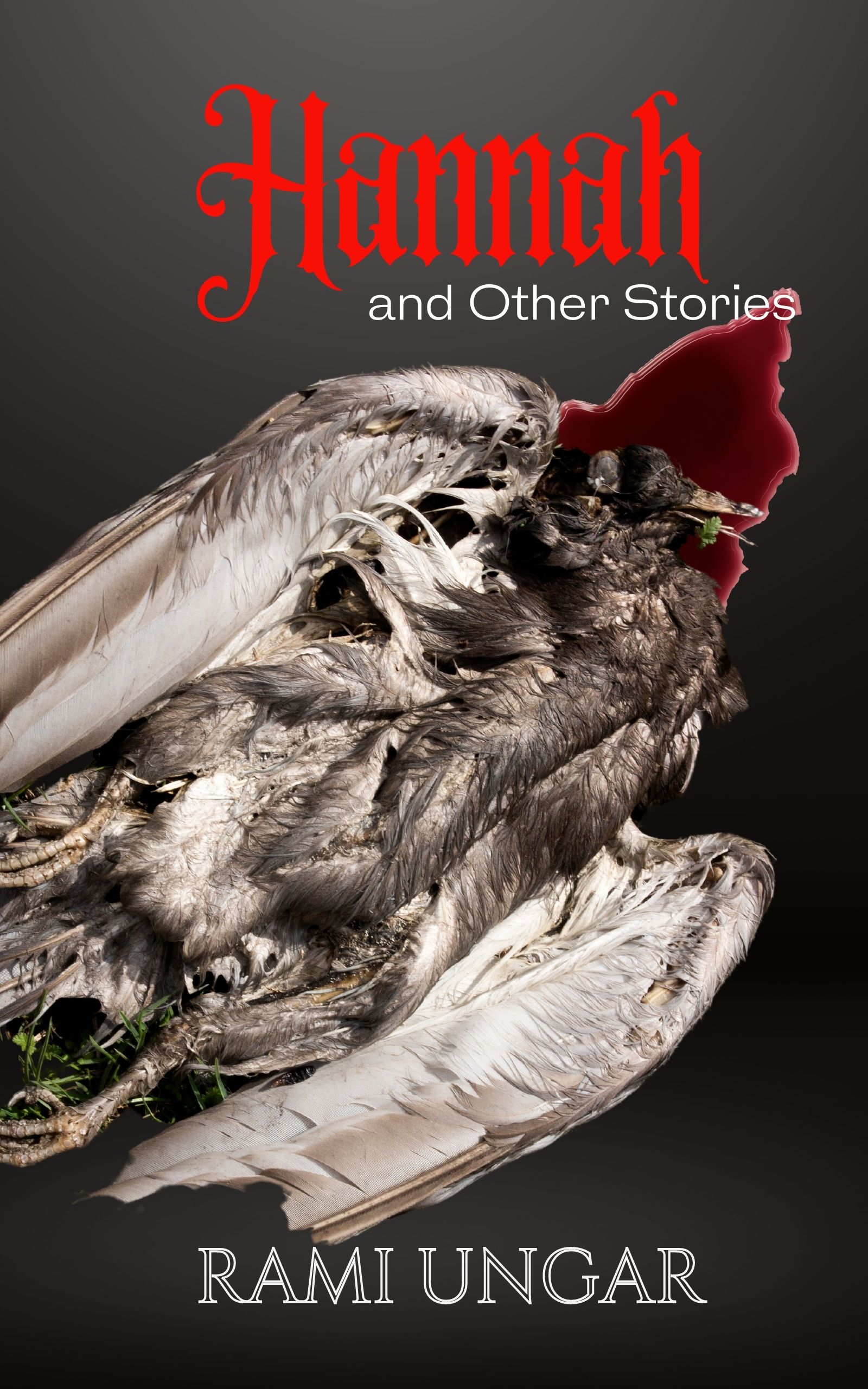
So proud to have a story from this collection adapted into a radio play.

I recently had my very first story adaptation. Remember my collection Hannah and Other Stories, which I mentioned above? Earlier this year, I became acquainted with a producer for WCBE 90.5, a local NPR station who interviews local creative types. He also runs a yearly Halloween show, where a short story is adapted into a radio play, with the roles played by local high schoolers.

“Hannah,” the lead story in Hannah and Other Stories, was this year’s story. It was my first time having a story adapted, and it was so, so good! The kids did really well in their roles, and it was amazing hearing my story brought to life on the radio.

And if you would like to listen to it, you can! It’s available to stream online, and you can listen to it in full HERE. Let me know what you think if you listen to it. The more people who listen, the better for future shows and future students. Plus, who knows? Maybe another one of my stories will get adapted. It happened once, didn’t it?

I tend to break out in song at any provocation. I kid you not, this is something I did daily in high school, and which I do quite frequently these days. In fact, I’m part of a critique group with some of my fellow Ohio horror writers, and they say it’s not a meeting if I don’t burst out in song at least once!

Too bad I sing badly, but hey, why should I let that stop me?

What I’m working on now. I’m juggling a few projects at the moment. For one, I’m putting together another collection of short stories, and I hope to have more on that in the coming days and weeks. I also recently finished a new novel, The Shape of Evil, which is about a 3D printer from Hell, and I hope to have that ready for pitching to agents and publishers by June next year. Finally, I also have a collection of novellas I plan to work on at some point, and I have a mummy novel I started but put aside for other projects that I plan to get back to.

Plus some short stories to send out to magazines and anthologies here and there. Yeah, I’m a busy guy, aren’t I? But that’s kind of the way I like it.


Anyway, that’s thirteen things you need to know about me. I hope you enjoyed learning about me, because I enjoyed writing it. And if you did, be sure to follow this blog and my other social media to keep up with what I’m doing and when I have new work coming out.

And if you would like to check out any of my other work, I’ll leave a link to my book page down below. You’ll find all my published works and then some there, including free stories. And if you like what you read, I hope you’ll leave a review online so I, as well as other readers, know what you think.

Until next time, my Followers of Fear, good night and pleasant nightmares.
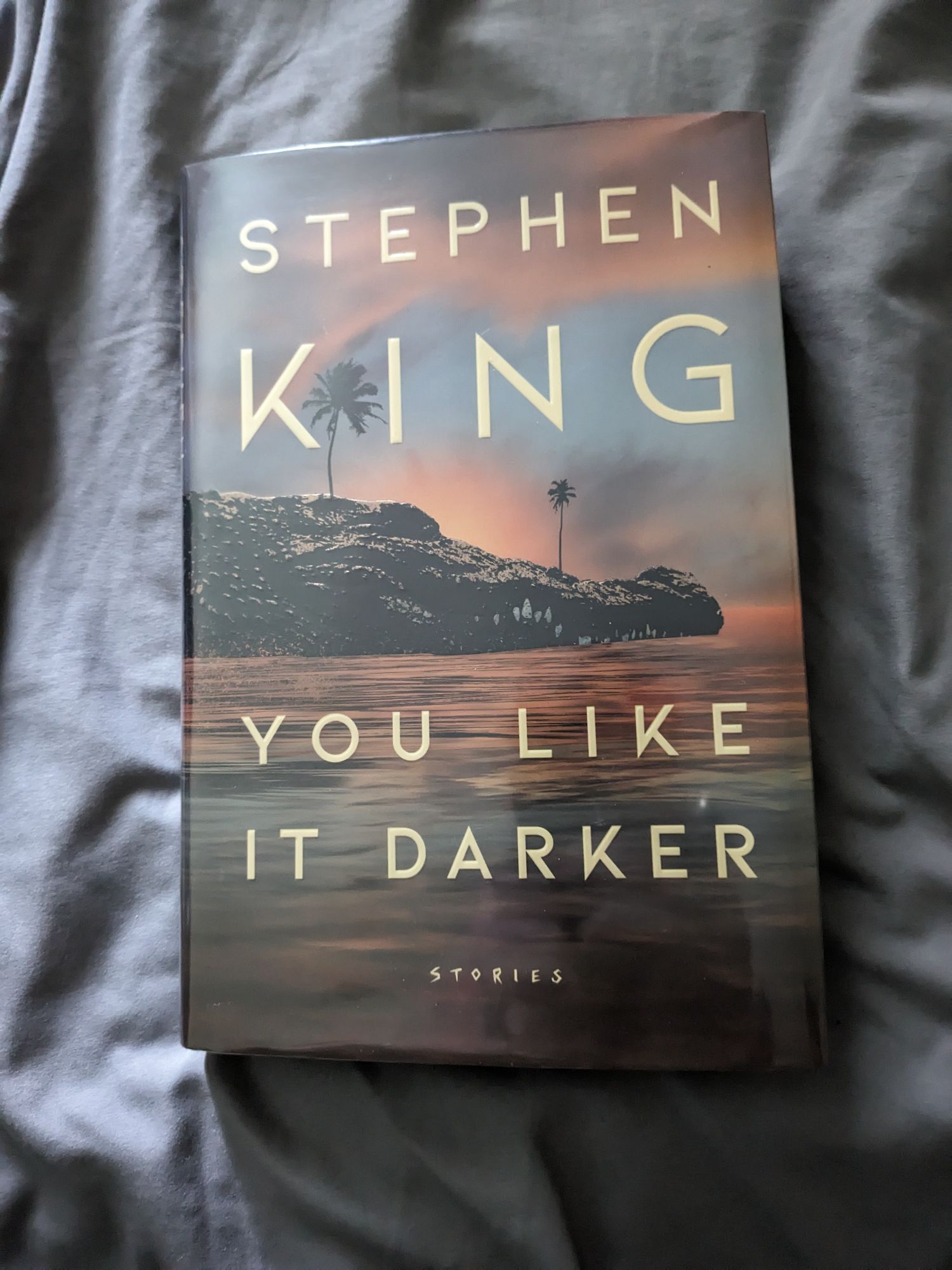
My copy of You Like It Darker from the library.

I was not a fan of Stephen King’s last collection (you can read my review here). However, I am ever the optimist when it comes to King’s work, and the sound of his latest collection, You Like It Darker, got me excited. I mean, it even had a sequel to Cujo in it! Why wouldn’t I check it out?

And tonight, on the night before it’s due back at the library, I finished it. So, what did I think?

I think this is a much better collection and a finer example of King’s storytelling than If It Bleeds was.

The strongest stories in the collection are four of the novellas. “Danny Coughlin’s Bad Dream,” possibly my favorite of the bunch, is a tense thriller about a man’s life unraveling after he has a nightmare and he does a good deed based on that dream. Honestly, it’s hard not to fall in love with the lead and want to find out if things get better for him or go further downhill. “Rattlesnakes,” the sequel to Cujo, starts out slow but quickly becomes a freaky ghost story that I thoroughly enjoyed once it got going. “The Dreamers” feels like an updated version of HP Lovecraft’s “From Beyond,” and I would love to see a movie version of it.

As for the final novella and the final story of the collection, “The Answer Man,” it’s King’s fantastical literary style of storytelling at its finest, and (surprisingly) left me with a warm feeling in my heart.

As for the short stories, “On Slide Inn Road” is a fun tribute to Flannery O’Connor’s “A Good Man is Hard to Find” (and delivers on the “darker” part of the book’s title), and “The Turbulence Expert” feels fresh while also like classic King. “Laurie,” which I’ve read before, is a fine story about grief and finding new life, and “The Fifth Step” and “Willie the Weirdo,” while not anything amazing, had some fun twists I enjoyed.

Unfortunately, the book has some duds. “Two Talented Bastids,” the opening novella of the collection, was a total letdown for me, which is sad because it had a strong start. The short story “Finn” felt like a crime thriller that never got around to thrilling anyone, and “The Red Screen” felt like it needed a few more pages to deliver on its premise.

However, like I said, You Like It Darker is a much better collection of King stories. On a scale of 1 to 5, I give this collection a 4.2. If you don’t mind the duds, you’ll probably enjoy this one, and feel like you’re reading one of King’s older collections again. So, if you haven’t already, go out and grab a copy.

In the meantime, I’ll be picking up my next read from the library tomorrow. It might even be my next review. And from what I’m hearing, it’ll be worth reading…

In horror, it’s often about the monsters.

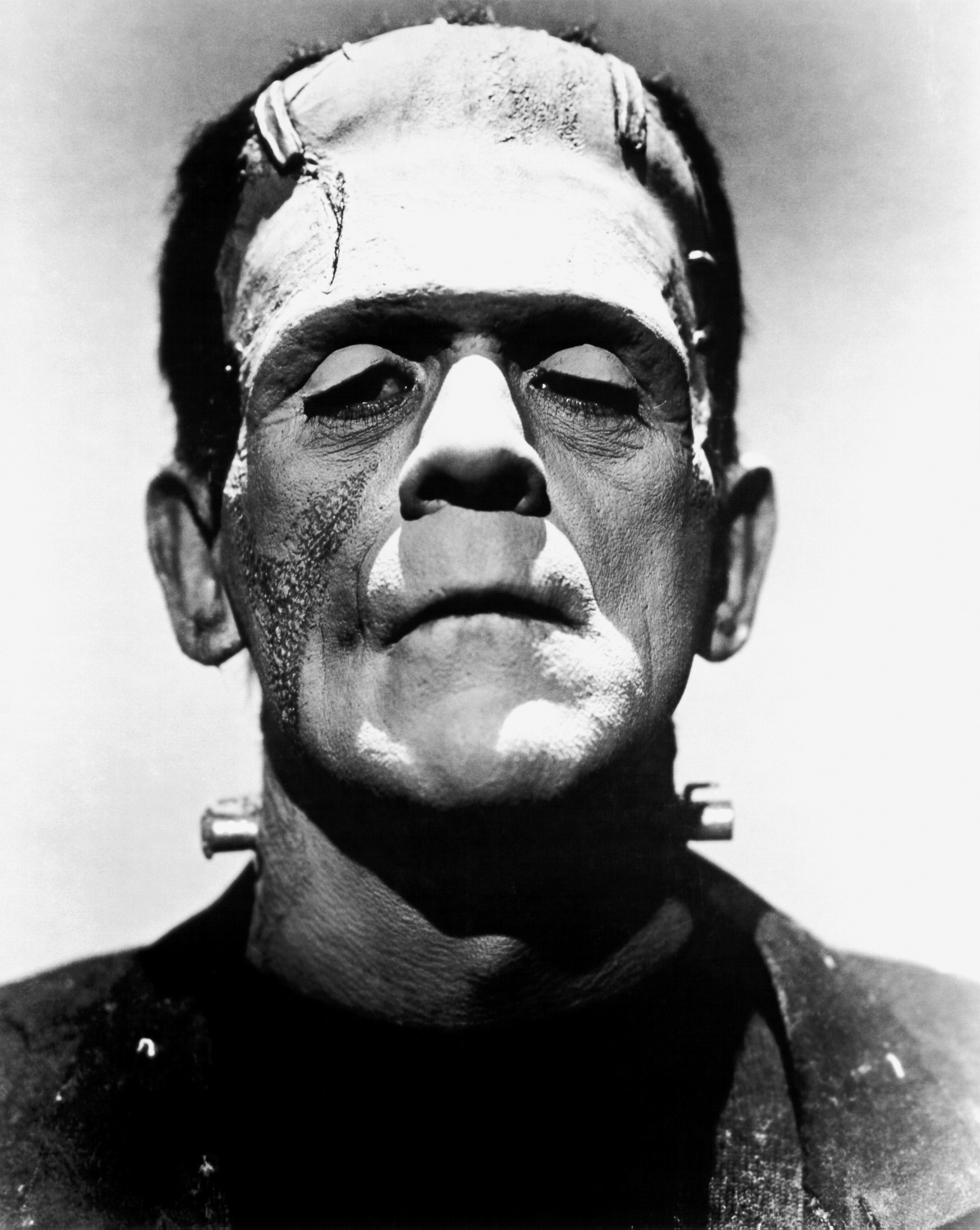
Obviously, horror often centers around the monsters. Saying that is like saying in economics, it’s often about the supply and demand. But still, it needs to be stated. Whether they be demons from Hell, ghosts haunting an old house, a serial killer stalking a young woman during a holiday, a collection of corpse parts stitched together and brought to life through high levels of electricity, or ancient entities from the stars whose forms are difficult to describe, horror is often about the monsters.

And as horror creators, it’s up to us to make each monster we create different from all who came before.

Let’s face it, the people who consume our work expect a little variety (unless you’re working on a series like Supernatural or the Sookie Stackhouse books, in which case your readers would hope there would be some internal consistency in the monster design from episode to episode and season to season). They don’t want the same story every time, and neither do we. So, we write new stories and try to make them distinct from previous works.

Same goes with the monsters we design. Unless we have a special reason for doing so, like a series, it’s important to make our monsters different from story to story. Sure, there may be common characteristics. HP Lovecraft’s monsters were always covered in tentacles and eyes and gloopy fluids (when he could describe them), but you could tell Cthulhu from Yog-Sothoth from Azathoth. And in James Wan’s more supernatural horror movies, the ghosts and demons do share some characteristics, but how they work in the Conjuring franchise is different from how they work in the Insidious franchise.

But the point is, you do have to try to ensure the monsters don’t closely resemble one another too much from story to story. Otherwise, you have people confusing what happened in one story with what happened in another story and being like, “Can you blame me? They’re so similar, they just kind of blend in after a while!”

I was reminded of that this weekend while working on the climax of a killer fairy story (yes, that’s what I’m writing, and it’s probably going to be a novella when it’s done). I was making great progress yesterday, heading towards the climax, and then I realized that the monster the protagonist encounters during this scene resembles one appearing in a different novella. Thus, I had to redesign the monster for the killer fairy story, which I only finalized today.

So, how do you ensure that your monsters are different every time? For the first time in forever on this blog, here are some tips:

  • Look to mythology for inspiration. Mythologies from around the world are rife with monsters. You have the Hekatonkeries and Typhon from Greek mythology; the Jorogumo and the Onryo from Japan; the Chupacabra from Latin America; and more (did you know some Amazon tribes believe in furry cyclops creatures that protect the forest?). If you look deeply enough, and keep it varied, you’ll find all sorts of interesting monsters you can use in your stories.
    Just be careful that you don’t do anything that might be considered exploitative or offensive by certain cultures. Nobody needs that kind of bad karma.
  • Draw from the works of your favorite authors. I’m not saying copy your favorite authors, because that’s plagiarism and is generally frowned upon. But look at the monsters in your favorite novels. What about that monster scared for you? Draw on that and see if you can create something terrifying.
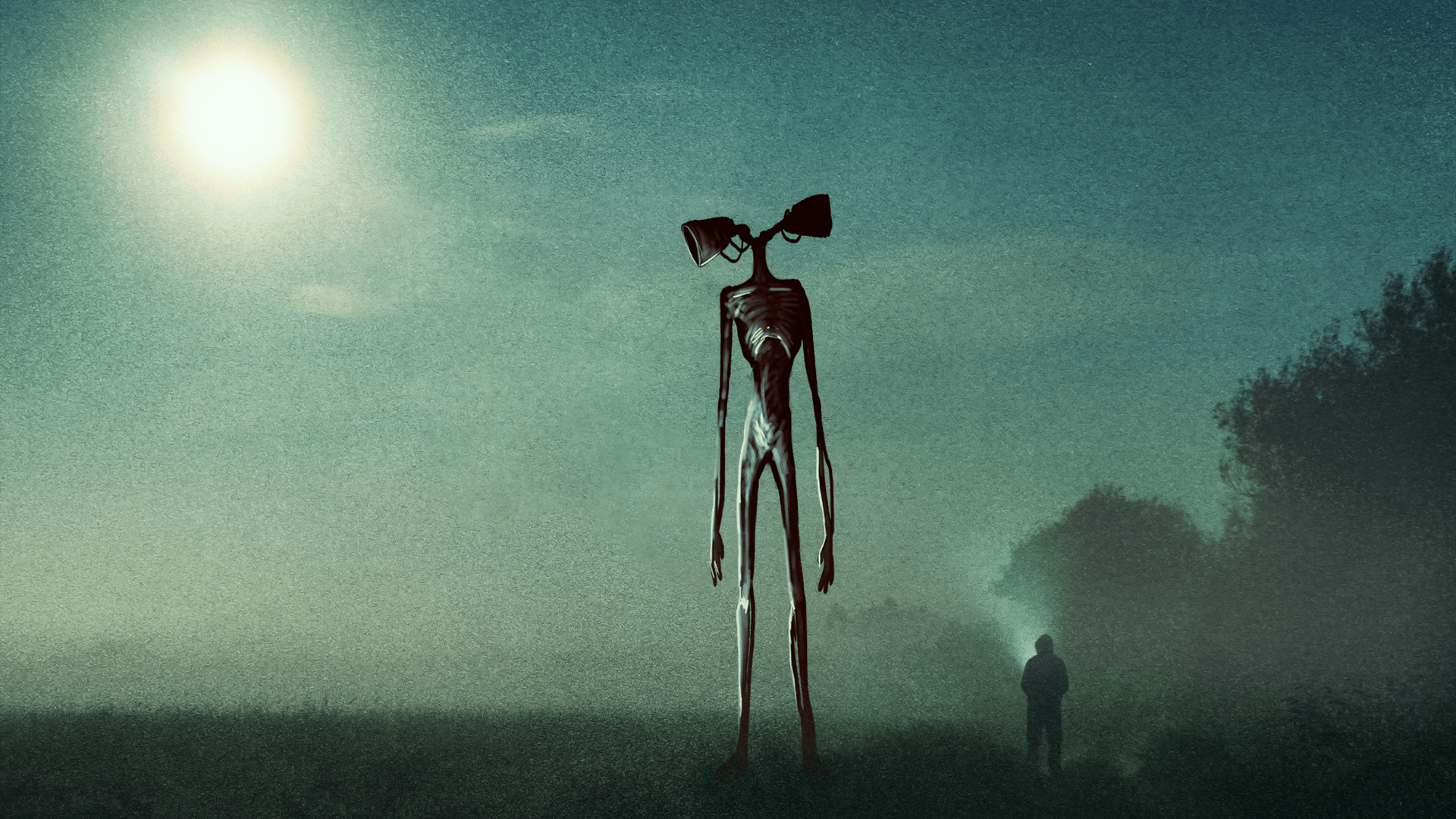
  • Take something ordinary and make it scary. This is something I see a lot more in horror fiction these days, where writers find a way to make something ordinary and make it terrifying. If you are familiar with the works of Junji Ito and Bentley Little, you know what I’m talking about. Uzumaki by Junji Ito makes spiral shapes terrifying, and I never thought a resort could be scary until I read Little’s Resort. And what about Siren Head, a giant humanoid with two giant megaphones full of teeth for a head? I wonder where that came from?
  • Look to your own fears and anxieties. Plenty of times, it’s easy to draw on those to create a monster. Have a phobia around rats, snakes, spiders, lightning, death, or your grandfather? Maybe something you remember from childhood struck you as creepy but no one else seemed to think so, like a character in a children’s movie or a toy you were given at Christmas? Use that to form something new and horrifying. You’d be surprised how often that works.
  • Keep track of your monsters. Nobody knows your stories better than you do, and that includes the monsters. If you’re having trouble coming up with a good monster, look what you’ve come up with before. Go through them like a catalog. Perhaps seeing what came before will help you come up with something new that you’ll enjoy writing.
Siren Head is a great example of taking something ordinary and turning it horrifying.

Coming up with new monsters each and every time isn’t easy, even if you work in multiple genres and subgenres. Still, as creators, it’s our job, and it can be a lot of fun. And when you hear people praising your monsters for how clever the idea is or how terrifying they are to think about, it makes the work worth it.

And hey, don’t get bummed if one monster is too similar to another and you only realize after the fact. The antagonist in The Library Policeman by Stephen King bears some similarities to It, but they’re both still great stories. So, it happens. Nothing to get worked up over.

That’s all for now, my Followers of Fear. Good night, pleasant nightmares, and RUN! THERE’S SOMETHING RESEMBLING A MURDER HORNET AND THE SIZE OF A SMALL DOG BEHIND YOU!!!

What are your tips for coming up with monsters for your stories? Let’s discuss in the comments below.

I’ve been hearing of this novella for years, but for some reason I haven’t gotten around to reading it until recently. However, recently I felt an itch to indulge in some cosmic horror and the audio book was on sale, so I downloaded it and listened to it.

Followers of Fear, why did I wait so long to check this out? It was awesome! I can see why it was nominated for a Stoker award.

Set in 1924 New York and based on “The Horror at Red Hook” by HP Lovecraft, the novella follows Tommy Tester, a black man living in Harlem with his father, trying to get by as best he can. When he’s asked to play guitar at a dinner party for an eccentric gentleman named Robert Suydam, Tommy finds himself plunging headfirst into a world of magic, insanity, and cosmic forces. Such exposure will not only change his life, but the lives of all humanity.

If you’re not familiar with “The Horror at Red Hook,” this story was written when Lovecraft was living in New York, and, because he’s Lovecraft, he characterizes the non-white characters, many of whom live in Red Hook, as criminals and gangsters. This story is sort of a rebuttal of that, showing things mainly through the eyes of one of the people whom Lovecraft would have disdained. This allows for a great examination of cosmic horror versus the horrors of racism as seen through the eyes of Tommy Tester, later known as Black Tom. As he notes, the indifference of cosmic horror cannot compare to the malice and cruelty of racism, though both are equally horrifying in their own rights.

Beside that, it’s just a well-written and compelling story. You really grow to understand Tommy and sympathize with him, and can’t blame him when he makes certain choices later in the book. Not only that, but the emotional power of this story cannot be underestimated. One scene involving Tommy’s father was so heartbreaking, I wanted to pick up the phone and call my own dad just to check on him. That’s strong storytelling right there.

I also liked how part of the novel was shown through the eyes of Malone, the main character in “Horror at Red Hook.” Here’s, he’s written more as a character than just some vehicle for Lovecraft to transmit his purplish prose through, and he’s not unlikeable, though he’s still subject to the same prejudices that a lot of people back then unfortunately had. His role in the story is also more consequential, which is a nice change, and his final fate is a terrifying but welcome change from the original story.

On the whole, I give The Ballad of Black Tom by Victor LaValle a straight 5 out of 5. I cannot find anything wrong with this story and I’m so glad I finally experienced it. If you’re at all interested, grab a copy, put on some jazz or blues, and give it a read. Trust me, you won’t regret checking it out.

Also, the audio book has my recommendation. The narrator, Kevin R. Free, does a great job with the various voices and the sharp prose. It’s enough that you’ll want him to narrate something you’ve written. That, ladies and gentlemen, is talent.

Photo by Niko MonDu00ec on Pexels.com

I’ve heard certain stories and writers described as weird fiction and weird fiction writers. I’ve also heard of New Weird, which refers to writers whose work is representative of a new wave of weird fiction. And I can think of examples of fiction that is described as “weird fiction.” Yet, I still find myself wondering from time to time, “How do you define weird fiction?”

Most people I’ve talked to–and I’ve talked to many–say “I know it when I see it” when it comes to weird fiction.* However, being a non-human entity and having a very loose definition of “normal” in a world that seems to defy anyone’s definition of normal, that still isn’t enough for me. And I know HP Lovecraft and the Cthulhu Mythos is considered weird fiction, but is that because it involves tentacled monsters?

As usually happens when these sort of questions bug me to no end, I do research. And after talking to a lot of people, reading some articles, and watching a few YouTube videos on the subject, I think I’ve finally come to some conclusions.

For one thing, “weird fiction” isn’t a specific genre like literary, romance, sci-fi or horror fiction. Rather, it’s a designation given to stories and writers who take traditional concepts within their genre and then find some way to turn them on their head and make them weird. Lovecraft and his friends’ fiction was called “weird horror” because it featured ancient cosmic beings with lots of tentacles instead of ghosts, werewolves and vampires. And today, you can call Junji Ito “new weird” because his work features women with their tongues being replaced by snails and their heads becoming the shells, or towns cursed by the concept of a spiral.

And this can apply to all sorts of other genres and kinds of stories. Magical realism, cryptozoological erotica, bizarro fiction, they can all be considered weird. And you can add weird to any sort of story. For example, perhaps you can write a romance story where the couple is actually a single person and their reflection. Or weird Western, where cowboys ride into a wilderness resembling that melting clock painting by Salvador Dali.

And now that I think about it, my own novel Rose could be considered weird fiction. I mean, I usually categorize it as “fantasy horror” or “paranormal fiction,” but it’s about a young woman turned into a plant/human hybrid (and that’s just the start of her problems). If that’s not weird, then I’m a sea lion (and I’m not).

Apparently, Rose could be considered “weird fiction.” I never realized.

So, how does one write weird fiction? Well, I don’t think anyone sets out to write exclusively weird stories. I think they’re just trying to create something original and that leads to going down a weird route. That being said, if you want to write something weird, here are a few things you can try to make it weird:

  • Disrupt the real. Weird fiction comes from being weird, so it helps if your story breaks either the characters’ or the readers’ sense of reality. In terms of the latter, you could modify the world in some way so that something weird by our standards is considered normal in the world of the story. One example I can think of is a story I once read where imaginary friends were real entities and an accepted part of the human life cycle, similar to losing your baby teeth or going through puberty.
    In terms of the former, write the story in a way where you and the characters share a similar reality, but then that definition of real goes out the window in a big way. Think Alice falling down the rabbit hole into Wonderland, or perhaps Little Red Riding Hood’s trip to her grandmother’s house becomes Lovecraftian and surreal.
  • Tentacles and cosmic elements. It’s a little stereotypical, but as I said, much of what made Lovecraft’s stories weird were the tentacles and the other elements that became the foundation of cosmic horror. So, if it works, why not use it?
  • Ask “what if I added this?” Plenty of times, we writers create our own stories by encountering another story and thinking of what we would add if we were the ones writing it. Just do the same thing, but think in terms of strange things you can add. And not just to other stories, but to just daily situations. What if you added surrealism to a religious matchmaking search, or if there was some visible way to instantly identify someone as having committed a crime? Thinking along those lines could allow you to write a weird fiction story.
  • Defy genre. While genres are categories we created, they do play a big role in writing and publishing. If you can write a story that doesn’t fit any particular genre but has elements of several, especially fantasy, sci-fi, and horror, it could be considered weird. There’s a bit more to it, but that can be a clear indicator of weird fiction.

Other than that, the only thing I can recommend is read plenty of weird stories and practice writing them. And while writing weird fiction isn’t exactly necessary for any writer, it can be a lot of fun and lead to some memorable stories. Hell, it may help you write more mainstream fiction. So, why not? Go ahead and get weird with it!

What tips do you have for writing weird fiction? Do you have any favorite stories that are considered weird?

*Fun fact: that phrase was coined by US Supreme Court Justice Potter Stewart in 1964 in his opinion on the case Jacobellis v. Ohio regarding a definition for obscenity, specifically hard-core pornography. The more you know.


Thanks for reading, everyone. It was a long article, but I wanted to get it out before I tried to intentionally write a weird fiction story (usually it happens by accident). I hope you enjoyed a post without a mention of Hannah (which, now that I think about it, has a weird story or two as well).

Anyway, I’ll be back soon enough. There’s some exciting stuff happening this week, after all. So, until next time, my Followers of Fear, good night and pleasant nightmares!

I’ve been saying it all weekend, in person and on my other social media: one of the things I love about writing (among others) is getting to add my interests to the stories I write. And not just interests: I get to play with my favorite tropes, character types/archetypes, locations, and so much more.

And I’m not the only one: Stephen King likes to set his stories mostly in Maine or other parts of New England, have characters who are either writers or psychics (with the latter often being children), and just getting into weird ideas like aliens or extradimensional entities. Anne Rice enjoyed placing her stories throughout history, particularly places that are beautiful in some way or another, and telling stories that delve into our cruel but beautiful world (AKA the Savage Garden) via supernatural but very human creatures. Riley Sager enjoys deconstructing and turning classic horror movie tropes on their heads by making them the entire plots of his books, female leads who have some deep trauma in their pasts that affect their present, and a male romantic interest whom they should have no business getting with. HP Lovecraft–wait, let’s not get into him. We know what he liked, as well as what he hated.

As for me, I’ve got a few. For one thing, I like to include ballet and ballerinas in my stories. Part of that is that I love ballet like some people like football, but there’s also a symbolic reason. As I’ve said before, corruption of the innocent is one of my favorite elements of horror and ballerinas, particularly young ballerinas, are a symbol of innocence to me. With that reason, it’s no wonder I tend to add ballet and ballerinas to my stories when I get the chance. Though given that I write horror, I often put those poor dancers through hell. Just look at Maddy Taggert in Rose and Annie Hummel in “The Dedication of the Hight Priestess.”

Though whether or not that pattern holds with the dancer character in Crawler, I’ll let you guess.

I also enjoy putting my nerdy interests into my stories when I can. For example, in my WIP I’m working on now, I’ve included references to anime, fantasy tropes, and Doctor Who, among other things. In that same story, I also modeled two characters after the original detectives in Law & Order and named them after the actors who played them. And with half the story still left to write, I can probably find more room to add those in. It’s a blast when I do!

Some other things I like adding with my work when I can are:

  • setting my stories in Ohio
  • making some of my major characters Jewish like myself
  • noting the tropes I might be using while the character denies that their life is working like a story.
  • references to famous movies and books, especially those in the horror genre
  • my favorite periods in history (such as The Pure World Comes for Victorian England)
  • and powerful, sometimes godlike entities that often come from realms very much unlike our own
I love it when I get a chance to reference this show in a story.

And these are just the ones that I’m aware of. Some things are more noticeable to authors than others. I’m sure as I write and publish more, others will point out things about my writing that I never noticed before but will find very true.

But yeah, this sort of thing is a perk of writing fiction. They say “write what you know,” but what that actually entails is often quite different than what our writing professors often preach. Instead of basing our stories entirely on our own experiences and reality, we weave what we love into our stories and use it to spice up our stories. To make them the stories we would enjoy reading ourselves. And when you release those stories and find people enjoy them and the elements you add in…well, that makes it all the better, doesn’t it?

What are some elements you enjoy putting into your stories when you can, Followers of Fear? Let’s discuss in the comments below.

That’s all for now, my Followers of Fear. I mentioned this sort of thing to my folks after seeing Nutcracker last night and on social media after the Doctor Who reference was written into the story last night. After all that, it just felt natural to blog about it. Now, if anyone needs me, I’ll be making dinner and then getting back to my WIP. Until next time, good night, pleasant nightmares, and happy second night of Hanukkah!

If you’ve been with me a while now, you know I’ve become a fan of The King in Yellow by Robert Chambers. First published in 1895, the important stories in the collection (and the best ones) revolve around a play called The King in Yellow, which is so twisted that reading it can drive you mad (or make you a slave to the titular entity, if you believe he’s real). The collection has proved influential and has been touted as a classic by many horror writers, including HP Lovecraft, as well as being partially integrated into the latter’s Cthulhu Mythos.

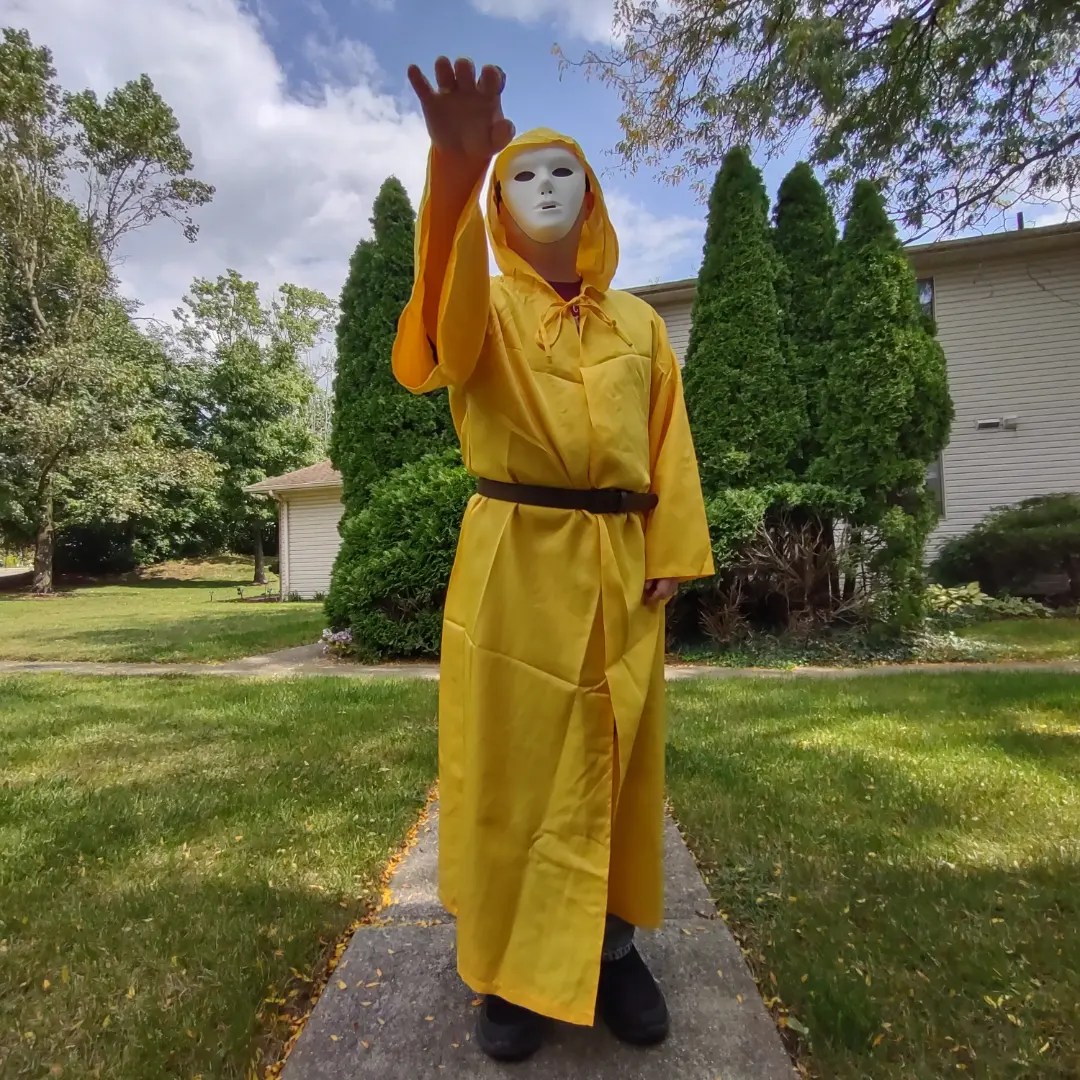
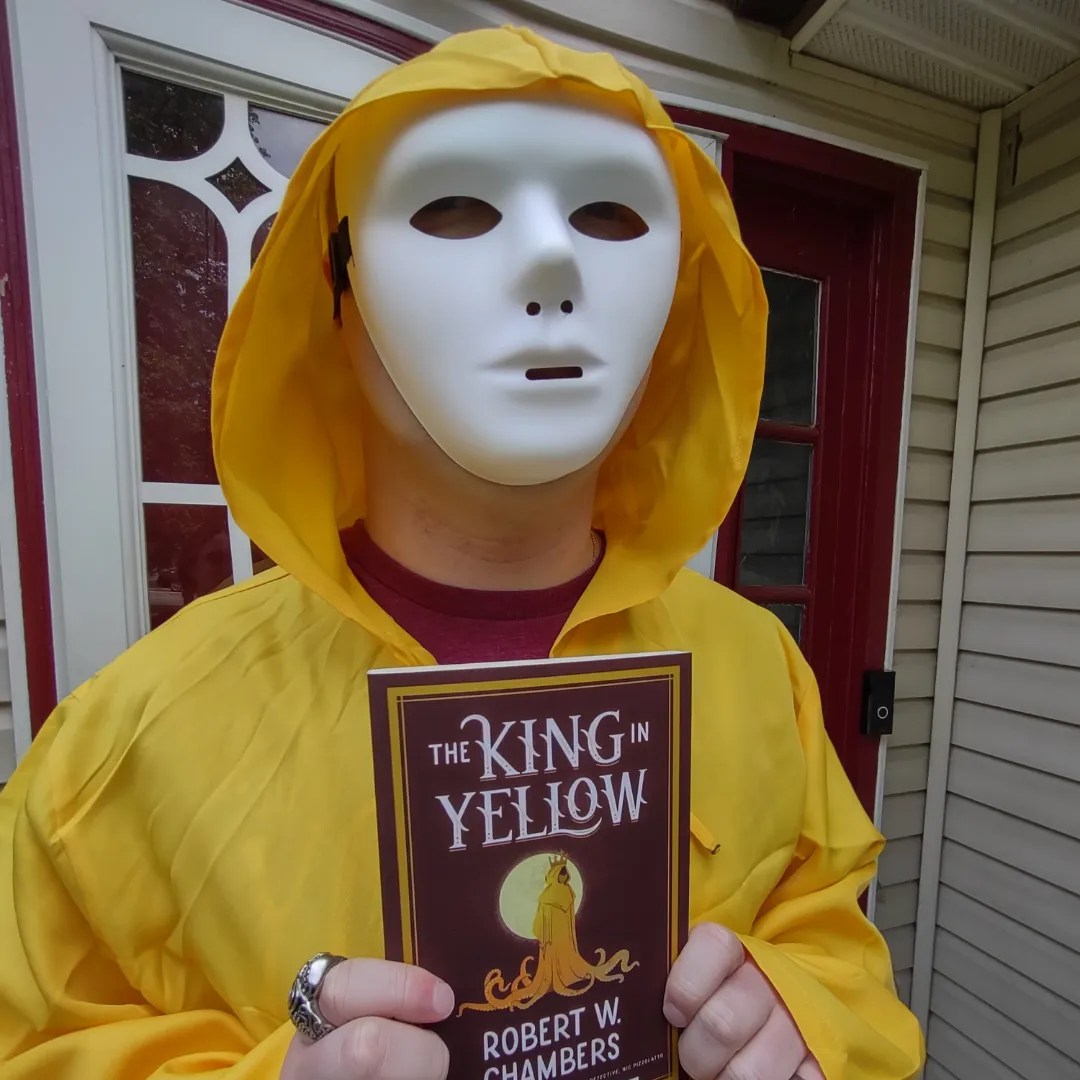
I read the collection after hearing about it last year, and since then, I’ve become a little obsessed. I bought my own copy of the collection, I wrote a short story called “The Dedication of the High Priestess” that combines the character and the lore with ballet (this story will be narrated on the Tales to Terrify podcast some time before the year is out), I created some AI art of the figure, and now, I am the King in Yellow. For Halloween, at least.

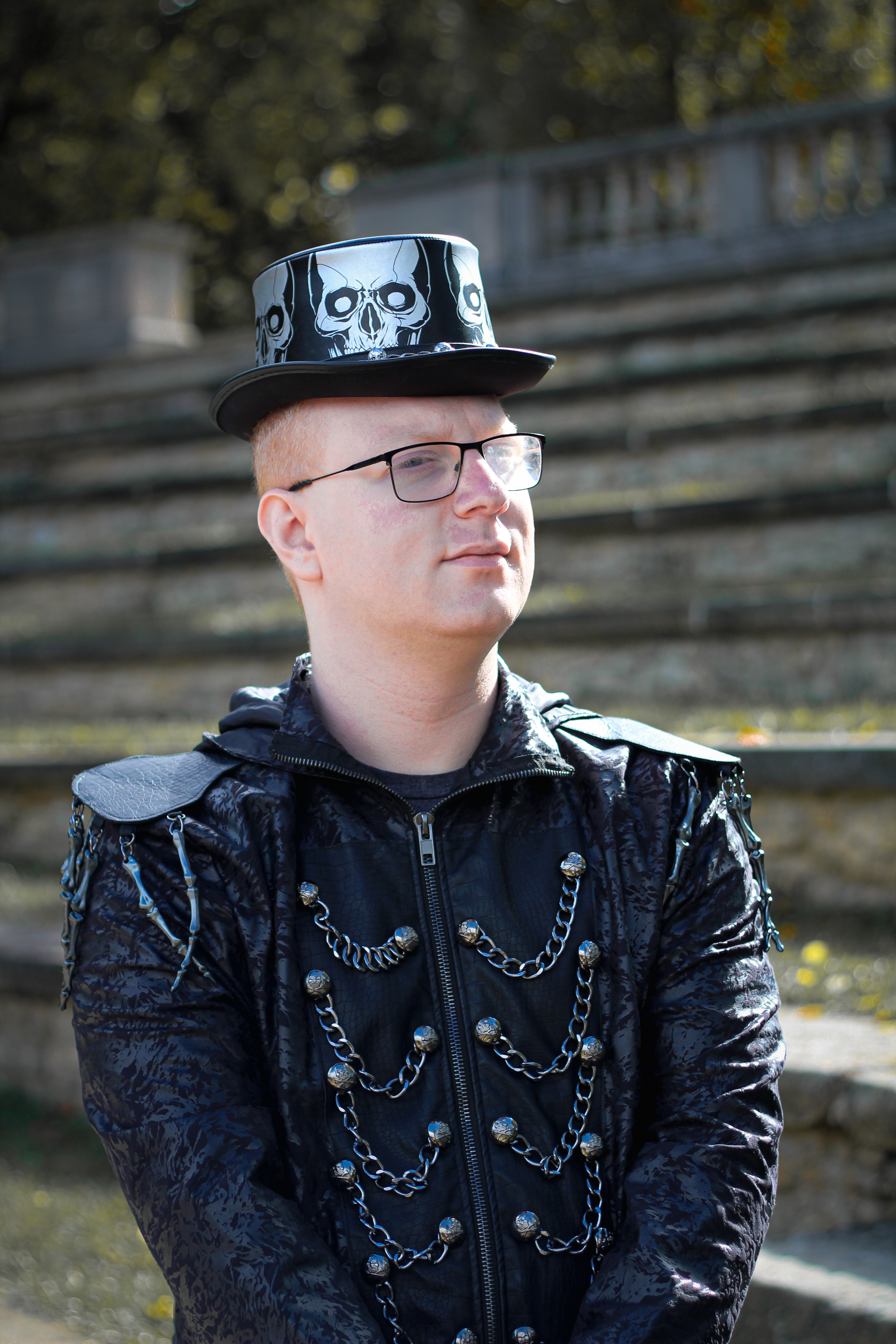
What do you think? I went with something more simplistic than I originally planned (big white gloves, an ornate crown resembling antlers and tree branches), and boiled it down to a robed figure with a mask. However, that’s basically the things that most people agree upon when it comes to the character’s appearance, so it works. And I even got a photo of me holding my copy of the collection like it’s the play itself. I think that’s a nice touch.

Credit for the photos go to my sister, Adi, by the way. She did a great job taking the photos this afternoon.

Anyway, I look forward to wearing this costume to events like A Night of Horror at the Bexley Public Library and the Local Author Book Fair at the Licking County Library, as well as hopefully to a party or two (my exact plans for Halloween are still up in the air). And even if people don’t know who the character is, this might get them to read the collection, or at least look him up. But hopefully the former, because it makes for some great Halloween reading.

Speaking of which, if you’re looking for something spooky to reading this Halloween season, might I recommend some of my books? I have four books out now and they’ve all been received well. Some readers have even found them quite terrifying. I’ll include a quick summary of the stories and links to check them out below.

That’s all for now, my Followers of Fear. I hope you liked my Halloween costume. But tell me, what are you planning to dress up as this Halloween season? Do you have any big plans? Let’s discuss in the comments below.

Until next time, good night, pleasant nightmares and only 43 days till All Hallows Eve!

The Pure World Comes: A maid goes to work for a mad scientist and gets wrapped up in his experiments. Terror ensues. Gothic horror novel. Very Frankenstein meets Crimson Peak.
Amazon, Barnes & Noble, Apple Books, Kobo, Goodreads, Audible, Chirp, BingeBooks, LIbro.Fm, Storytel, Google Play

Rose: A young woman gets turned into a plant/human hybrid (and that’s just the start of her problems). Fantasy-horror. Very Kafkaesque and has a lot of Japanese mythology mixed in.
Amazon US, Amazon UK, Amazon Canada, Audible, B&N

Snake: A serial killer hunts mobsters in New York City. Who is he and why is he killing? Slasher horror. Think John Wick, Taken and Friday the 13th got smooshed into a horror novel.
Amazon US, Amazon UK, Amazon Canada, Barnes & Noble, iBooksSmashwords, and Kobo

The Quiet Game: Five Tales to Chill Your Bones: Five creepy tales from my early writing and publishing career that will entertain as well as scare you. They’re weird, eerie and a lot of fun. You know, like their author.
Amazon, Barnes & Noble, iBooksSmashwords, and Kobo.

Hello, Followers of Fear. There are sixty days till Halloween. What have you done to prepare?

Artwork produced by artificial intelligence, or AI art, has become kind of a thing as the technology has advanced. In fact, some months back, there was an app that became a fad for horror writers to generate images and even book covers. And earlier this week, John Oliver featured it on his TV show, Last Week Tonight with John Oliver. Here’s the video, if you’re interested. It’s hysterical.

John Oliver’s wife and children must have such a blast telling people who don’t know who he is what he does for a living. “Oh, my husband/dad? He sexually harasses Adam Driver and marries cabbages on TV once a week.”

Anyway, it got me interested enough to want to play around with AI art, so I made an account with one of the recommended companies, Midjourney, and went to work. The results were not only fascinating, but gave me some thoughts on the nascent AI art industry.

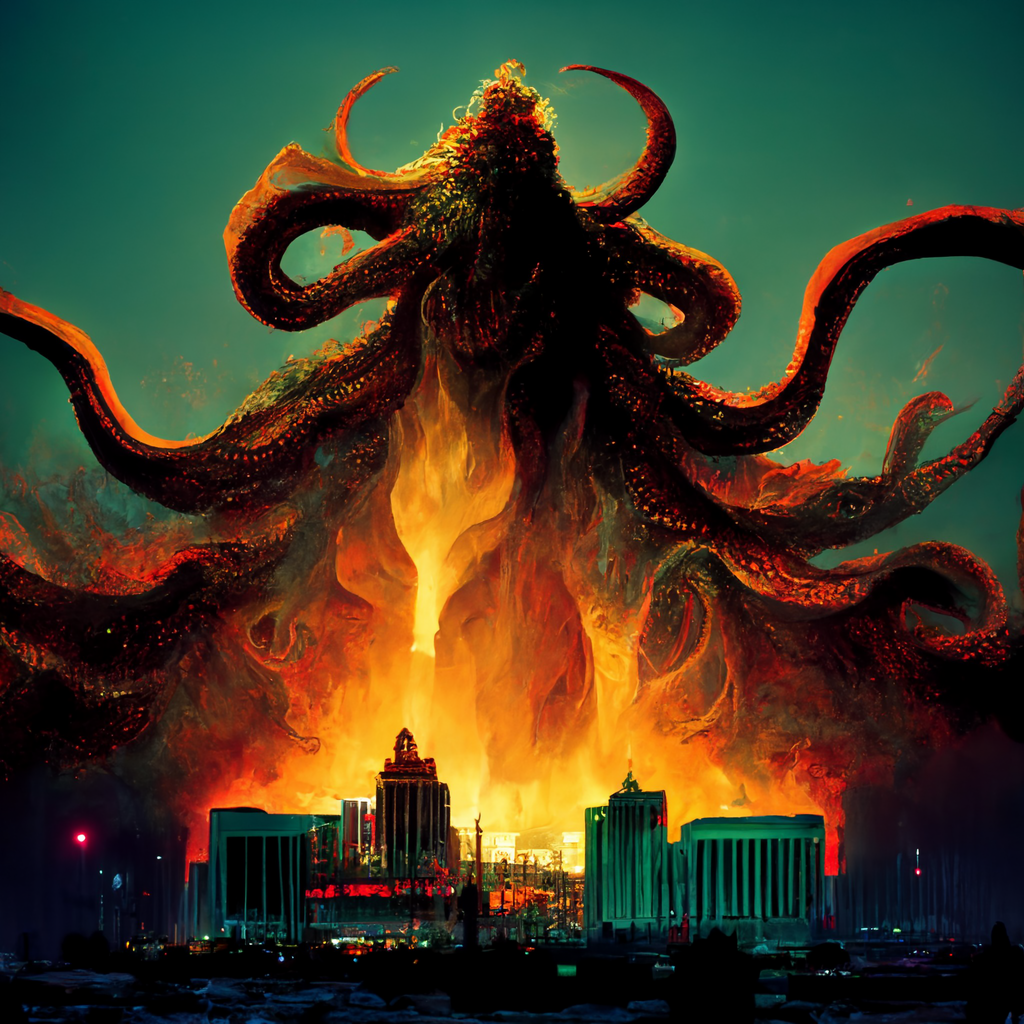
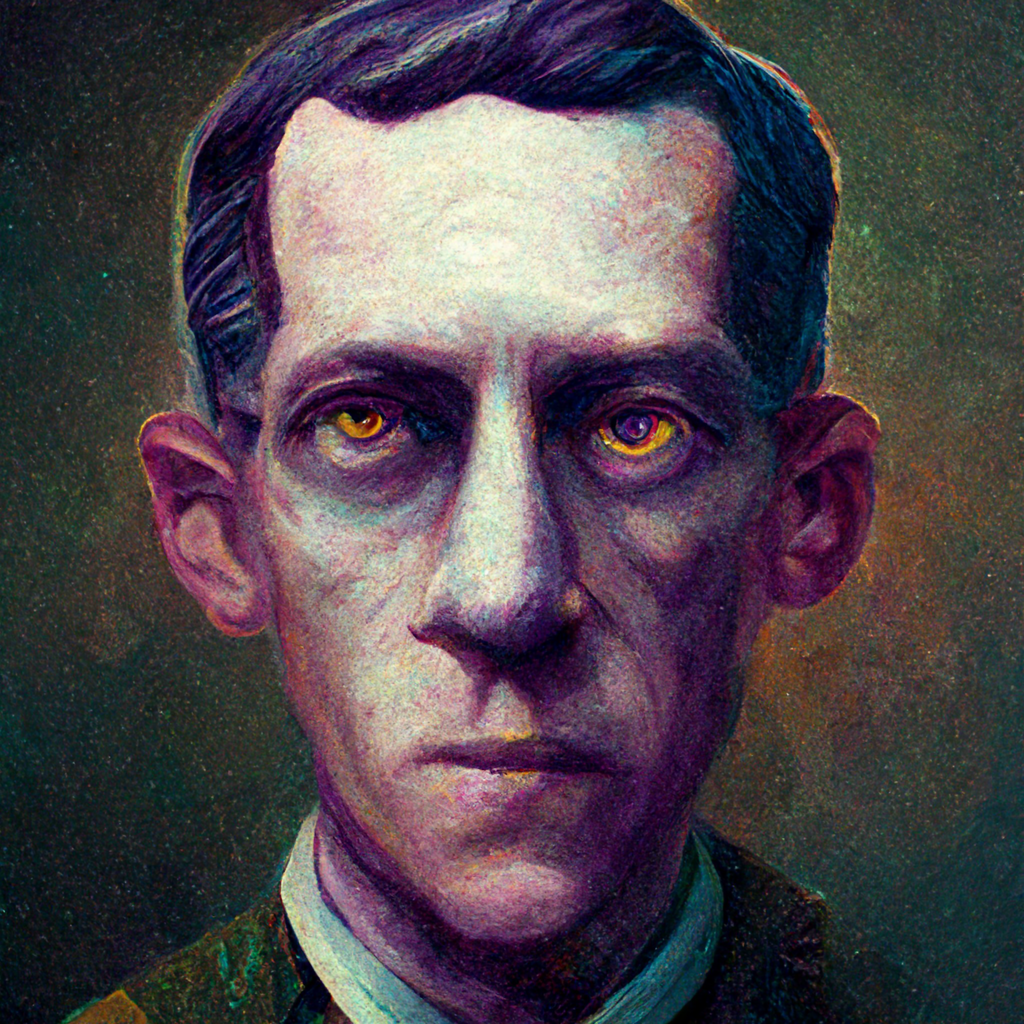
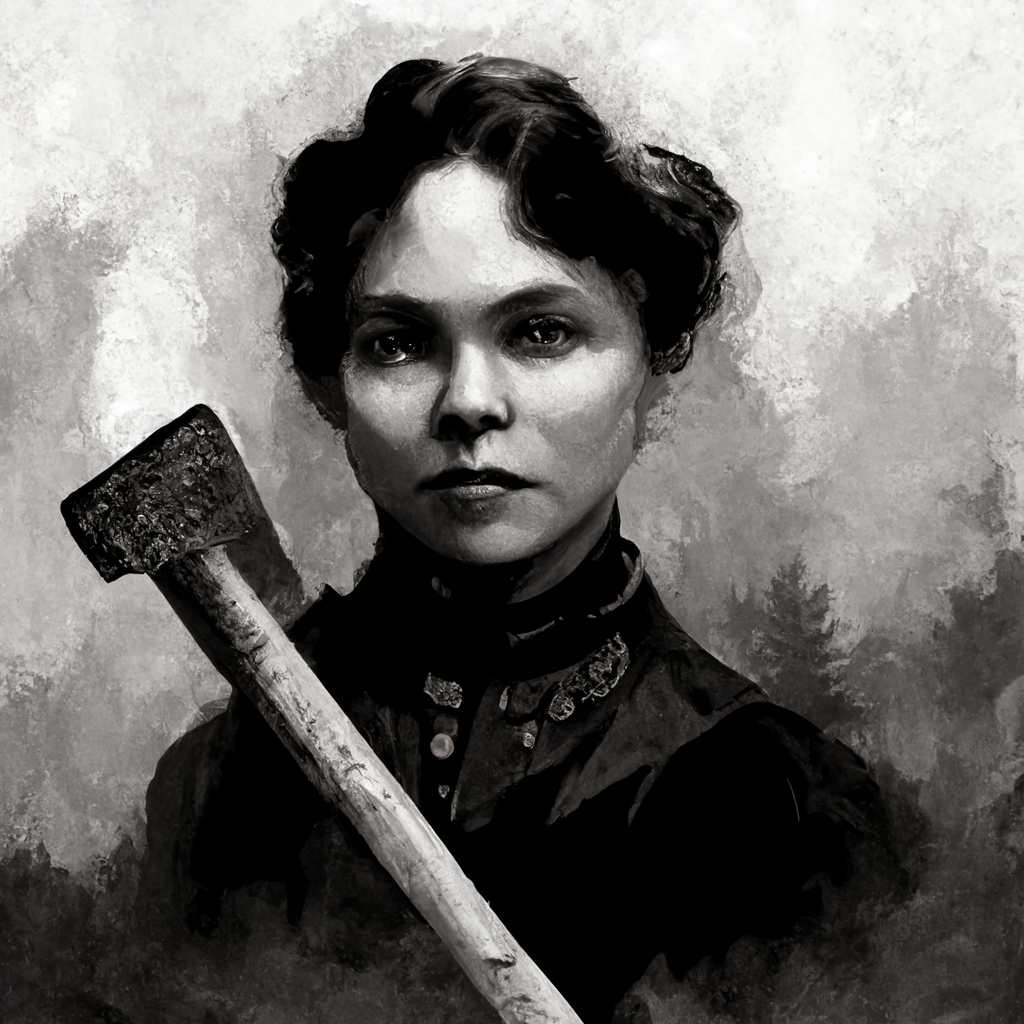
First, here are some of my successes. As it turns out, Midjourney’s AI program does very well with Lovecraftian/cosmic horror entities. For example, here’s Cthulhu destroying Las Vegas because I’m not a big Vegas fan (though under the right circumstances I’d visit again).

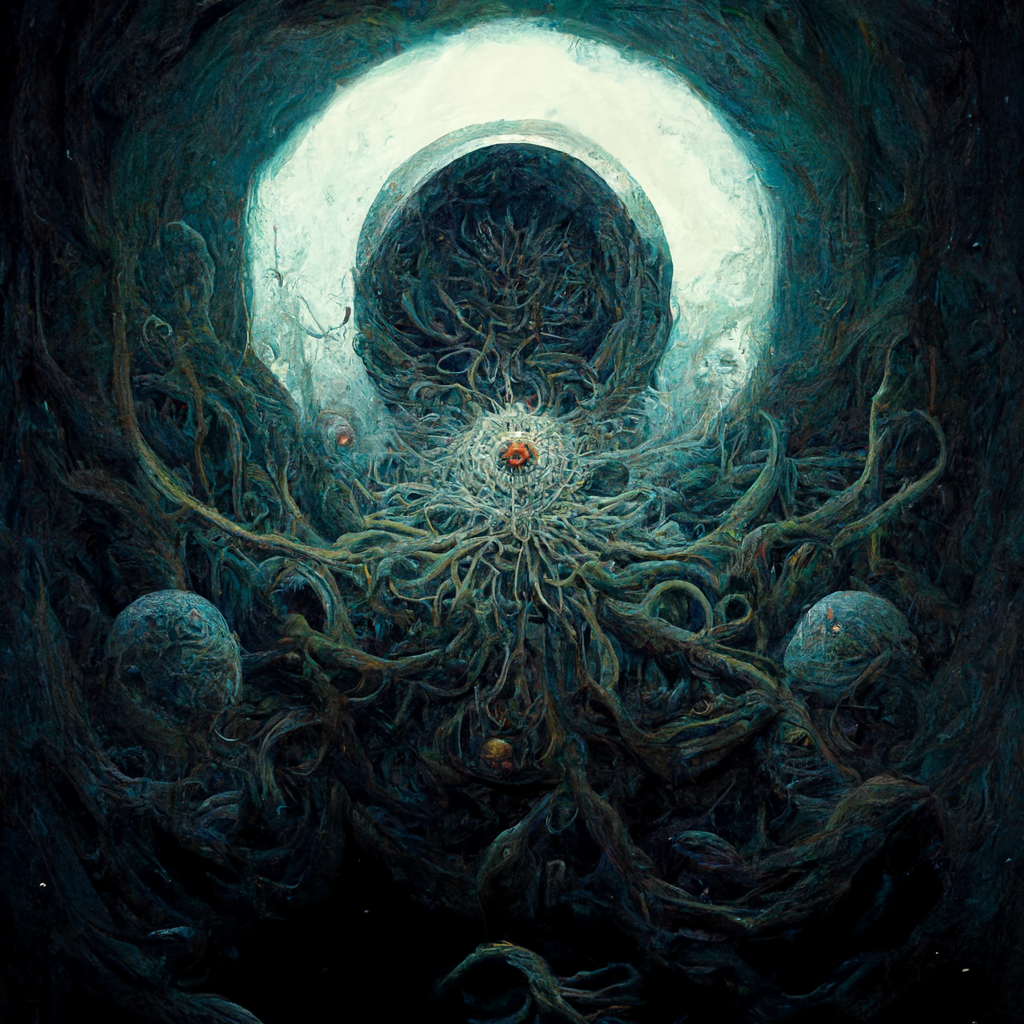
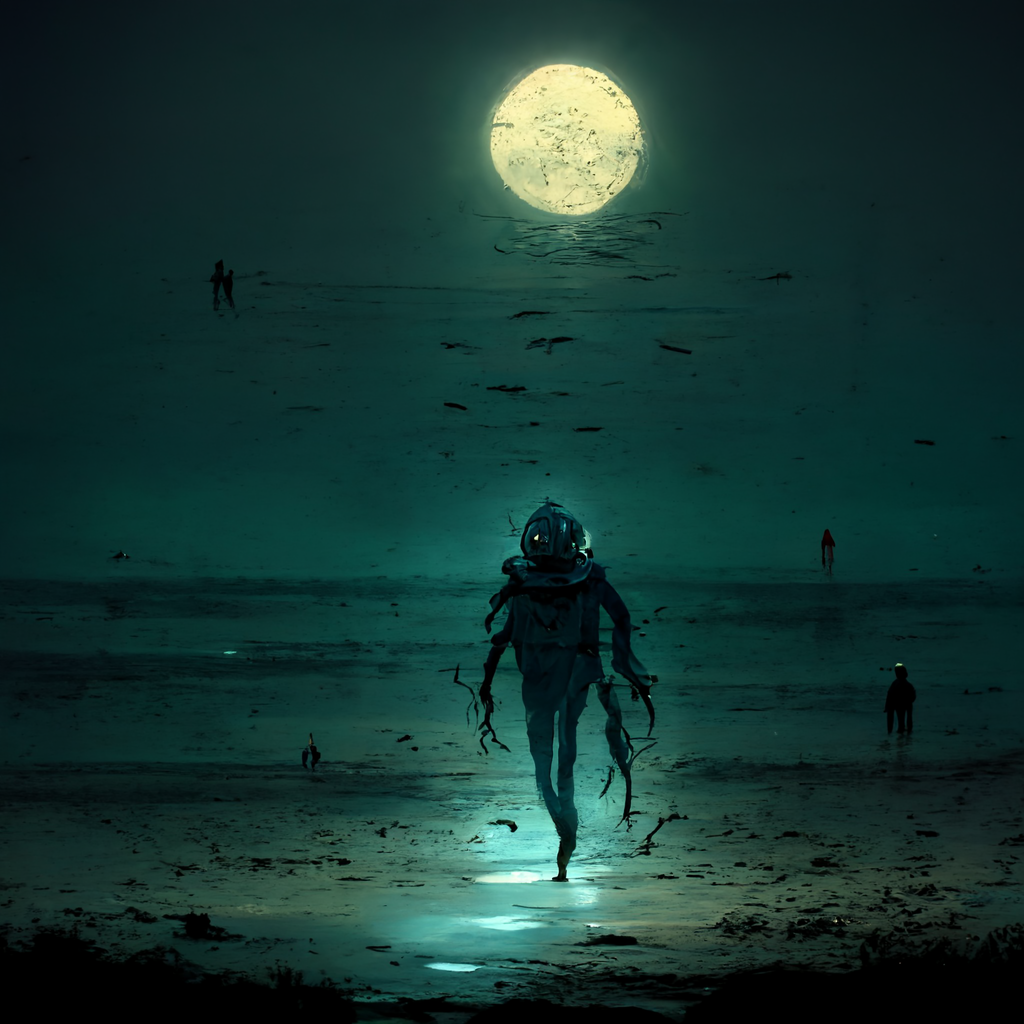
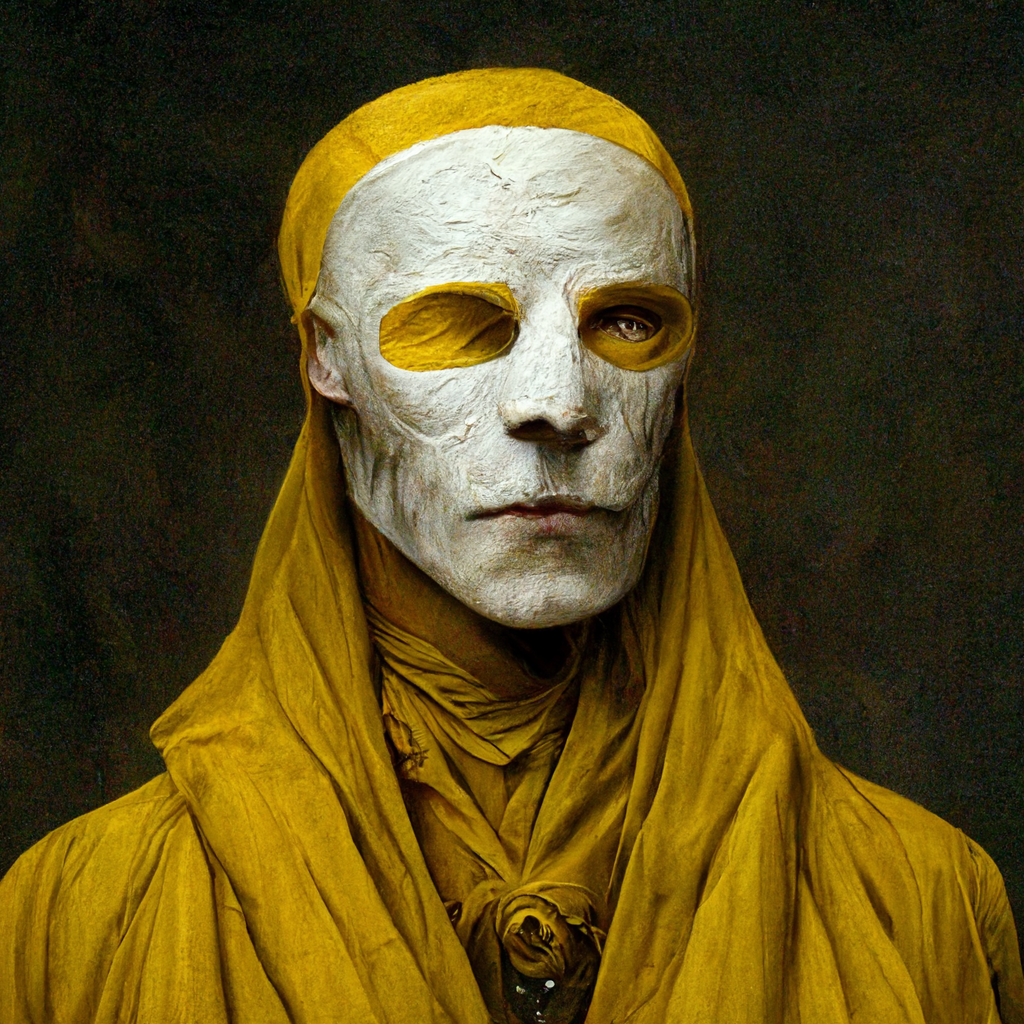
Then, in order, we have Yog-Sothoth, Shub-niggurath, Nyarlathotep, Azathoth, two pictures of the Deep Ones, the Color from Outer Space, and the King in Yellow.

And portraits of famous people tended to go well with the program. Here are Stephen King, Anne Rice, and HP Lovecraft, three of my biggest influences as a writer, as well as one of Lizzie Borden with an axe. Because why not?

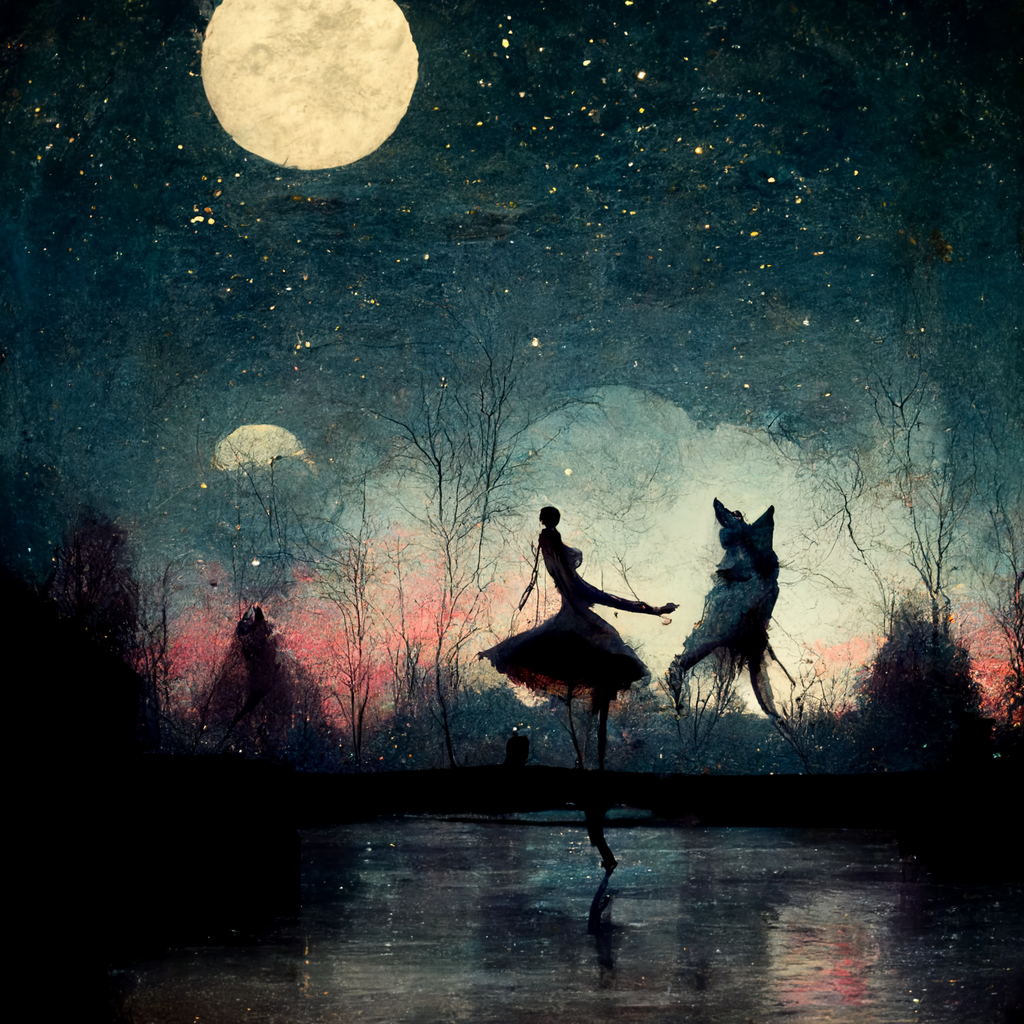
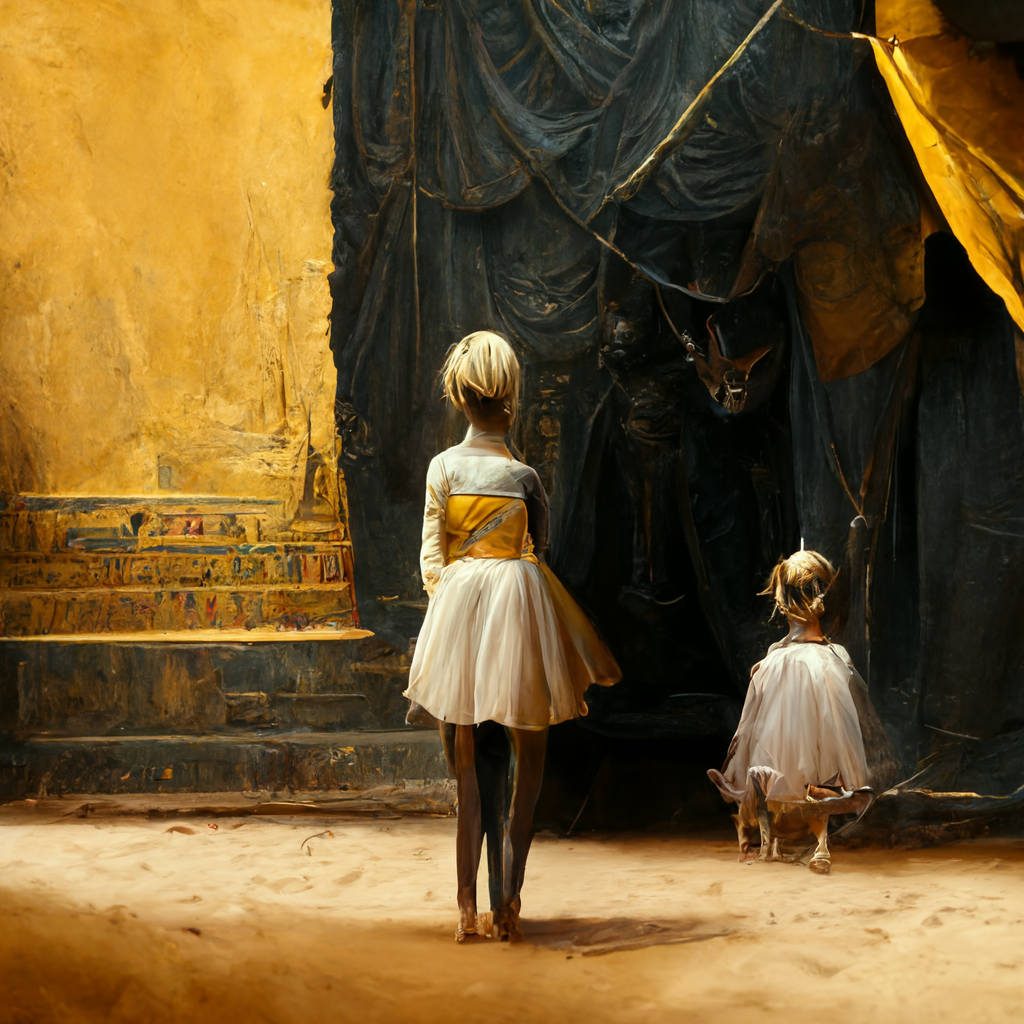
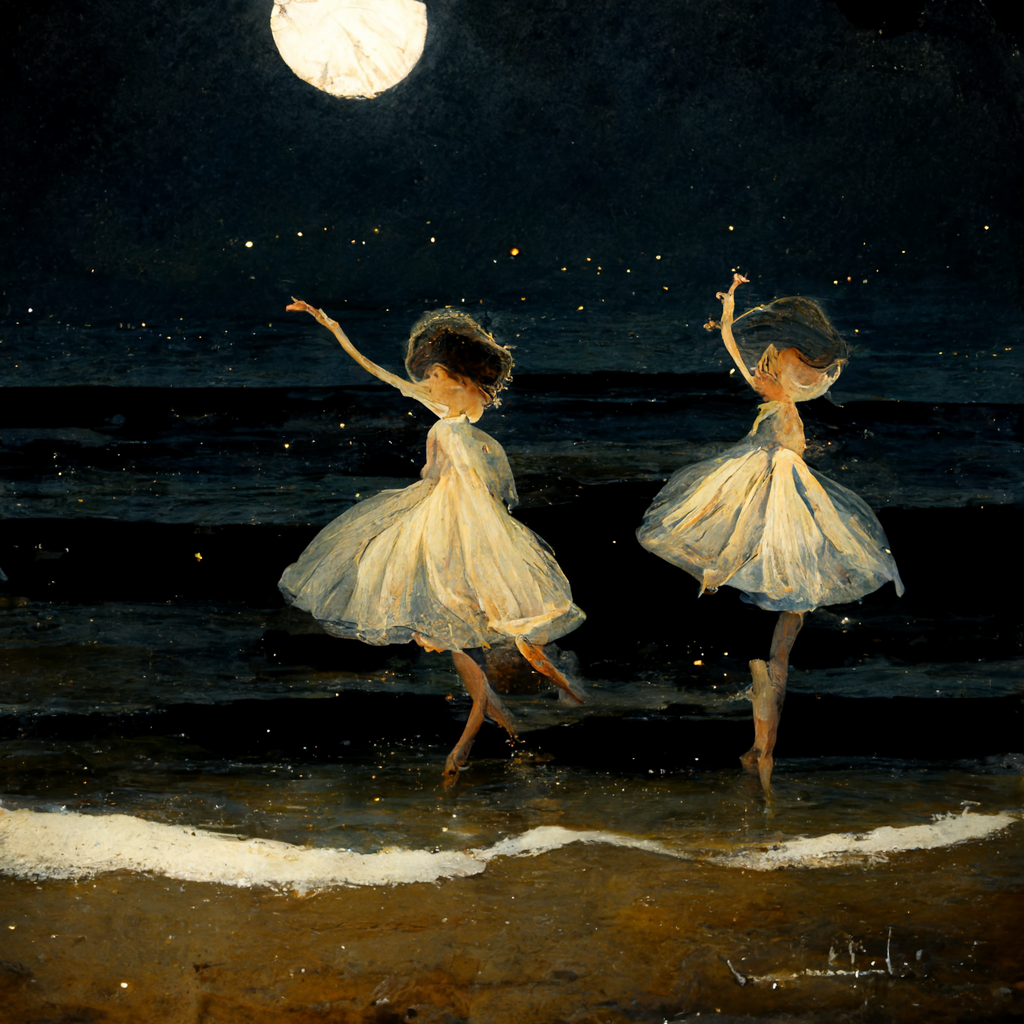
And because I love ballet and try to put dancers in my stories when I can, I made a series of ballet posts, with their titles in the captions.

Dancer and Wolf on the lake
The Little Ballerina Ghost
Dancer in the Egyptian Temple
Dancers on a Moonlit Beach
Little Dancers Running from Lava
Little Dancer and Anubis

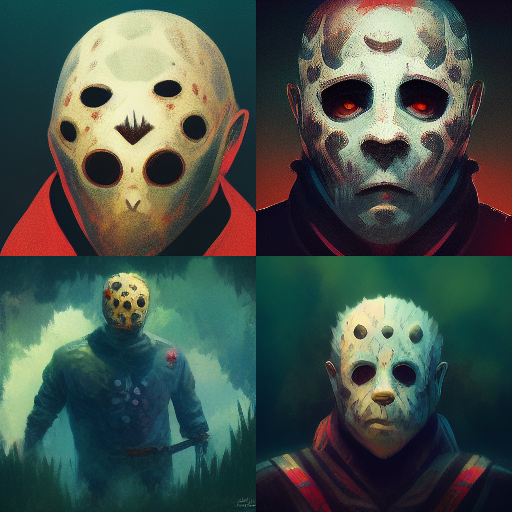
Pretty cool, right? Most of them look really good. However, those were success stories, like I said. Here’s what happened when I tried to create Jason Voorhees from the Friday the 13th films.

Yeah, I know. None of those come close to looking like Jason! He’s arguably more famous than Cthulhu, but these were the results. And then there was my attempt at Freddy Kreuger from A Nightmare on Elm Street. Oy freaking vey!

Yeah, who is that? Not Freddy Kreuger, who is definitely more famous than Cthulhu! Honestly, it looks more like my conception of Leland Gaunt, the antagonist from Needful Things by Stephen King. How could the AI get our favorite subconscious serial killer so wrong?

And those are just a few examples. I went through several failures trying to get anywhere close to a specific idea or image, only to give up when I realized the program just couldn’t create it. I couldn’t even create a decent Sailor Moon or an accurate tiger image, and both those prompts have enough references out there that they should have been easy to create something accurate.

Even some of the successes took a lot of work and experimentation, such as The King in Yellow or Little Dancer and Anubis. I won’t even go into detail about how hard it was to get a good Alice in Wonderland pic that wasn’t too trippy. I mean, I know the source material is plenty weird, but not all art based on it has to be super-surreal!

And while I call some of them successes, they aren’t perfect. You can especially see it in the ballerina series, where features like the head and limbs look odd or bent in ways you wouldn’t see on a normal dancer or a Degas painting. Only the tutus and bodices come out well. The rest of their bodies can be a mixed bag.

It kind of reminds me of that scene in 1986’s The Fly, where Jeff Goldblum puts steak through the teleporter and it comes out tasting weird. He figures out that the computer hasn’t learned how to move organic materials, and is instead creating an interpretation or bad imitation of what it thinks steak is. That’s what we have here: the AI has learned how to mimic and create, but it’s still leagues away from making certain things.

And honestly, I’m glad. Art is art because there’s someone behind it with a vision or a passion. You can program a computer to recreate famous art pieces or original pieces, including Batman comics and scripts or horror screenplays. And the computer might even do a good job at times. But there won’t be any passion or soul behind it. Art is art because we’re putting our love and soul into our creations.

And getting to work with a creator? That’s even more special. Believe me, I’ve done it before, and it’s amazing to see your vision come to life with their help. Especially when working on art pieces like book covers. That truly is something special.

That being said, I can see AI-generated art being used for cheap book covers as the technology improves, and the services of artists becoming more expensive. This could especially apply for small presses or independent publishers who need to lower costs while maximizing profits. The only time publishers may use a real artist is if the author is big enough to warrant it.

Hopefully that doesn’t happen, because it would mean we wouldn’t get to see some really amazing collaborations. So, for the meantime, I’ll stop with the AI art (I’ve scratched that itch and I don’t want to pay a subscription for Midjourney, anyway), and continue supporting the artists who create amazing art. Especially horror art.

And now, here are some more pieces I created. Except for a few I’m waiting to reveal till the time is right, here are my other successes. You can ask what was going through my mind when I created these in the comments below. Enjoy, and until next time, my Followers of Fear, pleasant nightmares!

Vampire Mothers and Child
Jump Rope with a Ghost
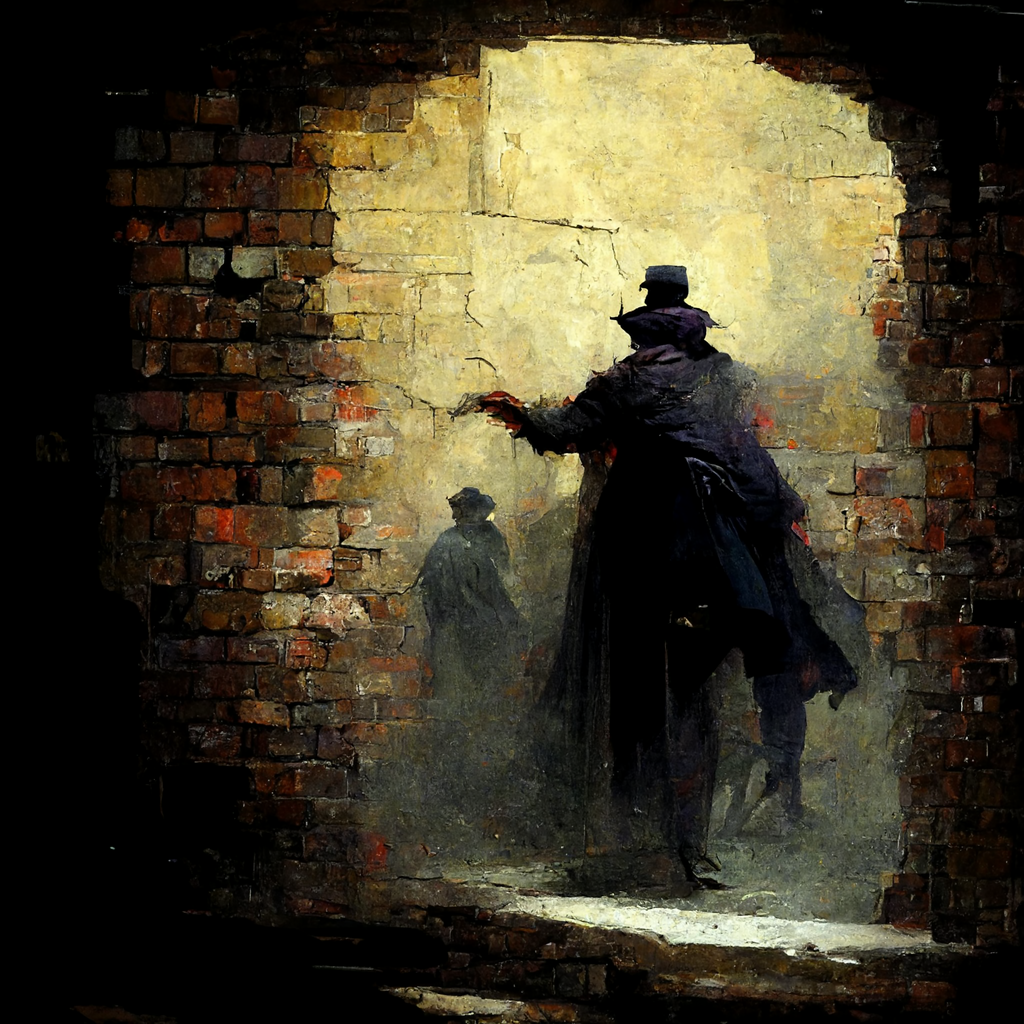
Jack the Ripper in an Alley
Flaming Giraffe #1
Flaming Giraffe #2
The Necronomicon
Bunny Girl and Hammer
Spooky Alice in Wonderland
My favorite films surrounding my remote control.

You know, this may not be the biggest issue in my life. And it may not be the meaningful thing I could write about on this blog. But you know, it’s something I find myself pondering from time to time. What do my Top 6 Favorite Horror Movies say about me and my interests?

(It used to be 7, but I realized while making my list that while I enjoyed the film, it wasn’t something I would gladly watch again and again and again, just say the word go. Also, my tastes change over time, so this list could look very different in ten or even five years, as well as grow or shrink.)

But what does it say about me that I enjoy these particular films? What about them draws me to them? I tried to figure it out by listing them and then listing what I liked about them. Here are the films in question:

Perfect Blue (1997)
Based on the novel by Yoshikazu Takeuchi and directed by Satoshi Kon, Mima Kirigoe is a J-Pop idol who is forced by her agency to transition into acting. This and a violent stalker sends Mima into a violent psychological down-spiral, one which may very well claim her life.

  • One of the few good examples of anime horror I’ve come across in my life. The art style is also excellent, where characters and scenes are animated with a sense of realism rather than the usual anime exaggerations. This gives the horror a certain sense of realism that you wouldn’t normally find in anime.
  • The movie works to make you question, along with Mima, every moment of reality. What is real, what isn’t, what’s a dream, what’s part of Mima’s TV drama and what’s her actual life. It’s all up for debate throughout the movie, with the use of color, quiet scenes vs acting and dancing scenes, and repetition of events making you feel the disorientation Mima feels. All leading up to a final third with a horrific twist.

Color Out of Space (2020)
Starring Nicholas Cage and based on the novella by HP Lovecraft (one of my favorites by him, BTW), a meteor falls in a small West Virginia farm, giving off an odd color that can’t really be categorized. Soon after, strange events start happening on the farm, changing the plant life, the family, and reality itself. All leading to a devastating conclusion.

  • Ask most film critics, it’s one of the best HP Lovecraft/Lovecraftian horror adaptations ever made.
  • The film’s very misleading, at first playing up Cage’s penchant for odd acting and adding in plenty of comedy. Later on, however, Cage’s performance goes from funny to sinister, and the humor vanishes as the number of scary events occur and build, filling with you with dread.
  • The mix of practical effects and CGI is well done, with the latter only being employed as absolutely needed and the former being used enough to make fans of The Thing proud. This allows for the final scenes to be really horrifying, even when chock-full of CGI.
  • Just watch the cutting board and alpacas in the barn scenes. You’ll be scarred for life.

Overlord (2018)
During the D-Day invasion, a small troop of American soldiers sneak into a French town to take out the Nazi’s radio tower, preventing the Nazis from calling for help. What follows is a harrowing ride through hell as the team confronts not just Nazis and the horrors of war, but deadly experiments that may end up changing the tide of the war.

  • Despite being a “Nazi zombie” film, which is usually silly or played for laughs, this film plays it much more seriously. The zombies are almost a secondary feature of the film. The real emphasis is on how war scars and changes you, how horrible the drive to win can make a person, and how war brings out the depravity in all of us. When the zombies are on screen, they’re used sparingly, only to heighten the horror and the stakes.
  • During the scenes where the protagonist explores the laboratory, the emphasis on mood and atmosphere creates a powerful dread of what’s around every corner, under every sheet. If you’ve ever seen or played the game Outlast, it often feels like you’re in the middle of that game, and that is a terrifying thought to have.

Sleepaway Camp (1983)
As a young girl, Angela sees her father and brother killed in an accident on a lake adjacent to Camp Arawak. Years later as a teen, Angela and her cousin Ricky go as campers, only for a strange series of deaths to ruin the summer fun. And in the center of it all, Angela seems to be a fixture.

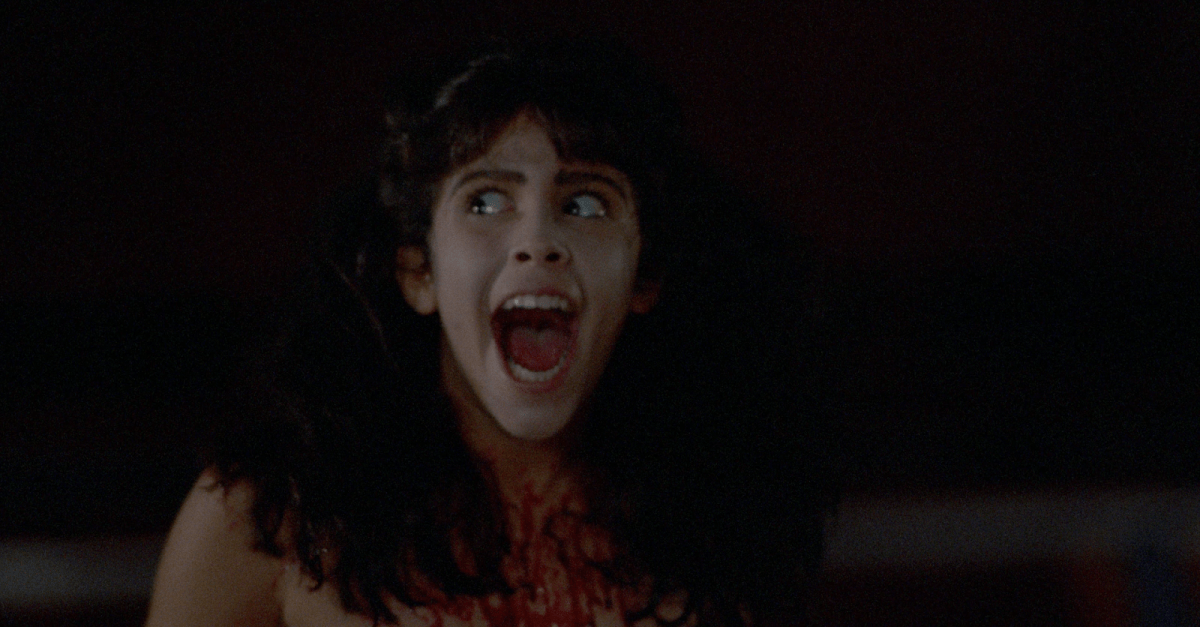
Who else had their mind blown by this moment in the film?
  • This is a rather unique 80’s slasher. For one thing, the campers are all played by actual teens and tweens, rather than adults pretending to be teens. Coupled with the teens language and behavior, it often reminds me of my own camping days, except less Jewish and more murder-y.
  • There are also prolonged periods between (admittedly inventive) kills, which allows you to really get to know the characters and remind you that these are just kids. This makes each instance of death even more shocking and brutal than it would be if they were in your face one after the other.
  • The twist in this movie is rather famous and forces the viewer to recontextualize everything in a new light. I won’t say what happens, but ooh boy, it’s not the sort of thing you could do today. I’d be interested to see how a remake handles this twist and reworks it for a modern audience. Also, I wish there was a novelization for this movie, because it would be great.

The Taking of Deborah Logan (2014)
A medical student is filming a documentary about an older woman’s battle with dementia. While out at her country home, however, it becomes increasingly clear that this woman is dealing with something else besides dementia: a dark presence has come for Deborah Logan, and it’ll use her to accomplish its sinister goals.

  • Both a found footage and a possession movie, the take on the latter is very unique, both in the victim of possession and who/what is doing the possessing. However, since this is a film about a woman with dementia, it misleads you at first so that you don’t know if what you’re experiencing is really supernatural at first. And when it becomes clear that something supernatural is happening, it becomes both terrifying and tragic.
  • Did I mention this film is terrifying? Not just for anyone whose relatives have experienced dementia (and I’ve heard from people that that’s a form of terror in and of itself), but just as a horror movie it is terrifying. From dark and claustrophobic scenes in an abandoned mine to strange happenings in the house and one bloody scene that freaked me the hell out, this is not a film you want to watch with the lights out.

Prince of Darkness (1987)
A Catholic priest discovers an ancient artifact in the basement of an abandoned church that points to the fulfillment of an obscure end-of-world prophecy. Needing to prove it to the world, the priest enlists the help of several prominent professors from a local university and their grad/PhD students to help quantify this strange, evil miracle. As you can guess, shit really hits the fan.

  • One of John Carpenter’s lesser known masterpieces (which I think is a damn shame), the film has a unique take on God and Satan that feels more at home in a UFO cult, but works really well here. It also has some interesting ideas and themes to explore, such as the nature of evil, the relationship between religion and science, and even an allegory for the AIDS epidemic, which was at a peak when this film was made.
  • Also, while not the scariest thing ever, it is pretty damn creepy and has some truly great moments of horror.

So, there you go. These are my favorite horror films right now. And I struggle to find a unifying theme about why I elevate them above all others. Half of them are from the last decade, two from the 1980s, and one from the 1990s. They all place a lot of emphasis on psychological horror, but how and how much varies from film to film. Only two of them are adaptations of anything. No similar genres, directors or writers, different themes are explored in each one, and I own copies of all of them on DVD or Blu-Ray.

Maybe it’s just that they stick in my head more than others, or that they impressed me in some way that other horror films haven’t. Perhaps they’re the kind of stories I wish I’d wrote, or I like thinking of what I’d do with the material. Wait, no, it’s not that. I think that with every horror film.

If nothing else, I’ll be able to discuss films like Perfect Blue and Prince of Darkness with more people.

Well, maybe you’ll help me find some insight. If nothing else, there’s a chance you’ll be curious enough to see these films if you haven’t watched them before, or give them another watch if you have. You may even notice something I don’t.

You may even make some of them part of your Halloween watchlist this year (63 days till Halloween at the time of this writing). And if you do, I also recommend adding Carnival of Souls (1962), Killer Klowns from Outer Space (1988), Rosemary’s Baby (1968), As Above, So Below (2014), The Void (2017), both versions of The Fly (1958 and 1986), the 2013 remake of Carrie, It (2017), and Freaky (2020). All make great additions to your Halloween viewing lineup. Not to mention all the movies coming out starting next month. I’m getting chills just thinking about it!

Anyway, this has been a long post and it’s getting late. I’m going to end it here and call it a night. Until next time, my Followers of Fear, good night and pleasant nightmares!

What are your thoughts on these films? Did you notice anything I didn’t? What are your favorite horror films that you recommend to everyone?

As many of you are aware, last October I announced that I would be releasing a new collection of short stories, Hannah and Other Stories, with BSC Publishing Group. Like my previous collection, The Quiet Game: Five Tales to Chill Your Bones, these are all original and unpublished stories that have gone unread except for a few other people at this point. Unlike The Quiet Game, however, Hannah will be seven stories instead of five, and I have a professional editing team working with me to polish up the stories before they’re released.

It’s that editing process I’m here to talk about. As I mentioned in a previous post, BSC is sending me the notes for each story one at a time so that I’m not overwhelmed. I appreciate that, as the last time I was overwhelmed editing a book, I spent a good amount of time watching Sailor Moon on Blu-Ray while trying to quell my anxiety. And recently, they sent me the notes for the second story in the collection, Queen Alice, which they told me is their favorite story in the collection so far.

I started editing Queen Alice recently after several delays (you can guess one or two of the delays were). And there are a lot of notes from the editors.

Not that I’m complaining. I’m grateful that they’ve been so thorough, picking things up that I missed in all that editing and polishing I did last summer before submitting Hannah. However, it is a challenge. I’m seeing a lot of stuff that needs to be clarified or rewritten or cut out, and doing all that so the story turns out better than it was before can be tough at times.

I’m a little nervous about how things will go down the line, when it comes time to polish up What Errour Awoke. Great story in the Lovecraftian universe and it did help me with my anxieties regarding the COVID-19 pandemic when that first began, but I know there’s plenty there that’ll need to be worked on. Especially in the latter half!

Still, I’m working it. I’m taking it one page and one section at a time. And I’m already seeing vast improvement with Queen Alice. At the moment, the story is kind of like a Lovecraft story: great concept, but the writing needs work (thankfully no racism or xenophobia). My goal right now is to get the writing up to the same standard as the concept and the story that my editors fell in love with.

That way, when it gets to you guys, you won’t be disappointed by it, but thrilled. Or maybe, just maybe, you’ll be terrified.


Just a couple of quick notes, my Followers of Fear:

First, as you know, The Pure World Comes has been out five days. And so far, my Gothic horror novel about a maid in Victorian England going to work for a mad scientist has been doing pretty well. It’s not selling like a Stephen King novel (I wish), but it’s been selling steadily and people have been leaving positive reviews on Amazon and Goodreads. This has made me hopeful for the book’s future and I plan to continue letting people know about it so they’ll want to read it (including a more in-depth post on it in the near future).

If you would like to check out The Pure World Comes, I’ll leave links below, including to Goodreads. You can read what people are saying, decide whether to purchase a copy, and maybe, if you like what you read, leave me a review letting me and others know what you think. It would be a big help to me, and let me know just what you thought of the book.

The Pure World Comes: Amazon, Barnes & Noble, Apple Books, Kobo, Goodreads

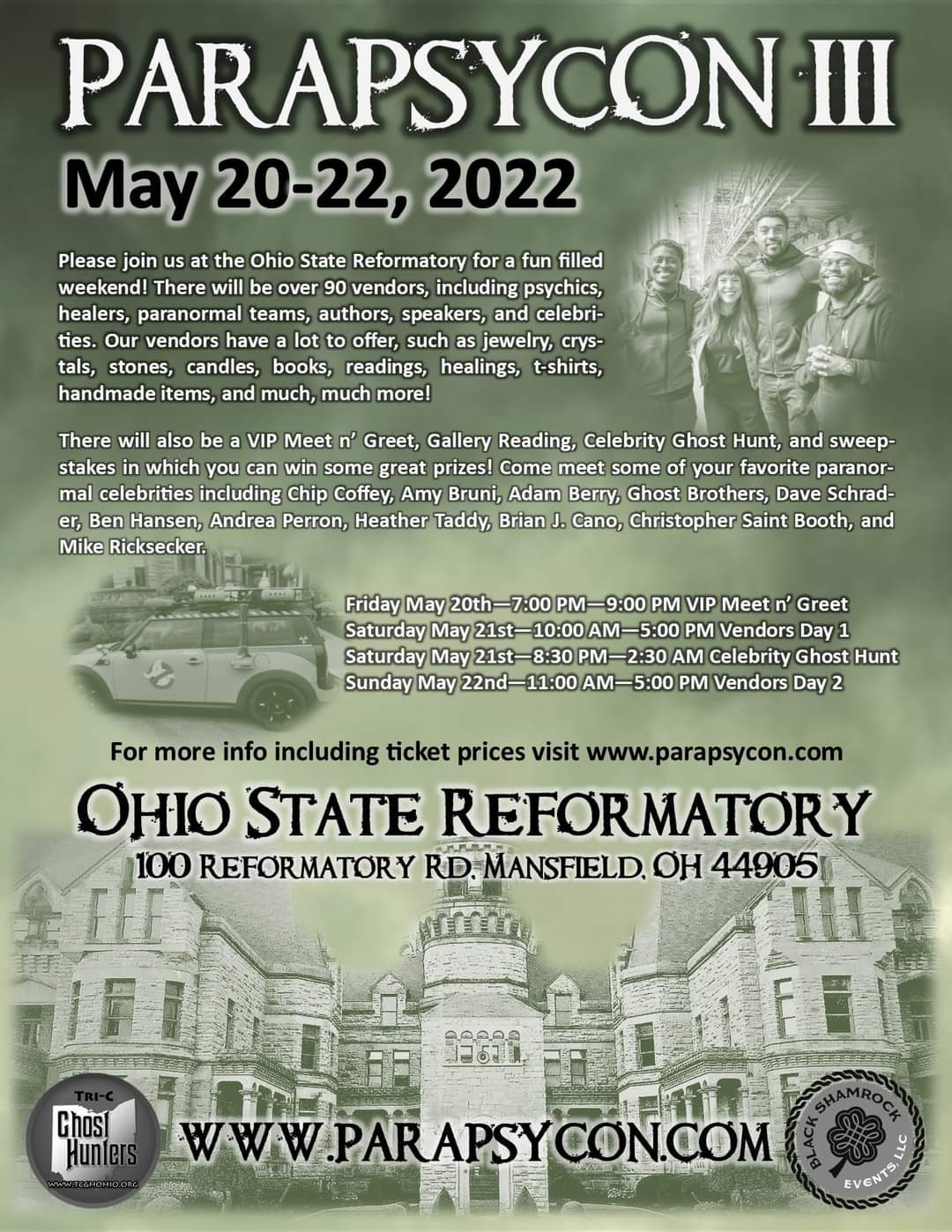
Also, ParaPsyCon is one week from today! If you’re unfamiliar, this is an awesome gathering of ghost hunters, psychics, authors and more at the Ohio State Reformatory in Mansfield, Ohio, one of the most haunted locations in America (and the filming location for Shawshank Redemption). If you want to stop by on May 21st and 22nd, please do! I’ll be selling signed copies of books, including TPWC, and entrance fee is just one ticket for a self-guided tour of the prison. Hope to see you there!

That’s all for now, my Followers of Fear. Until next time, good night and pleasant nightmares!