Posts Tagged ‘James Wan’

In horror, it’s often about the monsters.

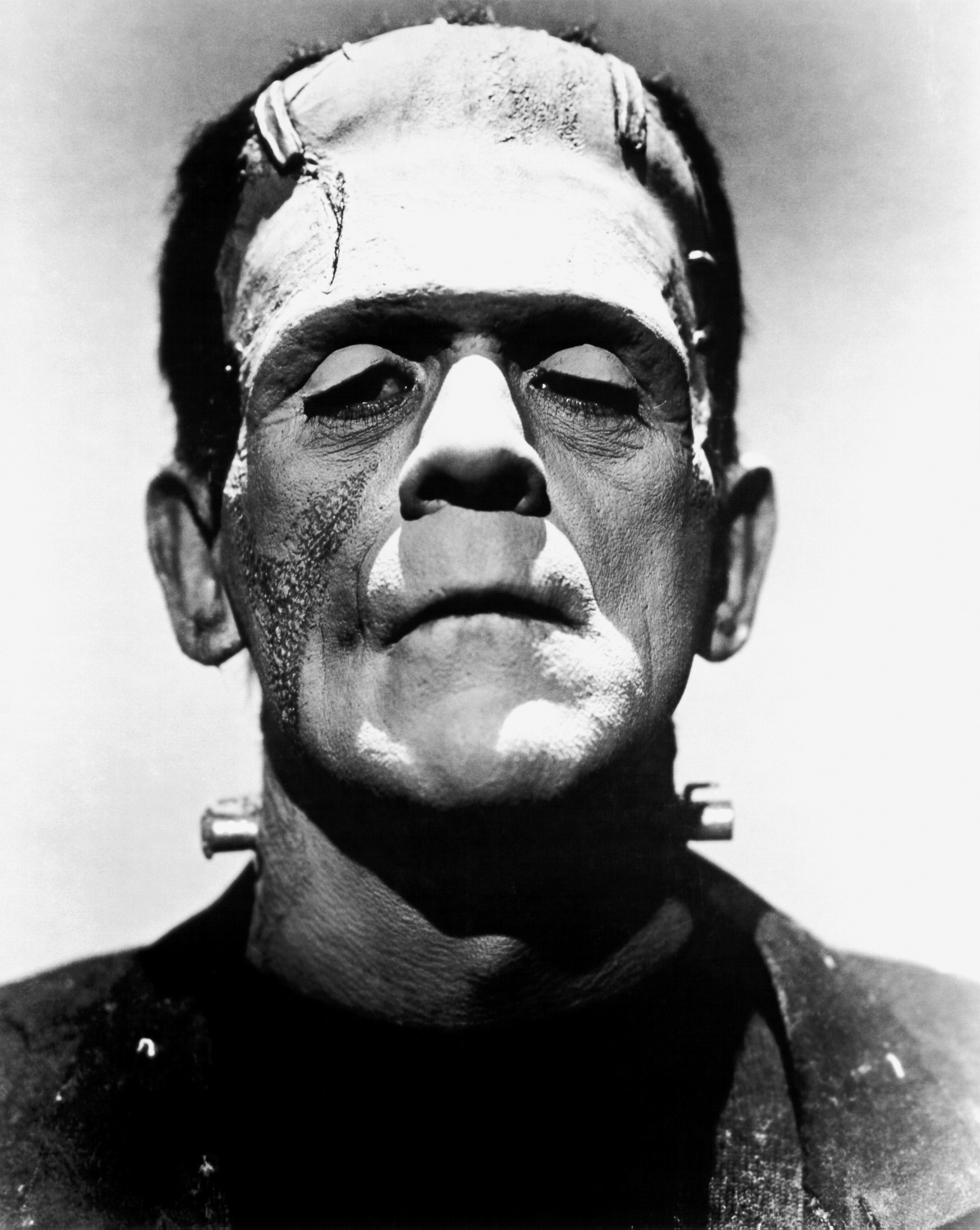
Obviously, horror often centers around the monsters. Saying that is like saying in economics, it’s often about the supply and demand. But still, it needs to be stated. Whether they be demons from Hell, ghosts haunting an old house, a serial killer stalking a young woman during a holiday, a collection of corpse parts stitched together and brought to life through high levels of electricity, or ancient entities from the stars whose forms are difficult to describe, horror is often about the monsters.

And as horror creators, it’s up to us to make each monster we create different from all who came before.

Let’s face it, the people who consume our work expect a little variety (unless you’re working on a series like Supernatural or the Sookie Stackhouse books, in which case your readers would hope there would be some internal consistency in the monster design from episode to episode and season to season). They don’t want the same story every time, and neither do we. So, we write new stories and try to make them distinct from previous works.

Same goes with the monsters we design. Unless we have a special reason for doing so, like a series, it’s important to make our monsters different from story to story. Sure, there may be common characteristics. HP Lovecraft’s monsters were always covered in tentacles and eyes and gloopy fluids (when he could describe them), but you could tell Cthulhu from Yog-Sothoth from Azathoth. And in James Wan’s more supernatural horror movies, the ghosts and demons do share some characteristics, but how they work in the Conjuring franchise is different from how they work in the Insidious franchise.

But the point is, you do have to try to ensure the monsters don’t closely resemble one another too much from story to story. Otherwise, you have people confusing what happened in one story with what happened in another story and being like, “Can you blame me? They’re so similar, they just kind of blend in after a while!”

I was reminded of that this weekend while working on the climax of a killer fairy story (yes, that’s what I’m writing, and it’s probably going to be a novella when it’s done). I was making great progress yesterday, heading towards the climax, and then I realized that the monster the protagonist encounters during this scene resembles one appearing in a different novella. Thus, I had to redesign the monster for the killer fairy story, which I only finalized today.

So, how do you ensure that your monsters are different every time? For the first time in forever on this blog, here are some tips:

  • Look to mythology for inspiration. Mythologies from around the world are rife with monsters. You have the Hekatonkeries and Typhon from Greek mythology; the Jorogumo and the Onryo from Japan; the Chupacabra from Latin America; and more (did you know some Amazon tribes believe in furry cyclops creatures that protect the forest?). If you look deeply enough, and keep it varied, you’ll find all sorts of interesting monsters you can use in your stories.
    Just be careful that you don’t do anything that might be considered exploitative or offensive by certain cultures. Nobody needs that kind of bad karma.
  • Draw from the works of your favorite authors. I’m not saying copy your favorite authors, because that’s plagiarism and is generally frowned upon. But look at the monsters in your favorite novels. What about that monster scared for you? Draw on that and see if you can create something terrifying.
  • Take something ordinary and make it scary. This is something I see a lot more in horror fiction these days, where writers find a way to make something ordinary and make it terrifying. If you are familiar with the works of Junji Ito and Bentley Little, you know what I’m talking about. Uzumaki by Junji Ito makes spiral shapes terrifying, and I never thought a resort could be scary until I read Little’s Resort. And what about Siren Head, a giant humanoid with two giant megaphones full of teeth for a head? I wonder where that came from?
  • Look to your own fears and anxieties. Plenty of times, it’s easy to draw on those to create a monster. Have a phobia around rats, snakes, spiders, lightning, death, or your grandfather? Maybe something you remember from childhood struck you as creepy but no one else seemed to think so, like a character in a children’s movie or a toy you were given at Christmas? Use that to form something new and horrifying. You’d be surprised how often that works.
  • Keep track of your monsters. Nobody knows your stories better than you do, and that includes the monsters. If you’re having trouble coming up with a good monster, look what you’ve come up with before. Go through them like a catalog. Perhaps seeing what came before will help you come up with something new that you’ll enjoy writing.
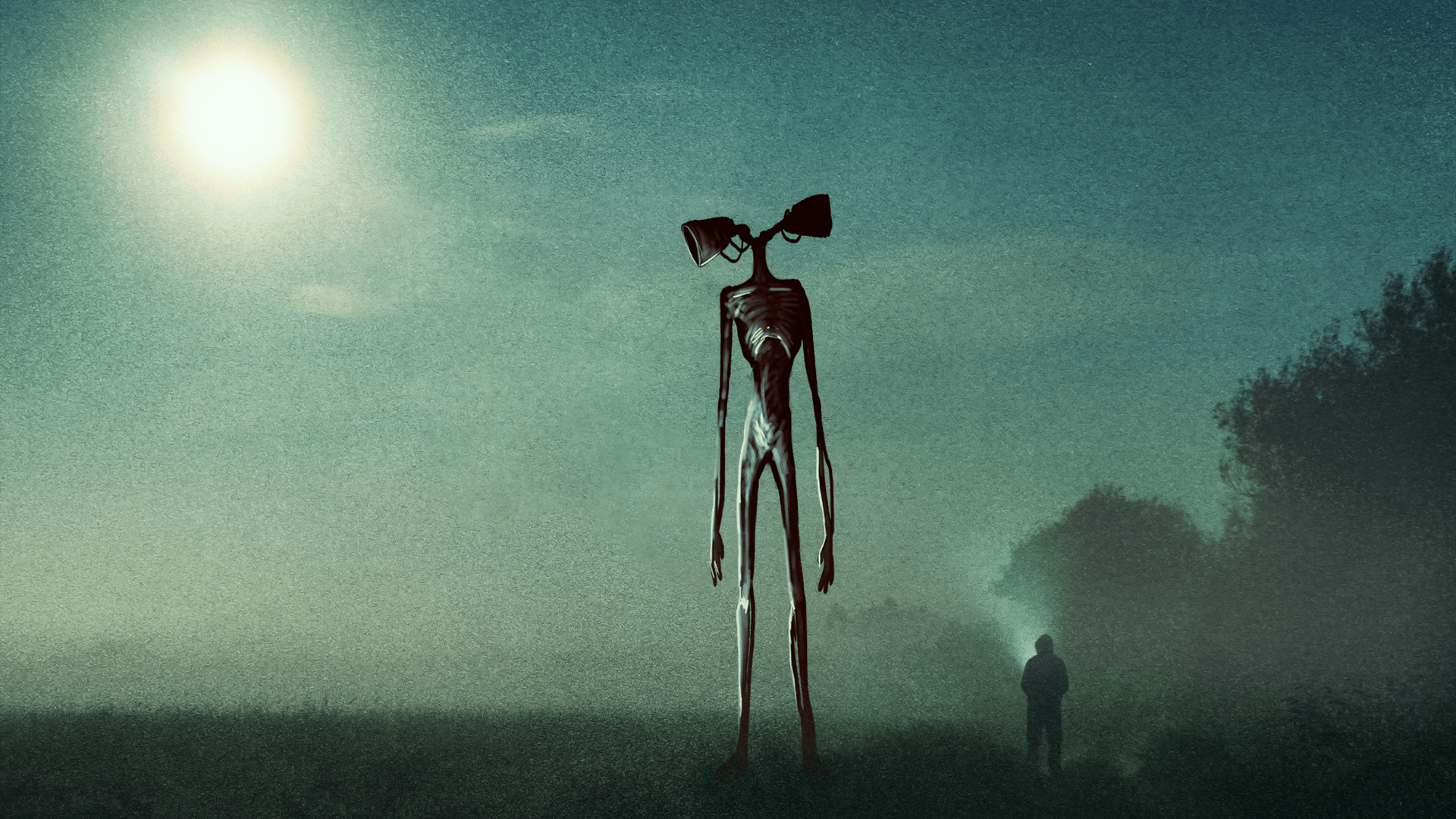
Siren Head is a great example of taking something ordinary and turning it horrifying.

Coming up with new monsters each and every time isn’t easy, even if you work in multiple genres and subgenres. Still, as creators, it’s our job, and it can be a lot of fun. And when you hear people praising your monsters for how clever the idea is or how terrifying they are to think about, it makes the work worth it.

And hey, don’t get bummed if one monster is too similar to another and you only realize after the fact. The antagonist in The Library Policeman by Stephen King bears some similarities to It, but they’re both still great stories. So, it happens. Nothing to get worked up over.

That’s all for now, my Followers of Fear. Good night, pleasant nightmares, and RUN! THERE’S SOMETHING RESEMBLING A MURDER HORNET AND THE SIZE OF A SMALL DOG BEHIND YOU!!!

What are your tips for coming up with monsters for your stories? Let’s discuss in the comments below.

It’s a James Wan horror film. He’s the guy behind Saw, Insidious and the Conjuring films. Nuff said.

Malignant follows Madison Mitchell, a woman who becomes connected to several murders in the Seattle area, starting when her abusive husband is murdered by a mysterious intruder. Not only that, but Madison becomes witness to the murders in dreams, committed by a mysterious figure named Gabriel. As the police attempt to figure out the connection, Madison’s sister learns a secret from the former’s past. A rather disturbing and deadly secret.

This film started out rather slow and kinda typical for an average horror film, but it got better with time. And honestly, it was really interesting.

Malignant is rather atypical of a horror film. James Wan made it more of a giallo film, which is an Italian genre mixing mystery-thriller with suspense and horror (they were quite influential on slashers). The result is a mostly well-done balance between a crazy crime thriller and a strange horror film, especially in scenes like in the Seattle Underground. And the final reveal is rather ingenious, with some very nice body horror that made me shout in my own living room in shock.

Also, what a film score! It was kind of all over the place, but it was still interesting to listen to.

However, the film’s first twenty minutes or so did feel a little cliched and below-average for a horror film. And the ending was kind of a let down for me. Something much darker would’ve worked better for me. And they do bring down the film’s score for me.

On a scale of 1 to 5, I’ll give Malignant a 3.4. Yeah, there’s a lot of interesting stuff in the film, and ooh, that twist! What an image! I’m going to dream of that for years. However, there’s a lot that could have been improved or done differently. If you want to watch it, go ahead. It’s in theaters and on HBO Max. Still, it’s not the best thing I’ve seen this year. Not by far.

That’s all for now, my Followers of Fear. I’m going to bed so I can hang with friends and maybe do some editing tomorrow. Good night, and pleasant nightmares!

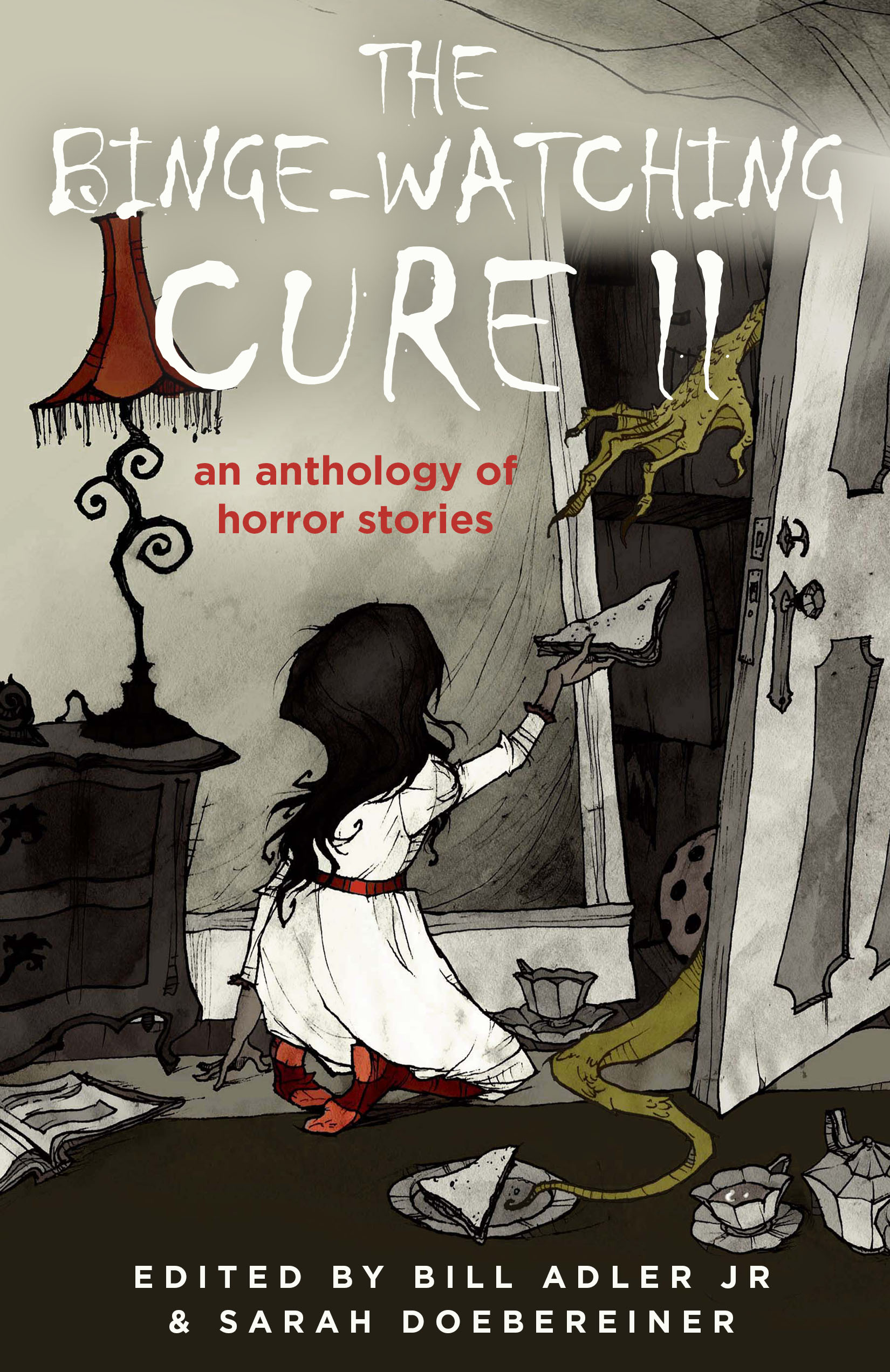
Look at this cover! It’s freaking beautiful!

If any of you checked my Facebook page or my Twitter feed after my last post, I hinted that I might have some good news I would be sharing today or tomorrow. Three years ago, I wrote a story called Car Chasers, which I describe as a mash up of Fast & Furious-style races with a ghost story. About a year and a half ago, I announced that the story had been accepted into an anthology. And last night, that anthology, The Binge-Watching Cure II, was released by Claren Books on Amazon!

I’m very excited to let you know this horror anthology has been released. It’s a rather unique anthology, as every successive story is longer than the one preceding it. In fact, during the submission process, we had to submit our stories based on a certain word length and how close we were to fifteen percent of that word count. I was lucky enough to be considered for the eight thousand word spot, and after some deliberation, Car Chasers was selected as the story!

And after having Rose accepted by Castrum Press a few months previously, seeing this story accepted by Claren Books was a really big deal for me. I was still having some anxiety over the amount of editing I needed to do for Rose, so this was a boost to my confidence.

Where was I? Oh right. The Binge-Watching Cure II‘s stories range from 140 characters (just over the original size of a tweet), to twenty-five thousand words. So if you’re looking for something quick to digest, or something long to chew on, you’ll find it here. And there are some great authors here: Amanda Crum, Nick Youncker, Lana Cooper, Robert E. Stahl, and Armand Rosamilia, among many others.

Also this guy named Rami Ungar. Have you heard of him? Neither have I, but I hear he’s a bit of a weirdo. Hopefully the good kind of weirdo, right?

The only version available right now is the ebook, but the paperback will be out soon enough, so keep checking back to the Amazon page if paperback is more your jam. I’ll include the links below. And if you do get the book and read it, please consider leaving a review online where you can. Not just because we love to hear your feedback, but because reviews help more people find the anthology and get them to read it, which keeps the cycle going, as well as encourages Claren Books to put together and release more anthologies like this one.

Also, I’m hoping director James Wan, known for both Furious 7 and the Conjuring movies, will somehow come across the anthology, read Car Chasers, and want to adapt it. I doubt it will happen, but I can dream and encourage, right?

Anyway, thank you to Bill Adler Jr. and Sarah Doebereiner, as well as the rest of the team at Claren Books, for letting me be part of this anthology. And thank you to the other authors whose company I find myself with in The Binge-Watching Cure II. It’s an honor to join you.

And thank you, Followers of Fear. I hope you check out the book, and let me know what you think. And thank you for your continued support. One of the reasons I keep writing is because you keep supporting me, and I’m so grateful for that.

That’s all for now. I’m off to start a new chapter of Toyland, make dinner, bring in Shabbat and the latest night of Hanukkah, and chill out with some TV. Not necessarily in that order. Until next time, Shabbat Shalom and pleasant nightmares.

Link for The Binge-Watching Cure II.

So I recently got back into reading The Complete Fiction of HP Lovecraft, after about a year’s gap since I last dove into his work on my Kindle. I actually got from 15% to 32%, which for a 1112-page book is pretty good, if you ask me.

Now, if you don’t know who HP Lovecraft is, he was kind of the King of American Horror between the reigns of Edgar Allen Poe and current monarch Stephen King, though he didn’t really achieve any sort of fame or influence until after his death. When I read him last year, I found his style old and outdated, and while some of his stories were actually pretty creepy, others were just strange or boring (see my thoughts in Thoughts on Lovecraft: Part 1).

So what were my thoughts one year later, having read several more stories? Well, he still prefers to write like a contemporary of Poe, one of his main influences in writing, which I find still rather irksome (I could parody it here, but I did that well enough in Part 1, so why try and repeat it?). I’m not that big a fan of that style, as I find it stuffy and somewhat boring, so occasionally that made for an annoyance to get through.

And Lovecraft is still a proud and unrepentant racist and xenophobe. Seriously, “The Horror at Red Hook” manages to drag so many non-white ethnicities, including Kurds and Yazidis, through the mud.

And he’s the only author I’ve ever met who’s used the word “eldritch,” meaning sinister or creepy (why didn’t he just use those words?).

But other than those problems, the tales I read in this section of the book were much better than the ones I read in the last one. Sure, the short story “Azathoth,” which was the first mention of the Elder God, is actually just a fragment of a novel Lovecraft never got around to finishing, which was annoying. Imagine, I get to the end of that short piece, and I was like, “Wait, that’s it?” Thank goodness for Wikipedia, which explained to me why I shouldn’t be so angry.

And there was that story, “Imprisoned with the Pharoahs,” which got a little dense with the language and made it annoying to get through, though as a fictional account of one of Harry Houdini’s adventures, it is pretty cool in retrospect.

But other than those two, these were very good stories. They were creepy, dark, and had some pretty nice twists and turns in them. I can see why a few of them have been adapted several times into movies or radio plays and the like. “Herbert West–Reanimator” is a fun tale about one man’s growing obsession with overcoming death and extending life (very Frankenstein), and how that obsession causes a domino fall of events that shows the readers the price of obsession. “The Lurking Fear” felt like a Stephen King novel from an earlier age, filled with elements of insanity, the supernatural, and insane tastes. And “Shunned House” needs to be made into a movie by Blumhouse Productions, because it is freaking scary! It’s a vampire novel that hearkens back to the days when vampires were barely human, and is probably the best of the stories by him I’ve read so far. Imagine a movie version, with James Wan in the director’s seat! No one would see it and think of vampires with Twilight or any of that other sentimental crap out there ever again.

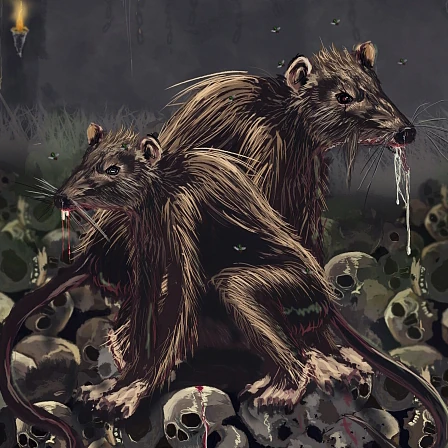
Eek! Rats in the walls! Now I can’t sleep.

Also, “The Rats in the Walls” is great if you want to scare anyone around a campfire. Just saying.

You know, the more I read of Lovecraft’s work, the more I see why he’s been so influential. Sure, his early stories could be rather pointless or silly, and never approached scary, with the exceptions of a few, like “The Tomb” and “The Temple.” But as time went on, as tends to happen, he got better. He figured out what worked and what didn’t. He learned how to get into our heads and make us tremble, make us wonder. He pushed the envelope for his day, introducing elements of cannibalism, satanism, gods that care nothing for us except maybe as snacks. And he did it so well.

And even now, after I’ve decided to take a break from him, I still find myself getting inspired by him. I’ve already gotten a few new novel and short story ideas from his stories, particularly “The Lurking Fear.” I have no idea when I’ll write them, but I think that when I do, they may even chill me.

So yeah, I think I’m definitely a Lovecraft fan now. Last year I wasn’t so much of a fan, but now I think I am. He’s definitely grown on me. And I think I may visit him again someday, perhaps even before the end of the year. Especially if he gives me so many good ideas. And if you like a good scary story and can handle some old-timey writing style, then I suggest you visit Mr. Lovecraft too.

Well, that’s all for now. I’ve got my own stories to work on, so I’m going to get on that. In the meantime, I hope you have a scarily good time, my Followers of Fear. Until next time!

It wasn’t a dud! It wasn’t a dud! IT WASN’T A DUD!!!

Sorry, had to get that off my chest. I’ve seen so many bad horror films lately, it felt necessary to shout praise of a good one. And I’m not surprised that this one is so good. Leigh Whannell, James Wan, Jason Blum, and Oren Peli all worked together on this film. These guys are known for great, scary films, so when they come together you know you’ve got something worth getting excited for.

The third chapter in the Insidious saga takes place a few years before the events of the first two films. Quinn Brenner, played by Stephanie Scott, believes she’s being contacted by her dead mother, and encourages this contact. This tragically leads to a car accident that breaks both Quinn’s legs and puts her at the mercy of the spirit after her, The Man Who Can’t Breathe. At the same time, Elise Rainier, the medium from the first two movies, reappears to try and help Quinn, while facing her own darkness and a loss that has made her afraid to do what she does best.

There’s a lot to be said on this film, so I’ll try and keep it to the things I think everyone should know before going to see this one. First, the actors all handle their roles very well. Scott, along with Dermot Mulroney and Tate Berney as her harried father and annoying preteen brother, have great chemistry as a family crippled by a devastating loss and pulled together again by the dark events surrounding them. Best of all though is Lin Shaye as Elise, whose personal journey to recover her confidence is extraordinary and heart-wrenching. I almost cheered in the theater when she had finally regained her former airy manner from the first two films. Plus it’s fun to see her first interactions with Specs and Tucker and how they formed the team we met in the first film.

And speaking of the first film, there’s a notable change between Insidious 3 and its predecessors. In the first two films, they built a mythology based around astral projections and the realms of the dead (aka the Further), but Chapter 3 seems to eschew that mythology for the most part in favor of creating a good old-fashioned ghost story, and a great one too. The suspense is powerful, the atmosphere tense and the creepiness of the whole movie, coupled with the amazing visuals and sets, the jump-scares and the screeching violins in the background music, will keep you on the edge of your seat throughout the movie.

Creepiest of all, of course, is the villain, The Man Who Can’t Breathe. Honestly, even when you see him fully in the light near the end of the movie, he’s still one of the freakiest looking villains I’ve seen in recent memory. What makes him even scarier than his appearance is that you’re not sure exactly why he’s menacing this girl or where he came from. There’s mention of him living in Quinn’s building long ago, and something about “pets” is also mentioned, but we’re never really sure what his reasons are. And that just adds to the horror factor here.

There are only two major complaints I have with this movie. One is that the character of Hector, the lovestruck boy-next-door, seems like he was going to be a bigger part of this movie than he was. Were most of his scenes cut for time? That, and I feel that the climax was a little cliched and a little too short to be truly frightening, though the ending makes up for that. Other than that, I had a really good time.

All in all, I’m giving Insidious Chapter 3 a 4.3 out of 5. A scary good movie that’s put out of my mind all the bad horror films I’ve seen lately and make me want to tiptoe through the tulips with terrified glee. And if the critics and the box office agrees with me, I think we can expect a Chapter 4 someday. And you know what? Even if it might be a little unnecessary (ah horror, the original junkie for unnecessary movie sequels), I might just be okay with that.