Posts Tagged ‘living and life’

I’m not sure if I’ve ever mentioned this, but Rose has a lot of flashback sequences and other dips into the past within the story, especially in the last two-thirds. I did this for a number of reasons: exploring the characters’s pasts; making them more complex; and just an opportunity to write some sequences to add to the horror element of the story. And there are a lot of horrifying things in those sequences, things that I can’t go into without revealing too many plot details, but they did make my beta readers gasp and stare at the page wide-eyed. They were horrifying moments in the story.

Not to mention, I think that flashbacks can be scary if done right. A good example of this is Gerald’s Game by Stephen King: while the protagonist’s current situation is scary enough, going into her past midway through the story and seeing how her father abused her as a kid was horrifying in its own right. Another good example would be the movie Oculus: that film flashes between the present and the past throughout its runtime, and it’s freaky no matter what year it is (see my Rewatch Review of that film).

Well, it looks like I didn’t do the flashbacks right for Rose. In the notes on the fourth draft from my publisher, they mentioned that all those flashbacks are just bad stuff happening to those characters, and while that stuff is horrifying, it’s not scary. I’ve had a lot of back and forth with them on this, and after a lot of thought, I can see where they’re coming from. After all, while in the real world “horrifying” can be a synonym for “scary,” especially in relation to current events, in fiction that’s not necessarily the case. Think about it this way: Harry Potter is horribly mistreated by his relatives, and what he goes through is horrifying. But if you ask any normal Potterhead what person or creature from the books they would be scared to face, the Dursleys wouldn’t rate very high on that list. The dementors, Voldemort and his Death Eaters, or the basilisk, sure. But the Dursleys? Considering most Potterheads are Muggle in biology and can’t perform magic, anyone who had to face them would probably be invited into Privet Drive and served tea and cookies in front of the TV!

So while showing how many terrible things happened in the characters’ pasts may be horrifying, it might not be scary. And considering how much experience my publisher has and how well-received their books are (have you checked out The Cronian Incident by Matthew Williams yet?), I’m taking this piece of feedback to heart.

I won’t lie, though, I’m a little disappointed, and I’ve been wondering where I went wrong. Or maybe to phrase it better, I’m wondering how I might have done the flashbacks better.

Well, in the case of Gerald’s Game, whose flashback is most similar to mine, they only do one big flashback sequence, not several. That way, it doesn’t become a repetitive cliche or trick. That, and its connection with the current events of the story: the protagonist’s abuse by her father is very much connected to her current predicament, on psychological and symbolic levels as well as literal levels. And with Oculus, the horror behind the story–a cursed/haunted mirror–is scary no matter when it happens. Spinning a tale of two siblings who experience the mirror both as children and adults, and then going back and forth between those two experiences, makes for some great psychological/supernatural horror.

And maybe that’s the thing: connection. In both those examples, the flashbacks, no matter how they’re staged, have very strong connections to what’s happening in the story’s present. Of the ones in Rose, while they do have connections to the characters’ pasts, only one of them has a direct correlation to the current events of the story. And that one’s told to us by the antagonist rather than shown in flashback. And that’s why the flashbacks in this story didn’t work as well as they could have.

So what’s next? Since so much of the novel is in flashback, I may have to do a whole lot more revising. Hell, I may even have to rewrite a good chunk of the novel. Which isn’t something I’m unfamiliar with: as many of you may recall, I had to go back and start over on the first draft back in college because the first attempt went in a direction that didn’t help the story.

Still, it’s a little annoying, and I haven’t figured out exactly what I’m going to do for these changes (though I have ideas). Hopefully, whatever I come up with, it’ll come out for the novel’s betterment, and bring it one step closer to publication.

Fingers crossed.

So that lovely and occasionally terrifying thing known as the Internet has informed me that April is Autism Awareness Month, and as someone who is on the spectrum, I felt I should contribute something.

The only question is, what should I contribute? I haven’t had any experiences like when I was asked to give advice on how to help someone’s autistic relative; I haven’t been prompted to record a video or anything like the one below, detailing a specific issue involving disability (by the way, that video recently passed the one-year anniversary of when it was uploaded, and also passed five-hundred views soon afterwards. I find that pretty cool); I haven’t had any revelations about my relationship with my autism; and no one’s asked me point-blank if I’m autistic recently. What’s there to talk about? What can I say that not only needs to be said, but I feel strongly speaking my mind about?


Well, I guess one subject I can broach is how autism affects adults, especially in terms of job searching and job security.

A lot of people associate autism with children. When they associate it with adults, I think the popular image is low-functioning adults who are being taken care of by their parents or at facilities. And while there is a segment of the adult autistic population that do need that sort of care, the popular image ignores the segment of the population who don’t require full-time care from facilities or parents, those who can and seek to live independently. And they face their own unique challenges and issues.

Now, I”m just going off my own experience and the experiences of others who have or are related to people with ASD, but the fact that we’re either experiencing or hearing about this says something.

I’ve mentioned before how, between October 2015 and about March or April 2016, I was on the worst job search I’ve ever experienced. Every day I would send out resumes and applications, only to either not hear anything back or to be passed over after being interviewed. One reason this may have happened is because I was open to my potential employers about the fact that I have ASD, and that it sometimes made social situations awkward. I have no proof, but it’s possible that knowing my diagnosis may have scared them off. People have this association with people with disabilities in general that we’re unable to do anything. And even if we’re skilled at something (sciences, writing, mathematics, painting, music, whatever), our needs are too much for them to handle as employers.

The reality, I assure you, is much different. At work, part of my job is being a disability advocate, and I can attest that people with disabilities not only do things, they do them very well. Not only that, but employers who treat disabled employees well find that not only are these employees hard-working and loyal, but several times less likely to turn over than the general population. Not only that, but accommodations for their disability usually aren’t burdensome: a quiet or obstacle-free workspace, or flexible schedules, or leave for medical appointments. And when it does cost money for accommodations, it’s usually not expensive. Seriously, I help handle accommodations at work. I rarely see the cost get anywhere near five-hundred dollars.  My own accommodations cost the organization nothing: I just listen to my iPod or audio books while I work (I pay for any new music or audio books) and I have a chair designed to ease my back pain (we already had the chair to begin with, so it didn’t cost any money to give it to me).

But still, a lot of employers are wary of employing the disabled, especially folks with ASD. They have this idea of a Rain Man-type character, someone who may excel at one very special skill, but needs all sorts of help in every other area of life and can’t do anything but certain tasks. For many autistic adults, this simply isn’t the case. Each of us may present our diagnosis differently, but it doesn’t affect each and every one of us that badly, and we are suited for a variety of tasks.

I’m lucky that I was able to get a job in an office where everyone is kind and gets that I’m not always the savviest person socially, in an organization that emphasizes disability hiring, accommodation, and inclusion. But not many people like me are that lucky. They have trouble finding jobs because employers see their disabilities as a huge barrier. I’ve heard from friends who’ve had this experience, as well as from others. And not just with jobs: I’ve heard from people who have told me that they or their relatives had had trouble finding services that help them cope with their ASD once they reach adulthood or when they’re diagnosed in adulthood. There’s plenty of help for minors, but for adults, it can be a challenge.

So this Autism Awareness Month, I’m writing a post urging people not only to support autism awareness, research, and therapy, but also to rethink how we approach adults with autism (and disabilities in general). The majority of us aren’t helpless individuals. We’re hardworking and want to be part of society. You just have to give us the opportunity, whether that be funding for programs that offer counseling, education, and job training to autistic adults, or actually giving a job to someone with autism. Quite possibly, you’ll be amazed at what you receive in return.

Thank you for reading, and have a good month of April.

Whenever you hear a movie getting a ton of hype, especially a horror movie, you tend to be a bit skeptical. And when you hear that Platinum Dunes, Michael Bay’s production company for horror movies, is involved, you’re even more skeptical. I mean, have you seen Ouija? Or that crappy, way-too-sexual middle finger to a franchise that was the Friday the 13th reboot (I’m sorry, but I’ll never forgive Michael Bay for that film. Did not understand what made Jason Voorhees or the Friday the 13th films great at all).

I’m glad to report that this film was not only very good, but actually scared me a bit. And I credit that to how much its director, John Krasinski, who also starred in the film with his real-life wife Emily Blunt and co-wrote the script (rather than a certain director who thinks explosions, boobs, and unsteady camera movements make good cinema).

A Quiet Place follows a family–a father (Krasinski), a mother (Blunt), their deaf daughter (actually deaf actress Millicent Simmonds), and hearing son (Noah Jupe)–living in the first years of a post-apocalyptic world where a predatory race of creatures that hunt through sound have exterminated most of the human race. The family tries to survive each day without making a sound, speaking only with sign language and going to extreme lengths to muffle or suppress every noise (which makes you very aware of how much noise we make in our everyday lives). Which is getting more and more complicated because the mother is heavily pregnant (you can understand why that might be an issue). The film chronicles one particularly nasty night, when the mother goes into labor, and what happens afterwards.

This film is a great horror film. For one thing, the emphasis on sound in this film, both in terms of the lack of ordinary sounds like speech, electronics, and whatnot, the sounds we do hear, from nature to the monsters’ roars and growls, to the music, help to create this creepy, unearthly atmosphere. This helps in suspenseful moments, where characters have to be very careful not to make a sound or they’ll get killed, as it heightens the terror you feel. Hell, I was afraid to make a sound during those moments, and I was in the audience! Coupled with a some well-timed jump scares, you get a really scary film.

I also really liked the monsters in this film. Even in broad daylight, the monsters aren’t very easy to make out through most of the film, keeping them mysterious and making their deadliness all the scarier. And when we finally do see them, they are still really terrifying to look at, even if they may look like the monsters from a certain popular science-fiction/horror franchise (those who’ve seen the movie know what I’m talking about). And I love how not much about the monsters is revealed in the film. You learn enough to understand how they hunt and why they’ve been so successful in hunting down humanity, but you never really learn where they came from or how they appeared on Earth. And that, like the Xenomorphs from the Alien franchise before Prometheus, just makes them all the scarier.

But the best part of this film are the relationships between the family members. With little to no spoken dialogue, you really get to see how this life has been wearing on them, how little mistakes and arguments, along with the constant need for survival, have given each character their own struggles and fears, and how all that creates tensions between them. Seeing them work together, fight, and try to overcome this life is not only enthralling, but contains a great metaphor for the struggles of a family–any family–during difficult times.

That all being said, the lack of sound and action at times does make it hard to stay invested or pay attention to the story. I also thought that the ending could’ve been darker, which would’ve made it a much more memorable and powerful film. At least in my mind.

All in all, I’m giving A Quiet Place a 4.3 out of 5. This is a scary film that will draw you in not just with its premise and atmosphere, but with its intelligence and depth. Take a look and see why silence is truly golden.

I’ve been thinking a lot about what’ll happen after Rose comes out. Specifically, what sort of stories I’ll work on once I’m done with Rose.

I know that’s a crazy thing to think about at this point. I’m still doing revisions on Rose for the publisher, and likely they’ll have me do more revisions before we get to publication, and then there’s the publication, and then a whole ton of marketing and other work just to make sure the book is read and sold and reviewed and whatnot. Thinking about future projects should be the last thing on my mind.

But of course, being “logical” has never been one of my strong suits, and dreaming about the future has been what’s helped me get to this point anyway. So why not wax on about what might happen after Rose?

Well, there are a number of short stories I’ve been thinking about working on. I very much want to edit Hannah, the ghost story I wrote back in January, and I want to write a few stories that have been circulating in my head for a while. I also want to eventually get back to the novelette I was working on that was giving me so many challenges, and see if I can get a bit further in that, if not finish it up entirely. It may end up becoming one of those stories where I revisit it every now and then to see if time has given me a clearer vision of how to improve and/or finish it (I’ve got a few of those). And I’d like a few months to spend on all of those, just to see what I can come up with, and if any of it is publishable.

And of course, I’ve been thinking about what sort of novel I’d like to write next, when I’m ready to write a novel. Probably, that won’t be immediately: Rose has challenged me in ways I’ve never been challenged by a story, and I want some time to refresh my mind before I make a commitment to a project that I could end up working on for years and years. But I have some ideas on what sort of novel I’d like to write next, when I am ready to make that sort of commitment.

For one thing, it won’t be a sequel to Rose. I could write one, and I have ideas I could develop into a sequel for Rose, but I don’t want to return to the world of Rose just yet. Especially when I can’t guarantee I can make the story better or on par with the original so soon after finishing the original.

For another, I’m not yet ready to return to the world of Reborn City. Yeah, I know there are a couple of big fans of that trilogy who want the final book, Full Circle, already (I know a few of you are probably out there), but I’m just not ready to get back to that yet.

And finally, I want to do something that’s different. Think of it like houses: I don’t want to try selling Castrum on a house that’s basically the same one they bought, just on a different block and with a different coat of paint. I want to sell them a house that’s just as good as the first one, but an entirely different design, while still retaining the Rami Ungar architecture (is this metaphor getting too weird/complicated, or does it still work?).

All these books are different from one another. I want to do the same with my books as well.

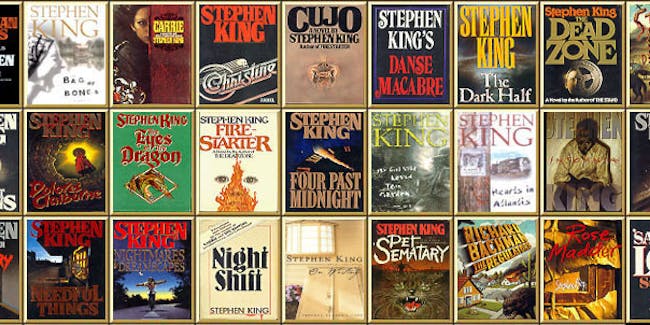
I mean, look at Stephen King: he followed Carrie (a psychic girl who gets revenge on her psychotic religious mother and the bullies at her high school) with Salem’s Lot (vampires invade a small Maine town, and a writer and his allies have to stop them), and then went on to write The Shining (a family that includes a psychic four-year-old becomes the winter caretakers at an isolated hotel haunted by something dark and evil) before creating The Stand (a super-disease causes most of Earth’s population to die off, leaving the survivors to engage in an apocalyptic war between the forces of good and evil). None of those are carbon copies of the other, so I want to do something very distinct from Rose.

And I have a few novels I can choose from. I have more ideas than I know what to do with, so I have plenty of options, but there are a few stories I can think of that would make great projects. There’s one in particular I’d like to work on when the time comes, but it’ll depend on a number of factors, including if I have to pitch something to the publisher (I’m not sure if that’s something I have to do, but it’s something I’ve thought about).

Still, there’s plenty of time to think about all that. I just know that when the time does come to think about all that, I’ll have plenty of ideas to work with and consider. Hopefully whatever I choose, it’ll make for some good reading.

In the meantime, I’m off to work on Rose for a little bit. Here’s hoping I can make some good progress before I have to hit the hay tonight. Until next time, my Followers of Fear, pleasant nightmares!

Last week I had a dream that started pleasantly and ended up being kind of nightmarish: it involved me and a friend of mine from high school navigating an area with lots of rivers and creeks on surfboards. We were looking for a mythical golden treasure trove that many had searched for and failed. We’d heard the treasure we were looking for was cursed, but we went searching for it anyway, because nothing bad has ever come from seeking and finding cursed objects. Somehow we found the treasure where so many others had failed, split it up between us, and go home. However, soon after that, weird stuff starts happening: things move on their own, the faces on the coins change shape, and that’s just the start of our problems. Well before it gets really bad though, my friend and I realize that we have to return the treasure to where we found it.

At some point, someone in the dream says I could write a story about what’s happened to us. To which I replied, “Someone already did. It’s called Pirates of the Caribbean.”

After we agree to take the treasure back, I woke up. It didn’t take me long to figure out the main message of the dream (besides the fact that I can point out when my situation resembles a famous film in my dreams). You see, the night before I’d taken a swipe at starting the fifth draft of Rose, based on my publisher Castrum’s comments and suggestions. I got about a page in, and I hit a metaphorical roadblock. I couldn’t figure out how to advance. So I ended up going to bed not sure how to move further in editing this novel while at the same time integrating my publisher’s suggestions (many of which I agree with and think could elevate the quality of the novel).

That dream was my subconscious giving me a rather creative presentation of my doubts and anxieties regarding the editing and publishing process for Rose: that signing with a publisher was a really bad idea, that there’s nothing I’ll be able to do to make this novel publishable, that even if I somehow get it released, it’ll suck and anybody who reads it will leave bad reviews. A dark side to achieving my dream and finding a publisher, represented expertly by cursed gold.*

And then on Saturday, I tried again. And it went extremely well. I got thirteen out of sixteen pages in that chapter done. Yesterday, I got the last three pages done, plus all eleven of the next chapter (and while taking in a double feature on the Blu-Ray Player in the afternoon). And then today, I got another chapter done within a couple of hours. That’s an average of a chapter a day! Take that, conscious and subconscious fears involving working with a publishing process.

Obviously, these are still early stages of the fifth draft, and I’m going to encounter moments where I’m not sure what to write or how to integrate a suggestion from the publisher. Luckily though, my publisher has been great about answering any questions I have (thank God they don’t see me as a pushy American) and offering feedback to my ideas on how to integrate their suggestions. And with these last three chapters, I’ve been able to move forward mostly on my own. And with time, I’m sure I can get through the rest without trouble, and well before May 16th. I just have to keep being creative and persevere.

Obviously, doubts about what I’m doing and where I’m going will plague me throughout my writing career from here on out. I’ve passed a new turning point in my career, and it’s a whole new playing field from here on out. But the next time I feel those worries start to get to me, I’ll remember the dream about the cursed gold, and the productive weekend that followed. And I’ll just keep editing through my doubts.

And while I still have your attention, I’d like to give a shout out to my good friend and fellow novelist at Castrum, Matt Williams. He just finished writing his novel The Jovian Incident, Book Two of the Formist series, and will hopefully have it out later this year. I can’t wait to read it, as I really enjoyed the first book, The Cronian Incident, which currently holds a 4.7 out of 5 on Amazon based on 12 reviews. If you would like to read some hard-boiled detective fiction in a futuristic universe, this series may be the one you’re looking for. Check it out and leave Matt a review while you’re at it.

Until next time, my Followers of Fear, pleasant nightmares (hopefully none that resemble popular contemporary movies, though).

*Still not sure why I was using a surfboard to navigate rivers and creeks (obviously a reference to the various paths we authors take to finding a publisher), as well as why that particular friend was with me (I love the guy and it always seems like no time has passed at all when we see each other, but he’s not a fiction writer, so I can’t think of why he would be in the dream).

Veronica dropped onto Netflix back at the tail end of February. A Spanish film directed by Paco Plaza, best known for the critically acclaimed REC films, it quickly gained a reputation as “the scariest film on Netflix.” I try not to pay attention to that sort of hype, but any film that was getting that sort of recognition is likely going to make it onto my watchlist. Last night I watched it, and I would’ve reviewed it right then and there, but it was late, so I went to bed. And then today I had a busy morning and early afternoon. So I hope you don’t mind that I’m getting this post out so late.

Based on actual events,* the film follows Veronica, a Spanish schoolgirl living in Madrid in 1991. Since her father’s untimely passing, her mother has been working long hours at a restaurant/bar, leaving Veronica to care for her younger siblings. One day, Veronica and a couple of classmates bring out a Ouija board so that Veronica can contact her father’s spirit. Instead she contacts a dark entity that seems intent on not only haunting/killing Veronica, but her younger siblings as well.

While I won’t say this is the scariest film on Netflix (Lord knows I haven’t seen enough of their selection to say that), it is a damn good scary movie.

While the film is filled with the normal tropes of many possession movies–things moving on their own, scary invisible or shadowy entities, people acting totally creepy uner the influence of the evil spirit–they’re done so well that you forget that you’ve seen these tropes before. The actors all do a very decent job, especially newcomer Sandra Escacena as Veronica, who really makes you believe she’s this character and sympathize with her troubles. I also seriously loved Sister Death, a blind, elderly nun who helps Veronica realize what she has to do to fight the spirit after her (because of course there’s going to be a nun who gives advice). For an old blind woman, she’s a bit of a badass, and was never dull when she was on screen.

But on top of that, the film doesn’t go overboard with the fact that it’s a period film. Most properties taking place in popular recent decades do everything in their power to remind you that they take place in that decade. And while that’s not necessarily a bad thing and is sometimes part of the charm (see Stranger Things or Ready Player One), it’s kind of refreshing to see a film that’s more focused on its story than on its culturally-popular decade.

There are a couple of things that take away from the film. For one thing, there are trippier moments in the film, like a scene where Veronica is running across the print of a page from an occult magazine on the way to her mother’s restaurant, that feel rather unnecessary and add nothing to the film. On top of that, for being the titular character, Veronica isn’t the most developed character. Yeah, she’s a responsible teenager taking care of her younger siblings and misses her father, but those are just character tropes. They don’t make Veronica herself memorable like Carrie on prom night was memorable, or how Annabelle the doll is memorable without being anything more than a creepy, possessed doll. In the end, I’m going to remember the film more than I remember the actual character the film is named after.

And as I said, this film is filled with a lot of familiar tropes. And while I’m fine with that, I know there are a lot of other horror fans who won’t care for that, no matter how well done they are.

But all in all, Veronica is a definitely a new gem in the horror film genre. On a scale of 1 to 5, I’m giving this film a 4.5. Head to Netflix, turn it on, and get ready for an experience you won’t be able to look away from.

*No seriously, something did happen. Apparently in 1992 a bunch of Spanish schoolgirls did use a Ouija board, only to have the ceremony interrupted. One of the girls later died because of a mysterious illness, which some have suggested might’ve been due to demonic possession. So while we’re not exactly sure what happened, there’s enough there that this film has more of a claim to the “based on actual events” tagline than Texas Chainsaw Massacre ever did.

Last Monday, I announced that my novel, Rose, is getting published by Castrum Press. And amidst all the excitement and a little extra alcohol (because of course I’ve been celebrating), there has been a lot of correspondence between me and the publisher (and how cool is it that I can say that now?). Some of what we’ve talked about is how the publishing process works, what each of us can do in terms of marketing, etc. But one of the big things we’ve talked about in the past week is the fifth draft. And trust me, there’s going to be a fifth draft. Because as nice as the fourth draft was, it’s still got a few problems here and there that can be cleaned up.

I’ll be honest with you guys: as excited as I am about all this, I’m a little terrified. Okay, maybe a lot terrified. Before last Monday, this dream of being an author with a publisher was just that: a dream. And as much as we want our dreams to be accomplished, when they’re still dreams, there’s only so much damage that can be done to them. But once they’re brought into reality, like when a publisher wants to release your book, then there’s all sorts of damage that can be inflicted: negative reviews and/or poor sales, the process to publication can be beset with difficulties, etc. (I don’t think that those things will happen, but my overactive mind tends to consider every horrible possibility out there).

On Friday, my publisher and I agreed to catch up again in mid-May to see how my edits are going. After that, we’ll see where we go for there. And I’m scared that when they see what I’ve done there, they’ll feel I haven’t lived up to their expectations and rescind the publication deal. Again, I’m pretty sure this is more my fear than an actual possibility, but like I said, I have to consider all possibilities. And that one has gotten kind of big in my head.

Of course, me being me, I take what’s scaring me and turn it into a fuel for my confidence, motivation to produce good work, and a means to scare others (I believe psychologists call this sublimation). I even gave myself a pep talk a few minutes ago in front of the mirror, using a scary voice to convince myself how powerful I am and that I can accomplish what I set my mind too. And it worked very well. Weird what I can do when I tell myself that I am the Devil, Azathoth, Nyarlathotep, and Death all rolled into one, and that I can be my generation’s Stephen King while sounding like I’m possessed. Yes, I do that. Don’t judge me.

So I’ll get started on a fifth draft of Rose very soon, finishing up a couple of tasks before I do so. I’ll also be leaving for the library in a little bit to print out some of the editors’ notes. Hopefully I can take enough from those notes to better the manuscript before the deadline in mid-May. Fingers crossed.

As always, I’ll keep you guys informed of any developments that occur. Until next time, my Followers of Fear, pleasant nightmares! (I know it’s not even two in the afternoon yet. But that’s never stopped some people from having nightmares during the day.)

Well, looks like I’m not the only one who’s having a dream come true. And I’m very excited about this interview. She’s a rather unique voice I’ve come to know recently.

I first met Rabbi Leiah Moser back in December, when I ran across one of her posts on her blog, Dag Gadol (Hebrew for “big fish”). Her post was about why, as a rabbi, she was writing a fantasy novel. I read through it, and I found that not only did she have some good points, but there was something about this blog and its writer’s voice I found compelling. As I read further, I found out that not only was she a Member of the Tribe, a rabbi, and a writer, but a member of the LGBT community. And here’s me, not just a writer, a Member of the Tribe and of the LGBT community, but the son of two rabbis, one of whom is also LGBT. I think the first line of my first comment on her blog was something like, “An LGBT female rabbi who writes fiction. Where has this blog been my whole blogging life?” Thus started our acquaintanceship.

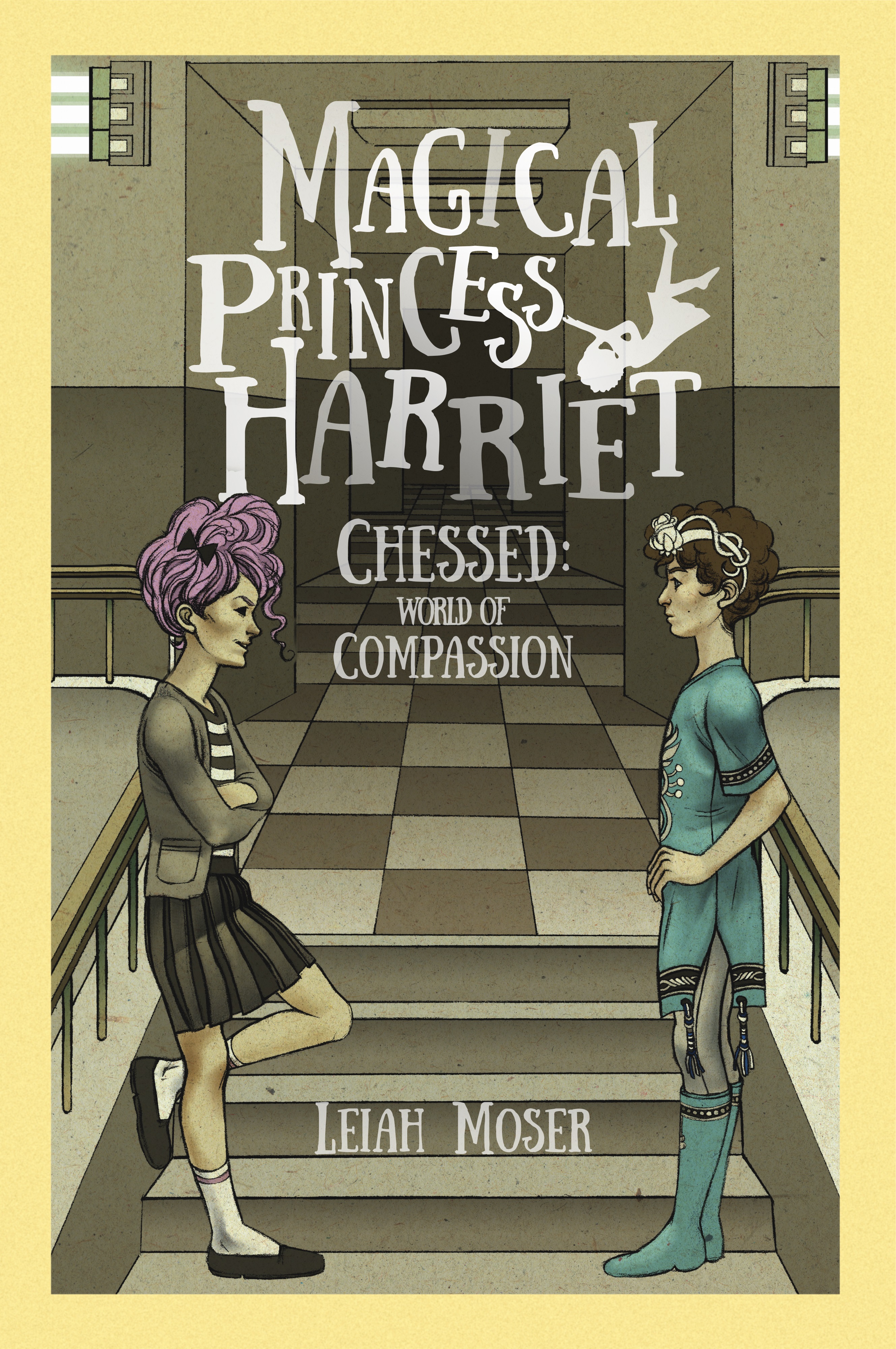
Recently, Rabbi Moser announced that her YA fantasy novel, Magical Princess Harriet, had been published and was live on Amazon. Me being me, I offered to give her an interview here on my blog. Thus are we here today to here about Rabbi Moser and Magical Princess Harriet. Enjoy!

Rami Ungar: Welcome to my blog, Rabbi Moser. Tell us a bit about yourself and how you got into writing.

Rabbi Moser: I think I’ve wanted to write a fantasy novel since I was in the sixth grade, but the road to actually achieving that ambition has been a long and convoluted one. Throughout my teenage years and into adulthood I tried my hand at writing fiction from time to time, but never managed to actually finish anything to my satisfaction, partially I think because I still hadn’t managed to get the whole identity thing nailed down. Trying to write without really knowing who you are is like trying to run on loose sand — the ground keeps shifting beneath you and you never seem to make any progress. After a while I kind of gave up on the dream of being a writer. I tried to find other dreams to pursue, but in a lot of ways I was just drifting.

Then while I was living in Japan I had this really intense religious experience. It’s kind of hard to explain, but the practical upshot was that afterwards I had this absolutely unshakeable conviction that God was real and that I needed to be Jewish. When I got back to the United States I found a synagogue and began attending, and after a while converted to Judaism. Later on, I decided I wanted to deepen my Jewish learning so I could do more work in the Jewish community, and that’s how I ended up moving out to Philadelphia to go to rabbinical school.

Rabbinical school was amazing, but before too long I was running into the same problem there that I’d had with my writing, namely that to do this kind of work you really have to bring your authentic self, whereas I’d been doing my best to hide from my authentic self ever since I was in middle school. After a great deal of soul searching I decided to come out as transgender and start my process of transitioning, and that, of all times, was when I finally realized that I had an idea for a book that I wanted to write. It was really that closely connected — converted to Judaism, came out as trans, and then the idea for Magical Princess Harriet popped up out of nowhere begging to be written.

If anything what I’ve learned from all this is that in this life things sometimes have to happen in a certain order and I am in no way the one who gets to decide what that order is. As they say in Yiddish, a mensch tracht un got lacht (a person plans and God laughs).
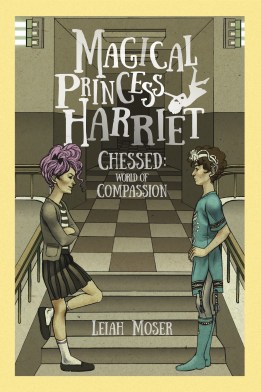
The cover of Magical Princess Harriet.

RU: Reminds me of the old country. So tell us about your new book, Magical Princess Harriet. I’ve heard some good things.

RM: Magical Princess Harriet is a young adult fantasy novel that draws its inspiration in roughly equal amounts from the “magical girl” genre of anime, Jewish mysticism, and my own strong feelings about LGBT inclusion and neurodiversity in Judaism. It’s about a young trans girl named Harriet Baumgartner who is doing her best to avoid having to think about the persistent feeling she has that she’s not supposed to be a boy, when a pushy angel named Nuriel shows up and tells her that she’s a magical princess now and that it’s her job to protect her town from the forces of darkness. (A quick side note: You have no idea how difficult it is to figure out how to talk about a book in which the main character changes their name and pronouns a third of the way in without misgendering them. Of all the challenges I’ve faced in figuring out how to explain this book to people, that has been the most difficult!)

RU: Tell us about some of the characters, and why we might like (or if applicable, hate) them.

RM: Harriet I’ve talked about a little already, so let me talk about her friend Frances.

Frances and Harriet have been best friends for years, ever since they met in Hebrew school. When Frances was six years old she was diagnosed with Autism Spectrum Disorder (ASD), and ever since she’s been pushing back against peoples’ tendency to regard her as stupid or crazy because she sometimes has trouble speaking. Obsessed with architecture, she has an inherent talent for understanding spatial relationships, which serves the kids well in the labyrinthine corridors of Arbory Middle School where the ordinary laws of space and geometry tend to break down.

The girl on the cover with the lavender hair and the dark holes where her eyes ought to be is Kasadya. She looks like that because she’s one of the nephilim, a group of creatures who got their start as angels unwilling to devote their existences to service. As a nephil-girl, she has the power to influence human minds, and she has used this ability to turn the middle school into her own private domain… well, private except for her brother Azrael, that is, but as far as she’s concerned she is the one in charge. Kasadya likes to think of herself as an epic villain from a TV show or comic book, and she’s been waiting for a hero to come along to challenge her. When Harriet shows up, glowing like a disco ball, it occurs to Kasadya that she might fit the bill — much to Harriet’s chagrin.

RU: What was the inspiration for MPH? Did any of your own life experiences make their way into or influence your writing of the story?

RM: I think all of my life experiences made it into the book in one way or another. This was an intensely personal project for me.

RU: MPH had an illustrator, Magdalena Zwierzchowska. How did you two meet and what was it like working with her on the book?

RM: When I got to the point where I was thinking seriously about publishing this book for real I knew I wanted to find an illustrator. I’ve always been a very visual person myself, and know how helpful illustrations can be in solidifying one’s sense of the world an author is presenting. How we met was fairly prosaic — I posted an ad on DeviantArt indicating that I was looking for someone to illustrate this book, and she was one of nine or ten people who responded. I was totally charmed by her work, by the gorgeous, surreal creepiness of it, and so she got the job.

Working with her was easy in some ways, difficult in others. She was extremely professional and always willing to listen to my input and feedback regarding how the characters and setting elements should look. The tough part was figuring out how to translate the images I had in my head into concrete instructions she could use. In the end I was very pleased with how it all turned out. I think it has a very unique look.
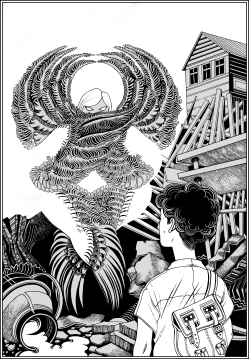
An illustration of a seraph by Magdalena Zweirczkowska.

RU: You address several issues in the pages of MPH: autism spectrum disorder, Jewish identity, gender identity, intersectionality, etc. Was it hard to talk about those subjects in the book?

RM: Yes. Not because I normally find it difficult to talk about these topics (on the contrary, most of the time I can’t shut up about them!) but because I didn’t want to address them in a way that would come across as preachy. That may sound a bit weird, coming from someone whose job literally involves preaching, but I was writing with the assumption that these were things my target audience, middle schoolers and teens, are dealing with every day, and the awareness of that fact demanded that I approach what I was doing with a self-critical eye.

RU: MPH is a crowdfunded, self-published book. What made you decide not only to self-publish, but to crowdfund your story?

RM: While it is theoretically possible that I could have found a publisher for a book like this, my hopes were not high. That has nothing to do with the quality of the book, mind you, but rather its subject matter. MPH in many ways defies categorization. I mean, Jewish fantasy is not exactly a well-represented subgenre, is it? Add on top of that the transgender element and… well, I felt like I might be able to find a publisher for a Jewish fantasy book, and I might be able to find a publisher for a queer fantasy book, but a queer, Jewish fantasy book with a transgender protagonist? That’s where I wasn’t so sure.

Also, I’ll admit, there was a part of the decision that was about actively wanting to do it myself. I’ve always been fascinated with every aspect of the publishing process, and with print-on-demand and online sales venues making it so easy to self-publish these days, it seemed like a waste to write the book and then turn it over to someone else to produce. I probably bit off more than I could chew, and I had to spend a lot of time learning about things like layout and formatting for print, but in the end I’m really happy with the way it turned out.

RU: What has the reception for MPH been like so far (from congregants, friends and family, random Internet people, etc.)?

RM: It’s still early days, but so far all the feedback I’ve been getting has been very positive. The first question of everyone who’s actually finished the book has been, “When is the next one coming out?”, so that’s pretty great to hear. My one thing is that because my Kickstarter backers are obviously all adults, I haven’t yet received any feedback from the young people who are the primary audience of the book. I’m really looking forward to that.

RU: Are you working on anything new? And what are your plans for the future?

RM: Right now I’m mainly focusing on getting the word out about Magical Princess Harriet, but I have plans for at least two more books in the series. After that… well, who knows? It all depends on what kind of response I get, I guess. I really loved writing this book, and now that I know I can, I feel like there’s very little stopping me from writing another, and another, and…

RU: What advice would you give another writer, regardless of background or experience?

RM: Write! But that’s ridiculously obvious and patronizing, so I take it back. Here’s the best piece of advice I can give: Take the time to figure out who you are and to learn how to be okay with that. Writing can be this incredibly daunting thing because those ideas and feelings on the page you just handed to someone else to read are basically you. It’s hard not to get intimidated by that and start pulling back, to restrain the words, force them into a mold that’s more about what you think others are expecting than it is about what you have to write. Edit your writing, not yourself.

And also: It is ridiculously easy to publish a book these days. Give it a try, you’ll see what I mean.

RU: Final question: if you were stuck on a desert island for a little while and could only take three books with you, which ones would you picks?

RM: Ack! That’s so hard! Assuming that “three books” refers to three actual bound volumes and that bringing an entire set would be cheating, I have to go with:

  • Volume 2 of my portable Talmud set (the one with massechet Chagigah)
  • 1Q84 by Haruki Murakami
  • A copy of The Star of Redemption by Franz Rosenzweig, because then I might be able to actually finish the darn thing.

RU: Thanks for being on the show, Rabbi Moser. We all hope the book does well.

If you’re interested in checking out Magical Princess Harriet, you can check it out on Amazon. And I highly recommend checking out her website Dag Gadol. Trust me, it’s a great site and I always enjoy seeing new posts in my inbox.

And if you would like to have an interview for your new book, hit me up on my Interviews page or email me at ramiungar@ramiungarthewriter.com, and we’ll see if we can make some magic happen.
I’m really not sure where to start with this one. I mean, how do you tell people about the realization of your childhood dream in one blog post, let alone be coherent? I feel like going in fifty different directions with this post, that’s how excited I am!

Well, I guess I’ll start at the beginning. Or what I think makes a good beginning, anyway: back in March of last year, my friend and fellow novelist Matt Williams (check out his blog HERE) announced that his novel, The Cronian Incident (which I recommend if you’re into science fiction and detective stories, by the way)  had been accepted for publication by Castrum Press, a company based out of Belfast in North Ireland which, in the year since Matt’s been accepted, has gained a bit of a reputation for publishing great speculative fiction and treating its authors very well. Later that year I did an interview with Matt and then received an eARC copy of Incident from Castrum to read and review. After hearing how Matt liked the company and seeing how well his book was doing, I asked if he’d make an introduction for me to the company’s editor. He said yes.

I talked with Castrum’s owner, Paul, and he asked to see some of Rose. This was after the third draft had been finished, if I remember correctly. I sent him the first ten pages, letting him know I planned to do one more draft after the beta readers were done with the manuscript. He sent back some notes and asked to see more of the book when it was done. One draft later, I sent him the fourth draft of Rose, hoping against hope that they’d like it enough to publish it.

Cut to last Friday, and I receive an email when I get home from work. It was Castrum: they wanted to discuss publishing Rose. After jumping up and down like a kangaroo and screaming high enough to break glass, I replied saying I’d be happy to work with them. Paul sent a contract yesterday, and after having some of my questions answered, I signed the contract and sent it back to him this afternoon, with the realization that my dream has been accomplished. A novel of mine is getting published by a company.

To which there’s only one thing to say:

By the way, if you’re unfamiliar with Rose, this is a novel I first wrote as my college thesis during senior year. It follows a young, amnesiac woman who starts turning into a plant woman. And that’s just the events of Chapter One. And trust me, it’s a full-on horror novel from there, complete with psychological and supernatural terrors galore. I tried editing it again in 2016 and couldn’t make it work, tried again in 2017, and after that things kind of just snowballed from there. And now it’s getting published.

Obviously, I’m feeling a number of emotions right now. Excitement about the publication process and seeing Rose out in print, nervousness about how it will be received by the book-reading public, satisfaction that this dream has been achieved, hope for the future, and a feeling of goodwill about things to come. Especially that last one. Since at some point during the third draft of Rose, I had a feeling that things were about to change, that something big was about to start. And since the New Year, I’ve had this very strong feeling that not only was 2018 going to go slower than 2017 did, but that 2018 was going to be my year. And so far, it seems I was right on both counts. And I hope I can continue to be right on both counts.

Rose will appear in this medium very soon.

There’s so many people to thank for this wonderful event. Firstly, my friend Matt Williams for connecting me to the company, my beta readers Joleene Naylor and Dr. Black (my chiropractor, believe it or not), as well as Paul Camper, Maura Heaphy, and Manny Martinez for looking at the book back in college, and of course to Castrum for taking a chance on this indie author from Ohio. But most of all, I’d like to thank you, my Followers of Fear. For nearly seven years, you’ve stood by me and supported me through my various writing endeavors, my college experience, finding and getting a job, my ups and my downs, and so much more. You’ve all supported me and helped me get this far, and I can’t thank you enough for that. I hope you continue to support me (and maybe even read Rose when it comes out) as I continue down this road and try to make sure Rose is a huge success.

So what happens next? Well, I’ll work with Castrum to produce a fifth and hopefully final draft of the novel. We’ll get to talking about cover art and at some point we’ll set a release date (I’m hoping before Halloween, but we’ll see). And of course, I’ll make sure to let you know of any major developments.

Until next time, my Followers of Fear, I wish you pleasant nightmares (I’ll, of course, be having nothing but pleasant dreams)!

I started this series of rewatching movies I previously disliked with an Asian horror film, and it seems I’m ending it with an Asian horror film, albeit from a different country. I swear, that wasn’t intentional.

But before I get into the review, I want to thank you all for keeping up with this series and making it a success. Watching films I’ve hated has been no easy task. It’s time-consuming and can be almost physically painful to watch some of these duds. If it weren’t for the constant reads, likes, and comments you guys gave me, I would’ve probably stopped after film number 3 or 4. So thank you for being there and enjoying these rewatch reviews. I hope you got something from them (particularly ideas about which films to enjoy and which to avoid). I certainly did (some of which my doctor can’t find a diagnosis for).

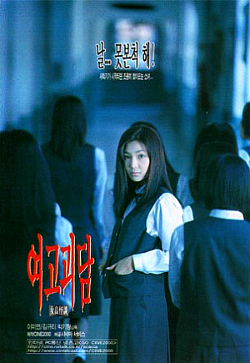
So onto the final Rewatch Review, the 1998 landmark South Korean horror film, Whispering Corridors.

WHAT IT’S ABOUT: The film follows Ji-oh, a strong-willed but slightly superstitious artist at an all-girls high school and Eun-young, a young teacher who was once a student at the school. They become aware that there may be a ghost at the school targeting teachers. As Ji-oh tries to figure out if perhaps she’s connected to the deaths, Eun-young knows she has a connection to the deaths, and must try to stop them before they get any worse. Both women will find out, they both have a connection to the deaths, and to the ghosts causing them.

WHY I DIDN’T LIKE IT: I was watching a lot of Asian horror films when I saw this one, and I thought this one didn’t compare well to the others I’d seen at the time. Just not scary enough, and too much focus on daily life instead of spooky, scary spirits.

WHY I REWATCHED IT: I found out this was one of the first horror films made in South Korea after the end of the dictatorship, and that it came with a lot of commentary on that time and on the South Korean school system, which made me see it in a whole new light. It also started a successful series of horror films set at all-girls schools, one of which involves a ballet school (and you know I’m a sucker for ballet) and was influential on Korean horror and Korean cinema as a whole. And finally, I needed a tenth movie to round out the series. Hence, Whispering Corridors.

THOUGHTS: Okay, it’s not as intense as other horror films I’ve seen, but it is a decent film.

For one thing, the story does set up a great mystery: it’s established early in the film that the ghost is masquerading as a student, and does a good job of making you guess who the ghost is. And while the body count in this film is small, they’re shot well and at times executed (pun intended) very creatively. All this contributes to create a unique, fairly creepy atmosphere.

There’s also the non-supernatural horror in the film: the school system itself. As I said above, the film features heavy commentary on the South Korean educational system, in this case the darker sides coalesced into one school. A number of the teachers make the school into an uncomfortable place to be. They’re often verbally abusive, set the students against one another and, in the case of one teacher, physically abuse and sexually harass students! I mean, my God! And all on top of a rigorous education philosophy designed to emphasize academic excellence to the point of crowding out everything else. To say the least, it’s horrifying.

That being said, the film does have its problems. The pacing can be very slow, with lots of moments involving people just talking rather than anything supernatural and/or exciting. I know some horror stories are slow-burns, but I don’t think this one should be one of them. Also, the ending is a little sappy, with a special effect that I’ve seen done better in other films.

But that’s the extent of the problems I’ve found. And considering other films with more problems that I’ve seen, I’ll take that.

JUDGMENT: I’m glad I made this film part of this series. On a scale of 1 to 5, I’m giving Whispering Corridors a 3.7 out of 5. Not the scariest movie I’ve ever seen, but I recommend seeing it. In a good way, it’s like Texas Chainsaw Massacre: while it may not be that terrifying, you should see it for the impact it has. And I guarantee that if you do see it, you won’t be as disappointed as you might be with TCM.

Just be aware that this is an extremely difficult film to find. Not kidding, I had to jump through a few hoops to find this film (hopefully the sequels will be easier to find). And you’ll likely have to go through a few too to get this one. Just warning you.


And that brings an end to the Rewatch Review series, for now anyway. We had laughs, we had tears, we had screams of terror or boredom. And who knows? I may do this again someday, if I can find enough films to rewatch and the will to go through it again. But right now, I think I’ll try getting through my Netflix queue.