Posts Tagged ‘publishing’

It’s unusual that I give an update on draft progress when I’m in the middle of the third draft. Usually after the first draft, I only give updates when the draft is finished. However, given the unusual journey and evolution Rose has gone through, as well as the all the work that still needs to be done, I feel that giving an update at the one-third mark is warranted. Let me explain:

I began work on Rose during my senior year of college as my thesis project. I had been sitting on the idea for about a year by that point, and had done quite a bit of thinking into what sort of story I wanted to tell. I started in September 2014, went back and started all over again when I realized the direction I was going in was all wrong for the story, and then finally managed to finish the first draft in January 2015. I then banged out a second draft in time for thesis discussions in April 2015. At those discussions (which you can read more about here), I was given a number of suggestions on how to improve the novel for the third draft, after which I could probably start thinking about publishing.

One of those suggestions, which I did not mention in the post about the discussions, was that I add a whole lot more words to the word count. Like, ten to twenty-thousand words more.

Yeah. I know. Even seasoned authors might find that a difficult challenge to accept.

In any case, I planned to get back to this story eventually, just not immediately. I first went to work in Germany, and then went through the job search. During that time, Rose was never far from my mind, but I never felt it was the right time to work on that story. After I got my new job and moved into my own apartment though, I did feel like revisiting the story. And I utterly floundered trying to edit it. As I’ve mentioned in previous posts, moving had entirely changed my routine, and without being able to get that routine back, I was unable to edit as I used to. Thus, it took me three months just to get through five chapters. After that, I had to stop and reevaluate what I was doing if I was to continue writing at all.

And then two months ago, deciding I needed a break from work on Full Circle, I began working on Rose again, even though I thought I wouldn’t get to it until after my Boston trip. With a new routine in place, I managed to get through the five chapters I edited last year in weeks rather than months. And then I got through Chapter 6, and then finally Chapter 7, finishing edits on that about an hour before I left to go see The Dark Tower.

And now I’m one-third of the way through the book. And it feels almost like I’m working with a totally different story, like this is the first go-around with Rose rather than the third draft of (and the fourth dive into) the story. Hence why I feel it is necessary to write a progress report at this point in the third draft.

So if you’re new around here, you’re probably wondering at this point, “Okay, but what’s the novel about?” To put it simply, Rose is about an amnesiac girl who finds herself turning into a plant creature. It is as bizarre as it sounds, more bizarre than I remember it. But it’s also a very dark story, exploring themes like abuse and dependence in relationships, as well as how truth, falsehood, and memories shape our perceptions of our ourselves and others. So yeah, as bizarre (and possibly comical) as it sounds, it is still a scary story.
And I have to say, editing is going very well. I’m incorporating as many of the suggestions from my thesis discussion as I can, and I’m definitely seeing an improvement in the story. The characters definitely feel like they’re actual people in this strange situation, and I feel like if this book does get published, people will really respond to it.

As for that suggestion to add ten to twenty-thousand words, I’m actually doing okay with that. I’ve thought about scenes I’ve wanted to expand, and I’ve even looked ahead to certain parts of the book to see where I can make some additions. And in the first seven chapters, I think I’ve done a good job of that. Let me break down the numbers (already I can hear my longtime readers groaning about that, they know I love to do this): in the second draft, the first seven chapters measured up to 44 pages (8.5″ x 11″, 12-point Times New Roman font, double-spaced) and 13,579 words. In the third draft, I’m at 70 pages (same parameters) and 20,990 words. That’s an increase of 26 pages and 7,411 words. And I like to think none of it is unnecessary.

So what’s next? Well, I’ll get to work on the next fourteen chapters, and hopefully be done with the end of the draft by the end of September. I’ll also try to add another three-thousand to thirteen-thousand words, if I feel that amount would help with the story. After that…I’m thinking beta readers, more editing, and then maybe an agent/publisher. We’ll see.

Well, it’s late, so I’m off to bed, my Followers of Fear. You have a pleasant night and pleasant nightmares. Until next time!

Happy Birthday to the blog,
Happy Birthday to the blog.
Happy Birthday to Rami Ungar the Writer,
Happy Birthday to the blog.

Six years.

I’m supposed to say that it went by super-fast, but it feels like it actually has been six years (though the past eight months or so have gone by in a flash). I think it’s how much my life has changed that really sells me on the fact that six years have gone by. When I first started out on this blog, it was at a library computer station. I was eighteen years old, had yet to start college, and I was sure this blog would bring me lots of readers for my first published book when that finally happened. My only regular readers back then were my parents, and I think they read mostly to be supportive (and to make sure I didn’t post anything on my blog that would get me in trouble later in life).

Today I’m twenty-four, I’m working in a good job and living in my own apartment. I’ve got four books out, and while I’m still not a world-famous writer, I’m taking steps so that someday I can be a full-time writer. Maybe. My readers come from all over the United States, as well as from Canada, Europe, and farther away. They’re writers and readers and horror fans and just people who, for one reason or another, like what I have to say on this or that subject. We have conversations in the comments, and some of these people become good friends with me. Once or twice, we even meet in real life (or make plans to but can’t due to issues of customs).

And you know what? This all happened because of you. Yes you, whoever you are, reading this blog post. Yes, I supply the content, but every time someone has tuned in and read a post, offered a like or their thoughts, and when they decide to follow me so as to get future posts, they keep me writing and interacting with this community.So thanks, my Followers of Fear. I really appreciate you being here for me, through thick and thin, highs and lows, reviews and political rants (dammit, admitting the United States isn’t perfect is not un-patriotic! It’s a desire to make this nation better). I hope you’ll stay with me for all that comes in the next year, whatever that happens to be.

Speaking of which, what do I want from the next year? Blogging and writing-wise, anyway.

Well, I would like to reach a thousand followers, and that might actually happen this year. I’m within a hundred followers of that, so I think it could happen. I’d also like to write some more good posts and have good discussions with the many friends and acquaintances I’ve met through this platform. I’d also like to get a few more stories written, edited, and published. I especially hope I’ll finish Rose and maybe get it represented by an agent. Will that happen? Well, if people’s reactions to the story’s idea and my college advisers’ feedback is any indication, that could very well happen. Hard work and a bit of luck can do wonders, after all.

Well, that’s all for now. There’s a Stephen King movie coming out this weekend, so expect a review very soon, my Followers of Fear. And until then, pleasant nightmares!

I’ve been keen to read this novel since Stephen King tweeted about it months ago, saying this novel, which apparently is the first work of an already-established author published under a pen name, was the first great thriller of 2017.* By the time it came out on July 11th, I was one of the first people to get a copy at the library. And while I don’t always agree with King on what makes a good story (see my review for A Head Full of Ghosts by Paul Tremblay), I have to say, he was right that this is a great thriller novel, possibly the first great one of 2017 (I haven’t read most of the others that came out this year, so who am I to judge?).

Final Girls follows Quincy Carpenter, the lone survivor of the Pine Cottage Massacre, in which a man she only refers to as Him killed all her friends while on a camping trip and she was the only survivor. This has made Quincy part of an exclusive club known as the Final Girls, women who have survived horror-movie style massacres and, like the girls in those movies, are the only ones to survive. The other two are Lisa Milner, the survivor of a sorority house murder spree in Indiana, and Samantha Boyd, who escaped and killed a killer known as the Sack Man at a motel in Florida. Quincy, who has no memory of the events at Pine Cottage, wants nothing but to keep up her baking blog, maybe marry her defense attorney boyfriend someday, and have some definition of normal.

That is, until Lisa Milner dies under mysterious circumstances in Indiana, and Samantha Boyd shows up at Quincy’s apartment in New York to talk. Suddenly Quincy’s life is thrown into a maelstrom as Sam’s presence threatens not just to unearth the memories from that fateful night, but change her world forever.

Immediately, you feel like this is two stories in one, a standard slasher and a mystery/thriller. On the slasher hand, you get to read Quincy’s recollections of Pine Cottage, which are told in third-person POV and past tense. And on the other hand, you get the events of Quincy’s current life, which are told in first-person POV and present tense, which is a mystery/thriller mixed with the story of two completely opposite people trying to bond over an incredible and dark situation. And both stories are peppered with references to horror movies, especially the best of the slasher genre. There are some obvious ones: Quincy’s last name is a reference to director John Carpenter of the Halloween series, while Lisa Milner’s massacre is an obvious reference to Black Christmas. But there are other, subtler references.  The mystery elements definitely remind me of the Scream movies and the TV series, which utilize mystery to offset themselves from tried-and-done-to-death slasher stories, as well as elements that make me think of Urban Legend. And that’s just the tip of the iceberg, there are probably references I don’t recognize from movies/comics/shows/books I haven’t seen or read yet.

I also really enjoyed the characters. Quincy felt incredibly real to me: rather than being a character who’s always good and delicate or always damaged and dealing with her issues, she’s actually a pretty good balance of both. She’s clearly made some progress in trying to move on and have a new normal, but she also has issues that she doesn’t want to address, even takes some joy in, and those occasionally threaten the balance she’s trying to maintain in her life. It’s very refreshing to see such a realistic character like that. I also found Samantha Boyd (or Sam, as she prefers), to be very real. She’s a girl whose life is one defined by horrors, and who’s trying, in her own way, to reach out to the one person left in the world who knows what it’s like to have felt horrors like hers. The way she does it isn’t exactly smooth, but it does feel like someone with her background might use to reach out and find some mutual catharsis.

But the best part of the story is definitely how twisty it is. Even when we go back to Quincy’s past, it is anything but a standard slasher, going in directions you don’t see coming. Just today, while reading the last 70 or so pages, I kept marveling at surprise after surprise after surprise. And that’s pretty much how it is for most of the book, especially in the latter half of it. I think even some veteran mystery/thriller fans will find themselves surprised at the twists in store here in Final Girls.

If there’s one thing that might have been a drawback for this novel, I felt that the moments that Quincy and Sam were trying to bond were a little slow at times, but that may be nitpicking on my part. They were still well-written parts, and they showed both how much these girls wanted to be friends and how much they rubbed against each other as people.

On a scale of 1 to 5, I’m giving Final Girls a well-earned 4.6. From one page to the next, you never know what to expect, and it will only leave you wanting more. Go ahead, pick it up, and find you have a hard time putting it down.

* This tweet and hints about the author’s identity make me think it might be Stephen King’s son Joe Hill doing his own Richard Bachman turn, but that’s just my guess.

Today I wanted to talk about something that is becoming much more common in fiction these days, and that’s the twist villain. If you’re unfamiliar, a twist villain is when one character in a story seems to be the villain, but later on it’s revealed that another character, usually a character we thought was a good guy, is actually the villain. This twist villain is supposed to be a surprise, something you didn’t see coming while reading the story. Hence the name “twist villain.” The problem is, the twist villain is becoming such a common trope these days. In the past couple years, we’ve seen it in Disney films like Zootopia and Frozen; popular novels like Gone Girl and Harry Potter and the Prisoner of Azkaban; a couple of recent superhero films; and more than I can possibly name in this blog post. And when so many works of fiction are using the twist villain, we become used to not only seeing the trope but also the signs that a twist villain is going to be used (and trust me, there are signs), and then when we see the twist villain, we’re not very surprised. Heck, sometimes we even predict who the villain is well before it’s revealed.

Why is this trope becoming so popular? Simple: people want a good story. Good stories produce good memories and good profits. As standard stories of good vs. evil have been done to death, creators need to think of new stories and story elements to keep consumers interested in their work. One way to do that is a third-act twist, which when done right can really enhance a story. And a twist villain can be a very good third-act twist, if you’re careful with it.

Sadly, I find that a lot of creators aren’t careful with their twist villains, making the twist ineffective when it happens. Which is sad, because I love the idea of a twist villain. Heck, it’s one I might use in the future, if I haven’t used it already. A good twist villain can make your mind reel, make you look back trough a story to see if there were any clues and make you marvel at the genius of the creators for setting up that twist so well.

A bad twist villain, on the other hand, just leaves you feeling neutral at best (my reaction during Zootopia) and disappointed at worst (my reaction looking back on Scooby-Doo 2: Monsters Unleashed). Which is why I’ve come up with a few tips for writing an effective twist villain. With any luck, these tips will help other authors (and myself) avoid making a bad twist villain.

1. Does your story really need a twist villain? Any time you want to include something in a story, ask yourself if it’s really needed. I swear, so many stories just add in elements that aren’t needed (*cough* lots of stuff from BvS *cough*). Ask yourself if your story can stand on its own without any of the extra elements. If it doesn’t, DON’T FORCE IT IN! Especially with twist villains.

2. If you’re going to leave clues behind, don’t make them obvious. You can have a twist villain without leaving a trail (Hans from Frozen, for example), but with twist villains, creators often like to leave little hints of who the real villain is. I think this is narcissism on our part; we like to show how clever we are. But that leads to us leaving some rather obvious clues, which our readers/viewers will pick up on and deduce the twist long before the twist occurs. Take Scooby-Doo 2: it was so obvious that the reporter was the villain! Why else would they include a reporter with poor ethical practices unless she was at least in league with the villains?

3. Have a good herring villain. A herring villain is just that: a herring to keep us off the real villain. In Frozen, the herring villain was the Duke of Weselton. He had obvious malicious goals, is willing to kill Elsa, and he was over-the-top, which felt right for a villain in this movie. Imagine our surprise when we find out he’s not the true villain, but Hans, who had no trail leading to him and was such a nice guy up till that reveal! A good herring villain will often lead to a great twist villain reveal.

Compare that to Zootopia or Wonder Woman: the former doesn’t give us a herring villain, which causes us to consider each character and eventually land on Ms. Bellwether, who has said some interesting things and has actually benefited from these events. The latter gives us a herring villain, but it’s a comic book movie, and the General doesn’t do a thing to make us think he’s a famous DC villain we’re very sure will make an appearance.

In short, have a herring villain, and make sure they’re set up in a way where people will actually consider them as the main villain, so the twist will actually be effective. To do that, be aware of what sort of story you’re writing. Often the story will have certain requirements for villains (motive, opportunity, etc), so make it seem like the herring villain has those. You’ll find your herring villain much more effective.

4. Do the reveal earlier than the third act. A lot of twist villains reveal themselves in the third act. Nothing wrong with this, but it’d also work if the reveal was done earlier. For example, Hydra was revealed as the villain in Captain America: Winter Soldier in the second act, and that was a really interesting twist, as we hadn’t expected it. If they’d done it later in the story, we might have actually figured it out by then, or there wouldn’t be enough time for exposition mixed with a great climax. So consider doing the reveal elsewhere.

5. Try a variation on the trope. The twist villain, like most tropes, has a standard formula: something happens, one character seems like the villain, but another character is revealed at the third act to be the villain and why. Oh, and it’s usually not the protagonist.

Variations on common tropes have proven to be very effective in storytelling, so try something a little different with the twist villain, like these examples below:

  • It’s a villain, but which one? In Doctor Who series 8, we’re introduced to a character named Missy, who seems likely to be a villain, but we’re not sure what her deal is if she is. In the second-to-last episode, she explains that Missy is short for Mistress, making her a female regeneration of the Master, a well-known DW villain. A lot of minds were blown that day, believe me. The idea is you can introduce a seemingly new character into a long-running story, and then link them back to a previously-established character. Trust me, it works.
  • Everyone’s the villain! Agatha Christie’s Murder on the Orient Express ends with every suspect actually having some sort of hand in the murder. It made the novel a sensation back in the day, because it was a seemingly impossible idea, but it worked. So try something impossible and make it possible: everyone’s a villain, no ones’ the villain, or even two very good suspects with alibis both committed the murder. It could work.
  • The hero? American Horror Story: Hotel is my favorite season of the series, and this twist is one reason why. The protagonist, a police detective, is on the hunt for a serial killer, only to find out in the second half of the season that he’s the killer! Trust me, I did not see that coming until the reveal episode, and only by a few minutes! So making a hero or a character who nobody thinks of as a possible villain the villain can work very well.

And these are just some examples of variations that have worked in the past.

Twist villains are a trope that won’t go away anytime soon, but as long as we have them, we should write them as well as we write any other type of character or trope. Because if we’re not going to give people our best, then what are we actually giving them?

What are your thoughts on twist villains? What are some good tips for writing them well?

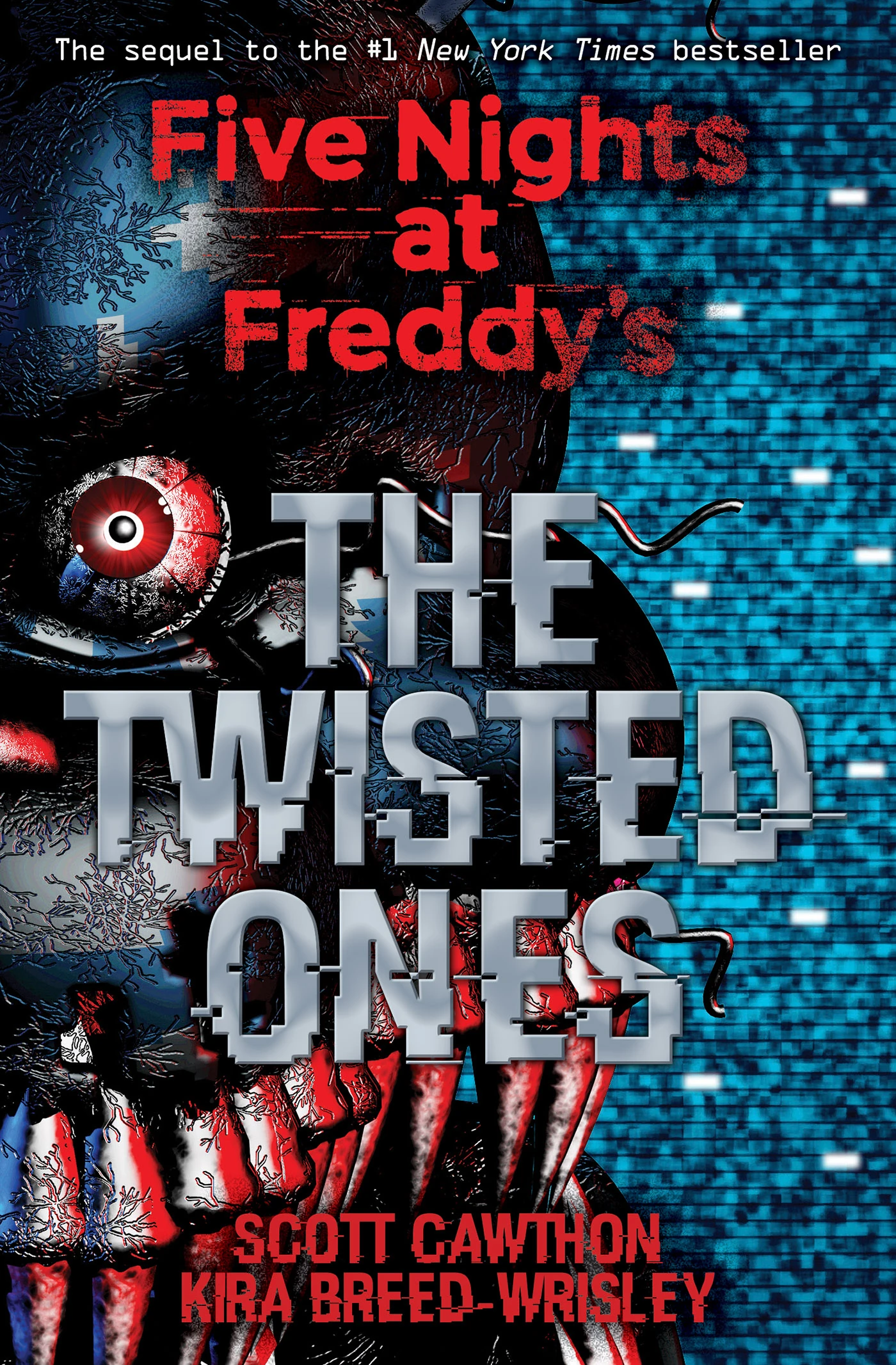
You may have heard me speak of the Five Nights at Freddy’s video game franchise about a haunted pizzeria filled with killer animatronics before on this blog (if you’re unfamiliar with what that is and want a quick lesson to know what I’m talking about, click HERE), including the novel released about two years ago, Five Nights at Freddy’s: The Silver Eyes, that’s part of the franchise’s lore (click HERE for my review of that novel). I find the franchise itself fascinating, though I did not care for the novel that was produced from it, finding it cliched and predictable, as well as poorly edited. So when I heard that a sequel to the novel, Five Nights at Freddy’s: The Twisted Ones, was coming out, I was skeptical. Could this be an improvement? Or would it just be terrible? I decided to get a copy and find out.

And if you’re a huge fan of the franchise or whatever, don’t expect me to delve deeply into the lore and try to figure out the exact mythology of the game. I’ll leave that to the people on the Game Theorists channel on YouTube. No, I’m going to evaluate the novel as a novel: how it was written, if it was scary, how good the plot and the characters are, and what could’ve been fixed or improved. Why? Because that’s what I do here.

So, FNAF: The Twisted Ones takes place not too long after the events of the first novel. Charlie, the protagonist of The Silver Eyes,  is at college learning about robotics and trying to sort out all the things that have happened in her past. However, a series of murders that can only have been caused by the sentient animatronic suits from Freddy Fazbear’s Pizzeria draws Charlie, as well as her friend Jessica, old flame John, and hometown sheriff Clay into a bizarre nightmare, with more mysteries to uncover and an old enemy out for blood.

Was it any better than the first book?

Well, it did have some improvements. For one thing, The Twisted Ones is edited much better than The Silver Eyes. You can tell that franchise creator Scott Cawthon and writer Kira Breed-Wrisley took their time making sure the grammar, spelling and punctuation was up to scratch, as well as ensuring that the indentation wasn’t all over the place. There was also way more animatronic action, something that was sorely missing from the first book. And I have to admit, the plot was somewhat unpredictable, with the final third–especially the climax–being actually a bit of a whirlwind in how it gripped and held onto you. And there were new elements introduced into the story that actually did shed a little light on the franchise (I won’t go into them here, but observant readers should be able to put the pieces together).

However, there were a number of things I didn’t like about the book. For one, these characters feel even flatter than they did in the first book. In the first, they were just given enough characterization to carry along a slasher movie, but those characters that have come back feel even less like actual people. The exception might be Charlie, but most of her character is fretting over the events of her past rather than getting to know her and see her grow as a character. Speaking of characters, I also found the character of Arty totally unnecessary. He’s introduced as this classmate/friend of Charlie’s and a possible rival to John, but he’s only in about two percent of the story, and he doesn’t contribute anything. If you took him out of the story, it seriously wouldn’t make a difference. I wonder why he was even in the story in the first place.

I also found Charlie’s obsession with her past and her brother coming across as melodramatic. You can have a character affected by a horrible experience that exposes a lot about their past, but here it felt almost corny in how over-the-top the emphasis was. Please, can we scale back on that? Surely there’s more to this character than “Oh, my past is so tragic! I’ll live my life around my dark and horrible past!”

The next book. Hopefully it’s good.

But the biggest thing that I didn’t like was that during one scene about two-thirds of the way through the book, the scene is set in Charlie’s dorm room. A few paragraphs later, however, they’re in the car, and it’s such a sudden transition. How sudden, you ask? Imagine in a Marvel movie, Nick Fury and Captain America are talking in a hangar bay in one frame, and in the next they’re in an open field, but none of the characters notice the change. It’s that sudden, and it’s very sloppy.

Still, The Twisted Ones is a better novel than The Silver Eyes. On a scale of 1 to 5, I’m giving this book a 3.0, an improvement of 0.4. The characters aren’t that interesting and there are problems with the book, but I honestly prefer it. Though you can’t get me to love this series, and I honestly would like Cawthon to stick to video games. Just being honest.

Speaking of which, Cawthon is releasing a new book late next month titled The Freddy Files, which is supposed to go over game mechanics and even answer the complex lore of the series. I might read that, but I honestly don’t know if I want to. Not only that, but I’m pretty sure Cawthon’s going to release a third book in the franchise at some point. Like I said, I wish he wouldn’t, but with any luck, he’ll take another year and a half to release his next book, enough time to improve his next literary venture by another 0.4 or more.

Anything’s possible, especially when killer animatronics are involved.

I actually almost missed this milestone. I was going to bed Saturday evening, and I was like, “Wait a minute, that’s Monday! Note to self: write a blog post in the morning after cleaning the bathroom.” And now that the bathroom is squeaky clean (as well as the kitchen, which also needed a touch up), I’m taking the time to talk about this milestone and ask myself, “Has it really been four years? Blimey, it feels longer.”

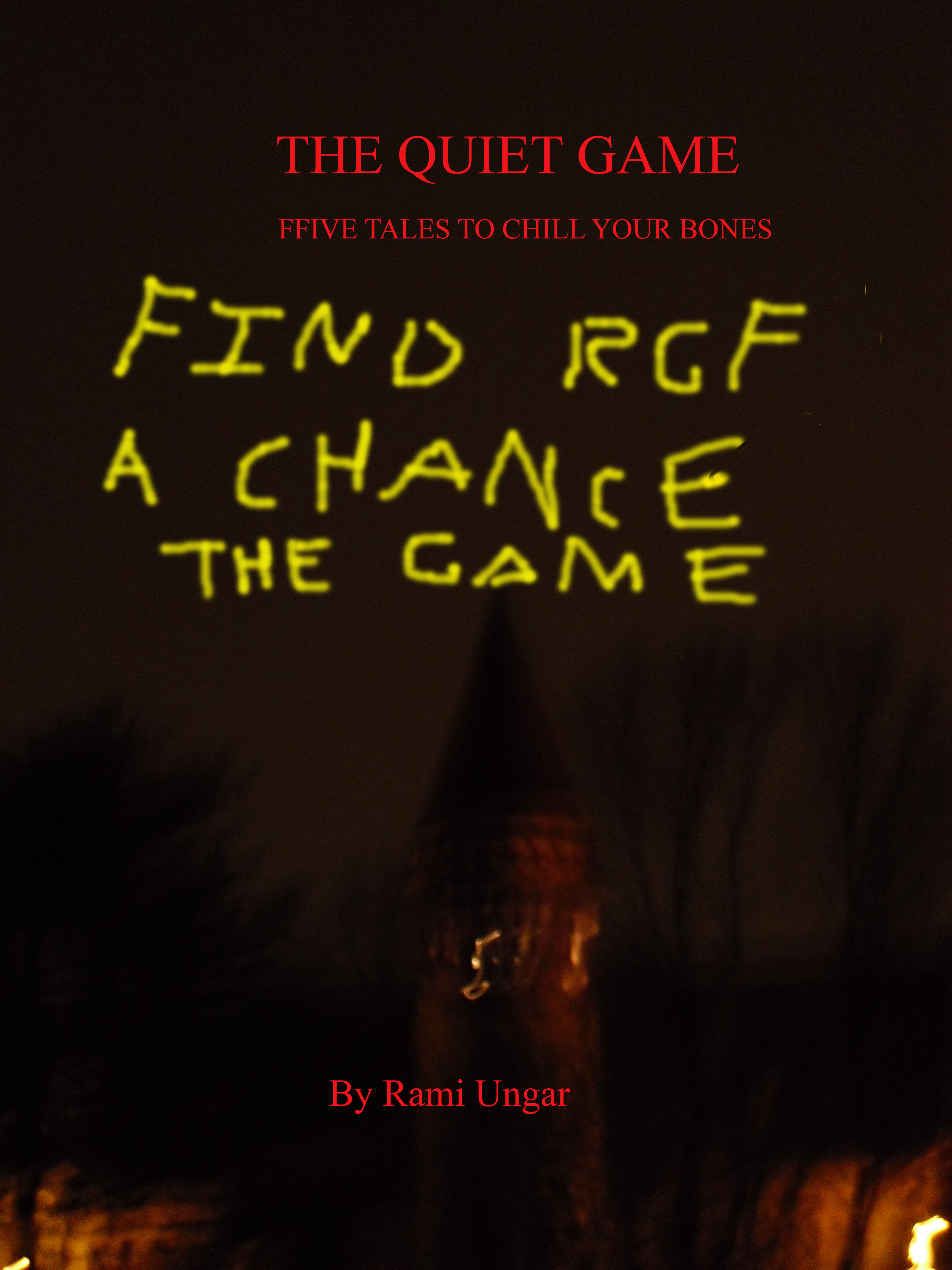
So if you don’t know what the hell I’m talking about, here goes: about five years ago, during my sophomore year of college, I started putting together a collection of short stories. I was still editing Reborn City at the time, and I wanted to have something to work on while the editing process of that took its time, as well as something to release and test the waters of self-publishing. A short story collection felt like a good idea. So I wrote five scary stories in about a couple of months, edited them and had other writers/horror fans look at them, and designed a cover. On July 17th, 2013, I published The Quiet Game: Five Tales to Chill Your Bones on Amazon and Smashwords, later putting them on Barnes & Noble, iBooks, and Kobo.

The five stories in the book are: Addict, about a man dealing with trying to kick his sex addiction; I’m Going to be the Next James Bond, about a bunch of kids who go to an abandoned hospital to hunt for ghosts; In the Lady Ogre’s Den, about an autistic child’s stay in a hospital; The Quiet Game, about a Catholic school that finds itself cut off from the world and deaf all of a sudden; and Samson Weiss’s Curse, about a senator being stalked by a spirit known as a dybbuk.

This has been by far my most commercially successful book, not only because it’s been out the longest, but because it’s a very quick read, and costs less than my other books do, e-book and paperback. People who might not necessarily want a long read see this little collection of short stories, and that it’s received positive reviews, and they’re like, “Okay, let’s check it out.” For the most part, people love it. So for someone still growing an audience, that’s a pretty good achievement.

Speaking of reviews, this is also my most reviewed work. I think that the reasons for that are the same ones for why this has been my most commercial work to date. And as I said previously, it’s had some pretty good reviews, with a score of 4.1 on Amazon based on 14 reviews. Here’s what people have been saying about the book:

5 wonderfully crafted tales! I purchased this as an eBook originally and put off reading it for quite a while, I really wish I hadn’t waited. Sometimes when one purchases a collection of short stories you expect some of them to be less entertaining or of lower quality than the others, but none of these disappoint. Well worth the money, especially considering after you read each story the author gives you creative insight into what inspired him to write each tale, which is really wonderful.

–Jeff D.

This is not my genre, but since I know the author [:-)], I read the stories. Each one was very unique and created its own atmosphere and mood. My favorite story was the Quiet Game but I found the ending a little confusing since I didn’t really know the literary reference at the end; what I loved was the world created in the story and the message it conveyed. I look forward to the author’s improving his craft, and I will certainly read more.

–Gefilte63

Imagine if you will a young Stephen King penning dark scenarios inspired by his youth, and what you get is this anthology. Through this collection of short stories, Rami Ungar brings us into the world of dark urges, childhood traumas, ghosts, phantoms, and dark psychological thrillers. An inspired creation, and definitely a good intro to this indie author’s world!

–Matt Williams, author of “The Cronian Incident”

I especially like that last one calling me a young Stephen King. Always love being compared to him.

If any of this makes you want to read The Quiet Game or check out more reviews, I’ll include the links for the book below. An if you do end up reading the book, please make sure to leave a review. Positive or negative, I love feedback, and it helps me out in the long run.

That’s all for now, my Followers of Fear. I may have a new review out tonight, so keep an eye out for that. Until then, have a good one.

The Quiet Game: Amazon, Createspace, Barnes & Noble, iBooksSmashwords, and Kobo

Life is rarely straightforward. That is a fact. People change, or their thoughts and feelings change, new paths open up in front of you, and your understanding of the world never fits in the box you want it to (that last one isn’t really relevant to what I’m going to talk about here, but I felt like stating it anyway). And my life and feelings have changed. I need a break from what I’m doing right now. I need to do something different if I’m to pursue my goals in life.

With that said, I need to shut down Rami Ungar the Writer. At least for a little while.

I’m kidding. But for a split second, you bought that. You did, and it worried you for a little bit.

No, what I really mean is that I need to take a break from Full Circle. A very long break.

You see, I’ve been working on that novel since November, eight months in total. And I’ve only taken some occasional breaks, each working on a couple of short stories, and then getting back into it. And you know what? I’m a little burnt out. Normally by this time, I’m already finished with the first draft, but I’m only a little over the halfway point. And when I think of getting into the next chapter, I’m filled with dread, because it’s likely going to be a long chapter, and I’ve been dealing with this story for eight months straight, and it has not been easy at times.

All writers get like this. Yeah, we do. There are times when we’ve devoted so much energy to a story, that we need a break if we’re to give it more and give it the energy it needs. And honestly, I’m at that point. It’s nothing I did wrong or anyone else did wrong. There’s nothing big in my life that’s making me super happy or super miserable, thus causing me to think, “I can’t work on finishing the Reborn City trilogy right now.” Nope, it’s just me needing some distance and the chance to work on something else. And I need a long something else. Because if I take on a project, and it only lasts a month at most, I won’t be ready to work on Full Circle again. I’d be ready to bang my head against a wall in frustration, but I wouldn’t be ready for FC again.

Which is why I have the perfect project:

Some of you may recall that during my last year of college, I wrote a novel called Rose as my thesis. The story was about a young woman with amnesia who starts transforming into a plant creature. And that may sound comical, but it’s actually pretty dark, exploring themes of dependence and abuse in romantic relationships, as well as how memory, truth, and falsehoods can shape not just our perceptions of others, but of ourselves. It was a challenging novel, to say the least, but I managed to get two drafts of it written between August 2014 and April 2015, and they turned out okay. I let it lie for a while when I was in Germany and during my job search, and tried working on it again after I moved into my new apartment and started my job. For a number of reasons, it didn’t go well. Mostly because I didn’t have a plan for editing it beyond, “Let’s sit down in front of the computer and see what happens.”

My new project: the third draft of Rose.

But since then, I figured out a plan to help me get along with editing in general (see my post on that on Self-Published Authors Helping Other Authors. It has a similar opening to this blog post). I’ve also had plenty of time to think about changes I’d like to make to the story, and to the characters, and I’ve really been itching to take a crack at it again. And I’m pretty sure that, once I get another draft of Rose done, I’d be ready to send this story to an editor, and then maybe to an agent or publishing house.

So starting very soon, I’ll be taking another dive into Rose. It probably won’t happen until after I get back from Boston, but after that and I’ve done all the travelogues and checked my new digital recorder for ghost voices, you can bet that I’ll be working on my new project with gusto. Until then, Followers of Fear, wish me luck as I work on a couple new blog posts, and as I prepare myself mentally and emotionally for what will hopefully be a very successful third draft and a very refreshing break.

Pleasant nightmares!

There’s been a battle raging among horror fans and horror writers for years. A fierce battle with all the monsters, deaths, and mysterious disappearances that one can expect from such a group. This battle is played out in bookstores and on bestseller lists, in interviews with magazines and television hosts, and even on message boards (because this is the age of the Internet, so why not?). The debate is: which is better, horror stories where the supernatural is the cause, or where humans are the cause?

Surprise to say, this is an actual debate among fans of horror. What makes for a scarier story, one where the horror is caused by something supernatural, or when it is caused by a human like you or me?* Or perhaps some combination of the two? Each side has their own pros and cons, and depending on which you prefer, can have a huge influence on what you tend to read and, if you’re a creator, what you put out in the world. Authors themselves tend to deal in both kinds, but if you observe an author long enough, you start to notice their preferences. HP Lovecraft and Anne Rice seem to go more for horror, while Jack Ketchum likes human horror. His Royal Scariness Stephen King has a lot of supernatural forces in his work, but there’s definitely a partiality towards human-based horror. One needs only read Misery to see that. Even in his more supernatural stories, there are usually human characters who are only to happy to cause pain and death, whether of their own volition (Carrie’s mother and Chris Hargensen in Carrie) or under the influence of a much more powerful force (Henry Bowers and Tom Rogan in It).

A great example of supernatural horror.

So is there a better source for horror? Let’s take a look, starting with supernatural-based horror. Honestly, this one’s easy to explain the appeal: whether it’s been called Satan, Lilith, dark faeries, demons, yokai, or a hundred other names, humanity has been scared of some possible other out in the universe. Something greater than human beings, possibly very malevolent, and ultimately difficult to understand. The only way to survive is to run, placate the monster, or find some way to fight back, and the last one often comes at a high death toll. There’s also greater room for imagination with supernatural stories. You can take forces right out of mythology, use them as they’re typically portrayed, or change up their mythologies. Sometimes you even come up with original creatures, like Stephen King’s Langoliers or the entity formerly known as It. There’s a lot of freedom and potential in supernatural based horror.

On the other hand, there’s a chance that you can fall into a trap of relying too much on a mythical creature’s established mythology. And if you try to create something original, you find it’s extremely difficult to do so. Not only that, but with something non-human, there’s the risk that, unlike a human villain, the reader will have difficulty connecting with them. Some readers really enjoy connecting with villains, which in this instance makes Cthulhu a bad villain choice.

My own human-based horror.

Human-based horror, on the other hand, is a lot more personal, and very true to life. Despite our lofty ideals of goodness and perfection, one needs only look at the news to know that humanity is capable of dark thoughts and acts.  Human-based horror taps into that, delving deep into what humanity is capable of without a supernatural cause or encouragement, as well as how characters and we the audience react to it. It’s a powerful, visceral way to tell a story, and is often quite effective at scaring us with not only the acts of the characters, but at what we ourselves are capable of.

And that unfortunately is also the con of human-based horror. No one likes to be exposed to their darkness or flaws, and this form of horror gets deep into those. Which for some readers can be more disturbing than they would like. Hell, for some writers it’s more disturbing than they would like, sending them to parts of their imaginations they would rather leave alone. And exposure to this sort of horror can not only leave readers scared, but depressed. I’ve written before about how the escape into imaginary horrors can be therapeutic, and sometimes people prefer an escape that doesn’t remind them of the reality they’re escaping. Or as someone from one of my writer’s groups put it, “If I wanted human horror, I’d put on CNN.”

So which is better? Well, I say neither. Like I’ve just shown, both have their pros and cons, as well as their supporters and detractors. Personally, I (and most of the members of one of my writers’ groups) prefer supernatural horror, but we all agree that the occasional jaunt into human-based horror and vice versa are great. Hell, one of my novels, Snake, is human-based horror, and it’s one of my favorite stories.  So in the end, whichever you prefer to read or write, make sure to every now and then dip into the other so as to better appreciate both once you dip out again. And if you write, whatever you write, remember to keep practicing both types, so that someday you can write it well.

What’s your take on this debate? Which is your favorite?

*Still debatable if I count as human, though.

Well, today’s a very special day. Of course, it is my birthday, and I think that’s a very special occasion (feel free to disagree, but don’t expect me to thank you for disagreeing with me). How old am I? Older than 21, and that’s all I’m going to say on the matter (identity theft is rampant these days, after all).

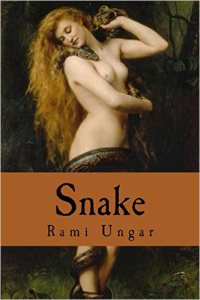
But there’s another reason to celebrate today. Those of you who’ve been here a while might remember that, three years ago, I released a thriller/horror novel by the name of Snake. It was inspired by various different works, such as the movie Taken, slasher films from the 1980’s and 1990’s, and James Patterson novels (I was devouring Alex Cross novels during my first year or two of college, until they got repetitive and boring). It was a fun story to write, allowing me to explore my darker side as well as write a different sort of protagonist than usually shows up in fiction. I still love this story and its characters, and I hope to someday revisit them in a sequel.

Here’s the blurb from the back cover:

How far will you go for love and revenge? When a young man’s girlfriend is kidnapped by the powerful Camerlengo Family, he becomes the Snake, a serial killer who takes his methods from the worst of the Russian mafia. Tracking down members of the Camerlengo Family one by one for clues, the Snake will go to any lengths to see the love of his life again…even if it means becoming a worse monster than any of the monsters he is hunting.

Sounds dark and dangerous, doesn’t it? And the reviews seem to agree:

I really enjoyed this book. When I selected “dark” for the mood, it was almost a toss up with suspenseful. You knew early on who the mafia killer was, but the question of how he was going to find his girlfriend and rescue her was suspenseful. I ended up choosing “dark” because of the level of violence our main character used in getting to the girlfriend. But he was a complex character. Even though he definitely had the dark side to him, there was a surprisingly good side to him, too. You don’t really see this until later on in the book. So early on, you might think this is an unredeemable character. But one of the most intriguing characters are those who aren’t what they initially seem, and for this reason, I enjoyed this character. The pacing was just right. It wasn’t rushed, and in no way did I ever feel it dragged, which is awesome for a book that was over 500 pages in paperback.

This book is violent, and it contains sexual situations. Some of it can be cringeworthy. So I wouldn’t suggest this for young readers. I’d recommend this only to adults. If it was a movie, it would be a strong R. There’s also swearing. These things don’t bother me as a reader, but I know it bothers some, which is why I mention it. But if you don’t mind these elements, I think you will enjoy this book. It’s a great thriller.

–Ruth Ann Nordin, author of The Reclusive Earl

Rami Ungar makes a promise to (the reader) in all his writings: he WILL scare you, and if he does “his job is done.” Snake will scare you. I am a huge Stephen King fan, so this should give you some idea of my tolerance level for gore, death and mayhem – I was scared. Rami takes you into places you would never have believed possible, and manages to pull his hero (and eventually his heroine) out of them against all odds. If you like to be scared. If you LOVE to be scared. You should read this book.

–Angela Misri, author of Jewel of the Thames

I’m someone who really enjoys horror stories/darker reads, and because of this I am very picky with my ratings of these types of books. I’ve seen most plots and plot twists, so I’m not taken by surprise very often and I am VERY stingy with positive reviews since the type of stories I like usually all have a similar plot.

That being said…I LOVED this book. I’ve seen this type of story before, but the way Rami Ungar crafts a cliché plot into a suspenseful, brutal, and rhythmic story puts Snake into a category all of its own. If you’re squeamish, you have been warned that there are some really graphic scenes in this novel.

If you’re a fan of dark plots, this book is a 100% must read.

Chasley T.*

If this has at all made you want to check out Snake (or if you just want to give me a nice gift for my birthday), you can get an e-book or paperback copy from the following links below. And if you like (or hate) what you read, please leave a review and let me know what you think. Positive or negative, I love feedback from readers, and the more reviews I get, the more people who might consider reading the book find it. I’m also including a link for an excerpt, in case you want to have a read before you buy. You’re welcome!

That’s all for now. I’m off to celebrate my birthday with a scary movie (review coming later today, hopefully), and then have German food with my sister and mom. I hope you enjoy reading Snake (or any of my books), and wish you a good one. Until next time, my Followers of Fear. Pleasant nightmares!

Available from AmazonCreatespace, Barnes & Noble, iBooksSmashwords, and Kobo

Read an excerpt here.

*Removed from Amazon because Amazon thought the review was spam or something. How rude!

Video Rage, Book 2 of the Reborn City series

I love a good surprise, and I got one last night! There’s a new review of Video Rage, the second book in the Reborn City series. It was posted June 2nd, the day after the one-year publishing anniversary of the book (not sure if that was intentional or not). I’m very happy to see this new review, because reviews come slowly to my books (this is the fourth for this one, and 366 days after publication, after all), and it always picks up my mood when people are willing to leave their thoughts on my work in places I can see.

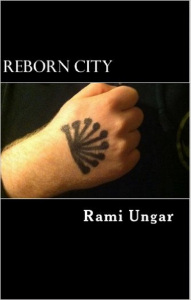
Now if you don’t know what Reborn City or Video Rage are about, then you must be really new here. Okay, what they really are: they are the first two books in the Reborn City series, a science fiction trilogy I started writing back in high school. The series focuses on Zahara Bakur, a Muslim teenager in a dystopian future who is forced to join the Hydras, a street gang whose leaders have strange, preternatural powers, after her parents are murdered by a rival gang. The trilogy contains themes of prejudice vs reality, gang violence, drug addiction, and overcoming what others and what you yourself think about yourself. The first book, Reborn City, came out in November 2013, and the second one, Video Rage, came out in June 2016, just a little over a year ago.

And while the reviews I’ve been getting are slow in coming, they’ve been very positive. RC has an average of 4.6 out of 5 on Amazon based on 9 reviews, and with this latest four-star review, entitled Another good read, brings the average of VR to a 4.3 out of 5. Here’s what the reviewer, Gefilte63, had to say:

I enjoyed this sequel to Reborn City. This is not really my genre, but I think the story was well written and I’m definitely waiting to see what happens in the third installment. This book is a lot of fun to read with lots of twists and turns.

I can tell you, the third installment is coming along nicely. And this review matches what others have been saying about VR:

I was really looking forward to the continued journey of the Hydras and Rami was able to produce. Zahara is my favorite character and her development from an insecure girl into a strong woman came out clearly in this book. Some other character development was really unexpected but the book moves at such a fast pace that it didn’t hold me up at all. The story line is quite imaginative and, as usual, there isn’t much predictability there. I think that is what draws the reader in – you just need to keep going to find out what weird twists and turns happen next! Looking forward to continuing this journey with Rami and the Hydras.

–Michele

Reborn City, Book 1 of the Reborn City series.

From what I understand, this is book 2 in a series. That being said, I had expected a cliffhanger of an ending. I’m not a fan of cliffhangers, but in this particular book, I think the author did an excellent job of finding the balance between making the story stand complete within itself while ending the story on a note that let you know another book was coming. Personally, the ending was one of the most intriguing ones I’d read in a long time. It didn’t leave you to figure it out for yourself (which is something I hate). The author let you know what was happening and why while leaving enough to be answered in a future book.

That all being said, the overall book was an enjoyable read. I especially liked that a former bad guy turned things around and redeemed himself. Those types of characters are one of my favorites. I had hoped in Reborn City (Reborn City series Book 1) that he would, and it was very satisfying to see that fulfilled. I also liked the underlying theme in the novel that what the media tells people through the major outlets is slanted by government agendas. In this book, it was up to the main characters to find an alternative way of getting the truth out.

I think this book is best read after reading Reborn City (Book 1) because it really helped to have the background on the characters, and I think this book is far more effective if you have the foundation Book 1 gives you. The science fiction geek in me really loves the genetic aspect. And so that I don’t spoil anything, I will say the real bad guy in this series does a nice twist in this book along that line.

–Ruth Ann Nordin, author of The Reclusive Earl

People seem to like the books. And if any of this makes you want to read the books, you can check out the links for both RC and VR below. And if you decide to read the books, please make sure to let me know what you think, preferably in a review. Positive or negative, I love feedback from readers, and the more reviews I get, the more readers may come across the story.

That’s all for now, my Followers of Fear. Expect my next post this Saturday morning, if nothing else happens this week. Until next time, pleasant nightmares.

Reborn City: Available on Amazon, Createspace, Barnes & NobleiBooksSmashwords, and Kobo

Video Rage: Available from Amazon, Kindle, CreatespaceBarnes & Noble, iBooks, Smashwords, and Kobo.