Posts Tagged ‘publishing’

I believe every writer  I’ve ever read is a teacher of sorts to me. It’s rare though that any of my flesh-and-blood teachers are already writers. Not only is today’s interview both one of my teachers and a writer, but I’ve read his most recent book Late One Night, and I enjoyed it greatly. And in honor of Late One Night coming out in paperback this coming August, I figured now would be a good time to bring him on the show. Ladies and gentlemen, please welcome one of the greatest professors in Ohio State’s English Department (mostly because he survived teaching a class with me in it) and the author of several books, Lee Martin!

RU: Welcome to the show, Lee. Great to have you here. Please tell us a bit about yourself and how you got into writing.

LM: It seems like I always wrote. As an only child of older parents who lived in a rural setting, I didn’t have many playmates around. I fell in love with make-believe instead. I loved living inside stories, so I suppose it was only natural that I start to tell a few of my own. Then at a certain age I decided to get serious about it, so I went to the University of Arkansas for my MFA, where I found out how much I didn’t know about the craft, but where my real apprenticeship as a writer began—an apprenticeship that continues to this day. There’s always something new to learn and to practice.

RU: I really enjoyed reading Late One Night. Can you tell us what inspired it and your writing process for it?

LM: Late One Night is based on a tragic news event from my home area in Illinois. A tragic house trailer fire on a cold winter night. I started playing the “what-if?” game. What if the husband/father of that family was living outside the home at the time of the fire? What if the fire was suspicious? What if the small town gossip started to swirl around what this man might have done? What if this all happened while he was fighting for custody of his children and trying to prove his innocence. As with most of my books, I started with that premise and then wrote a little each day, pushing the story along. I try to make myself curious, and then I try to satisfy that curiosity while not quite fully satisfying it until the very end of the book. That’s where readers of this novel find out what really happened, late one night.

RU: Your main character Ronnie Black is at times sad and sympathetic, and at other times you just hate him. Did you intend for him to be that way when you wrote him, or did he just turn out that way?

LM: I like to take characters who are put upon by life’s circumstances and their own ill-considered choices. Characters are interesting to me only if they have a balance of rough edges and redeeming qualities. An all good character isn’t interesting. Neither is an all evil one. I write realistic fiction that’s character-based, and the truth is we’re all made up of contradictory qualities. Those contradictions are what make us interesting.

RU: Who is your favorite character in Late  One Night, and why?

LM: I really didn’t have a favorite character. They all appealed to me because they were all human. They all felt great joys and sorrows, and they made mistakes, and they tried to do the right thing, but sometimes their own selfish interests got in the way. Missy Wade badly wanted children. Ronnie Black loved his own even though he was often a man of temper and poor judgment. Captain missed his own mother and yet had a big heart that led him to love indiscriminately and to even idolize Ronnie. Captain’s father, Shooter, wanted to protect his son. Brandi Tate wanted love and a family. All these characters, and others, were precious to me because of their imperfections.

RU: Are you working on anything right now?

LM: I have a couple of novel manuscripts that I’m working on, plus smaller things like short stories and essays. I have a craft book, Telling Stories, coming out in October.

RU: I may have to read that craft book. Speaking of which, can you tell us about your other books?

LM: I suppose my best known book is The Bright Forever, which was fortunate enough to be a finalist for the Pulitzer Prize in Fiction in 2006. It’s the story of the abduction of a young girl in a small Midwestern town in 1972. I suppose some would call it a literary suspense novel. My novel, Break the Skin, would fall into that same category. I like to take true-crime stories from my native southeastern Illinois and let my imagination turn them into novels.  I’ve also published three memoirs, From Our House, Turning Bones, and Such a Life. They deal with family and particularly with the farming accident that cost my father both of his hands and the way that accident came to settle in our family. My other novels are Quakertown and River of Heaven. I also have a story collection, The Least You Need to Know, and another one, The Mutual UFO Network, will be published in 2018.

RU: Note to self, put The Bright Forever on my reading list. Sounds like my sort of story. Now you have a number of students who have continued writing and publishing after college and have kept in contact with you (including yours truly), and have kept in contact. What’s it like seeing that happen?

LM: It’s always gratifying to see students do well. It makes me feel that I may have had a small part in that success.

RU: Do you think the role of literature in society is changing, especially as we become more reliant on technology and our attention spans seem to shorten?

LM: I think there will always be not only room for, but a necessity for, narrative.  The forms of that narrative may change, but the importance of it in our culture won’t. We understand ourselves, others, and the world around us via stories. Such has always been the case, and I don’t see that changing.

RU: If you could give advice to any writer, no matter background, genre or level of experience, what would you say?

LM: Don’t be in a hurry. Study and practice your craft without thought of publishing. Fall in love with the process and the journey will take you where you’re meant to go. Read the way a writer must—with an eye toward how something is made.

RU: And finally, if you were stuck on a desert island for a while and could only take three books with you, which would you take?

LM: Richard Ford’s Rock Springs, Kent Haruf’s Our Souls at Night, F. Scott Fitzgerald’s The Great Gatsby, and (I’d cheat and sneak in a fourth) Harper Lee’s To Kill a Mockingbird.

RU: You’re a university professor! You know the consequences for cheating! Anyway, thanks for joining us today, Lee. We wish you luck with the paperback edition of Late One Night.

If you would like to learn more about Lee Martin and his works, you can check out his website, Facebook, and Twitter. Or you can enroll yourself as an English major in Ohio State’s undergraduate or graduate program and work with him directly by taking classes with him (though that option has both pros and cons).

And if you’re an author who would like to be interviewed, check out my Interviews page and leave a comment. Who knows? Perhaps we can work some magic.

That’s all for now. Have a great day, my Followers of Fear.

Video Rage, Book 2 of the Reborn City series

Well after posting about the one-year anniversary of the publication of Video Rage–wouldn’t you know it?–I’m halfway through the first draft of Full Circle. Well, I say halfway, but I’m actually 19 chapters in, and there’s 35, so a bit over halfway. Either way, I’m dancing like this:

So yeah, either way it’s a milestone to celebrate.

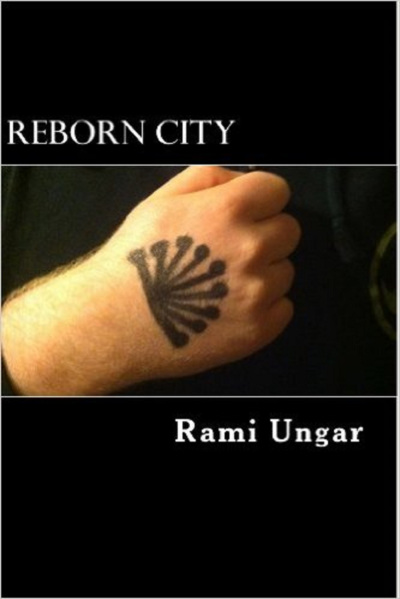
So if you didn’t read my last post, Full Circle is the final book in my Reborn City series, which follows the Hydras, a street gang whose leaders have superpowers in a dystopian city-state in the near future. The story contains themes of prejudice, gang violence, drug addiction, and overcoming what you and others think of you. The first book is called Reborn City, and the second is called Video Rage (one year anniversary of publication was today!). Full Circle, as I said, is the final book.

Honestly, I’m a little disappointed that it took me this long to get this far writing a novel. I haven’t taken this long to write a book since Reborn City. Then again, like with Reborn City, I’m writing in my spare time. I work a full-time job. I’m actually less busy than when I wrote Reborn City in high school, when I had school and homework and an after-school job and lots of TV on DVD. I should be grateful that it only took me seven months to get this far, rather than a year or so. I also watch most of my TV with meals these days (two birds with one stone), and I use Dragon software these days, so that probably made a difference.

Reborn City, book 1 of the Reborn City series.

Anyway, onto page and word counts. In terms of pages (8.5″ x 11″, 12-point font, Times New Roman, double-spaced), I’m currently at a whopping 213 pages. Pretty decent for a halfway point, though it’s probably going to change between drafts and when it gets published, we’ll have an all-new page size to contend with. As to that more easily measured standard, word count, we’re at a truly staggering 60,656 words! I’ve mentioned that 60K words is where I consider a story a novel, so this is definitely novel range. I wonder what we’ll get when we reach the end of the first draft? Both RC and VR were between 80K and 100K, so I’m curious to see where FC ends. With only a few more chapters till we reach the final battle of the story, I think it might stay within that range, but you never know.

And how is the first draft? Well, I don’t want to say crap…but it’s crap. No, that’s fair. It’s a first draft, and they’re notable for being rough, poorly edited, and in need of a lot of work. The greatest novels always start out as poor first drafts. I’m not saying any of my work is considered that way, but I think that maybe I could someday produce work that great. Anything’s possible, after all.

Point is, I’m making progress on the first draft, and while it’s not the best quality it can be, someday it might be.

Well, that’s all for now, my Followers of Fear. The weekend is almost upon us, and I’m looking forward to some rest. Until next time, pleasant nightmares!


Hard to believe it’s been a whole year. So much has happened since that early morning, but yes, it’s been 365 days. And Video Rage, published and out in the world, is a year-old.

Now if you don’t know, Video Rage is the second book in my Reborn City series, a science-fiction trilogy revolving around street gangs in a dystopian future, specifically the Hydras in West Reborn. The story is told from the point-of-view of Zahara Bakur, a Muslim teenager who is forced to join the Hydras after the deaths of her parents, and finds herself wrapped up in a world unlike anything she’s ever experienced before. It’s a story about prejudice and violence, drug addiction and loss, as well as how far we will go to take down an enemy and how we can overcome what others think of us and what we think of ourselves.

I released the first book, Reborn City, in college after working on it for several years starting in high school. And while it hasn’t gotten the same response as The Hunger Games (I blame my poor marketing skills), it has gotten some very decent reviews. Here are a few:

It’s a neat exercise in trying to see through the eyes of someone different from oneself. It incorporated a lot of fly comic-book-esque tropes. A good beginning effort of an up an coming new author who has some cool ideas to explore.

–Amazon Customer

This is an extremely commendable effort by a new young writer, whom I believe we will see much more of in the years ahead. Rami Ungar’s vision of a frightening dystopian future is peppered with those elements that make us all human. There are quite a few surprises in the book, and I am anxious for the next volume in the series to be released.

–Marc M. Neiwirth

As a reader who does not read books in this genre, I must admit that I could not put down the book. I attribute this to the talent of the author. I am looking forward to reading the next books published by Ungar. I recommend this book to readers who enjoy action with features of supernatural powers and sci-fi.

–ENJ

Reborn City

Very positive. And while it hasn’t receive that many reviews yet, Video Rage has received some good ones too:

I was really looking forward to the continued journey of the Hydras and Rami was able to produce. Zahara is my favorite character and her development from an insecure girl into a strong woman came out clearly in this book. Some other character development was really unexpected but the book moves at such a fast pace that it didn’t hold me up at all. The story line is quite imaginative and, as usual, there isn’t much predictability there. I think that is what draws the reader in – you just need to keep going to find out what weird twists and turns happen next! Looking forward to continuing this journey with Rami and the Hydras.

–Michael

From what I understand, this is book 2 in a series. That being said, I had expected a cliffhanger of an ending. I’m not a fan of cliffhangers, but in this particular book, I think the author did an excellent job of finding the balance between making the story stand complete within itself while ending the story on a note that let you know another book was coming. Personally, the ending was one of the most intriguing ones I’d read in a long time. It didn’t leave you to figure it out for yourself (which is something I hate). The author let you know what was happening and why while leaving enough to be answered in a future book.

That all being said, the overall book was an enjoyable read. I especially liked that a former bad guy turned things around and redeemed himself. Those types of characters are one of my favorites. I had hoped in Reborn City (Reborn City series Book 1) that he would, and it was very satisfying to see that fulfilled. I also liked the underlying theme in the novel that what the media tells people through the major outlets is slanted by government agendas. In this book, it was up to the main characters to find an alternative way of getting the truth out.

I think this book is best read after reading Reborn City (Book 1) because it really helped to have the background on the characters, and I think this book is far more effective if you have the foundation Book 1 gives you. The science fiction geek in me really loves the genetic aspect. And so that I don’t spoil anything, I will say the real bad guy in this series does a nice twist in this book along that line.

–Ruth Ann Nordin, author of  The Reclusive Earl

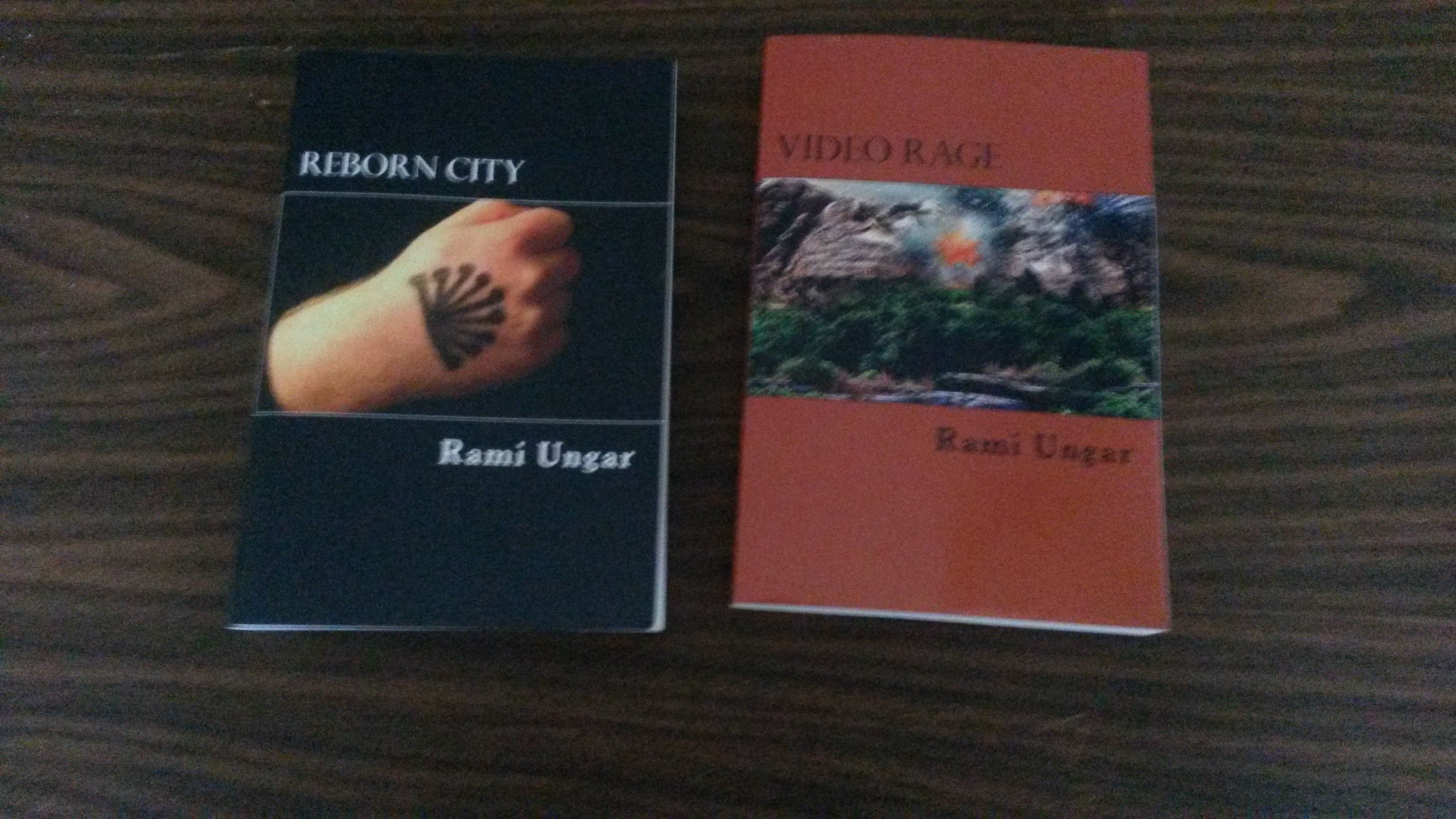
Own both books today!

So yeah, things are looking good for this series. And hopefully with time and a few plugs here and there, as well as continuing to publish stories, it might get a larger following. In the meantime I’m working on the final book in the series, Full Circle, and hope to have it done later this year. When will it be released? We’ll just have to wait and see.

In the meantime, if any of this has piqued your interest in either book in the series, I’ll leave the links below so you can check them out. And if you do decide to read the books, make sure to leave a review to let me know what you think. Positive or negative, I love feedback and it’ll help me out in the long run. Plus, reviews allow others to find my books, and I would greatly appreciate you helping me do that.

That’s all for now, my Followers of Fear. I’ve got another anniversary coming up soon, so make sure to check that out. Until then, happy reading and happy June, everyone. It’s certainly one of my favorite months.

Reborn City: Amazon, Createspace, Barnes & NobleiBooksSmashwords, and Kobo

Video Rage: Amazon, Kindle, CreatespaceBarnes & Noble, iBooks, Smashwords, and Kobo.

One of the nice things about being a writer that doesn’t often get talked about is that when a friend/colleague of yours has an achievement, you get to be part of the celebration. Which is why I’m very excited to invite my friend and fellow novelist, the wonderful Dellani Oakes, back to the blog for another interview. She’s got a new book out, Maker, Book 3 of the Lone Wolf series, and I’m looking forward to asking her some questions about it.

RU: Welcome back, Dellani. Now, you’re coming out with Maker, the third book in the Lone Wolf series. Tell us a bit about the series in general.

DO: It’s set in the distant future in the year 3032, and begins on a small mining ship in deep space. Marc and Matilda are working there when something goes horribly wrong. Someone has brought a load of Trimagnite on board. This is a semi-liquid ore which is highly toxic and extended exposure will cause madness and death. Enter the Lone Wolf, Wil VanLipsig. He’s sent to collect the ore, but finds himself highly attracted to Matilda Dulac, who proceeds to aim a pistol at his head because he’s lying to her. Who can resist a woman like that?

Unfortunately, Commandant John Riley of the Mining Guild is determined, not only to discredit Wil, but do as much damage to the Mining Guild as he can. It’s up to Wil, Matilda and Marc to stop him before he brings his plans to fruition.

RU: What about your series would attract readers to the characters and story of the Lone Wolf universe?

DO: Lone Wolf isn’t a Star Wars or Star Trek type universe. It’s unique, I feel, because the characters make it so. There are insectoid characters, giant mercenary cats, sentient ships and AI’s housed in special rings. The main character, Wil VanLipsig, is an 86 year old Colonel in the Galactic Marine’s black ops. Funny thing, though, he looks like he’s in his mid-twenties. The Marine doctors played genetic games with him and a few other select people, stopping their aging process. That doesn’t begin to describe what else was done to them.

RU: What can we expect from your new book, Maker?

DO: The Maker brings in a variety of new characters, as well as following the original ones from books 1 & 2. They discovered in Shakazhan – Book 2, that their planet, Shakazhan, is an artificial construct. What they don’t know is that there is an entity buried deep within the planet, who has many secrets and he’s loathe to part with them.

RU: Ooh, an entity. How HP Lovecraft! Next question: you normally write straight-up romances. Did you find it challenging to change to a sci-fi setting?

DO: I really don’t find it challenging switching genres. There are elements of romance in the sci-fi series, though they are minimal. My original idea was to write futuristic romance, which I suppose the first book could loosely be labeled, but the romantic elements fade out and the action takes over. I love constructing a whole new look at the universe and those in it. An author can do so much with sci-fi that can’t be done with more conventional genres. I had a great time thinking up new planets and races, giving them names and characteristics. Sci-fi is a blast.

RU: It most certainly is. And since it is a blast, here’s a question: how long do you see the Lone Wolf series going for?

DO: There are 6 in the series – plus 1 finished sequel, though at least 2 others are in the works. There is also a companion book, Lone Wolf Tales – A Lone Wolf Companion, which is a collection of 9 short stories and novellas associated with the series. I used them to explore various characters and incidents from the series.

RU: Sounds like a very involved sort of universe. And speaking of universes, what were your biggest influences in writing this series and crating this universe?

DO: Years ago, when I was newly married, we played a role playing game called Traveler. This was rather like Dungeons and Dragons, only sci-fi based. Friends of ours, and I, participated in a game my husband led and the characters of Wil, Matilda and Marc were created. I was going to chronicle their adventures, but it soon became apparent that the characters didn’t want that. They took off running in another direction and I just hung on for dear life. Aside from the character names, nothing remains the same.

RU: I notice characters do that. It’s very hard working with them sometimes. So, you’ve written romance, sci-fi, historical romance, and even some YA. What genres are you planning on diving into next?

DO: I’m not sure where I might venture next. I’ve been challenged to write a murder mystery, which I did (with a heavy romantic tone—what can I say, I love romance!) There are so many genres out there, permutations of one another, it’s hard to pick. One thing I’m fairly certain of, I won’t write horror. I scare easily and I usually write late at night and go to bed after everyone else. I don’t need to see ghoulies and ghosties in the dark!

RU: There goes that collaboration I was going to ask you about, LOL. Now Dellani, you release chapters of your books on your blog. How has your readership reacted to that?

DO: People don’t comment, for the most part, but I am finding more folks following and liking my stories. That seems positive to me. I wish people would comment and let me know what they like (or don’t) but I’m pleased to see new avatars on the page. I hope they enjoy reading the stories as much as I enjoy writing them.

RU: Yeah, the commenting thing affects everyone. Final question: what’s next for you and for your writing.

DO: I have a lot of unfinished novels, and I’ve set myself a goal of finishing one a month. I’ve been doing that for the last 2 ½ years, and am pleased with my progress. My goal is to get more of them published, but getting covers, paying copyrights, and all the other fees associated with self-publishing books, adds up quickly. I plan to send another book in to Tirgearr Publishing, who has already released four of my books. I’m working on getting a good, clean edit before sending it in. I have also begun preliminary edits on The Kahlea – book 4. There’s been action up to now, but this book takes the reader and knocks their socks off. More new characters, action, battles, and a little romance. I finished reading through it recently, and it left me breathless. I’m hoping it will do so to the readers as well.

RU: So do I, Dellani. Thank you for joining us.

If you’d like more from Dellani, please check out her interview here. Also check her out on her blog, on Amazon, on Facebook, and on Twitter.

And if you’d like to be interviewed on my blog, check out my Interviews page, and we’ll see what magic we can work.

That’s all for now, my Followers of Fear. Until next time!

If you’ve been following this blog for a while, if you know me in real life, or you read the things I post on my personal Facebook page, you know that I can be a funny guy. I love a good pun, a funny story, or a well-done prank. Or all three, if it can be done. And I try to insert humor into many facets of my life, much to the enjoyment of some and the exasperation of most others. Where do I get this reverence for humor? I’ll tell you: when a mommy and a daddy really like each other, they–

I’m sorry, but my lawyers tell me I’m not supposed to go into that. Let’s just say it might be a family trait, and leave it at that.

But guess what aspect of my life doesn’t see that many laughs? Surprisingly, not my writing. I actually don’t tell a lot of jokes in my stories. Yeah, imagine that! I don’t put jokes in my horror stories. In fact, my funniest story so far may be Video Rage: it’s got protagonist Zahara making a jab at male lead Rip’s manhood, and at a later point, main cast member Kevlar makes some bondage jokes when speaking to a Native American healer. That’s it.

Okay, now some of you non-horror fans may be reading this and be like, “Isn’t that par for the course? It’s horror.” But that’s the thing: just like how not all horror authors are dark, pessimistic creeps, neither are all horror stories devoid of humor. Stephen King, one of my biggest influences, often finds way to insert humor into his work. Ever read his novel Needful Things? That book is chock-full of comedy! There’s even a plot thread where two housewives buy objects from the antagonist that they believe are connected to Elvis Presley, and they start having hallucinations that the objects let them have a sexual/romantic relationship with Elvis! It’s freaking hilarious! And that’s just one example out of many.

But not just King: a lot of other horror stories make use of humor. One of my favorite Dean Koontz novels makes use of witty observations and funny turns of dialogue to great effect, adding a bit of levity to a very dark thriller. Buffy the Vampire Slayer often has tons of jokes and funny lines. Many slasher films from the 80’s and 90’s have funny moments (hell, Nightmare on Elm Street is often as funny as it is dark). And there are so many more examples of horror stories which sprinkle comedy in to alleviate tension and fear for a few seconds before starting it up again.

So why doesn’t my work have more laughs? Well, there may be a couple of reasons for that. One, in almost Freudian fashion, may stem from a childhood incident. And by childhood, I mean high school, but at this point in my life, the only difference to me is height and hormones. Back before Twilight poisoned the vampire genre, I tried my hands at several vampire stories. One of them was an epic, multidimensional vampire story, which for a while I was getting help with from an English grad at OSU my dad put me in contact with. During one email session, he noted that the story had a lot of humor in it. Every other line was a joke, and he said as a wishful horror writer, it should be more serious. I took that to mean no jokes, and cut the humor from that story in a snap. You may be thinking, “That doesn’t sound like that big a deal!” But to me, it may have been a huge deal. In fact, that memory is what I keep coming to when I think of where humor stopped showing up so much in my writing. You could say it forever scarred me (cue dramatic music!).

Another reason why I might not write that much humor into my stories is because of the type of humor I excel at. You see, my humor tends to be at its best when it’s situational. It’s like I’m living in a sitcom, and every word spoken has the opportunity for a funny line if I know where to look. That’s my mindset. My favorite jokes to pull on people usually reflect that. You’d be surprised how many times people have asked me how I’m doing, and I tell them, “I’m pregnant.” The reactions! They look something like this:

“YOU’RE PREGNANT?!!”

That being said, being a situational humor guy doesn’t always translate well to my fiction. I’m a plotter, which means I plan out the entire story from beginning to end. Keeping such dark stories in mind, from beginning to end, you don’t have much room to think of funny moments to add. You’re more likely thinking of the sad past of the protagonist and the arc they’re going through with this horrifying story.

Or it could just be the old adage, “Tragedy is easy, comedy is hard,” and all the stuff in the last couple paragraphs is a bunch of bullshit. That’s always possible.

Whatever the reason, it’s not that big a deal. Every author is comfortable with different amounts of humor in their work, and I’m comfortable with minimal amounts in mine (though if I ever write for Doctor Who, that might change). Besides, there’s a good chance if I tried to force more humor into my work, it would suck. In fact, I’m sure it would suck. Last night, I tried writing a horror-comedy short story about a tour of hell. The first paragraph was kind of funny, and then everything after that…not so much. Hence why I’m writing this post.

In any case, I think I’ll stick to what I’m good at. That’s what people like, and that’s what I like, so no problem. I’m sure I can fulfill all my writing dreams by not forcing jokes into my serial killer stories.

Or I could just stay at my job for the rest of my life and never make a thousand bucks off my work, but I don’t like to think like that.

If you write, how much humor do you put in your stories? What do you even think of humor in non-comedy fiction, anyway?

So I just came out with my latest article from Self-Published Authors Helping Other Authors. The subject is Prisma: An Inadvertent Cover-Creating App. And as you can guess from the title, it’s about an app called Prisma. Prisma is an app that allows you to turn photographs on your phone into artwork worthy of hanging up on your wall. I explore some other uses for the app that authors can take advantage of.

If you have a chance, check out the article. And if you can, check out the rest of the website. Self-Published Authors Helping Other Authors. The website is filled with articles on writing/editing/publishing/marketing your fiction independently and on a budget. I’m not only a contributor to it, I’m also a beneficiary, so you can take my word for it.

That’s all for now. Until next time, my Followers of Fear!

You know, I think every horror writer has a story that has a title that sounds a lot like this one. “The Woman in the Coffin”; “The Pit and the Pendulum”; “The Lady in the Water.” Okay, that last one isn’t a horror story, but it is pretty horrifying. And you get my point, right?

Anywho, in my last post I said I was going to take a break from Full Circle and work on a few short stories. This is the first of those: “The Woman in the Coffin,” a short story about two cousins living in the English countryside who find a coffin with, you guessed it, a woman inside. In a way, it’s similar to my previous short story “Buried Alive,” which also revolved around someone buried in a coffin, but the whole coffin thing is really where it ends. Especially when you consider what the woman in the coffin in this short story does.

Do you think I have a thing for coffins? I have always wanted one that I could convert into a bed. That would be cool.

Anyway, I had a lot of fun writing this story. It only took me four days to get it down, which is a record for me (though considering this is my first short story written almost entirely with Dragon software, maybe this will be a new norm). I also had a lot of fun writing British characters. Normally my characters are in the States and talk like they’re from the States. I had to draw on all my years of reading British literature and watching British films and television to make it sound like they were actually British and not Americans in a British setting. I’ll probably have to work on that further when I get to the editing phase with this story.

It’s also shorter than most of my short stories, at about 6,550 words (for me, that is short. Most of my short stories average around 8,000 words). And I think there’s a lot of material I could cut out without sacrificing quality. If I can do that, I think it’ll be much more likely that a magazine or an anthology will want to publish it. And wouldn’t it be cool if that happened?

Anyway, it’s getting late, so I’m going to sign off. Next I’m going to edit my short story “The Playroom,” and then I’m going to write a quick short story that takes place in a location we’ve all heard about and hope never to visit. Hopefully I’ll be done with all that in the next two weeks.

Until next time, my Followers of Fear. Pleasant nightmares!

As you guys know by now, I’m a pretty dedicated horror fan. I read a lot of horror novels and watch a lot of horror movies, I decorate my apartment with horror knick-knacks (just the other day, a Jason Voorhees mask and Funko doll arrived for me from Amazon), and of course, I write a ton of horror. Only thing is, lately I’ve been writing a lot of science fiction, and that’s getting a little old.

The hockey mask looks good on us.

I’ve been working on Full Circle, the final book in the Reborn City series I’ve been working on since high school, since November. And as of the completion of the latest chapter this morning (finished it in just a little over an hour. Do you know how rarely that happens?), I’m just under halfway through the first draft. And while I’m still dedicated to finishing the first draft and the series itself, I’m getting a little tired of the constant sci-fi. Don’t get me wrong, I love science fiction. Doctor Who is one of my favorite shows, after all, and I get as geeky as anyone else when I think about The Last Jedi coming out this winter.

But check the About page of this blog. I’m a horror writer, and all this sci-fi gets a little wearisome. I want to dip back into the world of ghosts, ghouls, serial killers, and all other manner of monsters that go bump in the night.

Plus, I’ve mentioned before that I’m trying to publish more horror short stories, as I’m trying the traditional route again and publishing short stories is a good way to do that. Can’t publish horror short stories if I’m constantly working on sci-fi.

So with that in mind, I’m taking a break from Full Circle to do a little short story writing. I’m going to first write a short story that I had the idea for a couple months back, and then I’m going to edit The Playroom, a short story I wrote back in late 2015 and have not touched since. I think it’s about time I took a look at that one again, and then see if I can get it in a magazine or an anthology. After those are both done, I should be good to get back to work on Full Circle (though if I need to, I’ll write another short story). I have a feeling that starting with the next chapter, it’s going to be hard to stop writing this one anyway, so this is a good time to take a break and slake my thirst for horror.

Until next time, Followers of Fear. And may the terror be with you…always.

As I’ve mentioned before, I’m dividing my writing time between working on Full Circle* and working on short stories. And with my short stories, there’s been more of an emphasis lately to write them with the goal of getting them into magazines and/or anthologies. Why? Well, as many of you know, I’ve been trying the traditional publishing route again (though I will self-publish if I feel a story is better off getting published that way), and while getting published in magazines and anthologies isn’t absolutely necessary to getting an agent and/or publisher, they do help make you more appealing to them. Kind of like internships and volunteering on a resume during a job search, if you think about it a certain way.

That being said, getting your short stories in mags and anthologies is pretty difficult these days. Okay, the short story market has always been difficult (Stephen King said in his autobiography On Writing that he had railroad spikes full of rejection letters from mags/publishers/agents/etc. before he found success), but in an age where so much content is available for free, reading has to compete with movies, streaming, and video games, and even self-publishing is cutting into magazine’s readership,** magazines and anthologies are even choosier than they used to be. Especially the ones that pay. They only accept the best work out of all the submissions they receive.

So up against this market, how can an author increase their chances of getting their stories published? Well, keep writing, get other people to take a look at your work for feedback, and don’t take every rejection as the end of the world or as a reflection of your talents, of course. But is there anything beyond that to help one get editors’ attentions? Well, there are a few strategies, and I’d like to list them here:

  1. Research and target. In this strategy, an author should create stories geared towards a particular magazine or group of magazines. For example, if you find a magazine that prefers urban fantasy stories, write an urban fantasy story that the magazine would probably like. Look at the magazine’s website and/or in recent issues to get an even better idea of what sort of stories they prefer (maybe they prefer female protagonists, or they hate romances between humans and supernatural creatures). Once you have a good idea of what they prefer in their stories, write one in that vein and then submit it to them. Chances are that if the story is the kind the magazine specializes in and likes, they’ll publish it.
    I’ve actually used this strategy successfully before. My first published short story, Summers with Grandmother Fumika, is about a fox-spirit that takes part in a Japanese tea ceremony. It was written after I discovered a magazine that specializes in articles and fiction relating to tea! Earned $100 for that story, which to a high schooler who averaged about $28-$35 dollars selling tickets for basketball games, was a pretty big deal. And I recently wrote a short story that I wrote for a specific sub-genre of horror, so there’s a good chance that it could be published in any of the publications that like those stories (though time will tell, of course).
  2. Rely on your networks. We live in an age of social media, and that means we come across all sorts of people we might never have even known existed thirty, twenty, or even just ten years ago. That means if you have a blog, belong to writer’s groups on Facebook, or belong to an online critique circle, you potentially have dozens or hundreds of people who can help you find homes for your stories. For example, I asked one of my writers’ groups on Facebook if they had any suggestions for places I could submit another short story in a particular sub-genre of horror. Within a few hours, I had a couple of responses that I could follow up with.
    Sometimes your friends don’t even have to give you suggestions. Occasionally, they run magazines or anthologies! In the past three years, three short stories were published in anthologies where a friend of mine was one of the editors (you know who you are). Just from this, you can see what an amazing resource friends can be!
  3. Check your publications. There are a buttload of books out there that are meant to help the average writer write and publish their work. Most of them have sections full of listings for magazines, agencies etc, and a lot of them are updated yearly. The best part is, a lot of libraries carry copies of these great tomes with them. I highly recommend The Novel & Short Story Writer’s Market from Writer’s Digest. They have great articles and listings (though never enough in the horror department, sadly).
  4. Google. I know, sounds like something that goes without saying, but you’d be surprised how often this doesn’t occur to people. Google is a remarkable resource, and if you’re careful with your search terms and what links you click on, it can open doors. In the past couple months, Google has led me to several magazines and anthologies that specialized in stories I could send them. At the moment, I’ve been rejected by one, but there’s a chance I could be accepted by two more. And if those don’t work out, there are all sorts of places I can still try out. All thanks to Google

Now, there’s still no guarantee that you’ll get into a magazine or anthology, even with using these tips. That’s fine, many successful writers have rarely or even never been published in these sort of publications. But if you think it can help your career, or you prefer short to longer stories, these tips might just help you get into that collection of winter-themed romances or into that magazine that likes hopeful stories involving space exploration and interactions with alien species. And that is a joy that every writer relishes.

*Speaking of which, when I’m working on that, the general policy is “get a chapter done, then work on a short story or a blog post.” So if you see a post come out on this blog over the next couple of months, it’s either because something big happened worthy of blogging about, or I just got a chapter of FC done. Like I did right before I started writing this post (only 22 more to go!).

**Dammit self-publishing, why do you have to–wait, what am I saying?

I normally don’t make New Year’s resolutions. When I do, they usually don’t last longer than a month or even a week.  But this year, I decided to break from tradition and actually make a resolution: to try new methods to get people interested in my writing. This decision was partially spurred by my earlier decision to try and find a literary agent, as well as from reading a book on marketing and realizing that I needed to change my approach to how I was getting people interested in my fiction.

It’s a hard market out there. If what you’re doing isn’t working, maybe you should try something new.

So if you’re still here and you’re not thinking, “Oh, this is just one of those posts where he blathers on about what’s going on with him and his life”, then you’re probably thinking “How is he doing with that resolution, then?” and “How did he change his approach?”Well, I like to think that so far, so good. This isn’t the sort of resolution that can be objectively measured, like losing so many pounds or bringing your academic scores up. I could measure it by new followers, but not all followers read posts frequently, and only a small fraction are willing to spend money on my books. Book sales can be an indication, as can reads on Wattpad, but to base my success solely on those factors doesn’t seem the wisest course to me. And finally, building an audience is a long and arduous process. This blog took five years to gain as many followers as it has, after all. An audience of readers interested in my books might take even longer.

It’s easier to talk about what I’m doing different. One thing I’ve done is that I’ve stopped doing ads through Facebook and Twitter. Unless you have of big budget like Coca-Cola’s advertising department, ads through those sites usually don’t translate into sales. At the very least, I’m saving money, and that’s never a bad thing.

Another thing I’ve been doing is related to my goal of trying the traditional route again and finding a publisher. That is focusing more on my niche, which is horror. I know, I’ve written and published a lot of sci-fi, but I prefer horror, and what I’m trying to do now is to write more horror stories and trying to get them published in magazines and anthologies. I’m still working on Full Circle, the final book in the Reborn City series, but I’m also devoting more time to horror. The hope is that I can produce enough work and get it published in magazines, building my name as all or a writer, thereby making myself a bit more attractive to horror fans and possibly literary agents and/or publishers.

As of yet, I’ve only submitted one short story, and I’m still waiting to hear back on it. But the next time I take a break from Full Circle, I plan to do some editing and writing, and see what happens. The goal here is to at least get a couple stories published by the end of the year (fingers crossed!).

A third method I’m trying, and this is already producing results, is I’ve started publishing through Wattpad again. Last month, I published my sci-fi novelette Gynoid on that website, and so far I’ve had a positive feedback. There’s been quite a few readers, a couple of votes (which is kind of like “Likes” for that platform), and even a comment or two. One of those comments was from someone who was very relieved to see a certain outcome for one of the characters. That particular comment made me feel very happy, because it showed that the story I wrote and the characters within had people invested.

Sure, Wattpad doesn’t make me any money, but it does give me an audience. And based on Gynoid’s success, I may publish more stories through the website in future, especially for stories that might have a hard time getting placed in magazines.

So that’s what I’m doing right now. It’s a multipronged approach, which is usually what is recommended for any big endeavor like this. Later this year, after I finished the first draft of Full Circle, I plan on editing Rose and shopping that around to agents. Rose really represents not only my growth as a writer, but it is a prime example of the niche I want to write for, so I feel that’s the best novel to shop around to agents and publishing companies. I’m also considering different social media platforms to try out, like Goodreads and Reddit (I know one person who is very active on one of those sites, so I may ask her for advice). If it can work, anything’s on the table.

For now though, I’m just focusing on focusing on my niche and finishing Full Circle. Any resolution that is to be successful takes time, proper planning, and patience. I want this to go well, so I’m not going to rush any of the steps I’m taking to further widen my audience. Will any of it work? Tough to say. But I’m an optimist at heart, and I like to think that this new approach will eventually yield results.

And if you are interested, I’ll give an update in a couple of months or at the end of the year, and let you know how I’m doing. In the meantime, if any of you have any tips on expanding my audience, or places I can look for an agent/publisher, or places that I could potentially publish my stories, let me know. If they work out, I’ll credit you in any post I write about it.

That’s all for now, Followers of Fear. I’ve got a lot of work ahead of me, so wish me luck. And thank you, as always, for supporting me as I work hard on becoming a great horror novelist.