Posts Tagged ‘reflections’

pray for paris

This past weekend in Paris, a city I’ve visited and which I’ve often thought about returning to, was attacked by terrorists affiliated with ISIS. They attacked six different locations throughout the City of Light, including a concert hall, the Stade de France, and two restaurants. At last count, nearly a hundred and thirty people are dead, including seven of the terrorists, and over three-hundred and fifty wounded. The terror threat is apparently still high, and the search for the remaining perpetrators are still ongoing.

And in the midst of the death and horrors, people have come together from around the world for Paris. Through the power of globalization and connection, human beings have shouted out, in tweets and status updates, in blog posts and videos, through television broadcasts and press conferences, through offers of help and condemnations of the terrorists, to stand by France as she works to bring the rest of the terrorists to justice, to take on the sickness that is ISIS, and to heal her wounds after such a horrific series of events.

Still, there’s a dark underbelly to this show of solidarity. My mother and I were discussing this underbelly in the car after dinner last night. Barely two days after the attacks, some people have been condemning Muslims and the refugees from Syria and other parts of the Middle East for the attack (despite the fact that most of the terrorists appear to be European and only one is confirmed to be from Syria). People of all sorts, from members of France’s far-right political party the National Front, including its leader Marine La Pen and US representatives, to bloggers and common people from all over the world. In the need to blame someone for this attack, some are turning to two very large, and lately very popular, scapegoats: those who follow the teachings of Muhammad, and those who left their homes with very little, if anything, just to escape violence and fear.

RC cover

My mom then turned to me and said, “Kind of reminds me of Reborn City. There are people who see a woman with a hijab and feel afraid. Zahara gave that up and even dyed her hair blond to avoid that fear.” That surprised me, but then I realized she had a point. In a small way, the world is beginning to resemble the world of Reborn City.

If you’re not familiar with RC, Islamaphobia is a big theme in the novel. The war on terror devolved into a huge, worldwide conflict, so that by the time of the story most of the world is suspicious of Muslims. Zahara Bakur and her family take measures so that they will be at the very least tolerated by a population that is suspicious of them. Still, it doesn’t always work, and there is still a lot of discrimination in that world that goes unchecked.

While the real world is not at the level that the world of RC is, there are places that have made it difficult to be a Muslim. Angola and Tajikistan actively shut down mosques all the time, and certain European countries have banned burqas and hijabs. France’s Interior Minister has discussed the possibility of shutting down mosques perceived to be preaching dangerous interpretations of Islam. Here in the States,  Donald Trump has said that if elected President he may pursue that course of action.

And because many of the Syrian refugees are Muslim and one of the terrorists was from Syria, some are reacting against refugees. Poland has already said they will not be accepting new refugees, and several US states are now refusing to take in any. Some in the US now wish to screen refugees based on a religious test.

The refugees are not the people we should be lashing out against.

You can’t judge an entire group based on the actions of a few. I don’t judge all Christians based on the actions of Westboro Baptist Church, nor do I judge all football players because a few have been charged and sometimes convicted for violent crimes. But so many people insist on judging Muslims and the Syrian refugees that way. And based on my own experience with Muslims, that isn’t right. That’s nonsensical.

Zahara’s experiences in the book reflect that. Early on she becomes aware that people don’t like her because she’s a Muslim, that they’re afraid of her for things that occurred in her parents’ and grandparents’ generations. She takes steps to be accepted by society by changing her appearance and taking part in “normal” interests and hobbies, but no matter what she tires, people see her as different. They see her as dangerous without even getting to know her. And it’s how people see her that spurs Zahara throughout RC (and its sequel, Video Rage, and probably the final book too) to show people that she is not what people think of her. To show them that she can be kind, and brave. And even good.

In the wake of Paris, we all want to fight back against the evil that caused the attacks. But the evil isn’t the refugees, nor is it Islam and its adherents. No, the evil is ISIS, al-Qaida, Boko Haram and the other terrorist organizations, wearing Islam like a Halloween costume, scary but not the real thing. The real Muslims are standing up to these fakers, standing in solidarity with Paris and showing their disdain towards these inhuman monsters hijacking a respected religion. The last thing we want to do is turn our backs on them, punish them for being who they are.

Instead, we should be thanking them for being allies we can count on for support in hard times, like Zahara is for her friends in the Hydras. Because after all, if we show them the love they deserve, they may return the favor and, like Zahara does, surprise us in all the best ways.


Raymond Esposito, a horror writer and acquaintance of mine (check out his website here), recently started a video series with romance writer SK Anthony (check out her website here), Writers After Dark. The purpose of this series (besides a fun excuse to drink, that is), is to discuss the various qualities of their respective genres. The topic of their first video was which of their genres was the more like life. Or not.

And because it’s fun to watch them just go at each other in a good-natured way. I’ve posted the video below. Enjoy:


Okay, if you didn’t have a half-hour to watch the entire video (too bad, because you’re missing out), here’s the conclusion: both of them think that their genre is the one that’s more realistic, though I think they both poke a lot of holes in each other’s arguments. And maybe spend a bit too much time on if love is real.

Anyway, after watching this video I thought I’d give my own opinion on this subject. I actually think I’m in a unique position to talk about this subject. Yes, I write and read mainly horror, but I also read a lot of romance mangas, read a book series that went from prehistorical fiction to prehistorical romance fiction in the later volumes, and watched one or two movies (10 Things I Hate About You is still considered romance, right?). Plus a lot of my stories, even ones that I haven’t written yet, have heavy romance elements. Snake is a horror-thriller with such an emphasis on romance, and my thesis/novel project Rose is a horror story about a really twisted love story (among other things). I kind of live in both worlds (though I prefer the one with deadly hotels and evil spirits and Lady Gaga in a leading role).


So which is more realistic and which is totally out there? Well, I think that’s kind of a trick question. In terms of horror, I’ve seen evidence of the supernatural and I’m well aware of the evil mankind is capable of (check out current events of the world to see what I mean). However, last I checked zombies were still a fiction and when a serial killer dies, they usually stay dead. And we still haven’t discovered any mummies that have come to life once unearthed or come across any pizzerias with killer animatronic bears.

At the same time, I’ve seen my fair share of long-lasting and happy relationships, and I’m sure you have too. Still, I’m not sure I believe in the concept of unconditional love. All relationships, especially loving ones, are built on give and take, on trust and communication. No two people ever say to each other, “I will love you no matter what and you never have to do a thing for that to continue”. All relationships take work, and romantic ones most of all. And true love? Same answer: all relationships are based on work. I don’t think you can meet a person and within minutes know they’re the one for you. Maybe after thirty years and you still care deeply for them, then maybe we have something there.


So which is real or unreal?

I think, in the end, both fear and love, the bases of horror and romance, derive from the need to survive. Horror is the result of the fight or flight response, and romance is the result of our desire to find the mate who will give us the best offspring. Neither one is truly realistic or unrealistic, because both speak to the human experience. Sure, some cliches and tropes are pretty silly and unrealistic (the virgin girl is most likely to survive, the couple overcome all and live happily ever after, etc.), but it’s the stories themselves that speak to us and keep us coming back for more, not the various elements that may or may not be realistic.

But what do you guys think? Is there one genre that’s more real than the other? Did I or the folks in the video miss something? Let’s discuss.

And let’s discuss it fast, I and six other people are being chased by a killer who died twenty years ago and we can’t seem to escape this haunted mansion no matter how hard we try! And in the meantime three of the people I’m with–one the crown princess of a kingdom of succubi, one a young woman with big dreams and a curse that’s slowly killing her, and one a very handsome young man with a dark past–have confessed their love for me at a really inconvenient time. I’m kind of attracted to all three, and I have to choose one of them before we leave this house! Strangely the killer takes five-to-ten minute breaks so that I can deliberate over my romantic predicament and let it take center-stage in my life when I should be more worried about where the killer is, how he came back when he was electrocuted in 1995, and why for the love of God there’s a convenient object in every room that could become some sort of murder weapon!

What a weird world I live in.

So for the past couple of weeks I’ve been making steady progress on my thriller Laura Horn (which I’ve been informed, based on the ages of the main characters, technically is considered YA. And so is Reborn City apparently, to which I say “Hooray! New readership!”). And like I said the last time I posted about this novel, it’s not as bad as I remember it. Yes, parts of it need work–the chapter I edited most recently will definitely need to be revisited a few more times before publication–but yeah, it’s going well.

I also haven’t had to make any drastic changes so far. I did combine three short chapters into one slightly longer prologue though. And I changed one or two characters’ last names. And I changed things around so that the first section of the novel is a bit longer than what it was in the first draft. And I’m considering moving one or two flashback chapters to later in the book. But beyond that, no giant changes to the story I’m telling. So far, editing’s been pretty smooth.

And I’m glad of that. With every story you pour your sweat and soul into, you feel like you’re bringing a child into a world. Yeah, I know it’s a pretty cliched analogy, but it works. And any parent wants their child to succeed. I worried I had to totally switch up this story in the second draft, which would’ve been like exchanging some of my kid’s body parts for others al a Frankenstein’s monster.  Knowing that the changes I have to make are more superficial, plastic even, makes me feel much better.

And I’m stopping these metaphors before they go any further and get any creepier.

Anyway, at the rate I’m going, I think I might be done with the second draft by some point in January. That would be nice. I’d be able to get to Rose soon after, and then I would have the summer to work on short stories, prepping for NaNoWriMo, maybe putting out a book or two. We’ll see what happens. In any case, my fingers are crossed for good things.

And in the meantime, I’m going to take a break to work on a short story that’s been calling to me.since I came up with it the other night. I think I could actually get this one down to under five-thousand words. Maybe even under four-thousand. Wouldn’t that be nice?

anxiety

What is the trouble with psychological horror? Actually, there’s not much trouble to it. It’s just very hard to do well.

What do I mean by this? Well, let’s look at the definition of psychological horror: “a subgenre of horror fiction, film, and video games (as a narrative) which relies on the characters’ fears and emotional instability to build tension”, according to Wikipedia (I know you’re not supposed to rely on that site for information, but I couldn’t find a better website for a definition). It’s a sub-genre that, rather than relying on a traditional monster that’s out front and center for all to see, the monster is restricted to quick glimpses and shadows. If there’s a monster at all: sometimes the true villain is a character’s own brain, their fear, distrust, paranoia, suspicion, isolation.

I’ve used psychological horror before, particularly in the stories in my collection The Quiet Game (which if you haven’t read, I wish you would) and in the short story “Buried Alive”, which was published in the Strange Portals anthology last year (again, I wish you would read it). And I’ve come to the decision that while it isn’t as difficult as physics or writing comedy, it is walking a very fine line. Almost like a tightrope. And if you fall off, you can wind up veering either into the realm of the comedic with how obvious that it’s all in the character’s head, or it’s just so confusing that you find yourself losing patience with the story.

Let me give some examples (and it’s my blog, so you have to let me give some examples): have you read “Buried Alive”? I’ll keep the spoilers to a minimum for those who haven’t, but like I said above, I use quite a lot of psychological horror in that story, and for the most part, I think that I use it well (so do most of the readers I hear from on this one). For the rest, though…it’s pretty obvious that the circumstances of the main character are taking a toll on her mental state. I don’t think it gets to the point of comedic, but it is obvious, and the point of psychological horror is to make you guess whether it’s all in their heads or if it’s real or…who knows?

Perfect Blue. Trippy, has its moments, but also has its problems.

On the opposite end of the spectrum, there’s the anime film Perfect Blue, based on a novel that I wish was available here in the States. The film is about a singer-turned-actress who starts to confuse reality and fiction when her first acting job takes a turn for the traumatic. It’s a good story, but it’s not a perfect story. There’s a good section of the movie where they spend time trying to confuse both the protagonist and the viewer, and it gets a little difficult to not only what’s going on, it gets difficult to pay attention or be patient with the movie. While I admire the visuals of the movie, and I get what they were going for by showing what the protagonist is going through mentally, and I recommend checking it out if you’re interested, psychological horror shouldn’t get so strange or trippy that the reader gets frustrated with or loses interest in the story.

A great example of a psychological horror story though, manages to toe the line very easily and keeps you guessing as to what’s real or what’s mental delusion. A good contemporary example of this is The Babadook. If you read my review of that movie last year, you’ll remember that I noted that the movie kept you guessing as to whether the film’s protagonists were dealing with an actual monster or a shared psychosis, and I eventually settled on a bit of both because…I’m mostly human, and humans need to categorize things to make sense of the world. And I still say that I don’t know for sure which it is, and that’s one mark of the film’s greatness. You’re never quite sure what’s real and what’s in the heads of the characters, it stays interesting throughout, and it never gets to the point of ridiculous or obvious. All told, it’s great psychological horror.

This movie will surely get you on so many different levels. I’m getting chills just thinking of it.

So how do you psychological horror well? How do you toe that line?

Well, I’m definitely no expert on the subject. I usually deal in traditional horror, the monster is out front and is usually either some twisted form of human or a creature not easily defined by our standards. I dabble in psychological horror, usually making it part of a bigger story. But I can try, and I think–beyond reading/viewing as much psychological horror as possible, both good and bad, and practicing like you want to get to Carnegie Hall, of course–I’d suggest trying to write a story where you’re not sure what’s really happening. Create a scenario where strange things start happening to your character or characters, and you can’t tell what’s real or what’s just in the minds of your characters. Keep it interesting, don’t get too ridiculous or obvious, and just see where the story goes. If you can do that but still be unsure for most of the story of what’s real or not, then it’s likely your reader will be the same and want to know more.

Another marker of psychological horror is that there’s usually a twist somewhere along the way, and if it’s good it’ll change how you view the entire story (a great example is the Korean film A Tale of Two Sisters and its American remake The Uninvited). Characters are also often driven or plagued by powerful internal battles: am I doing the right thing? Is this right or wrong? Are they really out to get me? It doesn’t have to be full-blown persecution belief or fear of some unknown. It can be something as simple as a growing suspicion that something’s off or that our desires are actually evil. Again, A Tale of Two Sisters is a great example of the former.

Not a fan of the movie, but even I admit it shows Jack’s breakdown very well.

And finally, psychological horror is often not the main focus of a story, but part of a bigger story. Take a look at The Shining by Stephen King. Obviously that hotel is actually haunted, and the kid and the cook are both psychic. But a good deal of the story deals with Jack Torrance trying to sort out what’s going on for himself. Is he just dealing with a powerful desire to get wasted again? Is he going insane? Is the hotel playing tricks on his mind? There are scenes where you really can’t tell, and that’s part of the terror. Part, but not the whole thing. After all, there’s all the stuff the hotel is doing to them, right?

Unless Jack, Danny, and the cook are all sharing some sort of shared delusion, or folie a trois, in which case…wow. New conspiracy theory right there.

In any case, it’s something to experiment with yourself. And for me to experiment with more often. Just try and see what happens…or does it happen? You’ll never know until you try.

How do you feel about psychological horror? Do you have any good examples in film or literature you’d recomend? What are some tips for effectively writing in the subgenre?

Today’s a very special day. Two years ago, I stayed up late on Halloween night to make sure that Reborn City, my first published novel, was released in all its formats and then wrote the blog post announcing the good news for the very next day.

That’s right, two years ago today was the day Reborn City was published. A lot has happened since then, most of it having melted from my memories. But one thing has stood out to me: over these past two years, RC has definitely become my most popular published work yet (I know that’s not saying much with only three books out at the moment, but you get the idea).

If you’re not very familiar with RC yet, it follows Zahara Bakur, a young Muslim teenager living in a dystopian future who is forced to join the Hydras (not the Marvel supervillain organization), a street gang whose leaders have mysterious powers. Zahara learns to deal with her new lifestyle and friends, while at the same time she becomes unknowingly ensnared in a plot by a shadowy government interested in the Hydra leaders’ powers. The novel comprises of themes tackling Islamaphobia, racism, gang violence, drug addiction, and much more.

Over the past two years, I’ve had plenty of people read RC and a few of them have been willing to give feedback (and I think only a quarter of the people who do the latter are my family, which is good). Here’s what some of the people who have read RC have said:

This is an extremely commendable effort by a new young writer, whom I believe we will see much more of in the years ahead. Rami Ungar’s vision of a frightening dystopian future is peppered with those elements that make us all human. There are quite a few surprises in the book, and I am anxious for the next volume in the series to be released.

–Marc M. Neiwirth

As a reader who does not read books in this genre, I must admit that I could not put down the book. I attribute this to the talent of the author. I am looking forward to reading the next books published by Ungar. I recommend this book to readers who enjoy action with features of supernatural powers and sci-fi.

–ENJ

This is not a genre I typically delve into, but I took this book on vacation and couldn’t put it down. The plot had me turning pages at quite the clip. The characters were unique and interesting and the imagery had me creating my own visual of what Rami’s interpretation of the future looked like. For first time novelist, Rami Ungar, this was an outstanding showing of talent and commitment to his passion of writing. Looking forward to seeing what he comes up with next!

–Michele Kurland

If you can’t tell, I’m quite proud of some of the reviews I’ve received on this book. Considering that I started work on this book in high school and worked on it through the first two years of college, I guess I have good reason to be. It was not easy to get this book out, and I worried a lot about how it would do. I also worried that people would say I’m another white guy trying to make money off a subject that others have experienced and written about (the Kathryn Stockett criticism), but so far no one has made any fuss about RC in that way.

And what’s in store for RC in the next year? Well, I’m sure more people will read it. I know of at least one friend who bought a copy and will probably read it within the coming year, and I’m sure there are plenty more people who will find the book and discover something enjoyable in it. I might also get a few more reviews, who knows? I also think an RC audio book is likely to happen. I’ve been working hard to make that happen and I might even have a narrator soon, depending on a few factors. If and when that happens, I’ll make sure to let you all know (and to force my whole family to download copies if they want to stay on my good side. Mwa ha ha!).

And finally, I hope to get the sequel Video Rage fully edited and released by summer next year. I’m working with a professional editor this time, so I’ll let her take a look at the novel before I release it so that the story can be the best story possible. I owe it to the readers who loved RC to do that, at least.

Anyway, if you wish to check out Reborn City for yourself, you can find it both on Amazon and Smashwords. And if you do decide to read it, please write a review of it. Whether or not you love it, I appreciate the feedback, and reviews help indie authors like myself find new readers every time we get them, so you’d be doing me another solid essentially.

That’s all for now. I’ve got a lot of editing to do today, so I’m going to try to get through that. Wish me luck, my Followers of Fear, and happy anniversary!

Oh, and I may have forgotten the two-year anniversary of The Quiet Game, which came out in July of the same year. My bad. If you’d like to check that out, it’s also on Amazon and Smashwords. It’s a spooky good time, if I do say so myself. Enjoy.

Well, I’ve returned from Germany, my Followers of Fear. All in three pieces (don’t ask about the other two, you won’t like the answer). It’s good to be home, to say the least. A little weird after so long, but still very good. I enjoyed seeing my parents and my sister waiting for me at the airport and teaching them naughty German swear words (and my parents are rabbis, by the way. Scandalous!).

Of course, now that I’m back that doesn’t mean I can just slack off and do whatever I want. I’ve got a number of things on my to-do list today, and while I’m working to get those done, I’m taking a moment to talk about writing. Specifically, what are three qualities that writers need to actually write and get work done?

And I mean besides the actual imagination to come up with a story and the ability to transfer that story from the mind to the printed page. Not only does that go without saying, but a lot of people have very active imaginations and can write well enough that if they tried they could come up with a very good first draft. So why don’t they? What keeps people from actually acting out that writing dream?

I’ve been thinking about this a lot since yesterday, when I spoke with someone on the final leg of my journey home who had tried writing but found himself unable to do it. I found myself wondering why that is, and I think part of why some people can write and some find themselves struggling to do so may stem from three needed qualities or skill sets: confidence, focus, and perseverance.

Now by confidence I don’t mean confidence that your story is going to succeed and will make tons of money. I mean confidence that you can actually get it done, that you can write out an entire story from start to end. Never mind whether it’s any good, first drafts are notoriously terrible because that’s how they’re supposed to be. You have to have the confidence that you can get that first draft done, and then maybe we can talk about the next draft and everything else that comes from that.

Think about it: even if you prefer to only work on short stories, that fitting an entire story in a space between a thousand and ten-thousand words. Even to me, that’s a little daunting, and I’ve become much better at writing short stories over the years (though I could always be better). Imagine how it might feel for someone who wants to write a novel but then finds out that a novel is at least sixty-thousand words! You can’t just say to yourself, “I’ll try and see where it gets me” when it comes to this sort of task. You have to have some confidence in yourself and that you can get all those words out on the page.

Otherwise you may falter around three-thousand words when you realize that getting a story out is not as easy as you think and may not be able to continue from there.

Another thing writers need to get work done is focus. You have to be able to focus on a project and get the work done. The person I spoke to yesterday on my flight told me this was his problem: he tried writing a story, but in the midst of writing that story he would come up with another story and then want to work on that, and his first story would languish. Then he’d have an idea for a third story and want to work on that, and then he’d have two stories being put on the shelf for later. So the cycle went and he had projects that just never got done.

Even if you juggle multiple projects at once, like I do (three novels at various stages of the editing process, one collection of short stories on the way, working to find a narrator for an audio book, etc), you have to be able to sit down and focus on one project for an extended period of time. Maybe even months or years. And other projects may demand to be written (believe me, I’ve got lists of story ideas, and some are pretty vocal in my head about wanting to be written), but you have to get some out of the way first before you can focus on others. Better to have just a few projects at most to work on and several ideas waiting to be turned into stories than a lot of projects just lying about not even a quarter of the way finished because they all demand to be written.

And this brings us to our final quality: perseverance. It’s an understatement at the very least to say that life is not easy. Take my life, for instance: I’m trying to ensure I have a job so I don’t become a bum in my dad’s guestroom, I have bills to pay, tasks on my to-do list to do, etc. So many demands that it’s hard to find time to write or edit. And when it comes to doing either, especially at the beginning of a project, I may sometimes have trouble getting the work done. All those words can make it hard to getting it all done.

Without these qualities, writing can feel like a Sisyphean feat.

To write, you have to accept that you have to work through all those difficulties before you can get through all those stories, and then do it. It’s never easy, and life will find ways to get in the way. Even when it does, you have to be willing to get through what life throws at you and then sit down and get through all the writing and editing and everything else you have to do. If not, then those stories you feel so passionate about will languish for so long you may never pick them up.

It’s these three qualities–confidence, focus, and perseverance–that make the difference between those who want to write and those who actually go out and do it. Each of us struggles with them at times–focus in the short term can be troubling for me–but in the end I think those who can command these qualities are the ones who can at least get the stories written out and polish them enough for publication.

But what do you think? Have I got the right of it? Did I miss something? Did any of these speak to you? Let’s discuss.

In the meantime, I have to focus on the other things on my to-do list like visiting the dry-cleaner’s the barber shop, and persevere through cold and possible rains at the same time. Still I’m confident I can do it, so I’m not too worried.

Still, wish me luck. I might need it later.

Today is my last day in Germany. It’s hard to believe that I’ve only been here for four months; it feels more like I’ve been here for ages. The day I arrived, all the way back in July, feels like it happened years and years ago. Heading home to Columbus feels almost a little weird. Almost like I’m heading to a place that only exists in my memories. I know that sounds weird, but after being away from home for longer than I’ve ever been before (the record before this was five weeks in Israel back in high school), that’s what it feels like.

I am looking forward to coming home to Columbus.* It’s where my family is, and where I’ve spent a majority of my life. It’s familiar, it’s got a lot of people I know. And our football team is undefeated this season, which is always something to be proud of. Go Buckeyes!

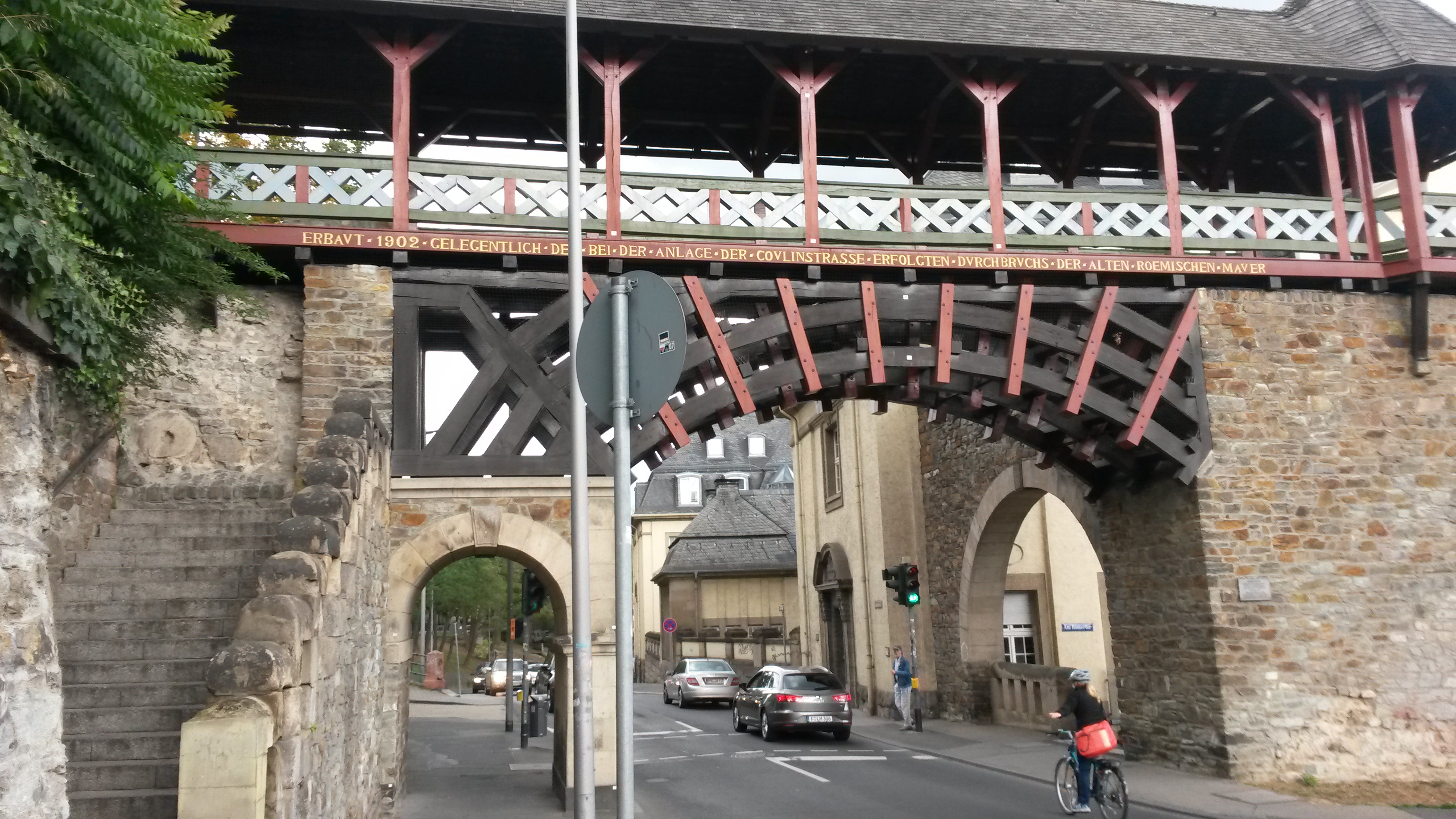
Still, I will miss being here in Germany. I’ve become so used to this nation, it’s become something like a really nice foster home for me. Every day there was something new to learn or see, and I got to go to all these wonderful places while I was here. Germany is filled with such history, and I was lucky to be able to explore that history in so many ways, from traveling to the many WWII-related sites in Munich to a Roman wall in Wiesbaden and everything in-between. I even got to see a castle, something no trip Europe is complete without. No matter what the cost, it was worth going out to see all these things.

The Roman Wall. I'm going to miss seeing stuff like this.

The Roman Wall. I’m going to miss seeing stuff like this.

And the people here are very awesome as well: more than once when I got turned around trying to get somewhere, I was able to find someone who was able to point me in the right direction. Even at the grocery store, people were more courteous than I could imagine: yesterday a woman at the grocery store saw I had just the one item (a bottle of wine for my dad and his wife), and she let me go right in front of her. I usually don’t get that even in the States, so I was very grateful for her kindness. When I heard reports about how Germany was the only European country willingly accepting refugees while other countries closed their borders, I wasn’t at all surprised, because that’s just the sort of country Germany is, a kind and accepting place where you can feel as welcome as you might in your own home.

Plus I got to watch Doctor Who several hours before my Whovian comrades in the Western Hemisphere, seeing as the show airs in Europe before it does over there. That was nice. I will miss that.

But yeah, I will miss Germany. My time here was well-spent and I learned and experienced so much, and one day I would like to return, see old friends and do some more exploring of the country if possible. If I could do that, I’d be one very happy horror novelist.

Here's looking at you, Germany.

Here’s looking at you, Germany.

So thank you Germany, for being my home away from home. I’ve enjoyed every minute I’ve been here (even the more stressful minutes) and I can’t thank you enough for all you, your people, and the other guests who call your lands home have done for me. It has truly been a wonderful experience getting to know you firsthand. So auf wiedersehen, and I hope we can one day meet again.

Until that day comes though, you will be alive in my thoughts, my memories, and in my stories (horrifying as those are).

*And apparently Columbus is preparing for me to come home as well. Already the National Guard has been called out, people have been praying for salvation like mad. There’s even been strange activity reported amongst animals, like a bridge full of spiders (not kidding, it made the local news). I guess they know I plan on jumpstarting the Apocalypse, huh?

Recently I was contacted by Man Crates, a new company that “ships awesome gifts for men in custom wooden crates that he has to open with a crowbar!” Don’t worry, I think they send the crowbar with the crate. Anyway, they asked me to come up with what I would include in a crate to survive the duration of horror movie, especially since it’s October and this is the month for that sort of stuff. I was intrigued, so I decided to take up the challenge and see what I could come up with.

Turns out that list is actually pretty exhaustive. The thing about horror films, what you need to survive them besides wits and luck really depends a lot on what you’re facing. You can’t use a weapon for a werewolf on a ghost, and an exorcism for a demon won’t do much good on a serial killer. If I tried to prepare for every possible situation, I would need an entire house to stalk my supplies rather than just a crate.

So I made my list with this thought: “If I knew I was going to be in a horror movie but I didn’t know what I’d be facing or where I’d be when it happened or how long I’d be in this situation, and I could pick items to bring with me to help me survive, what would I bring?” Thus resulted my list, an entire catalog of supplies that would apply in just about any horror situation without being too specific.

I’m not sure if Man Crates were to actually compile everything from my list if they could fit it all into one crate, but I think they’d find it very helpful no matter what the situation is. So without further ado, here’s what I would want in my crate for surviving a horror movie:

Machetes: as deadly as a gun, as silent as a knife.

  • Weapons. Obviously, I need weapons. Chances are, most of what I’d likely face would be susceptible to some sort of weapon, and I can think of a few that would be helpful. First, a shotgun. Werewolves, zombies, serial killers, and occasionally vampires and some kinds of ghosts can be killed or injured by firearms, and if I needed to hunt for survival, a shotgun would be helpful. I also would like an ample supply of three types of bullets: regular, silver, and rock salt. The first two are obvious, they can kill most creatures, human, supernatural, or other. The rock salt is special, though: according to many traditions, salt can cleanse or keep away impure beings like ghosts and spirits. I figure a rock salt bullet might weaken a spirit if I’m attacked, and if I’m not facing a spirit, then rock salt might hurt or drive away anything else.
    I also would benefit from a machete and a hunting knife. If the shotgun fails, then a machete and a hunting knife would be helpful in close quarters combat or against a horde of zombies. They can also be used in stealth attacks, unlike the shotgun, and the knife in particular would be helpful in hunting. Obviously I’d need something to make sure the blades stay sharp and clean, and something to keep the shotgun in working condition, so add those to the crate.
  • Survival gear and supplies. When I saw author Max Brooks (The Zombie Survival Guide and World War Z) at Ohio State a couple years back, he pointed out that besides weapons, you need supplies if you’re going to survive any long-term terrors. While I’m trying to be more general here, I have to admit he has a very good point, and I should plan in case my survival needs happen to be longer than until the sun rises.
    A lot of what I would need are also things that I might consider taking with me on a camping trip. Flashlight and extra batteries would be the first things I’d pack. If I’m going to be fighting for my life at night, a light source will be important. Lighter fluid and matches would also be helpful. Even if I’m not in a situation where I need to assemble a cooking fire in the woods or something, some things can only be killed with fire, which means I need something to get the fire really going.

    Sometimes the simplest things will save you.

    And speaking of cooking fires, put some water bottles and energy bars into the crate. Keeping yourself hydrated and energized is important if you want to stay alive, so better have something that is easy to transport, lasts awhile, and can carry your nutrition needs. A first aid kit with the works–gauze, disinfectant, antibiotics, needle and thread, etc.–could also mean the difference between life and death, so I’d want one of those.
    Finally in this category, I think we could include an outdoor survival guide–I am not the most outdoorsy sort of guy, so having a guide would be very helpful–as well as a portable cell phone charger to call for help if things get too crazy and maybe a satellite uplink device in case I’m in an area with poor or no cell reception. Hey, you have to be prepared for as many situations as possible.

  • Other. These don’t fit into the other two categories, and I can’t think of a proper name for them, but they would be handy in a horror movie. First, night vision goggles: good ones are usually a little expensive, but if the situation becomes such that you wouldn’t want a flashlight because then someone or something might see the beam, then it’s worth it. Also, bring along The Zombie Survival Guide by Max Brooks. Even if you’re not facing a zombie apocalypse, it has some very good tips to survive out in the world when the stuff hits the fan, so it might prove useful. And a thick notebook and a supply of pens would also be pretty handy, especially if you need to be on the road for a long time or you’re facing something unseen before in human mythology or history and you want to record its weaknesses.

    Get me something slightly smaller and less clunky and cumbersome, and I think I’ll be good.

    Finally, a pack or something to make carrying this all easier would be nice. I mean, this amount of gear might be heavier than the suitcase in my hotel room, I would like something to help make carrying it all a little easier.

That wraps up my list of things I would have in my crate should I find myself in a horror movie and I’d like to survive till the end, especially if the end is several months or even years away…ooh, I hope I don’t end up in any of those movies! Anyway, thanks to Man Crates for inspiring the post. I had a fun time coming up with this list. Check out their catalog, you might find the perfect gift for a guy you know to indulge in his masculine side.

And beware of monsters! They’re everywhere this month.

What would you want in your horror survival kit? Anything here that I missed?

So in five days I’ll be getting on a plane and heading home (cue the patriotic Neil Diamond music). Since my time in Germany is running out, I figured that I’d go over the highlights of my trip, the things I’ll remember and talk about for years to come.

And that will make their way into a story or two, because that’s what happens when you’re me. Everything is fodder for my dark, twisted imagination.

So here they are, the highlights of my time in Germany:

Working for the US Army

Me at the office.

Me at the office.

Obviously this has to come first. It’s the whole reason that I’m here in the first place. I got to work for three months in the US Army Civilian Corps, working in the Equal Employment Opportunity office on a variety of projects, including a few articles and newsletters. I gained a lot of experience that will no doubt help me with future jobs (can’t confirm anything on that front yet, but I do think good news is on its way). I also made a few friends while on base, and I got to experience firsthand what it’s like to live and work for the US Army. Sure it was only three months, but what a period of three months! You can definitely expect a story or several coming out of this experience.

Living in Germany

Not everyone is lucky enough to live in a foreign country beyond a vacation of a couple of weeks. I got to do it for four months! And you know, it’s a lot of fun, as well as very educational. Sure, my German still sucks (though I find a lot of people here speak enough English for me to get by), but that didn’t get in the way too much. From trying the train and bus systems, to learning that bakeries here have a weird tolerance for letting flies or bees crawl over their food in the summer (yeah, I found it a little gross too), to even getting lost and learning to rely on the natives for directions, every week seemed to have some new adventure for me, and I can’t wait to tell everyone about some of those adventures I couldn’t talk about here in more detail, either in person or through stories.

My Trip to Munich

German silver mark from 1937. Cool, right?

German silver mark from 1937. Cool, right?

That was my first big trip in Germany. Before that I’d explored parts of Wiesbaden and made trips to Frankfurt and been to nearby Mainz once or twice, but this was really going out to see the country. And it’s definitely one of my favorite parts of being here in Germany, especially since visiting Munich was top of my list of things to do while in Germany. I was given a personal tour of Munich by a WWII scholar who showed me how Munich was such an essential part of the rise of Nazism and some of Nazi Germany’s most formative event. I had such a great time that day, and I would gladly do it again given the chance and maybe someone to share the experience with. In any case, I will have to look up my Holocaust Studies professor once I get back to Columbus and talk to her about my trip. I bet she’d be very interested in seeing some of my photos and souvenirs, including an actual German silver mark from 1937! Now having that is scholarly street cred right there.

For a fuller account of my trip to Munich, read my post here.

Seeing BABYMETAL in concert

BABYMETAL rocking it out in Frankfurt.

BABYMETAL rocking it out in Frankfurt.

If you have no idea who or what BABYMETAL is, they’re a Japanese pop-metal fusion band fronted by three teenage girls. Yes, it is kind of weird, but it is really awesome and they’re making tons of waves in the metal world (if you want to sample them and see what the big deal is, I highly recommend their Road of Resistance video). To say the least, I am a gigantic fan, and this was my second time seeing them in concert. The first time was at the Rock on the Range music festival in Columbus this past May, but they were on a smaller stage and allotted a shorter performance time, so it wasn’t as fun as I’d hoped. When I heard they were going to be in Germany while I was there, and that they’d be doing a full concert, I immediately got tickets to go.

And you know what? I had a blast! They did their whole repertoire (easily enough when you only have one album and a digital single) before a crowd of about a hundred and fifty people, and I just had the best time. I got really close to the stage by the end of the concert, which was good because in addition to tall fans seeing the show from several yards back is no fun, and I got to see a ton of the action up close. Honestly, when they played my favorite song, “Doki Doki Morning”, I nearly died from happiness. At the end of the concert, I felt drunk despite having not had a drop of alcohol all day, and couldn’t help but sing the tune to some of their songs for quite a while after the concert was over. It was just a magical night for me.

Me and my new friend Itamar.

Me and my new friend Itamar.

That concert was also special because, besides a T-shirt I got as a souvenir, I made a new friend at the concert, an Israeli named Itamar who had recently been discharged from the IDF and was traveling around Europe and going to BABYMETAL concerts whenever he could. To him, those concerts were fun and relaxing (considering my own experience and the studies that show heavy metal is a mood lifter for fans, plus the fact that plenty of the band’s songs feature positive messages, I didn’t find that too surprising). We started talking before the show started, realized we had a lot in common, including a thing for horror stories, and hit it off. After the show we found each other and promised to stay in contact, and he said he’d check out my books. The very next day we became Facebook friends. Isn’t that nice?

I also had a great idea for a novel while I was at the concert, but I think I’ll wrap up this entry in the list and say this was a big event for me and I had a ton of fun. And if I get the chance, I hope I can see BABYMETAL in concert again someday.

And I’m jamming out to them while I write this post, but does that surprise you in any way?

Wewelsburg Castle

Wewelsburg castle.

Wewelsburg castle.

A trip to Europe is not complete without a castle or two, in my opinion. Last year on my study abroad trip it was the Tower of London, and this year it was Wewelsburg Castle, a three-sided German castle in Paderborn that was once the seat of the local Prince-Bishop. During WWII, the SS used the castle as a training center, and some say it was also where they did mystical rituals meant to empower themselves as Aryan men (there’s both evidence to support and oppose this theory, but I wouldn’t discount it). Ever since last year when I did a paper on the connections between National Socialism and mysticism and I discovered the castle in my studies, I’ve wanted to check it out, and being able to do so on this trip was a very big deal for me. I learned a lot while I was there, and I even got a story idea while I was there. Wewelsburg is definitely a place I’d recommend anyone visiting Germany visit if they’re in the mood for seeing a castle with an interesting and dark history.

For a fuller account of my trip to the castle, you can read my post here.

German food and drink

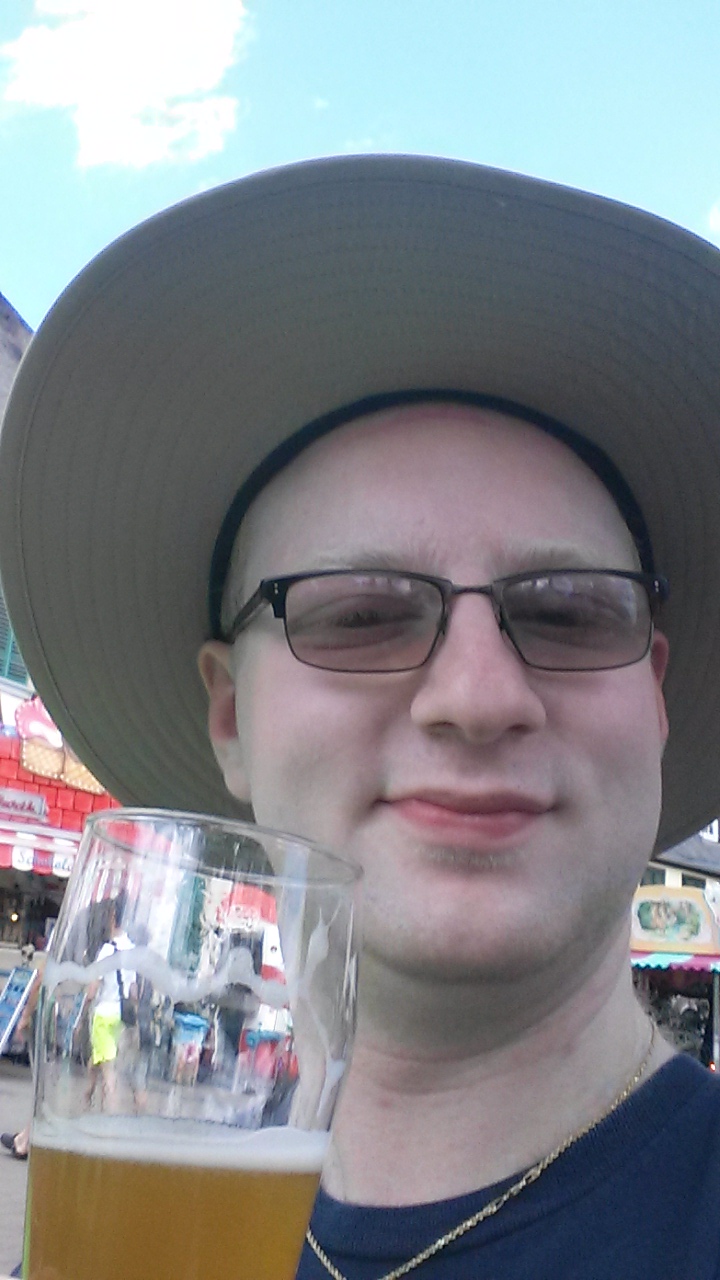
Love that German beer!

Love that German beer!

Now, because I keep kosher and because I can’t read German, my access to German food was limited. Still, when I could have it, I found that it was pretty good. They definitely know how to make some tasty baked fish dishes, the Germans do. They use plenty of spices to give it flavor, I think.

And German beer and wine is definitely some of the best I’ve ever tasted. I know Germany is known for its beers, but the wine is pretty extraordinary too. In fact, Frankfurt and plenty of other German cities and provinces make a lot of money off wine, and there’s even a university in Frankfurt where they teach wine and beer making. If I wasn’t such a writer, I might consider applying to that school and started a winery or something.

Definitely don’t miss out on eating actual authentic German cuisine while you’re here. You’ll miss out on a central part of the country if you do.

And finally…

All the story ideas!

Last year when I was in Europe, I kept track of how many ideas I had while I was abroad and came up with 40 ideas. This year I did the same, and after four months and so many experiences, the amount of ideas I had was staggering. 81 ideas as of this past Saturday. Yeah, that’s a lot of ideas. Novels, short stories, articles, even a video game or two, inspired by anything from dreams to stories I read and shows or movies I watched, to all these experiences and several more experiences I had while in Germany. Yeah, it’s definitely been a good time for me creatively while I’ve been here. I just wonder when I’m going to write all these stories! Hopefully not never.


Well, that’s all I’ve got. I have to say, I’m going to miss Germany terribly. It’s been quite an experience while I was here, and I hope that maybe someday I can visit again, maybe see a few things I didn’t get the chance to see during my four months here (I probably would’ve seen more if I could, but time and money are always a factor in these sort of things). And who knows? Maybe in the future I’ll get that chance after all.

One can always hope. Right my Followers of Fear?

Becket image

Some of you may remember my previous interview with author Becket, an indie novelist who likes vampires, was once a monk, and works for Anne Rice. Now he’s got a new book out, American Monk, a memoir about his years in a monastery growing closer to God and living in a brotherhood of similarly-minded men.

Welcome back to my blog, Becket. Happy to have you here. Now, your new book is American Monk, which chronicles your time as a monk in a Benedictine monastery. Why did you decide to write this memoir?

One day on my Facebook page I decided to make a post about my experience in the monastery. People responded well to it, so I made another one the following week. I kept up that have it for about half a year, at the end of which I decided to compile all my Facebook posts about the monastery into a memoir.

Why did you decide to become a monk in the first place? And why did you leave the monastery?

I wanted to be a monk because I want to deepen my relationship with God. The monastery was a wonderful place to do that because it was a house conducive to my personality type, an introvert and a scholar. I stayed in the monastery for five years, at the end of which time I was given the choice to make solemn vows, which is like the marriage commitment. It would’ve been for the rest of my life. The monastery was wonderful, but I also felt called elsewhere, although I did not know what that was at the time. So without any hard feelings, I left the monastery and began working for Anne Rice.

What’s a day in the life of a Benedictine monk like?

Monastic life is built around routine. We wake up early in the morning and begin our day with prayer. Our morning prayer lasts for about an hour and a half, and then we would go to breakfast. After that it was time for work. We worked most of the morning until the hour to celebrate the solemnity of the mass. After mass we had lunch. And after lunch we spent the afternoon committed to more work. Our day ended in the evening with prayer. After prayer we went to dinner, and after dinner we had a community time together, where the monks gathered together in one room and enjoyed one another’s company. Finally, we had night prayer and that it was bedtime.

American Monk

In memoirs like these, I’ve noticed that the vignettes within generally run the range from humorous to serious to tragic to inspirational and everything in between. Do you feel that this is true of yours? 

My memoir is meant to be inspirational. I hope that people read it and grow in their relationship with God, because the monastery was a place where a truly began to understand who I was in the divine plan. I am still learning the depth of my relationship with God. In many ways, the monk I was is still inside me, and perhaps he is a better monk than I used to be.

 Does Anne Rice make an appearance in American Monk at all?

She makes an appearance in the beginning and at the end, and in one chapter in between, but the memoir mostly deals with my experience with the brother monks.

What are you working on these days?

I just finished the first draft of my next music album as well as the first draft of a novel appropriately titled The Monk, about an African monk who suffers the stigmata and works as a miraculous channel of God’s love in the world.

When not writing or working with Anne Rice, what are you doing these days? And is there anything on your wish list you think you could be doing in the near future?

I spend time with God, my girlfriend, and my two cats. For the future, I have a few projects that I am working on and I am praying that God will give them success for His Glory.

Well thanks for joining us Becket. Glad to speak with you. And if you’e interested in reading American Monk and other works by Becket, you can check out his website, as well as find him on Facebook and Twitter.

And if you’d like to read more interviews with other authors and with some of my characters, you can head over to the Interviews page for those.

Hope you enjoyed reading this, my Followers of Fear. I certainly had fun putting it together.