Posts Tagged ‘reflections’

For a while now I’ve been reading The Complete Collection of HP Lovecraft on my Kindle. I figured it was about time, seeing as I haven’t been very exposed to his work up until this point, and the man has been a huge influence on greats like Stephen King, Allan Moore, Guillermo del Toro, and quite a few more. And since I am always looking to learn from other authors, I figured I should spend ten dollars of Amazon gift cards and see what happens.

Well, you get what you asked for. I didn’t realize that when I bought the collection, that it was 1112 pages! The length in itself is not such a problem, I’ve read books that long before. The thing is, Lovecraft…well, he’s hard to get through sometimes, and for a number of reasons. For one thing, there’s his style, which goes a little something like this:

And as I treaded up the stairs, filled with an anguish that panged the organs within my bosom to no end, I found my wife waiting for me in her chambers, her frown prominently featured upon her face. And I knew that my life had been transferred into a situation seriously detrimental and quite hazardous to my health, for that face on my wife at this hour could only mean that she had discovered my liaisons with Ellen the hotel maid from down in the village. I had endeavored to keep our trysts unknown from all but the walls of Ellen’s room, however it seemed that I was not secretive enough, as evidenced by the porcelain my wife volleyed at my head.

Okay, that’s a bit of a parody, but you get my point. Who talks like this?

Also, some of his early fiction isn’t that good. “Memory” is just a weird little flash fiction piece about a ruined city and a conversation between two beings about the city; “The Street” is about the houses on the titular street killing Communists after the street goes from a nice neighborhood to a slum; “Polaris” and “The White Ship” are obviously both dreams taken too literally, and “The Tree” is just not scary.

Also I noticed that so far, very few women appear in the stories. Several characters are mentioned as having wives, but so far the only woman who has any actual significance is the titular character of “Sweet Ermengarde”, and that’s a story parodying popular romantic melodramas of the day! But given that Lovecraft had a strained relationship with his mother, a turbulent one with his wife, and was dominated by his aunts in the later parts of his life, maybe that has something to do with it.

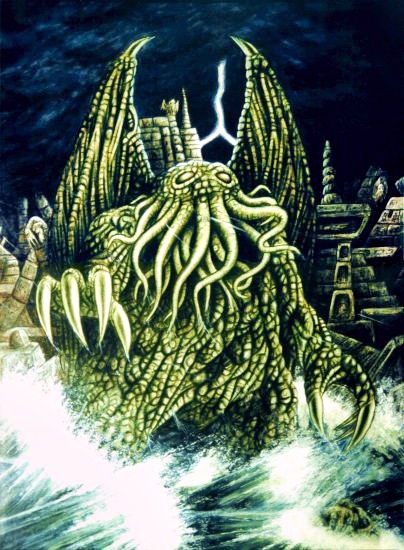
Lovecraft makes you wonder if maybe this guy is coming for you.

However, while I have my problems with Lovecraft’s early work, I have to admit that some of his stories do hit the mark, and even are a little scary. “The Tomb” is definitely somewhat chilling, as is “Dagon” and “The Picture in the House” (the former bears resemblance to Cthullu stories, while the latter has implications of murder and cannibalism). And I actually very much enjoyed “The Temple”, which was very strange and creepy.

I can’t say about the rest of his work, but for the early stuff I think what makes the successes so great is that they leave impressions on you. They make you think to yourself, “Imagine if that actually happened. That would be kind of creepy…” And then you take a look around yourself to make sure that a slippery slimy creature or some guy with wicked magic or something isn’t near you. Lovecraft is very good at leaving those sort of feelings with you. He makes you wonder, makes you think that there’s something just beyond the corners of our eyes or in the darkest parts of our world that we don’t understand, can’t understand, and that any interaction with that something or somethings would be very dangerous for us.

So there is definitely a reason why HP Lovecraft has stuck around and become well-known as a writer of weird and terrifying fiction. And as I progress from his early work to the stuff that he’s more famous for, like “Call of Cthullu” or “The Colour out of Space” or “History of the Necronomicon”, I’m sure I’ll find more reasons to like this guy (hence the reason this post is titled Part 1).

In the meantime though, I think I’ll take a break from his stuff. Like I said, he’s great when he’s good and I’m already learning a lot from him and seeing some of his influence on my work already, but he’s dense and hard to get through, and after so much of prose like my parody paragraph, I need a break if I’m going to continue someday. Besides, I finished on “The Nameless City”, which has that famous quote in it. You know the one:

That is not dead which can eternal lie,
And with strange aeons even death may die.

I can’t think of a better stopping point than on a creepy story that has that weird couplet in it. Can you?

Wewelsburg castle. Magnificent to behold.

Wewelsburg castle. Magnificent to behold.

Well, I finally did it! I got to visit the castle I’ve been dying to see since I first heard about it while researching Nazis and the occult prior to last year’s study abroad trip. And today, I spent a good part of my day uploading most of the photos I took to Instagram and Facebook. Honestly, it sucks when that ends up taking a longer time than it should, but what are you going to do?

Anyway, if you’re not familiar with Wewelsburg Castle, it’s a triangular castle in the small village of Wewelsburg, part of the town of Buren. During the Nazi era, the SS, led by Himmler, began doing renovations on the castle with the purpose of turning it into the ultimate Aryan production center, a place where the Nazis’ ideological beliefs could be made real. Some people even believe that Himmler, who was a big believer in all that Nazi mysticism stuff, conducted ceremonies in the castle, and hoped to make it into a sort of SS Hogwarts. I personally think that the SS could’ve been doing some magical rituals while they were there, and there is some evidence to suggest that’s what they were planning on doing or did there.

Of course, if you ask the museum staff about it, they will deny that anything like that occurred at the castle, but maybe they want to keep the right-wing nuts and the Satanists and pagans away (yet they still have a small display in the museum to the mystical side of the SS in the exhibit). The staff also deny any sightings of ghosts or anything else paranormal, but maybe they want to keep away ghost hunters too.

Weird occult stuff. Don't ask me what each stands for, I couldn't give you a definitive answer.

Weird occult stuff. Don’t ask me what each stands for, I couldn’t give you a definitive answer.

Anyway, the castle is divided into two permanent exhibits. One exhibit, the Ideology and Terror of the SS, is mostly housed in a separate building, with a path leading to the Crypt and the Group Leader’s Hall in the North Tower (more on that below). It’s very similar to the exhibit at the Topography of Terror Museum in Berlin, which I visited last year: lots of white columns and display cases, with photos and artifacts talking about the history and the beliefs of the SS. Some of it was in English, but most of it obviously was in German, so I didn’t spend as much time there as I might have liked.

Still, it was interesting to be there. I got to see a lot of artifacts, including a few books on mysticism and some occult memorabilia, some uniforms, and a lot of other cool stuff. And at a certain point, you could walk along a footpath to the North Tower, where two of the rooms the SS renovated are available to look at (sadly, no photos are allowed in those areas). The Crypt is a dark and eerie space, and definitely had a ritual purpose, though not necessarily a magical one. The walls are covered with paintings of stylized depictions of victims of SS tyranny, as if to say that the space is now a memorial to them than to the SS and the Aryan man. On the floor above is the Group Leader’s Hall, which was incomplete at the end of the war and was probably meant to be a meeting room of some sort (but for what purpose?). The most interesting part of that room is that in the center of the room is a Black Sun symbol, which has both esoteric connotations and–because the SS used it as a symbol of power–neo-Nazi connotations. I stood on top of it as if to say, “Yeah, I’m Jewish and you’re worth shit.”

Entrance into the castle proper.

Entrance into the castle proper.

The other exhibit discussed the castle’s history, when it was the second home of the Prince-Bishops of Paderborn. You basically go throughout the whole castle–down hallways and up and down staircases–seeing its history from prehistory to the early 1900’s. That was interesting too. Part of the exhibit displayed what creatures lived in the area in the Ice Age or earlier, and another area talked about how important agriculture was to the area. In one room they had the actual road traders used displayed where it had been uncovered during renovations, and in another section there was a small tribute to the Jewish community that lived in the area. And in one part of the East Tower is a basement room where witches were kept and tortured during the one recorded set of witch trials in the area. Believe me, I’m definitely going to email those photos to my History of Witchcraft teacher in the morning.

The castle courtyard, facing the direction of the North Tower.

The castle courtyard, facing the direction of the North Tower.

At the end of it all, I had a really great time and was really glad I’d gone (though before I ended the tour of the castle I had to take off my coat because I was starting to get really warm from all the physical activity). It’s definitely going to be one of the highlights of my time here in Germany, and I took a lot of photos so that I’ll remember it long after I’ve left the country. I even had an idea or two for stories while I was there, and I bought a few books in the gift shop so that I’ll have plenty to reference should I ever need to look up some info. Definitely check out the castle if you ever get the chance. It’s well worth the trip.

Of course, I doubt this’ll be the last adventure I have in Germany. While my time here is becoming limited, there’s still one place I’d like to visit, and I think I might have the opportunity this coming weekend. Oppenheim is a town not too far from me, with an underground ossuary and labyrinth, which sounds a lot like the Paris catacombs, and they have a wine museum too. With Oktoberfest starting, sounds like the kind of place I could have a bit of fun before I say goodbye to Deutschland, don’t you think?

A model of the synagogue that used to be in the village, located in the small Jewish display in the castle.

A model of the synagogue that used to be in the village, located in the small Jewish display in the castle.

Well, I wanted to write more posts today (I’ve got plenty to write about), but it’s getting late and I’ve got an early morning tomorrow. I guess I’ll just say goodnight for now and see what I can post tomorrow.

Goodnight Followers of Fear! Pleasant nightmares!

Yesterday was the second day of Rosh Hashanah, the Jewish New Year. I had the day off, but unfortunately no one could take me to the chaplain’s house that day, and while I tried to go to the nearest synagogue, I couldn’t find it even though it should’ve been in front of me (I found out later from the chaplain that you have to walk into the building where it should’ve been to find it. Otherwise it’s hidden behind businesses. Not sure why that is, but I’ll go with it). So with the day off and nowhere else to go, I decided to do what I promised to do my first week in Germany, and go explore some more of my temporary home.

If you head down to the Marktplatz on a Tuesday afternoon, certain areas will be busy while certain areas won’t be. The main plaza was pretty empty save for some pigeons, while further back you’ll find plenty of people strolling and shopping. It was into these back alleys I went, armed with a map and a general idea of where I was going. Needless to say, I got turned around more than once.

The smaller half of the Jewish Memorial in Wiesbaden.

The smaller half of the Jewish Memorial in Wiesbaden.

The first stop I went to was the Jewish Memorial in Wiesbaden, which was a pretty moving experience. The memorial stands where the old Michelsberg synagogue, which was a magnificent building with domes and spires that was destroyed during the war, used to be and is dedicated to the German Jews from Wiesbaden who died during the Nazi era. Today a road bisects the former grounds, so the memorial is split in half as well. The smaller part is an L-shaped, two story structure made from black stone, with a white display detailing in German and in English the purpose of the memorial. A small touch screen contains more information on the Jewish community of Wiesbaden (all in German unfortunately).

The second half, on the other side of the street, is much bigger. It’s in the shape of a giant rectangle with one side missing and along the walls, there’s a band where all the names of Wiesbaden’s Jews who were murdered during that period are listed. When I crossed the street, I felt the atmosphere change.

The larger, more emotional half of the Jewish memorial in Wiesbaden.

The larger, more emotional half of the Jewish memorial in Wiesbaden.

They say that certain places can hold certain emotions. I’m not sure if that’s true in this case, or if that was just my own associations affecting me, but the moment I got to the other side of the street, I suddenly felt very melancholy and started walking around the memorial, my hand running over the many names listed there. I found myself talking to the Jews listed there—I knew they probably couldn’t hear me, even if their souls were hanging around that space—but in that moment I talked, and I felt really sad because these people had lived and then had their lives violently and tragically ended, and their stories would never be known because the Nazis had done all they could to erase them. I cried a little while I was there, and I felt like something was with me in that memorial (though not necessarily the spirits of the dead Jews…maybe the spirit of the synagogue itself, if that makes sense), and it was very pleased I’d taken the time to talk to it.

The Roman Wall, with some additions from the Germans.

The Roman Wall, with some additions from the Germans.

After that I left (and felt much better once I was outside the memorial space). I then headed to something I’d wanted to see but had totally forgotten about looking for that first week in Wiesbaden: the Roman wall, known as “die Romantor” in Deutschland. Right down the road from the Jewish memorial, the wall has been reinforced and repaired and even built upon by the Germans (hence why there’s a wooden bridge connecting two parts of the wall). Nearby there are statues and reliefs that are either relics of the Roman age or they were created to resemble Roman works of art, and behind one apartment’s driveway there is a small alcove that might’ve been a storage area. These are all that remains of what might’ve been a Roman fortress against barbarian hordes. It was actually pretty cool, and I couldn’t help but think of a friend of mine from my study abroad trip who would’ve loved to see the wall.

Possibly a storage space for weapons and supplies?

Possibly a storage space for weapons and supplies?

You know thinking about it, I should write a story or two involving the ancient Greeks or Romans. There are already plenty of horror stories involving their mythologies, but involving them? I don’t know of many, though a few Anne Rice books do take place in ancient Rome or thereabouts.

Anyway, after that I headed back to the Marktplatz, where I discovered a costume shop with all these different masks and costumes and accessories available. Apparently Oktoberfest here in Germany involves costumes like Halloween does in the States (fun fact: only a fifth of Germans practice Halloween, as the holiday was mostly discouraed up until the 1990s by the Lutheran church. It’s becoming a growing trend, but still pretty small here except among Americans). I tried on a few masks and took some photos in a full-length mirror in the shop for kicks, then left while thinking about maybe getting a mask of some sort later on.

Mother always said I was a werewolf. I guess we now have proof. Awooo!

Mother always said I was a werewolf. I guess we now have proof. Awooo!

All in all, it was a pretty interesting and fun afternoon. I got to connect with my heritage in a very personal way, as well as immerse myself pretty deep in German history and culture. And I got to see some more of the city I’ve been living in for the past three months, and which I’m going to be sad to leave. Guess that means I’ll have to come back someday, right?

Of course, my adventures in Germany are far from over. I’m trying to arrange to go to this castle with a very interesting history called Wewelsburg over the weekend, and I would like to go to Oppenheim, which is not too far away from where I live, because they have underground labyrinths you can explore (sounds a bit like the Paris catacombs). Hopefully I’ll be able to do both and have fun at Oktoberfest too while I’m at it.

Until next time, my Followers of Fear!

Hollywood is stuck in this phase where the studios are obsessed with sequels and prequels and spin-offs and franchises and remakes and reboots and re imaginings and a million other things. I have mixed feelings on this culture. On the one hand, I love the Marvel movies and a clever re imagining of a classic story or stories (like what Once Upon a Time has done with some of my favorite fairy tales when I was young) is a great thing. Plus who doesn’t love a good adaptation of a beloved novel or comic book or even video game into a movie or TV series?

On the other hand, seeing all these stories continued or retold constantly encourages filmmakers ane viewers to seek out familiar stories that are sure bets to be successful rather than new material that they don’t know will work out for them, when there is new material. And plenty of these sequels/prequels/reboots/whatever, when they come out, they are just awful and you wonder how the filmmakers could do this to beloved properties (see my review of the Poltergeist remake or watch these two dudes review the Smurfs movie if you need further proof).

The horror genre has been a big part in this, for better or for worse. Since the success of 2003’s Texas Chainsaw Massacre remake (as opposed to 2013’s remake of the film), there have been a slew of horror remakes, mainly slashers but quite a few others, and they have been showing up with increasing frequency). I’m focusing on the slashers though, because of the horror remakes the slashers are often the ones I see the most advertising for (an exception being Poltergeist, but we know how that turned out), they have some of the most iconic characters in the horror genre (Freddy, Jason, Leatherface, etc.), they’re notorious for putting out too many sequels of varying quality, even for horror, and they’re difficult to get right, because they rely on blood, guts, and gore to scare people rather than suspense and atmosphere.

And for God’s sake, there’s just been so many of them:

  • Texas Chainsaw Massacre and its prequel (the former was good, the latter awful)
  • Halloween and Halloween II (same deal as TCM in terms of quality)
  • My Bloody Valentine (lacks all that made the original so awesome)
  • Black Christmas (awful murder-porn)
  • Prom Night (awful and nonsensical)
  • Friday the 13th (of all the Michael Bay shit movies, this one is the shittiest)
  • Nightmare on Elm Street (I liked it, but others disagree with me)
  • Leprechaun (more of a re-imagining of average quality)
  • Texas Chainsaw 3D (I liked this too, but not everybody else did)
  • Evil Dead (fun and extremely bloody)
  • Scream (got rebooted as a TV series. Only saw one episode before leaving for Germany, but wasn’t impressed by what I saw)

On TV and in the movies at the same time. Like Kevin Bacon or Viola Davis.

And that’s just the ones that I know of that are out. And believe it or not, there are more on the way: Friday the 13th is getting a new movie as well as being re-imagined as a TV series for CW (haven’t heard anything on the movie, but what I’ve heard on the TV series sounds promising), Halloween is getting a new movie (also looks promising), Evil Dead is getting a TV series set years after the original films (excuse me while I skip it, because I’m not much of a fan of the franchise), and Texas Chainsaw Massacre is getting a prequel exploring Leatherface’s origins (I’m skeptical). There was also talk of a Hellraiser reboot, but there’s been no word in two years on that, so I’m going to say it’s been shelved.

So why are slashers being remade by the dozen? Like I said, they’re difficult to pull off, and they’re formulaic. Plus blood and gore is how they primarily scare you, and a lot of horror fans, including myself, find that distasteful. What makes them so appealing?

I think a lot of it has to do with the characters. Slashers have produced some of the most iconic characters in horror and in cinema: Norman Bates, Jason Voorhees, Michael Myers. Heck, Freddy Kreuger isso well-known that he’s made cameo appearances in movies parodying the 1980’s in one form or another. People love these characters as much as they’re scared of them, they love watching them in action and being terrified of them. They like to sit there and think, “What’s he going to do next? What’s he going to do next? What’s he going to do–AAAH!”

Studios are aware of that, as well as they are aware of how much people go back to see the old films (the better ones anyway) and see these beloved characters do what they do best. With huge fan followings like this, and how easy it is to make a horror movie under twenty million dollars with minimal special effects, they know people are going to come and see the films so they can see these beloved characters resurrected again and perhaps in a movie worthy of carrying the franchise’s name.

The problem with that is, these same studios may just be banking on the popularity of a franchise and its character or characters to draw in crowds. Take a look at Friday the 13th, or another horror movie that Michael Bay meddled in, Ouija (read my review here). Both of those sucked, but yet they still made money. I think the latter was because of very good marketing, but the former had the draw of the first Friday the 13th film in six years, and one not bogged down by sequels’ worth of mythologies. Problem was, they didn’t invest in a good story, like the first film did and most of the early films tried to do with varying success. Instead they gave it a passable story and then added in as much drugs, sex, nudity, swearing, and gratuitous death scenes as possible so that the audiences would stay interested.

The result was a waste of film that makes watching people defecate on public streets look more entertaining. And I’m very worried that these other films that are on the way will do the same thing. They’ll be made with just drawing in fans and their credit cards in mind and the results will be absolutely terrible. And no horror fan wants to see beloved characters treated that way.

Hoping for better films for all these guys, and more.

On the other hand, I like to imagine that some of these filmmakers are huge fans of the franchises and really are trying to give these characters the stories they should be in, stories that are worth investing seven dollars and two hours in. The Halloween movie supposedly has an interesting plot, and the one thing I’ve heard on the Friday the 13th sequel indicates it’ll take place in the 1980’s, when the series started and where most of the better films are set. Perhaps there is hope here.

Well, we’ll just have to wait and see…and pray that along with better sequels/franchises/whatever, we get some new material too (*cough* Hollywood, call me *cough*).

All for now, my Followers of Fear. I have to get ready for the High Holidays tonight, so I’ll be busy for a while, but I’ll write again when I can.

See you next year, and Shanah Tovah (that means “Have a good year” if you don’t speak Hebrew).

It’s been one week since what could very well be the series finale as well as the third season finale of Hannibal, based on Hannibal Lecter and other characters created by Thomas Harris, premiered. NBC has declined to keep the show going, and while the show’s producers Bryan Fuller and Martha De Laurentiis, as well as series star Mads Mikkelsen and the many, many fans of the show (“Fannibals” or “Lecterites”, if you will), would love to see the show go on in some form, there is a chance that the show will have to hang up the carving knife and that everyone associated with it will have to move onto new projects.

Personally, I hope that the show is still able to go on, maybe as a feature film as Fuller has hinted at, or maybe moves to Starz or Amazon (though if it’s the former and not the latter I may have to wait till the show is on DVD or Netflix, depending on my financial situation). Also, I think it’s a good investment to keep the show going. Yeah, Hannibal has always been ratings-challenged, which is why NBC cancelled it in the first place. However, they knew a show focusing on a serial killer was a risk to begin with, and they still went with it for three years, as did huge legions of fans.

Why? Well obviously Hannibal Lecter is a famous character who was already well-known because of Harris’ novels, the movie Manhunter, and the three Anthony Hopkins films. But that only drew people to the show in the first place. The reason they stayed is because the show’s creators managed to take the concept of a serial killer show, and elevate it to art. Fuller and his team could’ve simply created a simple procedural show with serial killers like The Following with a famous literary and film character in the mix. Instead they built on that premise and made most of the sets exquisite to the eye, turned ordinary conversations into psychologically and philosophically engaging character explorations that could evolve into verbal tennis matches sometimes, and gave every shot a purpose in how it was filmed.

Add into all that the brilliant characters: Hugh Dancy as the socially-troubled empath profiler Will Graham, Lawrence Fishburne as the ends-justify-the-means, will-do-anything-to-catch-the-killers FBI director Jack Crawford, and of course the quiet gentleman devil with a love of grilling up those who are rude or offensive, Hannibal Lecter himself. Every character brings something to the table, making you want to watch them interact with each other right up until the very (sometimes bloody) end. And of course, the brilliant writing. Even at the show’s less exciting moments, the writers till were able to make you want to keep watching, to find out what happens next. From the growing relationship between Will and Hannibal in the first season, to the terrifying flash-forward at the beginning of the second season, and Will’s struggle to truly rid himself of Hannibal in the third season, it just kept you watching.

Hannibal is art. Creepy, bloody, psychologically strange and terrifying art, but it is art nonetheless, and that’s something you don’t usually see with television shows. I honestly can’t say if Hannibal will go on in some form or another (I’m not psychic), but if it doesn’t, at least we know that it had an ending that tied up most of the loose ends of the story, and the ones left behind we can easily guess at. And with streaming and DVD releases, fans could still watch it and relive the beautiful psychological horror that the show was.

Still, I hope for more. The show was awesome, and Fuller had a vision to continue the show, even if he couldn’t get the characters from Silence of the Lambs (I would’ve loved to see how they changed up Clarice Starling and Buffalo Bill, seeing as I found one annoying and the other slightly comical). If allowed to continue, we could see some award-worthy horror on our screens someday.

So while we wait and squirm and wonder at the show’s fate, I’ll continue to hope. Because if the story of the strange relationship between a man and a monster in a man’s skin can intrigue me and so many other people, then surely it can attract a TV executive or two. And the story that ended too soon won’t end at all.

Oh and NBC, why do you keep doing this to me?! First Dracula, then Hannibal? Stop cancelling these creepy genre shows I really like!

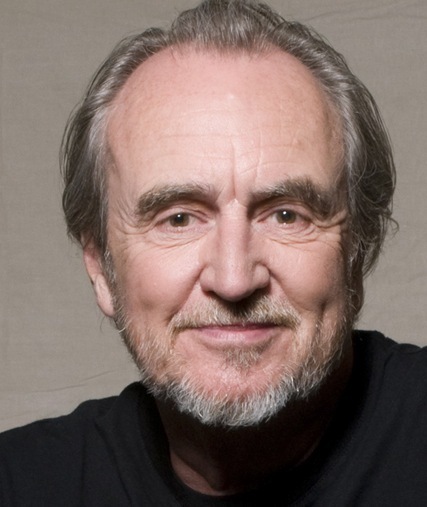
Rest in peace, Wes Craven. You will be missed.

The word craven means “lacking in courage; cowardly.” I’m hard-pressed to find a man who embodied the exact antithesis of the meaning of his last man, and who instead managed to pass it onto the rest of us. Wes Craven was a filmmaking genius, a horror maestro who helped to create some of our most iconic movie monsters, including Freddy Kreuger and Ghostface. It is with great sadness that I have to admit that he passed yesterday after a lengthy battle with brain cancer at the age of 76.

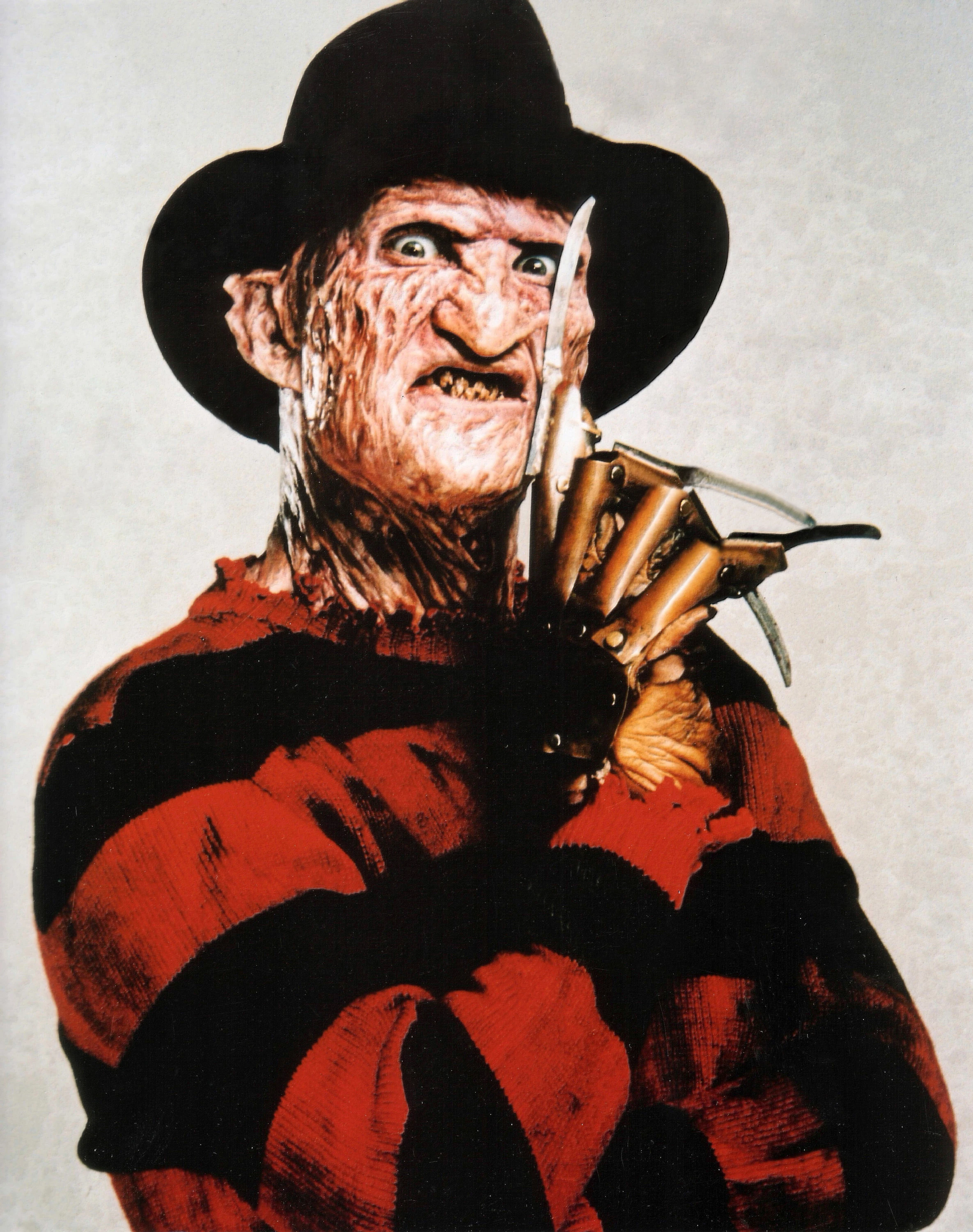
I remember the first time I watched the original Nightmare on Elm Street. I was somewhere in my teenage years, and I was in my dad’s basement watching it on DVD. From the very beginning the movie set itself apart from other horror movies I’d seen in the past. The small box displaying Freddy preparing his trademark clawed glove, as if he were coming out of a long retirement to start some marvelous work again. That first dream sequence and death, and everything that came after it. Nightmare was visceral, it was scary, and at the end you wondered what was dream and what was reality, or if maybe they were all one and the same. For a guy who hadn’t had that much exposure to the horror classics of the 1980s (I might’ve only recently turned seventeen at that time and gotten access to my library’s collection of 80’s horror, most of which was rated R), it knocked me off my feet and made me want more.

You see, horror is my drug, and the Nightmare movies were really good blow. In Wes Craven, I’d found a powerful dealer, someone who could give me what I needed when I needed my horror fix. I would later find terror when I saw the Scream movies, and quite a few more (I really liked what he did with the North American remake of Pulse). You could go to him and usually he could provide the goods. Occasionally Craven produced some bad stuff—every filmmaker does occasionally, and in horror bad stuff is pretty common—but on the whole he did great work.

And how did Craven feel about these many fans, these people who saw him as a person who fed their inner desires for terror and probably gave more than one child nightmares for the rest of his or her life? To use his own words, “I come from a blue-collar family, and I’m just glad for the work. I think it is an extraordinary opportunity and gift to be able to make films in general, and to have done it for almost 40 years is remarkable…If I have to do the rest of the films in the [horror] genre, no problem. If I’m going to be a caged bird, I’ll sing the best song I can…I can see that I give my audience something. I can see it in their eyes, and they say thank you a lot. You realize you are doing something that means something to people.”(1)

Indeed Mr. Craven. You did something to many people. You gave us iconic characters like Freddy or Ghostface to haunt our dreams. You helped launch the film careers of Johnny Depp, Sharon Stone, and Bruce Willis (no seriously, he did). And you inspired generations of horror fans, from your protégé Nick Simon, whose new movie The Girl in the Photographs will premiere at the Toronto Film Festival next month, to me, a self-published novelist who, while not exactly famous yet, is working hard to create his own stories that maybe one day will scare people far and wide.

So while you may no longer be with us in Mr. Craven, you are very much alive. Like one of your creations, you haunt us in our imaginations and our dreams, making those you inspired take to their pens or computers and create their own wonderful nightmares. And as long as people fear Freddy or Ghostface or those Hills that have Eyes, you will continue to walk among us, leaving your mark wherever you go and giving us our fix when we ask for it.

So tonight, I will raise a toast to Wes Craven, a man with a vision, taken from us when we didn’t want him to go. I will get online and see if I can get a fix from one of his movies. And then soon, possibly tomorrow, I will get to work on my next terrifying creation and hope your ghost whispers in my ears while I do.

Lately I’ve been reading Stephen King’s Revival on my Kindle, and I have to say, while a bit more on the science-fiction side and a bit less creepy than other King novels like The Shining, Misery, or IT, I find Revival to still be a very interesting read and I’m looking forward to seeing how it ends.

While I do believe Revival’s not as creepy as other King novels, there is one part of it that is very unsettling: early in the book a lot of time is spent on the question of whether God exists or not. I’m not going to say what any of the main characters decide one way or another in case you haven’t read this one and want to read it sometime soon, but the way they question their beliefs in God and some of the conclusions they come to, coupled with King’s ability to immerse us almost completely in the minds of the narrator, causes us as the reader to question our own faith in whatever god or gods we choose to believe in, if we do.

Doubt. In some ways, a little bit of doubt in our strongest-held beliefs can be one of the most anxiety-inducing things in the world. All we’ve known or believed is called completely into question, and the power of that can send us completely reeling, make us terrified of the possibilities if we come to the conclusion that our beliefs are as false as a three-dollar bill. Even worse is that this doubt is housed entirely within our own minds, so outside attempts to erase that doubt are not always very effective. It’s like standing on the very tip of a structure that until now you thought was completely solid, but suddenly you discover cracks there and that the structure is in danger of caving in on itself. Your friends, your family, your religious leader, and even your favorite YouTube stars (why not?) can put some wood beams under the stones and put sand in the cracks, but they’ll only last so long. Fixing the structure, or letting it fall to ruin, has to come from within.

This makes me think of the lengths people will go to silence doubt. Anyone doubts America’s exceptionalism in the world (which I admit is a philosophy I find silly, seeing as many nations have said the same things about themselves and have later lost power or disappeared from the face of the Earth), those in favor of the philosophy will shout out those who oppose it and say they are un-American or even trying to ruin the country. A parent thinks their kid doesn’t believe in the religion that will get them into heaven, they will surround them with prayer and texts and church music until those kids sing with joy of God. Someone suspects their partner is being unfaithful to them, they will go to any lengths to either prove or disprove this theory, sometimes to the point of paranoia. A member of a secret group or spy ring thinks another member might be disloyal, they make that member go through some sort of bizarre and often sadistic test to ensure loyalty to the cause (at least in espionage novels; I have no idea if this happens in real life, though I wouldn’t be too surprised if it did).

What doubt can do to you.

What doubt can do to you.

Doubt is powerful, its effects on us are powerful, and our efforts to eradicate doubt can border on the extreme sometimes. You can see why a writer like King would use it in the first part of a story. He knows how scary it is, the effect it can have on people. And over the years and through age, experience, and reading, I’ve come to the realization of how powerful doubt can be as well. I even have an idea for a novel where religious doubt plays a major role. I have a feeling it’s going to be quite the unsettling story, whenever I get around to writing it. I doubt it’ll be anytime soon though.

Yeah, I went there.

In any case, it’s pretty obvious that doubt might be as much a part of the horror writer’s toolbox as any of the other fear-inducing tools and devices we have on hand. In a way, it’s also much stranger, because unlike the other fear-inducers, you can’t fight it or flee it for survival. After all, doubt is a product of the human mind, it exists within you. And you can’t outrun your own mind, can you?

And that, my Followers of Fear, might be the scariest part of all.

Andy Weir. E.L. James. Christopher Paolini. What do these three names have in common? If you guessed successful novelists, you’re close. They’re all successful novelists who were originally self-published, their stories caught on, and they eventually began to catch on and one day they woke up with millions of people reading their books, movies in the works and great things in their future.

I’m not sure I’m going to get the millions of people and the movies in my lifetime, but just hearing the success stories of these authors gives me plenty of reason to hope that this could happen to me some day. Self-published writers are having success stories everyday. I even heard of a teen in England whose fanfiction about her and a bad boy version of one of the members of One Direction became a smash hit and got a publishing deal (yeah, I didn’t know that sort of thing was possible either until I heard of it). It’s quite incredible how people can become successes over time in a field that used to be despised by establishment writers.

How do these writers get their successes anyway? Well, it’s different for each one. Andy Weir published through his blog, and it attracted a bunch of readers who wanted to read The Martian in Kindle form. E.L. James published her Fifty Shades trilogy as an e-book and used the emerging field of e-readers as well as word of mouth among erotica fans to gain a following. Christopher Paolini toured around the United States, visiting schools and libraries and dressing up like a man from the Middle Ages to get books into the hands of kids and teens, until the son of author Carl Hiassen found Eragon, loved it, and brought it to his dad’s publisher’s attention. And, if that story about the 1D fanfiction is true, then I think she posted it on WattPad, which is kind of like the YouTube of writers (and which, along with Goodreads, I need to use more often).

One thing that these all have in common, the authors made it easy for interested readers to get their hands on their work. And their work was really good (though from what I hear Fifty Shades is very poorly written), which made people want to read more and keep coming back for more. Thus it sometimes snowballs until…success, I guess.

Now does this happen for all authors? Obviously not, or we’d all be reading books by people whose works may be anything from really good to just plain dreadful. But it could happen to any author who puts in the right amount of dedication to their writing and marketing and who has a little bit of luck on their side.

God knows I’m working hard on all of those when I’m not working or looking for jobs. I’ve had sales that have been very successful and gotten my books into the hands and Kindles of plenty of new readers. And I’m working on an audio book of Reborn City, which is probably my most popular novel right now, so that could open up a whole new field for me: those who like a good story on long car trips or while jogging. And I’ve got a story or two I think would do great as serials published on WattPad and on Kindle, though I’m not sure when I’ll get around to writing them.

And of course, I tell people. I let them know about the books I’ve got out and if they’re interested I give them my cards so that they know where to find them (I’ve already gotten two or three people at work to promise me they’ll get copies of at least one of my books as soon as possible). And I’m always looking for new ways to get readers interested, and usually they work.

So maybe someday I can be, if not the next Stephen King, then maybe the next Christopher Paolini or Andy Weir. Selling enough books to write full time, expanding my media so that more people are exposed to me and maybe find a new favorite author. Anything’s possible. I just got to keep writing, keep working hard, and above all never lose hope.

*Warning: this post contains spoilers on a recent novel. Read with caution.*

I heard something very interesting yesterday that I, as a writer, a Jew, and a scholar on the Holocaust have to comment on. When you read that title and saw the words “Nazi Romance”, what popped through your mind? Probably nothing good if you haven’t heard yet, and probably a ton of controversy and maybe some simmering anger if you have heard yet. In case you’re among those who haven’t heard, let me explain:

The controversy centers around a Christian romance novel called For Such a Time by a woman named Kate Breslin that came out last year. The novel has received nods for awards and positive reviews in that time, including a few from the Romance Writers of America. However, a lot of people are taking offense at the subject matter: it’s a retelling of the Biblical story of the Book of Esther set in a Nazi concentration camp with a Jewish woman with Gentile looks and a Nazi commandant as the heroes. Long story short, the commandant thinks this blonde beauty can’t be Jewish and puts her to work in a supervisory role in the camp under a false name. Thus begins a strange, tension-filled romance that some have likened to sexual harassment coupled with Stockholm Syndrome (sounds a bit like my thesis Rose) that ends with the two heroes getting together despite all obstacles and, because this is a Christian romance novel, the heroine converts to Christianity (not like my thesis Rose at all).

Now I have not read the novel–I only found out about this yesterday, I’m not interested in reading a romance novel, let alone one trying to get me to look at Jesus in a new light, and even if I was by the time I finished it the Internet’s short attention span might have moved onto something else–but you can see why this sort of story might cause some upset feelings. The major criticism is that the novel co-opts one of the greatest tragedies in modern history, and the biggest tragedy in modern Jewish history, so as to advance a particular religious aim.

At the same time, some have come out in favor of the book. Anne Rice actually defended the novel, saying that writers should be able to experiment and that the almost extreme outcry rising on the Internet around this novel is akin to censorship and a lynch mob. The organization Romance Writers of America has said something very similar in response to For Such a Time getting two nods for major awards they hand out.

Now, I don’t like Internet confrontation. But like I said, I’m a writer, a Jew, and a scholar on the Holocaust, so I feel some need to weigh in on this subject. First off, I understand the point of view about experimentation vs. censorship. In several stories I’ve written over the years, including Rose, I’ve pushed boundaries of my own comfort zone and maybe the comfort zones of my readers in order to create a better story. Writers should be able to do just that, experiment and push boundaries in the name of creating a great story. To regulate what writers work on or threaten them if they write something someone finds offensive, which is made all too much easier by the anonymity of the Internet, does smell of censorship and makes me think of extremist vigilante justice using a new medium to intimidate people. Almost like a lynch mob, in fact.

Can you really make fiction–let alone romantic Christian fiction–out of a subject like this?

However, I do see why people are outraged over this book. Like I said, the Holocaust was a tragedy. Of the estimated 12 million victims of the Nazi genocide, around half were Jews. To take what was a horrific and defining moment for modern Jewry and use it as a backstory for a romance meant to draw readers close to Jesus is very insensitive to victims and survivors of the Holocaust who lost their lives because of their heritage, as well as those who carry that heritage today. The conversion to Christianity at the end is also very disturbing, because many Jews were forced to convert before, during, and after the war for survival and it sometimes caused trouble for them later in life. To portray it as an act of love…to say the least it seems unsettling.

Ultimately, I feel the best way to view For Such a Time by Kate Breslin is to view it as a teachable moment. While writers should be able to write and experiment as they wish, they should also be cognizant that writing about some subjects (like the Holocaust) requires more sensitivity and caution than others. When dealing with a subject such as this, it’s important not just to know your facts, but how people–particularly those affected directly by said subject–feel about it. That way when you write about it, you are writing it in a way that, while it may not please everyone, it will not cause the sort of outrage this novel has caused.

This was what I did with Reborn City when I wrote it. I’m as far away from the gangster lifestyle as possible, so I did my research to make sure I represented gangsters in a way that would do the lifestyle justice . So far, I haven’t had any complaints.

Thankfully Breslin has already issued an apology, saying she wrote it with the best of intentions and she’s very sorry for any offense or pain she caused to the Jewish people. And while others may not forgive her, I think I can. I think she’s learned form this experience. And when she puts out her next book, perhaps it’ll get the attention that every author wants their book to have, rather than the nasty kind her first received.

What’s your take on this subject? Is Ms. Breslin out of line or was she just trying to write a good story?

Should authors be more sensitive when experimenting with their stories? And is the uproar over this book overblown or justified?

Let’s discuss.

I’ve often compared being an author to being the God of a fictional realm. And to some degree that is true, but it doesn’t mean we’re almighty. Often times the story you start writing won’t turn out to be that story. It’ll change or need to be changed. The personalities of the characters will act and react in ways that you didn’t think they would, or you find yourself not liking where the story goes. No matter what you do, this story isn’t going to go the way you imagined. And when that happens, you need to rethink the story a bit.

It’s kind of like one of those dance routines on a dance show (I used to watch So You Think You Can Dance). Often with those dance routines, they’re trying to tell a story. In this metaphor, you and your story are working together, using words and images as dance moves to entrance the reader and get them to watch the whole routine, aka read the whole story. But of course no routine starts out perfect and along the way there needs to be changes. And sometimes those changes need to be rather dramatic if the entire routine is going to work. Maybe its a few moves that need to be changed, other times the costumes need to be changed, and every now and then the song needs to be changed as well. Otherwise this story just won’t work.

Now some of you may be thinking, “He’s treating the story like a living person.” Well, why not? If the Bible is the living Word of God, and if the Constitution is a living document, why can’t a story being written in a notebook (paper or digital kind) be alive either? Many authors know what I’m talking about, they feel that the story is a being working with them as it gets laid down on paper, that it is having as much say as what’s put down and what’s not. Rather than resist it and insist that the story obey its Creator, it’s better oftentimes to just listen to the story and see what it says.

I had this situation occur to me on the short story I’m working on now. I finished the outline thinking it was going to turn out great. Unfortunately after ten-thousand words I started to realize that this story was not what I wanted. I mean on the outline the story was still good, but while writing it out I just couldn’t get into it. At the same time, I could hear the story in my mind, speaking to me. It said I shouldn’t give up on it (like I would do that, this is a good story in concept) but that I should explore a new angle for it.

So I took a break. I thought about it. And I found a new angle to tell the story with. I wrote out an outline today and got a couple pages in without any trouble. It’s a good start, though how well that goes for the rest of the story depends on a number of things. Like how I feel about the story. And how the story feels about the direction we’re going in.

Writing a story, like making a movie or performing a play or producing an album, is a collaboration, and all involved need to be in sync in order to make the story truly work. Sometimes that means acknowledging that, maybe even if only subconsciously in your mind, your story is alive and you need to work with it, not just on it. The results that occur when you do are truly spectacular.

Do you ever feel like your collaborating with another person when you’re working on a story?

What’s that like for you?

Oh, and an update on the audio book of Reborn City: I have posted it on ACX, the company I wrote an article about last year. I’ve also contacted a few narrators I’ve found on the site who I think may be able to give that right touch of magic for RC. Hopefully at least one will respond within the next few days, and then we can get to work on producing some audio book magic. Exciting right?

Of course if you want to get some RC action now, you can check out its page here and then find links to where it’s available. Enjoy!