So, for a couple of years now, I’ve had a few novellas lying around. Half of them were edited extensively and had even been sent out to publishers. The other half had only been edited so much and needed a lot more. And on-and-off, between The Shape of Evil and multiple short projects, I’ve edited and rewritten these novellas and even sent them off once or twice.
When did I decide to just turn them into a four-novella collection?
Honestly, I can’t remember. All I know is, I find something very special and prestigious about four-novella collections. It’s not a collection of multiple short stories or a full-length novel, but something in-between. Not to mention there’s been some really good ones over the years, like Four Past Midnight or Different Seasons, both by Stephen King. Or Ronald Malfi’s Ghostwritten (that one is so good!). And the idea of taking these novellas and making a collection out of them just took hold of me.
And some time last year, I started editing the two novellas that needed more editing with the goal of getting them edited to the point where I wanted to show them to others. I gave each of them another draft, then sent them off to beta readers. Once the beta readers finished with the stories and sent me their notes, I gave them both another round of edits. Which I finished doing last night.
So, now the collection of novellas is complete. And I’ve already sent it off to a publishing house. With any luck, they’ll want to publish it. If not, I’ll try elsewhere, though I have a good feeling about the place I sent it to in the first place (why else would I send it there?). Whatever happens, I’ll keep you guys posted. After all, you know how much I love letting people know when I have stories coming out.
For now, though, I have a couple of short stories to edit before I send them off to potential publishers. And after that, I’ll do something short and new for my critique group, followed by another draft of The Shape of Evil (still trying to find a home for that, but I think there are some ways to improve it while I’m waiting to hear back from a few places). In other words, I’m going to be busy.
But hey, I feel like all this is leading me closer to being able to write full time, which would be my dream come true. And if my Tarot readings lately are anything to go by, I might be on the cusp of realizing that dream (or opening up the path towards it). So, better keep busy and get it done.
Being busy and getting lots of stories out there is how I’m going to make my dreams come true.
And in the meantime, if you’re looking for something spooky to read, I already have six books and a few short stories out (including some that are free to download). From plant/human hybrids and strange gods to Mafia-hunting serial killers and carnivorous horses, I have something for every horror fan, so why not give it a try? I’ll include a link to my books page below. And if you like what you read, please consider giving what you read a review online. Positive or negative, I love reader feedback, and it helps me and your fellow readers in the long run.
That’s all for now, my Followers of Fear. I’ll try to tune in again some time later this week. Until then, good night and pleasant nightmares.
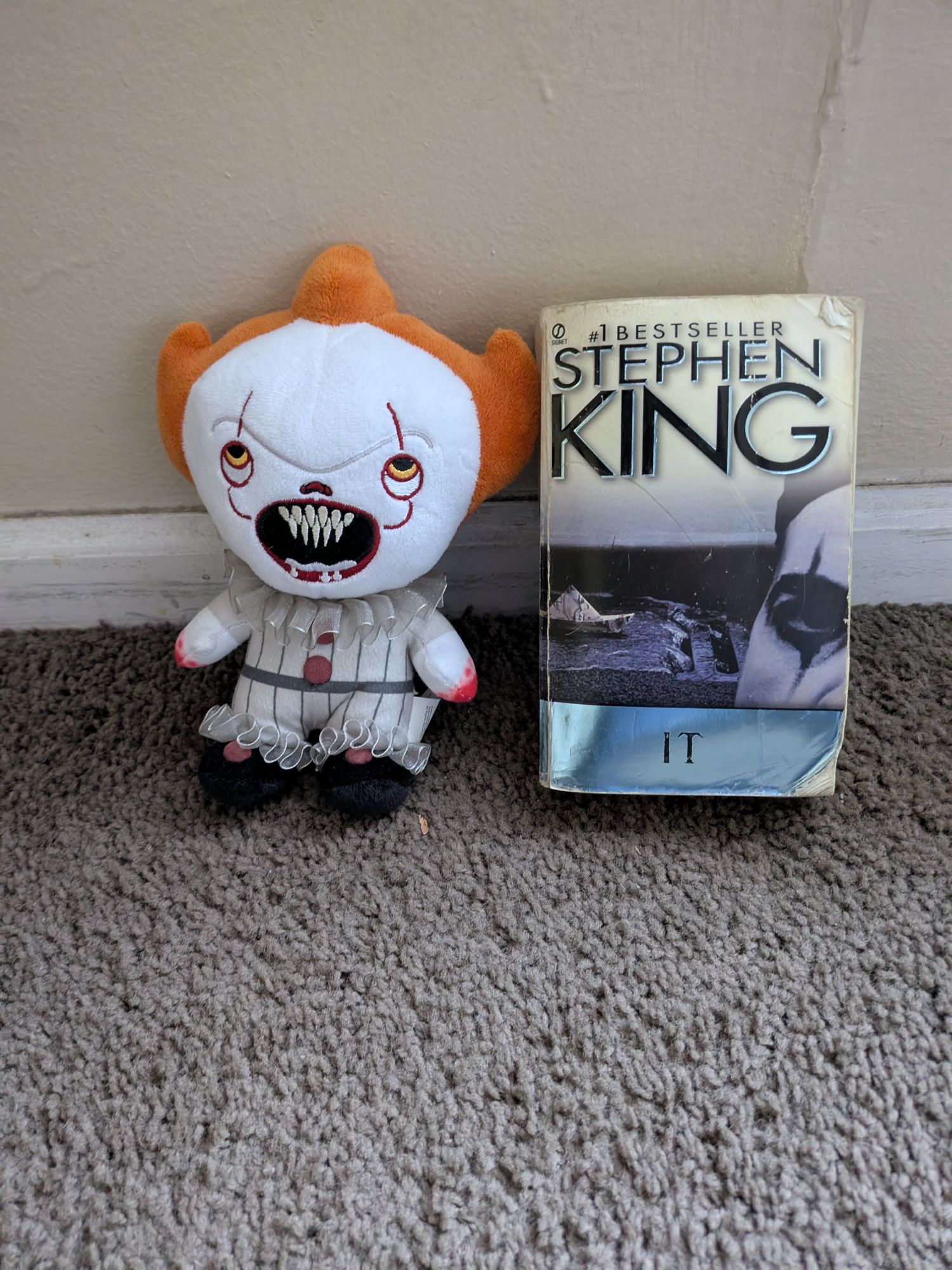
I first read IT by Stephen King when I was eleven or twelve: the same age as the characters in the flashbacks. And while I had been reading The Vampire Chronicles and most of Anne Rice’s books up till that point, I didn’t exactly classify it as horror (Anne Rice herself preferred the term “Gothic saga”). So, for me, IT was my first jump into horror since outgrowing Goosebumps.
And it expanded my world. Not only did the novel terrify me, but it showed me just what great, mature horror storytelling looked like. From the terrifying and insidious nature of Pennywise and It’s many forms, to how the novel took the time to let us get to know characters both major and minor. I was entranced and enthralled, even as I was terrified, diving deep into the book every opportunity I could get and learning as much as I could.
By the time I finished the book that summer, I knew what sort of stories I wanted to write in the future.
Without IT, I would not be the writer I am today. Or the person. I might not even be blogging to you right now, now that I think about it!
I bring this all up because, if you weren’t aware, there’s a TV show airing on HBO Max called Welcome to Derry. Taking place in the same universe as the movies, the show goes into events during the 1962 cycle, which was the cycle before the first movie. And unlike the movies, which focused on a core group of characters first during their early teenage years and then during their adult years, Welcome to Derry focuses on a wide variety of characters, including school kids, military personnel at the local Air Force base, and the nearby Native American population.
It’s very Stranger Things in its character development and methods of storytelling. And since the creators of Stranger Things were heavily influenced by IT, among other things, I guess it’s coming full circle?
Well, it feels full circle to me, because while watching the show, I feel like I’m getting a reintroduction to the horror genre. Just like I did when I was a preteen and dove into King’s book. It feels like I’m getting lessons in how to do creative and powerful scares, storytelling with large casts, and character development every time I sit down to watch the show.
Which, while being told through a visual medium instead of a literary one, I’m grateful for. While I’ve made strides in becoming a horror author, I still feel like I have a long way to go before I can be at the same level as the authors I admire and regularly read. And while I learn something about good storytelling every time I enjoy a good book, show, or movie, I feel I’m getting a Master Class in the subject from this show.
Hell, I think in the short story I wrote most recently, some of what I gleaned from Welcome to Derry made it into the story. I wasn’t originally going to apply what I learned, but it occurred to me while I was writing, and I was like, “Oh. That’s good. That’s very good. Let’s try it.” And while I haven’t heard back from the alpha reader yet (I only sent them the story last night, after all), I feel like adding those elements gave the story an extra bit of excitement and terror.
So, with only four episodes of the show left (I have my doubts they’ll do a second season, though I would likely welcome one), I’m looking forward to seeing what happens next. And to seeing what I can glean for use in my own storytelling.
In the meantime, I’m going to get to work on some of that storytelling. I have stories to edit and send to the beta readers, after all. Wish me luck!
And in the meantime, good night and pleasant nightmares.
Me writing and editing under the influences of good storytelling teachers.
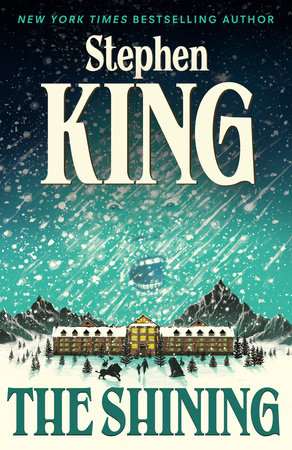
The first time I read Stephen King’s The Shining, I think I was thirteen or fourteen. And while I was reading at the adult level, I didn’t always understand all the deep stuff that was being thrown my way. I think I understood Danny’s point-of-view the easiest. Sure, he wrestled with concepts usually grasped by brains more developed than a kindergartener’s, but he was still the youngest of the characters, and the one closest to me in age.
As for Jack and Wendy…well, they were adults. And at the age I first read the book, anyone past college age, especially any with parents, were ancient. Hell, some people just past high school age were ancient to me! So, when I saw the movie after I read the book (and I’m in the camp that hates the movie, like King himself does), I saw Jack Nicholson and Shelley Duvall playing Jack and Wendy Torrance, respectively, and was like, “Yeah, they seem the appropriate age.”
Then, in 2018 or 2019, I read it again. And not only did I understand all the difficult concepts way easier than I had last time, but I was shocked by something I hadn’t noticed before. And that was Jack and Wendy’s ages. Based on hints in the book, I realized they were around my age, in their mid-to-late 20s. In fact, at one point in the book, Jack hints that he’s only 29 or 30. And at the end of the book, Dick Halloran notices that Wendy no longer has any of the young girl he met in September the previous year, but is all woman. Which is something you might think when describing a woman moving out of her 20s (especially after an experience like the Overlook).
Like I said, I was shocked. As I said before, when I first read the book, Jack and Wendy seemed ancient to me just by being parents. So understanding that they were around my age, and had yet done so much more, like having a kid, was more than a bit of a surprise. Plus, the fact that Jack Nicholson, who was clearly in his 40s when he filmed The Shining, threw me for a loop. I mean, he already looks insane, but you also cast a guy who was so much older than the other characters? Boggles my mind.
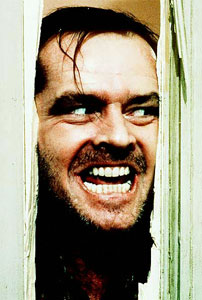
Jack Nicholson may have been iconic as the character, but he’s at least a decade older than the character in the book.
And last month, I started the audio book of The Shining as part of my Halloween reading. And I’m 32 now, though I would say everything since 2020–COVID, elections, wars, etc.–has aged me mentally in some ways. Anyway, I just finished it yesterday, and I think I love the book more now than I did the first two times. I mean, I loved it plenty the first two times, but I think with age and getting hopefully wiser with it, my love has deepened. I understand the characters and appreciate how well-written the book is better.
And speaking of the characters, my reaction this time around to Jack and Wendy was much milder. Mostly me thinking, “Poor kids,” whenever they experienced something tough (which is pretty much everything from after their wedding to around the time Jack got possessed). Remember, these past five years have aged me mentally in some ways.
Also, Jack Torrance nearly got tenure in his teaching position before he lost it, and he wasn’t even thirty yet? I don’t know if that was more common in the mid-70s than it is now, but given the average age these days to get tenure, I’m impressed.
Anyway, every time I read The Shining, I get something new out of it. It’s like my relationship with the book, especially with its characters and themes, changes with every read. I wonder how old I will be the next time I decide to check into the Overlook, and what reaction I’ll have when I do. Maybe I’ll post about it after I find out!
What are your thoughts on the book? Has your relationship or reaction to The Shining changed over time? Let’s discuss.
That’s all for now, my Followers of Fear. I’m planning on starting a new short story tomorrow, so I better log off and get some rest. So, until next time, good night, pleasant nightmares, and–who let that bloated ghost lady into my bathtub?! I’ll have you know, only ghosts I invite in with me are allowed in there!
It’s no secret that disability has had a troubled portrayal in our media. There’s inspiration porn in the news, which tries to make able-bodied people feel “inspired” to achieve their goals at the expense of making the disabled seem pitiful and hopeless. People with dwarfism are often equated with fantasy settings or fantastical elements. And, of course, there’s horror. Horror’s history with disability has been, to say the least, fraught.
Look, I love this genre. That’s obvious. But it’s no secret that, when the genre was coalescing, a lot of horror came from stereotypes of minorities, and the disabled were no exception. Most often, disability was used as a shorthand for sinister or evil. The original Phantom of the Opera was a manipulative groomer, and his later portrayals have added plenty of murder. From Psycho to Split, people with DID are often portrayed as dangerous and even magical. And most of the famous slashers have some form of disability! It’s not the focus of the characters, but it’s definitely there.
That being said, it hasn’t always been bad. The 1932 film Freaks was actually pretty progressive for its time, with many of its disabled characters getting humanizing portrayals. American Horror Story‘s fourth season, Freak Show, was heavily inspired and influenced this film. A Quiet Place and its sequels have been very disability-positive.
The problem is, sometimes even the positive portrayals are problematic. I still cringe over the characters of Duddits from Stephen King’s Dreamcatcher, and the autistic kid in 2018’s Predator somehow being an important factor in human (and Predator) evolution felt…well-intentioned but missed the mark. And just earlier this year, I read a recent book by an author I like which included a character with mental disabilities who was kind of psychic/magical, a secondary antagonist with a cleft palate, and a main antagonist with an eyepatch!
That’s why I’m glad that, as both the community and the genre evolves, more disabled writers join it and include disabled characters like themselves in their stories. I’m among those writers. The Shape of Evil‘s three main characters all have various disabilities, and in two short stories I wrote recently, the major characters all have disabilities as well. The stories themselves are still not published, but I’m working to get The Shape of Evil out there, and the other two stories will hopefully find homes soon after I edit them.
And as those stories, as well as other stories by disabled writers, get published, perhaps there will be ripple effects. The fiction we consume can have a noticeable effect on our perception of the world. Perhaps with portrayals that are just not more positive, but also realistic, we can make the world a nicer place for the disabled.
And given that 1 in 5 people have or will get a disability, but most of the US is still not accessible and laws aren’t always disabled-friendly, that would be nice.
I was watching the movie adaptation of My Best Friend’s Exorcism with my sister the other day. And, right before they’re about to do the exorcism, the exorcist asks the main character if she’s been baptized. And the main character, a high school senior at a Catholic school, taking catechism classes and attending evangelical events at school, says in a deadpan voice, “I’m Jewish.”
My sister and I, as well as her roommates (it was movie night at her place), burst out laughing, because it was great comedic timing. Plus, it wasn’t something about the character that was in the book, so I hadn’t seen it coming. But looking back on it now, I can’t help but feel like it’s the latest example of an issue of Jewish portrayal in media.
I said in a previous post that I might be talking about problems of portrayal I see in media, thanks to the panel I was on last month. And I’ve noticed that portrayal of Jews in the media–at least the media I’ve been consuming–has been problematic. This is because, generally speaking, I have noticed Jews tend to be portrayed in one of three different groups:
The religious types. They’re Orthodox, with black coats and beards. At least one of the men is a rabbi, and if the story is speculative in nature, Kabbalah shows up somewhere. I’m not too upset about this portrayal, because I have seen some good and nuanced portrayals of this group since Fiddler of the Roof. I’ve even used it myself. Still, it’s done A LOT.
The barely-Jewish portrayal. They say they’re Jewish, but the characters eat bacon, have barely any connection to their ancestry, and their religious affiliation is only used as a joke or a quirk of their character. Examples include Howard Wolowitz from The Big Bang Theory, Rachel Berry from Glee, and, most recently, Abby Rivers in My Best Friend’s Exorcism. There are Jews like this, but it’s nuts that this is the biggest alternative to the religious types I see in media.
Jewish equals some weird behavior or stereotype. The fact that they’re Jewish usually translates to some silly behavior or conglomeration of behavior or traits that defines their entire character and is equated with their Jewishness. Maybe they’re clownish wimpy goofs that are always going “Oy vey” and speaking in funny voices, like Krusty the Clown in The Simpsons or Mort Goldman in Family Guy. Or they’re hypochondriacs, like Stan Uris in IT. Usually satirical, but sometimes it’s meant to be taken seriously or realistic, like in IT.*
Ziva David. So far, the most unique portrayal of Jew I’ve come across.
Honestly, the only character I’ve seen buck this trend is Ziva David from NCIS, a former Mossad agent from Israel who was tough, somewhat religious, and very connected to her Jewish heritage and faith. When I watched NCIS, I absolutely loved her, and was so sad when she left the series for good. That was a great and different portrayal of a Jew on media. (As for her being portrayed by a Catholic actress…well, she’s still a great character.)
But that’s the only one. And honestly, I think that’s a damn shame. There are so many different kinds of Jews out there: Jews who are religious but enjoy listening to the Ramones and going out for drinks and bowling with friends; non-religious Jews who are connected to their heritage and use it to make art; Jews who are both Israeli, Jewish, and Arab (just read about him yesterday in an article a friend sent to me); and the disabled Jewish horror writer who lights Shabbat candles on Friday night and keeps kosher while also seeing plays on Saturday afternoons or getting tattoos of Tarot cards all over his body.
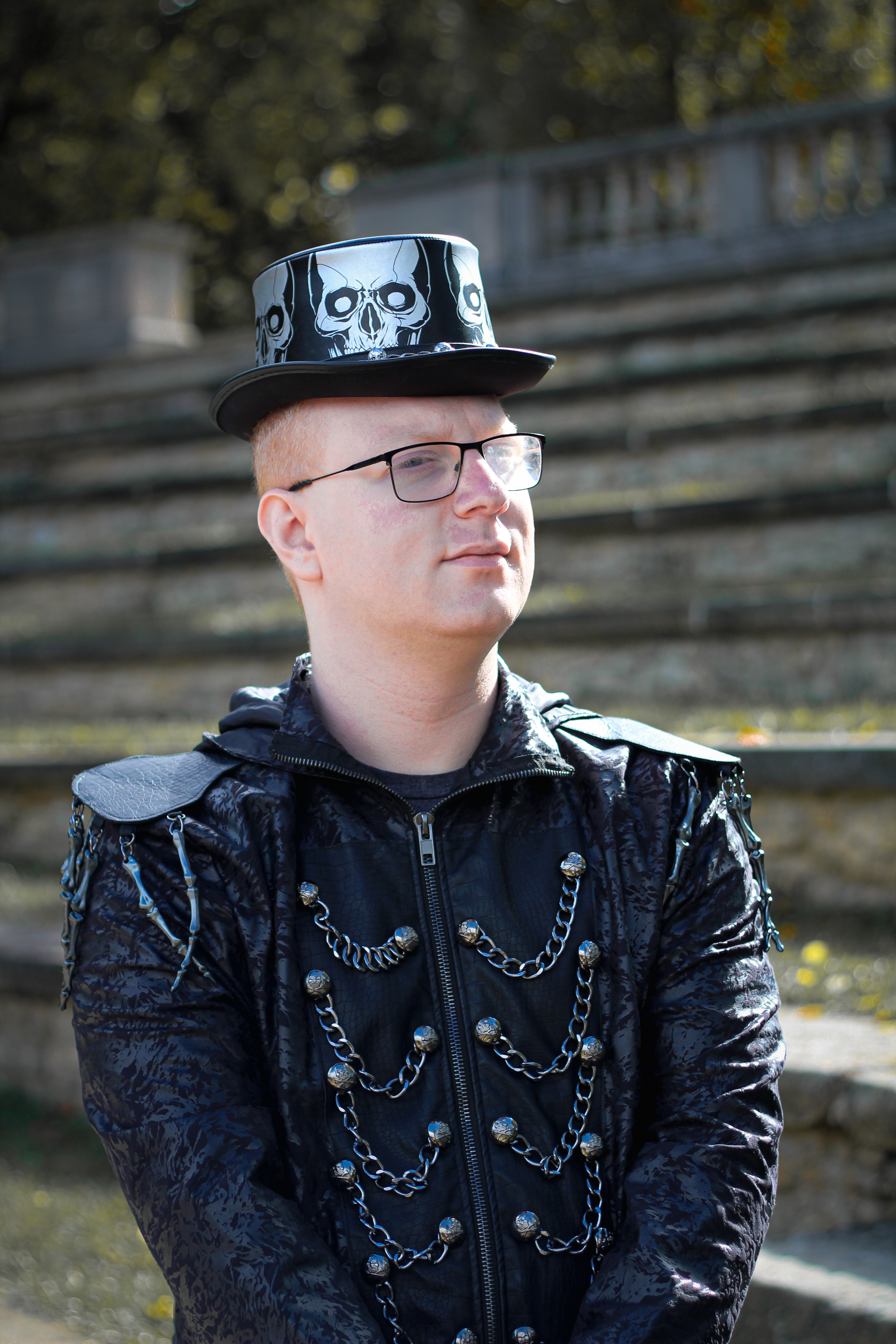
Me, if you couldn’t tell.
This is why I’m not just writing an increasing amount of Jewish characters in my work, but also a wider variety of Jewish characters. There’s the married and heavily connected Jewish gay couple in “The Red Bursts,” one of the stories in Hannah and Other Stories; the rabbi, his less-religious but still Jewish best friend and his secular daughter in “The House on Lafayette Square” in Symphony for Walpurgis; and in The Shape of Evil, a Jewish teen on the spectrum (who’s only partially based on me). And I hope to write many, many more.
It may be only a drop in the water. But mentioning those stereotypes at StokerCon did make one or two writers consider how they were writing their Jewish characters. Perhaps mentioning them here, and writing all those characters, might cause some positive ripples. Which, in these scary times, would be most welcome.
I very much prefer this version of Stan than the one in the book.
*In all honestly, I hate Stan Uris. At least Stan in the book. I love King and I love IT. Hell, I’m a horror writer because of them both. But Stan was barely connected to his Jewishness, except in how it made him different, and he was more defined by his clean-freak nature and his almost worshipful adherence to logic and a normal world. In fact, it’s stated in the book that Stan’s suicide was because he wanted to “stay clean,” rather than get “dirty” and jump into a world completely outside of normal. I hated that.
This is why I prefer Stan’s portrayal in the movies. In the first movie, he’s the son of a rabbi studying for his bar mitzvah (I can relate) and, while being religious and connected to his heritage, is still pretty much a normal kid. And as an adult, his suicide is portrayed as him ensuring that the others are able to defeat It. A true sacrifice for the greater good. No wonder I prefer that version.
From left to right: Rob Costello, Gaby Triana, Tamika Thompson, me, Aaron Dries, Rae Knowles, and Logan Johnson.
I’ve been wanting to write this post ever since I got back from StokerCon, but life has been very, very busy. But hey, better late than never, am I right?
So, as you probably recall, at StokerCon I was on the panel Representation in Horror, where we explored the topic of including marginalized voices in our community, as well as writing characters from those communities. I was very excited about the topic; not just because it’s one that’s near and dear to my heart, but because it was my very first time sitting on a StokerCon panel. You know, one that wasn’t pre-recorded.
And I figured I would be bringing something to the panel. I’m Jewish, bisexual, and have some disabilities, including being on the spectrum, after all. With the amount of time I spent just thinking about the things I would say in response to the questions, I thought I could help my fellow panelists blow some minds and get our audience (which nearly filled the room) thinking.
I did not expect to have my mind blown as well. But there were several moments just like that.
Just for a couple of examples, I remember Rob Costello mentioning that fat people were the only group that it was still cool to beat up on and how he was sick of it, and while the audience responded positively to that (apparently they noticed that, too), I was like, “Whoa! How have I never noticed that?” And Tamika Thompson mentioned how much Stephen King uses the trope of the Magical Negro, and I was like “Huh, she’s right. Dick Halloran, Mother Abigail, that dude from The Green Mile. He does use that trope a lot.”
And I’ve been thinking about that panel and all we discussed since then, as well as all the things we didn’t have time to discuss. For example, we didn’t have a chance to discuss various communities and their inclusion in the community or in our literature, such as Muslims, Native Americans, or the Roma community (seriously, even when it’s not overtly negative, I can’t think of a portrayal of the Romani that doesn’t lean on stereotypes). And I forgot to mention how not-helpful the portrayal of mentally disabled people as being magic because of their disability is (examples: Dudditts from Dreamcatcher by Stephen King, the autistic kid from 2018’s The Predator).
I think we could all use further conversation in this topic. Photo by nappy on Pexels.com
And it’s made me realize something: the discussion needs to continue. Because this sort of subject, the kind of stuff certain people call “woke,” requires constant learning and further conversation. That way, we can continue to think about what sort of stories we are creating and foster better understanding between people.
So, don’t be surprised if I have a few more blog posts like this one in the near future, ones where I discuss portrayal in horror and problematic stereotypes and whatnot. I may even reach out to some of my fellow panelists to help with that (I managed to find most of them on social media). But hey, if they feel the same way as me, they might want to continue the conversation as well.
And who knows? We might see Representation in Horror become a regular topic at StokerCon. And I don’t think anyone could see that as a bad thing.
In recent days and across my social media, as well as on my blog, the number of people following me has grown by leaps and bounds. Why is that? I have my theories, but this post isn’t about theories. Instead, it’s to better introduce myself to my new Followers of Fear, as I like to call the people following me and supporting my writing career.
And since I’m a horror writer, obviously I’m doing thirteen items to get to know me better.
So, without further ado, here’s what will hopefully be a fun introduction to yours truly. And who knows? Perhaps some of my long-time Followers of Fear might learn something that’ll surprise them. It’s happened before!
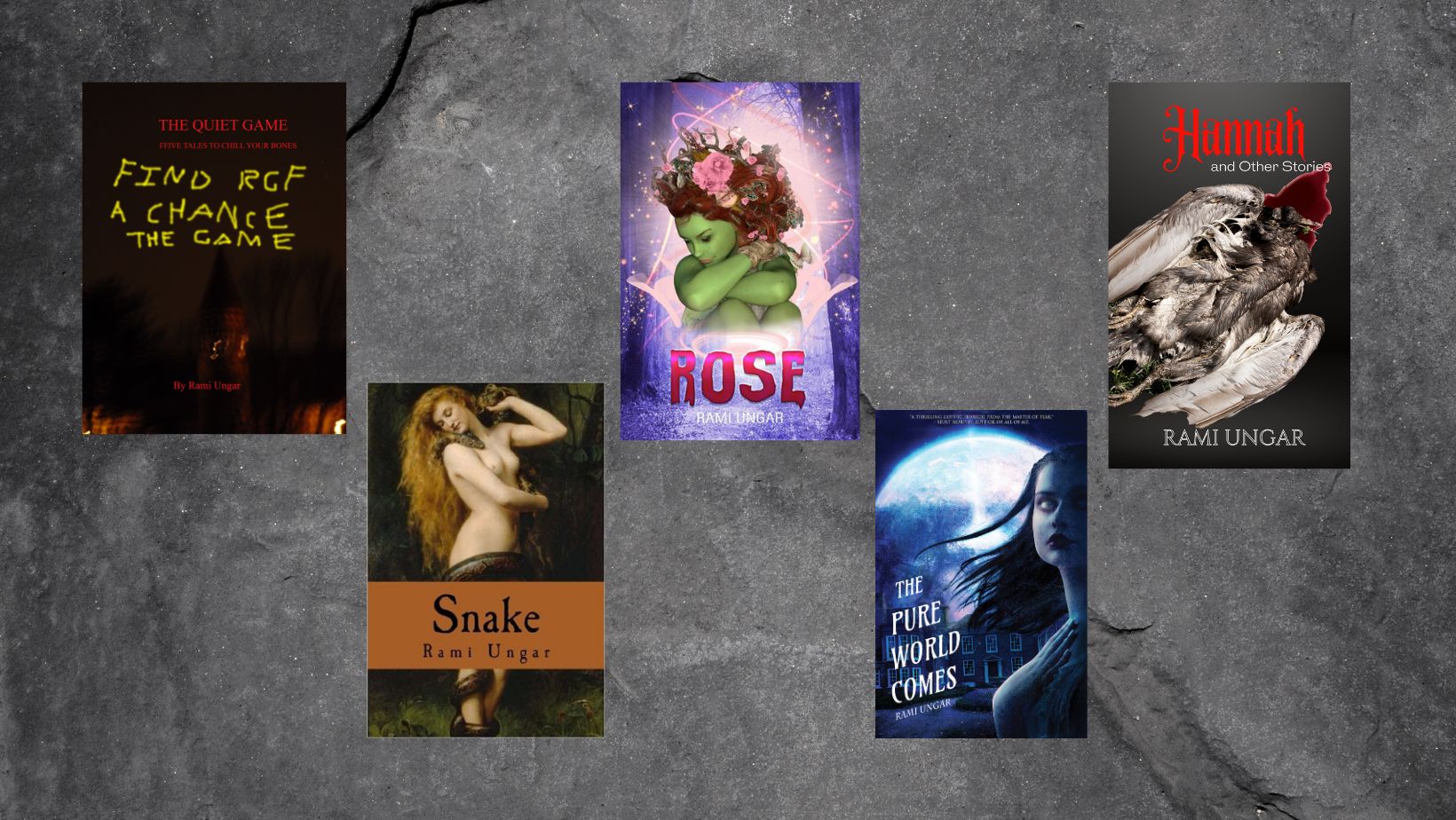
I’m a writer of horror and dark fantasy with five books under my belt. I’ve been writing since I was a kid, and in college, I started self-publishing books. My first book was a collection called The Quiet Game: Five Tales to Chill Your Bones, which came out in 2013. The next year, I published a slasher novel called Snake about a serial killer hunting mobsters in New York City (think John Wick, Taken and Friday the 13th got smashed into a novel). Both did okay, and continue to get readers today.
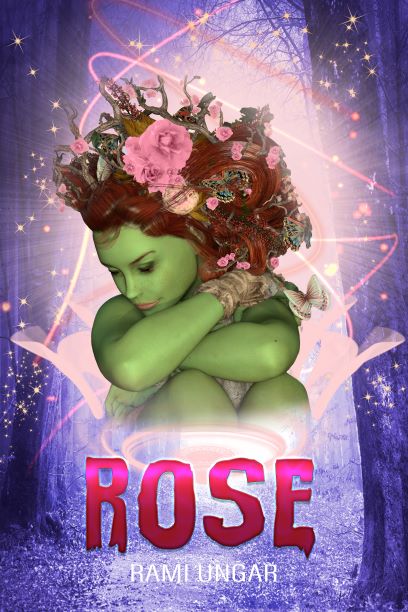
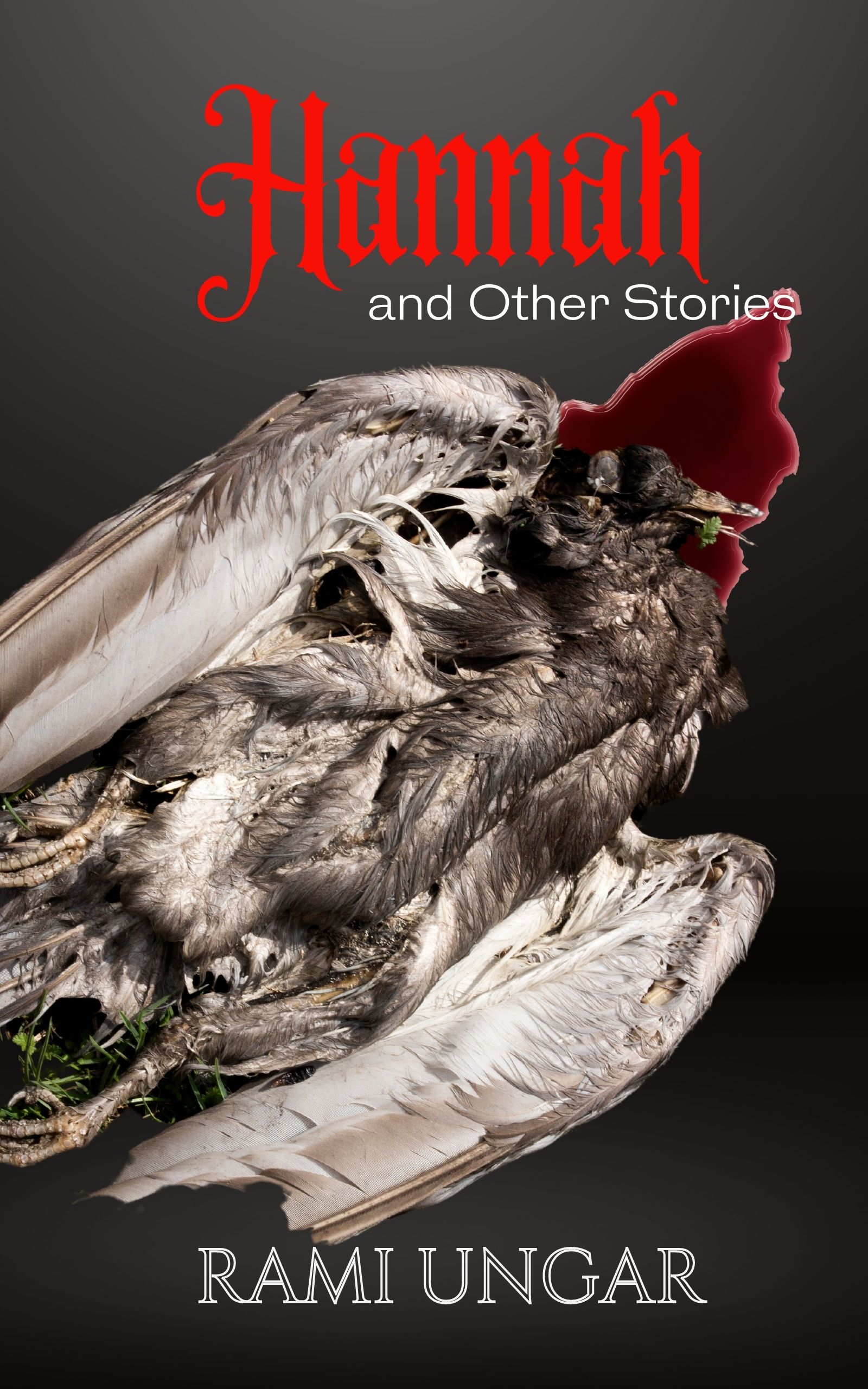
Five years later, I published my first novel with a publisher. Rose was released by Castrum Press in summer 2019, and followed a young woman turned into a plant/human hybrid (and that’s just the start of her problems). I followed Rose in 2021 with The Pure World Comes, a Victorian Gothic horror novel about a maid who goes to work for a mad scientist. And last year, in 2023, I published my second collection, Hannah and Other Stories, which was released by BSC Publishing Group.
That’s all five of my books out now. I’m proud of all of them and all I’ve managed to do with them over the years. And I plan to put out more in the years to come.
All five of my currently available books. I love them and am so proud of them (and their awesome covers).
I’m Jewish, queer, and have disabilities. Growing up, my life has been an interesting ride, to say the least. Not only did I grow up in a fairly religious Jewish household, but both my father and mother are rabbis. I went to a Jewish day school for most of my youth, learning Hebrew and Judaic subjects for half the day and then learning normal stuff the rest of the day. I also went to synagogue nearly every week, and attended Jewish teen and college groups until I graduated.
To this day, I still practice a lot of the religious practices I grew up with and feel a strong connection with my faith and heritage.
I’m also bisexual. I figured that out in college, and came out about half a year after I came to that realization. Probably took me that long to get comfortable with it because, even surrounded by accepting people and LGBT family members, I still worried about being persecuted. However, I did come out and it was all good, which was reassuring. And then some years later, I realized I was also aromantic (if you’re unfamiliar, it means I can’t feel romantic desire or attraction). Which, looking back, felt pretty obvious, considering I didn’t care about having a relationship all my life. But when I realized it, it was still a bit of a revelation.
And finally, I’m on the spectrum. Have been my whole life. I also have ADHD, a form of albinism, an anxiety disorder, and most recently, diabetes. Yeah, that last one was only diagnosed a couple of months ago, and it sucks! To say the least, it was a shock for me and I miss not being able to eat sweets or have a drink as much as I used to. But, on the bright side, I’ve improved my health by leaps and bounds since finding out, and I plan to keep it that way. Too much to do in my life, after all.
And as I’ve gotten older, I’ve made it a goal to increase representation of these three groups, as well as their intersections, in my fiction. So far, I’m meeting that goal, and hope to release some of those stories soon.
My writing influences. My major influence is, without a doubt, Stephen King. I read IT as a preteen and it was a formative moment in my life! That whole summer, I was transported to Derry, Maine and, when I finished that book at summer camp, I knew what kind of books I would write for the rest of my life.
I’m also majorly influenced by the ideas of HP Lovecraft and the subgenre of cosmic horror, as well as Anne Rice and a ton of anime and manga. All those creators and stories have led me to writing some really insane stories, such as Rose, which I mentioned above, or “Fuseli’s Horses,” one of the stories in Hannah, which is about carnivorous horses.
But I’m not complaining. People seem to like my work, after all.
I love going to the movies and to the theater. It’s rare that a month goes by without me going to see a movie. Usually it’s a horror film or a new superhero film, but I sometimes go see comedies, fantasy and sci-fi films, and anime films getting theatrical releases. I just love going to the movies! I didn’t get to go as much as I wanted when I was growing up, so starting in college, I went as often as possible. And I still do.
Most people are surprised to learn I like ballet. Then they see how much it appears in my stories.
And now that I have a decent day job, I also go to the ballet and to touring Broadway shows. My interest in ballet started probably in college, and as a working adult, I got really into it. It’s gotten to the point where I’m kind of obsessed and look for ways to insert ballet and dancers into the stories I write! And as for Broadway shows, I think Disney movies as a kid primed me to be a fan of those, though the breadth and depth of musicals out there is far wider than Disney can think up, as it turns out.
Now, I have subscriptions to both the local ballet company and to touring Broadway shows that stop in Columbus. And I have to say, I think I would be just as psyched for one of my stories to be adapted into a ballet or Broadway show as I would be for a movie. Maybe even more.
I have several tattoos. To be precise, I have a chest tattoo of a tiger with a blue Star of David, a full back tattoo of one of my favorite ideas from the horror genre, a wrist tattoo referencing some of my favorite anime, and a Tarot card on my right leg that’s about halfway done. However, while I have my tattoos, I don’t normally share photos of them. That’s partially because I just don’t feel the need to. My tattoos are for me to express myself and to have my body reflect who I am. So, their existence on my body is enough for me.
Still, they’re awesome. And I plan to get more as time and money allows.
My most popular work is Rose. I’ve been publishing for over a decade now, but none of my work has done as well critically or commercially as Rose. And I think I know why: it’s the unusual story of a woman turned into a plant/human hybrid. Very weird, very Kafkaesque, and very fantasy horror. Add in that it’s a short but twisty read with Japanese folklore and mythology mixed in, and it’s not surprising that that book does so well.
Plus, you gotta love that cover.
Anyway, if you would like to check out Rose, you can check out its page HERE. I hope you like it if you read it.
I go ghost hunting at least once a year. I’ve been lucky to go to several different locations to ghost hunt. From famous places like the Ohio State Reformatory in Mansfield, OH and the Lizzie Borden Bed & Breakfast in Fall River, MA, to lesser known locations such as the Anchorage Mansion in Marietta, OH and the Bellaire House in Bellaire, OH, with the hope to visit and revisit many, many more.
Also, I try my best to get my investigations on YouTube and upload them to YouTube. So, if you would like to check out my ghost hunting videos, you can check out my channel HERE. They’re spooky good!
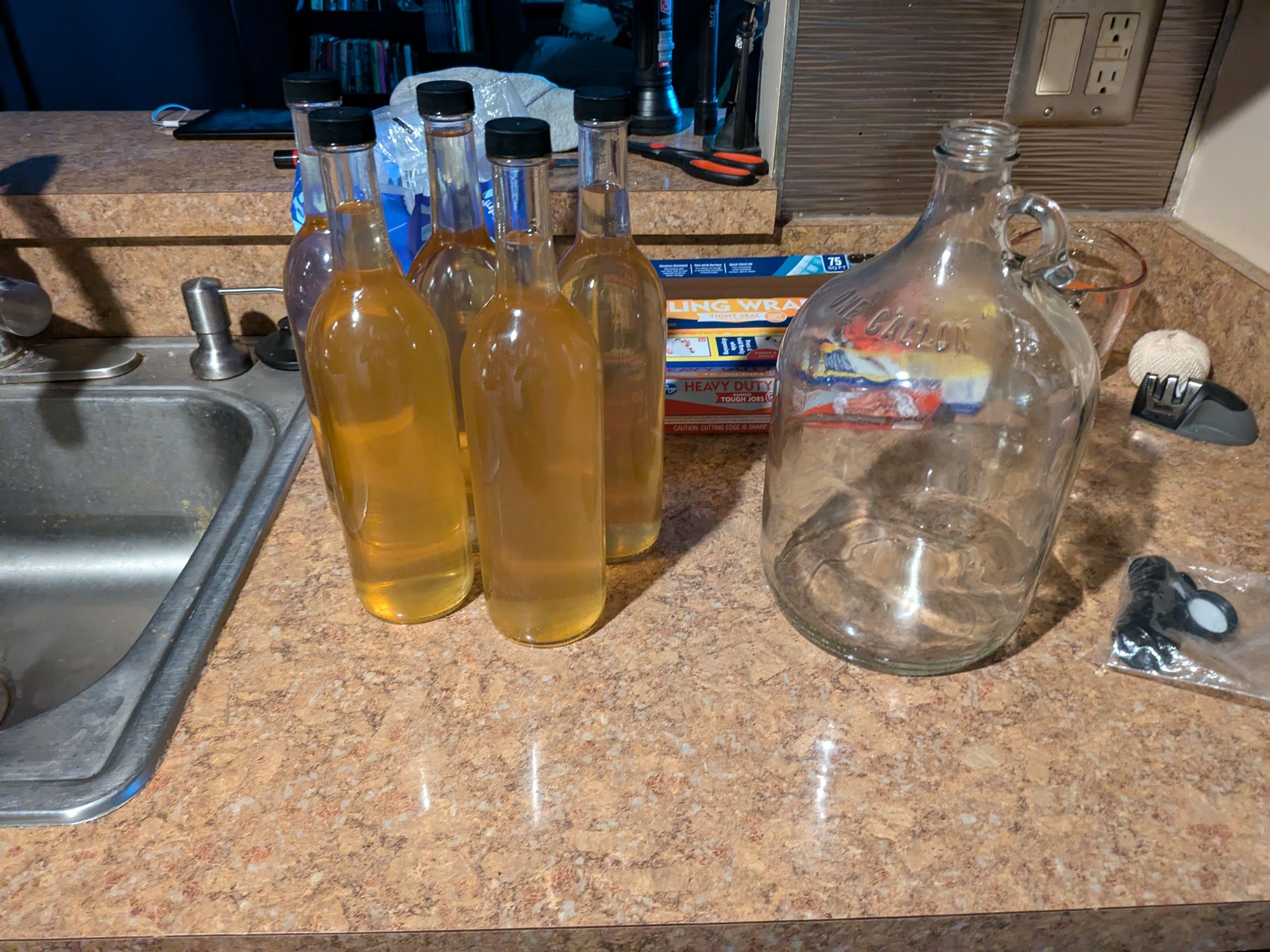
I make my own wine. Most people don’t realize that you can brew your own alcohol at home, but it is, and there are plenty of people of doing it, including me. I’ve made a batch of plum wine, and I just finished and bottled a batch of pumpkin wine (yes, pumpkin wine). And I’ve been making my wines based on colors of the rainbow: plum wine is red, and pumpkin is obviously orange. Yellow will be dandelion wine, green will be mint, blue will obviously blueberries, and indigo/violet will be elderberries. And I can’t wait to try them all!
The pumpkin wine I made, all bottled up. Looks good, doesn’t it?
I bought my first home two years ago. For millennials like me, it’s hard to find an affordable home, let alone a non-fixer upper that you don’t have to share with a bunch of other millennials. However, I was lucky enough to find and buy a small condo for myself two years ago, and I’ve been living in the Haunted Condo, as I call it, ever since.
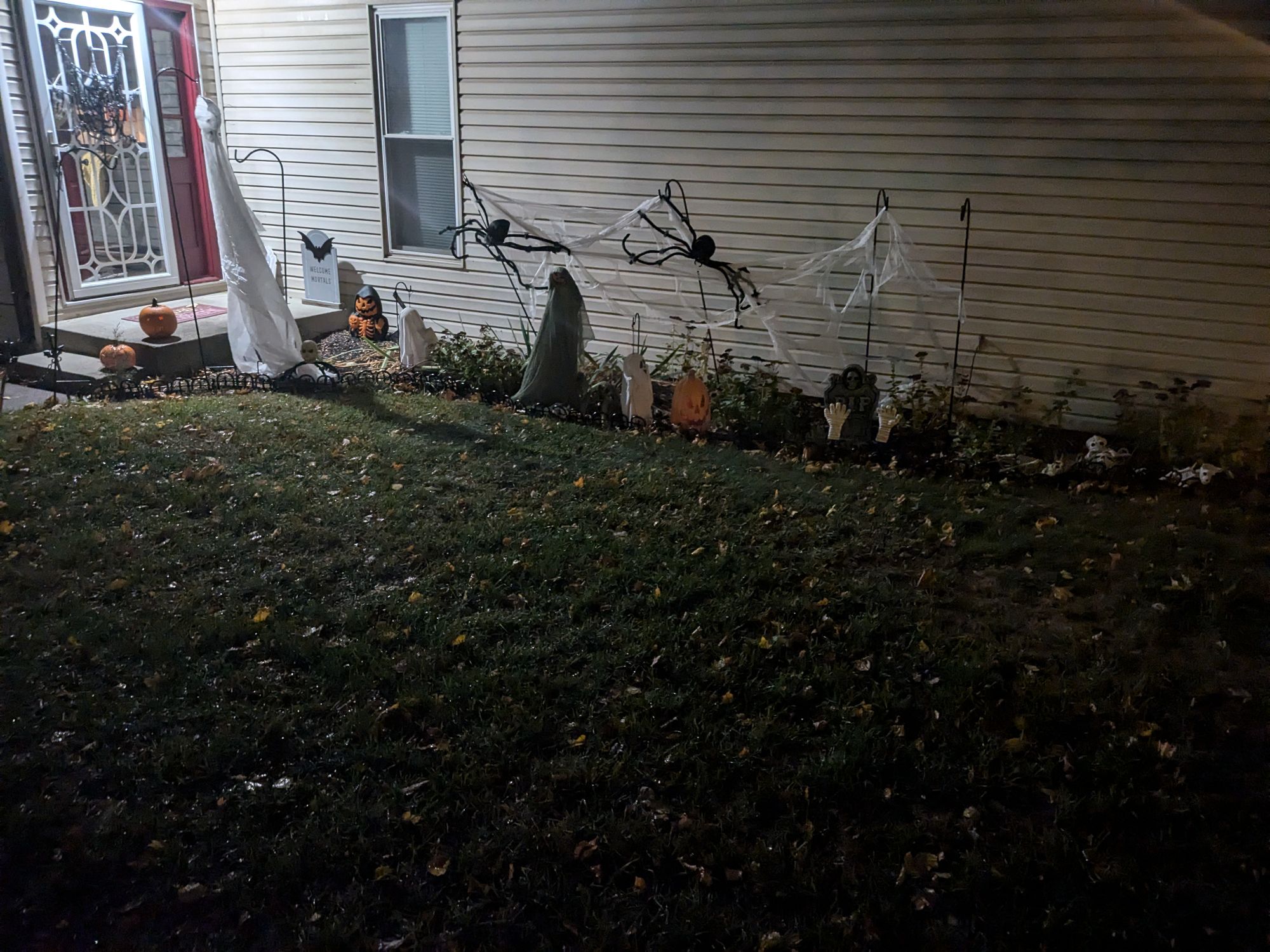
Sadly, it’s not very haunted by anything except me. I don’t know why, I’ve done voodoo rituals and everything else to make the place haunted, but so far, no otherworldly dice. At least I can make one hell of a Halloween display every October and decorate the inside as I like!
My yard is the spookiest in the neighborhood every October.
I’m the chapter coordinator for HWA Ohio. The Horror Writers Association is an international organization that supports horror writers and helps them network and grow. Ohio’s chapter is about six or seven years old, and I’m the guy who runs it! Which was never my intention: some other members organized the chapter, and I volunteered to find a venue. Somehow, I kept arranging locations for us to meet, and that morphed into becoming the chapter coordinator. And after the parent organization set a formal election process for chapter coordinators for all chapters…well, I ran without competition. I guess people think I’m doing a good job or something?
Anyway, HWA Ohio has its own website, which lists our members and puts out news about us. If you would like to check the website out and support us, click HERE.
So proud to have a story from this collection adapted into a radio play.
I recently had my very first story adaptation. Remember my collection Hannah and Other Stories, which I mentioned above? Earlier this year, I became acquainted with a producer for WCBE 90.5, a local NPR station who interviews local creative types. He also runs a yearly Halloween show, where a short story is adapted into a radio play, with the roles played by local high schoolers.
“Hannah,” the lead story in Hannah and Other Stories, was this year’s story. It was my first time having a story adapted, and it was so, so good! The kids did really well in their roles, and it was amazing hearing my story brought to life on the radio.
And if you would like to listen to it, you can! It’s available to stream online, and you can listen to it in full HERE. Let me know what you think if you listen to it. The more people who listen, the better for future shows and future students. Plus, who knows? Maybe another one of my stories will get adapted. It happened once, didn’t it?
I tend to break out in song at any provocation. I kid you not, this is something I did daily in high school, and which I do quite frequently these days. In fact, I’m part of a critique group with some of my fellow Ohio horror writers, and they say it’s not a meeting if I don’t burst out in song at least once!
Too bad I sing badly, but hey, why should I let that stop me?
What I’m working on now. I’m juggling a few projects at the moment. For one, I’m putting together another collection of short stories, and I hope to have more on that in the coming days and weeks. I also recently finished a new novel, The Shape of Evil, which is about a 3D printer from Hell, and I hope to have that ready for pitching to agents and publishers by June next year. Finally, I also have a collection of novellas I plan to work on at some point, and I have a mummy novel I started but put aside for other projects that I plan to get back to.
Plus some short stories to send out to magazines and anthologies here and there. Yeah, I’m a busy guy, aren’t I? But that’s kind of the way I like it.
Anyway, that’s thirteen things you need to know about me. I hope you enjoyed learning about me, because I enjoyed writing it. And if you did, be sure to follow this blog and my other social media to keep up with what I’m doing and when I have new work coming out.
And if you would like to check out any of my other work, I’ll leave a link to my book page down below. You’ll find all my published works and then some there, including free stories. And if you like what you read, I hope you’ll leave a review online so I, as well as other readers, know what you think.
Until next time, my Followers of Fear, good night and pleasant nightmares.
Okay, this isn’t the kind of barker I meant, but can you blame me for using it? The pup’s so cute!
As many of you know, my fellow HWA Ohio members and I had a booth at the Columbus Book Festival last weekend. A few days later, when I met online with my critique group, one of the authors who was at the festival with me mentioned that I was like “one of those guys at a fair. What do you call them? Oh yeah, a carnival barker!”
I did not disagree. After all, that’s what I was going for. Throughout the weekend, I was calling out to people who were passing our tent, trying to get them in and to check out our books. I must’ve introduced myself with “Welcome to the Ohio Horror Writers Association! My name is Rami Ungar, how are you today?” and called out “Come in, come in! We don’t bite…not unless asked” a thousand times. And you know what? That worked. People came in, they checked out our wares, and they bought stuff. By the end of the weekend, I’d managed to sell out.
I’m not trying to brag or anything. I’m just relating one of the hard lessons I’ve learned over the years of writing and doing events: people won’t just discover you and they won’t just gravitate towards you without good reason. My first few events, not wanting to make a fool of myself, I was mostly quiet and did not go out of my way to get people to buy my work. At most, I would wait for someone to get close or to make contact and just say, “Hi.”
The result? Not a lot of sales. Not a lot of new readers. I learned then that, unless you’re a big name like Stephen King (or if you’re at a paranormal convention, a well-known name in the community), you can’t just hope people will find you and show interest. You need to put yourself out there. You need to be a bit of a carnival barker.
This isn’t just my opinion. A lot of authors and a lot of articles have suggested that, at events, readers are more likely to get an author’s book if, unless they already know the author or their work, they are drawn to the author. In other words, if the author themselves makes a good first impression. If that happens, the reader is more likely to check out the author’s work, either by buying at the event or getting it online later.
I guess it’s a good thing I’m already a talker and I like to be the center of attention.
A picture of a barker from Wikipedia. I try to be more animated than this photo suggests.
Now, if you’re not the type who likes to put themselves out there like that, I have some good news. You don’t have to do this at events. Some events are better for networking than for selling books, so if you would prefer to interact with other authors and just talk to the occasional reader that comes your way, please do. And hell, you don’t even have to do events! If you prefer not to go out there, don’t. Stick to podcasts, or blogging, or YouTube, or just writing. Every writer is different, and every writer’s goals are different. If yours don’t involve putting yourself out there to sell books, don’t feel pressured to do so.
However, if you do go to the events with the intention of selling books, and if you put money down on the table to do so, I would put in a bit of work to ensure you get your investment back, plus returns. After all, that’s what worked for me.
Well, that’s all for now, my Followers of Fear. I wanted to also go into some other things I’ve noticed help with book sales, but I think I’ll leave that for another post devoted entirely to that subject. In the meantime, I just want to let you know that I’ll be using this method of reaching people at events this coming weekend, July 26-28, at Motor City Nightmares in Novi, Michigan. If you’re available to come, I’ll be selling books and doing Tarot readings and would love to see you there. You can find out more from the website here.
And if you can’t stop by but still want to support me, or you’re still looking for your next scary read, check out my books using the button below. You’ll find most of my works there, including some free stuff. And if you like what you read,, please leave a review online so I know what you thought. Believe me, it helps me and it helps the readers that come after you.
That’s all for now, my Followers. Until next time, good night and pleasant nightmares!
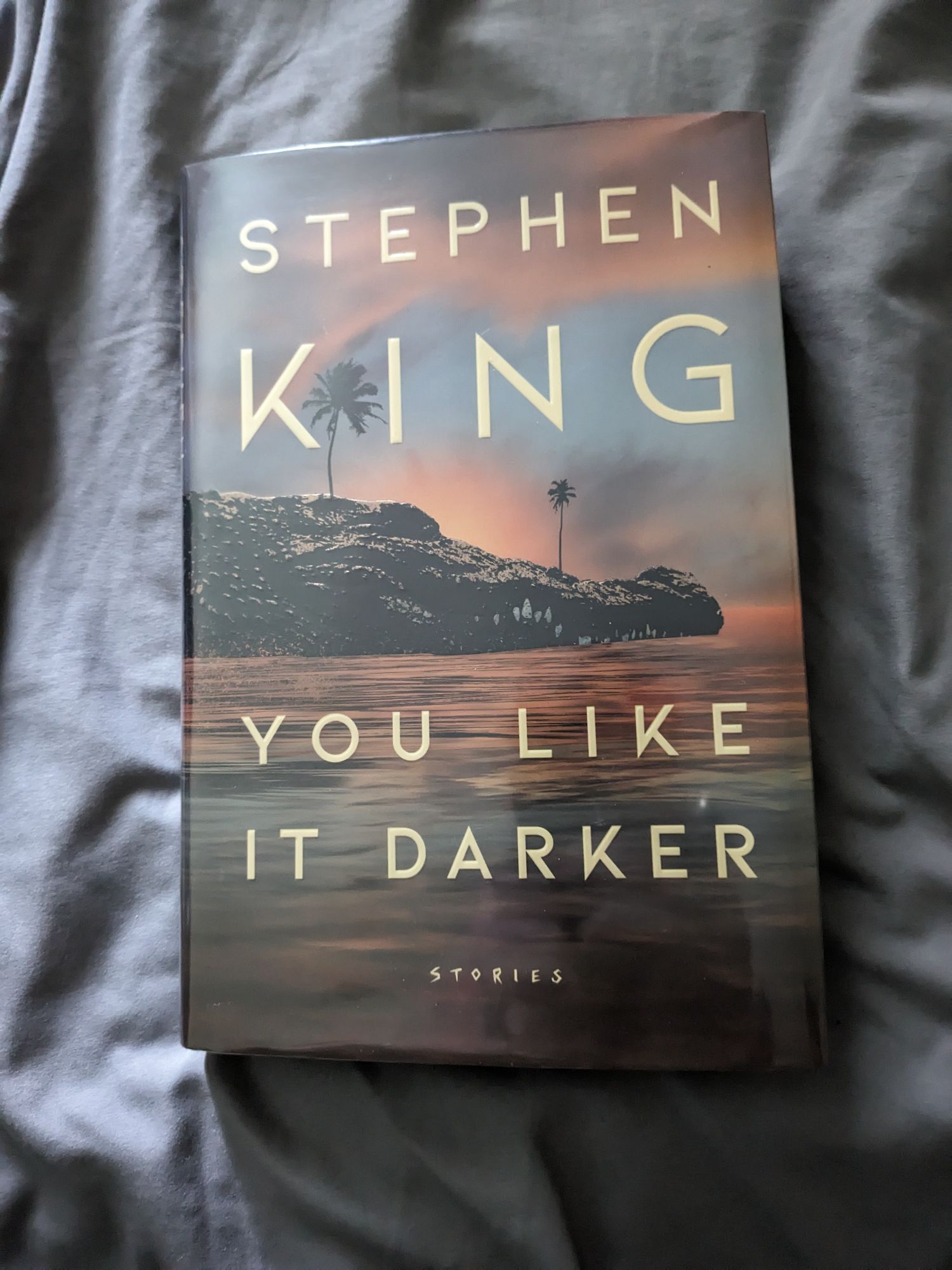
I was not a fan of Stephen King’s last collection (you can read my review here). However, I am ever the optimist when it comes to King’s work, and the sound of his latest collection, You Like It Darker, got me excited. I mean, it even had a sequel to Cujo in it! Why wouldn’t I check it out?
And tonight, on the night before it’s due back at the library, I finished it. So, what did I think?
I think this is a much better collection and a finer example of King’s storytelling than If It Bleeds was.
The strongest stories in the collection are four of the novellas. “Danny Coughlin’s Bad Dream,” possibly my favorite of the bunch, is a tense thriller about a man’s life unraveling after he has a nightmare and he does a good deed based on that dream. Honestly, it’s hard not to fall in love with the lead and want to find out if things get better for him or go further downhill. “Rattlesnakes,” the sequel to Cujo, starts out slow but quickly becomes a freaky ghost story that I thoroughly enjoyed once it got going. “The Dreamers” feels like an updated version of HP Lovecraft’s “From Beyond,” and I would love to see a movie version of it.
As for the final novella and the final story of the collection, “The Answer Man,” it’s King’s fantastical literary style of storytelling at its finest, and (surprisingly) left me with a warm feeling in my heart.
As for the short stories, “On Slide Inn Road” is a fun tribute to Flannery O’Connor’s “A Good Man is Hard to Find” (and delivers on the “darker” part of the book’s title), and “The Turbulence Expert” feels fresh while also like classic King. “Laurie,” which I’ve read before, is a fine story about grief and finding new life, and “The Fifth Step” and “Willie the Weirdo,” while not anything amazing, had some fun twists I enjoyed.
Unfortunately, the book has some duds. “Two Talented Bastids,” the opening novella of the collection, was a total letdown for me, which is sad because it had a strong start. The short story “Finn” felt like a crime thriller that never got around to thrilling anyone, and “The Red Screen” felt like it needed a few more pages to deliver on its premise.
However, like I said, You Like It Darker is a much better collection of King stories. On a scale of 1 to 5, I give this collection a 4.2. If you don’t mind the duds, you’ll probably enjoy this one, and feel like you’re reading one of King’s older collections again. So, if you haven’t already, go out and grab a copy.
In the meantime, I’ll be picking up my next read from the library tomorrow. It might even be my next review. And from what I’m hearing, it’ll be worth reading…
Earlier this week, I tried to write a story about a cursed anime. And I thought I would have a blast writing it. I mean, horror and anime, two of my great loves! And for a bit of added fun, maybe some ballet, because God knows I like putting that into my stories like King enjoys throwing in psychics and other writers.
But for some reason, while working on the outline, I just couldn’t make it work. Every time I tried to add to the outline, I just felt blocked and frustrated. After a while, I just figured that I would need to find a different way to tell this story, so I put it back in the proverbial idea bin.
And you know what? That’s okay. This sort of thing happens to writers of all stripes, not just me. Sometimes, you just need to put the story away and hope a way to tell it eventually comes to you.
That’s what Stephen King did for Under the Dome. He tried numerous times to write that novel, but it just didn’t click for him. Not for around thirty years. But eventually he was able to find some way to get unstuck and knock out one hell of a doorstopper novel.
Who’s to say that couldn’t happen with this anime story? Either that, or I could make a graphic novel out of it, provided I could find a good artist to work with.
For now, though, while I wait for that story to click or an artist to collaborate with, I have something new to work on. A story about a 3D printer from Hell. And judging by the progress I’m making in the outline, I won’t have the same issue. Yeah, I’m still figuring out where it’s going, but I’m figuring it out by leaps and bounds.
Makes me think it could be one hell of a read when I’m done. And I’ll have one fun ride while writing it.








 Rami Ungar The Writer