Archive for the ‘Writing’ Category

It’s Friday again. You know what that means. It’s #FirstLineFriday!

Here are the rules: On Fridays you write up a post with the title #FirstLineFriday, hashtag and all, and then explain the rules like I’m doing now. Then you post the first one or two lines of a potential work, a work-in-progress, or a completed or published story. Then you solicit feedback from your readers. It’s a lot of fun, believe me.

This week’s entry comes from an idea I’ve been sitting on for a while, a mystery/thriller series that I think would be really fun to write. Enjoy:

Agent Danvers burst through the front door of the King James Sniper, turned into the living room, and found the Sniper beaten to a bloody pulp, bound and gagged on the living room floor.

Tell me, what do you think? Does this sound intriguing? Any grammar or punctuation or spelling problems? Let’s discuss.

That’s all for now, my Followers of Fear. I’ve got things to do today before Shabbat rolls in, so I’m going to get on that. Have a good one, my Followers of Fear.

anxiety

What is the trouble with psychological horror? Actually, there’s not much trouble to it. It’s just very hard to do well.

What do I mean by this? Well, let’s look at the definition of psychological horror: “a subgenre of horror fiction, film, and video games (as a narrative) which relies on the characters’ fears and emotional instability to build tension”, according to Wikipedia (I know you’re not supposed to rely on that site for information, but I couldn’t find a better website for a definition). It’s a sub-genre that, rather than relying on a traditional monster that’s out front and center for all to see, the monster is restricted to quick glimpses and shadows. If there’s a monster at all: sometimes the true villain is a character’s own brain, their fear, distrust, paranoia, suspicion, isolation.

I’ve used psychological horror before, particularly in the stories in my collection The Quiet Game (which if you haven’t read, I wish you would) and in the short story “Buried Alive”, which was published in the Strange Portals anthology last year (again, I wish you would read it). And I’ve come to the decision that while it isn’t as difficult as physics or writing comedy, it is walking a very fine line. Almost like a tightrope. And if you fall off, you can wind up veering either into the realm of the comedic with how obvious that it’s all in the character’s head, or it’s just so confusing that you find yourself losing patience with the story.

Let me give some examples (and it’s my blog, so you have to let me give some examples): have you read “Buried Alive”? I’ll keep the spoilers to a minimum for those who haven’t, but like I said above, I use quite a lot of psychological horror in that story, and for the most part, I think that I use it well (so do most of the readers I hear from on this one). For the rest, though…it’s pretty obvious that the circumstances of the main character are taking a toll on her mental state. I don’t think it gets to the point of comedic, but it is obvious, and the point of psychological horror is to make you guess whether it’s all in their heads or if it’s real or…who knows?

Perfect Blue. Trippy, has its moments, but also has its problems.

On the opposite end of the spectrum, there’s the anime film Perfect Blue, based on a novel that I wish was available here in the States. The film is about a singer-turned-actress who starts to confuse reality and fiction when her first acting job takes a turn for the traumatic. It’s a good story, but it’s not a perfect story. There’s a good section of the movie where they spend time trying to confuse both the protagonist and the viewer, and it gets a little difficult to not only what’s going on, it gets difficult to pay attention or be patient with the movie. While I admire the visuals of the movie, and I get what they were going for by showing what the protagonist is going through mentally, and I recommend checking it out if you’re interested, psychological horror shouldn’t get so strange or trippy that the reader gets frustrated with or loses interest in the story.

A great example of a psychological horror story though, manages to toe the line very easily and keeps you guessing as to what’s real or what’s mental delusion. A good contemporary example of this is The Babadook. If you read my review of that movie last year, you’ll remember that I noted that the movie kept you guessing as to whether the film’s protagonists were dealing with an actual monster or a shared psychosis, and I eventually settled on a bit of both because…I’m mostly human, and humans need to categorize things to make sense of the world. And I still say that I don’t know for sure which it is, and that’s one mark of the film’s greatness. You’re never quite sure what’s real and what’s in the heads of the characters, it stays interesting throughout, and it never gets to the point of ridiculous or obvious. All told, it’s great psychological horror.

This movie will surely get you on so many different levels. I’m getting chills just thinking of it.

So how do you psychological horror well? How do you toe that line?

Well, I’m definitely no expert on the subject. I usually deal in traditional horror, the monster is out front and is usually either some twisted form of human or a creature not easily defined by our standards. I dabble in psychological horror, usually making it part of a bigger story. But I can try, and I think–beyond reading/viewing as much psychological horror as possible, both good and bad, and practicing like you want to get to Carnegie Hall, of course–I’d suggest trying to write a story where you’re not sure what’s really happening. Create a scenario where strange things start happening to your character or characters, and you can’t tell what’s real or what’s just in the minds of your characters. Keep it interesting, don’t get too ridiculous or obvious, and just see where the story goes. If you can do that but still be unsure for most of the story of what’s real or not, then it’s likely your reader will be the same and want to know more.

Another marker of psychological horror is that there’s usually a twist somewhere along the way, and if it’s good it’ll change how you view the entire story (a great example is the Korean film A Tale of Two Sisters and its American remake The Uninvited). Characters are also often driven or plagued by powerful internal battles: am I doing the right thing? Is this right or wrong? Are they really out to get me? It doesn’t have to be full-blown persecution belief or fear of some unknown. It can be something as simple as a growing suspicion that something’s off or that our desires are actually evil. Again, A Tale of Two Sisters is a great example of the former.

Not a fan of the movie, but even I admit it shows Jack’s breakdown very well.

And finally, psychological horror is often not the main focus of a story, but part of a bigger story. Take a look at The Shining by Stephen King. Obviously that hotel is actually haunted, and the kid and the cook are both psychic. But a good deal of the story deals with Jack Torrance trying to sort out what’s going on for himself. Is he just dealing with a powerful desire to get wasted again? Is he going insane? Is the hotel playing tricks on his mind? There are scenes where you really can’t tell, and that’s part of the terror. Part, but not the whole thing. After all, there’s all the stuff the hotel is doing to them, right?

Unless Jack, Danny, and the cook are all sharing some sort of shared delusion, or folie a trois, in which case…wow. New conspiracy theory right there.

In any case, it’s something to experiment with yourself. And for me to experiment with more often. Just try and see what happens…or does it happen? You’ll never know until you try.

How do you feel about psychological horror? Do you have any good examples in film or literature you’d recomend? What are some tips for effectively writing in the subgenre?

Today’s a very special day. Two years ago, I stayed up late on Halloween night to make sure that Reborn City, my first published novel, was released in all its formats and then wrote the blog post announcing the good news for the very next day.

That’s right, two years ago today was the day Reborn City was published. A lot has happened since then, most of it having melted from my memories. But one thing has stood out to me: over these past two years, RC has definitely become my most popular published work yet (I know that’s not saying much with only three books out at the moment, but you get the idea).

If you’re not very familiar with RC yet, it follows Zahara Bakur, a young Muslim teenager living in a dystopian future who is forced to join the Hydras (not the Marvel supervillain organization), a street gang whose leaders have mysterious powers. Zahara learns to deal with her new lifestyle and friends, while at the same time she becomes unknowingly ensnared in a plot by a shadowy government interested in the Hydra leaders’ powers. The novel comprises of themes tackling Islamaphobia, racism, gang violence, drug addiction, and much more.

Over the past two years, I’ve had plenty of people read RC and a few of them have been willing to give feedback (and I think only a quarter of the people who do the latter are my family, which is good). Here’s what some of the people who have read RC have said:

This is an extremely commendable effort by a new young writer, whom I believe we will see much more of in the years ahead. Rami Ungar’s vision of a frightening dystopian future is peppered with those elements that make us all human. There are quite a few surprises in the book, and I am anxious for the next volume in the series to be released.

–Marc M. Neiwirth

As a reader who does not read books in this genre, I must admit that I could not put down the book. I attribute this to the talent of the author. I am looking forward to reading the next books published by Ungar. I recommend this book to readers who enjoy action with features of supernatural powers and sci-fi.

–ENJ

This is not a genre I typically delve into, but I took this book on vacation and couldn’t put it down. The plot had me turning pages at quite the clip. The characters were unique and interesting and the imagery had me creating my own visual of what Rami’s interpretation of the future looked like. For first time novelist, Rami Ungar, this was an outstanding showing of talent and commitment to his passion of writing. Looking forward to seeing what he comes up with next!

–Michele Kurland

If you can’t tell, I’m quite proud of some of the reviews I’ve received on this book. Considering that I started work on this book in high school and worked on it through the first two years of college, I guess I have good reason to be. It was not easy to get this book out, and I worried a lot about how it would do. I also worried that people would say I’m another white guy trying to make money off a subject that others have experienced and written about (the Kathryn Stockett criticism), but so far no one has made any fuss about RC in that way.

And what’s in store for RC in the next year? Well, I’m sure more people will read it. I know of at least one friend who bought a copy and will probably read it within the coming year, and I’m sure there are plenty more people who will find the book and discover something enjoyable in it. I might also get a few more reviews, who knows? I also think an RC audio book is likely to happen. I’ve been working hard to make that happen and I might even have a narrator soon, depending on a few factors. If and when that happens, I’ll make sure to let you all know (and to force my whole family to download copies if they want to stay on my good side. Mwa ha ha!).

And finally, I hope to get the sequel Video Rage fully edited and released by summer next year. I’m working with a professional editor this time, so I’ll let her take a look at the novel before I release it so that the story can be the best story possible. I owe it to the readers who loved RC to do that, at least.

Anyway, if you wish to check out Reborn City for yourself, you can find it both on Amazon and Smashwords. And if you do decide to read it, please write a review of it. Whether or not you love it, I appreciate the feedback, and reviews help indie authors like myself find new readers every time we get them, so you’d be doing me another solid essentially.

That’s all for now. I’ve got a lot of editing to do today, so I’m going to try to get through that. Wish me luck, my Followers of Fear, and happy anniversary!

Oh, and I may have forgotten the two-year anniversary of The Quiet Game, which came out in July of the same year. My bad. If you’d like to check that out, it’s also on Amazon and Smashwords. It’s a spooky good time, if I do say so myself. Enjoy.

It’s Friday, so you know what that means. It’s #FirstLineFriday!

Here’s how this works, in case you’d like to do it on your own blog: every Friday I write up a post titled #FirstLineFriday (hashtag included), explain the rules like I’m doing now, and then post the first one or two lines of a potential story, a story-in-progress, or a completed or published story. After that, I ask my readers for their thoughts and suggestions.

In the past couple of weeks, I’ve been doing #FirstLineFriday posts with stories relating to Halloween (because you know I love the spooky holiday season). And since tomorrow’s the big day, I’ve saved a very special first two lines for last. This excerpt is what may or may not start a very interesting book series, the events of which take place all on a single Halloween night. Yeah, that’s the story I have in mind. Let’s hope I get to write it before I’m old and grey, right?

Anyway, here’s the excerpt. Enjoy:

Chloe held up her witch’s costume in front of her and looked in the mirror. She knew it, too much pink and purple.

Starts innocuous enough, but get’s very strange and dark later on.

But what do you guys think? Any errors in grammar, punctuation, etc? Too innocent and YA-ish to start a horror series? Let me know.

That’s all for now. I’m currently muddling through a cold, so I don’t know if I’m going to be out celebrating at all this Halloween. I’ll consider myself lucky if I get out to see a scary movie. In the meantime, I want you all to have a fun and scary weekend (more than I probably will, anyway).

Have a good one, my Followers of Fear!

Well, I’ve returned from Germany, my Followers of Fear. All in three pieces (don’t ask about the other two, you won’t like the answer). It’s good to be home, to say the least. A little weird after so long, but still very good. I enjoyed seeing my parents and my sister waiting for me at the airport and teaching them naughty German swear words (and my parents are rabbis, by the way. Scandalous!).

Of course, now that I’m back that doesn’t mean I can just slack off and do whatever I want. I’ve got a number of things on my to-do list today, and while I’m working to get those done, I’m taking a moment to talk about writing. Specifically, what are three qualities that writers need to actually write and get work done?

And I mean besides the actual imagination to come up with a story and the ability to transfer that story from the mind to the printed page. Not only does that go without saying, but a lot of people have very active imaginations and can write well enough that if they tried they could come up with a very good first draft. So why don’t they? What keeps people from actually acting out that writing dream?

I’ve been thinking about this a lot since yesterday, when I spoke with someone on the final leg of my journey home who had tried writing but found himself unable to do it. I found myself wondering why that is, and I think part of why some people can write and some find themselves struggling to do so may stem from three needed qualities or skill sets: confidence, focus, and perseverance.

Now by confidence I don’t mean confidence that your story is going to succeed and will make tons of money. I mean confidence that you can actually get it done, that you can write out an entire story from start to end. Never mind whether it’s any good, first drafts are notoriously terrible because that’s how they’re supposed to be. You have to have the confidence that you can get that first draft done, and then maybe we can talk about the next draft and everything else that comes from that.

Think about it: even if you prefer to only work on short stories, that fitting an entire story in a space between a thousand and ten-thousand words. Even to me, that’s a little daunting, and I’ve become much better at writing short stories over the years (though I could always be better). Imagine how it might feel for someone who wants to write a novel but then finds out that a novel is at least sixty-thousand words! You can’t just say to yourself, “I’ll try and see where it gets me” when it comes to this sort of task. You have to have some confidence in yourself and that you can get all those words out on the page.

Otherwise you may falter around three-thousand words when you realize that getting a story out is not as easy as you think and may not be able to continue from there.

Another thing writers need to get work done is focus. You have to be able to focus on a project and get the work done. The person I spoke to yesterday on my flight told me this was his problem: he tried writing a story, but in the midst of writing that story he would come up with another story and then want to work on that, and his first story would languish. Then he’d have an idea for a third story and want to work on that, and then he’d have two stories being put on the shelf for later. So the cycle went and he had projects that just never got done.

Even if you juggle multiple projects at once, like I do (three novels at various stages of the editing process, one collection of short stories on the way, working to find a narrator for an audio book, etc), you have to be able to sit down and focus on one project for an extended period of time. Maybe even months or years. And other projects may demand to be written (believe me, I’ve got lists of story ideas, and some are pretty vocal in my head about wanting to be written), but you have to get some out of the way first before you can focus on others. Better to have just a few projects at most to work on and several ideas waiting to be turned into stories than a lot of projects just lying about not even a quarter of the way finished because they all demand to be written.

And this brings us to our final quality: perseverance. It’s an understatement at the very least to say that life is not easy. Take my life, for instance: I’m trying to ensure I have a job so I don’t become a bum in my dad’s guestroom, I have bills to pay, tasks on my to-do list to do, etc. So many demands that it’s hard to find time to write or edit. And when it comes to doing either, especially at the beginning of a project, I may sometimes have trouble getting the work done. All those words can make it hard to getting it all done.

Without these qualities, writing can feel like a Sisyphean feat.

To write, you have to accept that you have to work through all those difficulties before you can get through all those stories, and then do it. It’s never easy, and life will find ways to get in the way. Even when it does, you have to be willing to get through what life throws at you and then sit down and get through all the writing and editing and everything else you have to do. If not, then those stories you feel so passionate about will languish for so long you may never pick them up.

It’s these three qualities–confidence, focus, and perseverance–that make the difference between those who want to write and those who actually go out and do it. Each of us struggles with them at times–focus in the short term can be troubling for me–but in the end I think those who can command these qualities are the ones who can at least get the stories written out and polish them enough for publication.

But what do you think? Have I got the right of it? Did I miss something? Did any of these speak to you? Let’s discuss.

In the meantime, I have to focus on the other things on my to-do list like visiting the dry-cleaner’s the barber shop, and persevere through cold and possible rains at the same time. Still I’m confident I can do it, so I’m not too worried.

Still, wish me luck. I might need it later.

It’s Friday again, so you know what that means! That’s right, it’s #FirstLineFriday! And it’s also my last Friday in Germany (cue sad violin music). Well, I had a good time here and I’m glad I got to be here for so long. But like all good things, they come to an end. No use fighting it, I guess.

Anyway, here are the rules of #FirstLineFriday: You write a post with the title #FirstLineFriday, hashtag included, and then you post the first one or two lines of a possible story, a story in progress, or a completed or published work. You then ask your readers for feedback on the lines.

And since this is the month of October, I’m doing stories relating specifically to Halloween. This week’s entry is from a short story I might write someday, about two people who need a little help to fix the problems in their life on All Hallows Eve:

Sofia walked alongside the road in the direction Mommy’s car, cold and sniffling. Why had Mommy left her behind like that?

What are your thoughts? Anything that could be brushed up? Let me know in the comments below.

All for now. I’ll be taking it easy this weekend, so I might be putting out another post or two. Until then, have a good weekend my Followers of Fear!

Becket image

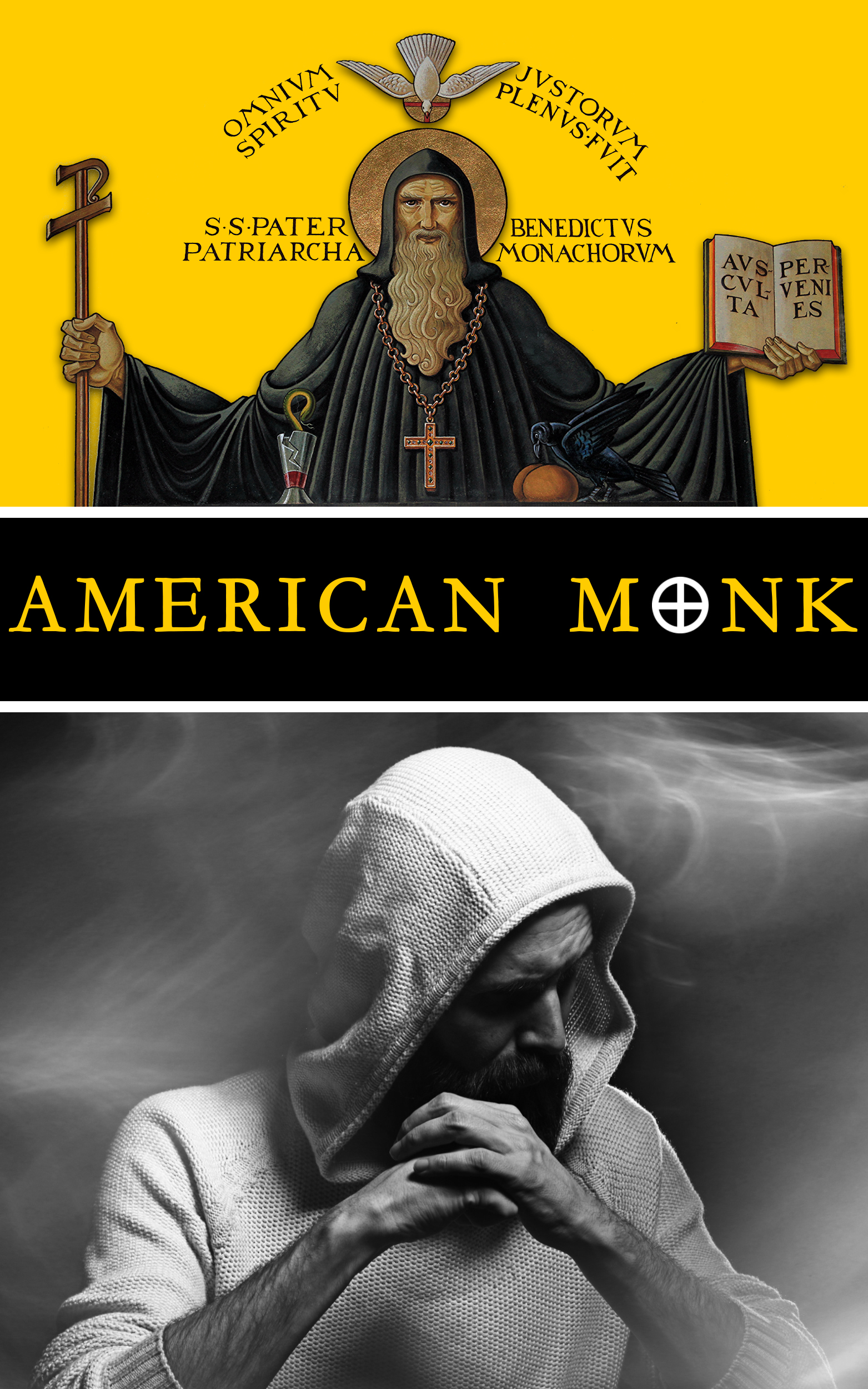
Some of you may remember my previous interview with author Becket, an indie novelist who likes vampires, was once a monk, and works for Anne Rice. Now he’s got a new book out, American Monk, a memoir about his years in a monastery growing closer to God and living in a brotherhood of similarly-minded men.

Welcome back to my blog, Becket. Happy to have you here. Now, your new book is American Monk, which chronicles your time as a monk in a Benedictine monastery. Why did you decide to write this memoir?

One day on my Facebook page I decided to make a post about my experience in the monastery. People responded well to it, so I made another one the following week. I kept up that have it for about half a year, at the end of which I decided to compile all my Facebook posts about the monastery into a memoir.

Why did you decide to become a monk in the first place? And why did you leave the monastery?

I wanted to be a monk because I want to deepen my relationship with God. The monastery was a wonderful place to do that because it was a house conducive to my personality type, an introvert and a scholar. I stayed in the monastery for five years, at the end of which time I was given the choice to make solemn vows, which is like the marriage commitment. It would’ve been for the rest of my life. The monastery was wonderful, but I also felt called elsewhere, although I did not know what that was at the time. So without any hard feelings, I left the monastery and began working for Anne Rice.

What’s a day in the life of a Benedictine monk like?

Monastic life is built around routine. We wake up early in the morning and begin our day with prayer. Our morning prayer lasts for about an hour and a half, and then we would go to breakfast. After that it was time for work. We worked most of the morning until the hour to celebrate the solemnity of the mass. After mass we had lunch. And after lunch we spent the afternoon committed to more work. Our day ended in the evening with prayer. After prayer we went to dinner, and after dinner we had a community time together, where the monks gathered together in one room and enjoyed one another’s company. Finally, we had night prayer and that it was bedtime.

American Monk

In memoirs like these, I’ve noticed that the vignettes within generally run the range from humorous to serious to tragic to inspirational and everything in between. Do you feel that this is true of yours? 

My memoir is meant to be inspirational. I hope that people read it and grow in their relationship with God, because the monastery was a place where a truly began to understand who I was in the divine plan. I am still learning the depth of my relationship with God. In many ways, the monk I was is still inside me, and perhaps he is a better monk than I used to be.

 Does Anne Rice make an appearance in American Monk at all?

She makes an appearance in the beginning and at the end, and in one chapter in between, but the memoir mostly deals with my experience with the brother monks.

What are you working on these days?

I just finished the first draft of my next music album as well as the first draft of a novel appropriately titled The Monk, about an African monk who suffers the stigmata and works as a miraculous channel of God’s love in the world.

When not writing or working with Anne Rice, what are you doing these days? And is there anything on your wish list you think you could be doing in the near future?

I spend time with God, my girlfriend, and my two cats. For the future, I have a few projects that I am working on and I am praying that God will give them success for His Glory.

Well thanks for joining us Becket. Glad to speak with you. And if you’e interested in reading American Monk and other works by Becket, you can check out his website, as well as find him on Facebook and Twitter.

And if you’d like to read more interviews with other authors and with some of my characters, you can head over to the Interviews page for those.

Hope you enjoyed reading this, my Followers of Fear. I certainly had fun putting it together.

As many of you know, I have a novel I wrote in college called Laura Horn, and that it’s about time I edited it. At the same time, I wasn’t sure if I should simply go over the first draft and edit where necessary, or do a complete do-over and rewrite the novel from scratch.

If you don’t know what Laura Horn is about, it follows a teenage girl with a dark past who comes across secrets that threaten the nation. Think White House Down or Olympus Has Fallen, only instead of Channing Tatum or Gerard Butler coming to save the day, it’s all on a very troubled teenage girl and her friends. Yeah, I wrote a novel like that. And it’s not comedy, YA, romance or anything like that. It’s a straight up action thriller, complete with one or two psychopaths and a bunch of corrupt agents and elected officials.

Also, I’ve limited the amount of gun violence and explosions in the book, because God forbid this thing should resemble a Michael Bay or Quentin Tarantino movie.

Back to the main point, though. In between drafts of the story, I began to worry that LH might need a rewrite. I liked the characters, I liked the story, I just worried that the way the story was being told was a little too unbelievable and that there might be a better way to tell it. At the same time though, I wondered if maybe the story I had already told was still good enough, it just needed a touch up here and there.

So after editing Video Rage, and writing and editing several short stories and novelettes, I decided to take a look at the first couple chapters of LH, do some edits, and then make a decision on whether I just need to do some simple editing, or maybe make a rewrite of LH my NaNoWriMo project.

Well, as of today I’ve gone through six chapters, combined three into one big chapter, and come to a decision. The first draft is somewhat sloppy, and there is a lot to work on, but that’s pretty typical of a first draft. It’s in the subsequent drafts you actually make something worth publishing. It’s certainly not bad enough at this point that I feel a total rewrite is necessary.*

It might take a lot of drafts to get it right, though. But hey, part of the joys of writing is a lot of hard work and touching up, right?

Anyway, I’ve made a start of the second draft, and I’m hopeful it won’t take too long to finish it. Maybe a couple months at most, if life doesn’t get too crazy and I don’t get too distracted. We’ll see how it goes.

In the meantime, I think I’ll take a break from editing. After all, all work and no play makes Rami a bad editor, or something like that.

Goodnight, my Followers of Fear!

*This also means I won’t be participating in NaNoWriMo this year, but I can think of worse things to happen in my life. Maybe next year I’ll participate though. In the meantime, check out my article on how to survive NaNoWriMo if you’re participating this year.

It’s Friday again, and only fifteen days till Halloween! Continuing the #FirstLineFriday tradition of the past two weeks, all stories will be related to the ghouliest, spookiest holiday of the year in some way or another, even if Halloween just happens to be one small part of a story.

Anyway, here are the rules of #FirstLineFriday. On Friday, writers put out a post titled #FirstLineFriday, spell out the rules, and put out the first one or two lines of a potential story, story-in-progress, or a completed or published work. They then ask for feedback and critiques from their readers.

This week’s entry is the start of  a truly horrifying tale, one that involves every horror novelist’s worst nightmare:

Tanya and Jake felt like their whole lives had been ruined in a single moment. With one vote, the small town of Greyvine had banned all Halloween celebrations within the town limits.

AAAAH! The horror! THE HORROR!

But tell me, what do you think? Critiques? Grammar errors? Too terrifying? Let’s discuss.

All for now. I hope to do a ton of editing this weekend, so I don’t know how much blogging I’ll do. Maybe a post or two. We’ll see.

Have a great weekend, my Followers of Fear!

I just published my latest article from Self-Published Authors Helping Other Authors, and it’s a very special article: Tips For Surviving NaNoWriMo. For those of you who don’t know what that is, it’s National Novel Writing Month, a yearly tradition in November where authors try to write an entire novel of 50,000 words or more in 30 days. To say the least, it is insane and requires a lot of work to get through in one piece. I thought I’d write an article on how to get through it and still keep all your fingers on your hands. So if you are participating or thinking of participating this year, it might be a good idea to check out the article. Maybe something I’ve written will prove helpful to you.

And while you’re over there, check out the other articles on the site. Self-Published Authors Helping Other Authors is a website by indie authors for indie authors and has hundreds of articles meant to help writers of all backgrounds and levels of experience write, edit, publish and market effectively without going broke in the process. You might just find an article helpful to you on the site.

All for now. I’ve got stuff to take care of, so I’m off to take care of them. Until next time, my Followers of Fear!