Posts Tagged ‘Amazon’

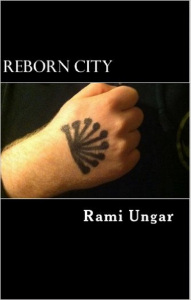
Reborn City, Book 1 of the Reborn City series.

I didn’t realize until the work day was almost over that it’s been exactly five years since Reborn City was published. And wow, does it feel like five years. So much time has passed in that time, and I’ve learned so much. Much of what I’ve learned has been thanks to writing and publishing RC, as well as its sequel Video Rage. I’m glad I remembered that today was that important day.

So in case you weren’t aware, Reborn City is a sci-fi novel I wrote in high school and which I published midway through college. It was my first self-published novel and my first published novel overall. It’s sequel, Video Rage, was released in 2016. Here’s what the series is about:

Zahara Bakur is a Muslim teenager recently moved into the gambling town of Reborn City. After her parents are killed by gang violence, Zahara is forced to join the Hydras, an interracial gang whose leaders have supernatural abilities. As the violence in Reborn City escalates and Zahara becomes closer to the Hydras, including the quiet but stern Rip, she finds herself drawn into a dark conspiracy involving the origins of the leaders and the shadowy corporation that rules over Reborn City.

When I wrote the first book, I wanted to write an action-filled series that explored both the idiocy of prejudice and the power of overcoming the negative thoughts people have of you and you have of yourself. And while it is told with the (arguably naive) viewpoint of an idealistic high schooler, I think I accomplished just that. People have told me they enjoy the story and couldn’t put the story down. Some even found it heartwarming.* To this day, it may be my most popular work (though I hope Rose might change that when it’s published).

But don’t take my word for it. Here’s what some of the people on Amazon have said:

It’s a neat exercise in trying to see through the eyes of someone different from oneself. It incorporated a lot of fly comic-book-esque tropes. A good beginning effort of an up an coming new author who has some cool ideas to explore.

–Amazon Customer

This is an extremely commendable effort by a new young writer, whom I believe we will see much more of in the years ahead. Rami Ungar’s vision of a frightening dystopian future is peppered with those elements that make us all human. There are quite a few surprises in the book, and I am anxious for the next volume in the series to be released.

–Marc M. Neiwirth

This is not a genre I typically delve into, but I took this book on vacation and couldn’t put it down. The plot had me turning pages at quite the clip. The characters were unique and interesting and the imagery had me creating my own visual of what Rami’s interpretation of the future looked like. For first time novelist, Rami Ungar, this was an outstanding showing of talent and commitment to his passion of writing. Looking forward to seeing what he comes up with next!

–Michele U

Video Rage, Book 2 of the Reborn City series.

While I do love tooting my own horn, I’ll stop here. If you would like to check out Reborn City and its sequel Video Rage, I’ll leave the links below for you. And if you do end up picking up either book and reading it, please leave me a review to let me know what you thought. Positive or negative, I love a review, and they help me out in the long run.

Oh, and as for Full Circle, the final book in the series, I do plan to get back to work on it at some point. However, I need to make sure the story is worthy of an ending chapter to the trilogy. The current version I was creating didn’t feel worthy after RC and VR of ending the story of Zahara and the Hydras. So until I can come up with a better story to finish the trilogy, I’ll be working on other stuff (they say distraction is one of the best cures to tackling a difficult problem).

Sorry if that upsets you. But hey, would you rather me bust something out and be terrible, or wait as long as a George RR Martin fan and get something worthy of your time? I know what I would answer.

Well, that’s all till this weekend, my Followers of Fear. Until next time, pleasant nightmares!

Reborn City: Available on Amazon, Createspace, Barnes & Noble, iBooks, Smashwords, and Kobo

Video Rage: Available from Amazon, Kindle, Createspace, Barnes & Noble, iBooks, Smashwords, and Kobo

*I know, right? Something I wrote described as heartwarming. Who’d have thunk?

Oh my God, it’s finally Day 10! We’re at the end! Whoop whoop!

So if you’re tired of me posting every day (sometimes twice daily), don’t worry, I’m planning on going back to my one-or-twice-a-week schedule after this. It’s too much of a hassle to keep posting day after day after day like this. It was still fun to share my favorite books with you, but still. a lot of work.

Anyway, here’s the rules for the Ten Day Book Challenge, brought to you by my cousin Matthew (who is probably glad this thing he started is coming to an end):

  • Thank whoever nominated you with big, bold print. If they have a blog, link to the post where you got tagged there.
  • Explain the rules.
  • Post the cover of a book that was influential on you or that you love dearly.
  • Explain why (because I don’t see the point of just posting a picture of a book cover without an explanation. That goes for Facebook as well as blogs).
  • Tag someone else to do the challenge, and let them know they’ve been tagged.

So for the last day of the Ten Day Book Challenge, I picked a book I read quite recently. Actually, I finished reading it on Day Four, on the ride back from the chiropractor’s. The book is the Future Days Anthology from my publisher Castrum Press:

There are several reasons why I wanted to highlight the Future Days Anthology. Obviously, it’s from my publisher, so I wanted to highlight it and support them, even if I’m not in this anthology (maybe I’ll be in a later one). Besides, supporting small presses and their authors allows for decent competition in the publishing industry and allows the authors to feel their hard work has paid off, which is never a bad thing.

Another reason why I wanted to highlight Future Days is because it’s fairly recent: it was only published August 15th this year, so it’s barely been out a month. The first couple of months a book is out is very important, so I’m happy to spread the word.

But the most important reason is because, let’s face it, this is some damn good sci-fi!

As I mentioned in my most recent interview with Matthew Williams (who is also in this anthology) I’ve always been of the opinion that good science-fiction should show us a reflection of humanity’s current state, as well as what humanity could do in the future. The Future Days anthology does this quite well, in my opinion. First, it takes a lot of issues that we’re currently dealing with as a species today–overpopulation, the disparity between the wealthy and the poor, and corporate power over common people’s lives–and explores how those issues might shape our lives in the generations to come.

As for where we’re going as a species,* that’s given a lot of exploration too. Space exploration to be exact: many stories deal with the challenges humans might encounter once interplanetary travel and off-world colonization becomes possible. Who will pilot and care for the ships during the long travels between worlds? What will be the physical and psychological effects of such travel? Are there ways to get between planets faster?

The value of human life also gets plenty of examination: what happens when, in an increasingly technological age, we’re no longer able to hold jobs now occupied by machines? How much sway do the powerful have over the lives of the weak?

I could go on, but then why spoil the fun? If you’re looking for some decent hard science fiction, look no further than the Future Days Anthology. With several great stories from a variety of excellent sci-fi authors, you’ll be transported when you read it. Don’t believe me? Go to Amazon now and check out some of the reviews (including the one I left). And if you’re still not convinced, just read the book. Believe me, it’s worth it.

And before I forget, I have to nominate someone. Adan Ramie, you’re tagged! I look forward to seeing what you put out.

That’s all for now, my Followers of Fear. With September here, Halloween is approaching, as is just about everything else awesome about this season. And I’m going to revel in every aspect of it.

Until next time, pleasant nightmares!

*Or where you’re going as a species. I still maintain I’m only half-human on the best of days, and there’s plenty of proof that’s not just me messing around.

Last year I had the pleasure of reading The Cronian Incident, a science fiction novel by my good friend and fellow writer, Matthew Williams. I found it a very engaging and deep sci-fi novel, and I was glad to hear that Matt had a sequel in the works. Last week, Matt released the follow-up to The Cronian Incident, The Jovian Manifesto, and I got my copy courtesy of Matt and the publisher, Castrum Press (my publisher too!). In order to celebrate the new book’s release, I thought I’d bring Matt back on for an interview.

So without further ado, let’s begin!

Rami Ungar: Welcome back to my blog, Matt! Tell the folks around here who don’t know you who you are and what you do.

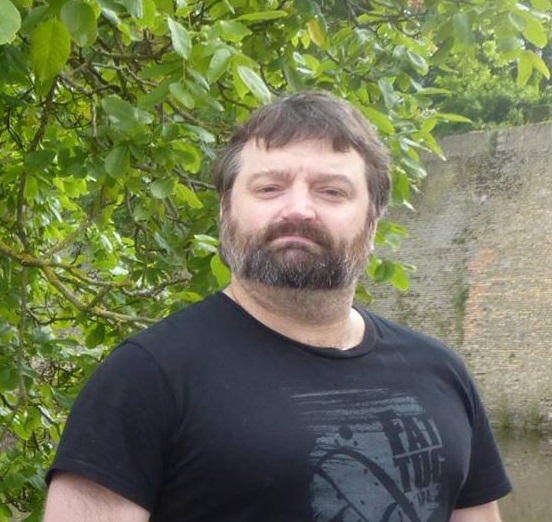
Matthew Williams: Well, my name is Matt Williams, I am a resident of Vancouver Island in beautiful British Columbia, Canada. I live with my wife and cat, and I am a writer for Universe Today. In my spare time, I write (obviously), teach Taekwon-Do and generally enjoy the place where we live.

RU: Tell us about your two books in the Formist series, The Cronian Incident and The Jovian Manifesto.

MW: Both novels are set in the late 23rd century, at a time when the human race has expanded to colonize almost every body in the Solar System. In the Inner Worlds – Venus, Earth and Mars – life is characterized by advancement, augmentation and post-humanity. In the Outer Worlds, on the moons of Jupiter, Saturn and Uranus, are the people who have chosen to live a simpler existence, one that respects the line between humanity and machinery.

The story begins with the kidnapping of a high-profile man from Mars who belongs to the Formist faction (hence the name). These are the people who are dedicated to terraforming Mars so that their citizens can finally achieve the dream of living on the surface without pressurized domes or radiation shields. The Formists hire a special investigator to solve the kidnapping, a former member of Interpol named Jeremiah Ward who’s serving out a prison sentence in a penal colony on Mercury.

In investigating the disappearance of the Formists’ associate, Ward will uncover a plot that is centuries in the making. In the end, he will have to make the ultimate choice between doing what is right, and what may keep him alive.

RU: What’s different about writing The Jovian Manifesto, both in terms of content and just in writing the story?

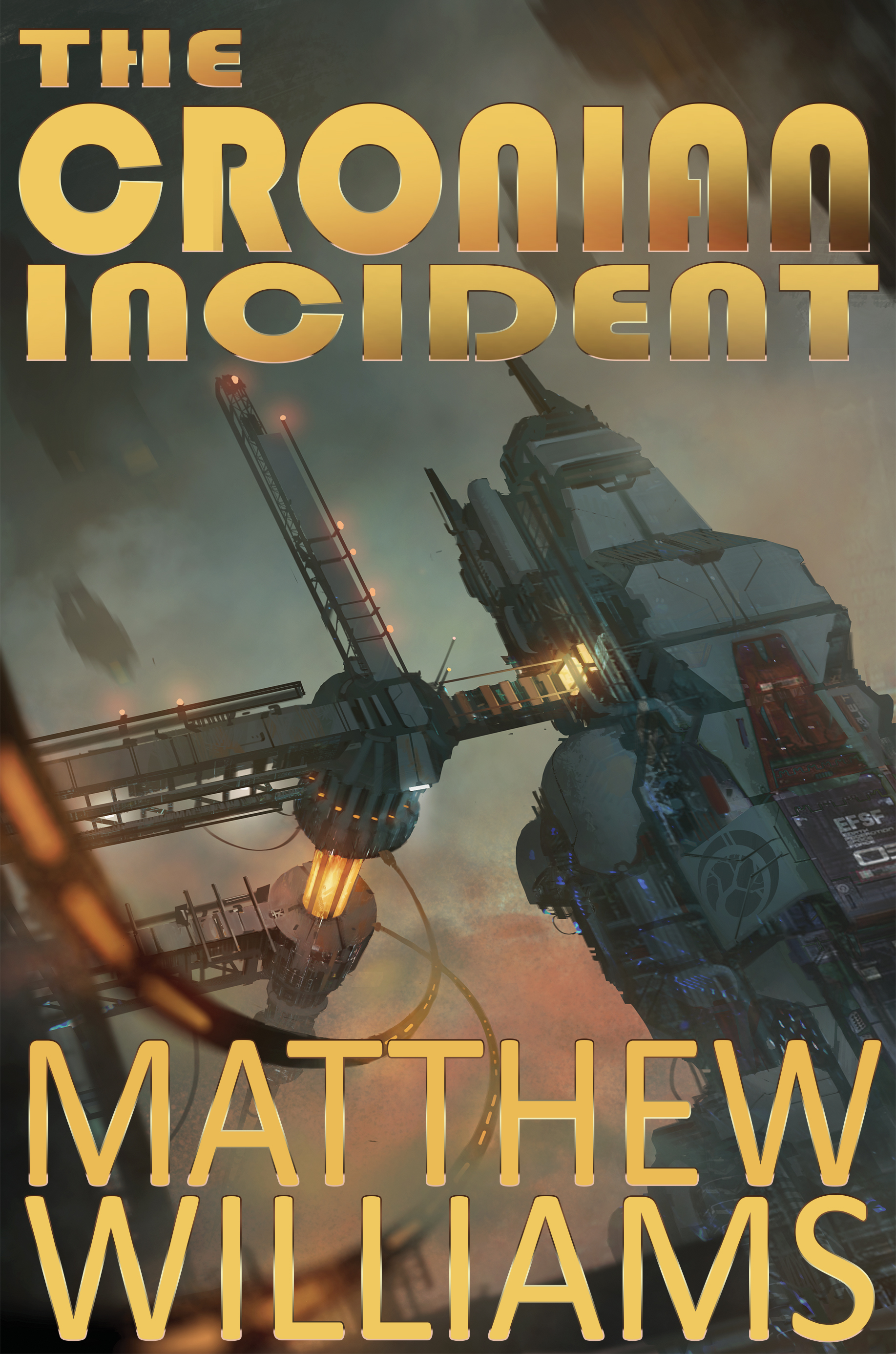
The Cronian Incident, Book 1 in the Formist series.

MW: For starters, TJM is the second installment in what is planned to be a trilogy. As such, it has a darker tone than the first book. There’s also much more action, which was an absolute must for me! After taking the time to build the setting in Book I, I wanted the protagonists to be thrown into the thick of it. Of course, this book also introduces a few new main characters and a few new settings. This gave me a chance to tell new stories and create some new worlds, which is always fun.

RU: TJM features a female-led cast, something we’re seeing a lot more in various media. Was that intentional on your part?

MW: Not originally, no. In the first book, most of the story is told from a single POV – Jeremiah Ward’s. I wanted the second book to be told from multiple points of view and had several characters in mind when plotting it out. As it turned out, all of the new characters were strong, motivated and independently-minded women. When this was pointed out to me – by my friend and colleague, Rami Ungar, no less! – I was quite pleased. I had not embarked on this book looking to make the cast female-led, but I was happy it worked out that way. I’ve often worried that as a male writer, I would default to writing male leads, or find that writing female characters was more difficult. It pleased me to see that this was not the case.

RU: This is your second book with Castrum Press, and you also have a short story featured in their anthology, Future Days. What’s it been like working with Castrum?

MW: It’s been excellent, really. As a recently-established publishing house led by experienced writers, they know the particular struggles that new writers face. It’s also very clear that they are interested in promoting new talent, which is something you don’t see a lot of these days in the publishing industry. Also, it gives me a chance to entrust my work to people who have been part of the industry and know what it takes to succeed in it. That’s very reassuring to a newly-established writer, and something that independent authors don’t get to enjoy.

RU: Science fiction is often described as a lens towards what the future could be, as well as what our society looks like now. Do you agree with that sentiment? And what do you think the Formist series says about humanity?

The Jovian Manifesto, Book 2 of the Formist series.

MW: Absolutely. Science fiction has always been about predicting what the future will look like, but that always comes down to how the world looks today. In that respect, science fiction books are an extension of the present-day world and are intended to convey messages about the direction it is taking. As for my own work, I believe they reveal that regardless of the time period, or the level of development we will have reached, humanity will always be facing the same basic challenges. How do we ensure our survival and our future? How do we erase the dividing lines and learn to live together? How do we ensure that our most cherished values also survive?

RU: What are your plans for the future at the moment? More books in the Formist series, perhaps?

MW: Oh yes! I hope to write a third installment for this series and very much want to explore the universe I have created further. This could involve some origin stories, since some of the characters I have created have interesting pasts that would require a whole book to explain. I also hope to write additional trilogies that take place farther down the road. But of course, that all depends on how the Formist series shapes up. And of course, I have several other ideas I would like to see in print.

RU: What are some stories, science-fiction or otherwise, that you are reading now and would recommend?

MW: I recently finished The Dispossessed and The Left Hand of Darkness by Ursula K. Le Guin, both of which I would strongly recommend. I also finished Halting State and Rule 34 by Charles Stross, Fire Upon the Deep by Vernor Vinge, and House of Suns by Alastair Reynolds. I recommend all of these books to people who are fans of classic science fiction, space opera and near-future speculative fiction.

RU: Rule 34? I thought that was just an Internet meme. Should I ask or…? Moving on: if you could pick a fictional universe to live in, which one would it be and what would you do there?

MW: Good question, and one which I really haven’t pondered much. I suppose if I had to choose, I would live in the universe dreamed up by the late and great Frank Herbert – i.e. Dune. I figure I could help with the terraforming of Arrakis given all the research I’ve done on the subject. I have always wanted to try The Spice too, and I figure I would be able to look out for myself since I know how the series goes. Plus, I would absolutely want to see what travelling through folded space feels like!

RU: Final question: Look out! A sandworm out of the Dune universe is about to attack! What do you do?

MW: Ooh, that’s a tough one to answer! Deploy a thumper, stand back, and get your hooks ready, because we’re going for a ride!

RU: I’ll pretend I know what that means, because I’ve been bad and haven’t read the Dune books yet. Thanks for being with us, Matt! I hope both books do very well!

That’s the end of the interview, folks. If you would like to keep up with Matthew Williams, you can check out his blog, Stories by Williams. You can also check out his writings through his Amazon page and through his Universe Today page. And of course, you can check out his Facebook and Twitter pages. And I highly recommend you check out his books, The Cronian Incident and The Jovian Manifesto. I found the former to be a great example of hard science fiction, and I can’t wait to start on the latter.

And if you have a new book out and want an interview, check out my Interviews page and leave me a comment. We’ll see if we can’t make some magic happen.

That’s all for now, my Followers of Fear. I’ll hopefully see you very soon with more to talk about. Until then, pleasant nightmares!

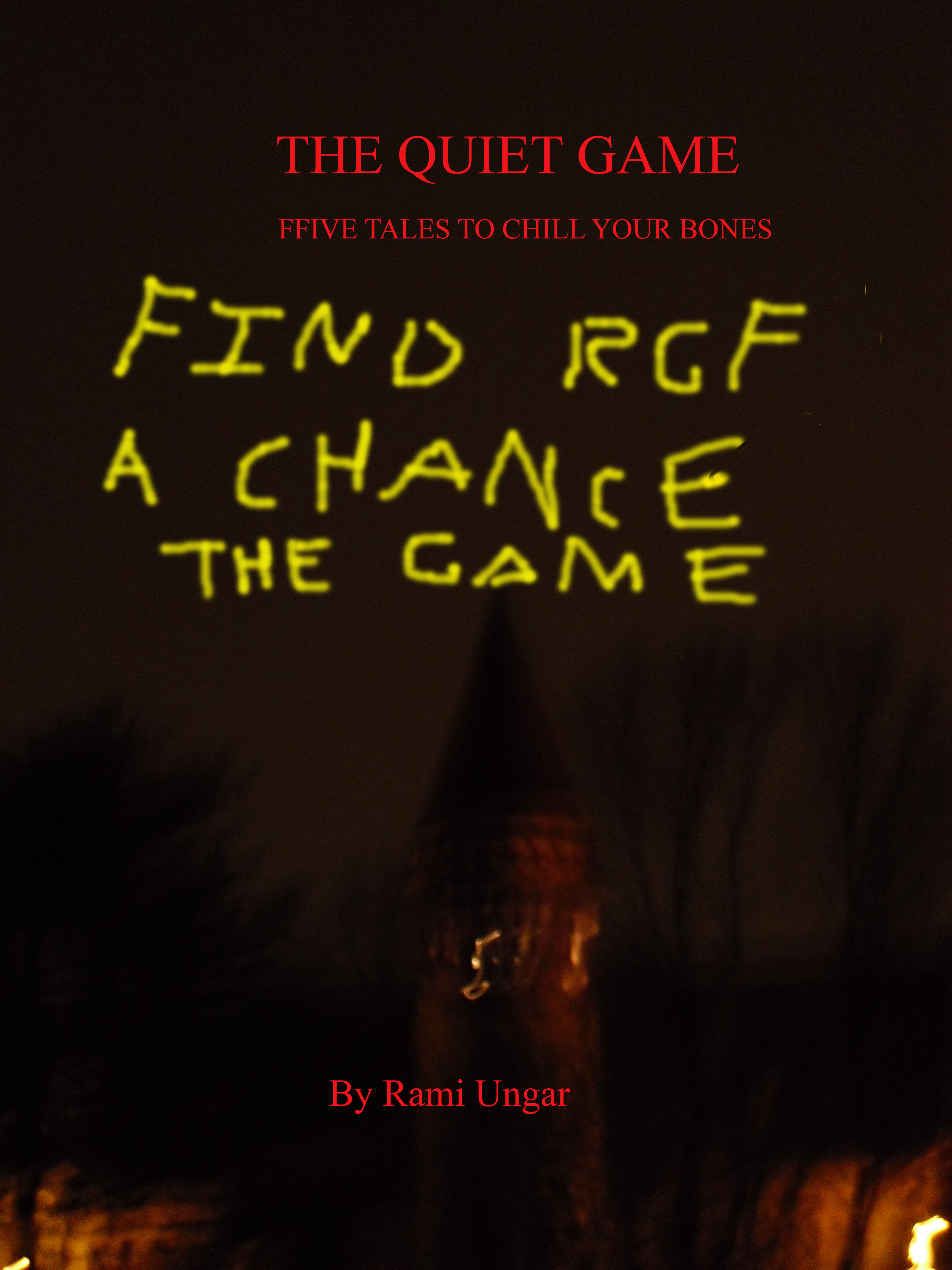
I bet you’re getting tired of my posts these past few days. I promise, this is (likely) the last one for a few days. And this one is to talk about my first published book, The Quiet Game: Five Tales to Chill Your Bones. And holy crap, it’s the five-year anniversary of its publication. Well, technically that was Tuesday, but as we all know, I’ve had a busy week.

So if you weren’t around back on this blog in 2013, I was still very new to self-publishing and was eager to dip my toes in. One short story I self-published had had decent results, but I was really interested to try something a bit longer. And as at that time Reborn City was still being edited, I decided to try a collection of short story. Thus we got The Quiet Game, five short stories I wrote over the course of a couple of weeks, had friends look at for feedback, and then published on July 17th, 2013. To this day, it’s one of my most widely-read publications, and the one that has the most reviews on Amazon, with a rating of 4.1 out of 5 based on 15 reviews.

Here’s what some readers have been saying about The Quiet Game:

A collection of five varied stories that get stronger as the collection builds, with the final being my favorite. Though I fancy myself able to “solve” the stories before the reveals, there were several surprises here, especially the reveal in the Quiet Game and I’m Going to be the Next James Bond. I also liked that Rami pulled no punches with his characters. In one instance, an anti-semite for instances uses words that would be hard for any author to write -though are necessary to his character. There are other examples sprinkled throughout the stories that show Rami’s commitment to telling the story in the way it needs to be told. A good collection for a stormy night!

–Joleene Naylor, author of Brothers of Darkness

This is a serviceable set of stories. The best one is not the titular title story. I only really have two issues with the collection. One of them is the notes after the story. I never really liked the self-indulgence of the writer explaining afterwards. To be fair, that could be just me.

The best story in my opinion is the Lady Orgres Den. That one had great tension.

–SavoirNoir

5 wonderfully crafted tales! I purchased this as an eBook originally and put off reading it for quite a while, I really wish I hadn’t waited. Sometimes when one purchases a collection of short stories you expect some of them to be less entertaining or of lower quality than the others, but none of these disappoint. Well worth the money, especially considering after you read each story the author gives you creative insight into what inspired him to write each tale, which is really wonderful.

–Jeff D.

I’m actually in a little bit of shock that it’s been five years since I published that story. So much has happened in those five years, and it doesn’t feel like five years have gone by either. But pass they have, and I’m glad to hear that these stories are still well-liked.

If this somehow interested you in reading The Quiet Game: Five Tales to Chill Your Bones, I’ll include the links below. And if you do end up reading the book, please let me know what you think. Positive or negative, I love feedback from my readers, and getting reviews helps me in the long run.

That’s all for now, my Followers of Fear. Until next time, pleasant nightmares!

Available on Amazon, Createspace, Barnes & Noble, iBooks, Smashwords, and Kobo.

It’s hard to believe that a number of things are happening today (believe me, I’m still pinching myself). But among those things, one of them is something I’d like to bring up here, and that’s today is the fourth anniversary of the publication of my second novel, Snake, the cover of which is over there.

Now if you’re unfamiliar with Snake, let me tell you about it. I was between books in the Reborn City series, and I wanted to write something a bit closer to my native horror instead of some more sci-fi. I’d had an idea a while back, partially inspired by the movie Taken and slasher films of the 1980’s, and spent about six months writing it in 2013. The result was Snake, which was published June 10th, 2014.

Here is the blurb on the back cover of the novel:

How far will you go for love and revenge? When a young man’s girlfriend is kidnapped by the powerful Camerlengo Family, he becomes the Snake, a serial killer who takes his methods from the worst of the Russian mafia. Tracking down members of the Camerlengo Family one by one for clues, the Snake will go to any lengths to see the love of his life again…even if it means becoming a worse monster than any of the monsters he is hunting.

I was pretty nervous about this novel when it came out. While it was one of the easiest for me to write, it was also one of the most violent stories I’d ever written, and I had no idea what people would think when they read it. Also,– I was still a college student, fresh off my first trip to Europe, and had only just become legally able to drink in the United States, so I was wondering if people would notice how inexperienced a person I was with the story.

To my delight though, people who read the book tended to enjoy it. At the moment, it has seven reviews on Amazon, with the average rating a very nice 4.4 out of 5. Here’s what some of them had to say:

I really enjoyed this book. When I selected “dark” for the mood, it was almost a toss up with suspenseful. You knew early on who the mafia killer was, but the question of how he was going to find his girlfriend and rescue her was suspenseful. I ended up choosing “dark” because of the level of violence our main character used in getting to the girlfriend. But he was a complex character. Even though he definitely had the dark side to him, there was a surprisingly good side to him, too. You don’t really see this until later on in the book. So early on, you might think this is an unredeemable character. But one of the most intriguing characters are those who aren’t what they initially seem, and for this reason, I enjoyed this character. The pacing was just right. It wasn’t rushed, and in no way did I ever feel it dragged, which is awesome for a book that was over 500 pages in paperback.

This book is violent, and it contains sexual situations. Some of it can be cringeworthy. So I wouldn’t suggest this for young readers. I’d recommend this only to adults. If it was a movie, it would be a strong R. There’s also swearing. These things don’t bother me as a reader, but I know it bothers some, which is why I mention it. But if you don’t mind these elements, I think you will enjoy this book. It’s a great thriller.

–Ruth Ann Nordin, author of Marriage by Contract

A very good read. The mixture of horror and suspense were on point. I now want to read more of Ramis great books.

–Sherri

Rami Ungar makes a promise to (the reader) in all his writings: he WILL scare you, and if he does “his job is done.” Snake will scare you. I am a huge Stephen King fan, so this should give you some idea of my tolerance level for gore, death and mayhem – I was scared. Rami takes you into places you would never have believed possible, and manages to pull his hero (and eventually his heroine) out of them against all odds. If you like to be scared. If you LOVE to be scared. You should read this book.

–Angela Misri, author of Jewel of the Thames

Being compared to Stephen King always makes me giddy.

Anyway, this novel still has a special place in my heart. It was a real form of experimentation for me in terms of writing with violence, writing thriller fiction, and writing a sex scene (that didn’t get cut out of the final draft), among other things. And I’m still open to returning to that story and writing a sequel someday. Maybe two, depending on a number of factors.

And if you’d lie to check out Snake and maybe see if it’s up your alley, I’ll include the links to check it out below. And if you do decide to get a copy and read it, please let me know what you think. Positive or negative, I love receiving feedback from readers, and if you leave a review on Amazon or another site, it helps me in the long run by letting other people know what you think and helping them decide whether or not to check out the book.

That’s all for now, my Followers of Fear. I have a big day ahead of me, so I’ll talk to you all later. Until next time, pleasant nightmares.

Available from Amazon, Createspace, Barnes & Noble, iBooks, Smashwords, and Kobo

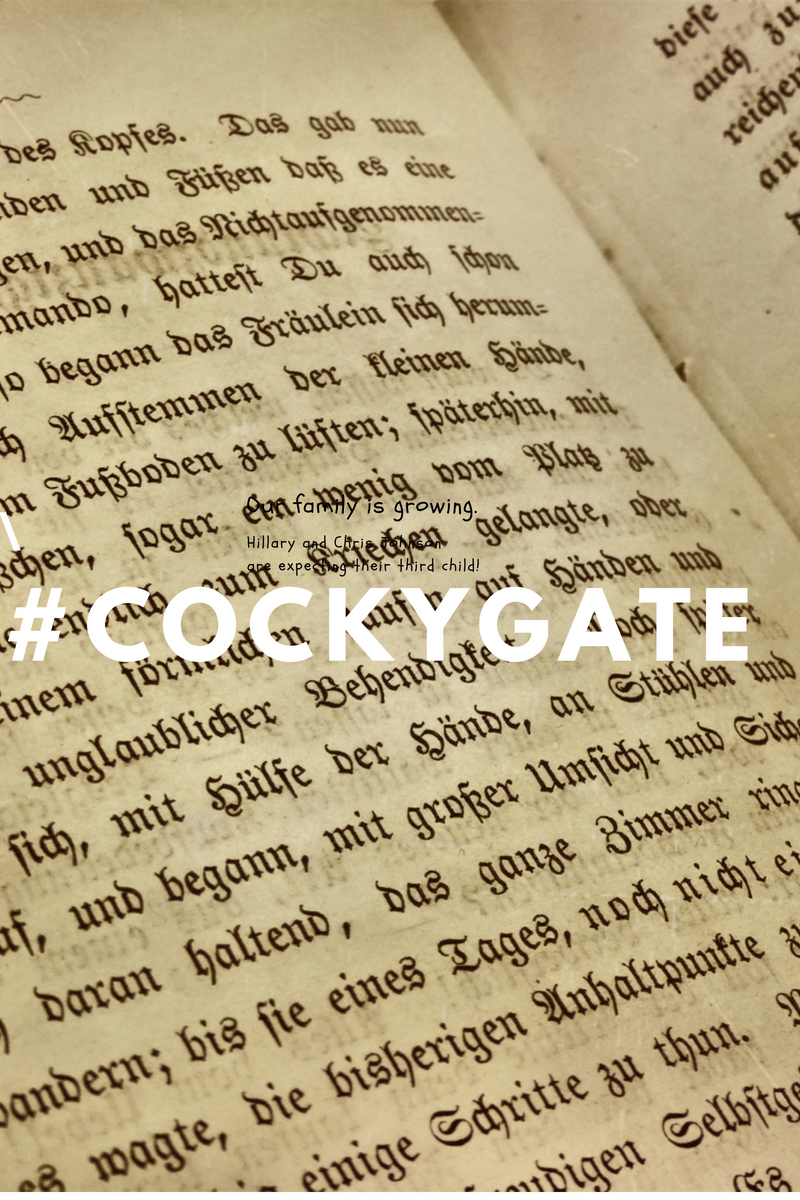
For my earlier posts on Cockygate from May 5th and May 28, click here and here, respectively.

I’m just going to skip over all the preliminary stuff and just get to the good news: the Romance Writers Association and the Authors Guild won a court ruling on Friday against Faleena Hopkins, the notorious romance author who put a trademark on the word “cocky” and then sent letters to authors who had books with “cocky” in their titles, threatening legal action if they didn’t take their books off Amazon or change their books’ titles.

Now, if you read my post from last week, you may remember that Hopkins’s lawyer had sent Kevin Kneupper, the novelist and retired lawyer who’s leading the fight against Hopkins, along with author Tara Crescent and publicist Jennifer Watson, a letter with intention to sue them, as well as filing a Temporary Restraining Order (TRO) against the Petition of Cancellation for the trademark. Since then, it’s also come out that Hopkins was asking for another TRO against the publication of a collection of stories called Cocktales: The Cocky Collective, which was named as an obvious protest against her trademark (Jennifer Watson was incorrectly named by Hopkins as the publisher of the book in the papers filed for the TRO).

On Friday June 1st, several things happened:

  1. Kneupper was dismissed as a party to the lawsuit Hopkins’ lawyer filed, meaning he’s free to continue fighting against the trademark.
  2. Hopkins did not get her restraining order, so the petition and all the other legal battles against her can continue.
  3. Finally and most importantly, for the moment books with the word “cocky” in the title can be published, including the Cocktales anthology.

In other words, Hopkins lost, and she lost big. And while there’s another court date in September, and presumably this is when the decision on her trademark will be decided once and for all, it’s still not looking very good for Hopkins. As stated in the article the Authors Guild put on their website:

In ruling against the author Faleena Hopkins, who claimed exclusive rights to “cocky” for romance titles, Judge Alvin Hellerstein of the Southern District of New York, stated that he did not believe that Hopkins was likely to succeed on the merits.

In other words, the judge says that Hopkins’s trademark is on pretty weak legs.

Now, there’s still a lot of work to do. For one thing, while people can still publish their books with the word “cocky” in the title, the final decision won’t be made till September at the earliest. That gives Hopkins, her lawyers, and her supporters (yeah, there are some out there) to come up with legal strategies for the trial and for any potential appeals, both from her side and the other side. And unfortunately, there are a number of copycats out there trying to get trademarks on common words used in titles. It’s a hot mess.

But this is a bright spot in the ongoing saga of #Cockygate. I’ve heard from many authors who have expressed fear over the outcome of this controversy, and what it could mean for them if they couldn’t write because they could incur legal repercussions for using an everyday word in their story’s title. Hopkins’s defeat on Friday gives us all a little bit of hope that we can continue to not only write our stories, but give them almost any title imaginable and not have to worry about getting sued for it.

So with the trial not till September, what can we do now as authors? Well, we can continue to show our support for Kneupper and the legal team fighting Hopkins, as well as the RWA and all of the authors who’ve been affected by Cockygate (remember, if you’ve received a letter from Hopkins, contact carol.ritter@rwa.org for assistance and guidance). This can be something as casual as sympathetic messages online, or buying, reading, and reviewing the books of those involved/affected (a single sale and review can do an author a ton of good, believe me), or even donating your time and skills to the legal battle.*

You can also spread the word on Cockygate and any developments in the scandal. The more people who know what Hopkins is doing, the more we can rally against her or anyone else trying to copy her. The louder our voices, the stronger we are, and the better positioned we are to affect positive change.

And finally, if you’re a writer, continue writing. Don’t let fear get in the way of telling the stories you were born to tell. Like the people behind Cocktales, when we decide to put something out in defiance of bullies, we make a statement that we’re not going to take this sitting down.

That’s all for now, everyone. If there are any other significant developments, I’ll post about them. Until next time, pleasant nightmares.

UPDATE 6/3/18 @ 7:18 PM EST: Erica Unsophisticated Blood Thirsty Wolf Fisher (@monet5280) informed me over Twitter that both Ms. Crescent and Ms. Watson’s lawyers are working on a motion to dismiss, which will be due in on June 22nd. In addition, Ms. Hopkins has to respond to the Petition of Cancellation from Mr. Kneupper no later than June 23rd. So it looks like things will be heating up longer before it starts to get cold again. Here’s hoping the end of June brings more good news like what we saw on Friday.

*Just be careful before you donate to any legal fund for those affected or claiming to be for any legal teams against Hopkins. There are a ton of people out there who have no qualms against taking advantage of those suffering in order to make an easy buck.

Video Rage, Book 2 of the Reborn City series

So as I promised in my last post, I have another post out today. And this one is a special one. Two years ago today, I published Video Rage, the second book in my Reborn City series.

If you’re not familiar with the Reborn City series, it’s a science fiction trilogy that I started writing back in high school. The story follows street gangs living in a dystopian future, in particular a gang called the Hydras whose leaders have very unique abilities. The novels explore themes such as prejudice and self-fulfilling prophecies, gang violence and drug addiction, and overcoming the expectations of others and of yourself. I published the first book, Reborn City, back in November 2013, and the second book, Video Rage, came out on June 1st, 2016, right before I started working in my current position.

While the books only have a very small following, those who’ve read them have had very enthusiastic things to say. Here’s are some of the reviews for Reborn City:

It’s a neat exercise in trying to see through the eyes of someone different from oneself. It incorporated a lot of fly comic-book-esque tropes. A good beginning effort of an up an coming new author who has some cool ideas to explore.

–Amazon Customer

This is not a genre I typically delve into, but I took this book on vacation and couldn’t put it down. The plot had me turning pages at quite the clip. The characters were unique and interesting and the imagery had me creating my own visual of what Rami’s interpretation of the future looked like. For first time novelist, Rami Ungar, this was an outstanding showing of talent and commitment to his passion of writing. Looking forward to seeing what he comes up with next!
–MU
This was really a page-turner; I was hooked from the start and read it in a day. While not perfect, this is an auspicious debut novel from a good author. I look forward to reading the rest of the books in this series when they come out!
–Josh M
And while it doesn’t have as many reviews, Video Rage has also received a warm reception:

From what I understand, this is book 2 in a series. That being said, I had expected a cliffhanger of an ending. I’m not a fan of cliffhangers, but in this particular book, I think the author did an excellent job of finding the balance between making the story stand complete within itself while ending the story on a note that let you know another book was coming. Personally, the ending was one of the most intriguing ones I’d read in a long time. It didn’t leave you to figure it out for yourself (which is something I hate). The author let you know what was happening and why while leaving enough to be answered in a future book.

That all being said, the overall book was an enjoyable read. I especially liked that a former bad guy turned things around and redeemed himself. Those types of characters are one of my favorites. I had hoped in Reborn City (Reborn City series Book 1) that he would, and it was very satisfying to see that fulfilled. I also liked the underlying theme in the novel that what the media tells people through the major outlets is slanted by government agendas. In this book, it was up to the main characters to find an alternative way of getting the truth out.

I think this book is best read after reading Reborn City (Book 1) because it really helped to have the background on the characters, and I think this book is far more effective if you have the foundation Book 1 gives you. The science fiction geek in me really loves the genetic aspect. And so that I don’t spoil anything, I will say the real bad guy in this series does a nice twist in this book along that line.

–Ruth
I was really looking forward to the continued journey of the Hydras and Rami was able to produce. Zahara is my favorite character and her development from an insecure girl into a strong woman came out clearly in this book. Some other character development was really unexpected but the book moves at such a fast pace that it didn’t hold me up at all. The story line is quite imaginative and, as usual, there isn’t much predictability there. I think that is what draws the reader in – you just need to keep going to find out what weird twists and turns happen next! Looking forward to continuing this journey with Rami and the Hydras.
–Michele

Reborn City, Book 1 of the Reborn City series.

If any of this has piqued your curiosity, I’ll post the links for the books below. Please check them out if you’re interested. And if you do end up reading them, please let me know what you think. Email, blog comment, review online, I’d love to hear your feedback, positive or negative.
That’s all for now, my Followers of Fear. I’ll probably have another post out tomorrow. Until next time, happy reading and pleasant nightmares.
Reborn City: 

Available on Amazon, Createspace, Barnes & Noble, iBooks, Smashwords, and Kobo

Video Rage:

Available from Amazon, Kindle, Createspace, Barnes & Noble, iBooks, Smashwords, and Kobo

I wasn’t planning on writing another post about this subject, but I got so many updates about the subject, I felt I should chime in. And I would’ve published this post earlier, but I had a family thing to attend, so that took up a bit of time. Well, no time like the present. Let’s talk Cockygate.

Now, for those of you who don’t know, or don’t have time to read my last post on the subject, let me give a bit of background: Faleena Hopkins is a romance author who writes a series of books called the Cocky Brothers series (though apparently it’s gone by several names in the past). Recently she applied for a trademark for the word “cocky,” with somehow got approved by the Patent & Trademark Office. Technically speaking, this only allows her to have control of the word using a particular kind of font on her book covers, but she’s taken this to extreme levels, and has sent cease and desist letters to authors who use “cocky” in the titles of their books, telling them to either change the names of their books, take them off Amazon, or face legal action. The authors targeted are mainly self-published writers who can’t afford a legal battle, and changing a book’s title is hellishly hard (imagine the insanity that might come from trying to change the name of the Harry Potter books, for instance). This puts them in a really difficult position.

As you might expect, when word got out about this, things escalated quickly: authors quickly called out Hopkins on this move, calling it extortion and bullying; the hashtags #cockygate and #ByeFaleena (ha! that’s still funny) started trending on Twitter; the Romance Writers Association asked anyone affected by Hopkins to send proof to them and started consulting with an IP lawyer; and Hopkins, who apparently once said that anyone who uses stock photos after she uses them is copying her (that still boggles my mind), posted a video online trying to defend herself and instead dug herself deeper into a hole.

Among other things. Yeah, this is one screwed up situation. And this has not only people angry at Hopkins, but afraid of the future: if you can trademark any word in a title, it’s possible no one will want to publish stories because they’re afraid they could get sued by a trademark owner for using a common word.

However, people have been fighting this, and keeping the story alive. And as time has gone on, there have been further developments in this case. Here are just a few:

  • A novelist and retired lawyer named Kevin Kneupper has come together with a bunch of other authors/lawyers to try to get the Patent & Trademark office to toss out Hopkins’ trademark using a petition for cancellation, which I applaud them for doing and hope they are successful.
  • The creator of the font Hopkins uses for her books came out and stated that anyone who uses his fonts isn’t allowed to apply for trademarks using his font. So, Hopkins is telling people they’re infringing on her trademark while at the same time breaking the rules of usage for the font she uses. Someone needs to read the fine print before telling someone else to do so.
  • Amazon has stated they won’t kick books off its website that have been targeted by Hopkins while they wait to see how this whole thing unfolds.
  • A company called Rebellion Games tried to get a trademark on the word “Rebellion,” (just the word, as far as I can tell), and Mr. Kneupper apparently convinced them to reconsider (and suddenly I want to interview him for my blog and/or name a character in my next novel after him).
  • Hopkins uploaded a video that’s since been taken down (but this is the Internet, so nothing ever goes away), where she said people were calling her and her fans stupid, and then said that meant they were calling her and her fans autistic. Um, say what? As far as I can find, no one brought up autism being mistaken for stupidity before you did. And as someone who’s on the spectrum, would you kindly leave my community out of this? IT HAS ABSOLUTELY NOTHING TO DO WITH WHAT YOU’VE BEEN DOING!!!
  • In the same video, Hopkins also said someone had insinuated that she was part of the KKK (proof please?), and said she would never be a Klansman, as she’s descended from a slave. Again, what does that have to do with you trying to trademark a word? And from what I’ve been hearing, some of the authors that have been targeted by the cease and desist letters are writers of color. And you’re not immune from criticism just because one of your ancestors was a slave. Heck, some of your critics may also be descendants of slaves.
  • Hopkins’s books have apparently slid from the bestseller lists. Apparently there are consequences to doing something like this. Who knew?
  • And most recently, Hopkins’ lawyer has sent Kneupper, along with fellow authors/lawyers Jennifer Watson and Tara Crescent, a letter stating that he’s going to be filing a lawsuit against them and seeking a Temporary Restraining Order against their Petition of Cancellation.

Now, this last one happened on Friday apparently, so with a three-day weekend, I have no idea what might develop before Tuesday, if anything. The legal process for this sort of thing can be frustratingly slow. However, this latest development just goes to show just how far Hopkins will go to try to keep her trademark and the power she feels this has given her. She’s determined to make herself seem like an innovative businesswoman who’s being victimized by a mean gang of authors trying to protect her brand.

Well, let her. She may have some supporters (some, but not many), but the longer this drags on and the more she tries to make herself seem like the victim, the more we’ll see her for the bully she is. And with the movement against what she’s doing growing and gaining allies every day, even if God forbid she does succeed in getting her copyright, she’ll just find herself isolated and hated. And in the end, that’s a victory no one wants.

I would like to applaud everyone who’s come forward about Hopkins targeting them. Your bravery is a true testament to your resiliency and spirit. Remember, if you’ve been targeted, email carol.ritter@rwa.org and share your story. Together, we can protect your hard work from what’s happening.

I’d also like to applaud all the other authors and readers out there who have said they won’t stand for this chicanery, and are fighting it every day, on and offline. And I’d like to give an especially big hand to Kevin Kneupper, Jennifer Watson, Tara Crescent, and the other writers/legal experts lending their talents to this case. Words cannot express what you’re doing to defend authors and fiction writing in general. Thank you for all you’ve been doing.

When further updates come along, I’ll likely put out another post. Until then, keep your eyes peeled for more chicanery, and remember, we do have the power to fight back against this. We just have to be brave enough to use it.

Last week I had a dream that started pleasantly and ended up being kind of nightmarish: it involved me and a friend of mine from high school navigating an area with lots of rivers and creeks on surfboards. We were looking for a mythical golden treasure trove that many had searched for and failed. We’d heard the treasure we were looking for was cursed, but we went searching for it anyway, because nothing bad has ever come from seeking and finding cursed objects. Somehow we found the treasure where so many others had failed, split it up between us, and go home. However, soon after that, weird stuff starts happening: things move on their own, the faces on the coins change shape, and that’s just the start of our problems. Well before it gets really bad though, my friend and I realize that we have to return the treasure to where we found it.

At some point, someone in the dream says I could write a story about what’s happened to us. To which I replied, “Someone already did. It’s called Pirates of the Caribbean.”

After we agree to take the treasure back, I woke up. It didn’t take me long to figure out the main message of the dream (besides the fact that I can point out when my situation resembles a famous film in my dreams). You see, the night before I’d taken a swipe at starting the fifth draft of Rose, based on my publisher Castrum’s comments and suggestions. I got about a page in, and I hit a metaphorical roadblock. I couldn’t figure out how to advance. So I ended up going to bed not sure how to move further in editing this novel while at the same time integrating my publisher’s suggestions (many of which I agree with and think could elevate the quality of the novel).

That dream was my subconscious giving me a rather creative presentation of my doubts and anxieties regarding the editing and publishing process for Rose: that signing with a publisher was a really bad idea, that there’s nothing I’ll be able to do to make this novel publishable, that even if I somehow get it released, it’ll suck and anybody who reads it will leave bad reviews. A dark side to achieving my dream and finding a publisher, represented expertly by cursed gold.*

And then on Saturday, I tried again. And it went extremely well. I got thirteen out of sixteen pages in that chapter done. Yesterday, I got the last three pages done, plus all eleven of the next chapter (and while taking in a double feature on the Blu-Ray Player in the afternoon). And then today, I got another chapter done within a couple of hours. That’s an average of a chapter a day! Take that, conscious and subconscious fears involving working with a publishing process.

Obviously, these are still early stages of the fifth draft, and I’m going to encounter moments where I’m not sure what to write or how to integrate a suggestion from the publisher. Luckily though, my publisher has been great about answering any questions I have (thank God they don’t see me as a pushy American) and offering feedback to my ideas on how to integrate their suggestions. And with these last three chapters, I’ve been able to move forward mostly on my own. And with time, I’m sure I can get through the rest without trouble, and well before May 16th. I just have to keep being creative and persevere.

Obviously, doubts about what I’m doing and where I’m going will plague me throughout my writing career from here on out. I’ve passed a new turning point in my career, and it’s a whole new playing field from here on out. But the next time I feel those worries start to get to me, I’ll remember the dream about the cursed gold, and the productive weekend that followed. And I’ll just keep editing through my doubts.

And while I still have your attention, I’d like to give a shout out to my good friend and fellow novelist at Castrum, Matt Williams. He just finished writing his novel The Jovian Incident, Book Two of the Formist series, and will hopefully have it out later this year. I can’t wait to read it, as I really enjoyed the first book, The Cronian Incident, which currently holds a 4.7 out of 5 on Amazon based on 12 reviews. If you would like to read some hard-boiled detective fiction in a futuristic universe, this series may be the one you’re looking for. Check it out and leave Matt a review while you’re at it.

Until next time, my Followers of Fear, pleasant nightmares (hopefully none that resemble popular contemporary movies, though).

*Still not sure why I was using a surfboard to navigate rivers and creeks (obviously a reference to the various paths we authors take to finding a publisher), as well as why that particular friend was with me (I love the guy and it always seems like no time has passed at all when we see each other, but he’s not a fiction writer, so I can’t think of why he would be in the dream).

Well, looks like I’m not the only one who’s having a dream come true. And I’m very excited about this interview. She’s a rather unique voice I’ve come to know recently.

I first met Rabbi Leiah Moser back in December, when I ran across one of her posts on her blog, Dag Gadol (Hebrew for “big fish”). Her post was about why, as a rabbi, she was writing a fantasy novel. I read through it, and I found that not only did she have some good points, but there was something about this blog and its writer’s voice I found compelling. As I read further, I found out that not only was she a Member of the Tribe, a rabbi, and a writer, but a member of the LGBT community. And here’s me, not just a writer, a Member of the Tribe and of the LGBT community, but the son of two rabbis, one of whom is also LGBT. I think the first line of my first comment on her blog was something like, “An LGBT female rabbi who writes fiction. Where has this blog been my whole blogging life?” Thus started our acquaintanceship.

Recently, Rabbi Moser announced that her YA fantasy novel, Magical Princess Harriet, had been published and was live on Amazon. Me being me, I offered to give her an interview here on my blog. Thus are we here today to here about Rabbi Moser and Magical Princess Harriet. Enjoy!

Rami Ungar: Welcome to my blog, Rabbi Moser. Tell us a bit about yourself and how you got into writing.

Rabbi Moser: I think I’ve wanted to write a fantasy novel since I was in the sixth grade, but the road to actually achieving that ambition has been a long and convoluted one. Throughout my teenage years and into adulthood I tried my hand at writing fiction from time to time, but never managed to actually finish anything to my satisfaction, partially I think because I still hadn’t managed to get the whole identity thing nailed down. Trying to write without really knowing who you are is like trying to run on loose sand — the ground keeps shifting beneath you and you never seem to make any progress. After a while I kind of gave up on the dream of being a writer. I tried to find other dreams to pursue, but in a lot of ways I was just drifting.

Then while I was living in Japan I had this really intense religious experience. It’s kind of hard to explain, but the practical upshot was that afterwards I had this absolutely unshakeable conviction that God was real and that I needed to be Jewish. When I got back to the United States I found a synagogue and began attending, and after a while converted to Judaism. Later on, I decided I wanted to deepen my Jewish learning so I could do more work in the Jewish community, and that’s how I ended up moving out to Philadelphia to go to rabbinical school.

Rabbinical school was amazing, but before too long I was running into the same problem there that I’d had with my writing, namely that to do this kind of work you really have to bring your authentic self, whereas I’d been doing my best to hide from my authentic self ever since I was in middle school. After a great deal of soul searching I decided to come out as transgender and start my process of transitioning, and that, of all times, was when I finally realized that I had an idea for a book that I wanted to write. It was really that closely connected — converted to Judaism, came out as trans, and then the idea for Magical Princess Harriet popped up out of nowhere begging to be written.

If anything what I’ve learned from all this is that in this life things sometimes have to happen in a certain order and I am in no way the one who gets to decide what that order is. As they say in Yiddish, a mensch tracht un got lacht (a person plans and God laughs).
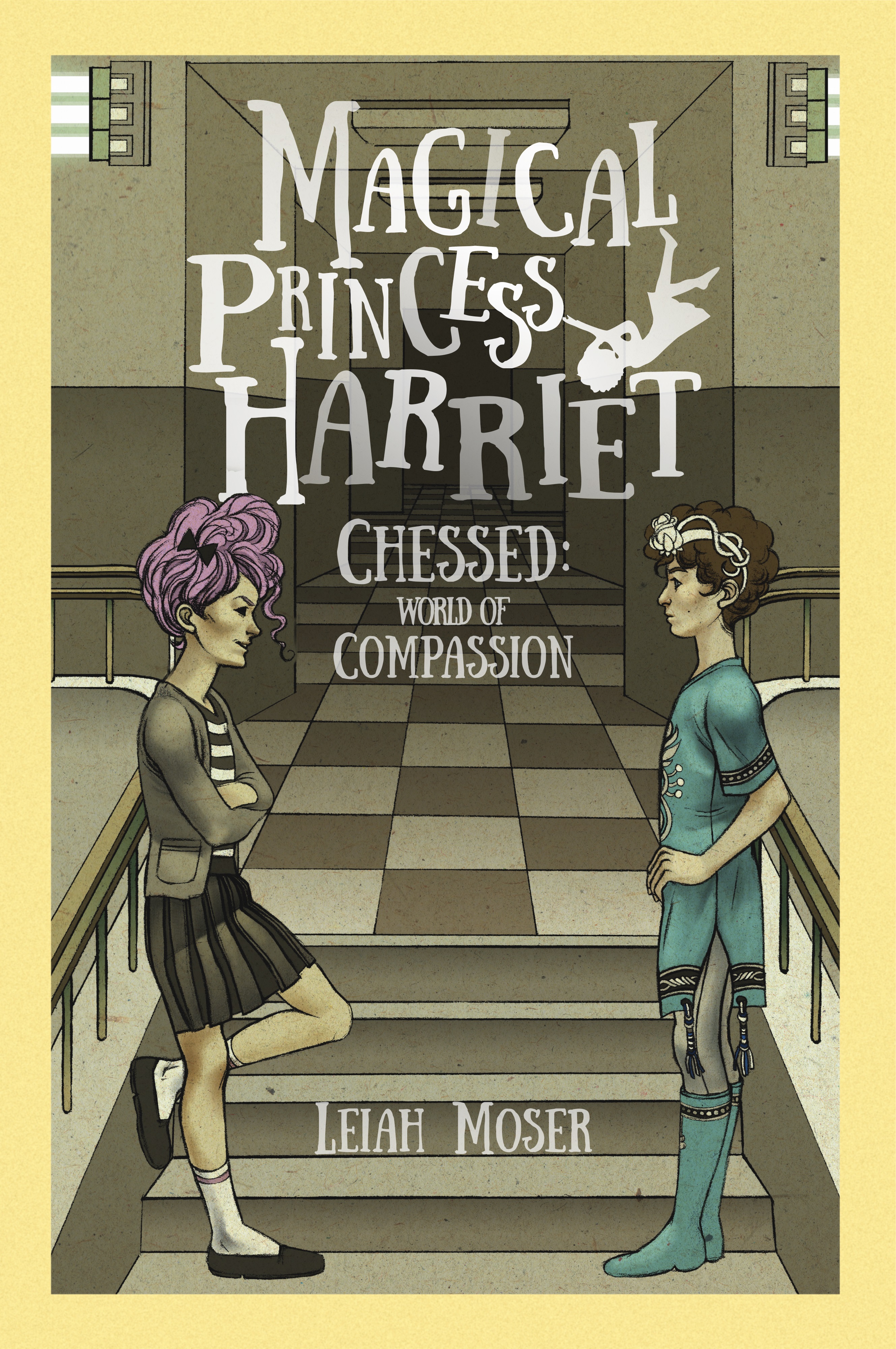
The cover of Magical Princess Harriet.

RU: Reminds me of the old country. So tell us about your new book, Magical Princess Harriet. I’ve heard some good things.

RM: Magical Princess Harriet is a young adult fantasy novel that draws its inspiration in roughly equal amounts from the “magical girl” genre of anime, Jewish mysticism, and my own strong feelings about LGBT inclusion and neurodiversity in Judaism. It’s about a young trans girl named Harriet Baumgartner who is doing her best to avoid having to think about the persistent feeling she has that she’s not supposed to be a boy, when a pushy angel named Nuriel shows up and tells her that she’s a magical princess now and that it’s her job to protect her town from the forces of darkness. (A quick side note: You have no idea how difficult it is to figure out how to talk about a book in which the main character changes their name and pronouns a third of the way in without misgendering them. Of all the challenges I’ve faced in figuring out how to explain this book to people, that has been the most difficult!)

RU: Tell us about some of the characters, and why we might like (or if applicable, hate) them.

RM: Harriet I’ve talked about a little already, so let me talk about her friend Frances.

Frances and Harriet have been best friends for years, ever since they met in Hebrew school. When Frances was six years old she was diagnosed with Autism Spectrum Disorder (ASD), and ever since she’s been pushing back against peoples’ tendency to regard her as stupid or crazy because she sometimes has trouble speaking. Obsessed with architecture, she has an inherent talent for understanding spatial relationships, which serves the kids well in the labyrinthine corridors of Arbory Middle School where the ordinary laws of space and geometry tend to break down.

The girl on the cover with the lavender hair and the dark holes where her eyes ought to be is Kasadya. She looks like that because she’s one of the nephilim, a group of creatures who got their start as angels unwilling to devote their existences to service. As a nephil-girl, she has the power to influence human minds, and she has used this ability to turn the middle school into her own private domain… well, private except for her brother Azrael, that is, but as far as she’s concerned she is the one in charge. Kasadya likes to think of herself as an epic villain from a TV show or comic book, and she’s been waiting for a hero to come along to challenge her. When Harriet shows up, glowing like a disco ball, it occurs to Kasadya that she might fit the bill — much to Harriet’s chagrin.

RU: What was the inspiration for MPH? Did any of your own life experiences make their way into or influence your writing of the story?

RM: I think all of my life experiences made it into the book in one way or another. This was an intensely personal project for me.

RU: MPH had an illustrator, Magdalena Zwierzchowska. How did you two meet and what was it like working with her on the book?

RM: When I got to the point where I was thinking seriously about publishing this book for real I knew I wanted to find an illustrator. I’ve always been a very visual person myself, and know how helpful illustrations can be in solidifying one’s sense of the world an author is presenting. How we met was fairly prosaic — I posted an ad on DeviantArt indicating that I was looking for someone to illustrate this book, and she was one of nine or ten people who responded. I was totally charmed by her work, by the gorgeous, surreal creepiness of it, and so she got the job.

Working with her was easy in some ways, difficult in others. She was extremely professional and always willing to listen to my input and feedback regarding how the characters and setting elements should look. The tough part was figuring out how to translate the images I had in my head into concrete instructions she could use. In the end I was very pleased with how it all turned out. I think it has a very unique look.
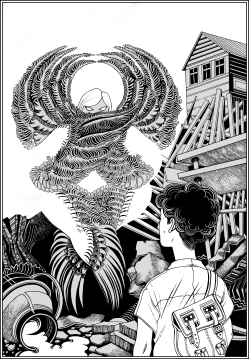
An illustration of a seraph by Magdalena Zweirczkowska.

RU: You address several issues in the pages of MPH: autism spectrum disorder, Jewish identity, gender identity, intersectionality, etc. Was it hard to talk about those subjects in the book?

RM: Yes. Not because I normally find it difficult to talk about these topics (on the contrary, most of the time I can’t shut up about them!) but because I didn’t want to address them in a way that would come across as preachy. That may sound a bit weird, coming from someone whose job literally involves preaching, but I was writing with the assumption that these were things my target audience, middle schoolers and teens, are dealing with every day, and the awareness of that fact demanded that I approach what I was doing with a self-critical eye.

RU: MPH is a crowdfunded, self-published book. What made you decide not only to self-publish, but to crowdfund your story?

RM: While it is theoretically possible that I could have found a publisher for a book like this, my hopes were not high. That has nothing to do with the quality of the book, mind you, but rather its subject matter. MPH in many ways defies categorization. I mean, Jewish fantasy is not exactly a well-represented subgenre, is it? Add on top of that the transgender element and… well, I felt like I might be able to find a publisher for a Jewish fantasy book, and I might be able to find a publisher for a queer fantasy book, but a queer, Jewish fantasy book with a transgender protagonist? That’s where I wasn’t so sure.

Also, I’ll admit, there was a part of the decision that was about actively wanting to do it myself. I’ve always been fascinated with every aspect of the publishing process, and with print-on-demand and online sales venues making it so easy to self-publish these days, it seemed like a waste to write the book and then turn it over to someone else to produce. I probably bit off more than I could chew, and I had to spend a lot of time learning about things like layout and formatting for print, but in the end I’m really happy with the way it turned out.

RU: What has the reception for MPH been like so far (from congregants, friends and family, random Internet people, etc.)?

RM: It’s still early days, but so far all the feedback I’ve been getting has been very positive. The first question of everyone who’s actually finished the book has been, “When is the next one coming out?”, so that’s pretty great to hear. My one thing is that because my Kickstarter backers are obviously all adults, I haven’t yet received any feedback from the young people who are the primary audience of the book. I’m really looking forward to that.

RU: Are you working on anything new? And what are your plans for the future?

RM: Right now I’m mainly focusing on getting the word out about Magical Princess Harriet, but I have plans for at least two more books in the series. After that… well, who knows? It all depends on what kind of response I get, I guess. I really loved writing this book, and now that I know I can, I feel like there’s very little stopping me from writing another, and another, and…

RU: What advice would you give another writer, regardless of background or experience?

RM: Write! But that’s ridiculously obvious and patronizing, so I take it back. Here’s the best piece of advice I can give: Take the time to figure out who you are and to learn how to be okay with that. Writing can be this incredibly daunting thing because those ideas and feelings on the page you just handed to someone else to read are basically you. It’s hard not to get intimidated by that and start pulling back, to restrain the words, force them into a mold that’s more about what you think others are expecting than it is about what you have to write. Edit your writing, not yourself.

And also: It is ridiculously easy to publish a book these days. Give it a try, you’ll see what I mean.

RU: Final question: if you were stuck on a desert island for a little while and could only take three books with you, which ones would you picks?

RM: Ack! That’s so hard! Assuming that “three books” refers to three actual bound volumes and that bringing an entire set would be cheating, I have to go with:

  • Volume 2 of my portable Talmud set (the one with massechet Chagigah)
  • 1Q84 by Haruki Murakami
  • A copy of The Star of Redemption by Franz Rosenzweig, because then I might be able to actually finish the darn thing.

RU: Thanks for being on the show, Rabbi Moser. We all hope the book does well.

If you’re interested in checking out Magical Princess Harriet, you can check it out on Amazon. And I highly recommend checking out her website Dag Gadol. Trust me, it’s a great site and I always enjoy seeing new posts in my inbox.

And if you would like to have an interview for your new book, hit me up on my Interviews page or email me at ramiungar@ramiungarthewriter.com, and we’ll see if we can make some magic happen.