Posts Tagged ‘celebrities’

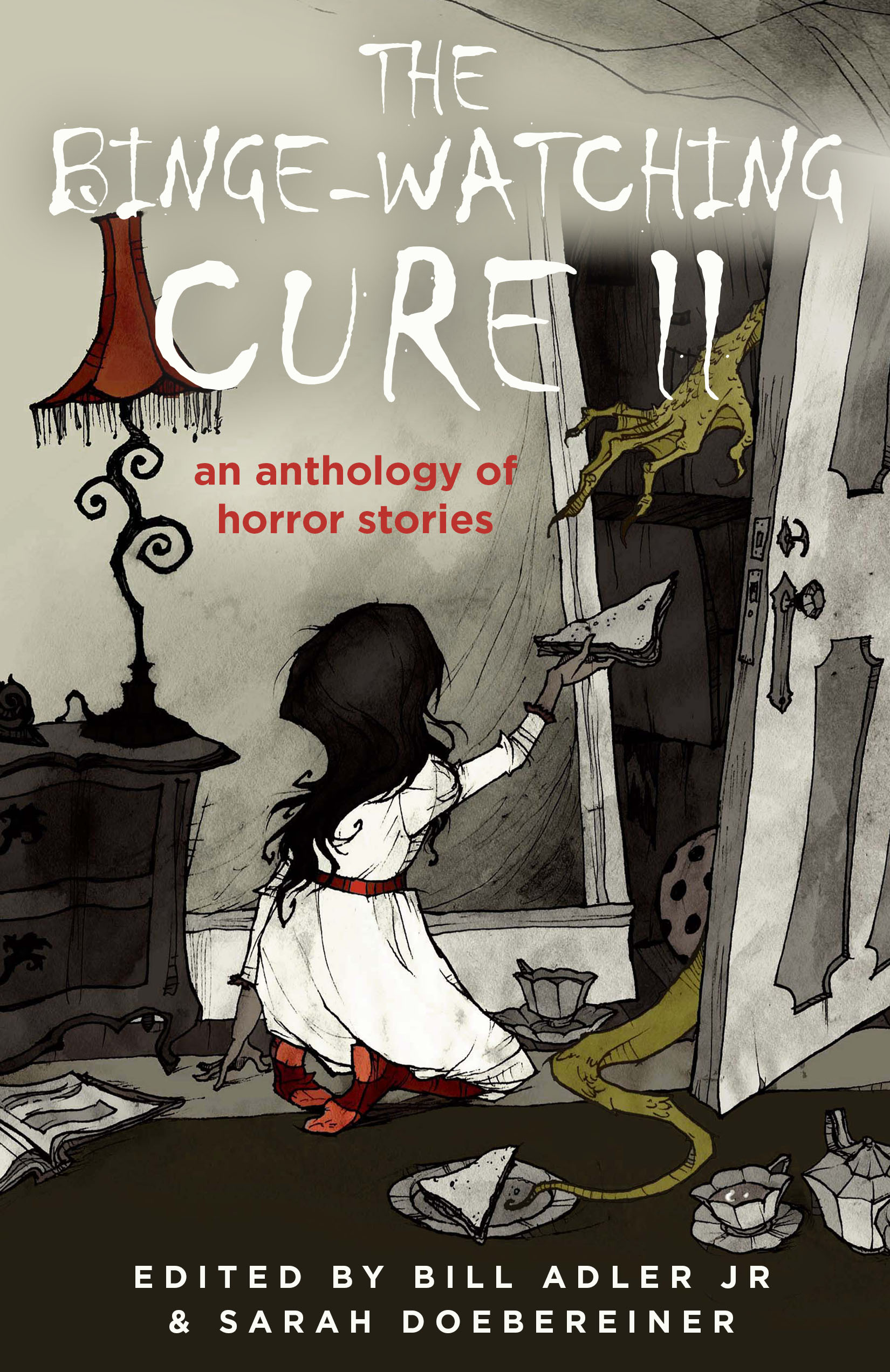
Look at this cover! It’s freaking beautiful!

If any of you checked my Facebook page or my Twitter feed after my last post, I hinted that I might have some good news I would be sharing today or tomorrow. Three years ago, I wrote a story called Car Chasers, which I describe as a mash up of Fast & Furious-style races with a ghost story. About a year and a half ago, I announced that the story had been accepted into an anthology. And last night, that anthology, The Binge-Watching Cure II, was released by Claren Books on Amazon!

I’m very excited to let you know this horror anthology has been released. It’s a rather unique anthology, as every successive story is longer than the one preceding it. In fact, during the submission process, we had to submit our stories based on a certain word length and how close we were to fifteen percent of that word count. I was lucky enough to be considered for the eight thousand word spot, and after some deliberation, Car Chasers was selected as the story!

And after having Rose accepted by Castrum Press a few months previously, seeing this story accepted by Claren Books was a really big deal for me. I was still having some anxiety over the amount of editing I needed to do for Rose, so this was a boost to my confidence.

Where was I? Oh right. The Binge-Watching Cure II‘s stories range from 140 characters (just over the original size of a tweet), to twenty-five thousand words. So if you’re looking for something quick to digest, or something long to chew on, you’ll find it here. And there are some great authors here: Amanda Crum, Nick Youncker, Lana Cooper, Robert E. Stahl, and Armand Rosamilia, among many others.

Also this guy named Rami Ungar. Have you heard of him? Neither have I, but I hear he’s a bit of a weirdo. Hopefully the good kind of weirdo, right?

The only version available right now is the ebook, but the paperback will be out soon enough, so keep checking back to the Amazon page if paperback is more your jam. I’ll include the links below. And if you do get the book and read it, please consider leaving a review online where you can. Not just because we love to hear your feedback, but because reviews help more people find the anthology and get them to read it, which keeps the cycle going, as well as encourages Claren Books to put together and release more anthologies like this one.

Also, I’m hoping director James Wan, known for both Furious 7 and the Conjuring movies, will somehow come across the anthology, read Car Chasers, and want to adapt it. I doubt it will happen, but I can dream and encourage, right?

Anyway, thank you to Bill Adler Jr. and Sarah Doebereiner, as well as the rest of the team at Claren Books, for letting me be part of this anthology. And thank you to the other authors whose company I find myself with in The Binge-Watching Cure II. It’s an honor to join you.

And thank you, Followers of Fear. I hope you check out the book, and let me know what you think. And thank you for your continued support. One of the reasons I keep writing is because you keep supporting me, and I’m so grateful for that.

That’s all for now. I’m off to start a new chapter of Toyland, make dinner, bring in Shabbat and the latest night of Hanukkah, and chill out with some TV. Not necessarily in that order. Until next time, Shabbat Shalom and pleasant nightmares.
Link for The Binge-Watching Cure II.

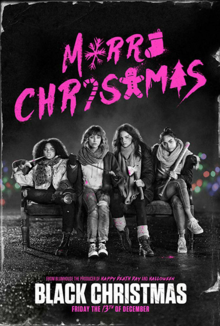
The original Black Christmas from 1974 is a beloved, if kind of weird, early member of the slasher subgenre. The senseless nature of the killer “Billy,” for whom we never get any sort of explanation, as well as the helplessness of the characters, still makes it terrifying forty-five years later. A 2006 remake tried to capture that terror, but it failed miserably, mired in too much exposition and cliches. So, of course, everyone was skeptical when Blumhouse decided to make another remake. But the trailers promised a new angle, so who knows? It could be good.

2019’s Black Christmas again follows sorority sisters trapped on campus and in their sorority house with a killer who appears to taunt them through messaging apps. But there’s more at play here, and it all leads back to a particular fraternity on campus and the university’s controversial founder.

Um…how do I even talk about this one?

As far as storytelling and scares go, this is pretty run of the mill for a slasher, especially ones where a lot of stuff is given away in trailers. Granted, a couple members of the audience did get freaked (one audience member did yell out “that ****er is smart!” when an antagonist did something pretty sneaky), but if you’re familiar with slashers, it all feels standard and a little pulpy. A bit more exciting near the late middle and the last third, but still pretty standard.

The one thing that sets this movie apart is its incorporation of feminism into the plot. And this is where I have to really think about what I type, lest readers get the wrong idea.

Now, let me say this outright. I identify as a feminist. I get upset when I read stories in the news where women are subjected to harassment and misogyny and they are the ones blamed or called into question rather than the men attacking them. I also work in an office whose job is partly to deal with harassment, misogyny, and assault in our organization’s workforce. So I support women breaking barriers and creating more equal places for them in society.

Black Christmas tries to explore these issues in what, considering some of our current events, could be considered timely. And unlike Countdown, which felt gimmicky with its use of the #MeToo movement (see my review here), there was no gimmick here. The film’s handling of feminist issues is well-done at times. There is a lot of discussion of campus rape culture and how we as a society should approach it. Two characters have opposing views on the subject: one says everything must be done to stop the systemic problem, including by survivors, while the other says that not every survivor is willing to be a warrior and may just want to move on. And both bring up good points.

Another scene where the theme is handled well is when one of the protagonists goes to report her friend missing, and the male cop is apathetic, even acting dismissive. Like he thinks the protagonist is making a huge fuss because she’s a woman, not because there might be an actual problem.

Still, there were some moments where I wondered if the inclusion of these themes, as well as some exaggerated aspects, were meant to check some boxes and make this a “woke” sort of film, not really explore the subject matter and allow for enlightening discussion. But then, as I got home, I remembered something that put the film in a new light.

Back in 2018, Jason Blum, owner of Blumhouse Productions which produced the film, made comments about women directors, especially in horror, that drew a lot of ire from the horror community. Blum apologized for the comments and promised to do better. Fast-forward to 2019, and Black Christmas is the company’s first film with a female director, Sophia Takal. Takal also served as a writer with another woman, April Wolfe.

So this film could’ve been Blum’s way of apologizing for his comments and showing that he’s progressive. Or, and I like this scenario more, Takal and Wolfe were given the freedom to make their own horror movie, they were very much aware of what Blum said and they made a film not just to talk about their own issues with the film industry, but also to remind Blum that he, along with a lot of other people and segments in society have to go to really make things equal between men and women. And if that’s true, I can imagine how much Blum squirmed in his seat.

On a scale of 1 to 5, I’m giving 2019’s Black Christmas an even 3. While not as bad as the 2006 remake and a nice comeback to Blum’s comments, it still has areas that could’ve been better.

Thus ends the horror films of 2019, which, with a few exceptions, were either average or just bad. Here’s hoping 2020 is A LOT better. Until then, pleasant nightmares!

Last year’s premiere of Castle Rock on streaming service Hulu garnered lots of attention and love from critics and from viewers, both longtime Constant Readers and folks unfamiliar with King’s work. When word of a second season reached fans’ ears, we got excited. Which Stephen King stories would they draw on? Would the showrunners make every season different, like early American Horror Story? Would the different stories be connected by more than just a common location, like later American Horror Story? Or would it be a continuing story with the same actors and characters, like every other TV series out there?

We sat down and watched ten episodes over the course of eight weeks. And while I can’t vouch for the rest of the fandom, I can say this season far surpassed season one.

Season 2 follows Annie Wilkes–yes, that Annie Wilkes–as she and her teen daughter Joy find themselves stranded in Castle Rock after a horrific car accident. They’ve come at an interesting time, as Castle Rock and Jerusalem’s Lot–yes, that Jerusalem’s Lot–are about to celebrate the latter’s four-hundredth anniversary, and the Lot’s growing Somali population are facing discrimination and threats of violence from the likes of Ace Merrill, nephew of pawnbroker and loan shark Reginald “Pop” Merrill. Annie just wants to have her car repaired and leave town before her past comes for her and Joy. But when someone finds out about who she used to be, events are set in motion that will bring not just Annie, but the whole town to the edge of sanity.

While Season 1 was more influenced by newer, weirder Stephen King, Season 2 was definitely more old-school King: visceral, terrifying, and at times very explosive. Drawing on elements from mainly Misery and Salem’s Lot, the storytelling is mixed with terrifying scares and fun twists (episode 7, am I right?). And even the things you see coming from a mile away (and there are a few) are told in such a way that you don’t mind seeing them coming. And you gotta love all the homages to and Easter eggs referencing King’s works, including a heartfelt tribute to The Body (aka Stand by Me) in episode 3.

Probably the best episode was episode 5, “The Laughing Place,” which gives Annie a new backstory. Honestly, I was a little unsure at first, but as the episode goes on, it just hits you with the weight of the story and the emotion behind it as Annie becomes the person she meets. Sure, Annie is changed from a metaphor for toxic fandom to a painful example of what untreated mental illness can do to a person, but here it works.

“The Laughing Place;” best episode this season.

The actors were also great. Lizzy Caplan’s Annie Wilkes is a wonderful forerunner to the character we meet in Misery, a woman trying to do right by her daughter even as she wrestles with demons that not even medication can fully contain. Tim Robbins (aka Andy Dufresne of The Shawshank Redemption) gives the character of Pop Merrill, in the books a greedy and scheming man, a human side with guilt and a history he’s trying to make amends for. Yusra Warsama is excellent as Dr. Nadia Omar, Pop’s adoptive daughter dealing with her world basically imploding due to what’s going on around her. And Barkhad Abdi and Elsie Fisher as Nadia’s brother Abdi Omar and Annie’s daughter Joy, respectively, give great performances as people trying to deal with their upbringing and at the same time move away from it towards something positive.

If there’s one thing I’m going to ntipick, it’s that I wanted to see more of John “Ace” Merrill. It’s not easy to explain this without spoiling anything, but basically we only get to see one side of the character for a single episode, and then it’s a different side for the next nine. And I kind of wanted to see more of that first side (though the second side is an excellent villain). Did that make sense? I hope it does.

Overall though, Castle Rock season 2 is a scary and tense thrill ride drawing from some of the best of King’s earlier works and then some. On a scale of 1 to 5, I’m giving the season a 4.8. Sit down and buckle up, you’re going places you never imagined going before.

And while no season 3 has been announced, I feel it’s only a matter of time before we get word on that, so let’s start speculating. Which characters will come back? What stories will be drawn on?* And can I please get a commission to write an episode for the show? Only time will tell.

*I’m hoping The Library Policeman, Needful Things and maybe Apt Pupil.

What did you think of Season 2? What do you hope to see in Season 3?

Now let’s get one thing out of the way: the Doctor Sleep movie is based on the novel Doctor Sleep by Stephen King, which is a sequel to King’s previous novel, The Shining. The movie is also an attempt to reconcile the novels and Stanley Kubrick’s adaptation of The Shining, which King hates (and which I kind of agree with). And apparently King loved the script for this movie, as well as the final product. Everybody got that? Good.

Doctor Sleep follows Danny Torrance post-Overlook. He’s grown up to inherit his father’s issues with anger and alcohol, though once he arrives in a small New Hampshire town, he does sober up. At the same time, he makes a psychic connection with a young girl in a neighboring town named Abra Stone and who shines way more powerful than Dan does.* Which is good, because there’s a group of people known as the True Knot roaming around America in RVs, kidnapping kids with shine abilities and killing them to extract their power in the form of steam. In order to defeat the True Knot, as well as their leader, Rose the Hat, Dan and Abra will have to go someplace special to defeat them. A place Dan never wanted to revisit.

Well, I’m going to say this: it does feel like a Stephen King novel brought to film. In a good way.

So there are a lot of callbacks to the source material, as well as to King’s works in general. I had a private laugh at shots meant to pay homage to the Kubrick film, as well as to a field of corn and the number “19” showing up (folks who know King get it). And it’s really awesome to see the theatrical Overlook brought back to life (though degraded with age). And the novel does a great job of hybridizing the books and the Kubrick film in a way that would satisfy most King fans.

And the actors also do their jobs very well. I should mention that. The True Knot actors are particularly creepy when they’re sucking up steam or doing something else freaky, inhuman and cult-like.

That being said, there are some issues. For one thing, there is a lot of exposition, which in a novel we can get away with (especially in a King novel), but in a film it can slow things down. There are some things from the original novel that never made it to the movie that I would’ve liked to see, and there were some changes I didn’t care for.

And I didn’t find it that scary. I mean, there were a couple of moments where I jumped or was a little freaked out, but they weren’t enough to scare me. My criticisms of the Kubrick film aside, at least it’s unnerving to watch. But while the intent is there, Doctor Sleep can’t bring that unnerving feeling to life.

On the whole, I’m giving the Doctor Sleep film adaptation a 3.5 on a scale of 1 to 5. If you’re a big fan of the Kubrick Shining film, you’ll be disappointed. If you’re here for a horror movie, you’ll find it so-so. And if you’re a fan of King and the original novel, as well as interested to see how the film version can reconcile all the books and films, you’ll walk away satisfied.

That’s all for now, my Followers of Fear. I’m going to bed and getting into writing tomorrow. Until next time, pleasant nightmares!

*Fun fact, I named a character Abra in my NaNoWriMo project Toyland after reading Doctor Sleep. No psychic powers though. Not a spoiler, just a statement of fact.


The Lighthouse is the latest film by Robert Eggers, the same director who brought us The Witch. I went in hoping for two things: to be scared and that it would be easier to understand what everyone was saying than in The Witch.

On both counts, I can say it was a success.

The Lighthouse follows Robert Pattinson as a young man who signs up to be an assistant lighthouse keeper at a remote island. There, he works under Willem Dafoe, an irascible lighthouse keeper who forbids his assistant from going up to the light at night for some reason. As time goes on though, both men, particularly Pattinson’s character, start seeing strange sights and creatures. Madness and isolation begin to set in the longer they stay together, leading to an irreversible outcome.

This is the first horror movie I’ve seen in theaters since Us where I’ve been truly terrified (I enjoyed Scary Stories to Tell in the Dark, but I wasn’t that terrified). There’s a very claustrophobic feel to the film, which is helped by the fact that there are only two characters with speaking roles, and the film is filmed in black and white. Shadows seem bigger than they are, and the occasional blaring of a horn has almost a psychological effect on the viewer. The use of dialogue, which is only at times is slightly difficult to understand, is never excessive, instead deepening the feelings of madness and our inability to trust the characters and what they say.

It’s a very Lovecraftian sort of film: while it doesn’t involve space gods or giant monsters from the depths, the ocean, as well as what’s in it, do have a negative effect on the characters. They’re dealing with madness, isolation, claustrophobia, forces they can’t understand, secrets, questions without answers, and each other. And there’s this sense, especially near the end of the film, where what’s behind the curtain will only appear to be what you’re seeking. In reality, it’s going to ruin you.

Also, speaking of the characters, Dafoe and Pattinson are great! You can hardly recognize them as actors, they just totally envelop themselves in these characters. Granted, Pattinson’s accent changes quite a bit (is he Irish? Brooklyn? I can’t tell). But you actually start wondering if these actors are going as crazy as their characters may or may not be.

I can’t really think of anything negative about the film without being nitpicky. It’s a great film, technically well done and psychologically unsettling. On a scale of 1 to 5, I’m giving The Lighthouse a 4.7. It’s a vast improvement from The Witch, weird and disturbing, and I think it’ll be an instant Halloween classic. Dive in and check it out for yourself.

As many of you are aware, I am a member of the disabled community, having autism, ADHD, anxiety, and more things than I can name. What many of you might not be aware is that October is National Disability Employment Awareness Month (NDEAM for short) in the United States. And this year’s theme (which I think is decided by the Department of Labor) is, “The Right Talent, Right Now.”

And at work today, we had an observance of NDEAM which included a panel of employees with disabilities and a video showing the audition of this year’s winner of America’s Got Talent, Kodie Lee, who is blind and autistic. You can watch the video down below.

I am crying, and so are you. You can’t help it.

And what this video demonstrates is that, despite certain issues and centuries worth of stigma, people with disabilities do have plenty to contribute to the world. In fact, they contribute every day. At my workplace, my main job duties involve helping employees with disabilities get accommodations so they can continue their jobs. This doesn’t just include disabilities from genetics and brain chemistry, like mine, but people who gain health problems like back issues or vision problems as they grow older, among others. And despite their disabilities–or sometimes because–they do amazing things at their workstations. They just need a few accommodations and an accepting environment to do so.

And you know what? This isn’t a new phenomena: people with disabilities have been contributing to the world for years. Beethoven, like Kodie Lee, made the world a better place with his music. Isaac Newton and Albert Einstein changed our understanding of the universe in their lifetimes. Harriet Tubman had a head injury that caused headaches, seizures and hypersomnia. John F. Kennedy may have had Addison’s or a similar condition.

Despite all these famous examples though, there are still a lot of barriers to people with disabilities getting work and living full lives. A recent article from Phys.org showed that many blind people face unemployment or underemployment, even though they can be just as capable as able-bodied people of doing job-related tasks. And it wouldn’t surprise me to see similar numbers to that quoted in the article from other groups in the disabled community.

So let me take a moment to address anyone in a position to hire someone with disabilities: we are capable of basic tasks. Hell, sometimes we do very complex tasks too, like write programs or design skyscrapers or perform surgeries or defend clients in court. I’ve even been known to write a decent story from time to time, and that’s not the easiest task. All we need to do our jobs is a few accommodations, which usually don’t cost that much, and an accepting atmosphere.

And remember, this is a group anyone can join at any time. Including maybe you, if you’re not already there. Life has a way of making that possible. So in a way, by encouraging hiring peoples with disabilities, you’re not only helping them, you’re helping yourself.

As well as your employer by ensuring they get the most talented people from the most diverse workforce. Let’s not forget that.

So this October, while we’re all enjoying the season of fear and screams, let’s also remember that there is an entire pool of untapped talent out there. One that has been subjected to and overcome stigmas multiple times to prove us wrong. So why not let them show you what they’re made of?

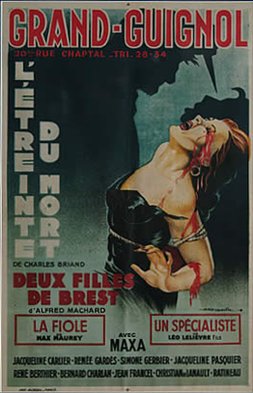
A poster from a play from the Grand Guignol.

*Trigger warning: this post goes into a lot of dark and uncomfortable topics. If talk of gore, murder, sexual assault and similar subjects upset you, stop reading now. You’ve been warned.

Have you ever seen any version of Sweeney Todd? Whether you saw a stage production or watched the movie, Sweeney Todd is somewhat of an outlier among famous Broadway musicals. It’s dark, bloody, and deals with subject matter other plays don’t, such as rape and cannibalism. It’s basically a slasher story with singing.

Now, if you’re like me (and I assume most of you are, if you’re reading this blog), you not only wish there were more plays like Sweeney Todd, but that some of these plays went further in terms of gore and terror. Well, recently I found out that there was a theater dedicated to plays just like that. And it ran for nearly seventy years.

The Grand Guignol Theater was a theater set up in an old Paris chapel in 1897. To summarize its history, the theater at first performed naturalistic plays centered around prostitutes, street thieves and alcoholics. A typical evening at the Grand Guignol would feature five or six short plays, alternating between cynical slice-of-life comedies, horror shows, and more traditional comedies. However, after a change of ownership, the theater began to focus more on horror.

And as time went on, the theater became famous for it. In fact, the Grand Guignol performed over twelve-hundred plays in the course of its existence, focusing on subjects such as insanity, strangulation, rape, leprosy, hypnosis, eye gouging, stabbing, rabies, and so much more. One actress, Paula Maxa, estimated she’d been “murdered” at least ten thousand times in sixty different ways, among other things. To enhance the terror, the theater staff developed a number of techniques to make the horror onstage seem as real as possible, and actors acted as if everything onstage was actually happening.

It wasn’t uncommon for audience members to puke or faint during performances.

This was all to the delight of Andre de Lorde, one of the Guignol’s writers, who judged his plays based on how many people fainted during a show. Along with psychologist and friend Alfred Binet, he wrote over a hundred plays, all particularly gruesome.

And audiences kept coming back. Like many modern horror fans, they were seeking a thrill. And the Grand Guignol provided. At its peak, celebrities and even royalty visited for shows.

So why did it close? Well, there are a number of theories. By the 1930s, the theater had shifted away from gory shockers to psychological dramas, and attendance began to dip. The rise of movies and TV shows, some of the former being quite gory or sensational themselves, may have also played a part. Theater management even believed revelations about the Holocaust may have played a role, saying “We could never equal Buchenwald.”

Whatever the case, the Grand Guignol closed in 1962. Today it’s a theater space for a deaf acting troupe.

But while the theater closed, its legacy still exists. Many small theaters and troupes around the world have been formed to preserve the Guignol’s legacy and produce their own Guignol-style plays. The Guignol’s also made its way into popular culture, and has been referenced in music, movies, books and more.

Still, wouldn’t it be amazing if the Grand Guignol was truly revjved? If one of the groups inspired by it managed to achieve the same popularity and staying power as the original theater?

Perhaps someday it will come back. And then perhaps Mr. Sweeney Todd won’t be so lonely anymore.

We all know I love the Addams Family, especially the 1960’s sitcom iteration. So of course, I’ve been keeping my eyes out for anything new from the franchise. And when the first trailer for this movie dropped…well, let’s just say I may have been mistaken for a banshee or a werewolf in the Columbus community.

The Addams Family shows the Addams living in New Jersey. Due to past experiences with less-than-tolerant townspeople, they’ve lived in isolation to protect themselves. However, when a new suburb crops up by the Addams’ estate, they have to deal with not only the suburb’s creator/leader, a TV interior decorator, but the temptations and dangers of having to live near people again. All as the Addams prepare for an upcoming celebration in which the whole family will be gathered under one roof.

Before I start, let me just clarify one thing: in this adaptation, Fester is Gomez’s brother again (though whether older or younger is unknown), Grandmama is Gomez and Fester’s mother, and Wednesday is the older sibling again. These relationships can vary from adaptation to adaptation.

Now that that’s out of the way, let me state this: this might be my new favorite adaptation of The Addams Family.

For one thing, the animation really resembles the original Charles Addams cartoons, as well as allows for more crazy happenings during the course of the movie. (Not saying it’s better than any of the live-action versions, which I know a lot of people love, Just saying it looks nice and allows for more creative freedom)

And the story is decent. While it’s the sort of story we’ve seen before–people of different backgrounds learning to find common ground despite a powerful person trying to keep power–it’s done with a lot of heart and creativity here. Not only that, but it allows for a lot of character exploration, particularly with Morticia and Wednesday. The former is dealing with the fact that she can’t protect her child from the world anymore (something a lot of parents are dealing with more and more in a world where social media makes us grow up faster), while Wednesday is confronted with a world she’s unfamiliar with, and is ready to explore it despite her mother’s worries.

What took me by surprise, though, was how much this film’s themes could be applied to today’s world. I know there’s a lot of talk about refugees seeking safety in other countries,* and the Addams could stand in for refugees. In fact, the very first scene depicts them as refugees, fleeing the old country after Gomez and Morticia’s wedding is interrupted by townspeople with pitchforks and torches. The villain of the film could be seen as a stand-in for a lot of politicians or media types who use social media to comment on their issues, and sometimes inflame and direct people to action.

There’s actually a lot to unpack with these films, and it might surprise a few viewers. Granted, sometimes the way the film handles its themes hits us on the head–the new suburb is called “Assimilation,” for one–but for the most part, it’s done pretty well.

And yes, it is extremely funny. And there is an opportunity to snap your fingers and sing the theme song during the film. Trust me, everyone in the audience was doing it.

All that being said, I did have a few issues with the film. There’s a subplot revolving around Pugsley preparing for his Saber Mazurka (basically the Addams’ version of a bar mitzvah), and it feels kind of rushed compared to the other characters’ arcs. You can kind of tell that his arc is an excuse to get all the Addams in one place, and I would’ve liked to see his arc given more attention.

Also, Grandmama is barely in the film, which is a shame because she’s fun to play off other characters, especially Morticia. The villain’s fate…well, without spoilers, it leaves a bit to be desired. And was Snoop Dogg really okay playing Cousin Itt? He’s on screen for two minutes and has maybe three lines, all of which is gibberish. I’d have thought he’d want a bigger role.

But all in all, 2019’s The Addams Family is a fun family film perfect for the Halloween season. On a scale of 1 to 5, I’m giving this one an even 4. Pack up the hellspawn, get in your favorite hearse, and check it out. You should have a blast (though not because of the grenades).

*Due to my day job, I can’t openly comment on issues like that, but anyone who knows me should have some idea of what my views are.

At seventy-two, King has told people he only intends to retire “when God tells me to.” Given his latest book, a 557-page science-thriller, I doubt God will be giving him that message anytime soon. And if he keeps writing stories like The Institute, I’m completely fine with that. Especially if I can eventually get on his radar someday.

The Institute centers on Luke Ellis, a twelve-year-old prodigy who is planning on going to Boston for college in the fall. He also has some telekinetic abilities, though he can’t do more than move an empty pizza pan when he’s excited. Still, that’s enough to put him on the radar of The Institute, a shadowy facility in the backwoods of Maine. His parents are murdered, and he is spirited away, used in experiments that are supposed to enhance the psychic abilities he and other kids and teens have. And as time goes on, Luke not only gets a better idea of what sort of things they’re doing at the Institute, but realizes with growing anxiety that he has to get away. Before he is changed permanently. At least, changed more than he already has been.

What makes this story so scary, even though it’s more science-thriller than science-horror, is its plausibility. You can totally imagine a shadowy government or shadow government organization kidnapping kids and using them for their own ends.* There are a lot of comments on or callbacks to the Nazi experiments on concentration camp victims, and as a WWII/Holocaust scholar, those comments are extremely warranted.

Aside from that, this book is good. The characters feel real, and the Institute is well thought out, adding to the feeling you could see some of this stuff happening. Luke is a likable protagonist, smart but not arrogant about it (in fact, he worries a lot about being too arrogant with his intellect), polite, and eager to help his friends. Likewise, the staff of the Institute feel real as well, particularly how they can do what they do and think of the kids as less-than-human.

As for the Institute, it’s big and is usually good at keeping the kids within the boundaries of the facility, but it also has its issues such as faulty equipment and staff rivalries, which makes it feel real. It could almost feel like your own workplace. Just evil and incredibly cruel.

Of course, the story isn’t totally perfect. I’m not going to fault it due to the fact that it’s not one of King’s terror-inducing stories like IT, we all know he’s great at writing more than horror. Nor am I going to fault the book due to the return of psychic powers. After all, stories where psychic abilities feature prominently, like Carrie and The Shining, are why King is a household name today. But I will admit the ending does feel a little expository and may not give everyone the sense of satisfaction people are looking for. That is a criticism I’m comfortable making.

However, on the whole The Institute is a strong entry into the Stephen King bibliography, a slow-burn that will leave you uncomfortable and yet unable to put the book down. On a scale of 1 to 5, I’m giving it a 4.2. Whether you’re using your mind or your hands, I recommend lifting up a copy and giving it a read this Halloween season.

And that reminds me, welcome to October! As a horror writer, I’ll have plenty to share with you during the most wonderful time of the year (and yes, it is the most wonderful time of the year. Read this post if you don’t believe me). We’ll have reviews, writing updates, discussions of horror, and possibly a demonic summoning. Look forward to it, my Followers of Fear. And until next time, pleasant nightmares!

*Just so you know, I’m not going to directly comment on any parallels between this novel and current events, though plenty of people, including King himself, have done that already. My current job makes doing so difficult. If I ever get the opportunity to write full-time, that’ll change. In the meantime though, I’ll just keep my mouth shut and stick to reviewing stories on their own merits.

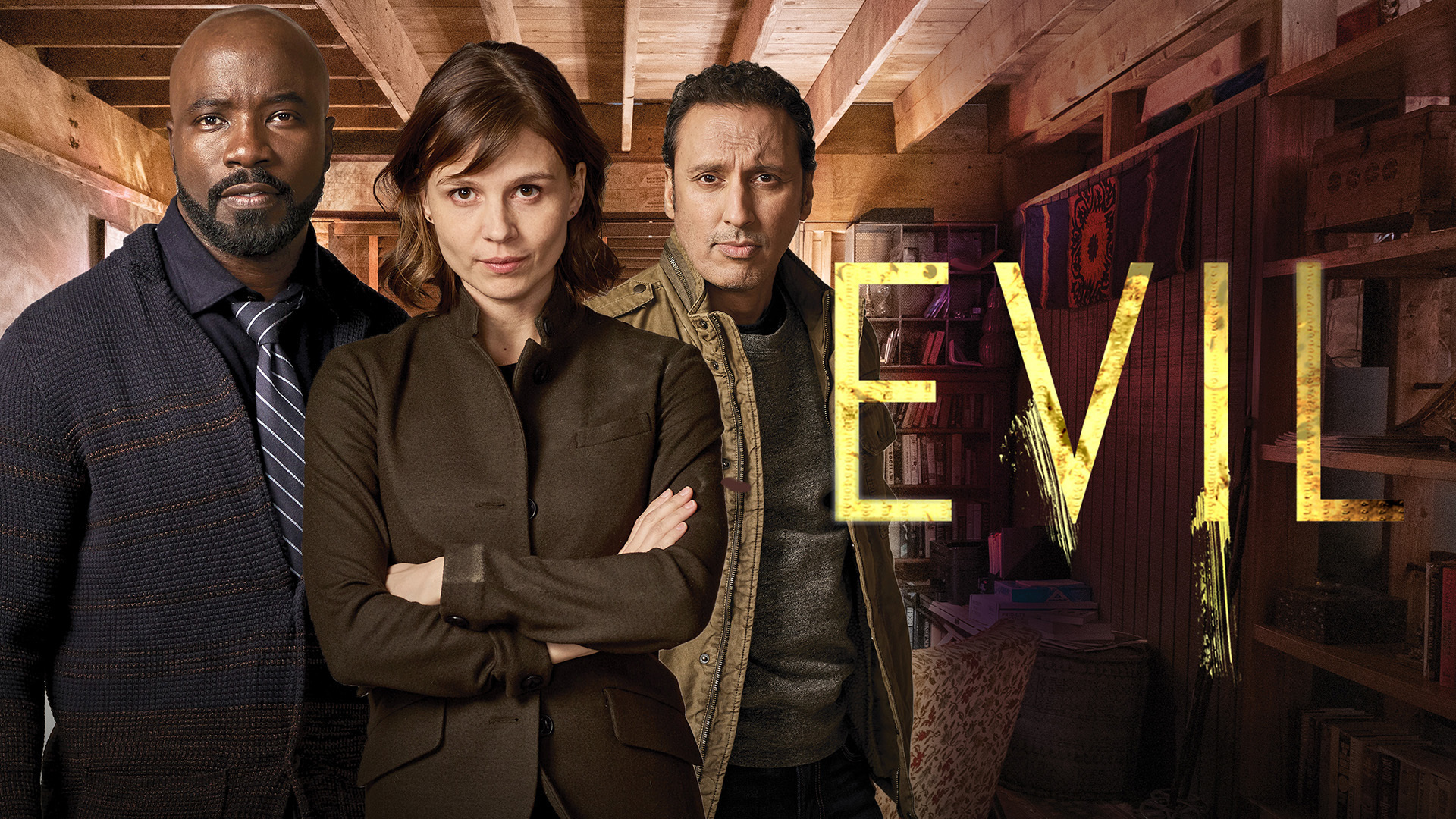
So CBS is known more for raunchy family-based comedies and police procedurals with plenty of light and color. Outside of Supergirl, which got moved to CW, it’s not well known for speculative fiction type shows, at least not these days. And no, Star Trek: Discovery and The Twilight Zone reboot don’t count, that’s CBS All Access, which is another bill if you want to watch those shows. Anyway, Evil is outside of CBS’s normal wheelhouse, but it’s the kind of thing I love, so obviously I’d check it out. Of course, it’s on after I go to bed, so I check it out and review it the next day. Such is life, isn’t it?

Evil follows Dr. Kristen Brouchard, a forensic psychologist who gets hired on by David Acosta to help him in his assessment business. Basically, he works for the Catholic Church to discover if purported instances of the supernatural, such as miracles or demonic possession, are real. He’s a believer, she isn’t. But either way, they’re going to be walking a very fine line. Not just between the worlds of the physical and the supernatural, if that exists, but between that of good and evil.

So I’ll start off that the setup of this show is intriguing. It takes its time to play with our expectations. Are we dealing with actual demonic forces? Or is the evil in the title that of human evil? I feel that this is going to be an ongoing question throughout the first season, and if it’s done as cleverly as it was in the first episode, then I could see the first season having some decent ratings. At the very least though, there’s something everyone who’s watching the show, and perhaps who’s in the show, can agree on: that evil, whatever the source in human beings, is connected and talking to each other. And it may take a lot to stop others from encouraging evil acts in each other.

The cast is also pretty decent. Mike Colter, fresh off of Luke Cage (RIP, Marvel Netflix), plays David Acosta as this enigmatic kind of guy, wrapped up in twenty mysteries we’ve yet to pierce. He’s totally fine with his coworkers not believing in the same stuff he does, though I wonder if that will change in later episodes. At the very least, this character is holding more cards than we’ve seen. As for Dr. Kristen Brouchard, you get the sense that she’s trying her best. She’s fighting an uphill battle to make her life work, raising four daughters while her husband works abroad and dealing with loan sharks. Her one rock is her belief in science, which are going to be shaken a lot in this show.

Oh, and Aasif Mandvi is in this show as Acosta’s equipment/technical guy. I love that guy. He was always one of my favorite correspondents on The Daily Show when I watched that, so it’s cool to see him pop up here. Just thought I’d mention that.

If I have one gripe about this series, for those looking for a more Exorcism of Emily Rose-type story, where eventually the supernatural is confirmed, this show may you leave you disappointed. That being said, they’re going to play with the supernatural-or-not question for a little while longer. Though obviously, they’ll have to come to a conclusion by the end of the first season. And what that conclusion is will determine who continues watching this show.

So yeah, this show could go a couple different ways in terms of story and how long it lasts. But I’m at least willing to give it a go.

On a scale of 1 to 5, I’ll give the first episode of 4. Great setup and dramatic storytelling. I’ll be interested to see how it goes.

Until next time, my Followers of Fear, pleasant nightmares.