Posts Tagged ‘editing’

You ever find yourself doing something casually, thinking it’d be a fun hobby or just a way to pass a couple of hours, and then it ends up becoming something much bigger than you could ever have imagined? That’s happened to me a number of times. Reading Harry Potter as a child and then reading Stephen King’s It as a tween led me to become a writer and a horror writer, respectively, when I’d only been looking for something new and fun to read. Likewise, reading books about the Holocaust while traveling through Israel during the summer before senior year of high school led me to want to study the Holocaust along with creative writing in college.

And just recently, a story I started writing in-between drafts of Rose back in spring has quite possibly become my next novel. And I have no fucking clue how that happened.

Let me explain. Back in late winter/early spring, right after I’d finished another draft of Rose, I started a story I’d been wanting to work on for a while, both to pass the time and to experiment with writing by the seat of my pants. I didn’t think it would be a very long story, maybe twenty-thousand or thirty-thousand at most (so a novelette or novella), so I thought it would be a good side project. I named this story River of Wrath, as it deals with a certain aspect of Dante’s Inferno, and I went at it.

The writing by the seat of my pants didn’t work out so well, and I only got about nine-thousand words or so in before I had to do another draft of Rose (still impressive, but I felt like I could do better). I got that draft of Rose done, and then sent it to the imprint that would become my publisher. I worked on other stories while I tried to figure out how best to edit River of Wrath. After I sent the latest draft of Rose back to Castrum and did a few other stories, I decided to write an outline for River, and then go off that.

Whoo-boy, did that work! Writing the story went a lot faster, especially after I went through the initial thirty pages or so and tried to clean them up a bit. I was enjoying the story, and I found it challenging in a fun way, which is usually a good sign.

And then I got past ten thousand words.

And then fifteen thousand.

And then twenty thousand.

Thirty thousand arrived before I knew it.

I reached thirty-five thousand around Sunday.

And last night, I reached forty-six thousand. Yeah, I wrote around eleven thousand words over three days. I’m not sure how I did that either. On the bright side, I think I can do it again and write stories a lot faster now.

But back to point. Defining novels by word count varies from person to person. Mine is usually around sixty thousand (for clarity, the first Harry Potter is seventy-seven thousand words, give or take a few), but many people and quite a few publishers consider forty-thousand words or higher a novel. As I said, this novel’s upwards of forty-six thousand, so some would definitely consider it a novel. And I have a feeling River’s going to be at least fifty-thousand or higher by the time I’m done.

Like I said, I did not intend for this story to get so long. I thought it would top out at twenty-thousand. At the outside, it might reach thirty-thousand, too long for a magazine but perhaps good for a future short story collection. I never thought it would get this long! But parts of the story I thought would be short as heck became entire pages, complete with dialogue and inner thoughts and a couple of crazy scenes for people have to fight for their lives! And I felt that if I was going to do this story justice, I’d just have to go with the flow and write till I finished it.
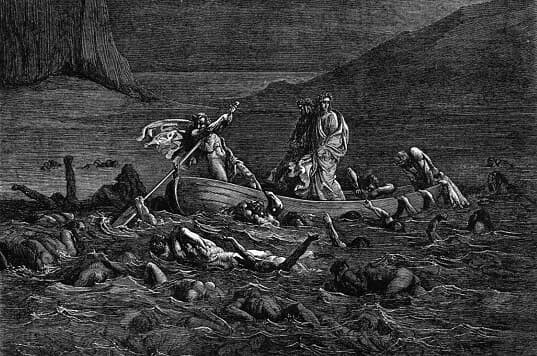
So yeah, I’ve got another novel in the works, one called River of Wrath, and one I didn’t even know I was writing until it got as long as it did. And if I’m lucky, I’ll finish it by Halloween (which, coincidentally, is also when this story takes place). And afterwards? I plan to hand it off to some beta readers and do some edits, of course. And hey, if Rose sells well and Castrum wants to continue working with me afterwards, maybe they’ll take on River of Wrath and publish that as well.

But I’ll cross those bridges when I get to them. First thing’s first, I’m going to finish River. And when I do, I’ll celebrate with a drink and let you all know about it (whether or not you want to know or not).

That’s all for now, my Followers of Fear. I’m going to get ready for bed and think of more scary stories to write. Expect a review of the new Halloween movie at some point this weekend. Until then, pleasant nightmares!
I wanted to post something other than a review before my next one (which should be very soon, believe me), but I couldn’t think of anything that I felt passionate enough to write about. So I decided to just give you all an update on what’s been going on in my life lately. Because if average folks on YouTube can pay their rent doing just that, why can’t I just write one for the hell of it?

So what’s going on in my life? Well, it shouldn’t surprise anyone, but life has been busy crazy lately.

Current WIP

I’ve been working on a story that I started back in the spring in-between drafts of Rose and picked up back in August. The story, which I’m calling River of Wrath, was inspired by Dante’s Inferno and certain events in America’s history. I originally expected River‘s length to end up as a long novelette or a short novella, but at the time I’m writing this post, the story’s around thirty-six thousand words, and I’m guessing I’m going to put in another ten-thousand or so before I’m done. Maybe even more! This could easily turn out to be my next novel, even though I didn’t plan it that way.

Not that I’m complaining. I’m finding this story very engaging. It’s got a lot of themes and topics I feel passionate about, and I enjoy getting into the narrator’s head and seeing things through her point of view. I’m easily getting out a thousand or more words some nights, and I usually aim just to get two-hundred and fifty out per night.

Hopefully, I can get through River before I have to look at Rose again. And if not, I’m sure I’ll work twice as hard so I can get back to it as soon as possible.

Speaking of Rose

Rose

I heard from my publisher back at the tail end of September. As I said in a previous post, my publisher has been busy with multiple projects and that’s slowed down the response time on Rose. However, they’re planning on devoting time to Rose during the month of October. Hopefully that means I get their feedback around the end of the month, and decide next moves then. I’m praying they’ll just say they want me to clean up this or that part and then we can move to publication. But we’ll just have to see about that.

Car Chasers

The Binge-Watching Cure II, the anthology from Claren Books that my short story Car Chasers will appear in, is still set for late 2018/early 2019. Hopefully I’ll have more definitive news in the months to come.

Wow, lot of “hopefully’s” in this post. Well, that’s kind of how it is with writing sometimes. You just have to hope you can accomplish your dreams and that things will work out in your favor.

Life in general

My Halloween costume for this year. What do you think?

Well, work’s been crazy busy. I recently got a raise and was put in charge of an important project, so I’m trying to make sure the faith put in me isn’t misplaced. I’m also being trained on a number of different tasks that my office specializes in, so I’m just trying to get the processes for those down pat. It’s difficult, as a lot of the time we’re busy with other tasks, which limits training time, but we’ll deal with it. We always do.

I also got my driver’s license a few months ago, so I’m getting ready to get a car of my own. I’m looking forward to all the possibilities a car of my own can open up. It can even help with marketing Rose, when the time comes.

And finally, I got my Halloween costume this past Thursday. And holy crap, is it something else! As you can see, I am a goat-headed demon. You know, like the one in that creepy illustration the Church of Satan uses in a lot of their materials (aka Baphomet). I really like it, as it scares the heck out of people. And even though visibility is pretty limited (I now know what a Disneyland cast member goes through every day), I plan on keeping it. At the very least, I can use the cloak piece for other occasions and costumes.

Also Church of Satan, I’m available for weddings, funerals and rituals. Send me an email.


That’s all for now, my Followers of Fear. I’ve got a scary movie to watch tonight, so I’m going to get to work on dinner. Until next time (probably later tonight), pleasant nightmares!

How is life for you these days? What are you going as for Halloween?

One of the YouTube channels I follow is Tale Foundry, a channel that breaks down how different genres and mechanics of storytelling work and then uses the lessons gleaned to write original short stories. They present themselves as robots in a foundry that works with fiction rather than metal (hence the name Tale Foundry). Their latest series of videos has been around worldbuilding in fiction, and their latest video, which I’ve embedded below, really got me thinking.

Now, if you didn’t watch the video for whatever reason, let me just quickly talk about one of the methods of worldbuilding they discussed: found design, which to put very simply is when you modify an aspect of the world in order to accommodate or address an issue (or “emergent concern,” as they call it in the video) that’s come up in the course of telling the story. An example would be if while writing your novel about a war between werewolves and humans who hunt them, your beta reader says that the conflict has been done before and that something needs to be added to make the story more interesting (other than a forbidden romance). The something required to spice up the story is the issue or emergent concern, and the integration of whatever you decide to add to the story (a threat to both armies, an original twist to lycanthropy, etc) is the act of found design worldbuilding.

Yeah, it’s a lot to absorb, but whoever said fiction writing was simple?

Anyway, this last method got me thinking, because that’s the method a lot of horror writers use while writing their own stories. As we all know, horror stories are more often than not set in our world, but with modifications to allow for the fantastical things that show up in it. Modifications to allow for something new to be added to the story and its world…sound familiar?

I call this the “build upon” worldbuilding method (if there’s an official name in academic circles, someone please let me know). You take an already-established world, one that many people would already be very familiar with, and add your own twists or details to it so you can tell the story you wish to tell. This is a method used by fanfic writers, anyone dealing with Arthurian lore, and of course, horror writers.

A good example of how this method works is with my own short story, “Car Chasers” (being released in late 2018/early 2019 in The Binge-Watching Cure II anthology from Claren Books). This story is set in a world similar to ours, except ghosts are capable of participating in illegal street races in this story. When I wanted to write that story, I had to not just modify the world so that it was capable of having ghosts (though if you ask me, our world has always had ghosts in it), but I had to add rules to these ghosts, how they interacted with the races/racers and under what conditions they participated in these races. Will all this be evident when the story is finally released? You’ll have to read it to find out, but whether or not it is evident, all that work in designing this world was necessary for it to be written, let alone accepted anywhere for publication.

So as you can see, it’s a handy method to build a world for your story. And if you’re into creating a shared universe across your stories, like Stephen King, HP Lovecraft, or I do, it’s pretty helpful in making that possible. All you need to do is make a slight tweak and you can find ways to connect your various stories together into a fantastic and varied world.

Of course, this isn’t the only method for building a world in horror. But this is the one that I use the most in my stories, and which I’m sure plenty of other horror authors use when they make their stories and their worlds. And it’s not hard to see why: it’s a wonderfully flexible tool for any storyteller, and helps in the act of storytelling every day.

Thanks to Tale Foundry for giving me the idea to write this post, and as always, I’m looking forward to your next video. And I encourage you folks to check out their stuff. From Lovecraft and Junji Ito to Celtic mythology and satire, you’ll find plenty of videos exploring the various aspects of storytelling and how they can be applied.

That’s all for now. I’m off to work a little bit on that novella again. In the meantime, what are your thoughts on worldbuilding in your genre? Any methods that you find helpful? Let’s discuss.

Until next time, pleasant nightmares!

IT’S OCTOBER!!!!! The best month of the year, when things start getting cooler, the nights grow long and you get a little more leeway in how spooky you can be! Or in my case, reveal a bit more of my non-human side. And on this month, my powers of darkness grow by a hundredfold! You can bet I will be raining terror upon certain heads this month. Just you wait and see!

In the meantime, I thought I’d talk to you about something that happened to me yesterday. I was at my mother’s house for a party, and as often happens when family and family friends get together, everybody wants to know what the latest news is with Rose and the anthologies I have stories being published in. Rose, for those of you who don’t know, is a novel I wrote in college as my thesis, and which is being published by Castrum Press, a publishing company based out of Belfast, North Ireland. The story follows a young woman who finds herself being turned into a plant creature (and that’s just the start of her problems!).

I told them that I’d heard from Castrum on Saturday, and that they were hopefully going to get back to me on the latest draft of Rose some time this month. I expressed hope that when I heard back from them, they’d say I just needed to do some touch-ups here and there, and then we can set a publication date. My mom, who had been one of the most ecstatic and amazed people when I’d told her about Rose back in March (I still remember how she said “Oh my God” two or three times as clear as a whistle), remarked, “Wow, I had no idea the publishing process could take so long.”

And that’s the thing: the publishing process can take a long time. For any book. Not many people realize that, even among writers (including me at one point), but it’s the truth. Nowadays, technology and the Internet have helped speed some things along, but it’s always taken a long time for books to get out. Heck, even Stephen King had to wait a while for his books to come out early in his career. Yeah, now he can put one or two out every year, but that’s after nearly forty years of proven success. When he was still basically an unknown, Carrie took over a year before it got on bookshelves. And while I hope it doesn’t take that long with me, it may be a while longer before anyone gets to read Rose.

I’m not saying this to trash any publishing houses or complain about the publishing process. I’m just stating a fact. And if you think about it, this pace makes sense. After all, most publishing houses involve a few people handling projects from multiple authors. Any one project takes a lot of time out of the day, and while it would be nice if there was a single editor for each and every author contracted to a publishing house, I don’t even think even big publishing houses have a staff like that. So obviously each publisher has to juggle their projects, devoting time here and there to each one, deciding the order based on all sorts of factors. It’s an involved process.

But it’s also a process I’m grateful for, because it’s not just the number of books being published, but what’s being done to get them ready for being published. Each one is being polished and cleaned up, formatted and given the best cover art, strategized over and discussed ad nauseum. All to make sure that when the book finally does come out, it’s not just a great story, but one that’s free of typos and with words not falling off the page or some other unforgivable goof. I’m glad the process is slow, because I’d hate it if the process went by super-fast and when Rose did come out, it was full of errors and had terrible art. And I’m sure you would too.

So while it may take some more time before Rose comes out, I know the book is in good hands and I’m looking forward to the state it’ll be when it’s ready to be released. And I know that you’ll love it too.

In the meantime, I’ve got plenty of stuff to write and blog about (I might even have a new blog post tomorrow, depending on a couple of factors). And I can’t wait to share them with you. So until then, you all have a goodnight and pleasant nightmares, my Followers of Fear. I’m off to celebrate the month. After all, it is October. Plenty of material to review, plenty of stories to write, plenty of people to terrify senseless. I can’t wait.

It’s been a rough day. Let’s talk the intricacies and difficulties of writing fiction!

I often like to talk like a know-it-all on this blog, but let’s face it, there’s still things I could be better at. Or that I think I could be better at. One of those things is themes. Most stories have them: Harry Potter has destiny vs. fate, prejudice, and our relationship with death; The Shawshank Redemption is about finding hope in a hopeless place, learning to survive and even find ways to thrive in harsh conditions, and, of course, redemption; and The Very Hungry Caterpillar is about how the inevitability of change crafted by thousands of years of evolution and the incessant need to feed to support the process.

Okay, that last one is a huge stretch, but you get the idea. Plenty of stories have deeper meanings and commentaries wrapped into them, like several candle wicks wrapped together to form a new and beautiful candle. Some of these stories are written with the theme in mind, while others arise during the writing of the story. And depending on the kind of story, it can seem odd if a story does or doesn’t have a theme (I wouldn’t expect one from any variation of The Three Little Pigs, but I would expect plenty of thematic elements in an Anne Rice novel).

But how well you carry the theme can vary sometimes. It’s like carrying a tune: sometimes you’re able to do it well, sometimes it varies depending on the tune, and some people, like me, can’t carry a tune that well at all (though that never stops me when there’s a karaoke party going on). With some of the stories I’ve been working on lately, I’ve been trying to figure out how well I carry the themes written into them. And after a lot of thought, I’ve come to the realization that authors are probably not the best people to judge their own work.

Which is probably why we have beta readers and editors, now that I think about it.

With Rose, there’s a big theme of toxic masculinity, especially in the latest draft, that becomes more and more apparent as the story goes on. That theme kind of arose on its own while I wrote and edited and re-edited the story, and I like to think I carry it very well in the book,* though at times I wonder if I’m being a little too obvious with it. Meanwhile, in this novella I’m working on now, there’s a pretty obvious theme about the perils of racism. I’m not too sure how I’m carrying it, if maybe the angle I’m going for or just the way I carry it is the problem.

Then again, some really good stories do go about exploring racism without being subtle at all. Heck, sometimes that’s the point. A Raisin in the Sun makes no attempt to hide what it’s about. And the novel The Help by Kathryn Stockett has been criticized about how it portrays and explores race relations (as well as who’s writing it), but it still gets its point across very well. Maybe I’m doing something right after all.

Despite my own uncertainties about how well I carry themes, I still write and try to carry them as best I can. What else am I supposed to do? I’m not going to give up writing anytime soon just because I’m unsure of how well an idea or a deeper meaning in one of my stories is presented. Hell, I should keep writing, because that’s how I’m going to get better at carrying them. And if I make a few mistakes along the way, I’ll just pick myself up and try again, either by editing the story or trying to write a new one. It beats beating myself up over it, right?

Besides, I may be my own worst judge. What I see as clumsy carrying, others might see as pretty damn good. And that’s reason enough for me to continue writing in the first place.

*Which I hope to have more news on soon. Thank you, as always, for your continued patience as my publisher Castrum Press and I make sure that Rose is up to snuff before publishing.

Halfway there! And woo-boy, is it going well. I haven’t missed a single day, somehow. Let’s hope I can keep up the pace!

So once again, I’m doing the Ten Day Book Challenge, which started on Facebook and should’ve stayed on Facebook, but why should I do what everyone else is doing? I never have, unless other horror authors are suddenly collecting dolls and going to the ballet while also supporting the Ohio State Buckeyes and practicing Judaism to the best of their ability, and I probably never will. So thank my cousin Matthew for getting me started on this, and let’s get onto the rules:

  • Thank whoever nominated you with big, bold print. If they have a blog, link to the post where you got tagged there.
  • Explain the rules.
  • Post the cover of a book that was influential on you or that you love dearly.
  • Explain why (because I don’t see the point of just posting a picture of a book cover without an explanation. That goes for Facebook as well as blogs).
  • Tag someone else to do the challenge, and let them know they’ve been tagged.

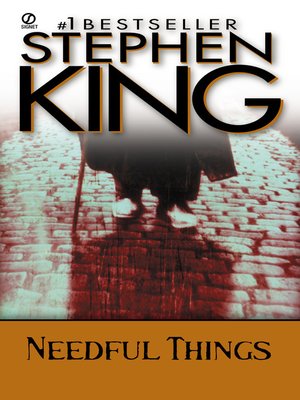
I wasn’t sure whether to do the other Stephen King novel or something else today, but in the end, I decided to get the second novel out of the way and save a particular novel for Day Six. For Day Five, I’m going with another example of quintessential Stephen King: Needful Things.

This is a novel that is both terrifying and hilarious, campy yet deep, and full of all the weirdness that we love about King. It’s also one of those thousand-page whoppers he churns out every couple of years, and I absolutely love it! The story takes place in Castle Rock, the same little town that’s the setting for King’s new show on Hulu, Castle Rock. A man named Leland Gaunt opens up a shop called Needful Things and starts selling the most amazing products to his customers…in exchange for a favor. And each favor exposes a darker side of the town, a domino in a Rube Goldberg machine, all leading to one inevitable conclusion.

I’ve had the chance to reread this book several times since I first read it about three years ago. To be more precise, I listen to the audio book, which is narrated by His Royal Scariness Stephen King himself. And it gets me every time. On the one hand, you have all the scares that you’d expect from King: a villain that appears human but soon reveals himself to be so much more, a spider-creature that Gaunt uses to great effect in the novel, people who are just assholes on a bad day but under Gaunt’s influences become psychopaths and murderers, full of rage and jealousy. On the other hand, you have weird ad hilarious moments like two overweight housewives both believing they’re having very intense romantic/sexual affairs with Elvis Presley, a woman who gets off on having feuds and fights, and a town sheriff whose love of magic tricks proves important to saving the day! And somehow, it all works wonderfully! I hope someday I can write as well as that, because let me tell you, it might come in handy for some of my weirder ideas.

Sadly, this novel has not gotten the same amount of love as some of King’s other works. Hell, the only adaptation is one terrible movie that came out a little over two months after I was born. I think it’s due for a graphic novel or a TV adaptation (which is why I hope it somehow features more prominently in Castle Rock season 2)., but then again, Hollywood doesn’t listen to me that much. They certainly haven’t heard my pleas for an adaptation of The Library Policeman as of yet.

Still, if you’re in the mood for an unusual horror novel with weird and hilarious moments peppered here and there, you can’t go wrong with Needful Things.

And now to tag someone. I hereby nominate my good friend Kat Impossible from the blog Life and Other Disasters. I know you’re busy starting a new job in Berlin, Kat, but I hope you’re able to find the time to do this. Especially since you tend to enjoy book related tags and challenges.

That’s all for now, my Followers of Fear. Until next time, pleasant nightmares!

Before you ask, no this story isn’t some sort of reference to Game of Thrones and the numerous weddings ending in someone dying that occur in that series (spoiler alert).

I needed a break from the novelette/novella I’m working on, so I decided to tackle a short story I’d had the idea for recently to give my brain some breathing room. The story involves two kids who are given a job by a strange entity known as the Master. And that’s all I’m saying, because I’d hate to give away this story before I’ve had the chance to polish it up and maybe get it published.

The thing is, I have no idea if this story is any good. On the one hand, it reminds me of other stories I’ve read that have gotten published in prestigious anthologies and collections. Heck, it even reminds me of some of Stephen King’s early works, especially in his collection Night Shift. And at only a little over three-thousand words, it’s a lot shorter than most stories I write and therefore I might have more places to publish it. However, the story is a little weird. Not surprising given the fact that I wrote it, but then again, that could also work against me just as easily. Heck, even I find it somewhat odd! And in some dictionaries, I’m right next to the word “odd!”

I’m also next to the words “eccentric,” “strange,” “malevolent,” and “interdimensional being,” but you knew that already, right?

Anyway, I’ll let this story lie for a little while. When I have time, I’ll revisit it and see if I can get it published anywhere after some edits. In the meantime, I’ll use the rest of my Labor Day weekend to watch a movie and do some reading. I’ll get back to work tomorrow on the novelette/novella and hopefully make some more progress on it before I have to get back to work on Rose. Fingers crossed that it all works out.

Until next time, my Followers of Fear, pleasant nightmares.

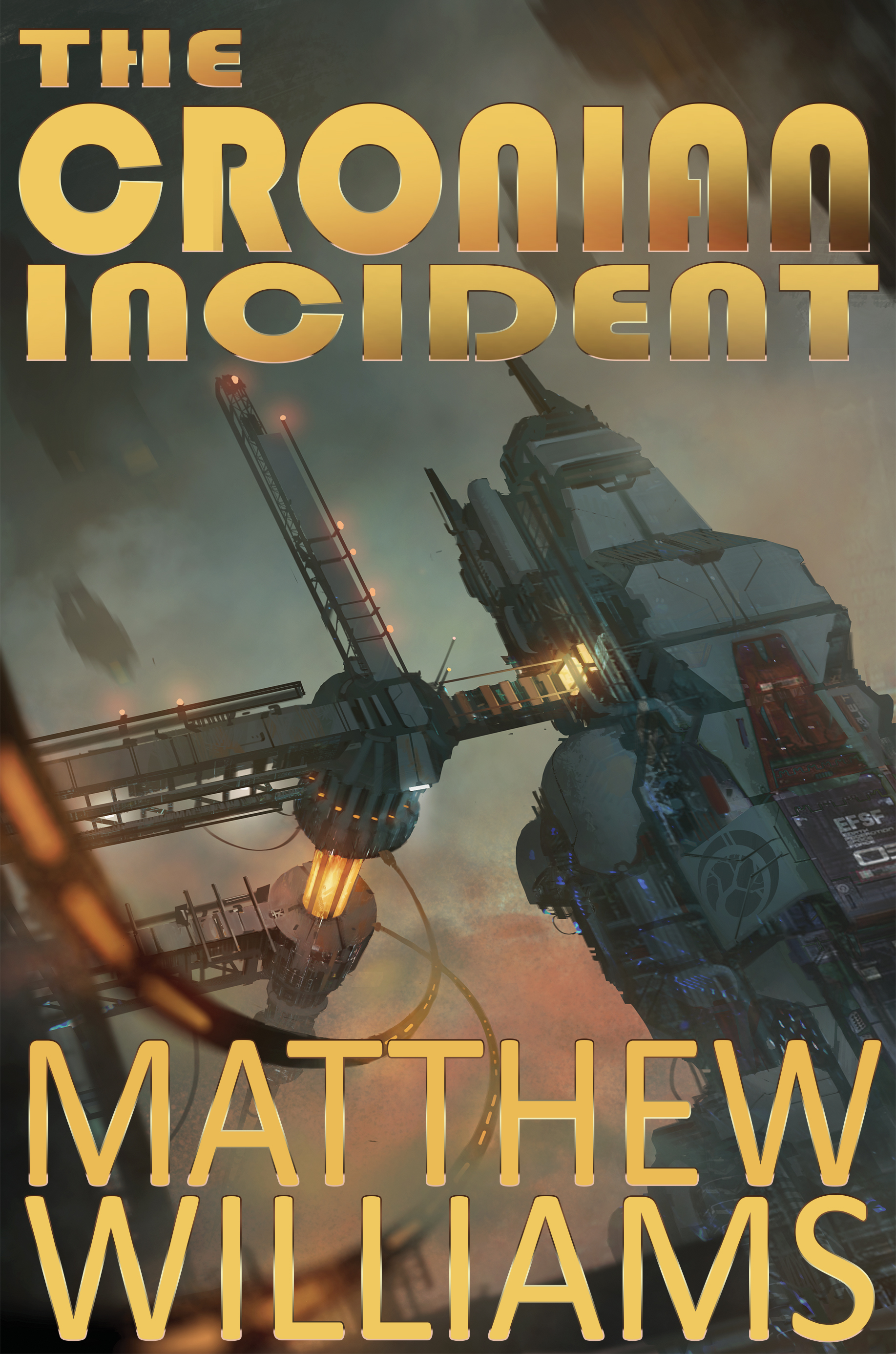
Last year I had the pleasure of reading The Cronian Incident, a science fiction novel by my good friend and fellow writer, Matthew Williams. I found it a very engaging and deep sci-fi novel, and I was glad to hear that Matt had a sequel in the works. Last week, Matt released the follow-up to The Cronian Incident, The Jovian Manifesto, and I got my copy courtesy of Matt and the publisher, Castrum Press (my publisher too!). In order to celebrate the new book’s release, I thought I’d bring Matt back on for an interview.

So without further ado, let’s begin!

Rami Ungar: Welcome back to my blog, Matt! Tell the folks around here who don’t know you who you are and what you do.

Matthew Williams: Well, my name is Matt Williams, I am a resident of Vancouver Island in beautiful British Columbia, Canada. I live with my wife and cat, and I am a writer for Universe Today. In my spare time, I write (obviously), teach Taekwon-Do and generally enjoy the place where we live.

RU: Tell us about your two books in the Formist series, The Cronian Incident and The Jovian Manifesto.

MW: Both novels are set in the late 23rd century, at a time when the human race has expanded to colonize almost every body in the Solar System. In the Inner Worlds – Venus, Earth and Mars – life is characterized by advancement, augmentation and post-humanity. In the Outer Worlds, on the moons of Jupiter, Saturn and Uranus, are the people who have chosen to live a simpler existence, one that respects the line between humanity and machinery.

The story begins with the kidnapping of a high-profile man from Mars who belongs to the Formist faction (hence the name). These are the people who are dedicated to terraforming Mars so that their citizens can finally achieve the dream of living on the surface without pressurized domes or radiation shields. The Formists hire a special investigator to solve the kidnapping, a former member of Interpol named Jeremiah Ward who’s serving out a prison sentence in a penal colony on Mercury.

In investigating the disappearance of the Formists’ associate, Ward will uncover a plot that is centuries in the making. In the end, he will have to make the ultimate choice between doing what is right, and what may keep him alive.

RU: What’s different about writing The Jovian Manifesto, both in terms of content and just in writing the story?

The Cronian Incident, Book 1 in the Formist series.

MW: For starters, TJM is the second installment in what is planned to be a trilogy. As such, it has a darker tone than the first book. There’s also much more action, which was an absolute must for me! After taking the time to build the setting in Book I, I wanted the protagonists to be thrown into the thick of it. Of course, this book also introduces a few new main characters and a few new settings. This gave me a chance to tell new stories and create some new worlds, which is always fun.

RU: TJM features a female-led cast, something we’re seeing a lot more in various media. Was that intentional on your part?

MW: Not originally, no. In the first book, most of the story is told from a single POV – Jeremiah Ward’s. I wanted the second book to be told from multiple points of view and had several characters in mind when plotting it out. As it turned out, all of the new characters were strong, motivated and independently-minded women. When this was pointed out to me – by my friend and colleague, Rami Ungar, no less! – I was quite pleased. I had not embarked on this book looking to make the cast female-led, but I was happy it worked out that way. I’ve often worried that as a male writer, I would default to writing male leads, or find that writing female characters was more difficult. It pleased me to see that this was not the case.

RU: This is your second book with Castrum Press, and you also have a short story featured in their anthology, Future Days. What’s it been like working with Castrum?

MW: It’s been excellent, really. As a recently-established publishing house led by experienced writers, they know the particular struggles that new writers face. It’s also very clear that they are interested in promoting new talent, which is something you don’t see a lot of these days in the publishing industry. Also, it gives me a chance to entrust my work to people who have been part of the industry and know what it takes to succeed in it. That’s very reassuring to a newly-established writer, and something that independent authors don’t get to enjoy.

RU: Science fiction is often described as a lens towards what the future could be, as well as what our society looks like now. Do you agree with that sentiment? And what do you think the Formist series says about humanity?

The Jovian Manifesto, Book 2 of the Formist series.

MW: Absolutely. Science fiction has always been about predicting what the future will look like, but that always comes down to how the world looks today. In that respect, science fiction books are an extension of the present-day world and are intended to convey messages about the direction it is taking. As for my own work, I believe they reveal that regardless of the time period, or the level of development we will have reached, humanity will always be facing the same basic challenges. How do we ensure our survival and our future? How do we erase the dividing lines and learn to live together? How do we ensure that our most cherished values also survive?

RU: What are your plans for the future at the moment? More books in the Formist series, perhaps?

MW: Oh yes! I hope to write a third installment for this series and very much want to explore the universe I have created further. This could involve some origin stories, since some of the characters I have created have interesting pasts that would require a whole book to explain. I also hope to write additional trilogies that take place farther down the road. But of course, that all depends on how the Formist series shapes up. And of course, I have several other ideas I would like to see in print.

RU: What are some stories, science-fiction or otherwise, that you are reading now and would recommend?

MW: I recently finished The Dispossessed and The Left Hand of Darkness by Ursula K. Le Guin, both of which I would strongly recommend. I also finished Halting State and Rule 34 by Charles Stross, Fire Upon the Deep by Vernor Vinge, and House of Suns by Alastair Reynolds. I recommend all of these books to people who are fans of classic science fiction, space opera and near-future speculative fiction.

RU: Rule 34? I thought that was just an Internet meme. Should I ask or…? Moving on: if you could pick a fictional universe to live in, which one would it be and what would you do there?

MW: Good question, and one which I really haven’t pondered much. I suppose if I had to choose, I would live in the universe dreamed up by the late and great Frank Herbert – i.e. Dune. I figure I could help with the terraforming of Arrakis given all the research I’ve done on the subject. I have always wanted to try The Spice too, and I figure I would be able to look out for myself since I know how the series goes. Plus, I would absolutely want to see what travelling through folded space feels like!

RU: Final question: Look out! A sandworm out of the Dune universe is about to attack! What do you do?

MW: Ooh, that’s a tough one to answer! Deploy a thumper, stand back, and get your hooks ready, because we’re going for a ride!

RU: I’ll pretend I know what that means, because I’ve been bad and haven’t read the Dune books yet. Thanks for being with us, Matt! I hope both books do very well!

That’s the end of the interview, folks. If you would like to keep up with Matthew Williams, you can check out his blog, Stories by Williams. You can also check out his writings through his Amazon page and through his Universe Today page. And of course, you can check out his Facebook and Twitter pages. And I highly recommend you check out his books, The Cronian Incident and The Jovian Manifesto. I found the former to be a great example of hard science fiction, and I can’t wait to start on the latter.

And if you have a new book out and want an interview, check out my Interviews page and leave me a comment. We’ll see if we can’t make some magic happen.

That’s all for now, my Followers of Fear. I’ll hopefully see you very soon with more to talk about. Until then, pleasant nightmares!
Whenever I write through the perspective of a particular character in a story, it’s never simply just using my good-ol’-Rami-Ungar-style of narration and pretending to see things through the eyes of said character. I wish it were that simple. Characters, despite being the product of an author’s imagination, tend to feel like independent entities who are telling me their stories (if any psychologists or philosophers can explain that to me, I’d love to hear your two cents). Still, transmitting the story from my head, where the story’s presented as a movie with narration mixed in, to the page requires me to figure out how that voice manifests on the page.

Sometimes that’s easy to figure out. Sometimes it’s not.

The past couple of stories I’ve worked on–Mother of the King, The Night Hitler Came to London, and this novelette I’m working on currently–have been challenging when it comes to figuring out the narrators’ voices. This probably has something to do with the fact that the POV characters in these stories have lives that are very different from mine. For the first two, the POV characters have both been British, which I am not. I’ve been relying on all the British novels, TV shows and movies I’ve consumed over the years, trying to make them seem British, rather than Americans throwing around British colloquialisms like “bloody hell” or “tosser.” And in the case of The Night Hitler Came to London, the two main characters are growing up during the London Blitz, so trying to tap into the mindset living during that particular moment of history isn’t the easiest.

Then again, my country has been at war in some way or another since 2001. So perhaps it’s a bit easier than I give it credit.

And this current story I’m working on…whoo boy! I’m back to working on a novelette I started between two previous drafts of Rose, and the main character is a young housewife from the American South during the 1960s. That’s already pretty alien to my own experience, so it’s a challenge to make her sound like a real person without resorting to a stereotypical Southern accent. I’ve made some progress on that in this latest attempt on the story and I think I’ve figured it out, but I’m sure there will be challenges in the future, I may have to work on her a bit more before I try to publish this story anywhere.

And I’m probably not the only author who struggles with this. Because of how different their lives are from ours, or just how differently their minds work, there will be characters whose heads we struggle to get into and whose voices we struggle to translate to the page. With that in mind, I have a few tips on how an author can figure this out:

  • Look at their background. While every individual is different and background doesn’t determine everything, it can have a huge influence on how a person–and a character–turns out. How they were raised, socioeconomic status, education, religion, nationality, ethnicity, language, who they hung out with, how they were treated by teachers, how they did in sports, what they saw on the Internet. All this makes us. If we can figure all out of this, it can help us get in our characters’ heads and figure out their voices.
  • How do you want them to come off? How do you want your audience to perceive your character? If funny, make sure their observations are full of jokes and witticisms. Narcissistic? Everything comes back to them and makes them look good. Do they feel persecuted? Everything and everyone they come into contact with should reinforce that belief, even if to us we see innocence in these interactions. If you know how your character should come off to readers, you’ll have an easier time writing them.
  • Have an inner dialogue. This is something I did for my character in my current WIP. I go into this in more detail in my article on Self-Published Authors Helping Other Authors, The Inner Dialogue: A Method For Figuring Out Your Stories, so I highly recommend you check it out. If you don’t have time to read it, this is just having a conversation with your inner writer. You can also do this with your character. After all, characters are independent entities after a sort, so you can learn a lot by “hearing” them “speak.”

Some characters are easier than others to understand and translate to the page. But when they are, you shouldn’t give up. There are plenty of ways to figure them out. And when you do, that’ll make all the hard work all the more gratifying.

Have you worked with characters whose voices were hard to find? What did you do figure out their voices?


There are people looking at the title of this post and thinking, “What the heck did that crazy author come up with now?”

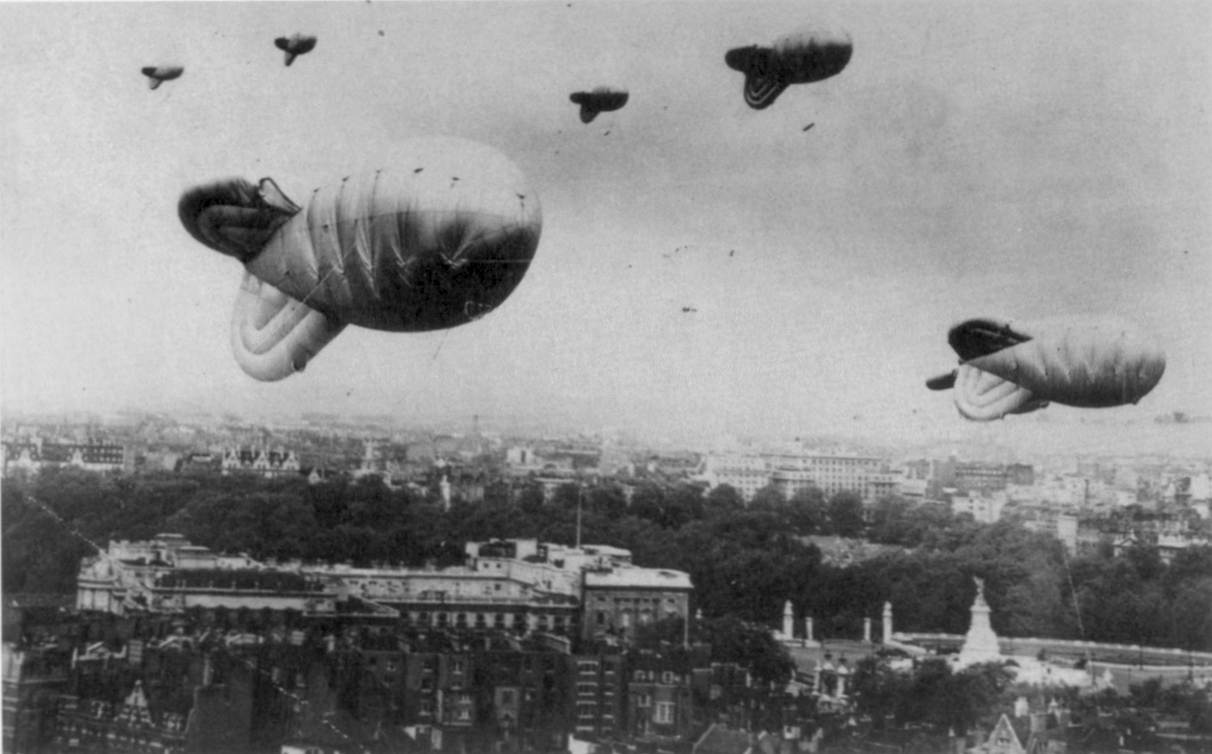
To answer that question, I just finished writing a short story taking place during the London Blitz. I first had the idea for this story over four years ago, when I went on a study-abroad trip to Europe to follow the Allies’ path through Europe. While our teacher and tour guide (or was it one of the other students giving a report based on the research they did the last semester?) was discussing the London Blitz at Bletchley Park (the site where Alan Turing cracked the Nazi Enigma code), I had this idea for a story taking place during the Blitz, involving some kids encountering something awful while trying to run from the bombs. Over time, the antagonist came to be Adolf Hitler.

Or is it him? You know me, I never write anything simple. In any case, the story reflects something about me that shouldn’t surprise anyone: I’m scared of Hitler and the Nazis. As a Jew, I know how close my people came to annihilation nearly three-quarters of a century ago. If the war had gone differently, I probably wouldn’t be here, let alone talking about my stories and my love of horror with you. This is part of why I studied the Holocaust in college, and why I still study it today (though obviously not as frequently as I did in college). But even though I studied the Holocaust and have a pretty good understanding of what occurred, knowing doesn’t make me any less afraid of the Nazis or their monster of a leader. And with such a resurgence of people saying Hitler was right or worthy of admiration, I made sure to get that fear across in the story. Hopefully I succeeded.

You know, I actually wasn’t intending to write this story. I was planning on getting back to a novelette that I’d started working on in-between drafts of Rose. However, this story started calling to me to write it, and I couldn’t resist the call to listen to it. And yes, stories can demand to be written. At least while they’re in our heads. And I only just figured out why this story wanted me to write it so badly that it grabbed my attention. You see, I went to Washington DC recently for work. It was the first time since I was thirteen or so that I’d been to DC, so obviously I was going to do the tourist thing and check out some places (see my Instagram for photos). One of the places I decided to visit was the US Holocaust Memorial Museum, so I could see it after being so much more informed about it than I was as a teen.

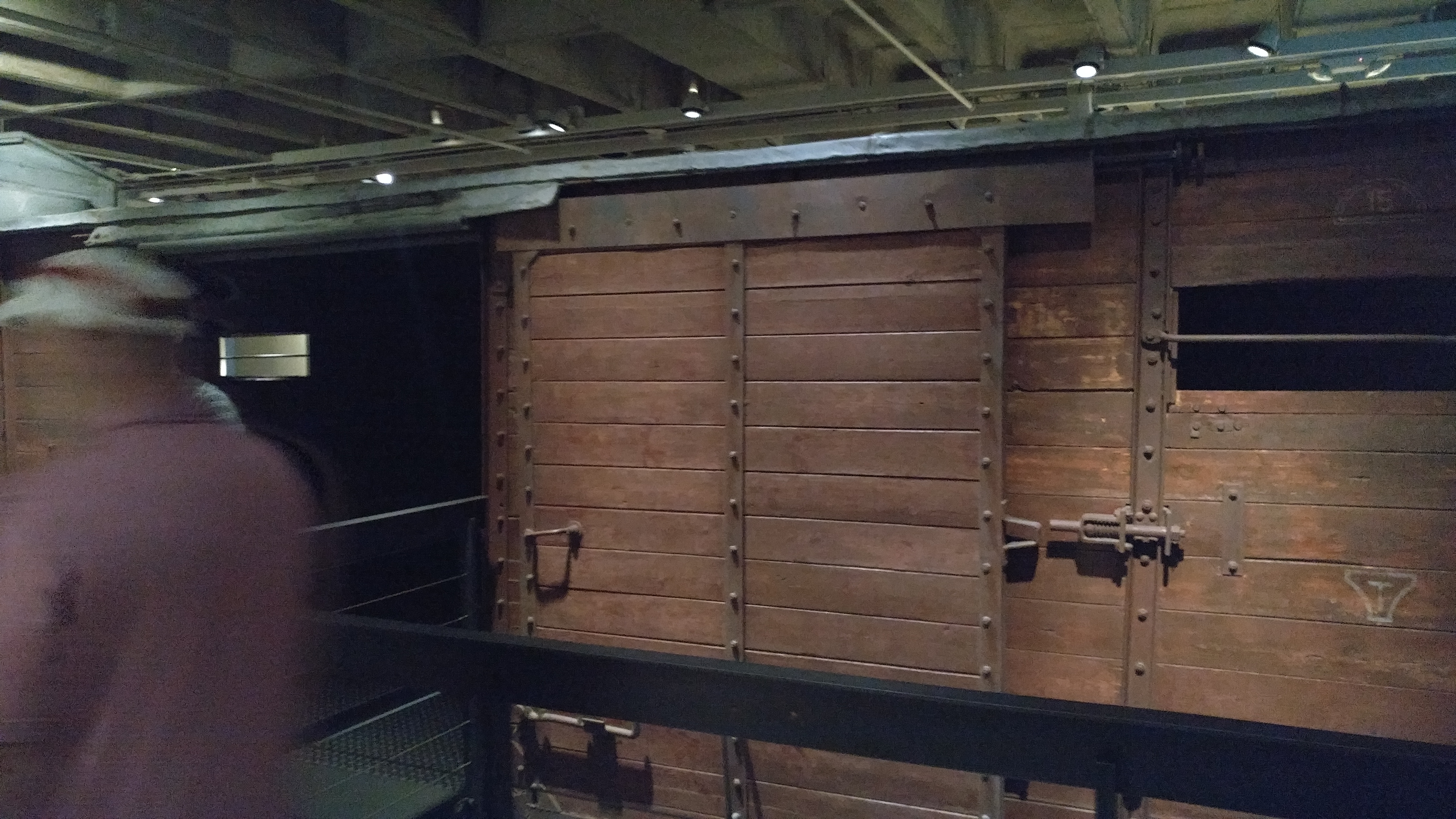
The train car at the US Holocaust Memorial Museum. There’s such a palpable energy of despair coming from it, you can’t help but be affected by it.

I guess my subconscious had me write this story because I was going to that museum. Maybe it was some form of mental preparation, or maybe I felt somewhere in my mind that it was the right thing to write. In either case, I went to the museum on Saturday, and let me tell you, their main exhibit has a palpable atmosphere. You can’t go in there without coming away affected. Seeing all these artifacts from the past–concentration camp and Nazi uniforms, newsreel footage, photographs, testimonials from survivors, even a train car that might have been used to transport Jews and other “inferior races” to concentration camps–along with the museum’s presentation of them, make you fully aware of the horror that occurred so long ago and how it still affects us today.

After I left the main exhibit, I was so glad I was writing this story. It was as if through the story, I was reminding people there’s still a reason to fear Hitler and his ideology. Especially since it’s showing a resurgence these days, long after its abominable creator committed suicide.

So what’s next for this particular story? Well obviously I’m going to have it looked over and then edited. Afterwards though…we’ll see. It’s a little over sixty-eight hundred words, so it’s not too long. I’ll see about getting it published somewhere. There’s a magazine I’ve been trying on and off to get published in, so maybe they’ll take it. Then again, the Ohio Chapter of the Horror Writers Association, of which I’m a member of, has been talking about putting together an anthology. Perhaps I’ll submit it there.

In any case, I’ll let it lie for a while before working on it again. In the meantime, let’s see if I can finish that novelette before I get the latest draft of Rose back from Castrum.

That’s all for now, my Followers of Fear. I’m going to get ready for bed. Until next time, pleasant nightmares!