Posts Tagged ‘editing’

If you’ve been following this blog for a while, if you know me in real life, or you read the things I post on my personal Facebook page, you know that I can be a funny guy. I love a good pun, a funny story, or a well-done prank. Or all three, if it can be done. And I try to insert humor into many facets of my life, much to the enjoyment of some and the exasperation of most others. Where do I get this reverence for humor? I’ll tell you: when a mommy and a daddy really like each other, they–

I’m sorry, but my lawyers tell me I’m not supposed to go into that. Let’s just say it might be a family trait, and leave it at that.

But guess what aspect of my life doesn’t see that many laughs? Surprisingly, not my writing. I actually don’t tell a lot of jokes in my stories. Yeah, imagine that! I don’t put jokes in my horror stories. In fact, my funniest story so far may be Video Rage: it’s got protagonist Zahara making a jab at male lead Rip’s manhood, and at a later point, main cast member Kevlar makes some bondage jokes when speaking to a Native American healer. That’s it.

Okay, now some of you non-horror fans may be reading this and be like, “Isn’t that par for the course? It’s horror.” But that’s the thing: just like how not all horror authors are dark, pessimistic creeps, neither are all horror stories devoid of humor. Stephen King, one of my biggest influences, often finds way to insert humor into his work. Ever read his novel Needful Things? That book is chock-full of comedy! There’s even a plot thread where two housewives buy objects from the antagonist that they believe are connected to Elvis Presley, and they start having hallucinations that the objects let them have a sexual/romantic relationship with Elvis! It’s freaking hilarious! And that’s just one example out of many.

But not just King: a lot of other horror stories make use of humor. One of my favorite Dean Koontz novels makes use of witty observations and funny turns of dialogue to great effect, adding a bit of levity to a very dark thriller. Buffy the Vampire Slayer often has tons of jokes and funny lines. Many slasher films from the 80’s and 90’s have funny moments (hell, Nightmare on Elm Street is often as funny as it is dark). And there are so many more examples of horror stories which sprinkle comedy in to alleviate tension and fear for a few seconds before starting it up again.

So why doesn’t my work have more laughs? Well, there may be a couple of reasons for that. One, in almost Freudian fashion, may stem from a childhood incident. And by childhood, I mean high school, but at this point in my life, the only difference to me is height and hormones. Back before Twilight poisoned the vampire genre, I tried my hands at several vampire stories. One of them was an epic, multidimensional vampire story, which for a while I was getting help with from an English grad at OSU my dad put me in contact with. During one email session, he noted that the story had a lot of humor in it. Every other line was a joke, and he said as a wishful horror writer, it should be more serious. I took that to mean no jokes, and cut the humor from that story in a snap. You may be thinking, “That doesn’t sound like that big a deal!” But to me, it may have been a huge deal. In fact, that memory is what I keep coming to when I think of where humor stopped showing up so much in my writing. You could say it forever scarred me (cue dramatic music!).

Another reason why I might not write that much humor into my stories is because of the type of humor I excel at. You see, my humor tends to be at its best when it’s situational. It’s like I’m living in a sitcom, and every word spoken has the opportunity for a funny line if I know where to look. That’s my mindset. My favorite jokes to pull on people usually reflect that. You’d be surprised how many times people have asked me how I’m doing, and I tell them, “I’m pregnant.” The reactions! They look something like this:

“YOU’RE PREGNANT?!!”

That being said, being a situational humor guy doesn’t always translate well to my fiction. I’m a plotter, which means I plan out the entire story from beginning to end. Keeping such dark stories in mind, from beginning to end, you don’t have much room to think of funny moments to add. You’re more likely thinking of the sad past of the protagonist and the arc they’re going through with this horrifying story.

Or it could just be the old adage, “Tragedy is easy, comedy is hard,” and all the stuff in the last couple paragraphs is a bunch of bullshit. That’s always possible.

Whatever the reason, it’s not that big a deal. Every author is comfortable with different amounts of humor in their work, and I’m comfortable with minimal amounts in mine (though if I ever write for Doctor Who, that might change). Besides, there’s a good chance if I tried to force more humor into my work, it would suck. In fact, I’m sure it would suck. Last night, I tried writing a horror-comedy short story about a tour of hell. The first paragraph was kind of funny, and then everything after that…not so much. Hence why I’m writing this post.

In any case, I think I’ll stick to what I’m good at. That’s what people like, and that’s what I like, so no problem. I’m sure I can fulfill all my writing dreams by not forcing jokes into my serial killer stories.

Or I could just stay at my job for the rest of my life and never make a thousand bucks off my work, but I don’t like to think like that.

If you write, how much humor do you put in your stories? What do you even think of humor in non-comedy fiction, anyway?
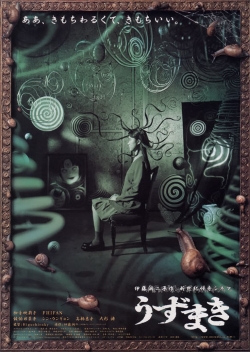
Back in January, I read and reviewed Uzumaki, a Japanese manga by Junji Ito about a small town that comes under a curse centering the idea of a spiral. It was as scary as it was out there (see my review here), and I had mentioned that I would like to get my hands on the film version and see how that compared. Well, some Amazon gift cardd money and a lost package later, I finally watched Uzumaki today. So how does it compare to the manga, andd how does it hold up as a film in general?

Well, it definitely ties down the strangeness of the manga. Uzumaki, like I said, is an out there story, and the film does a very good job of bringing that forth, using odd camera angles, weird visuals, and strange little special effect touches to really add an atmosphere of unreality to the film. There’s this one moment where two characters are walking down a hallway, and they pass a bunch of people standing against the walls just staring at their shoes, and neither character notices the people on the walls, or vice versa. It’s very odd, and kind of unsettling.

I also thought the actors did a very good job. The characters aren’t that multifaceted, but for an hour and a half movie, they work.

Unfortunately, that’s where the film’s biggest problem is: time. The film is an exact 91 minutes, and that means there’s only so much room to tell a story. And unfortunately, with a large story like that of Uzumaki, there’s only so much material that can be done. The end result makes the film feel kind of lacking. In the manga, you get the full scope of this curse. In the film, it feels more like a weird series of events with only mild connections, like walking to work everyday and seeing someone different each day do a dance at a different part of your walk. You might think it’s a weird and there’s a common cause, but your might not go out of your way to find out why this is happening. And that’s where the film ultimately fails.

I also found that some of the edits to the film are a bit more distracting than they should be. There’s one moment where they do a transition that looks like someone’s spray-painting a new scene into the film, and they use a cartoon-y sound effect to go with it. Not that scary. There’s another moment where a girl puts out a cigarette on a wall, and there’s a mini-explosion from the crushed cigarette’s tip. Um…why? It makes no sense. I know this film is going for that surreal sense of horror, but there’s a limit to what you can do without going into goofy territory.

I honestly think that if you’re going to adapt Uzumaki, you should do it as a TV miniseries rather than a movie. That leaves enough room for not only all the material that was cut from the film for time, but gives us more opportunity to get to know the characters and see them react to the strange events going on around them. And you know, I honestly would like to see that. With TV miniseries making a comeback on cable and series with shorter episode orders like American Horror Story being so successful, I honestly think an Uzumaki adaptation for TV would do very well.

On a scale of 1 to 5, I’m giving Uzumaki‘s film adaptation a 3.2 out of 5. Great at atmosphere and creating a sense of unreality, but too short to really leave a lasting impression. Honestly, you’re going to be better off reading the original manga, so go check that out and get lost in the spiral there instead.

You know, I think every horror writer has a story that has a title that sounds a lot like this one. “The Woman in the Coffin”; “The Pit and the Pendulum”; “The Lady in the Water.” Okay, that last one isn’t a horror story, but it is pretty horrifying. And you get my point, right?

Anywho, in my last post I said I was going to take a break from Full Circle and work on a few short stories. This is the first of those: “The Woman in the Coffin,” a short story about two cousins living in the English countryside who find a coffin with, you guessed it, a woman inside. In a way, it’s similar to my previous short story “Buried Alive,” which also revolved around someone buried in a coffin, but the whole coffin thing is really where it ends. Especially when you consider what the woman in the coffin in this short story does.

Do you think I have a thing for coffins? I have always wanted one that I could convert into a bed. That would be cool.

Anyway, I had a lot of fun writing this story. It only took me four days to get it down, which is a record for me (though considering this is my first short story written almost entirely with Dragon software, maybe this will be a new norm). I also had a lot of fun writing British characters. Normally my characters are in the States and talk like they’re from the States. I had to draw on all my years of reading British literature and watching British films and television to make it sound like they were actually British and not Americans in a British setting. I’ll probably have to work on that further when I get to the editing phase with this story.

It’s also shorter than most of my short stories, at about 6,550 words (for me, that is short. Most of my short stories average around 8,000 words). And I think there’s a lot of material I could cut out without sacrificing quality. If I can do that, I think it’ll be much more likely that a magazine or an anthology will want to publish it. And wouldn’t it be cool if that happened?

Anyway, it’s getting late, so I’m going to sign off. Next I’m going to edit my short story “The Playroom,” and then I’m going to write a quick short story that takes place in a location we’ve all heard about and hope never to visit. Hopefully I’ll be done with all that in the next two weeks.

Until next time, my Followers of Fear. Pleasant nightmares!

As you guys know by now, I’m a pretty dedicated horror fan. I read a lot of horror novels and watch a lot of horror movies, I decorate my apartment with horror knick-knacks (just the other day, a Jason Voorhees mask and Funko doll arrived for me from Amazon), and of course, I write a ton of horror. Only thing is, lately I’ve been writing a lot of science fiction, and that’s getting a little old.

The hockey mask looks good on us.

I’ve been working on Full Circle, the final book in the Reborn City series I’ve been working on since high school, since November. And as of the completion of the latest chapter this morning (finished it in just a little over an hour. Do you know how rarely that happens?), I’m just under halfway through the first draft. And while I’m still dedicated to finishing the first draft and the series itself, I’m getting a little tired of the constant sci-fi. Don’t get me wrong, I love science fiction. Doctor Who is one of my favorite shows, after all, and I get as geeky as anyone else when I think about The Last Jedi coming out this winter.

But check the About page of this blog. I’m a horror writer, and all this sci-fi gets a little wearisome. I want to dip back into the world of ghosts, ghouls, serial killers, and all other manner of monsters that go bump in the night.

Plus, I’ve mentioned before that I’m trying to publish more horror short stories, as I’m trying the traditional route again and publishing short stories is a good way to do that. Can’t publish horror short stories if I’m constantly working on sci-fi.

So with that in mind, I’m taking a break from Full Circle to do a little short story writing. I’m going to first write a short story that I had the idea for a couple months back, and then I’m going to edit The Playroom, a short story I wrote back in late 2015 and have not touched since. I think it’s about time I took a look at that one again, and then see if I can get it in a magazine or an anthology. After those are both done, I should be good to get back to work on Full Circle (though if I need to, I’ll write another short story). I have a feeling that starting with the next chapter, it’s going to be hard to stop writing this one anyway, so this is a good time to take a break and slake my thirst for horror.

Until next time, Followers of Fear. And may the terror be with you…always.

As I’ve mentioned before, I’m dividing my writing time between working on Full Circle* and working on short stories. And with my short stories, there’s been more of an emphasis lately to write them with the goal of getting them into magazines and/or anthologies. Why? Well, as many of you know, I’ve been trying the traditional publishing route again (though I will self-publish if I feel a story is better off getting published that way), and while getting published in magazines and anthologies isn’t absolutely necessary to getting an agent and/or publisher, they do help make you more appealing to them. Kind of like internships and volunteering on a resume during a job search, if you think about it a certain way.

That being said, getting your short stories in mags and anthologies is pretty difficult these days. Okay, the short story market has always been difficult (Stephen King said in his autobiography On Writing that he had railroad spikes full of rejection letters from mags/publishers/agents/etc. before he found success), but in an age where so much content is available for free, reading has to compete with movies, streaming, and video games, and even self-publishing is cutting into magazine’s readership,** magazines and anthologies are even choosier than they used to be. Especially the ones that pay. They only accept the best work out of all the submissions they receive.

So up against this market, how can an author increase their chances of getting their stories published? Well, keep writing, get other people to take a look at your work for feedback, and don’t take every rejection as the end of the world or as a reflection of your talents, of course. But is there anything beyond that to help one get editors’ attentions? Well, there are a few strategies, and I’d like to list them here:

  1. Research and target. In this strategy, an author should create stories geared towards a particular magazine or group of magazines. For example, if you find a magazine that prefers urban fantasy stories, write an urban fantasy story that the magazine would probably like. Look at the magazine’s website and/or in recent issues to get an even better idea of what sort of stories they prefer (maybe they prefer female protagonists, or they hate romances between humans and supernatural creatures). Once you have a good idea of what they prefer in their stories, write one in that vein and then submit it to them. Chances are that if the story is the kind the magazine specializes in and likes, they’ll publish it.
    I’ve actually used this strategy successfully before. My first published short story, Summers with Grandmother Fumika, is about a fox-spirit that takes part in a Japanese tea ceremony. It was written after I discovered a magazine that specializes in articles and fiction relating to tea! Earned $100 for that story, which to a high schooler who averaged about $28-$35 dollars selling tickets for basketball games, was a pretty big deal. And I recently wrote a short story that I wrote for a specific sub-genre of horror, so there’s a good chance that it could be published in any of the publications that like those stories (though time will tell, of course).
  2. Rely on your networks. We live in an age of social media, and that means we come across all sorts of people we might never have even known existed thirty, twenty, or even just ten years ago. That means if you have a blog, belong to writer’s groups on Facebook, or belong to an online critique circle, you potentially have dozens or hundreds of people who can help you find homes for your stories. For example, I asked one of my writers’ groups on Facebook if they had any suggestions for places I could submit another short story in a particular sub-genre of horror. Within a few hours, I had a couple of responses that I could follow up with.
    Sometimes your friends don’t even have to give you suggestions. Occasionally, they run magazines or anthologies! In the past three years, three short stories were published in anthologies where a friend of mine was one of the editors (you know who you are). Just from this, you can see what an amazing resource friends can be!
  3. Check your publications. There are a buttload of books out there that are meant to help the average writer write and publish their work. Most of them have sections full of listings for magazines, agencies etc, and a lot of them are updated yearly. The best part is, a lot of libraries carry copies of these great tomes with them. I highly recommend The Novel & Short Story Writer’s Market from Writer’s Digest. They have great articles and listings (though never enough in the horror department, sadly).
  4. Google. I know, sounds like something that goes without saying, but you’d be surprised how often this doesn’t occur to people. Google is a remarkable resource, and if you’re careful with your search terms and what links you click on, it can open doors. In the past couple months, Google has led me to several magazines and anthologies that specialized in stories I could send them. At the moment, I’ve been rejected by one, but there’s a chance I could be accepted by two more. And if those don’t work out, there are all sorts of places I can still try out. All thanks to Google

Now, there’s still no guarantee that you’ll get into a magazine or anthology, even with using these tips. That’s fine, many successful writers have rarely or even never been published in these sort of publications. But if you think it can help your career, or you prefer short to longer stories, these tips might just help you get into that collection of winter-themed romances or into that magazine that likes hopeful stories involving space exploration and interactions with alien species. And that is a joy that every writer relishes.

*Speaking of which, when I’m working on that, the general policy is “get a chapter done, then work on a short story or a blog post.” So if you see a post come out on this blog over the next couple of months, it’s either because something big happened worthy of blogging about, or I just got a chapter of FC done. Like I did right before I started writing this post (only 22 more to go!).

**Dammit self-publishing, why do you have to–wait, what am I saying?

I recently came across a very fun article from the AV Club, which talked about how any opening in a story could be improved by replacing the second (or in some cases, the third) line with the phrase “And then the murders began.” This idea was formulated by author Marc Laidlaw, which has since become known as Laidlaw’s Rule, and is based on some of the advice of author Elmore Leonard, who said you should start your stories with more action-based openings rather than more quiet stuff like describing the weather or doing some sort of backstory.

As you can imagine, Laidlaw’s Rule can make for a rather fun parlor game. I shared the AV Club article in one of my writing groups on Facebook, and we had a ball with this. Here’s my contribution to the game:

It was the best of times, it was the worst of times. And then the murders began.

Charles Dickens has never been less boring.

And you find that this works with almost any story. Harry Potter, for example:

Mr. and Mrs. Dursley of Number 4, Privet Drive, were proud to say they were perfectly normal, thank you very much. And then the murders began.

Just as JK Rowling intended it, I’m sure. How about Alice in Wonderland?

Alice was beginning to get tired of sitting by her sister on the bank, and of having nothing to do. And then the murders began.

Well, in this LSD-inspired story, anything’s possible. What about Stephen King?

The terror, which would not end for another twenty-eight years–if it ever did end–began, so far as I can tell, with a boat made from a sheet of newspaper floating down a gutter swollen with rain. And then the murders began.

That’s Stephen King’s IT in a nutshell. New movie out September 8th! Check out the trailer that’ll be coming out some time tomorrow. Let’s see, what else? Oh, I know! How about Wuthering Heights?

1801 – I have just returned from a visit to my landlord – the solitary neighbour that I shall be troubled with. And then the murders began.

It’s already improved greatly. And even works on non-fiction works and speeches. For example, the Gettysburg Address:

Four score and seven years ago our fathers brought forth on this continent, a new nation, conceived in Liberty, and dedicated to the proposition that all men are created equal. And then the murders began.

America in a nutshell, everybody! Our nation is dangerous to your health.

How about my work? Let’s try Reborn City:

Zahara and her family had decided to eat out at a restaurant in North Reborn that served kosher meat, the closest they could get to halāl. And then the murders began.

Well, there are a few murders in this book (spoilers!). What about Video Rage?

The sunbaked concrete and metal in the hundred-plus degree heat, the many cars and trucks reflected light off their chrome bodies like blinding beasts zooming down the highway. And then the murders began.

Ooh, chilling! How about Snake?

Paul Sanonia had been touched by a nightmare, an unbelievable disaster that had manifested in reality where it shouldn’t belong. And then the murders began.

This novel in a nutshell (more spoilers!).

And the best part is, Laidlaw’s Rule works with pretty much any story. Usually it works best with third-person omniscient narrators, though other narrating styles can work. Take a look at To Kill a Mockingbird:

When he was nearly thirteen, my brother Jem got his arm badly broken at the elbow. And then the murders began.

Jeez, Atticus Finch’s job just got a lot tougher. I think he’s going to have to play detective as well as defense lawyer and dad.

Marc Laidlaw, the formulator of the Laidlaw Rule.

Yeah, Laidlaw’s Rule is a lot of fun. But it also could make for a fun writing exercise. How many stories have actually begun with “And then the murders began” as the second sentence? As a lot of these kinds of stories like a bit of mystery before you discover a body or two, I’d say not many. So it would be fun to start a story this way. Just come up with a random set up for the first sentence, do “And then the murders began” for the second, and see where it goes from there. We could call it the Laidlaw Exercise (coming to a high school or university writing class near you!). And if I wasn’t neck-deep in finishing a sci-fi trilogy, I might try this! God knows I could tell more than a few stories starting out this way.

Maybe I will when I have a bit of free time. Who knows? I might end up writing something totally awesome.

But what do you think of the Laidlaw Rule? And do you have any contributions you’d like to add? Author friends, I want to hear what your books sounds like when given the Laidlaw treatment! Let’s discuss in the comments below.

That’s all for now, my Followers of Fear. I’ll have another post out later this week, so keep an eye out for it. Until next time!

…And then the murders began.

I normally don’t make New Year’s resolutions. When I do, they usually don’t last longer than a month or even a week.  But this year, I decided to break from tradition and actually make a resolution: to try new methods to get people interested in my writing. This decision was partially spurred by my earlier decision to try and find a literary agent, as well as from reading a book on marketing and realizing that I needed to change my approach to how I was getting people interested in my fiction.

It’s a hard market out there. If what you’re doing isn’t working, maybe you should try something new.

So if you’re still here and you’re not thinking, “Oh, this is just one of those posts where he blathers on about what’s going on with him and his life”, then you’re probably thinking “How is he doing with that resolution, then?” and “How did he change his approach?”Well, I like to think that so far, so good. This isn’t the sort of resolution that can be objectively measured, like losing so many pounds or bringing your academic scores up. I could measure it by new followers, but not all followers read posts frequently, and only a small fraction are willing to spend money on my books. Book sales can be an indication, as can reads on Wattpad, but to base my success solely on those factors doesn’t seem the wisest course to me. And finally, building an audience is a long and arduous process. This blog took five years to gain as many followers as it has, after all. An audience of readers interested in my books might take even longer.

It’s easier to talk about what I’m doing different. One thing I’ve done is that I’ve stopped doing ads through Facebook and Twitter. Unless you have of big budget like Coca-Cola’s advertising department, ads through those sites usually don’t translate into sales. At the very least, I’m saving money, and that’s never a bad thing.

Another thing I’ve been doing is related to my goal of trying the traditional route again and finding a publisher. That is focusing more on my niche, which is horror. I know, I’ve written and published a lot of sci-fi, but I prefer horror, and what I’m trying to do now is to write more horror stories and trying to get them published in magazines and anthologies. I’m still working on Full Circle, the final book in the Reborn City series, but I’m also devoting more time to horror. The hope is that I can produce enough work and get it published in magazines, building my name as all or a writer, thereby making myself a bit more attractive to horror fans and possibly literary agents and/or publishers.

As of yet, I’ve only submitted one short story, and I’m still waiting to hear back on it. But the next time I take a break from Full Circle, I plan to do some editing and writing, and see what happens. The goal here is to at least get a couple stories published by the end of the year (fingers crossed!).

A third method I’m trying, and this is already producing results, is I’ve started publishing through Wattpad again. Last month, I published my sci-fi novelette Gynoid on that website, and so far I’ve had a positive feedback. There’s been quite a few readers, a couple of votes (which is kind of like “Likes” for that platform), and even a comment or two. One of those comments was from someone who was very relieved to see a certain outcome for one of the characters. That particular comment made me feel very happy, because it showed that the story I wrote and the characters within had people invested.

Sure, Wattpad doesn’t make me any money, but it does give me an audience. And based on Gynoid’s success, I may publish more stories through the website in future, especially for stories that might have a hard time getting placed in magazines.

So that’s what I’m doing right now. It’s a multipronged approach, which is usually what is recommended for any big endeavor like this. Later this year, after I finished the first draft of Full Circle, I plan on editing Rose and shopping that around to agents. Rose really represents not only my growth as a writer, but it is a prime example of the niche I want to write for, so I feel that’s the best novel to shop around to agents and publishing companies. I’m also considering different social media platforms to try out, like Goodreads and Reddit (I know one person who is very active on one of those sites, so I may ask her for advice). If it can work, anything’s on the table.

For now though, I’m just focusing on focusing on my niche and finishing Full Circle. Any resolution that is to be successful takes time, proper planning, and patience. I want this to go well, so I’m not going to rush any of the steps I’m taking to further widen my audience. Will any of it work? Tough to say. But I’m an optimist at heart, and I like to think that this new approach will eventually yield results.

And if you are interested, I’ll give an update in a couple of months or at the end of the year, and let you know how I’m doing. In the meantime, if any of you have any tips on expanding my audience, or places I can look for an agent/publisher, or places that I could potentially publish my stories, let me know. If they work out, I’ll credit you in any post I write about it.

That’s all for now, Followers of Fear. I’ve got a lot of work ahead of me, so wish me luck. And thank you, as always, for supporting me as I work hard on becoming a great horror novelist.

first-day-first-paragraph-tag

I think this might be the last time I do this particular tag for a while. I mean, it’s a great tag. It’s a fun tag. I created it with that in mind. But I’m running through my list of author friends very fast and I don’t want to run out of friends too soon. Besides, I think I’ve started a few good chains here. Perhaps this tag will continue on without me.

So if you get this tag, here’s what you have to do:

  1. Publish your own post on the first day of the month.
  2. Use the graphic above
  3. Thank and link back to the person who tagged you.
  4. Explain the rules like I’m doing now.
  5. Post the first paragraph of a story you’ve written, are writing, or plan to write someday.
  6. Ask your readers for feedback.
  7. Finally, tag someone to do the post next month (for example, if you do the tag on the first of August, the person you tag has to do it on the first of September), and comment on one of their posts to let them know the good news.

March 1st? Done. Graphic used? Correct. Thanked and linked back to…myself? Not necessary. Explained the rules? Done! Post the first paragraph of something I’ve written/writing/planning to write someday? Well, I really like Car Chasers, the short story I wrote back in October, so I’ll go with that. Enjoy:

There are many tales that come out of Shan Woods, and nearly all of them have to do with Chasers’ Run. One of those stories is the tragic tale of Asher Greenwich and Donnie Griggs, which has been retold and changed around so much that even those who were there when it happened aren’t sure what’s true and what’s not. This is the actual version of events, or the one least convoluted by soap opera embellishment. And it all started on Saturday, July 6th, during one of the hottest summers on record.

Thoughts? Let’s discuss in the comments below.

And finally, to tag someone. I pick…Dellani Oakes! Dellani, you’re up. Enjoy the tag, and have fun with it.

That’s all for now. It’s a new month, so I’m hoping to get plenty done. Fingers crossed. Until next time, my Followers of Fear.

gynoid-blogs

Well here it is. The final part of Gynoid is finally available. I hope you like it.

So if you’re new here or something, Gynoid is a science-fiction romance story I decided to publish, which is kind of like the YouTube for writers. I’ve been publishing it in parts since Valentine’s Day, and today I publish the final part. And in case you need a reminder, here’s the blurb I’ve been working with:

When Toby Crimson orders a gynoid, a robot designed to look and act like a human girl, he knows he shouldn’t be doing it in the first place. Gynoids are for perverts and losers, after all. But Toby has told a lie, and he needs the gynoid, named Ariel, to keep that lie up. What he never expects is to actually like Ariel being around. Or that Ariel is going to change his life. Whether he likes it or not.

I’m happy to say that so far, people have been reading and responding well to the story (though apparently some have tried the links through Facebook and have had trouble, which is sad to hear). I’m hoping that with the final part I’m able to deliver a satisfying ending to all readers. And with that in mind, I would like to once more thank Ruth Ann Nordin for helping me edit this, and to Joleene Naylor for helping me create the cover. I could not have done it without your help. Also, definitely check out their blogs. Plenty of good stuff there.

The links to read each part of the story are below, as usual. I hope you’ll take the time to read it, and let me know what you think. Positive or negative, I love feedback, and I would love to hear yours. Until next time, my Followers of Fear!

Part 1:  https://www.wattpad.com/372168643-gynoid-part-1

Part 2:  https://www.wattpad.com/375071150-gynoid-part-2

Part 3:  https://www.wattpad.com/378178810-gynoid-part-3

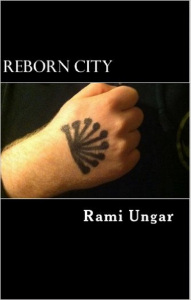
Reborn City

Reborn City

Well, this took longer to do than expected. I started writing this novel in November, and it’s late February now. I hope this isn’t an indication of how long the rest of the novel will take.

So if you’re unaware, for the past couple of months I’ve been working on Full Circle, the final novel in my Reborn City trilogy.The RC trilogy follows the Hydras, a superpowered street gang living in a dystopian future. Amongst its main themes are the horrors of prejudice and hatred, gang violence, drug addiction, and above all, learning to overcome what you and what others think of you.

I started writing this trilogy in high school, and it is so crazy that I’m finally on the last book. Even better, I made it to the first real milestone. Okay, technically with thirty-five chapters, there is no even point where it’s off the fourth of the way through, but being nine chapters and is close enough. And while as a first draft this novel is going to need a lot of work (pretty sure that the first two chapters are going to need lots of revision), I think I’m off to a very good start. I’m doing a good job of reintroducing the world to readers who haven’t been back in a while, introduce some really cool villains, and set up an intriguing plot. Plus, I feel like this novel is going to show how much I’ve matured as a writer. You really get this on mature sense of style and storytelling from reading this book. Even if it isn’t horror, this might be my best work yet in some respects.

All right, now for page and word count, which is something I always include with these updates. In terms of pages (which means 8.5″ x 11″ size pages with 12-point Times New Roman font and double-spaced lines), the total is 106 pages, with the average page number per chapter being 11.7. In terms of word count, the total is 30,313, a decent-sized novella, with the average word count per chapter being 3,368. Not bad, if I do say so myself.

So how will things go from here on out? Well, despite my worries at the beginning of this post, I’ve actually started speeding up my writing. This is in thanks mostly to Dragon, a speech to text software that I bought and downloaded onto my computer. Basically what I do is I narrate the story myself, and Dragon puts what I say on the page. What might take me two hours to write now takes closer to a half hour, forty-five minutes. It’s quite handy, and I plan to do a full post on it on Self-Published Authors Helping Other Authors in the near future.

Book 2: Video Rage

Book 2: Video Rage

The point being, hopefully it won’t take another four months for me to reach the halfway point of the novel (which I’ll say is Chapter 18 for simplicity’s sake). And I have some interesting chapters coming up, so that’s even more reason to write. Chapter 10 is going to give us a look at most of the villains in this book, and I’m really looking forward to exploring them a little bit. I’ve actually made some of them a little scary. Like, Stephen King – style psycho crazy villain scary. And I always have fun writing those sorts of characters.

Plus we have some new revelations about certain characters, a little character development, and a location I’ve been saving to explore for this last book. Should be fun.

Well, that’s all for now. If any of what I’ve said here is made you want to check out the Reborn City trilogy, I’ll include the links below. And if you do decide to check out my books, please let me know what you think. Positive or negative, I love feedback and I would love to hear yours.

Until next time, my Followers of Fear. Pleasant nightmares!

Reborn City:  Available on Amazon, Createspace, Barnes & NobleiBooksSmashwords, and Kobo

Video Rage: Available from Amazon, Kindle, CreatespaceBarnes & Noble, iBooks, Smashwords, and Kobo.