Posts Tagged ‘marketing’

If you haven’t noticed, the year is ending soon. And there are some things I’ve been wanting to talk or share with you (especially if you’re not on my other social media) before the year ends. The problem is, I didn’t think any of them on their own were worth putting out a blog post for. However, then I had a thought: why not just combine all the random topics into one big post?

As you can see from the presence of this post, I went through on that dangerous idea, so let’s get to it and talk about random topics.

SWORDS

Every little boy dreams of having a sword at some point in their life. To slay the dragon, to fight the evil king, to reap the souls of the good and the damned as the Carnival of the Judges goes into full swing in the city center–oh wait, that last one is just me. But the point stands. And recently, I was able to make that dream come true.

Pretty cool, huh? A friend of mine is downsizing for a move, and he posted on Facebook to see if anyone wanted them. The price was too good, so I bought them. They arrived way earlier than expected, and so I got them hung up in my office on Christmas Eve. According to my friend, he bought them in Spain when he was there as a teenager many years ago. The top sword is an arming sword, and the bottom is a side sword.

Both are awesome, and either one would make an excellent deterrent for burglars and stalkers.

Anyway, my inner child is now very happy. And I promise my friend that I’d take good care of them, so that’s what I’ll do. I look forward to many years with them on my wall.

BANNER
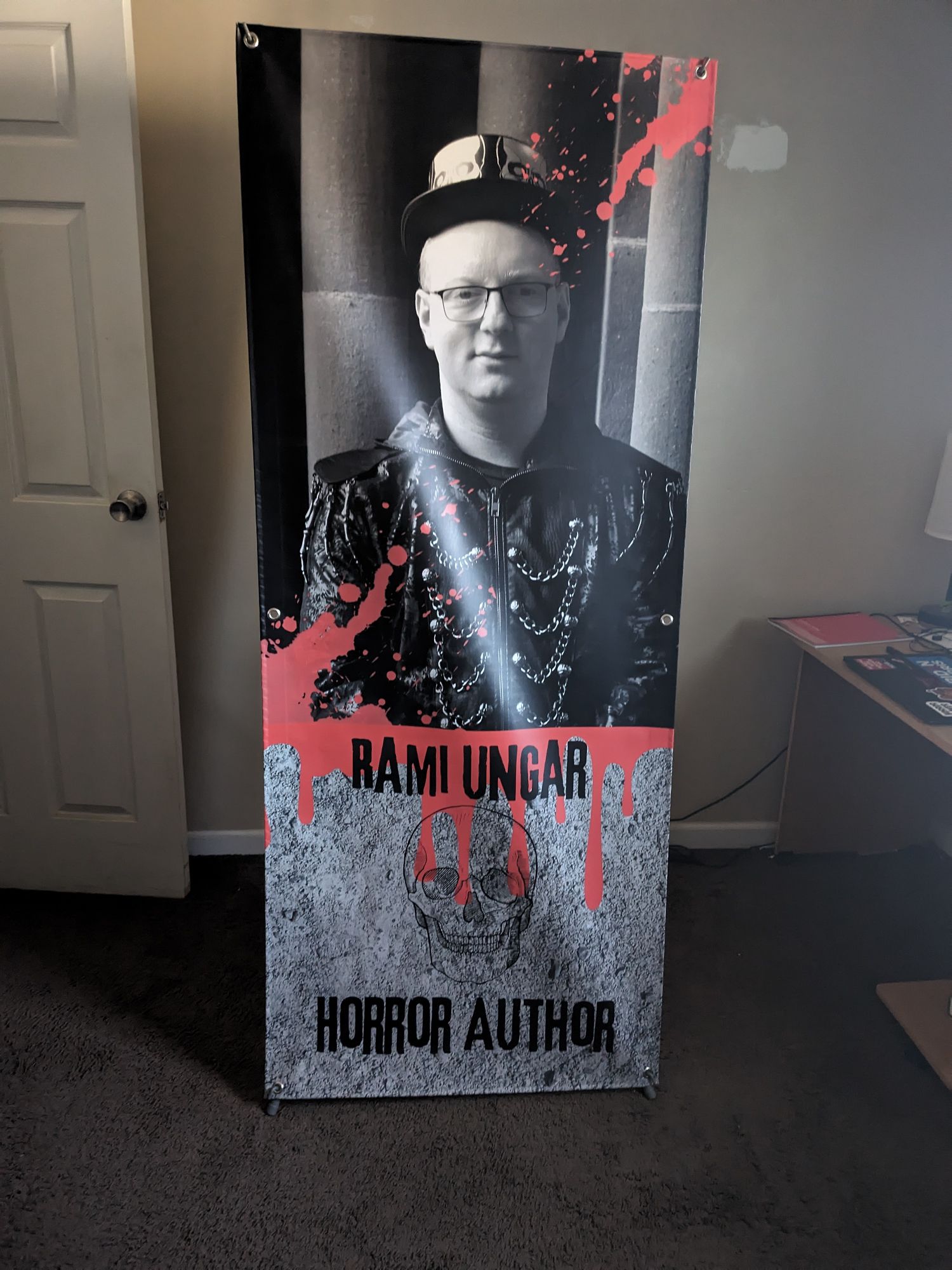
Back in 2021, when I attended my first ParaPsyCon, my dad and stepmom stopped by to see how I was doing, and while there, they noticed another horror author who had a vertical banner behind his booth broadcasting what he wrote. My dad asked me, “Think you’ll get one of those?” I responded, “Someday.”

Someday is today. Thanks to the grant I got earlier this year, I was able to pay for some new author photos, which I then used to design a banner (this was after lots of concept testing that I did in one of my Facebook groups). I then bought the banner and the frame for it. I absolutely love it. And I have a feeling it’s going to help me find and connect with more readers at the events I’ll be attending in 2024. Including ParaPsyCon.

HOW TO BUILD A WRITING HABIT

I wanted to try something different with my YouTube channel, maybe see if doing so would help me to connect with more readers, writers, and horror fans. At the same time, I’ve been wanting to talk about the habits of building a writing habit for some time now. Like a TED talk or at a convention, if anyone would actually let me speak at one of those (given that it’s me, you understand the caution).

So, I thought I would combine the two and put out a video on YouTube talking about building a writing habit. It’s something I hadn’t tried before and I thought people might find it helpful. Who knows? Maybe it’ll help me connect with more writers, readers and horror fans. At the very least, it’s had more views than other videos I’ve posted, so I guess that’s a good sign. Maybe I’ll try a video like this again when I have the chance/inspiration.

But tell me, do you think this is a good video? Did what I discuss make sense or seem helpful? Any feedback you have would be helpful, so don’t hesitate to leave a comment.

OWLS ARE AWESOME

You probably didn’t see this one coming, did you?
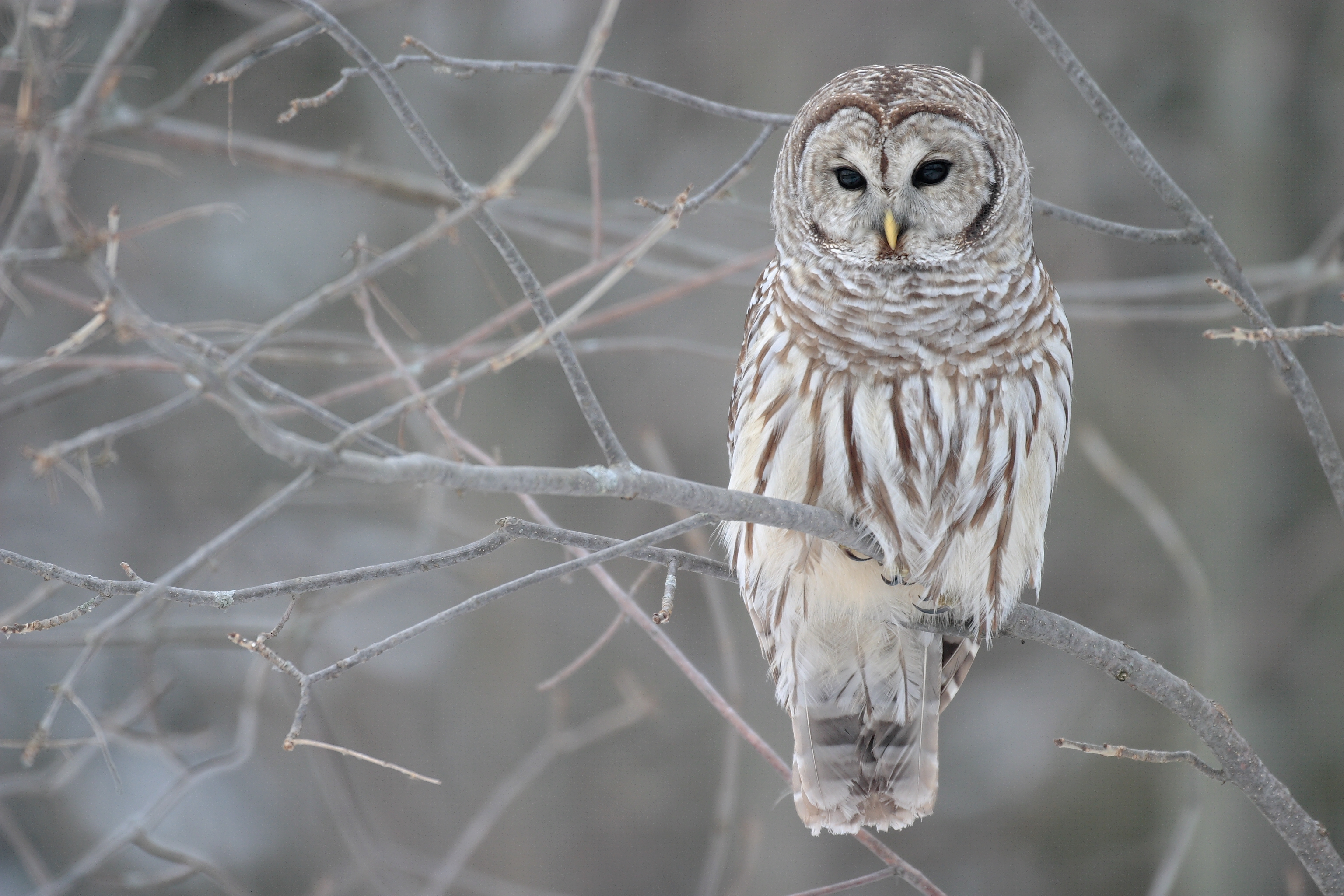
For quite some time, I’ve been obsessed with owls. It started when I found this YouTube channel where a nature artist/filmmaker films the daily activities of the owls and other animals living around his British country home. Watching these owls sleep, raise their broods, and occasionally get into scrapes with each other made me fall in love with and then go down a rabbit hole of learning about owls.

And it’s not hard to see why. They fly with wings that don’t produce any noise, they pick up sounds and sights we’re wholly ignorant of (especially at night), and they can be the most loving partners and parents among birds you’ll ever see. No kidding, watch some of that YouTube channel’s videos. It’ll melt your heart and make you believe in love again. All this in these tiny, compact bodies with sharp beaks and talons that can take out both prey and predators. And which predate on each other if the circumstances are right (or wrong).

It’s kind of no wonder I’m obsessed now and want an owl to live near me. For now though, I’ll settle for writing about them. With any luck, I’ll have a great owl-themed story done some time next month. And who knows? If it gets published, you might become obsessed, too. Wouldn’t that be a hoot?

TALKING WITH MY OLD HEADMASTER

Not too long ago, my dad sent me an article from the Jerusalem Post. Someone I used to go to school with had had an article published in the Post, detailing how he, a reservist in Israel fighting in the current war in Gaza, left the battlefield to be at the birth of his son in Jerusalem. It was incredibly beautiful to read, and all I wanted to do was to give his dad, who used to be the headmaster at the school we attended, my sincere congratulations.

Earlier this week, I actually managed to talk with my headmaster. It was a blast from the past, to say the least. I don’t think I’ve seen this guy since I was eighteen. I used to stop by his office to tell him dumb jokes and even phone pranked him a couple of times (don’t worry, he thought it was hysterical as long as he wasn’t in a meeting). And yet we laughed and talked like not even a day had passed since I graduated. I found out how his family is doing (they’re all in Israel right now for the new grandchild) and he found out what I’m doing and how my family is.

I hope he and his family continue to do well and that his son stays safe. These are scary times, but talking with him reminded me that we can still find reasons to smile in the worst of times. At least, that’s how I see it.

GREETING 2024

I don’t know what your New Year’s plans are, but I know what mine are: order pizza, open a bottle of wine, and watch some movies. And when the stroke of midnight occurs, I’m not going to welcome 2024. I’m going to roar at it. Let it know that whatever it throws at me, I won’t let it bog me down or ruin me. Instead, I’ll fight on and give it something to reckon with. Maybe 2024 will be so intimidated, it’ll give me a great year out of fear.

Sounds silly, I know, but so are a lot of traditions and beliefs I could name. And with an election year just around the corner, we’ll need all the luck we could use.

So, if you like, roar with me at midnight on December 31st. We’ll show 2024 who’s boss.


That’s all for now, my Followers of Fear. As I said, I wanted to get this all out before the end of the year. If you made it to the end of the post, thanks for reading. And if I don’t catch you before December 31st at 11:59 PM, I wish you all a Happy New Year and pleasant nightmares.

A little dramatic, but it sums up the feelings of many writers towards marketing very well.

Writers–especially those aiming to make writing their full-time job someday–have it rough. Not only do we have to figure out how to write stories, how to edit them, and how to get them published, but we have to figure out the marketing angle so people actually read our work once we publish it. And that part can be trickier than even putting two sentences together.

I might have mentioned, but in the wake of Hannah coming out in less than three months, and on the advice of my publishing company, I’ve changed my marketing strategy for new books coming out. Prior, it was something along the lines of “get the mentions out there, but don’t inundate. You don’t want to annoy people.” Now, it’s closer to “Inundate! Inundate! Inundate!”

Well, maybe that’s an exaggeration. I’m definitely increasing the number of ads and mentions I put out on my social media. I’m also doing a giveaway (more on that below), telling as many people in person I can, putting out more Hannah-themed YouTube videos (BTW, check out my channel), and reaching out to as many BookTube channels and podcasts as possible.

I’m also trying, per my publisher’s advice, to show how excited and enthusiastic I am for this book and for people to read it. You know, as opposed to sounding like, “Buy! Buy! Buy!”

And I am. Enthusiastic and excited, that is. I’m so glad that this book and these stories are coming out! I’m so looking forward to hearing what people are going to say what the ebook is out, and the possibility of a paperback and even an audio book if the ebook does well! I can’t wait to hear if the stories give people nightmares, and taking photos of people who have copies of the book (I’m hoping I can get some with their e-readers if it takes a while to get to paperback status)! And I’m looking forward to celebrating with friends and family when the book comes out.

But with posts nearly every day, especially on Facebook and Twitter, I can’t help but feel that I’m spamming the platforms. And it’s hard to tell on which platforms I’m having any sort of success. You can tell on most of them how many people see your posts, as well as how many people like, comment, and share them, but clicking on links or getting sales is almost impossible to tell.

Some days, it’s easy to feel like I’m shouting into the void of cyberspace and somehow isolating myself further, rather than bringing people closer to me. Let alone potential readers.

Still, I got to try. And while I’m trying, I’m trying to increase my enthusiasm and my love for these stories to the people seeing my posts. With any luck, something will pan out and more people will want to read the book. And that would make me happiest of all.

That being said, if anyone has any advice to help me get this book to readers, I’m all ears. Every little bit helps. Thanks in advance!


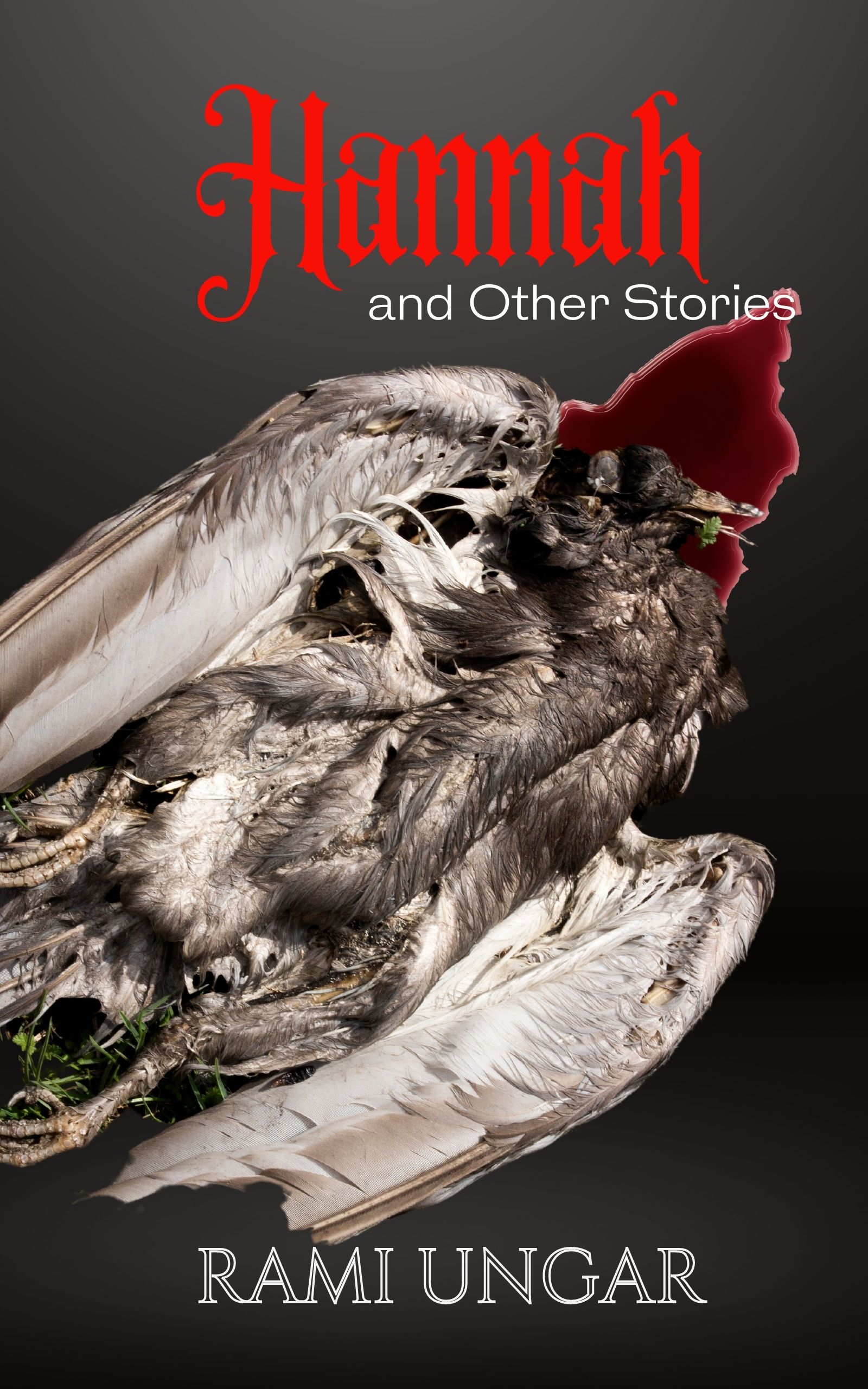
Speaking of Hannah, there’s still some time between now and the 14th. If you would like to win a signed copy of my first collection, The Quiet Game: Five Tales to Chill Your Bones, all you need to do is preorder a copy of Hannah and Other Stories. And if you then send me proof of your preorder at ramiungar@ramiungarthewriter.com, you’ll be entered to win said copy. The winner will be announced on the 17th.

That’s all for now, my Followers of Fear. Until next time, good night and pleasant nightmares!

Hannah and Other Stories Preorder Link

It’s alive! It’s ALIVE!

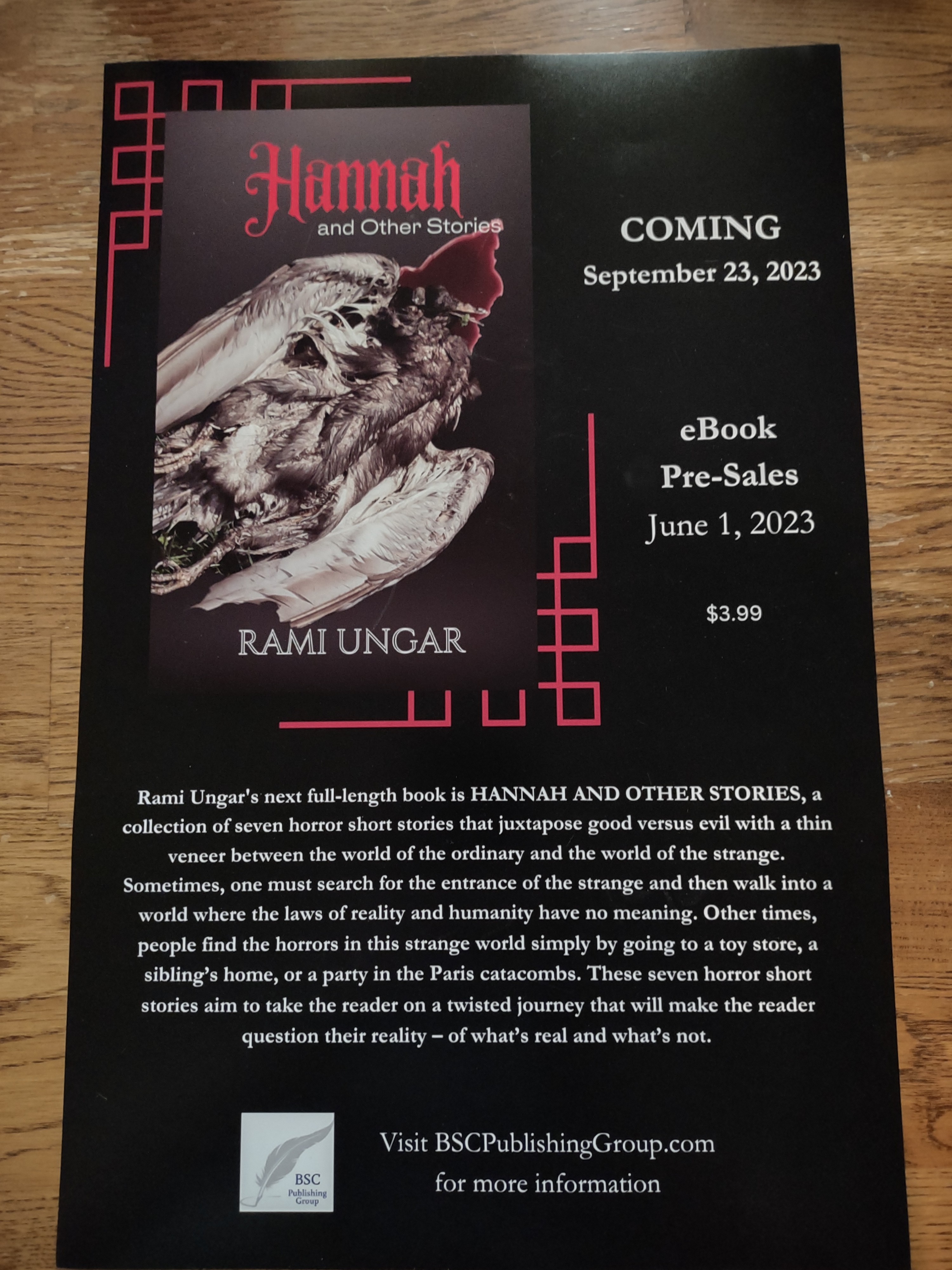
Specifically, the link to preorder Hannah and Other Stories is live now. As you know, Hannah and Other Stories is my new collection of short stories, and it’s releasing September 23rd, 2023. The collection contains stories of ghosts, budding serial killers, and carnivorous horses. And as of this morning, you can preorder it using the link below.

At the moment, you can only preorder it as an ebook. However, if preorders, sales and reviews are good, we may be able to expand into paperbacks and maybe even an audiobook! So please, if you’re at all interested, click on the link below and order a copy ahead of time! And in the meantime, I’ll do my best to make you want to read the book!

PREORDER LINK FOR HANNAH AND OTHER STORIES

Speaking of doing my best, check this out: BSC Publishing Group, the publisher releasing Hannah, came up with all these marketing materials to help promote the book at events. You can see some photos of them below:

A chapbook containing excerpts from the stories “Hannah” and “Queen Alice.”
Pretty sweet bookmark.
Bookplates! You can paste them to the inside cover of your books, making them collectible (especially if I sign them).
Stickers and little photo cutouts of the cover!
A big poster with a description of the book! Now that’s something to catch the eye.

Pretty sweet, right? I never had this sort of support from a publisher before, so it’s a nice change of pace. And BSC does this for all their writers, so that’s pretty awesome for us. My favorites are the chapbooks and the poster. Not only are they well made, but I think they’ll especially draw the readers in. And now that the link is live, we can slap a QR code somewhere on that poster so people can preorder with their phones.

Anyway, I hope you didn’t mind me showing off the cool marketing materials and trying to entice you to preorder a copy of Hannah and Other Stories. Still, I hope you’ll check out the book and even consider preordering a copy. And if you do order a copy and read it, I hope you’ll review it after the release. Positive or negative, I love reader feedback, and reviews help other readers as well.

That’s all for now, my Followers of Fear. I’m happy to report that while I’m not at one-hundred percent yet, I’m feeling much better than I have been. I might even do some writing this weekend. Maybe it’s all the self-care I’ve been doing lately. It makes such a big difference.

Anyway, until next time, good night and pleasant nightmares!

Did you know that my first book, The Quiet Game: Five Tales to Chill Your Bones, is coming up on its ten-year publishing anniversary? And that it was around this time of year that I wrote the first drafts of the stories?

It kind of hit me a couple of weekends ago, while vending at ConFusion, that that anniversary was coming up. I was there in the Artists’ Alley, describing each of my books to an interested congoer, and as I mentioned it was my oldest book, I paused. “It’s about…wow, coming up on the ten-year anniversary.” And that really made me think about how much time has passed since that book first came out, as well as all that’s happened since then. Specifically, all the lessons and mistakes I’ve made along the way.

For example, if you look at the cover of The Quiet Game, you might notice there are two F’s in the word “Five.” It’s an error I’ve since become fond of, but it and others have been reminders to me about carefully proofreading my work for mistakes, even when I’m sure they’re perfect.

And marketing my books! I’m still learning how to do it effectively, which is probably why I still need a day job (that’s a joke). But over the years, I’ve learned that you need a lot more than a blog and a book out there to get readers. Nothing ever snowballs till you suddenly find yourself with hundreds of adoring fans. You have to work and try many different things just to get people to take notice, let alone get interested enough to read your book. I’ve learned just how ineffective Facebook ads are for anything except clicks, and I’ve learned that having some advanced readers who are willing to read your work before it comes out makes all the difference. Oh, and that you’ll get plenty more readers when you’re at conventions and you’re being your true self.

And on marketing, I’m still learning things. I think I always will.

You know, you can be reading and writing with an aim to be a professional author since the time you’re a child–like I was–but learning on how to get the work to people is a whole other ballgame. And after ten years, I think I may be in the minor leagues–or at least I’m at a point where I’m somewhat established and known thanks to all those trials and mistakes and revelations I’ve had through the past decade or so.

At least I know one thing for sure: well before The Quiet Game came out, making this blog was a good idea. I created it at a library near my house a couple of weeks before I was set to start my freshman year at Ohio State University. The goal was that I would already have some readers ready before my first book came out (always something I was sure would happen at some point). And you know what? Not only have I discovered readers, I’ve discovered friends and colleagues and interests and experiences that I never thought possible when I was just 18 and starting out in the world. Or when I was 20 and getting ready for that first collection to come out.

Makes me wonder what lessons I’ll learn in the next ten years (I’m not going to speculate on possible mistakes, because I would like to avoid those if possible). And it makes me wonder where I’ll be in the next ten years as well. I hope I’ll have learned enough to make sure that when I release a book, it’s worth the investment for not just me, but for anyone who may have helped me publish it. I hope I may even be writing full-time, or at least much closer to the point where that’s feasible.

And I hope that I have many more Followers of Fear, as well as keeping those who have stuck by me through the years.

Well, that’s all for now, my Followers of Fear. I’ll be working on various projects between now and whenever I check in again. In the meantime, if you haven’t read The Quiet Game yet and want to before the tenth anniversary of its release (when I may have to do something special to mark it), you can find links to it and my other works on the Books page. And if you do end up reading some of my work, please leave a review telling me what you thought. Not only does it help me out as an author, but it helps other readers as well.

Until next time, good night and pleasant nightmares!

Photo by Pedro Figueras on Pexels.com

I’ve heard this term thrown about a few times since January, first in the new Scream movie and most recently in an analysis of a horror film on YouTube. “Elevated horror.” And the speakers, whether in in the Scream movie or in the YouTube video, made it sound like it’s a recognized subgenre of horror with its own staple of tropes and trappings. Like slasher and its killers and gore, or Gothic with its ancient, diseased settings and corrupting influence.

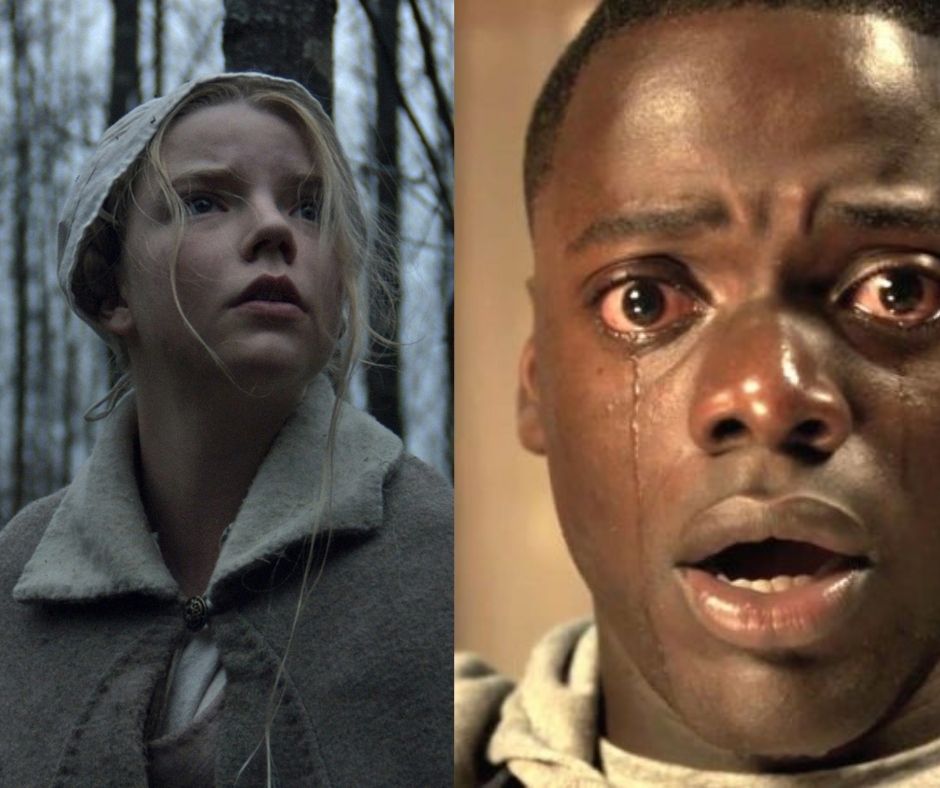
The thing is, it isn’t. Elevated horror isn’t an actual subgenre of horror. I’ve consulted with dozens of writers on this (thank you, Twitter and the Horror Writers Association Facebook group) and it’s not a subgenre. It seems like a subgenre of horror at first glance when you look at works referred to elevated horror. In movies, films referred to as elevated horror include The Witch, Babadook, It Follows and Get Out, among others: they’re horror stories that focus more on probing psychological drama, characters and metaphor than blood and gore or supernatural horrors. Often, there’s a powerful social commentary being presented through the narrative, such as Get Out‘s commentary on race.

In terms of literature, “elevated horror” might have all of these as well as flowery language. It might be almost called “literary horror,” because there’s an emphasis on wording the story nicely and making it just too dark to be called “literary fiction.” Examples include The King in Yellow by Robert Chambers, Interview with the Vampire by Anne Rice, The Deep by Alma Katsu, and A Cosmology of Monsters by Shaun Hamill.

And, most importantly, “elevated horror” can sometimes cross over into other genres, such as thriller, literary, or even comedy.

Can you really say The Witch and Get Out belong in the same subgenre?

Sounds like a subgenre, doesn’t it? But it’s not. The works called elevated horror are all as different from each other as roses are to tulips are to primulas. All flowers, but all different kinds of flowers. Let me explain: The King in Yellow and The Deep are cosmic horror mixed with deep psychological themes, The Witch is some cross between folk, religious and historical horror, and Get Out‘s searing satire makes it borderline horror-comedy. In fact, it was nominated at the Golden Globes under categories for comedies or musicals!

Yet all of them are given the designation of elevated horror. So, if it isn’t a subgenre, what is it?

The conclusion I’ve come to after speaking to numerous other writers is that elevated horror is actually horror films taking place in elevators.

Just kidding, that’s elevator horror, and the only example of that I can think of is 2010’s Devil.

No, “elevated horror” is a marketing term. And like all marketing terms, it’s directed towards a specific audience. Who is this target audience? It’s people who normally wouldn’t check out horror because they fear it’s low class, dangerous, or degenerate. They may want to check out horror or be curious, but the stigma still attached to the genre keeps them from doing so. Either that, or they won’t check it out unless a work is given a specific designation.

Calling something “elevated horror” is basically saying, “This isn’t like other horror stories, where half-naked teens are voyeuristically killed with tons of blood and gore, or where supernatural entities menace children in sewers. No, it has nuance and social commentary! There’s psychology and drama and fleshed out characters! You can be respectable while enjoying this!”

In other words, it’s another way of something is high-brow. “There are no explosions and superheroes here. No aliens or elves. No star-crossed lovers up against the odds. Only real people having real life situations, or real people in situations that are absurd but it’s okay, because it says something important about society.”

I almost wish it was a subgenre. I might have found a home for my ballerina-meets-the-King-in-Yellow story already (still working on that, give it time).

Pinhead may not be from an elevated franchise, but that doesn’t make him or Hellraiser any less awesome.

And the problem with this marketing term is it’s misleading. By calling certain movies or books “elevated horror,” it’s labeling all other horror as “trash,” or at the very least “common.” Either way, the designation puts other horror stories down. And that’s a shame, because there’s such good horror out there. Dark Harvest, Kill Creek and Salem’s Lot aren’t high brow, but they’re great stories that thrill and can leave their readers up late into the night. Same with The Thing or the Hellraiser franchise: they may never win Oscars, but goddamn are they scary, and the latter has led to one of the most memorable characters in the slasher genre.

I’m not trying to put down the term. I’m just saying we should understand what it means, both for works designated as such and those that aren’t. And if it lets you enjoy horror, great. Just make sure to check out works that aren’t “elevated” and whose creators don’t really think or care if their work is called that.

Personally, I can see some of my work being called elevated, but I’ll just say that I was trying to write a fun story and wanted others to enjoy it as well.

That’s all for now, my Followers of Fear. After getting my thoughts on this topic out, I’m off to dream of beasties and ghosts. Until next time, good night and pleasant nightmares.

This morning, I checked my memories on Facebook, and what popped up in 2018? No, not an embarrassing photo from that year’s Purim celebration. I killed the person who took the photo and destroyed their phone’s SIM card before they could post it. No, it was the announcement that my novel Rose had been accepted by Castrum Press, a publishing company based out of Belfast, North Ireland.

And over the course of today, it just kept hitting me. Three years. Three whole years. It felt like so much longer (and not just because of the mess that was 2020). And given all that happened with the book over those three years, it only feels right to blog about it.

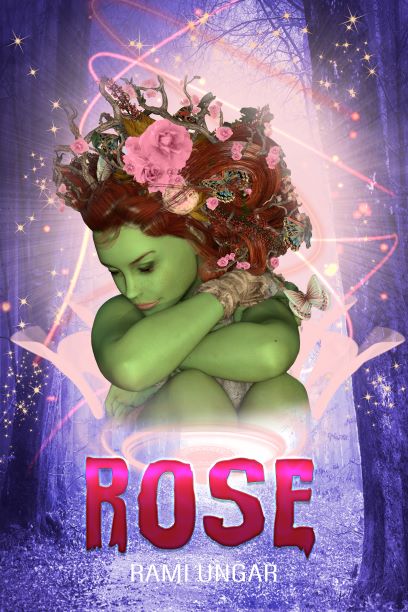
So if you’re unfamiliar, Rose is a novel I first wrote as my college thesis and which later became my first novel published with a publisher. The story is a Kafkaesque fantasy-horror tale about a young woman who wakes up with no memory of the past two years. She then finds herself transfigured into a plant/human hybrid by ancient magic, setting her on a path of no return.

As I said, a lot happened with Rose in the three years since Castrum Press accepted the novel. The novel itself went through a heavy editing and rewriting process that lasted about fifteen months, from March 2018 to June 2019 when the book was released. Characters were changed or written out, plot points were added and pulled out, and at one point two-thirds of the book needed to be thrown out and rewritten. Yeah, that happened. Word of advice, don’t add flashback scenes that have nothing to do with the main plot of the story, let alone make one-third of the book flashbacks and the other third somewhat dependent on the flashbacks.

But it was worth it. The book came out soon after my twenty-sixth birthday, and people started reading it. Soon, I had some great reviews on Amazon and Goodreads, and they kept growing. In August, I had a reading at Brothers Drake, a local bar and meadery, or distiller of honeywine. In December, the audio book released, narrated by the incomparable Sarah Parlier, who made chills go up my back with her narration. 2020 came in, and the book continued to do somewhat well. I wasn’t making Stephen King money, but I was doing okay for an author of my skill and reach.

Honestly, though, the fact that anyone’s reading Rose at all, especially with so much good horror out there, is incredible. Yeah, people enjoy it, but I had to do a lot of plugging over the course of these three years to get people interested, let alone willing to read it. That’s part of the author lot, truth be told: you gotta do a ton of work to let people know your book is available. No one’s going to do it for you, at least not without compensation.

Well, I’m not complaining. All the work has paid off. More and more people are reading Rose, and are leaving reviews. I just got a new four star review today from an author I know through Twitter, which made my day. It makes me happy. And I’m hoping, with continued work, some devoted fans, and a few conventions/author events, Rose will continue to do well.

If you would be interested in reading Rose, I’ll leave links below for you to check out. And if you end up reading it, I hope you’ll take the time to let me know what you think. Positive or negative, I love reader feedback, and it not only helps me, but your fellow readers in the long run.

That’s all for now. I’m off to enjoy the weekend. Until next time, my Followers of Fear, good night, Shabbat Shalom, have a great weekend, and pleasant nightmares!

Rose: Amazon US, Amazon UK, Amazon Canada, Audible

I’ve mentioned a few times that “Mother of the King” and any other short(er) stories I self-publish over the next year will only be available in print as chapbooks to be sold at conventions and other events. The conventions and other events part is easy to understand, but I’m sure some of you have wondered what a chapbook is. Well, as promised, I’m going to explain what those are and why authors make them.

To put it simply, a chapbook is a small pamphlet or booklet of 40 pages or less, either folded from a giant piece of paper or stapled together from several sheets of paper (fun fact: the latter is known as saddle-stitching). The practice of making and selling chapbooks began around the 16th century and were named after the men who sold them, chapmen, who were early traveling salesmen and dealers. Modern chapbooks are often made by authors using printers and staplers, or assembled in print shops and sold at events or sometimes in specialty bookstores.

So, that’s what a chapbook is. Why do we have them? Why would an author make them?

Well, chapbooks were originally printed for working class families who could read but couldn’t afford books on their own (even with the printing press, those things were expensive). They were easy to transport and helpful in disseminating ideas, information, entertainment and (often inaccurate) history into popular culture. They were also used to develop literacy, much like comic books and graphic novels help teens and people who don’t speak a nation’s native language learn and develop language and reading skills.

“The Chapbook, promotional poster” by MCAD Library is licensed with CC BY 2.0. To view a copy of this license, visit https://creativecommons.org/licenses/by/2.0/

Fast forward to today. Books are cheaper and libraries exist, but chapbooks are still around. They’ve been especially popular during the past couple of decades in certain circles thanks to copying and printing technology. For the first time, people could sell their stories and poetry directly to the people without the aid of a major publisher or someone who owned a printing press. It was kind of an early form of self-publishing, if you think about it.

With people making chapbooks and small circulation magazines from home, the chapbook has made something of a comeback. And though it’s still not as popular as the your regular hundred-plus page book, they’re still being put out every year. Authors and poets like how easy and cheap they are, and how they can make something of a profit from them while also giving potential fans something quick to enjoy and maybe get hooked on their work. Like I said, a form of self-publishing, though some presses also do chapbooks alongside regular books.

And presses and authors aren’t the only ones who have seen value in these little booklets. There are bookstores that sell chapbooks alongside regular paperbacks, events devoted to them as an artform (looking at you, NYC/CUNY Chapbook Festival), and major publishers using them as advertising tools for their catalogs. And sometimes, depending on the chapbook, who made it, the method of production, and how many exist, these babies can go for quite a bit of money. Sometimes hundreds of dollars.

Not bad for a cheap little booklet that was often recycled as toilet paper after the buyers were done with the story (yeah, that’s true. As well as strips of old newspapers. Beats a stick or a corn cob though, right?).

Anyway, I don’t expect to make hundreds of dollars off chapbooks of my work. Especially when they’ll still be available as ebooks online. But as I said above, they’d be a good way to get my work out to more people. For events out of town, they could help fund those trips. And let’s face it, they could be fun to have and to show off at my next convention. Whenever that is. Damn you, COVID-19!

Anyway, that’s a chapbook. A form of literature with a cool history and a revival in an age when people can control when stories come out. A diverse artform that takes very little time to make and enjoy. And I hope I can start making them (or going to the print shop to make them) very soon.

In the meantime, I already have one story out in a digital format, so it’s kind of like a chapbook. Yeah, you knew this was coming. My Arthurian fantasy novelette, “Mother of the King,” is out now and available as an e-book. The story is about the fabled return of King Arthur, told from the point of view of the woman chosen to be his mother. It’s been out barely two days, and it’s already garnering some great reviews! I’ll include the links below, so check it out!

That’s all for now, my Followers of Fear. I’m off with a priestess, a dragon and a Deep One to find Arthur’s casket. Until next time, good night, happy reading and pleasant nightmares!

Mother of the King: Amazon US, Amazon CAN, Amazon UK

Those of you who don’t follow me on my other social media platforms may not know this, but at least once a week, usually Saturday, I post links to my novel Rose. The hope is, with enough regular mentions, people will notice the book and be tempted to read the book. If they see it often, it will worm under their skin and the possibility of entertainment they’re missing out on will nag at them. Perhaps they’ll even check it out just to see if they really are missing out.

It’s a simple strategy, but it does work. Not to the point where I’m getting dozens of new readers or reviews every week, but it does get results. For example, just this past week or so, Rose received two new ratings on Goodreads. And not too long ago, Rose received a bunch of new ratings on Amazon Canada and Amazon UK. And I think these consistent ads may have played a role in all of these new ratings.

And as I write this, I wonder if these new ratings are just a fraction of the new people reading Rose. They just haven’t let me know what they think as of yet.

This is why I keep posting about Rose. I want people to find the book. Someone like Stephen King may only need to post a couple of times about their upcoming book, and they’ll have thousands of pre-orders within hours. Less well-known but very established horror authors will post regular ads just to remind people that their book is coming out or that it’s already out or that it’s been out for a while. My philosophy is that I have to do ten times the work in order to get half of what I want. What I want is to have as many people as possible read my stories. So obviously, I’ll do what I can to get people to notice Rose.

I just can’t post everyday, because it would cost way too much money or because people would get sick of seeing Rose mentioned on my timeline. Or both.

In any case, I have a feeling that all my efforts are going to pay off even more than usual. Because COVID-19 has a lot of people isolating in their homes, they’re looking for new sources of entertainment, including books. Perhaps they’ll see Rose mentioned somewhere and think, “Hmm, that might pass the time for me. I’ll give it a read.”

Not the ideal way for someone to notice my work, but there you go.

And no matter the situation, I’ll keep writing and posting about my stories, with the hope that more people will notice and maybe want to read it. With any luck, they’ll find their new favorite horror story, and I’ll have another reader interested in my next book or publication, whenever that comes out.

And if this post has got you at all interested in Rose, I’ll post the links below. Yeah, of course I would insert an ad into this post, what did you expect? Anyway, if you’re not familiar, Rose is the story of a young woman who wakes up with no memories of the past two years. Pretty quickly, her body undergoes a startling transformation, becoming a human/plant hybrid. As those around her react to her transformation, she soon realizes they’re not all they seem, leading to a desperate fight for survival.

It’s some dark, creepy shit and you can check it out by clicking on the links below. And if you do end up reading Rose, let me know what you think. Positive or negative, I love feedback from readers, and they help me out in the long run.

That’s all for now, my Followers of Fear. If, like me, you’re celebrating Passover, then Happy Passover (and next year in person). If you’re celebrating Easter this weekend, Happy Easter. And no matter what you believe or don’t believe, stay safe, be healthy, and pleasant nightmares to you all.

Rose: Available from the links below.

Rose: Amazon US, Amazon UK, Amazon Canada, Audible

You can thank this book for this latest post.

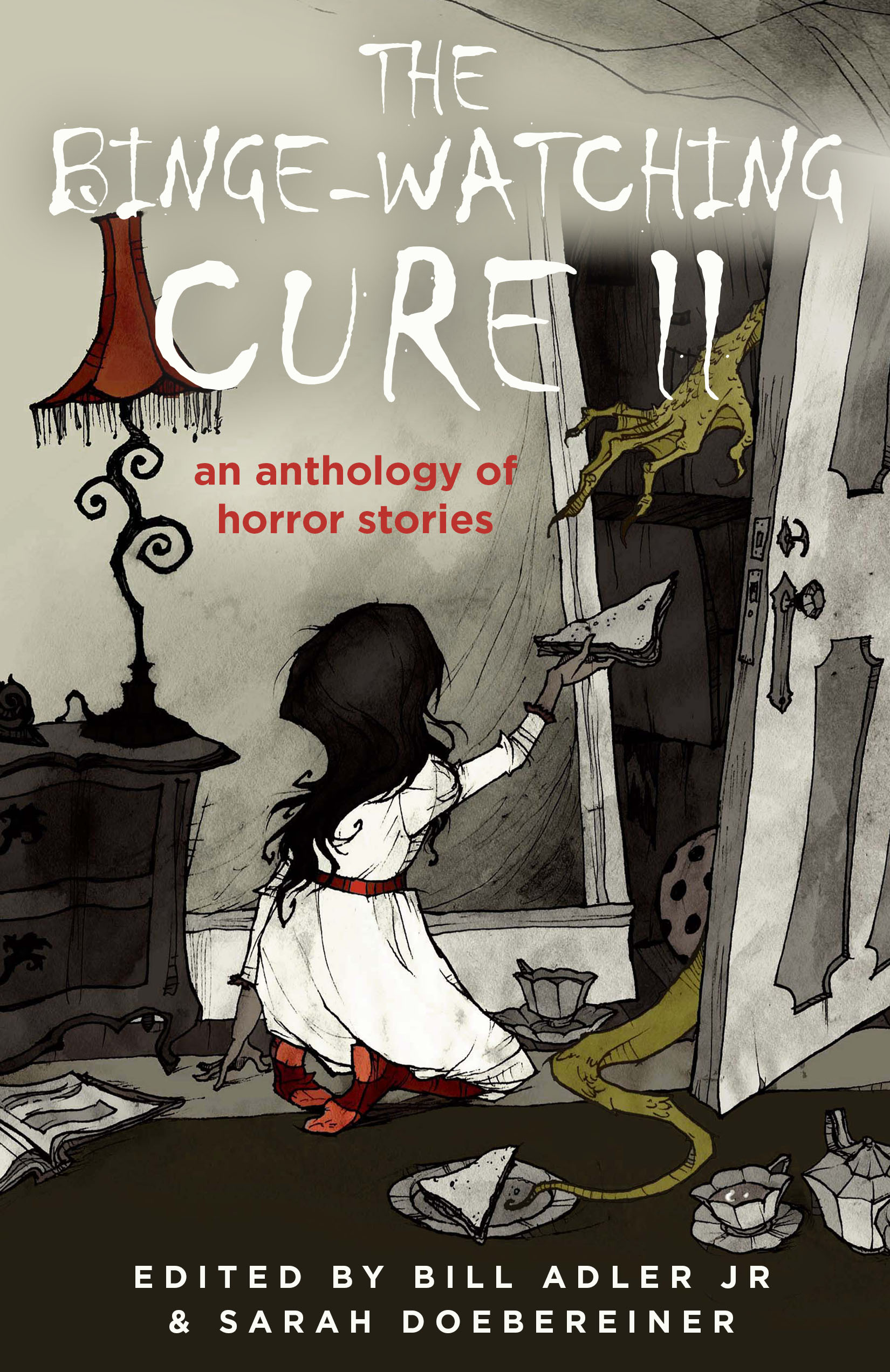
Back in August, fresh off the heels of Rose‘s release, I wrote a post about marketing a freshly released book in this crowded market. And now that my short story “Car Chasers” has been released in The Binge-Watching Cure II, as well as the audio book for Rose coming out recently, it’s high-time I got around to doing Part 2. As I said in the last post, it’s important to have a marketing plan in place and not expect your book will snowball into popularity. Books rarely just snowball into bestsellers, so a detailed marketing plan, one you actually act on, is essential.

And this time, I will be getting into practical tips, rather than just some food for thought to get you in the marketing mindset.

Of course, I will be plugging Rose and The Binge-Watching Cure II in this post, and including links at the end. Gotta get those stories in people’s hands, am I right?

First off, put together an ARC list. ARC stands for “advanced reader copies,” and ARC lists are lists of readers, usually volunteers, who are interested in reading an advanced copy of your book (usually digital, though sometimes physical or audio). Why would you want to give people an ARC? Because ARC readers will read your book, sometimes well ahead of the release, and drum up interest via word of mouth. Sometimes they’ll leave reviews on review sites or on their blogs, other times they’ll say something on social media. Either way, they tell people about your book, and that means more potential readers.

That being said, when you have ARC readers, there are a couple things you’ll want to do when compiling your list, besides getting their contact info, of course (gotta get them that ARC somehow, right?):

  • This is an act of volunteering and you want honest opinions. Don’t ask people to give you good reviews, don’t pay for good reviews, and don’t pay for reviews (this does not apply to blog tours though, which we will talk about later). ARC readers are doing you a favor, so don’t expect them to say nice things just for you. And if someone wants to be paid for a review, run the hell away!
  • Don’t ask family or close friends to be ARC readers. Sites like Amazon, from which most authors get their sales, can get suspicious if someone who might be a relative or a close friend leaves a review. This is because some authors have used their friend groups to boost their books, even if the friends haven’t read the book. Amazon is aware of this, and has developed countermeasures to combat this practice, which sometimes go overboard.
    So even if your mother is going to leave an honest review of your book, perhaps ask her to leave reviews only on Facebook. Sites like Amazon will strike down reviews and mess with your royalties if they suspect a fake or paid review.
  • Not everyone who volunteers to be an ARC reader will follow through reading and/or reviewing. This could be for a variety of reasons, but in the end, sometimes life happens, and they can’t follow through on the commitment. What to do about this? Well first, don’t get abusive towards people who can’t follow through on being an ARC reader. Believe me, sending them an email calling them lazy shits won’t get you anywhere, and can actually ruin careers before they start.
    Second, gather as many interested ARC readers as you can. I gathered over fifty interested people for Rose, and about nineteen left reviews on various sites in the first two months, close to twice the average number. So a large ARC list of people genuinely interested in your book is a good thing to have.
  • Finally, save your ARC readers when they follow through. If you have an ARC reader who read your book and talked about it, chances are they’ll do it again, so remember them and ask if they’ll be interested when the next one is nearing publication. Hopefully after a few books, you’ll have a decent list of ARC readers you can message when you’re ready to publish something.

Also put together a list of places to send your book to/advertise your book with. You’d be surprised how many sites exist to promote certain genres, and which give reviews of books in those genres. Start compiling a list of these sites and publications, as well as what sort of stories they look for and how to contact them. When the book is published, keep an eye out and see which are accepting books at the moment. If you’re lucky, they may fit you into their reviewing schedule.

Look into the possibility of a blog tour. A blog tour is exactly what it sounds like: you go around different blogs to give interviews, write guest articles, or let them review your book. These are a great way to highlight your work among a huge audience, and if the blogs featuring you are in the same genre as you, it means the readers of that blog are more likely to want to check out your book.

I did a couple blog tours for Rose, and found them very helpful.

There are two ways to do a blog tour. One way is to organize one yourself by asking for bloggers to participate. The other is to work with a blog tour company, who act as a middleman to help you find blogs that’ll work with you for a small fee. This doesn’t count as paying for reviews, but instead is more like having an advertising department who help you get people to notice your book. Only these folks are contractors.

If you decide to go with the former option, put out an open call on your blog and social media for a blog tour, and see who responds. Also contact bloggers who may not be following you but may be interested in hosting you. For the latter, check with other authors to see if they have any recommendations, or see if there any that come highly rated on a website like Yelp or equivalent. If there’s a recommended one, see if they have any availability for you and start talking rates.


Well, that’s all for Part 2. I hope you found these methods to marketing your book helpful and may even share some methods you find helpful in the comments below. I’m not sure when I’ll do Part 3 or what I’ll focus on when I do, but I hope you’ll keep an eye out for it and give your two cents when you do.

In the meantime, if you would like to check out Rose or The Binge-Watching Cure II, I’ll leave the links below. Rose is my first novel with a publisher, and is a fantasy-horror story following a young woman who turns into a plant creature (and that’s just the start of her problems). The Binge-Watching Cure II is an anthology from Claren Books containing several short stories and novelettes from a variety of authors, each one longer than the last. My own short story, “Car Chasers,” which is like Fast & Furious-style car races with ghosts in the mix, occupies the eight-thousand word spot. Either one would be a great addition to your bookshelf, if I may be so bold.

Until next time, pleasant nightmares!

Rose: Amazon US, Amazon UK, Amazon Canada, Audible

The Binge-Watching Cure II: Paperback, Kindle

Quite recently, Rose received its sixteenth review on Amazon’s US site. This is a big deal for me, because the only other book I’ve published with that many reviews is the first book I ever published, The Quiet Game: Five Tales to Chill Your Bones. Guess how long it took for that one to get that many reviews?

Six years.

Why did it take so long for The Quiet Game to get that many reviews, when Rose was able to do it in less than two months? There are a number of factors at play, in my opinion. My writing has vastly improved since 2013, and my audience across different platforms has grown as well. But the big difference, if I’m being honest, is my marketing plan. Unlike my previous works, I had an actual marketing plan in place when I published Rose. And it seems to have worked pretty well so far.

Given that, I thought I’d share what I’ve learned from having an actual plan in place. And given all the lessons to impart, it’ll probably take a few posts (hence the “Part 1” in the post’s title). Hell, sponsoring a YouTube video will probably take up its own post. But if it helps a promising author with a new book coming out from making the same mistakes as I did, then it’ll be worth it.

So without further ado, let’s go over some essentials for having a marketing plan.

Rose wouldn’t be doing as well as it is without a marketing plan.

First, don’t expect your book to just take off without putting in any work. I know it’s tempting, after all the writing and editing and either finding a publisher to work with or putting in the time, effort and even cash to self-publish, to just sit back and hope that word of mouth will be enough. You may do a couple of blog posts, some boosted Facebook ads, and a friend’s podcast, but in your mind, the reviews and good word of your friends, family and some blog followers will be enough. Eventually, more and more people will discover your story and things will snowball from there and your book is doing a steady business with a few new reviews every month and you suddenly have a little extra spending money.

In my experience, that doesn’t work. I used that approach for the first four of my books, and three of those still have less than ten reviews on Amazon. Books rarely, if ever, snowball like we dream. These days, you need a detailed plan to get people interested in your book, and that requires work. It requires research, identifying places to send your book for reviews or promotion, talking to people and places (e.g. bookstores) that might be interested in what you’re published, maybe even making new business cards or bookmarks. Anything that can get your book noticed and get readers interested.

In other words, expect the work to keep on going long after your book is released to the public. If you want the public to give a damn about your book, that is.

Second, know your niche. Companies like Coca-Cola, no matter how they market, can afford to market it to thousands of random people. They’re Coca-Cola, they can afford it. You, however, can’t afford it. After all, your book is a particular type of story. So what do you do? You figure what audience you’re aiming to get reading your books, and you try to stick to that. Know what language in an ad or in a description would entice for them. What kind of mood are you trying to convey? Are they more likely to be pulled in by mentions of the grotesque and macabre, or by descriptions of beautiful men and women and scenic locales?

This seems like common sense, but you’d be surprised how easy it is to forget. More than once I’ve tried to interest people in my stories who are more fans of Parks & Rec or Ten Things I Hate About You than serial killers or the demonic. Sure, occasionally you find people who step out of their comfort zones and will read your story, but they’re a minority.

So, identify your niche and what’s likely to get them interested. You’ll save yourself a lot of trouble (and a few business cards) if you do.

And third, talk to your network. I’m not saying ask every Facebook friend to read your book. That doesn’t work, believe me. But most likely you know other authors whom you can ask for tips. They probably know quite a bit about finding your audience and getting them interested, or where to send your book for a possible review, or a hundred other ways to market your story.

And even if you don’t know other authors, there’s likely someone in your circle who knows a bit about business or marketing. After Rose was accepted for publication, I actually called up and met with a friend who’s been involved with a number of successful start-ups. He gave me some solid advice for reaching readers which I tried to keep in mind when I started the marketing machine for Rose.

No matter who you work with though, make sure to take down notes so you can refer back to them later. After all, it may take a long time between when you ask and when the book gets out there. Believe me, I know (fifteen months between acceptance and release).

Write advice down, or there’s a chance what you’ll learn will be forgotten later on.

So now this post is getting a bit long, I think I’ll cut it off here. Suffice to say, before you even start the marketing, there’s a lot of things to keep in mind and to work on. However, they’re part of a successful start to getting your book noticed by more people than your mother and a few friends. And once you have those down, you’ll have the start to your marketing plan.

That’s all for Part 1 of this series. Next time I’ll talk about more concrete tactics. In the meantime, you have until October 16th to submit questions to ramiungar@ramiungarthewriter.com for an AMA in honor of this blog’s eighth anniversary. Ask me (almost) anything about writing, horror, Rose, or myself and if I get enough responses, I’ll be happy to answer them in a special blog post.

And if any of this gets you interested in reading Rose, I’ll include the links below. And if you do read the book, let me know what you think. Positive or negative, I love reviews and it helps me in the long run.

Until next time, Followers of Fear, pleasant nightmares!

Rose: Amazon US, Amazon UK, Amazon Canada