Posts Tagged ‘reflections’

As you know, I’ve got a billion different projects going on all at one time. I mean, I’ve got four books at various stages of the editing/compilation process, and I know that some of you are very interested in getting your hands on at least one of these books. So here are some updates on a few of the projects I’m working on getting out to you, the Followers of Fear.

Video Rage

I already mentioned this on my Facebook page and Twitter feed (which, if you are not on, I suggest you check out), but as of last night the third draft of Video Rage, the follow-up to my debut novel Reborn City. As many of you know, I had an editor, Britney Mills, help me look for any problems that I’d missed while working on the second draft. I’m pleased to say that after all the work on this draft, VR looks even better than before and may soon be ready for publication.

But first, I’m sending the manuscript back to Britney for another look over. Together we’ll catch any other problems we might’ve missed, and after all that’s been taken care of I can start working on getting this book out to you guys.

In the meantime, why not check out the first book, Reborn City? It’s the story of a Muslim teenager forced to join a street gang in a dystopian city-state, and the strange connection between the gang’s leaders and a shadowy organization that rules over the city. It’s also currently my most popular book. which I guess means I did a good job writing it. Anyway, if you’d like to check out Reborn City, it’s available in paperback and e-book from Amazon, Createspace and Smashwords. Happy reading, and let me know what you think when you’ve finished reading it.

Teenage Wasteland

No, that’s not a song by the Who. The title might be similar, but it’s not the same thing. It’s also not about teenagers high on acid at Woodstock, but my upcoming collection of short stories revolving around teenagers. And I’m happy to say that I’m making good progress on the collection.

As I’ve stated in previous posts, I’d like for TW to have at least thirteen short stories. So far, there are seven confirmed to be in the collection. Some, like Buried Alive or Travelers of the Loneliest Roads, have already been published and are just getting touch-ups. Others are originals that haven’t been published anywhere else (yet), such as Cult of the Raven God and A Project in Western Ideals. Some of those are getting touch-ups as well, but others, such as Project, will require more extensive editing.

Anyway, I plan to get through the last two short stories of those seven, and then I’ll take a break to get through another big project that needs some work. And after that, I plan to work on the other stories in TW until it’s time to prep for National Novel Writing Month (more on that when we get closer to November).

Rose

That big project I just mentioned? This is it. And if you don’t know what Rose is, it’s a novel I wrote as my thesis project during my senior year of college. The story follows a woman with amnesia whose body is undergoing some strange changes and her relationship with a strange young man who says he loves her. The story is pretty dark and strange, and I’m quite proud of what’s been done with it so far. However, there’s a bit more work to be done, so I’ve got at least one or two more drafts to go on this, and I plan to get started on the next draft after I finish with the stories from TW. Hopefully I’ll be done with it by the summer.


That’s all for now. If I have any more updates, I’ll make sure to let you know. Have a good rest of your day, my Followers of Fear. I know I will.


As many of you know, I’m a self-published author. I decided to go this route after finding not a lot of doors opening by going the traditional route and hearing a bunch of stories from fellow writers and bloggers on how they self-published and found success as writers. Since I made that decision, I’ve published three books, started writing for a website devoted to helping self-published authors, made lots of friends and found lots of new followers who went the same route as me, and am working on publishing a fourth one the same way I published the first three, though I like to think that with every book I get a bit wiser on how to go about publishing and marketing the books.

Do I like self-publishing? Yes, very much. For one thing, I’m the boss. I get to work on what I like, when I like it. I also get to meet and work with all sorts of interesting people and work on exciting projects with them, like anthologies and Self-Published Authors Helping Other Authors. We independent writers also tend to share information with each other, working to figure out what works and what can help us reach new readers. It’s pretty nice, being able to do all this and not rely on a publishing company.

But lately, I’ve been considering going traditional again. Or rather, other people are making me consider going traditional again, despite the fact that I never had much success the traditional way to begin with. At first, it was only my advisor on my thesis, who asked me, “You don’t want to stay self-published forever, do you? You want to move up eventually, don’t you?” Or something to that effect.

Now, I could brush that off, he’s traditional and a professor at a university, which isn’t exactly big on the self-publishing craze (though maybe some sociologists and business professors study it for academic purposes). But then a friend who’s helping me look for work suggested that I look into getting with a publishing company. And even my mother suggested something similar.

Now normally I wouldn’t even consider these suggestions. Like I said, I like self-publishing. I’ve even gone as far as to say that it’s the way of the future.

But even if it is the way of the future, that doesn’t guarantee I’ll have that many readers. In fact, I don’t have that many, or at least not as many as I would like. For a guy who hopes one day to write full-time, that’s pretty sad.

Plus I’m still between jobs these days (yeah, I know. I expected to be working by this time too), and while I’ve made headway in the job search, it really sucks that I’m not working and making money. Plus while I’m between jobs, I’m living with my dad, and while we’re good friends and love each other, we can rub each other the wrong way sometimes. Plus I just need my own space to spread out, act my own eccentric self without wondering who’s watching. Maybe get a couple of cats too while I’m at it.

Add all this together, and yeah, a contract with a publishing company sounds enticing. To many authors, that’s like winning the lottery. And it would be nice to have the support and distribution that would come from having an agent and an editor and a company with maybe it’s own marketing team. And the royalties from all of that? To say the least, it sounds like a golden deal. Heck, even folks like E.L. James, Andy Weir, and Christopher Paolini–bestselling novelists who all started out as self-published–took that deal when they got big.

But that’s the thing. They got big. Publishing companies saw them and saw profit. Truthfully, it’s still very hard even with a big company to make it a success. The Martins, the Rices, the Kings, the Rowlings, they’re rare. Most writers, both traditional and self-published, still have to have day jobs in order to pay their bills. And funnily enough, because of the self-publishing boom, publishing companies are even more selective about who they take on than ever before.

And if one does manage to get with one of the publishing companies, you don’t always get the marketing team to make sure people know your books. No, you still have to do most of the advertising yourself. And with the company, you don’t always get to publish what you write. No, they publish what they feel is profitable. At least with self-publishing, there’s still the chance that you’ll publish an unexpected hit that the companies rejected as a surefire fail.

Still, I wonder if maybe I gave up the traditional route too soon. And if I want to, I have the stories and the resources to try again if I want.

But at the same time, with every year I’m learning new tricks that allows me to reach more readers and get books out there. I could still make it as an independent novelist, and find myself writing full-time either way.

And maybe I’m only wondering this because I’m in a not-so-great place in my career right now, and some people who don’t really know the industry or doubt the power of the independent writers are speaking in my here. Or maybe they’re onto something and I really should try a career change.

I don’t know. What do you think?

The other day I met some folks at the local Starbucks. We’re all part of a group  of college students and young adults run by Jewish Family Services of Columbus which promotes physical, financial, mental, and social health for its members. As often happens when I’m talking with new people, the writing career came up. And you should’ve seen how these folks reacted. They were very impressed, going on about how three published books and four more at various stages of the editing/compilation process* was quite the talent, how they struggled to get five-hundred words together and make that sound good, let alone an entire novel. Basically it all boiled down to “We struggle with this, but you make it look easy.”

And the whole time I’m just sitting there thinking, This is all very flattering, I hope you buy the books, but honestly writing is damn hard!

This came up during a discussion I had with an acquaintance over Facebook last week. He was trying to write a story but was having trouble getting the words down on paper, so he thought he’d pick my brains on the subject. One of the things we discussed was how difficult it is for even the most veteran writers to get words out on paper. You look at that blank page, and you know that you need to get several thousand words–sometimes much, much more–on that paper. Then you realize that you’ll have to go back several times, editing and rewriting, changing passages, changing entire plot lines sometimes.** It’s intimidating, almost like every word is like a soldier in a war that you have to defeat personally. Not very easy.

Okay, this is possibly me being overdramatic, but you get the idea.

Yeah, to some people I make writing look pretty easy. That I’m making those sixty-thousand-plus words just appear on the page with barely any energy spent. But in reality, it’s hard work coming up with the stories, making them compelling and fun and interesting. Creating the characters, making them fully rounded and sympathetic, giving them backstories and a reason for the readers to root for them or at least stay invested in them. Then doing the research, working the final details out, and finally  putting the words down on paper, picking them and putting them in an order that sounds right when read aloud. And even after all that there are probably more words to add, just as many to lose, and maybe twice that amount is going to be reordered or replaced by something else.

Like the title of this post says, it’s a struggle to write. We writers may make it seem easy, or people look at us and assume that to us it’s easy (even when you tell them that it’s bloody difficult work), but it’s as much of a challenge for us as finding a way to sustain life on Mars is for scientists, or making it to the Olympics is for athletes.

And yet still we do it. We come up with the ideas, do the outlines, create the characters. We research, put down the final plot details, and get everything we need done before we actually write. And then, through fears and anxiety and everything else, we face down the blank page, like two boxers in a ring, and we start working. And after all the writing’s done, we do the countless hours and hours of editing, until the story is as good as it’s going to be.

Why do we do this? Maybe we like sharing the stories we create with our readers. Maybe we need to get these stories out of our heads before they drive us crazy. The point is, we engage in that struggle every time we open our notebooks or turn on our computers. And we do what we’ve trained and worked hard for. And it’s never easy. But for many of us, I think we wouldn’t have it any other way.

*More on that in another post.

**I may have to do that with Rose when I do the third draft. Oy!

I read an article on BuzzFeed yesterday that really upset me. According to the article, emails from the University of Chicago’s chapter of Alpha Epsilon Pi, a historically Jewish fraternity, had been released and revealed a culture of racism and Islamaphobia within the chapter. The N-word was used prolifically, Muslims were called “terrorists” or “towel heads”, a vacant lot next to the fraternity’s house was called “Palestine”, and some of the brothers turned MLK Day into “Marathon Luther King Day”, celebrating with drinking and eating at a fried chicken place.

Over the past couple of years, stories about fraternities and some of the disgusting things going on within their walls have been coming out. Every time I’m absolutely disgusted, but this one hit me in a number of ways. For one thing, I have friends who are part of the Ohio State chapter of AEPi. They are good people, upstanding young men connected to their heritage and active in the broader community. To think they are in any way associated with this scandal just horrifies me.

Alpha Epsilon Pi’s University of Chicago branch is in deep trouble for the emails that have been uncovered.

But that’s only one level that this hit me on. Because this story also brought back memories from when I was young:

I went to a Jewish overnight camp from fifth grade to tenth grade. During my last year or two there, I noticed a disturbing trend among the boys in my year. Swearing was a regular part of camp culture–even the counselors swore on occasion–so saying “shit” or the F-bomb didn’t make me bat an eye. In fact, I reveled in it. We were being adult, we were being naughty. It was great.

But then I heard my friends calling each other “n***er”, and occasionally “faggot” or “fag”.

Understand, there were no black kids or staff on the camp, at least not as far as I know. This was also well before I realized I was bisexual. And my friends assured me their black friends were cool with it.

Even if I believed them, I still told them that I wasn’t comfortable with it, that they shouldn’t say it, or at least not around me.

Maybe it’s because I was bullied a lot back in the third grade (most of it verbal) and it left a big impact on me, but I’m sensitive to when people use words to hurt others. Especially those words. As much as words only have meaning if we give them meaning, these words do carry a meaning bred in deep history, and the meanings are not easily separated from the words. Every time a white person uses the N-word, they’re saying that African-Americans are lesser beings, second-class citizens and do not have the same rights as people with light skin. Every time someone calls a Jew a kike (like when, after a soccer match between my all-Jewish high school and a school of mostly African-American Christians, the opposing team began using the word after they lost the game and things nearly came to blows), that someone is calling the Jewish people a strange people, a parasite that takes money and power and killed the Christian God. Every time someone calls someone else a fag, they’re saying that there’s something inhuman or strange or obscene about being LGBT. And every time someone–not just a fraternity brother–calls a Muslim or a Palestinian a terrorist, they’re saying that entire religion is incapable of being peaceful, that their whole goal is destruction. That’s all completely wrong, and there’s not excuse to use those words.

Even if I had been as eloquent then as I am now, I doubt that would’ve swayed my friends, because they continued saying those words without any care to my feelings. Even when the head counselor of our year had a discussion with us one evening about how disgusting we were being. Even after, while on a field trip to the city, my friend said the N-word and it was almost overheard by a passing black man. They just went on saying all those nasty words and by doing so, they were saying it was okay to say words charged with prejudice and not care whom it might hurt.

For the first time today I wondered if any of my camp friends ended up at University of Chicago, and then at the school’s chapter of AEPi. Those camps have the effect of bringing Jewish teens closer to their heritage. Maybe some of my friends went there and brought some of their bad habits with them.

Believe it or not, this is some of the nicer things this sort of uncaring attitude can lead to.

The only time I approve of those words are when they’re used in mediums like literature or film to illustrate a particular time period or mindset, like in Huckleberry Finn or even in my own Reborn City. The rest of the time, there’s no good reason to say that trash. Not only is it hurtful to the people those words denote, they are harmful to the people saying those words, desensitizing them to the effects of these words. At best, that leads to dumb crap from fraternities and doddering old men in front of cameras or near cell phones. At worst, that leads to hate groups, violence, and lynchings or shootings in churches.

My hope that in the wake of this scandal, people–especially students and teenagers–realize that you can’t be blase about saying the N-word or calling people terrorists because of where they’re from or what their beliefs are. They’re hurtful. They’re damaging. And I hope that maybe the backlash these students will get will teach them and others what happens when you’re not cognizant of the feelings of others.

And I hope my friends from those long ago days aren’t members of that fraternity, and that they learned long before this what your words can do to themselves and to others.

I would like to blame thank my good friend Kat Impossible from Life and Other Disasters for tagging me in what clearly looks to be a ton of fun. It’s the Burn, Rewrite, or Reread Book Tag, which doesn’t actually involve burning but is like a book version of Kiss, Marry, Kill.

Alright, here are the instructions:

  • Randomly choose three books.
  • Choose which of these three you would burn, rewrite, or reread.
  • Do three rounds of this, and then tag someone to do the book tag as well.

Alright, here I go. Let’s see what I come up with:

ROUND ONE

Burn: Day Four by Sarah Lotz. Oh my God, what a book that promised to be good but ended up being a great waste of time. Sure, it started out okay: cruise ship stalls in the middle of the ocean, everything’s in chaos. Quick pace and lots of interesting stuff going on. But then when it slows down after the initial chaos (because things can’t always be quick-paced after a ship breaks down), it just gets boring, with little to no clear direction of where the autor wants the story to go and an ending that is just bizarre (and not a good way). It’s enough that I probably won’t ever read a book by Sarah Lotz again (and considering the reviews online, I’m better off not).

Rewrite: A Head Full of Ghosts by Paul Tremblay. If you read my review of that book, you know that I liked it but I wish it could’ve been a bit scarier. Especially since Stephen King recommended this book to me (why, Your Royal Scariness? Why did you say it was so scary? It wasn’t!). Anyway, if I could I’d rewrite this one and maybe make it a bit more on the scary side. How? I don’t know, some changes in atmosphere, a few more parts where the older sister acts like a creepy possessed girl. It’s a thought.

Reread: Battle Royale by Koushun Takami. You know what I just realized? All the books in this round I’ve listened to as audio books. Also, I’ve actually reread Battle Royale already, but that’s because it’s one of my favorite novels. The language is flowing, nearly every character in the fifty-or-so large cast gets really fleshed out, and it really makes you think on a while bunch of different levels. Plus it does in one book what the Hunger Games wishes it could do in three. So I’ll probably end up rereading (or re-listening to) Battle Royale again someday.

ROUND TWO

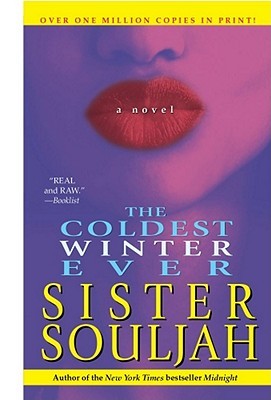
Burn: The Coldest Winter Ever by Sister Souljah. No offense to Sister Souljah, I admire her work, but I did not enjoy her debut novel, about the daughter of a big-time drug king who suddenly finds herself without money or connections and tries to come out on top as her world falls around her. Not only was the main character totally unsympathetic (imagine a novel narrated by an even more annoying Veruca Salt from Charlie and the Chocolate Factory, and you have Winter Santiaga), but it’s basically one big morality tale about why you should walk the straight and narrow and stay away from drugs and hustling and all that or it’ll come back to haunt you. Yeah, I think there are a few memoirs out there that told that story better.

Still, I will say that the book’s language influenced me when I was writing Reborn City and I wanted to really show the dialect of West Reborn. That’s one thing I’ll always be grateful to Sister Souljah for.

Rewrite: Destroyer of Worlds by Mark Chadbourn. This was the last book in a trilogy, the trilogy itself being the third trilogy in a trilogy of trilogies that took our modern world and placed it into a mystical universe mixing Celtic mythology with Eastern philosophy. It’s a wonderful series, but the last trilogy had its problems. Especially the last book, which felt rushed to the point that characters who should’ve gotten some character development got none at all, barely a mention in one case. I really think this book could’ve used a hundred or so more pages to really tell the story the way it should’ve been told, and if I could I might help out with that.

Reread: The Amulet of Samarkand by Jonathan Stroud. If you liked Harry Potter, you should love the Bartimaeus trilogy, which is kind of like Harry Potter but is told in three books (plus a prequel) and is slightly more grown up than HP. The story of a magician’s apprentice who summons a demon to help him get revenge on another magician and the mayhem that ensues when he and the demon get embroiled in a plot against the British government is pure fun, with a wisecracking demonic narrator and a world that is beautifully constructed and mirrors our own in interesting ways. I’ve reread the trilogy before, and I’m always entertained when I do. Check out the first book. You might just find the same gem I found as a kid.

And finally…

ROUND THREE

Burn: Wuthering Heights by Emily Bronte. Honestly, I’ve had to read this novel twice for classes, and each time I wasn’t at all surprised that Emily needed a review by her famous sister Charlotte to get this book noticed by people, because it sucks! Not only is the narration and style annoying, but the story drags, and a lot of what happens makes you scratch your head. Seriously, did the Lintons never consider calling the local sheriff when Heathcliff kidnapped his niece and tried to marry her off to his sickly son? Like I said, I’ve read it twice, and I don’t plan to read it again. It may be a classic, but it’s a classic that never should’ve been one.

Rewrite: Your Heart Belongs to Me by Dean Koontz. Koontz has written some great novels–I love the Odd Thomas series, though I’m behind on the books, and The Face would make an amazing movie, it’s that good–but this one really got me angry. It started out with promise: guy who made money off the Internet needs a heart transplant, but he’s very low on the donor list. His new doctor gets him put high up on another list, and he gets a new heart. Thing is, the person who gave up their heart for him might be coming back for it. Yeah, sounds like a ghost story, but it turned out to be some weird spy thriller tied up in a Christian morality tale. I kid you not, if Koontz had stayed with the ghost story element instead of switching things up about two-thirds in with the spy twist, I might’ve really liked this novel. And now you know how I’d rewrite it.

Reread: The Alchemist by Paulo Coelho. This is a wonderful novel about following your dreams and fulfilling your personal destiny in this grand world, as told through the eyes of young shepherd Santiago as he goes on a journey to Egypt after having a dream about finding treasure at the pyramids. I read it as a teen and it blew me away. If given the chance, I’d love to reread it again, because it’s such a beautiful story that gets you on so many different levels. If you haven’t read it, this is definitely one you should check out, especially since it’s been translated into so many different languages. Trust me, you won’t regret it.

And now, the people I tag:

Have fun! And make sure to link back to me when you post these.

That’s all for now, I’ve got a busy day ahead of me and I’m going to get to it. Wish me luck, my Followers of Fear!

I’ve been watching a lot of Supernatural on Netflix lately, and something in the most recent episode I watched got me thinking. It was stated at the beginning of the season that the main villain of the season, the demon Lilith, is breaking magical seals to raise the demon Lucifer out of Hell, and she needs to destroy sixty-six seals to do so. Based on that, I thought there were sixty-six seals in total, which seemed reasonable. According to the episode I watched yesterday though, there are over six-hundred possible seals, and Lilith needs to only destroy sixty-six to get Lucifer out of Hell.

Now I’ll admit that I’m still working my way through the season, so there may be more to these seals than what I know right now, but based on just the description I have above, that’s a pretty poor security system. You’re keeping the ultimate evil bound by six-hundred seals, but only sixty-six need to be destroyed to let him out? That’s like only needing an eleven percent passing score on a lie detector test to get access to Top Secret national security files. You’re just acting for trouble.

With that in mind, as well as my thoughts on the movie The Boy that I reviewed earlier this week,* I got to thinking. Sometimes creators do things in fiction that make absolutely no sense when the fans get to them. Obviously, there are things in fiction that are most likely impossible–the magic of Harry Potter, actual giant lizards like Godzilla, TARDISes and Time Lords (sadly)–but we forget that so we can enjoy the story. This is called suspension of belief, and it’s how we can enjoy these stories. However sometimes a creator–whether it’s a book, a movie, a comic, or a TV show–is just too hard for us to believe. When that happens, the story, and our enjoyment of the story, suffers horribly.

With that in mind, here are some things every storyteller can do to make it easier to tell a story without dong something that will make a reader/viewer say, “What the hell? That’s so stupid!”

  • Avoid the unnecessary or stupid twists. Back to The Boy again, which, if you haven’t read my review, singled out the twist that the boy Brahms was alive and a full adult as the movie’s biggest fault. I get that they were trying to distinguish the movie from others like it with a unique twist, but besides feeling kind of lame, the twist made the whole concept of the movie nonsensical (see my review for full details on that). If you plan to include a twist in your work, ask yourself a few questions before you use one, such as: is this twist necessary to make a good story? Is it predictable? Does it make the story seem silly or even make the events of the story make no sense? I’m convinced if the filmmakers of The Boy had asked these questions, they might have had a better movie on their hands.
  • What brought people to your work in the first place? I love bashing 2009’s Friday the 13th remake, because it is such a terrible film. In fact, the filmmakers even seemed to think that the movie was crap, or that they were unable to really make a great Friday the 13th film, so they packed in as much swearing, sex and nudity, drugs, alcohol, and raunchy or childish humor as possible. The result was a film that felt like it was trying to be one of those dirty teen camping trip comedies that had to remind itself every few minutes it was about a serial killer living on a lake.
    If you’re going to tell a certain type of story, keep in mind at every step what sort of story it is and don’t focus unnecessarily on elements that are only a small part of the story or even unnecessary. In the case of Friday the 13th, people watch those movies to see Jason go on a rampage. The sex and drugs and all that other stuff are just added bonuses as well as what causes Jason to target his victims, not why we pay nine dollars at the box office. And the fact that the filmmakers felt those elements were more important is why I’ll always enjoy bashing this piece of crap out of Michael Bay’s bum.
  • Could this happen in the real world? I have a lot of problems with the Hunger Games books.** One of my biggest problems is how the series ends: Katniss finds out President Coin ordered the bombing that killed her sister, so she kills Coin in revenge as Coin takes control of the nation. The new government of Panem hushes up Coin’s treachery to preserve the new order, so for all intents and purposes Katniss just assassinated the new President unprovoked. And Katniss…is portrayed as a girl gone mad with grief over the loss of her sister, she gets exiled to District 12 with weekly phone conferences with a shrink, and lives happily ever after?
    I don’t care if you’re the face of a movement, if a similar revolution occurred in America, and the face of that revolution killed the new leader, you bet that person would at least get locked up in a prison or psych ward so they couldn’t tell anyone what they’d done. Exile and getting to raise a family? Nothing bad happens to her? I don’t care if she has nightmares a lot and never tells us her kids’ names because she’s afraid of losing them, that still would never happen in real life!
    So when you’re telling your own story, ask yourself if a situation is so unbelievable, even in the wackiest of fiction, that people can’t suspend their disbelief anymore. If it is, you might want to consider tweaking it so that guys like me don’t go on a rant about it on the Internet.
  • If it needs a lengthy explanation for why it happens, you might want to rethink the why. This one comes from personal experience. When I was writing Reborn City, I had this really complicated reason as to why my protagonist Zahara Bakur had to join the Hydras. That, and another situation later in the book had really complicated reasons why those things had to happen. It wasn’t until later drafts that I realized how overly complicated those situations were and found simpler explanations for why Zahara had to join the Hydras or the other thing had to happen, explanations that were so simple but worked so perfectly I wondered why I tried to use the run-around logic that a smart reader could easily poke a hole in.
    So if you want a specific event in your story to happen for the sake of the story but the way you get it to happen is really overly-complicated, requires a lot of explanation, and from certain angles makes no sense, perhaps you should reconsider either the event or why it happens. It beats having two unnecessary pages of dialogue explaining why something needs to happen when a much simpler explanation is at hand, at any rate.
  • And finally, don’t forget what is obvious or necessary. This kind of fits into my third point, but I’m making it separate because I feel that’s the best way to present it. Anyway, in one of my fiction workshops in college, a classmate turned in a story that took place in a post-apocalyptic setting. It was a good first draft, but a major problem I had was that the protagonist apparently forgot his bow and arrow at home. I said to her, “This is a world where people dumb enough to leave their weapons at home while on a trip are likely to get killed a hundred different ways. No seasoned hunter like this guy forgets his source of food and protection.” In the same way, make sure that you avoid moves like that, where a character does something that makes no sense for someone in their position or the setting has some part of it that also makes little sense when you think about it. Trust me, it will improve the story if you avoid those problems.

In the end, the thing you want to tell is a good story. Avoiding anything that strains the credulity of your audience can be very difficult, but with trial and effort, you can get very good at it. This is also why I recommend having your stories looked at by editors or beta readers who won’t spare good advice because they’re afraid of hurting your feelings or risking your friendship. They can help you avoid these traps and improve the overall product of the story.

What tricks do you have for avoiding situations that strain the credulity of your audience?

What are some stories where they did something that really took you out of the story?

*By the way, it’s been nearly a week since I published that post, but an average of 36 people a day have been checking that post out since. I guess I’m not the only one who found that twist completely stupid.

**Especially the trilogy’s very backstory. A nation in the far-flung future had a massive civil war, and the Capitol decided that to stop future rebellions, the entire country should revolve politically, economically, and socially around an annual death game involving youth from the Districts? If Panem can genetically engineer scary monsters, they can synthesize a drug that takes out aggression and dump it into the Districts’ water supply. Problem solved, and all those seventeen-hundred and twenty people who died for the Capitol’s perverse pleasure instead grow up to be contributors to society. Yes, that is diabolical and I know I’d make a great dictator. My mother informed me of this fact when I pointed out this problem with the books.

If you are as big a nerd as I am (and if continuing trends are accurate, you probably are, because the meek are inheriting the Earth and all that), you’ve probably heard a bunch of news about Doctor Who over the past week or so that has made fans of the show and just people in general who are friends of those fans freak out. These pieces of news boil down to three main points:

  1. Steven Moffat, showrunner for the show since Series 5 and writer since Series 1, will be stepping down from his position at the end of Series 10. The showrunner position will be taken over by Broadchurch creator Chris Chibnall.
  2. Because of the Olympics and everything else happening in 2016 this year, we won’t get any new episodes of Doctor Who till the Christmas Special at the end of the year. Series 10 will start up in the Spring of 2017.
  3. Peter Capaldi, who play’s the Doctor’s 12th incarnation, may also be leaving the show at the end of Series 10, so as to let Chibnall start fresh with a new Doctor.

Okay, the first piece of news isn’t that big a shock. Moffat’s retirement has been rumored for a while now, and we can see that he’s leaving the show in good hands, seeing as Chibnall has written some pretty well-known episodes of both DW and its spin-off Torchwood. The second piece…annoying, to say the least, but considering that this year is going to be pretty crazy, perhaps a good call by the BBC.

As for Capaldi leaving…I know that the average Doctor stays around three series. That’s how it’s been since DW came back in 2005. But oh my God, doesn’t it feel a little too soon?! Even my dad is a little amazed that Capaldi’s leaving, and he only knows the show as that thing his kids are obsessed with and that he’ll have to check out if he ever has the time for Netflix. And yeah, it’s been too soon, and Capaldi’s Doctor has only had so much time! And let’s face it, while I liked Jenna Coleman’s Clara, she did at times overshadow the Doctor. I was really looking forward to seeing the Doctor grow and have adventures without having an appendage that took up so much of the story (there, I said it, are you happy?!).

But I’ve had time to calm down, and I have to say that if Capaldi does want to leave, then so be it. I’m not going to be too happy about it, but I’ll accept it if I have to. I just hope that Capaldi decides to stick around for two more series instead of one, or at the very least Series 10 is just the most awesome thing ever.

And now I’m thinking, “Who’s going to replace Capaldi?” Trust me, you’re all probably thinking it by this point as well. And I know that they won’t be announcing it until probably a few months before we see this new Doctor. Still, I thought I’d jump the gun and give my predictions for who would make a great 13th Doctor (technically 14th, but let’s not get crazy here). Heck, my Predictions post for Batman vs. Superman actually hit the mark a little, so maybe I could actually get this right.

And let me just say before I start that I will not be putting Benedict Cumberbatch on this list. Yeah I know, lots of his fans would love him as the Doctor, but seriously, the guy’s already playing a Doctor and Sherlock Holmes! He’s got enough iconic roles to fill up an IMDb page!

So here it is. The actors and actresses who I think would not only make great Doctors, but maybe take Doctor Who in an interesting new direction for a whole new era.

Hayley Atwell

Hayley Atwell

Not just my top choice, but the top choice of a lot of people. Her name’s come up several times already as a possible successor for Capaldi. Not surprising, considering she’s got quite the resume, most notably as bad-ass, takes-no-shit 1940’s secret agent Peggy Carter in Marvel’s Cinematic Universe. Atwell’s also done two DW radio dramas, so she’s definitely familiar with the franchise already. She would have no trouble taking the TARDIS key in hand, and Atwell’s already expressed interest in playing the Doctor, so why not?

Plus if the BBC decides to listen to the fans and give us our first female Doctor, Atwell would be a great actress to set the bar with.

Chiwetel Ejiofor

Chiwetel Ejiofor

12 Years A Slave‘s star was a name brought up back in 2013 when speculation about who Matt Smith’s replacement would be was at its height. Not surprising, considering the depth and strength he gave in that movie and in many other roles. Eijiofor would make a very great Doctor. And not only does he do dramatic roles very well, he can do funny and quirky (he played Lola in the movie Kinky Boots, if you need proof of that), so he could probably do some fun one-liners every now and then.

And in a show where the lead has always been a white actor, this could also be a very interesting and welcome change.

Rebecca Hall

Rebecca Hall

In 2011 the BBC made a horror movie called The Awakening, which I thought was a weird little flick that tried to get into our heads and failed miserably. However, I thought the lead actress in that film, Rebecca Hall, did absolutely great. And Rebecca Hall has a great list of films to back her up: Frost/Nixon, The Town, Iron Man 3, Transcendence. She can do a lot of different roles, and I think a versatile actor is important for anyone who wants to play the Doctor.

And if she’s the only part I really enjoyed in a horror film, then you know she should be seriously considered.

Ace Bhatti

If that name sounds at all familiar to you, that’s because he played Principal Haresh Chandra in the DW spin-off The Sarah Jane Adventures, being both comic and serious at the same time in many different episodes of the series. Honestly, he was one of my favorite characters from that show (which I’m surprised that more DW fans haven’t seen). And apparently he’s got a very long resume outside of SJA, including a very big role on the show EastEnders (which I haven’t seen but I’ve heard good things about). He could make a very good Doctor, and considering that plenty of actors who had smaller roles in Doctor Who later went on to play bigger roles (including Capaldi and Sixth Doctor Colin Baker), this would be only continuing a well-known tradition.

Naomie Harris

Naomie Harris

Plenty of people know her as “oh, the actress who plays Moneypenny in James Bond, right?” but she’s done a lot more roles than that. In addition to Skyfall and Spectre, Harris has done 28 Days Later, Pirates of the Caribbean, and Mandela: Long Walk to Freedom as Winnie Mandela, for which the actual Winnie Mandela basically said that it was the best portrayal on film of her person.

With that sort of resume and endorsements, Harris might make a very good Doctor. I sort of imagine a warm and kind Doctor, who really hates getting violent but if she gets angry even Daleks will run away from her. Kind of like the Tenth Doctor with a mix of Third’s mentor-like charms.

Jon Oliver

Jon Oliver

Enough said. I know he probably won’t leave making fun of society while at the same time improving it on HBO, but the guy’s great. I’d love to see him as the Doctor.

And my final choice:

Mads Mikkelsen

Mads Mikkelsen

I know, I know. He’s not British. He’s not even Irish! He’s Danish! He’s practically not allowed to play the Doctor! But come on! Have you seen his resume? He was amazing as Hannibal Lecter in Hannibal, as Le Chiffre in Casino Royale, and he’ll be in Doctor Strange and Rogue One: A Star Wars Story later this year. And he actually does a pretty good British accent. Can you imagine him in some fancy 19th-century garb with a side of futuristic tech? He’d make a great Doctor, and I would love to see him in the role.

And I’m not afraid to say it!


So those are my choices for who should be the 13th Doctor. But tell me, who do you think would be a good fit for everybody’s favorite Time Lord? Do you think I’m on to something? Do you think I’m totally off? Is there a name I missed? Do you hope Peter Capaldi will stay a bit longer as well? Let’s discuss, my fellow Whovians.

And Steven Moffat and/or Chris Chibnall: if you happen to read this and you’re looking for some new blood to help you write kick-ass episodes of Doctor Who, give me a call. I’ve been keeping a long list of ideas for stories with the Doctor and I would love to write them for you. And these ideas could also work as novels, which I’ve plenty of experience writing, so I could do my stories that way as well if you want.

Like I said, give me a call. I’d be more than happy to head over to Wales to discuss the matter further.

Norman Bates, a prime example of a man with a mental illness in horror fiction.

I’ve been wanting to do a post for a while now that examines horror or literature but wasn’t my usual Reflections or Writing post. And then I read this article not too long ago on how mental illness is portrayed in anime (surprisingly anime takes a very honest and powerful take on the subject) and it got me thinking. It’s no secret that mental illness—or its more common designation, “insanity”—has been a huge part in horror fiction since the earliest days. The problem is, most of it tends to be pretty negative portrayals.

This is actually pretty sad, to say the least. Approximately one in three people worldwide will show enough symptoms to qualify as having a mental disorder at some point in their lives. In the United States alone, that number is nearly is nearly one in two. And a majority of these people are nonviolent. I should know. I’ve known various people throughout my life with some form of mental illness, both family and friends, and I have been open in the past about being on the autism spectrum myself. None of these people I know would hurt a fly, and I could never hurt anyone outside of one of my own stories.

This is quite different from horror fiction, where we have a variety of characters with all sorts of mental illness–Annie Wilkes, Norman Bates, Jason Voorhees, etc.–who are as violent and dangerous as they come. What gives?

So I’m going to do a series of posts, over the many months, about how mental illness is portrayed within horror fiction. Now, I’m not a psychologist or psychiatrist. I’m a horror novelist. And God knows I haven’t seen or read every horror story out there. Not even some of the classics. But like I said, I will try my best to go over this subject with the respect and care it deserves. I will do case studies, maybe make some recommendations, and maybe even ask the question: is the portrayal of mental illness in horror fiction good or bad.

And if one can write characters, particularly villains, with mental illnesses. And by one, I might mean me.

In the meantime, if you, my Followers of Fear, can give me any recommendations to help me write this series of posts–whether it’s films or books to check out, articles that have already gone over the subject, etc.–let me know. I could use all the help I can get for this massive undertaking.

Heck, if you’d like to write a guest post, I’d be more than willing to consider it.

That’s all for now. In addition to this series, I’ve got a bunch of posts I plan to put out over the coming days and weeks, so keep an eye out for them! Have a good week, my Followers of Fear.

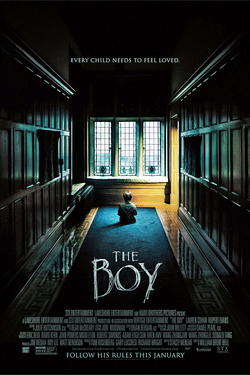
Ooh boy, 2016 is already sucking in terms of horror films. And what made this film so bad? Well, I’m about to go into full SPOILERS to tell you why. I know, I know, I usually try to avoid spoilers at all costs, but in order to tell you how this film screwed up royally, I will have to spoil the film’s very big twist. So be warned, if you still plan to see this film and want to form your own opinions, you might want to stop reading this review.

Still here? Alright, let’s go into the setup. The Boy is about Greta Evans, an American running from an abusive ex, comes to England to be the nanny to an elderly couple’s son Brahms. Thing is, Brahms is a doll, the real Brahms dying in a fire over twenty years before. After the parents leave for a holiday, Greta starts thinking that the doll might actually be alive, inhabited by the soul of the psychopathic child who used to live in the house.

Sounds pretty typical, right? Well they try to switch it up in the last twenty minutes. How? Well, here’s where I get spoiler-y: after Greta’s ex arrives and destroys the supposedly-alive doll, it’s actually revealed that the doll…was just a doll. Brahms, who supposedly died over twenty years ago, is actually alive, a full-grown adult who still kind-of thinks he’s a child but has adult desires, and has been living in the house’s walls and in a hidden attic for the past twenty-something years.

WHAT THE FUCK?!!!

Pardon my French, but come on! I get wanting to defy expectations, but the way it’s done here is not only a little lame, but it totally makes no sense. You’re telling me that Brahms survived the fire over twenty years ago, and that he hid in the walls, made his parents, who are apparently aware their son’s alive and in the walls and maybe holding them hostage but allows his dad to have too many drinks with the local grocery store owner, and then also made them play parents to a doll with a remarkable resemblance to him, for over twenty years? Okay, that stretches credulity. First off, the kid doesn’t mature beyond eight years old mentally, surely he’s not clever enough to come up with such an elaborate plan to hold his parents hostage! And if the parents were aware of Brahms being alive, then it argues against Brahms coming across his parents with the doll and taking advantage of the situation.

Honestly, there are two ways this film could’ve actually improved itself: the first, and most obvious, is that the filmmakers could’ve stuck to the supernatural line and focused a bit more on the weird, motherly relationship between Greta and the doll. The other would’ve taken the story and focused on the parents during those first couple years after the fire, when they became aware of their son being alive and what he’s doing to them. That would’ve been an interesting story! Parents who love their son, but at the same time are terrified of him. The conflict would’ve been amazing, the thrill would’ve been powerful. And heck, if they wanted to include the doll in this version, they could’ve found an angle that would’ve worked easily. Especially if they wanted to portray the kid as not stuck mentally, but instead a growing psychopath to rival Hannibal Lecter.

Other than the twist that ruins the movie, the only other problem that I have with the film is that they could’ve touched upon the weird mother-son relationship between Greta and Brahms the doll a whole lot more. That would’ve made the movie much more emotionally powerful, but unfortunately the film only explores it only a little. Other than those two criticisms though, The Boy was pretty decent. The characters are somewhat fun, the actors who play them are great, and the set is decent for a creepy movie. Heck, they even build a really creepy atmosphere punctuated with jump scares. I was afraid at times, and for a little while I really thought the film entertaining, if not downright terrifying.

It’s just that twist. Even if it didn’t make absolutely no sense, it’s so lame it ruins the entire film. Which is why I’m giving The Boy a 2.8 out of 5. Great atmosphere and characters, a promising premise, but I’d only recommend this film if you want to see how a horror film can totally ruin itself by trying to defy expectations, and doing it in the worst way possible.

So last night, with no Wi-Fi to distract me (and someone won’t be coming by to fix that until tomorrow, dammit), and with only a few chapters left, I managed to finish up the second draft of Laura Horn, the novel I’ve been editing these past couple of months. This is actually rather extraordinary, because if you remember when I first started talking about editing LH, I was worried that certain elements of the story wouldn’t hold up and I would have to rewrite the whole thing.

Now, if you haven’t heard of LH on this blog yet, it’s a novel I wrote in my third year of college about a girl with a very dark past who becomes involved entrapped in a terrible conspiracy when she comes across some information certain powerful people would kill to keep hidden. It’s got some false-accusation-by-powerful-folks elements, a little Die Hard in the last act, and it all centers around a deeply-troubled teenage girl. Sounds a little crazy, right? And that’s why I worried I would have to rewrite it, so it sounded a little less crazy.

But I decided to try and edit it, see if this story was still salvageable in some form. And over the next couple of months, I found myself pleasantly surprised. Turns out, the story was much more salvageable than I thought. I just had to change certain details, such as how these powerful people try to isolate my main character (big thing in this story, believe me), combine a whole bunch of chapters (I think six chapters were smashed together to make longer chapters that flowed better), chuck out two chapters that were unnecessary after detail changes or were extraneous upon second read, and a few other details here and there. The result was a much better second draft, and I still managed to keep a lot of the details and plot points I wanted to keep. Not bad for a few months’ work.

I also noticed some interesting stuff with the second draft. For instance, there’s the page and word counts: with the first draft, the page count (using 8.5″ x 11″ MS Word pages, using 12-point Times New Roman font) was 356 pages and 94,774 words. Meanwhile, the second draft had 334 pages and 98,498 words. Now take a second look at those numbers. If there are less pages, why are there more words in the second draft?

Well, I’ve been thinking on that, and I think it has partly to do with how my writing style has evolved since I wrote the first draft of LH. As well as changing how I construct the sentences I use to tell my stories, I’ve come to try and limit how much dialogue I use and try to do more introspection. Now, dialogue is important for any story, but it can quickly fill up a page while leaving a lot of blank space. And in Laura Horn, I found that some of that page-filling dialogue was unneeded, especially after some of the chapters from the first draft were combined or cut out of the second draft.

And in place of this dialogue, I ended up putting in a lot more introspective segments, the kind where the characters are looking deep into themselves, figuring out things or reflecting on situations through their own unique lenses. Those segments use a lot of words, and fill up a page while leaving less blank space than before. That explains why there’s less pages but more words (and I have a feeling that this difference may show up even more in the third draft when I get around to that).

So now that I’ve finished the second draft, what’s next for Laura Horn? Well, as always I’ll put it aside for now so when I start a new draft, I can look at it with fresh eyes. And I will need those fresh eyes, since there are a few things even with the second draft I would like to change: I still think I could put in a bit more introspective stuff and get rid of unneeded portions of dialogue. I also wonder if I could bring out more of Laura’s personality earlier in the story and make her more relatable. There are also some portions near the end which are a little melodramatic, and there are places where I feel I could do more to make the reader believe what is happening. We’ll see what happens when I get into that third draft.

In the meantime, I’ll take a look at a few of the short stories for my new collection Teenage Wasteland and polish them up a bit before starting a third draft of my novel/senior thesis Rose. I’ll also be working on the final draft of Video Rage with an editor I’ve contracted to work with, so all those who have been waiting desperately for the sequel to Reborn City can calm down now because I’ll hopefully have that book out later this year. And I’d like to have enough time to do some research for a novel I want to write this November for NaNoWriMo. So yeah, I’ll be busy, and I’m not even getting into the things that normally occupy my life outside of writing.

But hey, I wouldn’t have it any other way, would I? Wish me luck, my Followers of Fear, because I’m going to try accomplish a lot this year, and I’m going to be blogging about it the whole damn way.