Posts Tagged ‘scary stuff’

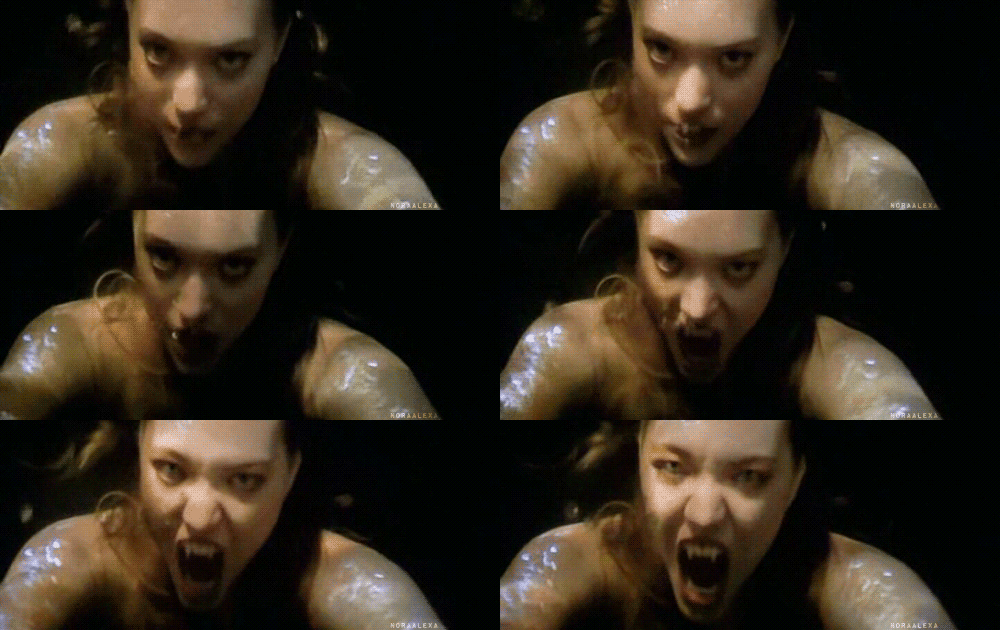
I looked for a cosmic horror GIF, and this was my favorite.

Cosmic horror is everywhere these days. Since HP Lovecraft first kicked off the subgenre in the early half of the 20th century, it’s spread from pulp magazines to all corners of horror literature, to table-top roleplaying games and video games. And while cosmic horror has been in the movies and on TV sporadically since the 1960s, in the past couple of years we’ve seen a glut of it on those mediums: Annihilation, Stranger Things, The Color Out of Space, Underwater, Lovecraft Country (which I’ll be watching soon now that I have HBO Max), The Endless, and most recently, The Chilling Adventures of Sabrina‘s fourth season (though not very well).

And there are more on the way. Just today, I heard about a new film called Sacrifice coming out next month that has Lovecraftian themes (click here to check out the trailer). Sometime this year, the long-awaited anime adaptation of Uzumaki by Junji Ito is supposed to air. Richard Stanley, the director of Color Out of Space, hopes to do a trilogy of films based off Lovecraft’s work.

And there’s a lot more that I probably don’t know about. Plus new games, novels and short stories, comics, manga and anime, poems and art! Cosmic horror is kinda going mainstream right now. Or as mainstream as horror can get.

Color Out of Space was awesome. And we may have more like it in the future.

The question is, why now? Why is this particular subgenre only now just getting mainstream acceptance? Why the sudden enthusiasm?

I think there are a few reasons. One is time and a devoted fanbase. Cosmic horror, as I said, originally came from pulp magazines with very small circulation. However, the fans who enjoyed the stories of Lovecraft and those who played in his world–what would later be known as the Cthulhu Mythos–preserved and kept the stories going even after the deaths of the magazines and of Lovecraft. Through hard work and advocacy, more fans found cosmic horror and found themselves drawn to the stories. Then as now, fans would then tell other fans, or create their own work based on these stories, which has a looping effect of creating more fans through exposure. So, it may have taken time, but cosmic horror has been able to spread with patience and the love of many who follow it.

Almost sounds like cosmic horror is an eldritch deity in and of itself, doesn’t it? I find that hilariously appropriate.

Another factor at play, I believe, is that modern audiences are more receptive to that kind of horror than they have been in the past. Like I said, it’s taken time for cosmic horror to penetrate the public consciousness, and so for many people, cosmic horror may be a nice change of pace from the usual horror fare. We’ve seen plenty of haunted house stories, slashers, and sequels and ripoffs of possession or ghost stories. Those elements are not normally part of cosmic horror. In fact, it could be a breath of fresh air for audiences.

And finally, while cosmic horror normally deals with ancient, otherworldly gods and terrible secrets, it’s a great place to talk about modern issues. Granted, horror has always been a place to explore our everyday fears and anxieties, but cosmic horror, through the perspectives and interactions of its human characters against these terrors, can do it in a unique way. Lovecraft Country uses cosmic horror to explore racism, which both was part of the genre’s start and which is a current problem today.

Is it too much too hope that one of those works might be a kickass, terrifying adaptation of Hellstar Remina by Junji Ito?

And I wrote a novella, What Errour Awoke, that combined elements of cosmic horror with the current pandemic to explore the fear with the latter. And yes, I still hope to get that published.

So, with all these factors, can we expect more cosmic horror in the near future? I think so. Maybe not in huge numbers from the movie industry, as cosmic horror tends to have a spotty track record there.* But certainly in other mediums. Horror-themed TV has been booming, so we’ll likely see plenty of shows exploring those themes in the future. Comics and manga have always loved cosmic horror. And, of course, we’ll likely see many, many new books or short stories in that vein.**

So long as they’re made with lots of love, both for the subgenre and for the projects themselves, rather than for the money, I look forward to it.

Are you a fan of cosmic horror? Are you enjoying the wave of new works in the subgenre? Let’s discuss in the comments below.

*While they were well-received by critics and moviegoers, Annihilation and Underwater underperformed at the box office, and Color Out of Space only had a limited theater release.

**Hopefully, I’ll be able to add to this. I’ve a few cosmic horror ideas waiting to be written. I’d love to share them with you all someday.

Fun fact: apparently Scott Carson is actually Michael Koryta, an award-winning author who does both crime and supernatural fiction. If what I’ve heard is true, his fanbase is pretty divided between his crime and supernatural books, so he created a pen name for the latter going forward. Everyone got that? Good. Onto the review!

The Chill takes place in the fictional Torrance County, upstate New York, home of the fictional Chillawuakee Reservoir, or “The Chill.” This reservoir was built at the loss of a small town called Galesburg, which was submerged after the dam went up. Prior to that, some of the Galesburg residents didn’t take kindly to being evicted so New York City could have another freshwater supply, and reacted violently. Even after the dam went up and many of the protesters died, some still swear revenge. Now, nearly eighty years later, the dam is old and in need of repairs, and the dead are aware of this. They’re active, they’re working behind the scenes, they do not forgive and they do not forget. And they want their revenge.

So, the concept of the story is pretty cool. It kind of reminds me of The Shining, though instead of ghosts at an old hotel, it’s ghosts by a dam and the afterlife is kind of busy and cult-like as well. You can tell the book was meticulously researched by how it goes about explaining the inner workings of dams and reservoirs, as well as (what I assume to be) the problems with maintaining them. And the prophecy in the story makes a clever twist on the trope that I like.

However, there were a lot of problems with the novel. For one thing, it seemed to take forever before it got interesting. Several times before the halfway point, I wanted to put the book down and not read anything else because of how slow it was going. We also don’t meet one of the focal characters, Gillian Mathers, until about a quarter in, and it takes even longer for us to identify with her and see her as more than just a trope in a story. I feel like Carson wanted to focus less on her until she was needed because she is a type of trope, and instead focus on another character, Aaron Ellsworth, because he’s got a much more interesting character arc.

Another issue was that, while the dams were well-researched, I had trouble visualizing certain things in my head. I’m not familiar with dams, and I don’t know many people who are beyond the fact that they hold water back. It would have been nice if a couple more paragraphs were shown to help readers like me visualize the structure, the discharge tunnel, etc.

However, past all that, it does get interesting. There are some spooky scenes, an epic disaster scene, and some excellent writing. I just wish we’d seen more of that in the first half.

On a scale of 1 to 5, I award The Chill by Scott Carson a 3 out of 5. It’s okay, but there were definite areas to improve in.

That’s all for now, my Followers of Fear. I’m still relaxing so that when I return to writing, I can be as refreshed as possible. Until next time, stay safe and pleasant nightmares!

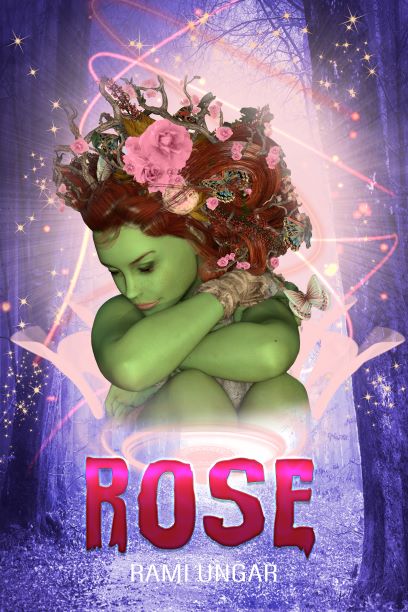
The audiobook cover for Rose. Available from Audible and Amazon.

You know, its been six months since I last had a post focused on Rose? How crazy is that?

But to the point of this post: a year ago today, the audio book for my novel Rose was released, the first time a story of mine was ever available in an audio format. The book was narrated by the amazing Sara Parlier, who I had to pleasure to meet this past summer in South Carolina. No joke, at times her narration gave me chills! And that was both times I listened to the audio book, by the way. And I wrote the damn thing!

So if you don’t know about Rose, it was my first novel published with a publisher (Castrum Press if you’re curious). The story follows a young woman, Rose Taggert, who wakes up one day in a greenhouse with no memory of the past two years. However, before she can get a handle on that, her body undergoes a startling transformation into a human/plant hybrid! As those around her react, she realizes some are not all that they seem, leading to a desperate fight for survival.

Sara Parlier, the narrator for the Rose audio book, meeting at a Starbucks in South Carolina.

And I can’t believe it’s been a full year since the audio book came out. I can believe nearly all of 2020 has passed, but the audio book being a year old? The mind boggles!

And I’m happy that the majority of reviews on the audio book, and the novel in general, have been positive. At the time I’m writing this, Rose rates a 4 out of 5 on Audible based on five ratings and four reviews, as well as a 4.6 on Amazon’s US site based on thirty ratings and twenty-nine reviews. Considering how I’m still not as well-known as other authors I could name, I consider all this feedback from readers absolutely amazing, and I hope there are more to come.

And if you’d like to check out those reviews yourself, or maybe even check out Rose, I’ll include the links below. And if you like what you read, or if you find Rose to be horrible trash, please leave a review. Not only do I appreciate all reader feedback, but it helps me out in the long run and helps other readers decide whether or not the book is for them.

One last thing: I’d like to thank everyone who’s read, reviewed and enjoyed Rose since its release in June 2019. It’s been an insane ride this past year and a half, even excluding current events, but I’m so grateful for the love and support you’ve shown me and this little novel I wrote as my college thesis project. I’ve dreamed of being an author since I was a kid, and you’ve helped make that dream a reality. So, once again, thank you so much. I hope you’ll enjoy my other stories, as well as the ones to come, just as much.

That’s all for now, my Followers of Fear. I’m off to stop that creep Santa Claus from stalking people and then breaking into their homes based on his assessment of their behavior. Until next time, Happy Holidays and pleasant nightmares!

Rose: Amazon US, Amazon UK, Amazon Canada, Audible

My copy of Remina from the library.

I’ve been looking forward to this book getting an official translation and release here in the US for quite some time. And I was so excited when it arrived at the library, I stopped by yesterday afternoon to pick it up rather than wait till Friday. As you can guess, I stayed up late reading it, hoping the story within would give me some pleasant nightmares.

Known as Hellstar Remina in Japan, Remina kicks off with the discovery of a new planet that seemingly appeared from a wormhole several lightyears away. The discovery is hailed as the greatest development in astrophysics ever, and its discoverer, Dr. Oguro, names the new planet after his beloved, beautiful but shy daughter Remina, causing her own star to rise alongside the planet bearing her name. However, planet Remina is moving through space in ways that defy physics and sense. Planets and stars disappear in its wake. And it soon becomes clear that not only is this planet headed to our solar system, but it spells doom for all on the Earth. Especially the young woman who shares a name with it.

Oh man, I don’t think I’ve loved something from Ito this much since Uzumaki!

First off, the concept is well-executed. Ito takes this idea of a planet flying through space towards us, threatening everything we found our worldviews on as well as our lives and our planet, and turns it into this strange, dread-inducing story that somehow manages to ramp up more and more with every page. The planet itself is rather terrifying. There’s so many unknowns about it, and the more you learn and see of Remina, the more questions you have and the more you learn to fear it. It really puts the “cosmic” into cosmic horror.

I was also impressed with the human characters. Remina Oguro, the planet’s namesake, is easy to like. She’s shy and humble, and really only becomes an entertainer because she’s suddenly famous, so she might as well use it to get through life more easily. Which makes the hardship she goes through later so heart wrenching. As the planet bears down on the Earth and no solution seems to work, people begin to wonder if the Oguros, particularly Remina herself, have some hand in bringing the planet to them. In their terror, many abandon reason and decide the only way to save humanity is to kill Remina Oguro herself.

It’s not only an excellent example of cosmic horror–of humans dealing/reacting to their insignificance in the universe in the only ways they know how–as well as making you feel for Remina, but it feels really relevant to our current predicaments. Whether it be COVID-19 or the national election, you see people embracing the most insane conspiracy theories rather than accept an obvious reality. That is illustrated so well in Remina, and I felt a chill reading that.

This shot encapsulates so much of what makes Remina great.

Other aspects of the story worked as well. Ito’s art is amazing, as always. Earth in this manga is portrayed as being a few decades ahead of us a la The Jetsons, flying cars included, and it’s cool to see Ito give Earth this futuristic look. The characters are well-drawn, with our protagonists given a more realistic look while those driven mad by fear or anger are hyper-exaggerated to best portray their emotions. But the best illustrations are the spreads taking two full pages. They portray that cosmic dread so well, I spent quite a bit of time looking at them.

And as for the science aspect of the story, while more pseudoscientific than based in reality, it seems plausible enough to believe in for the moment.

The one aspect I disliked was just how quickly things escalated in the first chapter. Within about thirty or forty pages, things go from excitement and new promises to gloom-and-doom and psychotic, murderous behavior. I would’ve preferred things to move a bit more gradually before getting to that level.

All in all, Remina by Junji Ito earns itself a splendid 4.5 out of 5. It’s terrifying in both its cosmic and human aspects and will be hard to put down for any reader. Pick it up, settle in for a terrifying ride, and never name anything Remina.

Also, someone please adapt this story into a movie or miniseries! Live action or animated, this would be a great spectacle to see on screens. Just lay off the CGI except when absolutely necessary and it could be awesome.

Audible’s audio edition of Dracula by Bram Stoker. Turns out, it was just what the Count ordered.

Everyone has heard of Dracula. Most likely, you’ve seen some version of him in a movie or a TV series .* But how many of you have ever read the original novel? Not many, surprisingly. Besides the fact that Dracula’s melted so thoroughly into pop culture, the source material is a Victorian novel written in the form of diary entries and letters. Even veteran bookworms have to steel themselves for those!

I tired once or twice in my younger years to read Dracula, but found it harder to get through than some Lovecraft stories and had to stop reading. Last month, however, Audible offered its own audio version for free as part of my subscription. I was like, “Maybe I’ll enjoy it more in audio form” and downloaded it.

Turns out, while Audible may have a dumbass exchange policy (and yes, fixing Audible and Amazon’s issues are still works in progress), the audio book was just what I needed. Great cast that brought the story to life and allowed me to get into it while driving or working out or cooking.

And let me tell you, Dracula the novel is good! It’s a slow burn Gothic story that takes its time building up an atmosphere as well as a conflict. By the time the action really gets rolling, the suspense and dread is so well-constructed that you actually feel a bit of worry with every encounter or setback the characters endure.

I also liked how a lot of my expectations were subverted while listening to the novel. Yes, his name’s on the cover, but Dracula himself doesn’t show up that much in the story past the first act. He’s mostly on the edge, only showing himself every now and then. While this may upset some readers who expect the Count to be front and center, it’s actually pretty effective. Whenever Dracula shows up, you know shit is likely to get real, and you’re waiting for that shit to happen.

Contrary to what the movies portray, Dracula is more on the edges and backgrounds than front and center.

Another surprise: while I expected Dr. Van Helsing to be an important character, Mina Harker (nee Murray) really stole the show. She’s easily smarter than most of the other characters, including the doctor, and could almost be seen as a proto-Buffy. The only reason she doesn’t do any slaying is because Victorian mores made it impossible for anyone, including Mina herself, to see her taking on a more active role against Dracula (much to their regret later). Kind of makes you wonder if Stoker was making some sort of feminist statement there. I’d love to see an adaptation where Mina’s the one kicking ass. You know, instead of falling for the Count and/or being totally helpless.

And there were some details in the story that I found fascinating, simply because they never make it into any adaptation. For example, Van Helsing hints that Dracula, for all his power and evil, has a very childlike brain when it comes to planning or deep thinking, and that hinders him when he comes to England. It’s amazing what never gets translated to the adaptations.

All that said, the novel isn’t without flaws. The character of Renfield, Dracula’s faithful madman, is pretty extraneous to the plot. He’s really just a vampire radar, and other than that, he doesn’t do much beyond be crazy and help develop Dr. Seward’s character. Then there’s Quincy Morris, a character from Texas who feels more like a parody of Texans from Western novels than a real Texan. And yeah, I would have liked to see a bit more of Dracula, as well as him being a big bad. That might just be my pop-culture image not lining up with the novel, but can you blame me?

All in all, though, I think Dracula is deserving of a 4.8 out of 5. It’s moody, well-written and worth the read if you find a format that works for you. Hell, I think I might go on a binge of Dracula-related media: some essays on the story’s deeper meaning, some adaptations, that novel co-written by Stoker’s descendant (yes, that’s a real thing). I might also write a story involving Dracula and characters in the novel. Who knows?

That’s all for now, my Followers of Fear. If you need me, I’m celebrating the first night of Hanukkah with vampires and jelly donuts (weird combination, I know). Until next time, happy holidays and pleasant nightmares!

*Speaking of which, I’m still sad that the 2014 NBC TV show was cancelled after one season. All because they didn’t give it the advertising it deserved. The fact that this might be the first you’ve ever heard of it unfortunately proves my point.

Tell me, where would you put Godzilla in this classification system?

For a while now, I’ve been thinking of the different kinds of antagonists in horror stories. Not divided by type, but by level of threat. What do I mean by this? I mean, aren’t all antagonists in horror stories a threat? I mean, it is horror!

Well, yes. But how big that threat is can vary from story to story, and can even influence what kind of tropes and stakes we can expect in the stories. To further illustrate this, let me categorize the level of threats using Starbucks sizes: Tall, Grande, and Venti. Yes, I know they have a Short size and a Trenta size, but I don’t know anyone who uses them. In fact, I don’t think I’ve ever seen the cups for those sizes.

Also, Starbucks, please don’t sue me. I’m just using your sizes to help illustrate a point.

Getting sidetracked. Let’s start talking about the levels of threat, starting from biggest to smallest.

Venti: While all horror antagonists are a threat to the protagonist(s), the Venti-level threats are usually threats to many or all people. Cosmic entities like Cthulhu or the Devil in stories taking place during the Apocalypse usually rank this high. They’re a threat to all life or to all we hold dear, and the suffering they could induce if they succeed would be terrible.

This level can also apply to threats like Pennywise, aka IT. While he’s restricted to the town of Derry, Maine, he’s responsible for countless deaths since the 17th century. Even when he’s not active, his influence over the town of Derry is such that he controls it at all times, causes all sorts of horrors while sleeping. IT is Derry. Thank goodness his children didn’t get anywhere, am I right?

Bughuul from Sinister is a great example of a Grande-level villain

Grande: An antagonist of this size may be a threat to many people, but they’re not as all powerful or have such sweeping implications as a Venti-level threat. Still, you wouldn’t want to cross one of these guys if you ended up in their stories.

An example of a Grande-level threat would be Leland Gaunt from Needful Things. A demonic figure who looks at things from a business-like perspective, any town he comes to faces annihilation once he sets up shop. Half of Castle Rock either ended up dead or blown up because of him, after all.

Another example might be Bughuul from the movie Sinister, a Babylonian deity that eats children. Throughout the centuries, he’s manipulated children into killing their families so he could eat their souls. Anywhere he goes, you can expect blood and death to follow. He’s definitely no small potatoes, though he doesn’t warrant the same level of panic as a Venti-level threat might.

Tall: While they may be the on the lowest level of horror antagonist, that doesn’t mean you should relax. In fact, these villains tend to be much more personal than the likes of Bughuul or Cthulhu.

Tall-level villains may only be a threat to the protagonist and a few others, but they bring with them the power to destroy everything the protagonist holds dear. Demons seeking to possess a soul, vengeful ghosts, stalkers and serial killers focused on one particular victim, cursed objects, etc. They may not be seeking to end the world or blow up a town, but they will destroy the protagonist’s happiness and sanity for their own goals.

I would even include the Overlook Hotel in this category. It may be powerful and evil, but it’s only able to be so in the presence of someone with the shining, and then it only seeks to add the shining to its own power so it can be active more often. In the novel’s case, it breaks down Jack and terrorizes Danny to make them more vulnerable and ultimately to possess the former and kill the latter.

Like I said, what they’re missing in power or scope of threat, they make up for in how personal they are.


This, ladies and gentlemen, is a way to classify the threat level of horror villains.

Where does Jason fit on this scale? It’s not easy to tell.

That being said, it’s not perfect. What villains belong where is entirely dependent on who’s doing the categorizing. Is a slasher villain like Jason Voorhees a Grande because he has a particular hunting area and has killed many over the decades? Or is he a Tall because he’s only a threat if you step into his territory? And this doesn’t even cover stories like Gerald’s Game, where there is no antagonist but a pair of handcuffs and the protagonist’s own psyche. Even the Space Cowboy who visits her doesn’t really threaten her. He’s more of a reflection of her own terrors who turns out to be a real person than anything else.

So why do I write all this, if it’s not a flawed system? I do it because it’s not to categorize the villains themselves, but the stories they belong to. A story with a Tall villain is much more character-focused and can often lean into the character’s mindset. A story with a Venti-sized villain often requires the story to encompass a huge cast, lots of locations, and putting an entire population at risk. A Grande may straddle the line of the other categories, while also having varying kill counts depending on what the story requires.

In a way, The Starbucks Levels of Antagonism (copyright pending), are like the Bechdel or Mako Mori tests: exercises to examine stories, the decisions made while creating them, and how you can learn from them. And given the nature of fiction writing, as well as how difficult it is to categorize fiction like a scientific system, that’s probably for the best.

Thanks for giving me a chance to air some thoughts, Followers of Fear. I’m off to figure out where on this system I belong. Until next time, pleasant nightmares!

Do any of you remember back in April, when an incident occurred near my building that the cops had to be called to take care of? And I got so inspired by it, I used it as the basis of a short story? One that I wrote in one whole evening without getting out of my chair till the story was done?

Don’t worry if you don’t. My memory has faded as well.

I bring it up because yesterday, something similar happened. No, there wasn’t an incident in my neighborhood that required the police (not that I know of, anyway). But I had a sudden flash of inspiration, and knew I had to write the story immediately. The result was six hours or so at the writing desk working on a new short story. I was done at three in the morning (I was a wreck at work today).

Anyway, onto the story, which I named Le The de l’apres-midi. Yes, I gave the story a French title. I am that pretentious. I was going to name it, “That Feeling You Can Only Say in French,” but Stephen King beat me to it, so I settled on Le The de l’apres-midi, which means “afternoon tea.”

Maybe I should just call it that.

Where was I? Oh right, the story is about a film society that gets its hands on the only extant copy of a surrealist silent short film, Le The de l’apres-midi. This film is infamous as it was considered so disturbing, its director was expelled from the surrealist movement of the 1920s. The members of the film society soon learn that not only is this reputation well-deserved, but the copy the society has may be something sinister in and of itself.

The story was inspired by Un Chien Andou, or The Andalusian Dog, a short surrealist film by Luis Burkel and Salvador Dali. A YouTuber I follow recommended it as a lesser-known disturbing piece of horror cinema, and while I didn’t find myself terrified by it, I did find some moments scary and slightly upsetting. It probably didn’t help that I was eating dinner while watching it.

Anyway, the film inspired the short story, and I started writing. At the end, it was just under thirty-eight hundred words. And next…well, I think I may give it a round of edits before I let a beta reader see it. Maybe it’s because I was up past midnight and rushing so I could get to bed, but I feel like the ending needs a few tweaks. Maybe a bit more fleshing out and a much more dramatic conclusion. We’ll see when I get to it.

Mother of the King. Releases December 1st, 2020.

For now though, I have a beer I’d like to pour, and a new project I need to get to work on. And then I’m getting some sleep so I’m not a wreck tomorrow at work. Wish me luck.

Oh, and before I forget, my fantasy story “Mother of the King,” about the woman who raises the returning King Arthur, will be released two weeks from today as an e-book exclusive. If you’re interested to check it out, click the link and you can place a preorder now. Or you can check out all my available stories on Amazon through my author page. Checking out my work not only helps me out, but it might make for a good read or for a relative/friend this holiday season. So why not?

Well, that’s all for now. Until next time, my Followers of Fear, pleasant nightmares!

I’ve been hearing a lot of buzz about this film. It’s from the same director as the Happy Death Day films and has a talented cast. Plus, the trailer looked great. Even my dad, who is never interested in horror that I haven’t personally written, was interested in it! So, while the theaters are still open, I went to go and see it.

A horror-comedy mashup of Freaky Friday and the Friday the 13th films, Freaky follows Millie Kessler, a quiet teenage girl whose life was already difficult. But then the Blissfield Butcher, a local serial killer, goes after her. What happens next causes Millie to magically switch bodies with the Butcher. So now, while stuck in the body of a middle-aged murderer, she must figure out a way to get her body back before the Butcher uses it to massacre everyone she knows and loves.

This film is bloody bonkers fun!

I think the film’s strongest point are its main players. Vince Vaughn has a history with comedies, and he does a great job pretending to be teenage girl stuck in the body of a serial killer. It’s crazy how believable he is! Kathryn Newton, who’s had roles in Supernatural and Detective Pikachu, is essentially playing three different girls: shy girl, serial killer pretending to be a shy girl, and badass girl. It’s really cool to see her with that range.

In fact, the whole cast is great. They all have a great chemistry and even the least developed characters are quite likable thanks to their actors. Though I enjoyed seeing some of the assholes get their just desserts.

And from that, let’s move onto the horror. Well, I wasn’t exactly terrified. There’s not much atmosphere, and most of the scares come from jumpscares. That being said, there are quite a few inventive kills that I liked, and the more slasher-y bits of the film were a lot of fun. And in the slasher genre, if you can’t be scary, then being fun is a good second.

As for the comedy, it was kind of hit-or-miss. Most of the misses came from swearing and dirty humor, which I’ve come to think of as scraping the bottom of the barrel. “Ooh, we’re saying bad words and making references to a natural part of the human experience that society gets really uptight about! We’re so funny and edgy!”

Moments like this, where Vaughn makes the most of the premise, are where the humor shines.

The really funny parts come from Vince Vaughn making the most of his character’s situation. The theater was in hysterics whenever Vaughn was commenting on the oddities of being a man, or getting into situations where, out of context, would look totally crazy. There’s a scene involving Vaughn and the love interest in the back of the car that had me laughing so hard, my glasses fogged up (I was wearing a mask)!

Of course, Freaky isn’t perfect. As I said, the film has some misses in the humor department. Also, the method by which the characters magically switch bodies is oddly specific and leaves a lot of questions. Maybe they’re planning on answering those in a theoretical sequel (because of course that’s always a consideration with movies these days), but with just one film, it makes me raise an eyebrow.

On a scale of 1 to 5, I’m giving Freaky a 4.5. It’s a fun slasher film that makes the most out of its concept and has some good laughs. Even those who don’t like horror-comedies or horror in general should enjoy themselves.

Speaking of which, Abba: if you go see this film, give me a call afterwards and let me know what you think. I’m very curious to hear what you think.

That’s all for now, my Followers of Fear. I’m off to sleep and then work on my various projects. Until next time, pleasant nightmares!

Remember the other day, when I posted about how Sleepy Hollow may not be quite how you remember it, and some other surprising facts about America’s first “ghost story?” I mentioned that I would be working on a short story that was a sequel to the original short story by Washington Irving. I’m happy to announce that earlier today, I finished that short story.

Me at Center of the World, Ohio. Yes, it’s an actual place. In Ohio.

Officially titled Center of the World: A Sleepy Hollow Story, the story takes place in the community of Center of the World, Ohio twenty years after the events of the original story. There, Brom Bones meets the Headless Horseman again, and finds the events of twenty years ago, when both he and Ichabod Crane competed for Katrina Van Tassel’s hand and Crane disappeared, have a bearing on the events of his life now.

And before you ask, Center of the World is an actual place here in Ohio. It was founded by an eccentric investor in the 19th century with the hope that the name would make it suitable as a railroad hub, thereby making the investor and his community rich beyond their wildest dreams. It didn’t happen, however, and the only remnant of the community is a sign on a stretch of road, which I visited and filmed a short video of after leaving the Bellaire House a few weeks ago. Like I said, I don’t always post my YouTube videos on this blog.

Anyway, I ended up tweaking the details of Center of the World for this story. I set the found several years earlier than it would’ve been and made the investor’s reason for doing so a proposed canal system than the railroads. Had to do that in order to make the setting take place two decades after the events of Sleepy Hollow. Besides, the location was too much fun not to include it in the story.

Anyway, the story is around fifty-three hundred words, so it’s just short enough to fit the word count for a market I’m keeping an eye on. The market won’t be opening for a while yet, but that gives me plenty of time to edit and polish this story up. By the time submissions are open, it should be ready and maybe worthy of publication.

In the meantime, I’ll be editing another short story of mine to send out, and then I think I’ll start work on a novella. All that and more will helpfully keep me busy till New Year’s.

Until next time, Followers of Fear, happy November and pleasant nightmares. Remember, only 363 days and a few hours till Halloween 2021. I think we can make it.

What stories are you working on these days? How are they coming along? Let’s discuss.

I’ll admit, when I bought my ticket to see this movie in the theaters (yes, I went to a theater), I didn’t have high expectations. It had a good trailer, but plenty of bad films have good trailers. But I wanted to see some new horror, and who knows? It could surprise me.

Surprised, I was.

Come Play follows Oliver, a young, non-verbal autistic boy who is stalked by someone named Larry, who wants to be his friend. However, Larry isn’t human. He’s an entity, one that lives in the world of the digital and the Wi-Fi and interacts with our world through electronics. And he wants Oliver to be his friend, whether Oliver wants it or not.

First off, I thought Oliver ‘s actor did a great job playing an autistic character. As you know, I’m on the spectrum, and I recognized myself as a child and as an adult in Oliver. Stimming to stay calm, going to therapy, dealing with people who don’t understand what you’re going well. And I’ve been through the experience of kids pretending to be nice to me only to show a nastier side. Believe me, the struggle was (and in some ways, still is) real.

As for the film itself, it wasn’t half-bad. Jacob Chase, the writer and director, did a very good job of putting together a unique monster story. There were several moments where the atmosphere was tense and I was kind of afraid. And the jumpscares, while in another film would have been over the top, fit very well here. And I definitely didn’t see the final twist coming until it showed up.

The use of the villain Larry was also done very well. He’s not based on any sort of ancient mythology or anything, so points for originality. And yeah, the monster using a children’s book has been done by better films (*cough* The Babadook *cough*), but it’s given a different spin here, and the fact that Larry can only manifest through our ever-present devices and electronics added a certain element of danger you don’t normally see in these sorts of horror films. We also don’t see Larry that much, and when we do, he’s usually in shadow so we can’t make out all the details. Makes the fact that he’s basic CGI easier to handle.

Of course, the film does have its issues. While Larry was used well in the movie, I never felt entirely afraid of him. Also, the film relies on a lot of tropes we could get from a below-average Blumhouse movie, so it gets a little tropey and predictable at times. Especially the second half.

On the whole though, Come Play is good. It’s not great, but it’s not terrible either. On a scale of 1 to 5, I’m giving it a 3.8. All in all, I’m glad I went out to see it. And if you need a bit of new horror as well, maybe you will be too.

That’s probably it for October, my Followers of Fear. I hope you had as great a Halloween season as I did, despite the pandemic and all that went with it. Let’s hope November is good as well.

Until next time, pleasant nightmares and WATCH OUT FOR THAT TENTACLE!!!