Posts Tagged ‘Stephen King’

I try to write short stories, but they rarely end up that short. They end up being novelettes and novellas.

Now, I know a lot of you are writers and are familiar with the terms. But for those of you who are not, novelettes and novellas are stories that are longer than short stories but shorter than novels. Depending on who you ask, the length can vary, but the HWA defines novelettes as 7,500 words to 17,499 words and novellas to 17,500 words to 40,000 words. Obviously, shorter than 7,500 is a short story and over 40,000 is a novel.

And like I say, I try to write short stories. I do. Most publishing magazines and anthologies prefer short stories, and many like them under five-thousand words. Can’t really blame them. Not only do short stories that short have a special punch, but it’s just more cost effective. If you’re paying by the word, then the cost per story goes up with the word count. And if you’re paying a flat rate per story, then the higher the word count, the more the author might expect to be paid. Hence why they tend to publish short stories.

However, I have trouble keeping my word count under seven-thousand. I’m an expansive writer, as one of my college writing professors once told me. Hell, even most of the stories in Hannah and Other Stories is more novelette-length than short story, and that’s marketed as a short story collection. I just like having those longer stories that still have that punch of a short story but don’t require the same commitment as a novel does.

And I wish there were more publishers that were willing to pay for novelettes and novellas. Especially novelettes, because a lot of the presses and magazines and anthologies that accept those don’t tend to go above ten thousand words.

Thankfully, my wish appears to be coming true. Perhaps in part due to popular collections of novellas by popular authors like Stephen King and Josh Malerman, and perhaps in part due to readers hungry for them, more publishers are buying and releasing novellas, both as standalone releases and as collections. And it’s a slow trickle, but we’re seeing a rise in publications accepting novelettes, including ones above ten-thousand.

Who knows? Maybe there are even publishers who would willingly put out a collection consisting entirely of novelettes. If the response to some of my social media posts are anything to go by, there’s an audience who would read that.

And I have been considering putting together a collection just like that, as well as a collection of novellas. After all, a lot of what I’m writing these days ends up either a novelette or a novella. Who knows? Maybe if I can put together enough stories of the right length and that gel together and if the stars are right…

Well, we’ll see what happens. In the meantime, if you have social media, make sure to post how you would love to see more publishers and magazines releasing novelettes and novellas. Trust me, if they see the demand, they will respond. The responses to my own social media posts have me convinced of that.


That’s all for now, my Followers of Fear. This post wasn’t the most important thing I could write about, but I wanted to write about it. Besides, who knows? I could find a few more people who wish for more venues for novelettes and novellas. We could start a trend.

Anyway, until next time, good night, pleasant nightmares, and aren’t you glad this post didn’t become a full-length novelette? Or even a novella?

Recently, I tried to read Goblin by Josh Malerman. For those of you who don’t know, Goblin is a collection of six novellas that all take place in the small Michigan town of Goblin, where it rains sixty percent more than anywhere else in the US, the police resemble shuffling zombies, and you don’t enter the woods if you want to come out again.

I liked the idea of it and finally got around to reading it recently. And…I was unimpressed. I got through pages quickly every time I picked it up, but the stories within were just not drawing me in. By the time I got to the fourth novella (I know, I’m a trooper), I was lagging. And finally, by the first night in Marietta, I just couldn’t finish it. I put it down, never to pick it up again.

What was the issue? Well, it was the focus on the titular town. There was too much time spent on it and not enough on the stories. On the storytelling. On the horror.

Way too many words are spent on the town’s history and geography. It feels more like a history lesson at times. In fact, the second novella is focused on a former high school history teacher who knows the town history like the back of his hand. And you get that there’s a lot of interesting history there. And you can feel Malerman’s love for the fictional town.

But all that isn’t what we picked up the book for. We came for a book with six interconnected novellas centered around a single town that will hopefully scare the shit out of us. And this emphasis on worldbuilding by the author comes at the expense of the scaring the shit out of us.

Now, every story, regardless of genre, requires some degree of worldbuilding. The horror genre is no exception. You have to establish the setting, the people, the vernacular, and all that. Sometimes this can be done with having a date at the beginning of the story or just a few hints. Other times, like with stories set in historical eras, you have to do a ton of work to build the setting, bringing to life the clothes and manners and whatnot. And in the fantasy and sci-fi genres, authors will have all sorts of complicated compendiums and charts and maps to make their made up worlds feel as real as possible.

That being said, in the horror genre, the emphasis has to be on scaring readers. So, while you can spend time building those worlds, you have to remember it’s all in subservience of telling your story and scaring those readers. Look at Alma Katsu’s historical horror novels, or my own novel The Pure World Comes. We put so much research into the eras our stories take place and spend so much time building those locations, you can almost feel the winter chill killing the Donner Party, or smell the offal in the street of Victorian London.

The Hunger is a great example of a story where the worldbuilding doesn’t overwhelm the storytelling.

But neither of us forget that this is all for the story. We never think that the location, while interesting, is more important than telling the story. And it feels like with Goblin, Malerman, for all his strengths as a writer, got those priorities mixed up. And the result were six subpar novellas that might have been decent if more time was spent trying to frighten us readers.

Honestly, I wish the book had approached Goblin’s history like King approached the history of Derry in IT. In that book, the town history, which has several chapters devoted to it, doesn’t detract for the story. For one thing, most of those chapters take place in-between the action, which doesn’t detract from the story. Second, most of those history-building chapters are presented as Mike Hanlon doing research on the town and on It, so these sections are not only part of the main story, but they add context and help us realize just how ingrained It is to Derry. In Goblin, the history is rarely related to the events of any of the novellas, which only detracts from the stories.

And finally, It always has a hand in the history of the town. Whether appearing as Pennywise or causing some disaster at the end of Its active period, It is always there, making the history of Derry the history of It.

As for Goblin…the history could be cut out of most of the novellas I read and it wouldn’t matter. In fact, it might make the stories scarier. Especially since those stories I read don’t really have anything to do with Goblin history.

This is something important to keep in mind when writing horror in a location that requires extensive worldbuilding. Yes, it’s important to bring the location to life. Yes, the history can be interesting and can be talked about throughout the story. However, that must all be done as part of the story. In service to the story. Otherwise, you’re just going to get an ode to a fictional town, and not anything really scary.

Personally, I think I would rather read IT or The Hunger again and use those lessons in my own writing.


One more thing, Followers of Fear: The Solar Press Horror Anthology Volume I, which contains my story “The Dedication of the High Priestess,” is going to be released on December 1st. Not only is this an exciting short story anthology, it also contains one of my favorite short pieces, in print for the first time (before this, it was only available in audio).

If you would like to preorder a copy, you can do so using the links below. If you like in the UK and EU, order directly from the website. If you live in the US, use Orbit DVD.

That’s all for now, my Followers of Fear. Until next time, good night and pleasant nightmares!

Picture about ten years ago. You’ve released a book, but after an initial ten or so sales, no one is looking at your book or leaving reviews. Your blog has barely a hundred followers, and you maybe only get one or two views a day. Sometimes you get more, but those days are rare and they don’t usually get you more than ten. Also, you’re sending out short stories to plenty of publications–non-paying, because you think those publications are easier to get into and you’re working your way up to paid publications–but over and over, it’s just rejection after rejection.

Thoughts about what you’re doing wrong and how are you supposed to become a writer like this flit through your head.

This was me at times during my early writing career, specifically after the release of The Quiet Game. Variations of it, I’m sure, other writers have gone through at various points of their careers, including well into them. Some may even entertain giving up fiction writing, that they don’t have what it takes to become anything in this industry.

Repeated disappointment can be quite the demotivator.

That being said, if you keep trying and can get through the disappointment, perhaps something amazing can happen.

Despite the disappointment, I kept writing and blogging and submitting. I published some more books (two of which I later took out of circulation for reasons I won’t get into), and they got fans. A few even scared people. My blog kept growing and people started rooting for me in earnest. I started working with some other writers to give advice on writing and self-publishing, and it helped increase my influence. I got a lot of rejections on my short stories, but I did get some publications, and that helped me stay motivated.

In 2017, I joined the Horror Writers Association, and not too long after, I joined the newly-formed Ohio chapter. Finally, I’d found my people. And somehow, I ended up becoming the chapter coordinator, which is still my position today (I was reelected by popular vote).

I honestly feel Rose was a turning point in my career, both as a validation of all my previous efforts and a sign of things to come.

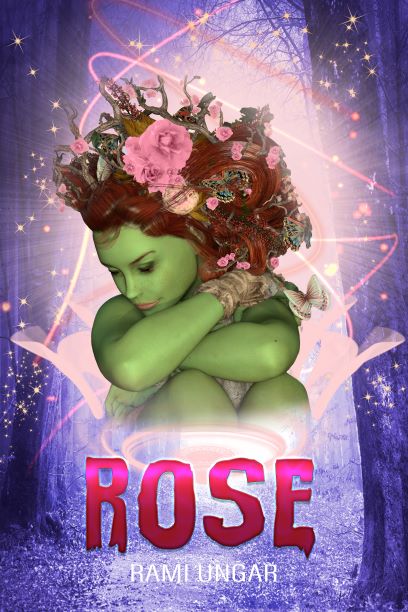
In 2018, I got my novel Rose, which I wrote as a college thesis, accepted for publication. I was going to be traditionally published. Thus followed fifteen months of editing and rewriting, during which my anxiety disorder also manifested. Somehow, through all of it, I got the book published and people liked it. To this day, it’s still my most popular book.

Also, in 2019, I had a short story, “Car Chasers,” published in an anthology and was paid five-hundred dollars for it. To this day, it’s still the most I’ve ever made off a single story.

During 2020 and COVID, I kept writing. I met with my fellow writers virtually and we helped each other along. I attended my first event as a vendor in Iowa, and learned a lot. In 2021, I attended events and got more stories accepted and published, including The Pure World Comes and Hannah and Other Stories. In 2022, the former came out in paperback, ebook, and audio book, and I got more work accepted, including The Dedication of the High Priestess, which to this day I still think is some of my best work ever.

Also, after nearly two years of work, my friends and I created a small press and released That Which Cannot Be Undone, an anthology of Ohio horror.

This year, editing on Hannah reached the point we could set a release date. I went to Stoker Con, where not only did a lot of people know who I was, but many people, including my heroes in the horror genre, were eager to meet me. (And they were so nice!) A few even agreed to be eARC readers for Hannah.

Also, I’m working on a grimdark story for an anthology I’ve been invited to, and there’s a chance other stories may be released this year. This past week, The Quiet Game reached its ten-year release anniversary and more people are reading it than ever, especially this week. And I was at the Columbus Book Festival this past weekend and sold more books and made more than I’ve ever earned in four years of vending. I don’t expect the same results this weekend at Gem City Comic Con, but I’m hopeful for good things.

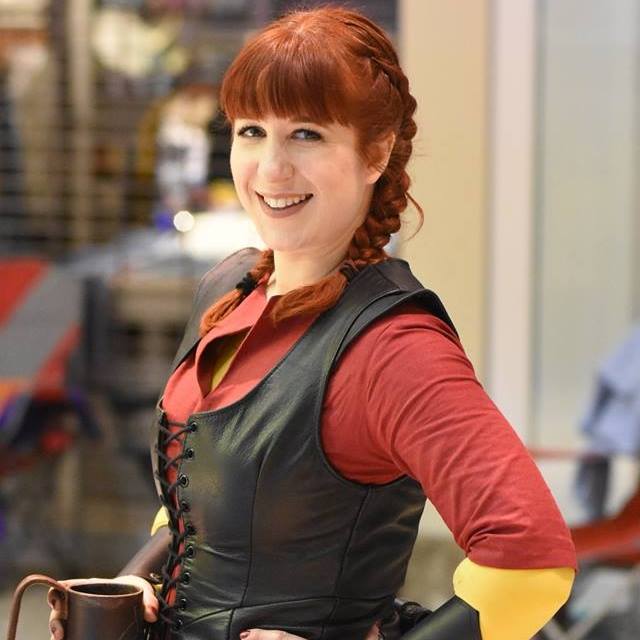
Me and my fellow Ohio horror writers at the Columbus Book Festival. I’m on the end.

And I’ve heard from plenty of people, including an old coworker and my tattoo artist, that they’re reading my work and enjoying it so far.

(Yes, I have a tattoo artist. Surprise!)

All this isn’t to brag. It’s to say that if you keep working hard and working to improve, things won’t stay the same. You can build a foundation for yourself, a catalog of work. And then readers and colleagues and more will be drawn to you. They may even eagerly await your work. You may not be able to write full-time, let alone live the Stephen King lifestyle, and it may take a shit ton of time, but you could become someone whose work people enjoy.

Or, to quote Field of Dreams, “If you build it, they will come.”

And isn’t that what we all want, in the end?

That being said, I do hope I’ll be writing full-time by 2028. I actually asked my Tarot cards if I could be writing full-time in five years, and they said there’s a strong possibility. That’s poured gasoline on the fire under my ass. I can’t wait to see what happens under this level of motivation. Wish me luck, Followers of Fear!


Thanks for reading, my Followers of Fear. I’ve been wanting to do a post like this for a while. I hope many of you found it helpful.

Also, I’ll be in Dayton, Ohio this weekend for Gem City Comic Con to sell books and do Tarot readings. If you can stop by, please do so. And if you can’t, click that button thing below. It’ll take you to my Books page. If you’re looking for new reading material, there’s plenty there to choose from. Just remember to leave me a review if you end up reading something of mine so I know what you thought.

That’s all for now, my Followers of Fear. Until next time, good night and pleasant nightmares.

So, I’m reading Every Woman Knows This: A Horror Collection by Laurel Hightower, a collection of horror short stories I won in a Twitter giveaway. Not very fast, because I get through print books so much more slowly these days than I used to, but I’m making my way through it. And I am in awe that some of these short stories appear to be shorter than five thousand words. Hell, some of the earlier stories in the collection appear less than four thousand.

And I’m sitting there, reading the stories, and I’m like, “How does she do that and make them still so damn good?”

I actually posted that question on my personal Facebook and my Twitter feed. Laurel responded to the Facebook post (we’re friends there), thanking me for posting about the book and being glad that I’m enjoying it. Did not share her secrets with me, though.

I wish she had, because I would love to be able to write stories that short and still be effective. After all, I grew up on Harry Potter and the Bartimaeus Trilogy, followed by books like Interview with the Vampire and IT. The shortest of those books is seventy-seven thousand words. By the time I started regularly reading and writing short stories, my brain was already primed for sprawling plots with deep twists, multiple layers of themes and secrets, and complex character relationships that are explored through multiple pages, chapters and books.

Taking all that out and trying to tell an entire story in less than seventy-five hundred words (what the Horror Writer Association says is the maximum word count for a short story) was a huge switch for me. And honestly, I’ve had varying success. Occasionally, I manage to get a story less than seventy-five hundred words, and sometimes those stories get published, but more often short for me is a novelette between 7,500 and 17,500 words. Not as long as a novel, not by far, but allows me more room to work with those plot elements I like.

Still, I do try to come up with and write those shorter stories, what Stephen King calls “a quick kiss in the dark from a stranger.”* Yeah, it’s difficult to do, but most publications are looking for stories of that range, and I want to get my work into them. And, I like the challenge. It’s another hill for me to climb on my journey as an author. And, occasionally, something I write in this vein is really good.

That being said, if it looks like a short story is destined to be a novelette, or even a novella or novel, I will let it be the length it’s going to be. No sense trying to maim a good story so it can fit somewhere, right?

But I still try. And I’ve gleaned some things in my attempts, like instead of big plots or huge happenings, you focus on small instances or events that may happen to one or two people. Rather than the big moments, like the destruction of It in the sewers of Derry or the fallout of four writers visiting a haunted house on Kansas during Halloween for a publicity stunt (Kill Creek by Scott Thomas, if you don’t know), I should focus on maybe a ghost at the Ohio State Reformatory trying to get information on what happened after he died, or a young man dealing with something evil that’s appeared intermittently in his life. Those might manage to become the kisses given in the dark by a stranger.

Actually, one of those was a kiss in the dark, and some of you may remember it. It’s “Is Anyone There,” which was published last year in That Which Cannot Be Undone, and got mentioned in several reviews as a highlight of the anthology. So maybe I might be closer to my goals than I think.

Just don’t kiss me in the dark. I’m more likely to punch you for that than enjoy it or put it into a story.

What are your tips for writing short stories, Followers of Fear? Do you struggle with keeping them under 7,000 or 5,000 words? Let’s discuss.

Also, be sure to check out Every Woman Knows This by Laurel Hightower. So far, it’s a great collection, and I hope I’ve learned some things by the time I’m done.

*Which, by the way, is a weird idea, isn’t it? You walk down an alley or into a room and it’s really dark and suddenly someone plants one on your mouth before disappearing? Actually, the scenario with the room is the plot of an Anton Chekhov short story, and the character who gets the kiss does have an impression left on him. So, I guess it’s a good metaphor.

I’ve been asked this before numerous times in one way or another. “What advice do you have for new writers?” Well, there’s one thing that always comes to mind. And the past couple of years, the thing I’ve come back to, time and time again, is this: “You need to carve out the time to right.”

Yeah, that’s the advice. A lot of people want to write, but they say they don’t have the time to write, or that they can’t find the time, or there’s just not enough time in the day. I often reply, “Well, you’re going to have to carve out the time. If you’re serious about writing that story. There’s no time fairy who’s just going to grant you time to write.”

Sounds kind of caustic, and it is. But it’s also true. For one thing, I’ve never seen a single fairy, let alone one that grants time to would-be writers. For another, the time to write just doesn’t find you. It doesn’t drop out of the sky and into your lap. And yeah, there is only 24 hours in a day, with hopefully only 8 of them devoted to a day job and the other 16 sleeping and personal stuff.

Fact of the matter is, if you don’t make time, even just half an hour, to write, you won’t ever get the time to write.

I mean, if you want to cut out sleeping, you’ll find that time, but from a health standpoint you’ll really suffer.

But I understand why people say they don’t have the time. Finding that time can be hellishly difficult. Besides day jobs and sleep, people need to do chores around the home, take care of family obligations, and finding time to relax after a long day.

Still, you can find time. Plenty of others have done it before. Even when he was raising three kids under the sage of six and was living out of a trailer, Stephen King found time to write 2500 words a day. That’s how he wrote Carrie, which later launched him into the stratosphere. And my friend/colleague Angela Misri wrote every day on the bus to and from work in moleskine notebooks. That’s how she wrote her Portia Adams books, and they’ve been pretty successful.

As for me, I write in the evenings between dinner and bed (though on weekends or days off I try to write during that free time as well). I’ve been doing that for years, and it’s how I’ve written some of my best work. Yeah, it helps that I’m only responsible for myself, don’t have kids, and writing helps me destress. But I still carve out that time most nights to get work done, because I want to get those stories done and out there. I want to write for the rest of my life. So I carve out that time.

And if you really want to tell those stories and get them out into the world, you’ll find the time. It may take some changes to your schedules, or maybe some changes in your life, but if you’re serious, you’ll be able to find the time. Like I said, plenty of people have before and plenty of people in the future. That includes me, and that includes you.

How do you find time to write? Did you make changes to your life or schedule to do it? Has it helped? Let’s discuss in the comments below.

That’s all for now, my Followers of Fear. Just wanted to get something out to you sooner rather than later, and this seemed like a good subject to post about.

Until next time, good night, pleasant nightmares, and–oh look, a fairy! Oh, you want to join my Army of Nightmares and help me accomplish my goals? Okay, let’s go! To the dragon bats!

For those of you who don’t know, “squicky” refers to something that is very disturbing, disgusting, and/or unpleasant. In horror, it usually refers to something out of what Stephen King calls “the gross-out factor” of horror, with lots of blood and gore and bodily fluids. Occasionally squicky scenes (or at least most of the ones I’ve encountered) also have some sexual element, though not the kind that would indicate any form of healthy sex. Squicky scenes are the ones that make readers think, “Good Lord, what’s wrong with this author?” And they make the author’s parents go, “what kind of freak did we raise that they could come up with this?”

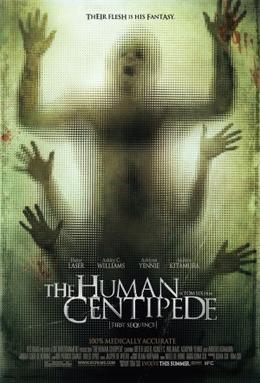
On a personal level, I can go either way with squickiness. Sometimes, like with the Evil Dead remake in 2013, I find that’s part of the charm of the movie. And I’m looking forward to watching Terrifier 2 because its squickiness reportedly caused people to vomit and faint in the theaters (though hopefully not at the same time). But when it comes to stories like Human Centipede and its sequels, where the very concept is squicky, I run the opposite way.*

That being said, I find myself writing squicky scenes more and more in my work. There’s a scene like that in my Backrooms story “It Changes You,” and one of the stories in my upcoming collection Hannah and Other Stories has plenty of squick in it. And there’s a particular story I hope to start writing soon that will have you shuddering from the squick! It’s going to be a blast.

Why am I writing these scenes? Well, part of it is because I’ve seen other authors in the books I read writing them and that has inspired/urged me to try writing them as well. Another is that, in my continual quest to improve as a writer, I’m trying to push myself to step more and more out of my comfort zone and try things that I wouldn’t normally write. And a third part is that, when done right, those scenes make the story scarier and make the story stand out to readers.

That being said, writing those scenes isn’t easy. I’m usually thinking three things when working on a squick moment: is this too much? Is this not enough? And am I using the right words to bring out the full squicky nature of the scene? Since some of these stories haven’t released yet, I can’t be certain. You’re trying to balance several elements like word choice, time spent on a particular moment, translating that horrifying moment from your brain to the page, and how it fits into the story as a whole, among others. A single misstep and people might call you “shocking for shock’s sake” or “exploitative.”

That being said, people are going to call you that anyway. Besides Human Centipede, other films like the Saw movies or Texas Chainsaw Massacre are full of squicky moments and features. I know authors whose books are filled with squick. And you’ll find that each one has both detractors and fans. It just depends on the person, what they’re capable of stomaching, and what personally draws them to the story.

As for advice on writing squicky scenes, I don’t have much, unfortunately. Like I said, I don’t write them too often. But I do think that, unless your main thought when writing a story is, “I want readers to be shocked and grossed out and wincing with every paragraph,” only use squick when it works for the story. If it adds something to the story, great, keep it. If it doesn’t, then perhaps think about whether you should include such a scene.

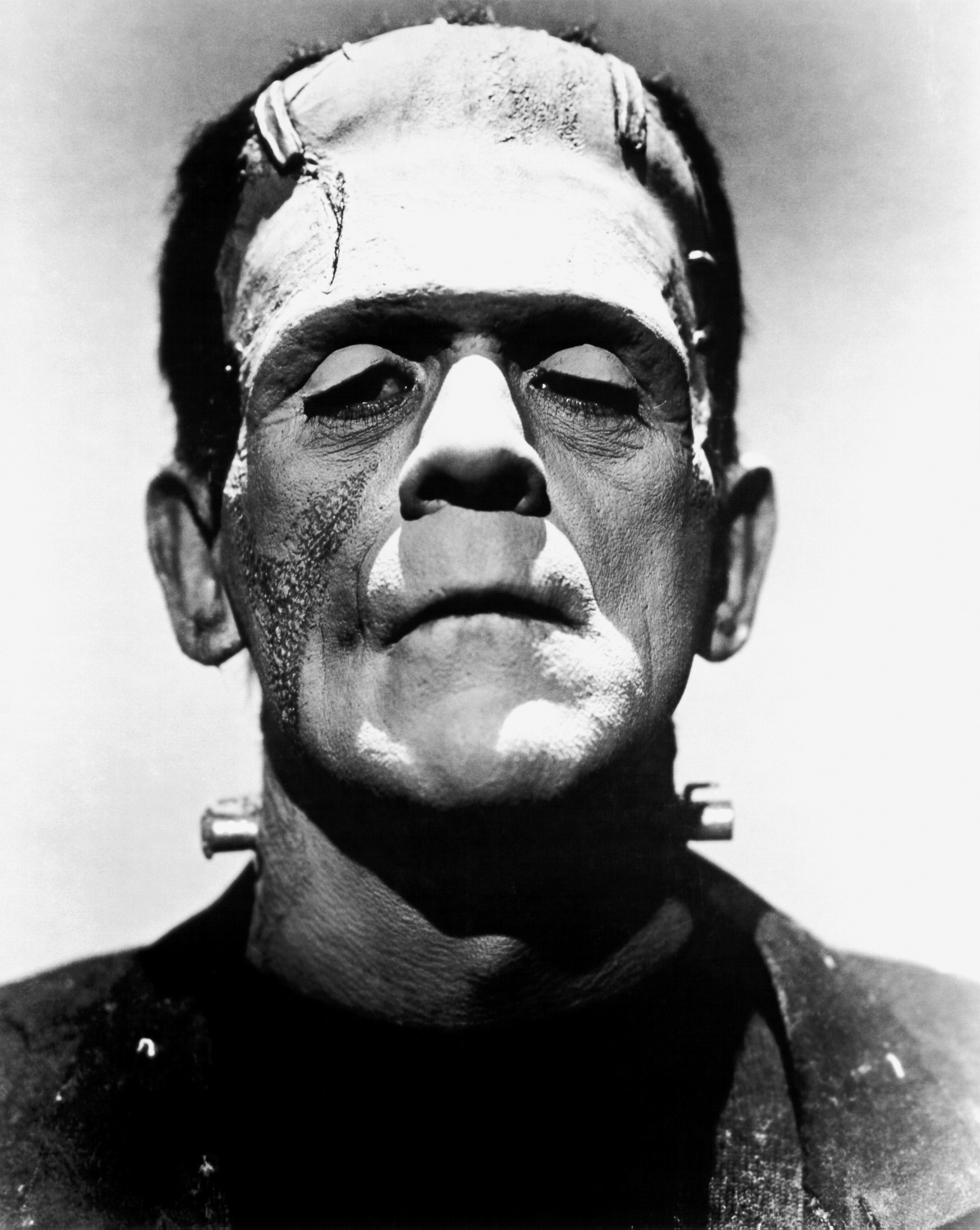
This entire film is squicky and I want nothing to do with it.

Also, and while it may be stomach churning, read what others have done with squick and try to pick up what makes their takes effective. Once you do that, you can hopefully get some practice in and start creating scenes and stories that, over time, will produce the same effect those scenes produce in other readers and in you.

All that being said, if squick isn’t your thing, don’t push yourself to include it. The thing about horror, there’s a niche for everyone. You prefer things to be gory and gross and shocking, there’s something for you. You like ghosts and psychological stuff? There’s something there for you. You like cosmic beings whose very appearance causes insanity? Yep, there’s something for you.

Anyway, I just wanted to talk about these scenes I’m writing and my thoughts on them. I hope that when some of these stories with their squick-inducing moments release, they’ll be quite effective and add plenty to the story. Now, if you need me, I’m off to watch some scary movies.

Until next time, my Followers of Fear, good night and pleasant nightmares.

Do you enjoy squicky scenes? Do you write them often? What advice do you have for writing and including them in your horror?

*Seriously, you could not pay me to watch those films. Anyone tries, I will smack them into next week and make my escape in the meantime. I’m already screwed up enough, thank you very much! Don’t need to be twisted any further.

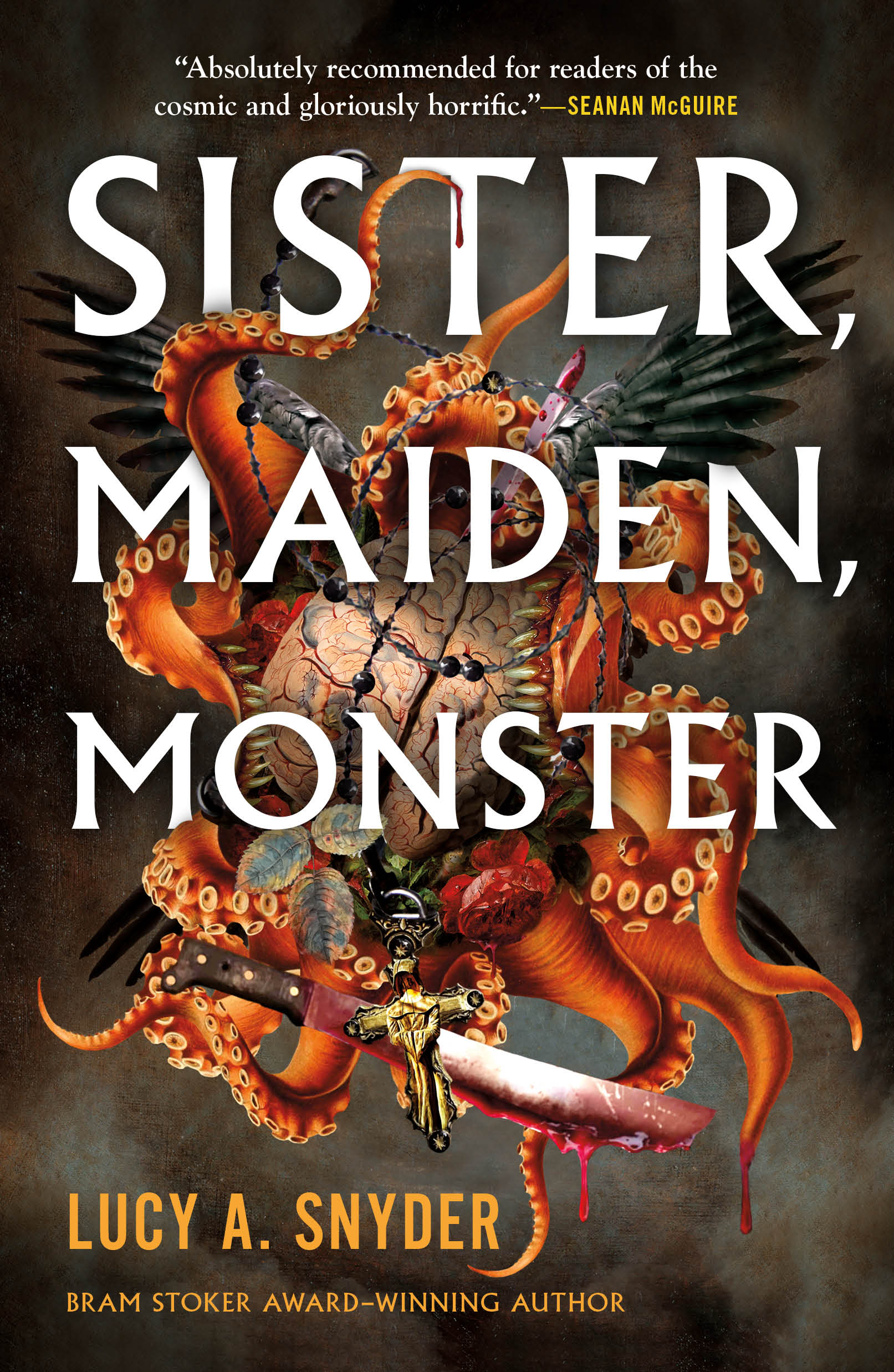
Before we start, I would like to thank Lucy A. Snyder and the team at Tor Nightfire for providing me with an ARC copy to read (and a special thank you to Lucy for the awesome galley copy she gave me a few months back).

Set a few years after our current COVID-19 pandemic, Sister, Maiden, Monster follows three separate women as their lives are affected by a terrible new disease raging across the planet. Known as polymorphic viral gastroencephalitis, or PVG, the disease is like the stomach flu from hell. For those who are lucky, it kills them very quickly. For the rest, it changes them, making them unable to eat most sources of nutrients. They have to get their nutrition through rather macabre means. And that’s only the start of the apocalypse that’s going to come.

So, it looks like there’s still an appetite for pandemic fiction, even after a real pandemic. At least, if the release of Sister, Maiden, Monster, the airing of “The Last of Us,” and one or two of my own stories, among other works, areanything to go by. And everyone telling those stories are making sure the hypothetical future pandemics are even more terrible than COVID-19 was. Which, honestly, I gotta respect.

Alright, onto the story. Sister, Maiden, Monster was great. I really enjoyed it. For one thing, the three main characters are really well-developed, which is great in such a character-driven story. There’s Erin, who’s seeing her life implode and strange new desires growing inside her after becoming infected; Savannah, a prostitute and dominatrix who discovers she has a talent for causing death in the name of new masters; and Mareva, a sickly woman who has been chosen for a terrible purpose. I really got to know these characters and get inside their minds. Which, by the way, was not always the most pleasant ride, believe me.

Speaking of which, Lucy Snyder does not shy away from showing what Stephen King calls the “gross-out” factor of horror. There are bloods, brains, gore, and plenty more body horror to make more squeamish readers feel faint. Add in the isolation and paranoia of living through another pandemic, this one worse than the one preceding it, as well as some good and delicious cosmic horror, and it makes for a rather scary read.

I did think that the time spent with each narrator was unbalanced. Somewhere between a third and half the book is from Erin’s perspective, and while I get why, I would have liked to see more from the other two narrators. Especially Savannah. That lady is wild and a lot of fun to read, even if you would be horrified by her if she were real.

I also noticed that something that appeared later in the book and which I loved seeing was foreshadowed earlier in the story, but I felt it could have been foreshadowed a bit more. Hell, I nearly forgot about the foreshadowing until the reveal, so that says something.

All in all, Sister, Maiden, Monster is a great, body horror-filled ride and I’m glad I got to be among the first to read it. On a scale of 1 to 5, I’m giving it a 4.3. The book releases this Tuesday, February 21st, so go preorder a copy, settle down when you get yours, and get ready to see the horror of the pandemic go through a terrifying metamorphosis.

Until next time, my Followers of Fear, good night and pleasant nightmares.

I’ve been saying it all weekend, in person and on my other social media: one of the things I love about writing (among others) is getting to add my interests to the stories I write. And not just interests: I get to play with my favorite tropes, character types/archetypes, locations, and so much more.

And I’m not the only one: Stephen King likes to set his stories mostly in Maine or other parts of New England, have characters who are either writers or psychics (with the latter often being children), and just getting into weird ideas like aliens or extradimensional entities. Anne Rice enjoyed placing her stories throughout history, particularly places that are beautiful in some way or another, and telling stories that delve into our cruel but beautiful world (AKA the Savage Garden) via supernatural but very human creatures. Riley Sager enjoys deconstructing and turning classic horror movie tropes on their heads by making them the entire plots of his books, female leads who have some deep trauma in their pasts that affect their present, and a male romantic interest whom they should have no business getting with. HP Lovecraft–wait, let’s not get into him. We know what he liked, as well as what he hated.

As for me, I’ve got a few. For one thing, I like to include ballet and ballerinas in my stories. Part of that is that I love ballet like some people like football, but there’s also a symbolic reason. As I’ve said before, corruption of the innocent is one of my favorite elements of horror and ballerinas, particularly young ballerinas, are a symbol of innocence to me. With that reason, it’s no wonder I tend to add ballet and ballerinas to my stories when I get the chance. Though given that I write horror, I often put those poor dancers through hell. Just look at Maddy Taggert in Rose and Annie Hummel in “The Dedication of the Hight Priestess.”

Though whether or not that pattern holds with the dancer character in Crawler, I’ll let you guess.

I also enjoy putting my nerdy interests into my stories when I can. For example, in my WIP I’m working on now, I’ve included references to anime, fantasy tropes, and Doctor Who, among other things. In that same story, I also modeled two characters after the original detectives in Law & Order and named them after the actors who played them. And with half the story still left to write, I can probably find more room to add those in. It’s a blast when I do!

Some other things I like adding with my work when I can are:

  • setting my stories in Ohio
  • making some of my major characters Jewish like myself
  • noting the tropes I might be using while the character denies that their life is working like a story.
  • references to famous movies and books, especially those in the horror genre
  • my favorite periods in history (such as The Pure World Comes for Victorian England)
  • and powerful, sometimes godlike entities that often come from realms very much unlike our own
I love it when I get a chance to reference this show in a story.

And these are just the ones that I’m aware of. Some things are more noticeable to authors than others. I’m sure as I write and publish more, others will point out things about my writing that I never noticed before but will find very true.

But yeah, this sort of thing is a perk of writing fiction. They say “write what you know,” but what that actually entails is often quite different than what our writing professors often preach. Instead of basing our stories entirely on our own experiences and reality, we weave what we love into our stories and use it to spice up our stories. To make them the stories we would enjoy reading ourselves. And when you release those stories and find people enjoy them and the elements you add in…well, that makes it all the better, doesn’t it?

What are some elements you enjoy putting into your stories when you can, Followers of Fear? Let’s discuss in the comments below.

That’s all for now, my Followers of Fear. I mentioned this sort of thing to my folks after seeing Nutcracker last night and on social media after the Doctor Who reference was written into the story last night. After all that, it just felt natural to blog about it. Now, if anyone needs me, I’ll be making dinner and then getting back to my WIP. Until next time, good night, pleasant nightmares, and happy second night of Hanukkah!

On today’s interview, I have a very special guest with an amazing story. Some of you are probably already familiar with her story: earlier this month, fellow Ohio author Chelsea Banning took to Twitter to vent her feelings. She’d been at a book signing for her debut fantasy novel, Of Crowns and Legends, where forty people RSVP’ed that they would attend, but only two arrived. The response from the Writing Community was unexpected and massive, with many authors, including Stephen King, Neil Gaiman, and Joyce Carol Oates offering their own stories of poorly-attended events and offering their own help for Ms. Banning’s career. Stephen King even went out of his way to let his entire Twitter following know about her next event the moment she tweeted about it!

Since then, word about Of Crown and Legends has also spread and has become an Amazon bestseller with plenty of positive reviews (seventy-five at the time of posting). This is hopefully the beginning of a prosperous career, so I thought I’d pick the author’s brains sooner rather than later. So, please welcome Chelsea Banning, author of Of Crowns and Legends, to my blog.

Rami Ungar: Welcome to my blog, Chelsea. Tell us about yourself and your book, Of Crowns and Legends.

CB: My name is Chelsea and I am a Young Adult/Teen Librarian by day and author by night. I am also a self proclaimed geek. I love Marvel, Lord of the Rings, Star Wars, cosplay, and Renaissance Faires. My book Of Crowns and Legends follows the twin children King Arthur was never supposed to have 20 years after his death. It is about their struggles to live in his shadow while also dealing with an upcoming war.

RU: I’m something of a big Arthurian legend fan myself, and have even written about it as well. What is it about the mythos that draws you to it?

CB: You know, it’s hard to say. I think it’s as mysterious as who exactly King Arthur is himself. There’s just some sort of magic that draws people into this story.

RU: Please describe your research and writing process for the book.

CB: I pretty much devoured any King Arthur book, movie, and TV show I could get my hands on. As I write, I did a bit of research along the way if I had questions. It’s a high fantasy, so it’s not historically accurate at all, but I did want to incorporate as much of myth as I could from all the different stories.

RU: Can you tell us about the book signing where only two people showed up and what happened later? What was your reaction to that?

CB: Yeah, I had reached out to Pretty Good Books after I saw them have another author signing. I had heard from quite a few of my friends saying they were planning on coming out, and then when the signing happened and only 2 people came, it was a little disheartening. I was still feeling a little bummed the next morning and just wanted to kind of get the feelings off my chest so they wouldn’t keep resonating in my head.

I did not expect it to take off the way it did and when I initially saw it, I was just in pure shock.

RU: Have any of the authors who encouraged and boosted you reached out to you personally? Have any of them read the book? What were their reactions to it?

CB: Brigid Kemmerer offered to help with advice about agents, and my old writing professor, Christopher Barzak, who is an award winning author himself, has been a huge help through all of this!

Joanne Harris offered some advice as well and it’s been so heartwarming. I love the writing community.

RU: So do I. Now, Of Crowns and Legends is currently an Amazon bestseller and averaging a 4.2 out of 5 there at the time of writing this. How does it feel to have found so many readers and getting so much positive feedback?

CB: It feels amazing. That’s every authors’ ultimate dream, isn’t it?

RU: Yes, it is. So, what’s next for you, both in terms of your writing and your career? Also, is there an audio version of your novel in the works? Asking for a friend who is actually me.

CB: I am currently working on book 2, as Of Crowns and Legends will be a trilogy. After completing this, I definitely plan to write more books. And I am working on an audio!

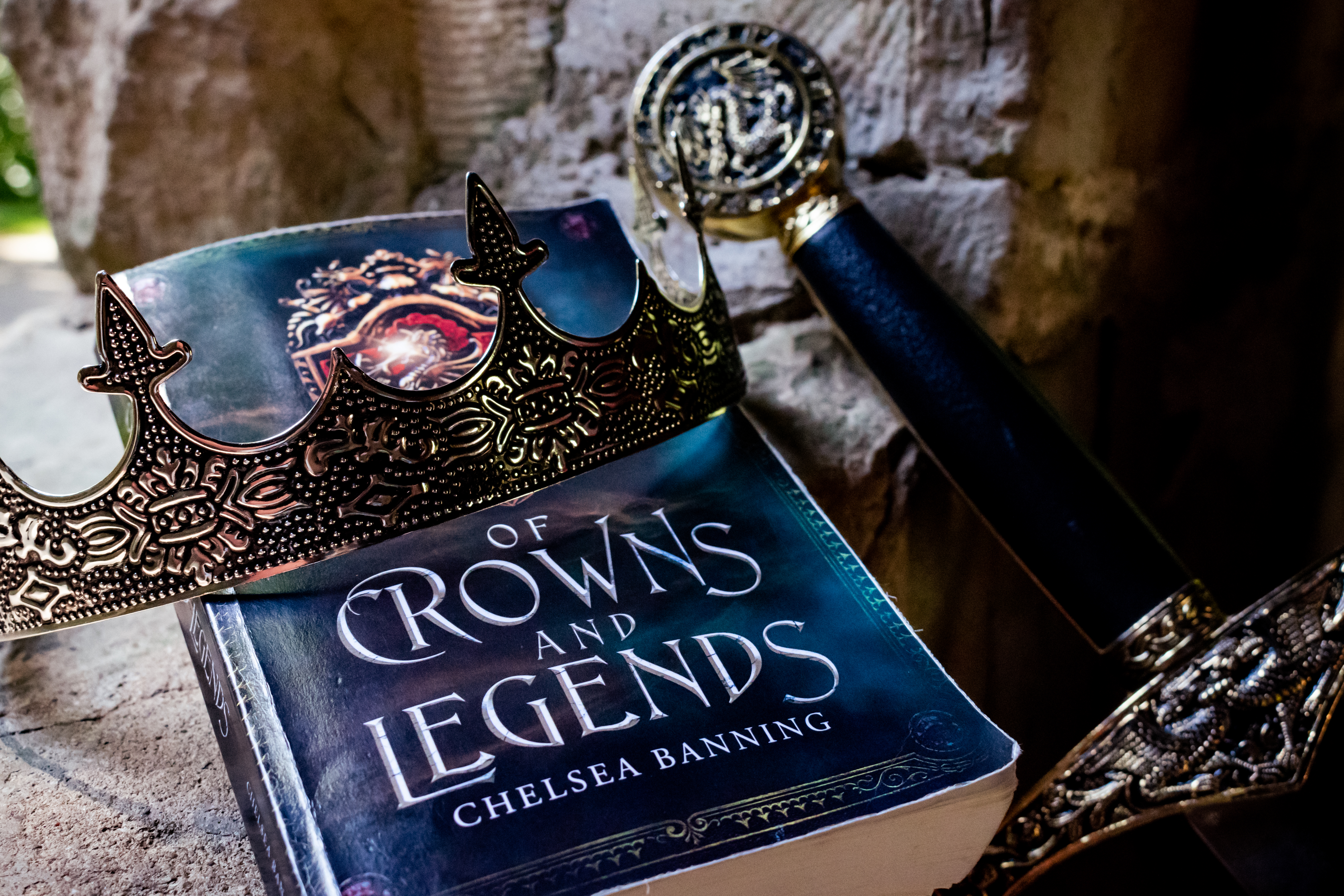
A very fantasy-esque photo of Of Crowns and Legends.

RU: Good to hear. Now, what are some books you’ve read recently and that you would recommend to other readers?

CB: Legendborn and Bloodmarked by Tracy Deonn, Queen and Conqueror by Isabelle Olmo, The Black Witch Chronicles by Laurie Forest, Among the Hunted by Caytlyn Brooke and Akithar’s Greatest Trick by Jason Dorough.

RU: What is some advice you would give to other writers, regardless of background or experience?

CB: Keep writing and don’t give up. Do some research on the writing process and pick out what works for you. Not every writer will be the same, and once you found your rhythm, writing will start to come easier.

RU: Final question. If you were stuck on a desert island for a little while and could only take three books with you for the duration of your stay, what books would you pick?

CB: A Court of Mist and Fury by Sarah J. Maas, Lord of the Rings, and The Other Merlin by Robyn Schneider.

RU: Well thank you for joining me here, Chelsea. I look forward to getting my hands on a copy of Of Crowns and Legends.

If you would like to check out Of Crowns and Legends, you can find it at most retailers where great books are sold. And if you would like to connect with Chelsea Banning, you can find her on her website and on Twitter.

That’s all for now, my Followers of Fear. I hope this piqued your interest in the novel (my interest certainly was). Until next time, good night and pleasant nightmares to all!

In truth, I should have posted this update last night. That’s when I finished the latest chapter of the novel. But it was nearly eleven at night, and I had to go into the office this morning, so I put it off till now. Would have been written earlier in the day, but I had to de-stress from work and relieve my election related anxiety.

So, as many of you know, I’ve been working on-and-off on a new novel, a mummy novel tentatively called Crawler. The story was inspired by that god-awful movie with Tom Cruise that came out in 2017. Or maybe I should say it’s my attempt to show the world (and maybe Universal) how to write a decent mummy story. We’ll hopefully see someday whether or not I’m successful in that department.

Anyway, I’ve been writing four chapters at a time, then working on other, shorter projects that I can submit to other publishers. And if you’ve guessed that I’m going to post an update every four chapters, you’re completely right. In fact, the chapter I finished last night was Chapter 8. And if I’m being honest, these past four chapters have been among my favorites to work on so far.

Yeah, I know. How can I have favorites this early in the process? The novel is barely a quarter written! And you’d be right. But these chapters have some (what I think is) great content. Chapters 5 and 8 have some nice, slow character development and bonding that I really enjoyed writing. I really got to showcase the forming and established bonds between these characters, which is something I feel like I haven’t done enough of in my previous novels.

And Chapters 6 and 7 did plenty to establish the mystery and terror of the story. Chapter 7 in particular, I feel, was quite creepy and is a nice little opener for the horror that the readers will eventually get to experience. I’m trying to approach the idea of the mummy as a threat in a way that hasn’t been done before, so seeing the initial results with these initial chapters is encouraging to me and makes me think I’m onto something here.

And when I get back to this novel, I’ll be diving right back into the horror and seeing if my idea goes anywhere (no spoiler, but Chapter 9 is going to be something else). At the moment, the novel is currently 133 pages (regular MS Word pages, double-spaced, 12-point Times New Roman font) and 37,575 words. It’s going to be one hell of a Stephen King doorstopper when it’s done. And hopefully just as terrifying. Or if not terrifying, hopefully just as interesting.

In the meantime, however, I’ll be working on a couple of (hopefully) shorter works, and finally editing that story where I put some neo-Nazis through the hell they deserve. All these stories have a common theme to them, so I think they might work well together if I wanted to create a new collection or something. Of course, we’ll have to wait and see what I end up writing, if it’s any good and if I think a collection is the best way to go with these stories.

But first, I’ll need to write and edit them, of course! And I look forward to every moment of it.

Well, that’s all for now, my Followers of Fear. I need to head to bed. So, until next time, good night, pleasant nightmares, and may God have mercy on all our souls! Trust me, there’s a good chance we’re going to need it.