Posts Tagged ‘Stephen King’

As much as we make jokes about it, young adult fiction, or YA, is a massive and popular genre. Over ten-thousand YA books were released in 2012, read by both the targeted demographic, teens, and by an increasing number of adults. And among horror, there are writers who specialize in YA horror. But that leaves a question: when is a horror story a YA horror story? Does it have to star a teen or teens? Or is there something more to it?

I ask this because I have a project for National Novel Writing Month in November where nearly the whole cast are teenagers. And while I have nothing against YA or those who write/enjoy it (the amount of anime and manga I consume is primarily aimed at teens, which says something), it’s not a label I think this story should be given.

If you ask most authors and fans (and believe me, I have), YA fiction is usually defined as having teen protagonists and including themes prevalent around the teen years: first love, friendship, identity, and growing up. By that definition, many horror novels could be considered YA, even though they’ve traditionally been aimed at adults. A good example is Carrie by Stephen King. It fits both requirements–teens are prominent in the novel, and themes such as bullying and inclusion, first love, and becoming an adult are all present in the novel.

I even asked in one of my Facebook groups if other authors considered Carrie YA. I got over fifty responses in the course of a week, and it was divided almost evenly down the line. And while the opinion was split, many people admitted they or their children read it as teenagers. I myself read Carrie as a teen. So is it YA fiction then, like the Cirque du Freak books and last year’s bestseller The Sawkill Girls? And are other novels with teens in the lead role to be considered YA?

Well, here’s the thing: the above definition doesn’t include something very important that has to come into consideration. What is that? Marketing. Who is the book being marketed to? Marketing has always played a part in categorizing what is called YA and what isn’t. In fact, the demographic of YA fiction (it’s not a genre, no matter how much we think of it as one), was first defined by librarians in the early half of the 20th century who wanted to know which books were being read by the newly-defined teen demographic and why. It was later picked up by publishers when they realized how they could increase their sales by marketing certain stories to the 12-18 age group.*

So while Carrie has always been popular among teens, it was and has always been marketed at adults, as have all of King’s books. And that’s because King wrote it for adults, not for teens. Meanwhile, books like the Cirque du Freak series were always aimed at the teen demographic, from early writing stages to their eventual publication and marketing.

And that’s what we need to answer my earlier question: if my NaNoWriMo project has a teen cast and incorporates certain themes relevant to teens, is it YA? While I’m sure, if it gets published, some will categorize it as YA horror, I write for an adult audience. Everything from what I include in the story (including possible sex scenes) to just the word choices and the explorations of characters’ thoughts and feelings is through an adult lens.  YA, it is not.

So while a story may include teens prominently in the cast and feature themes and content relevant to teenagers, unless it’s written and later marketed for teens, it can’t necessarily be called YA fiction. Many may still slap the label “YA” on a story given its content, and they have every right to do so, if they feel that story fits their definition of YA fiction. But the intention of the story’s author will be the ultimate decisive requirement, whether in horror or any other genre.

Well, that’s all for now, my Followers of Fear. Thanks for reading this little piece I wrote just to get my thoughts out on this subject before I started writing in November. But tell me, what are you thoughts on the subject? What makes a story, horror or otherwise, YA? Let’s discuss.

Until next time, pleasant nightmares.

And look, I went an entire post without once mentioning Rose. I consider that an accomplishment–oh dammit!

*Thank you Lindsay Ellis for helping me research this article with a great YouTube video.

All you measly humans, fall to your knees! Scream in awe and horror! Get out the beer and ice cream! In less than three weeks, Rose has attained ten reviews on Amazon!

Well actually, eleven reviews. Across Amazon’s American, Canadian, and British sites, the majority of which are on the American. But I’m making a big deal out of it anyway.

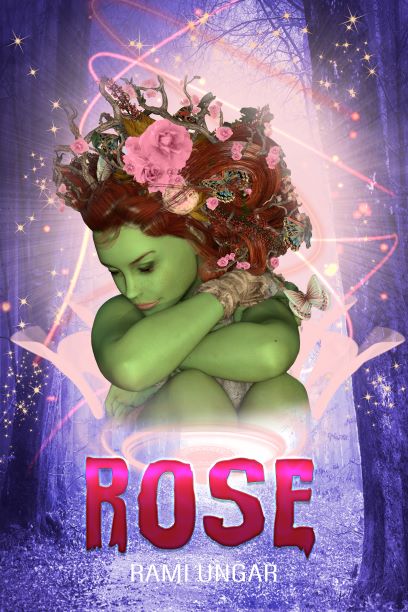
So if you have no idea what I’m going on about, well first off, you must be very new here. Welcome to the blog and to the Followers of Fear. I hope you have a scary good time with us. Second, Rose is my fantasy-horror novel which was released three weeks ago by Castrum Press. It’s my first book with a publisher (I’ve self-published previously), and is the result of about five years of work, starting in college as a senior thesis. For what it’s about, here’s the back cover blurb:

Rose Taggert awakens in a greenhouse with no clear memory of the past two years and, to her horror, finds her body transformed into an unrecognizable form.

Paris Kuyper has convinced Rose that they are lovers and as Paris could not bear for her to die, he has used an ancient and dark magic to save her from certain death.

But the dark magic Paris has used comes at a price. A price which a terrible demon is determined to extract from Rose.

As Rose struggles to understand what is happening to her, she must navigate Paris’s lies and secrets; secrets that Paris will do anything to protect.

I’m over the moon that so many people have read the book and left reviews. Not only are reviews great ways to give writers such as myself feedback on what worked and didn’t work, but it’s also a great way to let other readers know if a book is worth their time. And apparently a lot of people think this novel was worth their time.

And what reviews, too! Author of the Portia Adams mystery novels, colleague and friend Angela Misri posted this on Amazon Canada:

Rose is one of those characters (like Carrie in Stephen King’s book) who pulls you into the story, wrapping herself around you, making it impossible to stop reading.

Being compared to Carrie. I consider that an honor.

On the British version, this anonymous Amazon customer left this review (which has been shortened to avoid spoilers):

This is my first encounter with Rami Ungar, and, I must say, it was an enjoyable one. The story gets you hooked right from the beginning and it doesn’t loose much steam all the way through. I liked the rhythm of the story – it’s alert, spot on, with very few dead moments. If you like slow burning, atmospheric novels, then this is definitely not gonna be up your alley.

The story itself isn’t something new, but it’s well written and very easy to follow. If you’re not a native English speaker, you will read this book with flying colours, as the author tends to use a simple and concise wording, avoiding obscure idioms or long poetic metaphors.
The story is not extremely gory like in a Serge Brussolo one, nor is it a contemplative one, like in a Michelle Paver one -I’d say it’s somewhere in the middle, with a few good twists and surprises. Characthers development is quite good, and by the end of your reading you’ll really root and feel for Rose.

And on the American website, the reviews have made my heart warm, my horns sharp, and my wings unfurl. Here’s what people are saying:

This book starts with a surreal quality (I mean, human-plant thing, hello!), but even in the midst of that bizarre stuff it’s easy to follow. The protagonist, Rose, is turning into a rose. I kept thinking, “Oh, the poor woman!” And then the story turns into something so scary that I kept holding my breath as I was reading.

PROS:
The tension between Rose and Paris (and between other characters, too) kept me turning pages.

There is a disembodied laugh in the second chapter that ignites a mystery, and the mystery isn’t solved until almost the end of the book. It’s sort of a B-story, but more like a layer of the main story. I loved this added complexity to the plot.

The fight scenes are excellent! They are well-written, easy to picture, and full of excitement.

And then there’s the twist that I should have seen coming but totally didn’t. Fabulous fun.

CONS:
The book has a fem-lit overtone having to do with how men are supposed to treat women in relationships. Rose’s thoughts got a little preachy on the matter, so I took off half a star for that.

There are a few typos, like calling Chrissy “Christy” later on, and Paris comes out “Pairs” once. But the typos are few and far between and didn’t affect my reading experience. I didn’t take off any stars for this.

OVERALL:
Rose is a fun, scary, and crazy-imaginative book. I super enjoyed reading it. 4.5 stars!

–Priscilla Bettis

Rami Ungar’s Rose is frightening from the first sentence. He creates a world of steadily deepening terror, built not just on power, but on deception and mind games. Ungar is a smart writer who isn’t afraid to leaven the darkness with wit, and the book’s plot gallops along beautifully. No wonder so many reviewers call it a page-turner. It’s irresistible to see what will come next, and always a surprise.

–June Star

This short novel starts off as if in a bad dream. Unfortunately for our main character, Rose, everything is all too real. The ancient spell that saved her life also changed her body from human to a trans-humanoid-rose. Getting back her memory and trying to remember her love and relationship with her savior, Paris, is the least of her worries. The real threat is yet to come and what will Rose do to overcome it?
The book was a page turner for me and one I didn’t want to stop reading. I liked the challenges that Rose faced. Rami was clear with his settings and situations. His characters had depth. The Japanese gods and demons concept was refreshing and deliciously twisted.
I like that this is a stand alone novel. (I am sick to death of series.) It’s a good read and I would read this author again.

–a girl is not no one

This is a solid novel. It’s always entertaining and surprising. The premise reminds me of Kafka and the book never fails to deliver the ups and downs of the protagonist while moving a solid plot forward. Enjoy!

–Hernan

I could go on, but I doubt you would keep reading if I kept tooting the proverbial horn.

Suffice to say, I am so thankful for so many people leaving their reviews on Amazon (and on Goodreads, but I’ll post about that another time). It means a lot to me that you’re enjoying Rose and are willing to spread the word about it. I can only hope that more people will check out the book soon and maybe give their own thoughts on the novel.

If you’d like to check out Rose on any of these sites, or just read a short excerpt, I’ll post the links below. And as always, thanks again for following and supporting me. I couldn’t do it without you. Until next time, my Followers of Fear, pleasant nightmares!

Rose Excerpt

Amazon US

Amazon Canada

Amazon UK

Goodreads

Well, I just finished another short story, if that title doesn’t clue you in. And honestly, I’m glad I did: I didn’t think I’d get this one done before the final edits on Rose come in (those are hopefully going to be sent to me later this week).

“Pinochle on Your Snout” is a short story that came from me wanting to work two very different things into a single story. The first is The Hearse Song (video of that song here), which includes this famous verse: “The worms crawl in, the worms crawl out, the worms play pinochle on your snout.” That song also provides one of the best titles I’ve ever given a story. The other thing I wanted to combine was the De Vermis Mysteriis, or Mysteries of the Worm, a grimoire created by author Robert Bloch and later incorporated into the greater lore of HP Lovecraft. The book is supposedly able to summon all sorts of nasty things, and has appeared in a whole bunch of other media since then, including stories by Stephen King revolving around Salem”s Lot.

It took a bit of brainstorming, but I was able to come up with a story based on those elements. How is it? Well, it’s a first draft, so it’s shit. But I think there’s potential there. It reminds me a lot of “The Boogeyman” by Stephen King, in that it’s mainly told as a confession between a man and someone whose job is to listen to other people’s stories (though not a shrink like in the King story). And I think it has a way of drawing people in. Perhaps it could be something someday.

Of course, I’ll need to do A LOT of editing on this one before I even consider sending it to publishers. How much, I’m not sure. Fiction is the only type of alchemy where you can turn shit and other worthless materials into gold. You just can’t tell how much tinkering you need to do before the alchemical transformation is done.

In the meantime, and while I’m still waiting for the final edits of Rose, I’ll edit a novella I think has plenty of potential and may only need a few edits. It’s one of the most disturbing stories I’ve ever written, so it has that going for it. I may even know a press that’ll consider publishing it.

And speaking of Rose, there’s only three days left if you’d like to be an advanced reader for this upcoming fantasy-horror novel from Castrum Press and yours truly. The novel follows a young woman who turns into a plant creature (and that’s just the start of her problems). If you’d be interested, send an email to ramiungar@ramiungarthewriter.com. All I ask is you read the book and consider posting a review after its release. Thanks, and I look forward to hearing from you.

Well, that’s all for now, my Followers of Fear. Until next time, pleasant nightmares!

Pet Semetary is considered one of His Royal Scariness Stephen King’s most terrifying novels, and one King has said he’d take back if he could due to the subject matter of child death in the book. Both it and its 1989 movie adaptation are classics, so people were both intrigued and a little wary when it was announced that the movie would be getting a remake. Then we got trailers that intrigued us and then made our heads scratch. I don’t need to state spoilers here that the little girl dies instead of the little boy this time, right? Well, too bad. But King was okay with the change, so we had to wait and wonder what the movie would be like when it came out.

Based on King’s novel, Pet Semetary revolves around the Creed family, who move into a house in the Maine countryside when father Louis Creed gets a job at a university clinic. He soon finds out that there’s a cemetery for animals on his property, and beyond it another burial ground that has to bring back anything buried in it, including his daughter’s cat. However, sometimes they come back very wrong. When the Creeds are affected by a terrible tragedy, Louis uses the burial ground to reverse the tragedy. But it only leads to an even bigger, more terrifying disaster.

Um…I wasn’t scared.

There’s plenty to like about this movie. It looks the part of a modern Stephen King movie, and they manage to bring the spirit of the novel, especially the feeling of a domino effect at work with the characters, into it. And for once, Jason Clarke, who plays Louis Creed, actually connects with me as an actor. Normally I don’t like him when I see him in something, but this time I really felt it. Every bit of grief, relief, or horror, resonated with my core. And most of the other principal cast members are great in their roles. Jete Laurence (who’s name, by the way, is a dance move in ballet, which I find fitting given her character’s love of ballet in the film) makes a sympathetic protagonist in particular, and later makes a welcome addition to the pantheon of evil kids out to get us.

However, there’s much about this film that left me feeling less than impressed. For one thing, many of the scares were jump scares. And as I’ve become fond of saying lately, jump scares are the cheapest form of terror in horror films. Once they’re done, the fear seeps out of you and you’re okay again. Even after one really effective jump scare, I was okay a minute later.

And then there’s the change from the original story: Ellie Creed, the elder Creed child, dies instead of toddler Gage, and ends up being the one resurrected. Hey, I’m cool with it. If there are no surprises, why bother remaking a film? But that’s the only real change that’s worthy of talking about. Afterwards, the film adheres rather closely to the novel, and even where it doesn’t, it’s pretty predictable. I would’ve preferred it if after this change, they decided to make more changes to the story and send it in different directions. I mean, if you’re going to have an older child, rather than a toddler, the source of terror, why not take advantage of that (especially since older children are much better at planning and being devious)? Go where we won’t expect it and give us the terror of not knowing what will happen next!

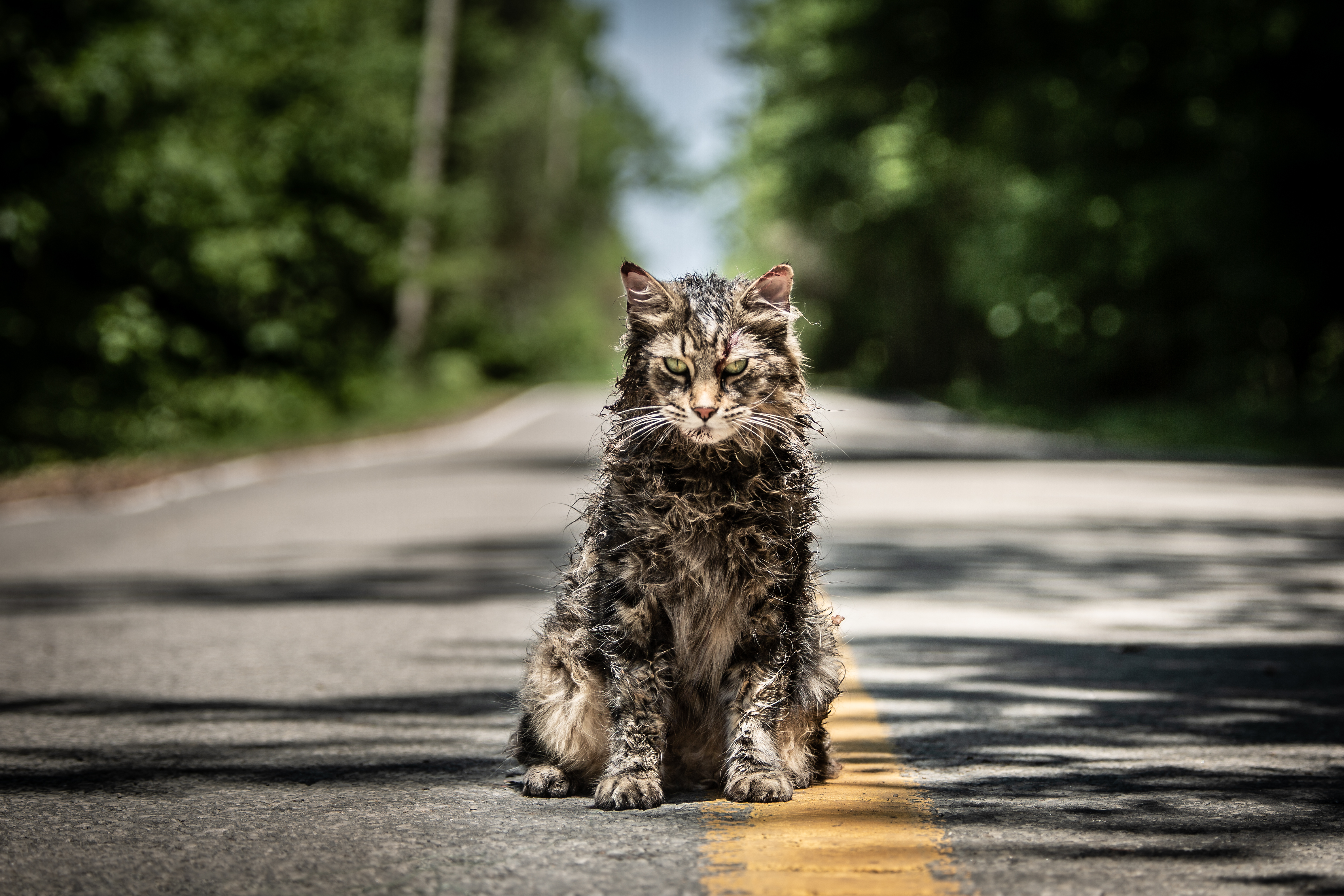
That look, like a raised eyebrow. It says my whole opinion of the film and the decisions made with it in one look.

I mean, I had to rewrite two-thirds of my novel to make it publishable, and I went in some different directions to make it work. The result was a much better and far more unpredictable thrill ride. So I know what I’m talking about.*

Finally, I felt Jon Lithgow as neighbor Jud Krendall was underused. The character in this film only existed for exposition. In the original novel and the 1989 film, his friendship with Louis feels real. Here, it’s forced in so the character can explain stuff (sans flashbacks too, by the way. I liked the use of those in the original film, why couldn’t they be in this film?). Between this film and Velvet Buzzsaw, I feel sorry for the guy. He’s been in bad roles in two films this year, and neither of them make great horror films.

Oh, one more thing: you can tell that cat is a puppet at certain points! It’s painfully obvious! Makes me miss Goose the Cat, who I couldn’t tell was a puppet at several points in Captain Marvel.

On a scale of 1 to 5, I’m giving 2019’s Pet Semetary a 2 out of 5. Perhaps it’s trying to keep the film under two hours and not alienate Stephen King purists, but in all honesty, I would’ve preferred another twenty minutes or more and some new directions for the story. As it is, the film is going to serve a reminder that not all the adaptations in the current Stephen King renaissance will be gems.

*Speaking of which, I’m still looking for advanced readers for my upcoming novel Rose. The story, a fantasy-horror novel, follows a young woman who starts turning into a plant creature (and that’s just the start of her problems). In exchange for an early electronic copy, all I ask is that you consider posting a review on or after the novel’s release date. If you or somebody you know is interested, just send me an email at ramiungar@ramiungarthewriter.com.

I wasn’t able to catch Get Out when it was in theaters, and by the time I watched it on DVD, so much time had passed I didn’t feel like writing a post with my thought. To sum up said thoughts, I thought it was a creepy, atmospheric film that openly explored racial attitudes among Americans, though I felt the main character was less a fully realized character and more of a vehicle for the audience to experience the movie through. So when I heard about Us, I was very intrigued. And then I saw that first trailer. And I knew I had to see what Jordan Peele had cooked up this time. Today, my sister and I went for an early showing, eager to see what people were talking about.

To say the least, the film was surreal. Like Peele was channeling Stephen King when he was writing The Dark Half and created a visual twist on the concept. And it works for the most part.

Us follows Adelaide, played by Lupita Nyong’o, a mother and former ballerina who goes up with her husband Gabe, daughter Zora and son Jason to a vacation home that Adelaide stayed at as a kid in 1986, when she experienced a traumatic episode. That night though, they’re attacked by the Tethered, twisted, animalistic doppelgangers of themselves that seek to murder Adelaide and her family. Thus begins a trial for the family to not only survive, but to find out why this is happening to them.

From the get-go, this is a strange and eerie film. It combines storytelling with atmosphere, music (seriously, the part music plays in this film cannot be underestimated), and action in order to create an intense experience. At some points we were so on edge, a woman sneezing a couple rows behind us caused twenty people to jump out of their seats! And that includes me and my sister.

And the amount of symbolism in this film can’t be understated. A lot of details go into this film that are meant to make you examine the imagery and ideas being presented. From actual twins, symmetry and patterns in objects and pictures, the Bible phrase Jeremiah 11:11, rabbits,* and so much more. All to get you thinking on these themes of identity, duality, being an American, socioeconomics, creative expression, and so much more. I won’t go into what it all means–I’m sure there are bloggers and YouTubers who will do a better job of that than I could–but it will leave you thinking for hours after you leave the theater.

I will take a moment just to say that I think the son character is one big reference to the Friday the 13th franchise. This is mainly because his name is Jason and he wears a mask throughout a good portion of the film for some reason, but there’s plenty in the film I could point to that backs that assertion up. I won’t because I don’t want to spoil anything.

If there’s one thing I didn’t care for, it was the humor in film. Not that it was terrible, but after the main plot of the film kicks into gear, I found how much of it there was, most of it coming from family patriarch Gabe (played with plenty of love by Nyong’o’s Black Panther costar Winston Duke) distracting. Like, there’s this one scene where the family is discussing what to do in light of what they’ve experienced, and they make a series of Home Alone jokes! Takes you right out of the tense, creepy mood.

Then again, this is from Jordan Peele, who’s still primarily known as a comedian. Humor should be expected. But at a certain point, I just would like it if was toned down a bit. That may just be my quirk, but it’s how I feel.

All in all though, Us is a true success for Peele. On a scale of 1 to 5, I’m giving it a 4.6.  Unsettling, trippy, and memorable, Us will stay with you for hours after you see it. I have no doubt that with time, it’ll be seen as one of the best horror films of 2019, and maybe the first great one of 2019 as well. Take a breath, jump in, and see the madness yourself.


And while I still have your attention, I’m still looking for eARC readers for my novel Rose, about a young woman who starts turning into a plant creature (and that’s just the start of her problems). If you would like to get an advanced copy, all you have to do is send me an email at ramiungar@ramiungarthewriter.com. I only ask that you consider leaving a review on or after the release date. Thanks, and I look forward to hearing from you!

*Fun fact: rabbits are capable of a much wider range of beneficial mutations when they reproduce that cousins or even siblings can mate with each other and still produce a healthy and genetically diverse brood. Take that how you will, but I have thoughts on how that plays into the film.

Greta follows Chloe Grace Moretz as Frankie, a young woman living in New York who finds a handbag on the subway on the way home from work. She brings the bag to its owner, Greta Hadig (Isabelle Huppert), a French widow living alone. The two women strike up an unlikely friendship and find comfort in each other’s company. That is, until Frankie finds out Greta is hiding some terrible secrets, and her relationship with the older woman takes a very dark turn.

The best part of this film is its lead actresses. I’ve always loved Chloe Grace Moretz. She’s a great actress who truly embodies whatever role she inhabits, be it a vigilante or Carrie White in the better movie adaptation of Stephen King’s Carrie (don’t @ me, Sissy Spacek/Piper Laurie fans). Greta is no exception, with Moretz really coming across as this young woman who’s kind and a little vulnerable, but also at the same time has a bit of fight in her. And Isabelle Huppert’s Greta is plenty creepy. She’s no Annie Wilkes, but she can go from sweet and grandmotherly to cruel and sociopathic at the flip of a switch. it’s a great change.

And Maika Monroe from It Follows has a supporting role in the film! Good to see her again, I haven’t seen her in anything since that film (probably my fault more than hers). She’s great as the best friend who’s seems shallow on the surface but has a deeper, badass side to her.

However, the film isn’t exactly a thrilling psychological slow burn. We’ve seen this sort of story before, and that makes it predictable. By the last third or so, I could predict what was going to happen minutes before it occurred. And while there are some tense moments, they’re too few and far-between to create a gripping atmosphere. Couple that with an unnecessary and boring dream sequence, and the film’s quality really goes down.

On the whole, I’m giving Greta a 2.8 on a scale of 1 to 5. The talent is there, and God do they try to make it work, but an obvious plot and lack of actual terror make this a forgettable entry into the thriller genre. Which is a shame, as the director was the guy who gave us Interview with the Vampire in 1994 and as I said, Moretz is the superior Carrie in the superior adaptation. But hey, every now and then you strike out, am I right?

It’s a quarter past two in the morning, I’m very tired and have no idea why I do this to myself, and thank God Almighty I don’t have work tomorrow morning, or I’d be one hot wreck. But anyway, good news! After over a month of hard work, I’ve just finished a new novella, which is both my first new story of 2019, and as my most disturbing story yet.

“The Autopsy Kid and Mrs. Autopsy” (wow, talk about a title) is a piece of human-based horror al a Misery and The Girl Next Door. It follows a young girl living in France who becomes entangled with a very disturbed young man after she’s caught shoplifting by said young man. It’s a really dark and gruesome story, with plenty of viscera and a very disturbed villain to boot. And as I said above, it’s probably my most disturbing story yet (and Snake included a scene where a dude got impaled in the most painful way possible). There were points during the writing process where I got a little uncomfortable, which says something about the story and how potential readers might react.

Still, it’s a first draft, so it’s going to take a lot of work before it’s ready for publication. And that’s even if I can get it published somewhere. Besides its length, this is, as I said, pretty dark stuff. Granted, human-based horror is usually very dark and requires a certain kind of nerve to get through it (everyone remembers the hobbling scene from Misery, right?). But this story? I’m sure plenty of editors would want me to censor some of the stuff that goes on in this one.

Not to mention the villain shares some similarities with another villain I’ve created that’ll be coming out at some point. But I’m less worried about this problem. I mean, if Criminal Minds can get away with variations of the same villains over and over again, eleven years in a row, why can’t I have similar villains every now and then?

Well, with any luck, I’m sure I could get it published in a short story collection, either one I put out myself or with a publishing press. I’m sure with the right marketing and a bit of editing and luck, this story could be well-received and give more than a few people nightmares.

Anyway, I’m just glad to get this story done. I had a feeling I’d get it done this weekend, but I had no idea I’d be up well past midnight working on it, adding about seven thousand words in the past twenty-four hours (a new record for me) before I could sit back and say that the first draft is finished.. I’m pretty sure I looked something like this during the past couple of hours.

I hear we even look a little alike. At least, I do in one of my many terrible visages.

Anyway, today’s writing brings the total page and word count to 164 pages and 48,581 words. Not exactly the longest I’ve ever written, but still quite a bit. And enough to leave me really exhausted right now.

Anyway, I can’t even imagine editing this behemoth right now. Pretty sure I’m going to leave it alone for a long while so that when I do return to it, I can look at it with fresh eyes. And in the meantime, I’m going to head to bed and sleep as late as I can. In the morning, I’ll likely have a celebratory movie marathon with low-calorie ice cream and hot tea. And if I do any more stories before I have to work on Rose again, it’s going to be something much, much shorter.

So until next time my Followers of Fear, good night and pleasant nightmares.

It took me nearly three and a half years of on-and-off reading, but I’ve finally done it. Through wordy paragraphs full of outdated language, enough racism to make me want to punch a dude, and an increasing amount of multi-sided shapes and magical angles, I have finished reading the copy of The Complete Works of HP Lovecraft on my Kindle. And of course, after such a momentous occasion, there’s only three things I want to do: drink a beer; peruse hard copies of the same book; and blog about my thoughts on Lovecraft’s later work and its influence on the horror genre, as well as on my own writing. This is that last thing on my list.

So if you are unfamiliar with who Lovecraft is (and I find most people are), he was an early-20th century writer based in Providence, Rhode Island. While not very well-known during his lifetime, his creation of the sub-genre of cosmic horror has ensured that his work has lived on and influenced other horror creators and enthusiasts such as Stephen King, Alan Moore, Guillermo del Toro, and myself. What really appeals about this genre is the idea that the universe is a dark and uncaring place full of forces that have no care for humanity or other minor species in the cosmos and can destroy lives and civilizations (as well as usually having a vaguely fishy smell).

When you consider the dude was a sickly bundle of nerves who dealt with anxiety and depression his whole life, had a classist-type of racism where skin-color and social background were very important, was frustrated over his inability to finish his education, and felt more comfortable letter writing and staying in Providence than actually interacting with people and going to crowded places, it makes sense. And while his stories have each aged differently, there’s plenty you can get out of them, especially when it comes to the mechanics of cosmic horror.

This time around diving into his work, I finished out reading his work with some of the most famous of his latest work, which included At the Mountains of Madness (which was also the nickname for the summer camp I went to), The Shadow over Innsmouth, and The Shadow out of Time. By this point, Lovecraft was consciously trying to add scientific concepts to his work wherever he could, especially in Mountains of Madness and Shadow out of Time. Sometimes that works very well, such as in Mountains, but other times, like Through the Gates of the Silver Key, I just found myself scratching my head in confusion (not sure angles work like that, dude). You can also see that by this point, he’d really gotten a grasp over this fictional world of his, throwing casual references to numerous recurring elements in the course of a single story. For once in his life, he was comfortable with something.

Also, while the racism is still evident, it’s kind of mellowed out at this point. Not much, but enough that I don’t feel so uncomfortable reading during certain passages of his work. Progress, I guess.

So were any of these stories any good? Well, old HP’s work has always been hit and miss with me, but there were some good things here. At the Mountains of Madness, while not my favorite, did have a great premise and kept me engrossed for most of the story (he probably could’ve cut parts about the Elder Things’ history and city, though. That went on forever). And Shadow over Innsmouth is probably my new favorite Lovecraft story: it’s this freaky Gothic tale of a town whose citizens have basically sold their souls and their humanity for prosperity and long lives, and the one person who ends up upsetting that arrangement. I’d totally check it out if you’re interested in a different sort of Gothic horror story.

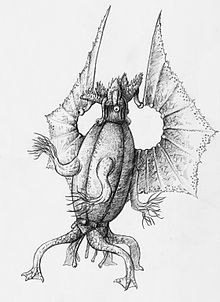
Elder Things from “The Mountains of Madness!” They’re not pleasant!

That being said, I was not a fan of Shadow out of Time. I know that one’s pretty beloved by his fans, but I just thought it was too wordy, to the point where I would look over entire sections and forget most of what I’d just read. The Thing on the Doorstep had an interesting premise, but I felt it wasn’t as scary as some of his other works. Dreams in the Witch House also had a great idea, but I think a couple of changes could’ve been made to improve it. And I’m never going to get back the hour I spent reading Through The Gates of the Silver Key. Seriously, only real enthusiasts should try that one, and only if they’re really sure about it.

Still, it was all worth the dive, in my opinion. I’ve learned a lot by reading the work of HP Lovecraft over these few years, and getting a grasp of why people still read him and write cosmic horror today. And I think over time, it could lead to me writing better stories. Hopefully. I’ll let you be the judges of that, though.

In the meantime though, I’m going to continue working on my own stories and start reading some work by an author who’s older than Lovecraft but somehow easier to understand. Who is that, you ask? The Bard of Stratford-upon-Avon, William Shakespeare.

That’s for all now, my Followers of Fear. I’ll hopefully have a new review for you guys soon. Until then, Hail Cthulhu and pleasant nightmares.


For my other examinations of HP Lovecraft’s work, check out Parts 1, 2, 3, and 4. Also, I highly recommend this video from the YouTube Channel Overly Sarcastic Productions. They look over Lovecraft and five of his most famous works with fun illustrations and hilarious commentary. Trust me, it’s worth a look.

Lately I’ve been working on a new story that’s likely going to be a novelette or novella. It’s about ten-thousand words long at the time I’m writing this, and it’s unusual subject matter for me because it’s human-based horror.

I’ve written before on the differences between supernatural and human-based horror stories, and how authors tend to gravitate to one or the other with the stories they write. Personally, I tend to gravitate towards stories with supernatural threats in both what I read and what I write, But occasionally I do like a human-based horror story. In fact, the scariest novel I’ve ever read was human-based horror (The Girl Next Door by Jack Ketchum, and that novel still leaves me shaking!), and back in college I wrote a human-based horror/thriller novel called Snake that I had a lot of fun writing.

But this is my first time really delving into human-based horror since Snake, and I’m realizing a few things about it that separates it from supernatural horror. Specifically, the mechanics of such stories. Let me try to explain it: in my mind, supernatural horror stories work something like driving into a dark tunnel that you find out has some dangerous structural issues. Now prior to entering the tunnel, you’ve heard of structural issues, but you’ve been told to treat them like Santa Claus or the Tooth Fairy, as in they’re not real and you don’t have to worry about them. Because of that, you may only half-believe in structural issues at most. Until you start driving into the tunnel, and you come to the realization that not only do structural issues exist, but they can kill you if you’re not careful navigating them.

This is how a lot of supernatural horror stories work: people go into a situation pretty sure that nothing beyond the natural realm can hurt them, only to realize there’s a dark, second world all around them that until now they didn’t believe in, and if they’re not careful, it’s going to kill them.

Human-based horror, on the other hand, works more like a downward spiral. At the very top of the spiral, things don’t necessarily start so bad. There’s probably a hint of evil, but nothing to really alarm you yet. But as you get further down the spiral, things start to get darker. Someone starts showing violent or cruel impulses. Someone else may end up grievously injured or even dead. As time goes on, the injuries or deaths may get more gruesome, or be explored in more detail. The person or persons causing the horror may get nastier, bolder, and crueler. This will only continue to escalate as the characters (and the reader) get down the spiral, and things come to its inevitable head.

We need only look at one of the most famous volumes of human-based horror, Misery by Stephen King, to see this in action. At the beginning, Annie Wilkes is only hinted at being the monster she is. But as time goes on, she starts torturing Paul Sheldon to do as she wants. First it’s small stuff: making him drink soapy water or withholding food and medication. But then Annie gets worse, hitting his legs when he complains about the typewriter, cutting off his foot when he leaves the room, and then cutting off a thumb when he complains about the typewriter breaking down. All leading to that fateful night, after Annie kills a State Trooper, where she and Paul have the battle of (and over) their lives.

I’ll let you know how the story goes as I continue writing it, shall I?

This is the mechanic that I’m keeping in mind as I write this new story. And so far, I’m finding it works. This is quickly becoming one of the most disturbing stories I’ve ever tried writing. Hell, I felt a little uncomfortable while writing one particular scene, so I can only imagine what it’ll do to my readers if I get the story published. And I’m learning quite a bit from writing it too. I’m looking forward to how this story develops as I continue writing it.

I’ll let you guys know how it turns out when it’s finished, shall I?

What tips or insights do you have for writing human-based horror?

I was nominated by my friend and fellow writer Kat Impossible from the blog Life and Other Disasters. She rarely nominates me directly for these things because she knows I don’t always have the time for them and because they don’t always apply to me, so when she can nominate me for one, I do try to do it. And the Rising Author Tag, to boot! It means so much that she thinks so highly of me, especially since she’s not a fan of horror and that’s mainly what I write. Danke, Kat! I really appreciate it.

Okay, on to the tag rules:

  • Thank the person who tagged you.
  • Answer the questions they came up with.
  • Nominate four people to do the tag (no tagging the person who tagged you originally).
  • Come up with 10 new questions for the people you nominated.

I’ve already thanked Kat for this, so I’m good on that front. Here are the questions she has charged me with answering.

What is your current WIP about and what is its status (plotting, writing, editing, etc.)?

Well, I’ve got a few stories that are in various stages of writing and editing. However, I think I’ll talk about Rose, as it’s probably the one I need to talk about the most! So if you haven’t heard, Rose is a novel I originally wrote in my senior year of college as my thesis. Last year I began the long process of editing and shopping it around, and Castrum Press, based in Belfast, North Ireland, accepted it for publication earlier this year. At this time, they’re looking it over to see how much more work needs to be done before we can talk publication dates.

As for what it’s about, Rose follows a young woman who turns into a plant creature (yeah, you read that right). She beomes that way when a young man claiming to be her boyfriend performs magic to save her life after she suffers a terrible accident. However, she starts to suspect that not all is as it seems, and as she looks deeper into her savior, she finds things out that will put them both on an unavoidable path of destruction.

Do you plot things out and/or outline, or do you just figure it out as you write?

With very few exceptions, I plot and outline my stories out before writing them. I find that trying to write by the seat of my pants leads to long pauses where I try to figure out what happens next and come up with nothing. When I plot/outline, I have an idea of where I’m going, which allows me to imagine out the story before I sit down to write it.

There are a few stories where I don’t need to outline, but the plot’s usually fully-formed in my head with those stories, so I don’t think it really counts.

What are some book ideas you want to write in the future?

I keep a list of story ideas I’d like to write in the future, so I don’t forget any good ones. I doubt I’ll get to write them all given how many there are (not to mention short story ideas), but I’d like to write stuff that people will remember for years to come. In the meantime, I’ve had some thoughts about what I’ll write after Rose and River of Wrath (the other novel I wrote) are out/in the process of being published. There’s one about a school haunting that appeals, as well as one partially inspired by the Salem Witch Trials, and a few more.

We’ll just have to see what feels right when the time comes, shall we?

Out of the characters you’ve written so far, which one’s your favorite?

I’m not sure I have a favorite. After all, these characters are like my own children. I can’t pick a favorite among my kids! Even if some of them are dangerous killers or demons or whatnot.

What’s your writing routine, if any? (location, time of day, snacks, music, etc.)

I usually write on my couch or at my desk with some sort of music playing in my earbuds. What sort of music changes pretty frequently. These days, it’s mostly the albums from various musicals. Not sure why, they just appeal right now. I also mainly write in the evenings, just because that’s when it’s easiest for me to write: no work, no dinner to prepare, no emails to answer. Obviously, if I’m able to write full-time one day, that’ll change, but at the moment it works for me.

Oh, one more thing: I always make a goal to write at least a thousand words when I sit down to work on a story, up from two hundred and fifty earlier this year. After that, it’s pretty easy to keep going, but it can be a challenge to get to a thousand some days. Still, I manage to do it, and it helps my output in the long run. Maybe someday I’ll be able to make a minimum of twenty-five hundred words a day (Stephen King’s minimum threshold, or so I hear). Fingers crossed that someday I can make all that and more happen.

Show your WIP’s aesthetic in images and/or words.

Kat did one with images that’s supposed to get to the basics of what she’s written, so I tried to do something similar. Once the book’s out, most of these images will make a lot more sense.

Who or what motivates you to write?

I think I would write even if it weren’t for anyone other than myself. I have so many stories floating in my head that I need to exorcise them through writing so they can get out of there. But at the same time, I write because so many people want to read my stories and I want them to read them, so I keep trying to get those stories out there and build my audience. With any luck, I’ll be able to get a lot of people interested in my stories and they’ll come back to them time and time again.

What do you find the easiest and hardest parts of writing?

The easiest is coming up with the ideas for my stories. There are so many ways to scare someone, they just pop into my head and become stories. Sometimes I have several ideas in a single day just going through my daily routine. The hardest, however, is staying on task. My ADHD sometimes makes it difficult to concentrate on getting my daily thousand-plus words out. Once I reach a thousand, that’s usually not a problem, but until I do, it can be difficult to stay focused.

Share a tiny snippet/excerpt from your WIP, if you’re comfortable.

Since Rose is still under renovations, so to speak, I’ll hold off for now. When the book’s a bit closer to publication, then I’ll give you all some excerpts.


And now for my questions for those I tag:

  1. Tell us about what you’re working on or recently released.
  2. Where in the process of writing are you?
  3. What is the most difficult part of writing the story at this point?
  4. What about your main character do you like the most?
  5. What is your writing process/routine, if you have one?
  6. Do you pants your way through a story, or do you plot it out?
  7. What are your characters’ musical interests?
  8. What’s next for you in terms of writing?
  9. If you could pick a narrator for your story’s audio book, who would you pick?
  10. Share an excerpt or snippet, if you’re comfortable.

And I tag my buddy Matthew Williams from Stories by Williams, Angela Misri from A Portia Adams Adventure, Ruth Ann Nordin, Joleene Naylor, and ANYONE ELSE WHO WANTS TO DO THIS TAG!

That’s all for now, I’ve got to get dinner on the table in a few minutes. Until next time, my Followers of Fear, pleasant nightmares!