You know, I’m only just realizing I forgot to give you guys a reminder about the Ohio Author Book Fair? I posted about it on Facebook and Twitter, but completely blanked on doing it here. Or was there just never a good opportunity? Whatever, I’m overdue for an update on what events I’ll be attending as an author and vendor later this year.
First, I’ll be at the West Virginia Penitentiary in Moundsville, West Virginia on Saturday, August 13th for the West Virginia Penitentiary Paracon. This will be the second haunted prison I’ll have the pleasure visiting and selling at, so I’m looking forward to going on a tour and then doing Tarot readings and meeting new readers! I wonder if I’ll meet another Avenger lookalike (still half-convinced that was Chris Hemsworth I saw at ParaPsyCon). And if you’re in the area, please stop by. You can buy tickets from the prison’s website here.
The following month, I’ll be joining fellow members of HWA Ohio for a group table at Mystics and Marvels on September 10th and 11th, 2022. This is a cool convention of Tarot readers, fortune tellers, entertainers, musicians, and, of course, authors. We’ll be located at the Franklin County Fairgrounds in Hilliard, Ohio, and we’ll be dressed in vintage clothing, so come by just to see that! You can find out more on their website.
And that’s all for now. Three are a few others in the works, but until they’ve gone from “in the works” to “official,” I’ll hold off on announcing them. And in order to avoid annoying you all, I’ll only post reminders for each event right before it occurs, rather than constantly doing so leading up to each event. Anyway, hope you can come to one of them! I would love to sign a copy of one of my books for you.*
That’s all for now, my Followers of Fear. I hope to have some good news later this week, so keep an eye out for a new post one of these days. Now, if anyone needs me, I’ll be working out and editing (not at the same time, though). Until next time, good night and pleasant nightmares.
*And if you can’t but still want to support me, my work is available from Amazon, Barnes & Noble, and other retailers. Please make sure to check them out and let me, as well as your fellow readers, know what you think!
Eight years, huh? I know I should say it feels like no time at all has passed or that it feels like a lot longer, but it does feel like eight years. Maybe it’s just what’s happened in the meantime that makes it feel like that.
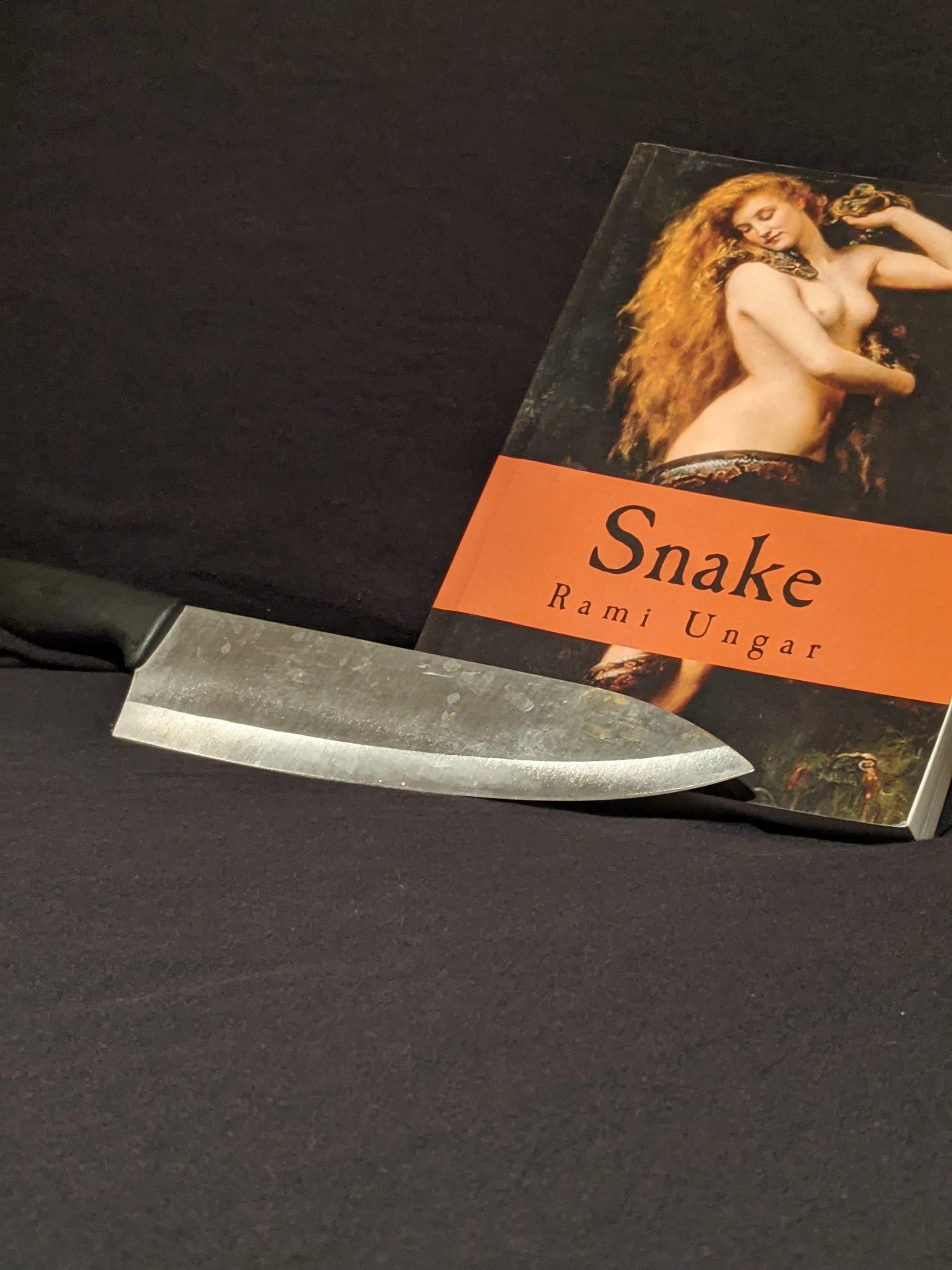
Anyway, eight years ago I self-published a novel that was influenced by slasher films from the 1980s, thriller novels I was devouring at a book every three weeks, and the movie Taken. That book was Snake, which I pitch to people as “about a serial killer hunting mafia in New York City.” Here’s the full blurb from the back of the book:
How far will you go for love and revenge? When a young man’s girlfriend is kidnapped by the powerful Camerlengo Family, he becomes the Snake, a serial killer who takes his methods from the worst of the Russian mafia. Tracking down members of the Camerlengo Family one by one for clues, the Snake will go to any lengths to see the love of his life again…even if it means becoming a worse monster than any of the monsters he is hunting.
As far as my books go, this one has had the fewest readers. Maybe it’s because it’s around 500 pages, or the paperback’s price is higher than other books, or maybe people just don’t care for serial killers. I don’t know, but I think it’s a damn shame. I had a lot of fun writing this book and you can see it in the story. And my parents, who are not the type of readers who would lie to protect my feelings, have said this book is still the scariest thing I’ve written that they’ve read (my mom still won’t finish it).
On the bright side, I have noticed a slight uptick in readers for Snake lately. It’s nothing big, but based on the number of people who have expressed interest in the book at ParaPsyCon and the Ohio Author Book Fair and the number of sales lately, it has me hopeful. Maybe more people will show an interest in Snake from here on out. It would make me happy if they did.
Perhaps I’ll get more reviews like this one:
Rami Ungar makes a promise to (the reader) in all his writings: he WILL scare you, and if he does “his job is done.” Snake will scare you. I am a huge Stephen King fan, so this should give you some idea of my tolerance level for gore, death and mayhem – I was scared. Rami takes you into places you would never have believed possible, and manages to pull his hero (and eventually his heroine) out of them against all odds. If you like to be scared. If you LOVE to be scared. You should read this book.
Angela Misri, author of The Detective and the Spy
Anyway, if you are interested in reading Snake, I’ll include links below. And if you enjoy what you read, please leave me a review somewhere. Positive or negative, I love reader feedback, and helps other readers figure out whether or not they want to check out the book.
That’s all for now, my Followers of Fear (though I do have another post soon on the way). I’m off to enjoy myself. Or to sleep. At my age, they’re sometimes the same thing. Until next time, good night and pleasant nightmares!
It’s always fun to talk to authors about their books and about what they’re working on. And today, I’ve got another author on, a friend of mine whose novel, Entomophobia, is only going to be around for a short while. So, to help her spread the word, I figured I’d bring her on the blog and pick her brains on her book.
I also bought a copy because Entomophobia just sounds really fun, and I love the idea of having a book that will only be available for a little while. The fact that it’s written by a friend made it extra special.
So, without further ado, Followers of Fear, let’s give it up for author, fellow HWA Ohio member, and my friend, Sarah Hans!
Rami Ungar: Welcome to the show, Sarah. Tell us about yourself.
Sarah Hans: I’m a public school teacher in my day job and I write mostly horror, but I also write science fiction, fantasy, and whatever else I can get paid for.
RU: How did you get into writing? And what exactly attracts you to the horror genre?
SH: I’ve been telling stories since before I could write. I found writing really tedious until the computer was invented, because my brain moves so much faster than my hand could keep up with a pen. Typing is much better! For a long time I wanted to be a science fiction author, because I love sci-fi and enjoy it so much, but every time I wrote something it would turn into horror, so I just leaned into that. Sometimes the genre chooses you!
RU: Tell us about your novel, Entomophobia. What is it about and what will readers enjoy about it?
SH: Entomophobia is about a woman in the middle of a contentious divorce and child custody battle who is cursed to turn into a bunch of insects. I hope readers enjoy seeing a very smart, determined woman who is down on her luck find strength within herself to keep going even when things seem impossibly terrible.
RU: A lot happens to your main character, Meri. Can you tell us a bit about her, what she’s dealing with and why readers will like her or want to follow her?
SH: Meri is extremely resilient. Her abusive husband is now getting custody of her daughter, she’s living with her awful mother, and now she’s got bugs coming out of her skin, but she’s not going to give up.
RU: I understand Entomophobia is only available for a short time. Can you explain why that is? Also, are you doing anything to keep it around longer?
SH: My publisher has closed her doors and the book will only be available through her until the end of the year. After that, I may self-publish it, because few publishers will reprint a book. I’ve never self-published before so it could be a fun new challenge!
RU: As someone with plenty of experience in that department,I’d be happy to give you any advice I can if you want it. Anyway, can you tell us about some of the other stories you’ve written and published?
SH: I have a collection called Dead Girls Don’t Love full of my short stories. Most people call them “quiet horror” because I don’t (usually) do a ton of gore. The horror is often psychological. I love to write from the point of view of the monster, or about people who become monsters. I also like to write feminist stories about the horror of living in an oppressive patriarchy. One of my best stories, “Tiny Teeth,” is available on Pseudopod episode 660 in both text and podcast format. I’m really proud of that one. It’ll be appearing in my next collection.
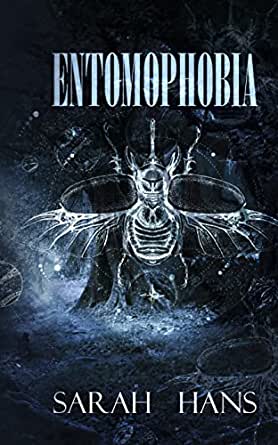
The cover of Entomophobia.
RU: What are some projects that you’re working on now or that you have coming up?
SH: I’m currently revising and tweaking a novella I just finished writing that’s about meth addicts hiding out in an abandoned asylum. I’m also about halfway through a historical horror novel about an identity thief who finds herself getting in way too deep.
RU: What is some advice you would give another writer, regardless of background or experience?
SH: It can be hard to give advice because there’s so much advice out there, and sometimes it’s conflicting! Some things I would say: Ask for what you want. Keep writing, submitting, revising, submitting. When you go to cons or interact online, don’t look to “network” and make contacts, be a real person, be genuine and honest. Most folks I’ve encountered in the writing community have been really kind, generous, and lovely, so be that in return. The opportunities will come—but you may have to wait for the world to be ready for your writing and be prepared for the day you’re finally a hit!
RU: Finally, if you were stuck on a desert island for a little while and could only take three books with you, what books would you pick?
SH: I’d want three books I’d never read before! Probably one young adult, one horror, and one romance.
RU: Solid choices. Thank you for being on the blog, Sarah. And best of luck with Entomophobia. I hope it gets plenty of new readers.
If you would like to get a copy of Entomophobia, you can purchase it in paperback and ebook from Amazon. And if you would like to connect with Sarah Hans, you can find her on her blog, SarahHans.com, as well as on Twitter, Instagram, and TikTok.
That’s all for now, my Followers of Fear. I hope you enjoyed this interview and are interested in checking out the book. Until next time, good night and pleasant nightmares!
Praise to the King in Yellow! I’ve got my first acceptance of the year! Even better, it’s a story I was having trouble finding a home for!
So, you’re probably all excited to hear what the story is about and when and where it’ll come out. “The Dedication of the High Priestess” is a story I first wrote back in winter after I got back from my vacation. The story follows a young ballet student named Anastasia “Annie” Hummel. She dreams of being a famous ballerina, and being selected as a model for a famous artist’s latest series of paintings seems like a great boost to her fledgling career. However, what actually happens is that Annie is awakened to her true destiny. A destiny that will change the course of her life, and the world. forever.
If you read my post about elevated horror the other day, you might realize from the description and my opening shout of praise that this is the ballerina-meets-the-King-in-Yellow story I mentioned. And yes, I realize it got accepted right after I mentioned trying to find it a home. Not sure if that counts as irony, but it is funny.
And if you’re wondering what this King in Yellow thing is, don’t worry, you’re not alone. Sadly, I think The King in Yellow is even less well-known than HP Lovecraft and the Cthulhu Mythos.* It’s a collection of short stories written in 1895 by Robert Chambers. Most (and the best) of the stories revolve not around the titular character, but around a play bearing the character’s name and which is said to be so twisted, reading the second act will drive you mad (or make you a servant of the King, depending on if you believe he’s a real entity).
The stories have proven influential, being beloved by Lovecraft and becoming partially integrated into the Cthulhu Mythos by later writers. If you would like to find out more, you can read my own blog post on the collection, which I wrote back when I first read the stories, or you can watch this awesome YouTube video on the collection. Or you can read the collection yourself, that’s a valid choice as well.
This is my copy of the collection. Seriously, you should check it out!
Anyway, my take on the stories and the character combines both elements from the collection, from what later writers have added, and adds ballet, because let’s face it, I’m a huge fan of ballet and I’m sad there aren’t more ballet-themed horror stories. As to how I use ballet in the story, you’ll have to wait till it’s out to discover that.
Speaking of which, “The Dedication of the High Priestess” will be published as an audio story by the horror podcast Tales to Terrify. This is a podcast where professional narrators read one or two short stories or short novelettes per episode, the goal of each story being to chill you silly. I listened to a couple of episodes a while back and thought it might be a good place for my story, so I sent it in. I’m so happy they agree.
As to when it comes out, all I can say at that point is that it’ll be some time in 2022. Yeah, that’s vague, but that’s just how it is sometimes. And anyway, the moment it is out, I’ll be sure to let you know so you can check it out yourself.
I want to thank Tales to Terrify for accepting my story and I can’t wait to hear what you guys do with it. I’m very proud of this one and I’m glad it was able to find an excellent home.
And that’s all for now, my Followers of Fear. I’ve got some other stuff cooking that I’ll be announcing soon, so keep an eye out for that. And I have dinner cooking, so I’ll keep an eye on that. Until next time, good night and pleasant nightmares.
*Which is a damn shame, because I think it’s better than Lovecraft in many ways, though I still like the stories the latter wrote.
I’ve heard this term thrown about a few times since January, first in the new Scream movie and most recently in an analysis of a horror film on YouTube. “Elevated horror.” And the speakers, whether in in the Scream movie or in the YouTube video, made it sound like it’s a recognized subgenre of horror with its own staple of tropes and trappings. Like slasher and its killers and gore, or Gothic with its ancient, diseased settings and corrupting influence.
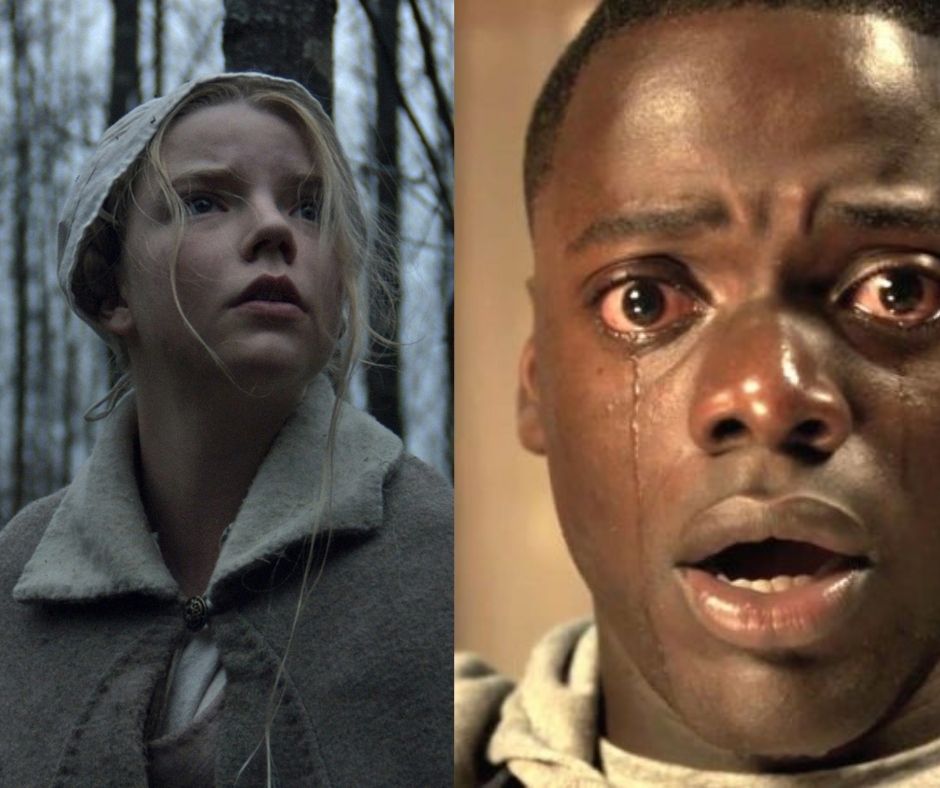
The thing is, it isn’t. Elevated horror isn’t an actual subgenre of horror. I’ve consulted with dozens of writers on this (thank you, Twitter and the Horror Writers Association Facebook group) and it’s not a subgenre. It seems like a subgenre of horror at first glance when you look at works referred to elevated horror. In movies, films referred to as elevated horror include The Witch, Babadook, It Follows and Get Out, among others: they’re horror stories that focus more on probing psychological drama, characters and metaphor than blood and gore or supernatural horrors. Often, there’s a powerful social commentary being presented through the narrative, such as Get Out‘s commentary on race.
In terms of literature, “elevated horror” might have all of these as well as flowery language. It might be almost called “literary horror,” because there’s an emphasis on wording the story nicely and making it just too dark to be called “literary fiction.” Examples include The King in Yellow by Robert Chambers, Interview with the Vampire by Anne Rice, The Deep by Alma Katsu, and A Cosmology of Monsters by Shaun Hamill.
And, most importantly, “elevated horror” can sometimes cross over into other genres, such as thriller, literary, or even comedy.
Can you really say The Witch and Get Out belong in the same subgenre?
Sounds like a subgenre, doesn’t it? But it’s not. The works called elevated horror are all as different from each other as roses are to tulips are to primulas. All flowers, but all different kinds of flowers. Let me explain: The King in Yellow and The Deep are cosmic horror mixed with deep psychological themes, The Witch is some cross between folk, religious and historical horror, and Get Out‘s searing satire makes it borderline horror-comedy. In fact, it was nominated at the Golden Globes under categories for comedies or musicals!
Yet all of them are given the designation of elevated horror. So, if it isn’t a subgenre, what is it?
The conclusion I’ve come to after speaking to numerous other writers is that elevated horror is actually horror films taking place in elevators.
Just kidding, that’s elevator horror, and the only example of that I can think of is 2010’s Devil.
No, “elevated horror” is a marketing term. And like all marketing terms, it’s directed towards a specific audience. Who is this target audience? It’s people who normally wouldn’t check out horror because they fear it’s low class, dangerous, or degenerate. They may want to check out horror or be curious, but the stigma still attached to the genre keeps them from doing so. Either that, or they won’t check it out unless a work is given a specific designation.
Calling something “elevated horror” is basically saying, “This isn’t like other horror stories, where half-naked teens are voyeuristically killed with tons of blood and gore, or where supernatural entities menace children in sewers. No, it has nuance and social commentary! There’s psychology and drama and fleshed out characters! You can be respectable while enjoying this!”
In other words, it’s another way of something is high-brow. “There are no explosions and superheroes here. No aliens or elves. No star-crossed lovers up against the odds. Only real people having real life situations, or real people in situations that are absurd but it’s okay, because it says something important about society.”
I almost wish it was a subgenre. I might have found a home for my ballerina-meets-the-King-in-Yellow story already (still working on that, give it time).
Pinhead may not be from an elevated franchise, but that doesn’t make him or Hellraiser any less awesome.
And the problem with this marketing term is it’s misleading. By calling certain movies or books “elevated horror,” it’s labeling all other horror as “trash,” or at the very least “common.” Either way, the designation puts other horror stories down. And that’s a shame, because there’s such good horror out there. Dark Harvest, Kill Creek and Salem’s Lot aren’t high brow, but they’re great stories that thrill and can leave their readers up late into the night. Same with The Thing or the Hellraiser franchise: they may never win Oscars, but goddamn are they scary, and the latter has led to one of the most memorable characters in the slasher genre.
I’m not trying to put down the term. I’m just saying we should understand what it means, both for works designated as such and those that aren’t. And if it lets you enjoy horror, great. Just make sure to check out works that aren’t “elevated” and whose creators don’t really think or care if their work is called that.
Personally, I can see some of my work being called elevated, but I’ll just say that I was trying to write a fun story and wanted others to enjoy it as well.
That’s all for now, my Followers of Fear. After getting my thoughts on this topic out, I’m off to dream of beasties and ghosts. Until next time, good night and pleasant nightmares.
And we got another one on the calendar. Below, in order, are the upcoming events I’ll be vending at as an author in 2022. If I’m lucky, some of you may even be able to stop by and say hi!
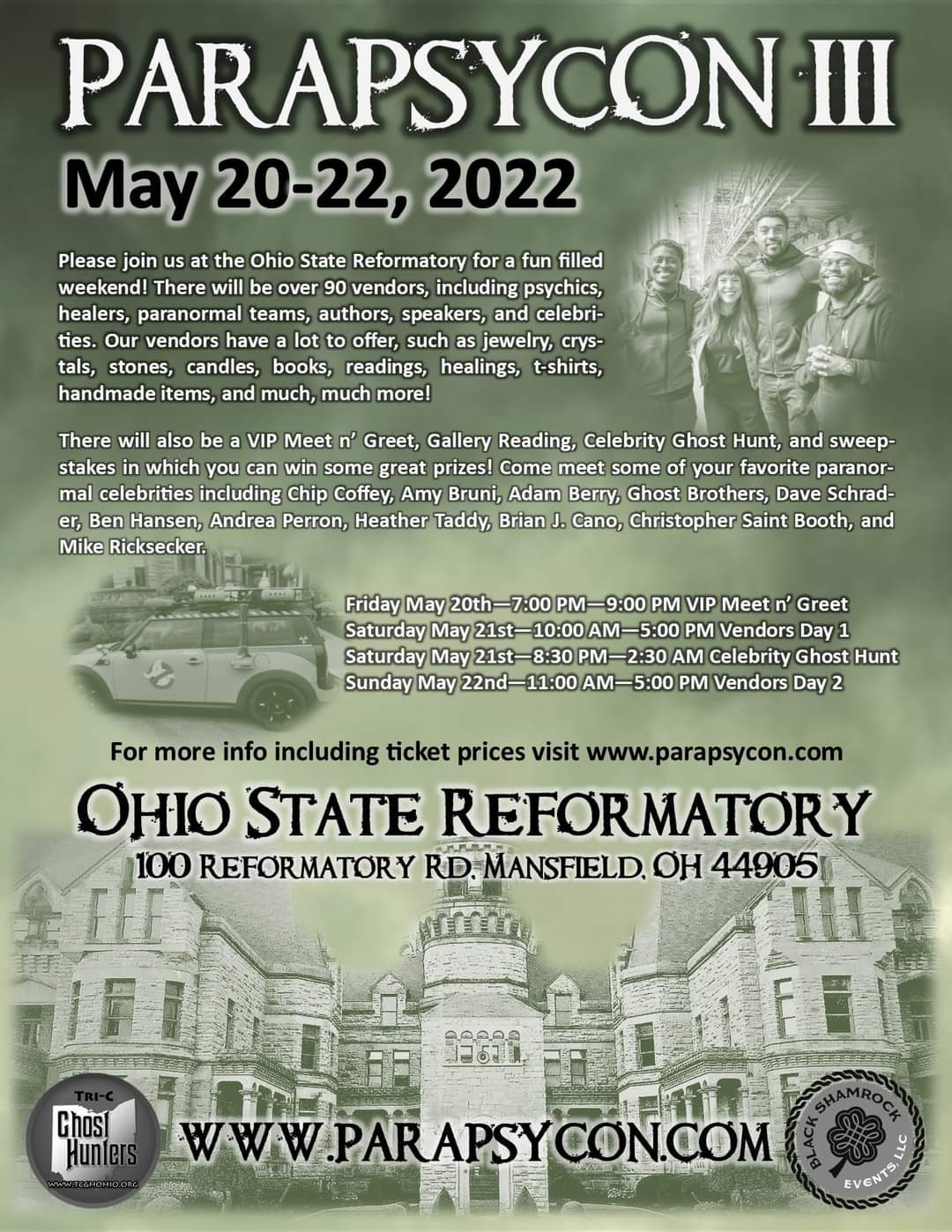
First, ParaPsyCon III will be held May 21stand May 22nd at the Ohio State Reformatoryin Mansfield, Ohio. This is a cool gathering of ghost hunters and paranormal investigators, psychics, authors and so much more. And it’s held at one of the coolest locations on Earth, the Ohio State Reformatory, a former prison that’s now a museum, film set (Shawshank Redemption was filmed there) and one of the most haunted locations I’ve ever been in. Cost of admission is just buying a self-guided tour to the prison, so stop by if you can.
Then, on June 4th, 2022, I’ll be attending the Ohio Author Book Fair atthe Destination Outlets outlet mall inJeffersonville, Ohio. This is a new event I recently heard about from a friend of mine, and I know one or two of the hosts, so it seems like a good time. Anyway, stop by and say hi if you can. You can do some shopping for books, then check out the shops, grab a bite, and play some mini-golf (they apparently have a small course). You don’t necessarily have to go in that order, but I would like it if you stopped by at some point.
And finally, I’ll be at the West Virginia Penitentiary Paracon on August 13th at the West VirginiaPenitentiary in Moundsville, West Virginia. Like ParaPsyCon, this is taking place at a former prison that’s reputedly haunted and will feature ghost hunters and paranormal investigators, psychics, authors and so many more. If you can stop by, please do. More information on the event will be posted as we get closer, but you can get updates by liking the Event Facebook Page. Hope to see you there!
Well, that’s all for now, my Followers of Fear. I got Spider-Man: No Way Home on Blu-Ray, so I’m going to go watch that. Tomorrow I’ll start prepping the apartment for Passover. And after that? Well, we’ll see what happens. In any case, I hope to see you at one of these events. I know you all live all over the world, but a guy can hope.
Anyway, until next, good night and pleasant nightmares!
I heard a movie based on this book was coming out later this year, so I thought I would check it out. And since I had to drive up to Cleveland yesterday (it’s a Passover thing, don’t ask) and the audio book was long enough for the drive to and back, I thought I would listen to it. I started as I pulled out of my parking space and finished about a mile from my complex on the way home. And I have to say, it certainly added to the drive.
Set in an unnamed village on Halloween night 1963, Dark Harvest follows Pete McCormick, a teenage boy who is participating in the Run, an annual harvest ritual where he and the other teen boys in town chase a living pumpkin-headed scarecrow known as “Sawtooth Jack” and “The October Boy.” The kid who manages to catch and kill Sawtooth Jack before he reaches the church in the center of town by midnight wins great prizes for him and his family, including the right to leave the village. Pete is gearing to win this year, even if it means breaking some rules, but he soon finds out there’s a darker truth to the Run. And losing might not be the worse thing in the world.
I have to say, while I was able to predict certain things, I enjoyed the story. I was sucked in by the immediate weirdness of the tale and by the haunting atmosphere. There’s this explosive potential in the narration and the reveling in violence and death that comes from the story. It really fits the Halloween vibe, as well as the cruelty and nihilism that comes with it. And while some things were predictable, as I said, it’s such a joy watching them unfold.
That being said, the style of narration was kind of annoying at times. There’s a lot of addressing the reader and rambling on the thoughts of individual or multiple characters. Great, it’s lots of psychological flowery language, but I would like to reach the next exciting bit of the story, and what does this all add to the overall book?
That, and it wasn’t really explicit about why the Run exists. It’s hinted it’s some sort of pagan ritual to help with next year’s corn harvest and keep people in town, but it’s never really spelled out or how this sort of thing began in the first place. Mostly, you hear stuff about how the Run is part of a way of life, but that only explains so much.
Still, I had a great time with this novel and was glad I finally got around to reading it. On a scale of 1 to 5, I’m giving Dark Harvest by Norman Partridge a 4.3 out of 5. It’s a fun little Halloween romp that you can gobble up in a day or so. Whether or not you plan to see the movie version, if you haven’t read this one and love your Halloween stories, I recommend checking it out.
That’s all for now, my Followers of Fear. I hope to have some exciting news out very soon. Until next time, good night and pleasant nightmares!
The editing process can take a toll on authors’ mental health, no matter their experience.
As I’ve mentioned more than once (especially during the past few weeks), the publishing process for Rose was something of a roller coaster for me. At least, it was on the mental health scene. There were days and weeks I was feeling on top of the world, and then there were weeks where I was freaking out and wondering how the hell I would ever get this novel into a state fit for publishing.
It’s been nearly three years since Rose was released, and I’m older, wiser, and I want to say calmer. However, I know that roller coaster could start up again during the editing process of Hannah and OtherStories, so I’m writing this post. Both as a reminder to myself, and to help anyone who might go through something similar with their own upcoming books.
Here’s are some tips for getting through the editing of publishing of your upcoming book and the mental health rollercoaster that it is.
First off, remember that this is natural. There’s nothing wrong with you, you shouldn’t be expected to stay happy because you’ve got a book coming out (whether it’s your first or your 247th), and every author goes through difficult periods in life. We have human brains, and those brains, while being the most advanced supercomputers on Earth, have some quirks built in. Our neurochemicals don’t always act naturally, and life can upset those chemicals as much as genetics. So if you’re having a bad period, don’t heap further stress on yourself by being upset with yourself. Just remember that this will pass and good periods will happen as well.
Our brains. Great supercomputers, but they aren’t perfect. So these feelings are natural.
That being said, if your feelings become too much or last for prolonged periods, consult a licensed doctor/psychiatrist/therapist. They may be able to help you with medication, the talking cure, and strategies for coping with those wacky neurochemicals.
And that brings me to my next point: have a support networkand coping methods in place if you can. I know everyone’s circumstances are different, but it really helps to have someone to talk to or multiple people who can come together when you’re feeling down. Having those people who will stand by you and help take your mind off of the craziness of the publishing process can make things all the more bearable.
Not to mention those coping strategies. Taking some time for self-care when you need it improves things immensely. I already have Sailor Moon DVDs awaiting me in my room and ice cream in the fridge. Those are my comfort foods and anime, and they got me through more than a few crazy nights. Not to mention that methods such as hypnosis and meditation, going for a run or dancing, a nice drive, a good book and so many other things, can really help when your mental health starts to spiral.
That being said, certain coping mechanisms should only be done sparingly. For example, I tend to eat more sugary foods and drink alcohol when I’m under stress. Not the healthiest way to deal with my feelings, so I have to be careful not to do it too much.
Okay, now that we’ve gone over the self-care stuff, here are some practical tips when it comes to the editing and publishing of the book:
Edit in chunks or manageable blocks. This is something BSC Publishing Group, which is publishing Hannah, is doing with their clients. Rather than sending notes for the entire book all at once, they send notes for a few chapters or a single story at a time. That way, neither author nor editor is overwhelmed by the process and it feels more collaborative. I kind of like it, as it means I have less of a giant workload to get through, and I can work on other projects in-between chapters. And if you like it, maybe talk to your editor or publisher to see if you can do something similar.
Expect big gaps without activity. You know how you have to wait several weeks or months to hear if a short story is accepted or rejected by a publisher? It’s even worse with a book. Case in point, three months would often go by between submission of a new draft of Rose and getting new notes. And the time between acceptance of Hannah and the first round of notes was about six months. So no, you didn’t do anything wrong. And no, the publisher isn’t ignoring you. They’re just juggling a lot of projects, and they have to devote time to all of them.
Approach each issue/suggestion individually. Finding out your stories has issues, such as a plot hole or a character that doesn’t make sense, or a scene that doesn’t work like you thought it would, can seem insurmountable. Just know that every novel and collection has issues that need work on, including great ones. For Rose (which I like to think is great), after I got my anxiety under control, I went after each problem individually. First I handled the main problem with the antagonist, then the issue presented with the amnesia, and then the monumental problem with the flashbacks, which led to two-thirds of the book getting rewritten. Hopefully that won’t happen to you (though on the plus side, it did rid the book of some problems later in the draft). But taking it one problem at a time does yield results over trying to tackle, and agonizing over, all of them at once.
Remember, the publisher believesin your book enough to publish it. Sometimes, editing the book and guessing what people will think of it, we tend to doubt our own abilities. But remember this: the publisher believes your book is not only good, but it’s good enough that it’ll sell copies and they won’t take a loss on it. And that’s in an unedited state with issues! So if you could write something that good in that state, you’re more than capable of getting it up to scratch for publication. Just keep reminding yourself that and it might boost your spirits a bit.
Finally, keep reading and writing. During the quiet periods in-between drafts or before you go to bed. When you’re wondering how to tackle a problem with your book or when you’re just looking for some down time. When inspiration strikes you or when the new book by your favorite author comes out. Just keep reading and writing. Do it because you love it. Because it’s nice to get lost in imaginary worlds with imaginary problems and imaginary people. Because it’s relaxing and a great way to let the problems of the world slip away. Plus you occasionally get insights from the stories of others to improve your own stories. But that’s not important. It’s important to just sit down and enjoy these activities, because they’re what got you into the storytelling business in the first place and have led you here. And they will lead you onwards from here too.
Rose had plenty of issues before publication, and Hannah still has its share. Still, the publishers for both believe/believed in them to publish them, and that’s an important thing to keep in mind.
Well, those are my thoughts on mental health and the publishing process. I’d include some stuff on marketing, but then we’d be here all night. Anyway, I hope you found these tips helpful. If you think of anything I missed, feel free to put it in the comments. And if you have a book you’re working to get up to snuff for publishing, I wish you the best of luck. You’re in the middle of a tough journey, but you can get through it. And if you managed to get through the trials of writing and editing the book in the first place, you can get through the trials of getting it in shape for the publisher.
Until next time, my Followers of Fear, good night and pleasant nightmares.
A handy graphic for understanding the three act structure, courtesy of Wikipedia.
The other day, I was talking with some other writers about how to write a decent short story (an eternal question among writers, including the ones who’ve gotten them published). And I noticed that, with a lot of my recent short stories, most of them fall into a decent three act structure. And then I said, “I know the existence of the three act structure is dubious, but it’s the truth.”
And, like many odd things, that little exchange has stuck in my head.
So for those of you who don’t know, the theory of the three act structure states that all stories, especially longer ones, can be divided into three separate acts or sections: the setup, the confrontation, and the resolution. The acts may then be divided into smaller scenes or subsections, but they all fit into those categories. Some examples given of stories with the three act structure are Star Wars, Die Hard, and Avengers: Endgame (though I sometimes think everything before the five-year jump is its own separate act or prologue).
While many of us are taught this structure in school, most of our teachers will let us know that not everyone believes in the three act structure, let alone say they use it. Some prefer using a five act structure. Others say storytelling is too complicated and diverse to say a story can be divided into a formulaic structure. And nearly all playwrights will agree that if it can’t be told in one act, tell it in two.
Good example of a story in three acts (supposedly).
That last one might be a joke.
I’m usually of the camp that believes storytelling is too complicated and diverse to boil down into a structure. Look at Stephen King stories. Most of his shorts, like Graveyard Shift, Night Surf or The Boogeyman, are simple one-scene stories with maybe a twist at the end, and I dare you to try to fit books like IT or Salem’s Lot into three acts. Then there are stories like Kill Creek by Scott Thomas or Interview with the Vampire by Anne Rice, which feel like they fit into four acts.
As for my own books, Snake is in multiple sections, much like the books I was reading up to and during the writing process, and I see Rose as in-the-apartment and after-leaving-the-apartment (if you read the book, you know what I mean). I can’t see the stories in The Quiet Game as anything but a progression of events. And I wouldn’t even know where to start with The Pure World Comes or the stories in Hannah.
So, is the three act structure a real thing? Well, yes and no. I feel like it’s more of a framework for people to examine fiction, both others and their own. You don’t have to use it if you feel it doesn’t work for you or if you feel a story has too much happening in it to divide the plot into three separate sections.
But if you do find it helpful, use it to your heart’s content. I’m sure many writers, especially plotters like myself, find the three act structure helpful for planning their stories. And as I said above, many of my recent short stories, including the ones that have been published, fall into three acts. Though I think of them less as acts and more like beats, scenes, settings, or occurrences. And if I’m trying to keep a story within a certain word count, I can see using this structure to my advantage.
So what is the three act structure? It’s a prism to understand some fiction stories through, as well as an actual tool for writing. It’s not perfect, and most stories don’t fit into it that well, but that doesn’t mean the idea isn’t useful. Hell, it might even help you hone your craft and get a few more short stories out there. And that is never a bad thing.
Unless you’re trying to write an award-winning musical. Then you might want to keep it to two or maybe just one act.
That’s all for now, my Followers of Fear. March has just started and it’s already looking a lot better than January and February is (world events notwithstanding). I hope I can update you on exciting developments in the near future. And until next time, pleasant nightmares.
Ladies and gentlemen, we have our first publication of 2022!
Some time ago, I met another Jewish horror writer by the name of Richard Gerlach. There was an anthology being created at the time of holiday horror stories, and we thought we’d team up to write one with a little Jewish flair. We wrote a story set around Hanukkah and submitted it. It didn’t get in, but it birthed a friendship and we both believed in the story, so we kept shopping it around.
Dead of Winter from Dublin Creative Writers Cooperative and Spark Street Media, which contains mine and Richard Gerlach’s story “Azazel Dances.” Looking forward to hearing what you think of it!
Some time last year, the story was accepted by the Dublin Creative Writers Cooperative,* who in partnership with Spark Street Media are releasing the anthology Dead of Winter. And our story, “Azazel Dances,” is featured in the anthology! Which is out today!
Honestly, Rich and I are so excited for you to read this story, which centers on a demon who interferes with two feuding Jewish families around Hanukkah. Not only do we get to add to the ever-growing subgenre of Jewish horror (something I’ve been trying to do anyway), but we worked really hard on this story. Like really hard. Like oh my God, the amount of work that went into this story to make sure it was ready for publication! And it was not easy for either of us to find time to edit it, either. Like, I tried to buy the guy a bottle of wine because we somehow made the deadline despite the amount of work and how crazy our lives got! Sadly, mailing alcohol without subscriptions or memberships to special clubs is troublesome.
The point is, we put in a lot of hard work, and I’m very proud of the work we put in to write and edit this story together. So I hope you read it and see what we managed to create together. And if you like what you read, please make sure to spread the word somehow. Goodreads, Amazon, Twitter, Instagram or TikTok, whatever. Leaving your thoughts online somewhere allows us writers to know what people think of our work, as well as helps other readers decide whether or not to check out the book.
Anyway, that’s all for now. I’ll leave a link to check out Dead of Winter below. Ebook is already available, and paperback shouldn’t be far behind. Either edition, there are a lot of great stories in there besides the one by Rich and me, so it’s worth your while. And while you’re at it, you should also check out Richard Gerlach. He’s a great writer with another story in another anthology and has more on the way. He also writes for Divination Hollow Reviews and is a co-host for the podcast Staring Into the Abyss. You can find him on his Twitter account here, his previous publication here, Divination Hollow Reviews here, and the Twitter account for the podcast here.
That’s all for now, my Followers of Fear. I don’t know how we got to the end of February so fast, but I’m looking forward to whatever March brings. So until next time, good night, happy reading and pleasant nightmares!
*Dublin Ohio, which was used for a short scene in Rose. Not Dublin, Ireland. Just clarifying.






 Rami Ungar The Writer