It’s no secret that disability has had a troubled portrayal in our media. There’s inspiration porn in the news, which tries to make able-bodied people feel “inspired” to achieve their goals at the expense of making the disabled seem pitiful and hopeless. People with dwarfism are often equated with fantasy settings or fantastical elements. And, of course, there’s horror. Horror’s history with disability has been, to say the least, fraught.
Look, I love this genre. That’s obvious. But it’s no secret that, when the genre was coalescing, a lot of horror came from stereotypes of minorities, and the disabled were no exception. Most often, disability was used as a shorthand for sinister or evil. The original Phantom of the Opera was a manipulative groomer, and his later portrayals have added plenty of murder. From Psycho to Split, people with DID are often portrayed as dangerous and even magical. And most of the famous slashers have some form of disability! It’s not the focus of the characters, but it’s definitely there.
That being said, it hasn’t always been bad. The 1932 film Freaks was actually pretty progressive for its time, with many of its disabled characters getting humanizing portrayals. American Horror Story‘s fourth season, Freak Show, was heavily inspired and influenced this film. A Quiet Place and its sequels have been very disability-positive.
The problem is, sometimes even the positive portrayals are problematic. I still cringe over the characters of Duddits from Stephen King’s Dreamcatcher, and the autistic kid in 2018’s Predator somehow being an important factor in human (and Predator) evolution felt…well-intentioned but missed the mark. And just earlier this year, I read a recent book by an author I like which included a character with mental disabilities who was kind of psychic/magical, a secondary antagonist with a cleft palate, and a main antagonist with an eyepatch!
That’s why I’m glad that, as both the community and the genre evolves, more disabled writers join it and include disabled characters like themselves in their stories. I’m among those writers. The Shape of Evil‘s three main characters all have various disabilities, and in two short stories I wrote recently, the major characters all have disabilities as well. The stories themselves are still not published, but I’m working to get The Shape of Evil out there, and the other two stories will hopefully find homes soon after I edit them.
And as those stories, as well as other stories by disabled writers, get published, perhaps there will be ripple effects. The fiction we consume can have a noticeable effect on our perception of the world. Perhaps with portrayals that are just not more positive, but also realistic, we can make the world a nicer place for the disabled.
And given that 1 in 5 people have or will get a disability, but most of the US is still not accessible and laws aren’t always disabled-friendly, that would be nice.
Well, we’re officially in December. 2024 ends in just 29 days. I would say thank God, but I’m not convinced 2025 will be much better. Still, gotta be optimistic. Gotta keep plugging along. Gotta keep making plans, writing stories, and making things in my mind into realities.
And that’s what I’m doing now. Making plans, writing stories, and making them into reality.
First, my Israel trip. That’s fast approaching. And assuming the ceasefire with Hezbollah holds and nothing else happens, I should still be able to go. It’s been nearly a decade and a half since I was last there, so I’m really hoping things calm down a bit and move towards resolution.
In the meantime, I’ve started on the second draft of The Shape of Evil, AKA the 3D printer from Hell story. In fact, I’m already a fourth of the way through the draft! I’m averaging a chapter every time a night, starting from the night before Thanksgiving. Considering that it took me six months to get through the first draft, moving through the book this fast is a dream come true! I might be done well before I fly out later this month.
I hope so, anyway. When I started thinking up this story, and I realized that my three main characters would each have a disability, with the lead being non-binary, I felt this story would be important. And after the events of last month, I feel like this book could be timely. No, it is timely. And I’m determined to get it in the best shape so that when I pitch in June, I can find a home for it sooner rather than later.
Me every evening, working on the next big thing.
And after the second draft is done? Well, whether I go on my trip or not, I have a plan. I’ll find a beta reader/sensitivity reader for The Shape of Evil, and then work on three goals: writing a bunch of new short stories; editing three novellas; and putting out a new collection in the spring. The first two, I’ll be switching on-and-off working on. First a new short story or novelette, then one of the novellas I worked on earlier this year. Then another short story, then another novella, and then…well you get the idea.
With any luck, I’ll be able to start shopping these novellas I’ve written as a collection at some point, while also have a bunch of shorter stories to submit to every publication I can find.
As for the new collection, I’ll start in January or February by announcing the title, revealing the cover and release date, and getting the marketing machine rolling. I’m honestly very excited for you to learn more about this collection. I have a very good feeling about it.
Looking forward to doing this next year!
And if all goes well…who knows? Maybe I’ll somehow find more time for writing and even–finally!–get back to writing my mummy novel, Crawler. Yeah, I know, I know. I keep saying I will, and then something puts it further down the To Do list. But I will get it done. You’ll see. I’m making it a goal.
In the meantime, if you would like to support me while I work on all these projects, or if you’re in the mood for something scary to read, or if you’re looking for a good gift for the horror fan in your life, why not consider getting one of my books? Not only would it be a great gift for yourself or for someone you know, but you’d be giving me a gift as well.
Besides, plant/human hybrids? Strange gods? Mafia hunting serial killers and carnivorous horses? I got something for every horror fan, including free stuff! So, why not check them out? I’ll leave a button for my Books page below. Look and see what calls to you.
That’s all for now, my Followers of Fear. I’m going to at least try to start on the next chapter of The Shape of Evil (as I recall, this next one is rather long). Until next time, good night and pleasant nightmares.
In recent days and across my social media, as well as on my blog, the number of people following me has grown by leaps and bounds. Why is that? I have my theories, but this post isn’t about theories. Instead, it’s to better introduce myself to my new Followers of Fear, as I like to call the people following me and supporting my writing career.
And since I’m a horror writer, obviously I’m doing thirteen items to get to know me better.
So, without further ado, here’s what will hopefully be a fun introduction to yours truly. And who knows? Perhaps some of my long-time Followers of Fear might learn something that’ll surprise them. It’s happened before!
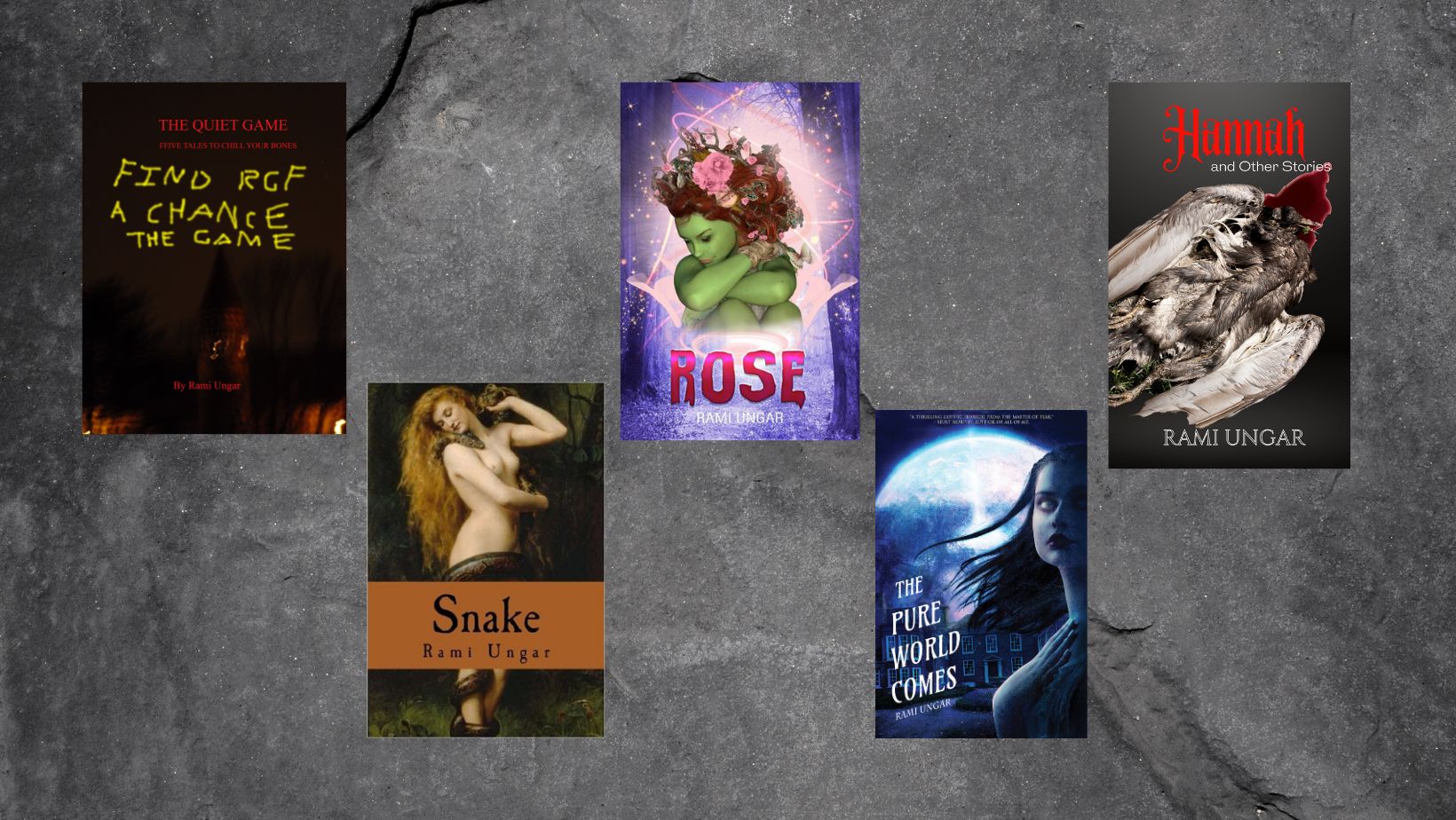
I’m a writer of horror and dark fantasy with five books under my belt. I’ve been writing since I was a kid, and in college, I started self-publishing books. My first book was a collection called The Quiet Game: Five Tales to Chill Your Bones, which came out in 2013. The next year, I published a slasher novel called Snake about a serial killer hunting mobsters in New York City (think John Wick, Taken and Friday the 13th got smashed into a novel). Both did okay, and continue to get readers today.
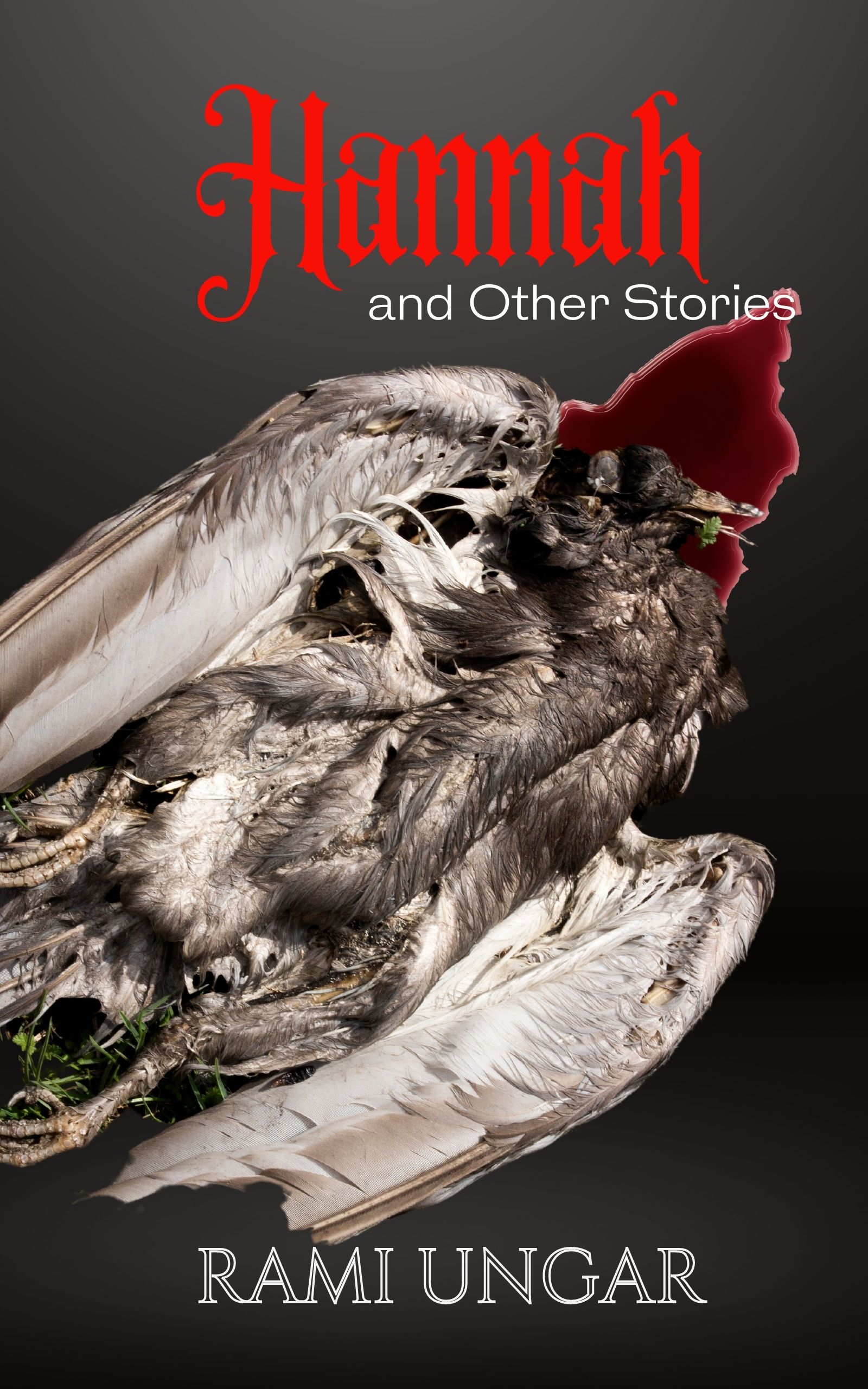
Five years later, I published my first novel with a publisher. Rose was released by Castrum Press in summer 2019, and followed a young woman turned into a plant/human hybrid (and that’s just the start of her problems). I followed Rose in 2021 with The Pure World Comes, a Victorian Gothic horror novel about a maid who goes to work for a mad scientist. And last year, in 2023, I published my second collection, Hannah and Other Stories, which was released by BSC Publishing Group.
That’s all five of my books out now. I’m proud of all of them and all I’ve managed to do with them over the years. And I plan to put out more in the years to come.
All five of my currently available books. I love them and am so proud of them (and their awesome covers).
I’m Jewish, queer, and have disabilities. Growing up, my life has been an interesting ride, to say the least. Not only did I grow up in a fairly religious Jewish household, but both my father and mother are rabbis. I went to a Jewish day school for most of my youth, learning Hebrew and Judaic subjects for half the day and then learning normal stuff the rest of the day. I also went to synagogue nearly every week, and attended Jewish teen and college groups until I graduated.
To this day, I still practice a lot of the religious practices I grew up with and feel a strong connection with my faith and heritage.
I’m also bisexual. I figured that out in college, and came out about half a year after I came to that realization. Probably took me that long to get comfortable with it because, even surrounded by accepting people and LGBT family members, I still worried about being persecuted. However, I did come out and it was all good, which was reassuring. And then some years later, I realized I was also aromantic (if you’re unfamiliar, it means I can’t feel romantic desire or attraction). Which, looking back, felt pretty obvious, considering I didn’t care about having a relationship all my life. But when I realized it, it was still a bit of a revelation.
And finally, I’m on the spectrum. Have been my whole life. I also have ADHD, a form of albinism, an anxiety disorder, and most recently, diabetes. Yeah, that last one was only diagnosed a couple of months ago, and it sucks! To say the least, it was a shock for me and I miss not being able to eat sweets or have a drink as much as I used to. But, on the bright side, I’ve improved my health by leaps and bounds since finding out, and I plan to keep it that way. Too much to do in my life, after all.
And as I’ve gotten older, I’ve made it a goal to increase representation of these three groups, as well as their intersections, in my fiction. So far, I’m meeting that goal, and hope to release some of those stories soon.
My writing influences. My major influence is, without a doubt, Stephen King. I read IT as a preteen and it was a formative moment in my life! That whole summer, I was transported to Derry, Maine and, when I finished that book at summer camp, I knew what kind of books I would write for the rest of my life.
I’m also majorly influenced by the ideas of HP Lovecraft and the subgenre of cosmic horror, as well as Anne Rice and a ton of anime and manga. All those creators and stories have led me to writing some really insane stories, such as Rose, which I mentioned above, or “Fuseli’s Horses,” one of the stories in Hannah, which is about carnivorous horses.
But I’m not complaining. People seem to like my work, after all.
I love going to the movies and to the theater. It’s rare that a month goes by without me going to see a movie. Usually it’s a horror film or a new superhero film, but I sometimes go see comedies, fantasy and sci-fi films, and anime films getting theatrical releases. I just love going to the movies! I didn’t get to go as much as I wanted when I was growing up, so starting in college, I went as often as possible. And I still do.
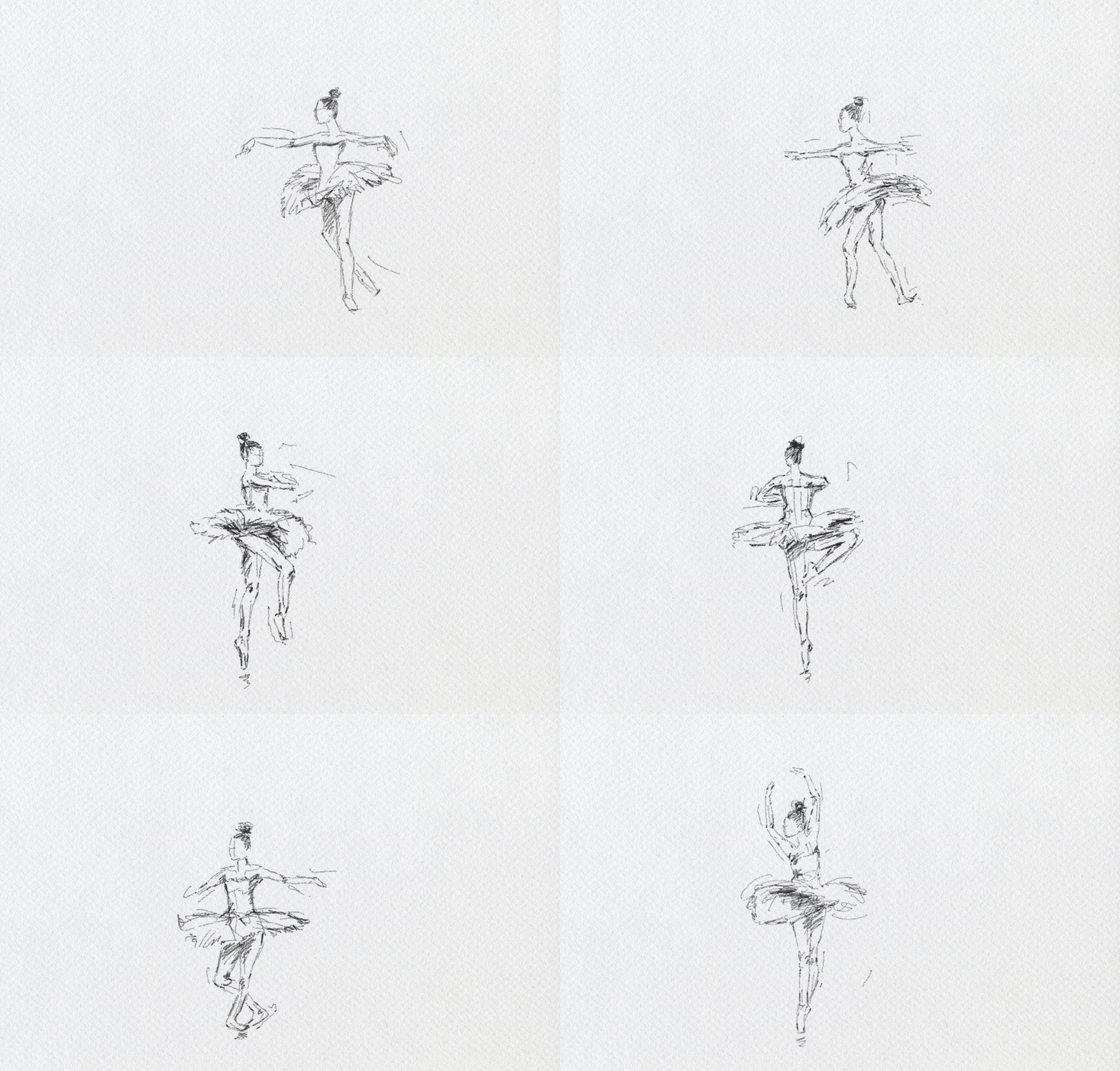
Most people are surprised to learn I like ballet. Then they see how much it appears in my stories.
And now that I have a decent day job, I also go to the ballet and to touring Broadway shows. My interest in ballet started probably in college, and as a working adult, I got really into it. It’s gotten to the point where I’m kind of obsessed and look for ways to insert ballet and dancers into the stories I write! And as for Broadway shows, I think Disney movies as a kid primed me to be a fan of those, though the breadth and depth of musicals out there is far wider than Disney can think up, as it turns out.
Now, I have subscriptions to both the local ballet company and to touring Broadway shows that stop in Columbus. And I have to say, I think I would be just as psyched for one of my stories to be adapted into a ballet or Broadway show as I would be for a movie. Maybe even more.
I have several tattoos. To be precise, I have a chest tattoo of a tiger with a blue Star of David, a full back tattoo of one of my favorite ideas from the horror genre, a wrist tattoo referencing some of my favorite anime, and a Tarot card on my right leg that’s about halfway done. However, while I have my tattoos, I don’t normally share photos of them. That’s partially because I just don’t feel the need to. My tattoos are for me to express myself and to have my body reflect who I am. So, their existence on my body is enough for me.
Still, they’re awesome. And I plan to get more as time and money allows.
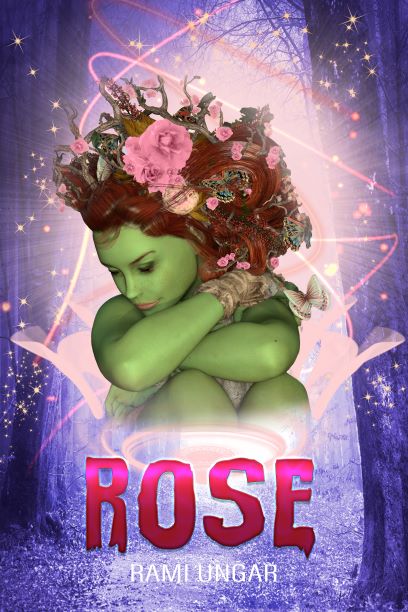
My most popular work is Rose. I’ve been publishing for over a decade now, but none of my work has done as well critically or commercially as Rose. And I think I know why: it’s the unusual story of a woman turned into a plant/human hybrid. Very weird, very Kafkaesque, and very fantasy horror. Add in that it’s a short but twisty read with Japanese folklore and mythology mixed in, and it’s not surprising that that book does so well.
Plus, you gotta love that cover.
Anyway, if you would like to check out Rose, you can check out its page HERE. I hope you like it if you read it.
I go ghost hunting at least once a year. I’ve been lucky to go to several different locations to ghost hunt. From famous places like the Ohio State Reformatory in Mansfield, OH and the Lizzie Borden Bed & Breakfast in Fall River, MA, to lesser known locations such as the Anchorage Mansion in Marietta, OH and the Bellaire House in Bellaire, OH, with the hope to visit and revisit many, many more.
Also, I try my best to get my investigations on YouTube and upload them to YouTube. So, if you would like to check out my ghost hunting videos, you can check out my channel HERE. They’re spooky good!
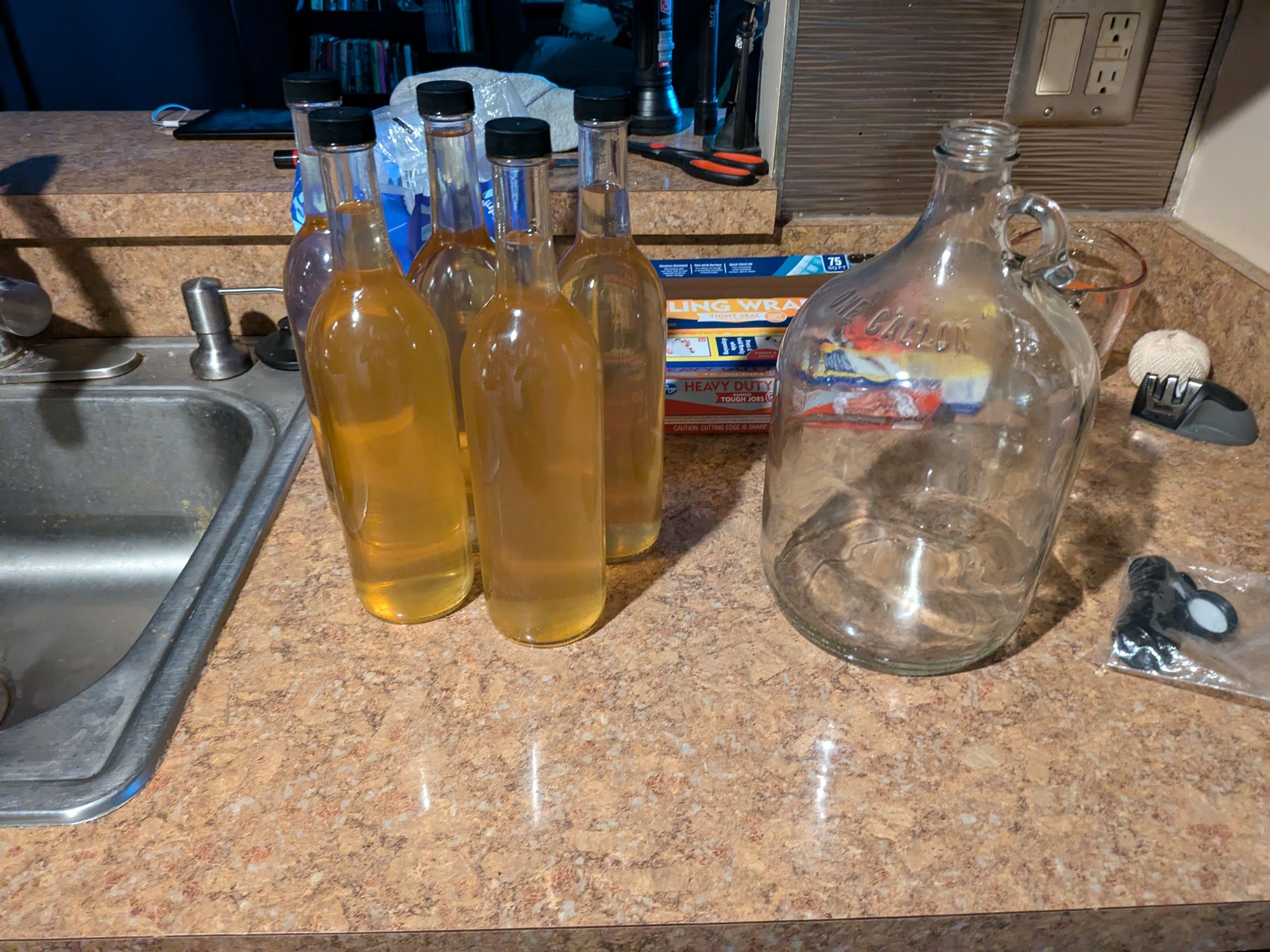
I make my own wine. Most people don’t realize that you can brew your own alcohol at home, but it is, and there are plenty of people of doing it, including me. I’ve made a batch of plum wine, and I just finished and bottled a batch of pumpkin wine (yes, pumpkin wine). And I’ve been making my wines based on colors of the rainbow: plum wine is red, and pumpkin is obviously orange. Yellow will be dandelion wine, green will be mint, blue will obviously blueberries, and indigo/violet will be elderberries. And I can’t wait to try them all!
The pumpkin wine I made, all bottled up. Looks good, doesn’t it?
I bought my first home two years ago. For millennials like me, it’s hard to find an affordable home, let alone a non-fixer upper that you don’t have to share with a bunch of other millennials. However, I was lucky enough to find and buy a small condo for myself two years ago, and I’ve been living in the Haunted Condo, as I call it, ever since.
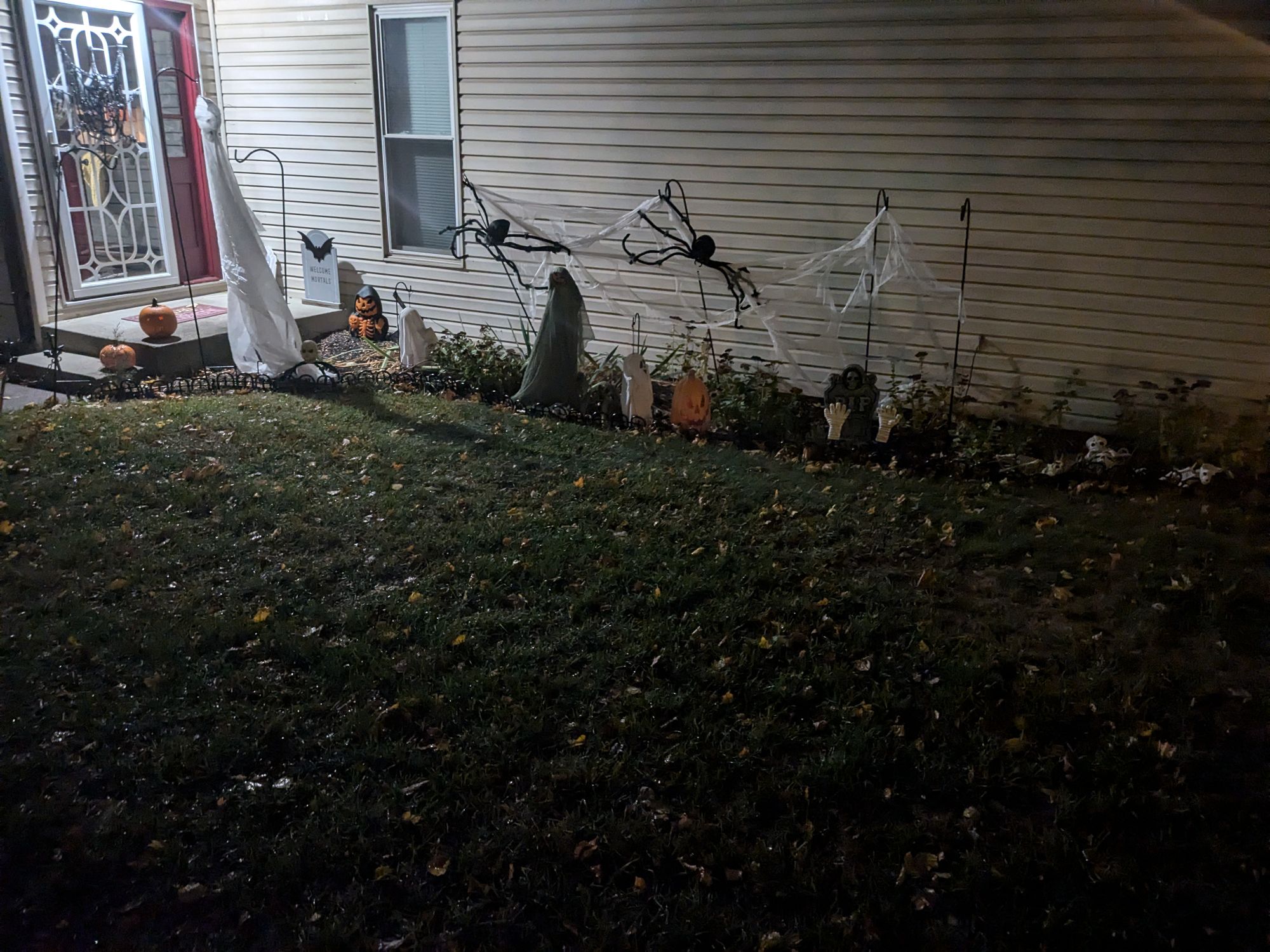
Sadly, it’s not very haunted by anything except me. I don’t know why, I’ve done voodoo rituals and everything else to make the place haunted, but so far, no otherworldly dice. At least I can make one hell of a Halloween display every October and decorate the inside as I like!
My yard is the spookiest in the neighborhood every October.
I’m the chapter coordinator for HWA Ohio. The Horror Writers Association is an international organization that supports horror writers and helps them network and grow. Ohio’s chapter is about six or seven years old, and I’m the guy who runs it! Which was never my intention: some other members organized the chapter, and I volunteered to find a venue. Somehow, I kept arranging locations for us to meet, and that morphed into becoming the chapter coordinator. And after the parent organization set a formal election process for chapter coordinators for all chapters…well, I ran without competition. I guess people think I’m doing a good job or something?
Anyway, HWA Ohio has its own website, which lists our members and puts out news about us. If you would like to check the website out and support us, click HERE.
So proud to have a story from this collection adapted into a radio play.
I recently had my very first story adaptation. Remember my collection Hannah and Other Stories, which I mentioned above? Earlier this year, I became acquainted with a producer for WCBE 90.5, a local NPR station who interviews local creative types. He also runs a yearly Halloween show, where a short story is adapted into a radio play, with the roles played by local high schoolers.
“Hannah,” the lead story in Hannah and Other Stories, was this year’s story. It was my first time having a story adapted, and it was so, so good! The kids did really well in their roles, and it was amazing hearing my story brought to life on the radio.
And if you would like to listen to it, you can! It’s available to stream online, and you can listen to it in full HERE. Let me know what you think if you listen to it. The more people who listen, the better for future shows and future students. Plus, who knows? Maybe another one of my stories will get adapted. It happened once, didn’t it?
I tend to break out in song at any provocation. I kid you not, this is something I did daily in high school, and which I do quite frequently these days. In fact, I’m part of a critique group with some of my fellow Ohio horror writers, and they say it’s not a meeting if I don’t burst out in song at least once!
Too bad I sing badly, but hey, why should I let that stop me?
What I’m working on now. I’m juggling a few projects at the moment. For one, I’m putting together another collection of short stories, and I hope to have more on that in the coming days and weeks. I also recently finished a new novel, The Shape of Evil, which is about a 3D printer from Hell, and I hope to have that ready for pitching to agents and publishers by June next year. Finally, I also have a collection of novellas I plan to work on at some point, and I have a mummy novel I started but put aside for other projects that I plan to get back to.
Plus some short stories to send out to magazines and anthologies here and there. Yeah, I’m a busy guy, aren’t I? But that’s kind of the way I like it.
Anyway, that’s thirteen things you need to know about me. I hope you enjoyed learning about me, because I enjoyed writing it. And if you did, be sure to follow this blog and my other social media to keep up with what I’m doing and when I have new work coming out.
And if you would like to check out any of my other work, I’ll leave a link to my book page down below. You’ll find all my published works and then some there, including free stories. And if you like what you read, I hope you’ll leave a review online so I, as well as other readers, know what you think.
Until next time, my Followers of Fear, good night and pleasant nightmares.
It’s a damn shame when something that’s supposed to be pro-writers turns out to be exactly the opposite.
Now, for those of you who don’t know, National Novel Writing Month, or NaNoWriMo for short, is both an annual event and a non-profit organization. The former takes place in November every year, during which participating authors try to write a fifty-thousand word novel in 30 days (that’s about 1,667 words per day if you’re curious). If you actually manage to write that many words, you get bragging rights and a printable certificate (it’s a self-challenge, so that should be enough. Besides, previous attempts at “prize packages” have not gone well). The non-profit of the same name runs the annual event, as well as connects writers in the same area and other services and programs.
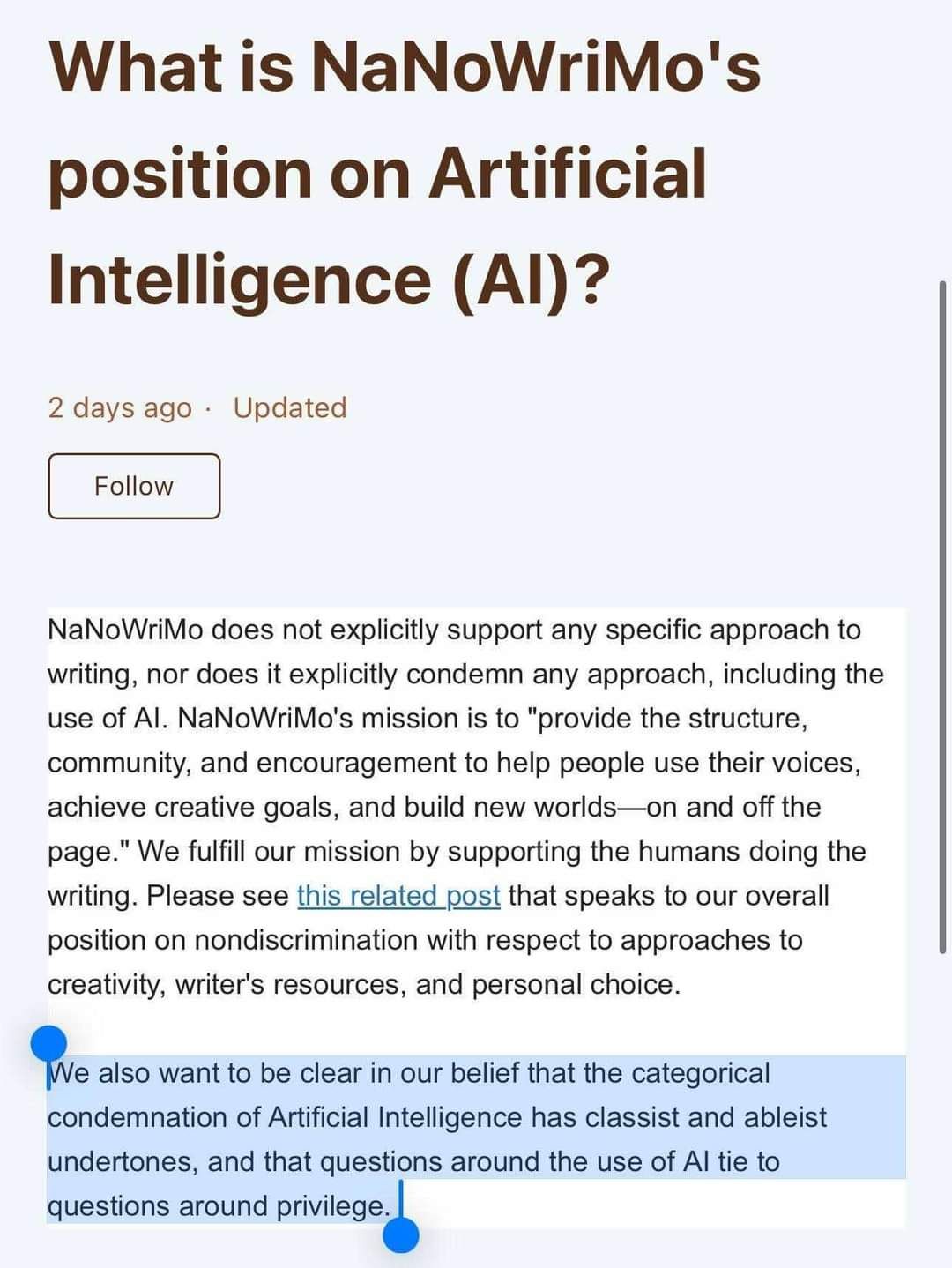
Sounds great, right? And for a while, it was. In fact, I even participated while writing the first draft of my novel Snake, and hoped to do so again someday. However, the organization’s statement on AI writing, which I’ve included as a photo below, has now made that impossible.
So, to summarize, not only is NaNoWriMo going to allow people to use AI to write their novels for them, but they claim that people who condemn use of AI writing are classist and ableist.
Um, excuse me?
I’m going to quickly respond to that last part first, as it’s outrageous. It’s not classist to ask writers, who span the whole range of socioeconomic backgrounds, to write a novel themselves. You know, like they’ve been doing for hundreds of years? Besides, AI use isn’t restricted to any particular class, let alone those living in poverty. If it was, and writing the whole novel yourself was restricted to those above the poverty line, then it would be classist.
And ableist? I have disabilities! I’ve managed to publish five books and write many more stories despite that! And so have many other authors, such as Octavia Butler (dyslexia), Fyodor Dostoyevsky (epilepsy), Flannery O’Connor (Lupus), as well as many writers who I consider not just colleagues, but friends. If anything, saying a disabled person can’t write a novel without the use of AI is what’s ableist!
But let’s get back to the fact that NaNoWriMo is willing to accept AI writing. I’m going to let you in on a little secret: AI writing isn’t even writing! AI writing is a computer program studying hundreds or even thousands of pieces of work, often without the original authors’ permission or even knowledge, looking for patterns, and then putting out something that has patterns like the ones found in the works studied. The results are usually full of contradictions, unimaginative characters, little mystery (because how could a program grasp mystery or secret-keeping for later payoff), and a lack of love.
Because that’s what AI writing really is. A cold calculation by a computer program based on analysis of so-called patterns gleaned from stolen works, rather than a labor of love by an author who wanted to share their stories with people who enjoy similar stories.
And the people calling themselves writers who are using AI, like the guy on Threads who said I was jealous that he was going to reach fifty-thousand words in one day (he’s been blocked)? They’re not writing. At best, they’re checking the finished project to fix the algorithm’s mistake. Other than that, they’re probably playing video games or making sandwiches or otherwise finding other ways to not write!
And that’s the saddest thing about this. NaNoWriMo started out as a fun challenge, and the organization was meant to help authors reach their dreams. Both were to encourage authors to push themselves and see what they could do in a month’s time. In short, it was to encourage writing. For NaNoWriMo to embrace AI writing and enable this laziness, rather than supporting the writers who insist on genuine hard work and practice, is a slap in the face to real writers everywhere.
I’m not saying it all has to be handwritten, but it should actually be, you know, written!
So, what can you do, both as a writer and a reader? Well, I’ve heard some people say they want to form a new organization and event, but whether or not that leads to anything, we’ll have to see. In the meantime, the most popular reaction seems to be people are boycotting both the NaNoWriMo event and the non-profit. Personally, in addition to the boycott, I would encourage authors to continue writing one word at the time. You know, actual writing?*
I would also encourage you to support other authors, especially lesser known ones, who continue to put real effort into writing, and leaving reviews, as well as refusing to support the works of authors who use AI, or the organizations who support them. Together, we can work to ensure writing and storytelling isn’t corrupted by algorithms, piracy, and laziness.
*And it doesn’t need to be fifty-thousand words in a month. Great work takes time, so take all the time you need.
That’s all for now, my Followers of Fear. If you would like to help this non-AI using writer, especially with spooky season just starting, I’ll include a button below to lead you to my catalog. From plant/human hybrids and strange gods to Mafia-hunting serial killers and carnivorous horses, I got something for every horror fan. And if you like what you read, please leave a review so I know what you thought.
And until next time, my Followers of Fear, good night, pleasant nightmares, and only 58 days till Halloween!
About three weeks back, I wrote a blog post about how unsure I was regarding my feelings towards my disabilities, let alone if I felt “pride” in them during Disability Pride Month. Some time later, NPR asked readers with disabilities to submit their experiences with disability and what they wanted able-bodied people to know for an article. I submitted my thoughts and, much to my delight, I found out Sunday morning that my submission was used in the article, which I’ve linked to in the button below.
Did you enjoy the article? I did. And it was educational for me too. Someone in the article mentioned how disability isn’t all sunshine and rainbows, but it could be a rich experience. They said this despite all the troubles that can come from their own disability.
That spoke to me. Like in my previous post, I’m not sure if I feel pride in my disabilities. On the one hand, autism and ADHD, among other conditions, makes me what is known as “neurospicy” and the unique individual that I am today. They probably also contribute to my writing in a major way, allowing me to see the world in a unique way and come up with wild ideas that translate into (what I like to think are) amazing stories.
On the other hand, I still worry that, because social cues aren’t always obvious to me, I’m skirting the edge of Sheldon Cooper-levels of awkwardness. Or that my problems with focusing and attention might negatively affect my job or my goals in life.
And God knows there’s still a lot of ableism in our society and a lot of people who still need education in interacting with people with disabilities, even if they think they know it all.
Like the folks in the article said, it can be a rich and varied experience, and it’s different for every person. And it doesn’t always have to be a barrier. Like I said in the article, I own my home, I have a good job, and I’ve published books and short stories. Some might think my disabilities make doing that impossible, but in actuality, they might even help me accomplish those things.
Maybe I still don’t know if I feel “pride” in my disabilities. But I know they don’t get in the way of my life. And I know they’re not a death sentence, or worse than death. They’re a part of me, and I wouldn’t be me without them. And while I wish social situations were easier to read, I would never wish to be different than I am.
Okay, maybe I might change some stuff. But that would be stuff like never needing to use sunscreen again, or having a swimmer’s build no matter what I eat or how much I exercise. But the essential stuff? I wouldn’t change a bit.
That’s all for now, my Followers of Fear. Until next time, good night and pleasant nightmares.
The Disability Pride flag. It’s lovely, but I’m not sure if it’s something I can display for myself just yet.
Last week, I was informed that July is Disability Pride Month. It’s an opportunity for those with disabilities–blind, deaf, psychiatric, mobility, etc.–to show that while they may have different bodies and minds, it’s not the end of the world. Hell, in some cases, it’s not even a problem. Instead, it helps build the character of the disabled and in some cases, they feel it makes them stronger. The only one with a problem might be society, which is still very ableist in its makeup.
I am on the spectrum and have ADHD (among other things), and I like the idea of Disability Pride Month. You should never feel less or be put down by your fellow humans just because you were born different. And some disabilities have become, rather than a hindrance, become the basis for communities with strong membership and even organizing. The Deaf community is one prominent example.
However, at the moment, I’m still figuring out how I feel about my own disabilities, let alone if I have pride in them.
That’s not saying I have low self-esteem or feel lesser because I have disabilities. It’s just that I’m still figuring out how I feel about being on the spectrum and having ADHD. On the one hand, it’s cool being “neurospicy,” as some people call it, and my unusual brain probably played a huge role in becoming a writer. Not to mention that I was able to get some accommodations in college and even found a steady, paying job because I am a person with disabilities.
But on the flip side, I’ve become more aware as I’ve gotten older how difficult it can be to interact with other people. Unlike fictional characters, whose minds I can get into and who are simple to understand, real people are complex and hard to read. I’m constantly on guard with my behavior, even with people who know that I have some social difficulties, in case something I say or do causes offense. Sometimes irreparable offense.
It’s gotten to the point where I don’t know if I’m being my genuine self, or if I’m “masking,” as it’s known.
And last month, I listened to this lecture series on Audible about being neuroatypical, and it kind of blew my mind. Not only did a lot of the situations brought up in the series resemble things from my own life, but I learned how drastically autism and ADHD treatment has changed over the years and how much it still has to change. Did you know that for both conditions, therapy used to center around controlling and forcing people to act “normal,” however you want to define it? And there are still places that operate that way, occasionally using horrific practices like restraint or electroshock therapy to change behavior. It’s awful.
I received therapy for my behavior as a kid. I don’t remember what kind it was. I just went to it because my parents said that’s where I had to go on certain days at certain times and didn’t really think much of it one way or another. I don’t have any bad memories, but I am curious as to what approach they took with me. And if it contributed in any way to my own worries about interacting with people.
So yeah, I’m not sure how to feel about my disabilities. Is it true that there are benefits to being neurospicy, especially in the creative and out-of-the-box thinking departments? Absolutely. But when around people, it’s hard to figure out how much of myself to be and how much I need to mask. And is there even a difference between my true self and my masked self? At least when in company?
I might not get those answers for a very long time, if ever. Especially not when the world is still super hard to navigate.
Still, at least I have people around me and get me. Parents, siblings, dear friends, fellow horror writers and enthusiasts, Followers of Fear, and even coworkers. They let me be myself once in a while, and usually tell me if I cross a line and I didn’t realize it. They even forgive me when that happens. They make navigating that much easier.
Now if only things could become a lot easier! Maybe then I’d figure out if I’m proud of what makes me neurospicy.
Just a reminder, Followers of Fear: this coming weekend, July 13 and 14, is the Columbus Book Festival. It’s taking place at the Main Branch of the Columbus Metropolitan Library and nearby Topiary Park in downtown Columbus, Ohio. Authors of all stripes, as well as artists and others, will be there to help match you to your next favorite read. I’ll be there with my fellow members of HWA Ohio, so please stop by if you can.
And if you can’t, but you’re interested in supporting me (or maybe just want to read something scary), check out my catalog. From plant/human hybrids and strange gods to Mafia-hunting serial killers and carnivorous horses, I got something for every horror fan, including free stories. And if you end up reading something of mine, please leave me a review so I know what you think. I’ll leave a link to the Books page below.
Until next time, my Followers of Fear, good night and pleasant nightmares. I’ll see you around real soon.
Consider this an early Autism Awareness Month post (doesn’t officially start till next Saturday).
As many of you know, and many of you may not know, I’m on the autism spectrum. Have been my whole life.* And honestly, while it has made some things somewhat more difficult to me, I really don’t consider it a disability. Well, it is, but it doesn’t disable me. It’s just made me fight harder and learn new ways to work my way through this strange world of ours.
Anyway, onto the meat of this post: recently, my dad sent me a video of a TED talk, featuring a woman named Rosie King speaking about her own autism and how it’s affected her life. Positively affected her life, by the way. If you can, I highly encourage you to watch the video, which I’ve embedded below, before reading the post. It’s only six minutes long and will really resonate with you.
When I saw this video, I was what the young people call shook. Honestly, it felt like Ms. King, who’s only five years younger than me, was talking about my own life. For one thing, I do feel like I have thousands of worlds in my head. Or thousands of stories, some of which take place in the same worlds as each other (I love shared universes in fiction). My imagination is constantly coming up with new stories, which is one reason I write. If I didn’t, they would stay in my head, constantly shifting and changing until I no longer knew what they were.
And I get what she says about having so much energy and needing to scream or move around or whatever. I used to need to pace to calm down. And I’ve been in situations where nobody wanted to be my friend because I was so different, though eventually some came to understand who I was and be my friend. A few are even on the spectrum like me.
And I am far from Rain Man (never seen it, but I’ve heard enough to know). I’m no math whiz beyond my finances, and I need someone else to do my taxes. I do understand a lot of science, but I’m no specialist. And as anyone can tell you, I’m quite verbal and love a good hug. Social situations can prove challenging, especially if I don’t understand some cue or another. But once it’s explained to me what line I’ve crossed or what the issue is, I usually learn from it.
But the thing that resonates with me the most is the part about “being normal” and saying “you’re so normal” as a compliment. As Ms. King says, “What is normal?” Just a setting on the dryer, if you ask me. None of us fit into a box, but some of us just spill out of the box and spread out in several directions much more easily. It’s because people do spread out that way that we as a species advance, from the sciences and technology to literature and culture.
And while I don’t know how much of a role my ASD has played in making me the person I am, as well as the creative I am, I can’t deny that it has played a role. And like Ms. King, I wouldn’t give it up for anything. Not when it has brought me so much good in my life.
So, I guess in conclusion, if someone’s different in some way, don’t try to change them, or make them fit in a box. So long as nobody is getting hurt and being who they are makes them happy, I see no reason to try to change them. Hell, I’m happy just the way I am. The only thing people tried to change in me is giving me the tools to make my way through this world while still being me. And that was enough.
Until next time, my Followers of Fear, good night and pleasant nightmares.
*And no, it wasn’t caused by vaccines. I was neurodivergent well before that, my mother says so, and you wouldn’t want to call her a liar. Them’s fighting words.
I’ll admit, when I bought my ticket to see this movie in the theaters (yes, I went to a theater), I didn’t have high expectations. It had a good trailer, but plenty of bad films have good trailers. But I wanted to see some new horror, and who knows? It could surprise me.
Surprised, I was.
Come Play follows Oliver, a young, non-verbal autistic boy who is stalked by someone named Larry, who wants to be his friend. However, Larry isn’t human. He’s an entity, one that lives in the world of the digital and the Wi-Fi and interacts with our world through electronics. And he wants Oliver to be his friend, whether Oliver wants it or not.
First off, I thought Oliver ‘s actor did a great job playing an autistic character. As you know, I’m on the spectrum, and I recognized myself as a child and as an adult in Oliver. Stimming to stay calm, going to therapy, dealing with people who don’t understand what you’re going well. And I’ve been through the experience of kids pretending to be nice to me only to show a nastier side. Believe me, the struggle was (and in some ways, still is) real.
As for the film itself, it wasn’t half-bad. Jacob Chase, the writer and director, did a very good job of putting together a unique monster story. There were several moments where the atmosphere was tense and I was kind of afraid. And the jumpscares, while in another film would have been over the top, fit very well here. And I definitely didn’t see the final twist coming until it showed up.
The use of the villain Larry was also done very well. He’s not based on any sort of ancient mythology or anything, so points for originality. And yeah, the monster using a children’s book has been done by better films (*cough* The Babadook *cough*), but it’s given a different spin here, and the fact that Larry can only manifest through our ever-present devices and electronics added a certain element of danger you don’t normally see in these sorts of horror films. We also don’t see Larry that much, and when we do, he’s usually in shadow so we can’t make out all the details. Makes the fact that he’s basic CGI easier to handle.
Of course, the film does have its issues. While Larry was used well in the movie, I never felt entirely afraid of him. Also, the film relies on a lot of tropes we could get from a below-average Blumhouse movie, so it gets a little tropey and predictable at times. Especially the second half.
On the whole though, Come Play is good. It’s not great, but it’s not terrible either. On a scale of 1 to 5, I’m giving it a 3.8. All in all, I’m glad I went out to see it. And if you need a bit of new horror as well, maybe you will be too.
That’s probably it for October, my Followers of Fear. I hope you had as great a Halloween season as I did, despite the pandemic and all that went with it. Let’s hope November is good as well.
Until next time, pleasant nightmares and WATCH OUT FOR THAT TENTACLE!!!
October is usually associated with Halloween, and obviously I’m doing everything I can to make sure you don’t forget that. But it is also National Disability Employment Awareness Month, when the United States recognizes how peoples with disabilities have contributed to the country and to our various industries over the years. This year especially, we are marking both the 75th anniversary of NDEAM, as it’s often abbreviated, and the 30th anniversary of the Americans with Disabilities Act (ADA) becoming a law.
And it’s good we have this month, because there are so many people with disabilities throughout the world and history who have contributed to our society. Harriet Tubman led dozens of slaves to freedom and acted as an armed scout and nurse for the Union Army, suffered from neurological issues due to a childhood traumatic brain injury; Franklin Roosevelt became President of the United States and led the US through some of its toughest crises, all while dealing with the aftereffects of polio from a childhood condition; Albert Einstein had a learning disability; and author Flannery O’Connor wrote enduring fiction while suffering from lupus.
Not to mention there’s a growing list of entertainers and athletes with disabilities inspiring us everyday. Magic Johnson, the basketball player, has dyslexia; Gaten Matarazzo and Millie Bobby Brown from Stranger Things have cleidocranial dysplasia and deafness in one ear, respectively; and Elton John has fought bulimia and epilepsy for years. And more amazing people with disabilities are emerging every day. Check out this video of a dance company, half of whose members have disabilities.
I point out all these people because, as Ms. Hamamoto points out in the video above, one in five people have a disability of some sort. Yet, despite the passage of the ADA and the many opportunities this law opened up for Americans with disabilities, this country isn’t always very inclusive. In fact, opportunities and services available for people with disabilities can vary greatly from place to place.
This astonishes me, because becoming disabled is something that can happen to anyone regardless of sex, race, nationality, class, religion, political leanings, ethnicity or age. In fact, the likelihood of getting a disability grows as you get older. It can happen because of genetics, because of an accident, a side effect of an illness, or other causes. Lately, I’ve heard of people who get over COVID-19, but have side effects such as still being unable to taste or suffering from multiple headaches a week. These can, and likely will, be considered disabilities in the years to come.
And many members of the American military come back or discharge with disabilities. These can range from physical, such as war injuries, to mental or psychological, such as PTSD.
You might not even realize that someone near you has a disability. The majority of them are invisible. You may only see their struggles, if anything.
And yet, so many people don’t want to think about the disabled. Services for the disabled can be underfunded. Many homes aren’t always built with the disabled in mind. Education in general is often not given the funding it needs, and when it comes to budget cuts, special education is often on the chopping block. And there’s so little education on disability in general, that people may hold a stigma regarding disability for years: that disability is contagious; that they’re useless; that they brought it upon themselves; that the best thing to do with disability is to ignore it or hide it away or treat it as an annoyance.
As a person with several disabilities–some congenital, others acquired in adulthood–I’m aware of how lucky I’ve been. I’m gainfully employed at an organization where close to twenty percent of the workforce has some form of disability (as well as accommodations for them). And throughout my life, I’ve been able to receive services that help me with my disabilities. So I feel it is important to not only make disability more visible, but also to advocate and help out when I can.
Which is why I’d like to close out this post with some links to help my fellow peoples with disabilities. The Department of Labor’s Office of Disability Employment Policy (ODEP) has numerous resources for the disabled, and many states have programs or offices for the disabled, such as Opportunities for Ohioans with Disabilities in my state. If you are or know a college student or recent graduate with disabilities, then might I recommend the Workforce Recruitment Program, or WRP, a great program that pairs students and graduates with disabilities with internships in the federal government, and which sometimes turn into jobs (please use Firefox when operating on the site). And the Job Accommodation Network, or JAN, has numerous listings of individual disabilities and what accommodations exist out there. My office uses this site all the time, and we find it quite helpful.
And these are just a small sample of resources for the disabled, a group that should never be discounted or forgotten. Because not only can you become disabled at any time in your life, but because no matter the disability, you matter. You contribute. You make the world a better place. And if people forget that, then it’s up to you and to the rest of us to remind them.
What resources for people with disabilities are you aware of? What has your disability experience been like?
As many of you are aware, I am a member of the disabled community, having autism, ADHD, anxiety, and more things than I can name. What many of you might not be aware is that October is National Disability Employment Awareness Month (NDEAM for short) in the United States. And this year’s theme (which I think is decided by the Department of Labor) is, “The Right Talent, Right Now.”
And at work today, we had an observance of NDEAM which included a panel of employees with disabilities and a video showing the audition of this year’s winner of America’s Got Talent, Kodie Lee, who is blind and autistic. You can watch the video down below.
I am crying, and so are you. You can’t help it.
And what this video demonstrates is that, despite certain issues and centuries worth of stigma, people with disabilities do have plenty to contribute to the world. In fact, they contribute every day. At my workplace, my main job duties involve helping employees with disabilities get accommodations so they can continue their jobs. This doesn’t just include disabilities from genetics and brain chemistry, like mine, but people who gain health problems like back issues or vision problems as they grow older, among others. And despite their disabilities–or sometimes because–they do amazing things at their workstations. They just need a few accommodations and an accepting environment to do so.
And you know what? This isn’t a new phenomena: people with disabilities have been contributing to the world for years. Beethoven, like Kodie Lee, made the world a better place with his music. Isaac Newton and Albert Einstein changed our understanding of the universe in their lifetimes. Harriet Tubman had a head injury that caused headaches, seizures and hypersomnia. John F. Kennedy may have had Addison’s or a similar condition.
Despite all these famous examples though, there are still a lot of barriers to people with disabilities getting work and living full lives. A recent article from Phys.org showed that many blind people face unemployment or underemployment, even though they can be just as capable as able-bodied people of doing job-related tasks. And it wouldn’t surprise me to see similar numbers to that quoted in the article from other groups in the disabled community.
So let me take a moment to address anyone in a position to hire someone with disabilities: we are capable of basic tasks. Hell, sometimes we do very complex tasks too, like write programs or design skyscrapers or perform surgeries or defend clients in court. I’ve even been known to write a decent story from time to time, and that’s not the easiest task. All we need to do our jobs is a few accommodations, which usually don’t cost that much, and an accepting atmosphere.
And remember, this is a group anyone can join at any time. Including maybe you, if you’re not already there. Life has a way of making that possible. So in a way, by encouraging hiring peoples with disabilities, you’re not only helping them, you’re helping yourself.
As well as your employer by ensuring they get the most talented people from the most diverse workforce. Let’s not forget that.
So this October, while we’re all enjoying the season of fear and screams, let’s also remember that there is an entire pool of untapped talent out there. One that has been subjected to and overcome stigmas multiple times to prove us wrong. So why not let them show you what they’re made of?



 Rami Ungar The Writer