Posts Tagged ‘Harry Potter’

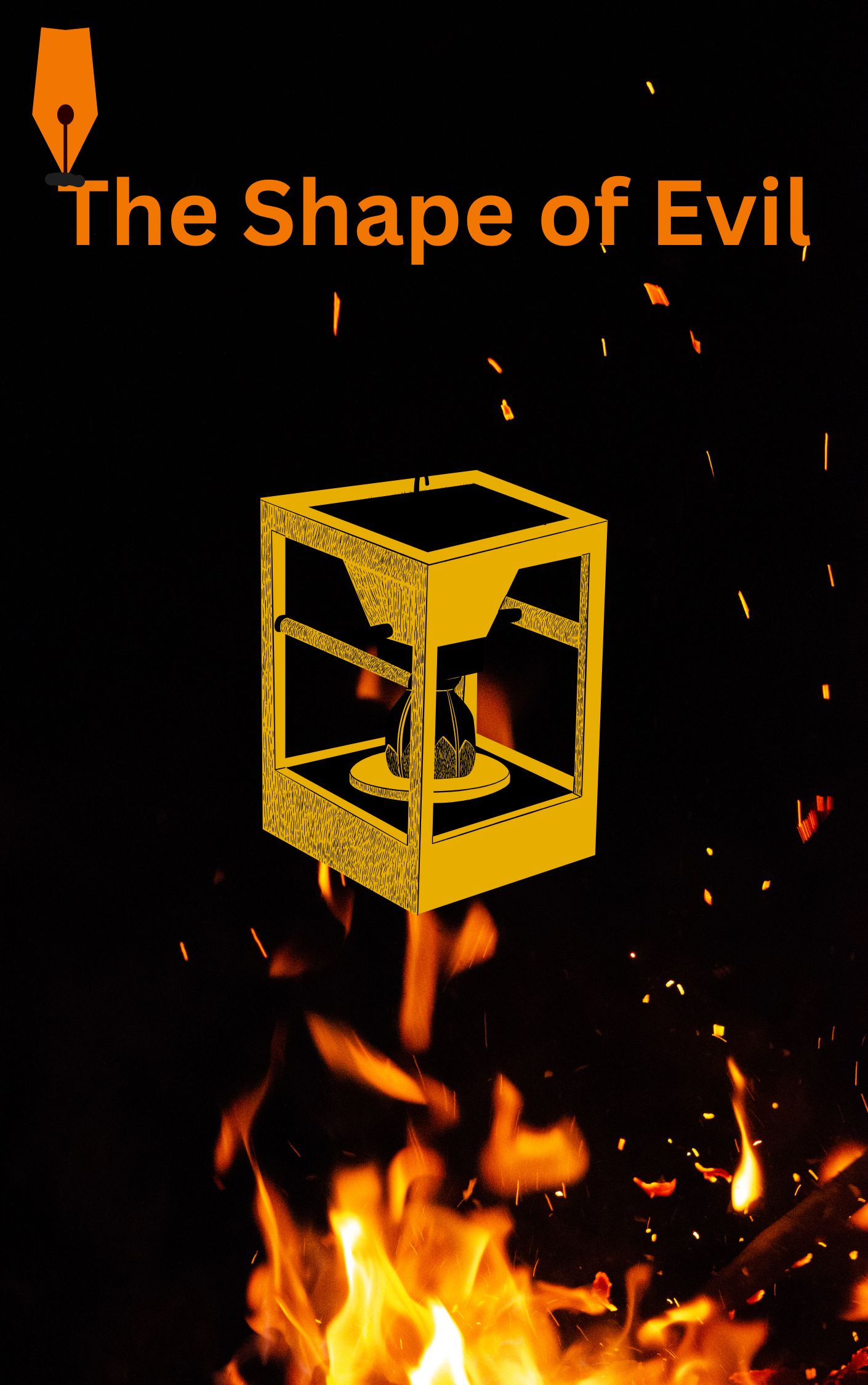
A temporary cover for The Shape of Evil. I think it captures the idea of the novel pretty well.

‘Twas the night before Christmas (and Hanukkah, coincidentally). And all the Haunted Condo, only the Rami was stirring. Because he’d finished the second draft of The Shape of Evil, AKA the 3D Printer from Hell story, and he’d only just gotten around to drinking the celebratory wine and writing the celebratory blog post.

Doesn’t rhyme, but I’m not much of a poet, so I think it’s okay.

So, as I said before, The Shape of Evil‘s second draft is now complete. And this novel, as I also said before, is about a 3D printer from Hell. I started writing it back in March, thinking it would be a novelette or short novella, and finished it as a novel back in August. Right around Thanksgiving, I began work on the second draft, and I finished it earlier today.

I would’ve celebrated right then and there, but at that point, I had to run an errand, then grab some takeout, and then do my usual routine of watching Die Hard on Christmas Eve. But now that that’s taken care of, it’s time to let you know and celebrate!

Overall, I saw a ton of improvement with the second draft. Not just with spelling/grammar/punctuation, but in finding plot holes and fixing issues I missed in the first draft. I also took out a lot of stuff that I thought worked for the first draft but, on the second go around, didn’t work. The final result was ten pages and around twenty-eight hundred words longer, at 283 pages (8.5 x 11 inch paper with 12-point Times New Roman font, double spaced), and 75,300 words. That’s about two thousand words less than the first Harry Potter novel (no, I will never stop using that book as a good comparison, even if the author is now a TERF).

So, what’s next for The Shape of Evil? Well, I plan to find a beta reader who can also double as a sensitivity reader. As I’ve mentioned in previous posts, my main character is non-binary trans, and I’m cisgender, so I would like someone from the trans community to read the manuscript and give me feedback to ensure I’m respectful to the community. I already have a few people in mind, so hopefully one of them would be interested. And if not, I have a few other ways to find someone.

Whoever reads it, after I get their feedback, I’ll do another draft. And after that draft is done, I think I’ll be ready to pitch this novel to agents. Particularly anyone at StokerCon this coming summer.

In the meantime, I have a new short story I want to write, and I have a new collection to start the work of self-publishing. No, I am not slowing down. I’m brimming with too much drive and imagination, and am nowhere near burnout, so I’ll keep plowing on!

(That being said, I am planning on spending at least one day in the coming week or so just chilling on the couch in my pajamas and reading or watching anime. It’s something I’ve been wanting to do for a while, so no time like the present!)

Anyway, that’s all for now, my Followers of Fear. I’ll certainly be back soon with more news for you. Until then, good night, pleasant nightmares, and to all those who celebrate, Merry Christmas! May we all get visited by three spirits (whether we want them to come or not).
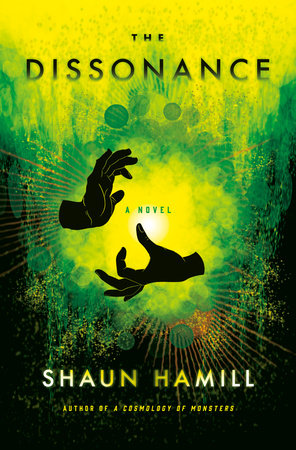
Took a little longer than I expected, but I finally finished this book tonight and, as promised, I’m writing a review.

Jumping back and forth between the late 1990s and 2019, The Dissonance follows Hal, Athena, and Erin, who, along with their friend Peter, discover that they have mysterious powers. Powers that, according to Peter’s grandfather, stems from the Dissonance, a magical energy that stems from the gap between our broken world and the world as it should be. They start learning how to harness their powers, but tragedy strikes during their senior year of high school. Twenty years later, they return to their old stomping grounds as forces begin to throw the world out of whack. And in the midst of it all, a great evil descends on their hometown, dragging a closeted gay teen in tow…

I’ve heard this book called a cross between The Magicians and IT, and while I’m only vaguely familiar with the first one, I have to say, the comparison to IT is apt. Not only does it hop back and forth between past and present, but Hamill does a great job showing the characters as hormonal teens trying to navigate friendship and their lives in the past, and trying to deal with cosmic shift and their broken lives and relationships in the present.

As for the story, it’s definitely more in line with dark fantasy than horror. For example, the Dissonants conference feels more Harry Potter than The Craft. Still, it’s got some horror elements. The magic itself, which requires tapping into the pain and misery of life, is pretty dark in and of itself, and plenty of aspects of the novel are of the cosmic horror vein.

If there’s one thing I would have liked to see more of, it might have been more of the character Owen. I get that the focus was more on Athena, Hal, and Erin, but Owen was a relatable character and I would have liked to see the kid have a bigger role.

Well, if there’s a sequel, that might be a possibility. The book does present the possibility of being the jumping off point for a shared universe, like The Hobbit was for Lord of the Rings, but with more in common with the Cthulhu Mythos than Tolkien.

But getting back to the review, I award The Dissonance by Shaun Hamill a 4.5 out of 5. It’s an engaging dark fantasy novel with great characters and worldbuilding and a magic system that feels right for this wrong world. Grab a copy, tap into your deep well of inner pain, and prepare for a twisty, magical ride through hell.

That’s all for now, my Followers of Fear. Until next time, good night, pleasant nightmares, and only 61 days and one hour till Halloween!

So, if you’re unaware, I’ve been working on a new story about a 3D Printer from Hell. It’s been a crazy work in progress, which I’m currently calling The Shape of Evil. And, after a lot more time working on this story than I normally like (I started this story in March, and it’s now June), I’m now halfway through the first draft.

Honestly, I’m glad I finally got this far. My life has been super busy since I got back from my vacation in March, and so I haven’t been able to make as much progress as I had hoped to by this point. Plus, this story was originally planned to be a novelette or novella. But, like The Pure World Comes, the story had other ideas and decided it wanted to be a novel. And a novel is what it’s become, at 163 pages (8.5 x 11, double-spaced, 12 point Times New Roman font) and 44,584 words.

For the record, the first Harry Potter novel, which is also the shortest, is about seventy-seven thousand words. So yeah, since I’m only halfway through the story, this novel could end up around ninety-thousand words when it’s done. Which will hopefully be by the end of August, if I can get some free time to work on it. The story takes place over summer vacation, so I would like it finished before summer ends.

Then again, you know what they say: “man plans and God laughs.”

Still, I’m excited to tackle the second half of this novel. I’m not sure it’ll be any good (is any author sure of that?), but it’ll be great to get this story finished and then see if I can find it a home. In fact, I’ve already made plans on how I’m going to go about doing that. I won’t say anything now about those plans (see what I said in the last paragraph), but I think a story like this has a good chance of finding a home and maybe even getting a strong following.

I’ll be sure to keep you all updated on the progress and how things go.

In the meantime, if you’re looking for a spooky story, or if you just want to support me, why not check out one of my works that are already published? I’ve got quite a few, and they’re all quite unique. I mean, how many other authors write about carnivorous horses?

Anyway, if you’re interested, head to my Book Links & Excerpts page using the button below. You’ll find all my published works, including some free stories available to download. (Though this month, I highly recommend checking out my novel Rose and my collection Hannah and Other Stories. I think they’re both some of my best work.) And if you like what you read, please leave a review online. Positive or negative, I love reader feedback, and it helps me and other readers in the long run.

Until next time, my Followers of Fear, good night and pleasant nightmares.

So, I’m reading Every Woman Knows This: A Horror Collection by Laurel Hightower, a collection of horror short stories I won in a Twitter giveaway. Not very fast, because I get through print books so much more slowly these days than I used to, but I’m making my way through it. And I am in awe that some of these short stories appear to be shorter than five thousand words. Hell, some of the earlier stories in the collection appear less than four thousand.

And I’m sitting there, reading the stories, and I’m like, “How does she do that and make them still so damn good?”

I actually posted that question on my personal Facebook and my Twitter feed. Laurel responded to the Facebook post (we’re friends there), thanking me for posting about the book and being glad that I’m enjoying it. Did not share her secrets with me, though.

I wish she had, because I would love to be able to write stories that short and still be effective. After all, I grew up on Harry Potter and the Bartimaeus Trilogy, followed by books like Interview with the Vampire and IT. The shortest of those books is seventy-seven thousand words. By the time I started regularly reading and writing short stories, my brain was already primed for sprawling plots with deep twists, multiple layers of themes and secrets, and complex character relationships that are explored through multiple pages, chapters and books.

Taking all that out and trying to tell an entire story in less than seventy-five hundred words (what the Horror Writer Association says is the maximum word count for a short story) was a huge switch for me. And honestly, I’ve had varying success. Occasionally, I manage to get a story less than seventy-five hundred words, and sometimes those stories get published, but more often short for me is a novelette between 7,500 and 17,500 words. Not as long as a novel, not by far, but allows me more room to work with those plot elements I like.

Still, I do try to come up with and write those shorter stories, what Stephen King calls “a quick kiss in the dark from a stranger.”* Yeah, it’s difficult to do, but most publications are looking for stories of that range, and I want to get my work into them. And, I like the challenge. It’s another hill for me to climb on my journey as an author. And, occasionally, something I write in this vein is really good.

That being said, if it looks like a short story is destined to be a novelette, or even a novella or novel, I will let it be the length it’s going to be. No sense trying to maim a good story so it can fit somewhere, right?

But I still try. And I’ve gleaned some things in my attempts, like instead of big plots or huge happenings, you focus on small instances or events that may happen to one or two people. Rather than the big moments, like the destruction of It in the sewers of Derry or the fallout of four writers visiting a haunted house on Kansas during Halloween for a publicity stunt (Kill Creek by Scott Thomas, if you don’t know), I should focus on maybe a ghost at the Ohio State Reformatory trying to get information on what happened after he died, or a young man dealing with something evil that’s appeared intermittently in his life. Those might manage to become the kisses given in the dark by a stranger.

Actually, one of those was a kiss in the dark, and some of you may remember it. It’s “Is Anyone There,” which was published last year in That Which Cannot Be Undone, and got mentioned in several reviews as a highlight of the anthology. So maybe I might be closer to my goals than I think.

Just don’t kiss me in the dark. I’m more likely to punch you for that than enjoy it or put it into a story.

What are your tips for writing short stories, Followers of Fear? Do you struggle with keeping them under 7,000 or 5,000 words? Let’s discuss.

Also, be sure to check out Every Woman Knows This by Laurel Hightower. So far, it’s a great collection, and I hope I’ve learned some things by the time I’m done.

*Which, by the way, is a weird idea, isn’t it? You walk down an alley or into a room and it’s really dark and suddenly someone plants one on your mouth before disappearing? Actually, the scenario with the room is the plot of an Anton Chekhov short story, and the character who gets the kiss does have an impression left on him. So, I guess it’s a good metaphor.

What are some of the first things you think of when it comes to Stephen King’s IT? Is it Georgie being dragged down the drain by Pennywise the clown? The fortune cookies filled with eyeballs and mutated bugs? The final battle with Pennywise in his lair? That one scene that dare not be spoken?

I’m sure all these and more occur to you, because they’re significant plot points and they carry a whole lot of scares.* What you might not think about are the quieter moments in the story: the building of the dam in the Barrens, or Ben, Beverly and Richie going to see a movie together, or Bill going for a ride on his old bike Silver after not having seen it for over a quarter of a century. They’re the quieter moments of the story, the moments that allow you to get to know the characters better and see them about their daily lives. And they’re just as important as the scarier parts of the story.

I’ve been thinking of these moments more and more lately, because I just wrote an entire chapter for Crawler, my mummy novel-in-progress, that was a quiet moment. In it, two of the characters, one of whom is in mourning over a sudden loss, bond with each other over the course of a lazy afternoon. Nothing scary happens, no mentions of the horrors driving the plot take place, and there’s no ground laying or foreshadowing for future scares. It’s just a sweet, quiet scene where two characters form a relationship.

Honestly, I’m not used to writing those sorts of scenes. In shorter works, every word has to be necessary so the story can fit within a word count. There’s no room for quiet scenes showing the creation or deepening of bonds, getting to know a character better, or seeing them grow. You need that room to create a short story that packs a punch, especially for horror stories. And with my novels, every chapter and scene was necessary to the plot in some way, furthering the story, foreshadowing future plot points, or scaring the shit out of the reader in some way. Writing a scene over the course of two or three days that was just exploring the budding relationship between two characters, was new for me. And I feel like I learned a lot while doing it.

Which is good, because other writers, not just King, include those quieter moments throughout the books. Ever wonder why Harry Potter includes Quidditch matches in the books? Because they’re fun, normal things a wizard would learn in school and serve as breaks from the intrigue of whatever was happening any year at Hogwarts.

Now, having these scenes aren’t always necessary for every story. But it can be a good idea to include them if you need an organic way to flesh out your characters, deepen their relationships, or show them growing. Especially you can’t think of any way to insert such moments into the more essential scenes, like Georgie getting dragged into the sewers or whatever.

In any case, I’ll probably write a few more of these scenes in Crawler, as it’s a very character-focused story, so I’ll get plenty of opportunities to practice. Perhaps afterwards, I’ll be able to write a post about writing quiet scenes and writing them well. And maybe when I do, I’ll write it with a quiet satisfaction.

*Except that one scene, I know, but we’re not going to talk about it, are we?


One more thing, my Followers of Fear: this Wednesday at 4-6 PM EST, I’ll be joining fellow horror writers Heather Miller and Daemon Manx on the podcast “What’s Write For Me” with Dellani Oakes. We’ll be recording live, so you’re encouraged to join us live by following this link, and we’ll be discussing and even reading from our scariest works, so I hope you’ll join us. See you there!

That’s all for now, my Followers of Fear. It’ll be a busy week leading up to Halloween, but I hope it’ll be a fun and memorable one. Until next time, good night, pleasant nightmares, and eight days till Halloween! Have you carved a Jack-o-Lantern yet? I have, and for the first one in my own home, I don’t think it turned out half-bad. What say you?

I’m not so sure anymore.

Of course, it seems like gospel that the first sentence of a story is important. It’s your hook, isn’t it? It’s how you get the reader into the story. You should put as much thought into that first line as you would as asking your significant other to marry you!

But I’m not convinced anymore. That may be strange, considering how often I used to (and sometimes still do) the #FirstLineFriday meme on this blog. You know, that thing where I post the first line of a story and hope it gets you into the story? But then again, maybe that’s why I’m unconvinced. I’ve posted first lines so many times, I’ve recognized how little effect that they have on the total story.

And you know, if you look at some famous books, you kind of see that. Harry Potter‘s first line is “Mr. and Mrs. Dursley of number four, Privet Drive, were proud to say they were perfectly normal, thank you very much.” Most Muggle-ish opening you’ve ever read. It doesn’t really hint at what’s to come in the story, and I honestly would have cut it from the final product if I had edited the first book.

And Stephen King’s stories don’t usually have those sorts of openings. The first line of IT goes like this:

“The terror, which would not end for another twenty-eight years–if it ever did end–began, so far as I know or can tell, with a boat made from a sheet of newspaper floating down a gutter swollen with rain.”

It’s a nice opening, but it doesn’t exactly scream…well, going to make you scream. It’s actually kind of mellow. And the opening for Needful Things is even more unassuming: “You’ve been here before.” Kid you not, my first time listening to that book on audio, I had to repeat it a few times because it was totally unexpected and confused me a bit. Only as you keep reading does the opening make sense with this story.

Maybe this is why some books have poems, excerpts from other famous stories, Bible verses, or even song lyrics at the beginning, before the story even starts. You read those little epigraphs (that’s what they’re called, I check) and keep reading to see how it relates to the story you’re taking in.

in any case, I’m starting to think that maybe it’s not the first sentence, or even the first paragraph, that’s responsible for making a story’s opening catchy. It’s maybe the first couple of paragraphs or the first page. When the author sets up the story, the characters, the setting, that you really get pulled into the story.

The opening of the story should be like opening a door to guests. Yes, that’s important, but what’s inside is even more important. Photo by Ron Lach on Pexels.com

That’s certainly the case with my current story, where I set up a nice, rural setting, something kind of idyllic…and then one of my main characters reveals that he’s a neo-Nazi. It’s a stark contrast from the first paragraph that takes the reader off-guard, and hopefully will get them reading further along. I’ll have to finish the story first to see if that’s the case, however.

Anyway, the first sentence is important, but it’s not the most important thing about a story. Rather, it’s just the opening of the door and allowing people to take a quick look before stepping inside. What’s beyond that is what’s truly important. You just have to make sure to open the door and open it well.

But what’s your take, Followers of Fear? Let’s discuss openings and if the first lines of a story really are as important as we make them out to be. I’m curious to hear what you think on the subject. Maybe more of you will agree with me than I imagine.


Happy New Year, my Followers of Fear. I wanted to start this year off with a post that’s reflective on the craft of writing, as I enjoy writing those posts. Anyway, I hope you’re having a good 2022 so far. Mine’s been rough so far, but that tends to be the case with the first full week of January. And at least there’s a lot to look forward to right now: editing and releasing Hannah and Other Stories; putting out the paperback and ebook copies of The Pure World Comes; conventions and expos; maybe a bit of travel; and, of course, some good reading and writing.

Oh, speaking of conventions and expos, I’ll be at the Hidden Marietta Paranormal Expo on the 29th in Marietta, Ohio. If you can, stop by the Lafayette Hotel and maybe I’ll sign your book and read your Tarot.

Also, the crowdfunding campaign for That Which Cannot Be Undone is at 58.5 percent! We’re over halfway funded and we just keep going! And if you would like to help me and my fellow Ohio horror writers put out an amazing anthology of horror stories set in our state and revolving around the theme “that which cannot be undone,” click on the link here: https://www.kickstarter.com/projects/crackedskullproject1/that-which-cannot-be-undone-an-ohio-horror-anthology. There are also some amazing perks to pledging, like candles, Ohio-themed Tarot cards, copies of the book, and even end up in one of the stories! How cool would that be?

Anyway, that’s all for now, my Followers of Fear. I hope to have more stuff to tell you soon. Until next time, good night and pleasant nightmares!

Occasionally in fiction writing, you create characters you find utterly repulsive. Maybe it’s their personality, maybe it’s what they do or believe in, but these characters are VILE.

And surprisingly, writing them well is kind of challenging. I should know. I’m working on a story now where I hate most of the characters. Why? I’ll get into that a little later.

(Though if you’ve been paying attention to my Facebook posts or Twitter feed, you might already know why.)

The thing is, while you may hate the character you’ve created, you can’t let that hate show too much in your writing. You have to treat them like you would any other character. Showing your contempt may be easy, but the reader may notice. And while they may agree with you, they will be turned off by the clear aversion and disdain coming off the page, especially if it’s a protagonist. “Why even bother writing this character if you’re going to make it so obvious you don’t like them?” That might be what goes through their minds. Instead, write them like you would a character you like.

A good example of this is how Vladimir Nabokov treats Humbert Humbert in the novel Lolita. In an interview, Nabokov stated he found Humbert a hateful person for obvious reasons. But he didn’t show his dislike for the character and his predilections in the story. Instead, he writes the novel normally and let’s the readers come to hate him by his actions.

That’s something to keep in mind. Instead of showing your disdain for a vile character, let their actions do the work for you. You can do a lot just by showing a cruel teacher depriving a kid of ice cream or a prison warden manipulating his prisoners to attack each other, rather than by describing them as nasty pieces of shit.

Dolores Umbridge. A great example of a vile character.

You can then supplement that by showing other characters’ reactions to the hated characters for being assholes. JK Rowling, despite her faults, did this quite well when Harry and his friends described characters like Umbridge or Pansy Parkinson and focused on their negative traits. Rowling famously hates those characters, by the way, and made sure they suffered or didn’t get happily-ever-afters in the end.

What if you have to show things through the perspective of the hated character, however? Well, that’s where it can get queasy to write them. Because, as much as you might hate them, you’ll often have to write them as any other character. For instance, l’m writing characters who are neo-Nazis.

Yeah, you read that right. The story I’m working on now is full of neo-Nazis, people who would gladly see me dead for being Jewish (among other things). And I am writing them as I would most other characters. I could write them and focus on their hatred and nasty ideology, and in another story I could get away with that. But for this story, I can’t let them just be stock characters or stereotypes, much as I want to. Instead, I’m trying to show the reader how the characters might see the world. And let’s face it, neo-Nazis are people, and they’re as complicated as any other character. So I should try to write them that way.

That being said, I am going to show just how horrible these people and their toxic ideology can be. And then I’ll take great pleasure in showing what horrors occur to them later in the story. Hey, I’m a Jewish horror author who loves visiting terrors upon his enemies. What do you expect?

So, writing characters you consider vile is more than just making them hateful or showing how much you hate them. It’s a combination of actions, character description, and even writing them in a complex manner. And, of course, making sure they get what’s coming to them if it fits the story. It may make you feel sick to write them that way, but it can also lead to a good story becoming that much better.


On an unrelated note, the anthology I’m helping to produce, That Which Cannot Be Undone, is closing in on forty percent funded on Kickstarter! Not only that, but we’ve added a whole bunch of new perks and have announced some new authors joining the project as well. Some of those authors have even volunteered to name characters after backers and kill them off in style should they back certain limited pledges. Isn’t that cool? You could be a character in another author’s story!

If that, and helping our group produce a kickass horror anthology featuring new stories from me and my friends, you can check out the campaign by clicking the link below.

https://www.kickstarter.com/projects/crackedskullproject1/that-which-cannot-be-undone-an-ohio-horror-anthology

That’s all for now, my Followers of Fear. For those who celebrate, I want to wish you a Merry Christmas. If you need me, I’ll be joining my friend John McClane at Nakatomi Tower for Nakatomi Corp’s annual Christmas party. I hear they tend to go out with a bang every year.

Until next time, Happy Holidays and pleasant nightmares!

Anne Rice. She may be gone, but she is still definitely with us.

You know, I’ve actually had the opportunity to interact with Anne Rice a few times. Not in person, mind you, but over email and social media.

In high school, I sent her an email after reading her novel Angel Time (she had an email that was known to the public back then). I liked the novel for the most part, but I was upset as a Jew that one of her Jewish characters became a Catholic nun just to be closer to her father. She actually emailed me back, saying that I had a fair point and would try to be more sensitive to such matters. It was a crazy cool moment. A few years later, about a year into writing this blog, I wrote a review of The Wolf Gift (which you can read here), her first werewolf novel, where I compared her work to various kinds of food (I had just eaten lunch). Somehow she caught wind of my review and posted it on her social media. It’s still one of my most viewed posts, and it’s been nine years since then!

I had a few more interactions with her through email and social media up until 2016 or 2017, but I was happy with what I got. And as she kept writing, I hoped I would be able to actually meet her in person someday.

Yesterday, December 11th, 2021, Anne Rice passed away due to complications due to a stroke. She was 80.

Like many, I am heartbroken. I first discovered Anne Rice as a preteen with Interview with the Vampire. As I’m sure many of you can agree, it was a revelation. For me, I hadn’t read any story whose world felt as immersive as the world of Louis and Lestat since reading Harry Potter years earlier. I could almost smell New Orleans, here the sounds of 19th century Paris! The language was so beautiful too! Poetry without being poetry, filling my mind and painting extraordinary images. It made me realize just how powerful language could be, more than any other novel I had read up till then. And finally, I empathized with and grew to truly love the characters. While a lot of their emotional and philosophical turmoil went over my head at that age, I understood that they were going through a lot and felt for them.

This would only increase as I continued to read her works throughout my teens and twenties as I read her new work. Reading her works often felt like meeting old friends, and at the same time, Anne Rice, who put so much of herself in her books, began to feel like a friend and a mentor. Often, her writing would influence mine as much as Stephen King’s did, especially as I’ve gotten older. That impression deepened when I got on social media, where Rice was active with her fan community, whom she affectionately called the People of the Page.*

I may have to read this again very soon. I haven’t read it since I was 11 or 12. I wonder how it will affect me now.

It pains me, and so many others, that we won’t be able to read new stories by her or see her social media posts anymore. That next year’s Ramses the Damned novel, if it releases on time, will be her final novel. That she won’t be able to see the TV adaptations of The Vampire Chronicles or Mayfair Witches trilogy being developed at AMC when they premiere. That one of the greatest horror writers of the 20th century, as well as one of the greatest writers of the 20th century period, is now gone from this world.

Luckily, even though Ms. Rice has left the Savage Garden and is probably now getting all her spiritual, philosophical and cosmological questions answered, her works remain. She has, like many of her characters, achieved a form of immortality, but this one won’t cut her off from the world of humans. Instead, she’ll always be with us, a spiritual force beyond matter and body living in our minds and our souls. So, even though many of us will never have the chance to meet her in person, she will still be able to influence and touch us with her powerful Gothic epics.

Next year, there’s supposed to be a public memorial in New Orleans for her, one year after her family lays her to rest. I don’t know if I’ll be able to go, but if not, I’ll at least be able to raise a glass of wine to her tonight. A sweet red, which I’m sure she would have appreciated. And when those TV shows premiere, I, and probably many others, will raise a glass again and think of her. Anne Rice, the true Queen of the Vampires, and someone who will be with us long after she’s joined the spiritual plane.

What influence did Anne Rice have on you? What were your favorite books by her? Do you have any stories you want to tell about her? Let’s discuss.

*See where I got the idea to name you all the Followers of Fear?

The other day, I was scrolling through my Twitter feed and I saw a tweet from a fellow writer in the writing community (or #WritingCommunity). This was the tweet.

Now, if the tweet hasn’t loaded properly into this blog post at the time you’re reading this, it’s from writer Rey Roland using the hashtag @rrowlandwrites and goes like this:

#WritingCommunity do you think that characters have to make mistakes in a story?

I found the question stimulating, so after some back and forth between us, I decided to do a full post on the question (hope you don’t mind, Rey).

So, can and should characters make mistakes? First, let me start with can: yes, characters can make mistakes. In fact, there are plenty of stories where characters make mistakes which become integral to the plot. And yes, characters should on occasion make mistakes, though it depends heavily on the story. A character shouldn’t make a mistake just for the sake of making one when it serves no purpose to the story. Otherwise, the readers will think it’s weird.

Of course, this leads to an even bigger question: is there a benefit to having characters make mistakes? Actually, there are multiple benefits to having a character who makes mistakes.

For one thing, characters who make mistakes are easier to empathize with. Not to say characters incapable of making mistakes can’t be empathized with, but it does make a character more human and easier to identify with for the audience. The possibility of a reader continuing with a story can depend greatly on their connection to the protagonist, so showing them as being like the reader–more human–can be an advantage.

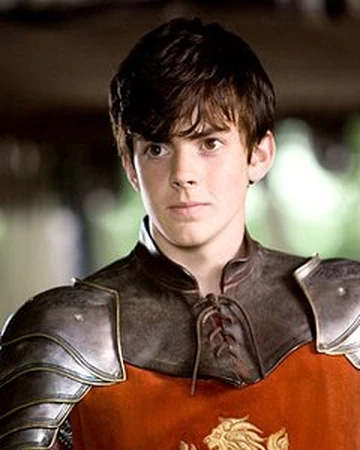
Edmund Pevensie’s mistake was a major driver of the story.

Another reason to have characters make mistakes is that it can help the story along or add to its complexity. Sometimes, it’s even the catalyst of the story. In The Lion, The Witch and The Wardrobe, Edmund makes the mistake of falling under the White Witch’s spell, and betraying his siblings adding both an extra dilemma to an already difficult situation and giving the character a redemption arc during the story. And in the manga Death Note, Light Yagami tries to eliminate suspicion of himself as the murderer Kira by killing the FBI agent following him, as well as the other FBI agents following other suspects. However, this eventually just leads to him becoming a prime suspect again, a problem which lasts the rest of the series.

Of course, it isn’t just protagonists who make major mistakes. Minor characters make mistakes all the time, and they often benefit the plot significantly. In Ania Ahlborn’s novel The Devil Crept In, the protagonist’s mother makes the mistake of not treating her son’s obvious mental issues, which has major consequences before, during and after the story. And in Harry Potter and the Order of the Phoenix, Cho Chang’s best friend Marietta Edgecombe tells Umbridge about Dumbledore’s Army, leading to the organization’s dissolution, Dumbledore’s exile and Umbridge’s assent at Hogwarts, and boils to appear on her face in the shape of the word “SNEAK.”

And villains make mistakes all the time. Often, that’s how their downfall begins. Often, these mistakes are due to the villains’ pride, ignorance, or some other character flaw. Voldemort doesn’t believe anyone will find his Horcruxes; Bane talks too much and doesn’t watch his six; Annie Wilkes is so obsessed with her Misery Chastain novels, she falls for Paul Sheldon’s trick; the White Witch doesn’t read the instructions carefully and misses the deeper magic in the Stone Table; Kaecilius also doesn’t read the instructions and misses what actually happens when you join Dormammu’s dimension; and the Wicked Witch allows water in her castle for some reason, even though she has a serious water allergy (I guess the book version thought Dorothy would never think to use water against her?).

As you can see from the above, not only can and should characters be able to make mistakes, but there are numerous benefits to doing so. Whether to include one or not depends on the author, character(s), and story in question. However, if an opportunity comes up and you think it’ll ultimately benefit the plot, I say do it. Who knows? It could be a major turning point in the story, and the moment readers talk about for years to come.

I hope you found this post edifying, my Followers of Fear. I had fun writing it. And I hope Rey Rowland (whose Twitter page you can find here) enjoys reading this. Thanks for the mental stimulation.

That’s all for now. I’ll check in with you all very soon, I’m sure. So, until next time, stay safe, pleasant nightmares, and DON’T TAKE THAT ACTION! IT’S THE KIND OF MISTAKE THAT’LL LAND YOU IN A HORROR STORY! AND NOT ONE WRITTEN BY ME.

I’ve kept silent on this matter long enough. Maybe I’ve kept silent so long because, while it made me angry, I wasn’t yet angry enough to post about it on my social media. It was enough for me to let my views be known through the stories I write and the way I conduct myself. However, I think I’ve been silent long enough. I need to speak and to let the world know what I’m thinking.

If you weren’t aware, JK Rowling, author of the Harry Potter novels, has over the past two months voiced problematic views on the transgender community through her social media. I won’t go into a full breakdown of events, you can find that in plenty of articles online, but I will summarize a few major points. Since June, she has: criticized an article that used the phrase “people who menstruate,” meant to include trans men and non-binary individuals; said use of above phrase was “erasing the concept of sex” and “the reality of women globally;” spread misinformation about transgender individuals, including that allowing transgender women to use the bathroom of their choice was giving men license to step into women’s bathrooms and assault them; and on Sunday, equated hormone therapy to gay conversion therapy.

It’s this latest piece of news that has pushed me to speak. I have had the pleasure of being friends and occasionally even colleagues who are trans. None of the above stuff is true of them, or of the trans community at large. Furthermore, as a bisexual man, I am disgusted that Rowling would compare medication that allows trans people to feel more comfortable in their own bodies to a practice that makes members of the LGBT community hate, deny and repress their true selves in favor of someone else’s very narrow worldview on sex and gender.

But I’m not going to talk about all that. I’m going to instead join all the voices who have come out against Rowling’s views. This includes members of the writing community, some of whom I consider colleagues and friends, others I consider role models and teachers; most of the cast of the Harry Potter films; and an overwhelming section of the Harry Potter fandom. What we have to say is this: we are disappointed that Rowling, whose books have always espoused equality and understanding, would support these views, let alone use her platform to influence and possibly turn her fans against the trans community. And while we differ on how we’ll interact with the world of Harry Potter, which is so intertwined with its creator as to be almost inseparable–some are severing their relationship with the franchise, while others are saying they will continue to enjoy Harry Potter while avoiding giving money or other support to Rowling, etc.–we are united and committed to not letting hate go unpunished.*

To be honest, I’m saddened that it has come to this. It’s because of Harry Potter and JK Rowling that I started writing fiction in the first place. You may not have ever heard of me (at least not in the context of a writer) if it hadn’t been for the Wizarding World and what it did for me as a child. I owe Rowling a debt for that, and I’ll always be grateful for the effect she had on my life.

However, I am against all forms of prejudice, including but not limited to racism, antisemitism, sexism, Islamophobia, ableism, ageism, homophobia and, of course, transphobia. I’ve seen the effects of what these prejudices have on people and it disgusts me. My day job allows me to combat these problems within the workforce, something I’m quite proud of. And I won’t stand idly by as an author with a major platform uses theirs to hurt others because of their own prejudice.

And to Ms. Rowling, if you’re reading this, I’m afraid that this is, to quote Albus Dumbledore to Cornelius Fudge, “the parting of the ways.” I will always be grateful to you and to your creation, as I said. But I can’t stand by your views or support your work. Losing me won’t hurt you in the slightest. But if it makes you think, or makes someone else think about how vulnerable the trans community is, or if it helps a trans person feel less alone in a scary world, then it’ll be worth it. With that, Ms. Rowling, I let you go.

Thank you for reading this, everyone. I know this isn’t my normal sort of post, but I had to write it. Thanks for reading. And while I was planning on doing a late-night writing session, I think I’m tuckered out and will hit the hay instead.

Goodnight, Followers of Fear. Until next time, stay safe and pleasant nightmares.

*I know this post may upset some of my Followers of Fear, and they may not want to follow me or read my works anymore. If that’s the case, I’m sad to see you go, but I wish you the best and hope we can someday meet on common ground. And if you decide to get rid of my books, please do so in a manner that doesn’t burn down your house or something crazy like that. I know burning them seems fun, but is it worth your home and life?