Posts Tagged ‘living and life’

What a mouthful of a title. Let me explain:

Back in college (I want to say 2012), when featured blog posts were advertised to WordPress users under the feature “Freshly Pressed,” I read a blog post from a father who recently had a run-in with someone else’s spawn. I can’t remember much about the blog post in question. I can’t remember the blog or blog post’s name, the blog’s general theme, or anything of that sort. However, one detail stands out in my memory and it’s why I’m writing this blog post:

After reprimanding another person’s child for selfish (and maybe violent? I can’t remember that well) behavior at a children’s playground, the child’s mother came to apologize. And the parent described the mother’s face as “crunchy.” You read that right, crunchy. For someone’s face.

I tried pressing the author in the comments about what he meant by “crunchy.” What makes a woman’s face crunchy? But no matter how much I tried or he tried, he couldn’t describe it better than “crunchy.” I’m guessing he doesn’t spend a lot of time trying to understand the meanings of adjectives in order to mix and match them in stories and not use the same word over and over again. That’s more of a creative writer thing, not a parent blogging about their experiences kind of thing.

Anyway, I put the issue aside, but every now and then, I would come back to it and wonder how you could describe someone’s face as “crunchy.” About two weeks ago, I decided to finally search for answers and decided to discuss it with my various writers’ groups online. And I got some feedback that proved quite helpful.

Among my writer friends and colleagues, there were three main responses:

  • The author really meant “scrunchy,” not “crunchy.” This would make more sense, as it’s easier to visualize someone’s face scrunch up.
  • He meant she was a crunchy-type person, as in a sort of neo-hippie that eats granola and lots of other natural foods that are crunchy when eaten (hence the nickname).
  • The person’s face was so covered in lines, that you could almost hear those lines crunching whenever their face moved.

Honestly, given that I mainly asked horror authors for their feedback, I’m surprised that only one person made a wisecrack about cannibalism, and the woman’s face looking like a crunchy snack. Like a Cheetos snack or a Crunch bar.

And now I’m hungry. Dammit.

What people tend to think of when they hear the word “crunchy.” Not in regards to people’s faces.

Anyway, of the responses listed above, it was a variation of the last one that rang right to me. One author commented that she’d seen people whose skin texture was like cornflakes due to too much exposure to the sun and applying too much beige make-up to “make up” for it. Given my vague memories of the original blog post and the context the author used for the woman he was conversing with, this felt right. In fact, it lines up with the image I conjure in my head when I think of the woman from this blog post.

So, that’s the description I’m going with. In fact, I’ve already figured out how I could work it into a story someday, as well as which story I’d like to use it in. And perhaps which foolish person who got on my bad side and received the ultimate punishment of getting a hateful character based on them to use the description on.*

But damn, it was a crazy trip just to get to the right description. At least I finally found a description that works for me and I can work into a story someday. And I got to write a blog post that hopefully was edifying and enjoyable. Not a bad way to spend a Sunday morning, right?

That’s all for now, my Followers of Fear. I hope this post was amusing. So, until next time, what are some other weird or mystifying descriptors you’ve come across in your reading? Any that you’ve struggled to find an answer for? Let’s discuss.

And until next time, stay safe, pleasant nightmares, and no eating people’s faces off. It’s generally frowned upon in Western society.

*Don’t mess with me. My retribution is not only dangerous and eternal, but safe from lawsuits owing to that little clause in the copyright section stating it’s a work of fiction and that any connections to real persons, places or events are just coincidences.

I first read the source material by authors Richard and Billy Chizmar in the Dark Tides Charity Anthology (which I highly recommend and not just because proceeds go to charity) back in April. I found it terrifying, psychologically thrilling. I even expressed on Twitter that I thought it might make a good movie, though I doubted one would be made right after the release of The Lighthouse. Then about a month or two ago, I found out a movie had not only been made, but would be coming out on September 1st. I had some free time, so I rented it off YouTube and sat down to check it out.

Widow’s Point follows Thomas Livingston, an author and paranormal investigator who is doing an investigation of the infamous Widow’s Point lighthouse in Harper’s Cove, Maine. The lighthouse has witnessed numerous murders and suicides over the years, making many speculate it’s haunted. Livingston and his crew arrive to stay the weekend and hopefully make some quick cash. Too bad he’s going to get so much more.

I feel like I was watching a Stephen King miniseries or TV movie from the 1990s, with a bit of classic Doctor Who serials. Yeah, on the surface it does seem a bit hokey and amateurish, and the one or two special effects are laughable. But it’s a lot of fun to watch, and I keep smiling when I think of the film and my experience watching it. Also, since all of the actors were unknown to me and looked like people I might see on the street, it gave the film a weird sort of plausibility. Like, this could happen to average joes. Add in a little suspension of disbelief, and you can believe in the story.

On top of that, there were some scary moments. Particularly when Livingston, played by Craig Sheffer,* is undergoing psychological stress and his mind is really beginning to snap. Those moments gave me some chills, I’ll tell you. And a lot of attention is paid to historical detail with flashback scenes detailing the lighthouse’s history, which I loved as a fan of history.

But there are things I didn’t care for. Like I said, the special effects were laughable, and I disliked how the filmmakers tried to give an explanation to the lighthouse’s evil, rather than leaving it mysterious like in the original short story. Sometimes less is more, and it certainly would have been more here.

All in all though, Widow’s Point is a nice guilty pleasure horror movie to start the Halloween season with. On a scale of 1 to 5, I’m giving it a 3.5. It probably won’t make you shit your pants in terror, but it’s entertaining and will scratch that horror itch. It’s on DVD and streaming sites, so give it a go if you’re interested.


That’s all for now, my Followers of Fear. I’m off to work on one of my own stories. Until next time, stay safe and pleasant nightmares!

*By the way, I want this guy to narrate an audio book of one of my stories someday.

The other day, I was scrolling through my Twitter feed and I saw a tweet from a fellow writer in the writing community (or #WritingCommunity). This was the tweet.

Now, if the tweet hasn’t loaded properly into this blog post at the time you’re reading this, it’s from writer Rey Roland using the hashtag @rrowlandwrites and goes like this:

#WritingCommunity do you think that characters have to make mistakes in a story?

I found the question stimulating, so after some back and forth between us, I decided to do a full post on the question (hope you don’t mind, Rey).

So, can and should characters make mistakes? First, let me start with can: yes, characters can make mistakes. In fact, there are plenty of stories where characters make mistakes which become integral to the plot. And yes, characters should on occasion make mistakes, though it depends heavily on the story. A character shouldn’t make a mistake just for the sake of making one when it serves no purpose to the story. Otherwise, the readers will think it’s weird.

Of course, this leads to an even bigger question: is there a benefit to having characters make mistakes? Actually, there are multiple benefits to having a character who makes mistakes.

For one thing, characters who make mistakes are easier to empathize with. Not to say characters incapable of making mistakes can’t be empathized with, but it does make a character more human and easier to identify with for the audience. The possibility of a reader continuing with a story can depend greatly on their connection to the protagonist, so showing them as being like the reader–more human–can be an advantage.

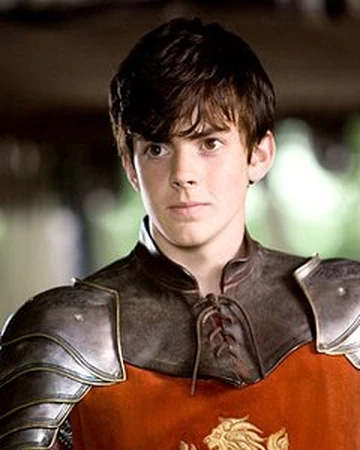
Edmund Pevensie’s mistake was a major driver of the story.

Another reason to have characters make mistakes is that it can help the story along or add to its complexity. Sometimes, it’s even the catalyst of the story. In The Lion, The Witch and The Wardrobe, Edmund makes the mistake of falling under the White Witch’s spell, and betraying his siblings adding both an extra dilemma to an already difficult situation and giving the character a redemption arc during the story. And in the manga Death Note, Light Yagami tries to eliminate suspicion of himself as the murderer Kira by killing the FBI agent following him, as well as the other FBI agents following other suspects. However, this eventually just leads to him becoming a prime suspect again, a problem which lasts the rest of the series.

Of course, it isn’t just protagonists who make major mistakes. Minor characters make mistakes all the time, and they often benefit the plot significantly. In Ania Ahlborn’s novel The Devil Crept In, the protagonist’s mother makes the mistake of not treating her son’s obvious mental issues, which has major consequences before, during and after the story. And in Harry Potter and the Order of the Phoenix, Cho Chang’s best friend Marietta Edgecombe tells Umbridge about Dumbledore’s Army, leading to the organization’s dissolution, Dumbledore’s exile and Umbridge’s assent at Hogwarts, and boils to appear on her face in the shape of the word “SNEAK.”

And villains make mistakes all the time. Often, that’s how their downfall begins. Often, these mistakes are due to the villains’ pride, ignorance, or some other character flaw. Voldemort doesn’t believe anyone will find his Horcruxes; Bane talks too much and doesn’t watch his six; Annie Wilkes is so obsessed with her Misery Chastain novels, she falls for Paul Sheldon’s trick; the White Witch doesn’t read the instructions carefully and misses the deeper magic in the Stone Table; Kaecilius also doesn’t read the instructions and misses what actually happens when you join Dormammu’s dimension; and the Wicked Witch allows water in her castle for some reason, even though she has a serious water allergy (I guess the book version thought Dorothy would never think to use water against her?).

As you can see from the above, not only can and should characters be able to make mistakes, but there are numerous benefits to doing so. Whether to include one or not depends on the author, character(s), and story in question. However, if an opportunity comes up and you think it’ll ultimately benefit the plot, I say do it. Who knows? It could be a major turning point in the story, and the moment readers talk about for years to come.

I hope you found this post edifying, my Followers of Fear. I had fun writing it. And I hope Rey Rowland (whose Twitter page you can find here) enjoys reading this. Thanks for the mental stimulation.

That’s all for now. I’ll check in with you all very soon, I’m sure. So, until next time, stay safe, pleasant nightmares, and DON’T TAKE THAT ACTION! IT’S THE KIND OF MISTAKE THAT’LL LAND YOU IN A HORROR STORY! AND NOT ONE WRITTEN BY ME.

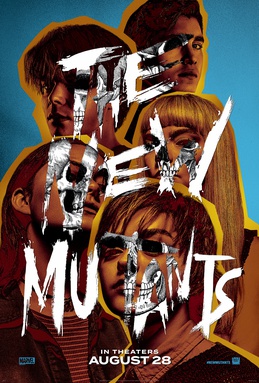
The New Mutants. The last film in the Fox X-Men movies and promising in the trailer to be a horror film set in a comic book universe. Originally supposed to be the second to last, but its release date was pushed back several times over the past two years. Released this weekend after the latest delay due to COVID-19. I went today to see it, the first movie I’ve seen in a theater in months.

Let me tell you how it ranked as an X-Men movie, a superhero film, and a horror film.

The New Mutants takes place at a facility for young mutants whose abilities have led to deaths: Dani Moonstar, whose abilities are as yet unclarified; Rahne Sinclair, who transforms into a wolf; Sam Guthrie, who can fly at jet speeds; Illyana Rasputin, who has sorcery powers (lucky girl); and Bobby de Costa, who can manifest solar energy. They are watched over by Dr. Reyes, a mutant with barrier abilities who says she’s helping the teens get their powers under control. However, as odd events occur around the facility, it becomes apparent that not all is as it seems. They’ll have to band together to find the truth and defeat the evil menacing them.

I’ll start my review by saying this: while this may be advertised as a horror film in a comic book universe, that’s not true. At some level during the creation of this film, someone (probably 20th Century Studios’ execs) didn’t want the film to lean too far into the horror elements. Despite proving time and time again that comic book/superhero movies have the ability to tell mature stories, they’re still considered films for children and families, and too much horror will alienate families from theaters. That’s why, in general, there are very few horror films in comic book/superhero universes (and not all of them good).

Which is why, as a horror film, The New Mutants sucks. While the trailer promised us plenty of horror, there’s very little attempt to actually scare us. No atmosphere, tension or jump scares, and what scary imagery we get is done mainly through CGI. And as you know, if you’re not careful about it or rely too much on the CGI, it actually makes the film less scary. It’d be more accurate to call The New Mutants a comic book film with a couple of horror elements.

And as far as X-Men and superhero films go, this is average at best. The character building needed for a superhero film is minimal at best (and is most lacking in Bobby de Costa’s character), the one action sequence is not as spectacular as it could be, and the final showdown ends anticlimactically. It’s not as bad as the worse of the X-Men films or of superhero films in general, but it still leaves a lot to be desired.

Was there anything I liked? Well, Rahne and Dani, played by Maisie Williams and Blu Hunt respectively, have a romantic relationship that’s pretty cute to watch. It’s nice to see two broken people fall genuinely in love without their own fears or toxic personality traits getting in the way. And I think this counts as the first superhero film with openly LGBT superheroes, let alone LGBT superheroes in a relationship. Props.

While the characters don’t have that much development, their actors do a great job bringing those characters to life. The setting, while cliche, is constructed very well. And the CGI for the superpowers is done very well.

All told though, The New Mutants is a film confused about what it wants to be, and it shows in how poor this film was. On a scale of 1 to 5, I’m giving this one a 2.5. All told, not worth the wait for it to come out, let alone the trip to the theater.

That’s all for now, my Followers of Fear. If anyone needs me, I’ll be working on a list of horror films to watch this Halloween season and probably watching a good superhero film, namely Black Panther (rest in peace, Chadwick Boseman). Until next time, pleasant nightmares!

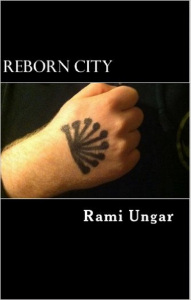
Reborn City, Book 1 of the Reborn City series.

As many of you know, I started this blog while working on a sci-fi series, the Reborn City trilogy. It follows street gangs in a dystopian future, and focuses mainly on the Hydras, a gang whose leaders have strange powers and abilities. At the very core of the series was a theme of overcoming various prejudices, especially racial and Islamaphobic. I self-published the first two books, Reborn City and Video Rage, and started work on the final book, Full Circle.

However, trouble started around the third book. Midway through the first draft, I realized the direction of the story wasn’t epic enough for what I wanted for the series. It neither provided the action, nor the catharsis needed to end the series. So I stopped working on the story, with the hope that eventually I could finish the series.

That was 2017. It’s 2020. And I’ve realized some things about the series. Things that made me change how I feel about those books, and about selling them to people. The biggest thing being that I’m a different person than I used to be. I’m not the same person I was when I first started writing those books.

Let me explain. When I first started that series, it was 2009, I was sixteen, and I was full of the naive, optimistic hope that most teens are filled with. That hope filled Reborn City and its themes of the power of tolerance, which I hoped would do some good in the world. I thought if I could take those themes and work them into a story, I could beat back some of the horrors that were plaguing the world.

In a way, I still think it’s possible to write a story and make a difference through literature. We’ve seen it with multiple books that have withstood the test of time and build conversations around difficult topics. I just don’t think the Reborn City books can do that anymore.

It’s now 2020. Eleven years have passed, I’m twenty seven, and I’m a lot more educated, as well as a lot more jaded, about the very issues I was writing about. I think we all are. We’ve seen too much these past several years, felt too much heartbreak and harsh realities. Knowing that, I look back at the Reborn City books and realize that those stories don’t fit their purpose anymore. It’s like you try to build a better hose to put out house fires, but you find out after the fact that what’s needed is a fire hose, and you built a garden hose. And the whole house is on fire.

See where I’m going? I can’t finish the books because I know the hose I’m building is inadequate, and I don’t feel right selling the books for the same reason.

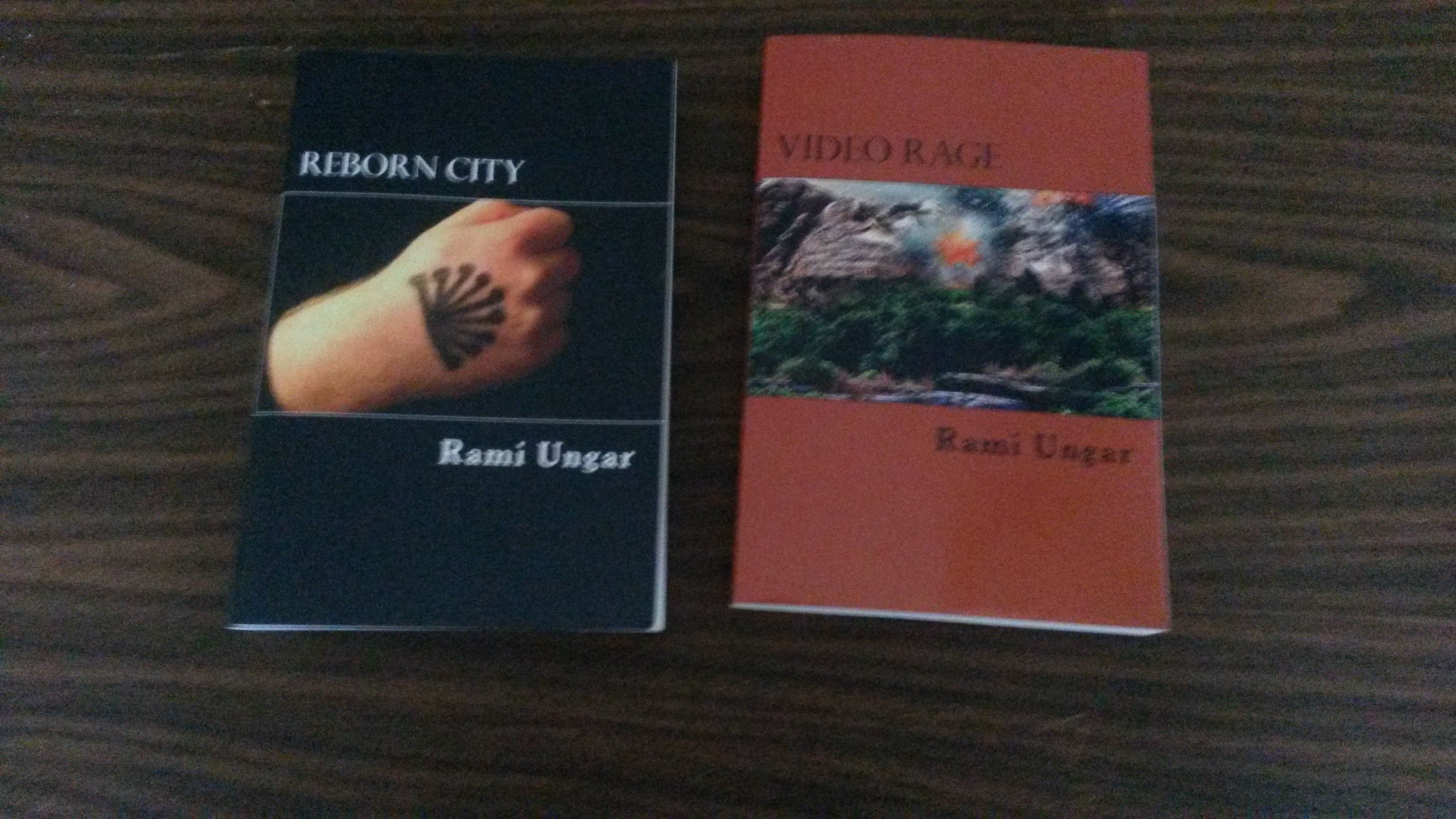
This, among other reasons, is why earlier this week, I made the decision to take both Reborn City and Video Rage off Amazon and Smashwords.

Reborn City and Video Rage. As of today, I’m not selling copies on Amazon or Smashwords.

Yeah, I can hear some of your shock. Believe me, I’m not happy about it, either. But it is what it is. I won’t sell a product (and make no mistake, that’s part of what I’m doing as a writer) that doesn’t work, and these stories just don’t work. You can maybe still find the last few paperback copies of them on Amazon, but after those are gone, that’s it.

That being said, there are a couple of bright sides. For one thing, I may revisit the world of Reborn City again someday. I still think there’s some potential with those characters and that world, I just need to write a story around them that works with what I know now. And in the meantime, I still like to put the issues I care about into the stories I write, like I did with Rose, or with River of Wrath. The latter of which, by the way, tackles some of the same issues Reborn City and Video Rage did.

Also, while those books are no longer available, my two other books that I self-published, the short story collection The Quiet Game: Five Tales to Chill Your Bones, and the horror-thriller Snake, are both still available. While those stories aren’t perfect, they’ve weathered the test of time better than the Reborn City books did, so I feel more comfortable putting them out there. I’ll include the links for them below.

I’m sorry to drop sad news on you on a Friday night, my Followers of Fear. But I thank you for reading, and for your understanding. Do know that I plan to keep putting out quality stories in the future, and I hope you’ll stick around to keep supporting me while I work on that.

That’s all for now, and I’ll be back soon. Until next time, stay safe and pleasant nightmares.


The Quiet Game: AmazonCreatespaceBarnes & NobleiBooksSmashwords, and Kobo.

Snake: AmazonCreatespace, Barnes & Noble, iBooksSmashwords, and Kobo

Rose:  Amazon US, Amazon UK, Amazon Canada, Audible

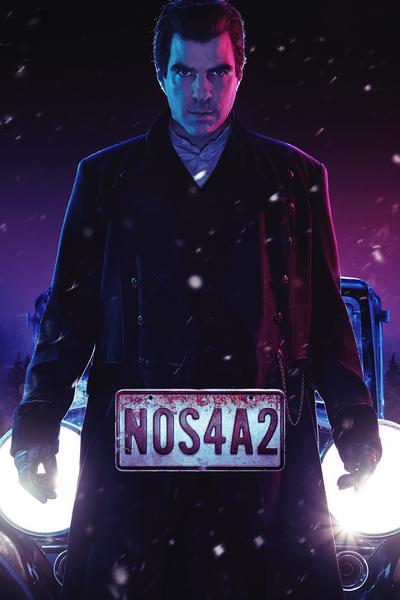
NOS4A2‘s TV series has been a highlight to my week during the pandemic. And given how well season one adapted the first half of the source material (see my review here), I was eager to see how well they adapted the second half, when protagonist Vic McQueen is a mom trying to protect her son Wayne from Charlie Manx.

I’m happy to report that season two is better than season one. Not only that, it’s great stuff.

Eight years after her first clash with the vampiric wraith Charlie Manx, Vic is struggling to be a good mom to her son while also battling her own demons. She hopes that life will improve when it’s reported that Manx is dead, but things are never that simple. Not only is Manx still alive, but he’s out for revenge against Vic. And he’ll use her own son Wayne to achieve that revenge if Vic isn’t fast enough.

What I liked about this season was that, while adapting events from the book, they added in things that contributed to the story. This was a welcome change from the first season, where they added crap like a halfhearted love triangle and Vic partying with rich kids right before a showdown with Manx. Highlights include the episode around the original character the Hourglass, the deteriorating relationship between Manx and his assistant Bing Partridge, and scenes involving Manx’s previously-unrevealed backstory.

I also liked how they fleshed out some of the side characters. Vic’s partner Lou Carmody gets plenty of time to shine and show what sort of person he is, rather than the love interests from the first season, who can be summed up as “rich kid who likes a girl from the other side of the tracks” and “stoner with a heart of gold and a crush on his childhood friend.” Another character who gets fleshed out is Millie, Manx’s daughter and his first victim. In this season, she takes on a central role as she starts to question her world and her father. It’s fascinating to see her discover so much about her father and herself throughout the show.

Add in some scares and tension, as well as some great acting and storytelling, and you get an awesome second season.

I do have some criticisms though. For one thing, while it’s cool to see how Charlie Manx came to be the monster he is, there’s too much emphasis on making him somewhat sympathetic. And you know what? I don’t want to sympathize with Charlie Manx. He’s a monstrous character who uses the kids he “rescues” while at the same time believing his own propaganda. I really don’t want to sympathize with that.

Another issue is that Craig, Wayne’s biological father, makes a few appearances in the latter half of the season, but it feels unfulfilled. We see him a few times, and then he’s kind of forgotten. I would have liked to see him utilized a bit more at the end of the season.

On a scale of 1 to 5, I’m giving NOS4A2 season two a 4.8 out of 5. It’s a freaky, thrilling ride that improves on the first season and makes revisiting this world a pleasure. There’s a possibility that a third season might happen (whatever that might look like), so you might want to grab your seat belt and catch up on the series while there’s still time.

That’s all for now, my Followers of Fear. I’ll be posting another review soon, as I bought advanced tickets to see The New Mutants in theaters. That’s right, I’m going to a movie theater. And should I survive the experience, I’ll hopefully have a new review for you all.

Until then, stay safe and pleasant nightmares!

Folly Beach, the beach Ramsey and I visited, and which is the setting and inspiration for this latest story.

Two stories finished four days apart. Not sure if I’ve ever done that before.

So remember when I mentioned my buddy Ramsey and I visited a beach called Folly Beach in my Impressions of South Carolina post? Well, Ramsey is just barely able to tolerate horror. I know, odd considering he’s one of my best friends ever, but it’s true. Anyway, I decided to take advantage of this and mess with him before it was time to leave by making him think, even if just for a second, that something out of a horror situation was happening to us on that beach at that very moment. And you know what? He bought it, if only for a moment.

Obviously, it was funny, but it was also the basis for this story, Folly Beach. I basically  imagined what might happen if that situation I got Ramsey to believe in really happened, changed some names and added some events to make things more interesting. The result is Folly Beach, a new short story just under thirty-eight hundred words.

Yeah, that is pretty short for me, I know. Still, I didn’t think it would be long to begin with, and happy with the results.

So, what’s next with this story? Well, I’ve already sent it to Ramsey to read and laugh (or scream) over. And I’m looking for beta readers to take a look at it and give me some feedback. My hope is to have a second draft done by the end of September/early October, in time for a particular publication’s submission window to open. I don’t think I’ll get in, given that it’s a hard publication to get into, but when I have something that fits its word count limit and I think would be a good fit, I have to try.

And in the meantime, I’ve already figured out what I’m going to write next (though I’ll probably wait a couple of days before I start on it). Yeah, no matter what, I keep busy.

Well, that’s all for now, my Followers of Fear. I’m sure I’ll have more to say in the coming days. Maybe even as soon as tomorrow (though if I do publish a post tomorrow, I’ll be going to bed soon after! I can’t do these late nights as much as I used to).

Until next time, stay safe and pleasant nightmares!

Cover of the first Hellraiser film.

If you’re not familiar with the Hellraiser series, let me start with a bit of background. Based on the novella The Hellbound Heart by Clive Barker,* the films follow a magical puzzle box which, when solved, open a gateway to a hell dimension inhabited by creatures known as Cenobites. Anyone who comes into contact with the Cenobites is then pulled into their world, where the boundaries between pain and pleasure are explored until they all blend into suffering. All the films in the series follow people who come into contact with the puzzle box, with the fourth film exploring the puzzle box’s creation and history, though only the first four were released theatrically.

I saw the first three films years and years ago, but was recently spurred by a colleague rewatching some of the films to revisit them and finally watch the fourth one. And I have some thoughts on the series.

For one thing, I get the appeal of the series, which first released in the 1980s during the height of the slasher boom. However, unlike other slashers of the time, which focused either on silent killers like Jason or Michael Myers, or funny, over-the-top characters like Freddy Kreuger, the Hellraiser films were outliers. The monsters of those films weren’t silent stalkers or wise-cracking undead. They were more like scientists of sensuality and suffering rather than killers. Death was just sometimes part of their work (at least for the first couple of films). In fact, in the first few films, the lead Cenobite Pinhead, nearly always played by Doug Bradley, is articulate, intelligent, and dispassionate except when speaking of his work.

In addition, the first two films don’t follow a regular slasher structure. Instead, the focus shifts around to various characters and their motivations, making the films feel almost like novels in how their stories are told. And the first two films also have a surreal aspect to them, especially the second one, which adds to the feeling of horror and unreality that the films are going for.

And finally, the films weren’t focused on gory deaths. They focused instead on desire, on what made people do horrible things in exchange for their wants and needs, even if those wants and needs included horrific sadomasochistic experiments. If that sometimes led to death, then so be it.

Pinhead, leader of the Cenobites and the most prominent character in the series.

Given all that, I can see why the films were popular and have stuck around. That being said, I can see how the series fell in quality as early as the third film. While that one was good, it structured its story in the vein of a more traditional, good-vs-evil supernatural slasher. It also eschewed the more weird aspects and added in some campier aspects with some of the new Cenobites. And then the fourth film, while giving a history to the puzzle box and an “ending” for the series, sacrifices quality and scares in the process.

It’s really no wonder the series went to direct-to-video from there on out, or why the subsequent films have tried for a more psychological approach rather than an out-and-out gory supernatural style.**

Despite all that, the first two films, while they have their issues, are still masterpieces and the third film is worth a watch (though I would stop after that). And, like all good slashers, the very concept is powerful enough to make you want to see more. to explore more from the safety of your living room. It’s why the series has endured, and why a reboot and a TV series are both in development (though we may not see anything new for a long, long time).

And if I’m being honest, I wouldn’t mind a reboot. This series has gone through so many ups and downs, a fresh take done with love for the original concept might just be what the series needs. And if one does get made, I hope antagonist Julia would be given a bigger role. She was such a powerful character in the first two films that at one point, it was considered giving her the role of main antagonist over Pinhead, and I think the character’s exploration of her own darkness and sexual desires would go over well with modern audiences.

And if you’re interested in checking out the Hellraiser films after this post, here’s where I’d rate them on a scale of 1 to 5:

Any other Julia fans out there?

  • Hellraiser – 4.3
  • Hellbound: Hellraiser II – 4.5
  • Hellraiser III: Hell on Earth – 3.9
  • Hellraiser: Bloodline – 2.6

But tell me, what are your thoughts on the Hellraiser franchise and my observations? Do you support a remake? And is there anyone else here who thinks Julia is much more terrifying than Pinhead? Let’s discuss.

That’s all for now, my Followers of Fear. I’ll likely have a new review out soon, so keep an eye out for that. And until next time, stay safe and pleasant nightmares.

*Which I really need to get around to reading one of these days.

**Or so I’ve read. I have not seen anything past #4 yet, and I’m not sure I want to.

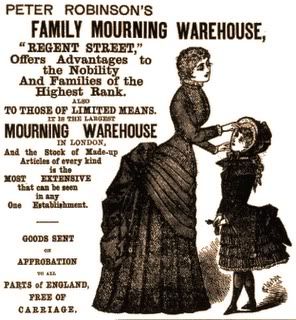
Ad for Black Peter Robinson’s Mourning Warehouse, and the image that inspired this story.

Wow, what a mouthful of a title. And what a story! I have a good feeling about this one.

But I’m getting ahead of myself. Let’s start with the point of this post: just a few minutes ago, I finished a new novelette. Titled “The Ghost of the Mourning Museum,” the story follows a man on vacation in the UK who visits the Museum of British Mourning.* While there, he encounters a little girl who says she’s the daughter of a mourning warehouse owner who died in the 19th century. As it turns out, the museum is haunted by that girl’s ghost, and seeing her is said to herald your death.

So yeah, if you read my post on the cult of Victorian mourning rituals, you can see how that might fit into this story. In fact, quite a few of my interests made their way into this story. Tarot, for instance; I was struggling at a certain point in the outlining stage of what should happen to my protagonist, so I just gave him a Tarot reading. I then pulled out my own deck, and used that to perform the reading for my character. What the cards gave me ended up propelling the story forward in just the right way.

And because I’d been to Britain on a study abroad trip years ago, I got to include a little bit of my experience in the story. Not much, but a little.

So, what’s next for this story? Well, at 10,535 words, publications are going to be very selective with what they’re willing to accept. That being said, I think this story has potential, so I’m going to find a few beta readers to give me feedback. Once I have that feedback, I’ll use it to spruce up this story. And then, once that’s done…who knows? At the very least, I’d like to get it out there and see if anyone else enjoys the story.

For now though, I’m drinking some beer and retiring for the night. Goodnight, my Followers of Fear. I’m sure we’ll catch up at some point this weekend. But until then, stay safe, pleasant nightmares, and…holy crap! WordPress informs me I’m past a hundred thousand views on this blog! Everyone, thank you so much for continuing to read this blog and support my writing career. You can’t imagine what it means to me. I hope you’ll continue to support me as I work on getting more stories out there and reaching my full potential as a writer.

Until then, pleasant nightmares!

I know I said that already. I don’t care.

*For the record, there isn’t a real Museum of British Mourning. I just made it up for the sake of this story. However, if one does come into existence in the future, I hope the museum will give credit where credit is due and make me part of the museum’s operations in some way.

Queen Victoria and her grandchildren by her daughter Princess Alice, mourning their mother and sister Princess Marie.

Yes, this is another Victorian England post. Don’t worry, it’s going to be relevant to horror and to the stories I write, believe me.

During my research into the era, I found that the Victorians really had a thing for mourning. In fact, they made ritualized mourning into something of a fine art or a pseudo-religious practice (hence why I call it a cult). You know how during a funeral, it’s tradition to wear black? Victorians took that to extremes: when someone you know died, you were required to mix black into your clothing, how much depending on your level of closeness to the deceased. A widow would have to wear full black clothes, usually made from crepe fabric; a child would wear black with white cuffs and frills; and servants would wear black bands around their arms (maids could also wear one around their caps or bonnets, or fully black caps and bonnets).

Also depending on the closeness to the deceased would determine the length of the initial mourning period. Yeah, you read that right: initial mourning period. For the Victorians, there were stages of mourning, particularly for close relatives. For widows, for example, the initial mourning stage could last up to two years, during which time they could only wear black clothes and black jewelry; black clothes was hung on mirrors and windows; and they were to refuse all socializing. Any letters they sent out had black borders, and it was encouraged for them to forget the outside world to focus on the deaths of their husband.

Of course, this was slanted very much towards women: men were allowed to wear only a black armband and go out because they were typically breadwinners. They could also remarry or enter the social scene sooner, because men were expected to have wives to take care of them and a mother for any children.

Furthermore, only women from the middle or upper classes took part in the full mourning ritual. Women from the lower classes, while still wearing black, would have to go out to earn a living. If one could be earned, of course; I’m not entirely sure, but I think I read that women could have difficulty finding work during mourning, if they previously weren’t working. In fact, many women and families went into debt or became homeless by observing mourning rituals.

Why did they do all this? Part of the reason may have been Queen Victoria herself: when her husband Albert, Prince Consort, died, she went into lifelong mourning for him, wearing black for the rest of her life and refusing to remarry. For a time, she even retreated from her royal duties. This inspired the cult of mourning and its associated rituals.

Part of it may have also been (and this is just my hypothesis, but I could be onto something) the resurrection men, grave robbers who stole bodies and sold them to medical schools for anatomy lessons. Back then, there was a huge demand for bodies at medical schools, but never enough supply, so resurrection men would step in to meet the demand (as well as be paid handsomely for it).* And because not everyone could afford safeguards to keep their coffins from being raided and stealing a body technically wasn’t a crime yet, all resurrection men had to worry about was getting caught by an angry mob.

Ad for Black Peter Robinson’s Mourning Warehouse, and the image that inspired my current story.

Regardless of what caused it, the cult of mourning existed, and everyone was expected to obey, especially married women. To fail or to opt out was to be accused of never having truly loved or been family with the deceased, or to be cold and cruel.

And where there is devotion, there is money to make off it: while poorer families would dye their clothes black or got them secondhand, those who could bought them from specialized “mourning warehouses,” department stores that sold mourning wear, as well as coffins and items associated with mourning. Some even rented out hearses and horses for their clients! Some of the biggest were the London General Mourning Warehouse, or Jay’s, and the Black Peter Robinson Mourning Warehouse.

But wait, there’s more! Post-mortem photography was also popular during this period. Photography was a lengthy and expensive process, so many families would only get photographs of their loved ones when they’d just passed. They would then be posed and prepared to look like they were sleeping, often next to living family members. Rather than morbid, this was seen as a good way to remember the dead and help with grief.

A post-mortem photograph. Because of course I would include one.

Of course, a lot of this fell out of fashion in the early twentieth century, first among the upper classes and then trickling down to the lower. Cheaper funeral practices became preferred, and post-mortem photography became unnecessary as getting a photograph became easier and more affordable. Today, only characters in books and neo-Victorians still practice any of these (yes, that’s a thing, but for another post).

And yes, resurrection men are largely a thing of the past.

Why do I bring this up? Well, besides being interesting, the story I’m writing now focuses on Victorian mourning to an extent, and doing some further research into Victorian mourning practices made me want to blog about them. So thank you for coming to my TED talk (I love making that joke).


That’s all for now, my Followers of Fear. I’m sure I’ll be back soon with more to rant or gush about. In the meantime, thanks for enabling my love of the Victorian era. And until next time, stay safe and pleasant nightmares!

*H.H. Holmes, one of America’s first recorded serial killers, did this with his victims, which leads me to think he was more interested in making easy money than in killing.