Posts Tagged ‘writing’

Happy New Year, my Followers of Fear! And what’s the best way to celebrate the new year? How about a new book?

Right now, all my books are on sale from January 1st to January 14th. So if you’re looking for something new to read and you’d like to support an independent novelist while you’r at it, you can check out my books, their descriptions, and the links below. Have a good read, everyone!

Snake

How far will you go for love and revenge? When a young man’s girlfriend is kidnapped by the powerful Camerlengo Family, he becomes the Snake, a serial killer who takes his methods from the worst of the Russian mafia. Tracking down members of the Camerlengo Family one by one for clues, the Snake will go to any lengths to see the love of his life again…even if it means becoming a worse monster than any of the monsters he is hunting.

Available from Amazon, Createspace and Smashwords.

Reborn City

Zahara Bakur is a Muslim teenager recently moved into the gambling town of Reborn City. After her parents are killed by gang violence, Zahara is forced to join the Hydras, an interracial gang whose leaders have supernatural abilities. As the violence in Reborn City escalates and Zahara becomes closer to the Hydras, including the quiet but stern Rip, she finds herself drawn into a dark conspiracy involving the origins of the leaders and the shadowy corporation that rules over Reborn City.

Available from Amazon, Createspace, and Smashwords.

The Quiet Game: Five Tales To Chill Your Bones

In his publishing debut, Rami Ungar brings us five terrifying stories of darkness in magic. You can experience the strange visions of a man battling sex addiction in “Addict”. Or feel the wrath of an enraged dybbuk in “Samson Weiss’s Curse”. Face your fears in Gene Adkin’s Murder House in “I’m Going To Be The Next James Bond” and then journey with a young autistic “In The Lady Ogre’s Den”. But most of all, prepare to play the most insidious game of all: The Quiet Game.

Available from Amazon, Createspace, Barnes & Noble, and Smashwords.

Remember my article on Self-Published Authors Helping Other Authors about when was the best time to publish a book? One of the recommendations I gave in that article is that during the first two weeks after Christmas, independent authors have a good chance of selling more books. One woman even claimed she was able to make enough money to write full-time by doing sales after Christmas every year.

Well, I don’t think I’ll make that much money and I know it’s been a few days after Christmas, but I think I’ll try this out and see what it gets me. From January 1st-January 14th, all my books–Snake, Reborn City, The Quiet Game–will be on sale, especially the e-books. So if you’re looking for something new to read this new year and you want a new scare or some new sci-fi in that new book, this might be your opportunity.

I look forward to enjoying your new fiction with you in two days’ time. Until then, have a good one, my Followers of Fear!

So I stayed up way too late last night working on Laura Horn, and I’m happy to say that I’ve reached another milestone in the editing process. Now, for those of you who don’t know, Laura Horn is a novel I wrote during my third year of college at Ohio State, and follows a teenage girl with a tragic past who comes across a conspiracy against the US government and finds herself in the position to stop it. It’s kind of like White House Down or Olympus Has Fallen, only instead of some hunky action hero, you’ve got a teenage girl trying to sort through her inner trauma.

Yeah, that’s a story I wrote, and I’m making it work somehow. It’s no harder to believe than a teenage girl taking on a government that kills a bunch of its citizens’ children in an annual death game or forces its youth to choose factions based on their personalities, anyway.

Anyway, the novel is divided into seven sections, including the prologue and epilogue, based on what happens in those sections. Last night I completed editing on the last two chapters of Part III, which means I’m a little more than halfway through editing the novel. To which I say, “Hooray, I’m making progress!”

And I remember thinking that the first draft of this novel might be a little too hard to believe. I don’t mean that like I meant the examples above, I meant that while the story itself would make a great novel, the way it played out in the first draft wouldn’t work. I actually considered rewriting the story so that the story seemed slightly more plausible. But then I decided to take a chance and start editing the first draft, see if I could still make a great story with the material I already had.

Sure, some parts of the story needed to be seriously changed, several chapters have been combined, and one I actually threw out because it became unnecessary, but all in all this story turned out to still be workable and make sense. And slowly, gaining speed as I worked through more and more chapters, I’ve fallen in love with this story and I’m very close to finishing up this draft.

So at this point, I’ve about twenty-four chapters left to work through (assuming I don’t combine any more of them or chuck one or two more out). I think I’ll start on the next chapter after I have lunch, and see where it gets me. If I’m lucky, I can get another two chapters out of the way, and maybe be done by the middle of next month.

So wish me luck, my Followers of Fear. Because this afternoon, I’m going into full editing mode, and I can’t wait to see what I come up with during that time.

Now before I start this review, I need to do a little background: Five Nights at Freddy’s is a video game series created by game designer Scott Cawthon that follows a security guard trying to survive a week at a haunted pizzeria filled with killer animatronics (yes, that’s what it’s about; read here for a fuller explanation on the game and its popularity). The game has proven extremely popular, spawning three sequels, an upcoming RPG game, a movie that I’m excited about, and was a large part of YouTube’s annual Rewind video this year.

The game’s popularity is due in part to simple gameplay paired with a surprisingly challenging game, terrifying visuals and sounds combining to create a tense atmosphere, and a lore that tons of people have been trying to make sense of and put in a timeline since probably the very first game (seriously, search “FNAF theories” on Google. I’ll wait). And these people were excited to hear that Cawthon had teamed up with a writer to produce a novel based on the games, hoping that it would lead to an explanation.

Unfortunately for them, that’s not the case. While the book is kind of canon according to the creator, it’s kind of like an alternate universe’s version of the story of the games, a retelling of the story in the form of the novel with most of the elements of the games.  It doesn’t actually explain the lore of the games.

That being said, I decided to check the book out anyway. I like the series, I wanted to know if this could be a clue to what the movie could be about, and I like a good scary story. With that in mind, I downloaded it onto my Kindle, and read it all in three days.

So with that background out of the way, what did I think of Five Nights at Freddy’s: The Silver Eyes? Well, I thought it was an average horror story at best. Not too say that it was totally bad, it had some things about it that I liked. I just felt that it didn’t have as much effort put into it as could’ve been put in.

So what’s the book about? FNAF: The Silver Eyes follows Charlie, a young woman who’s father was the owner of the original Freddy Fazbear’s Pizzeria, and who’s returning to her hometown with her childhood friends to confront their pasts with the restaurant. Along the way they find the restaurant, and go in, leading to all sorts of chaos as they awaken the evil sleeping within.

I did like how the author sets up scenes, and the characters other than Charlie have enough personality to them to work for a slasher-style novel. The flashbacks are handled pretty well, and there are ideas here in the story that I liked. The climax is exciting enough, and despite what some theorists and even Cawthon the creator says, I felt like the book answered a lot of questions that I had about the games’ lore and mythology. Those are positive things, in my book (pun totally not intended).

I expected more from a story based around these characters.

However, there was a lot that I didn’t like. For one thing, I don’t get why the teens kept going back to the restaurant. I mean, they went enough that everyone could see it and relive their childhood memories, but why did they go back after that? I didn’t really get it. Not to mention that a lot of elements from the games weren’t present in the book: the animatronics don’t really come to life until much later in the story, which I found weird considering that they’re active from Night 1 in each game, and that the Puppet character from the second game, which a lot of fans of the games love, was noticeably absent from the story. And even if I wasn’t familiar with the games and didn’t have theories about it, the way the story’s told makes certain things obvious (from the moment we meet one character, we just know he’s a bad guy), which took some excitement and scares out of the story. Plus the conclusion felt sort of half-done, like they’d left something out in the final draft. That definitely brought down my enjoyment of the story a little.

There was also some sloppy editing in the story that, as a novelist, I disliked. Indentations at the beginning of paragraphs or even for entire paragraphs vary from paragraph to paragraph, certain scenes or settings aren’t written very well, and at times I found myself aghast at certain things the story left out: for example, at one point a character says he can see the moon, but another character next to him can’t. Why? Is there something in the way? Is it a height issue? It’s never explained. And not too long afterwards, one character hears a music box and tells the others to be quiet. One character says he then hears it too, but we don’t get clued into if the other characters hear it too. Now those are small details, but they are important for good storytelling, and I could not believe those parts weren’t cleaned up during editing.

All in all, I’m giving Five Nights at Freddy’s: The Silver Eyes a 2.6 out of 5. I feel like if maybe Scott Cawthon and Kira Breed-Wrisley, the author he worked with, had maybe spent more time on the story, maybe called in an editor and some beta readers for feedback, the story could’ve been a great horror novel as well as an explanation of the events of the games. As it is, it’s good for demystifying the lore, but if you want more than that you probably won’t get it.

I just hope this isn’t the basis of the movie’s script, because then the movie’s going to suck.

It’s Friday again, so you know what that means. It’s #FirstLineFriday! And since today is Christmas, I wonder if I should a Christmas edition #FirstLineFriday or be a typical Jew and say, “Bah, humbug.” Hmm…okay, I’ll do a Christmas edition. Just as long as I still get visited by three ghosts.

Alright, for those of you who don’t know the rules of #FirstLineFriday, here they are:

  • You write a post on your own blog titled #FirstLineFriday, hashtag and all.
  • You explain the rules like I’m doing now.
  • You post the first one or two lines of a potential story, a story-in-progress, or a completed or published story.
  • You ask your readers for feedback.

Like I said, I’m doing a Christmas edition. Speaking of which, can you imagine a Christmas story from me? A Jewish horror writer? God, that story would probably not just be scary, it would probably make you rethink the holiday a little.

Well, I do have an idea for a Christmas-themed novelette written down somewhere, and here’s what the opening would probably be like. Enjoy:

Rob swore that if Chrissy didn’t calm down and shut up, he was going to smack her hard enough to knock her into the New Year. And he didn’t give a damn who saw him do it.

Thoughts? Errors? Let’s discuss.

Well, that’s all for now. For all my Christian readers, I wish you a Merry Christmas. For the rest of us…at least we get a really awesome Christmas Special from Doctor Who every year, right? And the movie theaters and Chinese restaurants are open (yeah, that’s a Jewish stereotype that’s actually true), so at least we’re not stuck in the house. Oh, and it’s still very pretty around this time of year, so that’s a plus. See? There’s always a silver lining.

Anyway, have a good weekend my Followers of Fear. I hope to have some good news out this Sunday, so be on the lookout for that. Also be on the lookout for Krampus, I hear he’s punishing bad kids this year.

Until next time!

It’s Friday again, so you know what that means. It’s #FirstLineFriday! Also known as “that blogging trend Rami Ungar’s trying to start with mixed results.” Here are the rules:

  1. You write a post titled #FirstLineFriday (hashtag and all)
  2. You explain the rules like I’m doing now
  3. You post the first one or two lines of a potential story, story-in-progress, or completed or published work.
  4. Finally, you ask your readers for feedback.

This week’s entry comes from another story I came up with in high school, and it has some influences from both Stephen King and some slasher movies from the 80’s. Enjoy:

She had to hide, and quickly too. Mitch was coming, and he sounded angry.

Thoughts? Comments? Let’s discuss.

That’s all for now. I’m glad the weekend is here, especially since that means Star Wars has finally arrived. I’m going to see the movie Tuesday during a matinee performance. Should be good (but if anyone spoils the film for me, I will make them regret it). Have a good weekend, my Followers of Fear!

Recently I read an article about eleven recent novels that Stephen King apparently found scary. Being the fan of His Royal Scariness that I am, I checked out the article and found this book at the top of the list. The premise sounded interesting, so the next time I had a credit for an Audible audio book, I got A Head Full of Ghosts by Paul Tremblay, which is about a young woman who tells us her memories of when her elder sister started showing symptoms of schizophrenia, but when treatment after treatment seems to fail, the family comes to the conclusion that the sister is possessed, and somehow a reality show documenting the family’s attempts to exorcise their daughter evolves.

Like I said, it sounded interesting, and it was, though I wouldn’t call it scary. I mean, there are a few moments that can be terrifying, but even imagining them as a horror movie in my head, I didn’t really feel that it was as scary as King hyped it up to be.

Still, A Head Full of Ghosts is definitely not a dull read. In fact, it’s quite entertaining. The main character and narrator, Meredith “Merry” Barrett, is one of the most enjoyable types of narrators, the unreliable kind (see my post on unreliable narrators). Eight years old at the time of the events of the novel, she tells them anew to a writer for a new book in the year 2030 (which apparently still values paperbacks and blogs. I find that reassuring). As she tells us early in the novel, she misremembers a lot of what happened, due to the passage of time and of course what everyone has told her has happened.

To a certain extent, most of the characters in this novel is unreliable to a degree. We can’t tell what’s up with the older sister: is she possessed, is she schizophrenic, is she something we don’t have a word for? The things she says and does, you get a lot of conflicting signals. I have my guesses, but you really don’t know at all, right up to the end. The father is struggling because of unemployment (I sympathize) and has recently rediscovered God and begins to see everything through a religious lens with disastrous results. The mother seems to be perpetually grumpy and wavering between trying to be in control and trying to be responsible as her life unravels. The priest from the Catholic Church seems priestly, but underneath that you get a sense that he’s milking this situation for his own reasons. It’s amazing how little you can actually trust these characters.

My favorite parts of the novel involve segues into a blog by a horror fan (a woman after my own heart) where she gives us an idea of what watching the reality show was like, as well some good ol’ scholarly examination of some of the show’s deeper meanings. And all with a snarky voice too. These segments are hilarious and fun, but they also help us as readers put the story and characters into context and prepare us for future events in the novel.

Another part I enjoyed about the novel is just seeing Merry and her family experience her sister’s illness/possession/whatever and then the craziness that is being the subject of a reality show, how fame has its downsides, how the show and the ordeal brings out the worst in her family, how her relationship with her sister becomes strained by all these events. It’s a very engrossing evolution.

One problem I do have with this novel (besides the fact that I never really found it scary) is that we never really see Merry outside of the context of her family or the show. Not even when we see her as an adult, because it’s fairly obvious that her family and the show has affected the adult she’s become. I would’ve liked to see Mary outside of the context of the family or the show, maybe in the company of friends or her soccer program. Those aspects of her life are mentioned, but they’re not really delved into, and I think she would’ve been a fuller character if we saw that her family and what’s going on around it isn’t entirely what defines her.

Oh, that and I didn’t particularly care for the audio book’s narrator. I mean she was good, especially when she was voicing the older sister, but when she does male voices, especially the father character’s voice, it sounds like every daughter’s impression of her embarrassing father or teacher. Just not convincing at all, more comical than anything.

All in all, I give A Head Full of Ghosts a 3.9 out of 5. It’s not as scary as I’d hoped it would be (or maybe I just listened to it wrong), but it’s psychological, it’s entertaining, and you want to see it through to the end. If you’re looking for a book that’s like The Exorcist with a modern twist, this might not be for you. But if you want to read something with dark subjects but you’d like to sleep at night, I think you’ll find this book fits the bill.

Smile Dog, a creepypasta character.

Recently I’ve been delving into a genre of horror that’s grown up on the Internet, and I have to say some of it is quite impressive. I’m talking, of course, about creepypastas.

Now, for those of you who’ve never heard of this and think I’m talking about a Halloween treat, a creepypasta is actually kind of like an Internet campfire ghost story, scary stories designed to shock and terrify and that originate online.  They’re sometimes accompanied with images, audio or videos, usually distorted or featuring or gore or creepy imagery, in order to intensify the effect. The name “creepypasta” comes from “copypasta”, a slang term for text that is copied and pasted around the Internet multiple times.

And even if you’re not familiar with creepypastas in general, you may have heard of some. Slender Man, whom I’ve written about on this blog before, has been the subject of numerous creepypastas in the past, to the point where some creepypasta-devoted websites no longer upload new literature about ol’ Slendy. There’s also the novel Penpal, which started out as a series of creepypastas, and Candle Cove, a story that’s reportedly being adapted to television by the Syfy channel.

Slender Man has been featured in a variety of creepypasta.

Now while the length and quality of creepypastas, like every other type of fiction, vary from one to the other, there are some ways to categorize them:

  • Anecdotes: as far as I can tell, these are the most popular of the creepypasta story form. The narrator(s), often anonymous, talks about a scary legend, a new story, or something from their past. The anecdote stories are often told in the epistolary format, or in the form of a letter or journal entry, though this being an Internet phenomena they’re more often told as blog posts or Reddit threads. They’re certainly my favorite form of the genre.
  • Rituals: As the name suggests, these are things you can do to make something terrifying happen to you or someone you know. Examples include the Midnight Game or Bloody Mary (which I’ve tried on numerous occasions, and I’ve never seen any results). Sometimes these rituals have a short backstory, but they can vary, like with the Bloody Mary game. And as you can guess, these are quite fun at parties.
  • Lost Episodes: This form has kind of fallen out of favor but it has some pretty famous creepypastas. Lost episodes usually describe a missing scene or episode from a famous TV show, usually a comedy or children’s show, that depicts a character acting very strangely and violently, usually ending in that character killing themselves or the other cast members. Often times the episodes, when they are supposedly found, feature strange or distorted audio and video, and occasionally are rumored to cause violent behavior in viewers. As you can guess from the description, these are pretty formulaic and repetitive, which is why they’ve lost popularity, though some are quite well known among creepypasta devotees.

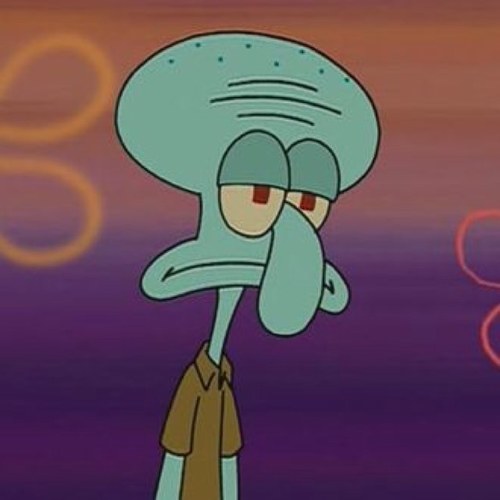
Squidward Tentacles from Spongebob Squarepants has been the subject of a Lost Episode creepypasta. You can probably guess the rest.

As I said above, there are entire websites devoted to the creepypasta genre and droves of fans, some of whom create their own stories and upload them online. What makes this genre so popular? Well, I’m still pretty new to the genre, but I think that there are several factors that may explain this popularity. One is that creepypastas tend to be a bit more extreme than mainstream horror. They’re often accompanied by scary imagery or some other strangeness, and that adds to the creep factor. There’s also the very subject matter of creepypastas: with some stories, you can take elements from them and create your own stories. Slender Man is a character who’s been featured in a variety of media, and plenty of people have made creepypasta based on him. And then there’s the virality of creepypastas: you’re encouraged, by their very nature, to keep sending them around and around the Internet. There’s a certain power in that very concept that’s exciting, and encourages creators as well as readers.

It’s especially interesting when you consider that this is a genre born on the Internet, which has the reputation of having content geared towards people with short attention spans, and also is sometimes considered the gathering place of creators who couldn’t make it in the “real world” (eye roll please?).

Personally, I think creepypastas are quite entertaining. Some of the stories are very good, very creepy, and I enjoy listening to readings of popular creepypasta by YouTube artists. I know some people find them too extreme or that they lead to violent behavior (a subject for another time, not going into it here), but I see it as no different than enjoying a Stephen King story or going to see the latest scary movie. Just a different format with different rules that I would like to learn (though not write; by the very nature of creepypasta, I wouldn’t have as much creative control or make some side income off my work. Maybe I’ll try writing in the style though for a novel someday).

If you’d like to try some creepypasta, here are some good ones I’ve come across. If you check them out, let me know what you think:

Are you a fan of creepypasta? What is it about them that you like or dislike?

What are some creepypastas that you’d recommend trying?


I’ve been wanting to see this movie for months, and this evening I got the chance. Let me tell you, it was everything I’d hoped it would be.

Now, if you’re unfamiliar with the Krampus story, let me do some background: Krampus is a being whose origin dates back to ancient pagan beliefs, and he’s particularly well-known in central and northern Europe. While St. Nicholas is supposed to reward good children, Krampus would punish the bad children. Normally portrayed as a big, hairy demon with horns, he would leave coal, hit the bad kids with birch twigs, and/or drag the kids to wherever Krampus hangs out the rest of the year, depending on who you ask. On December 6th each year, plenty of cities and towns have Krampus Night, where people dress up as Krampus and have a parade chasing people around the town (sounds like fun).

In this movie, Krampus is summoned when a family loses the Christmas spirit, and proceeds to abduct each one of them to take them to the underworld. And let me tell you, from the very beginning, when you see an entire superstore torn apart by shoppers desperate for Christmas gifts, to the twist ending, Krampus is just excellent. It’s so well-written, with the writers (one of whom is the director and also directed the Halloween cult classic Trick ‘r Treat) taking us through a comedy film that manages to do all the horror tropes but remain funny throughout without being too obvious or self-referential. There’s never a dull moment, keeping your attention glued to the screen no matter what’s happening. The actors are also great, with most of them seeming like they’re either being themselves or playing around rather than doing any real acting, and just adds to the fun of the movie.

My favorite part of the film is the visuals, Krampus goes all out to make this the most visually interesting film ever. Except for the CGI gingerbread monsters (yes, there’s that in this movie), the monsters are all done with make-up and animatronics and actors. To say the least, they are terrifying, but what’s really interesting is that so many of them look like they’re pretending to be people in costumes instead of actual monsters. I’m not sure if that’s part of the humor or if that’s some sort of commentary on the Christmas season, but I like it. And I still would probably hide from these monsters if they showed up at my door on Christmas (thank God I’m Jewish).

Another thing I loved about Krampus is how it finds so many ways to make fun of the Christmas season. From the opening sequence’s critique of the commercialization of the holiday to the family’s interaction’s with each other to showcase how little time we actually devote to being nice and generous around these holidays, this movie finds all sorts of way to point out what’s wrong with the Christmas season. And maybe it’s because as a Jew I find the Christmas hype a little annoying at times, but I just love every second of it. And if you’ve ever been annoyed with how people treat Christmas or act around this time of year, you will love it too.

The one critique I would give this film is that when we finally get a good look at Krampus, he’s actually not that intimidating. He looks like someone took a Father Christmas costume, stuck on horns, lots of fur and chains, and added really bad teeth to the mask, looking more like that old rat Nicodemus from The Secret of NIMH than an actual demon. And maybe that’s because the other monsters are just so scary that the filmmakers decided to make Krampus look a little comical, but I would’ve preferred it they actually made him a bit more terrifying.

Overall though, this is a very fun movie. Is it something that’ll become a staple at Christmastime? Maybe not, but I think that the film has enough going for it that we’ll find good reason to revisit it every December. Especially if we want to remind ourselves how not to act around Christmas, or if we want to imagine certain politicians we dislike getting a visit from Krampus (I can think of about three or four right now).

On a scale of 1 to 5, I’m giving Krampus a 4.6. It’s funny, memorable, and reminds you what this season is really all about. Go check it out and have a good laugh.

I’ve been wanting to do a post like this for a while now, but I only got around to it now after a friend of mine did it on her blog and I thought to myself, “Yeah, might as well get my butt in gear and do this already.”

So anyway, if you’re unfamiliar with the Bechdel test, it’s used to measure how feminist a work of fiction, usually a film or a novel, is. It was first created by cartoonist Allison Bechdel for her comic strip Dykes to Watch Out For, and has since become used in academic circles and with critics.

Here are the criteria for passing the Bechdel test:

  1. You have two female characters (sometimes having them named is a requirement, and I’ll do that here).
  2. They actually have to talk to each other.
  3. They have to talk about something other than a guy.

On that last part, I usually take it to mean talking about a guy who is in some sense romantically linked to one or both characters. After all, a lot of stories focus solely on a woman’s quest for love or marriage, and that’s it, and I feel like that’s what this test was designed for. And what if the two women are detectives and they’re talking about a suspect who’s male and how he’s difficult to bring to justice? That should be worthy of passing the Bechdel test.

Now before I begin, I want to make one thing clear: I don’t see this test as the end-all test for how feminist a work is. While some do use the Bechdel test in that capacity, I see it more as a tool to examine various works of fiction and promote discussion, rather than as the only way to get a work to be called feminist. Heck, even film organizations who use the test when rating a movie do it mostly for collecting information on gender inequality in films and to make viewers aware of that same gender inequality more than anything else.

So without further ado, here’s how my novels (I’d do the short stories as well, but there’s a lot of those, so I’ll pass) do with the Bechdel test:

  • Reborn City/Video Rage. I place these two together because they’re part of the same series. And they do pass the Bechdel test with flying colors. There are several named female characters in RC, particularly protagonists Zahara Bakur, Ilse, and Iori. And they do talk to each other about a lot of other stuff besides men, including the gang situation in West Reborn and how being a gangster is not for the faint of heart (a problem for Zahara considering she prefers peace and harmony to violence and gun fights). Similarly in VR, there are at least four or five named female characters, including the ones I mentioned above, and they also talk a lot about things other than men, including the situation they’re stuck in or the history of the war that made the world how it is in their present (our future).
  • Snake. Um…yes, but just barely. There are three or four named characters, including the female protagonist Allison Langland. However, as so much of the book focuses on the Snake’s quest to save Allison and then to keep her safe, she doesn’t have a lot of onscreen time with other female characters. There is a scene where Allison speaks with another character about events to come, but the Snake is also part of this conversation, so I guess it depends on your point-of-view on the subject. If there’s ever a sequel to this book, I may try to do better on that front while writing the story.
  • Laura Horn. Despite still working through the second draft, I can tell you LH passes the Bechdel test. There are several named female characters, including our protagonist, and that they do talk to one another about things other than men. Especially the fact that Laura’s wanted for a crime she never committed. Yeah, heavy stuff. Guys and romance actually don’t come up that much. Yeah, romantic feelings are part of the story, but by no means are they the focus, and I expect that will be the case still when I reach the final draft (whenever that is).
  • Rose. Again, this one just barely passes, and whether it does is a matter of perspective. As I’ve mentioned, Rose is about a woman held captive in the home of a man claiming to be her lover. Rose spends a lot of time on her own or with the guy whose house she’s in. She does have conversations with another female, but this female isn’t exactly human, and a few other things about this being call into question whether or not it counts. There’s also a conversation Rose has with another girl in a flashback, but I don’t know if flashbacks count either. So again, this one’s up for debate, one that might not be settled until after the book is published (whenever that is).

So the final verdict is that one half of my novels pass the Bechdel test, and the other half are a matter of opinion. Again, this test isn’t definitive by any means, and as demonstrated in the cases of Snake and Rose,  there are shortcomings to the test. However, it does feel good to know that half my work does pass the test, and the other half might. Surprisingly about half of all films don’t pass the Bechdel test, while quite a number of movies pass what is known as the reverse Bechdel test, which focuses on men (not going to bother with that, except to say that Rose is probably the only one that doesn’t pass). I like to think it says something good about my personality or writing style.

Perhaps in a few years I’ll try applying the Bechdel test to my works again and see what happens. In the meantime, I think I’ll focus on creating good stories in general. And possibly applying other tests to the stories I write (though I’m kind of afraid of what the results might be and what they say about me as a writer). We’ll see how I feel about it.

What are your thoughts on the Bechdel test? Do your works pass it? Why or why not?