Archive for the ‘Scary Stuff’ Category

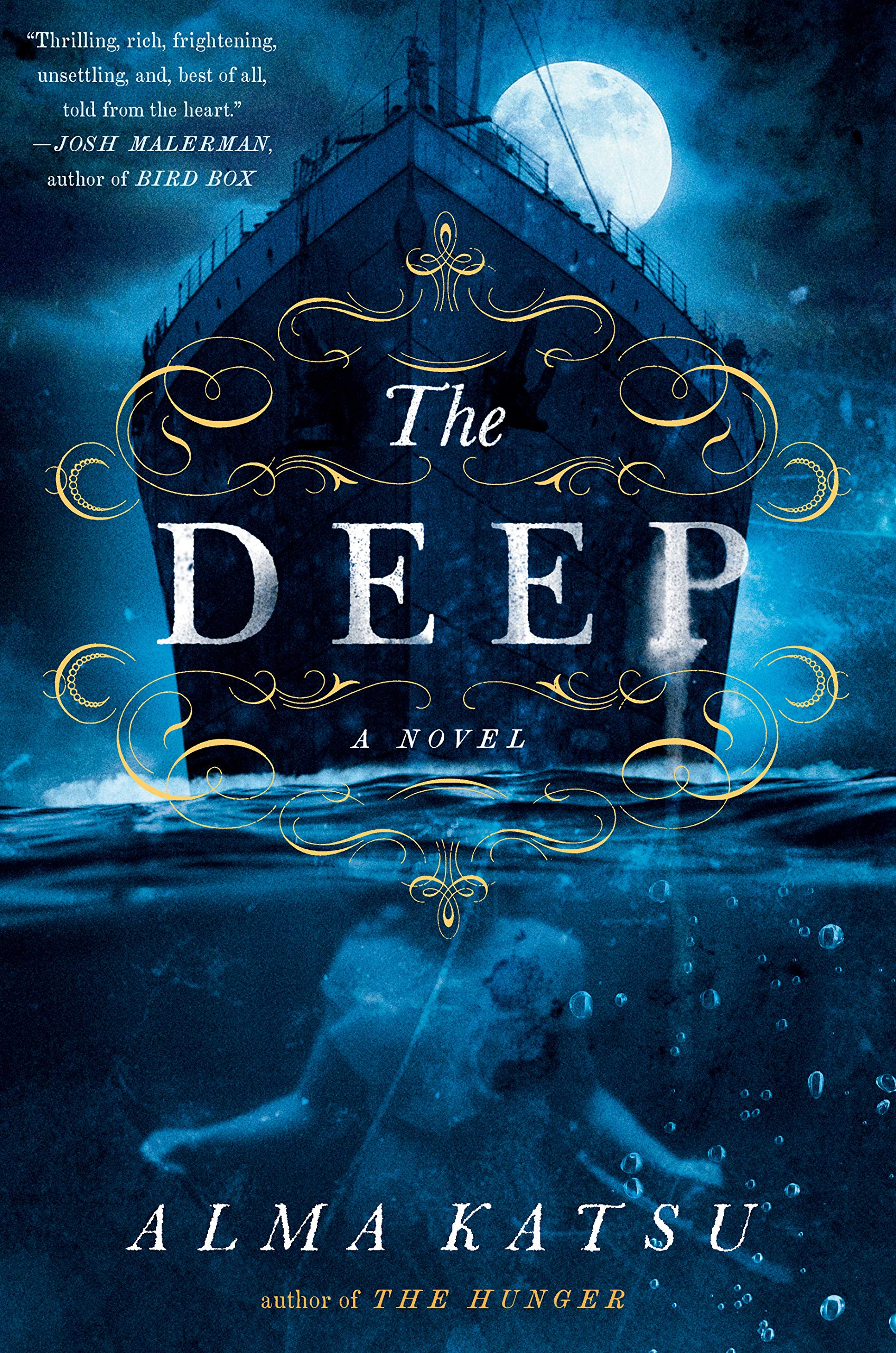
I heard about this book sometime last year and immediately requested my library buy copies (they did, and I was #1 on the list). I mean, a horror story set on the Titanic and having to do with some sort of creature living in the sea? Where do I sign up? And it came in for me at the library right before my library ceased operations due to the virus, so I was happy to get it when I did.

The Deep follows Annie Hebbley, a maid who works on the Titanic, and gets involved with the Fletcher family, a troubled married couple with a baby girl. Strange things occur on the ship leading up to that fateful (or fatal?) meeting. Years later, Annie meets Mark Fletcher, the very same man she waited on during that voyage, though now she’s a nurse on the Titanic’s sister ship the Britannic and he’s a wounded soldier returning from the battlefield of WWI. Coincidence? Or is something else at play? Something that has unfinished business with these ships and their passengers?

Let me tell you, this book has a lot going for it. For one thing, it’s set partially on the Titanic, which is always a fascinating topic and setting for any story. And turning it into a ghost story? Even cooler.* That, and the Titanic sailed during the Edwardian era, which is close enough to my beloved Victorian era that I felt right at home.

But beyond that, this is one damn good horror novel. Author Alma Katsu takes a psychological approach to this story, using hints to keep us guessing as to what’s going on. Are people going crazy onboard? Is there something supernatural afoot? Whether it be a seance or someone acting strange, you’re kept very up in the air about it up until the last fifth or so of the book, and even then, you may still have questions.

At the same time, you get to know a lot of these characters intimately. It’s a big cast, told from the points of views of Annie, Mark Fletcher and his wife Caroline, you have the POVs of several historical figures, including boxers Dai Bowen and Leslie Williams, whom I absolutely fell in love with; Madeleine Astor, worried about an alleged curse on her unborn child; and William Stead, an aged journalist with an interest in the occult.** But Katsu does a great job of developing each and every character and giving them a unique voice and issues to explore.

A lot of attention is paid to detail as well, the same sort of attention that went visually into James Cameron’s movie. It really brings alive the setting for both ships, and makes you feel like you’re there. And there are plenty of moments filled with tension, such as the aforementioned seance, a scene at the saltwater pool, or close to the very end, when things are finally revealed.

The ship may have sunk, but the stories about it, like my heart, will go on. And in some cases, get very creepy.

All these factors kind of make it feel like you’re watching a really dark and spooky stageplay about the Titanic, only you’re reading it out of a book. In fact, I can imagine The Deep being made into a stageplay someday, or perhaps even a Broadway musical, one that’s scarier and has less humor than Sweeney Todd. I’d even help adapt it if someone deemed me experienced enough and wanted me to.

I can’t find anything to put as a downside to this novel. Some might find it a bit too slow, or maybe too much time is spent on the characters’ problems and backstories. I didn’t, but I can see other people feeling that way.

Overall, I’m giving The Deep by Alma Katsu a 4.5 out of 5. It’s an unnerving, intimate historical horror novel that’ll have you enthralled. Pick up a copy, put on that one Celine Dion song you’re probably thinking of, and get ready to dive in to what may be a contender for next year’s Bram Stoker awards.

*Of course, when I try to turn a luxury cruise liner into a ghost story, Disney’s lawyers come after me. How was I supposed to know ritualistic murder wasn’t allowed in international waters? It’s always okay in wartime!

**I recognized him from my own research into Victorian England. When I came across him and the reference to the occult, I literally shouted “Wait, I know this guy!” to my empty apartment.
I had a revelation recently. No, not the kind that inspires texts that are the basis for entire religions. I had that already, and you do not want to know what information was imparted to me. No, it’s about Lovecraftian fiction.

Now, the common image among people, readers and writers, of Lovecraftian fiction is Cthulhu or any other Great Old One/Elder God/giant terrifying monster from the deep sea/outer space/alternate dimension. And that’s not wrong. From stories like The Dunwich Horror to the recent science-horror film Underwater, big monsters are a major part of the story and, along with the mind-bending insanity and dark truths they represent, are the main source of horror.

But it’s recently come to my attention that Lovecraftian horror stories are about more than just the monsters. Sometimes, it’s about psychological horror. Sometimes, you can have an effective scary story by not showing the monster, but by instead relegating the monsters to mere glimpses or suggestions and focusing on the characters’ reactions. And if done right, it can lead to some compelling horror.

There are actually plenty of stories like this. And if you’re reading this blog, you’ve probably run into plenty of them. The Call of Cthulhu, for example. Being by Howard Phillips himself, it’s obviously Lovecraftian, but have you ever noticed that we never really see Cthulhu? Think about it. The closest we ever get to seeing the High Priest of the Great Old Ones himself is through the eyes of a Scandinavian sailor’s diary. The narrator only sees drawings and statues of him.

And yet we’re scared, because the very idea of what we glean from these diary recordings is of a worldwide cult, one devoted to a very real god. One that will use humans as its pawns so that, when it finally arises, it’s in prime condition to take over our world. And the cult will do away with anyone who gets in their master’s way.

And while that’s a great example, there’s plenty more where that came from. Last year’s film The Lighthouse (see my review here) was Lovecraftian with a capital L, but we barely saw any of the marine monstrosities supposedly behind the horrors occurring on the island. And what we did see, we weren’t sure if they were real (within the film, anyway). Are they monsters, or are they just the manifestations of two men on an isolated island having a breakdown? Or maybe it’s a bit of both. It’s hard to tell.

A great example of this Lovecraftian psychological horror, 2019’s The Lighthouse.

And not just The Lighthouse. Stephen King’s novella N is told from the POV of people who all claim to be guardians of a circle of stones. If they don’t perform certain rituals, the stones will become a portal for terrible monsters. We never see these monsters though, and it’s possible that all the characters are suffering from a shared delusion. Or is it something more?

And in the novel I’m reading now (I hope to finish it and have the review up tomorrow or Thursday), there’s a Lovecraftian undertone, but the focus is on the characters and how they’re dealing with all the lies and hidden secrets swirling around them.

Or maybe that’s not a Lovecraftian undertone, but some other supernatural undertone. I’ll let you know when I finish the novel.

Anyway, it’s a good thing I’ve noticed that. The story I’m trying to write next is going to be heading into that psychological/Lovecraftian territory, so hopefully I can do a good job of it. And even if I don’t, it’ll at least be good practice.

That’s all for now, my Followers of Fear. I’m off to bed. I hope you’re not going stir-crazy while social distancing yourselves. If you want, we can talk in the comments for a bit.

Anyway, until next time, pleasant nightmares!

Well, this has been a busy day today. Met with the Ohio chapter of the HWA for a very productive meeting, ran some important errands for stuff happening at work and in the Jewish calendar, watched a movie with dinner, and…oh yeah, got the first short story of 2020 out of my way. It looks like I’m making good progress on those writing goals.

“Primordial Nuclear Soup” is a science-horror story about a team of scientists and their military escort who go into a nuclear power facility two years after a meltdown, and what they encounter there. It was inspired by a YouTube video I watched going into some of the science about the Chernobyl disaster, and was further influenced by a certain Stephen King story and a certain Godzilla movie (neither of which I can reveal without giving too many hints about the story). It’s about sixty-five hundred words long, so it’s not super long. And as it’s partially science-fiction, there will hopefully be plenty of magazines or anthologies that would consider publishing it.

I had a lot of fun writing this short story, but it was also challenging. I thought I knew which way it was going to go, but the story ended up going in different directions than I expected. I was actually pantsing for the last half or so, but it ended up working out in the end. Maybe that’ll give it a bit more surprise for any readers.

For now though, I’m going to see if I can’t get someone take a look at this story before I edit and submit it anywhere. I want it to be in top shape, after all.

As for what’s next, I’m going to do some research into essay writing for that essay I mentioned wanting to write. If I feel up to the task, I’ll write that essay. If not, I’ll move onto my next story. After all, I have nine short(er) stories I mean to work on, and I’ve already figured out which one I’ll be tackling next. Should be good to get it out, considering how long it’s been knocking around this twisted head of mine.

Well, it’s late, and I’ve got work in the morning. Goodnight, my Followers of Fear, and pleasant nightmares!

So the other night on Twitter, I see Richard Chizmar (you know, that author/publisher I interviewed a while back?) tweet about this movie, The House of the Devil, saying he had to stop watching it thirty minutes in and could only finish it by the light of day. Obviously, I’m intrigued, so I went and reserved a copy from the library. And I finished it in one sitting after dark, so I think I can brag about that? Wait, I live in an apartment with noises, and part of the reason Mr. Chizmar couldn’t finish it was because he was watching the film in a dark, quiet house. Obviously, there’s a difference.

Anyway, on with the review!

Set in the 1980s and “based on true events,” The House of the Devil follows Samantha, a college student struggling to make ends meet. In desperation, she answers a babysitting ad she finds on campus and takes it. However, things get weird when she gets to the house. And once she’s alone with her charge, she learns that there’s more afoot than meets the eye.

Ladies and gentlemen, I may have a new favorite horror film!

So first off, this really does feel like a horror film from the late 70s/early 80s. In addition to the normal signs of a 1980s-set story (teased hair, Walkmans, and music from the best era for music ever, etc.), the movie was filmed with 16mm film, giving it that slightly filtered quality we know and feel so nostalgic about. Add in some yellow credits and some pauses during opening credits, and I could almost believe this film was made over thirty years ago rather than just eleven years ago.

I also love how this film builds tension. I know I use the term “slow burn” quite a bit, but it fits here. Director Ti West takes his time laying the groundwork and establishing our main character Samantha (wonderfully played by Jocelin Donahue, who embodies natural 80s beauty as much as Natalia Dyer in Stranger Things). Once we get to the house, things switch to showing Samantha’s increasing unease and paranoia. The camera work in these scenes is great, showing the heroine exploring the house multiple times, as if she’s not sure she’s really alone, while at the same time the camera films things in a voyeuristic way, like we’re the ones stalking Samantha, allowing us to share in her unease.

And that final third! Whoo-boy, things go zero-to-sixty real quick, and it is scary and thrilling to watch. I also like seeing how Samantha strikes a great balance between terrified final girl and willing to fight back. Usually in these films it’s either they’re screaming their heads off or they’re angry vengeance personified, so it’s a nice change to see a compromise.

As far as problems go, this film might be a bit too slow and quiet at times for some viewers. If you prefer your horror film have faster paces or not so many quiet points where characters just talk, this may not be the film for you. Also, there are some flashing imagery at the beginning of the final third that might trigger people with photosensitivity. It’s not as bad as IT: Chapter Two was, but it’s still something to keep in mind.

All in all, The House of the Devil is a wonderful homage to the slasher and suspense-horror films of the 70s and 80s. On a scale of 1 to 5, I’m giving it a 4.8. Settle into the couch, order a pizza and prepare for one of the best horror films you haven’t heard of. You won’t regret it.

Unless you have nightmares. In which case you may regret it.

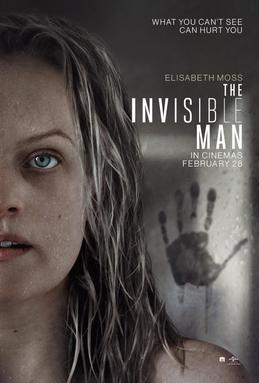
I’ve confirmed that this film, while co-produced and distributed by Universal, isn’t part of the Dark Universe. Yeah, it has a Universal Classics Monster, but it’s safe to say Universal’s attempt at a cinematic universe around its monsters is deader than Frankenstein’s body parts pre-assembly. I can also confirm that this book barely resembles the book it’s based on, but you probably knew that already. All that being said, let’s begin the review.

The Invisible Man follows Cecilia Kass, who leaves her abusive ex-boyfriend Adrian Griffin. Not too long afterwards, Adrian kills himself and leaves Cecilia with a generous amount from his trust. However, weird things start happening around our heroine. First it’s small things: a portfolio goes missing, a meal catches fire, a floorboard creaks. But then things get crazy. Soon Cecilia figures out Adrian is back from the dead, and has found a way to turn himself invisible. And he’s determined to make Cecilia’s life a living hell.

Best thing about this movie is its lead actress, Kate Moss. She plays the psychologically damaged woman in survival mode so well, it’s scary in and of itself.

As for the rest of the movie, I will give it this. There’s a tension in it. The jump scares pair very well with the anxiety of not knowing what’s in the empty spaces around the characters. I think everyone in the theater were on edge during scenes when Moss was walking around, looking for her stalker.

And thank God, most of the effects are practical rather than CGI. In fact, CGI is used only when absolutely necessary, and I’m always happy when a movie goes that route rather than packing in as much CGI as possible. I mean, oy vey!

Still, this film wasn’t perfect. There were quite a few predictable parts that I saw coming a mile away, as well as a few plot holes that I couldn’t help but notice. Those factors kind of brought the film’s score down for me.

Speaking of which, I’m giving 2020’s The Invisible Man a 3.1 out of 5. If you want to go see it in theaters, go right ahead. Just be aware, you’re not getting anything that’s going to stick with you once you leave the theater. Hopefully, the sequel they’re making is better. Yes, they’re already planning a sequel. The Invisible Woman. Elizabeth Banks is set to star, direct and produce. Given her roster, I’ll give it a chance.

That’s all for now, my Followers of Fear. I’m going to figure out what to do with the rest of the evening. Probably either write, read, or scare my neighbors silly. We’ll see what I come up with.

Until next time, pleasant nightmares!

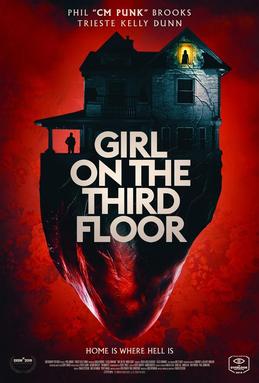
I heard about this film last year, but couldn’t see it for a couple of reasons.* I kept an eye out for news about it, but for the longest time, the only places you could watch it were on Amazon and YouTube, and for a price. And then this week it popped up on Netflix. Cue the need to watch it. Which I did this evening. And the wait was worth it.

Girl on the Third Floor stars wrestler-turned-actor CM Punk as Don Koch, an ex-lawyer with a checkered past, buys an old Victorian house in the suburbs with plans of renovating it for his pregnant wife. Problem is, not only is Don still living the party life to some degree, but his new home seems to have some interesting features. Nearly every wall has black goo pouring out of it, pipes and wall sockets leak a milky fluid that looks like a certain other well-known milky fluid, and a strange woman named Sarah keeps appearing around the property. Soon Don and his wife find out their house is way deadlier than they ever could’ve imagined.

I’m told this is director Travis Stevens’ first film, and I have to agree with critics that he’s done an excellent job. A Gothic horror story,** Stevens sets up a slow burn that’s entrancing. It’s as much a psychological horror as a supernatural horror story, following Don as he tries to make things up to his wife while still being a frat boy, and how those choices affect his stay in his new home. Combined with some bat-shit crazy supernatural occurrences, it’s pretty scary.

On top of that, the principal actors, particularly CM Punk, are great in their roles. I totally believed in his role of Don, and loved watching him see the dominoes drop due to his choices and actions. Also, Sarah Brooks as Sarah Yates has an amazing emotional range and really works as the driving force of the movie. I applaud you, Ms. Brooks!

Oh, and let’s not forget the house. The house is itself is a character, and the film does a great job in bringing that character to the fore.

If there’s one thing I could’ve done more with, I wanted more of the history of the house. We got some explanations, but I wanted more on the spirits and where they came from. There’s more to that house than meets the eye, and I feel like we only saw one layer to it.

Overall though, I’m giving Girl on the Third Floor a 4.3 out of 5. It’s a creepy slow-burn that’ll pull you in from start to finish. Get on Netflix, move inside, and be prepared to never move out again.

*Chiefly because the one theater it was playing at is right next to Ohio State, there was a home game that weekend, and you don’t want to drive near campus during a home game. Trust me, it’s the wrong kind of nightmare.

**I’m running into those all over the place. It’s interesting to compare them to Toyland.

Call the press! Pour the honey wine! Sacrifice your neighbor to the eldritch deity of your choosing! The first draft of Toyland is done! To be specific, I finished it early this morning at around four in the morning. I started working on the last two-and-a-half chapters around ten o’clock last night, after I wrote my review of The Lodge, and just didn’t stop.

And now that I’ve gotten some sleep, I’m blogging about it, because that’s what you do!

Now, for those of you who are unfamiliar, Toyland is a Gothic horror novel I started writing back in November for National Novel Writing Month. The story takes place at a boarding school in southern Ohio, and follows students being menaced by a ghost obsessed with a children’s book. Yes, that’s the plot. I can assure you, it’s just as bonkers as that pitch sounds. I hoped to have it done by the end of January, but I’m glad I was able to finish it by the end of February, which is still a whole new record for me in terms of writing a novel (I think Rose had the last one at around six or seven months).

And how is the first draft?

Well, it’s a first draft, which means it’s crap.

Okay, that might be harsh. It not crap, it just needs a lot of work. First drafts are nicknamed “rough drafts” for a reason, after all. I’m going to have to do a whole lot of editing to get this book out to people. And I may need to have someone take a look at it just to make sure it can survive out in the world as a full novel. I did that with Rose, after all, and Rose is doing very well now, with an audio book and some awesome new reviews.

So how long is Toyland, anyway? I knew it would be longer than fifty-thousand words (the minimum word count for “succeeding” at NaNoWriMo), but I haven’t done a count recently. Give me a moment to do some math…holy crap! In terms of pages (with twelve-point, Times New Roman font, double-spaced on regular MS Word paper), Toyland is three hundred and sixty pages long and 97,186 words! For context, the first Harry Potter novel is around seventy-seven thousand words.

This isn’t the longest story I’ve ever written (that honor goes to my thriller Snake), but still pretty freaking long.

So what’s next? Well, obviously I’m going to party a bit (pizza and locally made mead tonight!). But in terms of Toyland, I’m going to let it be for a while. I always believe a story needs to lie and sleep for a while before editing, so I can look at it with fresh eyes. After a second draft, I may start looking for a publisher. Hopefully, it won’t take five years like it did with Rose to get it published.

I wanted to post this graphic one last time.

In the meantime, I’ll try to take a little vacation from writing anything except blog posts (though if the writing bug gets me, that’s that). After that, I’ll try my hand at those ten short(er) stories I mentioned in a previous post. Two of those stories, by the way, take place in Victorian England and one of which I hope to put into that short story collection I’m putting together. I’m looking forward to them. I may also work on an essay which has been cooking in the back of my mind. We’ll see what happens.

For now though, I’m off to relax. Thanks for supporting me during this writing process, my Followers of Fear. I hope you’ll check out Toyland when it comes out and maybe let me know what you think of it. For now though, how about checking out my novel Rose? It’s a Kafkaesque horror story about a young woman turning into a plant creature (and that’s just the start of her problems). If Toyland sounds up your alley, you’ll probably enjoy Rose. I’ll post the links below.

Until next time, pleasant nightmares!

Rose: Amazon US, Amazon UK, Amazon Canada, Audible

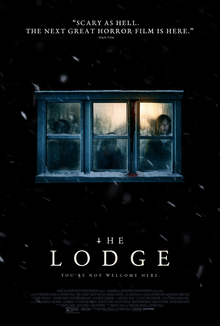
I’ve heard a lot of good things about The Lodge, including that it was a new classic in the genre (or something like that. I may be paraphrasing). With the last couple of horror films I’ve seen since my last film review being average or below and not worthy of a blog post (*cough* Fantasy Island *cough*), I had high expectations. At the very least, I hoped it was worth the cost of parking at the nearest theater it was playing at.

The Lodge follows Aiden and Mia, a pair of siblings living with their father following the sudden death of their mother. On their trip to their family cabin for Christmas, their dad’s girlfriend Grace comes along to get to know the kids better. The kids are less than thrilled, partly because Grace is the lone survivor of a suicide cult headed by her father. However, when the kid’s dad has to go back into the city for work and has to leave Grace with the kids for a few days, several days of madness ensue. One that will push Grace to the brink, and maybe take the kids with her.

Oh my God, this film is terrifying!

The Lodge takes storytelling and suspense hand-in-hand and creates an atmosphere where everything feels up in the air. If horror is fear of the unknown and loss of control, then this film succeeds. I saw hints of twists that were to come early in the film, only to quickly forget them even when I see them again because the film convinced me nothing was certain. Add in creepy imagery, strange happenings, and jump scares that are few and out of left field for their utmost effectiveness, and you’ve got one hell of a horror movie.

The four central characters also do an excellent job in their roles. Aiden is played from Jaeden Martell, who played Bill Denbrough in the IT movies, so he’s used to horror films, and puts it to use here. His sister is played by Lia McHugh, who also have a history in horror, so they bring the experience. But more than that, they know how to play siblings brought close by tragedy, to the point that I forgot they were actors.* Riley Keough also is excellent, showing the stress of the situation on a woman already psychologically and emotionally vulnerable so well. It’s honestly a delight to watch.

I can’t think of anything bad about the film. Doing so would be nitpicking. I will let you know that if you prefer horror films be filled with CGI and lots of jump scares (the opposite of me), this film may be a bit too intense for you. Trust me, most of the theater were freaking out in our seats. Even when nothing was happening on screen (or seemed to be happening, anyway).

On a scale of 1 to 5, I’m giving The Lodge a 4.8 out of 5. Nerve-wracking, twisty and twisted, you’ll be freaking out from the first jump scare to the haunting ending. Grab a blanket and someone to watch it with, and get ready to squeeze their arms tightly. Believe me, it’s that scary.

*And maybe wondered their relationship was incestuous. Hey, it’s an R-rated horror film, boundaries are hazy at best if it helps the story along.

February is Women in Horror Month. Since women writers are a big influence on my writing–JK Rowling got me into storytelling in the first place, and Anne Rice helped pave the way for me to write darker fiction–I thought I’d recommend some stories for those who want to help support the month. You’ll see some familiar names here, but also some you may not be familiar with. Either way, I hope you’ll consider giving them a read.

Tiny Teeth by Sarah Hans. This is actually a short story by a friend and colleague of mine, but it is a scary one. Imagine a world where a virus turns children into dangerous, gnawing animals, and one woman’s experience in that world. You can find it on Pseudopod.org, a website where scary short stories are read by narrators and released as a podcast. Give it a listen. Guarantee you, it’ll be 45 minutes not wasted. Here’s the link.

Garden of Eldritch Delights by Lucy A. Snyder. This is also by a friend and colleague of mine, but it’s also a great collection of scary stories. The majority of them feature cosmic horror themes and entities, which I love, as well as intriguing characters and plots. A couple of the stories also incorporate sci-fi and fantasy themes, and feature a diverse cast, which is something I love to see. If you pick up Garden of Eldritch Delights, you will find it worth your time. Here’s the Amazon link.

The Amaranthine Books by Joleene Naylor. You’ve probably seen Joleene’s name around this blog before, but did you know she’s written an entire book series? She has, a vampire series called the Amaranthine books, and they all come highly rated. Even better, some of the books are free or under a dollar under the Kindle edition, so why not take the opportunity to read them? You can find all the Amaranthine books, and then some, on Joleene’s Amazon page.

In a Dark, Dark Wood and The Death of Mrs. Westaway by Ruth Ware. Technically, these are mysteries, but they have horror themes about them, so I’ll count them here. In a Dark, Dark Wood follows a mystery writer invited out to a bachelorette party by a friend she hasn’t seen in years, unaware of the forces conspiring against her. The Death of Mrs. Westaway stars a Tarot reader on hard times who finds out she’s received an inheritance from a grandmother she didn’t know she had, and what that inheritance entails for her. Both are terrifying and keep you on the edge of your seat with suspense. You can check out both further on the author’s Amazon page (and I need to check out more of her work).

Kept me on the edge of my seat the whole audio book.

Within These Walls and The Shuddering by Ania Ahlborn. No joke, Ania Ahlborn is one of the scariest writers I’ve ever had the pleasure to read, and I really need to read more of her work, as should you. Within These Walls follows a true crime writer as he and his daughter stay in the home of a Manson-like cult leader, and what happens while they’re there (I actually reviewed it a few years ago). The Shuddering follows a group of young adults as they go skiing at a mountain resort, only to discover the area has come under siege from a rather hungry enemy. Either one will leave you shaking in your boots! Here’s the Amazon page if you want it.

The Haunting of Hill House by Shirley Jackson. Come on, you know I had to include this. Even if I’m not a fan of this book, it’s undeniable that Jackson’s most well-known novel, and one of the most influential horror stories of the 20th century. Following a group of paranormal researchers as they explore the titular house and the effect the house has on them, this book is still a well-known classic in the genre, and some consider it required reading for fans and authors. It’s so well known, I won’t include any links for it (surprise!).

Interview with the Vampire by Anne Rice. Again, can you blame me? Whatever you think of the many sequels, it’s undeniable that Anne Rice’s debut novel has remained a classic for a reason. A journalist interviews a 200-year-old vampire named Louis, who recounts his creation in French New Orleans and his travels around the world looking for meaning and for more of his kind. It’s a haunting tale, the horror coming more from Louis’s psychological journey and despair rather than from the supernatural. As I said earlier, this novel also paved the way for my eventual turn to horror, so I can’t recommend it enough (and I’ll have to reread it someday). Again, no need for links. It’s that well-known.


What recommendations do you have for Women in Horror Month? Are you reading anything for it? Are you familiar with any of these books? What was your opinion of them?

That’s all for now, my Followers of Fear. I hope you find something good to read based on this list. I’ll be listening to The Accursed by Joyce Carol Oates this month on audio book, so maybe I’ll add it to a future list someday. I better get started soon!

Until next time, pleasant nightmares!

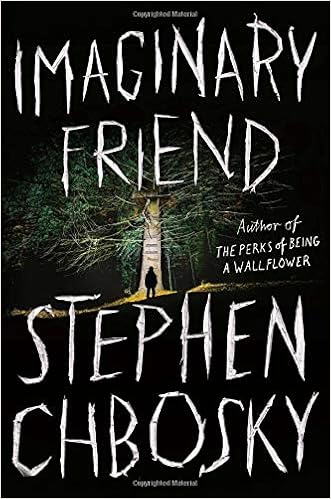
Over the past couple of months, people in the horror-themed Facebook groups I belong to have been raving about this particular book. I looked it up and it sounded up my alley, so when I had an Audible credit, I downloaded the audio book. But before I started it, I found out the book was written by the same guy who wrote the novel The Perks of Being a Wallflower, as well as wrote/directed its movie adaptation. Really? Isn’t that a sweet, YA rom-com? How do you jump from that to horror? (looks up what that book is really about.) Oh. That’s pretty dark. Yeah, I can see how the dude transitioned to horror.

Imaginary Friend follows Kate Reese and her son Christopher as they leave Kate’s abusive boyfriend and move to a small town in Pennsylvania. However, soon after they move there, Christopher disappears in the woods near his school. He reappears a week later, unable to remember what happened to him, except being led out of the woods and back to civilization by someone called “The Nice Man.” While Kate is happy to have her son back, and things start to improve after he returns, Christopher has changed. He’s smarter now, unable to sleep, and suffers from headaches a lot. And he’s in contact with the Nice Man, an invisible being who instructs him to build a treehouse in the woods he disappeared in, and to do it before Christmas. If he doesn’t, something bad will happen. To the town, to his mother, and to him.

This one was hard to put down. I normally only listen to audio books while at work, but the story was so intriguing and out there that I listened to it while checking email and cooking dinner. Imaginary Friend feels a lot like Stephen King novels like It or Needful Things, these huge stories based around weird concepts that are both scary and hard to put down. I mean, you got a kid who goes missing in the woods, and then when he comes back, has to build a treehouse to save the world from the Apocalypse. And that’s just what I feel I can tell you without spoiling too much.

I also have to give Chbosky credit: I had a hard time predicting what was going to happen as we got further into the story. Every little piece of the puzzle had the potential to surprise me, and quite a few did. During the “darkest hour” of the book, when things are at their most pessimistic, you felt the misery and the tension as the situation deteriorated. And that climax! Woo-boy, that was epic. Like, the final battle of an Avengers movie epic.

Not only that, but the characters are very well-developed. Also like some of King’s books, especially earlier ones, just about every character is well-developed. I felt like I’d known some of these characters my whole life, from Kate and Christopher Reese to the two or three old ladies suddenly regaining their faculties after years of dementia.

I do have one major gripe about the book: as the story goes further on, the novel takes on an…evangelistic air. It’s not like the Left Behind books, where it’s trying to get people to become born-again, but the story leans more in that direction than in the direction of The Stand or Supernatural. I don’t think the goal is to convert me: rather, I think Chbosky is using his Catholic upbringing to give the story a particular authenticity and philosophy other non-evangelistic Ultimate-Good-versus-Ultimate-Evil stories don’t have. There are some interesting ideas on the nature of guilt, our relationship to God, and how to find different kinds of salvation presented in the story.

Still, there were times when I was like, “Dude, scale it back a bit. I’m starting to get how people feel when I start ranking villains in horror, and they’re not horror fans.” That’s happened before, and it’s gotten awkward.

On the whole though, Imaginary Friend by Stephen Chbosky is an engrossing horror novel that’s weird in the best of ways and full of terror and twists. On a scale of 1 to 5, I’ll give it a 4.4. Pick it up and see for yourself. You’ll never look at treehouses and deer the same way again, but you’ll have a hell of a ride thanks to it.