Archive for the ‘Scary Stuff’ Category

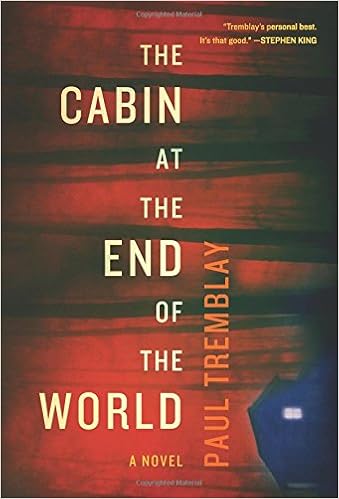
I’ve heard everyone from Stephen King to members of Facebook groups I belong to raving about this book. Heck, some of the latter were raving about it months before the book came out (how they were able to do that well before the book came out, I have no idea). I remember listening to the audio book of Tremblay’s previous book A Head Full of Ghosts a few years ago and liking it, though I didn’t find it scary (see my review for my full thoughts), so I thought this was worth a try. And I’ll agree with His Royal Scariness, this is definitely Tremblay at his best.

The Cabin at the End of the World centers on Wen, a young girl and her two dads, Andrew and Eric, who are taking a vacation off the grid in the deepest parts of New Hampshire. At the start of the novel, a man named Leonard appears before Wen and attempts to befriend her. He is soon followed by three others who claim that Wen and her family are the key to saving the world. But to do it, a price must be paid. Thus begins a tense story of belief, insanity, and violence as Wen and her dads are held captive in their own cabin and given an impossible choice.

Like I said, this is a tense book, and an intense one to boot. Like A Head Full of Ghosts, Tremblay focuses mainly on the psychological state of the characters rather than outright answering whether what we’re reading about is actually supernatural or the delusions of troubled individuals (and like the former novel, there’s an argument to be made for either one). The result is that you’re kept guessing as to which it is while getting a very personal look into these characters as they deal with the stress of the situation. It’s powerful, and makes you really connect to the characters and want to keep reading to find out how the story ends for them.

I also liked how unpredictable Cabin was. There were a couple of instances in the story that really threw me for a loop. Heck, following one of them, I kept reading for several pages sure I’d misunderstood what I’d read or that Tremblay was pulling my leg, heightening the emotional impact when this twist finally sunk in.

Add in that the novel was a great example of showing diversity in fiction without being patronizing or just showing diversity for diversity’s sake (Wen is from China and her dads are a gay married couple), and that an actual medical issue is portrayed with accuracy, rather than in 99% of other stories, and you’ve got yourself a decent novel.

I don’t have anything that I feel like saying detracted from the book. Maybe I wasn’t scared as others might be, but then again, I’ve built up a tolerance to being scared. I still found it extremely tense and emotionally powerful, and I enjoyed it for that. And that’s good enough for me.

On a scale of 1 to 5, I’m giving The Cabin at the End of the World a 4.5 out of 5. Gripping with suspense and characters you truly feel for, you’ll have a very hard time putting it down while you read. Take a look and see why it’s one of the most talked about stories this summer (I’m hoping Rose will be one for this coming fall or winter). Believe me, you won’t regret it.

Hill House is a great example of Gothic fiction and a Gothic location.

You’ve probably heard someone describe a work of fiction as being “a very Gothic work,” or describing a place they visited as “having a Gothic feel” (which now that I think about it, could be said of The Lizzie Borden Bed & Breakfast). But what actually is “Gothic horror” or “Gothic fiction?” And why does it still appeal to us after more than two-hundred and fifty years?

Surprisingly, Gothic fiction has very little to do with Gothic architecture or with Goth fashion and music (for more on that relationship, check out this brief YouTube video). And while most of the genre do take place in haunted houses, not all haunted house stories are Gothic, or vice versa. As this very helpful Tor.com article points out, “Some genres build the house. Others come along and decorate it. Gothic horror is a very decorative genre.”

So what is Gothic fiction? Well, to be honest, it’s a genre that arose out of another genre that was a response to a popular movement. In the 18th century, the Enlightenment movement emphasized discarding superstition in favor of science and reason. Some artists didn’t care for this philosophy and turned to Romanticism, which emphasized emotion and the self, as well as a veneration of the past, nature, and in some cases the supernatural. Gothic arose out of Romanticism, with artists and authors combining elements of the latter with horror, death and the supernatural, starting with The Castle of Otranto in 1764 by Horace Walpole, and followed by the works of Poe, Mary Shelley, Byron, and many others.

To put it simply, Gothic fiction could be considered the love-child of 18th and 19th century Romance stories and horror stories.

But that’s how Gothic fiction came to be. How do we identify it? Well, the horror novel Kill Creek by Scott Thomas (which I highly recommend), itself a Gothic novel, gives a great run-down of some of the common elements of the genre (I hope Mr. Thomas doesn’t mind me using them):

  • Emanation from a single location. The source of the evil is often a single location, usually a house. A great example of this is The Overlook Hotel from The Shining. It is the book’s main location, and it is the source of the evil in the story.
  • A sense of forbidden history. There’s a dark history associated with the location or something related to it. Again, a great example is The Overlook, which has been the setting for murders, suicides, and all sorts of horrid deaths and events, all of which have been swept under the rug for the sake of the hotel’s reputation, and later gets drudged up by Jack (and the hotel).
  • An atmosphere of decay or ruin. Things are rotting or falling apart, or seems to be anyway. It’s in the very air, almost. And it doesn’t have to be physical; it can be mental too. Just look at Jack’s mental state as The Shining progresses, if you need an example.
  • Corruption of the innocent. This one speaks for itself. The evil wants to destroy good and innocence and replace it with evil. Dracula, a great example of Gothic fiction, has the titular character turning good and innocent people into bloodsucking vampires. This is corruption of the innocent in its best example, and why vampire fiction is often grouped with Gothic fiction (did you expect another Shining reference?).

Dracula is another great example of Gothic literature, even if it’s not confined to a single location.

But those features aren’t universal among Gothic stories. They’re common features, but not there in every one (Dracula doesn’t just kill in one single place, after all). So what else makes a Gothic story? Well, there’s something I’ve noticed about Gothic stories: along with the atmosphere of decay, there’s also a veneration towards the darkness and to beauty. Remember, Gothic fiction rose from Romanticism, which venerates nature, emotion and beauty. So while we’re feeling an atmosphere of terror, there’s also this sense that the author has a respect and love of the darker elements along with the Romantic ones.

Of course, this is just scratching the surface of what constitutes Gothic, and I could go on for days on the subject if you let me. The best summary I can do for this post is to say that Gothic fiction are horror stories with a particular group of tropes, a veneration of darkness and horror, and Romantic appreciation for aesthetic and the fantastic world. And even that feels incomplete.

So what appeals to us about Gothic fiction, and has allowed it to survive and evolve whereas other niche genres like Westerns went out of style in less than sixty years? Well, there’s no easy answer there either. The Tor article says that the rules and expectations of the genre can be learned and make it appealing to readers. I’ve heard some people say good Gothic horror has an atmosphere unlike other genres, and that keeps them coming back. My opinion is that, in addition to those theories, Gothic can evolve because its main tropes are relevant no matter what age we’re in, especially the houses. But on a deeper level than that, most Gothic literature takes the childhood idea of home, a big place we feel safe in, and turns it inside out into a giant house of fear that is still somewhat beautiful and appealing. That is a strange inversion that can be attractive to readers, and may explain why we keep writing and reading Gothic stories over two-hundred and fifty years after Walpole started the genre.

However you define Gothic fiction or whatever its appeal is, there’s no doubt that it is a popular and influential genre that we’ve all experienced at lest once in our lives and remember. And perhaps by understanding it better, we can keep Gothic horror going for many more years to come. And I certainly wouldn’t mind that.

What elements of Gothic fiction did I miss here? What about it appeals to you?

What Gothic stories would you recommend for anyone interested in the genre?

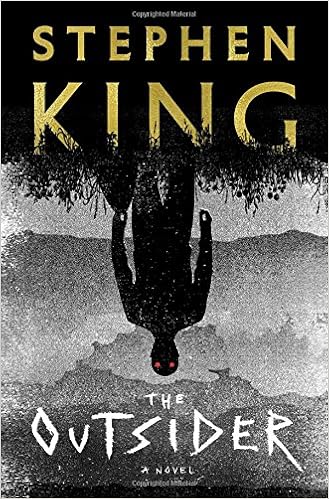
You know, I’ve never reviewed a proper Stephen King story on this blog before. I’ve reviewed plenty of adaptations of his work, but never any of his actual stories. Probably because I’ve either gotten to them too late and so much time has passed that doing a review seems silly (which is true with the vast majority of his bibliography) or I didn’t feel there was enough to talk about to actually write a decent review (such as Gwendy’s Button Box, co-written with author Richard Chizmar). So I’m glad I’m finally able to review one of his books here. And this one is something else: it’s his latest novel, The Outsider.

The Outsider follows Ralph Anderson, a detective in the small city of Flint City, Oklahoma. The novel opens with Ralph and his fellow officers arresting Terry Maitland, a local teacher and boys’ baseball coach who is beloved by Flint City, for the horrific murder of a young boy. The state’s case seems ironclad: there’s not only eyewitnesses, but a ton of physical evidence linked back to Maitland. But soon after the arrest, evidence arises to cast doubt on Maitland’s guilt, and it’s just as ironclad. The contradiction in this case leads to a domino effect as Anderson and his allies try to figure out if the beloved Coach Maitland is hiding a darker personality, or if someone else, someone darker and worse, is at large in the town.

Now before I go into my review, let me just say that this book shares a few characters in common with King’s Mr. Mercedes trilogy, and contains a few spoilers. So if you haven’t read those books yet and would like to be surprised, probably hold off on this book until you’ve read those.

So I have to say, I came away very satisfied with this story. I like how King starts out with this novel seeming like a regular thriller-mystery: he shows the arrest, switching between the action and then showing interviews and documents from the investigation. The Outsider continues in this vein for a little while, but then goes in a different direction that defies your expectations so far. From there it develops into a compelling and strange read with some great characters. I especially liked Holly Gibney, who comes from the Mr. Mercedes trilogy. She’s neuro-atypical, like myself, but is shown to be an integral part of the investigation and makes certain leaps that, without her, the other characters might never be able to. It’s a very real portrayal of someone with disabilities, and I related to Holly on a number of levels. I love those sorts of portrayals of neuro-diverse people in fiction, and I hope to see more in the future.

But probably the novel’s greatest strength is just how hard it is to put down. King takes mystery, the strange, great characters, and much more to make a read that’s hard to put down. Normally I’m able to restrain myself to reading during my lunch break or on weekends, but this novel was so good, I found myself reading it late into the evening at times (which helped me to get to this review today).

That being said, The Outsider does have its issues. One of the biggest ones is that we’ve seen a lot of the concepts used and explored in the book in other King novels, and frankly done better there. I won’t say what, but they’re pretty obvious, and every time they came up, I kept thinking to myself, “This feels like a lighter/duller version of insert-story-name-here.” That, and I felt that the climax could’ve been a bit more epic. It was decent, but I felt it was hampered by too much exposition on the parts of the characters and the story’s villain, who is humanized a little too much (that makes more sense if you’ve read the book). Which, unfortunately, lowers the terror factor with a creative villain that could be as scary as some of King’s other famous villains. I was disappointed about that.

Overall, The Outsider is an entrancing and powerful read, subverting your expectations and leaving you wanting more. On a scale of 1 to 5, I’m giving it a 4.6. Check it out, and get sent down a mine shaft full of the strange and the unsettling.

That’s all for now, my Followers of Fear. I’ve got my own novel to work on, so I’m going to get on that this evening. Until then, pleasant nightmares!

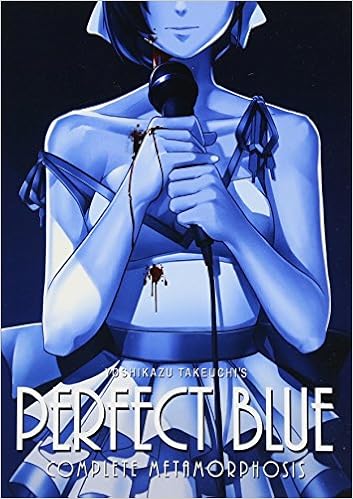
A good number of you probably remember that late last year, I did a series of posts where I reevaluated scary movies I’d previously seen and disliked called the Rewatch Series. The first of those movies was the psychological horror anime movie Perfect Blue, released in 1997. I found that my previous dislike for the film had been based on my not understanding it, and that with a few more years and a better understanding, I found it to be a really good movie.

I’d also known for a long time that the movie was based on a novel, but it wasn’t translated into English and therefore I had no hope of reading it. That is, until I found out a few months ago that Seven Seas Entertainment had licensed and translated the novel for the English-language market. Naturally, I got excited and tried to get my hands on it. And after about four months, I finally did get a copy and sit down to read it.

Boy, that’s different than the movie in more ways than one. But of course, this won’t be a book-vs.-movie comparison (at least not entirely). It’s a review, so let’s get to reviewing.

Perfect Blue: Complete Metamorphosis follows two very different people: Mima Kirigoe, a Japanese pop idol who is trying to leave behind her image as an “innocent” starlet and take on a more mature image; and the other is someone simply identified as “the man,” a man who is obsessed with Mima and her “innocent” image and resolves to keep her innocent by any means necessary. When their paths intersect, their lives will be changed forever.

So right away, I should point out that the movie took a lot of liberties with the original story. Whereas the movie was a deeply psychological story about a young woman struggling with her identity, how people saw her, and how she saw herself after a career change, the novel itself is a very basic stalker story, like what you might find in an episode of Criminal Minds.* The story is mainly told from the viewpoints of Mima, who in this version is okay and even yearns for the changes to her image so she can progress in her idol career, and “the man,” whose sanity erodes the further Mima seems to get away from her innocent image and whose plans get more drastic. There are times when the story is told from the POV of other characters, but they’re always related in some way to the lives of Mima and “the man.”

What I do like about the novel is that “the man,” who in the movie is called “Mr. Me-Mania,” is given more complexity and we see more things from his perspective, why Mima’s innocence is so important for him and some of his ideas about the world. Not only that, but in the movie Mr. Me-Mania is, while intimidating, mostly a passive character, not taking any sort of action beyond stalking until late in the film. But from the beginning of the novel, “the man” is completely active and menacing, committing a horrific crime within the first few pages of the novel. It’s very effective for setting our perceptions of “the man,” and sets things up for the more disturbing actions he takes later in the story.

Speaking of which, there are some really disturbing scenes in the novel, especially as you go later in, that utilize body horror. Now, normally I’m not that big a fan of body horror (I associate it too much with torture porn, which I’m not the biggest fan of), but here it’s done very well, especially when “the man” starts practicing for his plan to “save” Mima. This is followed by a very scary climax, which utilizes tension, body horror, and good old-fashioned chase to effectively keep the reader drawn in and wanting to find out what happens next.

While not the same as the film, the novel is still good on its own merits.

However, the novel isn’t perfect. As I said, the story is a very basic stalker tale. The novel doesn’t go as deeply as it could into who Mima is as a person, and I would’ve liked to go deeper into that, as well as into other aspects of the story (but then again, Takeuchi did say in an afterword that he was simply writing a story around the conflict between an idol’s desire to grow and a fan’s desire to hold onto the image he fell in love with. On that alone, he certainly succeeded). That, and I felt that the novel ended a little too abruptly, without really showing the aftermath of the story’s main events.

Still, t is a decent, if very simple, story of psychotic cat and mouse. And while I like the movie better, I have to say I’m glad I picked up the original novel. On a scale of 1 to 5, I’m giving Perfect Blue: Complete Metamorphosis a 3.8. A gripping story of obsession with plenty of tension and well-written body horror. Take a look and let the story get under your skin (whether you want it to or not).

*In case you’re curious about the author’s feelings about the changes made to the story for the movie version, there’s an afterword at the end of the book written just after the film came out where he seems not only okay with the changes, but also was enthusiastic about the movie itself. Always nice when an author is okay with the changes made from book to film.

I’ve been hearing about this film for a few months now, and the earliest whispers I heard was that it was going to be scary. Some event went so far as to call it an instant classic in the horror genre. Well, with rumors like that, I had to see this one myself. So today I went to the theater, trying to go in without preconceived expectations so as to give it a fair rating.

God, Hereditary is unsettling. And I’m still not sure what to make of it.

Hereditary follows the Graham family: father Steve, mother Annie, teenage son Peter, and 13-year-old daughter Charlie. The film begins with the funeral of Annie’s mother Ellen Leigh, who had a very complicated relationship to her daughter. What follows is a strange and twisting journey as the family experiences tragedy, psychosis, and the strange, all in two terrifying hours.

Where to begin? Well, for one thing, the film is excellent at creating atmosphere. It’s a slow burn story that doesn’t pile on the scary stuff all at once or starts small and then continues to escalate. Instead, it features small instances of horrifying and/or possibly supernatural occurrences, followed by big scary moments that stay with you for ages (one early-ish in the film left my mouth hanging with my hand covering it for several minutes) before retreating back to low levels. It’s a method that I don’t usually see in horror, but it’s quite effective. And when paired with odd camera movements and a soundtrack that’s quiet for nearly half of the film and only utilizes music during the most necessary scenes, the unsettled feeling you get while watching is doubled.

And on top of all that, you don’t really know if what’s happening is actually caused by supernatural forces or is taking place in the characters’ heads. Annie admits that her family has a very dark history of mental illness, and it’s hinted that daughter Charlie possibly has some mental/learning disabilities as well. So is what’s happening on screen actually the work of malevolent, supernatural forces, or is it some sort of shared delusion manifeting in a family under stress? Hereditary makes you ask that question throughout the movie, and you may not be able to answer by the end. All these elements come together to create this really freaky atmosphere that where it feels like nothing is stable, and anything can shift under your feet at a moment’s notice. Heck, the camerawork for this film, like sliding one person to the next and then backing up all in one shot or revealing a character’s reaction to a scare before showing us what’s so scary, feels like something right out of The Shining.

Actually, one wouldn’t be wrong in calling Hereditary a modern-day Shining, as its ability to unsettle and make audiences question the characters’ sanity, along with the excellent tricks of music and camera, are reminiscent of the Kubrick film. Of course, knowing my feelings on The Shining, it won’t surprise many of you to know I like this film better.

Of course, none of this would work so well without a brilliant cast to back it up. There are a number of excellent actors in this film, like Toni Colette as Annie, Alex Wolff as Peter and Gabriel Byrne as Steve, and they all do an amazing job in their roles. But the prize definitely goes to young break-out star Milly Shapiro as Charlie, who embodies the strange, creepy kid almost too well. You watch her, and you can’t help but be mesmerized and afraid. I hope she appears in more horror films (or films in general), because if her performance in Hereditary is anything to go by, she’s going to have quite the career in the future.

If there’s one problem the film had, it was the last couple minutes. I mean, they were passable, but I expected more after everything that came before. Other than that, great film.

All in all, I think the moniker “instant classic” is an excellent one for Hereditary. On a scale of 1 to 5, I’m giving it a 4.5. An unsettling, gripping addition to the horror pantheon that you won’t be able to disengage from and will stay with you long after the credits roll. Check it out, and be prepared for scares.

My copy of “The Creepypasta Collection,” as edited by MrCreepyPasta

A couple of years ago while I was in Germany, I became acquainted with a growing genre of horror known as creepypasta. Creepypasta, for those of you who are unfamiliar, are horror stories, images, videos, music and games that originate on the Internet and are meant to be spread around as memes. Sort of like viral Internet-born campfire ghost stories (see my original post from 2015 if you’d like a more in-depth explanation).

While I had to end my acquaintance with the genre rather abruptly (job searching and then landing a busy full-time job, as well as trying to write my own stories, doesn’t leave that much time for perusing the Internet for horror stories), I never forgot about this strange world of creators making and sharing these scary stories, sharing characters and creating entire mythologies out of some of them (Slender Man, anyone?). So when I found out there was actually a couple of anthologies of creepypasta available in book format, which meant I could read them on my lunch break, I decided to get a copy and dive in to see back in.

What did I find?

Well, like every anthology I’ve ever read, there were some stories that spoke to me more than others. A few I didn’t find that scary at all, but others definitely filled me with that feeling I get from good horror, and even set my imagination alight at times. There are writers in that anthology who would and have done well writing commercial fiction (in fact, some of the contributors listed in the back of the book have published or self-published stories). My favorites in the collection were “When Dusk Falls on Hadley Township” by TW Grim, which reminded me of a Stephen King short story; “Smile.Montana” by Aaron Shotwell, featuring the infamous creepypasta character Smile Dog; “Bedtime” by Michael Whitehouse, a classic of creepypasta fiction that really got my imagination going; and my top favorite, “She Beneath the Tree” by Michael Marks, a Lovecraftian tale that I loved from start to finish.

So yeah, if you’re curious, you should give the collection a read. 4.5 out of 5. As the cover promises, these are stories you can’t unread. And I’m not sure you’d want to.

But I found more than just stories in this collection. I also noticed some things about the genre, especially the pieces in the anthology, that showed me just how different they were from more “mainstream” horror stories. For one thing, the narration in the stories struck me as being more…realist in nature. Not like Realist fiction, which is set entirely around stories that happen in the real world, but like they really believed that the things they depicted in their stories could actually happen. In a lot of horror fiction, even by the greatest writers out there, you get the sense that, except for maybe stories involving serial killers, the authors don’t really believe that what they’re writing about could happen. But creepypasta writers seem to feel the opposite. I got the sense, even with some of the more supernatural or strange stories, that the authors really believed that what was happening in their stories could happen in the real world, and treated it as such. And this shown through especially with the first-person narrators.

When something like Smile Dog can be treated as if it’s real, you know you’re reading something different.

This is something I really admire in creepypasta, because it just gives these stories another layer and gives them the power to really make you wonder if some of what happens in these creepypastas could happen. Some of my own stories are based on my own beliefs of what could be out there, and I like to think that gives them this quality of strange realism to them. Seeing that quality brought out so well with these stories is a great guide for me personally as a writer, so I’m glad I exposed myself to them.

Another thing about this anthology is that it made me realize something: the creators of creepypasta are not too different from self-published and hybrid authors. The latter try to recreate the quality and success of books published by traditional presses without having to go through all the hoops that come with the traditional method and presses. They’re trying a new way to achieve an old goal. And a major component of this is through the Internet to reach readers and advertise. Basically, to spread the word.

Similarly, creepypasta creators are trying to recreate something as well. When I called creepypasta viral Internet-born campfire ghost stories, that was a really apt description. They’re recreating the feeling of telling scary stories around a campfire, and spread it farther than any campfire could. And their chosen medium, the Internet, is perfect for that. Spoken word can be used on the Internet, but so can the written word, images, video, music and so much more. They use the Internet to advertise terror as well as any self-published/hybrid author can to advertise their books. Is it any wonder that one can so transition easily into the other?

Overall, I’m glad I took this dive back into the world of creepypasta. It opened my eyes to things that I’d never realized before, gave me ideas for stories, and caused my respect for creepypasta creators to grow immensely. And while I may never write true creepypasta, I can see creepypasta-esque stories or ideas infiltrating my future work. Just like creepypasta, you never know until it happens. And by then, it’s likely too late.

That’s all for now, my Followers of Fear. I’d love to talk a bit more on the subject, but a hole in the fabric of reality has appeared in the fabric of my carpet, so that either means something really pleasant, or something really bad. I’m going to go find out.

Until next time, pleasant nightmares!

I’ve been reading a lot of articles about how Hollywood is coming to see big horror films are, and that they are looking into making more. It’s even been compared to the explosion of superhero films that came about after the Dark Knight trilogy and Iron Man showed how popular and profitable superhero films could be. Since I am a horror fan in addition to a horror writer, I thought I’d weigh in on the subject.

First off, this explosion in horror is not exactly out of the blue. Studios have been making horror films since the early days of film, and they keep making them every year. There’s obviously always been an interest and a profit to be made in horror. It’s just lately we’ve had a slew of horror films that have shown studios and audiences that horror can be extremely profitable, mainstream, and even deeply thematic. We actually first started seeing this trend years ago with films like the Paranormal Activity series, which kicked off a huge fad of found-footage horror films, and with Blumhouse Productions, which proved you can make horror films cheaply and still have critical and box office success. This is especially so with their Conjuring film series, which in itself is a cinematic universe.

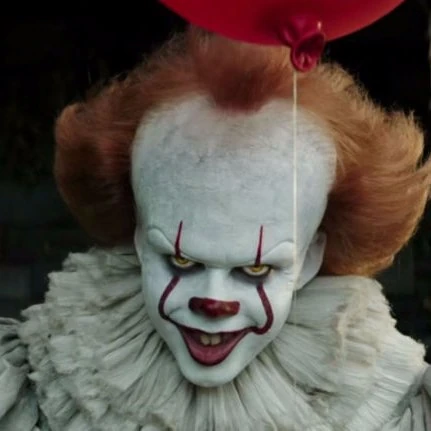
But late 2016 and 2017 brought on a slew of horror films that really brought these points home. Split, with its surprise ending technically making it a superhero film, and Get Out, with its commentary on race on par with some Oscar-nominated films, brought horror into the mainstream in new ways. Later in 2017, Annabelle: Creation and It proved massively successful beyond anyone’s wildest dreams, and in 2018, films like A Quiet Place are raking in the dough and proving how powerful horror can be in creating terrifying atmospheres and emotional narratives.

And this is just scratching the surface: Stephen King stories are being optioned at record rates (where’s my adaptation of The Library Policeman?); some of Netflix’s biggest recent original films have been horror movies; and studios are developing more horror movies than ever before. It: Chapter Two starts filming this summer, and a new Halloween film is getting released this year. So while I may say yes, horror is kind of the new superhero film, it’s not because they suddenly became profitable. The potential has always been there, it just took some very specific successes with deeper cultural resonance to really bring that potential to the attention of studio heads.

Remember, don’t do what The Mummy did. Not if you want your horror movie to actually be successful, let alone spawn a franchise.

So yes, the horror genre may be the new superhero film, with every studio wanting its own successful films, film series, or film universe. But to steal a superhero film quote, “With great power comes great responsibility.” So while I have no pretensions that studio heads or directors or writers or whatever will see this post, let alone take its message to heart, I thought I’d offer some advice advice on getting into this horror boom. After all, as a horror fan and a creator, I want the horror boom to continue. The more good horror out there, the better. So here are some of my ideas for ways to make sure the boom doesn’t fizzle out:

  • Focus on telling a good scary story. This seems obvious, but some companies get so caught up in having a successful film or franchise, they forget to make a good horror film. Remember last year’s The Mummy? That film was convoluted, packed to the brim, and not at all scary. Not a good start for a film that was supposed to be the launching point for an entire cinematic horror universe. Which was the problem: Universal was so concerned with getting their franchise off the ground, they forgot what let Iron Man get the MCU off the ground: a good film in and of itself. If Iron Man had not led to the MCU, it still would’ve been an excellent superhero film. The Mummy should’ve been made that way, but unfortunately, it wasn’t, and now the Dark Universe is sunk.
    So remember kids, focus on a good story first, franchise a distant second. At least said franchise is up and running, of course.
  • Take chances on new/indie directors and stories. A lot of great horror films have come from the indie scene and/or from new/emerging directors. It Follows and Babadook were both very successful horror films from directors with less than three films under their belts, and the former was from the indie scene. Get Out was from Jordan Peele, who had never done a horror film before in his life.
    And all these stories are original plots. In an age where every other movie is a sequel, remake, or some variation on a familiar story or trend, adding something new to the horror canon has the ability to draw in a diverse audience, rather than just the smaller audience of devoted fans and some possible new ones.
    So take a few risks. It could lead to some big returns.
  • Adapt more than just Stephen King. Yeah, I’m happy for the many Stephen King adaptations being made (Library Policeman movie, please?). But there is such a thing as too much of a good thing. Even his Royal Scariness: I got sick of him back in high school because I read too much King and had to take a break for a few years. I still make sure to space out my dives into his stories nowadays. And if that could happen to me with his books, imagine what it could do to audiences with too many of his movies.
    The point is, there are a number of horror writers out there whose works should be adapted. Scott Thomas’s Kill Creek is one of the best novels I’ve read so far this year; Ania Ahlborn’s Within These Walls would make a great Blumhouse movie; Junji Ito has plenty of stories that could make great films; and as I noted in a previous post, HP Lovecraft is in the public domain and would make for great cinema. It’s something to consider.
    And before you ask, “What about your works, Rami?” I would be flattered if someone showed interest in adapting one of my stories. However, I don’t think that’s a possibility at this stage of my career, so I’m not going to get my hopes up. Still, I’d be flattered.

Horror is finally being given the attention it deserves from Hollywood, and I couldn’t be happier for it. However, it’s going to take a lot of work, and a lot of good stories, for horror to continue to thrive. I hope that filmmakers old and new are up to the task.

Whenever Blumhouse is involved in a movie, I usually get interested, as they tend to produce high-quality horror films. When I heard about this film, I got interested both because it had an interesting concept behind it, and because I like Tyler Posey (Teen Wolf fan for life!). So even though it got negative early reviews, I decided to check it out anyway, and convinced a friend of mine to see it with me.

I have a lot to say about this film. Let me try to keep this brief.

Truth or Dare follows a group of college students who go to Mexico for their final spring break. While there, they meet a mysterious man who invites them up to an old Spanish mission for drinks and some good, ol’ fashioned truth or dare. However, when they leave Mexico, they find the game has followed them, and it’s now much nastier: you either play the game, no matter what horrific secrets you might have to share, or what terrible deeds you must commit, or you will die. And the game won’t end till all the players are dead.

Now on the surface, I should have liked this movie. In addition to an interesting concept, the film is incredibly well-written. The story isn’t only compelling, but surprisingly, without plot holes. With very simple tricks, they plug up most of the plot holes that would come up in a horror film, let alone one surrounding a game mainly played by children and horny teenagers. Not only that, but the way the film has these characters expose their deepest secrets is so good at making you feel sympathetic, you almost feel their pain. And when they have to undertake some of the dares, you actually get a little afraid for them.

Not only that, but most of these characters are well-written and multidimensional. Most characters in horror films are ridiculously flat, and especially in ones based around games (*cough* Ouija *cough*). But Truth or Dare actually makes these characters more than flat or stereotypes. They have trouble, they have hidden depths, which is only made more clear when characters are forced to reveal dark secrets. This is especially true with the character of Markie, who at first glance is a happy-go-lucky strawberry-blonde, but in actuality is struggling in a number of ways.

It’s helped by the fact that the actors in these films are all really good. I can’t say any one of them gave a bad performance.

But the film has one big issue: its atmosphere. In horror, atmosphere is essential. And this film  doesn’t really have one, at least not one that lasts. Several times, the film does create some tense moments (keep an eye out for the roof scene), and there are a number of great jump scares. But after the tense moment or the jump scare, I found myself winding back down to normal. And in a horror film, you should be kept at a slight tension at every moment. There should be something in the back of your mind that says, “Oh my God, I’m scared, my heart rate is going to increase a little.” And I never felt that way during this film.

And that really brings down the film as a whole.

Still, if it weren’t for that problem, this film would be terrifying. On a scale of 1 to 5, I give Truth or Dare a 3.5 out of 5. Despite its lack of atmosphere, I honestly recommend seeing it. It probably won’t leave you scared stiff, but it’ll keep your interest and won’t leave you angry at the actors or the directors like other films I could name (*cough* The Friday the 13th remake is a piece of trash, and I would love to chase Michael Bay around Camp Crystal Lake for that ass-terrible excuse of a film. *cough*). Give it a watch, if you feel so inclined, and decide for yourself.

Go on. I dare you.

Whenever you hear a movie getting a ton of hype, especially a horror movie, you tend to be a bit skeptical. And when you hear that Platinum Dunes, Michael Bay’s production company for horror movies, is involved, you’re even more skeptical. I mean, have you seen Ouija? Or that crappy, way-too-sexual middle finger to a franchise that was the Friday the 13th reboot (I’m sorry, but I’ll never forgive Michael Bay for that film. Did not understand what made Jason Voorhees or the Friday the 13th films great at all).

I’m glad to report that this film was not only very good, but actually scared me a bit. And I credit that to how much its director, John Krasinski, who also starred in the film with his real-life wife Emily Blunt and co-wrote the script (rather than a certain director who thinks explosions, boobs, and unsteady camera movements make good cinema).

A Quiet Place follows a family–a father (Krasinski), a mother (Blunt), their deaf daughter (actually deaf actress Millicent Simmonds), and hearing son (Noah Jupe)–living in the first years of a post-apocalyptic world where a predatory race of creatures that hunt through sound have exterminated most of the human race. The family tries to survive each day without making a sound, speaking only with sign language and going to extreme lengths to muffle or suppress every noise (which makes you very aware of how much noise we make in our everyday lives). Which is getting more and more complicated because the mother is heavily pregnant (you can understand why that might be an issue). The film chronicles one particularly nasty night, when the mother goes into labor, and what happens afterwards.

This film is a great horror film. For one thing, the emphasis on sound in this film, both in terms of the lack of ordinary sounds like speech, electronics, and whatnot, the sounds we do hear, from nature to the monsters’ roars and growls, to the music, help to create this creepy, unearthly atmosphere. This helps in suspenseful moments, where characters have to be very careful not to make a sound or they’ll get killed, as it heightens the terror you feel. Hell, I was afraid to make a sound during those moments, and I was in the audience! Coupled with a some well-timed jump scares, you get a really scary film.

I also really liked the monsters in this film. Even in broad daylight, the monsters aren’t very easy to make out through most of the film, keeping them mysterious and making their deadliness all the scarier. And when we finally do see them, they are still really terrifying to look at, even if they may look like the monsters from a certain popular science-fiction/horror franchise (those who’ve seen the movie know what I’m talking about). And I love how not much about the monsters is revealed in the film. You learn enough to understand how they hunt and why they’ve been so successful in hunting down humanity, but you never really learn where they came from or how they appeared on Earth. And that, like the Xenomorphs from the Alien franchise before Prometheus, just makes them all the scarier.

But the best part of this film are the relationships between the family members. With little to no spoken dialogue, you really get to see how this life has been wearing on them, how little mistakes and arguments, along with the constant need for survival, have given each character their own struggles and fears, and how all that creates tensions between them. Seeing them work together, fight, and try to overcome this life is not only enthralling, but contains a great metaphor for the struggles of a family–any family–during difficult times.

That all being said, the lack of sound and action at times does make it hard to stay invested or pay attention to the story. I also thought that the ending could’ve been darker, which would’ve made it a much more memorable and powerful film. At least in my mind.

All in all, I’m giving A Quiet Place a 4.3 out of 5. This is a scary film that will draw you in not just with its premise and atmosphere, but with its intelligence and depth. Take a look and see why silence is truly golden.

Veronica dropped onto Netflix back at the tail end of February. A Spanish film directed by Paco Plaza, best known for the critically acclaimed REC films, it quickly gained a reputation as “the scariest film on Netflix.” I try not to pay attention to that sort of hype, but any film that was getting that sort of recognition is likely going to make it onto my watchlist. Last night I watched it, and I would’ve reviewed it right then and there, but it was late, so I went to bed. And then today I had a busy morning and early afternoon. So I hope you don’t mind that I’m getting this post out so late.

Based on actual events,* the film follows Veronica, a Spanish schoolgirl living in Madrid in 1991. Since her father’s untimely passing, her mother has been working long hours at a restaurant/bar, leaving Veronica to care for her younger siblings. One day, Veronica and a couple of classmates bring out a Ouija board so that Veronica can contact her father’s spirit. Instead she contacts a dark entity that seems intent on not only haunting/killing Veronica, but her younger siblings as well.

While I won’t say this is the scariest film on Netflix (Lord knows I haven’t seen enough of their selection to say that), it is a damn good scary movie.

While the film is filled with the normal tropes of many possession movies–things moving on their own, scary invisible or shadowy entities, people acting totally creepy uner the influence of the evil spirit–they’re done so well that you forget that you’ve seen these tropes before. The actors all do a very decent job, especially newcomer Sandra Escacena as Veronica, who really makes you believe she’s this character and sympathize with her troubles. I also seriously loved Sister Death, a blind, elderly nun who helps Veronica realize what she has to do to fight the spirit after her (because of course there’s going to be a nun who gives advice). For an old blind woman, she’s a bit of a badass, and was never dull when she was on screen.

But on top of that, the film doesn’t go overboard with the fact that it’s a period film. Most properties taking place in popular recent decades do everything in their power to remind you that they take place in that decade. And while that’s not necessarily a bad thing and is sometimes part of the charm (see Stranger Things or Ready Player One), it’s kind of refreshing to see a film that’s more focused on its story than on its culturally-popular decade.

There are a couple of things that take away from the film. For one thing, there are trippier moments in the film, like a scene where Veronica is running across the print of a page from an occult magazine on the way to her mother’s restaurant, that feel rather unnecessary and add nothing to the film. On top of that, for being the titular character, Veronica isn’t the most developed character. Yeah, she’s a responsible teenager taking care of her younger siblings and misses her father, but those are just character tropes. They don’t make Veronica herself memorable like Carrie on prom night was memorable, or how Annabelle the doll is memorable without being anything more than a creepy, possessed doll. In the end, I’m going to remember the film more than I remember the actual character the film is named after.

And as I said, this film is filled with a lot of familiar tropes. And while I’m fine with that, I know there are a lot of other horror fans who won’t care for that, no matter how well done they are.

But all in all, Veronica is a definitely a new gem in the horror film genre. On a scale of 1 to 5, I’m giving this film a 4.5. Head to Netflix, turn it on, and get ready for an experience you won’t be able to look away from.

*No seriously, something did happen. Apparently in 1992 a bunch of Spanish schoolgirls did use a Ouija board, only to have the ceremony interrupted. One of the girls later died because of a mysterious illness, which some have suggested might’ve been due to demonic possession. So while we’re not exactly sure what happened, there’s enough there that this film has more of a claim to the “based on actual events” tagline than Texas Chainsaw Massacre ever did.