Posts Tagged ‘authors’

Well, I’m sick today, so I’m writing this a bit earlier than I normally might’ve. Either way, I would’ve written this post.

It was a year ago today, March 12th, 2018, that I signed the contract with my publisher, Castrum Press, to publish my novel Rose. I remember it being a Monday, and I’d received the contract on the preceding Friday after some back and forth with Castrum. I looked over the contract, signed it, scanned it in at my local library, and then emailed it to Castrum once I walked home. And then I broke out the celebratory beer. Or was it wine? Either way, I was drinking.

For those of you who don’t know, Rose is a novel I wrote as my senior thesis back in college. The story follows a young woman who turns into a plant creature (and that’s just the start of her problems). Since I first started writing the book back in 2014, the story has gone through numerous drafts and revisions. It’s still going through changes, if I’m honest. But I think every change has been for the better. And I feel every day we’re a bit closer to releasing the novel.

Speaking of which, I’ve been corresponding a bit with Castrum today. They were just as surprised that a year has gone by, but they also suspect the publication date is on the horizon, especially with six or so drafts done on the story. We also talked some business details relating to PR and whatnot, so you know we’re getting further along in the process. Given the way the conversation is going, it makes me optimistic.

And of course, when we do set a publication date, I will let you all know when that is, as well as any other pieces of news that comes down the pipeline. With any luck, I’ll have some good news soon.

That’s all for now, my Followers of Fear. I’m going to try to stay healthy and get some rest. With any luck, tomorrow I’ll be feeling a whole lot better. Until next time, pleasant nightmares.

Author Jason Stokes in an adorable photo with one of his cats.

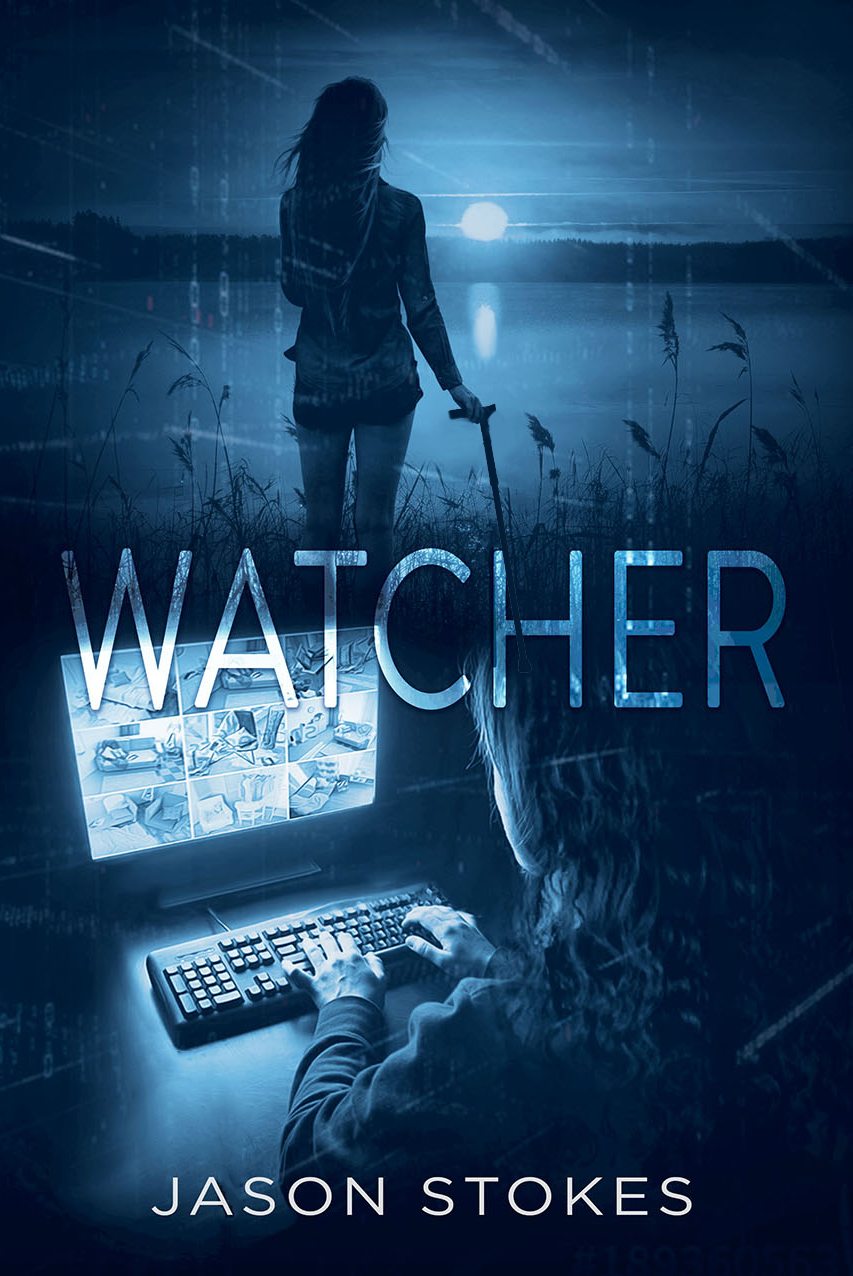
It’s been a while, but I have a new author interview to share with everyone. This one is with an author with an extraordinary story, both in terms of the novel he’s published and his own life experiences. Allow me to introduce Jason Stokes, author of the new novel Watcher.

Rami Ungar: Welcome to the show, Jason. Please tell us about yourself and about Watcher.

Jason Stokes: My name is Jason Stokes. I am a writer and artist currently living in the mountains of western North Carolina.

Watcher is about a young woman diagnosed with Multiple Sclerosis who witnesses a horrific crime via hacked webcams. Due to her own lifestyle, she is forced to make a decision between preserving her own safety and seeking justice for a woman she’s never met. In the process she finds herself against the most powerful citizens in her city and untangling a web of corruption that involves nearly everyone she meets.

RU: You wrote Watcher while taking care of your life, who has MS, and who gave a lot of input on the story. Can you tell us what that was like?

JS: It felt like it was time for a character that had the same struggles I’ve seen her go through and exposed the way caretakers in chronically ill lives support those they care about. I wanted her to have a hero she could relate to. She was invaluable, answering questions about how she would handle specific situations, helping me walk in her shoes and uncovering things I had never thought of.

RU: Did the idea for the novel evolve out of your wife’s diagnosis? Or did it influence an already-existing idea?

JS: I had an idea but It was all wrong. It was overdone and I wasn’t feeling excited by it. When I asked myself, how would she (my wife) handle this? It started to come together. I saw a story that had more depth and stakes that were higher than your average mystery/suspense story. When she (the MC)  wakes up every morning she is already at a disadvantage and it doesn’t get any easier from there.

RU: You founded the company, Gestalt Media, that published Watcher. Why go that route?

JS: Ultimately I’m a control freak but I also want to have a role in bringing forward original projects. I wanted full control over my own work and knew the stigma of self-publishing but I also know several creators and I wanted to help bring their projects to fruition. I’m currently working with an artist/writer to publish a series of offbeat comics sometime this year.

RU: On Twitter, you spoke about how a local bookstore refused to carry Watcher. Can you tell us why and how that made you feel?

JS: The store in question refused to carry Watcher because the main character has MS but I (the author) do not. Their stance is not unique. It is a trend among publishers and retail stores to insist on own voices and to refuse books by those outside of the represented  community. I felt that as my wife’s caretaker for the last six years, I have lived this as much as anyone aside from her. I wrote it with extreme care and respect and sought her input through the entire process. The fact is, there are people whose stories deserve to be told that may not be able to for whatever reason put it into words. As authors it is our responsibility to interpret and share the world. We often take ourselves out of the equation. If it’s done with respect, care and attention to the group being represented that should be enough.

I don’t think the store itself is wrong for their viewpoint. It’s their choice but I disagree with the narrow lane it provides for future literature. As I’ve said, it’s a good intent with misguided execution.

RU: I know this is tough to ask, but how are you and your wife doing these days?

JS: As well as we can. It’s a brutal disease and every day is a little worse than the last but we stay in good spirits. She’s a fighter, a true inspiration and I’m proud to stand beside her on this journey. As long as research continues we have something to look forward to. Anything can happen.

The cover for “Watcher” by Jason Stokes.

RU: That’s good. Can you tell us what your writing process is like, if you have one?

JS: I subscribe heavily to the tenets of the Snowflake theory outlined by Randy Ingermanson. Generally I will come up with a character or a situation I find appealing. Something that isn’t often seen or a new angle. Then I’ll place it in a world and find a central scene, something that brings the story to life. From there I’ll build out starting with a two or three sentence synopsis, then a few paragraphs, then a list of scenes, until the whole things appears.

RU: Are you working on anything now or have any future plans as far as writing goes?

JS: Too many things! There’s never a shortage of ideas and projects begging for time. I have another novel coming in time for Halloween. Ghost Story is the beginning of a series involving a protagonist that can see the dead on a road trip to discover more about his exceptionally unusual past.

RU: What advice would you have for other writers, no matter their background or level of experience?

JS: I’m going to quote Chuck Wendig ‘Finish your sh*t.’ You have to finish. As scary as it is. As difficult as it can seem. The real journey begins when you write ‘the end.’

RU: And finally, if you were stuck on a desert island for a while and could only bring three books with you, which ones would you take?

JS: Well, I think it would be only prudent to include the Worst Case Scenario Survival Guide. Alternately the Boyscouts of America field book if it was available. Next I’d bring along Robinson Crusoe for obvious reasons and Jurassic Park because it is the single most entertaining novel I’ve ever read.

RU: Thank you for being on the show, Jason, and the best of luck to you and your wife, both with Watcher and in life.

If you would like to check out Watcher (I’ve already sent a request into my local library to order a couple copies), you can get it for Kindle and in paperback from Amazon. If you’re interested in more of Jason Stokes, check him out on Twitter. I highly recommend you consider doing both.

And if you would like to be interviewed for an upcoming or recent release, either check out my Interviews page or send an email to ramiungar@ramiungarthewriter.com, and we’ll see if we can’t make some magic happen.

That’s all for now, my Followers of Fear. Until next time, pleasant nightmares!

The other day, one of the YouTube channels I follow, Tale Foundry,* asked a question on their social media about the difference between an author’s writing style and voice. Since I saw it first on their Twitter, I answered their question there. It went something like this over the course of two tweets:

Writing style is the technical part of writing: the author’s word choice, how thoughts are written out, etc. Voice is that and more: what sort of stories the author likes to tell, their favorite characters, the elements they like to include to make the story exciting.

That was my answer at the time, but I wanted to make sure it was right and I wasn’t just pulling stuff out of my ass like most politicians. So I went to Google and took a look. To my surprise, I was pretty on the dot. According to that lovely resource none of my teachers or professors liked us using even when they used it themselves, Wikipedia, writing style “is the manner of expressing thought in language characteristic of an individual, period, school, or nation. Thus, style is a term that may refer, at one and the same time, to both conventions that go beyond the individual writer and to singular aspects of individual writing.” And according to TheBalanceCareers.com,** voice is “the author’s style, the quality that makes his or her writing unique, and which conveys the author’s attitude, personality, and character.”

For example, let’s look at HP Lovecraft’s writing style and voice, as they’re both so distinctive.*** His writing style is easy to pin down: an overly-wordy and stuffy Victorian patois filled with fancy words. Yeah, he liked to pretend he was a contemporary of Edgar Allen Poe. I think in his later works he tried to modernize his style, but he never got over using too many words and too many fancy ones.

As for his voice, that’s also easy to pin down: stories centering around terrors that give no care for mankind. Secrets and sights terrible enough to cause insanity. Entities so powerful they see humanity as nothing more than ants in the grand scheme of things. All with an unhealthy helping of xenophobia, racism, fear of women, fear of sex, fear of technology and progress, inability to grasp many sciences and maths, and an obsession with sophisticated upbringing and breeding.

Yeah, dude had his issues, and this was before getting help for your problems was effective and smiled upon by society. On the plus side, it had a lasting influence on the horror genre that’s still felt today. And the combination of the two makes it easy to point out an HP Lovecraft story when you come across one, even if his name is obscured.

As for my own style and voice, they’re still evolving. But I’ve noticed a few things for each. I prefer to write my characters blunt with their feelings, possibly because I have enough trouble understanding real humans and their confusing mix of emotions. And I love writing stories with unlikely heroines or nice-guy heroes, usually but not always in the their teens, supernatural enemies and horrors, plenty of either realistic or twisted love and romance, and more than a dash of weird to make it fun.

I think there are people out there who like that sort of thing. Not all of them are close relatives. I hope.

Writing style and voice are both very important aspects of writing, both for the writer using them and for the audience reading their work. It’s how we come to know the storytellers, how we identify them just from looking at a page, and it’s what allows them to stay relevant and immersive long after they’ve stopped typing on keyboards or holding pens.

That’s all for now, my Followers of Fear. I’ll have a review out this weekend, so if nothing else comes up in the meantime, I’ll see you then. Until then, pleasant nightmares!

Have you noticed anything about your writing style or voice? What about your favorite authors?

*Which you should check out if you’re interested in stories and looking past the surface to the mechanics and deeper meaning of storytelling, by the way. Here’s the link to their YouTube channel.

**They also mention voice can refer to a character or narrator’s voice. But since I think Tale Foundry was referring to the author’s voice, I’ll stick with that one.

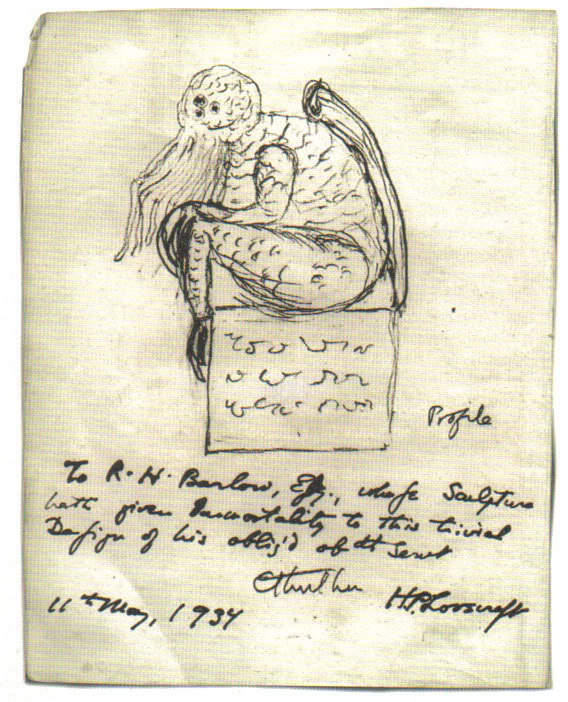
***Speaking of which, yesterday was the 91st anniversary of the publication of The Call of Cthulhu, the first appearance of the titular character and the namesake of the Mythos. Happy Birthday, Cthulhu. May you someday rise out of the sea to irrevocably change the world (preferably before the 2020 election becomes super depressing/annoying).

Writing any part of a story is difficult. Starting it, the long slog through the middle, trying to wrap it up in a satisfactory way. Any part of it has its own challenges. But lately for me, trying to write the ending–those last paragraph or couple of paragraphs–difficult. I’m not talking about how the story ends, for me that’s usually already in my mind when I start writing the story. I’m talking about the actual words. What I use in the story to finish it out.

Those of us who read regularly think of how stories end, and it’s the most perfect ending, like “and they all lived happily ever after,” only not so cliched and unlikely to happen. More like, “All was well,” or “He turned over and went back to sleep,” or “He reached out to him with a single, terrible, slimy claw.” The words close up the story so well, and it feels perfect. Replace one word or one sentence with something else, and it ruins the whole story, or at least the ending.

It’s those words that close the story out that are so important.

And I’ll admit, with some of the last few stories I’ve worked on, I struggle with finding the right words for those stories. I start to feel too wordy, or that I’m not giving an eloquent closing to the story. Consequently when I end the story, I feel a little unsatisfied. This may be in part due to the fact that I see a movie in my head when I’m reading and writing, so translating something from a mental visual to words is somewhat difficult. Or it could just be finding the right words are difficult. Especially when my brain decides to forget a word or two (kid you not, I forgot the word “agenda” for a week, which sucks because I needed it for something).

Luckily, on a few stories, I think I enjoy the endings of my stories a bit better on the second draft. And those that I don’t, I can change them a bit and that usually helps. But I think–and I’m pretty sure I’m not the only author to feel this way–I would like to not feel so dissatisfied when I finish a story. That the words I use to finish the story ring true to me and feel right. That they’re as close to perfect as “All is well” or “He turned over and went back to sleep,” or “He reached out to him with a single, terrible, slimy claw.”

Well, the good news is that with more practice, I can get more stories done and perhaps figure out what it is that makes those near-perfect endings. Fingers crossed, at any rate.

But tell me, How do you write the best ending for your stories? Is there a trick to doing it? Please let me know, I’m dying to know. Okay, not actually dying, but it would be nice to know.

Until next time Followers of Fear, pleasant nightmares!

I just published a new article on the other site I write for, Self-Published Authors Helping Other Authors. This article is, Does Comics Sans Font Make Writing Easier? I decided to answer that question after a friend of mine said on Twitter that writing in Comic Sans was supposed to make writing easier. After she pointed me in the direction of an article that talked about it, I tried it out while writing The Black Foals, my latest story. The results are in the above article I linked to.

Anyway, since my own experience can’t apply to everyone, I decided to open things up to the readers and see what they thought. Yeah, I’m doing a “From the Readers” thing. I’m asking for readers to try writing something in Comic Sans and to email me how it went for them. If you are interested in participating, I’d suggest checking out the article and getting the full details there. You’ve got till May 1st to send us your feedback, so there’s plenty of time to decide if you want to participate (but I hope you will).

And while you’re there, why not check out the other articles we have? Self-Published Authors Helping Other Authors is a phenomenal site for writers of all stripes and background who want advice on how to write, edit, publish and market not only well, but without paying through the nose to make their dreams happen.

That’s all for now, Followers of Fear. I promise you, there’ll be a review or two this week, so keep an eye out for them. Until next time, pleasant nightmares!
It’s a quarter past two in the morning, I’m very tired and have no idea why I do this to myself, and thank God Almighty I don’t have work tomorrow morning, or I’d be one hot wreck. But anyway, good news! After over a month of hard work, I’ve just finished a new novella, which is both my first new story of 2019, and as my most disturbing story yet.

“The Autopsy Kid and Mrs. Autopsy” (wow, talk about a title) is a piece of human-based horror al a Misery and The Girl Next Door. It follows a young girl living in France who becomes entangled with a very disturbed young man after she’s caught shoplifting by said young man. It’s a really dark and gruesome story, with plenty of viscera and a very disturbed villain to boot. And as I said above, it’s probably my most disturbing story yet (and Snake included a scene where a dude got impaled in the most painful way possible). There were points during the writing process where I got a little uncomfortable, which says something about the story and how potential readers might react.

Still, it’s a first draft, so it’s going to take a lot of work before it’s ready for publication. And that’s even if I can get it published somewhere. Besides its length, this is, as I said, pretty dark stuff. Granted, human-based horror is usually very dark and requires a certain kind of nerve to get through it (everyone remembers the hobbling scene from Misery, right?). But this story? I’m sure plenty of editors would want me to censor some of the stuff that goes on in this one.

Not to mention the villain shares some similarities with another villain I’ve created that’ll be coming out at some point. But I’m less worried about this problem. I mean, if Criminal Minds can get away with variations of the same villains over and over again, eleven years in a row, why can’t I have similar villains every now and then?

Well, with any luck, I’m sure I could get it published in a short story collection, either one I put out myself or with a publishing press. I’m sure with the right marketing and a bit of editing and luck, this story could be well-received and give more than a few people nightmares.

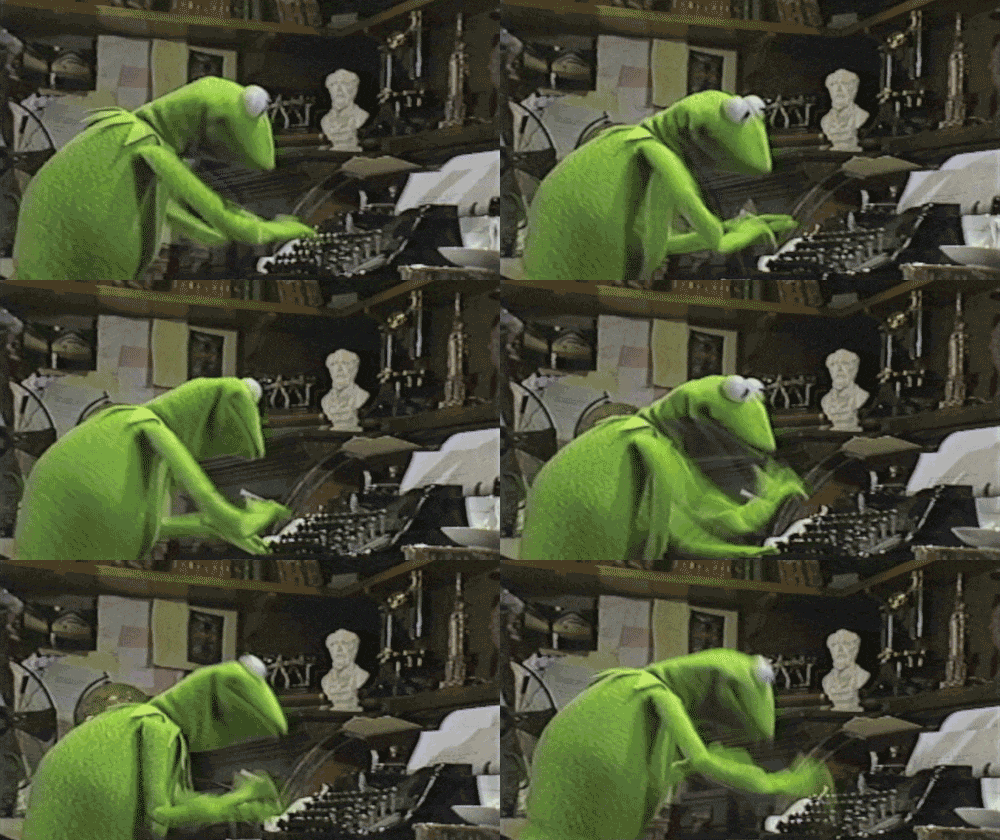
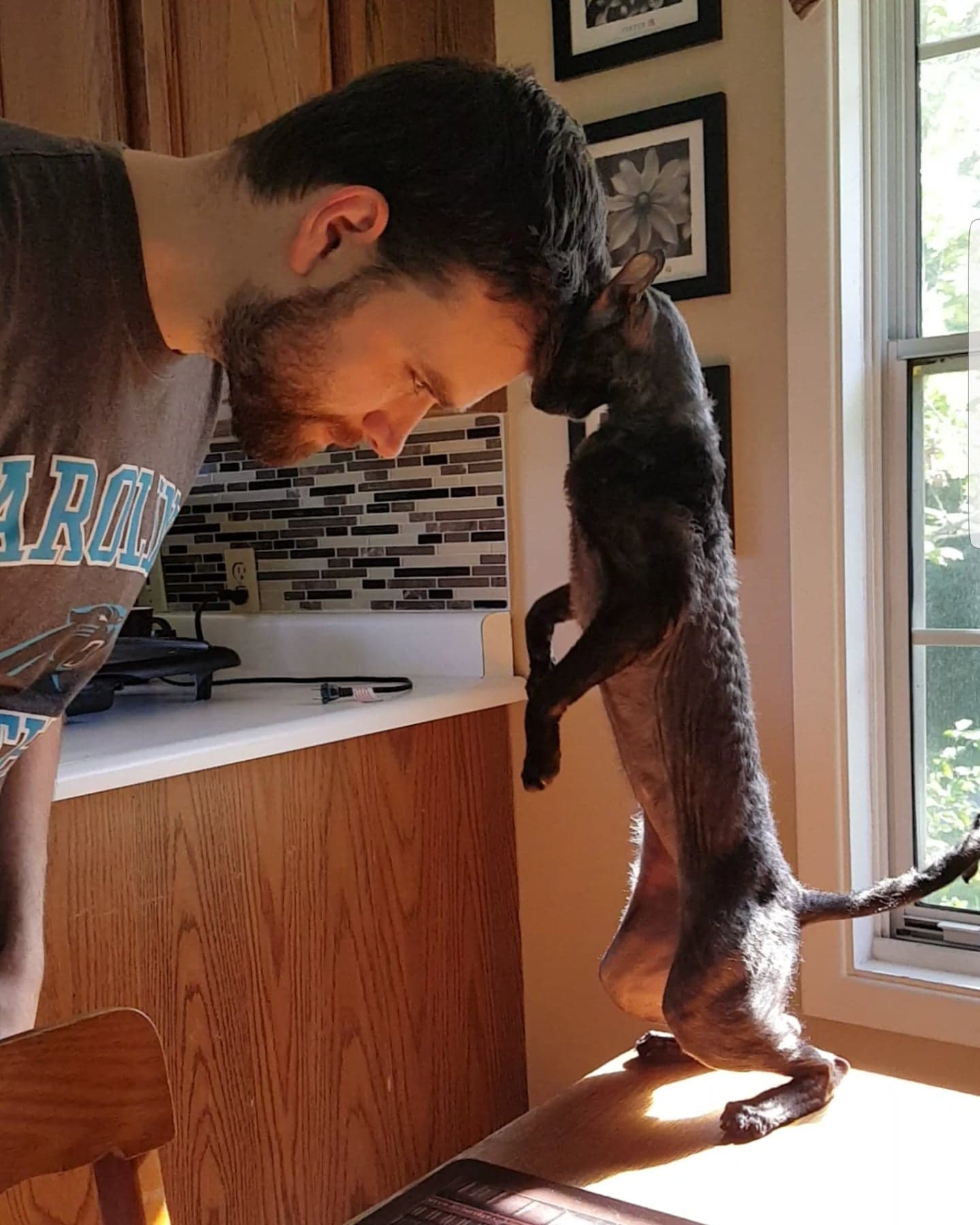
Anyway, I’m just glad to get this story done. I had a feeling I’d get it done this weekend, but I had no idea I’d be up well past midnight working on it, adding about seven thousand words in the past twenty-four hours (a new record for me) before I could sit back and say that the first draft is finished.. I’m pretty sure I looked something like this during the past couple of hours.

I hear we even look a little alike. At least, I do in one of my many terrible visages.

Anyway, today’s writing brings the total page and word count to 164 pages and 48,581 words. Not exactly the longest I’ve ever written, but still quite a bit. And enough to leave me really exhausted right now.

Anyway, I can’t even imagine editing this behemoth right now. Pretty sure I’m going to leave it alone for a long while so that when I do return to it, I can look at it with fresh eyes. And in the meantime, I’m going to head to bed and sleep as late as I can. In the morning, I’ll likely have a celebratory movie marathon with low-calorie ice cream and hot tea. And if I do any more stories before I have to work on Rose again, it’s going to be something much, much shorter.

So until next time my Followers of Fear, good night and pleasant nightmares.

Well first off, I did order a hard copy of The Complete Works of HP Lovecraft. That should arrive by Thursday. In the meantime, now that I’ve finished reading his entire body of work,* I thought I’d take a moment to list my favorite stories of his work. Why? Because A) I want to, and B) despite the overuse of 18th century language and enough racism to make me want to punch the guy, there are some good stories here worth reading. And if anyone ever wanted to try HP Lovecraft but didn’t know where to start, and if they trust my reviews at all, I think this would be helpful.

So starting from Number 8 and working our way up, let’s go over my Top 8 HP Lovecraft Stories.

#8: The Lurking Fear

You ever go hiking or driving through a mountain range at night and expect something like Jason Voorhees to pop out? I have, and it’s enough to make you really question your decision to ever set foot in those areas. Such is the force behind The Lurking Fear, about a reporter who goes into the Catskill mountains to investigate reports of monster attacks on local villages, and comes across something much more sinister. It’s a story that takes advantage of its setting and using a monster unseen to create the sense of horror. And while the twist might be slightly predictable, it still does add to the sense of horror you feel reading it. Fans of the movie The Descent should especially like this one.


#7: Pickman’s Model

Art can both exhilarate and terrify, move people to tears and to action. And in some cases, it can even haunt us forever. Pickman’s Model follows an artist who becomes friends with the titular Richard Upton Pickman, an artist whose work tends to lean more towards the horrific, and how that art seems to have an effect on both the men and their environment. This is a scary story with a fun twist at the end that shows just how the world and art can play with each other and change each other in unexpected ways.

Also, I think if anyone wanted to update the setting to a high school art club and Pickman as an angsty teen, it would make a great student film. Someone please make that happen!


#6: Cool Air

Written during Lovecraft’s brief stay in New York City and considered by some to be one of his best stories from that period, Cool Air tells the literally chilling tale of a young man who becomes friends with a doctor living in the apartment above him who always keeps his apartment cold. The twist at the end of this story is also kind of predictable, but it’s got a great atmosphere and is engaging from beginning to end. Plus it’s one of the few times Lovecraft depicts non-white people in a positive light, which makes it worthy of a read in and of itself. Remember to read with a warm blanket handy.

The Colour out of Space

#5: The Colour out of Space

One of Lovecraft’s most memorable and beloved stories, this story about a crashed meteor and the strange colorful substance inside it that affects a farming family that can’t leave their old homestead has terrified generations of readers. It’s especially memorable for the unsettling atmosphere it creates and for being a great early example of the sub-genre of science-horror. I’d consider it perfect reading for Halloween and you’re in the mood for something creeping, agoraphobia-inducing, and just slightly weird.


#4: The Temple

This early Lovecraft story isn’t as well-known as some of his other works, but it’s a favorite of mine. When a WWI German submarine sinks a British sub, they start experiencing strange phenomena that slowly drives the crew members to the brink of sanity, as well as a place only seen in nightmares. Claustrophobic and full of just enough strange elements to make you feel very creeped out by the inexplicable nature of it all, it tends to stick in your mind once you read it. I hope someday there’s a big budget adaptation of the story, or even a small budget that maximizes atmosphere without excessive CGI. That would be the shit!

Or maybe it would just be shit, but I can dream, can’t I?


#3: The Call of Cthulhu

I bet many of you were wondering where this one would be on the list. The most famous of his stories and the one where the entity Lovecraft’s mythos is named after, it follows a professor who becomes aware of a dangerous, worldwide cult while going through his late uncle’s effects. Weaving its story slowly to make you really consider that this cult and its horrible god may not only be dangerous but very real, it’s endured for a reason. I would recommend this one to anyone looking to get the essence of Lovecraft in one story, as well as to check out the silent film adaptation from 2005, modeled to look out it came out around the same time as the story was published (though much better than your average silent film).

And remember, Ph’nglui mglaw’nafh Cthulhu R’lyeh wgah-nagl fhtagn.

Spelled that correctly the first time around! Yeah baby!

Shunned House

#2: Shunned House

This Gothic horror story follows two professors who investigate a house where every previous occupant has come to an unfortunate end and discover a terrible entity within. While not as well known as his more cosmic-horror works, this story absolutely entranced and terrified me while on a car ride home from Detroit in the summer of 2016. Blending a setting whose rot you can practically smell with a welcome twist on an old monster (let’s just say, no sparkling here), Shunned House used to be my favorite story prior to the #1 choice, and I would recommend it to any horror fan out there.

Also, I have an idea for a ballet based on this story. Yes, you’ve read that right, a ballet. And I would help in any way I can to bring that to life. BalletMet (or any other ballet company) email me. Let’s talk and make it happen.


#1: The Shadow over Innsmouth

I only read this story last week, but it immediately became my favorite of his work. A young man makes a side trip to a small fishing village in New England, and discovers that the strange townsfolk all share a terrible secret. Gothic, unnerving and with more action than your average Lovecraft story, it’s a great story about how the desire for prosperity can lead to damning consequences for both you and your descendants. If you want Lovecraft at his best, this is the story I’d recommend above all others. Definitely check it out.


That’s my top 8 Lovecraft stories. And while, as I’ve said before, his works don’t really age that well, there’s plenty to pick up from these stories for even causal horror fans. And if you do, I hope you–holy crap, a portal from another world just opened up in my apartment. Excuse me while I go greet an entity from another universe and keep it from either eating all of humanity or impregnating everyone in my apartment building, I’m not sure which (I’m a little rusty on this universe’s language).

Until next time my Followers of Fear, pleasant nightmares!

Have you read any of these stories? What did you think? What others would you put on this list?

*Well, the official canon, anyway. Lovecraft also did a lot of ghost-writing and collaborations that aren’t normally included in collections of his work. Considering Through the Gates of the Silver Key is one of them, I can see why.

It took me nearly three and a half years of on-and-off reading, but I’ve finally done it. Through wordy paragraphs full of outdated language, enough racism to make me want to punch a dude, and an increasing amount of multi-sided shapes and magical angles, I have finished reading the copy of The Complete Works of HP Lovecraft on my Kindle. And of course, after such a momentous occasion, there’s only three things I want to do: drink a beer; peruse hard copies of the same book; and blog about my thoughts on Lovecraft’s later work and its influence on the horror genre, as well as on my own writing. This is that last thing on my list.

So if you are unfamiliar with who Lovecraft is (and I find most people are), he was an early-20th century writer based in Providence, Rhode Island. While not very well-known during his lifetime, his creation of the sub-genre of cosmic horror has ensured that his work has lived on and influenced other horror creators and enthusiasts such as Stephen King, Alan Moore, Guillermo del Toro, and myself. What really appeals about this genre is the idea that the universe is a dark and uncaring place full of forces that have no care for humanity or other minor species in the cosmos and can destroy lives and civilizations (as well as usually having a vaguely fishy smell).

When you consider the dude was a sickly bundle of nerves who dealt with anxiety and depression his whole life, had a classist-type of racism where skin-color and social background were very important, was frustrated over his inability to finish his education, and felt more comfortable letter writing and staying in Providence than actually interacting with people and going to crowded places, it makes sense. And while his stories have each aged differently, there’s plenty you can get out of them, especially when it comes to the mechanics of cosmic horror.

This time around diving into his work, I finished out reading his work with some of the most famous of his latest work, which included At the Mountains of Madness (which was also the nickname for the summer camp I went to), The Shadow over Innsmouth, and The Shadow out of Time. By this point, Lovecraft was consciously trying to add scientific concepts to his work wherever he could, especially in Mountains of Madness and Shadow out of Time. Sometimes that works very well, such as in Mountains, but other times, like Through the Gates of the Silver Key, I just found myself scratching my head in confusion (not sure angles work like that, dude). You can also see that by this point, he’d really gotten a grasp over this fictional world of his, throwing casual references to numerous recurring elements in the course of a single story. For once in his life, he was comfortable with something.

Also, while the racism is still evident, it’s kind of mellowed out at this point. Not much, but enough that I don’t feel so uncomfortable reading during certain passages of his work. Progress, I guess.

So were any of these stories any good? Well, old HP’s work has always been hit and miss with me, but there were some good things here. At the Mountains of Madness, while not my favorite, did have a great premise and kept me engrossed for most of the story (he probably could’ve cut parts about the Elder Things’ history and city, though. That went on forever). And Shadow over Innsmouth is probably my new favorite Lovecraft story: it’s this freaky Gothic tale of a town whose citizens have basically sold their souls and their humanity for prosperity and long lives, and the one person who ends up upsetting that arrangement. I’d totally check it out if you’re interested in a different sort of Gothic horror story.

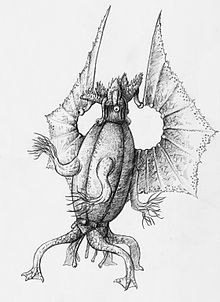
Elder Things from “The Mountains of Madness!” They’re not pleasant!

That being said, I was not a fan of Shadow out of Time. I know that one’s pretty beloved by his fans, but I just thought it was too wordy, to the point where I would look over entire sections and forget most of what I’d just read. The Thing on the Doorstep had an interesting premise, but I felt it wasn’t as scary as some of his other works. Dreams in the Witch House also had a great idea, but I think a couple of changes could’ve been made to improve it. And I’m never going to get back the hour I spent reading Through The Gates of the Silver Key. Seriously, only real enthusiasts should try that one, and only if they’re really sure about it.

Still, it was all worth the dive, in my opinion. I’ve learned a lot by reading the work of HP Lovecraft over these few years, and getting a grasp of why people still read him and write cosmic horror today. And I think over time, it could lead to me writing better stories. Hopefully. I’ll let you be the judges of that, though.

In the meantime though, I’m going to continue working on my own stories and start reading some work by an author who’s older than Lovecraft but somehow easier to understand. Who is that, you ask? The Bard of Stratford-upon-Avon, William Shakespeare.

That’s for all now, my Followers of Fear. I’ll hopefully have a new review for you guys soon. Until then, Hail Cthulhu and pleasant nightmares.


For my other examinations of HP Lovecraft’s work, check out Parts 1, 2, 3, and 4. Also, I highly recommend this video from the YouTube Channel Overly Sarcastic Productions. They look over Lovecraft and five of his most famous works with fun illustrations and hilarious commentary. Trust me, it’s worth a look.

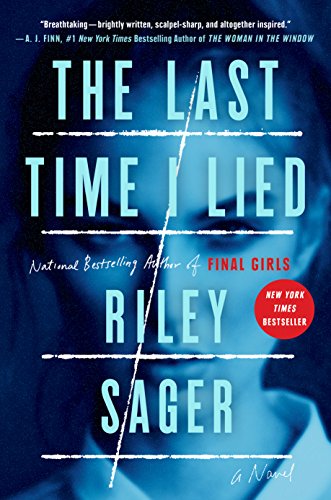
After reading and really enjoying Sager’s first novel Final Girls, I was eager to check out his latest book, The Last Time I Lied, when I found out about it. It helped that the protagonist was a young woman with a dark past (my favorite kind of character to work with) and the story combined an old horror trope with some of the new thriller-type storytelling that we’ve seen in novels like Gone Girl and The Woman in the Window, as well as in Sager’s last book. What more could I ask for? Excited, I downloaded the audio book before the New Year, and started listening.

The Last Time I Lied follows Emma Davis, a New York City artist who is invited back to Camp Nightingale as an art instructor for its first summer in fifteen years. One problem: Fifteen years ago when Emma was a camper at Camp Nightingale, her three bunkmates went missing and were never found. This incident has haunted Emma all through her teens and adulthood, and she decides to go back to see if she can’t finally put the past to bed and maybe even find out what happened to her friends. Weaving between the past and the present, Emma arrives at camp and finds very little is as it seems, and gets caught up in a web of mystery, one with her old bunkmates at the center of it, and which threatens to entrap her and the current crop of campers inside.

One thing I loved about this story is that the camp setting and the camp reminded me of my own camper days. Yeah, my camp was co-ed and Jewish in nature and the one in the book is a secular all-girls camp, but the amount of swearing, the hormones and the differing personalities that sometimes get along and sometimes clash kind of brought me home. But beyond that, this novel is just as twisty as Final Girls was. Every moment you think you know what’s happening or what’s happened, the story throws you for a loop and introduces new information that makes you rethink everything. I was only able to guess a couple of those twists out of all of them, and given that I’m not normally very good at doing that for most mysteries, that’s impressive.

I also felt a lot of connection with Emma herself. She’s a very well-developed character, and I understood how the events of the past affected her in the present (I’ve been there too, though nowhere as severe). But you also see how caring she is, and how that caring makes her want to seek out the truth and to protect those around her. She’s a great example of a protagonist for this sort of story, and I hope I can learn from reading her story to write those sorts of characters in my own stories.

A few things did stick out for me with this story. Remember those twists I was able to guess? Well, at times said twists did feel a bit obvious, so the emotional response at their reveal wasn’t as strong as it could’ve been. At least for me. For others, it could be different. Also, there’s this subplot involving a relationship between Emma and another major character she has history with, not all of it good. And while that subplot did add some drama to the story, I didn’t like how it concluded. Without spoiling anything, after everything that occurs in the novel, I find the hints as to the direction the relationship may go in the future hard to believe.

But all in all, I really enjoyed The Last Time I Lied. It’s a twisty story with plenty of surprises and great characters that play off each other in all the best ways. On a scale of 1 to 5, I’m giving it a 4.3. Sign up and dive right in for a great thrill ride.

I’m looking forward to Sager’s next novel, Lock Every Door, when it comes out this summer. And if you read Final Girls or The Last Time I Lied, you will be too.

When trailers for Bird Box first hit the net, people were immediately intrigued. Not only because Sandra Bullock was in it, but the film, like A Quiet Place, drew its tension and challenge through avoiding a monster by denying an important sense or human function. I was also intrigued when it was pointed out to me that the film shares similarities with a story I wrote (not enough to get lawsuit thankfully). So this evening, I sat down and checked it out.

Based on the novel by Josh Malerman, Bird Box follows Mallory, a woman with two young children who is trying to get to a compound downriver while she and the children is blindfolded. The story then switches to five years previously, when a pregnant Mallory becomes trapped inside a large house after invisible monsters start causing anyone who gazes upon them to either commit suicide or try to make other people look at them. Switching between past and present, the movie follows Mallory’s journey of survival, both then and now, as she tries to keep those close to her alive.

This was a really good horror film. It takes a simple concept and executes it very well, creating this gripping tension. Even when characters are indoors, there’s this feeling of dread as you see them struggle with their various survival needs–food and water, two very pregnant women, anyone outside might be dangerous, etc.–and the possibility of having to expose themselves to the outside. In those moments, you see these characters really having to work to keep themselves alive, using everything in their environments to both get around and keep themselves from seeing something they shouldn’t. It really makes you believe in the scenario occurring, and that these would be the steps people would take if such a situation would occur.

I also liked how the movie handles the monsters. You never see them, you only see their effects on the environment and anyone who sees them, and that adds this powerful sense of mystery to them, compounding the terror they create.

And for those wondering, Sandra Bullock in the lead was awesome. I mean, all of the principal cast is really good, but especially Bullock. You really do see this woman who has grown up being very guarded and afraid of bonds with people new to her having to really change herself in order to adjust to the situation she’s in. Yeah, at times she does seem a little emotionless, but I think that is just her character trying to stay guarded. I know some people have said that annoyed them or made it harder to sympathize with the character, and I have a feeling that’s going to be a point of contention though with a lot of people. Hopefully the debates stay civil, especially online.

I also liked John Malkovich as Douglas, a character whose survival drive at times makes him gravitate between asshole and murderer. Yeah, I hated the character, but God was it hard to look away whenever he was on the screen. And he does a great impression of Donald Trump at a rally during one scene. That alone is worth checking out the film.

If there was anything I didn’t like, it was that a few characters didn’t get more screen time. You have Sarah freaking Paulson and BD Wong in this film, but their roles were relatively small, and that’s just a damn shame (though since they were both on American Horror Story: Apocalypse, that might have had something to do with it). And Lil Rei Howery as Charlie, a grocery store employee and aspiring author writing a novel about the end of the world (a man after my own heart) should’ve been given more screen time. He stole the show every time he was on screen. I wish that guy could have his own film.

All in all, Bird Box is a tense apocalyptic thriller with great characters and an engrossing story. On a scale of 1 to 5, I’m giving the film a 4.5. Go in, and go in with eyes wide open. You’ll see how beautiful it is.