Posts Tagged ‘authors’

anxiety

What is the trouble with psychological horror? Actually, there’s not much trouble to it. It’s just very hard to do well.

What do I mean by this? Well, let’s look at the definition of psychological horror: “a subgenre of horror fiction, film, and video games (as a narrative) which relies on the characters’ fears and emotional instability to build tension”, according to Wikipedia (I know you’re not supposed to rely on that site for information, but I couldn’t find a better website for a definition). It’s a sub-genre that, rather than relying on a traditional monster that’s out front and center for all to see, the monster is restricted to quick glimpses and shadows. If there’s a monster at all: sometimes the true villain is a character’s own brain, their fear, distrust, paranoia, suspicion, isolation.

I’ve used psychological horror before, particularly in the stories in my collection The Quiet Game (which if you haven’t read, I wish you would) and in the short story “Buried Alive”, which was published in the Strange Portals anthology last year (again, I wish you would read it). And I’ve come to the decision that while it isn’t as difficult as physics or writing comedy, it is walking a very fine line. Almost like a tightrope. And if you fall off, you can wind up veering either into the realm of the comedic with how obvious that it’s all in the character’s head, or it’s just so confusing that you find yourself losing patience with the story.

Let me give some examples (and it’s my blog, so you have to let me give some examples): have you read “Buried Alive”? I’ll keep the spoilers to a minimum for those who haven’t, but like I said above, I use quite a lot of psychological horror in that story, and for the most part, I think that I use it well (so do most of the readers I hear from on this one). For the rest, though…it’s pretty obvious that the circumstances of the main character are taking a toll on her mental state. I don’t think it gets to the point of comedic, but it is obvious, and the point of psychological horror is to make you guess whether it’s all in their heads or if it’s real or…who knows?

Perfect Blue. Trippy, has its moments, but also has its problems.

On the opposite end of the spectrum, there’s the anime film Perfect Blue, based on a novel that I wish was available here in the States. The film is about a singer-turned-actress who starts to confuse reality and fiction when her first acting job takes a turn for the traumatic. It’s a good story, but it’s not a perfect story. There’s a good section of the movie where they spend time trying to confuse both the protagonist and the viewer, and it gets a little difficult to not only what’s going on, it gets difficult to pay attention or be patient with the movie. While I admire the visuals of the movie, and I get what they were going for by showing what the protagonist is going through mentally, and I recommend checking it out if you’re interested, psychological horror shouldn’t get so strange or trippy that the reader gets frustrated with or loses interest in the story.

A great example of a psychological horror story though, manages to toe the line very easily and keeps you guessing as to what’s real or what’s mental delusion. A good contemporary example of this is The Babadook. If you read my review of that movie last year, you’ll remember that I noted that the movie kept you guessing as to whether the film’s protagonists were dealing with an actual monster or a shared psychosis, and I eventually settled on a bit of both because…I’m mostly human, and humans need to categorize things to make sense of the world. And I still say that I don’t know for sure which it is, and that’s one mark of the film’s greatness. You’re never quite sure what’s real and what’s in the heads of the characters, it stays interesting throughout, and it never gets to the point of ridiculous or obvious. All told, it’s great psychological horror.

This movie will surely get you on so many different levels. I’m getting chills just thinking of it.

So how do you psychological horror well? How do you toe that line?

Well, I’m definitely no expert on the subject. I usually deal in traditional horror, the monster is out front and is usually either some twisted form of human or a creature not easily defined by our standards. I dabble in psychological horror, usually making it part of a bigger story. But I can try, and I think–beyond reading/viewing as much psychological horror as possible, both good and bad, and practicing like you want to get to Carnegie Hall, of course–I’d suggest trying to write a story where you’re not sure what’s really happening. Create a scenario where strange things start happening to your character or characters, and you can’t tell what’s real or what’s just in the minds of your characters. Keep it interesting, don’t get too ridiculous or obvious, and just see where the story goes. If you can do that but still be unsure for most of the story of what’s real or not, then it’s likely your reader will be the same and want to know more.

Another marker of psychological horror is that there’s usually a twist somewhere along the way, and if it’s good it’ll change how you view the entire story (a great example is the Korean film A Tale of Two Sisters and its American remake The Uninvited). Characters are also often driven or plagued by powerful internal battles: am I doing the right thing? Is this right or wrong? Are they really out to get me? It doesn’t have to be full-blown persecution belief or fear of some unknown. It can be something as simple as a growing suspicion that something’s off or that our desires are actually evil. Again, A Tale of Two Sisters is a great example of the former.

Not a fan of the movie, but even I admit it shows Jack’s breakdown very well.

And finally, psychological horror is often not the main focus of a story, but part of a bigger story. Take a look at The Shining by Stephen King. Obviously that hotel is actually haunted, and the kid and the cook are both psychic. But a good deal of the story deals with Jack Torrance trying to sort out what’s going on for himself. Is he just dealing with a powerful desire to get wasted again? Is he going insane? Is the hotel playing tricks on his mind? There are scenes where you really can’t tell, and that’s part of the terror. Part, but not the whole thing. After all, there’s all the stuff the hotel is doing to them, right?

Unless Jack, Danny, and the cook are all sharing some sort of shared delusion, or folie a trois, in which case…wow. New conspiracy theory right there.

In any case, it’s something to experiment with yourself. And for me to experiment with more often. Just try and see what happens…or does it happen? You’ll never know until you try.

How do you feel about psychological horror? Do you have any good examples in film or literature you’d recomend? What are some tips for effectively writing in the subgenre?

Well, I’ve returned from Germany, my Followers of Fear. All in three pieces (don’t ask about the other two, you won’t like the answer). It’s good to be home, to say the least. A little weird after so long, but still very good. I enjoyed seeing my parents and my sister waiting for me at the airport and teaching them naughty German swear words (and my parents are rabbis, by the way. Scandalous!).

Of course, now that I’m back that doesn’t mean I can just slack off and do whatever I want. I’ve got a number of things on my to-do list today, and while I’m working to get those done, I’m taking a moment to talk about writing. Specifically, what are three qualities that writers need to actually write and get work done?

And I mean besides the actual imagination to come up with a story and the ability to transfer that story from the mind to the printed page. Not only does that go without saying, but a lot of people have very active imaginations and can write well enough that if they tried they could come up with a very good first draft. So why don’t they? What keeps people from actually acting out that writing dream?

I’ve been thinking about this a lot since yesterday, when I spoke with someone on the final leg of my journey home who had tried writing but found himself unable to do it. I found myself wondering why that is, and I think part of why some people can write and some find themselves struggling to do so may stem from three needed qualities or skill sets: confidence, focus, and perseverance.

Now by confidence I don’t mean confidence that your story is going to succeed and will make tons of money. I mean confidence that you can actually get it done, that you can write out an entire story from start to end. Never mind whether it’s any good, first drafts are notoriously terrible because that’s how they’re supposed to be. You have to have the confidence that you can get that first draft done, and then maybe we can talk about the next draft and everything else that comes from that.

Think about it: even if you prefer to only work on short stories, that fitting an entire story in a space between a thousand and ten-thousand words. Even to me, that’s a little daunting, and I’ve become much better at writing short stories over the years (though I could always be better). Imagine how it might feel for someone who wants to write a novel but then finds out that a novel is at least sixty-thousand words! You can’t just say to yourself, “I’ll try and see where it gets me” when it comes to this sort of task. You have to have some confidence in yourself and that you can get all those words out on the page.

Otherwise you may falter around three-thousand words when you realize that getting a story out is not as easy as you think and may not be able to continue from there.

Another thing writers need to get work done is focus. You have to be able to focus on a project and get the work done. The person I spoke to yesterday on my flight told me this was his problem: he tried writing a story, but in the midst of writing that story he would come up with another story and then want to work on that, and his first story would languish. Then he’d have an idea for a third story and want to work on that, and then he’d have two stories being put on the shelf for later. So the cycle went and he had projects that just never got done.

Even if you juggle multiple projects at once, like I do (three novels at various stages of the editing process, one collection of short stories on the way, working to find a narrator for an audio book, etc), you have to be able to sit down and focus on one project for an extended period of time. Maybe even months or years. And other projects may demand to be written (believe me, I’ve got lists of story ideas, and some are pretty vocal in my head about wanting to be written), but you have to get some out of the way first before you can focus on others. Better to have just a few projects at most to work on and several ideas waiting to be turned into stories than a lot of projects just lying about not even a quarter of the way finished because they all demand to be written.

And this brings us to our final quality: perseverance. It’s an understatement at the very least to say that life is not easy. Take my life, for instance: I’m trying to ensure I have a job so I don’t become a bum in my dad’s guestroom, I have bills to pay, tasks on my to-do list to do, etc. So many demands that it’s hard to find time to write or edit. And when it comes to doing either, especially at the beginning of a project, I may sometimes have trouble getting the work done. All those words can make it hard to getting it all done.

Without these qualities, writing can feel like a Sisyphean feat.

To write, you have to accept that you have to work through all those difficulties before you can get through all those stories, and then do it. It’s never easy, and life will find ways to get in the way. Even when it does, you have to be willing to get through what life throws at you and then sit down and get through all the writing and editing and everything else you have to do. If not, then those stories you feel so passionate about will languish for so long you may never pick them up.

It’s these three qualities–confidence, focus, and perseverance–that make the difference between those who want to write and those who actually go out and do it. Each of us struggles with them at times–focus in the short term can be troubling for me–but in the end I think those who can command these qualities are the ones who can at least get the stories written out and polish them enough for publication.

But what do you think? Have I got the right of it? Did I miss something? Did any of these speak to you? Let’s discuss.

In the meantime, I have to focus on the other things on my to-do list like visiting the dry-cleaner’s the barber shop, and persevere through cold and possible rains at the same time. Still I’m confident I can do it, so I’m not too worried.

Still, wish me luck. I might need it later.

Becket image

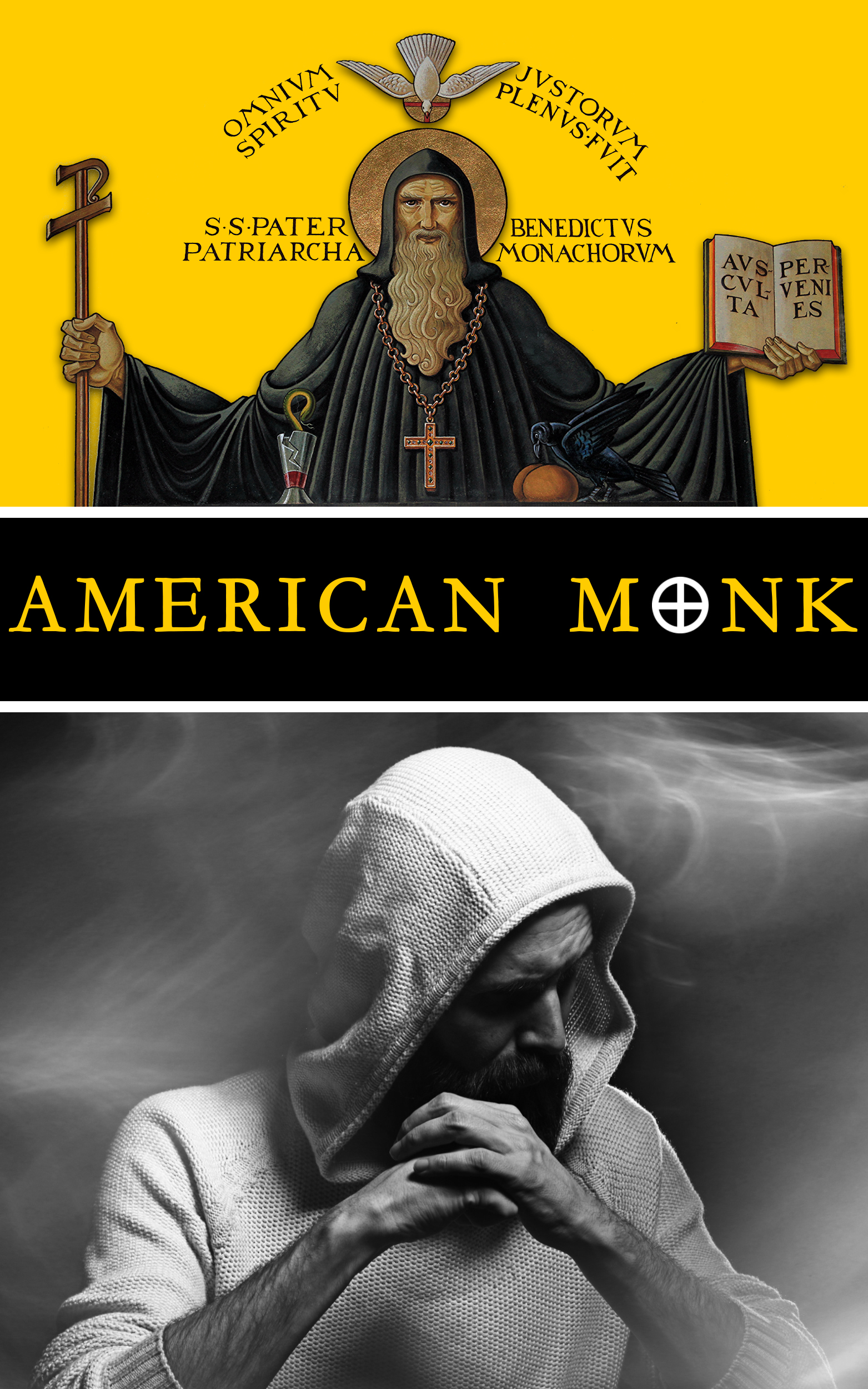
Some of you may remember my previous interview with author Becket, an indie novelist who likes vampires, was once a monk, and works for Anne Rice. Now he’s got a new book out, American Monk, a memoir about his years in a monastery growing closer to God and living in a brotherhood of similarly-minded men.

Welcome back to my blog, Becket. Happy to have you here. Now, your new book is American Monk, which chronicles your time as a monk in a Benedictine monastery. Why did you decide to write this memoir?

One day on my Facebook page I decided to make a post about my experience in the monastery. People responded well to it, so I made another one the following week. I kept up that have it for about half a year, at the end of which I decided to compile all my Facebook posts about the monastery into a memoir.

Why did you decide to become a monk in the first place? And why did you leave the monastery?

I wanted to be a monk because I want to deepen my relationship with God. The monastery was a wonderful place to do that because it was a house conducive to my personality type, an introvert and a scholar. I stayed in the monastery for five years, at the end of which time I was given the choice to make solemn vows, which is like the marriage commitment. It would’ve been for the rest of my life. The monastery was wonderful, but I also felt called elsewhere, although I did not know what that was at the time. So without any hard feelings, I left the monastery and began working for Anne Rice.

What’s a day in the life of a Benedictine monk like?

Monastic life is built around routine. We wake up early in the morning and begin our day with prayer. Our morning prayer lasts for about an hour and a half, and then we would go to breakfast. After that it was time for work. We worked most of the morning until the hour to celebrate the solemnity of the mass. After mass we had lunch. And after lunch we spent the afternoon committed to more work. Our day ended in the evening with prayer. After prayer we went to dinner, and after dinner we had a community time together, where the monks gathered together in one room and enjoyed one another’s company. Finally, we had night prayer and that it was bedtime.

American Monk

In memoirs like these, I’ve noticed that the vignettes within generally run the range from humorous to serious to tragic to inspirational and everything in between. Do you feel that this is true of yours? 

My memoir is meant to be inspirational. I hope that people read it and grow in their relationship with God, because the monastery was a place where a truly began to understand who I was in the divine plan. I am still learning the depth of my relationship with God. In many ways, the monk I was is still inside me, and perhaps he is a better monk than I used to be.

 Does Anne Rice make an appearance in American Monk at all?

She makes an appearance in the beginning and at the end, and in one chapter in between, but the memoir mostly deals with my experience with the brother monks.

What are you working on these days?

I just finished the first draft of my next music album as well as the first draft of a novel appropriately titled The Monk, about an African monk who suffers the stigmata and works as a miraculous channel of God’s love in the world.

When not writing or working with Anne Rice, what are you doing these days? And is there anything on your wish list you think you could be doing in the near future?

I spend time with God, my girlfriend, and my two cats. For the future, I have a few projects that I am working on and I am praying that God will give them success for His Glory.

Well thanks for joining us Becket. Glad to speak with you. And if you’e interested in reading American Monk and other works by Becket, you can check out his website, as well as find him on Facebook and Twitter.

And if you’d like to read more interviews with other authors and with some of my characters, you can head over to the Interviews page for those.

Hope you enjoyed reading this, my Followers of Fear. I certainly had fun putting it together.

Last year I made a list of haunted places I wanted to visit before I died and became a ghost (and yes, I plan on becoming a ghost. If you don’t buy at least one of my books and leave a review, I WILL haunt you!). Since I made that list (and visited the location I most wanted to see), I’ve come across a few more haunted places I’d like to visit. So I did what any good horror writer with a blog who believes in ghosts would do: I wrote a list and now I’m transcribing it down here.

This list isn’t in any particular order, and they span all over the United States, Mexico and even parts of Europe (parts I’m nowhere near at the moment, unfortunately). I hope you enjoy it, and that if this list or the previous one influences your travel plans in any way, shape or form, it’s in a positive way.

BOO!

1. Island of the Dolls

Location: Xochimilico, Mexico

Located in Xochimilico’s extensive canal network is La Isla de la Munecas, or the Island of the Dolls. According to the history of the place, a hermit named Julian Santana Barrera lived on one of the chinampas, or artificial islands, in the canals. One day, Barrera found the body of a girl who drowned in the canals, and was reportedly hit very hard by it (some locals believe a water spirit was responsible for the girl’s death). Not too long after that, Barrera started finding dolls around the island, and hanging them up all over the place, on tree branches and in his own hut. He said it was because the dead girl hung around, so he was giving her a whole playground of friends, and to keep evil spirits away as well (the water spirit, perhaps?). Over the years hundreds of dolls were hung up, leading to the island’s nickname. Even after Barrera died in 2001, the dolls still hang about, some of which are purported to talk or walk around on their own. The place has been investigated by ghost hunters with some interesting results.

If I ever get to Mexico, I’m heading there. Ghosts and spirits and creepy dolls? Sounds like fun.

2. The Villisca Ax Murder House

Location: Villisca, Iowa

Properly known as the Josiah B. and Sara Moore House, this charming little house was the spot of a brutal ax murder in 1912 on eight people, the Moores, their four children, and two young friends of the children. Several suspects were considered for the murder, and one was even tried and let off twice, but so far the murders remain unsolved. Since then, there have been several reported hauntings of the place, including seeing shadows of a man wielding an ax, children crying, and other freaky stuff. One family reportedly left the house screaming one night and never returned. Since 1994, the house has been a museum dedicated to its dark history, and several ghost-hunting crews, including the Ghost Adventures Crew, have investigated the house, finding some very interesting evidence. This is definitely a place I’d like to visit.

Villisca also happens to be the town where my friend and colleague Joleene Naylor lives. So Joleene, if I ever make it out to Villisca, I hope you wouldn’t mind showing me around for a day. It’ll be a spooktacular good time.

Update: This location was visited on July 13th, 2020. And yes, Joleene was in attendance. You can read the recap by clicking on these links: Part 1, Part 2.

3. Sedlec Ossuary

Location: Sedlec, Czech Republic

What looks like the Paris catacombs but is above ground and is part of a working church? The Sedlec Ossuary, located beneath the titular town’s Cemetary Church of All Saints. In the 13th century the abbot of the local monastery visited the Holy Land and brought back with him some dirt he’d picked up while over there and sprinkled it around the abbey cemetery. This made it a premiere spot to get buried and, along with the number of people dying of the Black Plague, caused the cemetery to be expanded several times. Of course, there was no way to keep up with that many bodies, and in the 16th century bodies were exhumed and their bones stacked inside the cathedral that had grown up around the spot. In the 19th century a woodcarver was hired to take the bones, roughly 40,000 to 70,000 bones’ worth of skeletons, in order, which he did, creating several macabre furnishings, decorations, and religious objects out of human remains. As you can imagine, this place has become quite the tourist destination, and ghost sightings or photos are not unheard of.

Sounds like my kind of furniture-shopping destination.

4. Leap Castle, Massy Woods, Montpelier Hill, The Stewards House, and Loftus Hall

Location: All over Ireland

I couldn’t leave these off the list, and they’re all in Ireland, so I figured, why not just group them as one big entry/tour of the nation? Leap Castle has a history of dark and mysterious deaths, almost like something out of a Shakespeare tragedy, and is also reportedly the home of an elemental spirit that hides in a pit deep in the castle. Montpelier Hill is the home of the Irish counterpart of the Hellfire Club, which supposedly did some very strange rituals, possibly Satanic ones. There’s even a story of the devil actually visiting the premises one evening.

Down the road from the Hellfire Club Lodge is the Massy Woods, which supposedly have several different kinds of spirits within, including a banshee, and the Steward’s House, which is said to be frequented by a demonic cat. If you look at a painting of the cat the wrong way, or if you hang it up wrong, you might bring something malevolent upon yourself.

And Loftus Hall is supposedly the most haunted house in all of Ireland. As the story goes, in the 18th century the Loftus family went on vacation, and the Tottenham family, consisting of a father, a mother, and a daughter, came to take care of the place. During their stay a ship broke on the coast nearby and a man from the ship came to stay at the mansion. During this time the man and the Tottenham daughter Anne became quite close. One night, during a game of cards in the aptly named Card Room, Anne dropped a card under the table. When she went to retrieve it, she discovered their guest had a cloven hoof. When she pointed this out in alarm, the man supposedly flew through the ceiling, leaving a nasty hole where he went, and was never seen from again. To this day people claim that the devil stayed at Loftus Hall, and that the hole he left through has never properly been repaired, that part of the ceiling is different from the rest.

Anne herself later went mad and was confined in the Tapestry room, where she died some time later. Years later a child’s skeleton was found in a hole in the Tapestry Room, leading to speculation that Anne had a baby while in confinement and that it was killed because it was a bastard and the possibly the devil’s spawn. Since these strange events, the house has been the site of poltergeist activity and visions of Anne walking down hallways looking for her lover. There have been several exorcisms performed on site over the years, which have only done so much to quell the spirits in this haunted place.

In any case, I’d like to make a trip to see these places!

5. Grand Canyon Caverns

Location: Peach Springs, Arizona

In the 1920’s, Walter Peck (not the actor) discovered a deep hole that went underground for quite a distance, in both depth and length, and discovered some skeletons down there while he was at it. He quickly turned the cavern into a tourist attraction, saying the bones he’d found there (and which were removed for scientific study) were of cavemen. Turns out they were Native American, but that never stopped the tourism industry.

Today, the caverns are a popular tourist spot with a restaurant, hotel, and museum. You can even tour the caverns and even stay overnight down there in an equipped hotel suite if you wish. Just be aware that you might be sharing the caverns with some Native American spirits who are upset about having their burial grounds disturbed by tourists. They may throw rocks at you.

When can I make my reservation?

6. The Bell Witch Cave

Location: Adams, Tennessee

This is one of those locations where people, even ghost hunters, are on the fence about the veracity of the reported hauntings. According to the legends, the Bell family lived in the area in the early 19th century and came under attack by a witch (though the events described sound more like a poltergeist or a malevolent spirit). Supposedly the witch did everything from tapping on walls, pinching people and other harmless stuff to full-on assaulting family members and even appearing as a creature that was half-dog, half-rabbit and all black. She makes a certain cave her home and will attack anyone who takes rocks or shows disrespect in her cave, hence the name “Bell Witch Cave.”

The thing about this legend is that all sources about the witch come several years after the Bells are supposed to have lived in the area. Even secondhand witnesses would’ve died out by the time the earliest known sources of the legend were published. Regardless, there have been reports of people being attacked by spirits after visiting and occasionally taking rocks from the cave, and there are rumors that the cave may have held some spiritual significance to local Native Americans. And a few paranomrla groups have investigated the cave with interesting results.

Whatever the case may be, this is definitely a place where I would like to visit and maybe see for myself if there’s any truth to the stories. Just as long as it doesn’t come home with me, I don’t think the witch would like Ohio winters.

7. Bannack Ghost Town

Location: Bannack, Montana

Ghost towns. There’s something about a town that’s totally been abandoned, something so…enchanting. So is the case with Bannack, which was founded in the 1860’s during a gold rush, but died out in the 1970’s. Today, the town is mostly a tourist attraction, once a year being revitalized for a festival called Bannack Days that recalls the time when it was a boom town and the seat of the county.

The rest of the year though, the town is populated by spirits. Some say that the sheriff ran a gang that killed anyone who looked at them the wrong way, making for a rather lawless town and for the events that would cause several hauntings. There is also reports of the ghost of a drowned girl being sighted, and even following people home.

Sounds like a good excuse to visit Montana, if you ask me. It even inspired a scary story I’d like to write someday. Better get some firsthand experience, right?

8. Linda Vista Hospital

Location: Los Angeles, California

Originally a hospital for railroad workers, the hospital saw a definite decline as the railroad industry and the neighborhood changed. The number of deaths increased, mainly ones associated with gang violence. With most of their patients being uninsured or under-insured, the hospital was forced to close its doors in 1991. Today, part of the hospital has been renovated into an assisted living facility, while the rest is a frequent set for movies and TV shows and a historic landmark.

However, some patients are said to have never left the building, and there have been multiple investigations into the hospital’s paranormal residents. To which I say, “Nurse, I’ve got a bad case of ghost obsession! Can I stay overnight for monitoring?”

Also influenced an idea for a story I had a while back. Hope I get to write that too.

9. Targoviste and Hundeora Castles

Location: Romania

These were the castles where Dracula lived. The former is where he impaled over two-thousand of his enemies, while the latter was where he was imprisoned for seven years of his life. It’s said at one of these that some Satanists did a ritual and ever since weird stuff has happened. Don’t know if that’s true, but it’s Dracula, so I have to check it out.

And then I will have some blood! Mwa ha ha!

10. Pere Lachaise Cemetery

Location: Paris, France

I did not know about this cemetery when I visited Paris last year, or I would have made an effort to visit it. One of Paris’s most famous cemeteries, it has flowers, graves and mausoleums that look like little houses or very interesting sculptures, and its fair share of famous folk, from Oscar Wilde to Jim Morrison. There’s actually a waiting list to be buried there, and if your family doesn’t renew the lease on your burial plot every thirty years or so, they dig you up and put someone else in your place.

Over the years, plenty of ghosts have been reported around the graveyard, including famous folks, Morrison himself, and even a few wandering lovers. As someone who visited the Paris catacombs and loved it, this seems like my sort of place. Vive le cemeteries francais!

Have you been to any of these places? What were your experiences like?

I just published my latest article from Self-Published Authors Helping Other Authors, and it’s a very special article: Tips For Surviving NaNoWriMo. For those of you who don’t know what that is, it’s National Novel Writing Month, a yearly tradition in November where authors try to write an entire novel of 50,000 words or more in 30 days. To say the least, it is insane and requires a lot of work to get through in one piece. I thought I’d write an article on how to get through it and still keep all your fingers on your hands. So if you are participating or thinking of participating this year, it might be a good idea to check out the article. Maybe something I’ve written will prove helpful to you.

And while you’re over there, check out the other articles on the site. Self-Published Authors Helping Other Authors is a website by indie authors for indie authors and has hundreds of articles meant to help writers of all backgrounds and levels of experience write, edit, publish and market effectively without going broke in the process. You might just find an article helpful to you on the site.

All for now. I’ve got stuff to take care of, so I’m off to take care of them. Until next time, my Followers of Fear!

joleene naylor 2 (1)

I think this interview has been a long time in the making, and I’m glad it’s finally happened.

Today’s author is a woman who you might have seen commenting a lot on this blog. She’s an author of several vampire novels, as well as a contributor to Self-Published Authors Helping Other Authors, and a contributor/editor/compiler/whatever to the Ink Slingers’ anthologies, including Strange Portals and the recently published When the Lights Go Out. It’s Joleene Naylor, and I’m looking forward to hearing what she has to say!

Welcome to the blog, Joleene. So tell us, what are your short stories about and what inspired them?

Unforgotten is about a pair of old school chums in the UK who go on an annual trip every year on the same date. This years’ trip is complicated by Gordon’s missing wife and the ghost of a little girl who wants to be found. It’s actually based on a dream I had. It started out the same: in a car discussing having been interrogated by the police. Only there was no ghost girl.

In Beldren, a group of former indentured servants decide to take what they feel they are owed from an easy mark; a household of women. Their plan is perfect except for one thing: the women are vampires.  This one was inspired one night when a pickup kept going around and around past our house and my brother got nervous they were “up to something” and I thought, “I wonder what would happen if robbers broke in and found out the people of the house were serial killers? Or vampires? Hmmmm… That could be an interesting story…” Hopefully it is.

I read the first one and liked it, so I have high hopes for the second one. Now what else have you written?

1 - shades of gray - 250 (1)

The Amaranthine vampire series. Shades of Gray is the first, and the newest is book seven, Clash of Legends. I’ve tried to make the story creepy and disturbing, and at times bloody and horrific, instead of just the usual romantic sop that a certain YA book has turned the vampire genre into. There’s no sparkling and no high school, just blood, fighting, and vampires who feed on humans and burn in the sun.

Are you a traditionally or self-published writer?

Self published because I want to own the rights to my own work.

What got you into writing in the first place?

My mother was a writer and poet, so it never occurred to me not to “make up stories”. My brother and I used to make (and illustrate) books for fun when we were children. (I also used to draw book covers and catalogs, complete with product descriptions – I was strange.)

What is it about scary stories that you think draw people in?

People enjoy being scared – safely. We like that little “Oh!”, the tiny burst of adrenaline and that aftermath giggle, but we like when we know we’re not *really* in danger, and a scary story can give us that.

Are you working on anything these days?

I’ve reworked Patrick: A Prequel, but I need to edit it. I am also working on Masque of the Vampire, the eighth book in the series, and the Tales of the Executioners short story collection. There are four of those, three are available for free through most retailors (except Amazon) and the fourth, Beldren, is included in the When the Lights Go Out anthology.

What is some advice you would give to other writers, regardless of their level of experience or background?

FRONT COVER (1)

Write what you want to read because if you want to read it, then edit the heck out of it. Change words, shorten scenes, add scenes, delete scenes. The original version may seem like a masterpiece to you, but it isn’t – it’s a rough stone that needs cut down and polished in order to shine.  That may be hard to admit sometimes, or to acknowledge, but it’s the truth for everyone.

If you were stuck on a desert island and could only take three books with you, what would you take?

I think short story collections give you more bang for your buck when it comes to being stranded for a long time, so: The Complete Tales of Edgar Allan Poe, The Faun and the Woodcutter’s Daughter by B. L. Picard, and right now I really, really, really want to read A Candle in Her Room by Ruth M Arthur, only I can’t find a copy priced at anything I can afford, so in fantasy land I would have it. Alternately, if it has to be a book I owned, I’d swap it out for My Sweet Audrina by VC Andrews.

Well, thank you Joleene for joining us today. Really enjoyed picking your brain. And readers, if you want to check out more of Joleene, you can find her on her website, her blog, her Facebook page, on Twitter, and on Goodreads.

Also check out the Interviews page for my talks with other authors and even some characters.

And make sure to check out When the Lights Go Out, available from Amazon, Smashwords, Barnes & Noble, Kobo, and iTunes. It’s the perfect way to start the Halloween season.

I just recently finished the second draft of “Gynoid”, a sci-fi love story novelette. During that time, I thought a lot about romance in fiction. Have you noticed that it’s everywhere? In fiction, you find a lot of time devoted to find your one true love, and in real life, you find people not just actively looking for their one true love(s), but even measuring themselves by fictional couples! Our music is rife with love songs or how love is betrayed (the so-called “Song of Songs” in the Bible is one huge erotic love song), and if you go back in time, some of our oldest stories involve love and lovers.

Heck, it’s in a lot of my fiction too! And I write fiction where “love” is more likely intense adrenaline and a shared peril being mistaken for attraction. Snake has a love story that’s central to its plot, Reborn City has a bit of romance in it here and there, and..well, you saw the description for “Gynoid” above.

But rather than speculate on why romance and finding it is such a big thing (I think we can all guess at the answer, right?), I think I’m going to share some of the trade secrets I’ve gleaned over the years from other writers and from my own romantic experience, both writing it and from experiencing it (do not ask me which I have more of. I wouldn’t want to upset anyone) on writing romance in your stories. Why? No particular reason, it’s just on my mind and in my stories so much I feel like talking about it. And I know I might not be the most qualified person to talk about the subject–I know I’m not a romance writer–but I know a bit, and since when has not being an expert ever stopped anyone from talking about anything? (*cough* climate change deniers in Congress *cough*)

So let’s begin on my tips for including romance in your stories:

  1. Give the characters personalities, make them fully-rounded and three-dimensional. I feel like often times some of our most celebrated romances involve people who are just good-looking nice folk and not much else. Romeo and Juliet were a sad emo guy with a thing for teenagers and Juliet was a teenager, Cosette and whatever her guy’s name was were good-looking and nice but they weren’t much else, and Katniss Everdeen…okay, Katniss was at least well-rounded. You knew who she was, what her problems were, what she stood for, and what she was willing to do to overcome those problems. Her love interests, on the other hand, just seemed there so as to add something to the story that the story might have done fine without. I mean, Gale is just handsome and angry with the Capitol, and I can’t tell what Peeta is besides sweet. One minute he’s skillful enough to manipulate the hearts of the whole Capitol, the next he’s too naive to tell that Katniss is using him for survival. Make him one or the other! Seriously, if you’re going to bother putting love interests in the story, I’m going to need a reason to ship either of them besides their attractiveness and professions of love.
    And that brings me to my next point:

    It took a long time, but these two became a wonder couple.

  2. What’s the reason they fall for each other? Please don’t say, “Oh, they’re good-looking”, it’s got to be more than that…or heroin-flavored blood. Take one of my favorite anime of all time, Sailor Moon (yeah, I’m a huge fan of that even so many years on. Moonies forever!): all of the main characters are good-looking. So why does Sailor Moon end up with the male lead, especially when in every adaptation of the story they start out fighting and disliking each other and in some he’s already seeing someone else? Leaving aside backstory exposition, I think they just grow comfortable with each other over time. They realize they can be honest with each other and that their faults are just part of who they are. Cute parts too. And it helps when they find out each other’s secret identities, which shows how courageous and reliable they are to one another, to the point they make a pretty good partnership, in love and in combat.
    Another example I’d like to use is Captain America and Peggy Carver in the Marvel Cinematic Universe (which is my only reference point, I was never much of an American comic books reader for some reason). Heck, at the beginning of their relationship, Cap’s a scrawny guy who doesn’t seem like much of a hero, while Agent Carter is…well, Agent Carter. What forms the basis of their relationship is that Carter likes that Cap wants to help out despite all the barriers facing him, and his sweet and loyal personality, while Cap likes that she’s a unique and confident woman who doesn’t need a man and who also doesn’t look down on him for not being tall and buff. Over time and numerous battles, their relationship grows closer and they fall in love, which ultimately doesn’t end well but I’m sure that if things had gone differently, it would have been a different story.
    Speaking of which, here’s point 2a. Shared experiences, especially combat experiences, can bring a relationship closer. Unless of course you and your supposed lover work really horribly together, in which case fighting will just highlight it and you’ll fall apart at the seams.
  3. There is no point where the relationship becomes perfect. Work is involved. If there’s one thing I’ve learned about relationships in the real world, they’re always a work in progress. Why? Because we’re all works in progress, so our relationships are too. There’s going to be rough times, where the characters struggle or worry that something or someone will come along and the good thing they have going will be ruined. Back to Sailor Moon for a second. Fans agree that the heroine and her man are a strong and stable couple (though whether or not it’s a good coupling, I find people disagree on the subject more than you’d think), but they do have to work at it. Besides enemies that threaten to pull them apart for whatever reason, they have the normal couple troubles: people who seem like better matches coming along, occasional misunderstandings, an unexpected child. Heck, they even broke up for a time during the anime’s second season. Just goes to show that even great couples have ups and downs.
    And the best part is, you can extend these meetings, character explorations, falling-in-love scenes, and ups and downs over several books. In fact, half of the fun of the TV show Scandal is watching the heroine Olivia have an on-again, off-again relationship with the (married) President of the United States. You never know how that one is going to work out. And as long as you can keep it going, the more you get to explore these characters and their relationships (provided fans don’t start to get bored, of course).
    And now that we’ve discussed what makes for a relationship, let’s discuss some content.
  4. Sex is not always necessary. Yeah, I know we live in a hyper-sexualized society where everything has a sexy component to it, and I know I included a steamy sex scene in Snake, but seriously, sex isn’t always necessary. In fact, some people prefer romance stories without anything racier than a kiss or two. There’s actually an entire sub-genre of romance like that, it’s called sweet romance, where the characters don’t have sexual relations before marriage (or commitment too, maybe) and it has a big and loyal following. Besides, some authors aren’t comfortable with sex scenes. I know I wasn’t at first, though I later got more comfortable with them. So if you don’t want to do one, there’s no law saying you have to.

    Love the relationship dynamics of this show!

  5. Also, you don’t have to just have one person love only one other. I know there are a couple of Buffy fans reading this blog. One of the best parts of that show is the characters had many different relationships over the 7 seasons. Buffy herself had three major relationships over the course of the series.  The writers could’ve had her with Angel, her first love, through the whole series, but they allowed her, Angel, and many others to explore other relationships and really mature through that. Same with Teen Wolf, which had two main characters being “meant to be forever and ever”, but gradually changed things up over time. So if you want to, you can have characters wait a long time and go through several relationships before finding the right person.
    Especially with love triangles. I hear there are quite a few series out there where a good dose of fun is trying to find out who the main character will end up with in the end, especially when there’s two really great, fleshed-out characters to choose from (though usually from what I hear it’s whoever the protagonist meets first).
    And this brings me to my final point.
  6. Don’t do it because everyone else is. And no, that’s not a drug PSA (though you shouldn’t do those either. Not even weed, that stuff will mess with your system). Yeah, you see people putting all these different things in their stories–love quadrangles, the other man or woman, unexpected pregnancies, even some sexual exploration. Only put those in your story if you feel they’re what the story needs, not what others say you should put in or what others are putting into their stories. Believe me, that’s how I avoided something really unnecessary romance-related stuff in Reborn City, and that worked out great for me.

I’m going to end it right here, but I have to say, there’s a lot more that I could include in this post. Suffice to say, there are a lot of intricacies to writing romance and love stories (point number 7, a romance has a happy ending, a love story doesn’t have to. Learned that a romance writer friend of mine), and you learn these things over time. But hey, in the end they can lead to some really great stories, and maybe melt a heart or two while you’re at it.

What romance writing tips do you have? Do you feel romance is important to your stories or not so much?

You remember my recent interview with author Barbara G. Tarn? Well, she also interviewed me and it was just awesome. If you’d like to check out the full interview, check out her blog, it’s got some great stuff on it!

And as always, check out When The Lights Go Out, where you can find creepy stories from the both of us within. Now available on Amazon, Smashwords, B&N, Kobo, and iTunes. It’s the perfect reading for getting into the Halloween season.

Barb's avatarBarbara G.Tarn - writer

unnamedAnd it’s a guest! From the Ink Slingers Halloween Anthology but he was also in last year’s anthology! When I read “Travelers”, I thought I wanted to know more about the guy, but look, almost a year went by and… he did it again! His “Tigress Lizzy” gave me the right chills at the right times… so go grab your copy right now! Ladies and gentlemen, please welcome Rami Ungar!

Where do you live and write from?

I’m originally from Columbus, Ohio, though for the past two and a half months I’ve been living and working as an intern with the US Army in Wiesbaden, Germany. As to where I write, anyplace I can plug in my laptop and let my creative juices flow, whether that be at home, in a café, a library, or even in the office when there’s nothing going on (rare moments, I tell you).

View original post 1,027 more words

when the lights go out cover

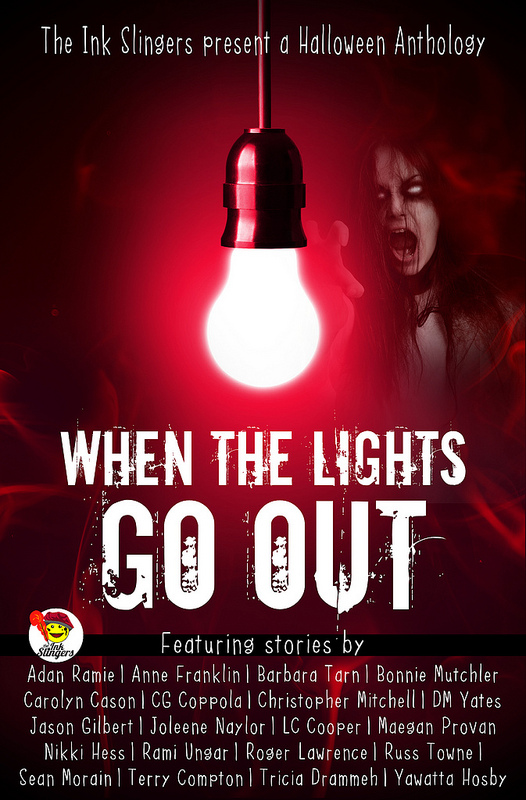
As you know, I got to contribute to an anthology that was published recently, When the Lights Go Out. The Amazon and Smashwords links were available immediately, but Barnes & Noble, Kobo, and iTunes apparently took their time with it. Or something. I don’t know, it wasn’t my department.

Anyway, WTLGO is now available on five different websites, and I’ve got the links. So if you wish to check it out, you now have a bunch of different options to do it. It’s got 25 different stories by a variety of different authors, including my very own “Tigress Lizzy”, which is about a teenage girl who gains a very dark power and uses it to get revenge on the bullies in her life (no, not telekinesis, that would be a rip-off of Carrie, and this is paying tribute to Carrie). I also was lucky enough to write the introduction, which I’m told is pretty good.

And it’s also October, so some new, creepy tales are just what is needed to get in the mood for the season. Besides pumpkin lattes, I mean.

So go check WTLGO out, whether it be through Amazon, Smashwords, B&N, Kobo, and iTunes. And get ready for a spooktacular good time.

It’s time for another author interview! This one is with a Facebook friend whom I’ve known for a couple of years now. And while what we write and how we write are very different, I’m glad to know her and I think she’s just terrific. She’s got a new book out and she’s got more on the way, apparently. I think we could all learn a thing or two from her.

Oh, and you’ve seen her name on the blog before. Remember that radio show I was on not too long ago? She’s the host. Ladies and gentleman, Dellani Oakes (hey, that rhymed!).

Welcome to my blog, Dellani. Tell us a little about yourself and what you write.

I’m an author of mostly romantic fiction. I have one historical romance, one retro-romance, three futuristic romances and three romantic suspense already published. My latest book, One Night in Daytona Beach, is an erotic romance, due out October 28th.

Many of my books are set here on the east coast of Florida, as I have lived here since 1989 and consider it to be my hometown. I may not be a Florida native by birth, but I am at heart. I think it’s impossible to live anywhere and not have it become a part of you.

What are some books you’ve written that you’d recommend?

Would I be awful if I recommended them all? It depends upon what you like:

Historical Romance set in Florida in 1739. Full of spies and intrigue – Indian Summer

Retro Romance set in Nebraska in 1976. Action packed thrill ride. – Under the Western Sky

Futuristic Romance/ Sci-Fi set in space in 3032, some hot romance, intrigue, action…. – The Lone Wolf Series – Lone Wolf, Shakazhan and The Maker

Romantic Suspense, all set in Florida in the present. Ice meltingly hot, each also features a fast paced suspense – Undiscovered, The Ninja Tattoo and Conduct Unbecoming

Erotic Romance. The genre and title say it all. Ultra hot, this is also a romantic suspense, which takes place in 24 hours – One Night in Daytona Beach

Each book has something different to recommend it. If you want exciting stories that make you laugh, cry and fall in love, then any one of them would be a good fit.

Good thing there’s quite a selection, then. What are you working on now?

I tend to hop around a lot when I write. From time to time, I am inspired and the story flows quickly, finishing as fast as I can type. Other stories come more slowly. I just finished a romantic suspense a few days ago, that I wrote in four days. I am currently working on book 3 in a YA series I started 3 years ago (not yet published).

What made you become a writer?

I never wanted to be anything else. Necessity sent me in different directions, but I always was compelled to write. I have told stories and written poems, songs, short stories and plays for as long as I can remember. I started writing my first novel in 1988, but it’s still unfinished. My first complete novel is my historical romance, Indian Summer.

You also run some online radio programs, including one I was on. Tell us about those.

It all started with April Robins. She came up with the idea of Red River Writers in 2007, a page on Facebook. I happened to join. Shortly after, author JD Holiday suggested that we begin shows on Blog Talk Radio interviewing one another and other authors. I hopped in as an assistant and was terrible at it. A couple other hosts left and April asked me to take over their show slots. Thus, Dellani’s Tea Time and What’s Write for Me were born.

Dellani’s Tea Time, 4:00 PM EST every second Monday of the month, was my first show. I wasn’t quite as bad at that as I was at assisting, and found I quite liked it. Things ran more smoothly once I brought on author Christina Giguere (Rachel Rueben) as my co-host. She keeps things running smoothly for me and is an absolute treasure.

What’s Write for Me was kind of an afterthought. We decided to add more shows to the schedule and we were asked to pick a day. I asked for the fourth Wednesday of the month (also at 4:00 PM EST) because I didn’t want shows back to back. (Though some months they are)

The shows are available, for free, to any author – or soon to be author. Best way to reach me is through Facebook. I also interview authors on my blogs.

What do you do when you’re not writing?

If I’m not writing, I’m reading. (I also admit to a terrible Netflix addiction) I enjoy re-reading books I love, as well as finding new ones to treasure. I also read and edit my own work. Once a week, I volunteer at the local Council on Aging where I facilitate a small writing group. It’s called Fun in Writing and we have a wonderful time. It’s a great way for older people to socialize and keep their minds sharp. I joke that most of my best friends are old enough to be my mother, but it’s true.

What is some advice you would give to other writers, regardless of experience or background?

Write the way that feels right. So many “how to” books will tell you that you must outline, plan carefully and draw up character sketches before you put pen to paper (or fingers to keys). I’m here to tell you that you don’t have to do that. There is no shame in just sitting down to write, often called pantsing (writing by the seat of your pants) by those who are supposedly in the know. (We panters call them plotters). I’ve been told that my way of approaching a story is inefficient, that I can’t possibly accomplish my goals as a writer if I don’t know where my story is going. According to the naysayers, I’m supposed to put all my creative energy into an outline. I beg to differ.

I have written books in as little as four days. I’m not talking about some 20,000 word novella (though I’ve done those as well), I mean a 54,087 word novel. That’s after I completed another novel for NaNoWriMo (National Novel Writer’s Month) the day before, which was just over 50,000. (The Ninja Tattoo, available from Tirgearr Publishing). Tell me my way is inefficient, please!

Just to bring my point home, I’ve spoken to dozens of authors over the last few years and the majority of them write the way I do, rarely planning anything. There is absolutely nothing wrong with plotting and planning, but there’s nothing wrong with my way, either.

And finally, if you were stuck on a desert island and you could only bring three books with you, which three would you choose?

Oh, I hate this question, because I can’t think of only three books I’d want to have. Honestly, give me notebooks and pens so I can write my own. I will keep myself wonderfully entertained.

I’m seeing that response quite a lot these days. Well, thank you Dellani for joining us. Good luck with everything you do in the future.

If you would like to check out more about Dellani and her work, you can check out her blog, as well as Facebook and Amazon.

All for now. I’m going to try and get a few more interviews out, among other things, so look out for those. Until next time, my Followers of Fear!