Posts Tagged ‘reflections’

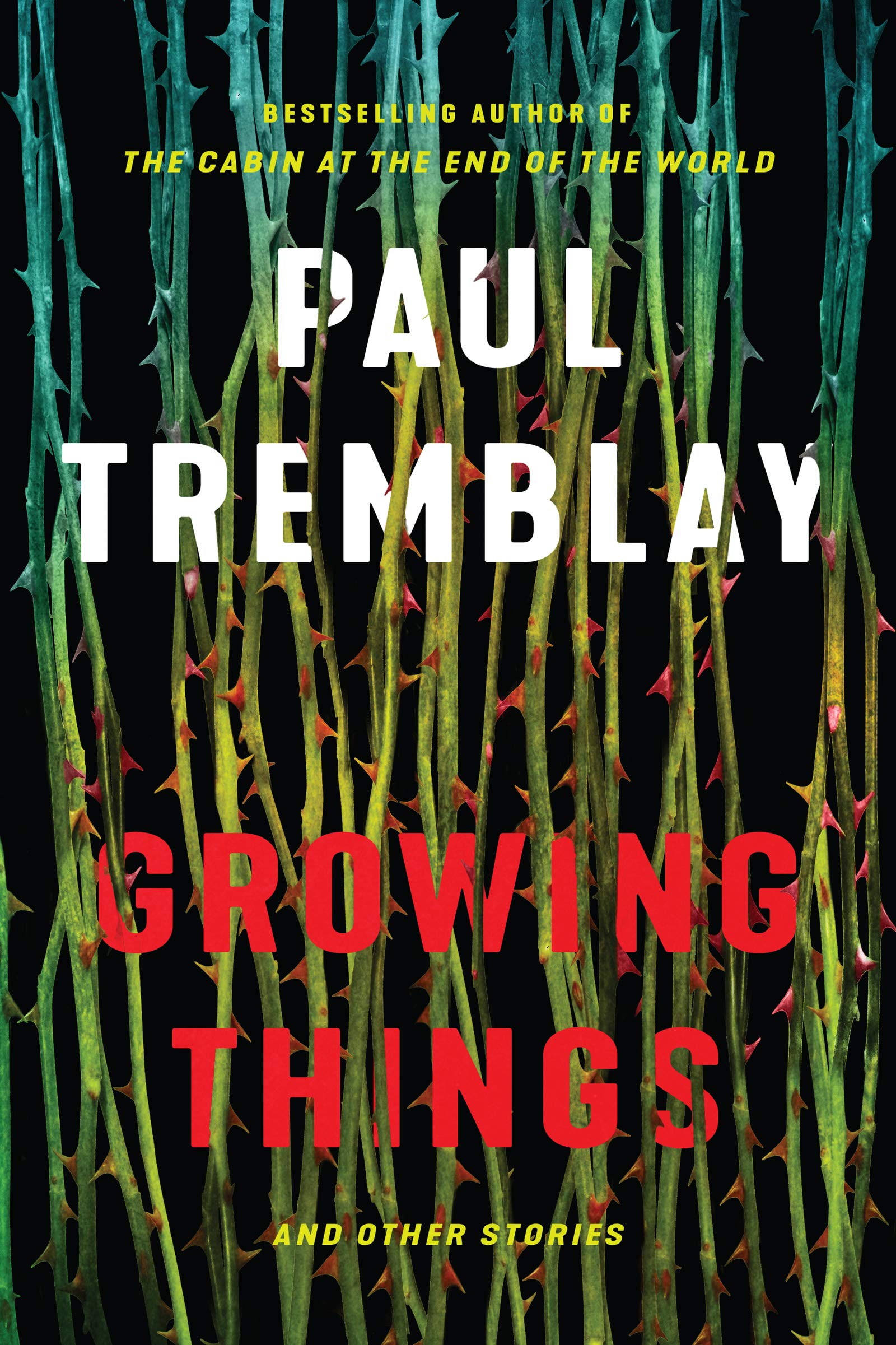
Having read, reviewed and enjoyed the author’s previous works–A Head Full of Ghosts and The Cabin at the End of the World–I was interested to read a collection of short stories by Paul Tremblay. And after I got my latest Audible credit, I downloaded it and started listening. And whoo-boy was that a collection.

Now as I stated in a previous post, with every collection or anthology you’re going to get some stories you like, some stories you don’t, and a couple you just don’t get. Thankfully, the majority of these I liked, and wow, they were good. My favorite stories, “Notes for ‘Barn in the Wild'” and “It’s Against the Law to Feed the Ducks,” hint at much bigger and darker events than what you’re reading on the page (or hearing in your earbuds, in my case). It’s kind of like cosmic horror, where only a little bit is peeled away for the characters and audience, but that one peek is terrifying. And those stories could be cosmic horror, depending on the source of the trouble (I won’t give anything away).

Another great story is “Notes from the Dog Walkers,” which is out-and-out hysterical! I was really surprised to find that story in there, given that this is a horror collection, but once I got into it, I couldn’t stop listening. It’s hysterical, and has some interesting twists to it. And there’s one more story titled–get this–“Untitled.” Not sure why, it just is, and I found it wonderfully weird. Definitely recommend for a laugh, especially if you’re familiar with Tremblay’s work and/or you’re aware of just how weird people can be sometimes.

And after the last story, Tremblay has a bunch of notes about each individual story, which I love seeing in a collection and don’t see enough.*

There was only one story I didn’t like, but it was pretty unique. It was kind of like one of those pick-your-own-adventure books from when I was a kid, only it’s a short story or novelette in a horror collection for adults. Not in itself bad. I actually find taking that sort of story for a horror story not aimed at the Goosebumps crowd an intriguing concept. I just have never been into pick-your-own-adventure stories. Might have something to do with the fact that I, as an author, like to control everything that happens in a story when I’m given power over it. Not just a character’s choices.

And as far as stories I didn’t get, there was just the one, revolving around a teacher and an AP class. I think it was supposed to hint at the effect teachers can have on students, but I guess I missed something, because I left it more confused than anything else. Or was that the point?

But the rest of the stories were really good, and I’m glad I got to listen to them.

On a scale of 1 to 5, I’m giving Paul Tremblay’s Growing Things and Other Stories a 4.5 out of 5. Creepy and entertaining, you’ll enjoy it from cover flap to cover flap. Pick up a copy and see if it…grows on you too.

That’s all for now, my Followers of Fear. I’m off to summon dark spirits from the nether realms and work on a story for my own gestating collection. Let’s hope it comes out somewhat decent.

Until next time, pleasant nightmares!

*And Mr. Tremblay, if you’re bored and happen to be reading this review, let me just respond to the comment about authors who have more ideas than time to write: I’m one of those authors, I’m only nicely dressed when I have to be, and be careful what you ask for!

We all know I love the Addams Family, especially the 1960’s sitcom iteration. So of course, I’ve been keeping my eyes out for anything new from the franchise. And when the first trailer for this movie dropped…well, let’s just say I may have been mistaken for a banshee or a werewolf in the Columbus community.

The Addams Family shows the Addams living in New Jersey. Due to past experiences with less-than-tolerant townspeople, they’ve lived in isolation to protect themselves. However, when a new suburb crops up by the Addams’ estate, they have to deal with not only the suburb’s creator/leader, a TV interior decorator, but the temptations and dangers of having to live near people again. All as the Addams prepare for an upcoming celebration in which the whole family will be gathered under one roof.

Before I start, let me just clarify one thing: in this adaptation, Fester is Gomez’s brother again (though whether older or younger is unknown), Grandmama is Gomez and Fester’s mother, and Wednesday is the older sibling again. These relationships can vary from adaptation to adaptation.

Now that that’s out of the way, let me state this: this might be my new favorite adaptation of The Addams Family.

For one thing, the animation really resembles the original Charles Addams cartoons, as well as allows for more crazy happenings during the course of the movie. (Not saying it’s better than any of the live-action versions, which I know a lot of people love, Just saying it looks nice and allows for more creative freedom)

And the story is decent. While it’s the sort of story we’ve seen before–people of different backgrounds learning to find common ground despite a powerful person trying to keep power–it’s done with a lot of heart and creativity here. Not only that, but it allows for a lot of character exploration, particularly with Morticia and Wednesday. The former is dealing with the fact that she can’t protect her child from the world anymore (something a lot of parents are dealing with more and more in a world where social media makes us grow up faster), while Wednesday is confronted with a world she’s unfamiliar with, and is ready to explore it despite her mother’s worries.

What took me by surprise, though, was how much this film’s themes could be applied to today’s world. I know there’s a lot of talk about refugees seeking safety in other countries,* and the Addams could stand in for refugees. In fact, the very first scene depicts them as refugees, fleeing the old country after Gomez and Morticia’s wedding is interrupted by townspeople with pitchforks and torches. The villain of the film could be seen as a stand-in for a lot of politicians or media types who use social media to comment on their issues, and sometimes inflame and direct people to action.

There’s actually a lot to unpack with these films, and it might surprise a few viewers. Granted, sometimes the way the film handles its themes hits us on the head–the new suburb is called “Assimilation,” for one–but for the most part, it’s done pretty well.

And yes, it is extremely funny. And there is an opportunity to snap your fingers and sing the theme song during the film. Trust me, everyone in the audience was doing it.

All that being said, I did have a few issues with the film. There’s a subplot revolving around Pugsley preparing for his Saber Mazurka (basically the Addams’ version of a bar mitzvah), and it feels kind of rushed compared to the other characters’ arcs. You can kind of tell that his arc is an excuse to get all the Addams in one place, and I would’ve liked to see his arc given more attention.

Also, Grandmama is barely in the film, which is a shame because she’s fun to play off other characters, especially Morticia. The villain’s fate…well, without spoilers, it leaves a bit to be desired. And was Snoop Dogg really okay playing Cousin Itt? He’s on screen for two minutes and has maybe three lines, all of which is gibberish. I’d have thought he’d want a bigger role.

But all in all, 2019’s The Addams Family is a fun family film perfect for the Halloween season. On a scale of 1 to 5, I’m giving this one an even 4. Pack up the hellspawn, get in your favorite hearse, and check it out. You should have a blast (though not because of the grenades).

*Due to my day job, I can’t openly comment on issues like that, but anyone who knows me should have some idea of what my views are.


I made a little design for this year. It’s how you can tell I’m serious.

Recently I announced the subject of my next novel/my NaNoWriMo project, Toyland. And with November 1st fast approaching, I thought I’d go into the novel a bit more before I start posting once a week about my progress. Plus, I’ve had two reviews in the past week and possibly two tomorrow, depending on how close to my territory Joker lands. Gotta break things up with some variety or I just don’t feel right.

First, let’s go a bit more into what Toyland is actually about. As I said before, Toyland is a Gothic horror novel taking place in a boarding school in southern Ohio. The protagonist’s name is Mason Prather, a teenager who enjoys anime, wants to be a lawyer someday, and is the stepson of the boarding school’s headmistress. However, the autumn semester of his sophomore year proves challenging in many ways, and not just academically. Odd occurrences keep popping up at school, and people are either getting hurt or in danger of getting hurt. All this seems to emanate from a strange girl with dark hair seen around campus by Mason and his friends, as well as from a children’s book Mason finds in the school library.

I’ll give you three guesses what the name of that book is, and the first two don’t count.

Next, let’s talk about researching this novel, because that was a lot of fun. Looking back, I’m not sue when I first settled on doing this book, let alone for NaNoWriMo (curse you, slippery memory!), but I’ve definitely been becoming more familiar with Gothic fiction and its trappings for at least a year. Some of you may remember my post from last summer on what Gothic fiction is, and I’ve continued reading Gothic stories since then, including The Haunting of Hill House by Shirley Jackson, Hell House by Richard Matheson, and rereading The Shining by Stephen King this past winter.

Yeah, lots of fun research that felt more like play at times. But once I decided to work on Toyland next, I started taking in a different kind of media: anime. To be specific, I watched the anime Puella Magi Madoka Magica, Princess Tutu, and Ringing Bell (I also tried to get Made in Abyss, but it’s not streaming anywhere, and I didn’t want to shell out for the Blu-Ray). There are two reasons why I chose to watch these anime as research, but I can only go into one without giving away spoilers. Now these anime, especially the first two, are known for their dark and surreal imagery (especially Madoka). Imagery that’s supposed to be pleasant to the eye but instead comes off as dark, strange and surreal are going to be big parts of Toyland, so I felt watching these shows would be good research.

That, and you can’t go wrong with watching these anime. They’re popular and have even won awards.

They’ll probably show up in an anime recommendation post at some point.

And now that I’ve watched all those series, as well as researched different styles of architecture for the school (I’m going with Queen Anne revival) and have watched a film I will never watch again or let my kids watch, I think I’m ready for November.

Well, almost ready. The other night after reviewing the outline and posting on Facebook and Twitter that I hadn’t “found any plot holes,” I may have found a plot hole. And I’m not sure how to fix it. I hate plot holes in my stories. I spend hours making sure my stories don’t have any (or many). So I’m at the drawing board, looking for fixes or work-arounds. Hopefully before November, something pops up.

Well, if you need me, I’ll be sleeping off my exhaustion from the past few days. Until next time, Followers of Fear, pleasant nightmares.

At seventy-two, King has told people he only intends to retire “when God tells me to.” Given his latest book, a 557-page science-thriller, I doubt God will be giving him that message anytime soon. And if he keeps writing stories like The Institute, I’m completely fine with that. Especially if I can eventually get on his radar someday.

The Institute centers on Luke Ellis, a twelve-year-old prodigy who is planning on going to Boston for college in the fall. He also has some telekinetic abilities, though he can’t do more than move an empty pizza pan when he’s excited. Still, that’s enough to put him on the radar of The Institute, a shadowy facility in the backwoods of Maine. His parents are murdered, and he is spirited away, used in experiments that are supposed to enhance the psychic abilities he and other kids and teens have. And as time goes on, Luke not only gets a better idea of what sort of things they’re doing at the Institute, but realizes with growing anxiety that he has to get away. Before he is changed permanently. At least, changed more than he already has been.

What makes this story so scary, even though it’s more science-thriller than science-horror, is its plausibility. You can totally imagine a shadowy government or shadow government organization kidnapping kids and using them for their own ends.* There are a lot of comments on or callbacks to the Nazi experiments on concentration camp victims, and as a WWII/Holocaust scholar, those comments are extremely warranted.

Aside from that, this book is good. The characters feel real, and the Institute is well thought out, adding to the feeling you could see some of this stuff happening. Luke is a likable protagonist, smart but not arrogant about it (in fact, he worries a lot about being too arrogant with his intellect), polite, and eager to help his friends. Likewise, the staff of the Institute feel real as well, particularly how they can do what they do and think of the kids as less-than-human.

As for the Institute, it’s big and is usually good at keeping the kids within the boundaries of the facility, but it also has its issues such as faulty equipment and staff rivalries, which makes it feel real. It could almost feel like your own workplace. Just evil and incredibly cruel.

Of course, the story isn’t totally perfect. I’m not going to fault it due to the fact that it’s not one of King’s terror-inducing stories like IT, we all know he’s great at writing more than horror. Nor am I going to fault the book due to the return of psychic powers. After all, stories where psychic abilities feature prominently, like Carrie and The Shining, are why King is a household name today. But I will admit the ending does feel a little expository and may not give everyone the sense of satisfaction people are looking for. That is a criticism I’m comfortable making.

However, on the whole The Institute is a strong entry into the Stephen King bibliography, a slow-burn that will leave you uncomfortable and yet unable to put the book down. On a scale of 1 to 5, I’m giving it a 4.2. Whether you’re using your mind or your hands, I recommend lifting up a copy and giving it a read this Halloween season.

And that reminds me, welcome to October! As a horror writer, I’ll have plenty to share with you during the most wonderful time of the year (and yes, it is the most wonderful time of the year. Read this post if you don’t believe me). We’ll have reviews, writing updates, discussions of horror, and possibly a demonic summoning. Look forward to it, my Followers of Fear. And until next time, pleasant nightmares!

*Just so you know, I’m not going to directly comment on any parallels between this novel and current events, though plenty of people, including King himself, have done that already. My current job makes doing so difficult. If I ever get the opportunity to write full-time, that’ll change. In the meantime though, I’ll just keep my mouth shut and stick to reviewing stories on their own merits.

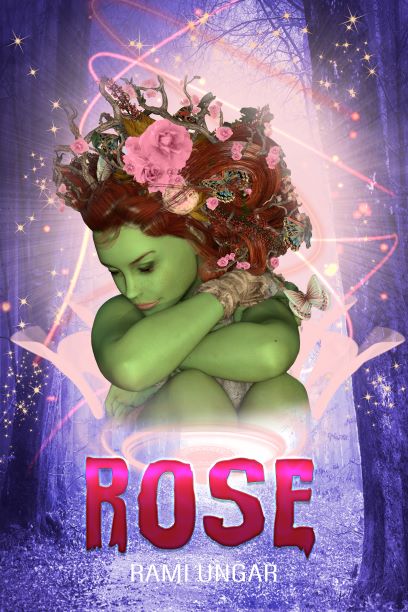
So yesterday evening, a video was uploaded onto YouTube. But not just any YouTube video: this video was a review of my novel Rose by DeathGroundReviews, a YouTuber whom I’m met through Twitter, where he uses the handle Death Ground Writer. He reads and reviews a lot of speculative fiction, especially horror, and he decided to read and review Rose. The result is this video, which I highly recommend you check out.

Pretty awesome, huh? First off, I love Death Ground Writer’s voice. He’s got a scratchy quality that I think is great for podcasts and narrating scary stories. Which makes his reading of a short passage from Chapter One of Rose all the more creepy (and that music in the background is nice icing on the cake).

Second, after he does his reading and before he does his review, he talks about the novel and how he came across it. We actually talked quite a bit over Twitter before he posted the video, and as you heard, he includes a lot from those conversations in the video. Though to answer your question, DWG, I’m not a pantser,* but a plotter. I plot out 95% of the stories I write, sometimes with several pages worth of notes, names, and plot points. It’s just with Rose, I had to adjust the outline as I discovered issues with the story and had to find new ways to fix themm. Thus we have a story where, at one point, over two-thirds of the novel were rewritten to fix one or two major flaws with the stories.

And obviously, I liked his review. While stating that he likes it and would recommend it, he also goes into what he didn’t care for in the novel. I’m happy to hear that there were things that could be improved. And no, your preferences aren’t weird. I can understand, though if, in the future, a novel requires that kind of storytelling, I probably will use it.

Yes, I know I should state what exactly his criticism was, but I figure by not telling you all the specifics, you’re more likely to watch the video.

Speaking of which, if you haven’t yet, I highly recommend you check out DeathGroundWriter’s video and give it a watch/listen. And if you like what you see/hear, give the video a like and consider subscribing. Doing so supports his channel and allows him to continue doing what he’s doing, so I recommend you at least think about supporting the channel.

At the same time, if you would like to check out Rose, I’ll include the links below. Please consider checking the book out and, if you read it, please consider leaving a review. Positive or negative, I love receiving feedback from readers, and your thoughts help me out in the long run. Believe me on that!

Well, that’s all for now, my Followers of Fear. I’ve got exercising to do and stories to write up. Until next time, pleasant nightmares!

Rose: Amazon US, Amazon UK, Amazon Canada

*Pantser, for those who don’t know, is a writer who discovers the story as they write. Basically they make it up as they go along, only they do it much better than someone who needs to come up with a quick cover story for why something they did is really suspicious.

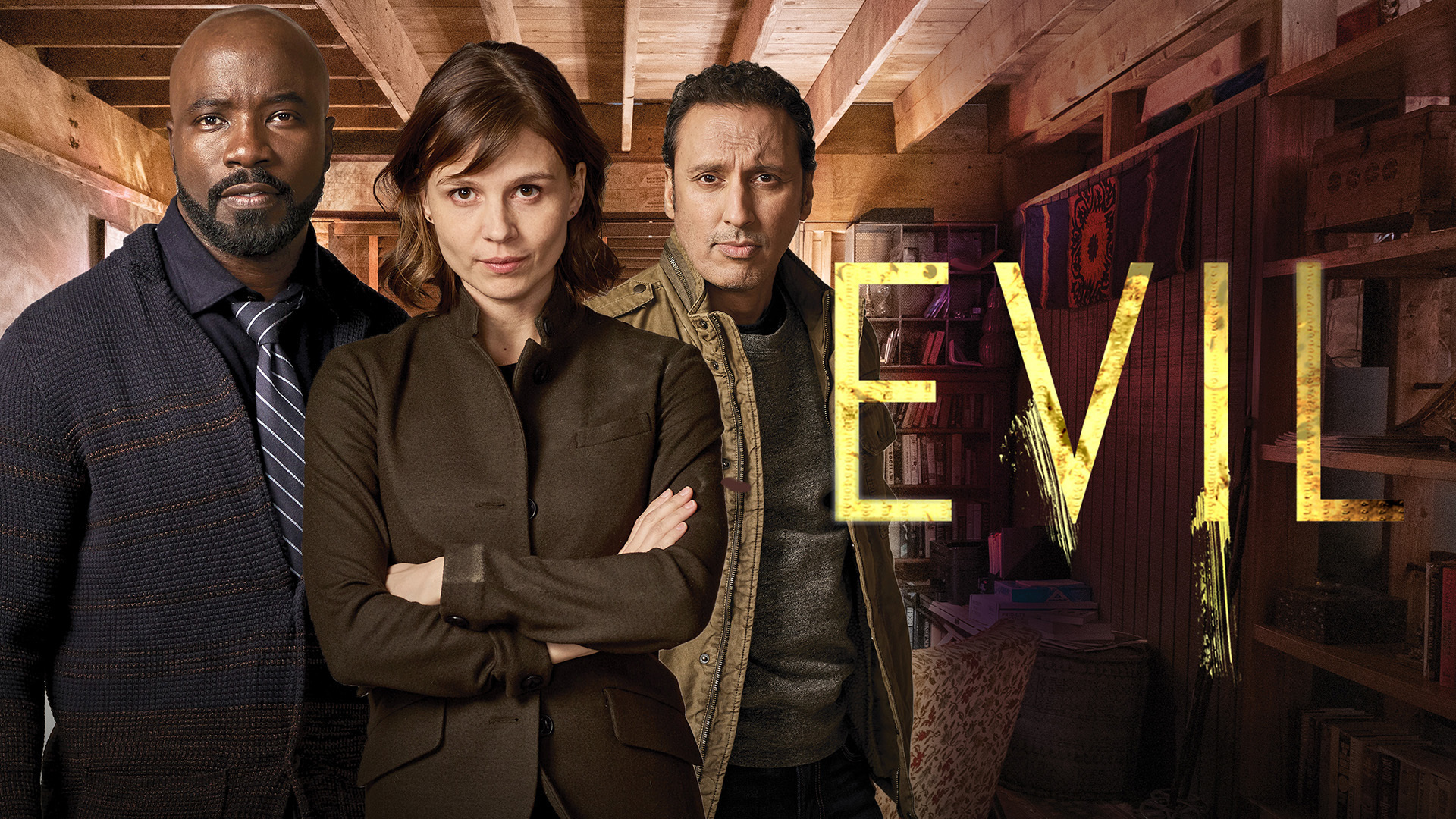
So CBS is known more for raunchy family-based comedies and police procedurals with plenty of light and color. Outside of Supergirl, which got moved to CW, it’s not well known for speculative fiction type shows, at least not these days. And no, Star Trek: Discovery and The Twilight Zone reboot don’t count, that’s CBS All Access, which is another bill if you want to watch those shows. Anyway, Evil is outside of CBS’s normal wheelhouse, but it’s the kind of thing I love, so obviously I’d check it out. Of course, it’s on after I go to bed, so I check it out and review it the next day. Such is life, isn’t it?

Evil follows Dr. Kristen Brouchard, a forensic psychologist who gets hired on by David Acosta to help him in his assessment business. Basically, he works for the Catholic Church to discover if purported instances of the supernatural, such as miracles or demonic possession, are real. He’s a believer, she isn’t. But either way, they’re going to be walking a very fine line. Not just between the worlds of the physical and the supernatural, if that exists, but between that of good and evil.

So I’ll start off that the setup of this show is intriguing. It takes its time to play with our expectations. Are we dealing with actual demonic forces? Or is the evil in the title that of human evil? I feel that this is going to be an ongoing question throughout the first season, and if it’s done as cleverly as it was in the first episode, then I could see the first season having some decent ratings. At the very least though, there’s something everyone who’s watching the show, and perhaps who’s in the show, can agree on: that evil, whatever the source in human beings, is connected and talking to each other. And it may take a lot to stop others from encouraging evil acts in each other.

The cast is also pretty decent. Mike Colter, fresh off of Luke Cage (RIP, Marvel Netflix), plays David Acosta as this enigmatic kind of guy, wrapped up in twenty mysteries we’ve yet to pierce. He’s totally fine with his coworkers not believing in the same stuff he does, though I wonder if that will change in later episodes. At the very least, this character is holding more cards than we’ve seen. As for Dr. Kristen Brouchard, you get the sense that she’s trying her best. She’s fighting an uphill battle to make her life work, raising four daughters while her husband works abroad and dealing with loan sharks. Her one rock is her belief in science, which are going to be shaken a lot in this show.

Oh, and Aasif Mandvi is in this show as Acosta’s equipment/technical guy. I love that guy. He was always one of my favorite correspondents on The Daily Show when I watched that, so it’s cool to see him pop up here. Just thought I’d mention that.

If I have one gripe about this series, for those looking for a more Exorcism of Emily Rose-type story, where eventually the supernatural is confirmed, this show may you leave you disappointed. That being said, they’re going to play with the supernatural-or-not question for a little while longer. Though obviously, they’ll have to come to a conclusion by the end of the first season. And what that conclusion is will determine who continues watching this show.

So yeah, this show could go a couple different ways in terms of story and how long it lasts. But I’m at least willing to give it a go.

On a scale of 1 to 5, I’ll give the first episode of 4. Great setup and dramatic storytelling. I’ll be interested to see how it goes.

Until next time, my Followers of Fear, pleasant nightmares.

I did say I would announce this when we got a bit closer to November. And my intuition, which is right about eighty percent of the time when it comes to this sort of thing, says now is the time to make the announcement.

As many of you know, I’ve been planning to take part in National Novel Writing Month for the first time since college, or about seven years. For those of you who are unaware, National Novel Writing Month, or NaNoWriMo, is a yearly challenge where authors try to write a novel of fifty-thousand words or more, just under seventeen-hundred words a day. This challenge is usually held in November, though sometimes authors will attempt to do it in another month when it’s more convenient for them (in which case, it’s known as Camp NaNoWriMo). I’ve been wanting to take a crack at it again for years, but college got busy, and things never quite added up in the years 2015-2018 for me to do it.

But since last November, just a few days after finishing a novel called River of Wrath at three in the morning on October 30th, I’ve been considering it. I even picked a novel out to write about. Since around early summer, I’ve been doing light research for this story. And in a little over a month, I’l be taking a bit of time off from work so I can devote as much time as possible to writing (and maybe de-stressing a bit while I’m at home). So without further ado, let me announce my next novel, a story I like to call Toyland.

Don’t let the name fool you, Toyland isn’t whimsical or cute at all. It’s a Gothic horror novel following students at a boarding school in southern Ohio. They start noticing some weird going-ons during their fall semester. A girl with dark hair, as well as strange creatures, are seen around the school. Several odd injuries, some close to fatal, fall upon students and even faculty. There even seems to be a world within the school, one in which the laws of reality have no say whatsoever. All of it seems to trace back to a children’s book discovered in the school’s library. A children’s book called Toyland.

How’s that for a setup? Granted, there’s a good chance it’ll veer away from Gothic fiction and straight into weird territory (trust me, I outlined the whole thing back at the beginning of the summer and have done subsequent drafts since). But I tend to enjoy writing stories that stray into weird territory, so it works for me.

Anyway, I’ve just about finished up the research for the book. I’ve even watched the 1961 Disney film Babes in Toyland just so I could make a comparison between that film and the kid’s book in the story.* All that’s left is to write it. And while I doubt I’ll get anywhere near the fifty-thousand word mark (I’m many things, but not a miracle worker), I do think when the first draft done, it’ll at least be a decent first draft. Maybe something worth publishing one day.

Well, that’s all for now, my Followers of Fear. There’s a bed calling me in the next room, and I so desperately want to sink into it for a few hours. Until next time, pleasant nightmares!

Are you participating in NaNoWriMo this year? Why or why not? Whatever you’re doing, what sort of story are you writing?

*By the way, that was my first time watching that film, and I didn’t like it at all. Yeah, the setting looked spectacular and the villains and side characters were enjoyable, but the plot was really unfocused and the main characters were really boring. Hell, you can see the boredom on Annette Funicello’s face as she plays the female lead! She’s like “Oh my God, someone get me out of here so I can go make beach party movies. Anything would be better than this shiny lack-of-substance.”

Also, one or two of the songs feel kind of sexist nearly fifty years after the movie’s release. Especially the one where Annette complains about being unable to do her finances. Yeah, there’s a song like that. It’s kind of cringey.

And no, I won’t watch any of the other movie or television adaptations of the Babes in Toyland operetta. I won’t even watch the operetta! I suffered enough watching the most famous adaptation, thank you very much!

Around November, stores across the world start putting out tinsel and cute little bulbs and emphasize snow and sleighs and candy canes.* At the same time, Christmas music is played from most loudspeakers and many radio stations, one of those songs being “It’s the Most Wonderful Time of the Year” by Andy Williams (yeah, I didn’t know who sang that until today, either). And many people would agree. The two months leading up to Christmas, especially December, is the most wonderful time of the year.

However, there is a segment of the population who disagrees with that sentiment. Among that segment are people, and whatever I am, who say Halloween is the most wonderful time of the year. And since I don’t have a singing voice to advocate our views, I’ll do what I do best and write out why the Halloween season, starting anywhere from late August to early September and ending when October becomes November, should be considered the most wonderful time of the year.**

1. Halloween isn’t as cold. Okay, that’s probably not true south of the equator, but at least October isn’t as freezing in most places as it is in November. In fact, in Central Ohio, it can range from the 40’s to the 60’s (we have weird-ass weather). Whereas in December, it’s usually between 30 and 40 degrees Fahrenheit. And that’s in a good year.

2. A stalker isn’t part of the central theme of Halloween. No, I’m not talking about Michael Myers. I’m talking about Santa Claus. I mean, think about it. You have an old guy in a red tracksuit watching you 24/7, but especially right before Christmas, and is judging your behavior. If you “behave,” you get gifts, but if you don’t, you get fossil fuels. Also, he can break into anyone’s home and we have no idea how well his workforce is treated. If this was any other person, they would be hit with investigations and possible criminal charges.

At least with Halloween, a little naughtiness is okay. It’s even encouraged. “Trick or treat,” after all.

3. There’s no need to be “perfect,” “well off,” or “good.” For a lot of people, Christmas is a time to show just how perfect your family is, or how pretty you can make your house look, or how deserving of gifts you are. A lot of people spend more money than they should just to show people they can have the “perfect” Christmas, or suck up their dislike of a disagreeable family member so as not to “ruin” Christmas, or give more to charity because “tis the season.” Shouldn’t the season to help the needy be all year? Not just when gifts are on the horizon?

Though if you are giving to charity during the Christmas season, good on you. Thanks for helping out the less fortunate.

At least with Halloween, you don’t have to go all out. A simple bedsheet with eye holes is a wonderful costume. A bag of penny candy is just fine. And if you gather donations to UNICEF, it’s not because “tis the season,” but just a nice thing to do.

Speaking of costumes…

4. Be whoever you want to be. Halloween is about changing who you are into who you want to be for a day. A princess, a vampire, a soldier, a superhero, it’s all up to you and what costume you buy or create. Or don’t. That’s valid as well. There’s no pressure, just as long as you’re having fun. Want to be a little macabre? Go right ahead. Want to just emphasize the pagan roots of the holiday? Perfectly fine. Just want to have a wild costume party to celebrate fun and monsters and changing your identity for one day? Go get ’em, cowboy! It’s your holiday, and as long as nobody’s getting hurt, you’re answerable to no one.

Again, during Christmas, a lot of people feel like they need to project a certain image of “perfection” or “being good.” Otherwise, your or others might believe you’ve done something wrong, or the season is ruined. I think of the mother from the movie Krampus a lot with this point. She’s dead-set on everything being “perfect” to the point she invites relatives over whom she and her own family don’t really like and comes up with all these complicated foods that nobody really asked for, just to maintain this image of a “perfect” Christmas in her mind.

Has that ever happened with Halloween? As long as you have fun, that’s all that matters.

Jack Skellington had one thing right: Santa Claus is scarier than at first glance.

5. So many reasons to get scared! Of course, for those like me, this is one of the biggest reasons. Horror movies, horror novels, haunted houses, music, costumes, parties and games. At Halloween, there’s so many reasons to get scared and have fun with it. The number of scary things to do at this time of year is endless. Whereas at Christmas, beyond either Black Christmas film, Gremlins and Krampus, there aren’t that many horror-related things associated with the holiday. Maybe a Christmas episode for a horror show, but beyond that, it’ not a holiday to indulge in anything scarier than fossil fuels from everyone’s tracksuit-wearing stalker. And to me, that’s a damn shame.


Now, this is just a small fraction of reasons why I prefer the Halloween season to the Christmas season. There’s probably a part two or three that could be written. But tell me, which season do you prefer? Why? Are there are any reasons I missed? Let’s discuss.

Just keep it civil in the comments, folks. Or I will delete your comment and then write you into a story.

*I think. I have no idea what Christmas looks like below the equator beyond the fact that it’s summer down there in December.

**That being said, I’m not trying to put down anyone who thinks Christmas is the most wonderful time of the year. I’m not trying to wage war on Christmas or anything like that. I’m just representing an opposing opinion. That’s not the sign of moral decay or an anti-American or anti-Christian persecution. Having a spirited but civil disagreement where both parties respect each other’s views is the sign of a healthy and thriving society. If you feel Christmas is the most wonderful time of the year, that’s okay with me. Just let me continue feeling that the Halloween season is the most wonderful time of the year in the meantime.

Normally I don’t voice my opinions or make calls to actions on this blog, but I feel like I have to say something on this one. Earlier this week, my stepmother, who works for Columbus’s library system, asked if I had any opinion on a petition the library was gathering signatures for to send to Macmillan Publishers. I did a little research, and what I found shocked me.

Starting this November, Macmillan Publishers, one of the biggest and oldest publishing firms in the world, will not allow libraries to purchase more than one copy of an ebook they publish for the first eight weeks after the book is published. For those unaware, many libraries these days lend e-books to readers who prefer reading on tablets to paperbacks using technology called e-lending, during which patrons have access to the ebook file for a short access period, after which they’re unable to access it without renewing or checking it out again. One ebook file equals one book to check out, so libraries buy multiple copies, especially for more popular books and writers. If this change goes through, libraries will only have one copy of an ebook for readers for the two months after release.

Now lest I be accused of being biased, Macmillan cites e-lending’s effects on book sales as their reason for why they’re doing it. According to a memo released by John Sargent, CEO of Macmillan:

It seems that given a choice between a purchase of an ebook for $12.99 or a frictionless lend for free, the American ebook reader is starting to lean heavily toward free.

First off, thirteen bucks for an ebook? Of course people are going to go for the cheaper option! The majority of people aren’t rich, you know. We hae rent and car bills to pay.

Second, let’s take a look at print books, which are still more popular than ebooks. Libraries order several physical copies of books by famous authors* months before they’re released. Upwards of hundreds of people reserve copies of those books and wait months to read them without having to pay anything. However, this doesn’t seem to affect publisher sales significantly enough to put similar measures in place. And if a publisher dared to, I imagine they’d face riots. I mean, what if libraries could only order one copy of the latest JK Rowling or Stephen King book, and were perfectly honest about why? I’d imagine the offending publishers would be visited by mobs of angry wizards and blood-soaked prom queens.

And finally, the word-of-mouth effect should have a counter-effect to anything e-lending can do to book sales. The more people who are reading a book, the more people are likely to talk about it. The more people who talk about a book, the more people who will want to read it. The more people will want to read, the more people who will read, which will repeat the cycle. Allowing access to more ebooks at libraries only helps this effect, so Macmillan is kind of cutting off their own digits with this move.

This and other reasons is why the American Library Association has launched a petition asking Macmillan to reverse their decision, a petition which I support. As of writing this, the petition has a little over twenty-thousand signatures, but it’s going to need a lot more to change CEO John Sargent’s mind. So I wrote this article to help change a few minds.

If you would like to sign the petition, please click here, and make sure to spread the word. The more people who are aware of this issue, the more people who will be persuaded to help. And honestly, for the sake of the many people who like to read, including our work on occasion, we owe it to them.

You can also read this article from Slate.com if you would like to further research this issue yourself.

Thanks for reading, Followers of Fear. I hope you decide to support the cause, and until next time, pleasant nightmares.

*AKA not Rose and/or anything else by me, though if you want to help me change that, I’d appreciate that.

For the past two weeks, I’ve been reading The Best Horror of the Year, Volume VIII, an anthology of horror short stories and novelettes compiled by one of horror’s premier editors, Ellen Datlow (I’ll be taking a break from it to read The Institute by Stephen King, though). As you’d expect from any anthology, some you like, some you don’t, and some you just don’t get. But of those that I like, I’ve been noticing a trend that I’m not sure I’ve noticed before.

These stories are not outright terrifying in a way that’ll leave you screaming or having nightmares for a week or so. But they do make you feel uneasy. Like a voice in the back of your mind is whispering, “Imagine if this scenario were real,” or “Imagine if this happened to you.” And then you shiver at the thought of what is occurring in the story occurring in real life. In your life.

That feeling upsets the zen in your soul, and can put you off your day. It can make you afraid to think of certain places or names because you associate them with something evil and horrible. It leaves you afraid to be in dark places, or alone, or with people, or even in well-lit areas. Because who knows what’s hidden in your blind spot? Who knows what evil is bubbling in your coworker’s heart?

What you are feeling is disquiet. And that feeling drives a lot of shorter horror stories. Understandable: short stories and novelettes don’t have the word-counts to build epic worlds or have intricate plots involving five or six mind-blowing revelations. They’re short for a reason, and meant to be digestible as a way to save time and money. Or to quote Stephen King, “A short story is like a quick kiss in the dark from a stranger.”

I actually know what that’s like (don’t ask), and I’m not really surprised that King does, either. So I kind of get it: what the story does to you should be unexpected, but leave a powerful impression. The kind of impression where you look back years later and you’re like, “Wait, did that actually happen?” And in short stories, with horror, you do it with fear. You do it with disquiet.

So how does one create disquiet in their story? Unfortunately, I’m not sure I can answer that. It’s like how do you put horror in a story? You already know a monster is necessary, but what more is there? Not an easy question to answer. In fact, I’ve been writing horror since I was a tween, or trying to, and I’m still trying to figure it out. It doesn’t help that I’m better at novels and short stories are still something I’m figuring out how to do well (ironic, considering how many short story ideas I have lying around).

junji Ito will shake you every time.

In the end, all I can recommend is the old writer adage: read a lot and write a lot. In this case, read a ton of shorter works by a variety of different horror authors. Note how they make the story memorable, punchy, disturbing. Is it a specific twist? Is it in the scenario they set up? How do they set it up? Is it in a particular sentence or a paragraph? An element they included? The ending? Then try writing your own works and incorporating what you learned.

It seems obvious, but I guess we reiterate it for a reason.

Anyway, if you’re looking for recommendations, any of the volumes in the Best Horror of the Year series should work, as well as collections by most horror writers. I also recommend story collections from manga artist Junji Ito, if you want a more visual medium. And while it’s not literary, The Twilight Zone is usually pretty good at telling disquieting stories (or so I’ve heard. I really have to get on watching that show).

But tell me, how do you make your short stories memorable and disquieting? What are your thoughts on the subject? Let’s discuss.

That’s all for now, my Followers of Fear. Happy Friday the 13th, and if you see  guy wearing an old-fashioned goalie mask, RUN THE OTHER FUCKING WAY!!!