Posts Tagged ‘review’

Last week I read an article where Adam Winguard, the director of the disaster that is Netflix’s adaptation of the Death Note franchise, had to quit Twitter because he was receiving so much hate mail and even death threats over his adaptation. And yesterday, the admins of a YouTube channel dedicated to reviewing and discussing anime and manga received death threats for posting a positive review of the movie.

Let that sink in for a moment. A whole bunch of people are sending people hate mail and threatening to kill them over the Internet for either making or liking what many consider a bad movie. And I’d bet one of my anime figurines the majority of these angry people are fans of the Death Note anime and manga who are incensed that the director cast white actors in the movie and the numerous changes from the source material, as well as just making a really bad film, or that anyone would like the film.

Now, all three complaints are legitimate: the casting of white actors as what were originally non-white characters is a serious problem that Hollywood and the public are continuing to grapple with even now. The many changes from the source material were not only unnecessary, but actually made the film more of a mess than a wonder. And it was a really bad film (check my review here for my own thoughts on the subject).

But there is absolutely no excuse or reason–ABSOLUTELY NO EXCUSE OR REASON–to send hate mail or threaten someone’s life. Especially not for their creative work, no matter what decisions they make or the quality of it. And those who think nothing of doing it have some serious issues that need addressing.

Unfortunately, this isn’t the first time fans of a franchise or a character or something along those lines have gone a little bonkers. I was ranting about this issue of fans going crazy back in 2013, when people were leaving intentionally bad reviews of Charlaine Harris’s last Sookie Stackhouse book because it was the last book, and threatening harm to themselves and others if their favorite couples didn’t end up together (and possibly followed through after a copy leaked in Germany). Later that year, people were sending tons of mail to Warner Bros. and trying to get the White House to intervene in the casting of the Fifty Shades of Grey movie (not sure what they expected to happen with that one).

Seriously, was this worth the hate campaign? I actually enjoyed the movie.

Since then we’ve seen negative reactions to the idea of the Ghostbusters reboot, and then the female-led cast, which was so hateful everyone involved in the movie felt the need to comment and even make a joke about it in the movie. We’ve also seen people react negatively to Captain America becoming an agent of Hydra in the comics, with some people threatening the writers behind this move. One man claiming to be a Marine even said that he would abandon his moral code and become a stone-cold killer because of the change (seriously, did any of these nincompoops think that maybe this was a mind-controlled Cap, or one from another dimension, which apparently is the case?). We’ve probably all seen articles about angry males attacking women online for attempting to be part of the video gaming community and industry. And there are more of these than I’m probably aware of, with this Death Note thing just being the latest.

What’s causing people to become so angry and violent over fictional characters and worlds? Well, it might actually be nothing new. As long as there have been creative works and their creators, there have been people who have gotten passionate about them, sometimes a little too passionate (*cough* John Hinckley Jr. and Ricardo Lopez *cough*). And sometimes people even feel that their love of a property gives them some sort of ownership over said property, and therefore they have a legitimate voice in any decisions over said work. And with the Internet as both means to reach like-minded individuals and platform to voice their vitriol without worry of censure, some of these overly-passionate fans can gather en masse and make their anger heard, warranted or not. Sometimes, a few of them even feel emboldened to make threats of violence.

And I get it. I hated the Death Note movie too. I can think of several ways the Star Wars prequels or some episodes of Doctor Who could’ve been better (I actually nearly threw a shoe at the TV once because I really disliked an episode). And God, was I upset when shows I really liked, such as Dracula or Sleepy Hollow, got canceled. I would have loved to find the people responsible for all these mistakes and given them a piece of my mind.

But therein lies the problem: none of these fans have any actual ownership or say in the decisions revolving around these stories, and at the end of the day, it’s the creators themselves who get to make those decisions. And we should let them. After all, they are spending valuable time and energy to bring us these stories we love so much. It’s essentially a gift from them to us, the readers and viewers. And while not all these creative variations are welcome (*cough* first three DCEU movies *cough*), some of these creative risks have led to some the greatest pieces of storytelling ever made. Remember there was a time when the Winter Soldier wasn’t a thing, let alone a former friend of Captain America gone evil. When Heath Ledger was cast as the Joker, people swore it was the worst casting decision that could be made, and yet Ledger’s Joker is arguably one of the best Jokers ever brought to life. And let’s be real, William Shakespeare ripped off and made changes to most of the stories he’s famous for! And look at him!
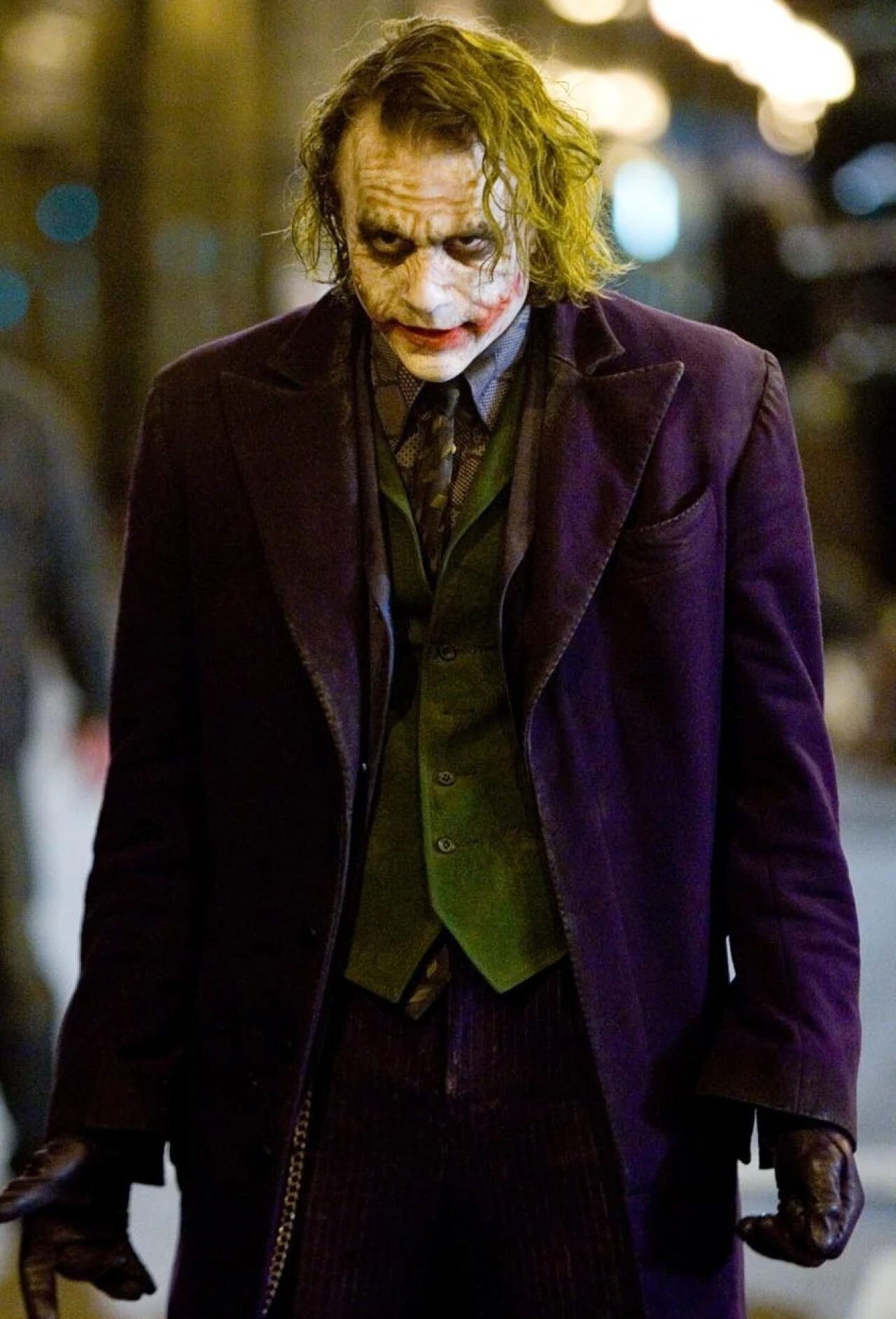
A decision that turned out to be right after all.

And this is not just for variations in already established characters and stories. Creators should be able to experiment with stories and characters. Otherwise, would we have Doctor Who? Harry Potter? Death Note the manga? Stephen King’s IT?

So what should you do if a story you like or an adaptation of a story goes in a direction you dislike? Well, there are two possible decisions that you could go that won’t make you look like a tool (trust me, as both fanboy and creator, they work). One is to do what I did with Death Note: calmly point out what was wrong with it or what you disliked. You don’t have to be angry to get your point across. I’ve found calmly discussing what you disliked about something does more than shouting. And besides, being rude or angry or telling someone to die never convinced anyone to your point of view or made them change their ways.

The other is to just not take part at all. After Jodie Whitaker was announced as the 13th Doctor, many fans reacted by simply deciding not to watch the show anymore. I even have a friend who decided to do that, and while I disagree with their view, I respect how adult their reactions were. (Thought to be fair, after all those years of Moffat tropes, it might’ve been easier to leave than to work up anger over a casting decision). So if you don’t like what the creators are doing, just leave. Don’t ruin the experience for everyone else who may want to try out the new direction.

And if you’re a parent with kids who may get overly passionate about fictional works, maybe have a conversation with them about how to respond to this sort of thing. It might save someone a lot of headaches later on.

While I doubt this problem will go away anytime soon–if anything, it might get worse over time–we can at least approach it in a healthy manner, rather than with further fear and anger, as well as to find healthy alternatives to anger and/or death threats. Either that, or we never get any sort of new stories ever. And I really don’t want to see that.


That’s all the ranting for now. The next week and a half will be crazy for me, so I have no idea how much, if at all, I’ll be able to post until October 1st. I’ll try and get something out next week, though if I don’t, please don’t hold it against me or send death threats.

Until next time, Followers of Fear. Pleasant nightmares!
I’ve literally been waiting seven years for this movie, since I first heard rumors of a remake. I got hopeful when Cary Fukunaga was brought on board to direct and when he started casting, felt my spirits plummet when he left, felt concern when Andy Muschetti replaced him (I did not care for his film Mama), felt a little hopeful again when I saw the first photos of Bill Skarsgard as Pennywise, and felt really hopeful and excited when the first trailer came out. I waited for months and months, possibly building the film up more in my head than I should. When the time came, I invited friends to come see It with me. And finally, the day came. I showed up early to make sure my friends and I got good seats. And then the show began.

I can say with zero hesitation that this is the It film we deserve.

So if you’ve been living under a rock since 1986, It is a Stephen King novel about a small town haunted by a monster that takes the form of a clown, and the seven brave souls who fight it, first as children and later as adults. There was a TV miniseries done back in the 1990’s that was absolutely terrible (how do you take a King novel and put it on ABC primetime? That’s like trying to take a rabid wolf and pretend it’s a puppy dog!), and now we have a feature film, focusing on the children’s portion of the story. And it tops the miniseries in every way possible.

Now, I’m not going to say this is the scariest film I’ve seen. I actually found Annabelle: Creation to be much scarier in terms of jump scares and atmosphere than It was. However, that doesn’t mean It‘s not a scary film. It did have some scares. The problem is, I’m so well-versed with the source material, I could guess where they would do jump scares or anything like that, and it’s difficult to get scared when you know what’s likely to happen next. However, there were a lot of other people who found the film terrifying, so one should consider my reaction an outsider.

And I did get scared at points. More on that below.

My ticket.

I also liked how this was a much more faithful adaptation. Besides taking place in the 1980’s rather than in the 1950’s, this movie sticks pretty closely to the novel. But more than that, it sticks to the spirit of the story, delving into the darkness the TV miniseries couldn’t because of the channel it was on. The film’s not afraid to go as dark as possible (without risking the R rating, of course), showing actual lost limbs and hinting at sexual abuse, among other things.

But while the film is more faithful to the book, that’s not to say there’s no deviation beyond a change in decade, and this is where the story gets scary for me. Especially during the final third of the film, they change a few things in order to make the story flow better, and I think that’s when I find the film not only the scariest, but the most effective. Not only that, but the film uses Dutch angles, lighting and music quite effectively to emphasize dark or creepy or weird scenes, highlighting the strangeness and horror of the story. Whoever had the bright idea for that knew what they were doing.

The film also had its funny moments, and they weren’t distracting at all. I like it when a horror film is able to do that.

I also loved the actors. Bill Skarsgard as Pennywise the Dancing Clown kicks Tim Curry to the curb! Whereas Curry played the character much more comically, here Pennywise is creepy as It should be. Not only is Pennywise’s whole look here freaky as hell, but paired with Bill Skarsgard mastery of a menacing manner, and a slight lisp, and you can’t helped but be freaked by Pennywise. Even when he’s dancing (and yes, Pennywise actually dances in this film, something we haven’t seen in the book or the miniseries), he’s scary. Best Pennywise ever, and I want to dress up as him for Halloween, if not this year then the next.

Me being silly after the film with friends.


The kids are also great. Every single one of them is masterful in making you believe they are these characters, who are given time to grow and develop throughout the film’s two-hour run time. My personal favorite was probably Beverly, played by Sophia Lillis. She was such a great character, one of the strongest of the Losers Club but also one of the most vulnerable due to her home situation, and I loved that about her (as well as how kick-ass she can get). I also liked Finn Wolfhard of Stranger Things fame, who captured Richie Tozier’s dirty mouth and stupid humor just perfectly. And Jack Dylan Glazer did a great job of capturing Eddie as a hypochondriac who grows into a much braver child. And oh God, Nicholas Hamilton as Henry Bowers was such a scary guy!

Honestly, the whole cast was great, and I could go on with how much I loved them.

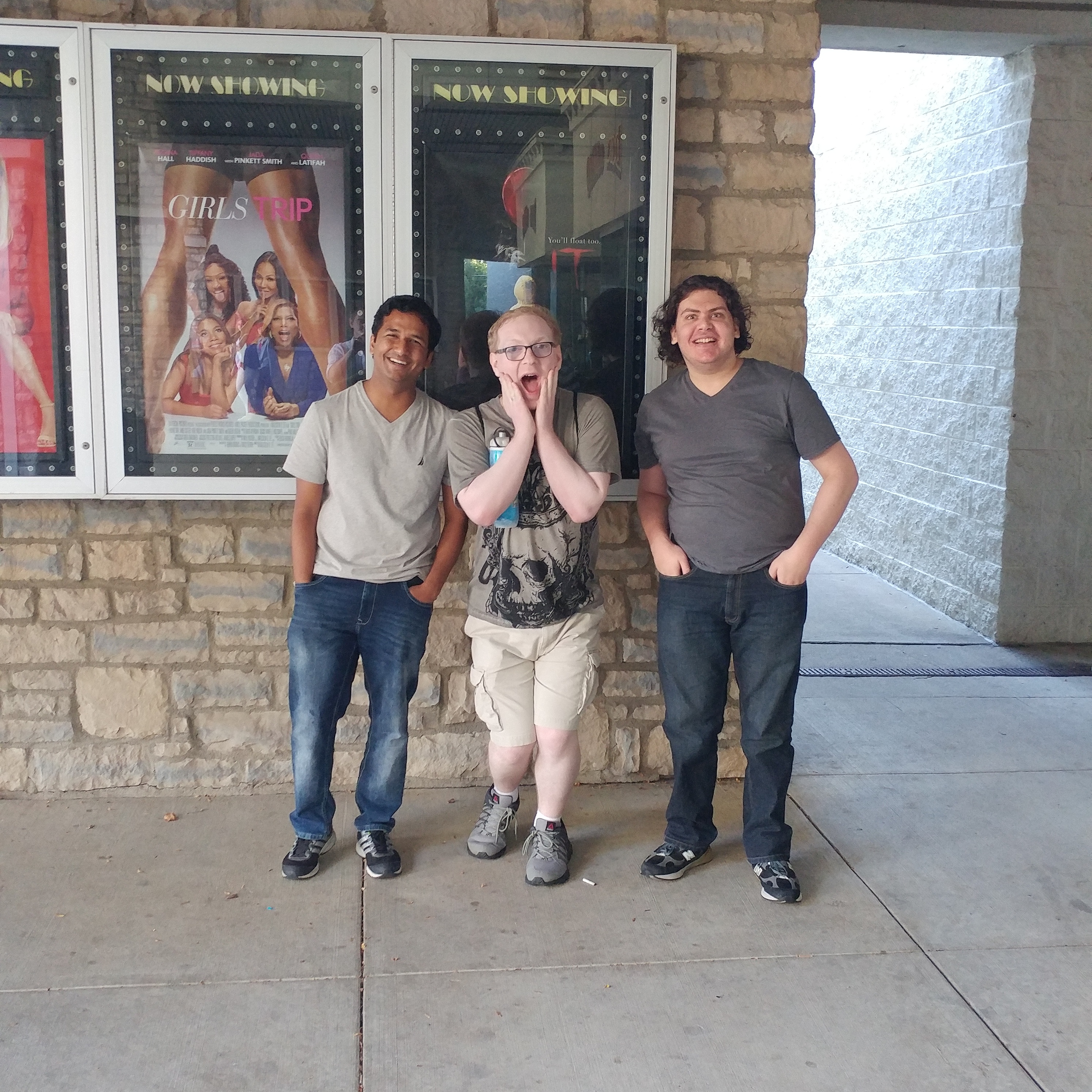
My Losers Club for the day. Thanks guys!

There were a couple of things I didn’t like, sadly. For one, the CGI was actually more distracting than scary, and a few more practical effects might’ve been better. I also thought that the filmmakers could’ve pushed the envelope in the third act at a part where the characters are trying to find Pennywise, though as it is that part is very good. And finally, I thought one scene would’ve been better with dramatic music than a song by The Cure (I know this takes place in the 1980’s, but do we really need a montage?).

All in all though, I’m very glad we got the version of It that we did. Faithful, well-told, heartfelt, with great characters and wonderful scares. On a scale of 1 to 5, I’m giving Andy Muschetti’s 2017 adaptation a 4. Go check it out, start floating down here, and pray the sequel is just as good.

I know, I usually try to get these reviews out a day after the movie or show premieres, especially with American Horror Story, because I have to stream it the next day (I don’t need another bill). Unfortunately, the past couple of days I’ve been busy with personal stuff and I didn’t really have time to deal with watching and writing reviews. The only thing I’ve seen for it was a review on Twitter by someone I follow, stating that the season opening was intriguing, but not outright scary.

Well, I finally had some time to watch and review the episode, so let’s get into it. American Horror Story: Cult begins with news footage from Donald Trump and Hillary Clinton’s campaigns, starting from when the Donald started running and ending with his election as President. From there, the story follows two very different characters: Allie (played by Sarah Paulson), a woman with an anxiety disorder whose phobias, including clowns and even objects full of holes, come back in full force after Trump’s election. The other is Kai (played by Evan Peters), a purple-haired Trump supporter who has some bizarre beliefs, including that Trump’s election is the beginning of a revolution. From the look of things, their lives are going to be intertwined in strange ways.

As the Twitter reviewer said, Cult‘s first episode is less scary than intriguing. There’s a lot of focus on how the election affects everyone. Allie, being married to and having a child with another woman, is understandably scared that her family will be torn apart under the new administration, and that activates her other phobias, to the point that it’s affecting her marriage and her son negatively. Kai, on the opposite end of the spectrum, feels empowered to speak his views loud and proud, even if not everyone is interested in hearing them. The characters are exaggerated  amalgamations of reactions from both sides of the aisle, but they do get to a lot of what many Americans felt post-election.

Speaking of which, there’s an interesting scene during the first half of the episode where Allie walks into a store, and starts up a conversation with someone, only to find out they’re a Trump supporter, even though at first glance, they didn’t seem like the stereotypical Trump supporter. I had an experience like that at a drug store during the primaries, where I made a comment about the Trump campaign, and a store clerk said he might vote for Trump. And like Allie, I felt a little perturbed afterwards, because I didn’t really care for some of Trump’s policies, and I thought someone working a minimum wage job wouldn’t either. But then you got to remind yourself that the Trump campaign drew people from a number of walks of life, which lead to his election. This scene portrays that well, to the point where I felt a little deja vu.

But as for scares, it’s pretty lacking. The design of the clowns is very freaky (especially when you’re not sure if they’re real or hallucinations), and Kai is freaky all on his own, but it’s not going to scare anyone used to horror scenery. If it were more like the opening of the fifth season, where every ten minutes there was a bloody, out-of-left-field scare or death. Here, it’s just not that impactful, they’re more concerned with setting up the story. And while that has worked in other seasons and in the first episode of The Defenders, here it just doesn’t work. After all, this is American Horror Story, and the setup needs to be balanced with that horror we were promised.

It makes me hope that in the next ten episodes it’ll really ramp up on the scares and make for a fun season. And it makes me hopeful that Colton Haynes’s character gets a lot of screentime (I love him whenever I see him in anything).

On a scale of 1 to 5, I’m giving the first episode of AHS: Cult a 3.2 out 5. Good setup with believable characters and excellent tapping into America’s fractured post-election psyche, but definitely a lot more horror is needed.

That’s all for now, my Followers of Fear. Join me Saturday at some point when I review another scary thing with clowns, IT. Prepare to float!

Death Note is a franchise I’ve been aware of since high school, and despite some issues I have with the source material (*cough* the second half of the manga *cough*), I’ve always looked at it fondly. It’s clever, has some really memorable characters and scenes, and the themes present in the story are always relevant. When I first heard of plans of an American version of the story, I thought it had some potential, which is why I was disappointed when it fell into development hell. But when director Adam Winguard and Netflix finally started to put the film into production, and despite the troubling news I heard leading up to the film’s release,* I still had hope.

Imagine how I feel now when I find the final result is not what I’d hoped for.

So for those of you who don’t know, Death Note is originally a manga about a Japanese high schooler named Light Yagami who discovers a notebook that kills anyone whose name is written in it. With the help of a death god named Ryuk, Light starts a killing spree of the world’s criminals to end all crime and to become a new god named Kira. He is opposed by L, a mysterious detective who has solved several high-profile crimes in the past, creating a cat-and-mouse game that could determine the fate of the world. The story has been adopted into anime, TV shows, novels, and even a couple of Japanese movies. Winguard’s version is the latest addition to the franchise, and unfortunately, it’s like that one relative whom you invite to family gatherings because he’s family, but you’re not happy about it because he’s an embarrassment to the whole family.

The biggest problem I have with this film is the many changes from the source material. Now, I’m open to some changes, like what the Japanese films did. Those were changes that strengthened the story instead of taking away from it. However, the majority of the changes here were unhelpful. Light Yagami, a handsome, charismatic and intelligent young man motivated by a sense of justice and boredom becomes Light Turner, an outsider who’s only a few degrees away from shooting up a high school, whose intelligence is only hinted at, and who screams like he has no confidence. Misa Amane, a blonde and bubbly airhead whom you actually feel sympathy for, becomes Mia Sutton, a cheerleader with no personality or backstory and too much enthusiasm for killing criminals. Lakeith Stanfield is actually pretty good as L for a while, but then in the last third goes completely off the rails.

Something went very wrong with this transition.

There are a whole bunch of other changes that I didn’t care for. The purpose of the Death Note and the reason why Ryuk drops the Death Note is changed, the default method of death for the Death Note isn’t in this adaptation, Mia isn’t given a good reason to want to use the Death Note like Misa Amane has, so her enthusiasm for using it feels strange, and the way L and his assistant Watari interact feels a little creepy rather than the working relationship they had before, and the list goes on and on. In fact, some of these changes open up plot holes in the story. For example, the change in the way L identifies the first victim of Kira, rather than making some sense like it does in the manga, leaves open some questions in this adaptation. Also, why does L have a false name but Watari is actually his real name, with no last name?

I also did not care for Margaret Qualley’s acting in this film, which felt emotionless and uninvested. It seems like she was trying to channel Kristen Stewart’s Twilight performance, which given all I’ve heard of that performance, explains a lot, but it’s obvious it’s not what we’re looking for in this movie. Also, who’s idea was it to make her look like an Emma Roberts impersonator in every shot?

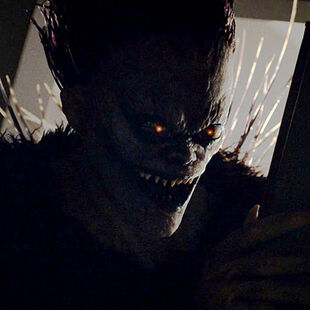
Ryuk, played by William Dafoe, is definitely one of the better parts of the movie.

There were a couple of things I did like about the film, however. Ryuk looks absolutely terrifying, as he should, and is kept sinister throughout the film, thanks in part to William Dafoe’s phenomenal performance as the voice of the character (that man can do villains like no other). Mia is treated more as a partner in this film rather than as a pawn, which I’m sure many Misa fans, including myself, have always wanted to see (what can I say? You feel for her, despite her flaws and the blood on her hands). And if it weren’t for how bad the rest of the film is, the climax and its twist would actually be pretty impressive.

However, the rest of the film outweighs everything else, forcing me to give Adam Winguard’s Death Note a 1.1 out of 5, possibly the lowest score I’ve ever given anything on this blog. This is just the latest example of how NOT to adapt a beloved manga and anime, with way too many changes from the source material and bad choices on the part the people behind it, and a horrible introduction for newcomers to the world of Death Note.

Trust me, this is a much better movie than what we got.

If this left a bad taste in your mouth and you’re still willing to give this franchise a change, I highly suggest you check out the original manga or anime (the latter also on Netflix), or check out the Japanese films based on those. Unlike the Netflix film, any of these will show you how exciting and clever the original source material, as well as how memorable and even likeable, the characters really are. Believe me, there’s a reason why this story is the phenomenon it is. It’s just the Netflix movie isn’t part of it.

Hopefully in the future, if we have any other American adaptations of anime or manga, they won’t be anything like this.

*To be clear, I will not be getting into the whole issue of the races of the cast. Yes, whitewashing is a problem, and the casting decisions made in regards to this film are extremely problematic, but it’s not one I want to explore here. Why? Because it’s an extremely complicated issue and not something I usually get into in a movie review. I’m judging this movie as a movie, and I’m judging the actors for their performances, not for their racial or ethnic heritage. If you don’t like that, I’m sorry, but that’s just how I do things here. And if you want to voice your anger about this, don’t voice it at me. Voice it at Hollywood, because that’s how you can possibly make some positive change, instead of sending it my way while some corporate VP thinks Zac Efron would make a great Kaneda in a live-action American Akira remake or something (that’s an example, not an actual thing as far as I know).

So last night I got a message from my friend and fellow writer Joleene Naylor (check out her blog HERE) messaged me on Facebook to let me know she’d left a review for my first book, the short story collection The Quiet Game: Five Tales to Chill Your Bones, on Amazon. Immediately I thanked her and told her I’d write a post about it as soon as possible. I managed to do the first thing pretty easily, but I wasn’t able to get to the second part because I had a busy evening in front of me.

I’m happy to say that I’m finally getting around to the latter, and I’m very grateful to Joleene for not only taking the time to read my book, but also to review it. Reviews are important to authors, as they provide valuable feedback to them on their work, and help attract new readers. The more reviews an author has on a particular work, the more people are likely to find and read that particular work. And if they review said work, the cycle continues. So in a way, a review is like telling an author you want them to be successful, and then contributing to that success in a small way.

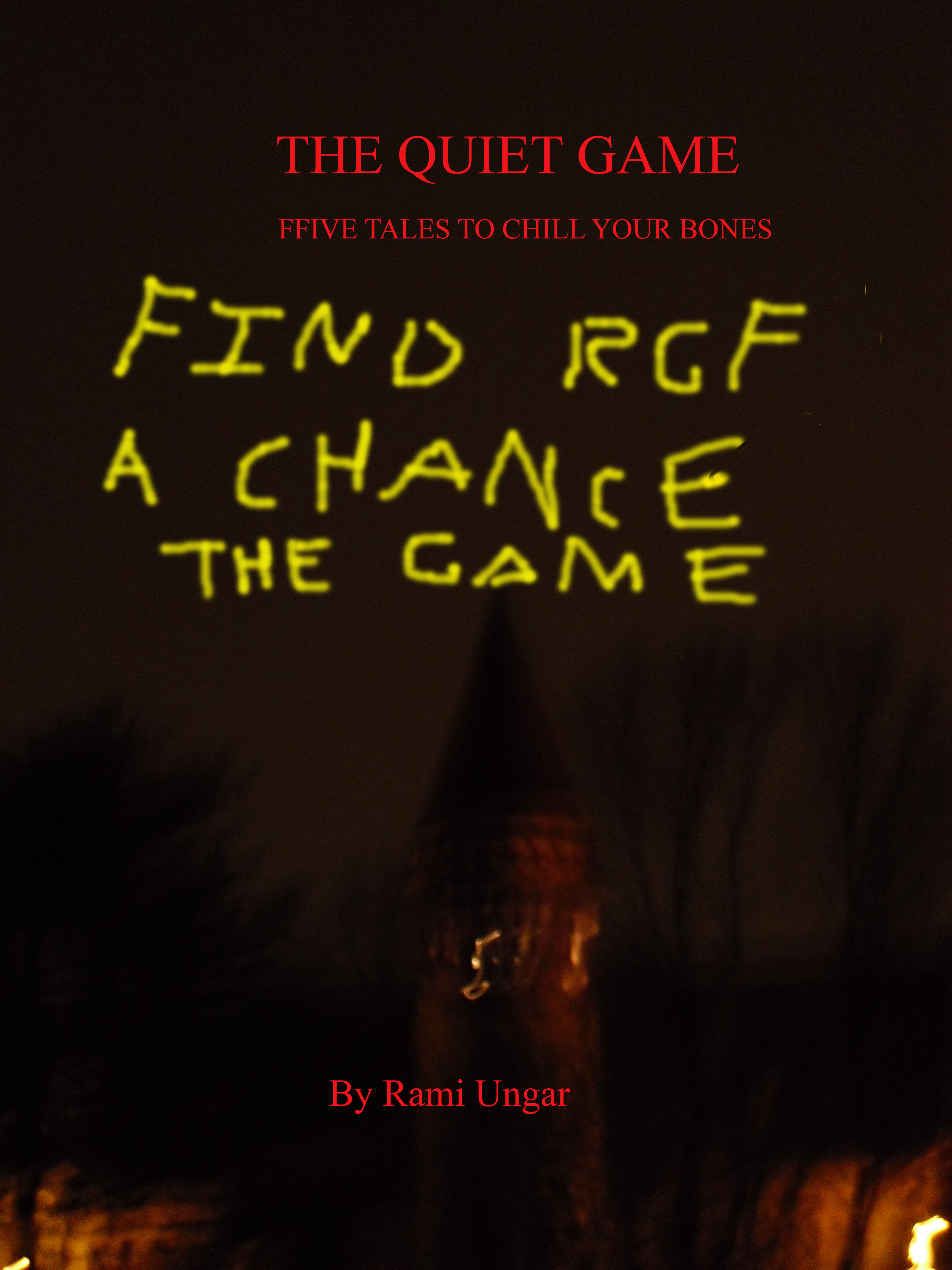
So if you’re unfamiliar with The Quiet Game, it’s a short collection of horror stories I wrote and published back in 2013, being my first published book. It contains five original short stories, with each being about a different subject. Since it was the first book published, it’s also been one of the most popular, and definitely the most widely-reviewed. Here’s what the blurb says on the back of the book:

In his publishing debut, Rami Ungar brings us five terrifying stories of darkness in magic. You can experience the strange visions of a man battling sex addiction in “Addict”. Or feel the wrath of an enraged dybbuk in “Samson Weiss’s Curse”. Face your fears in Gene Adkin’s Murder House in “I’m Going To Be The Next James Bond” and then journey with a young autistic “In The Lady Ogre’s Den”. But most of all, prepare to play the most insidious game of all: The Quiet Game.

Joleene gave The Quiet Game a five-star review, entitled Five fun horror stories (that’s a compliment right there). Here’s what she had to say on it:

A collection of five varied stories that get stronger as the collection builds, with the final being my favorite. Though I fancy myself able to “solve” the stories before the reveals, there were several surprises here, especially the reveal in the Quiet Game and I’m Going to be the Next James Bond. I also liked that Rami pulled no punches with his characters. In one instance, an anti-semite for instances uses words that would be hard for any author to write -though are necessary to his character. There are other examples sprinkled throughout the stories that show Rami’s commitment to telling the story in the way it needs to be told. A good collection for a stormy night!

Joleene’s review matches up with others The Quiet Game has received:

5 wonderfully crafted tales! I purchased this as an eBook originally and put off reading it for quite a while, I really wish I hadn’t waited. Sometimes when one purchases a collection of short stories you expect some of them to be less entertaining or of lower quality than the others, but none of these disappoint. Well worth the money, especially considering after you read each story the author gives you creative insight into what inspired him to write each tale, which is really wonderful.

–Jeff D.

I liked that each story was unusual. I think that the book was appropriately named. I prefer chilled bones rather than scared out of my whits since I am a bit of a chicken.

–ENJ

Imagine if you will a young Stephen King penning dark scenarios inspired by his youth, and what you get is this anthology. Through this collection of short stories, Rami Ungar brings us into the world of dark urges, childhood traumas, ghosts, phantoms, and dark psychological thrillers. An inspired creation, and definitely a good intro to this indie author’s world!

–Matthew Williams, author of The Cronian Incident

If you would like to check out all of The Quiet Game‘s reviews, or if you would like to pick up a copy yourself, I’ll include the links to check it out below. And if you do decide to read the book,, make sure to leave me a review.

And if you haven’t checked out my good friend Joleene Naylor, then what are you doing with yourself? Head over to her blog and check out her stuff, as well as her books!

That’s all till next time, my Followers of Fear. As you saw in my last post, I’ve got something big coming out next week, so make sure to tune back in then. Until that time, happy reading and pleasant nightmares!

The Quiet Game: Available on Amazon, Createspace, Barnes & Noble, iBooksSmashwords, and Kobo.

A lot of people hated Annabelle when it came out in 2014 as a spin-off of The Conjuring. I didn’t review it on this blog back then because I saw it about three or four weeks after it came out, but I thought it was a decent scary movie. Not as good as The Conjuring, but still very good. So when I heard that the sequel to Annabelle being made was actually going to be a prequel, I was intrigued, hopeful, and confused (wasn’t Annabelle the origin story?). Today, I went to the theater to see for myself if the fourth entry in The Conjuring film series was going to be good, or the start of the inevitable horror film series decline (you know it’s inevitable).

This might actually be the most solid entry since the original Conjuring film, and it’s a lot better than the first Annabelle.

Annabelle: Creation introduces us to the Mullins, a dollmaker and his wife who lose their little girl in an accident. Years later, the Mullins open their home to a girls’ orphanage, only for an ancient and malevolent evil with connections to the Mullins’ little girl to target one of the young girls, and through her, the whole household.

This film scared me pretty badly, using atmosphere, jumpscares, practical effects, and minimal CGI to create a powerful scare factor. There were a number of moments where I was just holding myself, thinking to myself, “NOPE!” or “GTFO,”* which just shows how frightened I was. If you can make me think “NOPE!” and make me want to run (or the characters), you’ve done a good job with your scary movie.

The direction of the film was strong and skillful, the writing for the most part was effective and didn’t have that many issues. This was an almost entirely female cast, and they were all very convincing. I especially loved the interaction between characters Janice and Linda, who have a very sisterly bond between the two of them, to the point that they don’t want to be adopted unless it’s together. It was so adorable, you just wanted to give them that home they wished for! I also liked the character of Sister Charlotte, the nun who takes care of and teaches these girls. Nuns in film, at least in my experience, are either matronly and motherly, or weak and wilting, but Sister Charlotte was strong and decisive, willing to risk her life and even do some things that would make others hesitate when she realizes what’s going on and has to defend her girls.

Me having some fun before the film.

There’s not much else to say on the plus side. The sets and costumes are convincing of their period, there are fun references to both the doll Annabelle’s actual form (a Raggedy Ann doll, if you didn’t know), as well as to the other films in the universe and even a hint of what we might expect in the upcoming film The Nun (coming out in 2018), based off that creepy nun-demon in The Conjuring 2. And they do connect this film to Annabelle, which does explain a lot.

There are some issues, of course, (and here I get a little SPOILER-y). And I don’t just mean the normal ones when watching a horror film (why doesn’t anyone else in this house hear the screaming? Why aren’t they running further away from the house? etc.). I would’ve liked to see more interaction between Linda and Janice, because they were so cute, and because that would’ve made the moment where one of them figures out something’s wrong with the other that much more convincing. I also didn’t care for the moments when they took the demons out of the shadows and showed them full-face, because it looks a little hokey. I would’ve preferred that they showed more of a creepy scarecrow, if truth be told.

And ironically, the way it connects to the original Annabelle leaves a few more questions that we’ll never get answers to.

But, in total, Annabelle: Creation is a great horror film, delivering on its promise of scary dolls making us crap our pants. On a scale of 1 to 5, I’m giving it a 4.6. Go see it, and make sure you bring someone (or a stuffed animal) to hug when you get terrified. Believe me, you may need it.

*GTFO = Get the fuck out. It’s what every person thinks while watching a horror film and seeing when something awful is about to happen in a particular location.

So yesterday I’m having a conversation with the receptionist at my doctor’s office while I wait for my appointment, and we get onto the subject of the stories I’m working on (because if you know me, after a while that WILL come up). I tell her about my WIP Rose, and what that’s about, as well as some of the themes in the story. When she hears that it deals with some pretty heavy themes like abuse, her response was, “Wow, I didn’t know horror could be so deep.”

And that’s a common response from non-fans, not just of horror but of speculative fiction in general. People who are on the outside of this genre tend to look in and see only a stereotypical surface: swords and wizards and weird humanoid species who make weird oaths with the names of oddly named gods for fantasy; funny costumes, silly effects, and incomprehensible in-universe technical jargon for sci-fi; and of course, people screaming and dying in gross ways for horror. And to be fair, a lot of these stereotypes do have examples in the genres that are just that, especially the slasher genre for horror. Whether they emerged as a result of the stereotypes or they were the influence that created the stereotypes, I’m not sure.

But, as any fan can attest to, any one of these genres can delve deep into very complex ideas and themes. And that includes horror, which is what I’ll be focusing on in this post (sorry sci-fi and fantasy. I love you, but you’re not my normal bailiwick). In fact, horror does this quite a bit, it’s just usually more subtext than overt. The reason behind this, obviously, is because horror’s main purpose is to scare, so having exploration of ideas take the forefront of the story over the actual scares and plot actually takes away from the latter, which causes the story as a whole to suffer. In novels, you can sometimes devote a few paragraphs or even a couple pages to that, but it still cannot be the main component of the story.

And because it’s often more subtext, the heavy bits are often overlooked by non-fans and even some fans, who are more likely to focus on how scary/creepy/unnerving the story was. This happens especially in movies and TV shows, which as visual mediums are very good at conveying the scare with their subtext.

A text full of great subtext.

However, even if it’s not obvious, the heavy themes and ideas are still present in the story if you look for them. A good example would be Dracula by Bram Stoker: on the surface, you have a Gothic vampire story. But go a little deeper, you see a commentary and criticism on Victorian ideas and fears. Dracula himself can be seen as a sort of twisted Jesus Christ, offering immortality through the drinking of his blood and the taking of the blood of others; the vampires themselves can be interpreted as corrupting sexuality turning good people, particularly women, into carnal monsters; and the vampires coming to England as a nod to English xenophobia, with Dracula and his kind, who speak and act strangely and must sleep in the soil of their native lands, representing the influx of foreigners to England during the later Victorian era and how they may not be suited to English society, according to some Victorians.

A story that’s more than just scares.

And this can be found throughout horror stories, particularly in novels where there is room to explore these heavy themes. A lot of times, you can see these themes embodied in some way in the supernatural forces that may threaten the character(s). Stephen King does this very well in many of his stories: while explicitly stated that the events of The Shining are supernatural in origin, on another level it’s a great story of a family breaking down due to stress, isolation, alcoholism, and old tensions arising, with the hotel simply being a stage for things to play out rather than a true supernatural entity. Likewise, It is a story about a supernatural force, but that same force is also a representation of childhood fears, what we fear in the dark as well as fear of growing up. And that’s just the tip of the iceberg of this great novel.

You also see this in movies, with a great example being The Babadook. While the titular monster could be real, it could also be a form of shared delusion between a mother and her son, trying to work through their individual and collective issues. There are a number of articles that look at the film from a psychological perspective, and the arguments they make put the story in a whole new light from first viewing. The Babadook is a story laced with deeper meaning, if you just look beyond the surface.

So as we can see, horror is more than just people screaming and dying in gruesome ways. Like any story, it can have a deeper meaning, going into the psychology of characters, the beliefs of society, philosophies on life, death, love and so much more. You just have to pull back a veil and take a closer look, and you’ll see what’s always been there.

I’m going to start this post by stating for the record that I have not read any of the Dark Tower books, or the audiobooks, or the graphic novels. I’m coming at this as an outside fan, someone who likes Stephen King a lot but has yet to try his fantasy series because, as even King puts it, it’s an acquired taste.* I also realize that this is a movie, so they’re going to have to make many adjustments between getting the story from the page to the screen. I’m okay with that, because I’m pretty sure a straight adaptation would be longer than Titanic (and that’s three hours long!). And I somehow managed to keep away from reviews from other sources, so I went into the theater with a clear mind in order to judge this film on my own terms.

That being said, I liked this film.

The Dark Tower follows Jake Chambers, a teenager from New York who is having dreams about this strange world, a man dressed in black who is trying to destroy a gigantic tower, and a man called the gunslinger who hunts him. While the rest of his family and even some of his friends think he’s crazy, Jake manages to find a gateway to the mythical Mid-World, and becomes an important piece in the battle between Roland the gunslinger and Walter O’Dim the Man in Black, as well as an important piece in the battle to keep all of reality from becoming destroyed.

So like I said, this film worked for me. The visuals were very beautiful, giving us this huge world with strange features and breathtaking views. The actors were all great, especially the main three, Idris Elba as Roland, Matthew McConaughey as Walter, and Tom Taylor as Jake Chambers. My favorite was McConaughey, his take on Walter was terrifying. You could sense the psychopathy in this character, the indifference to death and love of destruction. It’s really creepy. Elba was also commanding as Roland, making you feel this intensity, and Taylor as Jake was a believable character who finds himself in this strange world and is trying to make the best of it.

*shudder* Scary dude.

Also, shout out to Fran Kranz as a bad guy. Did not know he was in the film, so it was so cool to see the guy who played Topher in Dollhouse there.

I also thought the fight scenes were choreographed very well. They didn’t look silly or hard to make out, and the camera work wasn’t shaky or anything. And for a series well-known for being complicated and bizarre, I actually felt like it was easy to follow. Sure, some things didn’t make sense or weren’t explained, but I was able to follow it for the most part.

That being said, there were two things that I didn’t like: one was there was this minor character called Timmy, who is supposed to be a friend of Jake’s, and he’s in the film for maybe three minutes and really doesn’t serve a purpose. If you took him out of the story, the film wouldn’t be missing anything. I also thought that the story was kind of by-the-numbers. There wasn’t any sort of point where I was surprised by what happened, or the filmmakers threw me for a loop. Was I thrilled? Yes. Did I was like, “Oh hey, I didn’t see that coming”? No.

But all in all, I think this is the best adaptation of The Dark Tower series we’re going to get without being overly complicated or bogged down in details. I know it’s not going to please everyone, especially hardcore fans, but it was a good film for me, and I would be interested to see a sequel and/or the television series in development based on the movie.

On a scale of 1 to 5, I’m giving The Dark Tower a 4.4 out of 5. Go see it, and find yourself reciting the Gunslinger’s Creed for the rest of the day.

*And if the books anything like their probable inspiration, HP Lovecraft’s Dream Cycle, particularly The Dream-Quest of Unknown Kadath, I’m willing to wait.

Happy Birthday to the blog,
Happy Birthday to the blog.
Happy Birthday to Rami Ungar the Writer,
Happy Birthday to the blog.

Six years.

I’m supposed to say that it went by super-fast, but it feels like it actually has been six years (though the past eight months or so have gone by in a flash). I think it’s how much my life has changed that really sells me on the fact that six years have gone by. When I first started out on this blog, it was at a library computer station. I was eighteen years old, had yet to start college, and I was sure this blog would bring me lots of readers for my first published book when that finally happened. My only regular readers back then were my parents, and I think they read mostly to be supportive (and to make sure I didn’t post anything on my blog that would get me in trouble later in life).

Today I’m twenty-four, I’m working in a good job and living in my own apartment. I’ve got four books out, and while I’m still not a world-famous writer, I’m taking steps so that someday I can be a full-time writer. Maybe. My readers come from all over the United States, as well as from Canada, Europe, and farther away. They’re writers and readers and horror fans and just people who, for one reason or another, like what I have to say on this or that subject. We have conversations in the comments, and some of these people become good friends with me. Once or twice, we even meet in real life (or make plans to but can’t due to issues of customs).

And you know what? This all happened because of you. Yes you, whoever you are, reading this blog post. Yes, I supply the content, but every time someone has tuned in and read a post, offered a like or their thoughts, and when they decide to follow me so as to get future posts, they keep me writing and interacting with this community.So thanks, my Followers of Fear. I really appreciate you being here for me, through thick and thin, highs and lows, reviews and political rants (dammit, admitting the United States isn’t perfect is not un-patriotic! It’s a desire to make this nation better). I hope you’ll stay with me for all that comes in the next year, whatever that happens to be.

Speaking of which, what do I want from the next year? Blogging and writing-wise, anyway.

Well, I would like to reach a thousand followers, and that might actually happen this year. I’m within a hundred followers of that, so I think it could happen. I’d also like to write some more good posts and have good discussions with the many friends and acquaintances I’ve met through this platform. I’d also like to get a few more stories written, edited, and published. I especially hope I’ll finish Rose and maybe get it represented by an agent. Will that happen? Well, if people’s reactions to the story’s idea and my college advisers’ feedback is any indication, that could very well happen. Hard work and a bit of luck can do wonders, after all.

Well, that’s all for now. There’s a Stephen King movie coming out this weekend, so expect a review very soon, my Followers of Fear. And until then, pleasant nightmares!

I’ve been keen to read this novel since Stephen King tweeted about it months ago, saying this novel, which apparently is the first work of an already-established author published under a pen name, was the first great thriller of 2017.* By the time it came out on July 11th, I was one of the first people to get a copy at the library. And while I don’t always agree with King on what makes a good story (see my review for A Head Full of Ghosts by Paul Tremblay), I have to say, he was right that this is a great thriller novel, possibly the first great one of 2017 (I haven’t read most of the others that came out this year, so who am I to judge?).

Final Girls follows Quincy Carpenter, the lone survivor of the Pine Cottage Massacre, in which a man she only refers to as Him killed all her friends while on a camping trip and she was the only survivor. This has made Quincy part of an exclusive club known as the Final Girls, women who have survived horror-movie style massacres and, like the girls in those movies, are the only ones to survive. The other two are Lisa Milner, the survivor of a sorority house murder spree in Indiana, and Samantha Boyd, who escaped and killed a killer known as the Sack Man at a motel in Florida. Quincy, who has no memory of the events at Pine Cottage, wants nothing but to keep up her baking blog, maybe marry her defense attorney boyfriend someday, and have some definition of normal.

That is, until Lisa Milner dies under mysterious circumstances in Indiana, and Samantha Boyd shows up at Quincy’s apartment in New York to talk. Suddenly Quincy’s life is thrown into a maelstrom as Sam’s presence threatens not just to unearth the memories from that fateful night, but change her world forever.

Immediately, you feel like this is two stories in one, a standard slasher and a mystery/thriller. On the slasher hand, you get to read Quincy’s recollections of Pine Cottage, which are told in third-person POV and past tense. And on the other hand, you get the events of Quincy’s current life, which are told in first-person POV and present tense, which is a mystery/thriller mixed with the story of two completely opposite people trying to bond over an incredible and dark situation. And both stories are peppered with references to horror movies, especially the best of the slasher genre. There are some obvious ones: Quincy’s last name is a reference to director John Carpenter of the Halloween series, while Lisa Milner’s massacre is an obvious reference to Black Christmas. But there are other, subtler references.  The mystery elements definitely remind me of the Scream movies and the TV series, which utilize mystery to offset themselves from tried-and-done-to-death slasher stories, as well as elements that make me think of Urban Legend. And that’s just the tip of the iceberg, there are probably references I don’t recognize from movies/comics/shows/books I haven’t seen or read yet.

I also really enjoyed the characters. Quincy felt incredibly real to me: rather than being a character who’s always good and delicate or always damaged and dealing with her issues, she’s actually a pretty good balance of both. She’s clearly made some progress in trying to move on and have a new normal, but she also has issues that she doesn’t want to address, even takes some joy in, and those occasionally threaten the balance she’s trying to maintain in her life. It’s very refreshing to see such a realistic character like that. I also found Samantha Boyd (or Sam, as she prefers), to be very real. She’s a girl whose life is one defined by horrors, and who’s trying, in her own way, to reach out to the one person left in the world who knows what it’s like to have felt horrors like hers. The way she does it isn’t exactly smooth, but it does feel like someone with her background might use to reach out and find some mutual catharsis.

But the best part of the story is definitely how twisty it is. Even when we go back to Quincy’s past, it is anything but a standard slasher, going in directions you don’t see coming. Just today, while reading the last 70 or so pages, I kept marveling at surprise after surprise after surprise. And that’s pretty much how it is for most of the book, especially in the latter half of it. I think even some veteran mystery/thriller fans will find themselves surprised at the twists in store here in Final Girls.

If there’s one thing that might have been a drawback for this novel, I felt that the moments that Quincy and Sam were trying to bond were a little slow at times, but that may be nitpicking on my part. They were still well-written parts, and they showed both how much these girls wanted to be friends and how much they rubbed against each other as people.

On a scale of 1 to 5, I’m giving Final Girls a well-earned 4.6. From one page to the next, you never know what to expect, and it will only leave you wanting more. Go ahead, pick it up, and find you have a hard time putting it down.

* This tweet and hints about the author’s identity make me think it might be Stephen King’s son Joe Hill doing his own Richard Bachman turn, but that’s just my guess.