Posts Tagged ‘review’

Cover of the first Hellraiser film.

If you’re not familiar with the Hellraiser series, let me start with a bit of background. Based on the novella The Hellbound Heart by Clive Barker,* the films follow a magical puzzle box which, when solved, open a gateway to a hell dimension inhabited by creatures known as Cenobites. Anyone who comes into contact with the Cenobites is then pulled into their world, where the boundaries between pain and pleasure are explored until they all blend into suffering. All the films in the series follow people who come into contact with the puzzle box, with the fourth film exploring the puzzle box’s creation and history, though only the first four were released theatrically.

I saw the first three films years and years ago, but was recently spurred by a colleague rewatching some of the films to revisit them and finally watch the fourth one. And I have some thoughts on the series.

For one thing, I get the appeal of the series, which first released in the 1980s during the height of the slasher boom. However, unlike other slashers of the time, which focused either on silent killers like Jason or Michael Myers, or funny, over-the-top characters like Freddy Kreuger, the Hellraiser films were outliers. The monsters of those films weren’t silent stalkers or wise-cracking undead. They were more like scientists of sensuality and suffering rather than killers. Death was just sometimes part of their work (at least for the first couple of films). In fact, in the first few films, the lead Cenobite Pinhead, nearly always played by Doug Bradley, is articulate, intelligent, and dispassionate except when speaking of his work.

In addition, the first two films don’t follow a regular slasher structure. Instead, the focus shifts around to various characters and their motivations, making the films feel almost like novels in how their stories are told. And the first two films also have a surreal aspect to them, especially the second one, which adds to the feeling of horror and unreality that the films are going for.

And finally, the films weren’t focused on gory deaths. They focused instead on desire, on what made people do horrible things in exchange for their wants and needs, even if those wants and needs included horrific sadomasochistic experiments. If that sometimes led to death, then so be it.

Pinhead, leader of the Cenobites and the most prominent character in the series.

Given all that, I can see why the films were popular and have stuck around. That being said, I can see how the series fell in quality as early as the third film. While that one was good, it structured its story in the vein of a more traditional, good-vs-evil supernatural slasher. It also eschewed the more weird aspects and added in some campier aspects with some of the new Cenobites. And then the fourth film, while giving a history to the puzzle box and an “ending” for the series, sacrifices quality and scares in the process.

It’s really no wonder the series went to direct-to-video from there on out, or why the subsequent films have tried for a more psychological approach rather than an out-and-out gory supernatural style.**

Despite all that, the first two films, while they have their issues, are still masterpieces and the third film is worth a watch (though I would stop after that). And, like all good slashers, the very concept is powerful enough to make you want to see more. to explore more from the safety of your living room. It’s why the series has endured, and why a reboot and a TV series are both in development (though we may not see anything new for a long, long time).

And if I’m being honest, I wouldn’t mind a reboot. This series has gone through so many ups and downs, a fresh take done with love for the original concept might just be what the series needs. And if one does get made, I hope antagonist Julia would be given a bigger role. She was such a powerful character in the first two films that at one point, it was considered giving her the role of main antagonist over Pinhead, and I think the character’s exploration of her own darkness and sexual desires would go over well with modern audiences.

And if you’re interested in checking out the Hellraiser films after this post, here’s where I’d rate them on a scale of 1 to 5:
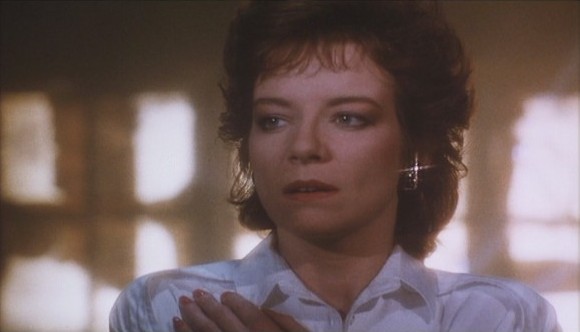
Any other Julia fans out there?

  • Hellraiser – 4.3
  • Hellbound: Hellraiser II – 4.5
  • Hellraiser III: Hell on Earth – 3.9
  • Hellraiser: Bloodline – 2.6

But tell me, what are your thoughts on the Hellraiser franchise and my observations? Do you support a remake? And is there anyone else here who thinks Julia is much more terrifying than Pinhead? Let’s discuss.

That’s all for now, my Followers of Fear. I’ll likely have a new review out soon, so keep an eye out for that. And until next time, stay safe and pleasant nightmares.

*Which I really need to get around to reading one of these days.

**Or so I’ve read. I have not seen anything past #4 yet, and I’m not sure I want to.
About two years ago, I binge-watched the entire first season of an anthology series called Channel Zero, this one focused on adapting popular creepypastas. The first season, Candle Cove, was terrifying enough to earn a 5 out of 5 review from me (which you can read here).

And then it took me two years to actually get around to watching season two, No End House. But over the past week, I watched it. How did it stack up? Let’s find out.

Based on the story No End House by Brian Russell, this season follows Margot, a young woman still mourning the sudden passing of her father the year before. One weekend, when her friends are home from college, they invite her out to a traveling haunted attraction called No End House, a house so terrifying that it’s said to change lives! They go to check it out, and find out that the house is more than a haunted attraction: it’s another world and a living organism unto itself. And they are its meal.

Like the first season, No End House uses a slow-burn approach to tell its story. Combined with a surrealism rooted in normal suburbia, it makes for a compelling watch that’s hard to look away. The characters are mostly nice enough to root for. My favorite was probably Seth Marlowe, played by Jeff Ward of Agents of SHIELD fame (Deke Squad forever!), who constantly surprised me with the reveals of his character. And John Carroll Lynch, who has played Twisty the Clown and Mr. Jingles in various seasons of American Horror Story, plays his character with plenty of love and pathos.

And there’s quite a bit of horror played around memory, the loss of or perversion of it. It’s a little chilling when you think of how memory is almost a physical, tangible thing used against the characters in this season.

That being said, the season does have its issues. The emphasis on emotional and character-driven storytelling is emphasized at the expense of the horror. There were no moments where I felt like crapping my pants or curling into a ball out of fright. Furthermore, there’s a missed opportunity to lean into the horror of the surrealism, just keeping it weird rather than creepy. All this is at the expense of the horror. Whereas the first season had this constant dread of the strange and unexplained, of the mystery at the center of it and how it affected the characters and the world, there was none of it in this season.

ON the whole, I’m giving Channel Zero: No End House a 3.4 on a scale of 1 to 5. It has some great characters and ideas, as well as some freaky scenes, but it misses numerous opportunities to scare the pants off us. If you’re looking for more story and character driven horror, this might be for you, but it won’t give you the buzz a real scary show will.

Despite how the second season compares to the first, I’ll probably still check out season three at some point. Likely within two years, though.

That’s all for now, my Followers of Fear. I’ve got a busy weekend ahead of me, but I’ll try to check in with something by Monday evening at the latest.

Until next time, stay safe, pleasant nightmares, and if you go to a haunted attraction but you can’t find anyone running the place, signing waivers, or paying/taking money…maybe reconsider stepping inside.

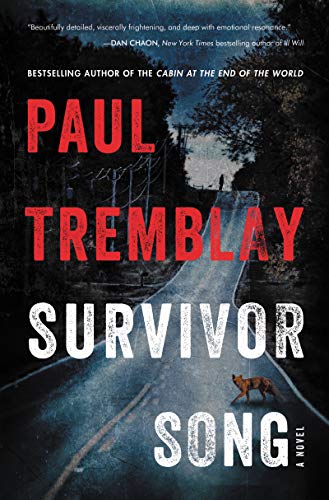
You would think that in the midst of a pandemic, nobody would be interested in pandemic fiction. Paul Tremblay’s new novel Survivor Song, released just last month, is about a pandemic (still trying to figure out if that’s coincidence or if Tremblay knew COVID-19 was on its way and wrote the story in response). And yet I, and many others, picked it up as soon as we could, and devoured it. I got it done in about a week, reading through the last half today. So yes, even in the midst of a pandemic, there’s an appetite for pandemic fiction. And Survivor Song is a welcome addition to the fold.

Survivor Song follows Dr. Ramola Sherman, a pediatrician experiencing a pandemic of her own in her state of Massachusetts. This one is a fast-moving form of rabies, one that affects its host within hours instead of days or weeks. As fear, anger, and conspiracy swirls around the state, Ramola gets a call from her best friend, Natalie, who is eight months pregnant and ready to burst. An infected man killed her husband and bit her. Thus begins a saga to find someplace to get Natalie treated, to save her and her baby. But with rabid humans and animals everywhere and time running out, can Ramola help anyone, let alone her friend and her friend’s baby?

A pandemic story with a slash of zombie thriller (though Dr. Sherman will remind you, none of the infected are zombies), Tremblay’s novel offers a stark, believable story of a disease running rampant through the state and the problems that come up in such a situation. That said, there are plenty of twists and unexpected turns, and they add to the tension of a clock running out of the story. Quite a few times I read something and was like, “Oh no!” or “Well, that’s a complication.” I also loved how Tremblay managed to hit on a lot of what we’re seeing in our current situation, including but not limited to: hospitals fighting an uphill battle; people not obeying health guidelines or employing easy “solutions” that are actually problematic; and crazy, convoluted conspiracy theories.

Also, that ending! Guy knows how to write a tense climax.

At the same time, there’s a deep-running love story here. Not a romance story or romantic love, but love between friends and a mother and child. Through Ramola and Natalie’s interactions, and the messages Natalie leaves to her child, you really come to care for these characters and hope for the best despite the threat of the worst.

If there’s one thing I didn’t care for and would’ve liked to see changed, it’s the ending of the story for Josh and Luis, two teens whom Ramola and Natalie meet while trying to get to the hospital. They were in the story for only a short time, but I really grew to like those goofy nerds and would’ve liked to see more of them in the story, or maybe in a story of their own. And not just because they were Doctor Who fans (Whovians, unite!).

All in all, Survivor Song by Paul Tremblay is a thrilling and emotional read and perfect for these mad times. On a scale of 1 to 5, I’m giving the book a 4.5. Stay inside, grab a bite, and get ready for one roller-coaster of a story. Just hope the bite you grab isn’t something biting your arm off while you’re at it.

And while I still have your attention, guess what happened last night? Stephen King tweeted about this book, and I replied mentioning my progress in it and when I hoped to have it finished. He retweeted it. King retweeted it! And I’ve been fangirling ever since (while at the same time daring to hope this isn’t the last time I end up on his radar). What a world, right?

After the failure that was the Grudge reboot earlier this year (see my review here), I was hopeful after learning a television series based on the original Ju-On movies was going to be released in Japan. And it was being brought to America through Netflix. And as soon as I could, I sat down to watch all six episodes of JU-ON: Origins. After all, it was guaranteed to be better than the Grudge reboot, but would it be legitimately scary?

JU-ON: Origins begins with a paranormal researcher named Odajima appearing on a talk show with an idol who experienced supernatural happenings at her apartment after her boyfriend goes house-hunting for them. At the same time, a troubled high schooler named Kiyomi becomes involved with a mysterious house near her school. This and other events leads to many people’s lives becoming involved with the house, a house whose history is alive and kicking, and in the worst possible way.

While this series bears very little resemblance to the original story of the movies beyond a cursed house and several men questioning if they’re the father of the children they’re raising, it’s definitely a better horror story than the Grudge reboot. And even better, it’s freaking scary.

First off, the show does a great job of setting up a mystery. The characters spend their time running down multiple leads, each one leading to a new aspect of the haunting. And each new aspect seems to add more questions than it answers. But even better, there are a number of terrifying moments. There were quite a few moments, especially in the later episodes, where I was squirming in my seat. Anyone who gets to episode five will shiver every time they think of it.

I also liked how they incorporated famous tragedies from Japan’s recent history into the story. A lot of the major events of the story occur around the same time as the murder of Junko Furuta, the sarin gas attacks, and the Kobe child murders (which, by the way, are terrifying in their own rights). Almost as if to say the house’s evil has some sort of connection to those events.

And if you don’t like subtitles, there’s an English dub on Netflix, and it’s decent. The English dialogue matches very well with the Japanese lip movements, and there are some well-known anime voice actors in the series (I had a lot of fun making jokes about that in the calmer moments of the show). Though I am sad to say, that’s not Nicholas Cage voicing the main character Odajima, but a guy named Brock Powell doing a really good Nicholas Cage impression.

This scene! Oh God, I’m shivering again.

If there’s one thing I didn’t care for, it was that I would’ve liked to see more from the original films incorporated into the story. I’m not asking for a direct based-on-the-movie or Kayako and her son to fully appear on screen, but I would’ve enjoyed more references or incorporation of the original story that’s become so beloved by fans.

And just a trigger warning: this series delves into subjects such as domestic violence and sexual assault. So if that’s a turn-off, maybe don’t watch this one.

For everyone else, however, JU-ON: Origins is a terrifying TV show that will satisfy anyone else bored with more recent entries into the Ju-On and Grudge franchises. On a scale of 1 to 5, I’m giving this show a 4.5. Head on home and settle in to watch it. Just make sure to watch with the lights on.

Also, if you go house hunting and the house has a history, make sure that it hasn’t harmed anyone in at least a decade before deciding it’s your dream home!

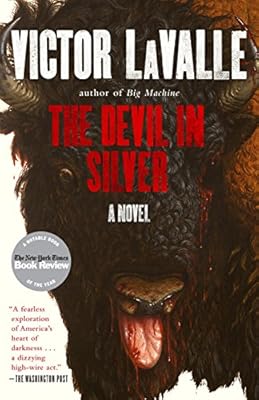
I’m a little ashamed to admit it, but it took me about two months to get through the audio book of this novel. Not because of how I was reacting to the book, but COVID-19 has changed my audio-book listening habits in a major way. Which is a pain in the ass when you decide to read more works by writers of color and this particular book and author comes highly recommended. But I finally got through it, so let me tell you about this book I just finished (the audio book of which, by the way, was narrated by the author himself, and he did a great job).

The Devil in Silver follows Pepper, a large man who gets thrown into Northwest at New Hyde Hospital, a mental institution in Queens, New York. Not because of any mental illness, but that doesn’t keep him from being there. And as Pepper gets a crash course in the mental health industry, he also has to contend with a terrifying resident with its own wing of the hospital. A demonic figure, a devil, who seems to enjoy the pain and suffering of other patients. And Pepper finds himself in the unwelcome position of having to face this monster and stop it, lest it hurt him and his new friends in New Hyde Hospital.

Despite the title and the monster mentioned in the second half of the preceding paragraph, the true horror of the story doesn’t come primarily from the devil. It actually comes from the setting: LaValle does a great job of writing about people trapped in an industry that doesn’t always have the well-being of its patients in mind (and quite a few of the characters note this in the story). As someone who has his own share of mental health issues, reading this book, whose author drew on his own experiences with mental illness and mental institutions, made me very much aware of my experience with mental health and the industry, and how much worse it could be things were a little different. I’ve since put a book on the industry on my TBR list, which I hope will further educate me and make me more aware of a segment of society that the rest sometimes wishes to forget exists.

That all being said, the titular devil is scary too. There’s something about a bison-headed monster popping out of the ceiling of a mental hospital, one that enjoys hurting the patients and can manipulate the staff for its own benefit. Just makes the hairs on the back of your neck rise and makes you wonder about what it might be like if a monster such as that existed.

I also really grew to love the characters. Pepper comes off as honest and likable, if impulsive and a bit thick-headed at times. You really got to see him grow throughout the course of the story as he interacts with the other characters and deals with the trials and tribulations set before him. And speaking of the other characters, even the minor ones were given enough development to feel real. Some of my favorites include the Ugandan immigrant Coffee, who really does want someone to listen to what’s happening at the hospital, and the sassy Luchee, a young woman trying to have some semblance of normal given her situation.

If there was anything I didn’t care for, I found the climax to be a bit anticlimactic. I think I get what the author was going for with that ending, but I kind of wanted something more, and I didn’t get it. That, and there are a lot of digressions in the story. Some of these digressions are quite helpful: they help flesh out the world of the story and what the characters are going through. At the same time, there are some that made me scratch my head, like the one from the POV of the rat living on the second floor of the hospital.

But all in all, The Devil in Silver by Victor LaValle is both a scary story and a story that hits deep at what it means to be human. And after reading this, I’ll likely read another book by LaValle very soon. On a scale of 1 to 5, I’m giving this one a 4.3. Grab a copy and get ready to see a side of life many would rather forget existed.

That’s all for now, my Followers of Fear. As promised, more posts are on the way, including on my recent trip to South Carolina. Keep your eyes peeled. And until next time, stay safe and pleasant nightmares!

Some of you who have been following me since last year may remember that, with all the marketing I was doing to promote Rose being published, I sponsored a YouTube video. As of today, it’s been a full year since that video came out. And you know what? It’s still as cool now as it was then.

So for those of you who don’t know, 101 Facts is a YouTube channel that uploads new videos once a week, each video giving–you guessed it–one-hundred and one facts about a particular subject (countries, upcoming movies and video games, the occasional major historical event, etc). And, like many YouTube channels, their videos are occasionally sponsored.

I got into contact with the 101 Facts team a few months before Rose was set to release, and, after a lot of emailing back and forth, they agreed to let me sponsor an upcoming video. I can’t remember if they already had it on their schedule before I contacted them, or if they just took one of my suggestions and decided to role with it, but the video I ended up getting to sponsor was 101 Facts about Stephen King (after all, what better video to sponsor than one about the author who made me want to write horror in the first place?).

There were several more emails, they showed me the promo they would give Rose in their video, and then a few weeks later, on July 20th, 2019, the video was released. And guess what? You can check it out below.

Pretty cool, huh? And in the year since it’s released, it’s gathered over two-hundred and twenty thousand views, more views than across either my YouTube or blogging platforms. I still watch it on occasion, especially when I’m writing or working on a blog post. And it’s still a bit of a shock to hear the host, Sam, say my name and talk about Rose in the video.

Speaking of which, thanks again to Sam, Chris, Georgia, and the crew over at 101 Facts for letting me sponsor them. It was really awesome to work with you guys, and I wish you nothing but the best with your videos, which are my favorite things to watch with my Saturday morning breakfasts.

Speaking of which, if you haven’t yet, you should check out their channel, linked here. They have a lot of informative content presented in a fun way. You might learn something you never knew on a topic you’re interested in.

And if you’re interested in reading Rose after watching the video above, I’ll include the links down below. If you do end up reading Rose, please tell me what you think of it. Positive or negative, I love reader reviews, and they help me out in the long run.

That’s all for now, my Followers of Fear. It’s my first day back at work today, so I better get to it. I promise I’ll have more to post soon. Until next time, stay safe and pleasant nightmares!

Rose: Amazon US, Amazon UK, Amazon Canada, Audible

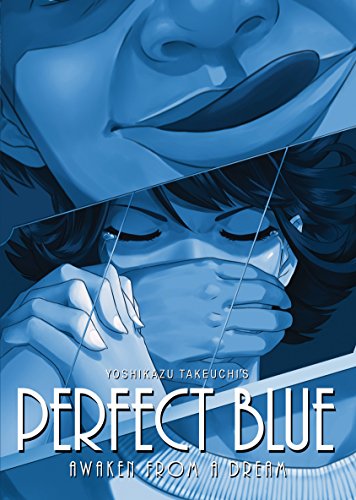
Some of you may remember I reviewed the novel Perfect Blue: Complete Metamorphosis, the inspiration for the anime horror film I’m a huge fan of. Turns out the novel had something of a sequel, an anthology of tales by the same author, Yoshikazu Takeuchi, about idols being stalked by obsessive fans. I’ve been meaning to read it forever, but only just got my paws on a copy recently. Hoping it would compare well to the original novel, I read it in about a night.

Um…I’ve read better.

The anthology has three stories inside, a short story called “Wake Me From This Dream;” a novella called “Cry Your Tears;” and a novelette called “Even When I Embrace You.” Yeah, they all sound creepy just from the titles. However, the quality ranges from story to story.

“Wake Me From This Dream” follows one fan’s strange experience when he actually gets to be with his idol (after a fashion). It’s kind of creepy in how it approaches its premise, as well as hard to look away until the end. The story actually reminds me of Stephen King’s quote about short stories, about it being a kiss in the dark from a stranger. It’s especially true of this story, though the author seems to confuse social anxiety and laziness in a less-than-helpful way.

“Cry Your Tears,” the longest story, is a standard celebrity stalker story. Guy is obsessed, in love with his favorite singer; his idol is creeped out by his intrusion into her life; a bloody climax ensues. Meanwhile, our heroine whines about how hard her life is. Like I said, it’s standard and doesn’t really do anything to pull itself away from the other standard stalker stories.

“Even When I Embrace You” is probably the weirdest story: a new idol singer who isn’t even sure being an idol is what she wants to be as an entertainer is pursued by a guy in a bunny costume. The premise is interesting, I’ll give it that, and it’s nice to see a heroine who’s a bit more rounded and doesn’t mind fighting back when she has to. However, the supernatural element to the story isn’t well thought out, and the bunny costume just sounds like another impractical movie killer costume.

On the whole, Perfect Blue: Awaken From a Dream is probably best left to the die-hard fans of the original novel and/or the movie. On a scale of 1 to 5, I’m giving it a 2.3. Outside of that first story, the rest feels run of the mill and uninspired, though they are well-written.

Yeah, not the best book. But I did get an idea for a novel from something the author said in the afterword, so that’s a plus.

Until next time, my Followers of Fear, stay safe, pleasant nightmares, and STOP TRYING TO FIND OUT WHERE I LIVE! I mean come on, do you know how dangerous that is? You might as well walk into the tiger enclosure at the zoo (and you’d probably have a better chance of survival while there).

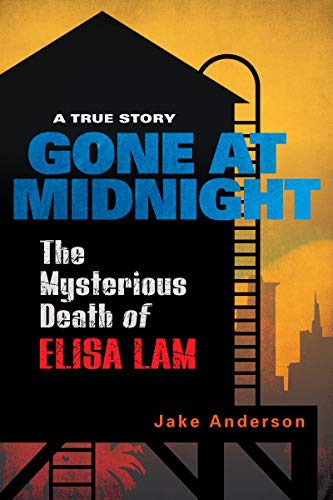
I’ve never reviewed a true crime book on my blog before. As you well know, I tend to specialize in horror of the fictional variety. But for a while now, since first hearing of the Cecil Hotel (which made one of my lists of haunted places to visit) and the death of Elisa Lam there in 2013, I’ve wanted to learn more than what I could glean from a ten minute YouTube video or from reading the Wikipedia page. And earlier this year, someone finally released a book about the case. Despite mixed reviews, I decided to buy a copy, and read it over the course of my vacation.

Here are my thoughts.

Gone at Midnight focuses on the case of Elisa Lam, a Chinese-Canadian student who disappeared in early 2013 in Los Angeles. Several days after her disappearance is reported, she is found dead in one of the water tanks of the infamous Cecil Hotel, a location known as “The Suicide” for its history of violent deaths and even having serial killers as residents at certain points. The incident is only made weirder by the release of footage from a hotel elevator showing Elisa acting strangely on the night she disappeared. Author Jake Anderson traces Elisa’s path over the last two years of her life, as well as how the case took a viral life of its own with websleuths on the Internet and the many problems with the police conclusion on the case.

I have to say, Anderson does a very good job of writing a convincing narrative. The book could easily have gone into the deep end a la The Mothman Prophecies by John Keel, with talk of synchronicity, paranormal happenings at the hotel, and theoretical physics, among other subjects. However, he keeps the narrative on track, only bringing up the weirder aspects as they relate to the case of Lam’s death and his own investigation into the case as a journalist. Anderson also does a terrific job of laying out the various problems with the police’s conclusion, and offers several alternative possibilities about what may have happened.

His reconstructions of what Lam may have been thinking during her final years (something I’ve found in a lot of true crime I’ve read), based on her many blog posts, also has an eerie authenticity to it. And his examination of the websleuth community, the pros and cons of the movement and how it all relates to Lam, is quite interesting. I wouldn’t be surprised if this book is used later for a sociological study into websleuthing.

There is one major criticism I have, and it’s one I share with a lot of other critics of the book: Anderson spends a lot of time on his own mental health. And while in some places it’s relevant to what we’re reading about, at other times it’s distracting. I understand why he did it: like Lam, the author has his own mental disorders, and his struggles strengthened the kinship he felt with Lam, despite having never met her. I too feel a strange kinship with Lam: not only was she a little older than me when she died, I also have my share of mental struggles, and enjoy writing and blogging like she did, among other things.

However, as I said, it’s distracting at times, and I feel like Anderson’s struggle with his mental state, while relevant, should have been kept in a foreward or afterward to the book, or maybe even in an essay published separately from the book.

All told, Gone at MIdnight: The Mysterious Death of Elisa Lam by Jake Anderson is as of this moment the definitive book on the Lam case, and deserves to be so. On a scale of 1 to 5, I’m giving the book a 4.3. After reading this, I’m going to be doing a bit more research into the case, but Anderson might have me convinced on his take on the Lam case.

Grab a copy, take a deep breath, and jump right in. You’ll find yourself on a roller coaster that may, as it did for me, hit close to home.

That’s all for now, my Followers of Fear. I’m finally back from my trip, so I’ll be posting quite a bit over the next two weeks (especially since I’m quarantining myself to make sure I didn’t catch anything). Keep an eye out for more reviews, breakdowns of the paranormal activity I encountered, the places I visited, updates on my writing, and so much more.

Until next time, stay safe and pleasant nightmares!

For those of you who are unaware, Slasher is a Canadian-American TV series that’s like American Horror Story, with a different story and cast every season, but more bent towards slasher horror. I’ve reviewed the first two seasons (see my reviews here and here), and have enjoyed watching the evolution of the show from a so-so derivative AHS knock-off to a very thrilling and bloody murder mystery in the second season. And while it took me a while to get to it, I finally got around to the third and final season. And what a season it was!

Subtitled Solstice, the story begins with the murder of Kit Jennings, a bisexual party boy who is violently murdered at his apartment building by a masked murderer known as the Druid. A year later, all the residents living at the apartment building at the time of the murder are still living there, and start to die under horrific and bloody circumstances. As the police rush to find the returned Druid killer, the apartment residents will have to watch their backs. Because everyone has a connection to Kit, everyone has a secret, and everyone is a target.

I don’t know if the third season was intended to be the final season, but in a way, I’m glad it was. There’s no way they were going to top this season.

For one thing, I love how they manage to take these diverse characters, flesh them out to make them feel real, and then weave a narrative around them. It could have easily come across as hard-to-believe, or silly, or dumb, but the writers made it believable and truly thought out every aspect of the story to make it thrilling. I also like how the emphasis on this season was on connections and community. There’s a lot of commentary on how people are united and divided in a community, both online and offline, people can be. You have white supremacists living next to Muslims, straight couples living by LGBT families, caring people living beside monsters. All that gels together in a way that feels organic and believable, and I loved it.

And speaking of the cast, I don’t think I’ve ever found a horror story where I wanted so many despicable characters to get murdered! The white supremacist; the white supremacist’s prejudiced, slutty daughter; the housewife who believes sharing everyone’s pain across her gossip vlog is real journalism;* the creepy teenager who thinks bringing up people’s trauma is funny. Each one of them is written and played so well, and I only hope I can portray such characters so well in my own work.

Finally, this season contains some of the most brutal kills in a slasher story I’ve ever seen. Kid you not, I cringed more than I normally do with these kinds of stories, and that’s saying something. If you decide to check this season out, be prepared. This season goes the limits.

If there’s something I didn’t care for, I would’ve liked to see more of protagonist’s, Saadia Jalalzai’s,** parents and family. They leave for a trip at the beginning of episode one and then are pretty much gone from the season. I honestly would have enjoyed seeing a bit more of them and their reactions to everything that occurred within the course of the season.

All in all though, Slasher‘s third season is a gory, terrifying delight for any slasher fan. On a scale of 1 to 5, I’m giving the season a 4.7. Get on Netflix, settle in for eight episodes and, if you live in an apartment building, thank whoever that even your worse neighbors probably aren’t as bad as the ones in this show.

That’s all for now, my Followers of Fear. I wanted to get one more blog post out before I left on my trip tomorrow, and I’m glad it was this one. Don’t know when my next one will be, but I’m sure whenever it is, it’ll be the first of several. And in the meantime, if you’re in Des Moines this weekend, come by the Valley West Mall for the 5th annual Indie Author Book Expo. I’ll be selling books and doing Tarot, so I hope to see you there!

Until next time, stay safe, beware of machete-wielding maniacs, and pleasant nightmares.

*BTW, if I ever get as addicted to my online following as that woman or some of the other characters in that show, please break my phone and slap me silly. I’ll need it.

**And yes, I was reminded a bit of my character from the Reborn City series, Zahara Bakur, but I’m pretty sure they just share an archetype.

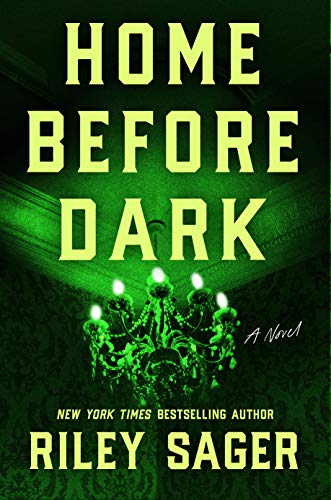
I may have stayed up late last night reading this one. What can I say? Riley Sager knows how to take a damaged young woman with a past, put her in a scenario reminiscent of famous horror films and novels, and then create a compelling mystery-thriller. Such is the case with Home Before Dark, where Sager takes on Gothic horror and The Amityville Horror.

Home Before Dark follows Maggie Holt, an interior designer who also happens to be one member of a family that experienced an Amityville Horror-esque situation that forced them to flee their newly bought home, the infamous Victorian mansion Baneberry Hall, after only twenty days. Her father Ewan later wrote a book about their “experiences” in the haunted house, which became a bestseller and has forever followed Maggie. Twenty-five years later, Maggie returns to Baneberry Hall, a place she doesn’t even remember, to renovate the house and find the truth hidden in her dad’s book. But as figures from the book emerge as real people and Maggie digs deeper, she finds an even deeper mystery within the manor. One with possibly deadly consequences.

From the start, the novel draws you in and makes it hard to put down. The story switches between Maggie’s present and passages from Ewan Holt’s “tell-all,” House of Horrors, and it’s fun to see how things that “happened” in the past line up with or contrast with what Maggie experiences. I also liked Maggie as a character. You could really feel how much her life has been affected by her family’s deceptions and the popularity of the Book (as she calls it). I almost felt angry at her parents just reading about how much they twisted her life.

And of course, there were numerous twists and turns along the way. I saw none of them coming and they really really kept the tension high and my mind boggled at the possibilities. They’re part of the reason why I was up past midnight last night.

If there’s one thing I didn’t like about the novel, it’s that during the sections quoting the Book, the plot seemed lifted from today’s B-horror films. You know, the kind that have paint-by-the-numbers plots, rely heavily on CGI and jumpscares, and you forget about them a year or so after they release? I get that it’s supposed to be a pastiche or satire of Amityville Horror-style haunted house stories, but at times it felt like I was reading a bad ripoff of The Haunting in Connecticut or one of the poorer Conjuring films. Not really my thing, as you well know.

All in all though, Home Before Dark is a twisty, satisfying read. On a scale of 1 to 5, I’m giving Riley Sager’s fourth book a 4.7. Grab a copy, settle into a comfy chair, and prepare to be thrilled. You’ll be “haunted” even after the very last page.

That’s all for now, my Followers of Fear. I might get another post out this week, but given that I’m leaving for my trip soon, that’s going to take up my attention this week. And it’ll be really hard to blog until after I get back. Nevertheless, once I do come back, I promise to have quality content for you. Or something you can use to fill five minutes of your life, depends on how you view it.

And in the meantime, if you’re able to come to the fifth annual Indie Author Book Expo in Des Moines, Iowa this coming weekend, please do. I’ll be selling copies of Rose, doing Tarot readings, and interacting with people, and I’d be happy to see you.

Until next time, stay safe and pleasant nightmares!