Posts Tagged ‘Rose’

The Witcher books by Andrezj Sapkowski are a prime example of dark fantasy.

You’ve probably heard the term “dark fantasy” thrown around to describe different kinds of stories, and the simple definition given when asked what constitutes dark fantasy is “fantasy but darker or grimmer.” And yet, that doesn’t seem to fully encompass the subgenre or quell debate on what dark fantasy is. I’ve heard people say all horror that has to do with the supernatural as a kind of dark fantasy, or that the line between the two is very thin. Even authors who are known as dark fantasy writers have trouble pinning down a definition.

So while I’m no expert myself, I thought I would ask, “What is dark fantasy?” Especially since depending on the definition, my stories could fall into this genre on occasion.

And in the course of my research, I did come across some things. While an exact definition isn’t agreed upon, there are some things that fans and writers can agree upon. For example, both TV Tropes.org and Fantasy Book Fanatic.com agree that dark fantasy is fantasy (no duh), but unlike high fantasy or swords-and-sorcery fantasy, there is a much grimmer, more ominous tone to the stories. While in other subgenres of fantasy, gods can be clearly defined as good or evil or maybe just neutral, gods can be very evil or at best cruelly ambivalent to humans. If they show up in the story at all, that is.

Likewise, magic is a neutral force at best, unlike magic in Harry Potter or the Force in Star Wars (which is a fantasy element in science fiction). Magic may even be the source of corruption that creates the villains in the stories, and could be considered a necessary evil or even the source of evil itself, needing to be rid from the world. As for heroes, there are a distinct lack of heroes in the world, and at best you get anti-heroes or mercenaries. Anyone who could be defined as a “hero” may be filling the role reluctantly. They’re doing this not for some noble goal like saving the world or defeating an evil warlord, but for revenge, their own goals, for profit or because they haven’t been given a choice in the matter and are really bitter about that.
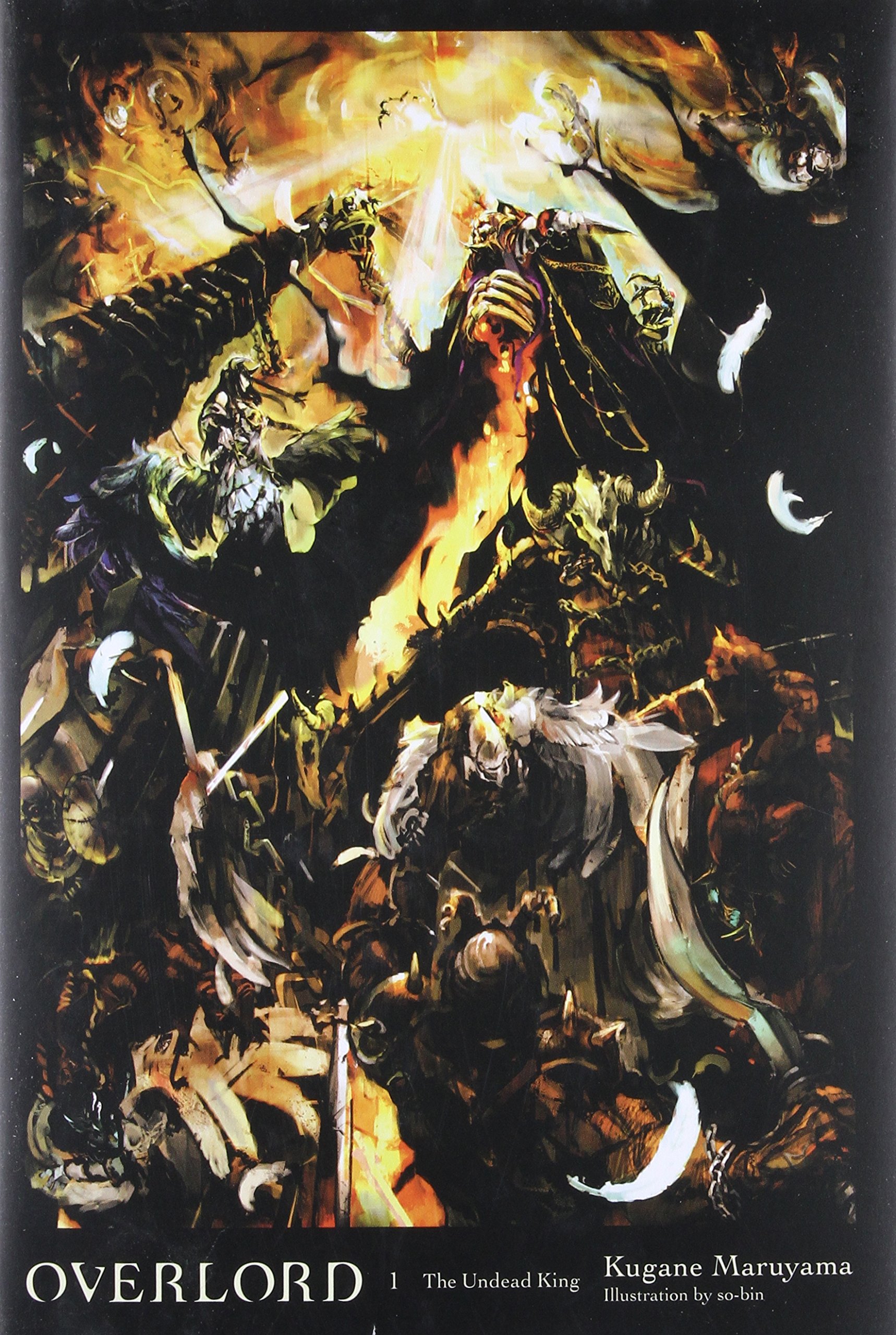
Based on these definitions, the Overlord novels by Kugane Maruyama and their adaptations (which I recommend) count as dark fantasy as well as isekai fantasy.

And finally, there’s a good chance evil can win. Bad politicians can stay in power while good ones may lose their heads. The Demon King can take over the continent and establish an empire. The witch may kill the princess and release the plague upon the land before getting slaughtered by the princess’s lover. Things may just go to shit.

Yeah, bleak. And under these parameters, series like The Witcher novels or some of my favorite isekai fantasy series from Japan, such as Overlord, The Rising of the Shield Hero, or Arifureta,* count as dark fantasy.

But given those parameters, doesn’t that make supernatural horror dark fantasy after all? Not necessarily. While some might prefer to use the term “dark fantasy” for their stories to avoid horror’s negative connotations in society, and the two genres do overlap, there are key differences. Namely, dark fantasy focuses on the monster and fantasy elements while horror uses the monster and fantasy elements.

Look at my own novel Rose, for example. The protagonist Rose Taggert is transformed into a plant/human hybrid by a magical book given to mortals by a nature god. Sounds very fantasy-esque. And if Rose was a dark fantasy story, it would follow Rose Taggert’s attempts to live a life and understand her place in the world now that she’s changed, as well as to understand this new magic dimension in the world around her. But it doesn’t. Instead, the magic is a means by which to place Rose in the power of the antagonist, Paris Kuyper. It’s a means to create the terror of not knowing how dangerous Paris is, nor knowing what he’ll do to her if she doesn’t respond to his desires as he wants her to. That’s why Rose is a fantasy-horror novel rather than a dark fantasy novel.

Similarly, Anne Rice’s Vampire Chronicles can be considered dark fantasy because they use the state of vampirism to explore psychological and philosophical truths and beliefs among the characters. If they were full-on horror, the vampires would be the means to terrify the readers. You know, like Salem’s Lot (which I need to reread, with a new adaptation on the way and all).
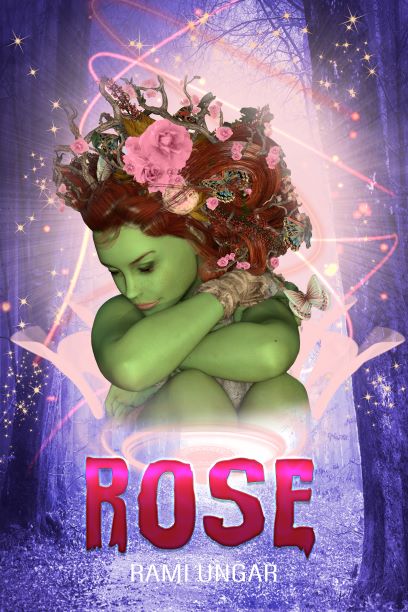
While some might categorize “Rose” as dark fantasy, how those fantasy elements are used distinguishes it as a horror novel.

And while we’re distinguishing between genres and subgenres, let’s talk about the difference between dark fantasy and grimdark. Grimdark is another subgenre of fantasy, characterized by apocalyptic, dystopian or hellish settings and a very bleak atmosphere, but still containing all those fantasy elements. So, what makes it different from dark fantasy, when both can contain those settings and atmosphere? According to Fantasy Book Fanatic.com, the difference is in hope:

“The concept of hope seems to be the primary differentiating factor between dark fantasy and grimdark. Hope is still able to be an integral theme in dark fantasy narratives. In contrast, the central theme of grimdark almost never entertains the possibility of hope. The central theme revolves around cynicism instead. This differentiation is vague at best, which is why many of the works of dark fantasy and grimdark are so easily confused.”

So what is dark fantasy? Well, by this definition, it is fantasy with darker or horror overtones. However, it distinguishes itself from horror by using the fantasy elements as a means to tell the story, rather than as a means to terrify the reader. Think vampires as tortured souls rather than vampires as supernatural man-eating monsters. And, unlike grimdark, there is still an element of hope in the story. Things may go to shit, but people are still allowed to hope.

My name is Rami Ungar, thank you for coming to my TED talk.

*Which, unlike the other two I just mentioned, will not appear on any of my anime recommendations lists. The anime did the original novels a poor service, which is a shame, because I devoured the first four books in a week, they’re that good. Check them out if you’re interested.


That’s all for now, my Followers of Fear. If you’re interested, I’m still taking orders for signed copies of Rose. Send an email to ramiungar@ramiungarthewriter.com for details. Or you can check it out on Amazon and Audible. And if you do check the book out, let me know what you think. In the meantime, I’ll be neck deep in Victorian England again, but I hope to put out another post very soon.

Until next time, pleasant nightmares!

The Shanley Hotel in Napanoch, New York, one of the haunted locations I want to visit.

Well, it’s been a while since I’ve written one of these posts. And for those of you who don’t know, I keep a rather extensive list of places purported to be haunted that I want to visit someday, and I’ve been lucky enough to visit a few of them, such as the Lizzie Borden Bed & Breakfast and the Paris catacombs. I’ve even been to the Ohio State Reformatory twice (and if it weren’t for this damned coronavirus, I’d have been there this past weekend for a convention).

And as of last month, I’ve finally come up with enough additions to that list to warrant another one of these posts. So if you’d like to know what places I could possibly visit in the future to look for ghosts, or you want to know some places to avoid in the future, please read below. And you can check out the first three in this series here, here and also here.

And don’t worry. The places on these lists may be haunted, but the posts themselves aren’t. I think.

Drovers Inn, Loch Lomond, Scotland

Head out to rural Scotland, and you’ll find an old, historic house on the north end of Loch Lomond. In addition to being a working hotel, the house also features good food, live music, and more than a few ghosts. Guests have reported flickering lights in midair, a ghost girl in a pink dress showing up in a photograph, the ghost of an angry cattle driver, and a family who died in a snowstorm looking for shelter, among others.

One room, please!

The Shanley Hotel, Napanoch, New York

Yeah, you’re going to be seeing a lot of hotels, motels, and inns on this list. Almost like these places attract spirits for some reason.

Anyway, the Shanley Hotel is a beautiful, three-floored bed and breakfast located in the northern area of New York. Built in 1845 as a hotel, it has gone under many names, but has always been known for an elite clientele and even has been an active bordello at times (scandalous!), and was a site active for bootlegging during Prohibition. To this day, there are many spirits who still haunt the house, including a few children of the previous owners who died young, one of the bootleggers, a cat that died, and perhaps even a few of the bordello women.

Supposedly this place is so haunted, you need to sign a waiver and pay a handsome fee to stay there. But like that is enough to scare me off. Nope, I’m in, and I’ll take anyone who’s brave enough with me.

Wolf’s Creek Inn, Wolf Creek, Oregon

The oldest still-running inn in the Pacific Northwest, this beautiful building features lovely rooms, a restaurant, and more than a few ghosts hiding within its walls. It’s been featured on paranormal shows like Ghost Adventures, and advertises ghost hunts and paranormal tours on its website. If you ask me, it sounds like a good excuse to go out west further west than I’ve ever gone before.

RMS Queen Mary, Long Beach, California

The Queen Mary is a former British ocean liner that first set sail in 1936. It briefly saw use as a troopship, ferrying soldiers to the war. Afterwards, it became a passenger ship and traveled across the Atlantic Ocean until the 1960s. It was retired in 1967, and has been moored in Long Beach, California ever since. It has since become a tourist attraction, and there have been rumors of hauntings ever since, including shadow figures and one room where the ghost of a murdered passenger still hangs around.

Normally I’m not one for cruise ships, but I’d make an exception for this lovely lady.

Hell’s Bridge, Algoma Township, Michigan

If you go into central Michigan, and then into the woods, you’ll find an old, metal bridge spanning a narrow river. It looks unassuming, at least in the day time, but at night it looks rather eerie. Especially when you learn about the legend surrounding the bridge. Supposedly during the 1800s, a serial killer named Elias Friske murdered several children and threw their bodies into the river off a stone bridge. When the bodies were finally found and Friske identified as the killer, he claimed the devil had told him to kill those kids before he was lynched by the locals.

While there are no records of Friske or these supposed crimes, at least none that I could find, the area where the stone bridge was and where the metal bridge now stands has gained a reputation. Supposedly, if you stand on the bridge at night, you’ll spot the spirits of Friske or the children he killed, and perhaps even the forces that he claimed influence him to kill. I’d check it out if I had the chance.

Wisner Bridge, Chardon Township, Ohio

Yeah, there’s a few bridges on this list as well. Another haunted location in Ohio I need to visit, the Wisner Bridge was a Crybaby Bridge, or a bridge where the spirits of dead children can supposedly be heard crying. In this case, the Wisner Bridge supposedly was haunted by spirits of melon heads, diminutive humanoids with bulbous heads in American folklore. While the legends vary from state to state, in Ohio it’s believed the melon heads were orphans who were experimented on by a sadistic doctor, either causing or worsening their appearance. They later killed the doctor, burned down the orphanage, and retreated to the woods near the bridge to live in the wild.

Today the bridge itself is gone, having been torn down in 2013. However, locals still report hearing crying babies at the site where the bridge stood. Whether or not you believe the urban legends, this might be a place for me to check out.

Gold Brook Covered Bridge, Stowe, Vermont

A wooden bridge that has been placed on the National Register of Historic Places, this bridge is also known as Emily’s Bridge, owing to the legend surrounding it. While stories vary, most of them agree that a young woman named Emily was supposed to get married or elope, and when her lover never showed, she died on or by the bridge. There’s no evidence Emily existed and the legend first popped up in 1968, after a student wrote a paper about how they used an Ouija board and made contact with a spirit named Emily.

Since then, many people using Ouija boards and other devices to contact the dead have supposedly come into contact with Emily and learned her story. Even stranger, many people passing over the bridge have been touched or scratched by her, whether on foot or in their cars. Is Emily the spirit of a real person? The result of overactive imaginations? Or did belief in her bring a spirit into existence, one that took on Emily’s identity to answer the demand to see her? I want to go and find out!

Franklin Castle, Cleveland, Ohio

Another Ohio location, the Franklin Castle is an old Victorian manor with a reputation. Its original owners, the Tiedermann family, suffered several deaths while they lived there, including four of their children, and there were rumors of horrific crimes within its walls. Since then, the house has changed hands several times, and several of its past owners and residents have reported hauntings. One family even performed exorcisms in the house before moving out. And in 1975, human bones were found on the property, though there is evidence to suggest they may have been planted.

The good news is, my dad lives up in Cleveland, so there’s a good chance I’ll visit this house the next time I visit my dad. The bad news is, the house is privately owned and there’s very little chance the current owners will let me in. Still, I can at least drive by and take photos. And who knows? Perhaps someone living there will allow me in. Whether that someone is living or not, however, is up for debate.

LaLurie Mansion, New Orleans, Louisiana

Fans of American Horror Story will know Delphine LaLurie as the sadistic southern slave-owner who took pleasure from torturing her slaves. What they may not know is that the house featured in the show was not her actual house. Or that her real house is still standing in New Orleans, and that it may have a few spirits living in it. Supposedly there have been moans heard from the room where the slaves were kept and the sounds of footsteps at night. When the building was an African-American girls’ school, many of the children there reported being attacked by a mysterious woman, and when the building was converted into apartments, one resident was found murdered after claiming a demon was after him.

Sadly, today the house is privately owned and the current owners show no interest in having investigations conducted in the home. So, like the details of LaLurie’s life and the full extent of her crimes, we may never have the full truth. However, ghost tours passing by the house occasionally have encounters of the weird kind. And I would be happy just to have that.

Cecil Hotel, Los Angeles, California

Speaking of American Horror Story, the Cecil Hotel was another inspiration for the fifth season, Hotel. Originally a luxury hotel for businessmen and travelers, after the 1940s the hotel became a home for transients as the neighborhood took a dive. Even before that, though, the hotel had been known for murders and suicides. Other violent and illicit activities occurred there over the years, and the hotel was a temporary home for serial killers Richard Ramirez and Jack Unterweger. In 2013, a Canadian student was found dead and naked in the water tank on the roof. Footage was found of the student acting erratically, poking in and out of and hiding in an elevator hours before her death. The footage is, to say the least, unsettling.

While the hotel has since been renamed the Stay on Main and is trying to gain back its reputation as a luxury destination, the building cannot escape its reputation of sinister and violent occurrences. And perhaps, if I were to check in, I would find some guests that had never checked out.


There you go. Ten more haunted or strange locations I’d like to visit after this pandemic has run its course. But tell me, have you been to any of these places? Do you want to go to any of them? Maybe with me? And what haunted places have you been to that I haven’t named? Let’s discuss.

That’s all for now, my  Followers of Fear. I’ll be busy writing this week, so hopefully I get plenty done. And in the meantime, you can still order signed copies of Rose by sending me an email at ramiungar@ramiungarthewriter.com. Until next time, stay safe, be healthy and pleasant nightmares.

I can’t believe it’s been over a month since my last review, and nearly two months since my last review of a movie. Well, it’s the first of the month and a Friday night. I recently found out about an American remake of a Thai horror film that’s one of the best known Thai horror films and Thai films in general known internationally. The Thai film is on Netflix. Let’s get into it.

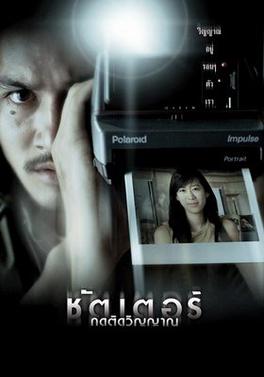
Shutter follows Tun, a photographer, and his girlfriend, Jane. On the way back from a friend’s wedding, they accidentally run a girl over and flee the spot. However, nothing is reported to the police or the hospitals, and things get weirder from there. Spirit images show up in Tun’s photos, and the more Jane digs into things, the more she realizes that the girl they ran over wasn’t just a random accident. Something’s coming for Tun and his friends, something from their past. And whether in a photo or in reality, it’s not going away.

So Asian horror films can be hit-or-miss with me, but this one actually did okay with me. While the plot feels a lot like a basic Blumhouse formula film–you know, characters somehow catch the eye of something evil, it slowly comes after them with jumpscares and other weird moments to scare them before killing them, and then finally there’s some sort of climax after all the backstory is revealed–here, it’s done pretty well. The jumpscares aren’t overused and are actually pretty effective, partly because the ghost of the film is so damn creepy.

Along with that, the film does some great scenes full of tension. There’s one scene with a flashing camera in a dark room that I’m sure was terrifying on the big screen, and there was another scene involving a biology lab full of preserved specimens that actually had me curled up a bit in my seat.

And as I said, the ghost of the film is so damn creepy, thanks to some great makeup and not overusing her appearances.

However, there are some things Shutter could’ve done better at. As I said, the story is kind of formulaic, so there were plenty of things I saw coming and which I’m sure other people would see coming. Sure, there were some good twists and some excellent foreshadowing at times, but still predictable at times.

And if you’re photosensitive, I would recommend skipping over the camera-in-the-dark room scene. Also, this film contains some elements that might upset certain viewers, so trigger warning.

On a scale of 1 to 5, I’m giving Shutter a 3.5. If you’re looking for a popcorn horror film to last an hour and a half, this might do the trick for you. It’s on Netflix, so enjoy.

That’s all for now, my Followers of Fear. I’m still taking orders for signed copies of Rose, all you have to do is email me at ramiungar@ramiungarthewriter.com. In the meantime, there’s a book that’s literally screaming my name (surprisingly not a grimoire of dark magic), so I’m going to go read that. Until next time, pleasant nightmares!
Hey everyone! So, a lot of my fellow writers, especially within the horror writing community, have been posting videos of themselves reading all or parts of stories they’ve written. This is actually something I wanted to do for a long time, so seeing my colleagues doing it gave me the push I needed to finally go ahead and do it. Plus, it gave me the opportunity to make a special announcement (more on that below).

Specifically, I read from “Car Chasers,” the short story that was published in the anthology The Binge-Watching Cure II back in December. It doesn’t have an audio version, and I wouldn’t want to try with Rose on a YouTube video when the audio book’s narrator, Sara Parlier, did such a great job, so this was the perfect choice.

However, this video almost didn’t make it to the Internet. Yeah, YouTube has this stupid policy where it won’t let you upload videos longer than fifteen minutes unless you go through this whole rigmarole with them. And they didn’t tell me this until I already spent nearly three hours uploading the video. So I had to go through that process, then wait another three hours to upload and release a video. Thanks, YouTube! Ruined my evening plans! I thought you were trying to be more creator-friendly! Hmph!

Anyway, here’s the video. Please give it a watch, and stick around till the end for a special announcement.

Well, what did you think? Hope my reading voice didn’t cause your ears to bleed.

Also, if you didn’t stick around to the end, here’s the announcement: you can get a signed copy of my novel Rose from me! All you have to do is send an email to ramiungar@ramiungarthewriter.com to get the full details.

Of course, you can still get Rose from Amazon and Audible, as well as any bookstores that happen to have copies in stock (there are a few), but this would be a bit more special. And you’d get a physical copy without forcing an Amazon employee to run around the fulfillment center while Amazon ignores social distancing rules.*

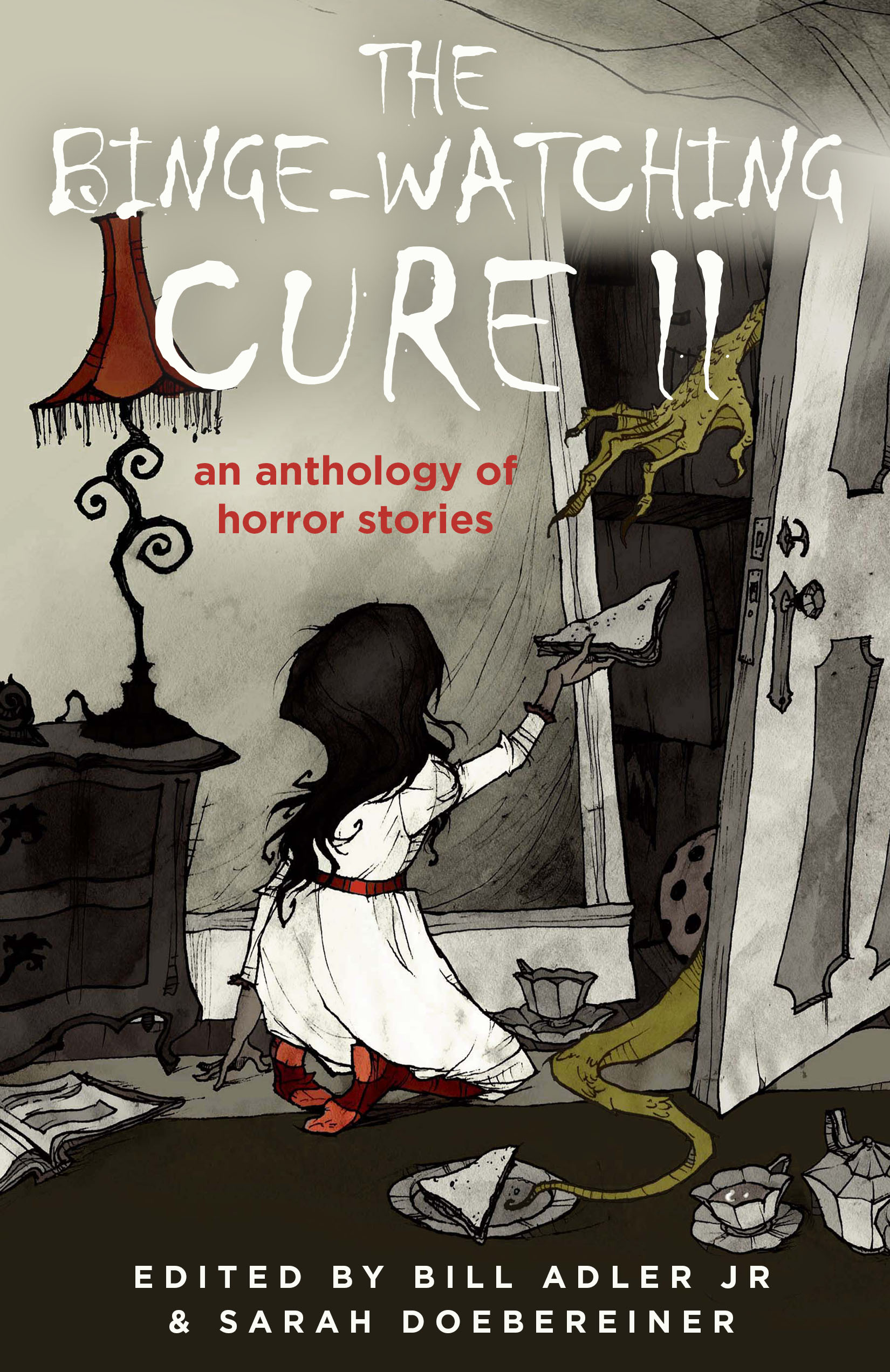
And if you haven’t already, please consider getting a copy of The Binge-Watching Cure II from Claren Books. You’d be supporting a great company and encouraging them to print more anthologies. And this book has a lot of great authors in it: Nick Younker, Amanda Crum, Bill Adler, Armand Rosamalia, and many more. And every story is chilling in each its own way. I’ll include links for that down below as well.

And remember, if you buy a copy of either and read it, please leave a review so that I and the other authors know what you thought of our stories. Thanks!

That’s all for now, my Followers of Fear. Until next time, happy reading, stay safe, be healthy, and pleasant nightmares!

Rose: Amazon US, Amazon UK, Amazon Canada, Audible

The Binge-Watching Cure II: Paperback, Kindle

*Hey, I make money through them, but that doesn’t mean the company is above criticism.

Those of you who don’t follow me on my other social media platforms may not know this, but at least once a week, usually Saturday, I post links to my novel Rose. The hope is, with enough regular mentions, people will notice the book and be tempted to read the book. If they see it often, it will worm under their skin and the possibility of entertainment they’re missing out on will nag at them. Perhaps they’ll even check it out just to see if they really are missing out.

It’s a simple strategy, but it does work. Not to the point where I’m getting dozens of new readers or reviews every week, but it does get results. For example, just this past week or so, Rose received two new ratings on Goodreads. And not too long ago, Rose received a bunch of new ratings on Amazon Canada and Amazon UK. And I think these consistent ads may have played a role in all of these new ratings.

And as I write this, I wonder if these new ratings are just a fraction of the new people reading Rose. They just haven’t let me know what they think as of yet.

This is why I keep posting about Rose. I want people to find the book. Someone like Stephen King may only need to post a couple of times about their upcoming book, and they’ll have thousands of pre-orders within hours. Less well-known but very established horror authors will post regular ads just to remind people that their book is coming out or that it’s already out or that it’s been out for a while. My philosophy is that I have to do ten times the work in order to get half of what I want. What I want is to have as many people as possible read my stories. So obviously, I’ll do what I can to get people to notice Rose.

I just can’t post everyday, because it would cost way too much money or because people would get sick of seeing Rose mentioned on my timeline. Or both.

In any case, I have a feeling that all my efforts are going to pay off even more than usual. Because COVID-19 has a lot of people isolating in their homes, they’re looking for new sources of entertainment, including books. Perhaps they’ll see Rose mentioned somewhere and think, “Hmm, that might pass the time for me. I’ll give it a read.”

Not the ideal way for someone to notice my work, but there you go.

And no matter the situation, I’ll keep writing and posting about my stories, with the hope that more people will notice and maybe want to read it. With any luck, they’ll find their new favorite horror story, and I’ll have another reader interested in my next book or publication, whenever that comes out.

And if this post has got you at all interested in Rose, I’ll post the links below. Yeah, of course I would insert an ad into this post, what did you expect? Anyway, if you’re not familiar, Rose is the story of a young woman who wakes up with no memories of the past two years. Pretty quickly, her body undergoes a startling transformation, becoming a human/plant hybrid. As those around her react to her transformation, she soon realizes they’re not all they seem, leading to a desperate fight for survival.

It’s some dark, creepy shit and you can check it out by clicking on the links below. And if you do end up reading Rose, let me know what you think. Positive or negative, I love feedback from readers, and they help me out in the long run.

That’s all for now, my Followers of Fear. If, like me, you’re celebrating Passover, then Happy Passover (and next year in person). If you’re celebrating Easter this weekend, Happy Easter. And no matter what you believe or don’t believe, stay safe, be healthy, and pleasant nightmares to you all.

Rose: Available from the links below.

Rose: Amazon US, Amazon UK, Amazon Canada, Audible

On Sunday, I posted about finishing my first short story of 2020, a science-horror story called “Primordial Nuclear Soup” (what a title, right?). I mentioned in that post I wanted to find a beta reader to take a look at the story before I edited it and tried to send it anywhere. Thankfully, I found someone very quickly who turned out to be the right sort of reader for this story. They gave me some excellent feedback on ways the story could be improved, but there’s one point that I wanted to focus on.

With “Primordial Nuclear Soup,” I was going for an ambiguous ending to the story. You know, the kind where things are left kind of open, leading to readers wondering what happened after “The End”? Yeah, apparently I confused my beta reader with that. They actually asked me if I’d cut it off early.

Now, this may have been because I simply forgot to put the words “The End” at the end of the story. But it got me thinking: when is an ambiguous ending good for a story, and when does it actually get in the way of telling the story?

As usual, when faced with a writing quandary that I can’t reason out on my own, I go to Facebook groups for writers. I got a variety of opinions on the subject, some of which felt more on the mark than others, but one response in particular resonated with me. The writer in question said that ambiguous endings work best with ambiguous stories.

What do I mean by ambiguous stories? Well, these are stories where so much is up in the air, that an ending where things are up in the air makes sense. A story with an unreliable narrator fits this description, or a story like The Haunting of Hill House, where we’re not sure if the house is really haunted and we feel the psychological strain on the characters. By the end of the latter, we’re still not sure whether the house is haunted, so an ending that still leaves us questioning what the hell just happened fits nicely.

Of course, some more “definitive” stories may benefit from an ambiguous ending, especially if it ramps up the tension. “All That You Love Will Be Carried Away,” a Stephen King short story about a traveling salesman contemplating suicide, has an ambiguous ending dependent on whether the protagonist sees a light from a farmhouse through a snowstorm.* It’s a great way to top off a story revolving around a troubled man wondering whether or not he should kill himself or live to write a book about his encounters on his travels.

As for my own story…well, it’s science horror. And science/science fiction tends to deal with exactness. Even though the Xenomorph from the pinnacle of science horror, Alien, has an unclear origin,** everything else in that film is clear as crystal. So perhaps I need to give my own story a clearer ending.

Well, we’ll see. I’ll give the story an edit before I start that essay (yes, I’m going to write it) and see what I can do with it. Hopefully, I’ll make something a magazine won’t want to throw in the trash after the first page.

A dramatic shot of “Rose” I couldn’t help but take.

Oh, and while I have your attention still, did you know today is the two-year anniversary of when I announced Rose was accepted for publication? Yeah, it happened on this day in 2017, and a lot’s happened since then. A year of edits and rewrites, the release and all the marketing, the audio book, and so much more. More and more, people have been telling me they’ve enjoyed the story, and hearing that is the most gratifying feeling ever. Makes me want to keep writing.

If you haven’t read the Kafkaesque story of a young woman turning into a plant creature (and that’s just the start of her problems), and you’d like to check it out, I’ll include the links below. And if you do read it, please let me know what you think. I love feedback, and reviews help me out in the long run.

That’s all for now, Followers of Fear. Until next time, pleasant nightmares!
Rose: Amazon US, Amazon UK, Amazon Canada, Audible

*It’s been 19 years since it first came out, so I’m not sorry I didn’t include a spoiler warning.

**I like to pretend Prometheus and Alien: Covenant never happened. They take all the mystery out of the franchise.

I know the moment I press “Publish” on this post, WordPress is going to notify me that I’ve published three posts in three days, and to “keep it up!” I won’t. I can’t blog that much! What would I blog about? My chiropractor’s appointment? The weather?

Okay, onto the subject of this post. If you didn’t know, I have a small YouTube channel. And I mean small: in the eight years I’ve been uploading videos, I’ve only uploaded twenty-seven videos, most of those in the past couple of years. Obviously, I don’t have a lot of traffic on my channel.

But I try to at least update the channel when I have something to update it with. And last night, I filmed a short video letting my YouTube channel followers know that I’d finished Toyland. I also let them know what I was planning to do with the novel in the near future and my immediate writing plans.

And I waxed eloquent about my love of Brothers Drake mead. Again, not sponsored, I just love their stuff and like to celebrate big milestones with mead.

Anyway, I thought I’d post the video here on my blog to further spread the word. If you have fifteen minutes to do so, please watch it below. And if you like it, maybe leave a like and a comment. Hell, subscribe if you’re feeling crazy. Like I said, I don’t upload that much, but when I do, I think it might be entertaining and informative for people. I’ll include the link for that below, as well as links for Rose and The Binge-Watching Cure II (if you watched the video, you know why).

That’s all for now, my Followers of Fear. Until next time, pleasant nightmares!

My YouTube Channel

Rose: Amazon US, Amazon UK, Amazon Canada, Audible

The Binge-Watching Cure II: Paperback, Ebook

Call the press! Pour the honey wine! Sacrifice your neighbor to the eldritch deity of your choosing! The first draft of Toyland is done! To be specific, I finished it early this morning at around four in the morning. I started working on the last two-and-a-half chapters around ten o’clock last night, after I wrote my review of The Lodge, and just didn’t stop.

And now that I’ve gotten some sleep, I’m blogging about it, because that’s what you do!

Now, for those of you who are unfamiliar, Toyland is a Gothic horror novel I started writing back in November for National Novel Writing Month. The story takes place at a boarding school in southern Ohio, and follows students being menaced by a ghost obsessed with a children’s book. Yes, that’s the plot. I can assure you, it’s just as bonkers as that pitch sounds. I hoped to have it done by the end of January, but I’m glad I was able to finish it by the end of February, which is still a whole new record for me in terms of writing a novel (I think Rose had the last one at around six or seven months).

And how is the first draft?

Well, it’s a first draft, which means it’s crap.

Okay, that might be harsh. It not crap, it just needs a lot of work. First drafts are nicknamed “rough drafts” for a reason, after all. I’m going to have to do a whole lot of editing to get this book out to people. And I may need to have someone take a look at it just to make sure it can survive out in the world as a full novel. I did that with Rose, after all, and Rose is doing very well now, with an audio book and some awesome new reviews.

So how long is Toyland, anyway? I knew it would be longer than fifty-thousand words (the minimum word count for “succeeding” at NaNoWriMo), but I haven’t done a count recently. Give me a moment to do some math…holy crap! In terms of pages (with twelve-point, Times New Roman font, double-spaced on regular MS Word paper), Toyland is three hundred and sixty pages long and 97,186 words! For context, the first Harry Potter novel is around seventy-seven thousand words.

This isn’t the longest story I’ve ever written (that honor goes to my thriller Snake), but still pretty freaking long.

So what’s next? Well, obviously I’m going to party a bit (pizza and locally made mead tonight!). But in terms of Toyland, I’m going to let it be for a while. I always believe a story needs to lie and sleep for a while before editing, so I can look at it with fresh eyes. After a second draft, I may start looking for a publisher. Hopefully, it won’t take five years like it did with Rose to get it published.

I wanted to post this graphic one last time.

In the meantime, I’ll try to take a little vacation from writing anything except blog posts (though if the writing bug gets me, that’s that). After that, I’ll try my hand at those ten short(er) stories I mentioned in a previous post. Two of those stories, by the way, take place in Victorian England and one of which I hope to put into that short story collection I’m putting together. I’m looking forward to them. I may also work on an essay which has been cooking in the back of my mind. We’ll see what happens.

For now though, I’m off to relax. Thanks for supporting me during this writing process, my Followers of Fear. I hope you’ll check out Toyland when it comes out and maybe let me know what you think of it. For now though, how about checking out my novel Rose? It’s a Kafkaesque horror story about a young woman turning into a plant creature (and that’s just the start of her problems). If Toyland sounds up your alley, you’ll probably enjoy Rose. I’ll post the links below.

Until next time, pleasant nightmares!

Rose: Amazon US, Amazon UK, Amazon Canada, Audible

You know, I feel like I should’ve written a post like this a while ago. Like, at least a month ago. Oh well, better late than never. I’ve been thinking for a while of what I want to do in terms of writing for 2020. Which is unusual, because while I’m a huge plotter for my stories, I don’t usually plan out goals for an entire year. But I feel like, with a book published and a short story included in an anthology last year, I feel like I should try some new strategies to keep the momentum going. So without further ado, let’s talk my writing goals of 2020.

Finish Toyland

Of course, this was on here. Luckily, I’m already on my way there: as of a few days ago, I’m only six chapters away from finishing Toyland, the Gothic horror novel I’ve been working on since November. Depending on how things play out this year, I’ll probably edit it at some point. After that, perhaps I’ll find a publisher for it. Fingers crossed it goes well (and that a novel approaching ninety thousand words doesn’t intimidate anyone).

Complete the short story collection

Before November and NaNoWriMo, I was putting together a collection of short stories. As of now, there are twelve stories in the as-yet unnamed collection. Being a horror writer though, I want thirteen stories. Good thing I’m already making strides on that goal: I’ve been doing a lot of research for a story I want to write after Toyland‘s done. I think it’ll be somewhere between the length of a novelette and a novella, or ten thousand to sixty thousand words. Hopefully writing it goes well, once I hammer out the plot details.

After that, I’ll hopefully be able to find a publisher who can help me get the stories in tip-top shape. Or maybe I’ll self-publish again. We’ll see how things develop.

Write at least ten short(er) stories

Including the last story for the collection, I want to write at minimum ten stories shorter than a novel. Preferably, they’ll all be short stories, but I know that a few of them will be novelette or novella length (depends on the story, obviously). I would also like to edit most of them within a year, and get at least three or four published in some form or another. Getting a short story in The Binge-Watching Cure II last year was an amazing experience, so I want to see if I can do it again.

And of course, it’s always a good idea to polish your short fiction-writing skills.

Maybe start a new novel

I’ve known for a while what novel I’d like to write after Toyland. However, I think I’ll wait a good while until I write it. Novels are a huge commitment of time and energy, so I want to make sure I’m ready before I try my hand at a new one (and maybe get one or two others edited and/or published).

Grow my audience

I’ve been lucky to grow an audience over 8.5 years of blogging, Facebooking, tweeting, Instagramming, and occasional YouTube videos. But I’m always hoping to grow my audience just a bit more. And while I don’t have any particular numbers I want to reach, I want to draw more people in and maybe get them hooked on my particular brand of weirdness. Especially my fiction.


Well, those are my writing goals. Here’s to them going well in the 11.5 months we have left of 2020. I hope you’ll continue to support me during that time, and maybe even read/review my published work if you can.

Until next time, Followers of Fear, pleasant nightmares and WHO LET THE MONSTER KNOWN AS THE DEAD MAN’S STRUGGLE INTO MY BUILDING?! Now I have to either kill it or seal it away. Either way, the cleanup’s going to be exhausting.

What are your writing goals for 2020? Have you made any progress with them so far?

You can thank this book for this latest post.

Back in August, fresh off the heels of Rose‘s release, I wrote a post about marketing a freshly released book in this crowded market. And now that my short story “Car Chasers” has been released in The Binge-Watching Cure II, as well as the audio book for Rose coming out recently, it’s high-time I got around to doing Part 2. As I said in the last post, it’s important to have a marketing plan in place and not expect your book will snowball into popularity. Books rarely just snowball into bestsellers, so a detailed marketing plan, one you actually act on, is essential.

And this time, I will be getting into practical tips, rather than just some food for thought to get you in the marketing mindset.

Of course, I will be plugging Rose and The Binge-Watching Cure II in this post, and including links at the end. Gotta get those stories in people’s hands, am I right?

First off, put together an ARC list. ARC stands for “advanced reader copies,” and ARC lists are lists of readers, usually volunteers, who are interested in reading an advanced copy of your book (usually digital, though sometimes physical or audio). Why would you want to give people an ARC? Because ARC readers will read your book, sometimes well ahead of the release, and drum up interest via word of mouth. Sometimes they’ll leave reviews on review sites or on their blogs, other times they’ll say something on social media. Either way, they tell people about your book, and that means more potential readers.

That being said, when you have ARC readers, there are a couple things you’ll want to do when compiling your list, besides getting their contact info, of course (gotta get them that ARC somehow, right?):

  • This is an act of volunteering and you want honest opinions. Don’t ask people to give you good reviews, don’t pay for good reviews, and don’t pay for reviews (this does not apply to blog tours though, which we will talk about later). ARC readers are doing you a favor, so don’t expect them to say nice things just for you. And if someone wants to be paid for a review, run the hell away!
  • Don’t ask family or close friends to be ARC readers. Sites like Amazon, from which most authors get their sales, can get suspicious if someone who might be a relative or a close friend leaves a review. This is because some authors have used their friend groups to boost their books, even if the friends haven’t read the book. Amazon is aware of this, and has developed countermeasures to combat this practice, which sometimes go overboard.
    So even if your mother is going to leave an honest review of your book, perhaps ask her to leave reviews only on Facebook. Sites like Amazon will strike down reviews and mess with your royalties if they suspect a fake or paid review.
  • Not everyone who volunteers to be an ARC reader will follow through reading and/or reviewing. This could be for a variety of reasons, but in the end, sometimes life happens, and they can’t follow through on the commitment. What to do about this? Well first, don’t get abusive towards people who can’t follow through on being an ARC reader. Believe me, sending them an email calling them lazy shits won’t get you anywhere, and can actually ruin careers before they start.
    Second, gather as many interested ARC readers as you can. I gathered over fifty interested people for Rose, and about nineteen left reviews on various sites in the first two months, close to twice the average number. So a large ARC list of people genuinely interested in your book is a good thing to have.
  • Finally, save your ARC readers when they follow through. If you have an ARC reader who read your book and talked about it, chances are they’ll do it again, so remember them and ask if they’ll be interested when the next one is nearing publication. Hopefully after a few books, you’ll have a decent list of ARC readers you can message when you’re ready to publish something.

Also put together a list of places to send your book to/advertise your book with. You’d be surprised how many sites exist to promote certain genres, and which give reviews of books in those genres. Start compiling a list of these sites and publications, as well as what sort of stories they look for and how to contact them. When the book is published, keep an eye out and see which are accepting books at the moment. If you’re lucky, they may fit you into their reviewing schedule.

Look into the possibility of a blog tour. A blog tour is exactly what it sounds like: you go around different blogs to give interviews, write guest articles, or let them review your book. These are a great way to highlight your work among a huge audience, and if the blogs featuring you are in the same genre as you, it means the readers of that blog are more likely to want to check out your book.

I did a couple blog tours for Rose, and found them very helpful.

There are two ways to do a blog tour. One way is to organize one yourself by asking for bloggers to participate. The other is to work with a blog tour company, who act as a middleman to help you find blogs that’ll work with you for a small fee. This doesn’t count as paying for reviews, but instead is more like having an advertising department who help you get people to notice your book. Only these folks are contractors.

If you decide to go with the former option, put out an open call on your blog and social media for a blog tour, and see who responds. Also contact bloggers who may not be following you but may be interested in hosting you. For the latter, check with other authors to see if they have any recommendations, or see if there any that come highly rated on a website like Yelp or equivalent. If there’s a recommended one, see if they have any availability for you and start talking rates.


Well, that’s all for Part 2. I hope you found these methods to marketing your book helpful and may even share some methods you find helpful in the comments below. I’m not sure when I’ll do Part 3 or what I’ll focus on when I do, but I hope you’ll keep an eye out for it and give your two cents when you do.

In the meantime, if you would like to check out Rose or The Binge-Watching Cure II, I’ll leave the links below. Rose is my first novel with a publisher, and is a fantasy-horror story following a young woman who turns into a plant creature (and that’s just the start of her problems). The Binge-Watching Cure II is an anthology from Claren Books containing several short stories and novelettes from a variety of authors, each one longer than the last. My own short story, “Car Chasers,” which is like Fast & Furious-style car races with ghosts in the mix, occupies the eight-thousand word spot. Either one would be a great addition to your bookshelf, if I may be so bold.

Until next time, pleasant nightmares!

Rose: Amazon US, Amazon UK, Amazon Canada, Audible

The Binge-Watching Cure II: Paperback, Kindle