Posts Tagged ‘scary stuff’

So do you remember the other day, when I posted about the character of Momo, who supposedly reaches out to kids and teens online, and tries to hurt them or make them hurt themselves? I outlined the myth and how the character took off in the public consciousness, before mentioning that I was working on my own story inspired by Momo and other terrifying figures that originate online and gain a life of their own in the real world.

Well, I just finished that story a few minutes ago. As you can tell by the title, I’m calling the story Queen Alice, and it follows an investigative reporter who delves into the burgeoning legend of a cult leader named Queen Alice who uses social media to bring harm to her targets. Or does she? Is she even real? The reporter is determined to make it to the bottom of this mystery, and what happens when he releases his report will change his world forever.

Writing this story was a lot of fun and I found it easy to write it, despite how much went on in my life (it’s gotten to the point where I’m going to bed earlier and setting lower writing goals so I can get more rest during the work week). The online world is as much a play and communal space as the campfires were for early humanity, when our first boogeymen were created. Today we’re creating boogeymen through the Internet, and people are taking them seriously in ways that would’ve been unimaginable even just ten years ago. Tapping into that fear, even though I sometimes have trouble understanding the most basic of human emotions and motivations, allowed the story to really flow for me and I was able to get it out much quicker than I thought I would.

It probably also helped that I pictured actor John Noble in the role of the reporter. Not sure why, he just fit the part in my head when I was visualing the character.

So what now? Well, I think I could get it published somewhere. At 27 pages and under 7,600 words, the story isn’t too long for many publications. I’ll get it looked at first and see if a beta reader can’t give me some good feedback before I edit it. With any luck, I can get it published somewhere very soon.

Well, that’s all for now, my Followers of Fear. I have some stuff to take care of before the day is over, so I’ll see you all later. Until next time, pleasant nightmares!


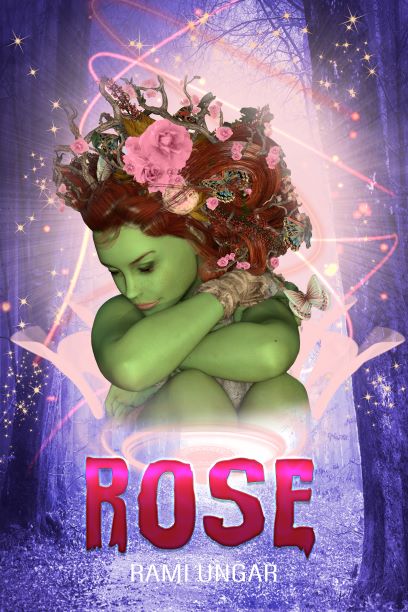
And while I still have your attention, I’m still looking for advanced readers for my novel, Rose. The book is a fantasy-horror story about a young woman who starts turning into a plant creature (and that’s just the start of her problems). In exchange for an early electronic copy, all I ask is you read it and consider posting a review on or after the release date. If you’re interested, send me an email at ramiungar@ramiungarthewriter.com.

Pet Semetary is considered one of His Royal Scariness Stephen King’s most terrifying novels, and one King has said he’d take back if he could due to the subject matter of child death in the book. Both it and its 1989 movie adaptation are classics, so people were both intrigued and a little wary when it was announced that the movie would be getting a remake. Then we got trailers that intrigued us and then made our heads scratch. I don’t need to state spoilers here that the little girl dies instead of the little boy this time, right? Well, too bad. But King was okay with the change, so we had to wait and wonder what the movie would be like when it came out.

Based on King’s novel, Pet Semetary revolves around the Creed family, who move into a house in the Maine countryside when father Louis Creed gets a job at a university clinic. He soon finds out that there’s a cemetery for animals on his property, and beyond it another burial ground that has to bring back anything buried in it, including his daughter’s cat. However, sometimes they come back very wrong. When the Creeds are affected by a terrible tragedy, Louis uses the burial ground to reverse the tragedy. But it only leads to an even bigger, more terrifying disaster.

Um…I wasn’t scared.

There’s plenty to like about this movie. It looks the part of a modern Stephen King movie, and they manage to bring the spirit of the novel, especially the feeling of a domino effect at work with the characters, into it. And for once, Jason Clarke, who plays Louis Creed, actually connects with me as an actor. Normally I don’t like him when I see him in something, but this time I really felt it. Every bit of grief, relief, or horror, resonated with my core. And most of the other principal cast members are great in their roles. Jete Laurence (who’s name, by the way, is a dance move in ballet, which I find fitting given her character’s love of ballet in the film) makes a sympathetic protagonist in particular, and later makes a welcome addition to the pantheon of evil kids out to get us.

However, there’s much about this film that left me feeling less than impressed. For one thing, many of the scares were jump scares. And as I’ve become fond of saying lately, jump scares are the cheapest form of terror in horror films. Once they’re done, the fear seeps out of you and you’re okay again. Even after one really effective jump scare, I was okay a minute later.

And then there’s the change from the original story: Ellie Creed, the elder Creed child, dies instead of toddler Gage, and ends up being the one resurrected. Hey, I’m cool with it. If there are no surprises, why bother remaking a film? But that’s the only real change that’s worthy of talking about. Afterwards, the film adheres rather closely to the novel, and even where it doesn’t, it’s pretty predictable. I would’ve preferred it if after this change, they decided to make more changes to the story and send it in different directions. I mean, if you’re going to have an older child, rather than a toddler, the source of terror, why not take advantage of that (especially since older children are much better at planning and being devious)? Go where we won’t expect it and give us the terror of not knowing what will happen next!

That look, like a raised eyebrow. It says my whole opinion of the film and the decisions made with it in one look.

I mean, I had to rewrite two-thirds of my novel to make it publishable, and I went in some different directions to make it work. The result was a much better and far more unpredictable thrill ride. So I know what I’m talking about.*

Finally, I felt Jon Lithgow as neighbor Jud Krendall was underused. The character in this film only existed for exposition. In the original novel and the 1989 film, his friendship with Louis feels real. Here, it’s forced in so the character can explain stuff (sans flashbacks too, by the way. I liked the use of those in the original film, why couldn’t they be in this film?). Between this film and Velvet Buzzsaw, I feel sorry for the guy. He’s been in bad roles in two films this year, and neither of them make great horror films.

Oh, one more thing: you can tell that cat is a puppet at certain points! It’s painfully obvious! Makes me miss Goose the Cat, who I couldn’t tell was a puppet at several points in Captain Marvel.

On a scale of 1 to 5, I’m giving 2019’s Pet Semetary a 2 out of 5. Perhaps it’s trying to keep the film under two hours and not alienate Stephen King purists, but in all honesty, I would’ve preferred another twenty minutes or more and some new directions for the story. As it is, the film is going to serve a reminder that not all the adaptations in the current Stephen King renaissance will be gems.

*Speaking of which, I’m still looking for advanced readers for my upcoming novel Rose. The story, a fantasy-horror novel, follows a young woman who starts turning into a plant creature (and that’s just the start of her problems). In exchange for an early electronic copy, all I ask is that you consider posting a review on or after the novel’s release date. If you or somebody you know is interested, just send me an email at ramiungar@ramiungarthewriter.com.

Hello, and welcome back to another interview. I’m so glad I’m able to spotlight so many different authors lately. Really livens things up a bit, and it’s a great way to connect with new friends and new readers. And today’s interview is with a new acquaintance whom I met through the Horror Writers Association. She’s a writer, editor, and she’s hear to talk about her work.

Please welcome KG Finfrock.

Rami Ungar: Welcome KG. Tell us about yourself and your novel House of Redemption.

KG Finfrock: I love to listen to people’s stories. I had a friend in high school who was a pathological liar and I didn’t care. I loved to hear the stories she would weave as truth. I love to get people to open up about what’s going in their lives and where they’ve gone. Being a homebody, I’m happy to live vicariously through their experiences and yes it’s true. Anything and everything you say to me may end up in a story.

House of Redemption is about eight strangers who come to Blackstone Resort, a large luxurious plantation house in the middle of nowhere. After a lovely evening of good food, drinks, and music, the guests discover they cannot leave the house. All the doors and windows are sealed shut. As they try to find an escape, they each meet the ghosts of the people they have harmed. There is no escape for the guests until they repent their evil ways.

RU: It sounds like an interesting idea. How did you come up with it and what was it like writing it?

KGF: One of my favorite films is Agatha Christie’s Ten Little Indians. I play the DVD repeatedly as my comfort background noise. I was attracted to the large house. The idea of the whole island to your self is heavenly and I realized, when I wrote Good Thoughts for Bubble Off-Plumb, I like the concept of people not being able to escape punishment for bringing harm to others.

There are eight characters in House of Redemption and I began by writing each person’s situation and how they ended up at Blackstone. I then realized one quarter of the book was all backstory and it was several pages in before the real story began. I had to cut it all out and, that was all right, as I had a firm grasp on who they and what kind of person they were. The story begins with the arrival of the guests, as it should. As a bonus, I included the characters stories at the end of the novel.

RU: You’ve also been involved as an editor for the collection Good Thoughts for Bubble Off-Plumb and put together The Daily Ten-Minute Writing Prompt (Volume I). How did those projects come about?

KGF: I believe being offered the position of editor for Bubble Off-Plumb was the result of good networking and being in the right place at the right time.  And I would like to add, it was a blast working with the other authors. Some stories in the anthology still stick with me. I also learned something about my own writing in my story contribution Good Thoughts. I realized I write about the bad guys getting their comeuppance which is probably why I enjoy House of Redemption so much.

I host a monthly writer’s group with small selected membership. The Daily Ten-Minute Prompt came about when I saw how much fun the members in my writer’s group had when I set the timer and gave them a sentence. They had ten minutes to write and in some part of their story, the sentence had to be in the story. I saw what fantastic stories could be written in only ten minutes. Even as a first draft, they were great. There were moments of hysterical laughter (because the story was funny) and moments of stunned surprise.  Since I had been posting a daily writing prompt on my blog for three years, I figured I might as well put them all together and publish them in a few books.

RU: What are you working on now?

KGF: I’m working on a sequel to House of Redemption, I have two more volumes of the ten-minute writing prompts, and I have a ghost story on the back burner which is more on the side of a cozy murder mystery that happens to include a ghost living with the main character.

RU: When it comes to writing, do you have a routine or a process?

KGF: I need a routine, and I keep trying to stick to a routine, but life events constantly interrupt and thus I have not been as productive as I should be. I’m hoping that will change when the youngest child in my family starts school full time later this year.  As far as process goes, I’m off to a good start as soon as I put fingers on the keyboard and I just go with the flow.

RU: Is there any kind of story you’re particularly drawn to, as a reader and a writer?

KGF: I like mythical monsters, beasts, and a bit of the paranormal.  I like reading about large houses and places I’ve never been.  I admire Fredrik Bachman’s style of writing where he brings the community together and is able to show the faces behind the masks.

House of Redemption by KG Finfrock.

RU: What advice would you give other writers, no matter the background or experience?

KGF: Put your butt in the chair and just start to write. It can be done if you make it a priority, a must do, but it won’t be accomplished without you actually writing.

RU: And finally, if you had to go to a desert island for a while and could only bring three books with you, which would you bring?

KGF: I would pick the three that are on my table waiting to be read. The Nightingale by Kristin Hannah (a book my sister gave me) Kill Creek by Scott Thomas (May’s book-club selection) and Parasite Life by Victoria Dalpe, a book I chose supporting women horror writers (and the synopsis caught my attention).

RU: You’re going to love Kill Creek. It’s my current favorite. Thanks for joining us, KG. I hope you join us again soon.

If you’d be interested in reading House of Redemption, you can get it from Amazon. And if you’d like to find out more about our guest today, you can find her on her very own WordPress blog, as well as on Twitter and Instagram.

If you would like to see some more of the conversations I’ve had with various authors, head over to my Interviews page. And if you yourself are an author with something coming out you’d like to promote, then send me an email at ramiungar@ramiungarthewriter.com with the subject line “Author Interview” and we’ll see if we can’t make some magic happen.

That’s all for now, my Followers of Fear. Until next time, pleasant nightmares!

Last week in my review of Us, I speculated Jordan Peele’s new horror movie was making a Friday the 13th reference through one of its characters. It’s been nearly a week since then, the film has made nearly six times its budget back at the box office since its release, and people are still finding reasons to talk about this film. So I thought I’d throw my hat into the ring and further explain my own theory about the film, or to be more specific my theory regarding one specific character.

That being said, I’m going to be going in-depth with this film, so if you haven’t seen Us yet, THIS IS YOUR SPOILER WARNING! STOP HERE IF YOU HAVEN’T SEEN THE FILM YET AD GO SEE IT BEFORE CONTINUING!!

Still here? Good. Let’s begin.

My theory is that the character of Jason Wilson, the son character in the film’s protagonist family, is one big, possibly unintended, reference to the Friday the 13th films and their main antagonist, Jason Voorhees. Let me explain:

1. The character’s name is Jason, and he wears a mask throughout the film. These are small details, but they’re what turned me onto this. Jason Wilson wears a Chewbacca mask throughout the film, something never really explained beyond a statement by his sister Zora that he’s socially awkward. In the Friday the 13th films, Jason is famous for wearing a mask, most notably the iconic hockey mask. Additionally, both Jasons have two-syllable surnames, with the first letters of each surname right next to each other in the English alphabet.

Both Jason Wilson and Jason Voorhees wear masks and are named Jason. Is that a coincidence?

Okay, but that’s just a tiny detail. Is there anything else to back it up? Why yes, of course.

2. Their lives are forever changed around water. This is another small detail, but it’s also important. Jason Voorhees “drowned” in Crystal Lake, and afterwards hunted and killed around that lake. It was a turning point in his life, so to speak. In Us, Jason Wilson first meets the Tethered version of his family at his family’s vacation home, which is right on a lake. Later, his family travels to the Santa Cruz beach, where Jason kills his Tethered and is kidnapped by his mother’s double. Both of these events have a profound effect on Jason, psychologically scarring him, and will probably affect his life growing up. Just like Jason Voorhees when he drowned and when his mother was killed.

3. He and his Tethered. Both Jason and his Tethered, Pluto, share aspects of Jason Voorhees’s appearance and personality. Pluto is physically scarred, which is why he wears his mask. Jason W. is socially awkward, which may play into why he wears his mask. In the Friday the 13th films, Jason Voorhees is said to have been born with a condition that deformed his face, and made his interactions with other children difficult to say the least. You can make a connection between his physical and social problems to Jason W’s social issues and Pluto’s physical appearance.

And speaking of Pluto…

4. Pluto’s name. Pluto is the Roman god of the Underworld, and is one of the few beings who can come and go from that realm at will. Pluto from Us comes from an Underworld of his own. And even before Jason V became a supernatural being who could resurrect himself every few years, his relationship to death was tenuous at best, having died or appeared to have died twice before Tommy Jarvis actually gave him what appeared to be a permanent death in the fourth Friday the 13th film.

Speaking of Tommy…

5. How the killer dies. In Friday the 13th Part IV, young Tommy Jarvis shaves his head to make himself appear like Jason V as a boy, allowing him to eventually strike a fatal blow to Jason V. In Us, Jason W uses his connection to Pluto to compel his doppelganger to walk into a burning car, killing him.

6. The mothers. This is the detail that really made me think I had something with this theory. Both Adelaide Wilson and her Tethered Red are especially close with their sons, as we see through their interactions with them. This connection is so deep that, after Pluto is killed, Red takes Jason W into her underworld instead of killing him in revenge. It’s as if she couldn’t bear to lose her son and would accept his above-world counterpart rather than lose him entirely. Adelaide then follows Red into the tunnels to fight her, kill her, and take back her son, who is scarred forever from this event.

In addition, both women are not what they seem. “Adelaide” is revealed to have originally been a Tethered, and “Red” was from the surface world, motivated by revenge to destroy the above world she was taken from. When we first meet Pamela Voorhees in the original Friday the 13th film, we believe she’s an eleventh-hour Samaritan to the surviving counselor, only to be revealed as a crazed killer seeking revenge for her son–her world–who was taken from her.

At the end of Us, Jason W seems to know his mother is a Tethered, and his reactions seem to indicate he’s going to be watching her from now on, even though he loves her. And in the second Friday the 13th film, Jason V is revealed to be alive, having become an adult and starting his own reign of murder and terror. Which begs the question, if he was alive all these years, why didn’t he find his mother? Why didn’t he let her know he was alive? Perhaps did he know his mother was unhinged and decided to stay away from her because he couldn’t trust her?

Tell me Mr. Peele, did I stumble onto something?


Ultimately, this may just be me looking too deeply into one aspect of a film and drawing an entire theory from it. I’ve been known to do that before.* And I may be shouting into the wind with this blog post. But even if I’m totally off-base and making connections that weren’t meant to be there, it’s amazing how much is there to back up my crazy theory. And there’s a theory that the anime movie My Neighbor Totoro is a secret retelling of a murder-suicide in the 1960s. It got popular enough that Studio Ghibli came out and denied the theory.** Perhaps I can get enough people to believe in this theory to get a response from Jordan Peele. Anything’s possible.

But what do you think? Think I’m onto something? Am I crazy? Did I miss something that supports or tears down my theory? Let’s discuss.

And while you’re here, I’m still looking for advanced readers for my novel Rose. It’s the story of a young woman who starts turning into a plant creature (and that’s just the start of her problems). If you would like to get an advanced electronic copy, please send me an email at ramiungar@ramiungarthewriter.com. All I ask is that you consider posting a review with your thoughts on or after the release date. Thanks, and I look forward to hearing from you.

*I kid you not, I once saw a ballet based on the Oz books, and came up with a whole time travel theory based on its ending scene. My mother said I was crazy. I say it’s the only way outside of a dream sequence the ballet makes sense, and this ballet didn’t treat Oz as a dreamland.

**No kidding, that’s a thing. Here’s an article that looks into the theory. And Studio Ghibli did have to come out and say it’s bogus. Which is only slightly weirder than the theory about Spirited Away that Ghibli did confirm was legit. The more you know.

I wasn’t able to catch Get Out when it was in theaters, and by the time I watched it on DVD, so much time had passed I didn’t feel like writing a post with my thought. To sum up said thoughts, I thought it was a creepy, atmospheric film that openly explored racial attitudes among Americans, though I felt the main character was less a fully realized character and more of a vehicle for the audience to experience the movie through. So when I heard about Us, I was very intrigued. And then I saw that first trailer. And I knew I had to see what Jordan Peele had cooked up this time. Today, my sister and I went for an early showing, eager to see what people were talking about.

To say the least, the film was surreal. Like Peele was channeling Stephen King when he was writing The Dark Half and created a visual twist on the concept. And it works for the most part.

Us follows Adelaide, played by Lupita Nyong’o, a mother and former ballerina who goes up with her husband Gabe, daughter Zora and son Jason to a vacation home that Adelaide stayed at as a kid in 1986, when she experienced a traumatic episode. That night though, they’re attacked by the Tethered, twisted, animalistic doppelgangers of themselves that seek to murder Adelaide and her family. Thus begins a trial for the family to not only survive, but to find out why this is happening to them.

From the get-go, this is a strange and eerie film. It combines storytelling with atmosphere, music (seriously, the part music plays in this film cannot be underestimated), and action in order to create an intense experience. At some points we were so on edge, a woman sneezing a couple rows behind us caused twenty people to jump out of their seats! And that includes me and my sister.

And the amount of symbolism in this film can’t be understated. A lot of details go into this film that are meant to make you examine the imagery and ideas being presented. From actual twins, symmetry and patterns in objects and pictures, the Bible phrase Jeremiah 11:11, rabbits,* and so much more. All to get you thinking on these themes of identity, duality, being an American, socioeconomics, creative expression, and so much more. I won’t go into what it all means–I’m sure there are bloggers and YouTubers who will do a better job of that than I could–but it will leave you thinking for hours after you leave the theater.

I will take a moment just to say that I think the son character is one big reference to the Friday the 13th franchise. This is mainly because his name is Jason and he wears a mask throughout a good portion of the film for some reason, but there’s plenty in the film I could point to that backs that assertion up. I won’t because I don’t want to spoil anything.

If there’s one thing I didn’t care for, it was the humor in film. Not that it was terrible, but after the main plot of the film kicks into gear, I found how much of it there was, most of it coming from family patriarch Gabe (played with plenty of love by Nyong’o’s Black Panther costar Winston Duke) distracting. Like, there’s this one scene where the family is discussing what to do in light of what they’ve experienced, and they make a series of Home Alone jokes! Takes you right out of the tense, creepy mood.

Then again, this is from Jordan Peele, who’s still primarily known as a comedian. Humor should be expected. But at a certain point, I just would like it if was toned down a bit. That may just be my quirk, but it’s how I feel.

All in all though, Us is a true success for Peele. On a scale of 1 to 5, I’m giving it a 4.6.  Unsettling, trippy, and memorable, Us will stay with you for hours after you see it. I have no doubt that with time, it’ll be seen as one of the best horror films of 2019, and maybe the first great one of 2019 as well. Take a breath, jump in, and see the madness yourself.


And while I still have your attention, I’m still looking for eARC readers for my novel Rose, about a young woman who starts turning into a plant creature (and that’s just the start of her problems). If you would like to get an advanced copy, all you have to do is send me an email at ramiungar@ramiungarthewriter.com. I only ask that you consider leaving a review on or after the release date. Thanks, and I look forward to hearing from you!

*Fun fact: rabbits are capable of a much wider range of beneficial mutations when they reproduce that cousins or even siblings can mate with each other and still produce a healthy and genetically diverse brood. Take that how you will, but I have thoughts on how that plays into the film.

If you’ve been on the Internet lately, you’ve probably heard of Momo and seen the photo associated with her/it. For those who haven’t, Momo is an Internet urban legend that, like Slender Man before her, has gained a sort of life on and off the Internet. Supposedly, she’s a woman or entity you contact or she contacts you online and threatens you and taunts you, predicting your death and encouraging you to do increasingly dangerous tasks and dares, including committing suicide (this latter part is known as the Momo Challenge). Most photos that pop up when you search her are of a woman with bug eyes, long stringy hair and a beaklike mouth. This is actually a 2016 statue from a Japanese artist named Keisuke Aisawa depicting an ubume, or the spirit of a woman who died in childbirth.

Over the past several months, normal people and YouTube personalities have said to have found Momo’s contact information for apps like WhatsApp and posted videos/screenshots of their conversations (not sure if those are faked, though they are creepy). Parents have also reported their children coming across videos of/about Momo on YouTube and YouTube Kids, traumatizing them and causing YouTube a lot of trouble (this is what happens when you have imperfect algorithms and AI that can’t actually examine video content for appropriateness or guideline violations). And rumors of deaths around the world supposedly caused by Momo (though no official police statements have definitively named Momo in any way to the case). This caused parent groups, celebrities, and Internet safety organizations to warn the public about Momo, saying she could pose a real threat to children and teens, and encouraging Internet safety.

Nowadays, any numbers/accounts associated with Momo are reported inactive and people are starting to realize this is just another Internet monster going around and getting a lot of attention. In other words, more hoax than horror (unless people are posing as Momo online, in which case I hope they can be traced and turned into the police). Still, parents and many others are concerned, and it’s not hard to see why.

So what made Momo so popular?

Well, a couple of factors. Like Slender Man before her, Momo is a modern, Internet incarnation of the boogeyman figures and demons that have haunted humanity’s dreams since the cave dwellings. She is an entity, a witch or demon who tempts or influences people, particularly vulnerable children, to harm. We’ve seen this before with Lilith and succubi, various demons across different cultures, and Krampus, among others. As time and technology have changed, so have our fears and the forms and ways our demons target us, the Internet being the newest way, both as a way to reach people and as a way to spread the word.

There’s also the photo of Momo, which as I said is a statue of Japanese artist Keisuke Aisawa’s conception of an ubume. However the photo itself got associated with the Momo character, it fulfills a lot of the same visual requirements to make it an effective creepypasta image. For one thing, it’s human-like, but distinctly inhuman. This matches up with the theory of the uncanny valley, which states that the further something moves away from being human, the less we are able to identify it as human. At a certain point between human and inhuman, images or objects will enter the “uncanny valley,” where we can’t identify it as human or inhuman and we react with anxiety. Momo’s exaggerated features put her squarely in that valley.

That, and she’s very meme-able. In the time she’s entered the public consciousness, Momo videos, images, artwork, and stories have popped up all over the Internet, ranging from the creepy to the funny. Hell, I even made some Momo imagery. Look.

Like it? It’s me using a filter on my phone. And it was easy to make. So imagine how easy it is for other people to take Momo’s iconic look and put their own spin on it. As I said, instantly meme-able.

But there’s one more reason why Momo’s become so popular, and in this way she’s out-paced Slender Man. You see, Slender Man is specified as an impersonal entity who mainly sticks to forests. Outside of the movie, he doesn’t really rely on the Internet to do what he does to people (though the Internet has been great for his career). Momo on the other hand, while her exact nature is up for debate, is much more human than Slender Man. Her picture has features, she uses the human tool of the Internet, and she attacks us in a personal, psychological way.

Even worse, she can be anyone, and we sense that on some level. We get that beyond the inhuman picture, there’s a human intelligence trying to traumatize and harm us. It could be the elementary school teacher, the kid delivering newspapers to the neighborhood, your local politician, your neighbor, the PTA mom, the college student looking for a thrill that doesn’t come from a needle. She’s the avatar of how you really can’t trust anyone on the Internet and can never really know what their intentions are with you. And isn’t being unable to trust your fellow humans the scariest thing of all?

Obviously, I condemn anyone using the Momo persona to cause harm to others. And I would remind everyone that Momo is a fictional character birthed on the Internet, and shouldn’t be taken seriously.

Momo has given me an idea for a story. I look forward to getting it written.

But all that being said, it’s no wonder she went viral like she did. She embodies several types of fears in one persona and image, horrifying and fascinating us all at once. It’s fascinated me to the point that I’ve been inspired to write a story. Not about Momo, but a character like her, one born on the Internet that becomes so viral it takes on a life of its own. I think Slender Man and Momo are only the first of a long line of these sort of entities, and I would like to give my own thoughts on the character type through the best medium at my disposal. I hope it turns out well.


And while I still have your attention, I’m still looking for eARC readers for my novel Rose. For those unaware, this is the story of a young woman who starts turning into a plant creature (and that’s just the start of her problems). If you would like to get an advanced electronic copy, send an email to ramiungar@ramiungarthewriter.com and I’ll put you on the list. All I ask is you consider posting a review on or after the release date. Thanks, and I look forward to hearing from you.

Good night, my Followers of Fear. Pleasant (possibly Momo-filled) nightmares.

So, if you’ve been following my blog for a while now, you know that my novel Rose, the story of a woman who is turning into a plant creature (and that’s just the start of her problems), is moving along in the publishing process. You probably also know that my publisher and I have been discussing business-related matters to make sure the book does well once it comes out.

In that spirit, I’m taking to the blogosphere to ask if anyone would like to be an eARC reader for Rose.

Now, if you’re unfamiliar with that term, eARC stands for “electronic Advanced Reader Copy.” Basically, eARC readers get electronic copies of a novel before it comes out so as to drum up some buzz. In a best case scenario, an eARC reader will get a book from an author, read it, and post a review online for all to see.

Right now, I’m building a list of eARC readers, and I was wondering if anyone here would be interested. You’d get to read Rose well before anyone else, and if you post a review afterwards, there’s a good chance you’ll be asked to be an eARC reader for the next book.*

If this sounds up your alley, shoot me an email at ramiungar@ramiungarthewriter.com with your first and last name (if you use a pseudonym online) and I’ll add your name to your list. The only criteria is that you can’t be my Facebook friend (I know, it sucks, but apparently Amazon and other websites are cracking down on people utilizing their friends and family to write fake reviews and up the rankings on their books, so using FB friends as eARC readers is falling out of fashion), and you really want to read the book. Posting a review on or after the release date isn’t required, but highly encouraged, and of course increases the likelihood you get asked to be an eARC reader again.

And if you don’t have time in your life to read the book or you’re just not into horror, that’s cool. I don’t really hold grudges or anything like that. I also won’t write you into my stories and leave you to suffer a gruesome death. I only do that to people who seriously piss me off.

I hope some of you will take me up on this offer, and send me an email. I’ll be keeping an eye out for them. And whether or not you do, I look forward to sharing Rose with you in the near future.

That’s all for now, my Followers of Fear. Hope you all have a relaxing weekend (especially after how rough this week has been. Anyone else catch a cold?). Until next time, pleasant nightmares!

*I’m assuming there will be a next book. Gotta be hopeful, am I right?

Well, I’m sick today, so I’m writing this a bit earlier than I normally might’ve. Either way, I would’ve written this post.

It was a year ago today, March 12th, 2018, that I signed the contract with my publisher, Castrum Press, to publish my novel Rose. I remember it being a Monday, and I’d received the contract on the preceding Friday after some back and forth with Castrum. I looked over the contract, signed it, scanned it in at my local library, and then emailed it to Castrum once I walked home. And then I broke out the celebratory beer. Or was it wine? Either way, I was drinking.

For those of you who don’t know, Rose is a novel I wrote as my senior thesis back in college. The story follows a young woman who turns into a plant creature (and that’s just the start of her problems). Since I first started writing the book back in 2014, the story has gone through numerous drafts and revisions. It’s still going through changes, if I’m honest. But I think every change has been for the better. And I feel every day we’re a bit closer to releasing the novel.

Speaking of which, I’ve been corresponding a bit with Castrum today. They were just as surprised that a year has gone by, but they also suspect the publication date is on the horizon, especially with six or so drafts done on the story. We also talked some business details relating to PR and whatnot, so you know we’re getting further along in the process. Given the way the conversation is going, it makes me optimistic.

And of course, when we do set a publication date, I will let you all know when that is, as well as any other pieces of news that comes down the pipeline. With any luck, I’ll have some good news soon.

That’s all for now, my Followers of Fear. I’m going to try to stay healthy and get some rest. With any luck, tomorrow I’ll be feeling a whole lot better. Until next time, pleasant nightmares.

Greta follows Chloe Grace Moretz as Frankie, a young woman living in New York who finds a handbag on the subway on the way home from work. She brings the bag to its owner, Greta Hadig (Isabelle Huppert), a French widow living alone. The two women strike up an unlikely friendship and find comfort in each other’s company. That is, until Frankie finds out Greta is hiding some terrible secrets, and her relationship with the older woman takes a very dark turn.

The best part of this film is its lead actresses. I’ve always loved Chloe Grace Moretz. She’s a great actress who truly embodies whatever role she inhabits, be it a vigilante or Carrie White in the better movie adaptation of Stephen King’s Carrie (don’t @ me, Sissy Spacek/Piper Laurie fans). Greta is no exception, with Moretz really coming across as this young woman who’s kind and a little vulnerable, but also at the same time has a bit of fight in her. And Isabelle Huppert’s Greta is plenty creepy. She’s no Annie Wilkes, but she can go from sweet and grandmotherly to cruel and sociopathic at the flip of a switch. it’s a great change.

And Maika Monroe from It Follows has a supporting role in the film! Good to see her again, I haven’t seen her in anything since that film (probably my fault more than hers). She’s great as the best friend who’s seems shallow on the surface but has a deeper, badass side to her.

However, the film isn’t exactly a thrilling psychological slow burn. We’ve seen this sort of story before, and that makes it predictable. By the last third or so, I could predict what was going to happen minutes before it occurred. And while there are some tense moments, they’re too few and far-between to create a gripping atmosphere. Couple that with an unnecessary and boring dream sequence, and the film’s quality really goes down.

On the whole, I’m giving Greta a 2.8 on a scale of 1 to 5. The talent is there, and God do they try to make it work, but an obvious plot and lack of actual terror make this a forgettable entry into the thriller genre. Which is a shame, as the director was the guy who gave us Interview with the Vampire in 1994 and as I said, Moretz is the superior Carrie in the superior adaptation. But hey, every now and then you strike out, am I right?

The other day, one of the YouTube channels I follow, Tale Foundry,* asked a question on their social media about the difference between an author’s writing style and voice. Since I saw it first on their Twitter, I answered their question there. It went something like this over the course of two tweets:

Writing style is the technical part of writing: the author’s word choice, how thoughts are written out, etc. Voice is that and more: what sort of stories the author likes to tell, their favorite characters, the elements they like to include to make the story exciting.

That was my answer at the time, but I wanted to make sure it was right and I wasn’t just pulling stuff out of my ass like most politicians. So I went to Google and took a look. To my surprise, I was pretty on the dot. According to that lovely resource none of my teachers or professors liked us using even when they used it themselves, Wikipedia, writing style “is the manner of expressing thought in language characteristic of an individual, period, school, or nation. Thus, style is a term that may refer, at one and the same time, to both conventions that go beyond the individual writer and to singular aspects of individual writing.” And according to TheBalanceCareers.com,** voice is “the author’s style, the quality that makes his or her writing unique, and which conveys the author’s attitude, personality, and character.”

For example, let’s look at HP Lovecraft’s writing style and voice, as they’re both so distinctive.*** His writing style is easy to pin down: an overly-wordy and stuffy Victorian patois filled with fancy words. Yeah, he liked to pretend he was a contemporary of Edgar Allen Poe. I think in his later works he tried to modernize his style, but he never got over using too many words and too many fancy ones.

As for his voice, that’s also easy to pin down: stories centering around terrors that give no care for mankind. Secrets and sights terrible enough to cause insanity. Entities so powerful they see humanity as nothing more than ants in the grand scheme of things. All with an unhealthy helping of xenophobia, racism, fear of women, fear of sex, fear of technology and progress, inability to grasp many sciences and maths, and an obsession with sophisticated upbringing and breeding.

Yeah, dude had his issues, and this was before getting help for your problems was effective and smiled upon by society. On the plus side, it had a lasting influence on the horror genre that’s still felt today. And the combination of the two makes it easy to point out an HP Lovecraft story when you come across one, even if his name is obscured.

As for my own style and voice, they’re still evolving. But I’ve noticed a few things for each. I prefer to write my characters blunt with their feelings, possibly because I have enough trouble understanding real humans and their confusing mix of emotions. And I love writing stories with unlikely heroines or nice-guy heroes, usually but not always in the their teens, supernatural enemies and horrors, plenty of either realistic or twisted love and romance, and more than a dash of weird to make it fun.

I think there are people out there who like that sort of thing. Not all of them are close relatives. I hope.

Writing style and voice are both very important aspects of writing, both for the writer using them and for the audience reading their work. It’s how we come to know the storytellers, how we identify them just from looking at a page, and it’s what allows them to stay relevant and immersive long after they’ve stopped typing on keyboards or holding pens.

That’s all for now, my Followers of Fear. I’ll have a review out this weekend, so if nothing else comes up in the meantime, I’ll see you then. Until then, pleasant nightmares!

Have you noticed anything about your writing style or voice? What about your favorite authors?

*Which you should check out if you’re interested in stories and looking past the surface to the mechanics and deeper meaning of storytelling, by the way. Here’s the link to their YouTube channel.

**They also mention voice can refer to a character or narrator’s voice. But since I think Tale Foundry was referring to the author’s voice, I’ll stick with that one.

***Speaking of which, yesterday was the 91st anniversary of the publication of The Call of Cthulhu, the first appearance of the titular character and the namesake of the Mythos. Happy Birthday, Cthulhu. May you someday rise out of the sea to irrevocably change the world (preferably before the 2020 election becomes super depressing/annoying).