Archive for the ‘Reflections’ Category

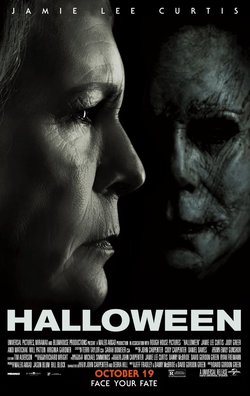
Halloween (2018) poster

This past weekend, the new Halloween movie was released and eager horror fans, including myself, flocked to theaters to see it (see my review of the film here). At the time I’m writing this, the film has made over 103 million bucks, nearly seven times it’s original budget. This definitely counts as a financial success for the film and its producers, and it’s all but certain at this point that a sequel will be greenlit. This has many horror fans speculating on a particular question: is the slasher genre coming back, bigger and badder than ever?

Now in case you stumbled on this post by accident and have no idea what a slasher is, let me explain: slasher, also occasionally known as splatterpunk, is a sub-genre of horror that focuses on violent deaths and gore, as well as the prospect of those occurring, as the source of its terror and tension. Slashers were really big in the 1980s, but declined as the many sequels kept going for more ridiculous kills and even more ridiculous plots. There were some brief flare-ups of good slashers in the late 90s and early 2000s, with films like Scream, Urban Legend and Wes Craven’s New Nightmare and remakes of franchises like 2003’s Texas Chainsaw Massacre and Rob Zombie’s Halloween, but for the most part it didn’t stick. Recently, slashers have done well in television format with shows like Slasher and Scream (yes, based on the film I mentioned a sentence ago), but Halloween‘s the first in years that’s managed to satisfy this many fans, critics, and bank accounts.

Hollywood can be a very reactive sort of place: anything that’s proven to be even slightly successful will be copied over and over again by movie studios until long after audiences have lost interest. So with Halloween doing so well and sequels definitely being discussed in boardrooms, can we expect more slasher reboots and remakes on the horizon? Which ones? And is this the first of a slasher renaissance similar to their first wave of popularity in the 1980s?

Well, there are actually a few slasher movies being developed right now based on the older franchises. Child’s Play, which first introduced the character of living doll Chucky, is getting both a reboot and a TV series, and A Nightmare on Elm Street has had a new remake in development for a while now. But with the success of Halloween, there’s a chance the studios producing them will give them more attention and funding than they might’ve had without Halloween.

Please bring back Friday the 13th! Jason and I both want to see a comeback for the franchise!

And I don’t think it’s too far-fetched to say other series will be getting new films. There has been talk for years of rebooting Friday the 13th with my boy Jason Voorhees. Recently a court case regarding the original film was resolved, and basketball player-turned-actor and producer Lebron James, who is as big of a fan of the franchise as I am, has come forward saying he would like to help produce the film. And while Lebron’s still new to Hollywood, I would welcome his involvement in a new Friday the 13th film. Sometimes it takes the perspective of a fan, especially one who has more power than expressing outrage through a keyboard, to truly give a character or franchise new life.*

And after the crappy 2009 remake, almost anything would be welcome. Seriously, what was with that film? It felt like the filmmakers were making porn, then making a raunchy comedy, and then remembered to put Jason in it! By the time the final third rolled around, I was bored! I’m seriously considering destroying a copy of the film on DVD when its tenth anniversary rolls around, it’s that bad!

But not just Friday the 13th: there’s room for other franchises to get new films. I think a Hellraiser reboot would be great, as the series has devolved into cheap, direct-to-DVD sequels. A proper remake would give the series’ concept the fresh rebirth it needs. Of course, I’d love to see some new Freddy Kreuger, as there’s still so much to do with that character. And I think given our current social/political climate, a director like Jordan Peele could do something great with the character of Candyman.

But there should also be original works, not just remakes and reboots. As you’re reading this, there are plenty of filmmakers out there with fresh ideas for the slasher genre that should be given a chance. Perhaps with the success of Halloween, studios will be willing to give them a chance. Heck, maybe Jason Blum and Blumhouse, one of the companies that produced Halloween, can use this to recruit some female directors to develop some new projects.**

Perhaps we can see all these dudes, and then some, get new films.

And as for if this is the beginning of a slasher renaissance, we’ll just have to wait and see. One film doesn’t indicate a genre’s comeback. Sometimes several films don’t mean a particular genre or sub-genre is going to be the next big thing (*cough* YA dystopia and fantasy films *cough*). It’ll take several successful films, both originals as well as remakes and reboots, before we can really say if the slasher genre is back with a vengeance.

Still, I’m hopeful. I didn’t think until the trailer that anyone could bring Halloween back. Perhaps with the right writers and directors, we could see the return of the genre. We’ll just have to wait and see.

Until then though, we’ll just have to content ourselves with Halloween, the old classics, and this awesome little video (sorry, couldn’t help but post it. Enjoy).

*And if you do end up producing a new Friday the 13th film Mr. James, can I help? I love Jason too, and I’d love to see him given a film worthy of his franchise. Perhaps I can help write the script? I have ideas.

**Sorry Mr. Blum. I love your work, and I even sent a resume to your company after I graduated, but you really put your foot in your mouth with that “lack of female directors” comment. I mean really? One article found 30 female directors who can do horror! Perhaps Halloween‘s success means a chance to start fixing that fiasco and bringing them on board.
You ever find yourself doing something casually, thinking it’d be a fun hobby or just a way to pass a couple of hours, and then it ends up becoming something much bigger than you could ever have imagined? That’s happened to me a number of times. Reading Harry Potter as a child and then reading Stephen King’s It as a tween led me to become a writer and a horror writer, respectively, when I’d only been looking for something new and fun to read. Likewise, reading books about the Holocaust while traveling through Israel during the summer before senior year of high school led me to want to study the Holocaust along with creative writing in college.

And just recently, a story I started writing in-between drafts of Rose back in spring has quite possibly become my next novel. And I have no fucking clue how that happened.

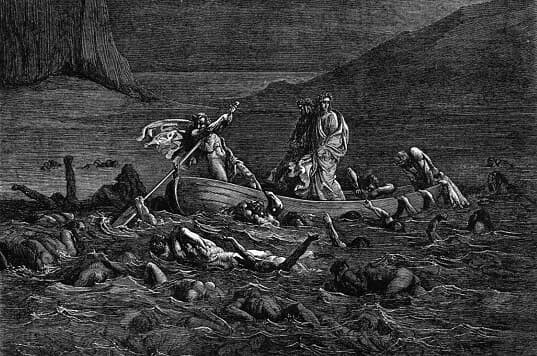
Let me explain. Back in late winter/early spring, right after I’d finished another draft of Rose, I started a story I’d been wanting to work on for a while, both to pass the time and to experiment with writing by the seat of my pants. I didn’t think it would be a very long story, maybe twenty-thousand or thirty-thousand at most (so a novelette or novella), so I thought it would be a good side project. I named this story River of Wrath, as it deals with a certain aspect of Dante’s Inferno, and I went at it.

The writing by the seat of my pants didn’t work out so well, and I only got about nine-thousand words or so in before I had to do another draft of Rose (still impressive, but I felt like I could do better). I got that draft of Rose done, and then sent it to the imprint that would become my publisher. I worked on other stories while I tried to figure out how best to edit River of Wrath. After I sent the latest draft of Rose back to Castrum and did a few other stories, I decided to write an outline for River, and then go off that.

Whoo-boy, did that work! Writing the story went a lot faster, especially after I went through the initial thirty pages or so and tried to clean them up a bit. I was enjoying the story, and I found it challenging in a fun way, which is usually a good sign.

And then I got past ten thousand words.

And then fifteen thousand.

And then twenty thousand.

Thirty thousand arrived before I knew it.

I reached thirty-five thousand around Sunday.

And last night, I reached forty-six thousand. Yeah, I wrote around eleven thousand words over three days. I’m not sure how I did that either. On the bright side, I think I can do it again and write stories a lot faster now.

But back to point. Defining novels by word count varies from person to person. Mine is usually around sixty thousand (for clarity, the first Harry Potter is seventy-seven thousand words, give or take a few), but many people and quite a few publishers consider forty-thousand words or higher a novel. As I said, this novel’s upwards of forty-six thousand, so some would definitely consider it a novel. And I have a feeling River’s going to be at least fifty-thousand or higher by the time I’m done.

Like I said, I did not intend for this story to get so long. I thought it would top out at twenty-thousand. At the outside, it might reach thirty-thousand, too long for a magazine but perhaps good for a future short story collection. I never thought it would get this long! But parts of the story I thought would be short as heck became entire pages, complete with dialogue and inner thoughts and a couple of crazy scenes for people have to fight for their lives! And I felt that if I was going to do this story justice, I’d just have to go with the flow and write till I finished it.

So yeah, I’ve got another novel in the works, one called River of Wrath, and one I didn’t even know I was writing until it got as long as it did. And if I’m lucky, I’ll finish it by Halloween (which, coincidentally, is also when this story takes place). And afterwards? I plan to hand it off to some beta readers and do some edits, of course. And hey, if Rose sells well and Castrum wants to continue working with me afterwards, maybe they’ll take on River of Wrath and publish that as well.

But I’ll cross those bridges when I get to them. First thing’s first, I’m going to finish River. And when I do, I’ll celebrate with a drink and let you all know about it (whether or not you want to know or not).

That’s all for now, my Followers of Fear. I’m going to get ready for bed and think of more scary stories to write. Expect a review of the new Halloween movie at some point this weekend. Until then, pleasant nightmares!

One of the YouTube channels I follow is Tale Foundry, a channel that breaks down how different genres and mechanics of storytelling work and then uses the lessons gleaned to write original short stories. They present themselves as robots in a foundry that works with fiction rather than metal (hence the name Tale Foundry). Their latest series of videos has been around worldbuilding in fiction, and their latest video, which I’ve embedded below, really got me thinking.

Now, if you didn’t watch the video for whatever reason, let me just quickly talk about one of the methods of worldbuilding they discussed: found design, which to put very simply is when you modify an aspect of the world in order to accommodate or address an issue (or “emergent concern,” as they call it in the video) that’s come up in the course of telling the story. An example would be if while writing your novel about a war between werewolves and humans who hunt them, your beta reader says that the conflict has been done before and that something needs to be added to make the story more interesting (other than a forbidden romance). The something required to spice up the story is the issue or emergent concern, and the integration of whatever you decide to add to the story (a threat to both armies, an original twist to lycanthropy, etc) is the act of found design worldbuilding.

Yeah, it’s a lot to absorb, but whoever said fiction writing was simple?

Anyway, this last method got me thinking, because that’s the method a lot of horror writers use while writing their own stories. As we all know, horror stories are more often than not set in our world, but with modifications to allow for the fantastical things that show up in it. Modifications to allow for something new to be added to the story and its world…sound familiar?

I call this the “build upon” worldbuilding method (if there’s an official name in academic circles, someone please let me know). You take an already-established world, one that many people would already be very familiar with, and add your own twists or details to it so you can tell the story you wish to tell. This is a method used by fanfic writers, anyone dealing with Arthurian lore, and of course, horror writers.

A good example of how this method works is with my own short story, “Car Chasers” (being released in late 2018/early 2019 in The Binge-Watching Cure II anthology from Claren Books). This story is set in a world similar to ours, except ghosts are capable of participating in illegal street races in this story. When I wanted to write that story, I had to not just modify the world so that it was capable of having ghosts (though if you ask me, our world has always had ghosts in it), but I had to add rules to these ghosts, how they interacted with the races/racers and under what conditions they participated in these races. Will all this be evident when the story is finally released? You’ll have to read it to find out, but whether or not it is evident, all that work in designing this world was necessary for it to be written, let alone accepted anywhere for publication.

So as you can see, it’s a handy method to build a world for your story. And if you’re into creating a shared universe across your stories, like Stephen King, HP Lovecraft, or I do, it’s pretty helpful in making that possible. All you need to do is make a slight tweak and you can find ways to connect your various stories together into a fantastic and varied world.

Of course, this isn’t the only method for building a world in horror. But this is the one that I use the most in my stories, and which I’m sure plenty of other horror authors use when they make their stories and their worlds. And it’s not hard to see why: it’s a wonderfully flexible tool for any storyteller, and helps in the act of storytelling every day.

Thanks to Tale Foundry for giving me the idea to write this post, and as always, I’m looking forward to your next video. And I encourage you folks to check out their stuff. From Lovecraft and Junji Ito to Celtic mythology and satire, you’ll find plenty of videos exploring the various aspects of storytelling and how they can be applied.

That’s all for now. I’m off to work a little bit on that novella again. In the meantime, what are your thoughts on worldbuilding in your genre? Any methods that you find helpful? Let’s discuss.

Until next time, pleasant nightmares!

IT’S OCTOBER!!!!! The best month of the year, when things start getting cooler, the nights grow long and you get a little more leeway in how spooky you can be! Or in my case, reveal a bit more of my non-human side. And on this month, my powers of darkness grow by a hundredfold! You can bet I will be raining terror upon certain heads this month. Just you wait and see!

In the meantime, I thought I’d talk to you about something that happened to me yesterday. I was at my mother’s house for a party, and as often happens when family and family friends get together, everybody wants to know what the latest news is with Rose and the anthologies I have stories being published in. Rose, for those of you who don’t know, is a novel I wrote in college as my thesis, and which is being published by Castrum Press, a publishing company based out of Belfast, North Ireland. The story follows a young woman who finds herself being turned into a plant creature (and that’s just the start of her problems!).

I told them that I’d heard from Castrum on Saturday, and that they were hopefully going to get back to me on the latest draft of Rose some time this month. I expressed hope that when I heard back from them, they’d say I just needed to do some touch-ups here and there, and then we can set a publication date. My mom, who had been one of the most ecstatic and amazed people when I’d told her about Rose back in March (I still remember how she said “Oh my God” two or three times as clear as a whistle), remarked, “Wow, I had no idea the publishing process could take so long.”

And that’s the thing: the publishing process can take a long time. For any book. Not many people realize that, even among writers (including me at one point), but it’s the truth. Nowadays, technology and the Internet have helped speed some things along, but it’s always taken a long time for books to get out. Heck, even Stephen King had to wait a while for his books to come out early in his career. Yeah, now he can put one or two out every year, but that’s after nearly forty years of proven success. When he was still basically an unknown, Carrie took over a year before it got on bookshelves. And while I hope it doesn’t take that long with me, it may be a while longer before anyone gets to read Rose.

I’m not saying this to trash any publishing houses or complain about the publishing process. I’m just stating a fact. And if you think about it, this pace makes sense. After all, most publishing houses involve a few people handling projects from multiple authors. Any one project takes a lot of time out of the day, and while it would be nice if there was a single editor for each and every author contracted to a publishing house, I don’t even think even big publishing houses have a staff like that. So obviously each publisher has to juggle their projects, devoting time here and there to each one, deciding the order based on all sorts of factors. It’s an involved process.

But it’s also a process I’m grateful for, because it’s not just the number of books being published, but what’s being done to get them ready for being published. Each one is being polished and cleaned up, formatted and given the best cover art, strategized over and discussed ad nauseum. All to make sure that when the book finally does come out, it’s not just a great story, but one that’s free of typos and with words not falling off the page or some other unforgivable goof. I’m glad the process is slow, because I’d hate it if the process went by super-fast and when Rose did come out, it was full of errors and had terrible art. And I’m sure you would too.

So while it may take some more time before Rose comes out, I know the book is in good hands and I’m looking forward to the state it’ll be when it’s ready to be released. And I know that you’ll love it too.

In the meantime, I’ve got plenty of stuff to write and blog about (I might even have a new blog post tomorrow, depending on a couple of factors). And I can’t wait to share them with you. So until then, you all have a goodnight and pleasant nightmares, my Followers of Fear. I’m off to celebrate the month. After all, it is October. Plenty of material to review, plenty of stories to write, plenty of people to terrify senseless. I can’t wait.

There’s a reason why one of the first lessons in the art/business of fiction writing is to read, read, read. Long or short, in or out of your preferred genre, good or terrible. Reading the works of others, even if the story is not to your taste, can give you new ideas, show you what to avoid in your own stories (*cough* the orgy scene in It *cough*), and sometimes how to write something you didn’t know how to write before.

Let me tell you a story right now: as many of you know, I’ve become a big ballet fan since last year. Consequently, a lot of ballerinas and dancers have been showing up in my story ideas lately. It wouldn’t be too crazy if I had to write a dance scene or dancing someday in the future. I figured it would be a good idea to find other stories where dance features prominently, in the hope that from reading about dance there, I might pick something up. I asked one of my writers groups on Facebook if they had any suggestions, and one woman recommended a book to me that sounded good, so I downloaded the audio book onto my phone and started listening this week.

The book, Girl Through Glass by Sari Wilson, follows a young ballerina’s trip into the world of professional dance, while at the same time she encounters a particular aspect of that world’s dark side that changes things for her forever. It’s not horror, but it’s decent so far. And I have gleaned a bit about describing dance steps in prose, while at the same time learning a bit more about ballet culture (I had no idea ballerinas were called “bunheads.” Seems obvious now, but I didn’t know it until this week). And while I expected those, one thing I didn’t expect to find is a lesson in a type of character:

The story’s protagonist, Mira, seems on the outside to have it all. Her family doesn’t abuse her, she’s talented at ballet and has an upward-moving career. She even has a sort of mentor/sponsor in the form of Maurice, an older balletomane. She also seems to be mentally and emotionally all there. However, ballet and Maurice are really an escape for her. Her parents divorced rather suddenly; her airhead mother is a mess who can’t pay bills and takes in a creepy boarder; her dad is in a relationship with another woman who’s also in a divorce, and it’s moving a little too fast; and all this occurs after seeing her parents’ marriage erode for who knows how long. All that can really mess a kid up.

I’m sure even more will mess her up as the story goes on.

Mira’s a type of character I don’t see very often: one whom no one, not even themselves, would see as troubled, but is deeply troubled nonetheless. She’s a perfect example of this character type, the “seemingly untroubled troubled person.” I don’t know if there’s a proper name for this type of character like there is for others, but that’s the one I’m going to go with. And she’s teaching me quite a bit about writing this sort of character.

So like I said, reading a diverse amount of work can teach you all sorts of things that you can apply to your own writing. Sometimes you even learn things you weren’t expecting to learn, like how to write a certain type of character, or writing about a complex war in another world, or even just some random facts about Spanish history, religion, evolution, art, and technology (looking at you, Dan Brown). Sure, you might find some stories you’ll hate or that will teach you absolutely nothing, but then there’s a lesson to derive from those stories as well: what not to do when you’re writing your own work. I’m certainly learning a lot from Girl Through Glass and the other stories I’ve been reading lately. And I can’t wait to learn more.

Have you ever gotten an unexpected lesson from a story you read/are reading? What was it?

It’s been a rough day. Let’s talk the intricacies and difficulties of writing fiction!

I often like to talk like a know-it-all on this blog, but let’s face it, there’s still things I could be better at. Or that I think I could be better at. One of those things is themes. Most stories have them: Harry Potter has destiny vs. fate, prejudice, and our relationship with death; The Shawshank Redemption is about finding hope in a hopeless place, learning to survive and even find ways to thrive in harsh conditions, and, of course, redemption; and The Very Hungry Caterpillar is about how the inevitability of change crafted by thousands of years of evolution and the incessant need to feed to support the process.

Okay, that last one is a huge stretch, but you get the idea. Plenty of stories have deeper meanings and commentaries wrapped into them, like several candle wicks wrapped together to form a new and beautiful candle. Some of these stories are written with the theme in mind, while others arise during the writing of the story. And depending on the kind of story, it can seem odd if a story does or doesn’t have a theme (I wouldn’t expect one from any variation of The Three Little Pigs, but I would expect plenty of thematic elements in an Anne Rice novel).

But how well you carry the theme can vary sometimes. It’s like carrying a tune: sometimes you’re able to do it well, sometimes it varies depending on the tune, and some people, like me, can’t carry a tune that well at all (though that never stops me when there’s a karaoke party going on). With some of the stories I’ve been working on lately, I’ve been trying to figure out how well I carry the themes written into them. And after a lot of thought, I’ve come to the realization that authors are probably not the best people to judge their own work.

Which is probably why we have beta readers and editors, now that I think about it.

With Rose, there’s a big theme of toxic masculinity, especially in the latest draft, that becomes more and more apparent as the story goes on. That theme kind of arose on its own while I wrote and edited and re-edited the story, and I like to think I carry it very well in the book,* though at times I wonder if I’m being a little too obvious with it. Meanwhile, in this novella I’m working on now, there’s a pretty obvious theme about the perils of racism. I’m not too sure how I’m carrying it, if maybe the angle I’m going for or just the way I carry it is the problem.

Then again, some really good stories do go about exploring racism without being subtle at all. Heck, sometimes that’s the point. A Raisin in the Sun makes no attempt to hide what it’s about. And the novel The Help by Kathryn Stockett has been criticized about how it portrays and explores race relations (as well as who’s writing it), but it still gets its point across very well. Maybe I’m doing something right after all.

Despite my own uncertainties about how well I carry themes, I still write and try to carry them as best I can. What else am I supposed to do? I’m not going to give up writing anytime soon just because I’m unsure of how well an idea or a deeper meaning in one of my stories is presented. Hell, I should keep writing, because that’s how I’m going to get better at carrying them. And if I make a few mistakes along the way, I’ll just pick myself up and try again, either by editing the story or trying to write a new one. It beats beating myself up over it, right?

Besides, I may be my own worst judge. What I see as clumsy carrying, others might see as pretty damn good. And that’s reason enough for me to continue writing in the first place.

*Which I hope to have more news on soon. Thank you, as always, for your continued patience as my publisher Castrum Press and I make sure that Rose is up to snuff before publishing.

Oh my God, it’s finally Day 10! We’re at the end! Whoop whoop!

So if you’re tired of me posting every day (sometimes twice daily), don’t worry, I’m planning on going back to my one-or-twice-a-week schedule after this. It’s too much of a hassle to keep posting day after day after day like this. It was still fun to share my favorite books with you, but still. a lot of work.

Anyway, here’s the rules for the Ten Day Book Challenge, brought to you by my cousin Matthew (who is probably glad this thing he started is coming to an end):

  • Thank whoever nominated you with big, bold print. If they have a blog, link to the post where you got tagged there.
  • Explain the rules.
  • Post the cover of a book that was influential on you or that you love dearly.
  • Explain why (because I don’t see the point of just posting a picture of a book cover without an explanation. That goes for Facebook as well as blogs).
  • Tag someone else to do the challenge, and let them know they’ve been tagged.

So for the last day of the Ten Day Book Challenge, I picked a book I read quite recently. Actually, I finished reading it on Day Four, on the ride back from the chiropractor’s. The book is the Future Days Anthology from my publisher Castrum Press:

There are several reasons why I wanted to highlight the Future Days Anthology. Obviously, it’s from my publisher, so I wanted to highlight it and support them, even if I’m not in this anthology (maybe I’ll be in a later one). Besides, supporting small presses and their authors allows for decent competition in the publishing industry and allows the authors to feel their hard work has paid off, which is never a bad thing.

Another reason why I wanted to highlight Future Days is because it’s fairly recent: it was only published August 15th this year, so it’s barely been out a month. The first couple of months a book is out is very important, so I’m happy to spread the word.

But the most important reason is because, let’s face it, this is some damn good sci-fi!

As I mentioned in my most recent interview with Matthew Williams (who is also in this anthology) I’ve always been of the opinion that good science-fiction should show us a reflection of humanity’s current state, as well as what humanity could do in the future. The Future Days anthology does this quite well, in my opinion. First, it takes a lot of issues that we’re currently dealing with as a species today–overpopulation, the disparity between the wealthy and the poor, and corporate power over common people’s lives–and explores how those issues might shape our lives in the generations to come.

As for where we’re going as a species,* that’s given a lot of exploration too. Space exploration to be exact: many stories deal with the challenges humans might encounter once interplanetary travel and off-world colonization becomes possible. Who will pilot and care for the ships during the long travels between worlds? What will be the physical and psychological effects of such travel? Are there ways to get between planets faster?

The value of human life also gets plenty of examination: what happens when, in an increasingly technological age, we’re no longer able to hold jobs now occupied by machines? How much sway do the powerful have over the lives of the weak?

I could go on, but then why spoil the fun? If you’re looking for some decent hard science fiction, look no further than the Future Days Anthology. With several great stories from a variety of excellent sci-fi authors, you’ll be transported when you read it. Don’t believe me? Go to Amazon now and check out some of the reviews (including the one I left). And if you’re still not convinced, just read the book. Believe me, it’s worth it.

And before I forget, I have to nominate someone. Adan Ramie, you’re tagged! I look forward to seeing what you put out.

That’s all for now, my Followers of Fear. With September here, Halloween is approaching, as is just about everything else awesome about this season. And I’m going to revel in every aspect of it.

Until next time, pleasant nightmares!

*Or where you’re going as a species. I still maintain I’m only half-human on the best of days, and there’s plenty of proof that’s not just me messing around.

Agh! I’m late! I have to get to my flight! I’m flying a dragon back to Ohio. And while dragons are rather flexible with what time they take off (they’re awesome that way), I’d rather not keep this one waiting. Anyway, welcome back to Day Nine of the Ten Day Book Challenge. I’m almost through with this challenge, so I’m making sure to keep putting up interesting books so neither you nor I get bored with it.

Thanks again to my cousin Matthew for nominating me for this on Facebook. I hope you don’t mind I made this into a blog thing. And if you do…well, it’s too late to do anything about it, isn’t it?

Now for the rules:

  • Thank whoever nominated you with big, bold print. If they have a blog, link to the post where you got tagged there.
  • Explain the rules.
  • Post the cover of a book that was influential on you or that you love dearly.
  • Explain why (because I don’t see the point of just posting a picture of a book cover without an explanation. That goes for Facebook as well as blogs).
  • Tag someone else to do the challenge, and let them know they’ve been tagged.

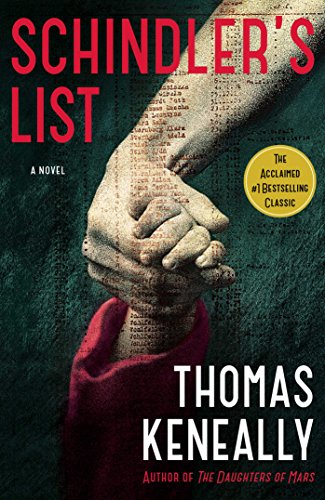
Today’s book is the other reason why I decided to take up a History major in college and studying the Holocaust. That book is Schindler’s List by Thomas Keneally (yeah, not all of these are fiction novels. Some are about actual events).

I’d seen the movie earlier in the year I read this book, so I was curious about the book it was based on. I ended up reading it during a five-week trip to Israel alongside The Plot Against America. And Schindler’s List affected me way more than Plot. Reading all those stories from people who had known Oskar Schindler, a complicated man who grew to care deeply about the Jews under him and decided to risk everything to protect them, in a time where that could lead to execution, spoke to me on a level that few books do. I decided then to study the Holocaust when I got to college alongside English and creative writing.

I also came back from Israel with a ring on my finger that says in Hebrew, “He who saves a life, it is as if he’s saved the world entire.” This is similar to the ring Oskar Schindler was given at the end of the book and the movie, and I had it custom made so I could remind myself of that every day. I still have that ring, and I wear it every day. It shows how much one person can do if they put their minds to it, and the good that come from it.

Perhaps someday I can have the same effect or inspiration on someone else someday. We can hope.

Today I’m tagging my friend Tricia Drammeh. Hope you have fun, Tricia. I know I have.

That’s all for now, my Followers of Fear. I’m headed back to Columbus. I look forward to sharing the last book in the challenge with you tomorrow. Until then, pleasant nightmares!

Don’t fly off without me, dragon! I need to get home!

It’s Saturday, and I’d like to be sleeping in. However, weekends don’t mean I’m slacking off. Or maybe I am, but I don’t consider it slacking off. I’m just working in a way most people don’t see as working. Anyway, welcome back to the Ten Day Book Challenge, brought by my cousin Matthew. Here are the rules:

  • Thank whoever nominated you with big, bold print. If they have a blog, link to the post where you got tagged there.
  • Explain the rules.
  • Post the cover of a book that was influential on you or that you love dearly.
  • Explain why (because I don’t see the point of just posting a picture of a book cover without an explanation. That goes for Facebook as well as blogs).
  • Tag someone else to do the challenge, and let them know they’ve been tagged.

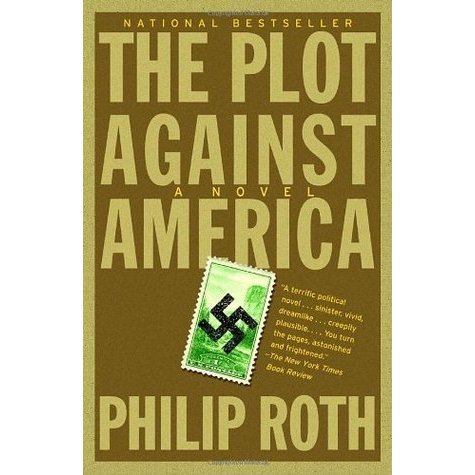
Today’s book is special for me, as it was part of the reason I took up a history and studied the Holocaust in college. Allow me to introduce The Plot Against America by Phillip Roth.

An alternate history story, Roth inserts himself as the childhood narrator in an America where Charles Lindbergh gets elected President of the United States during the rise of Nazi Germany and Hitler. Lindbergh acquiesces to the wishes of the America First crowd and declares America neutral when it comes to events transpiring in Europe. However, moves made by the government under Lindbergh makes Roth’s family and many Jews suspicious that Lindbergh may secretly be a Nazi sympathizer or pawn. And as time goes on, events transpire to make that fear seem very reasonable.

Alternate history is supposed to give us a view of what could’ve happened if a few things were different, and The Plot Against America does just that. While I do find it difficult to believe that Lindbergh was a Nazi sympathizer, it does go to show what could’ve happened if his America First policies did shape America for a few years, as well as if more anti-Semitic practices or ideas were made law. But it also shows what could happen if a young boy in America saw his very people suddenly under threat, at risk by something behind-the-scenes, and how his family reacted to that. It’s not just interesting, but engrossing and makes you think about how only a few minor things could have seriously changed America’s destiny.

From what I hear, a TV miniseries based on the novel is in development under the guy who created the TV show The Wire. Honestly, with the resurgence of neo-Nazis and white supremacists in America, I can’t imagine a better time to adapt this story. Hopefully it gets a good network or streaming service that will ensure it’s seen by a lot of people. And in the meantime, I hope you take the time to check out the book. Believe me, it’s worth a read.

Today, I’m tagging my friend Pat Bertram. Pat, I know you’re busy these days, but I think it’d be cool if you could do this. Good luck if you can!

That’s all for now, my Followers of Fear. I’ll be back later today with a review of The Nun. Until then, I hope you’re enjoying the weekend. I know I plan to.

Good morning, everyone! Crazy to think I’m on Day Seven of this thing. And trying to think of a book for each and every day is a challenge in and of itself. Well, hopefully after this post, I’ll be able to do the next three days without too much work. Fingers crossed, anyway.

Anyway, welcome back to the Ten Day Book Challenge, caused by my cousin Matthew nominating me and by me just turning it into a blog challenge rather than a Facebook challenge. Here are the rules:

  • Thank whoever nominated you with big, bold print. If they have a blog, link to the post where you got tagged there.
  • Explain the rules.
  • Post the cover of a book that was influential on you or that you love dearly.
  • Explain why (because I don’t see the point of just posting a picture of a book cover without an explanation. That goes for Facebook as well as blogs).
  • Tag someone else to do the challenge, and let them know they’ve been tagged.

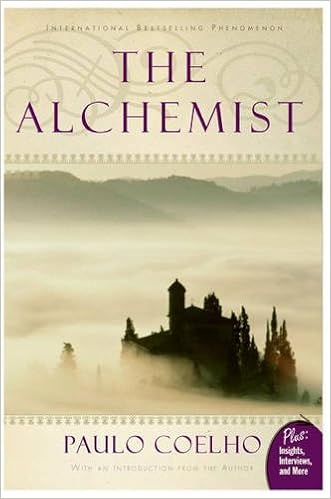
Today’s book will be surprising for those of you who’ve been following this thing from the beginning. It’s not horror, and it’s not a book that I read during my childhood. Instead, it’s one I read during my late teens and that I still think of as a beautiful story every time I think of it: The Alchemist by Paulo Coelho.

This novel is just a beautiful story, following a young shepherd who has a dream that he’ll find great treasure near the pyramids of Egypt. When he has this dream three nights in a row, he takes it as a sign and starts a journey from Spain and along the length of North Africa to Egypt. Along the way, he encounters many amazing characters and learns much about himself and about the world, as well as the power of action and fulfilling your destiny.

Both literature and inspirational self-help novel, The Alchemist is all about following your personal destiny and overcoming obstacles that arise to keep you from doing that. I feel that a lot of people are too afraid to seek their own destiny or just pray that God or some other higher power will grant them their destiny without doing the work to make it happen. Coelho’s novel is all about taking your destiny by the reins and seeking it out yourself, rather than doing nothing or letting obstacles keep you from doing so.

Sounds whimsical and optimistic when I discuss it here, but when you hear about the author’s own life, you realize it’s not so: Coehlo was institutionalized by his parents as a teen because he wanted to be a writer and take a non-traditional path, and later in life was arrested by Brazil’s military government for ‘subversive activities.” Despite all that and more, he explored himself, became a successful songwriter, and then a successful writer. So in a way, the story in The Alchemist mirrors his own struggles to find his path in life. It’s not just some optimistic fantasy about fulfilling your dreams.

And if you haven’t read it yet, I highly recommend you do.

Today I’m tagging my friend Caitlin Kelly of Broadside Blog. She’s a journalist with years of experience and has read many great books in her life, so I’m hoping she tries this out. We’ll see.

That’s all for now, Followers of Fear. It’s Friday, so I’m looking forward to a good weekend here in DC. Hope whatever’s going on in your life, you have a good weekend as well. Until next time, pleasant nightmares!