I saw the trailer for this new Netflix film several weeks ago, and got intrigued. A British horror film taking part in Edwardian England and involving an isolated cult? Where do I sign up? So last night I made some popcorn and logged in to check it out.

Holy shit, I think we have a winner here!

Apostle follows Thomas Richardson, the prodigal son of a wealthy family with a past who comes home when he finds out that his sister has been kidnapped for ransom by a cult living on an isolated island off the coast of Wales. He goes undercover and joins the cult to save his sister, but finds that things on the island are not all that seem. Thus begins a twisted descent into insanity, religious zeal, and blood that will leave no one untouched.

This movie is wonderfully fucked-up. It starts out slow with very few hints of anything off, but over time throws in hints of how messed up things are, mainly strange actions on the part of the characters. As the film goes on, these hints become more obvious and horrific, involving blood, strange sights, and much worse. It creates this very unnerving atmosphere al a The Shining, only by the final third the film can sustain the intensity and somehow keep building on it. Just when you think that this film can’t get any more horrifying, it throws something new–a revelation about the characters, body horror, etc–to throw you for a loop. There were more than a few times I felt myself gripping my computer with white knuckles because of what I was seeing on screen.

The acting is great. I forgot that I was watching people in roles and thought they were the people they were playing for most of the film. And I especially liked how the film mainly relied on practical effects and only used CGI for minor touches. I prefer practical effects to CGI in most instances, and it’s good to see the director, Gareth Evans, seems to share my preferences. And a good thing too, as all the practical effects give this film’s body horror elements a realism that makes it especially disturbing and which would’ve lost their power if CGI or some other trick had been used.

If this film does have an issue, the plot does seem to meander at times. There are numerous subplots that are woven into the film, and while the majority of them do get resolved, a few don’t (what about that oath? Why wasn’t that picked up?). That might work better in a novel, where we can see the characters’ thoughts and that sort of thing can be explained, but in a film it’s a problem. So some people might find the story slow or boring because of the way the plot is set up.

All in all though, Apostle is a terrifying and powerful film and possibly a new classic of the genre that will stay with viewers long after they’ve logged off Netflix. On a scale of 1 to 5, I’m giving Apostle a 4.6.  If you’re brave enough, go check it out and begin your spiral into a world of trauma and terror that is rarely put to film.

Also, I wish the director Gareth Evans, who only has one other horror credit on his director’s belt, comes back to the genre soon. If Apostle is anything to judge by, I look forward to seeing what else he can contribute.

I wanted to post something other than a review before my next one (which should be very soon, believe me), but I couldn’t think of anything that I felt passionate enough to write about. So I decided to just give you all an update on what’s been going on in my life lately. Because if average folks on YouTube can pay their rent doing just that, why can’t I just write one for the hell of it?

So what’s going on in my life? Well, it shouldn’t surprise anyone, but life has been busy crazy lately.

Current WIP

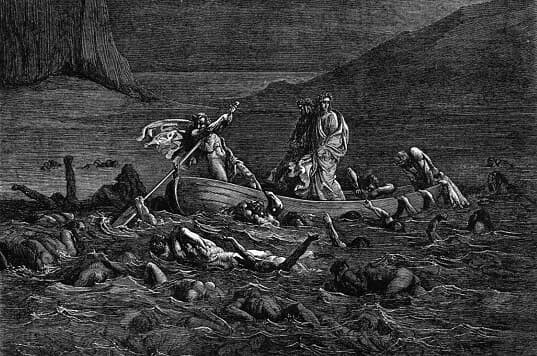
I’ve been working on a story that I started back in the spring in-between drafts of Rose and picked up back in August. The story, which I’m calling River of Wrath, was inspired by Dante’s Inferno and certain events in America’s history. I originally expected River‘s length to end up as a long novelette or a short novella, but at the time I’m writing this post, the story’s around thirty-six thousand words, and I’m guessing I’m going to put in another ten-thousand or so before I’m done. Maybe even more! This could easily turn out to be my next novel, even though I didn’t plan it that way.

Not that I’m complaining. I’m finding this story very engaging. It’s got a lot of themes and topics I feel passionate about, and I enjoy getting into the narrator’s head and seeing things through her point of view. I’m easily getting out a thousand or more words some nights, and I usually aim just to get two-hundred and fifty out per night.

Hopefully, I can get through River before I have to look at Rose again. And if not, I’m sure I’ll work twice as hard so I can get back to it as soon as possible.

Speaking of Rose

Rose

I heard from my publisher back at the tail end of September. As I said in a previous post, my publisher has been busy with multiple projects and that’s slowed down the response time on Rose. However, they’re planning on devoting time to Rose during the month of October. Hopefully that means I get their feedback around the end of the month, and decide next moves then. I’m praying they’ll just say they want me to clean up this or that part and then we can move to publication. But we’ll just have to see about that.

Car Chasers

The Binge-Watching Cure II, the anthology from Claren Books that my short story Car Chasers will appear in, is still set for late 2018/early 2019. Hopefully I’ll have more definitive news in the months to come.

Wow, lot of “hopefully’s” in this post. Well, that’s kind of how it is with writing sometimes. You just have to hope you can accomplish your dreams and that things will work out in your favor.

Life in general

My Halloween costume for this year. What do you think?

Well, work’s been crazy busy. I recently got a raise and was put in charge of an important project, so I’m trying to make sure the faith put in me isn’t misplaced. I’m also being trained on a number of different tasks that my office specializes in, so I’m just trying to get the processes for those down pat. It’s difficult, as a lot of the time we’re busy with other tasks, which limits training time, but we’ll deal with it. We always do.

I also got my driver’s license a few months ago, so I’m getting ready to get a car of my own. I’m looking forward to all the possibilities a car of my own can open up. It can even help with marketing Rose, when the time comes.

And finally, I got my Halloween costume this past Thursday. And holy crap, is it something else! As you can see, I am a goat-headed demon. You know, like the one in that creepy illustration the Church of Satan uses in a lot of their materials (aka Baphomet). I really like it, as it scares the heck out of people. And even though visibility is pretty limited (I now know what a Disneyland cast member goes through every day), I plan on keeping it. At the very least, I can use the cloak piece for other occasions and costumes.

Also Church of Satan, I’m available for weddings, funerals and rituals. Send me an email.


That’s all for now, my Followers of Fear. I’ve got a scary movie to watch tonight, so I’m going to get to work on dinner. Until next time (probably later tonight), pleasant nightmares!

How is life for you these days? What are you going as for Halloween?

Saturday night usually means popcorn and a movie for me. This evening I decided to check out the new Netflix movie Malevolent. I figured it would be a good way to round out a day busy with cleaning, grocery shopping, home decor projects, and sacrificing teenagers* to an ancient deity so I could set in motion a series of terrifying events unlike the world has ever seen before this October.

Malevolent is set in 1986 Scotland and follows Angela, a university student who, along with her brother, fakes being a medium in order to make money for her brother’s debts. When they get called to an old manor that was the sight of several grisly murders however, they start finding that the afterlife they’d conned people over is very much alive, and can be very…well, malevolent.

This film’s got a decent, if rather overcrowded, first half. It sets up Angela’s worries about her life and her mental health, due to her mother committing suicide. It shows her brother Jackson as an opportunistic asshole who’s willing to take advantage of anyone just to pay off his loan sharks. And it sets up a decent Gothic location for the main action of the film. There’s also some good jump scares and a creepy atmosphere at times during this half. The best part is probably during the initial walkthrough of the house, when Angela is starting to realize this house may really be haunted. It’s visually powerful and puts you on edge.

However, the second half has a lot of problems. For one thing, it feels pretty rushed. Usually there’s a slow build up to the climax, but in this film it just goes from zero to sixty, and not in a good way. If they maybe added twenty minutes to half an hour more, I wouldn’t feel so whiplashed. Also, the tone during the second half is a little inconsistent. Like it can’t decide if it wants to be a Gothic ghost story or a thriller story about serial killers. Along with a twist introduced in the last twenty minutes that seems more shoved in than clever, it just takes me really out of the film.

Also, why was this film set in the 1980s? I know that’s like the popular trend these days, to put your story in the 1980s, but there’s no reason at all to do it in this film like in Stranger Things or another 80s-set show or movie. You could do this in the present, and you’d get the same effect. In fact, I think it might be better if it were set in the present. It would feel less gimmicky if they used GoPros instead of big, bulky video cameras.

Overall, Malevolent can’t capitalize on the interesting setup it promises. On a scale of 1 to 5, I’m going to give this film a 2.5. Frankly Followers of Fear, there are better Netflix horror films to peruse. I suggest you go and find some if you want some pleasant nightmares.

*Don’t worry, the teenagers were unharmed. The sacrifices were symbolic. The deity, however, was very much real. I’ve got a bandage on my left thumb as proof.

One of the YouTube channels I follow is Tale Foundry, a channel that breaks down how different genres and mechanics of storytelling work and then uses the lessons gleaned to write original short stories. They present themselves as robots in a foundry that works with fiction rather than metal (hence the name Tale Foundry). Their latest series of videos has been around worldbuilding in fiction, and their latest video, which I’ve embedded below, really got me thinking.

Now, if you didn’t watch the video for whatever reason, let me just quickly talk about one of the methods of worldbuilding they discussed: found design, which to put very simply is when you modify an aspect of the world in order to accommodate or address an issue (or “emergent concern,” as they call it in the video) that’s come up in the course of telling the story. An example would be if while writing your novel about a war between werewolves and humans who hunt them, your beta reader says that the conflict has been done before and that something needs to be added to make the story more interesting (other than a forbidden romance). The something required to spice up the story is the issue or emergent concern, and the integration of whatever you decide to add to the story (a threat to both armies, an original twist to lycanthropy, etc) is the act of found design worldbuilding.

Yeah, it’s a lot to absorb, but whoever said fiction writing was simple?

Anyway, this last method got me thinking, because that’s the method a lot of horror writers use while writing their own stories. As we all know, horror stories are more often than not set in our world, but with modifications to allow for the fantastical things that show up in it. Modifications to allow for something new to be added to the story and its world…sound familiar?

I call this the “build upon” worldbuilding method (if there’s an official name in academic circles, someone please let me know). You take an already-established world, one that many people would already be very familiar with, and add your own twists or details to it so you can tell the story you wish to tell. This is a method used by fanfic writers, anyone dealing with Arthurian lore, and of course, horror writers.

A good example of how this method works is with my own short story, “Car Chasers” (being released in late 2018/early 2019 in The Binge-Watching Cure II anthology from Claren Books). This story is set in a world similar to ours, except ghosts are capable of participating in illegal street races in this story. When I wanted to write that story, I had to not just modify the world so that it was capable of having ghosts (though if you ask me, our world has always had ghosts in it), but I had to add rules to these ghosts, how they interacted with the races/racers and under what conditions they participated in these races. Will all this be evident when the story is finally released? You’ll have to read it to find out, but whether or not it is evident, all that work in designing this world was necessary for it to be written, let alone accepted anywhere for publication.

So as you can see, it’s a handy method to build a world for your story. And if you’re into creating a shared universe across your stories, like Stephen King, HP Lovecraft, or I do, it’s pretty helpful in making that possible. All you need to do is make a slight tweak and you can find ways to connect your various stories together into a fantastic and varied world.

Of course, this isn’t the only method for building a world in horror. But this is the one that I use the most in my stories, and which I’m sure plenty of other horror authors use when they make their stories and their worlds. And it’s not hard to see why: it’s a wonderfully flexible tool for any storyteller, and helps in the act of storytelling every day.

Thanks to Tale Foundry for giving me the idea to write this post, and as always, I’m looking forward to your next video. And I encourage you folks to check out their stuff. From Lovecraft and Junji Ito to Celtic mythology and satire, you’ll find plenty of videos exploring the various aspects of storytelling and how they can be applied.

That’s all for now. I’m off to work a little bit on that novella again. In the meantime, what are your thoughts on worldbuilding in your genre? Any methods that you find helpful? Let’s discuss.

Until next time, pleasant nightmares!

IT’S OCTOBER!!!!! The best month of the year, when things start getting cooler, the nights grow long and you get a little more leeway in how spooky you can be! Or in my case, reveal a bit more of my non-human side. And on this month, my powers of darkness grow by a hundredfold! You can bet I will be raining terror upon certain heads this month. Just you wait and see!

In the meantime, I thought I’d talk to you about something that happened to me yesterday. I was at my mother’s house for a party, and as often happens when family and family friends get together, everybody wants to know what the latest news is with Rose and the anthologies I have stories being published in. Rose, for those of you who don’t know, is a novel I wrote in college as my thesis, and which is being published by Castrum Press, a publishing company based out of Belfast, North Ireland. The story follows a young woman who finds herself being turned into a plant creature (and that’s just the start of her problems!).

I told them that I’d heard from Castrum on Saturday, and that they were hopefully going to get back to me on the latest draft of Rose some time this month. I expressed hope that when I heard back from them, they’d say I just needed to do some touch-ups here and there, and then we can set a publication date. My mom, who had been one of the most ecstatic and amazed people when I’d told her about Rose back in March (I still remember how she said “Oh my God” two or three times as clear as a whistle), remarked, “Wow, I had no idea the publishing process could take so long.”

And that’s the thing: the publishing process can take a long time. For any book. Not many people realize that, even among writers (including me at one point), but it’s the truth. Nowadays, technology and the Internet have helped speed some things along, but it’s always taken a long time for books to get out. Heck, even Stephen King had to wait a while for his books to come out early in his career. Yeah, now he can put one or two out every year, but that’s after nearly forty years of proven success. When he was still basically an unknown, Carrie took over a year before it got on bookshelves. And while I hope it doesn’t take that long with me, it may be a while longer before anyone gets to read Rose.

I’m not saying this to trash any publishing houses or complain about the publishing process. I’m just stating a fact. And if you think about it, this pace makes sense. After all, most publishing houses involve a few people handling projects from multiple authors. Any one project takes a lot of time out of the day, and while it would be nice if there was a single editor for each and every author contracted to a publishing house, I don’t even think even big publishing houses have a staff like that. So obviously each publisher has to juggle their projects, devoting time here and there to each one, deciding the order based on all sorts of factors. It’s an involved process.

But it’s also a process I’m grateful for, because it’s not just the number of books being published, but what’s being done to get them ready for being published. Each one is being polished and cleaned up, formatted and given the best cover art, strategized over and discussed ad nauseum. All to make sure that when the book finally does come out, it’s not just a great story, but one that’s free of typos and with words not falling off the page or some other unforgivable goof. I’m glad the process is slow, because I’d hate it if the process went by super-fast and when Rose did come out, it was full of errors and had terrible art. And I’m sure you would too.

So while it may take some more time before Rose comes out, I know the book is in good hands and I’m looking forward to the state it’ll be when it’s ready to be released. And I know that you’ll love it too.

In the meantime, I’ve got plenty of stuff to write and blog about (I might even have a new blog post tomorrow, depending on a couple of factors). And I can’t wait to share them with you. So until then, you all have a goodnight and pleasant nightmares, my Followers of Fear. I’m off to celebrate the month. After all, it is October. Plenty of material to review, plenty of stories to write, plenty of people to terrify senseless. I can’t wait.

Funny story: yesterday at work I told a coworker what the film was about, as she hadn’t heard of it before. When she heard the plot, she said, “That sounds creepy!” I told her that it was based on a true story. She looked at me in all seriousness and said, “Really?” I told her no, and we both laughed that for a hot second, she believed it. She was the only person I did that bit on yesterday who fell for it, but it was worth it.

Hell Fest follows Natalie, a college student who goes with her friends and a potential boyfriend to HellF est, a traveling horror-themed amusement park complete with scary mazes, rides, actors in scary costumes, and grotesque toys. Basically a traveling Disneyland for horror fans, and I so wish that was a real thing so I could go to it! Unfortunately, there’s a masked serial killer in the park, and he sets his sights on Natalie, stalking her around the park. But when everything is meant to scare you, where is the line between what’s for fun and what’s all too real.

So, the story is pretty straightforward for a slasher film of this type. You got a bunch of one-trait characters who are out for a night of fun, there’s a killer out there stalking them. Surprisingly, the level of blood and gore is pretty tame for this sort of movie, and the characters don’t do as much dumb stuff as they might have done if this movie had been made in the 80s or 90s. My favorite character had to have been Taylor, played by the incomparable Bex Taylor-Klaus of the Scream TV series (if there’s a horror movie with her in it, there’s a good chance I will see it). Taylor was pretty much an exaggerated, female version of me: horror-obsessed, very funny, plenty of social awkwardness to go around. I honestly would love to hang out with this character.

The best thing with this movie is definitely the costumes. Not just the killer’s mask, which is effective in a minimalist way, but the costumes of Hell Fest’s “actors:” the people hired to wear creepy costumes and go around scaring people. You could see how much work they put into each individual outfit to make them scary, or barf out slime, or whatever floats your fancy. They must have had costumers who worked in actual haunted attractions work for this movie, they’re that good.

Sadly, Hell Fest does have a few problems. For one thing, while the sets are creative and do look like they belong to an actual horror Disneyland called Hell Fest, they don’t seem to take it far enough. When you hear Hell Fest, you think something like the Nine Circles of Hell out of Dante’s Inferno, mixed with every Gothic story ever and every season of American Horror Story ramped up to eleven. The sets should make fear leap off the screen, and there’s none of this. Most of the mazes do look rather creepy, but others just have too much neon and not enough scary stuff. The Hell-themed maze in particular was disappointing, as it’s supposed to be “the scariest maze in the park.” And in-between the mazes, you might as well just be in a state fairground or at a national park trail done up for October.

I don’t know, maybe it’s the fact that it’s on a screen and I’m not there in person that’s the problem, but it’s not what I’d expect of a movie called Hell Fest.

Another issue is that for the first third of the film, it’s just not that scary. Even once you get to Hell Fest, it’s more colorful than terrifying. After the first maze or so, a horror movie atmosphere does crop up, complete with tense sequences and a few decent jump scares, but it’s not as strong as it could be. And in a film about a horror theme park, that’s just not good enough.

On a scale of 1 to 5, I’m giving Hell Fest a 3 out of 5. It’s a movie that works on paper, and it has colorful costumes and a few good sets, but leaves much to be desired.

Still, I’d take Hell Fest over the Friday the 13th remake any day. At least it remembered to be a horror film, rather than a raunchy comedy that Jason happened to stumble into. That’s right, I found a way to trash that shit film out of Michael Bay’s ass again! And I won’t stop until I either get a better or a worse Friday the 13th film.

There’s a reason why one of the first lessons in the art/business of fiction writing is to read, read, read. Long or short, in or out of your preferred genre, good or terrible. Reading the works of others, even if the story is not to your taste, can give you new ideas, show you what to avoid in your own stories (*cough* the orgy scene in It *cough*), and sometimes how to write something you didn’t know how to write before.

Let me tell you a story right now: as many of you know, I’ve become a big ballet fan since last year. Consequently, a lot of ballerinas and dancers have been showing up in my story ideas lately. It wouldn’t be too crazy if I had to write a dance scene or dancing someday in the future. I figured it would be a good idea to find other stories where dance features prominently, in the hope that from reading about dance there, I might pick something up. I asked one of my writers groups on Facebook if they had any suggestions, and one woman recommended a book to me that sounded good, so I downloaded the audio book onto my phone and started listening this week.

The book, Girl Through Glass by Sari Wilson, follows a young ballerina’s trip into the world of professional dance, while at the same time she encounters a particular aspect of that world’s dark side that changes things for her forever. It’s not horror, but it’s decent so far. And I have gleaned a bit about describing dance steps in prose, while at the same time learning a bit more about ballet culture (I had no idea ballerinas were called “bunheads.” Seems obvious now, but I didn’t know it until this week). And while I expected those, one thing I didn’t expect to find is a lesson in a type of character:

The story’s protagonist, Mira, seems on the outside to have it all. Her family doesn’t abuse her, she’s talented at ballet and has an upward-moving career. She even has a sort of mentor/sponsor in the form of Maurice, an older balletomane. She also seems to be mentally and emotionally all there. However, ballet and Maurice are really an escape for her. Her parents divorced rather suddenly; her airhead mother is a mess who can’t pay bills and takes in a creepy boarder; her dad is in a relationship with another woman who’s also in a divorce, and it’s moving a little too fast; and all this occurs after seeing her parents’ marriage erode for who knows how long. All that can really mess a kid up.

I’m sure even more will mess her up as the story goes on.

Mira’s a type of character I don’t see very often: one whom no one, not even themselves, would see as troubled, but is deeply troubled nonetheless. She’s a perfect example of this character type, the “seemingly untroubled troubled person.” I don’t know if there’s a proper name for this type of character like there is for others, but that’s the one I’m going to go with. And she’s teaching me quite a bit about writing this sort of character.

So like I said, reading a diverse amount of work can teach you all sorts of things that you can apply to your own writing. Sometimes you even learn things you weren’t expecting to learn, like how to write a certain type of character, or writing about a complex war in another world, or even just some random facts about Spanish history, religion, evolution, art, and technology (looking at you, Dan Brown). Sure, you might find some stories you’ll hate or that will teach you absolutely nothing, but then there’s a lesson to derive from those stories as well: what not to do when you’re writing your own work. I’m certainly learning a lot from Girl Through Glass and the other stories I’ve been reading lately. And I can’t wait to learn more.

Have you ever gotten an unexpected lesson from a story you read/are reading? What was it?

A couple of years ago, I binge-watched the first (and at the time, the only) season of a Canadian horror TV show called Slasher. The show billed itself as an anthology horror series geared more towards slasher fans, so basically American Horror Story with a lot more blood and gore. I reviewed it after I finished it (which you can read here). If you don’t have the time to read it though, let me summarize my thoughts: I thought the first season was intriguing with a great mystery and practical effects, but was horribly hampered by a seriously derivative story and a wooden lead. Also, the killer’s outfit was the definition of impractical.

Based on that, I figured that if the show was to get a second season, the people behind it would have to do a loooot of work to make sure the show didn’t get slashed off the schedule. And with no news of a second season a year later, I guessed the show was done for.

That is, until I saw an ad for it on my Netflix. Yeah, apparently Netflix picked up the show as one of their Originals, and decided to give it a second season (love it when they do that for shows that deserve another season. #LuciferOnNetflix). I decided to give it a watch, and see if they fixed the problems from season one.

Holy shit, did they improve!

Subtitled Guilty Party, season 2 follows five former camp counselors–Peter, Andi, Dawn, Noah and Susan–who accidentally murder a fellow counselor after confronting her for being a total psychopath and then bury the body. Five years later in the midst of winter, they return to the camp grounds, which have since become a small New Age commune, to destroy the counselor’s body when they hear a new resort will be built nearby, possibly leading to the body being discovered. Unfortunately once they get there, they inevitably get stranded there, and a killer starts picking them one by one. But who is this killer? With everyone there having secrets, they’ll have to be careful who to trust, or everyone may end up dead.

So as I said, this show did improve with the second season. For one thing, while the story does take influence and even has callbacks to previous famous horror and slasher stories, especially the Friday the 13th franchise, it’s nowhere near as derivative as the first season was. It works with an extremely tense story that keeps you on the edge of your seat for the whole eight episodes. You never know where the next twist or death will come from, and when they do hand one to you, it just makes you ask the same questions over and over again. And even when you think you know, there’s still a twist ahead to get you. It is a thrill ride, to say the least.

I also have to give props to the actors, they did a very good job. I sympathized with a lot of them, even as I learned just how deep some of their sins (there’s this one character who I felt was a lot like me. I was really disturbed by how deep his darkness went). And even those I didn’t sympathize with, I could not distinguish between the characters and the actors. That’s how good they were.

And ooh boy, was this thing scary! I mentioned how tense it was, but some of what happens to the characters who get caught by the killer* or who finds themselves in a similar jam. They do not skimp on the physical or psychological torment, and it will affect anyone watching it (I still flinch when I think of one particular scene).

All that said, the season did have one problem: there were a couple of characters who showed up for just a single episode, and very out of the blue, too. I feel like if you’d written those characters out of those episodes, there would still be ways to tell this story without sacrificing tension, pacing or anything else.

But all in all, Slasher season two is a monumental improvement over the first season. Intense, twisty and full of memorable characters. On a scale of 1 to 5, I’m giving the second season a 4.8. I cannot wait for the upcoming third season (yes, that’s happening. I wonder what they’ll do for it). Pack some winter clothes, give it a try, and see for yourself.

Who knows? You may even survive the encounter.

*Who I’m pleased to say is appropriately dressed for the work and the weather. No impractical costumes this time! Though if they did wear a hockey mask, this would be a much better Friday the 13th film than Michael Bay’s shit remake. That’s right, I found another way to diss that trash movie! Your film sucks, Bay! It sucks!

It’s been a rough day. Let’s talk the intricacies and difficulties of writing fiction!

I often like to talk like a know-it-all on this blog, but let’s face it, there’s still things I could be better at. Or that I think I could be better at. One of those things is themes. Most stories have them: Harry Potter has destiny vs. fate, prejudice, and our relationship with death; The Shawshank Redemption is about finding hope in a hopeless place, learning to survive and even find ways to thrive in harsh conditions, and, of course, redemption; and The Very Hungry Caterpillar is about how the inevitability of change crafted by thousands of years of evolution and the incessant need to feed to support the process.

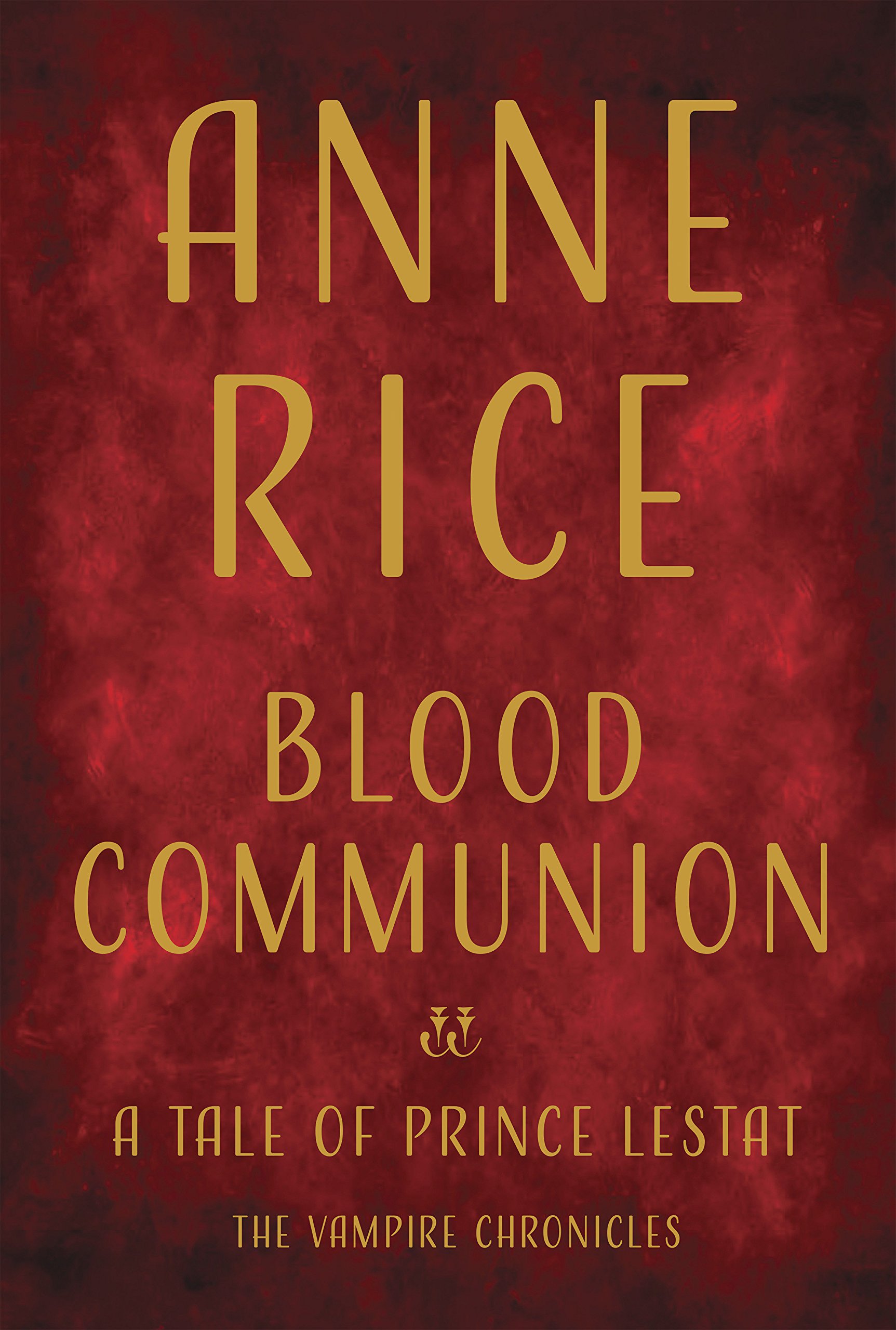
Okay, that last one is a huge stretch, but you get the idea. Plenty of stories have deeper meanings and commentaries wrapped into them, like several candle wicks wrapped together to form a new and beautiful candle. Some of these stories are written with the theme in mind, while others arise during the writing of the story. And depending on the kind of story, it can seem odd if a story does or doesn’t have a theme (I wouldn’t expect one from any variation of The Three Little Pigs, but I would expect plenty of thematic elements in an Anne Rice novel).

But how well you carry the theme can vary sometimes. It’s like carrying a tune: sometimes you’re able to do it well, sometimes it varies depending on the tune, and some people, like me, can’t carry a tune that well at all (though that never stops me when there’s a karaoke party going on). With some of the stories I’ve been working on lately, I’ve been trying to figure out how well I carry the themes written into them. And after a lot of thought, I’ve come to the realization that authors are probably not the best people to judge their own work.

Which is probably why we have beta readers and editors, now that I think about it.

With Rose, there’s a big theme of toxic masculinity, especially in the latest draft, that becomes more and more apparent as the story goes on. That theme kind of arose on its own while I wrote and edited and re-edited the story, and I like to think I carry it very well in the book,* though at times I wonder if I’m being a little too obvious with it. Meanwhile, in this novella I’m working on now, there’s a pretty obvious theme about the perils of racism. I’m not too sure how I’m carrying it, if maybe the angle I’m going for or just the way I carry it is the problem.

Then again, some really good stories do go about exploring racism without being subtle at all. Heck, sometimes that’s the point. A Raisin in the Sun makes no attempt to hide what it’s about. And the novel The Help by Kathryn Stockett has been criticized about how it portrays and explores race relations (as well as who’s writing it), but it still gets its point across very well. Maybe I’m doing something right after all.

Despite my own uncertainties about how well I carry themes, I still write and try to carry them as best I can. What else am I supposed to do? I’m not going to give up writing anytime soon just because I’m unsure of how well an idea or a deeper meaning in one of my stories is presented. Hell, I should keep writing, because that’s how I’m going to get better at carrying them. And if I make a few mistakes along the way, I’ll just pick myself up and try again, either by editing the story or trying to write a new one. It beats beating myself up over it, right?

Besides, I may be my own worst judge. What I see as clumsy carrying, others might see as pretty damn good. And that’s reason enough for me to continue writing in the first place.

*Which I hope to have more news on soon. Thank you, as always, for your continued patience as my publisher Castrum Press and I make sure that Rose is up to snuff before publishing.

My cousin has been in town for an internship, so I invited him to see this with me. We both had heard that it wasn’t good or it wasn’t going to do good, but I think we both went in with open minds. And after a billion previews, ranging from cute family films to all-out R-rated horror films (where’s the consistency these days?), the lights went down.

That was very good. I’m not kidding, I liked it a lot. That was better than expected.

The Predator takes place around thirty years after the events of the 1987 movie. A Predator ship crash lands on Earth after getting away from another Predator ship. A soldier nearby manages to get his hands on some Predator tech and, fearing being silenced by the military, sends it to a PO Box…only for it to end up in the hands of his autistic son. This, and the arrival of the other Predator ship, which contains a much more powerful breed of Predator than ever seen before, leads to a domino effect of events culminating in one insane battle.

So this film actually has a lot going for it. Rather than being a simple sci-fi stalker/slasher film like the original (and let’s face it, everyone’s comparing it to the original), The Predator has a much more developed story that delves both into its characters as well as a bit more into the Predators themselves (because outside of canon-questionable comic books, novels, and video games, what exactly do we have to go on?). And it’s very well-written. There was never a moment where I found my mind wandering, whether it be an intense action scene (and there are several of those), scenes where people are talking to explain things or scenes where the cast is being downright funny.

And there”s another thing: this film is funny as heck (and before you get turned off by that, Terminator II was funny at times, and it’s an awesome film). Whether the more eccentric characters, whom I could watch all day get into antics, are being themselves or other characters are poking fun at the nickname “Predator,” this film knows how to put in laughs, as well as where to put in laughs. Yeah, a lot of action films like this might put the humor in all the wrong places, but this film gets it right.

But my favorite part of this film is its representation of autism and an autistic character. Rory MacKenna, the son of the lead soldier played by Jacob Tremblay, is on the spectrum and it weaves itself into the plot in a very intrinsic, surprising and positive way. It reminds me of how the character of Billy in last year’s Power Rangers film (another discounted film that was actually really good) was portrayed, only this was a lot better. I could say more, but that would give too much away, so I’ll hold off. Instead I’ll say, as an individual on the spectrum, it was great to see.

Is there anything bad? Well, it isn’t the most extraordinary film I’ve ever seen. Those who go in expecting it to be as amazing as the original film or as awesome a sequel as Mad Max: Fury Road will be disappointed. However, those who go in expecting to see something like Jurassic World–something that’s not as good as the original but good in its own right and maybe worthy of a few sequels–won’t regret spending money on the tickets.

On a scale of 1 to 5, I’m giving The Predator a 4 out of 5. An enjoyable sci-fi action romp with fun characters and great representation of folks on the spectrum. I don’t know if this film will do well (movie audiences can be pretty unpredictable sometimes), but I’d encourage you to suit up and disappear into the story.

That’s all for now, my Followers of Fear. I’ll try not to make my next post a review if I can help it. Until next time, pleasant nightmares.