Posts Tagged ‘authors’

One thing I can always count on with a Junji Ito collection. The artwork is always fantastic. And this latest collection of short stories, Venus in the Blind Spot, is full of some of his best work.

Now if you’re unfamiliar with Junji Ito, he’s a manga artist who specializes in horror, and is well known for illustrations that terrify and creep the hell out of readers. Hell, sometimes I don’t feel comfortable leaving his books on the night stand beside my bed without something to cover them, the illustrations are that terrifying. I’ve read quite a bit of his work, and I’ve reviewed some of those stories and collections here on the blog, such as his adaptation of Mary Shelley’s Frankenstein and his masterpiece Uzumaki (click here and here for those reviews).

His latest publication in North America is Venus in the Blind Spot, and I loved just about every story within. The majority of the stories revolve around obsession, especially romantic or sexual obsession. The titular story follows the members of a UFO society as their obsession with the founder’s daughter becomes skewed after they lose the ability to see her. There’s also the fan-favorite The Enigma at Amigara Fault,  which I’ve read before but was excited to find again. It revolves around finding something strange that’s just right for you, and the insanity of not claiming it, of not finding out its secret. Even if by doing so, you potentially doom yourself.

My favorite stories were Billions Alone, a creepy body horror story about people being found sewn together that’s perfect for the current pandemic, and The Licking Woman, a weird story about a wild woman whose monstrous tongue contains a poison that kills all whom it licks.

And like I said, the artwork is fantastic. Ito-sensei’s work is never concerned with looking visually appealing like other visual artists. Rather, he wants to provoke a reaction. Fear, disgust, horror, unease. He wants to disturb your inner Zen. You can see this especially with three of the stories which are adaptations of works by other authors. Yes, they’re not his stories, but he puts his all into making sure his art brings out all the terror contained within the words.

Famous image from “The Enigma of Amigara Fault,” which is some of Ito’s work at its best.

That being said, the collection isn’t perfect. While there are colored pages and colored panels, they show up inconsistently, and it’s a little annoying. Sometimes I can’t even tell they’re colored, as I’m red-green colorblind and the panels use colors I can’t always see. One of the stories, The Principal Post, is one I’ve never really liked nor understood why it was published. And there’s a story about Ito-sensei himself and the influence of another artist, Kazuo Umezu,* on his work that I liked, but which might annoy fans seeking another scary story.

But all in all, Venus in the Blind Spot is an awesome, freaky and unsettling collection. On a scale of 1 to 5, I’d give it a 4.5. If you want to see a Junji Ito collection at its best, you can’t go wrong here. Open it up and get ready to experience the madness.

Are you a fan of Ito-sensei’s work? Did you read this collection? Are you excited for all the adaptations of his work in production? Let’s discuss.

That’s all for now, my Followers of Fear. I’m off to work on my own stories and see if I can’t disturb someone else’s inner Zen. Until next time, stay safe, pleasant nightmares and why is there a woman with a giant tongue outside my building?

*Highly recommend his series The Drifting Classroom. It’s like a sci-fi version of Lord of the Flies, and just as brutal.
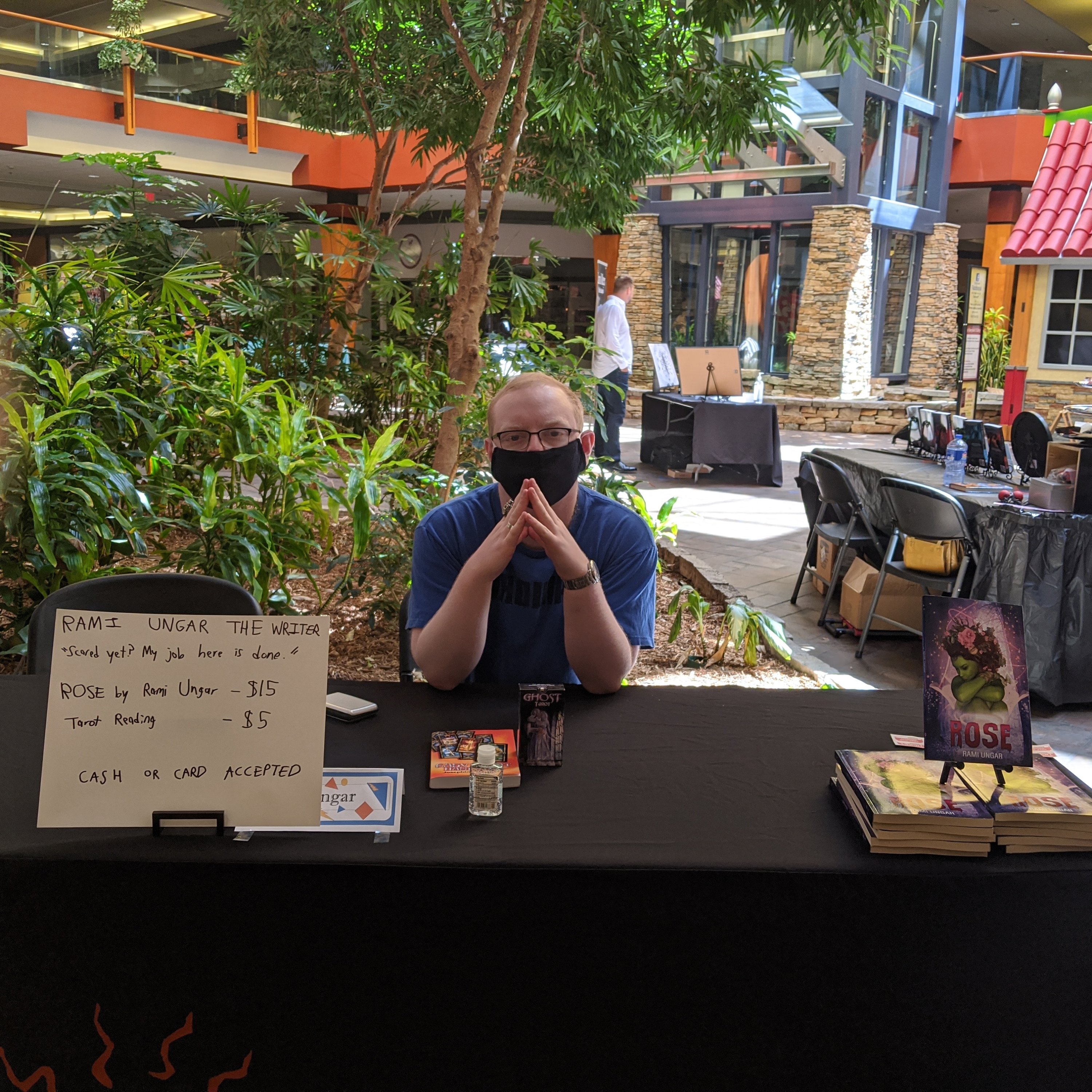
My table at the Indie Author Book Expo in Des Moines this past year. I’m hoping to have wonderful experiences at the events I’ll be attending this coming year as well.

I know it’s early. We still have three months and nine days left of 2020. I also know that, with COVID-19, any planned event is subject to change or cancellation. And there’s no telling when this pandemic will end. But I want to be optimistic and hope things work out before these events happen.

Plus, I’ve already talked about one of these events on most of my other social media in order to help get more vendors there. And if you want to get this stuff on people’s calendars, you gotta get the word out as early as possible. Before they put weddings and bar mitzvahs and other conventions on their calendars.

What was I talking about? Oh right. So, I’m signed up to be a vendor or author at a couple of conventions and book fairs next year. And I’m letting you know about them in case you’d be interested in them or going to them.

First, there’s Paranormal and Psychic Convention 2021, or ParaPsyCon 2021. This is an annual event at the Ohio State Reformatory in Mansfield, OH. You know, the haunted former prison where they filmed the Shawshank Redemption. The one I’ve been to twice and filmed some of my best haunted footage at. It’s from May 22nd-23rd, 2021,* and all it takes to get in is admission to the convention is to pay for admission to the prison. You can find out more on their website here.

Fun fact: I was actually supposed to be at this convention earlier this year. But we were in the early days of the pandemic, and the convention organizers were wise to cancel it. They then offered to put me on the vendor list for 2021, and I accepted. I’m hopeful that by then, things will be a bit safer and we can go to the convention in peace.

Then the month after, I’ll be at an event hosted by Indie Author Book Expo, or IABE, the very same group who hosted the expo I went to in Des Moines back in July. However, this time, I’ll be at IABE Chicago in Chicago, Illinois. It’ll be held on June 19th, 2021 at the Quarry Chi on E. 75th street. Not sure what the parking situation is, or if this location has been used as a film set, or if it’s haunted. But hey, doesn’t mean it won’t be a good time. You can find out more about it, as well as the other events IABE will be holding next year, on their website here.

I’ll be at both events, selling books,** doing Tarot readings, meeting readers, writers and others alike, and just trying to have a good time. So, if you’re able to come to either, please do. I’d be happy to see you.

And if I sign up for any other events, I’ll be sure to let you know well in advance that I’m attending. Don’t know if there will be. Some won’t happen unless the pandemic gets better. Others won’t let you sign up unless you’ve had a book published within a certain time period, so my attendance will depend on what occurs over the next year or so. We’ll see what happens.

Anyway, that’s all for now, my Followers of Fear. If any of you are able to make these events, I hope I’ll see you then. Until next time, stay safe and pleasant nightmares.

*Same weekend as StokerCon, I know, but I already had this on the calendar. What are you going to do?

**And some other things. I’ve had a few ideas on other items I can sell alongside my books. And I’ll probably think of a few more before the first convention.

What a mouthful of a title. Let me explain:

Back in college (I want to say 2012), when featured blog posts were advertised to WordPress users under the feature “Freshly Pressed,” I read a blog post from a father who recently had a run-in with someone else’s spawn. I can’t remember much about the blog post in question. I can’t remember the blog or blog post’s name, the blog’s general theme, or anything of that sort. However, one detail stands out in my memory and it’s why I’m writing this blog post:

After reprimanding another person’s child for selfish (and maybe violent? I can’t remember that well) behavior at a children’s playground, the child’s mother came to apologize. And the parent described the mother’s face as “crunchy.” You read that right, crunchy. For someone’s face.

I tried pressing the author in the comments about what he meant by “crunchy.” What makes a woman’s face crunchy? But no matter how much I tried or he tried, he couldn’t describe it better than “crunchy.” I’m guessing he doesn’t spend a lot of time trying to understand the meanings of adjectives in order to mix and match them in stories and not use the same word over and over again. That’s more of a creative writer thing, not a parent blogging about their experiences kind of thing.

Anyway, I put the issue aside, but every now and then, I would come back to it and wonder how you could describe someone’s face as “crunchy.” About two weeks ago, I decided to finally search for answers and decided to discuss it with my various writers’ groups online. And I got some feedback that proved quite helpful.

Among my writer friends and colleagues, there were three main responses:

  • The author really meant “scrunchy,” not “crunchy.” This would make more sense, as it’s easier to visualize someone’s face scrunch up.
  • He meant she was a crunchy-type person, as in a sort of neo-hippie that eats granola and lots of other natural foods that are crunchy when eaten (hence the nickname).
  • The person’s face was so covered in lines, that you could almost hear those lines crunching whenever their face moved.

Honestly, given that I mainly asked horror authors for their feedback, I’m surprised that only one person made a wisecrack about cannibalism, and the woman’s face looking like a crunchy snack. Like a Cheetos snack or a Crunch bar.

And now I’m hungry. Dammit.

What people tend to think of when they hear the word “crunchy.” Not in regards to people’s faces.

Anyway, of the responses listed above, it was a variation of the last one that rang right to me. One author commented that she’d seen people whose skin texture was like cornflakes due to too much exposure to the sun and applying too much beige make-up to “make up” for it. Given my vague memories of the original blog post and the context the author used for the woman he was conversing with, this felt right. In fact, it lines up with the image I conjure in my head when I think of the woman from this blog post.

So, that’s the description I’m going with. In fact, I’ve already figured out how I could work it into a story someday, as well as which story I’d like to use it in. And perhaps which foolish person who got on my bad side and received the ultimate punishment of getting a hateful character based on them to use the description on.*

But damn, it was a crazy trip just to get to the right description. At least I finally found a description that works for me and I can work into a story someday. And I got to write a blog post that hopefully was edifying and enjoyable. Not a bad way to spend a Sunday morning, right?

That’s all for now, my Followers of Fear. I hope this post was amusing. So, until next time, what are some other weird or mystifying descriptors you’ve come across in your reading? Any that you’ve struggled to find an answer for? Let’s discuss.

And until next time, stay safe, pleasant nightmares, and no eating people’s faces off. It’s generally frowned upon in Western society.

*Don’t mess with me. My retribution is not only dangerous and eternal, but safe from lawsuits owing to that little clause in the copyright section stating it’s a work of fiction and that any connections to real persons, places or events are just coincidences.

I first read the source material by authors Richard and Billy Chizmar in the Dark Tides Charity Anthology (which I highly recommend and not just because proceeds go to charity) back in April. I found it terrifying, psychologically thrilling. I even expressed on Twitter that I thought it might make a good movie, though I doubted one would be made right after the release of The Lighthouse. Then about a month or two ago, I found out a movie had not only been made, but would be coming out on September 1st. I had some free time, so I rented it off YouTube and sat down to check it out.

Widow’s Point follows Thomas Livingston, an author and paranormal investigator who is doing an investigation of the infamous Widow’s Point lighthouse in Harper’s Cove, Maine. The lighthouse has witnessed numerous murders and suicides over the years, making many speculate it’s haunted. Livingston and his crew arrive to stay the weekend and hopefully make some quick cash. Too bad he’s going to get so much more.

I feel like I was watching a Stephen King miniseries or TV movie from the 1990s, with a bit of classic Doctor Who serials. Yeah, on the surface it does seem a bit hokey and amateurish, and the one or two special effects are laughable. But it’s a lot of fun to watch, and I keep smiling when I think of the film and my experience watching it. Also, since all of the actors were unknown to me and looked like people I might see on the street, it gave the film a weird sort of plausibility. Like, this could happen to average joes. Add in a little suspension of disbelief, and you can believe in the story.

On top of that, there were some scary moments. Particularly when Livingston, played by Craig Sheffer,* is undergoing psychological stress and his mind is really beginning to snap. Those moments gave me some chills, I’ll tell you. And a lot of attention is paid to historical detail with flashback scenes detailing the lighthouse’s history, which I loved as a fan of history.

But there are things I didn’t care for. Like I said, the special effects were laughable, and I disliked how the filmmakers tried to give an explanation to the lighthouse’s evil, rather than leaving it mysterious like in the original short story. Sometimes less is more, and it certainly would have been more here.

All in all though, Widow’s Point is a nice guilty pleasure horror movie to start the Halloween season with. On a scale of 1 to 5, I’m giving it a 3.5. It probably won’t make you shit your pants in terror, but it’s entertaining and will scratch that horror itch. It’s on DVD and streaming sites, so give it a go if you’re interested.


That’s all for now, my Followers of Fear. I’m off to work on one of my own stories. Until next time, stay safe and pleasant nightmares!

*By the way, I want this guy to narrate an audio book of one of my stories someday.

The other day, I was scrolling through my Twitter feed and I saw a tweet from a fellow writer in the writing community (or #WritingCommunity). This was the tweet.

Now, if the tweet hasn’t loaded properly into this blog post at the time you’re reading this, it’s from writer Rey Roland using the hashtag @rrowlandwrites and goes like this:

#WritingCommunity do you think that characters have to make mistakes in a story?

I found the question stimulating, so after some back and forth between us, I decided to do a full post on the question (hope you don’t mind, Rey).

So, can and should characters make mistakes? First, let me start with can: yes, characters can make mistakes. In fact, there are plenty of stories where characters make mistakes which become integral to the plot. And yes, characters should on occasion make mistakes, though it depends heavily on the story. A character shouldn’t make a mistake just for the sake of making one when it serves no purpose to the story. Otherwise, the readers will think it’s weird.

Of course, this leads to an even bigger question: is there a benefit to having characters make mistakes? Actually, there are multiple benefits to having a character who makes mistakes.

For one thing, characters who make mistakes are easier to empathize with. Not to say characters incapable of making mistakes can’t be empathized with, but it does make a character more human and easier to identify with for the audience. The possibility of a reader continuing with a story can depend greatly on their connection to the protagonist, so showing them as being like the reader–more human–can be an advantage.

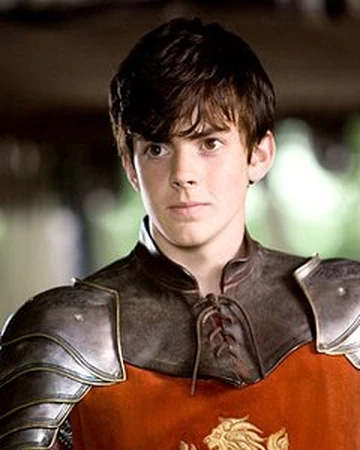
Edmund Pevensie’s mistake was a major driver of the story.

Another reason to have characters make mistakes is that it can help the story along or add to its complexity. Sometimes, it’s even the catalyst of the story. In The Lion, The Witch and The Wardrobe, Edmund makes the mistake of falling under the White Witch’s spell, and betraying his siblings adding both an extra dilemma to an already difficult situation and giving the character a redemption arc during the story. And in the manga Death Note, Light Yagami tries to eliminate suspicion of himself as the murderer Kira by killing the FBI agent following him, as well as the other FBI agents following other suspects. However, this eventually just leads to him becoming a prime suspect again, a problem which lasts the rest of the series.

Of course, it isn’t just protagonists who make major mistakes. Minor characters make mistakes all the time, and they often benefit the plot significantly. In Ania Ahlborn’s novel The Devil Crept In, the protagonist’s mother makes the mistake of not treating her son’s obvious mental issues, which has major consequences before, during and after the story. And in Harry Potter and the Order of the Phoenix, Cho Chang’s best friend Marietta Edgecombe tells Umbridge about Dumbledore’s Army, leading to the organization’s dissolution, Dumbledore’s exile and Umbridge’s assent at Hogwarts, and boils to appear on her face in the shape of the word “SNEAK.”

And villains make mistakes all the time. Often, that’s how their downfall begins. Often, these mistakes are due to the villains’ pride, ignorance, or some other character flaw. Voldemort doesn’t believe anyone will find his Horcruxes; Bane talks too much and doesn’t watch his six; Annie Wilkes is so obsessed with her Misery Chastain novels, she falls for Paul Sheldon’s trick; the White Witch doesn’t read the instructions carefully and misses the deeper magic in the Stone Table; Kaecilius also doesn’t read the instructions and misses what actually happens when you join Dormammu’s dimension; and the Wicked Witch allows water in her castle for some reason, even though she has a serious water allergy (I guess the book version thought Dorothy would never think to use water against her?).

As you can see from the above, not only can and should characters be able to make mistakes, but there are numerous benefits to doing so. Whether to include one or not depends on the author, character(s), and story in question. However, if an opportunity comes up and you think it’ll ultimately benefit the plot, I say do it. Who knows? It could be a major turning point in the story, and the moment readers talk about for years to come.

I hope you found this post edifying, my Followers of Fear. I had fun writing it. And I hope Rey Rowland (whose Twitter page you can find here) enjoys reading this. Thanks for the mental stimulation.

That’s all for now. I’ll check in with you all very soon, I’m sure. So, until next time, stay safe, pleasant nightmares, and DON’T TAKE THAT ACTION! IT’S THE KIND OF MISTAKE THAT’LL LAND YOU IN A HORROR STORY! AND NOT ONE WRITTEN BY ME.

Cover of the first Hellraiser film.

If you’re not familiar with the Hellraiser series, let me start with a bit of background. Based on the novella The Hellbound Heart by Clive Barker,* the films follow a magical puzzle box which, when solved, open a gateway to a hell dimension inhabited by creatures known as Cenobites. Anyone who comes into contact with the Cenobites is then pulled into their world, where the boundaries between pain and pleasure are explored until they all blend into suffering. All the films in the series follow people who come into contact with the puzzle box, with the fourth film exploring the puzzle box’s creation and history, though only the first four were released theatrically.

I saw the first three films years and years ago, but was recently spurred by a colleague rewatching some of the films to revisit them and finally watch the fourth one. And I have some thoughts on the series.

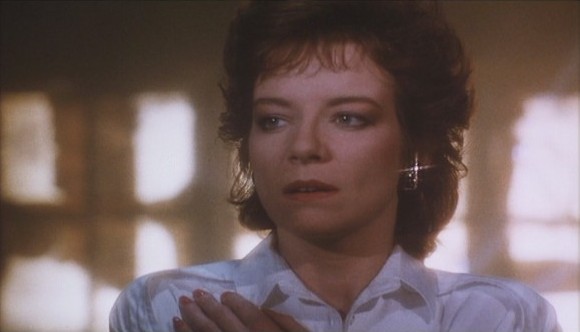
For one thing, I get the appeal of the series, which first released in the 1980s during the height of the slasher boom. However, unlike other slashers of the time, which focused either on silent killers like Jason or Michael Myers, or funny, over-the-top characters like Freddy Kreuger, the Hellraiser films were outliers. The monsters of those films weren’t silent stalkers or wise-cracking undead. They were more like scientists of sensuality and suffering rather than killers. Death was just sometimes part of their work (at least for the first couple of films). In fact, in the first few films, the lead Cenobite Pinhead, nearly always played by Doug Bradley, is articulate, intelligent, and dispassionate except when speaking of his work.

In addition, the first two films don’t follow a regular slasher structure. Instead, the focus shifts around to various characters and their motivations, making the films feel almost like novels in how their stories are told. And the first two films also have a surreal aspect to them, especially the second one, which adds to the feeling of horror and unreality that the films are going for.

And finally, the films weren’t focused on gory deaths. They focused instead on desire, on what made people do horrible things in exchange for their wants and needs, even if those wants and needs included horrific sadomasochistic experiments. If that sometimes led to death, then so be it.

Pinhead, leader of the Cenobites and the most prominent character in the series.

Given all that, I can see why the films were popular and have stuck around. That being said, I can see how the series fell in quality as early as the third film. While that one was good, it structured its story in the vein of a more traditional, good-vs-evil supernatural slasher. It also eschewed the more weird aspects and added in some campier aspects with some of the new Cenobites. And then the fourth film, while giving a history to the puzzle box and an “ending” for the series, sacrifices quality and scares in the process.

It’s really no wonder the series went to direct-to-video from there on out, or why the subsequent films have tried for a more psychological approach rather than an out-and-out gory supernatural style.**

Despite all that, the first two films, while they have their issues, are still masterpieces and the third film is worth a watch (though I would stop after that). And, like all good slashers, the very concept is powerful enough to make you want to see more. to explore more from the safety of your living room. It’s why the series has endured, and why a reboot and a TV series are both in development (though we may not see anything new for a long, long time).

And if I’m being honest, I wouldn’t mind a reboot. This series has gone through so many ups and downs, a fresh take done with love for the original concept might just be what the series needs. And if one does get made, I hope antagonist Julia would be given a bigger role. She was such a powerful character in the first two films that at one point, it was considered giving her the role of main antagonist over Pinhead, and I think the character’s exploration of her own darkness and sexual desires would go over well with modern audiences.

And if you’re interested in checking out the Hellraiser films after this post, here’s where I’d rate them on a scale of 1 to 5:

Any other Julia fans out there?

  • Hellraiser – 4.3
  • Hellbound: Hellraiser II – 4.5
  • Hellraiser III: Hell on Earth – 3.9
  • Hellraiser: Bloodline – 2.6

But tell me, what are your thoughts on the Hellraiser franchise and my observations? Do you support a remake? And is there anyone else here who thinks Julia is much more terrifying than Pinhead? Let’s discuss.

That’s all for now, my Followers of Fear. I’ll likely have a new review out soon, so keep an eye out for that. And until next time, stay safe and pleasant nightmares.

*Which I really need to get around to reading one of these days.

**Or so I’ve read. I have not seen anything past #4 yet, and I’m not sure I want to.

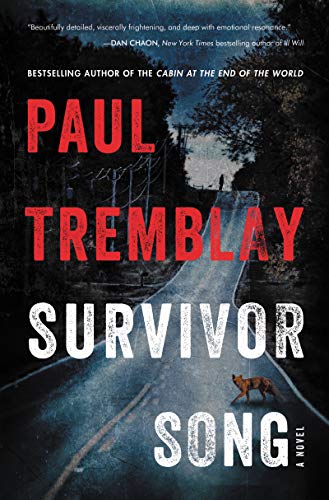
You would think that in the midst of a pandemic, nobody would be interested in pandemic fiction. Paul Tremblay’s new novel Survivor Song, released just last month, is about a pandemic (still trying to figure out if that’s coincidence or if Tremblay knew COVID-19 was on its way and wrote the story in response). And yet I, and many others, picked it up as soon as we could, and devoured it. I got it done in about a week, reading through the last half today. So yes, even in the midst of a pandemic, there’s an appetite for pandemic fiction. And Survivor Song is a welcome addition to the fold.

Survivor Song follows Dr. Ramola Sherman, a pediatrician experiencing a pandemic of her own in her state of Massachusetts. This one is a fast-moving form of rabies, one that affects its host within hours instead of days or weeks. As fear, anger, and conspiracy swirls around the state, Ramola gets a call from her best friend, Natalie, who is eight months pregnant and ready to burst. An infected man killed her husband and bit her. Thus begins a saga to find someplace to get Natalie treated, to save her and her baby. But with rabid humans and animals everywhere and time running out, can Ramola help anyone, let alone her friend and her friend’s baby?

A pandemic story with a slash of zombie thriller (though Dr. Sherman will remind you, none of the infected are zombies), Tremblay’s novel offers a stark, believable story of a disease running rampant through the state and the problems that come up in such a situation. That said, there are plenty of twists and unexpected turns, and they add to the tension of a clock running out of the story. Quite a few times I read something and was like, “Oh no!” or “Well, that’s a complication.” I also loved how Tremblay managed to hit on a lot of what we’re seeing in our current situation, including but not limited to: hospitals fighting an uphill battle; people not obeying health guidelines or employing easy “solutions” that are actually problematic; and crazy, convoluted conspiracy theories.

Also, that ending! Guy knows how to write a tense climax.

At the same time, there’s a deep-running love story here. Not a romance story or romantic love, but love between friends and a mother and child. Through Ramola and Natalie’s interactions, and the messages Natalie leaves to her child, you really come to care for these characters and hope for the best despite the threat of the worst.

If there’s one thing I didn’t care for and would’ve liked to see changed, it’s the ending of the story for Josh and Luis, two teens whom Ramola and Natalie meet while trying to get to the hospital. They were in the story for only a short time, but I really grew to like those goofy nerds and would’ve liked to see more of them in the story, or maybe in a story of their own. And not just because they were Doctor Who fans (Whovians, unite!).

All in all, Survivor Song by Paul Tremblay is a thrilling and emotional read and perfect for these mad times. On a scale of 1 to 5, I’m giving the book a 4.5. Stay inside, grab a bite, and get ready for one roller-coaster of a story. Just hope the bite you grab isn’t something biting your arm off while you’re at it.

And while I still have your attention, guess what happened last night? Stephen King tweeted about this book, and I replied mentioning my progress in it and when I hoped to have it finished. He retweeted it. King retweeted it! And I’ve been fangirling ever since (while at the same time daring to hope this isn’t the last time I end up on his radar). What a world, right?

My friend and fellow blogger whose tastes are way different than mine, Kat Impossible, tagged anyone who was interested in doing this tag. It sounded fun and informative, so I thought I would give it a try. It took me a while to get around to writing my own version and answering the questions–Kat’s post came out right after I got back from my trip, and I had a few posts to write before this one–but it’s finally out.

All credit goes to The Long Voyage for the original version of this tag. You can read it here.

NEVER HAVE I EVER…

…started a novel that I did not finish.

Before age 12 or 13? All the time. I wrote maybe five or six novels (which probably had word counts of short stories or novelettes at most) that didn’t get finished. There was a pirate story, a Frankenstein story, a caveman story, and a few zombie stories. Finally started getting some vampire stories to completion in middle school. I think it was a problem of focus and interest, rather than the story themselves. Then again, I was so young. Youngsters aren’t very good at staying focused on goals without seeing immediate gains from all their hard work.

More recently, I have some short stories and novelettes that I started in the past two years and stopped working on after awhile. Still figuring out why, but I think they may have leaned a little too far from horror and into dark fantasy to keep my interest. It’s sad, but what are you going to do?

…written a story completely by hand.

I did once! And it wasn’t one of those cute, two or three-page school assignments, either. One of my teenage attempts at novel-writing, a vampire novel called Mahiro, was written entirely by hand for its first draft. I had, like, seven notebooks filled with vampire fighting. And subconscious exploration of my sexuality through homage to Anne Rice and the movie Van Helsing, but that only occurred to me after I realized my sexuality.

…changed tenses in the middle of a story.

I think the first couple of attempts at Rose were in the past tense. But on advice from my thesis advisor, I changed to present tense. It worked out in the end.

…not researched anything before starting a story.

Most of my earliest stories started out that way. It wasn’t until maybe high school that I started to do research, and I only got good at it around college, when research became important for passing classes and getting my degree.

…changed a protagonist’s name halfway through a draft.

I don’t think I have, actually. Maybe the surname of a minor character, but never a protagonist’s name, personal or surname.

…written a story in less than a month.

Several times. Especially this past year or so.

…fallen asleep while writing.

Never. When I get tired, I’ll just go to bed.

…corrected someone’s grammar in real life or online.

Too many times to count. It’s a bad habit of mine.

…yelled in all caps at myself in the middle of a novel.

Um…I don’t think so. Is that something people do?

…used “I’m writing” as an excuse.

I think so. I didn’t want to go somewhere with my dad and sisters, even though a friend of mine would’ve been there to play. I just had to write that day. I hope the friend didn’t take it personally!

…killed a character based on someone I know in real life.

More than once. In fact, it’s something I warn people I’ll do if they get on my bad side. In fact, there are two people on there now. I just have to find the right stories to place them in…

Don’t ever mess with me.

…used pop culture references in a story.

Oh, all the time! Game of Thrones was mentioned once or twice in Rose, the 1960s Batman TV show gets a mention in River of Wrath, and I include so many references to some of my favorite anime in Toyland. And that’s just the tip of the iceberg.

…written between 1 AM and 6 AM.

Plenty of times. I’m actually thinking of changing my sleep schedule so I could do it more often (like Franz Kafka did), but I worry about the effects on my health should I need to get back on a normal schedule.

…drank an entire pot of coffee while writing.

I hate coffee, so that’s a no. I’ll usually have tea or, if it’s a weekend, beer or wine.

German wheat beers are my favorite kind of beer.

…written down dreams to use in potential plots.

Yes. One early story from college, Daisy, was inspired by a dream. And I think a couple more have been, but I can’t think of any off the top of my head.

…published an unedited story online/Wattpad/blog.

Oh hell no! I know the importance of editing. It can literally save a story from being thrown into the trash.

…procrastinated on homework because I wanted to write.

I don’t think so. I’m pretty good about getting that stuff done so I have time to write later. Besides, that stuff can creep up on you if you’re not careful.

…typed so long my wrists hurt.

Only if I’m wearing my watch. Which is why I normally type with it off.

…spilled a drink on my laptop while writing.

Not while writing, but once. I aim to never let it happen again.

…forgot to save my work/draft.

Never! How dare you insinuate I have!

…laughed like an evil villain while writing a scene.

Um, yeah! All the time! And sometimes when I’m not writing. It’s me, come on!

…cried while writing a scene.

Not my thing.

…created maps of my fictional worlds.

No, because more often than not, my stories take place in this world. All I need is a Google search and I’m good.

FOLLOWERS OF FEAR, I TAG YOU!!!

If you want to try this, go right ahead. Just make sure to link back to me and to The Long Voyage. And, as always, have fun with it!

That’s all for now, my Followers of Fear. I hope you’re having a good weekend so far. If I got at least twelve hours of sleep, I know I did. If you need me, I’ll be doing what I do best on weekends…whatever that is. Until next time, stay safe and pleasant nightmares!

Before I start on the main subject of this post, I thought I’d ask a question of you, my Followers of Fear: how are you? You doing well?

Hey, it’s a pandemic and the world seems to get crazier every day. Might as well ask. Let’s talk in the comments below.

Anyway, you see that title? Inspiration, Motivation, Focus, Consistency. They’re more than just words. In fact, I think they’re why I’ve had such a crazy output of stories since November, including two novels.

Inspiration. This isn’t just limited to ideas for stories to write. Yeah, you want to have stories that excite you and that you think will excite others to read as much as it excites you to write them, but you also want inspiration for your drive. Let me explain: since Rose came out more than a year ago, I’ve heard from so many people who’ve enjoyed reading the book. I’ve had the pleasure of signing copies and talking to people about it, and even meeting the narrator of the audio book!

Being able to share my work with people, and knowing that they like it and even want to read more, is a huge inspiration for me. Imagining what someone might say for Rose or another story inspires me to sit in the chair at my desk and pound away at the keyboard on the laptop.

Motivation. If inspiration comes from knowing that people liked Rose and want to read more, then motivation is making sure I can do it again. I’m motivated to prove to the world that I’m not a one-book author (or one book by a publisher and four books published independently). This is another reason why I sit down in front of the computer every evening.

It’s also a good motivator for me to spend more time reading and less time streaming TV or anime, even though that is fun. I’m reading authors who have gotten their stories published—sometimes a few, sometimes many—and I’m thinking to myself, “Why did this story get published? Why does this work? What can I learn from this to improve my own stories?” And I think it works. At the very least, even the rejections come with good feedback more often than not.

Getting to meet Sara Parlier and discuss the book we worked on together was a great inspiration.

Focus. I always set a goal in mind for when I’m working on a story. When it’s writing, I try to get around 500 words down on paper, and everything after that is icing on the cake. For editing, I aim for at least three pages, and again, everything afterwards is icing on the cake. They’re simple goals, but more often than not they work. And at some point, a switch usually flips and I end up getting way more done than just those goals above. So, it works.

Consistency. None of the above three work unless you’re doing them often, though, and I’ve noticed the productive authors are always the ones who are doing them often. I tell people that a time fairy isn’t going to come to grant you time to write or meditate or exercise. You have to carve out the time yourself. It may take away from watching Netflix, but those shows will always be there waiting for you. The goals you’re trying to achieve? They won’t be there unless you make them a priority.

And you don’t have to go crazy in being consistent. A gradual build is good as well. I didn’t start writing most nights out of nowhere, I had to build up that habit over time. And it may take a lot more time than you want to build up the habit. But that’s okay. Trying too much too soon may overwhelm you, so it’s better to take it slow and build up your stamina so you can eventually be as consistent as you want to be.

Inspiration, Motivation, Focus, Consistency. They’re not always easy to find or build, but when you gather them together and use them, you can accomplish amazing things (and not just writing, either). How you go about finding them is up to you. But once you have them, you’ll be amazed at how hard it is to let them go. And just how much they improve your life.


So that’s all for tonight, my Followers of Fear. I’m deep in researching and outlining, so I’ll get back to that. In the meantime, stay safe, ask your doctor if demonic possession is right for you, and until next time, pleasant nightmares!

Oh, and since I mentioned it, I’ll post the links for Rose down below. If you haven’t read it yet and would like to check it out, please do. And if you enjoy what you read, leave a review online and let me know. I love reader feedback, and it helps me out in the long run. Enjoy!

Rose: Amazon US, Amazon UK, Amazon Canada, Audible

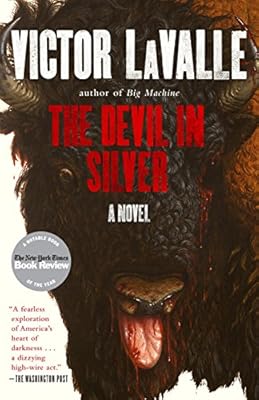
I’m a little ashamed to admit it, but it took me about two months to get through the audio book of this novel. Not because of how I was reacting to the book, but COVID-19 has changed my audio-book listening habits in a major way. Which is a pain in the ass when you decide to read more works by writers of color and this particular book and author comes highly recommended. But I finally got through it, so let me tell you about this book I just finished (the audio book of which, by the way, was narrated by the author himself, and he did a great job).

The Devil in Silver follows Pepper, a large man who gets thrown into Northwest at New Hyde Hospital, a mental institution in Queens, New York. Not because of any mental illness, but that doesn’t keep him from being there. And as Pepper gets a crash course in the mental health industry, he also has to contend with a terrifying resident with its own wing of the hospital. A demonic figure, a devil, who seems to enjoy the pain and suffering of other patients. And Pepper finds himself in the unwelcome position of having to face this monster and stop it, lest it hurt him and his new friends in New Hyde Hospital.

Despite the title and the monster mentioned in the second half of the preceding paragraph, the true horror of the story doesn’t come primarily from the devil. It actually comes from the setting: LaValle does a great job of writing about people trapped in an industry that doesn’t always have the well-being of its patients in mind (and quite a few of the characters note this in the story). As someone who has his own share of mental health issues, reading this book, whose author drew on his own experiences with mental illness and mental institutions, made me very much aware of my experience with mental health and the industry, and how much worse it could be things were a little different. I’ve since put a book on the industry on my TBR list, which I hope will further educate me and make me more aware of a segment of society that the rest sometimes wishes to forget exists.

That all being said, the titular devil is scary too. There’s something about a bison-headed monster popping out of the ceiling of a mental hospital, one that enjoys hurting the patients and can manipulate the staff for its own benefit. Just makes the hairs on the back of your neck rise and makes you wonder about what it might be like if a monster such as that existed.

I also really grew to love the characters. Pepper comes off as honest and likable, if impulsive and a bit thick-headed at times. You really got to see him grow throughout the course of the story as he interacts with the other characters and deals with the trials and tribulations set before him. And speaking of the other characters, even the minor ones were given enough development to feel real. Some of my favorites include the Ugandan immigrant Coffee, who really does want someone to listen to what’s happening at the hospital, and the sassy Luchee, a young woman trying to have some semblance of normal given her situation.

If there was anything I didn’t care for, I found the climax to be a bit anticlimactic. I think I get what the author was going for with that ending, but I kind of wanted something more, and I didn’t get it. That, and there are a lot of digressions in the story. Some of these digressions are quite helpful: they help flesh out the world of the story and what the characters are going through. At the same time, there are some that made me scratch my head, like the one from the POV of the rat living on the second floor of the hospital.

But all in all, The Devil in Silver by Victor LaValle is both a scary story and a story that hits deep at what it means to be human. And after reading this, I’ll likely read another book by LaValle very soon. On a scale of 1 to 5, I’m giving this one a 4.3. Grab a copy and get ready to see a side of life many would rather forget existed.

That’s all for now, my Followers of Fear. As promised, more posts are on the way, including on my recent trip to South Carolina. Keep your eyes peeled. And until next time, stay safe and pleasant nightmares!